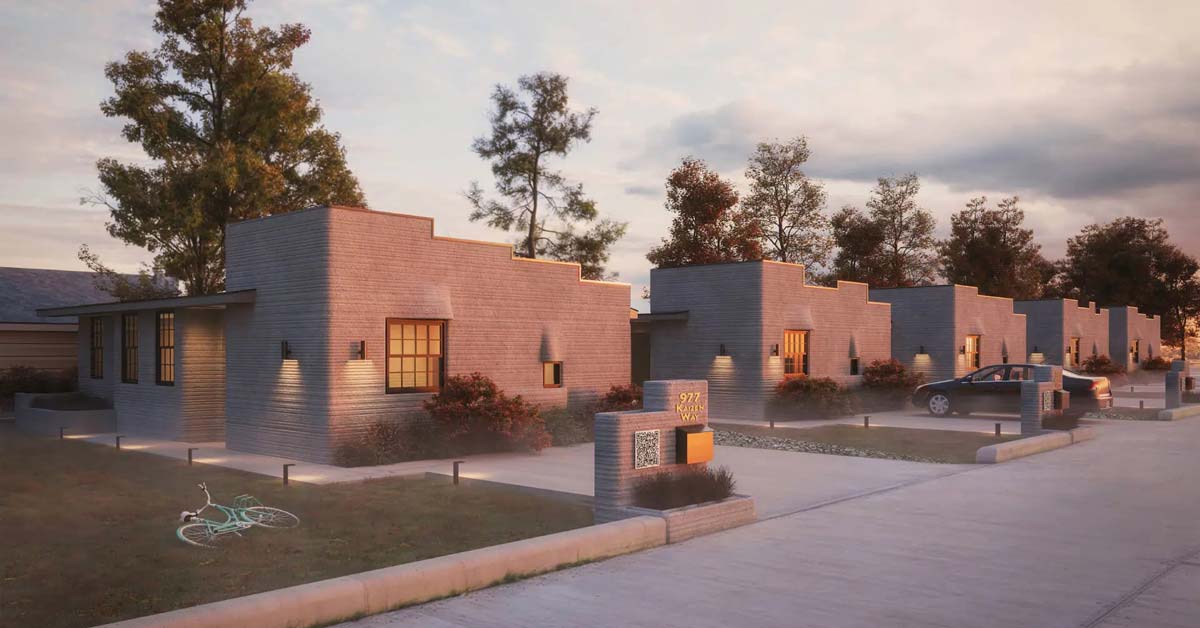
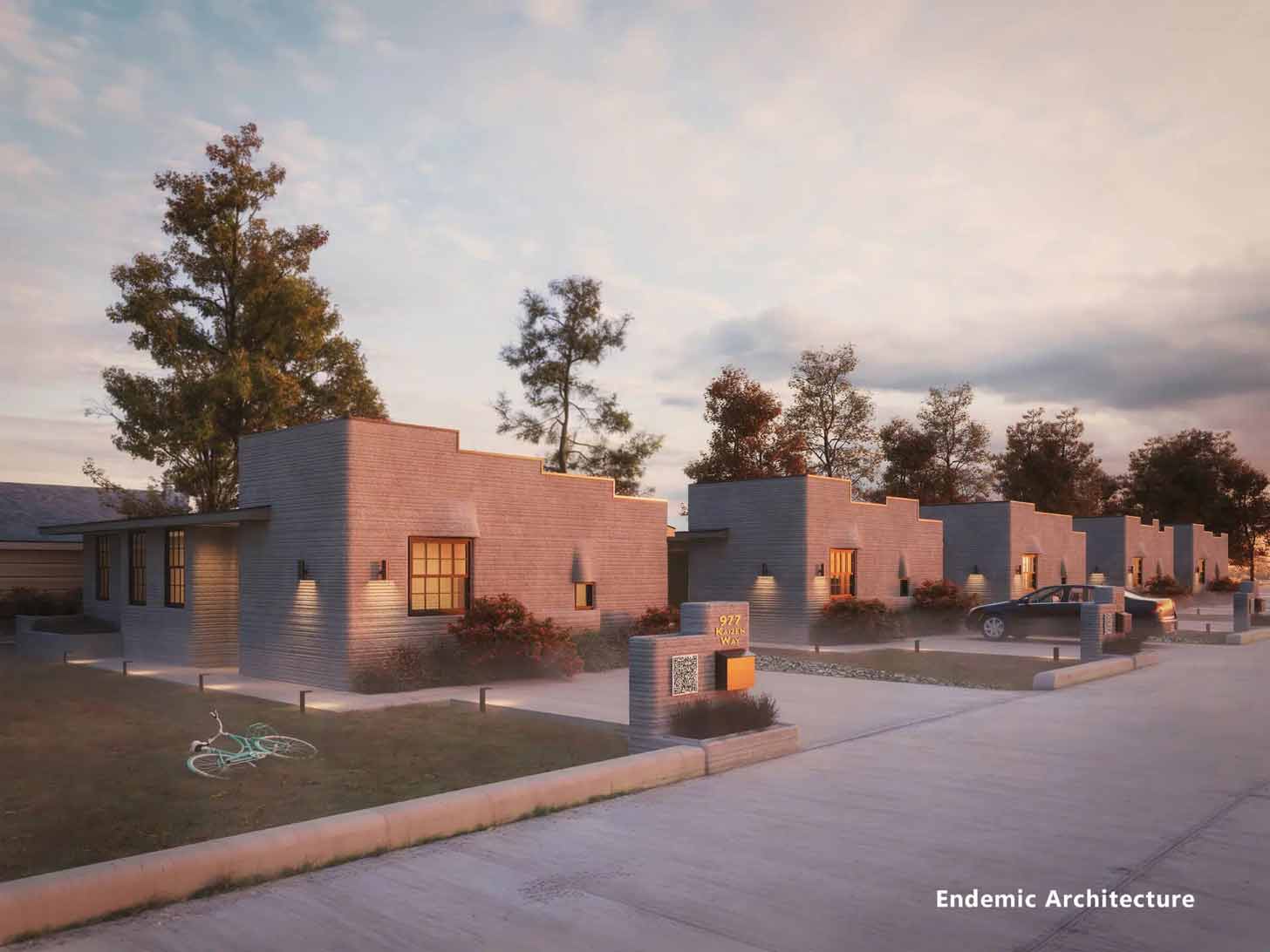
In Olivehurst, California, a town a bit north of Sacramento, a new “micro-community” of homes hopes to do it all: Resist climate change, provide affordable housing, and act as a blueprint to scale 3D printing to mitigate the housing shortage statewide.
The block of five homes is called Corduroy Castles, and the first house is nearly done printing.
For the past few months, the first home has been squeezed out of a large 3D printer, its concrete foundation emerging one inch at a time. It’s a project of 4dify, a Sacramento-based startup that hopes to scale 3D-printed homes in a state crunched by the housing crisis.
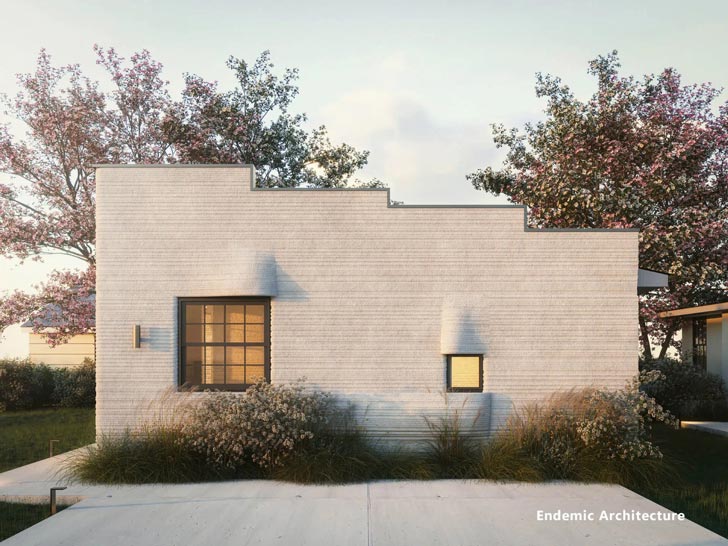
“We are extremely excited to be working with an innovative investment and development team in Olivehurst, California — where, like much of California — there is an ongoing and increasing need for affordable housing,” Endemic Architecture, the firm supporting the development of Corduroy Castles, shares on its website.
“Consisting of five houses, this project deploys 3D printing construction methods that reduce the cost of home ownership to well below market rates without sacrificing the architecture.”
The approach of 3D printing homes is gaining traction quickly, with a 100-home community emerging in Texas, and other smaller projects popping up in cities nationwide.
It has a lot of perks. For one thing, it’s a lot faster than traditional construction.
In just 24 days, the printer layered the first 1,000-square-foot house 13 feet high in Olivehurst.
“These … homes will feature unique designs and layouts, offering character across the development,” 4dify shared on its website. “The remaining four homes will be printed two at a time, accelerating the overall timeline.”
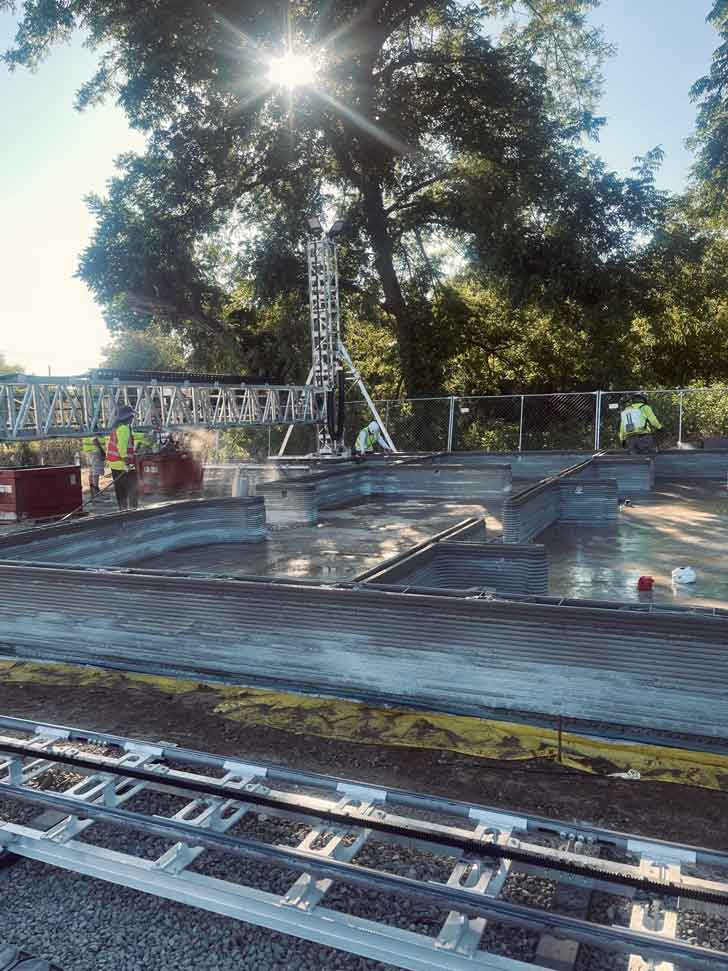
“We want the machine to do the heavy lifting,” Nan Lin, owner of 4dify, added to The Sacramento Bee. “We want the humans to do detailed work that the machines can’t do yet.”
Another benefit to using this technology is the cost. The machine itself costs about $1.5 million, but labor costs are reduced, as crews of three to five people work with the machine to build a house in about four to six weeks. This is in contrast to the traditional team of five to 10 people needed to build a “regular” home over several months.
The homes in Olivehurst are not ready to be sold yet, but Lin said they will likely be listed between $350,000 and $375,000.
Lin also said the machine is capable of printing eight to 10 houses a year, ideally scaling up to have 10 machines printing 100 homes a year.

“Long term, we definitely want to be a leader in the industry,” Lin added. “Short term, we want to dial this in for the next few houses and we want to start scaling this.”
In fact, Corduroy Castles will serve as a case study for an even more ambitious project: A community of 75-100 3D-printed duplexes being designed in Southern California.
The cost and time efficiency are surely a benefit for developers looking to fight housing shortages in California, but in a state still recovering from deadly wildfires last January, they are also a beacon of resilience amid the devastating effects of climate change.
The concrete mixture used in the 3D printing process is strong, durable, and weather-resistant. The base and walls could also provide energy savings when it comes to heating and cooling.
“It’s water, fire, wind, mold, pest, people resistant,” Lin told The Sacramento Bee. “You can’t punch a hole through the wall. If this was a rental product, it would last so much longer than a traditional product.”
Samples of the Corduroy Castles’ walls even underwent ballistic testing, taken to a range and shot with guns.
“They’re bulletproof,” Lin said. “The bullet just stops on the wall.”
The homes in Olivehurst will have metal roofs held up by wood trusses, but architects are considering a 3D-printed concrete roof in future designs, which would remove any flammable materials from a home’s exterior.
While it’s unclear exactly what the future holds for the Corduroy Castles and its developers, local leaders are abuzz with potential.
“It is redevelopment, which is great,” Gary Bradford, Yuba County supervisor of the project, told The Sacramento Bee. “It’s adding density, which is also great, and helping to revitalize an older, lower income part of the county.”
You may also like: First-of-its-kind 3D-printed neighborhood gives 100 homes to 'chronically' homeless
Header image courtesy of Endemic Architecture