Every day the Good Good Good team collects the best good news in the world and shares it with our community. Here are the highlights for this week!
If you want to get good news in your inbox every day, join the Goodnewsletter — the free daily newsletter designed to leave you feeling hopeful.
The Best Positive News We’re Celebrating This Week —
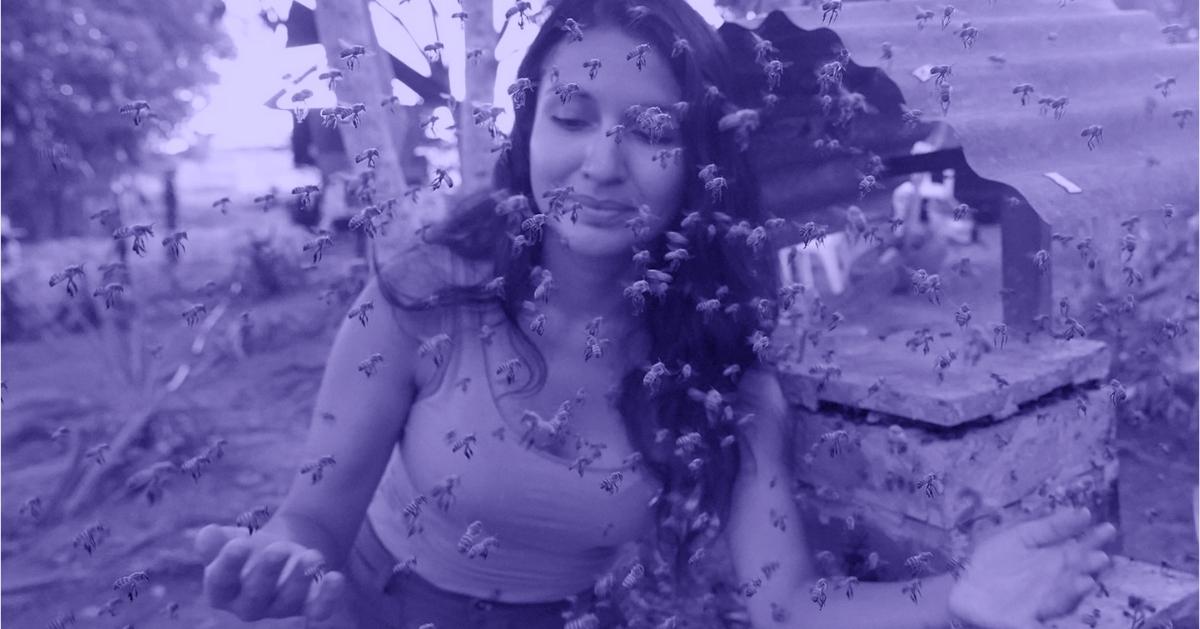
Stingless bees from the Amazon rainforest are the first insect in the world to be granted legal rights
The planet’s oldest bee species and primary pollinator in the Amazon rainforest just made history as the first insects anywhere in the world to be granted legal rights.
Supporters hope that giving stingless bees the right to exist and flourish will set a precedent for similar protections for other bee and insect species around the world.
The native bees have been cultivated by Indigenous peoples since pre-Columbian times, and unlike their European cousins, they have no sting.
Why is this good news? Critical pollinators in the rainforest, sustaining biodiversity and a healthy ecosystem, stingless bees face threats from climate change, deforestation, pesticides, and competition from other bee species — scientists have been racing to get them on conservation red lists.
→ Read more
This Florida program reduced preterm births by 30%. Could it be a model for other states?
Over two decades, a couple planted over 2.5 million trees to restore a Brazilian nature preserve
In 1998, award-winning photojournalist Sebastião Salgado and his wife, Lélia Deluiz Wanick Salgado, founded their nonprofit nature preserve, Instituto Terra. They spent the next two decades planting over 2.5 million trees.
They were inspired after Salgado returned from covering the Rwandan genocide to his father’s degraded cattle ranch, which was “as sick as I was.”
They started with a 100,000-seedling donation from a local mining company, and began to restore their little plot of land. Now, it’s so covered in trees, it can be seen from space.
More good news of the week —
Assisted fertilization is helping revive and restore disappearing coral reefs in the Dominican Republic. The technique is gaining momentum in the Caribbean to counter the drastic loss of corals due to climate change, which is killing them by heating up oceans and making it more difficult for those that survive to reproduce naturally.
Scientists discovered two new subtypes of MS, a breakthrough that could revolutionize and personalize treatment. With the help of artificial intelligence, the discovery could pave the way for personalised treatments and better outcomes for patients.
A rare jaguar sighting in Arizona is giving conservationists hope for the species’ recovery. Even after jaguars were listed as endangered in 1997, they continued to face widespread habitat loss due to deforestation, draining wetlands, and border wall construction along the U.S.-Mexico border.
Researchers found and mapped ‘climate change safe havens’ that are more resilient to warming around the world. The study of climate change refugia — places that are buffered from the worst effects of global warming — has grown rapidly in recent years.