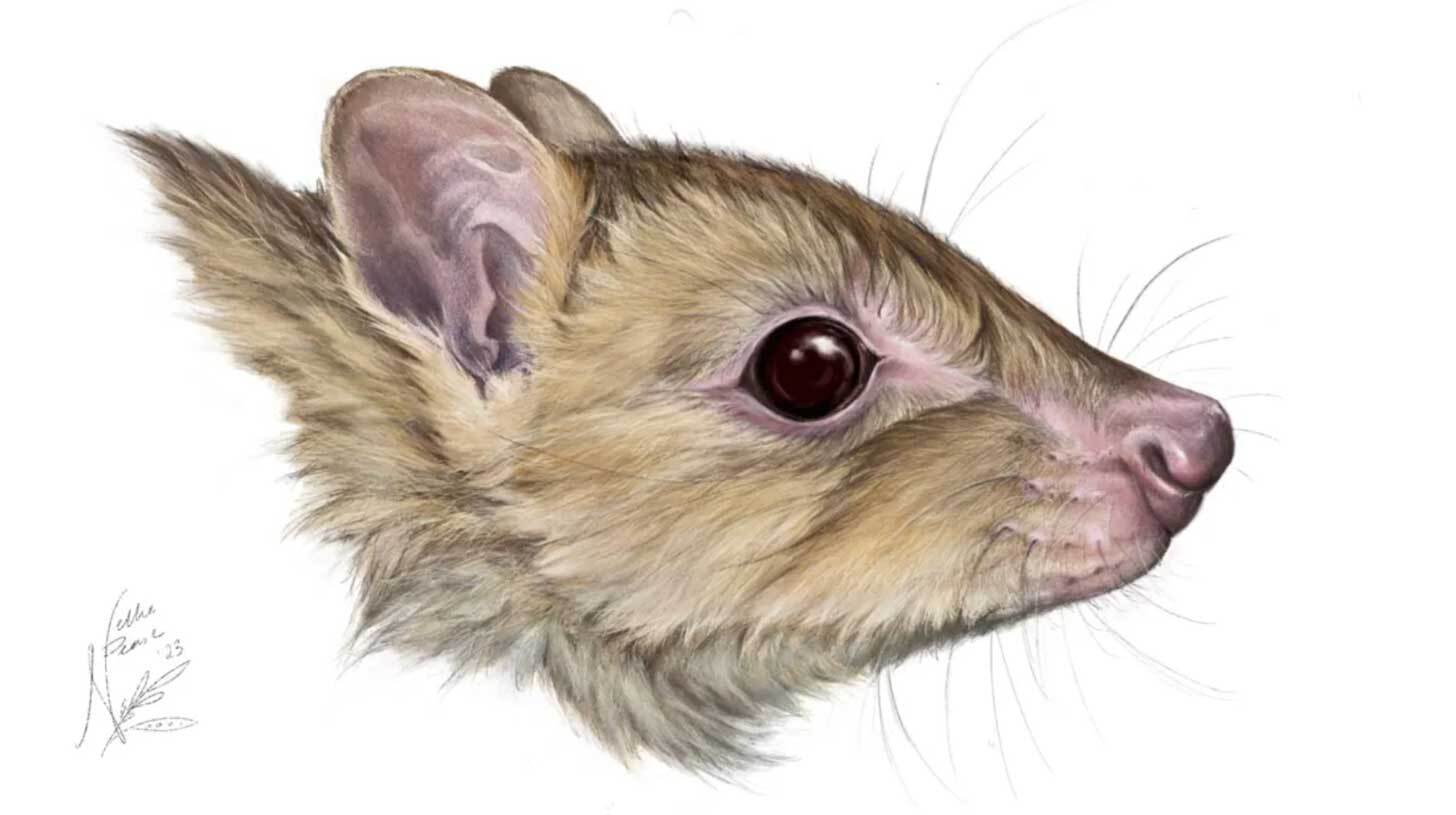
The woylie, also known as the brush-tailed bettong, once roamed across much of Western Australia.
Like kangaroos, the hopping marsupial raises its young in a pouch on its belly. However, they differ drastically from their relative when it comes to size. The woylie is so small that it can fit in the palm of a person’s hand.
Despite their small size, woylies have been indispensable to their native habitat. As “ecosystem engineers,” woylies improve soil health and plant growth by digging for fungi and tubers in the outback.
Unfortunately, due to habitat loss and predation from feral cats and foxes, woylie populations have been in rapid decline since 1996.
“Woylies are critically endangered marsupials that have been the focus of conservation efforts for decades,” Jake Newman-Martin, a Ph.D. student in Curtin's School of Molecular and Life Sciences, told ScienceDaily.
In September, Newman-Martin published a new study in Zootaxa, which shed new light on the species diversity of woylies.
By analyzing ancient fossils from caves across Western Australia, Newman-Martin and his peers discovered a new species — and two new subspecies — of woylie. The proposed scientific name for the new Nullarbor species is Bettongia haoucharae. The team will collaborate with Indigenous groups on an appropriate name, noting that “woylie” is a Noongar word.
For Newman-Martin, the findings were bittersweet.
“In this new research, we've named a completely new species based on fossil material, and two new subspecies of woylies for the first time,” he said, describing them as a “ghost marsupial.”
“Sadly,” he said, “many of them have become extinct before we've even been aware of them.”
In taxonomy, a “ghost” species refers to an organism that is newly described but thought extinct — often found through DNA research, fossils, or sometimes even rare sightings.
Dr. Kenny Travouillon, a co-author of the study and curator of terrestrial zoology at the Western Australian Museum, said that their discoveries came from studying bone measurements with painstaking detail.
“This research confirmed several distinct species and expanded the known diversity of woylies by measuring skull and body fossil material that had previously not been looked at in detail,” Dr. Travouillon said.
“What we've found through this research tells us that examining fossils alongside genetic tools could offer significant insights that may help conservation efforts of this critically endangered native species.”
Newman-Martin and Travouillon said that their research, although bleak at first glance, offered a glimmer of hope for the future of the woylies.
“Our results split the critically endangered woylie into two living subspecies, which is very important for conservation when we're considering breeding and translocation initiatives to increase the size and fitness of populations,” Newman-Martin said.
You may also like: Scientists discover 'pumpkin toadlet' in Brazil’s misty cloud forests. It's a new species
Header image via Maclearite (CC BY-SA 4.0)