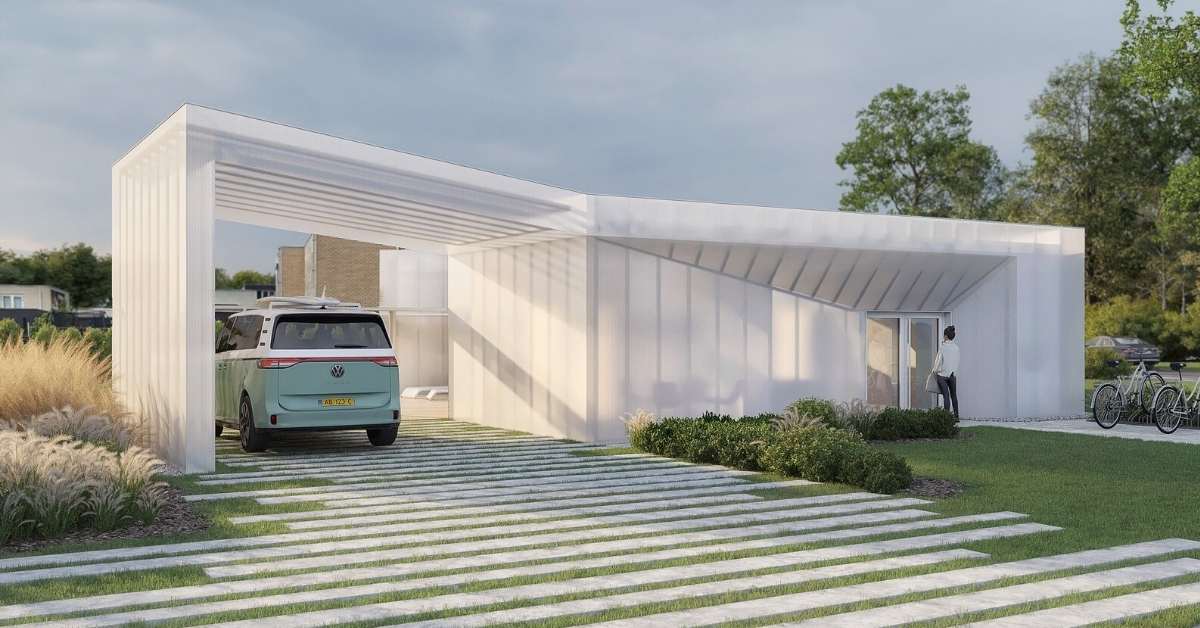
According to the national construction federation Embuild, Belgium needs to build 375,000 new homes in the next five years to avoid a housing crisis.
That’s why engineering architect Agnieszka Gansiniec founded KiteHouse, a Brussels-based startup that has been rethinking construction since 2021.
If Gansiniec wanted to make homes quickly — and make them sustainable enough to meet the mounting needs of the climate crisis — she knew she needed to act fast.
But “acting fast” is a notion generally hampered by traditional construction timelines.
“The entire construction process as we know it today is fundamentally flawed,” Gansiniec said in a press release. “It takes years to obtain a permit; architects, engineers and contractors do not communicate with each other; and budgets explode due to spiralling costs, sometimes resulting in projects being halted.”
“The environmental impact of traditional construction methods is enormous too, both in terms of water and raw material consumption as energy consumption and CO₂ emissions — not to mention the tons of construction waste that are left behind,” she cautioned. “And yet we continue as if there were no other option.
Deciding that “enough is enough,” Gansiniec knew she had to opt for an untraditional building method.
So she and her team built Eco Kits: modular, prefabricated flatpack systems that she describes as “LEGO for professionals” or “IKEA for houses.”
“With the Eco Kit, we are rethinking the entire construction process, from permit to completion, combining certainty with speed, sustainability, and affordability,” Gansiniec said. “This allows us to build 50% faster on average, according to a fixed timeline and budget at market-based prices: no surprises.”
It’s also more sustainable than standard construction.
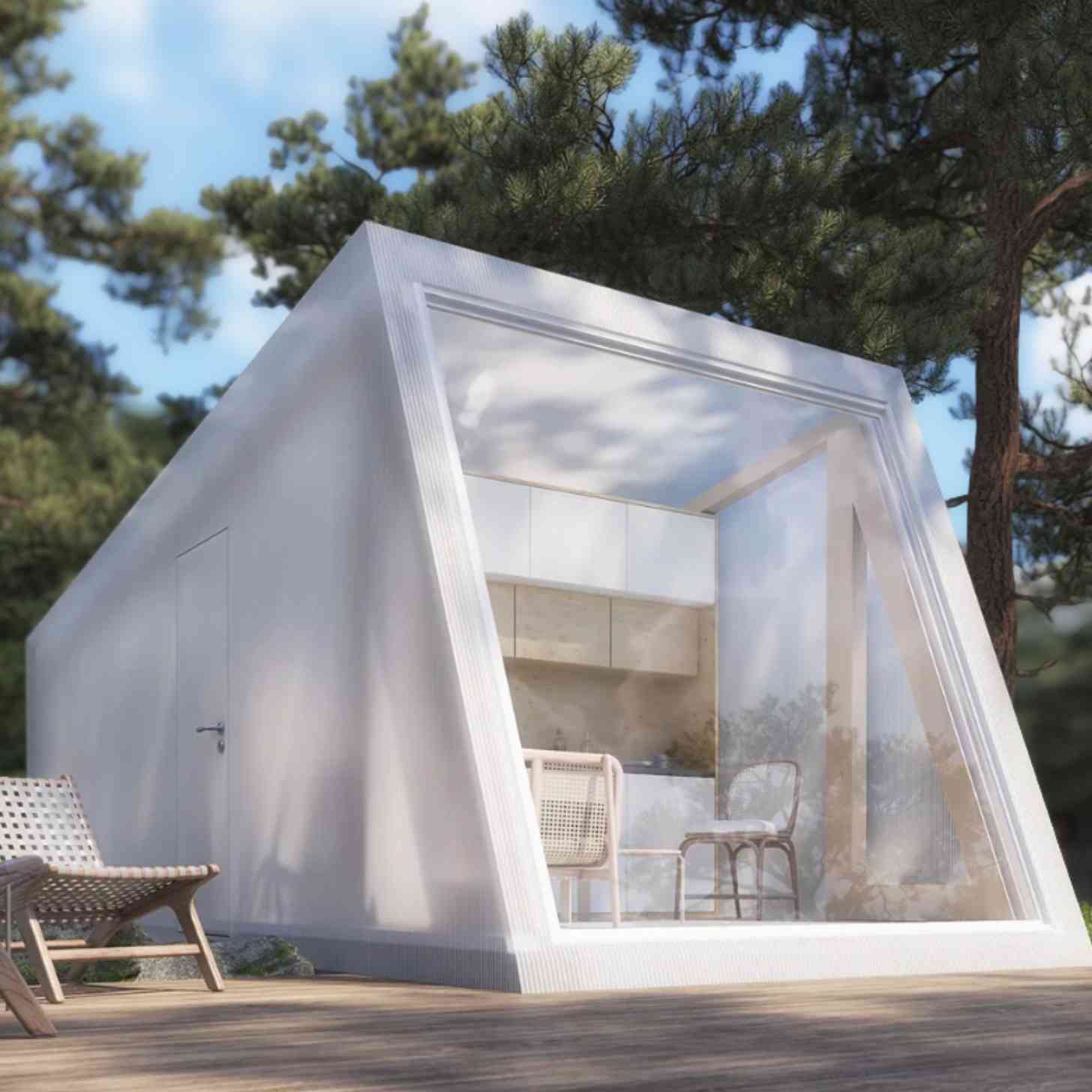
“Our materials are 97.7% renewable, while we also reduce the amount of waste on site by 95%, in line with the principle of ‘zero waste construction,’” she said, adding that the average energy bill is “barely a few dozen pounds.”
And she doesn’t just want to limit their model to new-build homes.
“Social housing, offices, pop-ups and other volumes are possible too, as are renovations and extensions,” she emphasized. “All of those will be needed if we want to keep housing affordable for young people and families alike.”
Gansiniec has also used her flatpack homes to champion polycarbonate — a form of advanced polymer — as one of the “building materials of the future.”
In October, KiteHouse reached a major milestone by revealing the first new-build home made entirely out of polycarbonate.
“[It’s] light, superstrong, heat-resistant, multi-purpose and easy to work with … However, legislation in Belgium currently does not allow for it to be used as the main building material,” Gansiniec said.
Due to those regulatory limits, KiteHouse constructed the first fully polycarbonate house just over the border in Vlissingen, a city in the southwestern Netherlands.
Gansiniec called it “one of the many regulatory hurdles” that are holding modern architects and engineers back from a more sustainable future.
But the engineering architect is undeterred.
“We’re not just builders,” Gansiniec pledges in KiteHouse’s company slogan. “We fix the process.”
You may also like: $20k foldable tiny home can be installed in just 60 minutes: Meeting the growing demand for housing
Header image via KiteHouse