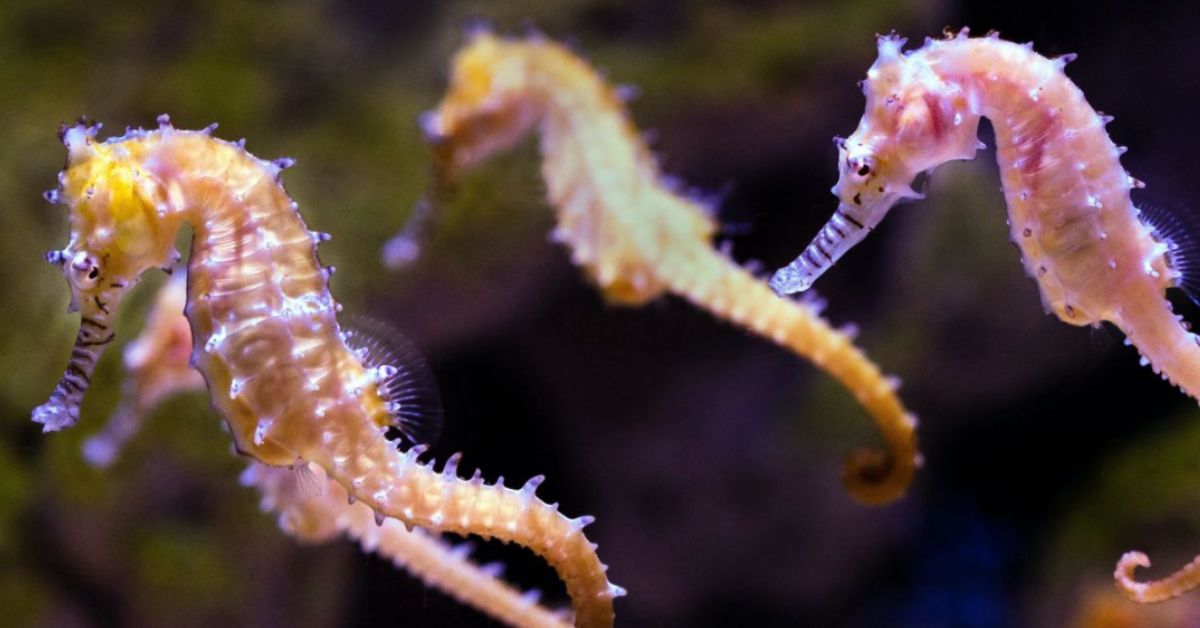
From 2018 to 2020, no one in Dorset, England saw hide nor hair (or rather, fin nor snout) of a single spiny seahorse off the sandy beaches of Studland Bay.
But in 2020, the COVID-19 pandemic offered a silver lining. Without the constant influx of tourists and boats, the endangered seahorses re-emerged.
In fact, when the Seahorse Trust — the world’s leading charity for seahorse conservation — conducted a survey dive that summer, they found 16 spiny seahorses.
“We have seen so many seahorses because the food chain has recovered, giving seahorses plenty of food to eat, and crucially, somewhere to hide,” Neil Garrick-Maidment, the founder of the Seahorse Trust, told The Independent in June 2020.
At the time, it was the highest number of native seahorses found in a single dive in Studland Bay since 2008. After a series of subsequent dives, The Seahorse Trust concluded that there were 46 seahorses living on the site, in total, before the lockdown eased.
But conservationists were wary of it lasting.
“The seahorses need protection to stop them being disturbed again as Covid restrictions are lifted and to stop them vanishing from this legally protected site,” Garrick-Maidment said.
“We have a unique opportunity to help nature and to restore the balance of our planet,” he said. “We must grab this with both hands, for the seagrass, for the sea, for humanity, and crucially for these incredible seahorses.”

In the years since, it’s been rare to see a spiny seahorse. As the people returned to Studland Bay, the six-inch creatures shied away.
On behalf of their finned friends, The Seahorse Trust teamed up with the Studland Bay Marine Partnership to install eco-moorings, which cost about £100,000 a year (or $132,101 USD) to maintain.
Instead of using heavy metal anchors, which scour the bottom, eco-moorings are an environmentally friendly alternative that float above the seabed — protecting fragile seagrass and the seahorses that live among them.
And it worked.
In June 2025, a new dive survey found 17 spiny seahorses, a post-pandemic high.

“It is fantastic news that we found so many,” Garrick-Maidment told the BBC.
“Half were males, and most of them were pregnant, so it shows the eco-moorings are working.”
Garrick-Maidment is hopeful that this latest dive is a promise of better things to come.
“There is still a long way to go in protecting this amazing site, and the seahorses on it, but we are going in the right direction.”
You may also like: Bandicoot 'baby boom' gives conservationists hope for endangered species after 150-year absence
Header image The Seahorse Trust