Hank Green is an American YouTuber, science communicator, and New York Times bestselling author who has become one of the most influential voices on the internet.
Since 2007, Hank and his brother John Green have taken turns creating videos on their YouTube channel, Vlogbrothers. Over the course of the last 15 years, the Green brothers have built a passionate community of "Nerdfighters."
While there are many things that unite the Nerdfighter community, they share a common goal of "decreasing world suck." (In fact, John and Hank Green founded the nonprofit, The Foundation to Decrease World Suck.)
And decrease world suck they have.
Every year, John and Hank Green host The Project for Awesome — a 48-hour charity event that has raised more than $14 million for a variety of charities since 2007. And they also sell Pizza John merch for Pizzamas to raise more money for charity.
And in 2019, John and Hank committed to raising $25 million for Partners in Health to support health care and decrease maternal death rates in Sierra Leone. (You may also love these meaningful quotes from Partners in Health co-founder Paul Farmer.)
Together, John and Hank created Good.Store, the Awesome Socks Club, the Awesome Coffee Club, and Sun Basin Soap to help raise funds for Partners in Health.
Additionally, Hank's content across Twitter, Instagram, and TikTok is humorous, informative, and helps people better understand their world. And as an early internet video creator, he has continually advocated in support of other internet creators around the world.
As the founder/co-founder of Crash Course, SciShow, and dozens of other ventures, Hank Green has significantly influenced millions through the education system and internet culture.
Through his years as a public figure, Hank Green has continually maintained a sense of hope and optimism about how we can each make a positive difference in the world. And in doing so, he's inspired millions to do just that.
→ Related: The Best John Green Quotes
Get inspired by Hank Green’s best quotes from YouTube, his books, Tumblr, TikTok, and more:
“Humanity is good. Some people are terrible and broken, but humanity is good. I believe that.”
― Hank Green
“No one changes the world alone and no one doesn’t change it at all. We are all exceptional, and none of us are.”
— Hank Green
“You might never know what you’re doing. But do me this favor, get out of bed every morning knowing that no one changes the world alone, and no one doesn’t change it at all.
We are exceptional, and none of us are, and we are all lost sometimes. So follow a path, any path, until you get to a place that you feel like you don’t like, and then change directions.
Because there is one thing that you are making everyday, and that is yourself. That is your job, and you must do it well.
For me, there’s a lot of strength in knowing that the wandering I am doing and that I have done is normal, and kind of beautiful, and not something I should be stressed out about.
You’re on a path, you don’t know where it’s going, and that would be boring if you did.”
— Hank Green
“I think curiosity is the best human emotion because while love is the opposite of hate, the source of hate is fear, and curiosity is the opposite of fear.”
— Hank Green
“Being silly is still allowed, not excluded by adulthood. What’s excluded by adulthood is thoughtlessness, so be thoughtful and silly.”
― Hank Green, Vlobrothers, “Some Rough Advice for the ‘Real World’”
“You will always struggle with not feeling productive until you accept that your own joy can be something you produce. It is not the only thing you will make, nor should it be, but it is something valuable and beautiful.”
— Hank Green

“Both my greatest successes and my greatest failures have come because I trusted that people were good. I’m almost always right. It’s just really bad when I'm not.”
— Hank Green
“Worrying isn’t a disease, it’s a symptom of caring.”
— Hank Green, A Beautifully Foolish Endeavor
“Even on this most terrible days, even when the worst of us are all we can think of, I am proud to be a human.”
― Hank Green, An Absolutely Remarkable Thing
“It turns out, somehow, there are a tremendous number of things to be optimistic about.”
― Hank Green
“The most impactful thing you can do with power is almost always to give it away.”
— Hank Green, A Beautifully Foolish Endeavor
“A young lady asked me how I dealt with bullying. I wasn’t able to give her a very good answer, which troubles me.
Well, there were lots of shouts of “It gets better” and “Stay strong” and “We love you”. But when I put myself back in time to when I was being bullied, none of those things would’ve helped me. Yes, absolutely it does get better. But when you are being physically and psychologically tortured, it is difficult to remove yourself from the pressingness of the moment at hand.
Here’s how I dealt with bullying: I cried, I hated myself, I hated my life. I didn’t deal with it, I survived it, but I never dealt with it.
So here are two tips from someone with lots of experience:
1: It’s not about you, it has nothing to do with you, it’s about the assholes doing it to you.
2: Your job is not to deal with it, your job is to survive it, which you CAN do because it WILL end. And then yes, it will get better.”
― Hank Green
“The story of humanity is not a story of a few people who had huge, gigantic effects on the world. That’s only the story we hear, because it’s the easy story to tell. Caring for ourselves and other people is the only thing that has ever mattered to the future of our species.”
― Hank Green
“We are the superhero. None of us, individually, but all of us together.”
― Hank Green
“Some days, it seems to me like the purpose of life is to convert energy into beauty.”
— Hank Green

“It’s such a cool story that Paul Newman was like, “I like making salad dressing, but I’m good [financially].” It just shows that working hard doesn’t have to be about getting rich or more rich or whatever. It’s about adding value to the world.”
― Hank Green
“Stories, of course, are an easy thing to love. They’re how we understand the world ... how we pass information from person to person. I’m serious when I say that I think stories are a bit part of what makes us human.”
— Hank Green, on NerdCon
“Hank Green’s Secrets of Productivity:
1.) I have convinced myself that if I am not using all of the tools I have in my disposal to do the maximum amount of good... then I am less of a good person than I could otherwise could be...
2.) I intentionally put myself in situations where people who I care about and who I respect rely on me to do things, which is very motivating...
3.) I don’t get caught up in doing everything perfectly... I just want to try stuff and if it explodes... it exploded! And I learned!
4.) I love giving other people responsibility. I love putting them in difficult situations and saying: “Figure this out. Help me do this.” And if they do it wrong or if they do it differently than how I would have done it, I don’t get mad as long as they’re learning, because there’s no way to get good at stuff except to do it and fail and learn...
5.) I follow and cultivate my own curiosity. I think curiosity is one of the top two or three human characteristics. It’s something that I really like about myself. ... I want to understand stuff! I want to understand people! Following my curiosity so frequently leads me to better life decisions and better business decisions but also - just feeling better! You/’re never going to feel bad about your whole life if you loved people and you were curious. I mean, that’s kind of all I want!”
― Hank Green
“Read books. Care about things. Get excited. Try not to be too down on yourself. Enjoy the ever present game of knowing.”
— Hank Green
“There is one thing that I can definitely say about the world as it exists right now: We are, at this moment, both creating and solving problems faster than we ever have before. So your job — the only thing anyone can ask of you as a human — is to solve more problems than you create. (Also take care of yourself and have a good time, ideally.) But you are very powerful, and you can make your world and yourself better. So do that.”
— Hank Green, Vlogbrothers, Hello Future Dead Person
DFTBA. Don’t forget to be awesome.
Notably, this school in rural Uganda will offer financial literacy education and banking access to services for families and community members
Jan. 24, 2022, marks the United Nations’ International Day of Education, celebrating the role education plays in peace and development.
Children in Uganda have been out of school longer than any other country in the world because of the pandemic, and access to remote learning lags far behind middle and high-income countries.
A report from UNICEF released earlier in 2021 examined digital connectivity and showed that 2.2 billion children and youth today under the age of 25 do not have fixed internet access at home. That’s two out of every three children in the world.
Schools reopened in Uganda this week, and there will be many challenges to overcome: social, emotional, and financial, to name a few.
It’s no different in Kasasa, where the non-profit organization The InteRoots Initiative has partnered with the community to open up the Tat Sat Community Academy, also known as TaSCA.
Every aspect of the project — from concept to operation — is community-led and initiated.
When it opens up, the school and cultural institution will seek ways to alleviate some of those challenges for students and families.
But the project’s approach to education goes far beyond addressing access. One way this is accomplished is through the school’s collaboration with the Institute for Indigenous Cultures and Performing Arts (ICPA).

The ICPA will work alongside the standard curriculum to provide a platform for community elders, leaders, and entrepreneurs to pass on Indigenous knowledge, cultural practices, and skills-based training.
Currently, the national curriculum is based on the system imposed through colonial rule, which community members believe lacks cultural and skills-based relevance.
There are also plans in place to overcome financial barriers and ways to empower Kasasa community members. For example, the Tat Sat Community Savings and Credit Co-Operative Society (TaSSCOS) is set to begin operations soon.
The Co-Operative is community-owned, and among other services, will facilitate access to the banking system — often acting as a liaison between members and larger urban banks.
Nearly 60% of Africa’s population doesn’t utilize a bank because it is out of their reach.
By pooling the risk and resources of the community at large — or smaller groups within the community (there currently exists a women’s business guild, for example) — it makes financing viable from the perspective of larger financial institutions.
This approach has seen success in other rural communities globally.

Farmers in the community are interested in investing in a mill through the cooperative, which will be used to process produce locally instead of having to outsource at a high cost. It will also provide locally sourced food for the students and staff.
Beyond offering financial services to local entrepreneurs and families, the co-operative will work hand in hand with the school and community at large to provide financial literacy programming and educational opportunities relating to business and finance.
In another approach to making TaSCA sustainable, community members have developed an idea for the Graduate Enterprise Fund.
Every time a student pays tuition, a majority of the funds goes into a fund that will be used to help students pursue their dreams post-graduation. These set-aside funds will be transferred directly to students who apply to use them. They’ll be used to further their goals, like starting a business or continuing their education.
If the plan is approved by a community board overseen by the co-operative, the student will receive direct financial support — an estimated one to two years of stability — in pursuing their dreams beyond graduation.
These two funding mechanisms and resources will be of particular importance to women and girls, who may feel like they lack access to educational opportunities compared to their male peers.

“Women and children have not been given an equal chance to financial progress and development,” said Mrs. Namayega Agnes, a TaSCA Kasasa Community Board member, and farmer. She is married with four children and excited about the possibilities the co-operative will have on the community.
“You cannot imagine how much help this is to our community! When a genuine community program like this, with absolutely no strings attached, develops here, you can be sure we will give it our all.”
M. Scott Frank, executive director of The InteRoots Initiative, said the finance model the community of Kasasa has developed through the Co-Operative allows for continuing investments in individuals, institutions, and infrastructure.
“It connects existing economic and social sectors — both formal and informal — with financial tools and resources otherwise difficult to access in this context,” he said.
The vision is truly innovative, bridging a gap that often exists between education and real-world application. This project has enormous potential to serve as a model for other similar initiatives across the globe.”
Hollywood royalty and elder statesman of the silver screen, Bahamian-American actor Sidney Poitier, whose trailblazing work in the 1950s and '60s helped break color barriers, shifting the lens through which Black people were perceived and paving the way for other Black actors to make their mark, died on January 7 at the age of 94.
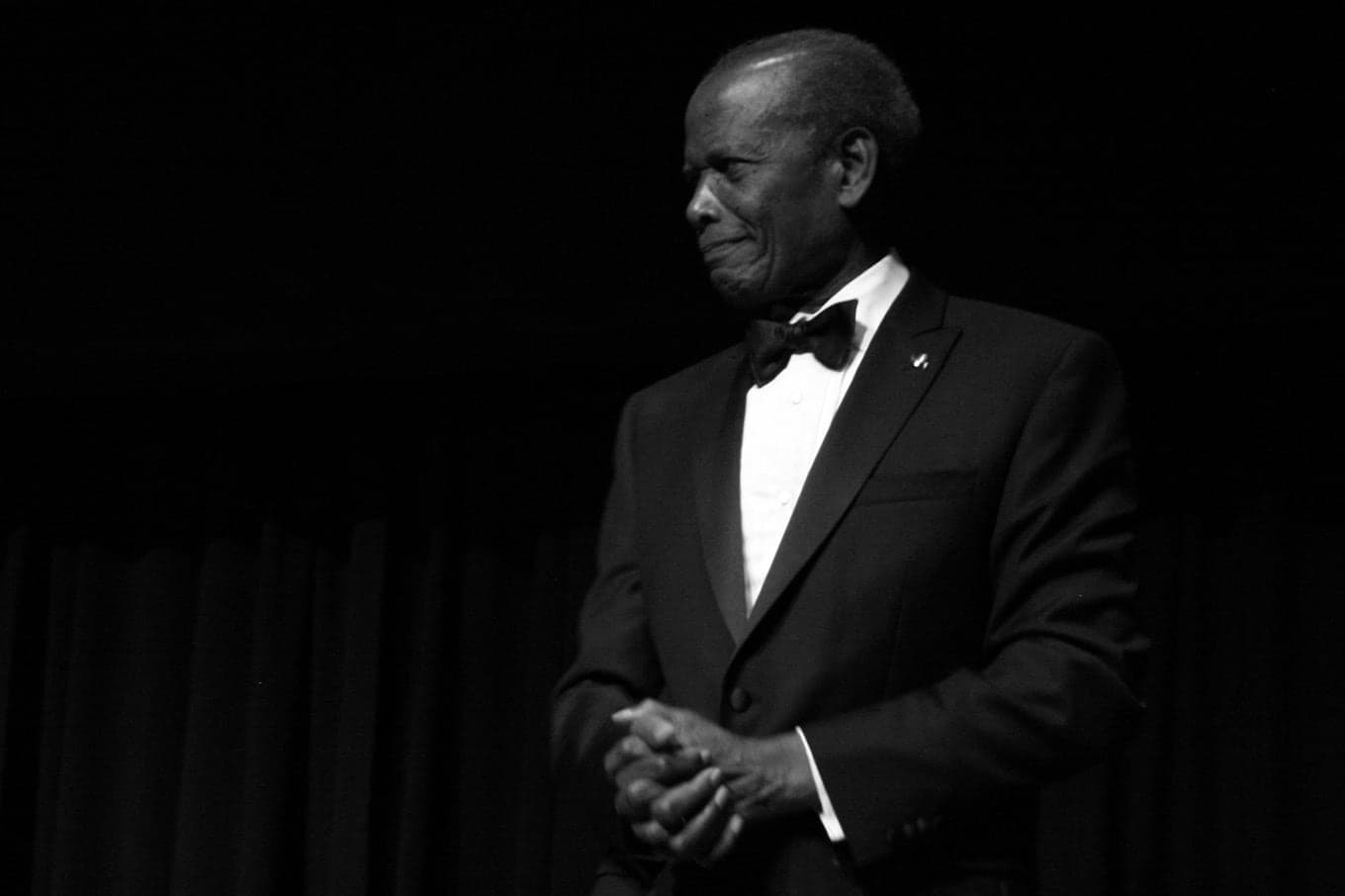
On learning of Poitier's passing, Prime Minister of The Bahamas Philip Davis addressed the nation, saying, “Even as we mourn, we celebrate the life of a great Bahamian, a cultural icon, an actor and film director, an entrepreneur, human and civil rights activist, and latterly, a diplomat.”
Poitier was all those things and more, but Davis also praised who the man was at his core — ”his strength of character, his willingness to stand up and be counted, and the way he plotted and navigated his life's journey.”
The youngest of seven children, Poitier was born prematurely in Miami on February 20, 1927, to Bahamian parents–farmers who traveled regularly to the States to sell their produce.
Though an American citizen, he grew up in the Bahamas, only moving to the United States when he was 15.
After working as a dishwasher and thereafter at a veteran's hospital in New York during World War II as part of the U.S. Army, Poitier eventually joined the Harlem-based American Negro Theater and found his calling.
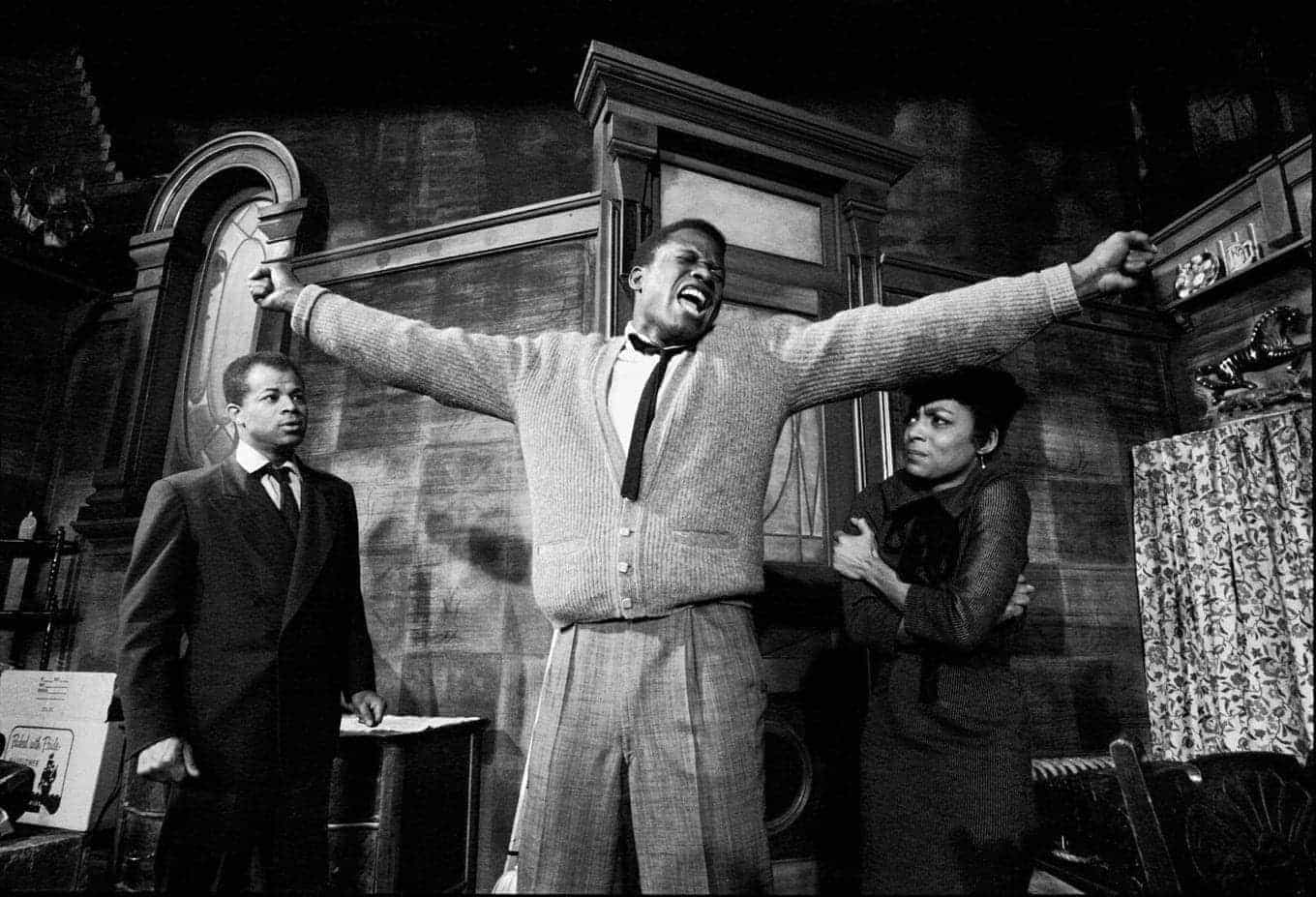
His first major film role was “No Way Out” (1950), in which he played a doctor attending to two white racist patients; one dies, prompting a race riot. The film was banned in the southern United States.
Poitier followed this up with the breakthrough role of a high school student in the 1955 film “Blackboard Jungle” (1955).
He also won critical acclaim for his work in “Porgy and Bess” (1959), and “A Raisin in the Sun” (1961).
Poitier was pushing through in such roles during the turbulent civil rights movement in the United States.
In 1958, Poitier and Tony Curtis played escaped convicts in “The Defiant Ones”, which earned them both Best Actor Oscar nominations (in Poitier's case, the first for a Black male actor).
He didn't win, but the nomination alone was groundbreaking, and the excellence of his performance was acknowledged by the British Academy Film Awards when he won the BAFTA for Best Foreign Actor that year.
His recognition across the pond made him a natural choice for his role in the British film “Cry, the Beloved Country”.
Shot in South Africa during apartheid, Poitier became even more resolute in his activism, using his fame to press for the equal treatment of Black people, even calling out the press for its unidimensional portrayal of him — and by extension other African-Americans — as simply Black.
“I'm a relatively intelligent man,” he told them in a now-iconic quote, “There are many aspects to my personality that you can explore, I think, very constructively — but you sit here and ask me […] questions that fall continually within the Negroness of my life. You ask me questions that pertain to the narrow scope of the summer riots [of 1967]. I am an artist, man, American, contemporary… I am an awful lot of things, so I wish you would pay me the respect due.”
"I am an artist, man, American, contemporary… I am an awful lot of things, so I wish you would pay me the respect due."
The rebuff was in keeping with the dedication with which, throughout the course of his long career, he strove to bring life, dimension, and humanity to the characters he portrayed.
Prior to Poitier's time, the representation of Black characters in Hollywood films was problematic, being primarily portrayed as either servants or criminals.
In 1963, Poitier starred in “Lilies of the Field”, for which he won the 1964 Academy Award, the first Oscar ever presented to a Black actor in a leading role.
By 1967, towards the end of the U.S. civil rights movement, he did three pivotal films — “To Sir, with Love”, “Guess Who's Coming to Dinner”, and “In the Heat of the Night”, that examined the issue of race and the prejudices Black Americans were faced with on a daily basis.
Having been voted the top box office star of 1968, by the 1970s Poitier spread his creative wings and ventured into directing.
The accolades, both in the world of the arts and beyond, kept coming and would continue throughout the course of Poitier's life.
He was knighted by Queen Elizabeth II in 1974, and in 1982, received the prestigious Cecil B. DeMille Award, which recognizes outstanding contributions to the world of entertainment.
In 1997, The Bahamas appointed Poitier as its ambassador to Japan, a position he held for a decade, concurrently acting as the country's ambassador to UNESCO.
In 2000, he received the Screen Actors Guild Life Achievement Award, and in 2002, an Academy Honorary Award, to be followed in 2016 by a BAFTA Fellowship celebrating his lifetime achievement in film.

In 2009, under the Obama administration, he was presented with the Presidential Medal of Freedom, the United States’ highest civilian honor.
Upon his death, Poitier's family put out a statement, paying him tribute as “not only a brilliant actor, activist, and a man of incredible grace and moral fortitude, [but] also a devoted and loving husband, a supportive and adoring father, and a man who always put family first.”
The statement continued, “He is our guiding light who lit up our lives with infinite love and wonder. His smile was healing, his hugs the warmest refuge, and his laughter was infectious.”
Poitier's impact naturally extended to the Caribbean region, where he spent his formative years.
Trinidadian D Gerome Boucaud, who works in the regional film industry, said on Facebook:
"I can’t remember at what age I saw ‘To Sir with Love’. But I do remember it being the first time I became aware of what racism was and how weird it felt to watch it so openly displayed on television. I might have been 7 or 8. I also remember the impact this man had on me which I can’t adequately describe or quantify. […] I’ve avidly followed his career since then and my early worldview was patterned around the example he set for what it meant to be a strong proud black man. Mr. Tibbs was my first on screen hero […] This gentleman knew how to walk tall and I loved and respected him as an actor and a person. Rest well Sir Sidney Poitier. Thank you for everything you represented to a young boy from the Caribbean and many many others around the world."
Other regional social media users also paid their respects:
Trinidad-born, UK-based activist Jason Jones said:
"There can be no doubt about the ENORMOUSLY powerful & positive impact of Sidney Poitier on the Global image of Blackness. He not only broke the glass ceiling for Black actors, but he used his success to promote Black empowerment, civil rights, and was a shining inspiration for Black people everywhere (of special note is the impact he had on the great Nelson Mandela). Mr Poitier was a titan in a World that still treats Black people with discrimination. Rest in Peace Sir. You are truly a hero beyond measure. ✊🏽🙏🏾🕊❤️"
From Jamaica, Wayne Chen added:
"Sidney Poitier […] was a big deal; an integral part of our growing up. His films were big events in Jamaica and he was a powerful role model; new and different; a smart, confident, accomplished, proud Black man, where few had starred before. Lest we forget."
On Facebook, Bahamian filmmaker Maria Govan posted a photo of herself with Poitier, saying:
"Thank you Sir Sidney. You were so incredibly generous and supportive! Called me cold while I was walking in Brooklyn to talk about “Rain,” and gave me so much encouragement on that call. I'm so grateful!
Journey on Sir! May it be wondrous, your next chapter!"
The Third Horizon Film Festival, which screens and distributes films from the Caribbean and its diaspora, paid its respects via Facebook:
"Rest in peace to legendary Bahamian-American actor Sidney Poitier […] Born right here in Miami, and raised a stone's throw across the ocean in Nassau, his family believed they descended from Haitian maroons who escaped to the Bahamas, thus explaining their French surname. So much is made of him being the first Black male actor to win the Oscar for Best Actor in 1963, a historic moment to be sure, but his legacy is so much greater, striding through the pressure cooker that was America in the 1960s to devote himself to civil rights activism and advocacy for his fellow Black actors while blazing his own path across the screen. He will be missed."
This story originally appeared on Global Voices.
The city of Brno’s growing migrant population had been mostly served by NGOs. It wasn’t enough. So the city brought the work in-house.
Alexandru Ceban comes to the bus station near the center of the city of Brno, Czech Republic, at least once a month. A tall Moldovan man, he waits for the buses coming from either his homeland or Ukraine.
He observes people who get off the buses and guesses whom to approach, then watches as a man with a large checkered bag settles down on a bench.
Only then does he step forward and ask in Romanian whether the new arrival is from Moldova. The man answers in Russian, a language that Ceban also speaks.
With a smile on his face, Ceban hands him his business card and briefly explains that he works for the municipality, and the man can turn to him if he needs anything.
“Most people do not understand I am offering services for free. They think I am trying to trick them,” explains Ceban, who is an intercultural worker of the Brno city government, and also an Orthodox priest. “If one or two take my business card, I call it a success.”
Most immigrants he approaches come to Czechia for three months at a time. They work on construction sites, in fruit warehouses, or in meat-processing facilities. They return repeatedly, always on a tourist visa because applying for a work visa is a drawn-out process.
Later on, these migrant workers, who get exploited by unpaid work and other scams, contact Ceban for help. But apart from such complicated cases, the intercultural worker is mainly concerned with helping his compatriots understand how things work in the Czech Republic.
“For people who come here for short-time stays, integration means understanding the system and cultural differences,” Ceban says. “For example, that the tram is not to be used without a ticket, or that you have to pay for waste pickup.”
Ceban is not the only intercultural worker at the city. The local Department of Social Inclusion approaches various migrant communities that are most populous or whose integration is the most difficult, including those from Vietnam, the Middle East, Moldova, Romania, Russia, and Ukraine.
The majority of the intercultural workers are migrants themselves and state that their personal experience helps them understand the situation of their clients.
According to the Czech Statistical Office, the number of foreigners in the South Moravian Region (including Brno, its capital) is growing every year.
In 2017, when intercultural work became a city government program, there were 46,574 immigrants working in the region.
At the end of 2020, the number had already reached nearly 59,000.
The Czech economy relies heavily on this migrant workforce. In 2021, foreigners constituted 17% of the overall workforce, according to the Czech news website Aktualne.cz.
Since the industrial sector has a difficult time finding qualified workers, migrants are welcomed to take on these jobs.
Apart from industry, migrants also come for seasonal work, such as fruit picking, or work at the large number of convenience stores across Brno that are run by Vietnamese immigrants.
In 2017, the whole weight of the task of assisting migrant workers was placed on nongovernmental organizations.
“I knew intercultural workers working for NGOs who would burn out very fast, and one reason for it was that they did not have wished impact,” says Lenka Šafránková Pavlíčková, the coordinator of intercultural work for the city of Brno.
By contrast, she adds, “Municipality intercultural workers stay within the structures where the policies and solutions are being created.”
Šafránková Pavlíčková introduced intercultural work in Brno in 2017. A European Commission report on the events of that year stated that the Czech population tends to perceive immigration as a problem, a sentiment influenced by the European refugee crisis in 2015. This often creates challenges in getting political support for integration activities.
Thanks to an open environment at the city, where the socially oriented political movement Žít Brno (“Live Brno” in English) was present, the integration program got off to a successful start.
Šafránková Pavlíčková wrote a project proposal and received funding from the European Commission.
Brno’s intercultural workers assist individuals but also work with institutions so that these are prepared to attend to foreigners.
The underlying objective is for schools, government offices, medical facilities, and employers to be able to interact with foreigners in the same way as they do with the domestic population.
“We are here to make the gap between the two cultures smaller,” says Karin Atassi, Brno’s intercultural worker for the city’s Arab community.
Each intercultural worker goes to the field regularly to learn about challenges their communities are facing. Hoang Van Tien spends most of his time in places where Vietnamese do business: in shops and stalls within the well-known Vietnamese market on Olomoucká Street.
“If we want to help the Vietnamese, we need to interact with them face to face,” Tien says.
Each migrant community gathers in different places. For example, the Ukrainian intercultural worker Kateryna Hertlová checks Facebook groups where migrants interact, and thus her “field” is sometimes virtual.
“One of the goals of the fieldwork is to identify clients’ needs so that we can create integration tools,” explains Julie Lien Vrbková, the chief methodologist for the Vietnamese section of the city’s Department of Social Inclusion. “Another one is to inform them about what we do.”
The Vietnamese section, for example, publishes explanatory videos on YouTube. “By creating a video about how to find a kindergarten for your child, we make it easier for Vietnamese parents as well as for kindergartens,” Lien Vrbková explains.
They also organize workshops for teachers at schools. As a result, one of the schools hired their own intercultural worker and no longer needs support from the local government.
Šafránková Pavlíčková stresses that it is crucial to have a proper methodology in place to create long-term solutions.
“It is not enough for an intercultural worker to arrive at the institution that needs assistance. It is important that our methodologist subsequently contacts that institution to set up a proper workflow with them,” she says.
In Brno, the intercultural work team, together with the Centre for Foreigners of the South Moravian Region, is currently working on a complex methodology that could serve as an inspiration for other cities in the region and beyond. Šafránková Pavlíčková says it is difficult to find methodologists with integration experience in the region.
In the Czech Republic, intercultural work only started to become popular at the beginning of the 21st century.
In Western Europe, in countries such as Portugal, Spain, and Germany, intercultural workers, sometimes called “sociocultural mediators,” have been present since the 1990s.
Cities such as Lisbon, Portugal, and Vienna, Austria, became an inspiration to Brno’s intercultural workers.
The Portuguese capital set its local migration policy at the beginning of the 1990s. The Municipal Council of Immigrant Communities and Ethnic Minorities was created, which was key to building cross-sectorial cooperation, and now, several mechanisms for cooperation between different stakeholders are in place.
Intercultural mediators, as they are called in Portugal, work through National Immigrant Support Centres and Local Immigrant Support Centres established by the public High Commission for Migration as a response to an influx of immigrants in 2001.
The centers work like one-stop shops where migrants receive a wide variety of necessary information in one place. They also connect various institutions, such as the Foreign Police or the Ministry of Education, in one place, allowing for easier administration of immigrant issues.
The main goal of intercultural mediators in Lisbon is to be a bridge between migrants and institutions and to eliminate misunderstandings on both sides.
In Portugal, intercultural mediators at the support centers are hired by migrant associations or non-governmental organizations, with the idea that they are more closely in touch with their migrant communities.
“Our staff is an ‘intercultural workforce.’ Many of us were born in different countries and speak several languages,” says Ursula Struppe, the director of the Vienna Municipal Department of Integration and Diversity.
The Austrian capital has been running its own integration program, StartWien, since 2008. At the beginning of the program, StartWien would contact third-country nationals after receiving their residence permits and offer them guidance about settling in.
Later on, the program started working with people from across the European Union, and in 2015, it began assisting asylum seekers who had not yet obtained a residence permit.
The city government in Vienna has a complex approach to intercultural competencies. “The city considers it being necessary for all employees, not just some specialists,” Struppe says. “Human rights, anti-discrimination, equal treatment, and other soft ‘intercultural competencies’ are part of all trainings for new staff members, particularly everybody who is in direct contact with the population.”
In Vienna, this approach is a result of what Struppe calls “very engaged members of the city government in charge of integration” since the mid-1990s.
Struppe and Šafránková Pavlíčková both state that having political will is the key to implementing a successful integration initiative.
“In Vienna, there is this political will. This is not only due to ‘ethical’ standards. It is also a matter of good management and pragmatic approaches: to minimize risks and maximize chances, as a management rule puts it; in our case, to minimize risks and maximize chances of immigration,” Struppe says.
While funding for integration programs is stable in the Austrian capital, the city of Brno still struggles with the program’s finances.
The work is supported by EU funds and the Czech Ministry of the Interior. The Department of Social Inclusion has to apply for grants, which makes the work less effective and more stressful.
“Non-systemic funding of intercultural work has a negative impact on stability of this profession that is not sustainable without a project-based support,” says Eva Valentová, a program coordinator of the nonprofit Association for Integration and Migration, which researched cities with inclusive strategies.
“Ideally, we would receive funding from the city and the state, but not grant-based,” Šafránková Pavlíčková says.
Her team is still ambitious, for example, in helping migrants who are working without a visa.
Czech police detained more than 7,000 migrants in 2020, which is a 25% increase from 2019.
Intercultural workers are searching for solutions to reduce the number of migrants arriving without work visas by informing them about the legal consequences they might encounter.
“Many people, for example, spend years working in the Czech Republic, but since they do not work legally or work based on various types of temporary agreements, they are not eligible for old-age pension,” says Hertlová.
She hopes to work toward changing the law to include migrants in the national pension program, but she admits that it is not something that intercultural workers can do alone.
“For such changes in laws, cooperation between various stakeholders will be necessary,” Hertlová says.
That cooperation is something the city’s intercultural workers are striving to make more effective.
This story is part of the SoJo Exchange from the Solutions Journalism Network, a nonprofit organization dedicated to rigorous reporting about responses to social problems. It was originally published by YES! Magazine.
Header image: Panoramic view on Brno, Czech Republic / Photo courtesy of Marco Verch, (CC BY 2.0).
Political, economic, and technological stars are aligning to make a stubbornly carbon-intensive industry sustainable.
The fundamental building block of modern life is a corrugated steel rectangle eight feet wide, eight-and-a-half feet tall and 20 feet long.
In the 65 years since its invention, the standardized shipping container has revolutionized the global economy, making global exchange cheaper and more efficient than ever before.
In 2020, despite the pandemic downturn, cargo ships moved nearly 60 trillion ton-miles worth of goods, almost twice the global total at the turn of the millennium.
The majority of gifts that ended up under trees during the Christmas season — not to mention the lights, ornaments and decorative Santas — made the journey on one of these ships.
The environmental impact is notable. Today, cargo ships carry some 90 percent of the world’s goods and account for three percent of man-made carbon emissions.
Taken as a whole, the global shipping industry emits about as much carbon as Germany.
Until recently, the shipping industry trailed other carbon-intensive industries, like vehicles and electric power, in its commitments to reduce emissions.
But 2021 was a pivot point. The push toward a zero-carbon shipping industry gained significant momentum, bringing the world closer to a future in which goods are sent across oceans with minimal impact on the climate.

In April, the Biden administration pushed the International Maritime Organization, which originally announced a plan to reduce shipping emissions by 70 percent, to go completely carbon-neutral by 2050.
In October, a group of nine major retailers, including Amazon and Ikea, added pressure by committing to zero-carbon shipping by 2040.
And at the UN Climate Change Conference in November, a group of 14 major shipping economies — including Denmark, United States, United Kingdom, Germany, France, and Panama — announced a pact to achieve zero-emission shipping by 2050.
These commitments from governments and corporate clients are made credible by the recent (and rapid) development of technologies that make carbon-free shipping possible.
“There isn’t anything technologically insurmountable here,” says Nishatabbas Rehmatulla, a senior research fellow at the University College London Energy Institute, where he studies decarbonization in the shipping industry. “The key barrier is cost.”
Ultimately, shipping is an industry ruled by dollars and cents. Putting a price on carbon itself, Rehmatulla explains, is a necessary step to incentivizing climate-friendly technology adoption.
Moreover, governments can do more to support companies that make the costly first steps toward a more sustainable industry.
And while governments and international agencies certainly need to do more to support the development and implementation of carbon-neutral technologies, the rising tide of change is already well underway.
A technological sea change
The journey to carbon-neutral shipping starts in the fuel tank. The vast majority of cargo ships burn bunker fuel, a dirty byproduct of crude oil refining.
(In 2019 alone, cargo shipping consumed some 229 million metric tons of bunker oil.)
Though oil remains dominant for now, across the industry both private and public actors are working on testing and implementing zero-carbon alternatives.
This summer, Maersk, the world’s largest shipping company, announced a $1.4 billion investment in a new fleet of eight ships that will be able to run on methanol as well as oil.
Methanol is a carbon-free alcohol-based fuel source that is easier to store than hydrogen. It is, however, less energy-dense and more expensive than oil, relatively scarce, and hard to scale industry-wide.
Next year, the world’s first autonomous, fully electric cargo ship will embark along the southern coast of Norway. The Yarka Birkeland, owned by Norwegian fertilizer company Yara, will be able to carry 120 twenty-foot containers at a time and will be completely battery-powered.
And this past August, the United Kingdom began work on a modern set of regulations that would allow the safe and standardized application of nuclear propulsion in the shipping industry.
Of all promising avenues, however, ammonia, a hydrogen product more stable and storable than hydrogen itself, is the most likely replacement for oil in shipping.
Shipbuilding companies across the globe are investing in ammonia-powered vessels soon to hit the sea.
Finnish marine technology firm Wartsila, for example, is currently developing a ship engine that will run completely on zero-carbon ammonia by 2023.
The company is already manufacturing engines that can run on biogas, synthetic methane, and other hydrogen-based fuels.
For the 98,000 ships already asea, advancements in retrofitting technologies will allow existing fleets to become more sustainable.
In 2019, three vessels — the Hafnia Lise, Victoria Seaways, and Maersk Tianjin — were retrofitted with new, more efficient mechanisms that demonstrated a potential 27 percent reduction in emissions.
Increasingly, the shipping industry is also turning to old technologies to adapt their vessels to a new world. Innovation in high-tech sails, for instance, may allow large-scale cargo ships to harness the power of wind like never before.
Timely decarbonization or decarbonization at all, however, is far from given. “The transition will not happen by itself,” says Mads Peter Zacho, the head of industry transition at the Mærsk Mc-Kinney Møller Center for Zero Carbon Shipping.
“We need global regulation and carbon pricing to ensure that the uptake of the new solutions happens fast enough for shipping to decarbonize in line with the Paris agreement.”
And even if stated goals are met, they may not be ambitious enough, say some critics. Shipping, after all, is only one cog in the global economy.
For as long as market forces reward dirty investment, dirty investment will happen, and shipping is no exception: in 2020, the fastest-growing category of ship was oil tankers.
But with action from the private sector and public support, decarbonizing the shipping sector in the near future is an ambitious but entirely possible goal.
A 2021 study from the Getting to Zero Coalition — a collaboration between the Global Maritime Forum, Friends of Ocean Action, and the World Economic Forum — estimates that zero-carbon fuels need to make up just five percent of the fuel mix by the end of this decade for the shipping industry to meet Paris Accord goals.
“We don’t need to eat the whole elephant straight away,” says Rehmatulla.
“I’m optimistic. There are lots of challenges, but they are all challenges we can overcome.”
This story is part of the SoJo Exchange from the Solutions Journalism Network, a nonprofit organization dedicated to rigorous reporting about responses to social problems. It was originally published by Reasons to be Cheerful.
Bernice King is a lawyer, minister, and the CEO of The King Center in Atlanta, Georgia. She is the daughter of Martin Luther King, Jr. and Coretta Scott King.
At Good Good Good we love quotes about hope, quotes about activism, and quotes about justice — and every time we collect quotes, we come across dozens of beautiful quotes from Bernice King.
Today we're sharing a list of quotes from her about maintaining a sense of hope, continuing her father's mission of love, and speaking out against injustice.
We also included quotes from Bernice King about her parents, Martin Luther King, Jr. and Coretta Scott King — whose activism inspired her to pursue preaching, social justice, and leadership.
As we prepare to honor Dr. King on MLK Day, may these words from Bernice King inspire us to take action in the fight against injustice, hate, violence, and apathy:
Bernice King Quotes on Love, Justice, Hope, and Nonviolence
“Being truthful about the state of our nation and world does not equal losing hope. Hope sees truth and still believes in better. That which dismisses or does not seek truth, but grins, saying ‘It will be okay,’ is naiveté, not hope.”
— Bernice King
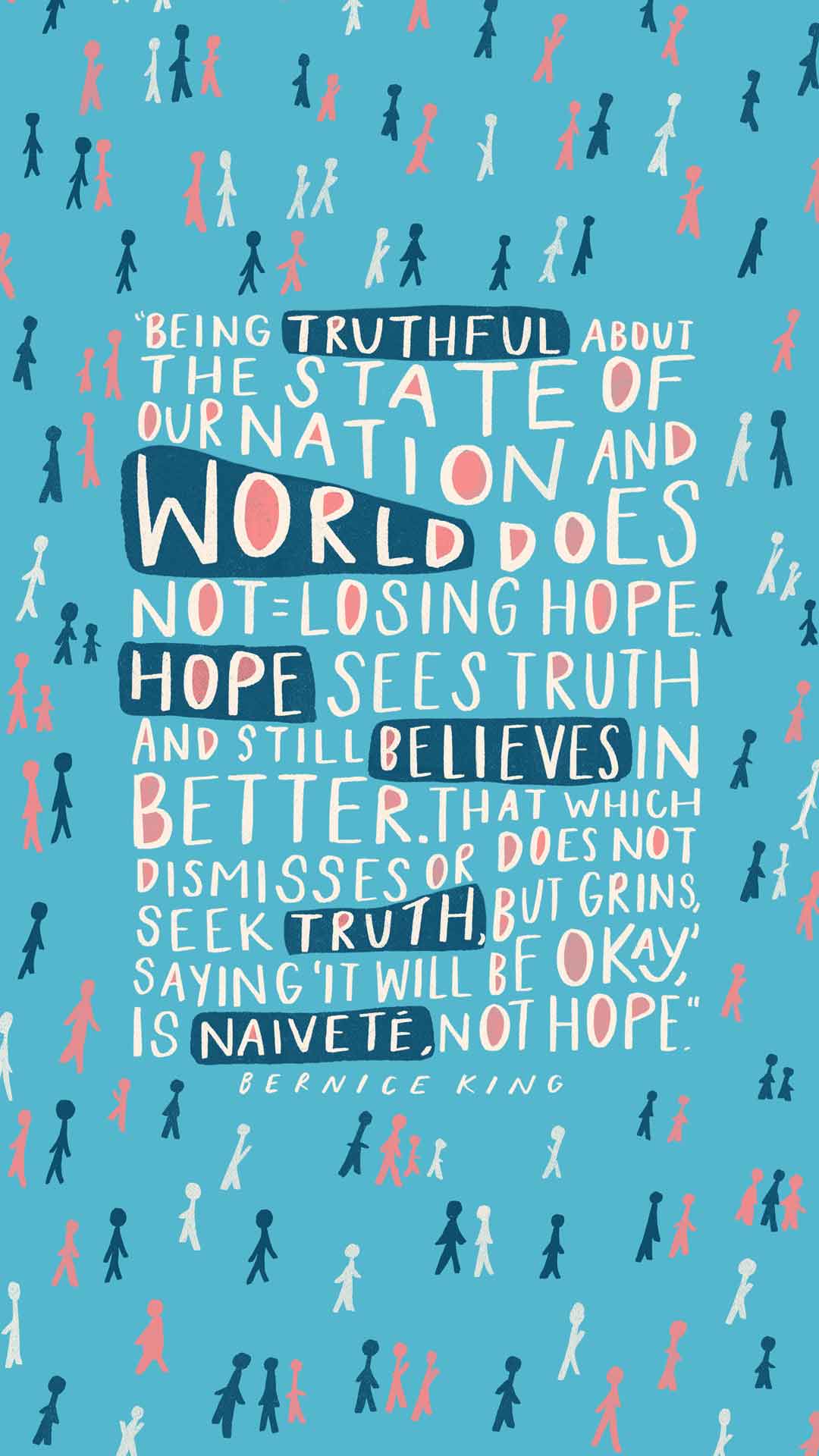
“Understanding that #ThisIsAmerica shouldn’t evoke hopelessness. Hope and truth are connected. Hope is not naïveté. It is bearing witness to truth, STILL believing in better and yielding the energy to contribute to better.”
— Bernice King
“Consider all of the possibilities for positive global progress if we utilized nonviolence as the central value of our culture, encompassing our law enforcement and labor practices, which currently include people in numerous nations working for inhumane wages in unhealthy conditions.”
— Bernice King
“Continue to speak out against all forms of injustice to yourselves and others, and you will set a mighty example for your children and for future generations.”
— Bernice King
“I am urging Americans to be more careful about the kinds of media we support with our consumer spending. We’ve got to invest less in the media that glorifies violence and more in entertainment that lifts up the values of love, compassion, and the best in human nature.”
— Bernice King
“Love is not passive.
It is active, transformative, and just.”
— Bernice King
“Mourning a “celebrity” does not = lack of “consciousness.”
And sometimes, the death of someone we feel like we knew, but we never actually touched, triggers pain about the deaths of people we knew well.
We are on a brief pilgrimage here, reconciling life and death.
Love well.”
— Bernice King
“Choosing nonviolence does not mean that one will never get angry or become upset with others, including the ones we love.”
— Bernice King
“Shining a light on someone else doesn’t diminish mine. Take time here to encourage people and lift them up.”
— Bernice King
"Shining a light on someone else doesn’t diminish mine. Take time here to encourage people and lift them up."
— Bernice King
“Justice and revenge are not the same thing.
Justice is a continuum that includes accountability, change toward preventing further injustice, strategic hope, etc.
As my father said, ‘Justice at its best is love correcting everything that stands against love.’”
— Bernice King
“The work is here.
The work is offline.
The work is online.
The work is internal.
The work is external.
The work is in the streets.
The work is in C-suites.
The work is in advocacy.
The work is in art.
The work is local.
The work is global.
The work is wherever we are.”
— Bernice King
“You will encounter misguided people from time to time. That’s part of life. The challenge is to educate them when you can, but always to keep your dignity and self-respect and persevere in your personal growth and development.”
— Bernice King
“All of us have to be committed to a life beyond our own aspirations.”
— Bernice King
“Seek out your brothers and sisters of other cultures and join together in building alliances to put an end to all forms of racial discrimination, bigotry, and prejudice. There are people of good will of all races, religions, and nations who will join you in common quest for the betterment of society.”
— Bernice King
“We must rediscover our faith in the future and join with one another to ensure that nonviolence is the prevalent choice for government, law enforcement, the non-profit sector, business, education, media, entertainment, arts, and for the global citizenry.”
— Bernice King
“It’s time we closely examine and adjust our collective view of ‘Love.’ Justice is one of Love’s offspring.”
— Bernice King
“Nonviolence does resist and it is revolutionary.
It resists with strategic attention to defeating injustice and not to dehumanizing others, even those who are doers of injustice.
It drives a love-centered revolution.
Nonviolence affirms that means and ends must align.”
— Bernice King
“Love is not a weak, spineless emotion; it is a powerful moral force on the side of justice.”
— Bernice King
“Always realize that even your strongest advocate and opponent is a part of the human family; albeit they may have small shortcomings and even strength in them, they are part of that human family.”
— Bernice King
"Always realize that even your strongest advocate and opponent is a part of the human family; albeit they may have small shortcomings and even strength in them, they are part of that human family."
— Bernice King
“Nonviolence pursues heart change, cultural change, AND systemic change. It is not a ‘Why can’t we all just get along?’ ideology. It is a philosophy and strategy for true peace, which includes justice.”
— Bernice King
“Even the statement, ‘Let’s invite more Black people to the table,’ implies ownership of the table and control of who is invited.
Racism is about power.”
— Bernice King
“Each of us must decide whether it is more important to be proved right or to provoke righteousness.”
— Bernice King
→ Read Paul Farmer's quotes about inequality and global health
“Quick reminder:
Kindness and justice are not synonymous.
Be kind.
And advocate and work for justice.
Lives depend on it.”
— Bernice King
“Environmental injustice is a tangible, intolerable example of an exhibited moral laxity and minimal concern for healthy standards by corporations and political structures based on the race, ethnicity, and class of those being impacted.”
— Bernice King
“We have to eradicate racism.
Have to.
And denying its current and past devastation won’t help us do that.
People who thwart truth telling about how racism heavily influenced history and our today are only ensuring that it remains tomorrow.
And that’s very likely the goal.”
— Bernice King
“If each of us works toward making a sincere effort when we wake up each morning with a renewed commitment and dedication to embracing nonviolence as a lifestyle, this world will become a better place, bringing us ever closer to the Beloved Community of which my father so often spoke.”
— Bernice King
“Nonviolence as a lifestyle and perpetual strategy will allow us to be on the offense instead of continually on the defense. We will be able to move the ball down the field with team decisions and playmaking versus constantly thinking about how the opposing forces are moving the ball.”
— Bernice King
Bernice King’s Quotes About Her Mother: Coretta Scott King
“Many people don’t know that my mother was the driving force that kept my father’s legacy at the forefront of American consciousness. Dr. King was a great man, a scholar, philosopher, theologian, orator—a leader with character and integrity. But in 1968 there was no guarantee that he would be in the annals of history the way that he is today had it not been for her solidifying his legacy.”
— Bernice King
“She created the idea of a day “on,” as opposed to a day “off.” She wanted it to become a holiday of community service so that people felt connected to his work and understood that the struggle continues. She believed that sacrifice is not something that is unrewarding. And ultimately, she wanted his legacy to expand into the realm of human rights. The journey began with civil rights for African Americans, but that was only just the beginning.”
— Bernice King
“My mother made countless sacrifices so that her children - and all children - could grow up in a better nation and world.”
— Bernice King
“Before she was a King, my mother was a peace advocate, a courageous leader, and an accomplished artist.”
— Bernice King
“In 1985, I joined my mother in a protest against apartheid in which we were arrested at the South African embassy in Washington, D.C. And she was at President-elect Mandela's side in Johannesburg when he claimed victory in South Africa’s first free elections.”
— Bernice King
→ Read Archbishop Desmond Tutu's best quotes about hope & Nelson Mandela's best quotes about freedom
“With The King Center as her base, my mother pressed on to fulfill a role that changed lives and legislation. She was a woman who refused to surrender the reigns of what she knew to be her assignment, even when male civil rights and business leaders tried to convince her that she should leave the work of building her husband's legacy to them.”
— Bernice King
“Before my mother was a King, she climbed trees and wrestled with boys. And won. Even as a child, Coretta Scott demonstrated that her gender would not deter her success, nor did it detract from her strength.”
— Bernice King
→ Read our collection of the best Coretta Scott King quotes
Bernice King’s Quotes About Her Father: Dr. Martin Luther King Jr.
“My father literally fought his entire life to ensure the inclusion of all people because he understood that we were intertwined and connected together in humanity.”
— Bernice King
“We can do and be so much more to and for each other.
But, as my father said, “Our hope for creative living in this world house that we have inherited lies in our ability to reestablish the moral ends of our lives in personal character and social justice.”
Daddy continued, “Without this spiritual and moral reawakening we shall destroy ourselves in the misuse of our own instruments.”
That’s where we are.
Even the trauma and death caused every day won’t persuade some that we need gun reform and a revolution of values.
But we do.”
— Bernice King
“Daddy’s goal was the Beloved Community, where we engage each other with love, compassion and dignity
Where racism, war and poverty have been eradicated
Not where people say they’re blind to “color,” yet persist with injustice
A world where we see and treat each other humanely.”
— Bernice King
“In the end, I still have the same hope as my father — that unarmed truth and unconditional love will have the last word.”
— Bernice King
“[My father] wasn’t assassinated because he wanted his children to be judged ‘by the content of their character.’
But for dismantling racism, poverty & militarism.
He wanted corrective measures to eradicate racism, not the delusion that it doesn’t exist.”
— Bernice King
“Some people quote King to sustain the very things he was assassinated for strategically opposing.
Racism still exists.
It’s still killing, still interconnected with militarism and poverty.
Still evil.
My father’s dream was not that we ignore racism, but that we eradicate it.”
— Bernice King
“Like my father, I believe that nonviolence is the antidote to what he called ‘the triple evils of racism, poverty and militarism./’ These three evils were consuming our hopes for community in 1964, and, fifty years later, we remain divided because of their festering effects.”
— Bernice King
“Daddy taught us through his philosophy of nonviolence, which placed love at the centerpiece, that through that love we can turn enemies into friends. Through that love, we can create more dignified atmospheres.”
— Bernice King
→ Read our collection of the best Martin Luther King Jr. quotes
Betty White left a legacy of animal advocacy — and inspired others to join donate, adopt, and support
On what would have been her 100th birthday, people are coming together to honor the late Betty White — by donating to an animal shelter or rescue in her name.
White, who passed away on December 31st, 2021, was known for her starring roles on The Golden Girls and Mary Tyler Moore Show — and was also celebrated for maintaining a strong sense of humor throughout her life.
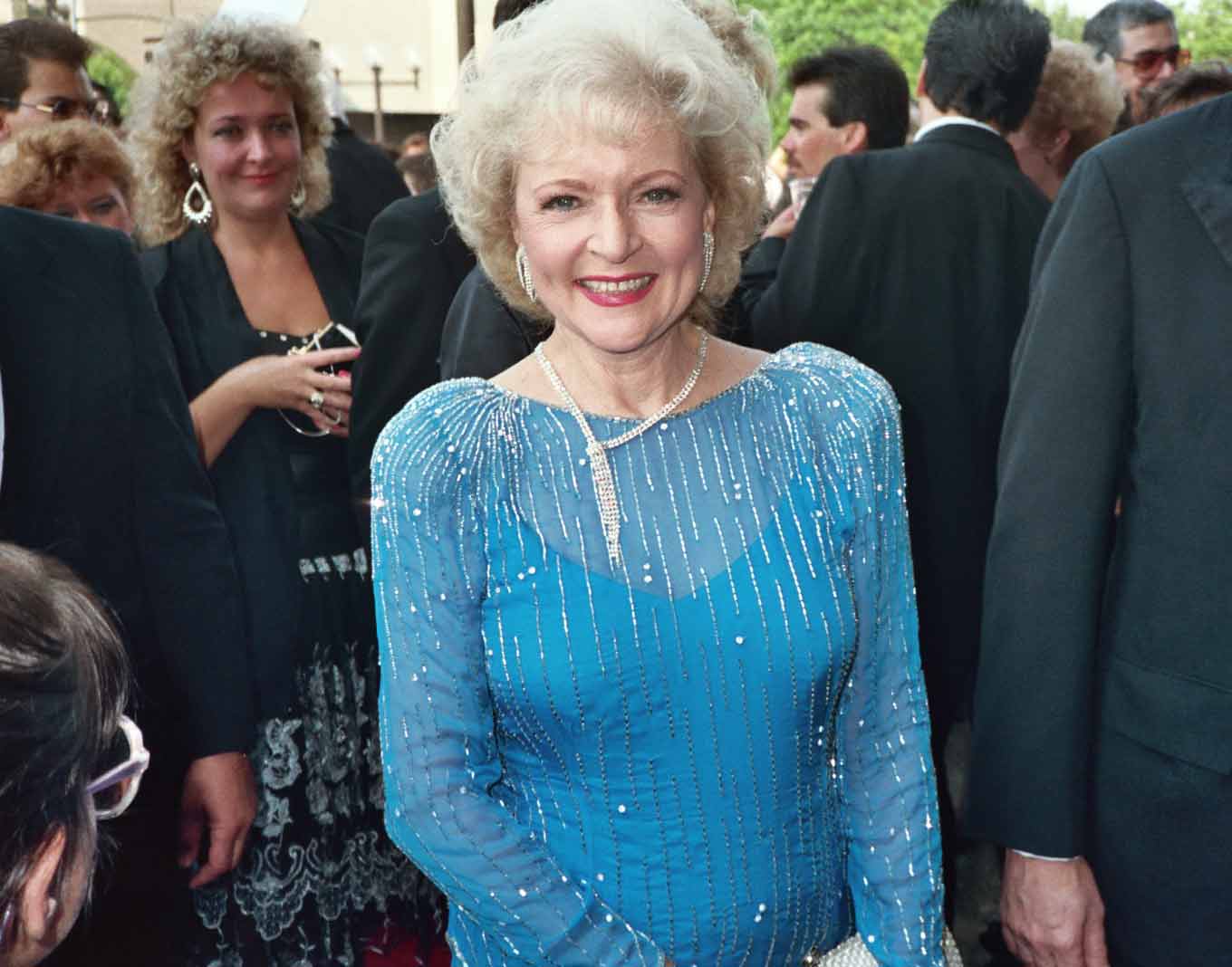
"I will miss her terribly and so will the animal world that she loved so much."
"Even though Betty was about to be 100, I thought she would live forever," said Jeff Witjas, White's agent and close friend, in a statement to PEOPLE.
"I will miss her terribly and so will the animal world that she loved so much. I don't think Betty ever feared passing because she always wanted to be with her most beloved husband Allen Ludden. She believed she would be with him again."
What is the Betty White Challenge?
In the days after her death, the internet was filled with people honoring her life. And many people decided one of the best ways to do this was by continuing her passion by showing care for animals.
Called the #BettyWhiteChallenge, the movement calls on animal — and Betty White — lovers to donate $5 (or any amount) to a shelter or rescue before or on her birthday, January 17th — and give White "the movement she deserves."
“Almost immediately following the press regarding her passing we started receiving donations,” said Susan Taylor in an interview with MarketWatch. Taylor is the executive director of Actors and Others for Animals, a nonprofit that offers financial assistance for pet owners to spay or neuter their pets in California.
According to Taylor, her nonprofit received donations from 105 people totaling more than $5000 — all in White's name — in just the four days after her death.
And the campaign is sweeping the United States — and even globally — raising money and support for large and small nonprofits that support all kinds of animals.
Betty White's Animal History of Animal Advocacy
White was a lifelong animal advocate who worked to make a difference in the lives of homeless pets, and advocate for animal rights around the world.
"Betty White has demonstrated a lifelong commitment to helping animals in need, including dedicated support for local shelters and animal welfare endeavors, fiercely promoting and protecting animal interests in her entertainment projects, and personally adopting many rescued animals"
“Betty White has demonstrated a lifelong commitment to helping animals in need, including dedicated support for local shelters and animal welfare endeavors, fiercely promoting and protecting animal interests in her entertainment projects, and personally adopting many rescued animals,” Matt Bershadker, ASPCA president and CEO, told TODAY in an email.
According to PEOPLE, she used 100% of the dues from her fan club, Bet's Pets, to support animal rescue charities.

In a 2009 interview with TV Guide, White described her animal advocacy: “I'm the luckiest person in the world. My life is divided in absolute half: half animals, half show business. I have to stay in show business to pay for my animal work!”
She supported organizations like American Humane and the Best Friends Animal Society, served on the board of trustees at the nonprofit Greater Los Angeles Zoo Association (GLAZA) since 1974, and was a volunteer at the Los Angeles Zoo & Botanical Gardens.
In 2009, White received the Jane Goodall Institute Global Leadership Award for Lifetime Achievement.
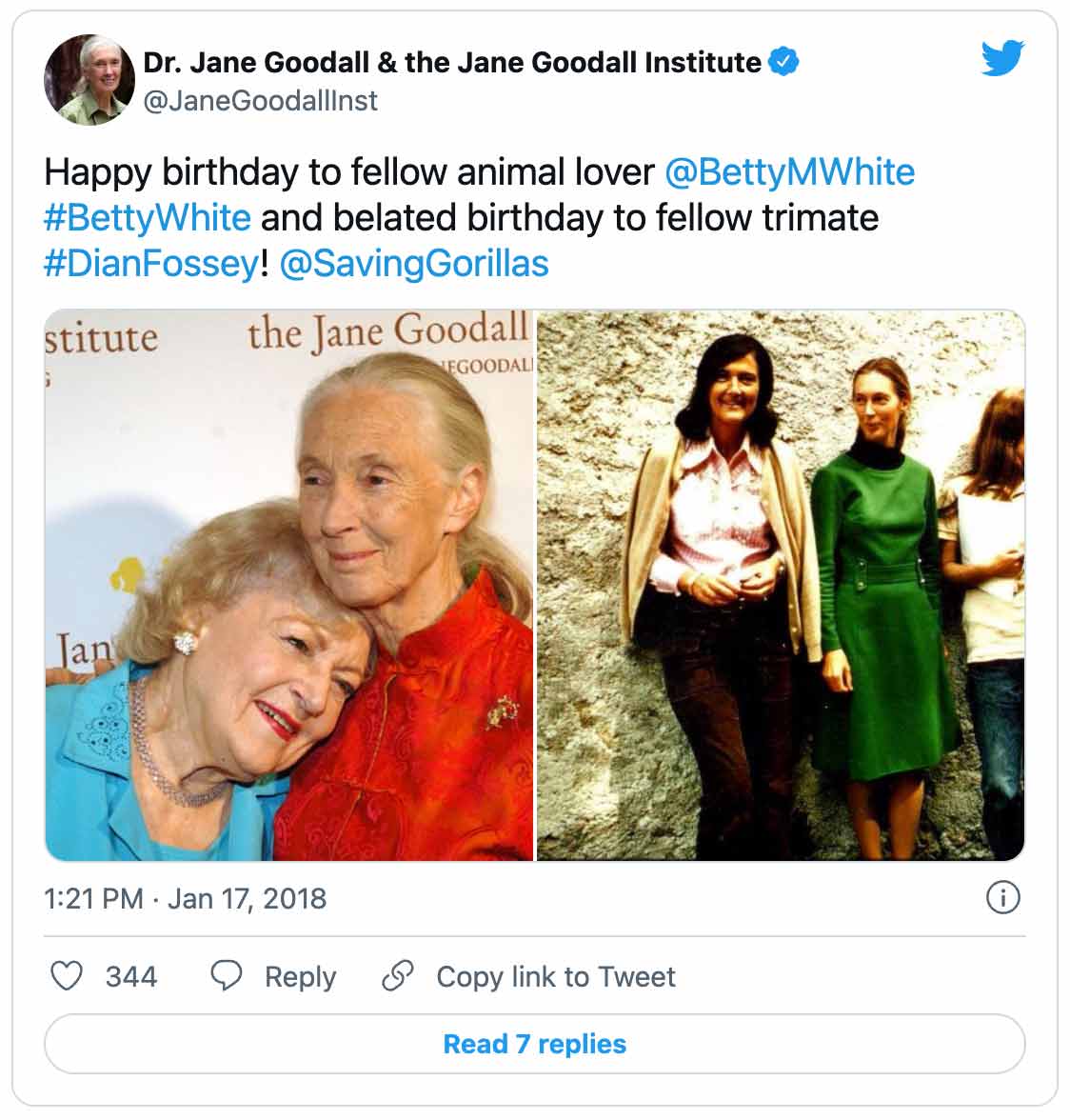
According to GLAZA's president, White helped ensure the zoo's animals had quality habitats and enrichment — something the Los Angeles Zoo is now renowned for.
She also set up funds to provide immediate support for wildlife rescue efforts in the aftermath of natural disasters, like the wildfires in Australia in 2020, helped make the world a better place for people assisted by guide dogs, and so much more.
How to Join the ‘Betty White Challenge’
You can join the #BettyWhiteChallenge by making a donation to your local shelter or rescue — or to animal rescue organizations.
If you already have an animal-related nonprofit in mind, make a donation there.
If not, you can search for local animal shelters in your community and make a donation in honor of Betty White.
You can also donate to national and global animal rescue organizations like Best Friends — a nonprofit that “operates the nation's largest sanctuary for homeless animals; provides adoption, spay/neuter, and more” or IFAW — a global organization that “rescues and rehabilitates animals, and helps to protect their natural habitats.”
Whether you have $5, $50, or $500, your donation can make a huge difference. Especially because thousands of Betty White fans from around the world are joining in to do the same this week.
You can also sign up as a volunteer at a local shelter — or even consider taking on the responsibility of fostering or adopting a pet.
And lastly, don’t forget to share about whatever actions on social media with the hashtag #BettyWhiteChallenge. (Feel free to include this article too — to help inspire others to join you.)
You can read more good news about animals here on goodgoodgood.news — or in The Animals Edition of the Goodnewspaper, our print newspaper filled with good news.
Why it’s important to acknowledge pain and heartbreak — before moving on to optimism and action
When there’s a tragedy in the world — a natural disaster, an act of violence, or something completely unprecedented — it’s hard to know how to respond.
And to be honest, there’s a lot of bad news, so it’s easy to feel overwhelmed.
Here at Good Good Good, people know that we care about celebrating good news — and encouraging our audience to get involved and take action.
Oftentimes people think that means we stay happy and optimistic all the time — or maybe even tune out the bad altogether — when the world feels like a scary place.
But that’s actually not how we approach bad news.
Rather than tuning out the bad in the world, it’s possible to pay attention to the bad news going on in the world, truly feel the heartbreak of it, and use that energy to make a difference.
Through conversations with neuropsychologists, nonprofit leaders, activists, artists, and the world’s biggest optimists, we’ve learned the art and science of actually remaining hopeful — and have broken it down here in three simple steps.
We’re here to help. Whenever there’s tragedy in the world, at Good Good Good we recommend you follow these three steps:
How to deal with constant bad news:
1. Cultivate a true sense of empathy, instead of just tuning the bad news out.
When bad things happen in the world — be it a natural disaster, mass shooting, systemic injustice, leadership failure, or other tragedy — it’s natural to want to distance yourself from the heartbreak. Emotionally. Mentally. Maybe physically. But try not to.
If you’re reading this, it’s likely you want to do your part to make the world a better place.
Mourning that a tragedy or bad news happened (and all the nuances associated with it) is a difficult, but necessary first step toward making a difference.
Allowing yourself to pay attention to the heartbreak you feel when bad news happens is a helpful indicator of what matters to you — and where you can take a next step to join in taking action.
You can’t move forward into true, authentic hope — and eventually meaningful action — without first acknowledging the authentic grief and cultivating real empathy around the situation.
2. Look for the hope and helpers within the heartbreak.
All of the good news we share at Good Good Good feels hopeful, but a little devastating at the same time (it’s why step 1 is so important).
As you read through the good news we share, you might find yourself saying “this isn’t enough” or asking “why is this even happening?”. And that’s a good thing, because most “real” good news does feel this way.
We look for and share stories of hope and helpers — people taking action and moving the needle towards good, equality, and justice.
And those types of stories are usually found in the midst of heartbreak, pain, and injustice and in the world.
And they’re usually imperfect and unfinished. The process of making the world a better place will never be completed. But we can continually move closer to our goals.
When we share stories of hope and helpers, it’s not to move on quickly past the heartbreak, but because just like the quote from Mister Rogers says, where there is bad news, “you will always find people who are helping.”
Those helpers help remind us that hope is alive, there are real people working toward real, meaningful change — and each of us can be a part of bringing even more good into the world, too.
3. Get involved and make a difference.
After we’ve allowed ourselves to feel the weight of the pain and heartbreak associated with bad news, and look for hope and helpers in the midst of it — we always have the opportunity to join in and make a difference, too.
Especially if that bad news isn’t happening to you, personally.
The privilege of experiencing tragedy through the news rather than first-hand comes with the responsibility to use that privilege for good.
We have the opportunity to join in, do our part, and be the helpers — whether in-person or by supporting those who are on the ground or directly impacted.
And here’s the thing — this doesn’t mean you need to hop on a plane and clear rubble as a first responder, or quit your job and start a nonprofit.
All you have to do is take one single action that will help.
You might make a $5 donation to a helper, organization, or mutual aid group already responding.
You may take an hour to volunteer somehow.
Or make one call to your senator.
Or maybe even share about the helpers you found (in step 2!) with your followers online — so they can feel more hopeful and find a way to get involved.
And then, if you feel compelled to do more — do more. But start small and grow from there.
Don’t know where to start? We’re always here to help.
At Good Good Good, whenever tragedy strikes, we do our best to curate resources for ways you can get involved and make a difference.
Whether it’s helping care for refugees, supporting disaster recovery efforts, protecting workers from exploitation, contacting your elected officials about important issues, making sure the media is including the impact of climate change in their reporting, advocating for gun reform — and more ways to take action.
Whether you lean on us for action steps or you just ask people affected how you can help them — getting involved and becoming a helper yourself is the final step in responding to bad news.
Of course, it’s important to mention that you should always make sure you take care of yourself.
We can’t help others if our own needs aren’t met. If you find any kind of bad news particularly challenging: Turn off the news. Put your phone and feed down. Call a friend. Text with a trained counselor at Crisis Text Line.
And then, when you’re in a good place, roll up your sleeves and help make a difference.
Putting this all together
The bad news of the world can feel heavy — especially when tragedy upon tragedy stack up in our minds.
By being intentional about following these three steps — genuinely feeling our feelings, looking for hope within the heartbreak, and finding one singular way to get involved — we allow our bodies and our brains to process what happened better.
When we take all three steps, we remind ourselves that there are always people responding to bad news with good action, affirm that we are not helpless, and that, in fact, we are the helpers.
Together, we can feel more hopeful and do more good.
Food insecurity affects nearly 30% of the world’s population, with many of those people being food producers themselves.
More prone to social and cultural barriers than men, women and adolescent girls are more likely to fall prey to the chronic effects of hunger.
Globally, more than 18 million women are severely malnourished, which contributes to high instances of maternal mortality, low infant birth weight, child mortality, and child malnutrition.
The humble egg has the power to nourish those suffering from hunger and malnutrition.
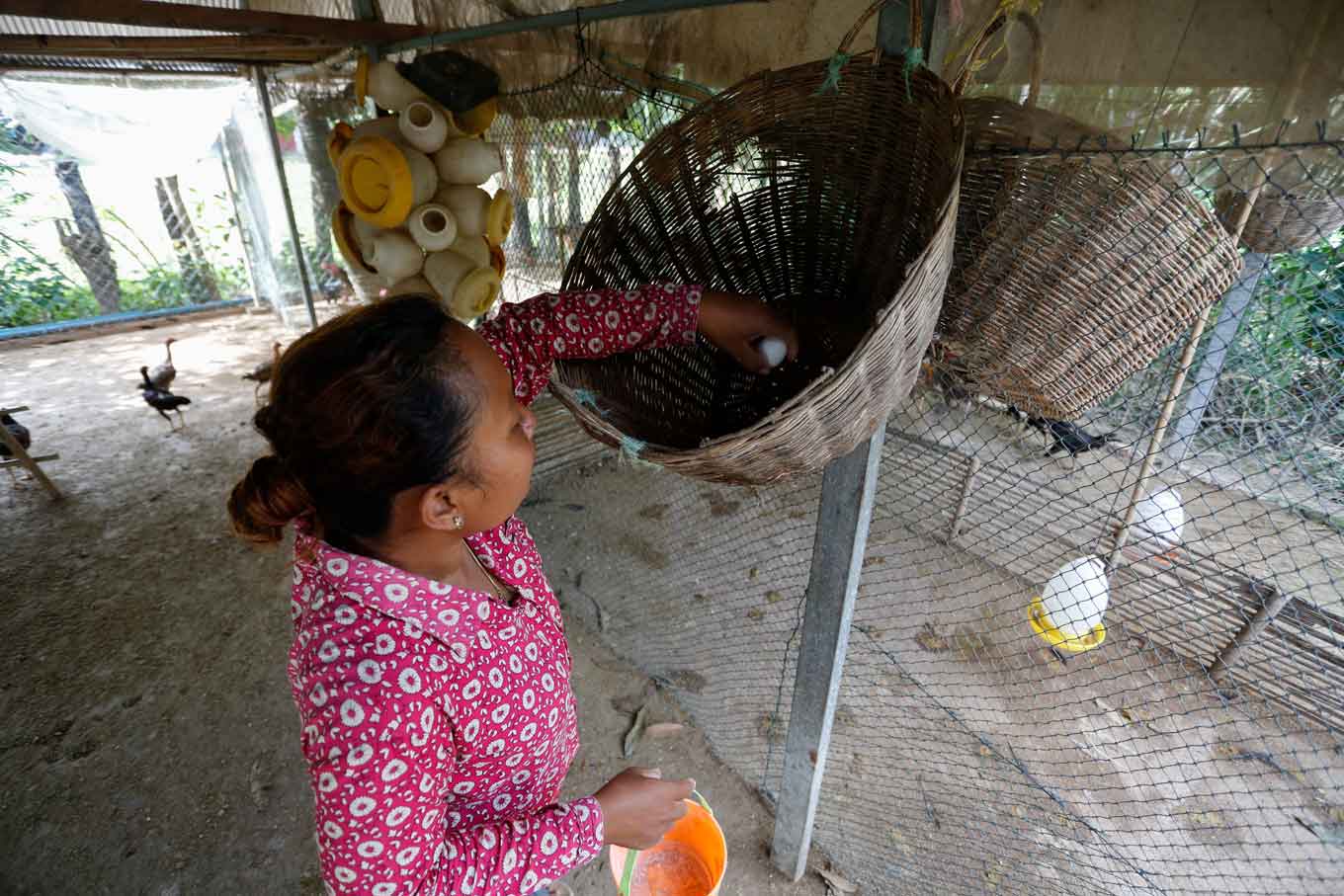
Eggs are a host of vitamins, minerals, and protein. One egg contains 6 grams of protein, nine essential amino acids, and four vital nutrients.
Since 2019, Heifer International has partnered with Cargill on the Hatching Hope Global Initiative in countries around the world, including India, Kenya, and Mexico.
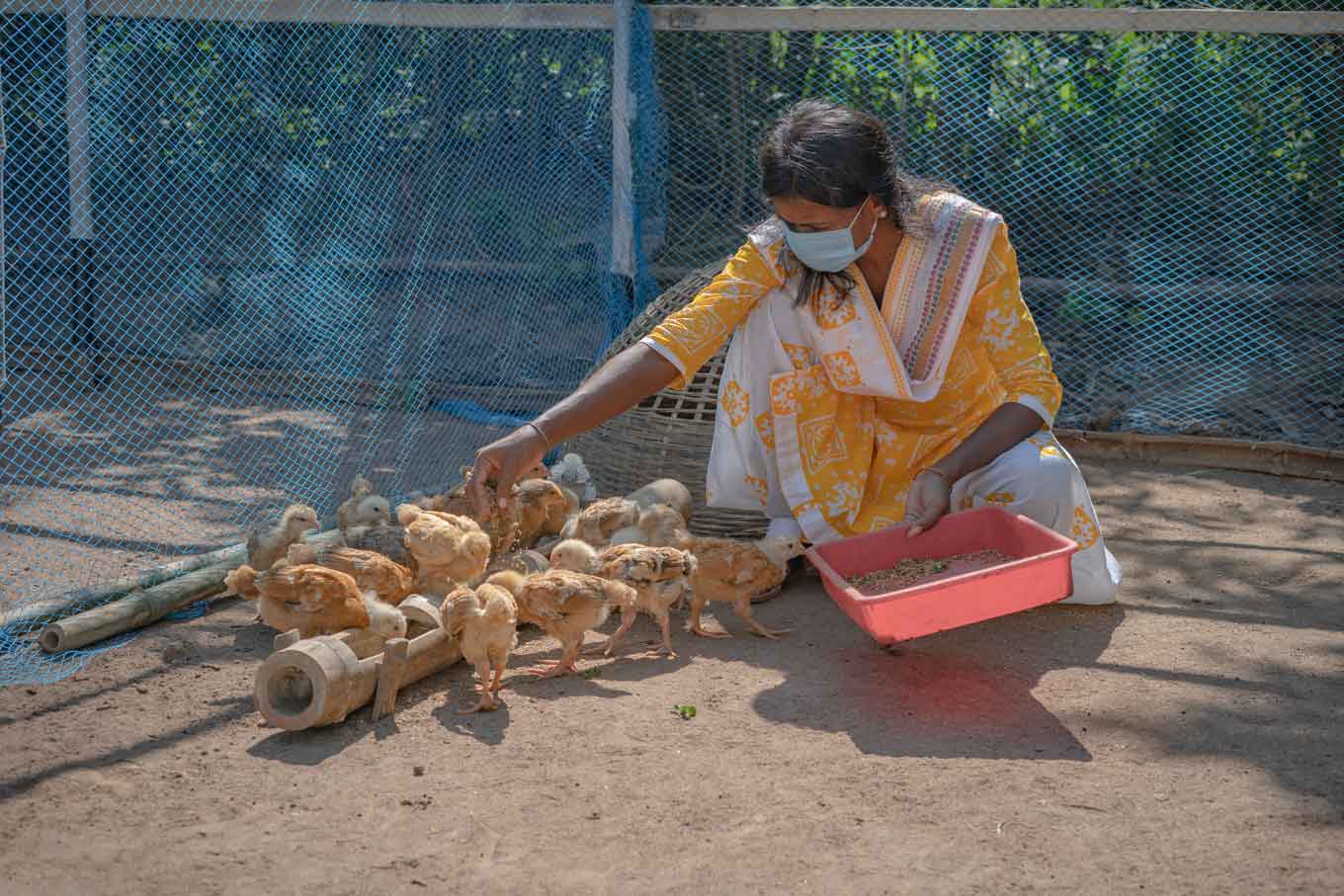
Heifer trains farmers in India about production practices and nutrition, using accessible technology like mobile applications to educate farmers about the health benefits of eggs and chicken meat, nutritional requirements for different age groups, and the importance of equitable distribution of food among family members.
“Now I am aware that nutrition is as important as income,” said Nibedita Tudu, a Hatching Hope India participant.
“All I seek is guidance and knowledge, and from that I can construct a good fortune for my family.”
Related: Read the best motivational quotes about hunger and feeding the poor
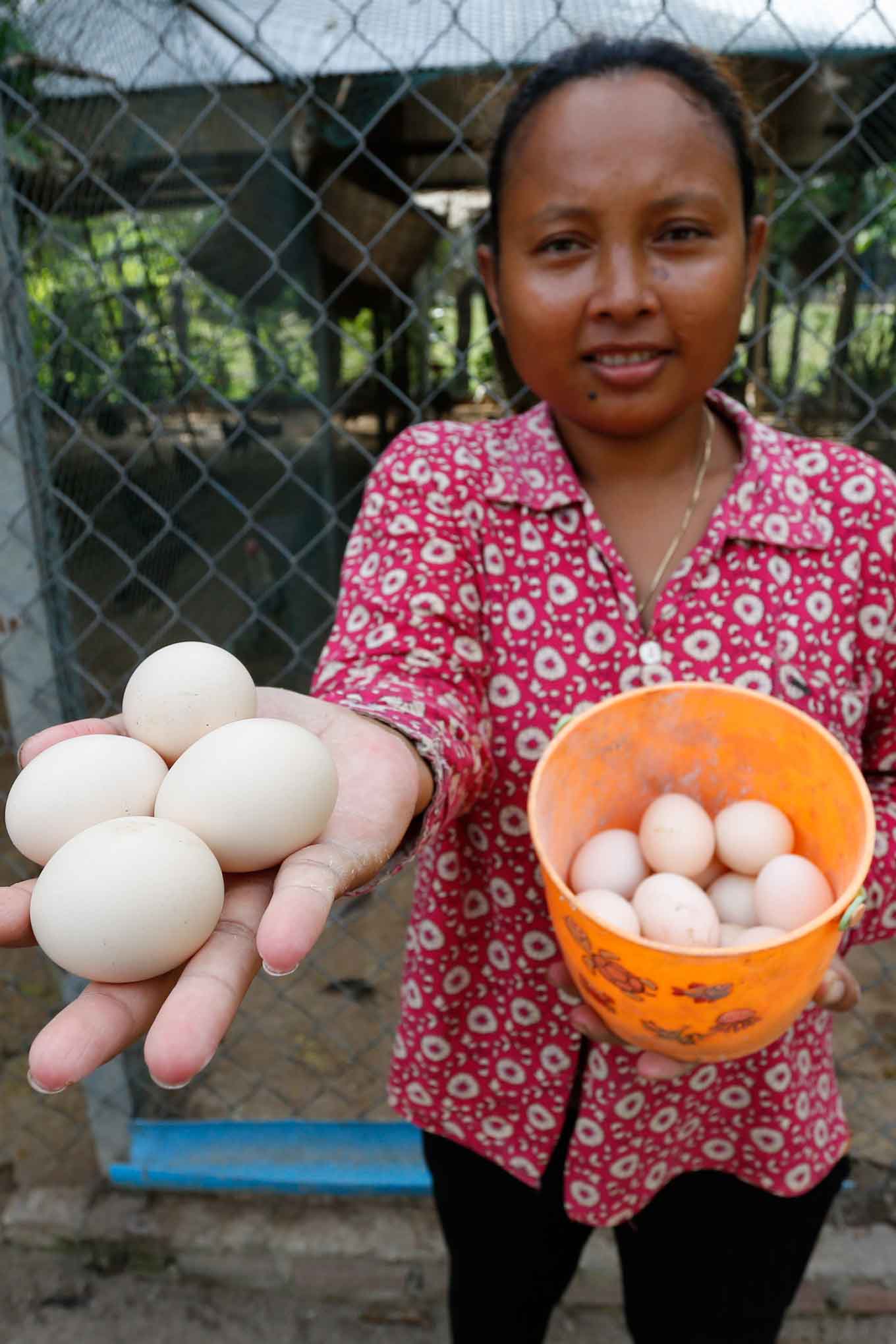
Heifer International also trains participants on the proper care of their animals, as well as community vaccinators to provide affordable vaccinations and deworming treatments for chickens.
Simple solutions to ensure the health and safety of families and chickens include implementing specially designed model chicken coops that keep out predators and other wild animals, and both Quicklime dry disinfectant foot baths and potassium permanganate disinfectant foot baths to protect eggs and chicks in hatcheries.
"We ask farmers to keep the shelter neat, clean, and dry. We ask them not to share their animal equipment, tools, feeder, water, etc. We ask them to keep separate shoes or slippers for going inside or coming out of the animal house,” said Dr. Sushmita Parai, senior program manager for animal well-being for Heifer India. “All these simple steps can help them build bio secure farms.”
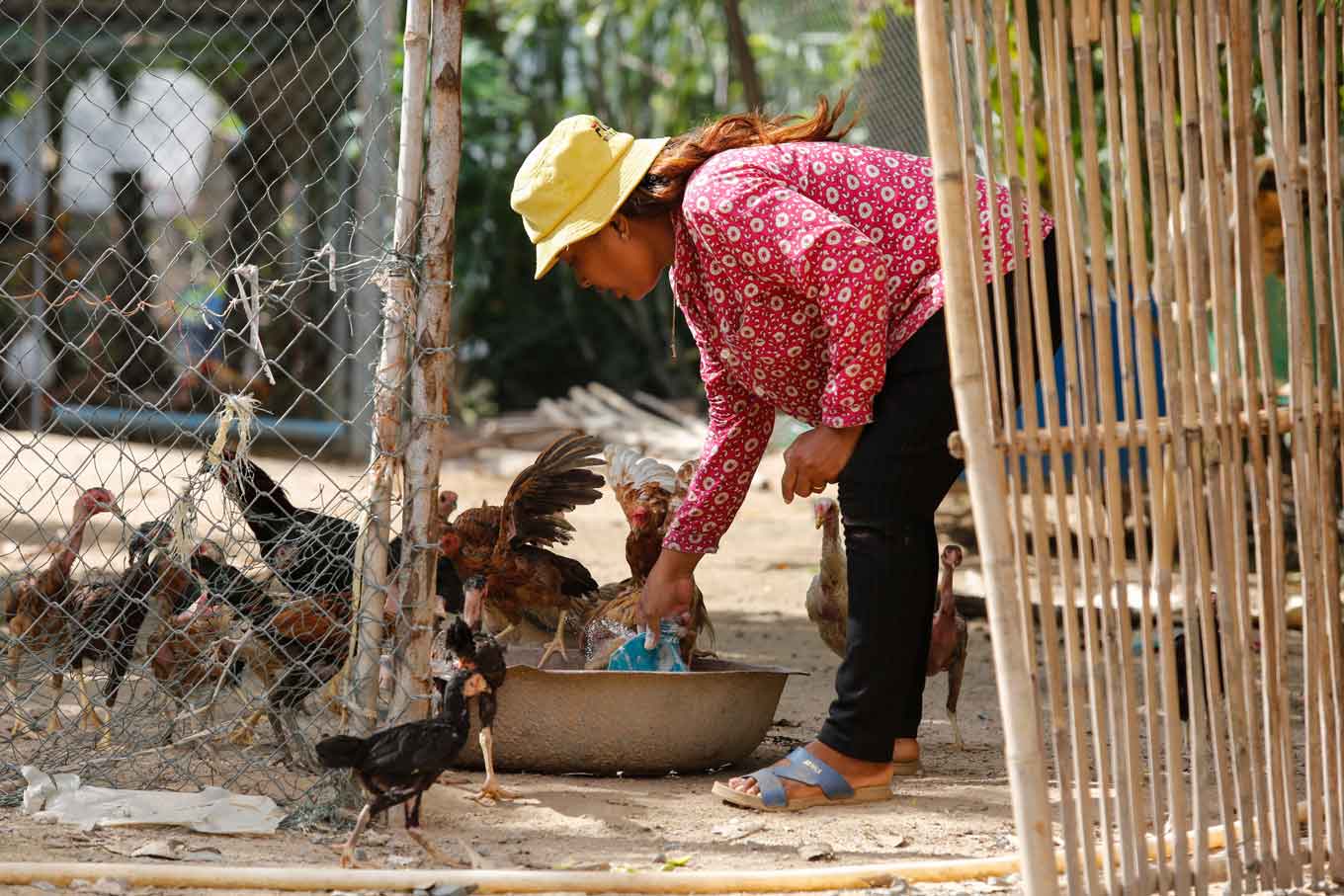
The goal of Hatching Hope is to improve the livelihood and nutrition of 100 million people by 2030. Heifer International, in partnership with Cargill, is well on its way to achieving that.
Between 2018 and 2021, 11.5 million people have been reached, including nearly 7 million through project activities and more than 4 million through media reach.
During that same time frame, nearly 200,00 people have increased their protein intake through poultry and eggs.
In India, the project solely supports women smallholder farmers, contributing more than 7,200 project participants.
These participants are improving the nutrition and livelihoods of their families in the State of Odisha, one of India’s poorest states, where between 20% and 30% of children under the age of 5 are reported to suffer from malnutrition.
Heifer International began working in India in 1955. It started by delivering cattle to communities through the Ministry of Agriculture.
Heifer India has supported 755,000 families thus far by providing technical training to improve animal management and build resilience by diversifying incomes with crops and livestock.
Heifer International is also working with smallholder women poultry farmers in Cambodia and elsewhere.
Pon Louk, from Cambodia’s Kampong Chhnang province, often didn’t have enough food to feed her family. Then she joined a farmer’s group and agricultural cooperative supported by Heifer that was offering resources to strengthen local farmers’ operations.
Through the cooperative, Pon Louk received guidance on raising poultry for business and participated in Heifer’s values training, which educates farmers on nutrition, animal management, self-reliance, and other principles that support sustainable progress.
After demonstrating her passion and commitment, she took a $500 loan to launch her own enterprise, which would enable her to participate in the cooperative’s larger poultry operation.
“My family’s economic status [has] now moved up from poverty,” Pon Louk said. “I have enough food to support [my] children and have enough money to save. … I really appreciated the support I gained, knowledge I learnt and income I generated, because it can support my family [in] getting us out of [the] hardship we experienced.”
Activists, athletes, actors, and preachers with sometimes-fiery presentation skills are just a few of the people who’ve communicated the message of civil rights to the masses.
When many people think of civil rights, the path to equality for the Black community comes to mind, but oration is equally as instrumental to civil rights movements too, especially those striving to secure equality for women, those who are older, and members of the LBGTQ+ community.
Our partners at Stacker compiled a list of 50 essential civil rights speeches using resources including BlackPast, TED, American RadioWorks, the Obama Foundation, and various other media and educational sources.
Almost everyone knows the names and the works of Martin Luther King Jr., Malcolm X, and Barack Obama. But did you know one presenter, in particular, centered intersectionality in her speech to include a telling test that illustrated how visibility for some can be almost nonexistent? Even another key player in the civil rights movement of the ’60s was sometimes silenced because he was Black and gay.
Being incendiary was natural for some of these speakers, while others toed the line between creating change and avoiding offending more conservative elements of the movement.
Some of these speeches date back five decades into the past, but several others were delivered following the groundbreaking events of 2020 — from Black Lives Matter rallies to the 2020 March on Washington — which featured powerful orators, ranging from activists to professionals with doctorates to even a grade-school student.
Keep reading to discover 50 essential civil rights speeches.
Martin Luther King Jr.’s ‘The Montgomery Bus Boycott’
Four days after Rosa Parks refused to give up her seat in 1955, Martin Luther King Jr. addressed thousands of people who were part of the subsequent boycott of the bus system in Montgomery, Alabama. He talked about the longtime intimidation of Black bus riders, and the importance of continuing the protest.
Related: The best quotes from Martin Luther King Jr. that go beyond the clichés
Related: The best quotes from Rosa Parks
Malcolm X’s ‘White Liberals and Conservatives’
Malcolm X talked in 1963 about the power of the vote to change the race problem, noting that only 3 million “Negro integration-seekers” in the “Black bourgeoisie” vote, but 8 million don’t. He proposed that both white liberals and conservatives use civil rights “in this crooked game of power politics” to garner power.
Martin Luther King Jr.’s ‘Letter from Birmingham Jail’
The civil rights leader penned this speech in 1963 while jailed for continuing to protest the mistreatment of Black people. Martin Luther King Jr. talked about the interconnectedness of humanity, reminding us that “injustice anywhere is a threat to justice everywhere—we are caught in an inescapable network of mutuality, tied in a single garment of destiny. Whatever affects one directly affects all indirectly.”
Related: The best quotes from Martin Luther King Jr's daughter, Bernice King, about hope, justice, and love
John F. Kennedy’s 1963 address on civil rights
After National Guard assistance was required in 1963 to allow two Black students onto the University of Alabama campus, President John F. Kennedy reminded the nation that Americans of any color should be able to attend public schools, receive equal service, register to vote, and “enjoy the privileges of being American,” framing those rights as a moral issue. The stats he quoted to prove that this was not the case have changed over time, but many show that equality has not yet been achieved.
Related: The best John F. Kennedy quotes to leave you feeling inspired
John Lewis’ 1963 March on Washington speech
Before representing Georgia in Congress, John Lewis was chairman of the Student Nonviolent Coordinating Committee (SNCC), organizing with other civil rights leaders including Martin Luther King Jr. Lewis drafted his “March on Washington” speech in response to the Civil Rights Bill of 1963, stating that “we cannot be patient” for jobs and freedom and that “we are tired. We are tired of being beaten by policemen. We are tired of seeing our people locked up in jail over and over again.”
Martin Luther King Jr.’s ‘I Have a Dream’
The civil rights icon called for an end to racism in front of more than 250,000 people in 1963. Martin Luther King Jr. talked about the lack of progress at that time, but almost 60 years later, the police brutality decried in this speech still exists, visible in the deaths of unarmed Black citizens and the protests that followed—perhaps most demonstratively were the Black Lives Matter protests that ensued following the killings of George Floyd, Ahmaud Arbery, and Breonna Taylor in 2020.
Malcolm X’s ‘By Any Means Necessary’
The Nation of Islam activist spoke in 1964 about the creation of a Black nationalist party based on the successes of African brothers in gaining “more independence, more recognition, more respect as human beings.” His new Organization of African Unity would hasten the “complete independence of people of African descent … by any means necessary,” starting in Harlem.
Malcolm X’s ‘The Ballot or the Bullet’
Malcolm X continued his incendiary tone in 1964 with his “The Ballot or the Bullet” speech, in which he advocated for voting but doesn’t rule out more violent reactions. He noted that Black people are “fed up,” “disenchanted,” and “disillusioned,” creating an explosive environment.
Fannie Lou Hamer’s 1964 Democratic National Convention testimony
Former sharecropper and civil rights activist Fannie Lou Hamer talked in 1964 about traveling 26 miles to register to vote to become “first-class citizens,” being met by police, and ultimately being evicted for her efforts. In her speech, she asked, “Is this America, the land of the free and the home of the brave, where we have to sleep with our telephones off of the hook?”
Lorraine Hansberry’s ‘The Black Revolution and the White Backlash’
Not far off the mark from the commentary of Malcolm X, Lorraine Hansberry noted the “problem about white liberals,” who she asserted don’t understand the impatience of Black people who’ve been “kicked in the face so often.” Her 1964 speech also mentioned that the solution is to get them to “stop being a liberal and become an American radical.”
Joseph Jackson’s ‘The Vote is the Only Effective Weapon in the Civil Rights Struggle’
Baptist preacher Joseph Jackson talked about the interconnectedness of civil rights and voting rights in this 1964 speech. The conservative leader implored the Black community to “fight their battles in the polling booth,” but opposed the direct action taken by many other civil rights leaders of the time.
Bayard Rustin’s ‘Negro Revolution in 1965’
Bayard Rustin is relatively unknown in civil rights history, even though he was a major contributor to the movement, and acted as deputy director of the March on Washington.
In this 1964 speech, he said that “the Negro is forcing the American people into a revolutionary situation” focused on better education, housing, and job opportunities. Some wanted to silence Rustin because he was Black and gay.
James Baldwin’s ‘Pin Drop’
Writer and activist James Baldwin talked in 1965 about how it can seem to Black people that they “belong where white people have put you.”
He addressed how gentrification existed 55 years ago: “When someone says ‘Urban Renewal,’ that Negroes are simply going to be thrown out into the streets.”
He also warned how those who are excluded will rise up: “The people who are denied participation in [the American Dream], by their very presence, will wreck it.”
Related: The Best Quotes From James Baldwin
Lyndon B. Johnson’s ‘We Shall Overcome’
In 1965, following the atrocities of Bloody Sunday, President Lyndon B. Johnson called for voting and civil rights, stating, “Their cause must be our cause too.” Johnson had helped pass the Civil Rights Act the previous year, but he’d previously called a press conference to detract from testimony by Fannie Lou Hamer about voter suppression.
Martin Luther King Jr.’s ‘Our God is Marching On’
After a four-day march from Selma to Montgomery in 1965, Martin Luther King Jr. spoke to the crowd, asking the question “How long will prejudice blind the visions of men?”—with the often-repeated answer, “Not long, because the arc of the moral universe is long, but it bends toward justice.” King hoped that racist brutality was coming to an end, but progress has continued to be spiked with beatings and deaths and new records in the number of hate groups.
Martin Luther King Jr.’s ‘The Three Evils of Society’
Martin Luther King Jr. talked about the “triple evils” of war, poverty, and racism at the 1967 National Conference on New Politics in Chicago.
His thoughts on war talk about “guided missiles and misguided men,” while his insights on poverty and racism note that “capitalism was built on the exploitation and suffering of black slaves and continues to thrive on the exploitation of the poor both black and white, both here and abroad.”
Martin Luther King Jr.’s ‘The Other America’
Equality for all was another of Martin Luther King Jr.’s rallying cries. In this 1967 speech, he recognized that some people live on a “lonely island of poverty in the midst of a vast ocean of material prosperity.”
Martin Luther King Jr.’s ‘I’ve Been to the Mountaintop’
No collection of civil rights speeches would be complete without the hopeful presentation by Martin Luther King Jr. from the night before his assassination in 1968. Despite the roadblocks along the way, including the beatings and deaths of numerous people in the movement, the civil rights leader was still convinced that “we, as a people, will get to the promised land.”
Muhammad Ali’s ‘Wake Up and Apologize’
In a 1972 conversation with an Irish journalist, Muhammad Ali launched into a poetic assessment of what it’s like to face police brutality as a Black man. The GOAT noted, “Better far from all I see, to die fighting to be free, what more fitting end could be … let me die by being Black, better far that I should go, standing here against the foe is the sweeter death to know.”
Angela Davis’ ‘The Gates to Freedom’
Socialist and activist Angela Davis faced sexism while championing criminal justice reform and civil rights for the Black community, even being imprisoned as a result. After her trial, she gave this speech in 1972, suggesting that society “redirect that wealth … and channel it into food for the hungry, and to clothes for the needy; into schools, hospitals, housing, and all the material things that are necessary.” The ideas parallel current calls for reform.
Related: The Best Quotes About Hope, Optimism, and Cynicism
Related: The Best Quotes About Feeding the Hungry
Shirley Chisholm’s ‘The Black Woman in Contemporary America’
The first Black woman elected to Congress urged all Americans in 1974 to “Forget traditions! Forget conventionalisms! Forget what the world will say whether you're in your place or out of your place.” This mindset served her well when she put her name in the hat for president of the United States.
Jesse Jackson’s ‘Keep Hope Alive’
Two-time presidential candidate, activist, and organizer Jesse Jackson spoke to the Democratic National Convention in 1988 about finding common ground, decades before the divisiveness seen in recent years. “Progress will not come through boundless liberalism, nor static conservatism, but at the critical mass of mutual survival,” Jackson said.
John Lewis’ ‘You Cannot Tell People They Cannot Fall in Love’
The Georgia representative and civil rights organizer stepped up at the Defense of Marriage Act congressional debates in 1996 to tell the world, “You cannot tell people they cannot fall in love.” Lewis drew parallels between interracial and gay marriages in his reaction to the wording in the Act that defined marriage as a legal union between one man and one woman as husband and wife.
Henry Louis Gates Jr.’s ‘America Beyond the Color Line’
Harvard professor and intellectual Henry Louis Gates Jr. spoke to the Commonwealth Club of California in 2004 about traveling all over the country to talk to Black people about their experiences, especially with racial equality. His interviews took place everywhere, from “Ebony Towers” and “Black Hollywood” to the inner city and all-Black communities in the South.
Barack Obama’s 2004 Democratic National Convention speech
Before he was even elected as a senator, Barack Obama spoke at the Democratic National Convention in 2004 from the perspective of the child of parents who deemed him blessed to be in America. His speech considered the progress the country has made, but also how far we have to go.
Barack Obama’s ‘A More Perfect Union’
When former President Barack Obama was still a candidate in early 2008, he addressed America and its legacy of racism, talking about the original sin of slavery, and how the answer was already embedded in the Constitution “that promised its people liberty, and justice, and a union that could be and should be perfected over time.” Continuing, he talked about how protests “on the streets and in the courts” have moved us closer to a “more just, more equal, more free, more caring, and more prosperous America.”
Barack Obama’s 2009 Inaugural Address
When President Barack Obama was inaugurated in 2009, his speech recognized the diversity of the American people with respect to race, religion, and more. His speech held out hope “that the old hatreds shall someday pass” and “that the lines of tribe shall soon dissolve.” The year 2020 has shown us we haven’t reached that goal yet, but Obama’s speech promised that one day we will.
Bryan Stevenson’s ‘We Need to Talk About an Injustice’
Bryan Stevenson is a human rights lawyer who founded the Equal Justice Institute and its Legacy Museum, which educates people about the direct path from slavery to mass incarceration. In this 2012 TED Talk, he talks about injustices and the impact of the death penalty in a world where 10% of those on death row are ultimately exonerated.
Related: The Best Quotes By Activists About Activism
Barack Obama’s 2013 Inaugural Address
President Barack Obama took the opportunity of his second inauguration in 2013 to draw parallels between Black and women’s rights, fought for in Selma and Seneca Falls, to the Stonewall riots that were pivotal for the gay rights movement. His commitment to that cause was showcased in his comment that “our journey is not complete until our gay brothers and sisters are treated like anyone else under the law,” setting the stage for arguments to declare the Defense of Marriage Act unconstitutional.
Related: The Best Quotes from Barack Obama
Vernā Myers’ ‘How to Overcome Our Biases? Walk Boldly Toward Them’
In her 2014 TEDx Talk, diversity consultant Vernā Myers advised, “Stop trying to be good people, we need real people. Don't even think about colorblindness.”
Yoruba Richen’s ‘What the Gay Rights Movement Learned From the Civil Rights Movement’
Filmmaker Yoruba Richen, who is a part of both the Black and LGBTQ+ community, spoke in this 2014 TED Talk about her frustration concerning the supposed conflict between the two worlds, but realized that there was really more intersection. She explored how the LGBTQ+ community successfully used strategies and tactics used by the Black community in their own civil rights efforts.
John Lewis’ speech on 50th Anniversary of Bloody Sunday
Fifty years after the Selma march that became known as Bloody Sunday because of the police abuse that almost killed him and other marchers, John Lewis returned to the Edmund Pettus Bridge in 2015. Lewis reminded everyone, “We must use this moment to recommit ourselves to do all we can to finish the work. There is still work left to be done. Get out there and push and pull until we redeem the soul of America.”
Related: Lessons We Can Learn From the World's Leading Activists
Jimmy Carter’s ‘Why I Believe the Mistreatment of Women is the Number One Human Rights Abuse’
Former President of the United States Jimmy Carter posited in this 2015 TEDWomen Talk that abuse of women and girls is the major human rights abuse of our time, resulting from various reasons, including misinterpretation of scriptures and “men [who] don't give a damn.” He also outlined in his talk a number of abuses that are commonplace across the world. His Carter Center is committed to protecting and advancing human rights.
You can read Jimmy Carter's most inspiring quotes about human rights and hope in our curated guide.
Julian Bond’s ‘Declaration: We Must Practice Dissent’
From the Student Nonviolent Coordinating Committee to the Southern Poverty Law Center and NAACP, Julian Bond has been a part of some of the major organizations of the civil rights movement. In his final speech in 2015, he continued to advocate for protest and dissent.
Barack Obama’s ‘Love is Love’
More than two years after advocating for marriage equality in his second inauguration, Barack Obama celebrated the downfall of part of the Defense of Marriage Act in 2015 with a speech in which he declared, “Love is love.”
Jesse Williams’ 2016 BET Awards speech
Actor Jesse Williams’ speech at the 2016 BET Awards remembered the many Black people who were killed by police at the time, expressing, “We know that police somehow managed to deescalate, disarm, and not kill white people every day, so what’s gonna happen is we are gonna have equal rights and justice in our own country, or we will restructure their function and ours.” Mirroring the demands of other civil rights activists for action now, not later, he noted that “the hereafter is a hustle, we want it now.
Kimberlé Crenshaw’s ‘The Urgency of Intersectionality’
Kimberlé Crenshaw started her 2016 TEDWomen talk commemorating the names of people killed at the time by the hands of police, conducting an experiment that demonstrates that the women in that group are relatively unknown. Discrimination against Black women “feels like injustice squared,” asserted Crenshaw, who later invited the audience to use #SayHerName to bear witness to these women.
Related: Get to know these famous Black activists
Ashton Applewhite’s ‘Let’s End Ageism’
One type of discrimination that’s less considered in the civil rights realm is ageism. In this 2017 TED Talk, Ashton Applewhite called it the “last socially-acceptable prejudice.” Many fear getting old, even though the stats show that reality doesn’t match our fears. And prejudice of any type divides us. She implored us to get off the “hamster wheel of age denial.”
Daryl Davis’ ‘Why I, As a Black Man, Attend KKK Rallies’
Black musician Daryl Davis talked about the unusual evolution of a friendship between himself and a Ku Klux Klan Grand Dragon in his 2017 TEDx Talk. His takeaway from the experience: “Hate stems from fear of the unknown. Take the time to sit down and talk with your adversaries. You’ll learn something; they'll learn something.” Amid his friendship, Davis revealed the Grand Dragon actually left the Klan.
Oprah Winfrey’s 2018 Golden Globes speech
The #MeToo movement played a prominent part in Oprah Winfrey’s acceptance speech as she received the Cecil B. DeMille Award at the 2018 Golden Globes. Winfrey gave gratitude to the women who survived abuse and assault because they had “children to feed and bills to pay and dreams to pursue.”
Melinda Epler’s ‘3 Ways to Be a Better Ally in the Workplace’
Civil rights efforts need the collaboration and contribution of allies. Oftentimes, it’s not an employee who is failing, but the culture, due to microaggressions and other barriers. In this 2018 TED Salon talk, Melinda Epler shared specific ways to support those facing discrimination.
Samy Nour Younes’ ‘A Short History of Trans People’s Long Fight for Equality’
This 2018 TED Talk about the centuries-old history of trans people noted that their existence is not new, and explored both the struggles and triumphs of the community. The topic was and still is a matter of urgency—more than 50 transgender and gender-nonconforming people, mostly Black and Latinx women, were killed in 2021 alone.
John Lewis’ ‘Good Trouble’
Returning in 2020 to the Edmund Pettus Bridge, where police abused him 55 years earlier on Bloody Sunday, Georgia Rep. John Lewis implored to the crowd: “Go out there, speak up, speak out. Get in the way. Get in good trouble, necessary trouble, and help redeem the soul of America.” Lewis himself had gotten into plenty of “good trouble” over the years, being arrested more than 40 times as the result of civil disobedience during his lifelong fight for civil rights.
Andre Williams’ 2020 police brutality speech
At a 2020 Black Lives Matter march, NFL star Andre Williams reminded others, “Guess what, in the morning we still wake up Black, and we cannot continue to allow the people to oppress the African American community.” He begged them to “be the voice for Black people.”
Barack Obama’s ‘Reimagining Policing in the Wake of Continued Police Violence’
In his speech in response to the wave of police violence in 2020, former President Barack Obama stated: “I’ve been hearing a little bit of chatter on the internet about voting versus protest, politics, and participation versus civil disobedience and direct action. This is not either/or, this is both/and, to bring about real change. Because they kept marching, America changed. We’ll get back up, that’s how movement happens, that's how history bends.”
John Boyega’s 2020 Black Lives Matter protest speech
British actor John Boyega spoke out at a 2020 Black Lives Matter protest in London, prefacing, “I don’t know if I’m going to have a career after this.” He talked about his own experience and those of others, adding, “Every Black person understands and realizes the first time you were reminded that you were Black. I need you to understand how painful it is to be reminded every day that your race means nothing.”
Playon Patrick’s ‘2020 Quarantine Killings’
Playon Patrick was part of the Obama Foundation Conversation with former President Barack Obama about reimagining policing in 2020. His spoken word performance talked about the experience of Black boys in this country. “We are early graves before we are anything else,” Patrick said. “Always conflicted between being Black and being people. I wish God could give us a choice.”
Yolanda Renee King’s 2020 March on Washington speech
The civil rights leader’s granddaughter, Yolanda Renee King, channeled MLK in this powerful speech at the 2020 March on Washington. She noted that “great challenges produce great leaders: We have mastered the selfie and TikToks, now we must master ourselves.” She proclaimed that her generation was going to be “the one that moves from me to we—we are going to be the generation that dismantles systemic racism once and for all.”
Ayanna Pressley’s 2020 March on Washington speech
Massachusetts Rep. Ayanna Pressley “let it play” at the 2020 March on Washington, reminding us, “Another world is possible. Yes, it is possible to legislate justice and accountability, people over profits, joy over trauma, freedom over fear. Yes, it is possible to write budgets that actually value Black lives. If it feels unfamiliar, that’s because it has never been done in America.”
Martin Luther King III’s 2020 March on Washington speech
The son of the civil rights icon spoke out at the 2020 March on Washington, in which he talked about America’s “rocky but righteous journey towards justice” and advocated for “demilitarizing the police, dismantling mass incarceration, and declaring that Black Lives Matter.” Voting was another focus of this speech, as King urged listeners to start “marching to the ballot boxes, and the mailboxes” to defend our freedoms.
This article was first published by Stacker. (CC BY-NC 4.0)
In a tweet, Bernice King, the daughter of Martin Luther King Jr. and CEO of The King Center, called on Americans to “strategically incorporate” her father’s teachings into our celebrations and commemorations on MLK Day this year.
She said we can do this in three ways: by reading his teachings beyond “I Have a Dream,” serving others and creating systemic change in our communities and around the world, and working to end racism.
We’ve put together a guide on how to take actual action steps in honor of King on Martin Luther King Jr. Day.
How to incorporate Dr. King’s teachings in your 2024 MLK Day celebration:
1. Read the full teachings of Martin Luther King Jr., not just quotes or excerpts.
You’ve likely seen or heard pieces of King’s teachings on Instagram, or in speeches made by leaders and politicians. While these quotes are undoubtedly powerful on their own , what makes them truly impactful is the full context in which they were written.
For example, people will use King’s famous quote, “I have a dream that my four little children will one day live in a nation where they will not be judged by the color of their skin but by the content of their character,” to advocate for “colorblindness” — or a world in which we don’t see race.
But this was not the point of King’s “I Have a Dream” speech at all.
The point of it was not to ignore skin color moving forward, but to recognize the ways injustices have occurred in the past — and are occurring in the present — based on the color of someone’s skin.
King wanted us to recognize that systemically, people of color have been treated unjustly — and those systems uphold injustices today.
Only by recognizing the ways racism is woven into our systems can we hope to build better, more equitable, and just systems.
And so Martin Luther King Jr. Day is the perfect time to read or listen to entire speeches, sermons, and teachings from King.
In addition to reading or listening to the full “I Have a Dream” speech, we also recommend:
- “Letter from a Birmingham Jail,” which features the often-quoted, “injustice anywhere is a threat to justice everywhere.”
- “Our God is Marching On,” which features the popular quote, “the arc of the moral universe is long, but it bends toward justice.”
And, in 2024 Bernice King posted a thread on X (formerly known as Twitter) with recommendations on where to read or listen to her father’s words.
We’ve also compiled a comprehensive collection of King’s best quotes, including some of his more radical and lesser-known quotes that embody his mission. As a part of this, we’ve included as many citations as possible so that you can read the full context of any quote that strikes your interest.
Related: 50 Essential Civil Rights Speeches
Related: The Best Quotes From Bernice King & Coretta Scott King
2. Create systemic change by taking a “day on” to advocate for voting rights for all
As Martin Luther King Jr. taught, America’s systems are built on a history of slavery, racism, and inequality — and they need to be changed to reflect the values we claim as a country. Values of fairness, justice, freedom, and equality for all. Currently, they do not.
In a democracy, one of the best ways to create systemic change is to choose the people in power who write and enact the policies that organize our society, and by extension, each of our lives.
An essential element of a functioning, fair democracy — the right to vote — is being rolled back in unprecedented ways.
In states all around the U.S., stricter voter identification laws are being put in place, mail-in and early voting are being restricted, polling locations are being moved and/or removed entirely.
In short, states are making it more difficult to vote.
While voter turnout has seen record highs in recent elections (thanks in no small part to the advocacy work of Black women and community leaders like Stacey Abrams in Georgia, and Michelle Obama around the country), America still has frighteningly low voter turnout, especially in local and midterm elections.
In the 2024 presidential election, for example, the Census Bureau reported that 65.3% eligible citizens ages 18 and older voted, a decrease from 67% in the 2020 presidential election. When only two-thirds of eligible voters are deciding our leaders, representation suffers.
Martin Luther King Jr. was a lifelong advocate for voting rights, and his daughter Bernice King quoted him as saying, “I think the tragedy is that we have a Congress with a Senate that has a minority of misguided senators who will use the filibuster to keep the majority of people from even voting.”
We have the unique opportunity to honor King's legacy by celebrating Martin Luther King Jr. Day with a “day on” to advocate for equitable voting rights.
Commemorate Martin Luther King Jr. Day by contacting your representatives and asking them to vote against the SAVE Act, a bill that create barriers to voter registration for millions of Americans. When We All Vote has some great resources to help make your voice heard.
3. Work to end racism in your own life by continuing to learn about antiracism — and taking action in your everyday life
Dr. Ibram X. Kendi, — the acclaimed professor, author, and educator — wrote this about the topic of how to combat racism:
“No one becomes ‘not racist,’ despite a tendency by Americans to identify themselves that way. We can only strive to be ‘anti-racist’ on a daily basis, to continually rededicate ourselves to the lifelong task of overcoming our country’s racist heritage.”
In the process of dedicating ourselves to the task of overcoming racism, we have to educate ourselves. We can learn about covert white supremacy, follow organizations leading the way for racial equity and justice, watch films, listen to podcasts, and read books.
And once we’ve learned better, as Maya Angelou said, “we can do better.”
Reading and listening to resources about how to be antiracist is only the first action step — we must also take action to implement what we learn in our lives.
You can implement antiracist work no matter who you are or what you do.
Hold the company you work for accountable for ensuring they are incorporating diversity and inclusion in the workplace.
On social media, uplift diverse voices providing free, educational resources — and if/when you have the opportunity and ability to do so, hire them.
In your family, call out racist actions or words when you see or hear them and remind them they can — and should! — do the same for you.
By intentionally learning from Martin Luther King Jr.’s full teachings, continuing his fight for the right to vote, and working to end racism — we can honor King on MLK Day and every day.
Frequently Asked Questions
Is MLK Day an official holiday?
Yes, Martin Luther King Jr. Day is a nationally observed holiday. Thanks to advocacy from Coretta Scott King, in 19843 President Reagan signed a bill making the third Monday in January a federal holiday honoring King’s legacy — 15 years after King’s death.
What is the 2026 theme for Martin Luther King Jr. Day?
The 2026 theme for Martin Luther King Jr. Day is "Mission Possible II: Building Community, Uniting a Nation the Nonviolent Way." The theme is set by The King Center and will tie together the nonprofit’s programming throughout the entire year. The theme honors the pioneering work of King’s nonviolent pursuit of justice, peace, and love.
When was Martin Luther King Jr.’s birthday?
Martin Luther King Jr. was born on January 15, 1929. MLK Day is celebrated on the Monday closest to his birthday each year.
PS: Next month (February) is Black History Month. Get a head start researching action steps with these Black History Month ideas.
Harris County's Partner Incentive Program, which reimburses churches, mosques, and community centers for holding vaccination events, have resulted in more than 3,000 vaccinations since September.
With one of the most diverse populations in the country, the COVID-19 vaccination rollout in Harris County, Texas, was never going to be a one-size-fits-all approach.
In the county of 4.7 million, which is the most populous in Texas and home to the city of Houston, 43 percent of the population identifies as Hispanic or Latino and 20 percent identifies as black or African American — much higher than the national average, according to 2020 census data.
But internal research by the county found that Hispanic and African-American communities had low rates of vaccination.
“We have one of the most diverse counties in the country,” says Kyle Maronie, community resilience officer at Harris County.
“That’s a wonderful thing. But we noticed some of these communities just weren’t getting vaccinated. It meant we had to improve our efforts to serve them. Some just need a little bit more outreach.”
The result was the Partner Incentive Program, an initiative that recruits nonprofits and faith-based groups to host vaccine clinics and promote them to the communities, often high on the social vulnerability index, that they serve.
In return, the county pays partner organizations $50 for every person that gets a first vaccine dose, up to $5,000, as well as giving a $100 voucher to each individual for their first shot.
“It’s been a great success,” says Maronie of the program, which launched in August with 10 community partners, including the Sri Govindaji Gaudiya Matha Temple, the Beulah Land Community Church, and the Masjid Al-Mustafa Mosque. “There’s a proven difference when compared to the normal vaccination level. It’s incredible.”
According to Harris County, between September and December around 50 Partner Incentive Program events have been held, resulting in more than 1,200 people receiving their first vaccine doses and a further 2,200 receiving two doses, more than half of whom have been Hispanic or African-American.
The events have been held everywhere from church halls to mosques to community centers.
The community-first approach is seen as key to that success, particularly when it comes to vaccine hesitancy. The partners are a part of those communities. They both figuratively and literally speak their language, and have often over many years earned their trust, according to Maronie. The county had begun those relationships with earlier efforts to do COVID-19 testing, before vaccines were available.
“Some folks have concerns about the vaccines, some young people think that they won’t get sick, and others just don’t trust the government,” he says.
“We have to listen to them, because they have legitimate concerns. Community partners make it more comfortable because they see them at church and in the neighborhood.”
Sorina Sorreno, who is helping run partner events at St. Leo the Great, Catholic Church, which is in a Hispanic neighborhood in the north of Houston, agrees.
“Some people were scared to get vaccinated,” she says. “They might watch a lot of TV, and they don’t know what the right thing is. There’s a lot of wrong information coming out, rumors, and misunderstanding on social media. That’s why we want to motivate the community about how important the vaccine is.”
In an effort to boost participation, the church has been distributing flyers and Father Carmelo Hernandez, who leads the mass, has been regularly urging his 5000-strong congregation to get vaccinated.
“He always does publicity for it, telling them about the events,” says Sorreno. “They’re more likely to listen to him.”
As many as 500 vaccinations have been given at a single event held at the church and Sorreno believes Harris County’s willingness to adapt has been important.
“We told the county that appointments wouldn’t work,” she says. “They agreed and we only do walk-ins. It takes longer for our team to do registrations, but we get more jabs done as a result. Whole families come, and it’s so good to see them with all their kids.”
While not every event reached the 100-person payment limit, more than $70,000 has been paid out to communities to date.
Maronie argues that the investment will pay for itself in avoided healthcare costs for those who would have otherwise become seriously ill with COVID.
“Vaccines are one of the best tools we can use to save lives and to reduce the burden that it could have had on the healthcare system,” he says.
Sorreno also believes the financial support has reinforced those results. “During COVID, a lot of families have been struggling financially, losing their jobs and homes,” she says.
“They are good stipends for the community. If Harris County didn’t do this scheme, I don’t think the community would be getting vaccinated.”
Others are now following Harris County’s example. In November, Travis County, Texas, launched its own replica of the community partner program.
“The idea is reaching out to communities of trust,” Travis County Commissioner Jeff Travillion, told KXAN. “It is working with community institutions and with people who are community institutions to make sure that we are reaching the entire community.”
Harris County, which has been passing on advice to Travis County, believes that the scheme could work nationwide. “What’s so beautiful is that we are available to provide our expertise on this,” says Maronie.
“We’ve modeled something that has demonstrated a significant amount of success. I think that working with community partners is something that could be used across the country.”
For now, Harris County’s scheme has only been scheduled to run until December 31, though there is a proposal to extend it.
But whatever happens, the county plans to build on the foundations that it has created.
“The idea is to work with communities not only with vaccines, but to have a long-term relationship,” says Maronie.
This article was first published by Next City.
We all know and love Dolly Parton for her incredible music, her iconic style, and her funny quips — but Dolly is so much more than all of that.
As the founder of the nonprofit Dolly Parton's Imagination Library, she’s responsible for 1 million children receiving free books in the mail every month, playing a huge role in early childhood development.
Through her career, she has continually shown up as an advocate (and icon) for LGBTQ+ rights. On top of that, she helped fund (and publicly support) the Moderna vaccine and keeps showing up to support communities after natural disasters. And all of that is somehow barely scratching the surface on Dolly’s philanthropy.
Somehow, through all of this, she has maintained an incredibly high approval rating.

We curated some of Dolly’s best quotes that exude her sense of hope, grace, generosity, and love for all people:
The Best Dolly Parton Quotes
Famous Inspirational Dolly Parton Sayings:
“If you see someone without a smile today, give 'em yours.”
— Dolly Parton, in a 2019 tweet
“We can't just hope for a brighter day, we have to work for a brighter day. Love too often gets buried in a world of hurt and fear. And we have to work to dig it out so we can share it with our family, our friends, and our neighbors.”
— Dolly Parton, on her 75th birthday

“If you want the rainbow, you have to put up with the rain.”
― Dolly Parton
“If your actions create a legacy that inspires others to dream more, learn more, do more and become more, then, you are an excellent leader.”
— Dolly Parton, in the 1997 book The Most Important Thing I Know (This quote is often incorrectly attributed to John Quincy Adams)

Related: The Best Quotes About Good News
“People always say, ‘But you always look so happy.’ Well that’s Botox! Nobody’s happy all the time. But I work hard at it.”
— Dolly Parton, in her book Dream More
“If I’m remembered 100 years from now, I hope it will not be for looks, but for books.”
— Dolly Parton, about her work for her nonprofit, Dolly Parton's Imagination Library

Related: The Best Quotes From Activists About Activism
About Love and Life:
“You'll never do a whole lot unless you're brave enough to try.”
― Dolly Parton
“Figure out who you are. Then do it on purpose.”
— Dolly Parton
Related: The Best Quotes About Hope and Optimism
“And I wish you joy and happiness / But above all of this, I wish you love.”
— Dolly Parton, in I Will Always Love You
“We cannot direct the wind, but we can adjust the sails.”
— Dolly Parton
“Storms make trees take deeper roots.”
— Dolly Parton
“I make a point to appreciate all the little things in my life. I go out and smell the air after a good, hard rain. These small actions help remind me that there are so many great, glorious pieces of good in the world.”
— Dolly Parton, in her book Dream More

“Dream more, learn more, care more, and be more.”
— Dolly Parton
“You just try to be nice to everybody, ’cause you know everybody’s got a dream.”
— Dolly Parton
Related: Best Quotes About Life
On Human Rights:
“I've had to go against all kinds of people through the years just to be myself. I think everybody should be allowed to be who they are, and to love who they love.”
— Dolly Parton, to Billboard in 2014

Related: 12 LGBTQ+ Good News Stories From 2021
“I was the first woman to burn my bra — it took the fire department four days to put it out.”
— Dolly Parton
“I still believe that women should get paid equal and should be treated with respect. I’m all about that. I don’t get out and have to preach it or march in the streets, I write about it.”
— Dolly Parton, in an ABC interview with Robin Roberts
Related: More Women Are Becoming Entrepreneurs Than Ever
Related: Empowering Women’s History Month Quotes
Related: Quotes To Empower Women
“So I say a silent prayer for creatures great and small. Peace on Earth, good will to men is the greatest gift of all.”
— Dolly Parton, in her song The Greatest Gift Of All
“All you need is a smile and a little sparkle.”
— Dolly Parton
From Her Podcast With Brené Brown:
Brené Brown described it as “a dream come true” to have Dolly on her podcast, Unlocking Us. In their conversation, they talked about Dolly’s book, Songteller: My Life in Lyrics and her long career.
And of course, beautiful quotes came out of the episode:
“I don’t often lose my temper, but I often have to use it.”
— Dolly Parton
“You don't even have to believe in anything to be good to people. You should just know you should be a good human being.”
— Dolly Parton
“I know how to stand my ground. I know how to speak up. I know how to stand sturdy. But that doesn't mean I've hardened my heart.”
— Dolly Parton
“Love is the answer to all of it.”
— Dolly Parton
“I never think of myself as a star. I think of myself as a working woman. And this is the job I love. And I'm grateful that I get to make a good living at what I love to do.”
— Dolly Parton
At Good Good Good, we celebrate good news wherever we find it. And positive news about dogs is among our favorites.
Since we were founded in 2017, our organization has always taken a specific approach to good news. As you'll see on our home page, we celebrate 'real good news — not just feel good news'. This means when we share stories about dogs — we don't share stories just about dogs being cute, or funny videos of puppies playing with kittens.
Instead, we share good news about affecting real change against real problems.
Sometimes it's positive news about dogs doing good for people and the planet — and other times it's hopeful stories of people doing good for dogs.
Whether it's a prison program rescuing shelter pets, the WeRateDogs Twitter account raising millions for dogs, this man creating prosthetic limbs for animals, the famous veterinarians making the world better for animals, or the world honoring Betty White through the 'Betty White Challenge' — we try to keep it real.
Here are some inspiring and uplifting good news stories about dogs to gush over and share today. (And keep this page bookmarked because we'll update it with more good news about dogs over time.)
This Dog That Was Badly Burned Is Now Training To Be A Therapy Dog At A Burn Center

A Shiba Inu that was badly burned in a Georgia house fire is now training to be a therapy dog at a local burn center.
Crystal Lesley was the veterinarian taking care of the dog, named Taka, and ended up adopting him.
Lesley told WRDW News that when she first took him in, Taka consistently instigated fights with other dogs, and she worried she would have to give him up. But then someone suggested she get him trained.
She wondered if, at 9 years old, he was too old to be trained, but it turned out to be more than possible, just requiring a little extra patience and time.
“He’s got the right temperament for it,” his trainer told WRDW. “Of course he has the scars to show for it, and he can relate to a lot of the people there, so I think it’s going to benefit both him and the patients there.
Great (And Potentially Surprising) News: Euthanasia Rates Have Plummeted

It used to be that when a lost, stray, or abandoned animal was brought into a shelter, it was unlikely it would ever leave.
In 1971, Los Angeles Animal Services alone euthanized more than 110,000 animals, or 300 per day on average, according to the New York Times. Now a rescue, adoption, or return to the owner is the far more likely outcome.
Pet euthanasia rates have dropped more than 75 percent since 2009, according to the Times. But why?
In short: Spaying and neutering are now the norm — leading to fewer animals on the streets — and rescue adoption is more popular than ever.
Thanks to large-scale activism and shifting cultural attitudes, euthanasias have dropped to fewer than two million shelter animals per year.
In 2018, the Los Angeles city shelter euthanized an average of 10 animals per day, less than 10 percent of its intake, according to the Times.
Additionally, there are programs now in place to help people solve problems such as unaffordable vet care or landlord disputes, which could otherwise compel them to give up their pet.
“They’re family members on four legs,” said Richard Avanzino, the activist known as the father of the “no-kill” movement, to the New York Times. “Society is no longer willing to say, ‘Well, there’s just too many animals and not enough homes.’”
A Florida Hospital Officially Has a Dog On Staff To Help Sniff Out COVID-19
Three days a week, Buffy the yellow Labrador retriever greets visitors to detect COVID-19 on those entering the Doctors Hospital of Sarasota. If granted permission, Buffy sniffs the visitor’s feet, seeking a whiff of an active COVID-19 infection.
Very few people decline the offer when they see the yellow Labrador retriever with a wagging tail, the Tampa Bay Times reported. People generally don’t love going to a hospital, CEO Robert Meade told the publication, but, “Who doesn’t love labs?”
Buffy was trained by Palmetto-based Southeastern Guide Dogs as part of a four-dog pilot program for scent detection. The group has trained service animals for years and provided them for free to disabled veterans and people with vision loss. Scent detection, however, was new territory, the Times reported.
Small, early studies on dogs trained to detect COVID-19 in Europe — though still unproven — showed promise. So Southeastern decided to give it a shot.
Training dogs to detect the virus required actual virus samples. The hospital collected saliva samples from patients with active COVID-19 infections, and those samples were then “inactivated,” a process rendering them non-infectious and safe for research.
After three months of training, Buffy was 95 percent accurate at detecting the virus samples. The result is safer hospitals — and a much more comfortable experience for getting “tested.”
A “Pet Detective” Reunites Missing Animals With Their Owners

Bonnie McCririe-Hale is licensed in Texas as a private investigator, but she specializes in finding lost pets.
She often works in the Dallas-Fort Worth area, along with her trained search dogs, Idabel, Kaio, and Buck, though she handles calls in other cities, including Houston, Austin, Oklahoma City, and Baton Rouge.
A missing dog years ago got McCririe-Hale into the pet detective business. A couple visiting from out of town had their car stolen — along with their dog.
The couple offered a $5,000 reward, and McCririe-Hale called to offer her help.
She organized a group of volunteers to help find the animal, and after the couple hired someone to bring in a tracking dog for the search, she was intrigued.
“I was running along with the tracking dog and doing a little math in my head of how much [the investigator] made versus how much I made, and she looked like she was having a lot more fun with her dog,” McCririe-Hale told the Dallas Morning News. “I thought, ‘I’m gonna try this. I’m gonna figure out how you learn how to do this.’”
Now she’s been in the business for 15 years. McCririe-Hale’s cases are about evenly split between dogs and cats — but “we find so many more cats than we do dogs,” she said.
She works every weekend and nearly every holiday, and the job can be emotionally difficult when a pet doesn’t turn up or is found dead. But sharing the joy of reuniting pets and their owners “is just nothing short of spectacular,” she said.
“I don’t know anywhere else to get that,” she told the Dallas Morning News. “I just can’t find one other place in this world to observe or be part of or help to bring about that kind of joy.”
A North Dakota Brewery Puts Shelter Dogs On Its Cans To Help Them Get Adopted
A brewery in North Dakota is bringing together dogs and beer for a good cause. Fargo Brewing Company partnered with the nonprofit 4 Luv of Dog to help shelter dogs find a forever home. The hope is that beer drinkers will see a dog they like and come visit the shelter.
“Our wonder dogs are dogs that will live their best life in a home,” 4 Luv of Dog Volunteer Jerad Ryan told Fargo-based news organization KVRR. “They can be a little bit tougher to find homes for, foster homes, that type of thing. So we are featuring those dogs on a can and bringing them here so the public can meet them.
A Comfort Dog Was Sworn In To Help Victims of Sexual Assault and Violence
An attorney’s office in Chicago swore in an unexpected new hire: a black lab named Hatty. Two-year-old Hatty was sworn in to the state attorney’s office as the office’s first “facility comfort dog” to assist her human coworkers on 150–200 cases each year. Hatty was trained by inmates at a prison in southwestern Illinois.
Hatty stood on her hind legs and placed her paw on a law book as an oath was administered to swear her in. The state’s Attorney Kim Foxx even gave Hatty an official badge.
As a member of the Sexual Assault and Domestic Violence Unit, Hatty’s job will be to comfort child victims as they navigate the criminal justice system, according to CBS News.
"A trauma-informed approach begins with understanding the physical, social, and emotional impact of trauma on the individual," the office tweeted in October 2019.
"We are proud to have a resource like Hatty to provide a source of comfort for victims as they navigate this difficult process."
In An Animal Welfare Breakthrough, Spain Is Giving Pets The Same Legal Status As Humans
In a sign of growing support for animal rights in the global capital for bullfighting, domestic animals in Spain will now be considered “living beings” under law, instead of
mere objects.
One practical outcome of the change in law is that dogs or cats must be considered in the same way as children in divorce hearings or when inheritance or debt cases have to be settled by the courts.
In divorce hearings where judges decide who should have the family dog, they also must consider the welfare of the animal as they would do if they were dealing with children. Shared custody of the pet will also be an option open to judges, who must also decide who pays for vet bills and the animal's food.
Under the new law, mistreatment of pets will also be regarded as a crime as if the owner had abused another person. Additionally, if someone finds an abandoned pet, they have a public duty to try to locate the owner or inform the authorities as they would do if they came across a lost child.
France, Germany, Austria, and Portugal are other European countries that have already given pets the same legal status.
“We are changing our mentality and see animals as living beings with the capacity to feel pain, happiness, sadness and are nothing to do with a piece of furniture or a show,” Lola García, a lawyer who specializes in civil rights, told La Vanguardia newspaper.
Sandra Guaita, a member of Spanish Congress who presented the law to the parliament, said anyone who opposed the change would “deny the pain and suffering of animals."
“We should accept that animals are not objects [but that] they are living beings which feel and suffer,” she said.
A Study Found You Can “Pet Your Stress Away” By Cuddling Cats and Dogs
We all know how relaxing it is to take a moment to cuddle with your pet. Now science is behind you.
A 2019 study from Washington State University found cuddling a cat or dog for just a few minutes can reduce your cortisol levels.
“Just 10 minutes can have a significant impact,” Patricia Pendry, an associate professor in WSU’s Department of Human Development, said in a statement. “Students in our study that interacted with cats and dogs had a significant reduction in cortisol, a major stress hormone.”
The study, inspired by the “Pet the Stress Away” programs across college campuses, separated 249 students into four groups, interacting with cats and dogs in different ways.
The first group was immediately allowed to play with cats and dogs for 10 minutes in a casual setting, while the second group had to watch others play with the animals.
The third group watched a slideshow featuring images of the animals involved in the study, and the fourth group was “waitlisted” and told they would be allowed to see the animals after quietly waiting for 10 minutes without any stimuli.
“We already knew that students enjoy interacting with animals and that it helps them experience more positive emotions,” Pendry told People Magazine.
“What we wanted to learn was whether this exposure would help students reduce their stress in a less subjective way. And it did, which is exciting because the reduction of stress hormones may, over time, have significant benefits for physical and mental health.”
You’ve heard of Jane Goodall and Steve Irwin for their world-changing work to help animals (both cute and ugly) but have you heard of any of the wildlife conservationists below?
There are dozens and dozens of people you should know about who are protecting wild species and their habitats, and our hope is that today you’ll learn about someone new who inspires you to find your own way of helping animals in your corner of the world.
You may have never heard of these inspiring wildlife conservationists who dedicated their entire lives to helping animals:
1. Valmik Thapar
Valmik Thapar is an Indian naturalist, conservationist, and writer who spent decades studying India’s tiger population.
He’s one of India's most respected wildlife experts and conservationists and has produced and narrated documentaries on India's natural habitat for programs on BBC, Animal Planet, Discovery, and National Geographic.
2. Billy Arjan Singh

Billy Arjan Singh was an Indian hunter-turned-conservationist and author.
He was the first person to attempt to reintroduce tigers and leopards from captivity into the wild. He was awarded the World Wildlife Fund's Gold Medal — the WWF's premier award — for his conservation work.
3. Laurie Marker
Laurie Marker is a research scientist and conservation biologist recognized as one of the world's leading cheetah experts.
She’s the founder and executive director of Cheetah Conservation Fund, a research and lobby institution in Namibia that studies the country's cheetah population, the largest and healthiest cheetah population in the world.
4. Lone Drøscher Nielsen
Lone Drøscher Nielsen is a Danish wildlife conservationist who established an orangutan reintroduction project in Borneo, Indonesia.
The facility quickly became the largest primate rescue project in the world, saving not only the mostly orphaned baby orangutans from the local farmers and illegal pet-traders but also gradually re-introducing the animals to the rainforest.
From 1996 until 2010, Drøscher Nielsen lived in Borneo to help save the Bornean orangutan from extinction from the loss of its natural habitat because of logging and oil palm plantations.
5. Michael Werikhe
Michael Werikhe — known as the “Rhino Man” — was a Kenyan conservationist.
He underwent long fundraising walks in the African Great Lakes region and overseas to raise funds for the conservation of rhinos and other endangered African mammals, walking for sometimes months at a time. BBC posthumously awarded him the “African of the Millennium" award in 1999.
6. Dian Fossey

Dian Fossey was an American primatologist and conservationist known for her study of mountain gorilla groups in Rwanda from the mid-'60s until 1985, when she was murdered.
Fossey was a member of the "Trimates," a group of prominent female scientists studying great apes in their natural environments, along with Jane Goodall, who studied chimpanzees, and Birutė Galdikas, who studied orangutans.
During her time in Rwanda, she strongly opposed poaching and tourism in wildlife habitats.
7. Rosalie Edge
Rosalie Barrow Edge was an environmental advocate, suffragist, and amateur birdwatcher who in 1929 established the Emergency Conservation Committee to expose the conservation establishment's ineffectiveness and advocate for species preservation.
She founded the world's first preserve for birds of prey: Hawk Mountain Sanctuary near Kempton, Pennsylvania. In 1948, The New Yorker described her as "the only honest, unselfish, indomitable hellcat in the history of conservation."
8. Christian Cave
Most famous for his iconic TikTok account where he has more than 250,000 followers, Christian Cave is focused on "conservation through education." In each of his videos, he shares everything you need to know (and more) about a unique animal.
At only 22-years-old, Christian is the youngest wildlife conservationist on this list. Come for the animal education, and stay for Christian's passionate enthusiasm.
This article was originally published in Issue 12 of the Goodnewspaper.
You can get your own monthly Goodnewspaper by subscribing today.
One of the ways we can make a difference in our homes is by choosing sustainable options when we need to buy something new.
A lot of us use lighters often, whether it’s to light the grill for a backyard barbecue, start a fire on a camping trip, or light a candle as we wind down after a long day.
Even though technology has advanced a lot over the past hundred years, many of us still depend on our disposable plastic lighters, matches, or fuel-powered lighters.
Electric lighters are a new long-lasting, zero-waste, and environmentally-friendly alternative to consider if you’re shopping for a new lighter.
By the way: Looking for an eco-friendly candle recommendation? Check out our new guide.
About Rechargeable Electric Lighters:
Why should I use electric lighters?
Electric lighters have both eco-friendly and practical benefits.
In the U.S alone, more than 600 million lighters are sold to consumers every year, 95% of which are disposable single-use lighters. And only 100 million are estimated to be in use at any given time. This leaves a huge number of lighters to end up in landfills every year, creating unnecessary plastic waste.
Rechargeable electric lighters are a long-lasting alternative.
Not only do electric lighters eliminate the wasteful use of disposable lighters, but they can also be more effective at lighting in difficult conditions like rain and wind due to their flame-free technology.
On top of that, it’s just convenient not to have to replace a lighter (or box of matches) when you run out of fuel. If you buy a high-quality electric lighter, it can stick with you for a long time and help you lessen your impact on the environment.
How do electric lighters work?
There are two primary types of electric lighters:
The most common type of electric lighters uses arc/plasma technology — which works by creating a high-voltage electrical current between two (or four) nodes, creating a highly charged plasma arc.
When an object like a candle wick is in the arc, its heat will create a flame.
It’s helpful to think of it as a mini lightning strike — or a tiny taser. These lighters stand out because they don’t technically have a flame and they’re incredibly windproof.
Coil lighters are also an electric option — but these are extremely limited in their use which is primarily for lighting cigarettes or cigars. They essentially work like a stovetop burner, electronically heating up an element that you can then use to light your cigarette.
Most electric lighters are powered by lithium-ion batteries that are recharged with the same micro USB plug you probably use for other household electronics.
How long do rechargeable lighters last?
For most electric lighters, a single hour-long charge can get you more than 100 lights. Some lighters (like the USB Lighter Company’s Motli) even boast up to 1000 lights per charge.
And the lighters themselves have the benefit of lasting an incredibly long time.
Since the first electric lighters only hit the market in 2015, we don’t have evidence of exactly how long they'll last, but they certainly last longer than lighters intended to be disposable, while also avoiding the use of lighter fluid.
We’re hopeful that any of these lighters can last years, if not a decade.
Your Guide To The Best Eco-Friendly Lighters:
We researched and considered almost every well-rated lighter on the market (as of this year) and compiled our recommendations.
Because the needs of each person may vary (think: a survivalist vs. a candle lover), we’ve broken down our favorite lighters based on what they’re best at.
We’ve linked to Amazon for many of these, but have also intentionally included Amazon alternatives for those who are trying to decouple themselves from the corporation.
Some of the links in this article may be affiliate links, which mean that we may receive a commission if you purchase something via one of our links. Thanks for supporting us — at no additional cost to you!
The Best Pocket Rechargeable Lighter: Nomatiq Dual Arc Electric Lighter
If you want a traditional-looking lighter, the Nomatiq electric lighter is sleek, small enough to fit in your pocket, and has a sophisticated metallic finish.
A notable feature of this lighter is its safety flip cover.
The Best Candle Lighter: RONXS Lighter
$14.99-$17.99 | Amazon · Walmart
If you regularly burn candles, you know the value of a flexible neck on your lighter. This rechargeable RONXS lighter is an ideal electric lighter for your favorite candles because you can bend it into the vessel, even if the wick is low.
At under twenty dollars, this is a great budget-friendly lighter that can also be used for much more than candles. The only downside to this lighter is that it does not have a safety lock, only an on/off switch.
The Best Dual Powered: LIHTUN 2 in 1 Electric and Butane Lighter
Around $15.98 | Amazon
While we love the sustainability of electric lighters, we understand that some people would like to also have a traditional lighter for backup. This lighter is unique because it gives users the option of using electricity or butane for power.
Another notable feature is its LED battery display to indicate the current power level.
The Best for Outdoors: Extremus Waterproof Electric Lighter

$15.99-19.99 | Amazon
This lighters IPX7 waterproof design makes it the perfect option for outdoor enthusiasts in need of a fire starter. Due to its flameless design, you can start a campfire in almost any weather condition.
Notable features include a whistle and paracord and a wide selection of colors. When purchased through KastKing, you can also add on a matching multi-purpose carabiner survival tool.
The Best Novelty Electronic Lighter: Frog Keychain Electric Lighter

$28 | Urban Outfitters
This adorable frog lighter doubles as a keychain and is a discrete option to keep with you wherever you go. The lighter is rechargeable via USB and the frog eyes light up when in use.
Note that this is a coil lighter and not a versatile lighter option.
The Best ‘Cool’ Electric Lighter: The USB Lighter Company’s Motli Light

$45 | The USB Lighter Company · Bloomingdales · Food52 (different model)
The Motli Light from The USB Lighter Company is beautiful enough to keep on your kitchen counter or ready to use next to your favorite candle. They come in a wide variety of colors and patterns.
A notable feature of the Motli Light is that it is soft to the touch, unlike the hard plastic many are made with. Many reviewers note how light and comfortable it is to hold. On top of the aesthetics, these are incredibly functional and hold up to daily use.
One of our teammates has been using an older model from The USB Lighter Company for a little more than three years and it's still working great. It shows some wear, but continues to light candles, hold a charge, etc.
The Best Budget Electric Lighter: SUPRUS Candle Lighter

$12.99-$15.99 | Amazon · SUPRUS · Walmart
If you don’t use lighters often but would love a zero-waste option on hand, the SUPRUS candle lighter is at an accessible price point. This design is versatile to use for many different purposes.
Its slim design makes it easy to fit in your purse, backpack, or car glove compartment for whenever a need arises.
Notable Mentions:
- If you like the clean aesthetic of The USB Lighter Company's Motli lighters, you might also be drawn to their new rechargeable pocket lighter.
- For those who associate lighters with Zippo, you'll be pleased to know they recently launched their own electric lighter.
- If you're old fashioned or aren't ready to sign on with a rechargeable electric lighter, we highly recommend choosing matches over fuel-based lighters, as less waste will end up in landfills.
- And lastly, if you're looking for more sustainable products to swap out in our home, look no further than our guide.
Matches vs Lighter: Which is better for the environment?
We've been getting this question — and wanted to update this post with more details:
If you want to sustainably light candles, campfires, or barbecues, the question of whether to buy a lighter or simply use a box of matches is a valid question. The choice comes down to: production process, environmental impact of use, and disposal process.
Production Process:
Matches require a tree to be cut down in order to be created — while any kind of electronic requires a great deal of energy and resources to assemble.
Even non-electric lighters require plastic, metal, and manufacturing to create. Honestly, none of these options are great for the environment.
It’s worth remembering that this is why it's always important to use what you have (or buy used) before buying something new.
Environmental Impact of Use:
This is where things start to get competitive. Each match you use is single-use. You take the entire production process that went into creating that match (foresting, production at the factory, shipping) and then burn it away in one use.
A lighter on the other hand will have a much longer useful life. thousands — and potentially millions — of uses.
Electric lighters do require charging, but the electricity you'll use to charge up an electric lighter will be nominal. An hour-long charge will get you weeks of use.
And no matter where you live, your power source is almost certainly going to increasingly come from renewable energy over the next decade.
Disposal process: Once you've used a match, it's not going to have a negative impact on the environment. It's small enough that it won't have an outsized impact in a landfill (if there's any of it left) and because it's organic, you can actually compost it.
Lighters on the other hand have the potential to have a worse impact on the environment at the end of their useful life. If you don't take your electronic devices to an electronics recycling facility or dropoff site (which you should) then the plastic, electronics, and other components are going to go to waste.
Fortunately, electric lighters are going to significantly outlast traditional fuel-based lighters.
This is why it's important to not simply buy the cheapest lighter you can find on Amazon. instead, check out our recommendations, read reviews online, and make a choice that can last a lifetime.
Our consensus: Getting an electric lighter will absolutely be more sustainable than a single-use fuel-based lighter.
If you regularly buy BIC lighters, swapping out your next 3-pack for an electric lighter will significantly help the environment.
The same goes if you use fuel-based lighters for outdoor use: invest in an electric lighter now and you won't have to buy a replacement in a long time.
On the other hand, if you don’t need to light things very often, you’re probably better off buying a box of matches every few years. Just make sure to look for matches that were sustainably harvested.
Whale, we’ll be darned: it turns out there is some good news coming live from the world’s oceans! OK, sorry for the pun, but we’re so excited to share: despite all the very serious and ongoing challenges marine animals are facing due to climate change, humpback whales are turning the tide. (OK, sorry. Last one. Probably).
Let’s start with the facts.
Fun Facts: Get to know the humpback whale
The humpback whale is one of the world’s most popular mammals, known for their Simone-Biles-level leaps out of water and distinctive tail fins.
While these creatures are a sight to behold, humpback whales are also admired for their complex singing and vocalizations, which use nets of bubbles to capture their prey.
These big beauties can grow to 52 feet in length and can weigh up to 50 tons. In case you’re wondering: that’s about half of a house.
Are humpback whales endangered?
Humpback whales were almost entirely wiped out by commercial whaling in the 19th and early 20th century, according to the Endangered Species Coalition, and were one of the first species to be federally protected under the Endangered Species Act and the Marine Mammal Protection Act in 1970.
However, due to amazing global conservation efforts, the current global population has rebounded from a low point of 10,000 back to nearly 80,000, as of 2022.
Because of this rare and exciting victory in conservation efforts, most humpbacks were removed from the endangered species list in 2016, according to NPR.
While a number of humpback populations in areas of the world are still listed as threatened, this upward tick shows incredible promise for ongoing conservation efforts.
To understand how this progress has been made, we’ll need to look at various conservation efforts from around the world.
Welcoming more whales to the U.S. (We’re looking at you, western Washington!)
Just a mere 25 years ago, the Salish Sea (between Northern Washington and British Columbia near Vancouver) saw zero humpback whales migrating through their waters, but 2021 brought a baby boom like no other.
According to the Pacific Whale Watch Association, researchers off the coasts of Washington and British Columbia counted 21 calves, a record number for the region and double the calves spotted in 2020.
Even newer data suggests these creatures have seen an 8% rise in recovery year over year.
Scientists are unsure exactly why this number is so high, but can attribute the phenomenon to the simple fact that more adult whales protected by law lead to an increase in calves.
Researchers also speculate an abundance of food for the whales in the 2020’s.
Federal protections do indeed help in conservation efforts. Studies show that species with protected habitats are twice as likely to be recovering as those without it. And governmental efforts to prevent ocean noise pollution have been successful in the last decade.
In June of 2021, the Biden administration announced it would be protecting 116,098 square nautical miles of the Pacific Ocean, a critical area for three populations of endangered humpbacks. And in 2023, the administration announced plans to take this even further.
This will safeguard migrating whales from dangers like entanglement in fishing gear, ship strikes, and oil spills — and ultimately get closer to achieving the goal of conserving 30% of U.S. oceans by 2030.
Humpback populations grow in Atlantic regions
Aside from population growth in the Pacific Ocean, the South Atlantic coast is also seeing an increase in humpback populations.
After a tragic decline to just 450 whales, 2019 studies showed that humpback whale numbers rebounded to 25,000 — which is a figure that brings the population close to pre-whaling numbers. Newer 2023 data even suggests more growth in those numbers.
In addition, the most recently available review of marine wildlife in British waters from the Wildlife Trusts shows that the once-rarely seen Humpbacks have continued to bounce back, with more than 75 sightings around Britain between 2019 and 2021.
Matt Slater, marine conservation officer for Cornwall Wildlife Trusts, said: “Only a few years ago, it would have been extremely rare to see a humpback whale around the UK. But it looks like they are chasing big shoals of sardines that are now present around our shores. It is magnificent to see these creatures up close.”
Canada’s whale conservation efforts
As mentioned, the Salish Sea has hosted the baby shower for the ages, as a record number of humpback calves have debuted in the waters.
While an increase in the humpback population is a win, it does lead to an increased need to ensure their safety. British Columbia saw an increase in whale entanglements in 2021.
Although this is worrisome, highly skilled professionals work with the International Whaling Commission’s Global Whale Entanglement Response Network to free entangled whales.
Gear modifications, ropeless technologies, and ridding the ocean of abandoned gear are all approaches to reduce these entanglements, but in the meantime, experts are doing the dangerous and necessary work to free the whales and care for any injuries they sustain.
And remember; at up to 50 tons, this sure is a team effort.
Folks can call the BC Marine Mammal hotline at 1-800-465-4336 to report an entangled whale and do their part to alert experts.
In addition to monitoring entanglements, Canadian officials have implemented stronger whale watching regulations, according to National Geographic.
Along with threats like rising ocean temperatures and food supply shortages, increased water traffic poses a threat to whales.
Regulations were put into effect after a number of whale watching boats neared too closely to the whales. Experts also understand that whale watching is an important aspect of conservation, as tourists and professionals are often the eyes and ears reporting back on these unique creatures.
Many tourism companies are working to toe the line between experience and regulation by keeping a healthy distance and increasing educational and awareness opportunities in their offerings.
Marine professionals, researchers, and lawmakers alike are doing the hard and admirable work to support conservation efforts.
If we do our part, abide by federal protections, push for better regulations, and responsibly consider whale watching on our Cape Cod and Canadian vacations, we can create an environment for this population of majestic mammals to thrive, too.
A version of this article was first published in January 2022.
Header image courtesy of U.S. National Archives
It’s widely believed that Johnson and Johnson introduced the world’s first commercially produced menstrual product in the late 1890s.
Lister’s Towels—named after Joseph Lister, the British pathologist who developed antiseptic surgery—were disposable pads made of cotton and gauze, meant to replace the sheets, rags, and sheep’s wool people collected at home.
But Lister’s Towels were a flop.
For one thing, menstruation was highly stigmatized, and no one wanted to be seen buying period products in public. Furthermore, commercially produced pads were too expensive for the average household, so most people kept using homemade pads.
Today, commercially produced period products—pads, tampons, menstrual cups, and so on—are a multibillion-dollar global industry. Yet some core facts remain unchanged: menstruation is still highly stigmatized, and commercially produced products are still too expensive for many people.
According to a popular online calculator built by two Polish scientists, the average menstruating person spends $1,946 on period products over their lifetime. That does not include the cost of other period-related items like new underwear, heating pads, or medicine for pain management.
In the United States, the problem is exacerbated by the fact that public aid for purchasing groceries or health care cannot be used to buy period products. In fact, according to the U.S. Department of Agriculture, trading food stamps for tampons or pads is a prosecutable offense.
Kenzie Blackwell, a parishioner at St. John the Evangelist Episcopal Church in Hingham, Massachusetts, was astounded to learn how many people were going without period products just in a small radius around Hingham, a town of about 24,000.
Blackwell had gotten the idea to fundraise for period products at St. John’s after touring a nonprofit organization that provides hygiene items to Boston youth.
There was plenty of deodorant, soap, and shampoo, but organizers told her the demand for period products was so high they could not keep them in stock.
Figuring there might be a similar need in Hingham, Blackwell started calling local organizations last spring to gauge their level of interest in accepting period products collected by St. John’s.
“Within a few phone calls, I had 700 people in our immediate area that needed supplies each month,” Blackwell said. “I had to stop calling.”
Period poverty is the term used to describe inadequate access to period products, and it’s a global issue.
Exact numbers are hard to come by—both because menstrual health has historically been ignored by researchers and because menstruation continues to be a source of shame, so period poverty often goes unreported.
Menstruation supplies are expensive—and stigmatized. Many people just go without.
However, the World Health Organization estimates that “hundreds of millions” of women, girls, transgender men, and nonbinary people are unable to get the period products they need each month.
A 2019 study out of St. Louis, Missouri, found that 64 percent of women with low incomes reported that they had been unable to afford period products at least once in the previous year.
In addition to causing stress, shame, and social ostracization, a lack of access to period products makes people sick. Resorting to unsanitary, makeshift period solutions or extending the use of available items often results in an infection of the reproductive or urinary tract.
Period poverty also causes people to miss work or school when they are menstruating, which in turn can lead to loss of income, loss of employment, and underperformance at school. Early research suggests that some students who stay at home during their periods fall so far behind at school that they end up dropping out entirely.
When Blackwell saw how prevalent period poverty was in Hingham, she immediately switched gears. She wasn’t going to coordinate a onetime fundraiser at St. John’s, she was going to start a permanent ministry dedicated to getting period products to the people who need them.
At first, some of Blackwell’s fellow parishioners were visibly uncomfortable talking about menstruation in church. But the idea quickly caught on.
In its first seven months, Free. (pronounced “free period”) collected and distributed more than 82,000 period products and inspired a second chapter at a church in Providence, Rhode Island.

Blackwell describes her dining room as a veritable period pantry. “We eat at the kitchen island now,” she said. “When my kids have their friends over, it’s like, ‘Oh, there’s 5,000 pads in the house. OK! Whatever!’ It’s just a thing now.”
And because Blackwell would like to see the ministry spread nationwide, Free.’s minimalist, robin’s-egg-blue-and-white branding is available to any congregation that wants to use it.
“Period poverty should not be an unmentionable issue in the church. When we give voice to the reality that it exists, we are normalizing menstruating bodies,” Blackwell said.
“The fact that many will ask for food and not pads deserves attention. Why? How can we, as communities of faith, address this shame and create change? Our bodies are divinely created, and every function is intentional. . . . There is no shame in creation.”
Other churches around the country have also taken up the period poverty mantle. In Alpena, Michigan, All Saints Catholic Parish runs a program called Time to Help, Period, which provides free period products to the local high school. When COVID-19 closed the school in 2020, the program continued providing period products at school-based food distribution sites.
In April 2021, Anointed Faith Family Church in Tomball, Texas, partnered with an organization that usually provides free prom dresses to Houston-area high school students to distribute free period kits.
Benjamin Rabjohns, an Anglican priest in South Wales, told the Century he was inspired to start setting out free period products, including reusable period underwear, inside the main doors at St. Winifred’s Church last summer after the village council donated some period products to a local nonprofit.
He thought the church would be an ideal place to house a free period store, because it’s open all day and people can come and take what they need without having to ask anyone.
He gets his supplies through a partnership with Hey Girls, a UK-based nonprofit that provides sustainable period products through a buy one, donate one model.
The village of Penrhiwceiber, where St. Winifred’s is located, is a former coal mining town that has never fully recovered from the loss of that industry in the 1980s, Rabjohns said. He knew that poverty was widespread. Still, once he started the free period store, he was surprised at how prevalent period poverty in particular seemed to be.
“We weren’t sure whether anyone would either become aware of it or actually use it if they were,” he said. But items began disappearing quickly. The response on social media was equally robust.
“Seeing people who’d never responded to a church post before by liking it or commenting on it—seeing how people engaged with the sharing of it on social media was interesting,” he said.
“Our bodies are divinely created,” says Kenzie Blackwell. “There is no shame in creation.”
Like Blackwell and Rabjohns, 91-year-old Larry Apperson in Princeton, New Jersey, thinks churches—with their community connections and reserve of volunteers—are well positioned to address period poverty in their cities. The Princeton Period Project, which Apperson took over in September, is an offshoot of Princeton United Methodist Church and has been distributing period products to local schools and women’s shelters since 2018.
“I think it’s something that any church might consider,” he said. “Here’s a specific need—and I would guarantee that it’s a need in every city in America—and here’s what we can do about it.”

But ultimately, no matter how well-stocked, well-funded, or well-staffed they may be, period poverty ministries can only address the symptoms of a larger issue deeply rooted in gender inequality. As many advocates like to say, menstruation is a basic biological function for roughly 1.8 billion people on the planet. It would seem only logical, then, that in public spaces, period products would be as available as toilet paper.
“We don’t expect people to walk around with rolls of toilet paper on them,” Free the Tampon founder Nancy Kramer once said on NPR. “I don’t think we should expect people to walk around with tampons and pads.”
Instead, not only are period products less freely distributed than toilet paper in most US states, in 27 states they are also taxed as nonessential items—generating $117.9 million in revenue for those states, according to Period Equity, a legal organization dedicated to making tax-free, nontoxic, and environmentally friendly period products available to everyone.
The conversation about the so-called tampon tax is a nuanced one. To be clear, period products do not incur a special tax. States simply decline to exempt them from sales taxes, categorizing them differently from “essential” items like groceries. And the tampon tax is distinct from (but not totally unrelated to) the pink tax, which is the tendency for products marketed toward women to be more expensive than similar ones marketed toward men, a problem that compounds the gender wage gap.
Currently, 15 state legislatures are considering bills that would end the tampon tax, but it’s unclear how much that will actually help. In 2020, Ziyue Xu, a doctoral student studying public economics at the University of Texas, analyzed data from point-of-sales systems in Illinois—specifically looking at sales and price trends for period products before and after the state made them tax-exempt in 2016. What she found was surprising. With the tampon tax gone, she had expected to see consumer prices drop and purchases increase. But it was just the opposite. Pretax prices for period products increased by about 1 percent, while sales dropped by about 2 percent.
In an interview with the University of Chicago School of Business, Xu said she wasn’t certain why this happened, but she offered a guess: period product manufacturers likely assumed that purchases would increase due to the repeal of the tampon tax and wanted to maximize their profits by slightly upping prices. Meanwhile, Xu said, it’s possible that with period product prices down in general, Illinois consumers began opting for higher-priced items that offer more protection—and thus didn’t need to buy as many products.
Her final conclusion was that repealing tampon taxes isn’t an economically efficient solution to period poverty. “Getting rid of the tax is having economic repercussions that seem to provide some minimal benefit to retailers and manufacturers, but there’s no evidence to suggest it’s creating more access in those segments of the population where the need is greatest,” Xu said.
This may be why many advocates, while still supporting tampon tax repeal legislation, now have their eyes on a bigger prize: free period products in designated spaces, especially public schools and universities.
Period poverty ministries can only address the symptoms of a larger issue rooted in gender inequality.
In 2016, Period Equity worked closely with the New York City Council to pass a measure putting free period products in the city’s public schools, prisons, and women’s shelters—the first measure of its kind in the United States. In 2018, a law was passed requiring the rest of the state to provide free period products in public middle and high schools.
That same year, advocates worked to get free products in federal prisons, and by 2021 they had also secured them for students in California, Washington, New Hampshire, and Virginia. In November, Ann Arbor, Michigan, became the first city in the US to require free period products in all public restrooms.
While no federal legislation has been introduced in the US, nationwide policies do exist elsewhere. In Kenya, New Zealand, and England, period products are free for students. And in 2020, Scotland became the first country to make period products free for everyone.
“A proud day for Scotland and a signal to the world that free universal access to period products can be achieved,” tweeted Parliament member Monica Lennon after her colleagues unanimously approved the measure.
The way the Scottish program works is that local municipalities and education providers are required to make period products available to anyone who needs them. Municipal councils can decide for themselves where to make them available. Additionally, FareShare Scotland, a nonprofit that redistributes surplus food, serves as a distribution center in many localities.
The Scottish government estimates that its universal program will cost taxpayers the equivalent of US$32 million a year.
The importance of these policy issues is not lost on Blackwell, despite her ministry’s focus on direct service. She said Free. supports a Massachusetts bill that would require free period products in public schools, homeless shelters, and prisons, and it was part of a coalition that successfully lobbied Hingham’s state senator, Republican Patrick O’Connor, to endorse it.
Tim Schenck, the rector at St. John’s, said that Blackwell once told him that her goal was to put Free. out of business. “Through advocacy and making change through legislation, the need for such an organization would fade away,” he said, “because access to menstruation supplies would be seen as a right, not a privilege.”
In the meantime, the churches that are trying to meet this need in their communities keep plugging away.
Apperson chuckles when asked about period poverty legislation and policy. At 91, he said, that’s not really where his focus is. It’s enough for him to ask local shelters and schools what supplies they need and then make the Amazon order to make sure they get them. Occasionally he has to tap the wider Princeton United Methodist network for additional funds, but that’s rare.
“I am not a politician,” he said. “I am a religious person. And the person I believe in taught me—at least as his words are recorded—that there will always be hungry people. Go feed ’em.”
This story is part of the SoJo Exchange from the Solutions Journalism Network, a nonprofit organization dedicated to rigorous reporting about responses to social problems. It was originally published by The Christian Century.
“Be who you needed when you were younger.”
That’s what storyteller and illustrator Brad Montague says. Montague is an artist, director, New York Times bestselling author, creator of the hit web series Kid President, and sharer of art and stories that inspire kids and grownups alike.
"Be who you needed when you were younger."
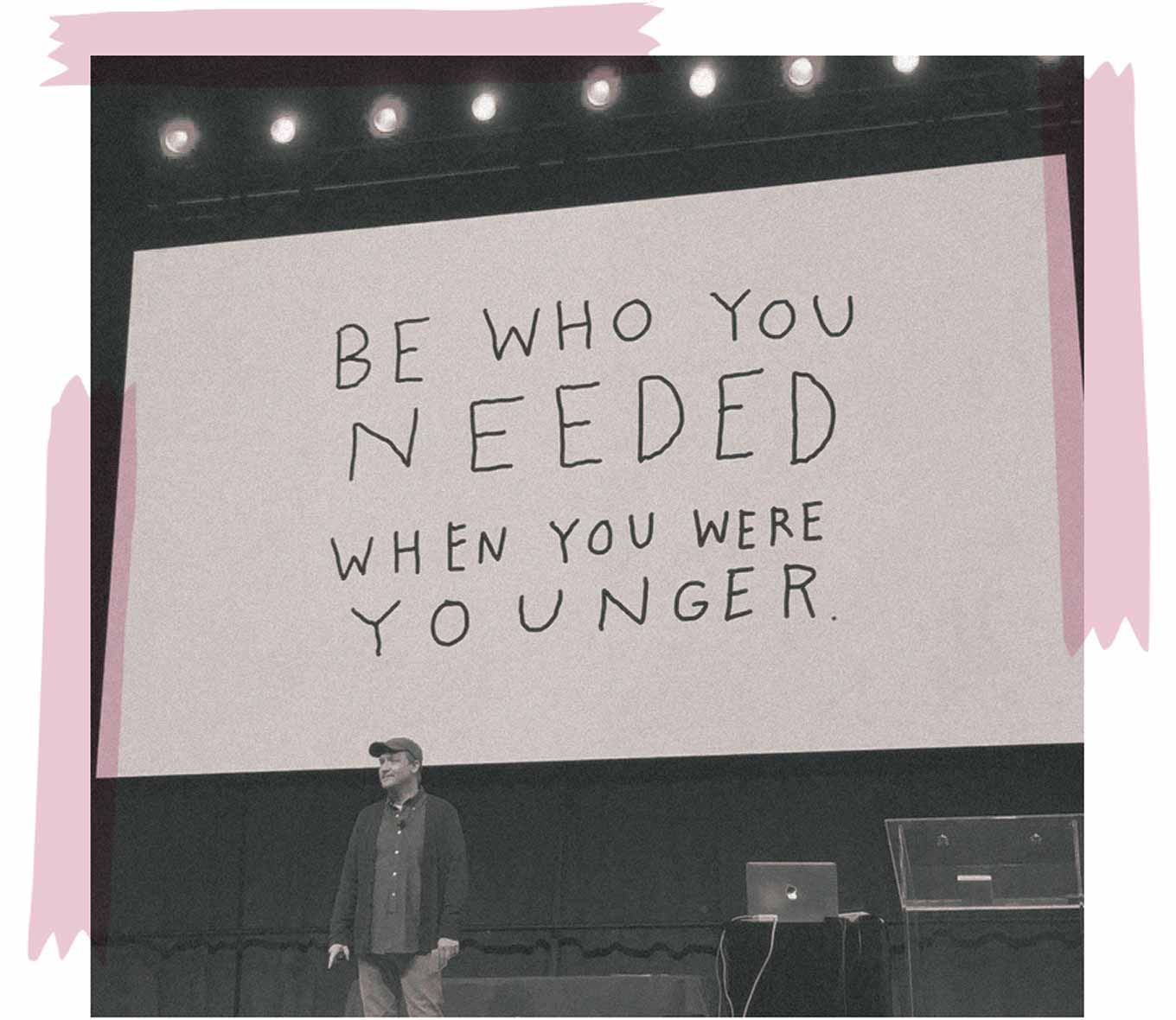
We asked Montague for four ways grownups can tap into their inner child to do good for the world and the people in it.
Here’s what he had to say:
Activities For Adults To Connect With Their Inner Child:
1. Don’t forget to play.
Play can be a way for us to work out difficult ideas and emotions. Play doesn’t mean you have to sit down on the carpet with action figures or building blocks (although that sounds fun!). It just means embracing silliness, creativity, and fun in problem-solving.
“Playing is an essential thing that, for some reason, we grow out of,” Montague said. “Kids do it naturally. They can go back and forth between being incredibly silly to really poignant and thoughtful. Like Fred Rogers said, ‘Play is the work of the child.’ It sparks creativity within you to approach things with a new spirit or new energy. That's where you land on a way to do something with a freshness that the world needs.”
Good Good Good Action Step:
Montague says, “Next time you’re facing a problem, try to think of the most ridiculous, absurd ways you could tackle it.”
You might be surprised that by working your creative juices, you come up with an unexpected solution.
2. Look at things from a new angle.
Try seeing a problem from a new perspective. Working together is especially valuable when you have people all looking at the same problem from a different angle.
“That's what kids do already,” Montague said. “An example of that is you have a table, and a grown up walks in the room and says, ‘What a great table! Look at the table setting!’ But a kid walks in and says, ‘Ew! Look at all the gum under the table. Look what's on the floor!’ They see those things because their perspective is different — because their height is lower, of course, but also because they're going to mess around with the table and crawl under it. They see the things we don't see.”
Good Good Good Action Step:
Try viewing a problem from the exact opposite of your point of view. What’s one perspective you might have overlooked? Think of all the ways you are set in your perspective, and see if you can open your mind to seeing things another way.
“When kids and grownups work together, you have one person seeing the top and one seeing the bottom,” Montague said. “If you have both working together, we see the table as it really is. And then if we do it right, we also see the table as it could be.”
3. Don’t be embarrassed to not know everything.
Kids are comfortable with being curious. When was the last time you admitted you didn’t know something? It takes humility to be able to say, “I actually don’t know enough about that.” And it’s OK to not be an expert in everything — no one is.
“Get comfortable asking questions instead of fast-forwarding to a solution or fast-forwarding to what we think we know,” Montague said. “Remain compassionate, curious, and relentlessly creative.”
Good Good Good Action Step:
One thing you can do to stay more curious is to keep an action list of things you should know more about, Montague says. It could be anything from refreshing yourself on cloud formations to knowing how your local government works. Remember it’s OK to ask questions — not just about facts, but about people. You have an infinite number of things to discover.
4. Give yourself permission to be excited.
Grownups don't always give themselves permission to be enthusiastic or excited about things. But guess what — it’s really cool to care about things!
“There's something beautiful about how kids can allow themselves to be enthusiastic about bubble wrap or bubbles or clouds that are shaped in interesting ways or cool rocks,” Montague said. “They’re not afraid to speak that excitement in an audible way.”
Good Good Good Action Step:
Enthusiasm and joy are like love: The more you share, the more there is. It doesn't run out. Share your joy and excitement with others, and be open to delighting in their joy, too.
A version of this story originally ran in The Youth Edition of the Goodnewspaper.
You can get your own monthly print good news newspaper by becoming a subscriber. (Your subscription also helps support the work we do at Good Good Good.)
So you’ve set aside those unwanted sneakers — or slippers — that have collected dust or are worn beyond repair… now what?
The United States Department of the Interior reported that Americans throw away over 300 million pairs of shoes – per year.
The stark reality is that most of these shoes contain synthetic rubber which when left to decompose – an average rate of 30 and 40 years – produces several forms of volatile compounds, some of which are not only harmful to our planet, but harmful to vulnerable communities.

The good news is that many of us — along with the footwear industry — have become increasingly conscious of our carbon footprint, and are open to finding alternative practices to lessen the environmental impact that our waste is producing.
It’s never been easier to find sustainable options, so we rounded up a few to help get you started!
How To Recycle Your Shoes — Or Maybe Donate or Upcycle Them
TerraCycle
TerraCycle, a privately-owned social enterprise on a mission to eliminate the idea of waste, has the most robust recycling program, and zero-waste solution for your unwearable shoes.
There are two routes you can take when recycling with TerraCycle. The first is through its National Recycling Solution Programs, which offers free nationally sponsored recycling solutions.
The caveat with some of these programs is that several come with restrictions. For instance, the Teva Sandals Recycling Program strictly accepts Teva sandals.
However, if you’re in the middle of a major home clean-out, and don’t mind spending the extra cash to thoughtfully clear out your shoe collection, a great second option TerraCycle offers is their Zero Waste Box.
This one-time use box ranges between $129 and $279, and accepts any form of footwear. Once you select your package, all that’s left for you to do is to pack and ship it out – TerraCycle will take care of the rest!
Nike Grind
Nike’s sneaker recycling program, Nike Grind, is great for anyone on the hunt for sneaker recycling programs.
Nike will take your old tennis shoes — regardless of brand — and grind them into raw material which is then repurposed into athletic fields, courts, running tracks, and playgrounds.
Donation drops are located all over the U.S. and can be located through Nike's online store locator!
Soles4Souls + Zappos for Good
Soles4Souls, a Nashville, Tennessee-based international nonprofit, is dedicated to diverting gently-worn shoes from landfills, and redistributing them to entrepreneurs in developing countries.
To date, Soles4Souls has kept 71 million pounds of textiles out of U.S. landfills, helping to preserve our planet for future generations. This program has also offered economic opportunities for individuals around the world living in extreme poverty.
You can find a drop-off location near you, or ship your shoes for free — up to 50 pounds in the continental U.S. — by participating in their Zappos for Good partnership program.
Resell
If you’ve got a pair of unwanted — but well-preserved — shoes begging to see the light of day, the resale market just may be the ideal place for them!
Online consignment marketplaces such as Poshmark, Depop, eBay, and The Real Real have made it significantly easier to resell any gently-used products.
Not exactly “tech-savvy?” In-person consignment options are available in most cities across the country, and are great for those who want to give reselling a shot!
Repair
If you don’t have it in you to part ways with your favorite leather boots – but they’re in dire need of a little TLC — there just may be a way to save them: by repairing or upcycling!
You’d be surprised at just how transformational a trip to your local cobbler can be for your shoes. Take brothers Trenton and Heath Potter, two Nashville-based cobblers, who take seemingly beyond-repair shoes and breathe life back into them.
You can also take matters into your own hands by giving your sneakers a new pair of laces or patching any holes with fun fabric!
The beauty of the internet is that there’s endless amounts of DIY upcycle project ideas — like this one and this one — to help get you started.
Recycling Shoes Doesn’t Have To Be Complicated
Regardless of whether you want to recycle, resell, repair or upcycle your old shoes, your decision to choose our environment first is a huge deal! The hope is that our collective decisions move us from a linear economy model to a more circular, sustainable one.
P.S. You might also like: The Good Good Good Guide To Socks That Give Back