After a rural school district in Batesville, Arkansas installed solar panels at their schools, they turned a $250,000 annual budget deficit into a $1.8 million surplus — enough to give every teacher a raise of up to $15,000, CBS News reports.
Today, more than 9,000 schools across the country are using solar power and over 6 million students attend a solar-powered school, according to Generation 180, a clean energy nonprofit.
However, Batesville School District seems to be the first one to turn its savings into paychecks.
With annual salaries averaging around $45,000 in the school district, many educators worked second jobs or left for better-paying opportunities.
The district was not only left with a retention problem but also reported having difficulty attracting new teachers to a town of only 10,000 residents.
“We were willing to take some risks because the option was we weren't getting anywhere. Our budget was going nowhere,” superintendent Michael Hester said in a Harvard education podcast episode.
“And so we were trying to find ways to create space inside our budget that we already had. Out of desperation comes innovation.”

After conducting an energy audit, Hester was shocked after discovering that his district could save at least $2.4 million over a span of 20 years if the district opted for clean-energy alternatives like solar power.
The school district transformed an unused field into a solar energy farm and covered the front of its high school in 1,500 panels.
“Batesville has reduced the checks they write to utilities and increased the checks they write to teachers,” Rick Vance, regional director at Entegrity, a sustainability and energy services company, commented.
As a result, schools within this Arkansas district are seeing an increase in resumes and fewer resignations, Superintendent Hester told CBS News.
The project’s success has since inspired others in the surrounding area to follow suit.
“There’s at least 20 school districts just in our area that have emulated our model,” Superintendent Hester said.
“We have the numbers to prove and to show from performance that we’re walking the walk. That’s a slam-dunk for districts around us.”
You may also like: This clear coating 'secretly' turns windows into solar panels: 'Without sacrificing aesthetics'
A version of this article was originally published in The 2022 Education Edition of the Goodnewspaper.
Header image by Manny via Pexels
Hispanic Heritage Month (September 15 - October 15) is an annual celebration in the United States that honors the history, culture, and contributions of Americans whose ancestry can be traced to 20 countries and one territory — which includes Mexico, Central and South America, the Caribbean, and Spain.
While the official and more common umbrella term, “Hispanic” is something that most of us are familiar with, this does not represent the diverse races, cultures, and Indigenous languages that encompass this large community. This is why you may also see this recognized as Latino or Latine Heritage Month.
Of course, we don’t need an awareness holiday to embrace and honor the history of Latine and Hispanic Americans, but this month provides an opportunity to celebrate diversity and pave the way for a more just future. This is especially important, as increased racial profiling and violent immigration enforcement have targeted these demographics in recent months.
This guide provides ideas and resources for education, recognition, activism, and (of course) celebration for Hispanic Heritage Month.
By the way, some of the links in this article (like books!) are affiliate links, which means if you make a purchase after clicking a link, we may earn a commission at no extra cost to you. Thank you!
Why does Hispanic Heritage Month start in the middle of September?
We’re used to having dedicated months to honor specific communities — think: Black History Month in February, Asian American Pacific Islander Heritage Month in May, or Pride Month in June. So, why is Hispanic Heritage Month spread across two months?
It might seem random, however, the timing of Hispanic Heritage Month deliberately overlaps with several Latin American Independence Day celebrations.
September 15th was chosen as the kickoff date since it coincides with the Independence Day celebrations of five countries (Costa Rica, El Salvador, Guatemala, Honduras, and Nicaragua), followed by Mexico on September 16th, Chile on the 18th, and Belize on the 21st.
Another important date that falls within this 30-day period is Día de la Raza, or Indigenous Peoples Day, which is celebrated in Mexico on October 12th.
The idea to celebrate Hispanic Heritage initially began as a week-long observance in 1968 under President Lyndon B. Johnson and was later extended to a full month 20 years later by President Ronald Reagan.
Ideas For Ways To Celebrate Hispanic Heritage Month
Learn
Learn why Hispanic Heritage Month is celebrated.
We often see people quick to celebrate holidays without much context behind the actual events — ahem, Cinco de Mayo. Relying on stereotypes or assumptions is not only hurtful but can keep us from truly understanding our neighbors. Hispanic Heritage Month is no exception.
This TEDx Talk provides insight into what it means to be Hispanic and Latine, while also asking us to dig deeper into the common stereotypes and assumptions that many in this community face.
If you’re feeling empowered to dive even deeper, the National Museum of the American Latino, offers bilingual resources like interactive activities.
Want more resources? We’ve got you!
Even amid the Trump administration’s increasingly hostile Immigration and Customs Enforcement raids, a large number of public institutions still come together to pay tribute to the generations of Hispanic Americans who have positively influenced and enriched our nation and society.
They’ve made documents, exhibits, films, blog posts, and more available to the public — including a calendar of free online events.
Watch a documentary about the Hispanic experience.
While this month is primarily centered around vibrant celebrations, it’s also important to acknowledge the systemic issues that plague this community. Documentaries are a great way to begin your learning journey. Here are a few suggestions:
- “Mija: A Disney Original Documentary”
- “Los Tigres del Norte at Folsom Prison”
- “Paper Children: Fear and Hope in America’s Asylum System”
- “Immigration Nation”
- “Caught in the Crackdown”
Add a few new podcasts to your queue.
Latino USA is a nationally syndicated public radio program distributed by NPR that brings together a diverse set of Latinx voices to shed light on the current cultural, political, and social issues impacting the Latinx community and our nation today.
If you want to level up your TED Talks experience, you’ll love TED en Español (with multilingual subtitles), which includes a library of episodes specifically designed to help people think critically on topics ranging from disability to art and poetry.
The Advanced Spanish podcast offers those who enjoy listening to the news a way to listen to global news stories in Spanish — and at a slower pace.
Visit a museum.
Check with your local museum to see if it’s hosting any events or exhibitions highlighting Hispanic and Latine heritage (and bring a friend).
Visiting museums gives you the opportunity to get up close and immerse yourself in the art, festivities, or people showcasing their unique perspectives.
You can find relevant exhibits and collections on the National Hispanic American Heritage Month website.
Take a virtual tour.
For those curious about Latin and Hispanic culture but unable to gain access to museums or experiences, we’ve got a solution: virtual tours. (Thank you, technology!)
Nonprofits and institutions are eager to share their local cultures and traditions with the world, so they have made it increasingly accessible to visit famous sites and museums from the comfort of your couch.
Here are a few that have caught our eyes:
- Check out the Mayan Pyramids by virtually visiting Mexico’s Chichén Itzá.
- Explore the ancient Mesoamerican city, Teotihuacan Pyramid (Pyramids of the Sun) of Mexico.
- Virtually trek through Machu Pichu in Peru with a guided 360-degree tour that grants viewers access to areas closed off to in-person visitors. Bonus: there’s an audio guide!
- If you love art, The Museu de Arte de São Paulo — Brazil’s first modern museum — offers online access to their artwork.
- Google offers up-close, 360-degree views of animals in the Galápagos Islands. There's even a “street view,” allowing viewers to tour the archipelago at their own pace.
- This eco-lodge in Panama’s jungle has a live stream for those who love bird-watching or simply love the background sound of bustling wildlife.
- Said to be one of the best dive sites in the world, the Gardens of the Queen is an archipelago off the coast of Cuba. Airpano provides up close and personal 360-degree shots of diving experiences.
- Iguazu Falls, one of the most beloved destinations in Argentina and Brazil, offers viewers the opportunity to stand on one of the viewing platforms, gaze down into the Devil's Throat, or even get a birds-eye view of the natural attraction.
- Wander around the Amazon Basin in Brazil. From traveling down the epic river, to trekking a jungle trail, to even meeting a local tribe, this experience is a unique way to get a glimpse into the famed Amazon Basin.
Read books written by Latine or Hispanic authors and poets.
To understand another culture or way of life, one of our go-to’s should always be the library. Here are a few additions for your TBR list:
- “The Devil’s Highway: A True Story” by Luis Alberto Urrea (Bookshop) (Amazon)
- “How to Look Away: On American Cruelty and the Refusal to Disappear” by Daniel Peña (Bookshop) (Amazon)
- “Fresh Banana Leaves: Healing Indigenous Landscapes Through Indigenous Science” by Jessica Hernandez, Ph.D. (Bookshop) (Amazon)
- “The House on Mango Street” by Sandra Cisneros (Bookshop) (Amazon)
- “The Undocumented Americans” by Karla Cornejo Villavicencio (Bookshop) (Amazon)
- “How to Love a Country” by Richard Blanco (Bookshop) (Amazon)
- “My Name Is Emilia del Valle: A Novel” by Isabel Allende (Bookshop) (Amazon)
Listen to audiobooks written or narrated by Latine or Hispanic authors and poets.
We love Libro.fm and its mission to support locally-owned bookshops through audiobook purchases. (Plus, it’s a great Amazon alternative.)
In honor of this month of festivities, they’re highlighting bookstores, authors, and narrators within the Latine and Hispanic communities.
Listeners can browse through their playlist and find content aimed at empowering, learning, and celebrating the Latine and Hispanic experience.
Plus, your audiobook download can support a Latine- or Hispanic-owned bookstore!
Learn the difference between terms like “Hispanic” and “Latino.”
Although they are often used interchangeably, the terms “Hispanic” and “Latino” have different meanings.
The term Hispanic refers to someone who comes from or is a descendant of a Spanish-speaking country, whereas Latina or Latino (or the gender-neutral, Latinx or Latine) refers to someone who comes from Latin America or is a descendant from any Latin American country.
This means that a person can be both Hispanic and Latine, however, not all Latine people are Hispanic. For instance, Brazilians are Latinos, but their native language is not Spanish.
Take Action
Donate to Latine or Hispanic nonprofits and community organizations.
Latine and Hispanic organizations have long been the foundation of communities across the country. We can celebrate Hispanic Heritage Month by donating to organizations that understand the needs of diverse Latine and Hispanic communities.
- Organizations like RAICES — a Texas-based organization that provides free and low-cost legal services to underserved immigrant children, families, and refugees — are at the forefront of the immigration crisis and actively working toward short and long-term solutions.
- The Immigrant Legal Resource Center is a nationwide nonprofit that offers legal listservs, Know Your Rights resources, and educational materials for immigrants, while also advancing policy to protect migrants.
- Voto Latino Foundation is a nonprofit dedicated to registering Latine voters and encouraging civic participation. For the last 18 years, the organization has been empowering a new generation of Latine voters and advocating for a more robust and inclusive democracy.
- GreenLatinos is a national climate-based nonprofit that brings together a broad coalition of Latine grassroots leaders who are diligently advocating for national, regional, and local climate solutions.
Call your representatives and ask them to stop the attacks on immigrant communities.
Call your local leaders, including your governor and mayor, and tell them you expect them to act swiftly to protect your community and your rights from illegal immigration raids.
You can also call your elected officials in Congress and the Senate and demand they take action against unlawful deportations across the country.
Find all of your elected officials and reach out via phone or email.
Know your rights and be an effective bystander.
If you are a U.S. citizen who witnesses an ICE raid, here are a few key things that are within your rights to do:
- If you see a raid possibly happening, unmarked cars, or ICE agents in your area, call a hotline to report the sighting. This helps mobilize area organizations to help provide immediate assistance.
- Text JOIN to 877-322-2299, and reply with your zip code to get alerts for ICE activity in your area from the Stop ICE Raids Alert Network. (You can also text REPORT to 877-322-2299 to report ICE activity.)
- Record any and all information you can in a video or by writing things down. Get information from the person being detained (name, phone number, a phone number of a loved one, their address, etc.), as well as badge numbers of ICE agents, license plate numbers, and car details like color, make, model, and any distinguishing features.
- If you can physically act as a translator or interpreter between immigrant communities and authorities, use that privilege to help!
For people who are not comfortable with protesting or acting on the front lines, there is still plenty that you can do.
The Immigrant Legal Resources Center provides a myriad of resources for immigrant communities and supporters alike. These include:
- Legal listservs to find trusted immigration legal support in your area or direct community members to
- Print-at-home Know Your Rights cards — in nine different languages — that can be easily downloaded, printed, and distributed in any community
- A Know Your Rights toolkit, full of helpful video and written tutorials to know and share
Celebrate
Attend an event.
A central part of this month-long celebration is the events that many cities across the U.S. work hard to put on. Events can include traditional dances, live music, art displays, and food stalls.
Support your local community by showing up and taking part in any event happening in your area.
Support Latine and Hispanic businesses.
Get your holiday shopping done early and help celebrate the culture and creativity of Hispanic and Latine makers by supporting their businesses. Etsy and NOVICA are two online marketplaces that curate beautifully handcrafted goods from Latine people living in and out of the U.S.
Support local panaderías (Mexican bakeries) or Latine restaurants
In Latine and Hispanic cultures, food could be considered a core love language. From our morning pan dulce con cafe (sweet bread with coffee) to Spanish tapas or savory empanadas, food is the magnetic field that brings people together.
Supporting your local Latine bakeries or restaurants is a crucial way to show your appreciation and support for their labor of love. Want to take it a step further? Ask them if they offer gift cards so you can give your family or friends a delicious experience too!
Take a dance class with friends and family.
Just like food, dancing is a vital part of the Latine and Hispanic culture. Look into local dance studios (or even restaurants) that offer salsa, bachata, merengue, or flamenco classes.
If you don’t have access to in-person classes, invite your friends over for a virtual dance class (like this one) instead!
At Work
Create an informative email auto-response.
Whether or not you’re a part of the Latine or Hispanic community, creating a celebratory email auto-response during this month-long celebration is a thoughtful and inclusive way of spotlighting Hispanic Heritage Month.
You can share information about the importance of celebrating this event and can maybe even include a list of local events your colleagues can join in on!
Sharing information with your network about the significance of this commemoration is a great way to further stand in solidarity with your Latine and Hispanic team members.
Highlight Hispanic Heritage Month in your newsletter.
Similar to the email auto-response message, utilizing your current email marketing platform to share more information around this celebratory month could be another opportunity to keep this celebration top-of-mind at work.
This could mean including a sentence or two — or an entire section — in your upcoming newsletter acknowledging the significance of this heritage month and how your readers can thoughtfully celebrate. (You can even share this article as a resource!)
Turn your good intentions into real change.
Thoughtful workplace actions should not only be reserved for holidays and awareness months. If you want to help ensure that your good intentions are actually recognizing an underrepresented group in your workplace, it’s going to take some intentional effort.
Check out, “The Diversity Gap,” a book that supports and coaches race-conscious leaders and teams and offers great workplace resources that you can learn from and incorporate.
At Home
Take a Spanish language course.
Learning or brushing up on your Spanish is a great way to immerse yourself in the Latine and Hispanic culture. Apps like Duolingo or Endless Spanish (for kiddos) are free to use and help provide you with a good foundation and understanding of the language.
Take an online cooking class.
Okay, okay, we love our Taco Tuesdays, but there are so many more delicious (and equally simple) meals you can incorporate into your home. Food is another great way to foster an appreciation and understanding during this time.
Cozymeal has a roster of recipes and cooking experiences for you to choose from, like this Culinary Celebration of Hispanic Heritage Month class or this Seafood Paella From Scratch experience.
Watch a Spanish-language show.
If you grew up in a Latine household, you probably know the sound of your favorite telenovela.
Today, Netflix shows like La Casa de Las Flores (The House of Flowers) and La Casa de Papel (Money Heist) are carrying on that legendary legacy by dishing out all the drama — while centering diverse narratives to a global audience.
For Kids & Students at School
Talk to your kids about representation.
People often tie a lot of their beliefs and values to what they learned at home growing up. We can help celebrate Hispanic Heritage Month by having conversations around the dinner table about what this month means to the Hispanic and Latine communities and how we can show support.
Mid-Atlantic Equity Consortium (or MAEC) provides parents and teachers with a massive library of Hispanic Heritage Month resources like kid-friendly videos, podcasts, movie and documentary recommendations, and people to follow on Instagram!
Incorporate books written by Latine or Hispanic authors in your curriculum.
Providing students with free, easy access to racially diverse literature through school or in-class libraries is a great way of providing independent learning opportunities in the classroom.
However, we know that many school districts across the U.S. suffer from funding disparities — especially within low-income areas. As a result, many children (and consequently their teachers) are left with a limited selection of books, school supplies, and educational materials.
The First Book Marketplace provides educators, librarians, and others working with low-income children with thousands of free and affordable high-quality, brand-new books, educational resources, and basic needs items at highly affordable prices — or for free.
Half Price Books also donates books to classrooms and school libraries. Educators are offered a 10% off discount and can even make a request for free books online.
The Smithsonian Museum’s Latino Learning Center offers teaching collections grouped by themes from performances or interviews with experts.
Have a movie day.
Whether it’s in a classroom or home setting, choosing to show movies that center Hispanic and Latine culture, like The Book of Life, Encanto, and Coco provide kids with a gorgeous introduction to time-honored cultural traditions that they might not have otherwise been exposed to.
A bonus? These movies are perfect lead-ups to Dia de los Muertos, which is celebrated right after Hispanic Heritage Month!
Frequently Asked Questions:
What is the 2026 Hispanic Heritage Month theme?
The National Council of Hispanic Employment Program Managers announced the 2026 Hispanic Heritage Month Observance Theme: “Unidos, somos más,” or “Together, we are more.”
The theme celebrates shared history and traditions of the diverse Hispanic and Latine communities, recognizes the significant contributions of these communities, and highlights the leaders who pioneer change.
What is Hispanic Heritage Month in Spanish?
In Spanish, El Mes de la Herencia Hispana means Hispanic Heritage Month.
What is the difference between Hispanic and Latino?
While many people use Latine and Hispanic interchangeably, these two words mean two different things.
A Hispanic person is someone who comes from or is a descendant of a Spanish-speaking country. Latinx or Latine (which is the gender-neutral alternative to Latino and Latina) is used when referring to someone who comes from Latin America or is a descendant from any Latin American country.
A person can be both Hispanic and Latine, however, not all Latinos are Hispanic. For example, Spaniards are considered Hispanic, but not Latine, since they are not geographically located in Latin America.
Which countries are represented in this celebration?
In total, there are 20 Hispanic countries and one territory: Argentina, Bolivia, Chile, Colombia, Costa Rica, Cuba, Dominican Republic, Ecuador, El Salvador, Guatemala, Honduras, Mexico, Nicaragua, Panama, Paraguay, Peru, Puerto Rico, Spain, Uruguay, and Venezuela.
Is it called Hispanic Heritage Month or Latino Heritage Month?
The holiday is formally recognized as Hispanic Heritage Month, however, it's important to acknowledge that, as discussed, the term does not fully represent every culture that falls under this umbrella.
As a result, many are also calling it Latine Heritage Month. Both are widely used today but it’s important to be mindful of the context in which you use them.
Next month is Native American Heritage Month — get a head start learning how to celebrate Native American Heritage Month today.
And don’t forget to learn about more Hispanic and Latin American holidays beyond Hispanic Heritage Month.
November is Native American Heritage Month, when we all come together to honor and celebrate the culture, traditions, history, and contributions of American Indian and Alaskan Natives.
Though Native Americans make up about 2.5% of the total U.S. population, their history and contributions are of critical importance to the nation’s history. Unfortunately, much of it has been forgotten or overlooked.
As a result, misconceptions and ignorance surrounding Native peoples and Native culture can lead to the perpetuation of harmful, misinformed “celebrations” — especially surrounding the heritage month and Thanksgiving holiday.
November is an opportunity to grow our understanding of Native culture, traditions, and how historical traumas like colonization and genocide have impacted Native peoples throughout history — and still do today.
This month, it’s important for each of us to remember the entirety of our nation’s history — including and especially the history of Native Americans, the systemic issues they still face today, and take supportive, uplifting action to right historic injustices.
Below, you’ll find resources and ways to uplift the Native American community nationwide and in your own community!
How To Celebrate Native American Heritage Month:
Learn
Learn what native land you’re on.
Long before you lived on it, the land it exists on was owned, managed, and maintained by Indigenous people and tribes. Land is sacred and important to all of us — whether we know it or not — and it’s important to learn about the history of the land you’re on. Not only does it honor the people it was taken from, it helps us honor and steward the land better.
The Canadian nonprofit Native Land has done extensive research and worked with Native tribes to create an interactive map of tribal boundaries around the world — you can even enter your exact address!
Enjoy Indigenous art.
The Denver Art Museum was one of the first art museums in the U.S. to start collecting Indigenous art, and as a result, their collection is both extensive and enlightening.
The artists each have a beautiful, unique way of helping us all understand histories and lived experiences — both heartbreaking and uplifting — of Native Americans.
Google Arts & Culture created a unique, digital experience to guide you through some of the Denver Art Museum’s more than 18,000 pieces by artists from more than 250 Indigenous nations.
Follow Native Americans on social media.
The best way to celebrate Native American heritage is by listening to and learning from Native American people who generously share their perspective and wisdom with all of us on social media.
By (quietly and humbly) following Native creators, we can learn about the current triumphs and struggles Native Americans face — and how we can help.
- Quannah Chasinghorse (@quannah.rose on Instagram) is a Sicangu Lakota model, activist, and actress.
- Eagle Blackbird (@itzeaglee on TikTok) is an Ojibwe comedian who celebrates his Indigenous culture and uses comedy to connect with other communities.
- Kai Potts (@ohkairyn on TikTok) is a Two-Spirit member of the Nakota Sioux tribe. He is a writer and actor and shares helpful resources for Indigenous and LGBTQ+ communities.
Learn about the challenges Native American communities have faced.
Part of helping make the world a better place for everyone is by paying attention to the heartbreak, pain, and injustices — this is the only way we are able to work toward creating solutions.
While the history of Indigenous peoples is one of perseverance and triumph, it is also one of great injustice, oppression, and heartbreak.
- According to the Department of the Interior, approximately 1,500 American Indian and Alaska Native missing persons have been reported to the National Crime Information Center in the U.S. An estimated 2,700 murder cases have also been reported.
- Starting with the Indian Civilization Act of 1819, the U.S. government, in partnership primarily with churches and private organizations, established boarding schools with the stated goal of “civilizing” Native Americans, Alaska Natives, and Native Hawaiians — often carried out through torture and abuse. An Interior Department report found more than 500 Native children died over 150 years in Indigenous boarding schools, but Native Nations scholars estimate the figure is closer to 40,000 children.
- Hawaii is regularly exploited for its abundant beauty and resources, most notably by tourism and the military. The latest in a series of water crises caused by military presence on the islands, 1,000 gallons of raw sewage leaked into Pearl Harbor, just days after the state’s health department fined the Navy almost $9 million for safety violations in its wastewater treatment plant.
- According to the National Alliance on Mental Illness, Native American adults had higher rates of serious suicidal thoughts and were more likely to make a suicide plan in the past year, compared to other racial or ethnic groups.
- The proliferation of stereotypes also leads to frequent disrespectful, extremely offensive cultural displays, from professional sports team names to headdresses or bonnets worn by non-Natives.
While this list is incomplete, we hope it serves as a starting point for allyship and advocacy in support of Native American communities.
Learn about Native American good news.
While it’s important to be aware of challenges and injustices, no community should be defined solely by those experiences.
At Good Good Good, we share meaningful good news — and we’ve collected a few of our favorite good news stories of incredible contributions from Native American communities.
Here are just a few of the many things to celebrate:
- Native Nations have been successfully building and rebuilding their communities, in health care, education, justice, and more.
- Bison are being reintroduced to Native lands, which offer the space they need and a culture that has long-respected the animals — and now they’re making a major comeback.
- Ownership and management of a 532-acre redwood forest in California was recently returned to Sinkyone tribes and has been renamed Tc’ih-Léh-Dûñ.
- Cherokee artists worked together to create a ‘groundbreaking’ Cherokee-language album, using music to preserve and celebrate the language.
- Through “DeTours,” Hawaii’s Indigenous communities are working to educate settlers and tourists alike on Hawaii and its colonial past and present and raising awareness about the state of their country.
- A community of Indigenous activists called Water Protectors is continually working to protect water and water systems across the U.S. — and we all have them to thank for so many harmful projects, both for people and the planet, getting canceled.
- Colorado is one of the first states to expand automatic voter registration to Native tribes
- … and more Indigenous good news
Read books written by Indigenous authors and poets.
By the way, some of the links below (like, links to books) may be affiliate links — which means Good Good Good may earn a commission if you make a purchase, at no cost to you!
Support and learn from Indigenous authors and poets!
Not only are the stories valuable and important on their own, but when you boost stories written by Indigenous authors, you help demonstrate that you want to keep hearing from these voices and experiences.
Check out some of our recommendations below:
For Kids:
- “Kapaemahu” by Hinaleimoana Wong-Kalu, Joe Wilson, and Dean Hamer (Amazon) (Bookshop) (Libro.fm)
- “Keepunumuk: Weeâchumun’s Thanksgiving Story” by Danielle Greendeer, Anthony Perry, and Alexis Bunten (Amazon) (Bookshop) (Libro.fm)
- “Berry Song” by Michaela Goade (Amazon) (Bookshop) (Libro.fm)
- “Tanna’s Lemming” by Rachel Qitsualik-Tinsley and Sean Qitsualik-Tinsley (Amazon) (Bookshop)
For Adults:
- “Spirit Matters: White Clay, Red Exits, Distant Others” by Gordon Henry (Amazon) (Bookshop)
- “Never Whistle At Night” edited by Shane Hawk and Theodore C. Van Alst. Jr. (Amazon) (Bookshop) (Libro.fm)
- “Fresh Banana Leaves: Healing Indigenous Landscapes Through Indigenous Science” by Jessica Hernandez (Amazon) (Bookshop) (Libro.fm)
- “Braiding Sweetgrass: Indigenous Wisdom, Scientific Knowledge and the Teachings of Plants” by Robin Wall Kimmerer (Amazon) (Bookshop) (Libro.fm)
While all of the books mentioned above are available on Amazon, we recommend using Bookshop.org so you can set your default bookstore to an Indigenous-owned bookstore. From then on, every purchase you make will directly support that bookstore.
Listen to audiobooks written or narrated by Indigenous authors and poets.
We love Libro.fm and its mission to support locally owned bookshops through audiobook purchases. (Plus, it’s another great Amazon alternative.)
In honor of Native American Heritage Month, they’re highlighting Indigenous-owned bookstores, Indigenous authors, and Indigenous narrators.
Listeners can browse through their extensive library and find content aimed at empowering, learning, and celebrating the Indigenous experience.
You can also choose to support an Indigenous-owned bookstore — on Libro.fm or in person. Check out this map to find one to support.
Watch a documentary.
Native American history is American history. A great way to make sure you both grow in knowledge and are well-informed in November is by watching a documentary (or a few) this month.
We recommend watching “We Shall Remain,” a five-part PBS American Experience series about Native Americans’ longtime struggle for land, the Wampanoags and the first Thanksgiving, and a brutal war started by the colonists.
We also love “Reel Injun: On the Trail of the Hollywood Indian,” another PBS documentary which explores the history and stereotypes of Native Americans in film.
Learn what Land Back means.
You may see, hear, or read the phrase “Land Back” this month, and on an ongoing basis among Indigenous people and communities. As there are hundreds of Native tribes, and even more folks who belong to those tribes, Native Americans aren’t a monolith — and “Land Back” may mean different things to different people and groups.
Land Back can mean the literal return of stolen lands to Indigenous people and tribes, the complete freedom to maintain and manage those lands in line with historic and cultural traditions, stewardship and protection of the planet in general, honoring government treaties and their provisions, and more.
The most important thing is to listen to these ideas with an open mind.
Take Action
Plant native plants.
Indigenous knowledge when it comes to soil and ecosystem health is unparalleled and we’d do well to heed their wisdom, experience, and direction.
Unfortunately, due to climate change and a lack of this knowledge in positions of leadership, non-native plants have increasingly found their way into local, regional, and national ecosystems.
Use the National Wildlife Federation’s Native Plant Finder to both make sure the plants you have now are native, and to find new or better ones to plant based on where you live.
On a more local level, visit a nature center, garden club, local garden, or botanical garden to get really specific information about what plants are best for the climate and critters that live by you!
Care for water.
We can all take a lesson from Water Protectors, a group of cultural organizers and Indigenous activists who believe in the sacred nature of water and land. Water is so easily accessible for most of us, we often take it for granted.
But there’s a lot that goes into keeping our water safe, clean, and accessible. On a larger scale, more and more of our rivers, oceans, and other waterways are being polluted with plastic — which is harmful to water, marine life, and the larger ecosystem our survival depends on.
We can all care for water by properly disposing of our trash and recyclables, advocating and voting for policies that protect water and water infrastructure (no more pipelines!), donating to waterway cleanup efforts, and perhaps most importantly, learning from Indigenous communities’ water management practices.
Support Native American-owned businesses
There are undoubtedly Native American-owned businesses near you. Make sure to seek them out and support them — during November and all year long.
You can also explore Native American-owned businesses online. Check out this article that explores several amazing brands.
Donate to Native American-led nonprofits.
The Native American Rights Fund nonprofit uses legal advocacy to ensure rights and resources of Native Americans are protected, treaties are upheld, and more.
Indigenous Women Rising is a nonprofit working to ensure equitable healthcare access for Native American and Indigenous women. They prioritize offering culturally sensitive care, sex education, and resources, as well as access to safe, legal, and affordable abortion options.
Honor the Earth is an Indigenous-led organization that has worked on environmental protection projects like the “Stop Line 3” campaign. As the only Native organization providing both funding and organizing support to Native environmental issues, they are working to change both systems that lead to destruction.
At Work
Create an informative email auto-response.
If your company is closed for November holidays, create an email auto-response that also includes mention of Native American Heritage Month.
Continuing to share information with people about the historic significance of this holiday is a great way to further stand in solidarity with Indigenous team members and clients.
Highlight Native American Heritage Month in your newsletter.
Similar to drafting an informative email response, utilizing your current email marketing platforms is a great way to share more about Native American Heritage Month.
This could mean including a sentence or two, an entire section, or an entire standalone email in your newsletter acknowledging Native American Heritage Month and how readers can thoughtfully celebrate. (Maybe even share this article as a resource.)
Turn your good intentions into real change.
Workplace actions should go beyond just celebrating Native American Heritage Month or other holidays and awareness months. If you want to help ensure that your good intentions are actually helping, it’s going to take intentionality and expertise.
Check out resources from The Diversity Gap, an organization that coaches identity- and race-conscious leaders and teams. Their podcast and book are especially great starting points.
At Home
Talk to your kids about Native American history.
Often, the only exposure our kids have to learn about Native American history, especially in the month of November, is whitewashed, colonialized versions of the Thanksgiving story.
And contrary to popular belief, kids have the ability to process complex information when it’s presented in a developmentally appropriate way.
Look up what Native land you live on and then research to learn more about those tribes together. Talk about how Native peoples were mistreated, taken advantage of, and even killed by the early settlers, and how we can all be a part of making sure those injustices are both made right and never repeated.
Practice saving funds for regular donations.
If your kiddos have an allowance or lemonade stand, chances are, you’re hoping to teach them the value of money. Extend that conversation to include discussions of community care, mutual aid, fundraising, and wealth redistribution.
You don’t need to give them a full explainer on capitalism (or do, we won’t stop you!), but you can teach them how to use their privileges in ways that help their neighbors.
Perhaps you can head to the library and research different fundraising ideas, read about various causes or social movements, and make this a learning experience for the whole family.
For Teachers & Students
Use Native American Heritage Month lesson plans at school.
Teachers have such an incredible opportunity to teach students of all ages a more truthful, accurate picture of the history, heritage, and culture of Native Americans than perhaps has been taught in the past.
There are plenty of resources to help bring these lessons to life!
First is this Teacher’s Guide created by the National Endowment for the Humanities, which will help you teach your students about the culture and histories of Native Americans in the U.S.
You can also use Native Land’s “The Land You Live On” education guide, which has instructions for using their Native Land app, explains the importance of understanding colonialism, and includes exercises for teachers with students of all ages — from kids to adults.
More Ways To Celebrate
Listen to Indigenous music.
Add some Indigenous music to your playlist rotation this month! According to Howard Paden, executive director of the Cherokee Nation Language Department, “An Indigenous language is lost every two weeks around the world.”
But Indigenous people are finding creative ways to preserve their language. Recently, Cherokee filmmaker and creator Jeremy Charles, in collaboration with nonprofit Horton Records, recently announced the production of a groundbreaking contemporary album of original music performed entirely in the Cherokee language.
Stream the “Anvdvnelisgi (Performers)” album on Spotify, on Apple Music, or support the project by purchasing the album online.
We also recommend checking out Urban Native Era’s expansive collection of Indigenous music playlists on Spotify.
Visit national parks that celebrate Native American heritage.
National Parks across the U.S. are working to preserve and share the stories, histories, heritage, and traditions of Indigenous peoples.
Usually, those parks will host special celebrations and educational opportunities for Native American Heritage Month, but it’s unclear how much of those traditions will be impacted by the current government shutdown.
Find a National Park near you and make a plan to visit one when you can.
Attend events.
One way to support, celebrate, and honor Native communities is to simply show up. Search for local events in your town to see if there are any events, readings, or even protests that aim to support Native people, culture, and Native rights.
Facebook’s events tab and sites like Meetup or Eventbrite are easy ways to find out what is happening near you.
Important note: If you do attend an event or celebration, make sure you understand the difference between cultural appreciation and cultural appropriation.
Appreciation seeks to understand and learn from another culture to broaden your perspective and connect with someone from that culture.
Appropriation takes a cultural aspect that is not your own and uses it for your own personal interest, without understanding the cultural significance — though often done unintentionally, it can be deeply offensive and harmful.
Frequently Asked Questions:
When did Native American Heritage Month become a holiday?
In 1990 Congress officially passed a joint resolution which was signed into law by President George H. W. Bush declaring the entire month of November “National Native American Indian Heritage Month.” It has since been renamed Native American Heritage Month.
Is it still called Native American Heritage Month?
In the years since 1990, presidents have made similar resolutions and proclamations, sometimes under different names, like National American Indian and Alaska Native Heritage Month.
What are the dates for Native American Heritage Month?
Native American Heritage Month takes place from November 1st through November 31st each year.
Native American Heritage Month History & Facts:
- Native American Heritage Month got its start as a one-day “American Indian Day” celebration in New York in May 1916, after a member of Blackfeet Nation, Red Fox James, literally rode on horseback from state to state to ask for a day to honor Native Americans.
- In 1975, President Gerald Ford turned it into a week-long “Native American Awareness Week” in October.
- While the dates shifted from year to year, in 1990 Congress officially passed a joint resolution which was signed into law by President George H. W. Bush declaring the entire month of November “National Native American Indian Heritage Month.” The name has since changed to Native American Heritage Month.
- The 1990 resolution officially recognized Native citizens both as the country’s original inhabitants and for their essential contributions, specifically to farming and harvesting. Despite its Eurocentric perspective, the resolution was also intended to recognize the Native peoples for the ways they helped the first European visitors.
- Congress chose November to celebrate Native American Heritage month for its cultural significance as the month when Native Americans conclude their traditional harvest season.
- As of 2025, there are 574 federally recognized Tribes in the U.S. and while many Native Americans reside on reservations, about 71% do not.
Women from Afghanistan, Myanmar, Syria, Iraq, and other countries are settling in regional Australian communities.
Adjusting to life in a new home involves facing many challenges — but finding a sense of belonging can help the settlement process.
For those who have experienced trauma, including women from refugee backgrounds, creative arts can enhance well-being, improve social connections and promote a sense of belonging.
Connecting through creativity also builds bridges, addressing fears of newcomers and communities around refugee settlement.
In our recent study, we looked at the experiences of refugee and migrant women in regional Australia, as they shared their work in community art exhibitions. We wanted to learn about the different benefits engaging in creative arts can provide for newcomers as they navigate their new lives.
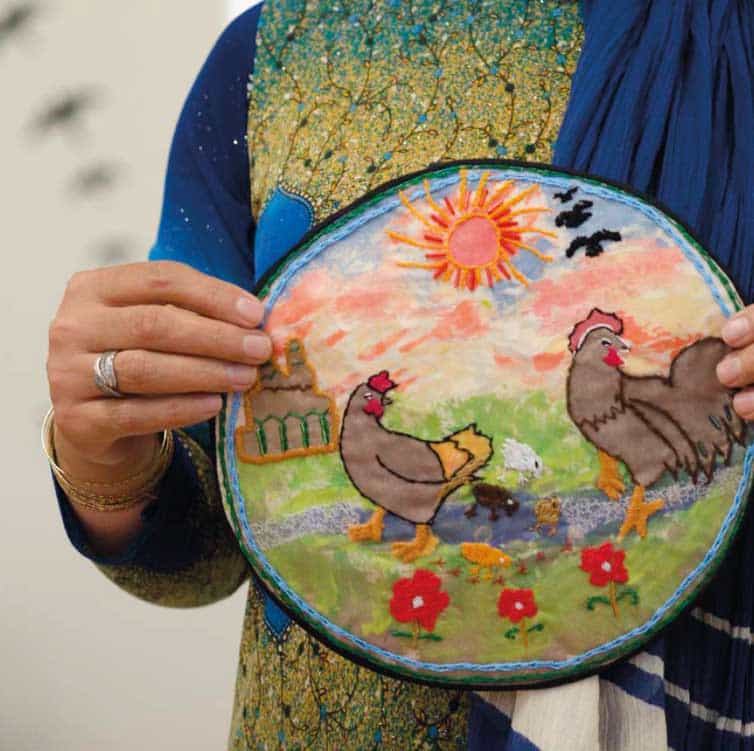
The research collaboration with Anglicare Northcoast’s Three Es to Freedom program focused on fostering community connections to enhance social inclusion and achieve personal goals.
Established in 2016, the program has supported 142 women from 36 countries. In the creative arm of the program, women undertook workshops with local community artists, harnessing existing skills and developing new ones.
At exhibitions in Coffs Harbour and Lismore in northern NSW, and the Gold Coast, women exhibited stories, textile works, and installations alongside photographs of themselves.
Enhancing well-being and confidence
The therapeutic value of creative arts practice, especially for refugees, is well known. Art can provide a means of self-expression and advocacy, and promote good feelings, especially for those who have experienced trauma.
These positive experiences were reflected by the women when they considered what drawing, painting and sewing offered them. One woman told us the creativity “got me out of my depression, it’s given me love”.
The women made intricate circular textile works telling stories from their childhood. They created a group “story cloth” where they painted symbols to represent their personal journeys.
They also made a large installation from feathers featuring inspirational words like “strong” and “free” to show their resilience.
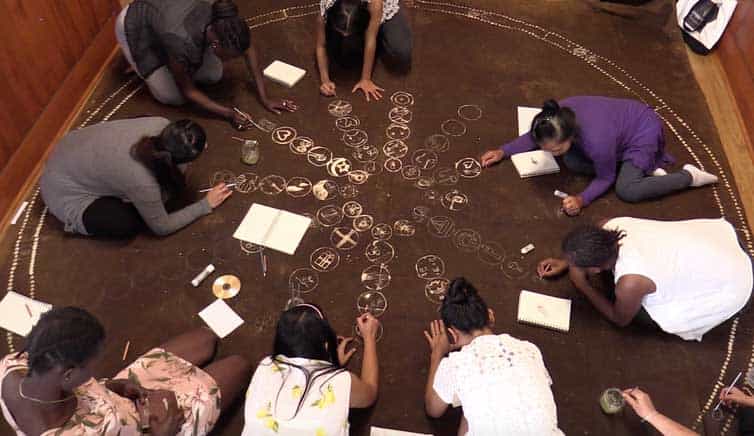
sometimes if you are not happy it helps you. You come to group. You go home and you have lost the negative things you were feeling and that makes you happy.tdf
The women supported each other, learned about each other’s cultures, and taught each other new skills, including special sewing techniques from their cultures.
Drawing on existing skills, learning new skills, and gaining confidence encouraged the women to sell their work in various local markets and pop-up shops.
One woman became known in the broader community for her excellent dressmaking skills and set up her own business. ut
These new initiatives presented a way forward for women who had previously been denied employment opportunities.
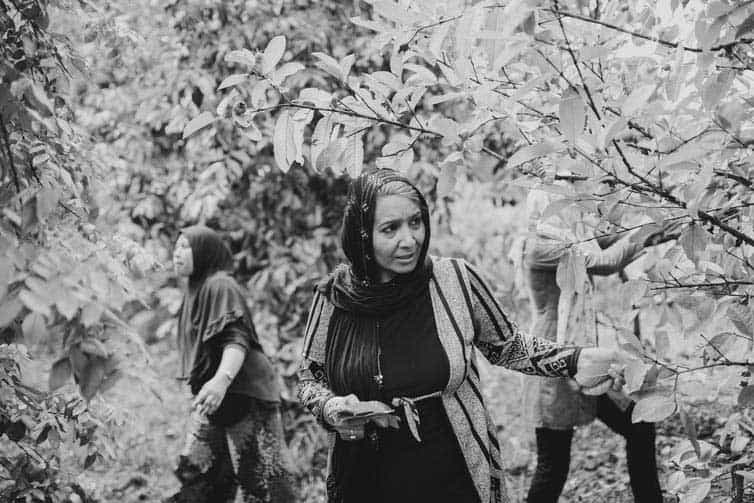
Alongside creating their own work, the women were photographed by professional photographers. The women dressed in traditional outfits, sat for formal portraits, or were photographed enjoying themselves in the community garden. As one woman told us:
Yes, they were beautiful. It looks like for me a bit shy, but when I look at it, it made me happy to see that all the ladies changed in the photos.
Feeling heard
Another important part of this project was the public-facing exhibition. Knowing people were interested in learning about their lives and their culture increased the women’s feelings of empowerment and encouraged them to pursue their goals.
One woman told us:
I was very happy when I saw many people coming. I am very happy with my story displayed there, my story about my childhood, unforgettable memories […] I can show people what my tradition is about, so they can know my country.
Attendees wrote messages to the women on paper birds and posted them on the exhibition walls.
The words “welcome” and “friendship” were commonly found, as well as drawings of love hearts and peace doves. This conversation between the artists and visitors served as a bridge between migrants and their new community. One participant said the positive comments “made us feel the community was open to us”.
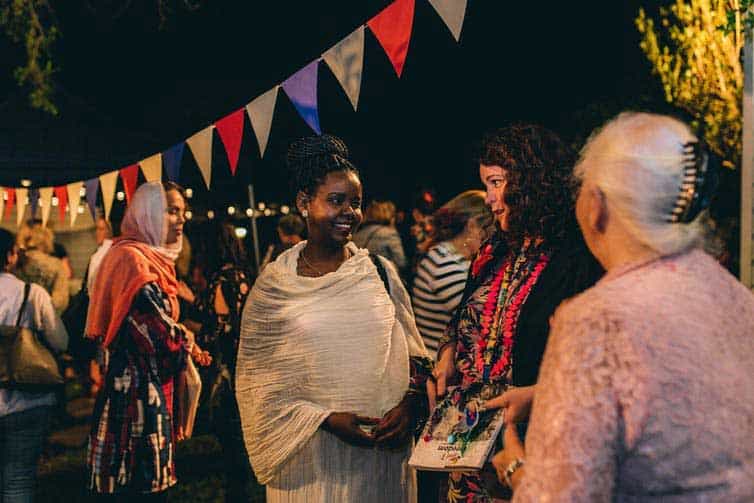
Negative perceptions of asylum seekers and refugees continue in Australia. Exhibitions like this one can create meaningful, personal encounters with people from different cultures, promote empathy, and prompt social action.
Australian communities [and communities around the world] can use art to welcome newcomers, investing in bridging community connections and enabling successful settlement.
As one visitor to the Stories of Freedom exhibitions wrote: “[thank you for] sharing your stories […] and adding your beautiful soul to Australia”.
This article was originally published by The Conversation on October 3rd, 2021, and was made available to Good Good Good.
Header photo courtesy of Leah Moore/Anglicare North Coast, Author provided
When Mohammad Agha Mohammadi made Qabili palau, the national dish of Afghanistan, he called his mother. He wanted to make sure he had the right balance of cardamom and cumin.
“I speak to my parents every day. I text them also,” Mr. Mohammadi says.
For now, phone calls and texts will have to suffice. His parents and five siblings remain stuck in Kabul, and he doesn’t know when they will be reunited.
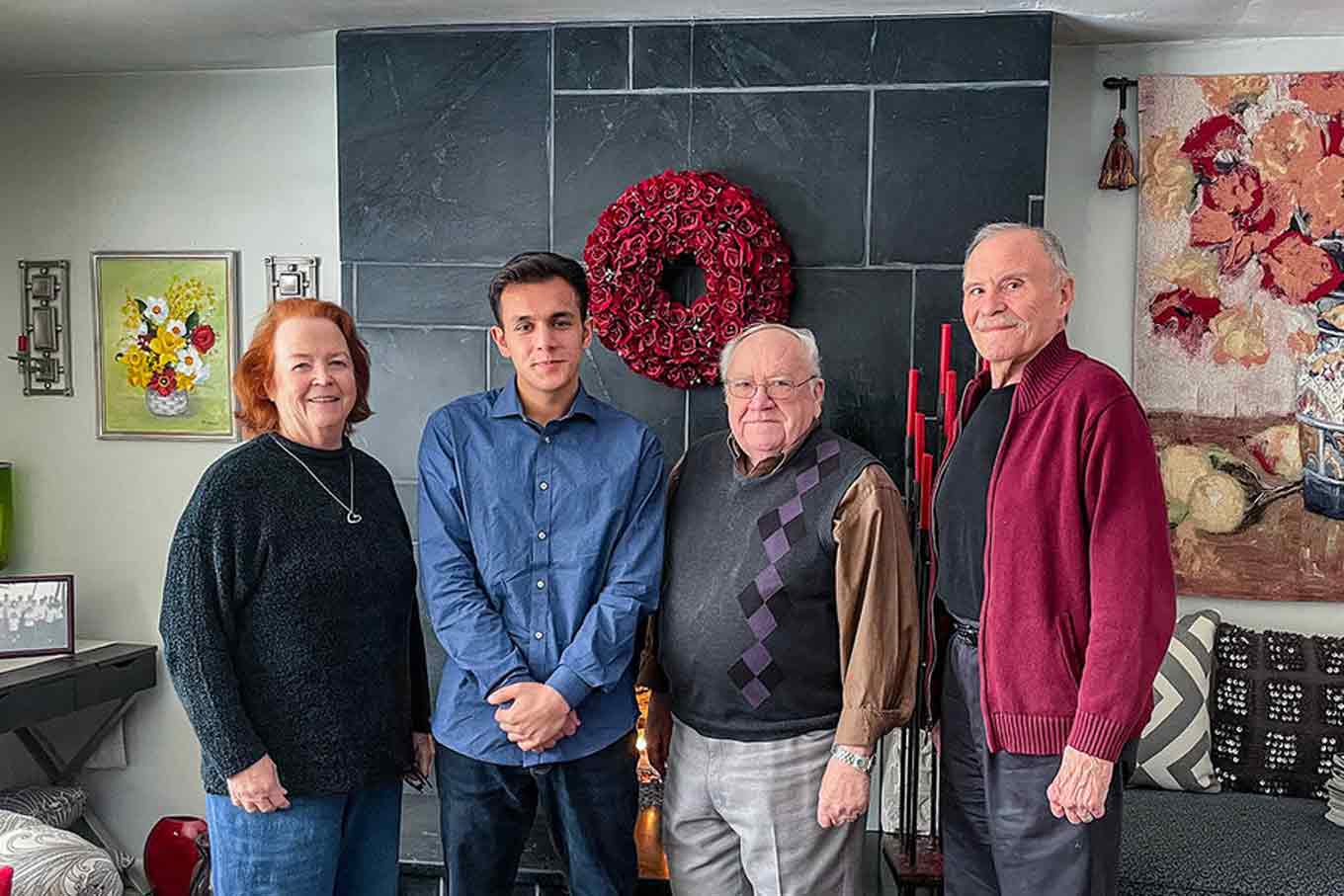
Mr. Mohammadi, age 20, is one of more than 80,000 Afghans airlifted to the United States after Afghanistan fell to the Taliban last August.
He is also one of nearly 360 Afghans being helped through the Sponsor Circle Program for Afghan refugees, a pioneering resettlement program that invites everyday Americans like Gerard and Eileen Monaghan of New Milford to get involved.
“I know people say we are a melting pot, but I think we are more like a stew. All the individuals who come here are making the country a better place,” Mr. Monaghan says.
Each circle is made up of at least five adults in the same community. After passing a background check, those people help individuals access housing, enroll children in school, and find jobs and English classes if needed. Each circle must raise a minimum of $2,275 per refugee it welcomes.
The Monaghans and their circle raised more than $6,000 for clothes, school, and a car for when Mr. Mohammadi gets his driver’s license so he can eventually drive to school.
They also offer friendship and moral support.
“Mohammad asked me why I’m doing this. I told him I can’t do anything for the millions there who are starving and have hardship, but I can take you and get you going. It’s a drop in the bucket. But it’s a drop,” Ms. Monaghan says.
Rethinking resettlement
Developed in partnership with the Community Sponsorship Hub (CSH), a project of the Rockefeller Philanthropy Advisers, the U.S. State Department-supported program was born of necessity.
Traditionally, refugees and humanitarian paroles go through the U.S. resettlement network, which was established via the 1980 Refugee Resettlement Act.
During the Trump administration, about one-third of the 200 resettlement agencies closed, as the cap on refugees to the U.S. was reduced to an all-time low.
The network was decimated, says Isabel Burton, senior director of community engagement initiatives at the HIAS, which helps resettle refugees around the world.
“When Afghanistan fell we [HIAS] only had the capacity to resettle about 35,000. So we looked around and asked how we fill that gap,” Ms. Burton says. “The answer lay in Sponsor Circles, an idea that was already gaining traction among those in the resettlement community. We sped the program up and pulled out all the stops.”
In addition to HIAS, CSH worked with several nonprofit organizations and private businesses, including Airbnb.org, Episcopal Migration Ministries, the International Rescue Committee, and RefugePoint.
“I hope this opportunity to welcome Afghans is something that can embed this value of welcome in communities and states across the country in a much more profound way than currently exists,” Sasha Chanoff, CEO and founder of the nonprofit RefugePoint and a recipient of The Charles Bronfman Prize for humanitarian work, says. “The idea for the program is that it expands to helping other refugee populations.”
Fleeing the Taliban – twice
Mr. Mohammadi was born in Tehran, Iran, where his parents had sought refuge during the first Taliban era. That was in 2001, shortly before the U.S. invaded Afghanistan. Two years later, the family returned to Kabul.
In 2018 Mr. Mohammadi became the first in his family to finish high school. Having learned English in school, he started taking Chinese-language lessons at a private university.
His father continued to work at a local K-8 private school for girls and boys. His mother was busy with his siblings, the youngest of whom is 5.
Over time the situation grew more precarious.
“Until a week before the Taliban came we didn’t think of leaving,” Mr. Mohammadi says.
On Aug. 25, Mr. Mohammadi and his cousin made their way to Hamid Karzai International Airport.
“It was 10 o’clock at night. My father told me to go. I took my clothes and documents. That’s it. There was no time,” Mr. Mohammadi says.
The rest of the family planned to join him the following night. But the airport closed when a suicide bomber struck outside the Abbey Gate, killing 170 civilians and 13 U.S. service members.
A few days later Mr. Mohammadi and his cousin were sitting on the floor of a C-17 with several hundred other people. The plane refueled in Kuwait before landing at Fort Pickett, Virginia, on Sept. 1.
“I met a lot of people. The Marines were nice. The thing that I noticed was the humanity of the people and the freedom here,” Mr. Mohammadi says.
As kind as the U.S. Marines were and as safe as he felt, he grew impatient to go beyond the base. After five months of awaiting screening and resettlement instructions he learned he’d be leaving.
The Monaghans picked up Mr. Mohammadi at Bradley International Airport shortly after noon on Jan. 29. He had been up since 2 a.m. His first meal with them was a McDonald’s spicy chicken sandwich. One month later, he’s been settling in.
One of the first things Mr. Mohammadi got when he arrived in this small Connecticut town on the banks of the Housatonic River was a library card.
He’s since gotten his Social Security card, and enrolled in health insurance and SNAP. He also has his learner’s permit and is practicing driving. He will enroll in summer classes at Western Connecticut State University, putting him one step closer to getting his undergraduate degree in accounting.
Although he and the Monaghans spend a couple of hours every day making plans and phone calls, he’s found time for a bit of travel.
Mr. Mohammadi took the train to Alexandria, Virginia, to visit family.
“He was a little nervous about the train, but I said if you could get out of Kabul you can get on Amtrak,” Ms. Monaghan says.
He’s also visited a cousin in Lenox, Massachusetts, and the Monaghans’ son in Boston.
“I love Boston. I want to go to Harvard for my MBA,” he says.
More help on the way?
Now that the first phase of Operation Allies Welcome is complete – the last Afghans left military bases early February – RefugePoint is focused on the next phase of this operation.
The U.S. government will continue welcoming Afghans from overseas safe havens, who have been fully screened and vetted, to a domestic facility.
While Afghans who worked with the U.S. government received Special Immigrant Visas allowing them permanent residency and federal funds to help begin anew, others like Mr. Mohammadi are humanitarian paroles.
This means they can stay in the U.S. for up to two years. Advocates are lobbying Congress to pass the Afghan Adjustment Act, which would expand the qualifications for blanket refugee status to more evacuees – like Mr. Mohammadi.
Between making calls to advance paperwork and find a job, Mr. Mohammadi plays Monopoly and Uno. He’s bonded with Mr. Monaghan over “The Outpost” – a film adapted from Jake Tapper’s book – and the movie “We Were Soldiers Once and Young.”
“I look at Mohammad and I can see the great things he will do here,” Mr. Monaghan says.
It's still illegal to be LGBTQ+ in 70 countries. In these countries, LGBTQ+ people have zero basic human rights protections, and being outed means you can lose employment or housing.
In 11 countries, queer people face the death penalty.
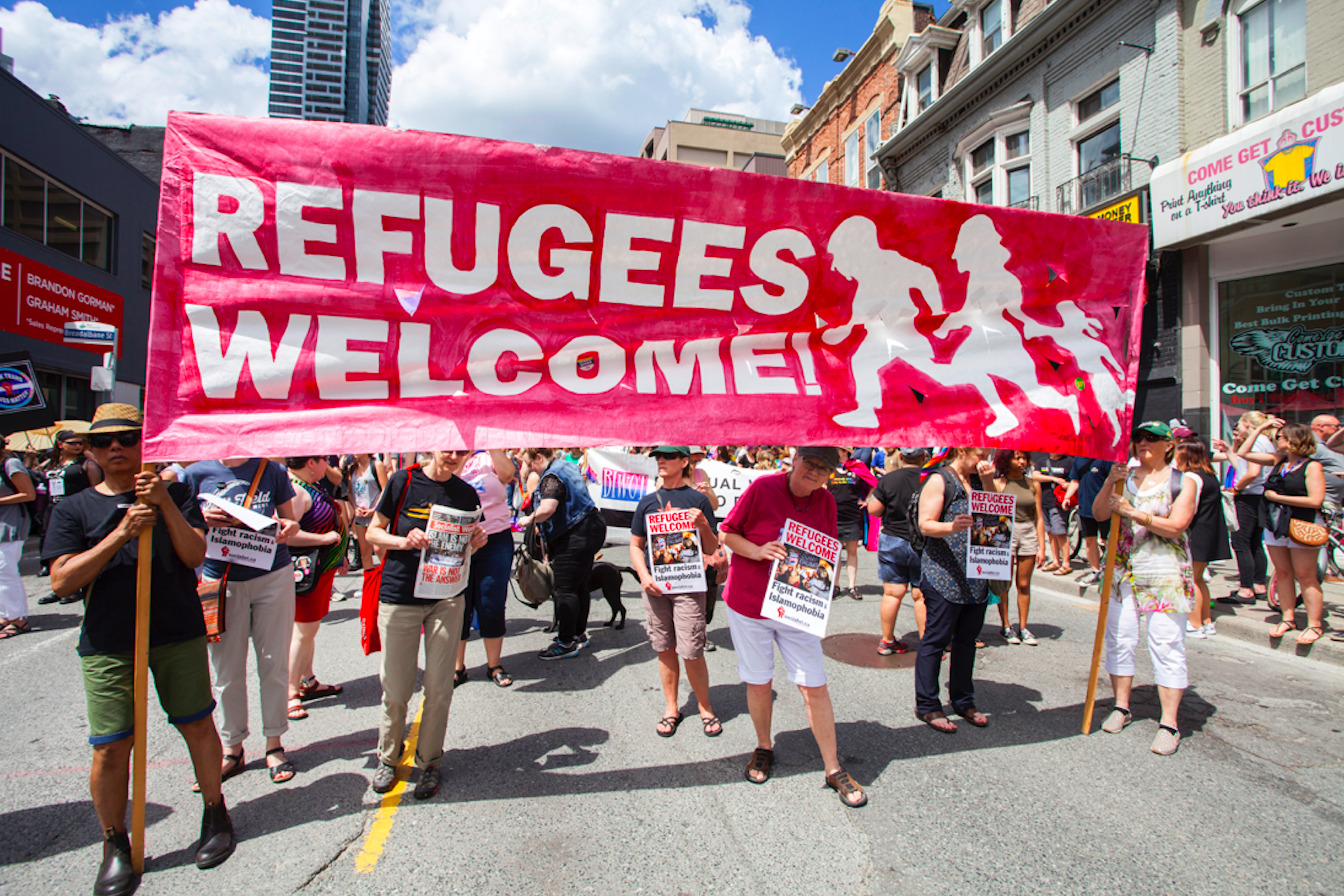
A Canada-based international organization called Rainbow Railroad is helping LGBTQ+ people escape countries where they face imminent danger because of their sexual orientation or gender identity.
In countries where same-sex intimacy is illegal, the LGTBQ+ community faces violence and discrimination from their families, their communities, and even the government.
Rainbow Railroad works to solve a multi-layered problem that goes beyond LGBTQ+ persecution — they’re also responding to a global refugee crisis. Refugees already face mounting challenges, but anti-LGTBQ+ legislation only adds to the obstacles. The organization is addressing both challenges together.
“80 million displaced people around the world, and I don't want to do any crude math around what percentage of that population is LGBTQ+ because there is not enough data, but you can imagine that there's a significant number of those people who are members of the LGBTQ+ community,” executive director Kimahli Powell told us.
"There are 70 countries that criminalize same-sex intimacy."
“On top of that, there are 70 countries that criminalize same-sex intimacy. The nexus of those two problems is where the people who reach out to us for help are — why there are folks who are members of the LGBTQ+ community who are forcibly displaced or seeking refuge in a world.”
After reviewing each case submission and determining how best to help, Rainbow Railroad works to select effective routes to safety and connect with local contacts who can provide pre-travel and logistical support. Then they provide transportation to the migrant’s destination country and immediate post-travel support.
"Notably, Rainbow Railroad has been praised for helping 70 Chechen men resettle in response to anti-gay purges in Chechnya beginning in 2017."
Notably, Rainbow Railroad has been praised for helping 70 Chechen men resettle in response to anti-gay purges in Chechnya beginning in 2017.
“What I'm really, truly proud of with that story is that while I was making that trip, people were doing online fundraisers,” Powell said.
“One Facebook fundraiser raised $250,000 that we were able to use to build safe houses. People were doing bake sales, drag shows, you name it. Rainbow Railroad is 100 percent funded by private sources. We really are a community movement. It shows you how people rallying together can help one person. That's what I'm most proud of with the organization.”
The organization’s community funding is especially impressive because it costs about $10,000 to help just one person.
“First and foremost, our goal is to help keep someone safe within their country,” Powell said.
“That means access to a safe house, moving them to a safer place within the country, providing them access to resources, or connecting them with an organization — anything to get them out of a dangerous situation. And for cases that require emergency relocation, of course, that means providing the cost of getting them from to a country where they can make a safe asylum claim.”
"Since 2006, Rainbow Railroad has helped more than 800 persecuted LGBTQ+ people from 38 countries travel to safety."
In 2020, the group received 2,800 asylum requests and helped 465 people. Since 2006, Rainbow Railroad has helped more than 800 persecuted LGBTQ+ people from 38 countries travel to safety.
“What I love most about Rainbow Road is that we really have been a queer-led response to a problem,” Powell said.
“As a LGBTQ+-led organization, being able to understand the problem and understand the systemic barriers to migration and discrimination have allowed us to be really innovative in seeing solutions that can help beyond the LGBTQ+ community.”
Get to Know Kimahli Powell, Executive Director of Rainbow Railroad
To learn more about Rainbow Railroad, listen to our podcast episode with executive director Kimahli Powell.
Kimahli shared the story of Rainbow Railroad and how to get involved in supporting LGBTQ+ refugees around the world.
Take Action in Support of LGBTQ+ People Around the World
You can show your support for the mission of Rainbow Railroad by making a donation.
The cost of helping someone relocate overseas is around $10,000, but every dollar counts.
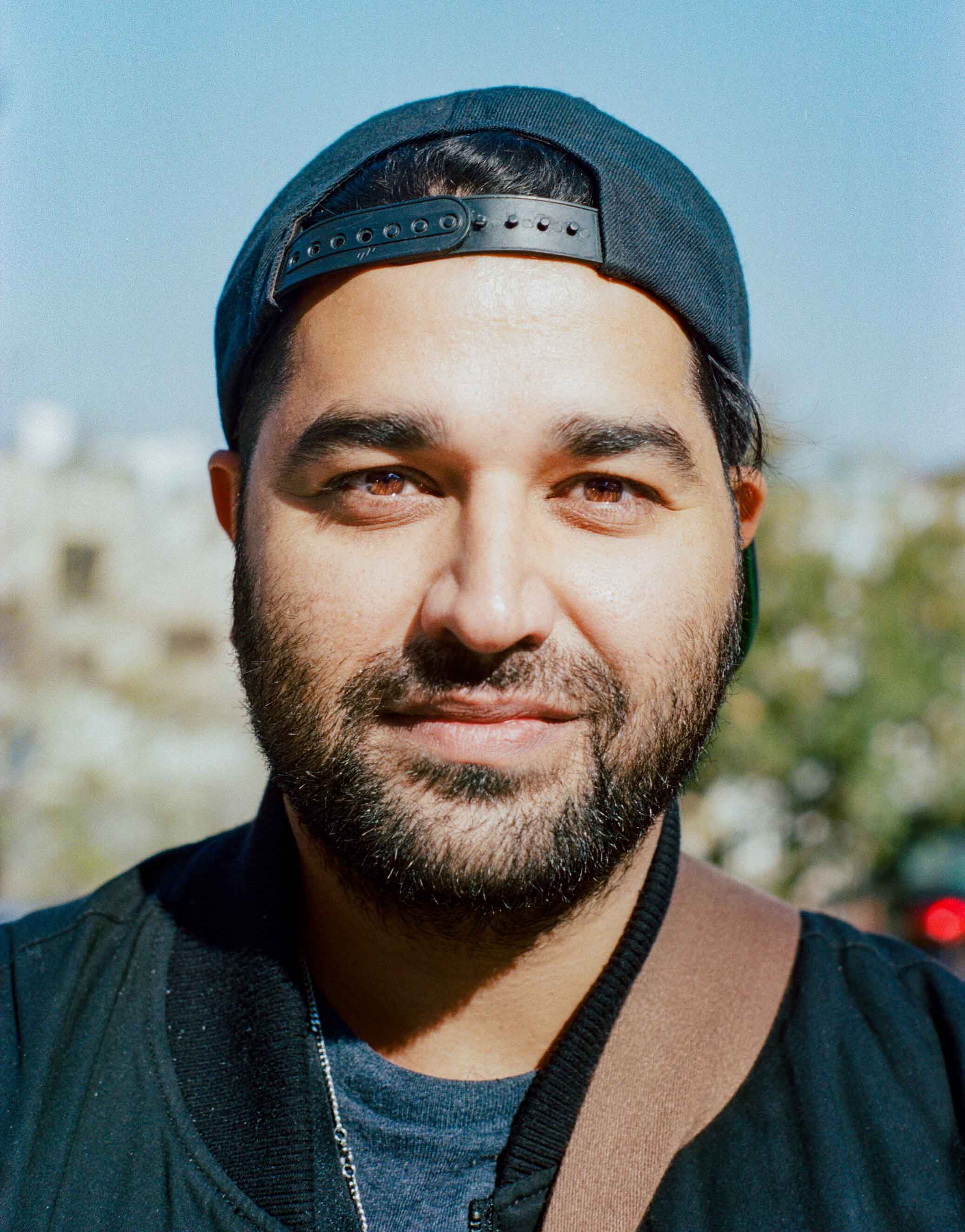
Mohsin Mohi-Ud-Din is the first American born into his family. His parents are from the disputed territory Kashmir, his father a doctor who moved to the U.S. for a job opportunity and met his mother on their wedding day. As a child, Mohi-Ud-Din traveled yearly between Kashmir, where many of his relatives still live, and Maryland, where he grew up.
At 18 years old, he visited Kashmir to create a multimedia piece documenting human rights violations in the region. He interviewed his relatives and other people in the community and witnessed a connection between storytelling and healing trauma.
Later, in 2009, he set up a program to help street children and migrant youth in Morocco and provided more than 300 children with tools for educational and emotional development.
In the year he was in Morocco, he saw a behavioral shift within the children, further confirming his idea about the effectiveness of art and communication therapies.
Years later, while working on the strategic communications team at the United Nations, Mohi-Ud-Din learned about the displacement of Syrians and thought his earlier program could evolve into something bigger.
He left his job at the UN and in 2014 founded his nonprofit, MeWe International. (The name “MeWe” comes from the two-word poem by Muhammad Ali, who Mohi-Ud-Din met at a mosque when he was a child).
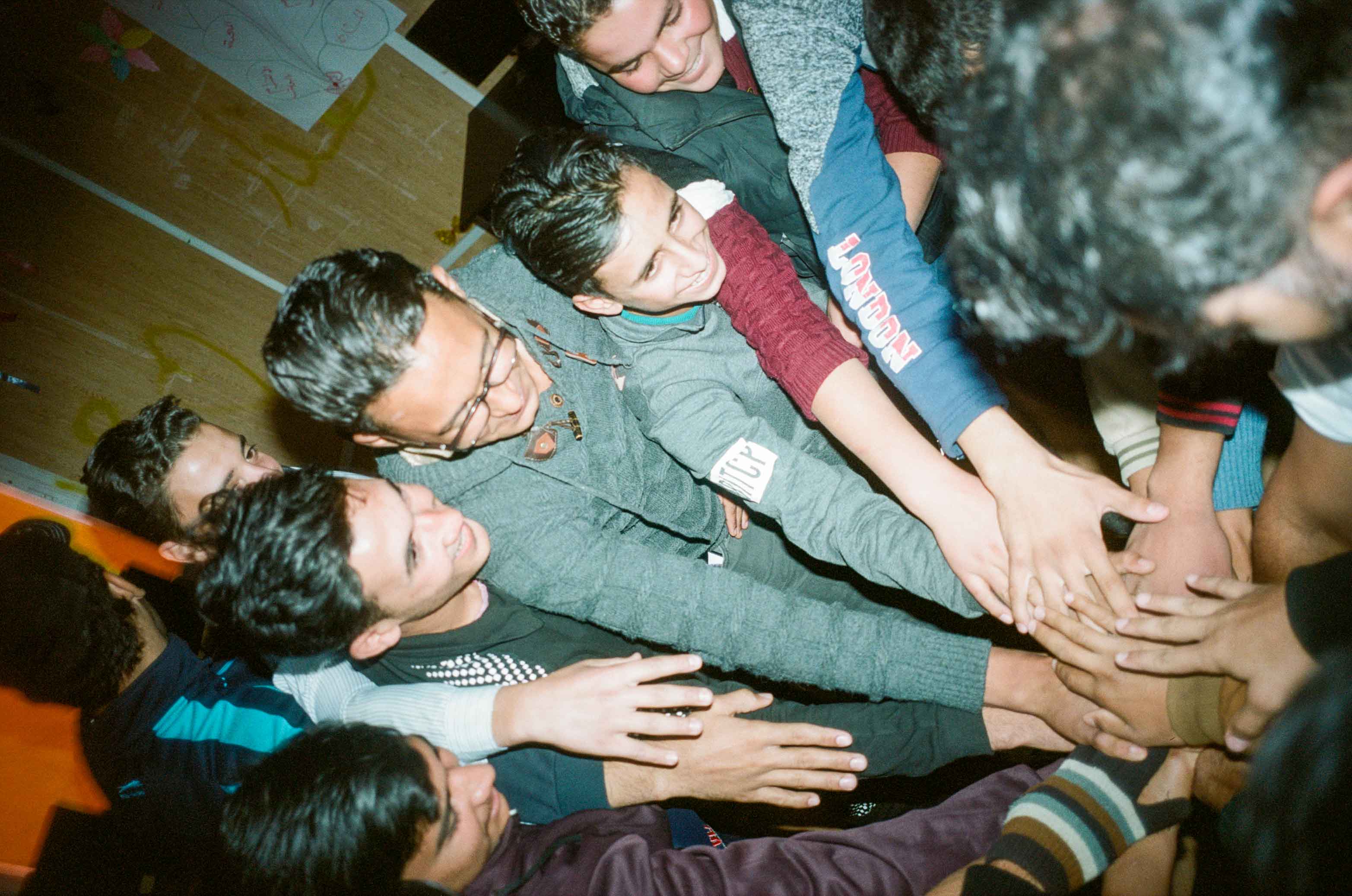
He piloted the program in the Zaatari refugee camp in Jordan, one of the largest refugee camps in the world with more than 200,000 Syrians. The program now exists in 12 countries.
“Storytelling is a vehicle that takes us from where we are now to where we want to be,” Mohi-Ud-Din said. “We tend to have our narrative of our life defined by one thing, and our program [creates] spaces through communication and storytelling [to discover] things more meaningful than pain.”
“The story you tell yourself about yourself shapes how you treat yourself, and how you treat yourself shapes how you engage with the people on the planet around you.”
The group centers on the power of creativity and storytelling to help participants enhance and transform their psychological wellbeing and build resilience, leadership skills, and community engagement.
The initiative’s central goal is to provide a space for participants to reframe the narrative of their experiences and define them on their own terms, all while practicing teamwork, leadership, and self-expression.
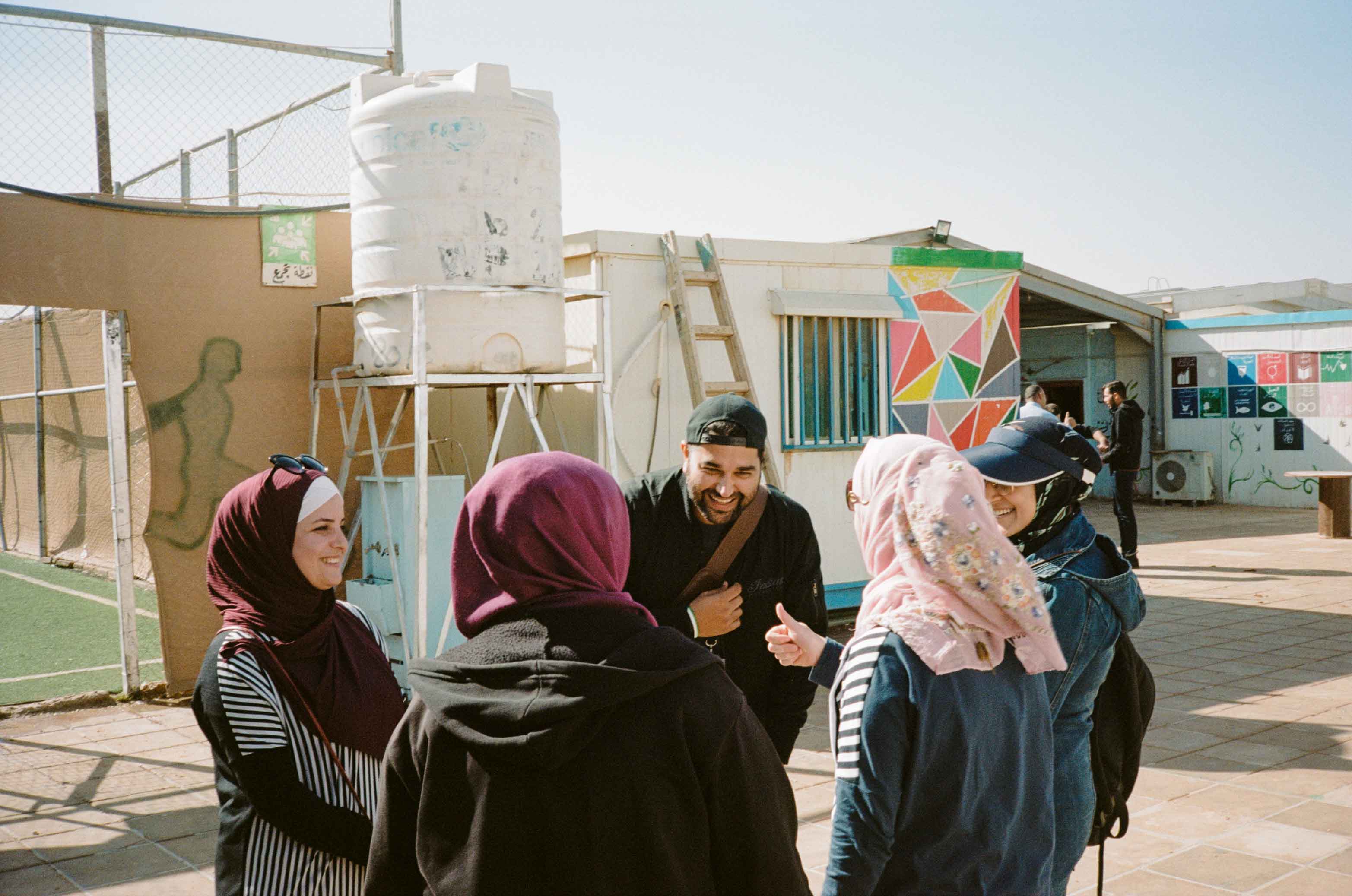
“The story you tell yourself about yourself shapes how you treat yourself, and how you treat yourself shapes how you engage with the people on the planet around you,” Mohi-Ud-Din said.
Refugee participants undertake a journey toward healing the trauma that forced them to flee their homes.
MeWe trains refugees to facilitate the program, which includes exercises in breathwork, goal-setting, video blogging, and other narrative therapy exercises. Participants share their work in small groups and with the greater community.
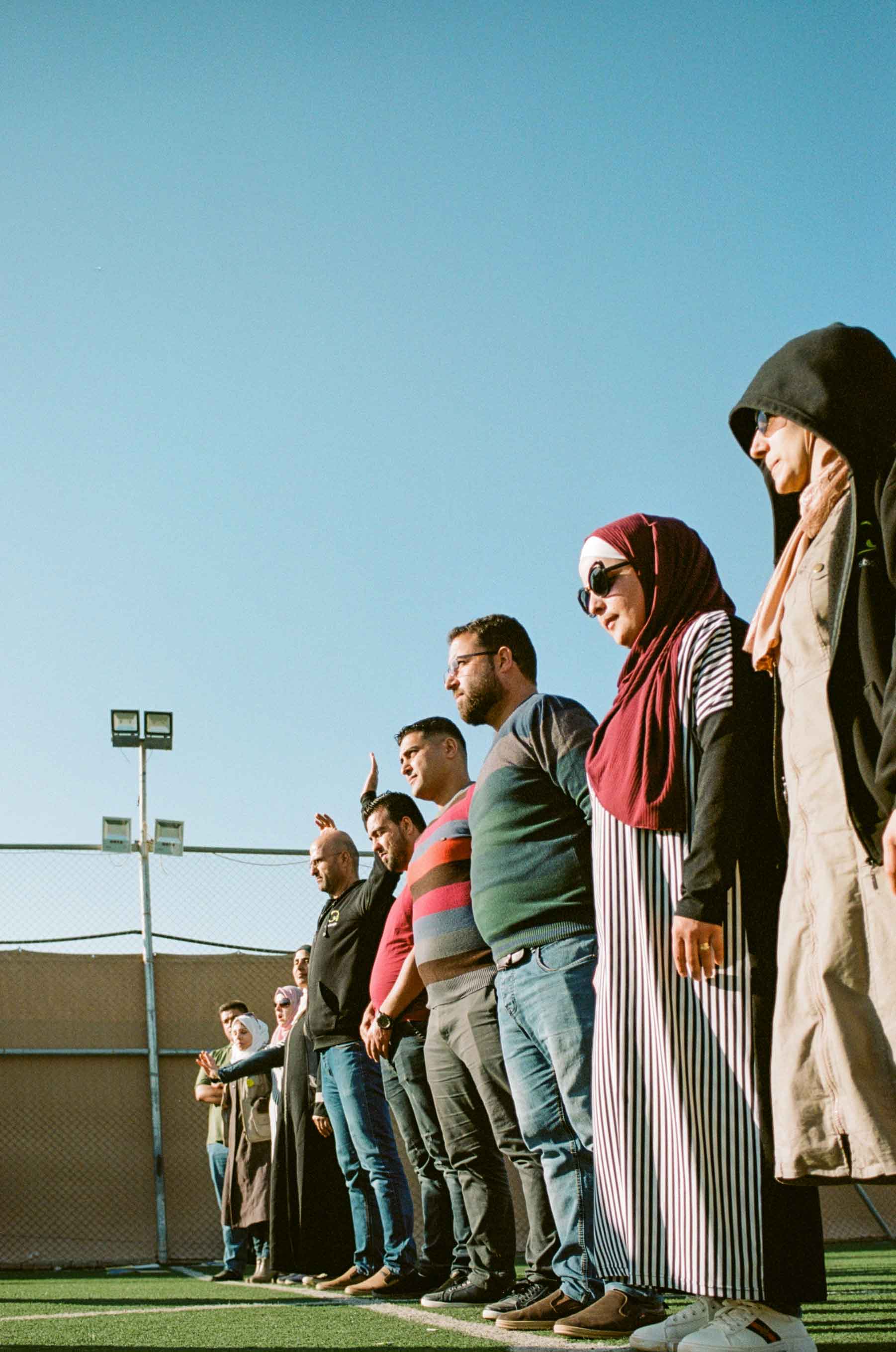
The initiative is self-sustaining and co-created with the participants so they can run it on their own instead of relying on a foreign NGO.
And MeWe International doesn’t only work with refugees — the program is also for asylum seekers in Texas, incarcerated youth in Washington, D.C., and even social entrepreneurs at large companies, among other communities.
“There's something in the DNA and the blood of all human beings that has fight in it,” Mohi-Ud-Din said.
“In the darkest of places, there’s still resistance and resilience and hope. You don't have to be a refugee or someone who's been through trauma to have that power inside of you. It’s inside all of us.”
A version of this story originally ran in The Refugees Edition of the Goodnewspaper in July 2020. The Goodnewspaper is our monthly print newspaper filled with good news.
You can join thousands of subscribers who get access to more exclusive stories like these, our private community space, a free inspiring poster, and so much more. Become a subscriber today.
Making meaningful change in the world can come through many avenues. We have the ability to do good through volunteering, donating, and spreading the word online, but one of the most powerful ways we can create change is through policy change. Governments have a lot of power. Political leaders are accountable to their constituents, and we have the ability to use that for good.
With so many issues going on (from gun violence to climate change), our leaders need our voices more than ever when they’re shaping policy — but this can be confusing and hard to navigate if you’ve never advocated on behalf of a cause to your representatives in the United States.
Good Good Good has created a straightforward, simple guide as to how — and why — you can find your local representative to advocate for the issues you’re passionate about.
How to contact the White House about a cause you care about:
Understandably, when most people think of reaching the government, they think of the White House. But while the president and his administration are the highest levels of office, it’s not always effective to get to them first.
However, even though the president can’t write laws, the president has influence on laws. Additionally, the president can pardon people, pass executive orders, and change how processes work. Notably, the president is a public figure with influence, so that alone has power. Keep all of this in-mind when you contact the White House; you want to ensure your request is something the president has power to do.
To reach the White House by phone, you can call 202-456-1111.
You can also send a handwritten letter to the White House at their iconic mailing address. Presidents have been known to respond to them, as evidenced by these examples from the Obama White House, showing that your voice can be heard.
The White House also recommends emailing them, as they’re equipped to manage emails faster than phone calls or letters.
How to contact your senators about a cause you care about:
Every state has two senators and what's unique about them is they control judge appointments, try the cases of federal officers that have been impeached by the house, and more. Since senators are voted into office, it’s their obligation to listen to their constituents — meaning that you have a say in what they do.
The United States Senate has a page on their website dedicated to helping you find your senator. All you need to do is enter your ZIP code, hit enter, and the website will tell you who the Senators are for your state, which party they’re part of, and will link directly to their website, where their contact information will be listed.
You can also call 1-844-USA-0234 (1-844-872-0234) and enter your zip code to be connected directly with your elected officials. (This is a great phone number to add to your contacts.)
How to contact the House of Representatives about a cause you care about:
Unlike the Senate, the number of representatives per state is determined by population — but some states have less reps than senators because they're so small. Since there are usually more representatives than Senators, they tend to handle issues that are more local to their district.
To find the representative for your district, you can head to the United States House of Representatives’ website. You’ll need to enter your ZIP code and then they will tell you who the Congressional representative is for your area, which party they belong to, their direct website, and their contact information.
The phone number 1-844-USA-0234 will also allow you to get connected directly with your member of congress. You’ll immediately enter your zip code and your call will be rerouted to your congressperson’s office.
How to contact your governor about a cause you care about:
As state leaders, governors are responsible for implementing state laws. They approve the state budget and appropriations, the confirmation of judicial appointments, and more. You should contact your governor about local issues in your state, since they oversee state operations. You can reach your governor by finding your state here and reach them through phone, fax, or email.
How to contact your local elected officials about a cause you care about:
If facing a specific issue in your city or district, going straight to your locally elected official is likely the most effective way to resolve a problem or advocate for a cause. On a state level, this could mean your state representative, and your state senate. And on a local level, this could be the mayor of your city, the councilmember of your district, or anyone whose jurisdiction is more specific to your needs.
You can find your local elected officials using My Reps. All you need to do is enter your address to find your representatives at a local, county, state or federal level, and you can filter out the results so you only get exactly what you’re looking for
1-844-USA-0234 (1-844-872-0234) also works with state reps. Just like with federal representatives, you can call this number, enter your zip code, and get connected with your elected officials’ offices.
More tips on how to easily contact your elected officials:
If making a phone call and talking with a human feels too daunting, you have a few other options as well. You can call outside of office hours and leave a message for your representative. (Just remember to say your name and zip code so they know that their office actually represents you.)
An alternative to My Reps is Common Cause, which allows you to find your representatives as well as see what bills they’ve introduced, what committees they serve on, and any political contributions they’ve received. This website only works at a state and federal level, but it’s a useful tool to see what elected officials are doing while they’re in office.
If you’re nervous about what to say, 5 Calls is an organization that generates scripts for you to use while on the phone. They have a database of common causes people call their representatives about, as well as an ongoing newsletter on latest issues.
You can also use Resistbot, a tool that helps you connect to your elected officials via text message. Just text the word “RESIST” to 50409 (or to Resistbot on iMessage or Telegram) and follow the directions they message back. Resistbot will turn your texts into a letter or email, and deliver it to the elected officials in an efficient, organized manner. They’ll allow you to “text” any of your elected officials — from your mayor to the President.
It’s important to know how to contact your local representatives, especially if they’re making legislative changes that you don’t agree with or want to speak to them about. While we may live in a divisive time, the issues that plague America — like homelessness or the student debt crisis — affect every single community. Contacting your representative is also a way to speak for those who cannot advocate for themselves. By emailing or phoning your elected representatives through the means listed above, your voice can make a difference in the policies that shape this country.
Every day the Good Good Good team collects the best good news in the world and shares it with our community. Here are the highlights for this week!
If you want to get good news in your inbox every day, join the Goodnewsletter — the free daily newsletter designed to leave you feeling hopeful.
The Best Positive News We’re Celebrating This Week —
The Portland coffee shop that went viral for ‘SNAP breakfast’ is now building a free cafe in Gaza
Heretic Coffee Co. in Portland, Oregon responded to last fall’s SNAP cuts by offering free meals to anyone in need. It’s since donated over 11,000 free meals, supported by $400,000 in donations.
Now, owner Josh White just announced that Heretic was joining with the Humanite Peace Collective for their next fundraising campaign: raising $100,000 to build a coffee shop in Western Gaza that “will feed people every day for free, no questions asked.”
And it won’t bear the Heretic Coffee name: it’s going to be called “The DEPT. of Peace” to “put the idea of what it means for Palestinians to have peace back in the hands of Palestinians.”
Even better: Heretic and Humanite may be leading the initiative, but they are putting it fully “in the hands of the Palestinians. White told Good Good Good in an exclusive interview, “Americans cannot understand the full magnitude of what they’re going through. But what we can do is we can help build this thing.”
→ Read more (Good Good Good exclusive)
Park rangers risk everything to save a baby elephant trapped in a watering hole
India has seen a significant expansion of higher education in the last decade, notably led by women
New data shows higher education in India has seen a significant expansion in the last decade as a result of a sharp increase in the number of institutions, higher enrollment, greater participation among women, and more.
The data aims to track developments and reforms in alignment with India’s National Education Policy and in pursuit of the United Nations’ Sustainable Development Goal 4, which focuses on equitable education for all.
Total enrollment increased by 31.5%, and the number of students completing their higher education increased by over 24%. Notably, enrollment among women increased by 42.2% in a decade.
→ Read more
Hegseth made military fitness tests ‘harder’ for women in combat roles — 9 in 10 female Marines are passing
Last September, U.S. Defense Secretary Pete Hegseth signed a directive requiring sex-neutral fitness standards for all troops in combat roles.
Women serving in combat specialties have always been required to meet the same job-specific standards as men, based on the physical demands of their chosen field. But broader physical fitness tests taken by all service members once or twice a year have historically been scored using age- and sex-based standards.
New spring physical fitness test data show that 91.38% of women Marines who have taken the test since January have met or exceeded that threshold, and 96.53% of men have.
Why is this good news? Hegseth has repeatedly called into question whether women in combat positions are held to sufficiently rigorous standards. This data shows, as one advocate put it, that “the vast, vast majority of the women who are in this career field are doing just fine.”
→ Read more
Researchers paid college students $5 a night to get more sleep. Something amazing happened next
For the 17th consecutive year, Iceland ranked first in a global gender gap index
In the World Economic Forum’s annual Global Gender Gap Index, Iceland ranked first globally for the 17th consecutive year, closing 93% of its gender gap as of 2026.
The country’s overall score rose by 0.5 percentage points since last year, and remains the only country to above 90% overall — Finland is in second with 87.2% and Norway in third at 85.7%.
While Iceland still lags in economic participation and opporutnity, with the gender gap 81.6% closed, it shines in closing the gap health and survival, 96.1%, and political empowerment, at 95.4%.
→ Read more
An anonymous tip line started by Sandy Hook families has helped prevent 20 school shootings since 2018
On August 10, a possible school shooting was prevented in Crawford County, Arkansas, after the FBI investigated a credible threat reported through Sandy Hook Promise’s tip line, the Say Something Anonymous Reporting System.
Sandy Hook Promise was formed in 2017 by family members affected by the tragedy in Sandy Hook, Connecticut in 2012. Since its formation, the nonprofit has used anonymous tip lines, early intervention strategies, mental health resources, and peer-to-peer training tools to stop gun violence before it occurs.
To date, the nonprofit has been credited with preventing at least 20 planned school shootings. Sandy Hook Promise co-founder Nicole Hockley said, “When one of those schools is yours, 20 isn’t just a number. It means your child came home that day.”
Why is this good news? Sandy Hook Promise was founded out of an immeasurable tragedy. The families impacted by that school shooting have made it their mission to ensure other kids get to come home from school safely with evidence-based programs for teachers, parents, and students to teach them how to identify warning signs and intervene safely — and it’s working.
On ‘Subway Takes,’ Ms. Rachel calls for an end to ICE detention centers — and racist nursery rhymes
→ Read more
Two sisters in Gaza won a 2026 Earth Prize for their ‘recycled rubble’ bricks
Teenage sisters Tala Mousa and Farah Mousa started their project “Build Hope — Palestine” after their home was bombed, and they began looking for a way to support their community and introduce solutions to rebuild.
The project transforms rubble from damaged buildings and other locally available materials into reusable, non-load-bearing blocks for garden beds, pavements, and more. Their hands-on workshops also educate young people to expand their impact.
Earlier this year, they were named the Middle East Winners of the 2026 Earth Prize, and received $12,500 to implement their idea.
→ Read more
A new neighborhood in Canada will be home to the country’s longest car-free stretch of land
In Toronto, a new neighborhood called Ookwemin Minising wants to make more space for housing without sacrificing green space — so it’s replacing streets with parks and plazas.
A half-mile pedestrian route called Centre Commons will act as a car-free main street, home to 400 trees, which the development touts as “Canada’s longest and most ambitious year-round car-free space.”
While other side streets will allow for vehicles, they will still prioritize large areas of green space. Other streets will also serve as climate-friendly infrastructure by reducing urban heat, managing stormwater, supporting biodiversity, and more.
Why is this good news? More green space in a community has proven benefits for air quality, noise reduction, heat reduction, mental health, and even reducing gun violence. Just as people need a roof over their heads, people need easy access to nature (and spaces to build community with your neighbors!).
→ Read more
🌳 You may also like: For every dollar invested in public parks, cities see $3 back
Gen-Zer quits corporate job and moves to Yellowstone, where she pays $96 a month in rent
A new report found Europe’s wasted heat alone could power the entire city of Paris for 48 years
Researchers are calling waste heat — excess warmth given off by everyday processes, like a supermarket’s refrigerators — the “world’s largest untapped energy source.”
A new report from a Danish engineering firm found that two-thirds of global energy was wasted as heat in 2024, and that’s expected to hit 55% by 2030 as energy demand rises.
The analysis also said that capturing and reusing that heat could save Europe €140 billion annually — Europe’s waste heat alone could power the entire city of Paris for almost five decades.
Macklemore announced new ‘Free Palestine Tour,’ with proceeds benefiting Palestinian charities
Last week, after Macklemore announced he’d been dropped from Ed Sheeran’s tour for supporting Palestine, he also pledged his entire $1 million net earnings from that tour to six organizations supporting Palestinians.
Now, Macklemore just announced a new “Free Palestine Tour” that will benefit a dozen charities working toward Palestinian liberation.
He’ll be joined by to-be-announced artists “who understand that our platforms mean very little if we’re only willing to use them when it’s safe.”
Why is this good news? Many fans have been pushing for celebrities and people with large platforms to use it to advocate for human rights — and against abuses of those rights — and, as Macklemore put it, “use the stage for more than entertainment.” Macklemore has long advocated for Palestinians, even when it’s come at a perceived “cost,” and he continues to do so.
→ Read more
Scientists are crowd-sourcing photos of wildlife eating lunch. It helps them protect endangered species
→ Read more
Germany just became the third major economy to commit to phasing out fossil fuels entirely
Europe’s largest economy, Germany followed France and the Netherlands in laying out a solid plan for phasing out the use of fossil fuels, targeting a full phase-out by 2045.
In addition to “independence, affordability, and climate protection,” Germany’s environment minister cited the U.S. war in Iran, “If the situation in the Strait of Hormuz determines whether people can still afford their daily commute to work, that is not a good state of affairs.”
Nearly 200 countries committed to phasing out fossil fuels at the 2023 COP28 climate conference in Dubai, but only three have laid out specific plans to achieve that commitment.
→ Read more
More good news of the week —
Hayley Williams changed her pre-show playlist to feature former openers on Ed Sheeran’s tour. Macklemore, Beoga, Finneas, Lukas Graham, and Aaron Rowe were the only five artists featured, representing the continued fallout after Macklemore was removed from the tour for his “Free Palestine” remarks.
Athens, Greece is turning its old airport into one of the largest parks in Europe. Planners designed each connecting space in Ellinikon Park to maximize thermoregulation of the air temperature with the goal of keeping it 7.2°F cooler than surrounding asphalt and concrete areas.
On a restored North Sea reef in the U.K., native oysters have made an encouraging comeback. Surveys found that adult and juvenile oysters were not only surviving, but that the reef cubes were already providing a home for native fish and crustaceans.
The CDC is launching the first study of people who were children in New York City when the Twin Towers fell. Roughly 25,000 children were living or attending school nearby, and despite being exposed to the toxic cloud and settling dust, very few of them were enrolled in follow-up health studies of survivors.
Chile is now the first country in South America to eliminate dog-transmitted rabies as a public health problem. The WHO recognition highlights more than 50 years of progress without a human case of rabies and confirms the country's capacity to prevent transmission from re-emerging.
New sensors are preventing high-speed trains from hitting elephants crossing railroads in Sri Lanka. The sensors will be installed along the railway line rather than mounted to the top of trains, and will detect ground vibrations and capture the sound of approaching animals to slow trains down and stop collisions.
Researchers created an online map of a Texas county that shows flood risks, air pollution data, poverty levels, and disease prevalence. Officials in Nueces County are using the map to analyze risks and act on them before they become emergencies.
Even after fines, an NFL player continues to pay tribute to Palestinian children killed in Gaza. Houston Texans linebacker Azeez Al-Shaair wrote the name of 8-year-old Wafaa Akila on his eye black, one week after the NFL fined him over $11,000 for writing another child’s name on his eye black.
A tiny, elusive wallaby was spotted on Australia trail cameras for the first time in 50 years. Conservationists say spotting the species is the “ecological equivalent of finding a needle in a haystack.”
Colorado Governor Jared Polis is taking executive action to save the bees by planting and protecting pollinator habitats. Polis, who was a beekeeper and florist before he ran for office, has introduced bee-saving legislation since 2021.
YouTuber “MrBeast” unveiled his largest humanitarian build to date, spending nearly $10 million to construct an entire self-sustaining village in Ghana. The Abna Dakwa Village will provide families with housing, a medical clinic, clean water, and free education.
A housing developer and creative agency in Sweden just built the country’s smallest houses. They’re not meant to be trendy tiny homes or cute sheds for the backyard; they were built to draw attention to the cost of living crisis among young people.
A medical examiner in Arizona has spent years collecting data on preventable deaths. Public health offices are using Greg Hess’s data to develop solutions to the problems of the day, from opioid deaths to heat deaths.
Tanzania’s first official wildlife corridor links Nyerere National Park’s open savanna woodlands with the high-altitude rainforests of the Udzungwa Mountains National Park. The forested path is vital to endangered savannah elephants, who migrate westward to mate and forage.
A missing 70-year-old hiker was rescued from a remote island after he was spotted on trail cameras. Isle Royale is a particularly rugged landscape and one of the least-visited national parks in the United States due to its remote location in the middle of Lake Superior.
California lawmakers passed a bill that would put money directly into the hands of families harmed by oil drilling. The legislation is expected to be signed into law by Gov. Gavin Newsom by October and sets aside enough money for payments of up to $5,000 for 1,000 impacted households under its initial structure.
Demonstrating the critical work of coexistence, Nepal’s wild tiger population has tripled. The new estimate, now 429 tigers up from 121 tigers in 2010, follows decades of sustained, collaborative conservation efforts and represents one of the world’s most significant endangered species recoveries.
New York City announced a historic $131.5 million settlement with DoorDash for underpaid delivery workers. Officials said it was the largest labor settlement in the city’s history, which will impact more than 260,000 delivery workers.
Park rangers rescued a days-old elephant after she was separated from her mother and hid among a herd of zebras. Since 1977, the Sheldrick Wildlife Trust has been a leading conservation organization in East Africa, operating the most successful orphan elephant rescue and rehabilitation program in the world.
Thailand eliminated rubella as a public health problem. Also known as German measles, Rubella is a contagious viral infection, and this is a major milestone in the country’s efforts to protect children, women, and families from vaccine-preventable diseases.
Marcus Massalami made history as the first drag king on “Drag Race España.” It’s also the first time in “Drag Race” franchise history that a contestant will compete exclusively as a drag king.
A Nigerian conservationist founded the country’s first locally managed marine area. The swamp area was also home to a near-extinct monkey, unknown to science until 1993, which Rachel Ikemeh also brought back from the brink of extinction.
Ford partnered with Sesame Street to help families prepare for extreme weather and natural disasters. Sesame Workshop, the global nonprofit behind Sesame Street, recently launched its new Extreme Weather initiative to help children, parents, educators, and communities prepare for and recover from severe weather.
Rescuers freed a minke whale tangled in fishing gear in Cape Cod Bay. The rescuers said someone may have previously cut the line while trying to help the whale, unintentionally making the entanglement more dangerous and the rescue more difficult.
More than a dozen words from Bermuda and across the Caribbean were officially added to the Oxford English Dictionary. A local in Trinidad said the formal recognition of words like “bimpert” and “shadeesh” helps preserve cultural traditions for younger generations.
Rescuers made a sea turtle a custom 3D-printed harness after it was struck by a boat and could no longer swim. Cebu’s care has also included acupuncture, physical therapy, and stem cell treatments.
A 17-year-old created new AI-enabled glasses that act as a “virtual guide dog” for people with vision loss. The White House honored Alexander Du for her invention, which was inspired by her grandmother’s struggle with blindness.
Delta is partnering with the National Park Foundation to encourage travellers to support America’s national parks before, during, and after their trips. Through the program, customers can participate in hands-on volunteer experiences at the country’s most iconic national parks.
Bristol just became the first city in England to ban Black Friday advertisements on city-owned billboards. (May require login) The regulation is designed to cut down on “excessive consumption” related to fast fashion, mass markdowns, and influencer promotions.
Oregon’s second largest investor-owned electric utility could soon directly assign the costs of new energy projects and infrastructure needed for data centers to data center operators.
Pacific Power last week agreed to the deal following months of negotiations with staff of the Oregon Public Utility Commission, the watchdog Citizens’ Utility Board, and a handful of environmental and community advocacy groups.
The Citizens’ Utility Board in a news release Tuesday called the agreement “the strongest from a for-profit electric utility yet” under Oregon’s new POWER Act, which mandates the state’s monopoly electric utilities create a separate rate class for data centers to ensure other customers aren’t subsidizing the massive energy demand from the server farms.
Both Pacific Power and the state’s largest electric utility, Portland General Electric, have raised customer rates 50% since 2020, while most customer classes became more energy efficient, and data centers grew to make up nearly one-quarter of all retail electricity sales statewide.
The three-member Public Utility Commission is expected to approve Pacific Power’s deal on Nov. 13, according to Charlotte Shuff, a spokesperson for the Citizens’ Utility Board. Shuff expects the Data Center Coalition, an industry group representing the tech companies, will attempt to appeal.
The coalition also appealed a recent PGE proposal to assign costs based not on how much each rate class is driving “peak demand” on the system, which is moments when usage is at its highest point. The state utility commission rejected the appeal, but the citizens’ board expects the coalition will bring the case to the Oregon Court of Appeals.
While Pacific Power’s plan assigns costs based on who is driving overall demand, PGE’s plan assigns costs based on how much each customer class is growing and adding to the system’s highest demand periods.
After the state’s Public Utility Commission approved PGE’s proposal in July, the company announced rates for data centers would increase by nearly 30% while residential payers would see their bills decline slightly.
Pacific Power goes further
Pacific Power’s proposal goes further than PGE’s by requiring new data centers that receive electricity from Pacific Power to cover the costs for all new energy generation and storage projects needed to power them, including new power plants and batteries, even if those additions also benefit other customers. Data centers would also pay for any upgrades that are needed to serve them, even if those same upgrades benefit other customer classes.
Data centers would be responsible for the cost of all wires and poles built for them to receive distributed power, and all costs related to energy purchased on the market from other companies to power them. If a 100 megawatt transmission line is needed to serve a 50 megawatt data center as well as other residential and industrial customers, the data center would pay for 50% of the transmission line, directly corresponding with its overall demand, according to the citizens’ board.
New transmission lines can cost several million dollars per mile to build, and the West is in need of more than 12,000 miles of new transmission according to one recent estimate.
Shuff said Pacific Power’s proposal came a long way in recent months and “to their credit they [Pacific Power] worked really hard to get to this. We’re really pleased with where we landed,” she said.
The utility serves more than 650,000 Oregon customers, and has seen energy demand grow by 8% between 2013 and 2023 due to data centers, according to a Sightline Institute analysis of U.S. Energy Information Administration data.
PGE is the state’s largest electric utility, serving 930,000 customers, and has absorbed the most data center load growth of any private utility in the state during the last decade, according to that analysis.
PGE’s system of charging customers based not on overall demand growth but “peak demand growth” is driven in part by the fact that they serve a higher number of small data centers in densely populated counties, according to Bob Jenks, executive director of the Citizens’ Utilities Board. Pacific Power’s data center customers are mostly large facilities in more rural parts of the state.
It’s easier to make the case that building a new transmission line in Washington County could benefit all customer classes, who are all using more air conditioning in the summer, he explained, “whereas if you build a data center in Madras, it’s pretty clear whether or not new energy investments and infrastructure costs associated with that are for the data center or not,” Jenks said.
Drew Hanson, a PGE spokesperson, reiterated in an email the different challenges the two utilities face.
“[Pacific Power’s] service area is larger and more spread out, so a single data center may require infrastructure built specifically for that customer, such as a new transmission line, substation, or power resource. In those cases, costs can be tied more directly to the customer creating the need,” he said.
Pacific Power’s plan applies to future data centers, while PGE’s applies to future and existing data centers. Pacific Power will need to address costs associated with its current data center customers and their demands next spring. The company has just a handful of data center customers at present “but dozens want to get onto their system, and some of them are massive,” Jenks said.
This article was originally published by Oregon Capital Chronicle.
Featured Image: Jordan Gale/Oregon Capital Chronicle
This story was originally published by The 19th and was republished with permission.
Supportive teachers can make a world of difference for transgender students, influencing their sense of safety and academic engagement — often in the face of discrimination and bullying — according to new research from two national LGBTQ+ advocacy groups.
Students whose identities are affirmed at school report a greater sense of belonging and higher grades, and are more likely to participate fully in class, according to a report released Tuesday by GLISTEN and the Trevor Project.
Students report similar outcomes when they are able to connect with LGBTQ+ peers at school, see positive representations of LGBTQ+ people in their classrooms, and attend schools with inclusive policies, such as those that allow them to compete on sports teams or use facilities that best align with their gender identities.
“School environments can play a powerful role in determining whether transgender and nonbinary students thrive or struggle at school,” said Derrick Matthews, director of research science at the Trevor Project.
Policies affecting trans students vary broadly and encompass a range of state and federal laws and directives from local school districts. In recent years, Republican-led states and the federal government have increasingly restricted the rights of trans young people, especially at school.
The report noted that more than half of trans and nonbinary students said their school had implemented at least one policy or practice that was discriminatory toward LGBTQ+ students, and roughly 60% said they had experienced at least one negative event at school.
Of that number, 49% reported verbal harassment related to their LGBTQ+ identity, and 27% said they were barred from dressing in accordance with their gender.
Twenty-five percent of students said they missed 16 or more days of school last year, and 9% said they were mistreated so badly that they left their school altogether.
The Trevor Project’s survey, conducted anonymously online between March and October of last year, included responses from more than 3,700 transgender, nonbinary, and gender-expansive 13- to 24-year-olds. Nearly 2,000 trans middle and high school students responded to GLISTEN’s 2025 National School Climate Survey, administered between April and October 2024.
“Our findings illuminate a number of serious challenges these students face,” Matthews said. “However, these data also provide us with clear and impactful actions that teachers and school officials can take to set transgender and nonbinary students up for success.”
Asking about and affirming a student’s name and pronouns, teaching and talking about LGBTQ+ topics, and supporting student-led LGBTQ+ groups like Gender and Sexuality Alliances can make trans students feel substantially safer at school, according to the report.
But students also want their teachers to take greater action, said Shweta Moorthy, director of research and best practices at GLISTEN.
“There are many students in our survey saying that there’s sort of this, like, ‘negative neutrality’ type of thing happening, where while they aren’t hearing a lot of negative comments from educators, they aren’t hearing a lot of positive comments from educators either,” she said.
“There is a clarion call in our research from students for their educators to show up in much more proactive and affirming ways. Safety isn’t just the absence of harm. It isn’t just the absence of bullying and the absence of discrimination.”
Featured Image: Oriel Frankie Ashcroft/Pexels
This story was originally published by Grist. Sign up for Grist's weekly newsletter.
They tower overhead and sway in the wind and often teem with squawking birds, yet trees are easy to ignore. Urbanites rush by them without noticing, and without appreciating all the work they do: Trees reduce temperatures, mitigate flooding, and provide habitat for animals.
City leaders are no exception to this oversight. As mayors around the world pledge to reduce municipal greenhouse gas emissions, they’re missing the literal low-hanging fruit of bolstering urban forests, dozens of scientists argue in a new essay.
“We have to elevate it from something that is nice to have to something that we require — like, mandatory,” said Manuel Esperon-Rodriguez, an ecologist at Bangor University in the United Kingdom and lead author of the piece, which published today in the journal PLOS Climate.
“In the same way that we treat education, security, transportation, it has to be elevated to that level.”
What makes urban forestry so important? For one, trees significantly cool the concrete jungle by providing shade and releasing water vapor to “sweat.”
Patches of greenery also allow stormwater to soak into the ground instead of pooling and flooding — that investment alone will spare cities from economic damages as a warming atmosphere makes rain fall harder.
Spending time in parks also boosts mental health, while urban farms produce nutritious food and create jobs. Planting trees, especially native species, also provides shelter and food for fauna.
At the same time, vegetation absorbs pollutants, improving air quality for everyone.
These scientists have laid out a four-point approach to funding, raising, and maintaining urban forests. This, by the way, includes individual trees on sidewalks, parks, and woodlands in cities. But it’s really about all the vegetation — not just trees but shrubs as well — within the city limits, whether that’s in someone’s backyard or growing in a street median.
The first hurdle is investing in this stuff. Urban forestry isn’t just about buying a bunch of trees and hiring people to put them in the ground. It takes resources to maintain them, especially when they’re newly planted and not yet established, and therefore more vulnerable to stresses like pests.
Money can (and does) come from private funders, but that cash isn’t always a guarantee. So city governments should be setting aside money for these green spaces, the researchers argue.
“We say that it has to be critical infrastructure, because then we need a special budget dedicated just to them,” Esperon-Rodriguez said.
Even for cash-strapped governments, this is an investment proven to bring dividends: A recent report found that for every dollar put into parks and recreation, cities reap $3 in local economic benefits every year. That’s because green spaces encourage people to exercise, supporting public health and reducing the costs associated with sedentary lifestyles.
By attracting locals and tourists, parks also spur economic activity as folks filter into surrounding neighborhoods to shop or have lunch.
So while yes, it does take money to plant and maintain this greenery, it’s in a city’s best interests to do so.
Mayors must ensure that these domains blossom in an equitable way, the scientists add. Richer areas tend to be much greener, and therefore cooler, than underserved neighborhoods. People who can’t afford air conditioning are at higher risk of the urban heat island effect, or the tendency for the built environment to absorb the sun’s energy all day and release it throughout the night.
“Then what’s the cost?” Esperon-Rodriguez asked. “They are missing opportunities, they are missing recreational activities. And if they don’t have air conditioning, then on top of that there is the issue of health.”
Officials can’t just roll into a neighborhood and plant trees, though — the essay argues that cities have to collaborate with their communities on strategies for doing so.
Some folks might want more fruit trees, for instance, while others might object to cherries splatting on the sidewalk. Some might worry about their allergies, and request trees that don’t spew so much pollen.
Esperon-Rodriguez adds that expanding the canopy across a metropolis, and doing so equitably, needs to be enshrined in some way.
That is, it can’t just be a mayoral candidate’s promise to increase tree cover by 30 percent, but something that’s legislated.
This is not only more durable over the years, and hopefully decades, but helps citizens hold elected officials accountable if they’re not meeting targets, Esperon-Rodriguez said.
Overall, these campaigns need to be evidence-based, the essay argues. Cities, for example, have to identify not just the tree species that communities prefer, but ones that will actually survive ever-climbing temperatures.
It’s not just thinking about increasing the canopy in the near term to meet some goal, but making sure cities are more verdant and safer in the long run.
“It’s a way to secure,” Esperon-Rodriguez said, “that whatever we’re planting today is going to survive the next 10, 20, or 50 years.”
Featured Image: Jim West/UCG/Universal Images Group via Getty Images/Grist
Written by Matt Simon for Grist
The Rocky Mountain Biological Laboratory has been tracking yellow-bellied marmots in and around Gothic, Colorado since 1962.
It remains one of the world’s longest-running studies of free-living mammals, second only to Jane Goodall’s research on chimpanzees.
But its data extends far beyond Colorado’s yellow-bellied marmot population. The RMBL’s study has helped the global science community better understand how animals communicate, evade predators, form bonds, and respond to climate change.
Daniel Blumstein, a UCLA ecology and evolutionary biology professor who has led the program for years, said that over the last decade, the study has largely been funded by the National Science Foundation.
Then, the money stopped flowing.
Since President Trump took office for the second time, his administration has frozen or slashed more than $700 million in NSF grants.
So, after three unsuccessful attempts to renew his NSF grant, the agency told Blumstein to stop applying.

“After the third time, our program officer told my colleague ... that they will never fund us because they think we have too much data,” Blumstein said in an email to SFGate. “I don’t even know how to parse that sentence. It’s nuts.”
That’s when a lightbulb went off for Emily Renkey, a first-year master’s student in Blumstein’s lab. She started a G-rated account on OnlyFans called “OnlyMarms,” where the lab could share their research with the world.
The online subscription service is more commonly associated with adult entertainers, but on OnlyMarms, the scientists promise only “unfiltered yellow-bellied marmot content from the Rockies.”
“Sometimes I’m just posting the videos I think will get the most ‘aws,’” she explained. “But my favorite is when I find footage of a particular behavior and I can use that to educate people.”
The early success of the OnlyMarms account has inspired another campaign in the form of “Fat Marmot Week,” an online tournament that pays homage to the annual “Fat Bear Week” in Alaska’s Katmai National Park and Preserve.
Leading up to Fat Marmot Week, which is officially August 24-29, the RBML will feature “contenders” every Monday and Friday on its website.
And on August 24, voting will open to the public, who are also encouraged to donate to marmot research as they crown the inaugural Fat Marmot Week winner.
So far, only one marmot has been added to the website, a female named “Dan’s Hat.”

On the official Fat Marmot Week website, the lab researchers described her as “the cool aunt who’s part of Stonehenge’s matriline,” adding that matrilines form when females live in a social group instead of splitting off on their own.
Although people have been praising the researchers online for their creative fundraising efforts, Blumstein said his ultimate focus is on the science itself.
“Ultimately, we should be spending our time writing papers, not thinking up out-of-the-box ways to get funding,” he said.
Renkey acknowledged Blumstein’s opinion but gently dissented, saying she doesn’t mind rising to the challenge.
While she agrees that scientists shouldn’t have to worry about their research being jeopardized by funding cuts, she believes public engagement is a worthwhile part of the job.
Although running OnlyMarms and organizing Fat Marmot Week takes time, she said, it’s an investment that pays off — especially because the OnlyMarms account introduces people to a critter they might never encounter in their day-to-day lives.
“I don’t know if I agree with the idea that scientists shouldn't have to be opportunistic and creative. I think that’s a lot of what science and research is,” she said. “It can be intimidating to engage with the public like this, but why are we doing this work if not to help forward humanity with it?”
You may also like: Strippers are now the No. 1 donor of toys to children's hospital in Portland. This year, they broke their own record
Featured Image: Ben Hohenstatt/Flickr (CC BY 2.0)
June 20th is World Refugee Day! This annual celebration is an opportunity to honor and uplift those affected by displacement.
According to UNHCR, the UN Refugee Agency, over 122 million people were forcibly displaced worldwide by the end of April 2025, including 42.7 million refugees. This number continues to grow as funding for international aid decreases.
It’s important to look beyond just the staggering numbers, and realize that each of those individuals has a face, a story, and a set of hopes and dreams they hope to achieve.
World Refugee Day was established on June 20, 2001, to celebrate the 50th anniversary of the 1951 Convention Relating to the Status of Refugees.
My family and I became refugees in 2006, leaving Baghdad and moving to Syria, which was taking in refugees at the time. After over a year of interviews, we received a phone call: we had four one-way tickets to Sioux Falls, South Dakota.
We were incredibly lucky. Only 2% of all refugees are resettled to a new country, and the average time an individual spends in the refugee camp is over a decade.
Over the past eight years, I have worked to create system-level platforms for refugee youth to share their own stories, on their own terms.
As a teen, I founded the organization Narratio, which now runs the only storytelling and leadership fellowship for resettled refugee youth in the United States. Over the past five years, work by 57 Narratio Fellows has reached over 2.5 million individuals worldwide.
I worked with Good Good Good in 2020 to create The Refugees Edition of the Goodnewspaper — and they reached out to ask me to create this guide.
While it’s important to learn more about and uplift the experiences of refugees every single day, it’s helpful to have somewhere to start. I’ve created a guide on how you can join me in celebrating World Refugee Day this year.
Editor’s Note: This article was originally published in 2022, with some statistics and links updated each year.
By the way, some of the links in this article (like books!) are affiliate links, which means if you make a purchase after clicking a link, we may earn a commission at no extra cost to you. Thank you!
Activities and Ideas: How To Recognize World Refugee Day
Learn
Learn about the nuances between displaced populations.
There are several definitions to be aware of as we think about World Refugee Day. According to UNHCR, a refugee is “someone who has been forced to flee his or her country because of persecution, war or violence.” There are also those who are internally displaced, stateless, and seeking asylum.
Learn more about these definitions in this guide from the UNHCR.
Learn how refugee resettlement works.
Refugee resettlement can be a long and uncertain process, and a small fraction of refugees are resettled to a new country.
After arrival, a new journey begins as individuals (and more often, families) start to build new lives and adjust to life in America.
In 2020, I had the honor of hosting the regional-Murrow Award-winning VPM/NPR podcast Resettled, which breaks down the refugee resettlement process through the stories of those directly experiencing it.
Check out the six-episode series and learn more about refugee resettlement — covering arrival, language, education, health, and finding home.
Watch films about the complexity of displacement.
There’s a difference between a refugee story and the story of someone who happens to be a refugee. These movies showcase this distinction in a powerful way:
- Capernaum (YouTube, Hulu, Amazon Prime)
- Exodus (PBS)
- #MeWeSyria: Fawzi's Journey of Dreaming Out Loud (YouTube)
- Lost & Found (National Geographic)
- Stateless (Netflix)
- Children of Syria (PBS)
- COVID: Drawn from Experience (YouTube)
Read books by authors who have experienced displacement.
Literature can help us better understand the world and our place within it. These books powerfully articulate the diverse experiences of displaced individuals, and intentionally center their stories in ways that they directly shape and influence:
- “Sea Prayer” by Khaled Hosseini (Bookshop) (Amazon)
- “Exit West” by Mohsin Hamid (Bookshop) (Amazon)
- “We Are Displaced: My Journey and Stories from Refugee Girls Around the World” by Malala Yousafzai (Bookshop) (Amazon)
- "The Undocumented Americans" by Karla Cornejo Villavicencio (Bookshop) (Amazon)
- “After the Last Border: Two Families and the Story of Refuge in America” by Jessica Goudeau (Bookshop) (Amazon)
- “The Displaced: Refugee Writers on Refugee Lives” by Viet Thanh Nguyen, David Bezmozgis, Thi Bui, Reyna Grande, Aleksandar Hemon, and Vu Tran (Bookshop) (Amazon)
- “The Ungrateful Refugee” by Dina Nayeri (Bookshop) (Amazon)
- And my book: “While the Earth Sleeps We Travel: Stories, Poetry, and Art From Young Refugees Around the World” by Ahmed M. Badr (Bookshop) (Amazon)
Read and share good news about refugees.
Refugees are not a monolithic group. They are artists, doctors, lawyers, pilots, storytellers, and so much more.
Good Good Good is all about helping readers celebrate good news and become good news.
This World Refugee Day, let’s celebrate good news created by remarkable individuals who happen to be current or former refugees:
- Meet the organization helping refugees heal through storytelling
- Art is helping refugee women connect and express themselves
- This Somali refugee is now the director of the clinic she visited as a child
- The invisible climate refugee crisis is finally getting a spotlight
- The ‘Rainbow Railroad’ helps LGBTQ+ refugees flee persecution
- Here’s how to help immigrant families at the U.S.-Mexico border
- ‘Sponsor Circle’ opens hearts and homes to Afghan refugees
- This innovative machine recycles rubble into bricks to build homes for displaced Ukrainians
→ Read all of Good Good Good’s refugee good news coverage
Take Action
Volunteer with a nonprofit that supports refugees in your community.
Organizations supporting refugees are typically underfunded and overstretched. They rely heavily on volunteers to support newcomers as they adjust to life in the U.S.
There are multiple levels of support possible, from giving someone a ride, to leading a literacy and language skills class, to hosting a community event to welcome new arrivals.
Check out this list of nonprofits in all 50 states and find one you can support in your community!
Donate to a nonprofit that helps support refugees in the United States.
Once refugees arrive in the U.S., they are supported by a network of community organizations, from resettlement agencies to literacy centers to career development programs.
I’ve worked with many of these organizations and highly recommend their extraordinary work:
- Hello Neighbor (Pittsburgh, National) — Hello Neighbor supports newly arrived refugee and immigrant families by introducing them to “dedicated neighbors.” Hello Neighbor also centralizes a remarkable network of organizations, along with a fellowship, working to support refugees across the US.
- Cuatro Puntos (Connecticut) — Cuatro Puntos works to highlight underrepresented musicians from around the world, many of whom happen to be refugees. They host tours, fund albums, and create community for artists across genres and lived experiences.
- ReEstablish Richmond (Virginia) — ReR, supported by a network of volunteers, provides refugees and new immigrants with the opportunities and resources to build their new lives in America.
- Elena’s Light (Connecticut) — EL is led by a former Afghan refugee, and utilizes a community-informed approach to supporting newly arrived refugee women. They are working to expand their operations across the United States.
- My organization: Narratio (New York, Virginia, National & International) — we create platforms for “Narratio works to activate, support, and highlight the creative expression of young people across the world, with a focus on displaced populations.”
Donate to a nonprofit that helps support refugees around the world.
It’s important to remember that most refugees are not in the United States, and that we must also support organizations working at the global level.
- #MeWe International — #MeWeIntl utilizes an award-winning, holistic set of communications tools to activate the power of displaced populations to claim agency over their stories and become leaders in their communities.
- UNHCR, The UN Refugee Agency — UNHCR is the official UN body tasked with protecting and supporting the world’s displaced populations. They respond to emergencies and mobilize resources to support refugees across their journeys.
- International Rescue Committee — Founded by Albert Einstein in 1933, The International Rescue Committee (known as the IRC) supports displaced populations (including those affected by climate change). The organization is a leader in supporting resettled refugees in the United States.
- Choose Love — Choose Love is an organization and online store, the first in the world to sell real products for refugees. Each purchase made is matched to a real item or service a refugee needs. In 2016, Choose Love was the largest community-led distributor of aid in Europe.
Call your elected leaders and encourage them to advocate for a higher number of refugee admissions.
The number of refugees admitted to the United States every year is set by the President in consultation with Congress. Over the past five years, these numbers have been severely cut by the previous administration, which almost led to the collapse of the refugee resettlement program as a whole.
Call the White House and advocate for this number to be increased, and demand greater funding for resettlement agencies across the US.
Challenge monolithic representations of refugees.
Amplify and create space for nuanced expressions of refugee stories. Remember that there is a distinction between a refugee story and the story of someone who happens to be a refugee.
Share the stories, films, podcasts, and music featured in this article, introducing refugee stories in a holistic way.
Support refugee-owned businesses.
Immigrants and refugees are some of the most prolific entrepreneurs and business leaders. In fact, according to Forbes, 55% of billion-dollar startups in the U.S. are founded by an immigrant. These leaders create powerful, multilayered impact across local, national, and international scales.
Initiatives like the Tent Partnership for Refugees, created by Chobani founder Hamdi Ulukaya, mobilizes the business community to improve the lives and livelihoods of refugees all over the world.
Check out this list of 216 Fortune 500 companies founded by immigrants.
Celebrate
Attend a World Refugee Day event in your community.
World Refugee Day is a communal celebration. Across the U.S. and the world, local communities come together to celebrate the rich and diverse contributions of refugees and immigrants through fairs, dinners, parades, and so much more.
Browse the Hello Neighbor Network and find World Refugee Day events in your community.
Listen to music by artists who have experienced displacement.
Musicians who have experienced displacement are not necessarily defined by that displacement. Artists working within and outside of the diaspora have created some of the most powerful work spanning genres, regions, and styles.
Check out these remarkable musicians:
- “The Curve” by Ameen Mokdad
- “World War Free Now“ by Narcy
- “SyrianaAmericana” by Omar Offendum
- “God, Country, or The Girl” by K’Naan
For Kids / Students At School
Browse projects by other displaced young people.
Displaced young people are some of the world’s best artists, storytellers, and creatives. It’s important to highlight their work in its full richness and complexity.
- Check out creative work by the Narratio Fellows
- Browse the Sirkhane Darkroom catalog, a mobile analog photography project for children and youth on the Turkish / Syrian border with Iraq.
Read and listen to poems by writers who have experienced displacement.
Poetry is a powerful tool for capturing complex feelings and experiences. These poets defy the assumed narratives of their displacement, and instead offer new perspectives — on their own terms.
- "Birth Water" by Bigoa Chuol
- "Di Baladna (Our Land)" by Emtithal Mahmoud
- And mine: “A Thank-You Letter From the Bomb That Visited My Home 11 Years Ago” by Ahmed M. Badr
Give presentations about extraordinary leaders, artists, and scientists who have experienced displacement.
Some of the most remarkable humans in history happened to be refugees. It’s important to highlight these stories, but we must also remember that success can have many manifestations, beyond fame. Explore the full stories of these individuals who have shaped and continue to shape our world:
- Albert Einstein
- Samia Halaby
- Freddie Mercury
- Mona Hatoum
- Isabel Allende
- K’Naan
- Mo Amer
Bonus: Explore this full list of famous refugees compiled by RefugeeWeek.org
Header image by Carra Sykes for The Refugee Edition of the Goodnewspaper — depicting the word Welcome, written in different languages