Veterinarians at the Georgia Sea Turtle Center in Jekyll Island, Georgia give all of their sea turtle rescues care and attention. But one of this year’s patients, Cebu, has been especially pampered on their road to recovery after being struck by a boat.
Cebu, a juvenile green sea turtle, was rescued by GSTC staff in April after being struck by a boat. The turtle, whose sex has not been determined by experts, had severe spinal cord trauma, impacting its ability to swim.
“Cebu was initially so weak that they could not safely swim in a tank at a normal water depth and spent an extended period in very shallow water. Or at the beginning, no water at all,” Jaynie L. Gaskin, the director of GSTC, told Popular Science.
With veterinary intervention, Cebu began to recover. Now, experts are pulling out all the stops for the little green turtle.
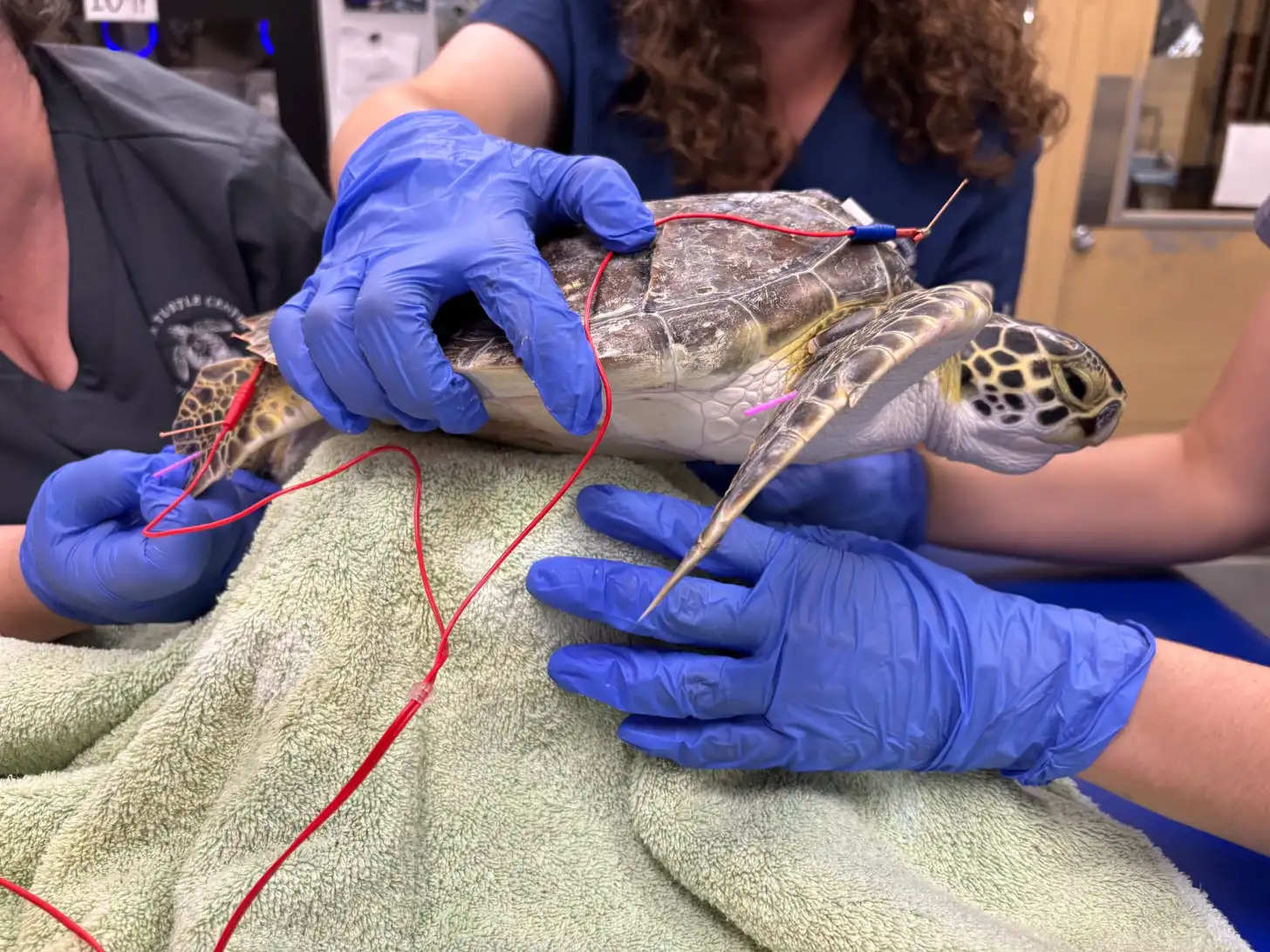
In July, the organization shared an update on Facebook about Cebu’s care.
“Cebu is currently receiving weekly acupuncture treatments to help improve flipper mobility following injuries sustained from a boat strike,” the update reads.
“Their plastron and carapace wounds continue to heal with the support of cold laser therapy, RediHeal, and Silver Honey treatments. Cebu has recently been upgraded from a white tub to a tank, marking an exciting milestone in the recovery process!”
A couple weeks later, another update shared that Cebu underwent stem cell therapy, which helps treat their injuries by repairing injured tissue and reducing inflammation.
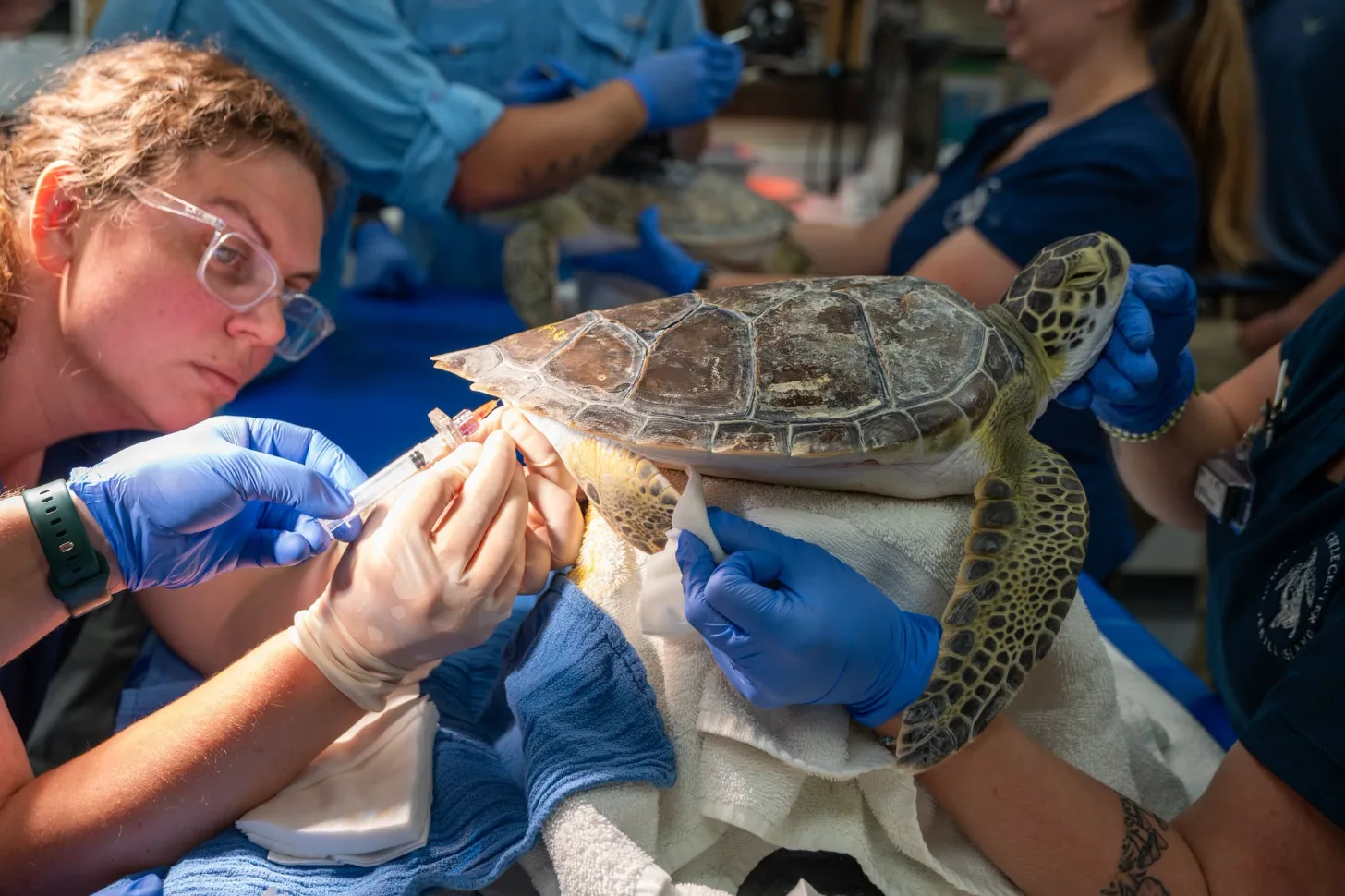
Then, Gaskin told Popular Science, the team wanted to introduce Cebu to physical therapy in deeper water, where they could practice normal flipper movements to rebuild strength and mobility.
There was just one problem: Cebu still needed to be supported by flotation devices or a human helper. Being held for long periods proved stressful for Cebu, and long-term use of flotation supports can damage the fragile carapace, or shell, of the turtle.
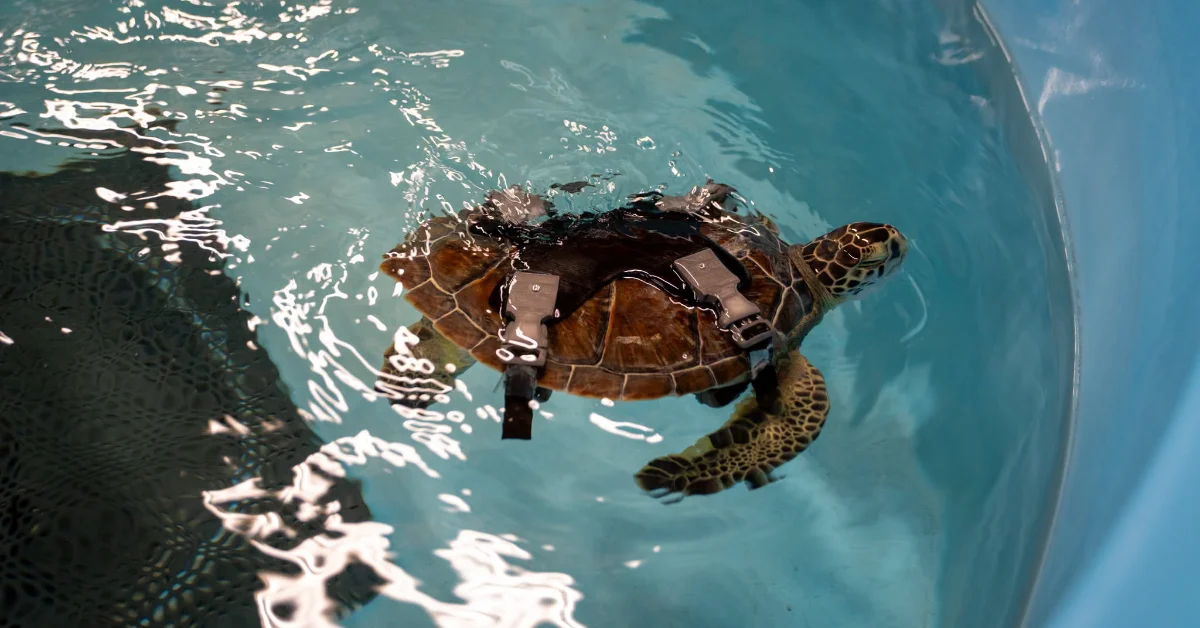
So, their care team went the extra mile and constructed Cebu a custom 3D-printed harness to help them stay afloat during physical therapy.
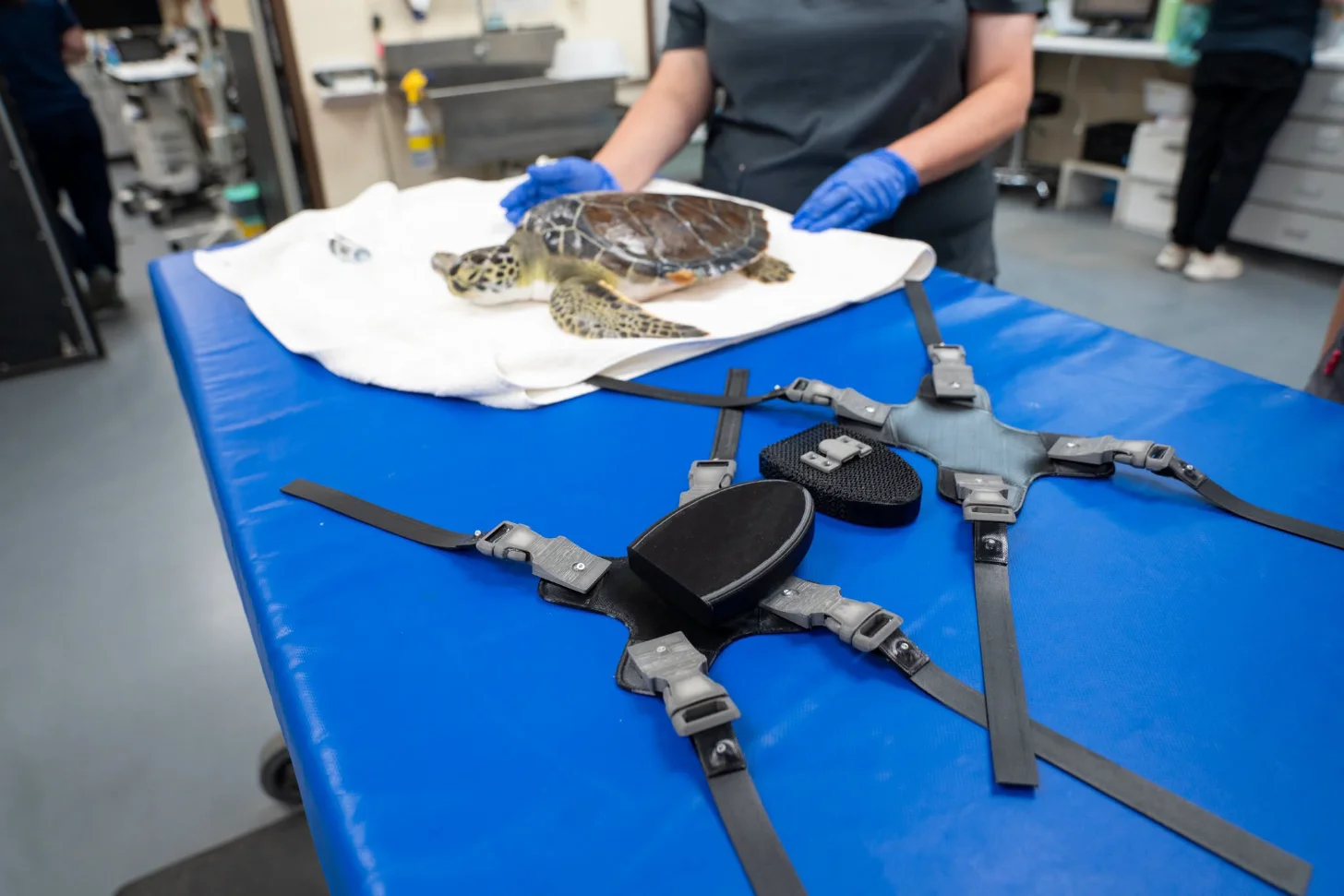
“We’ve created harnesses for other cases in the past, but Cebu needed something completely customized,” Gaskin told Popular Science. “Our conservation team has 3D-printing capabilities, so our veterinary and conservation teams worked together to develop a solution specifically for Cebu.”
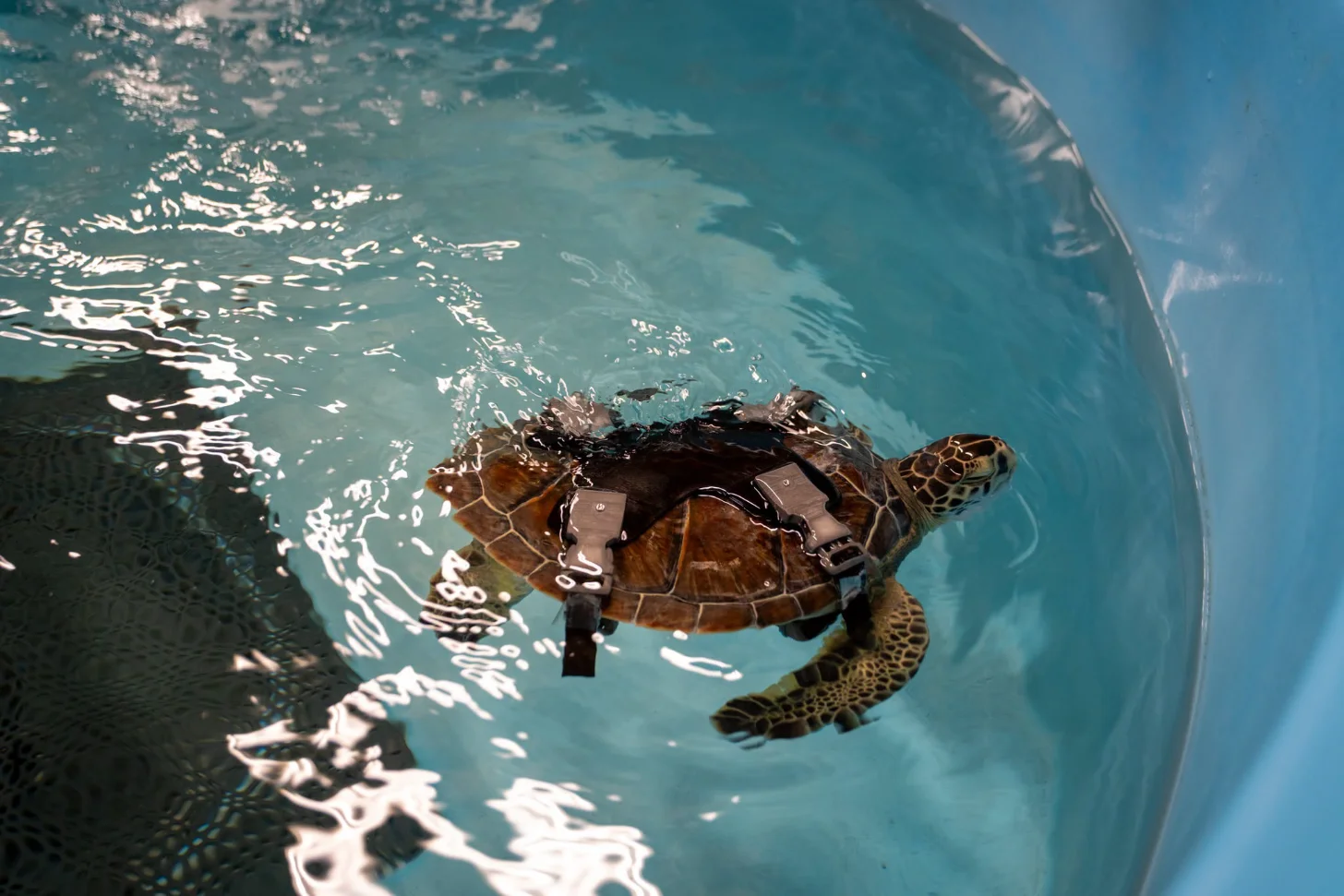
The harness sits atop the turtle’s back, with a small flotation device on the stomach; it’s kept in place with clickable buckles, much like a standard pet harness.
After testing it out for the first time, Cebu’s care team reported that they are “encouraged by the results.”
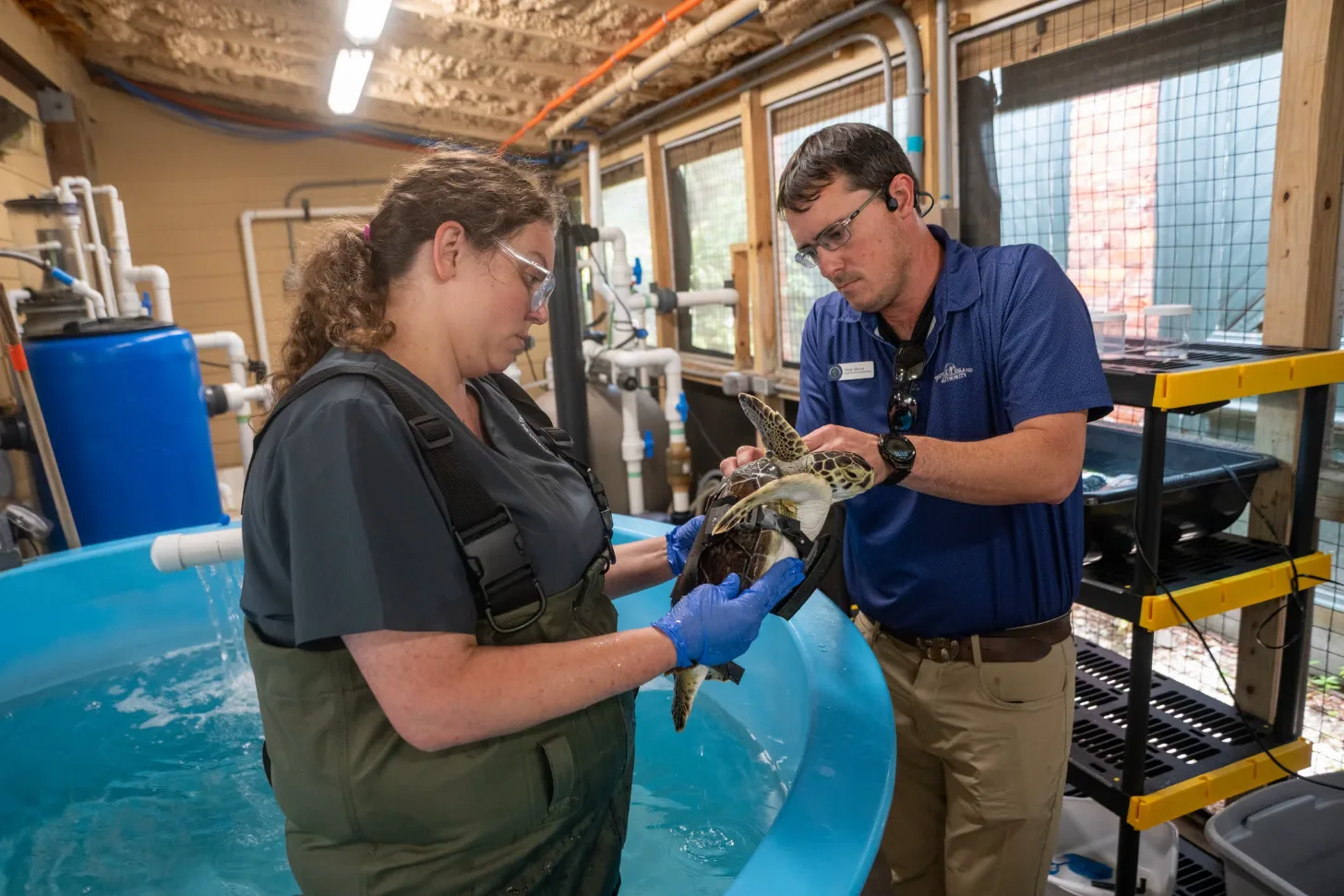
“The harness provided the flexibility Cebu needed while allowing our rehabilitation team to take a more hands-off approach during physical therapy,” an update on the GSTC Facebook page reads.
“This gives Cebu more opportunities to move independently, strengthen those front flippers, and practice natural swimming movements while still receiving the buoyancy needed to reach the surface for breaths.”
Cebu still has a long journey before they can be released back into the wild, but with this multi-pronged approach to their healing, there’s cause for optimism.
“There is still a long way to go before we know whether release will be possible,” Gaskin concluded to Popular Science.
“At this point, Cebu’s prognosis remains guarded, but we are encouraged by the progress we are beginning to see.”
You may also like: 'Turtle-safe' nets prevent countless sea turtles from drowning. An appeals court just upheld a rule requiring shrimpers to use them
Featured Image: Georgia Sea Turtle Center/Facebook