The 2026 edition of Fat Bear Week has come to a close.
Since 2014, the Katmai National Park and Reserve in Alaska has held the annual online tournament to raise awareness for conservation efforts and drive livestream viewership to trail cameras placed throughout the national park.
In the competition, which the Associated Press hailed as “Alaska’s most-watched popularity contest,” 16 of the park’s biggest brown bears compete in a single-elimination, March Madness-style bracket.
The most popular bears advance each week, until the “chunkiest” competitor is crowned.
On September 30, a bear named “Backpack” won the final poll with more than 100,000 votes, narrowly beating out the second-place competitor, Bear 910.
“He’s one of the bears that we’ve been able to watch on the live cams since the live cams were put in in 2012,” Katmai Park ranger Sarah Bruce told Alaska Public Media. “He’s a familiar bear. People have watched him his whole life.”

According to Bruce, Backpack got his nickname because he used to clamber onto his mother’s back as a young cub when they swam together in the park’s Brooks River.
Bruce estimates that Backpack, now roughly 20 years old, is between 1,000 and 2,000 pounds. He is known for his gentle demeanor and “quiet toughness.”
“He’s more of a stoic presence on the river,” Bruce said. “He doesn't really get into drama or cause any upset in the hierarchy. He holds his own very quietly.”
Backpack still frequents the same stream he once explored with his mother, often returning to the same large rock in the middle of Brooks River to catch salmon.
“Some of the fans will call [it] Backpack or 89’s rock,” Bruce said. “That’s not an uncommon behavior on the river — sometimes the bears will sit on various rocks and look for fish that way.”
To celebrate the tournament’s conclusion, Google added an interactive surprise for users who searched for “Fat Bear Week.”
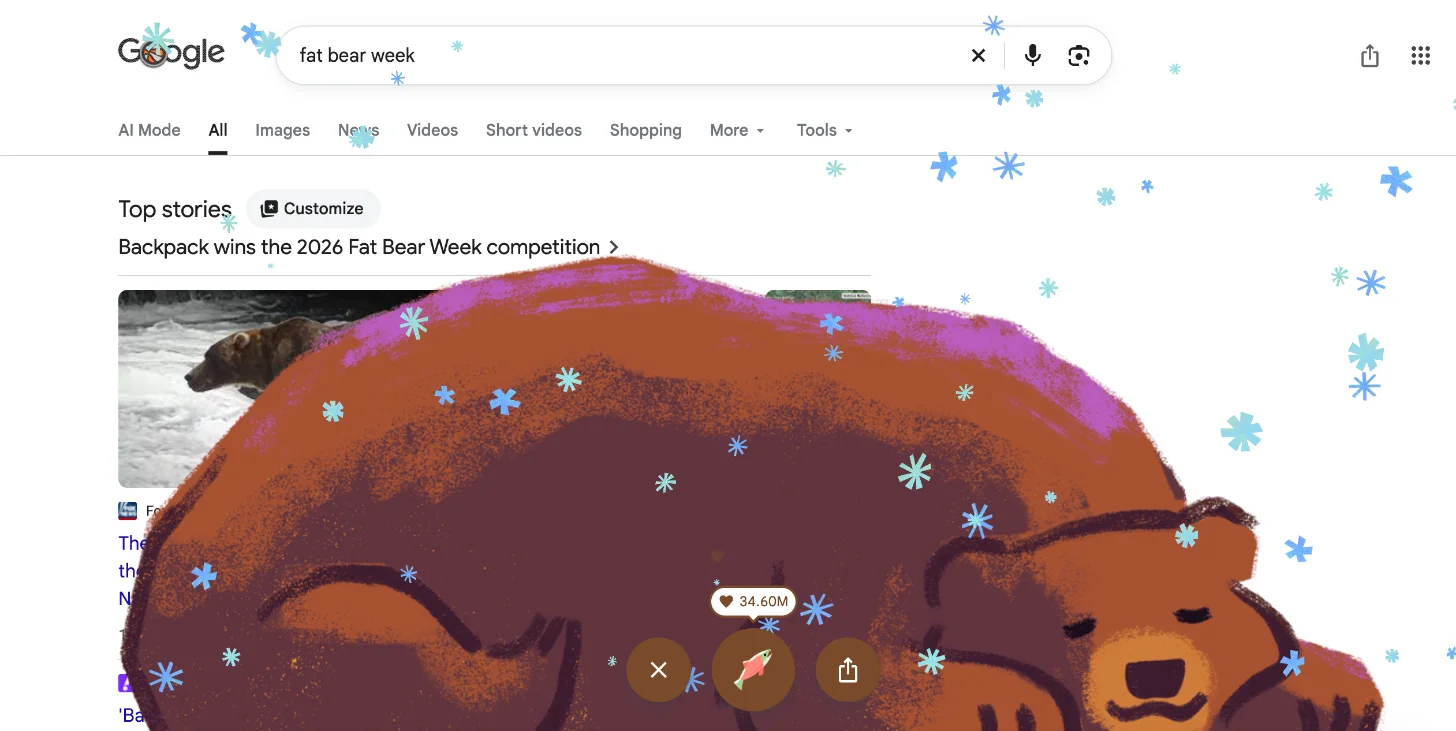
Upon Googling the search term, a small brown bear pops up on the screen. Users can then “feed” the bear by clicking a salmon button and see him grow on screen as he fattens up for winter.
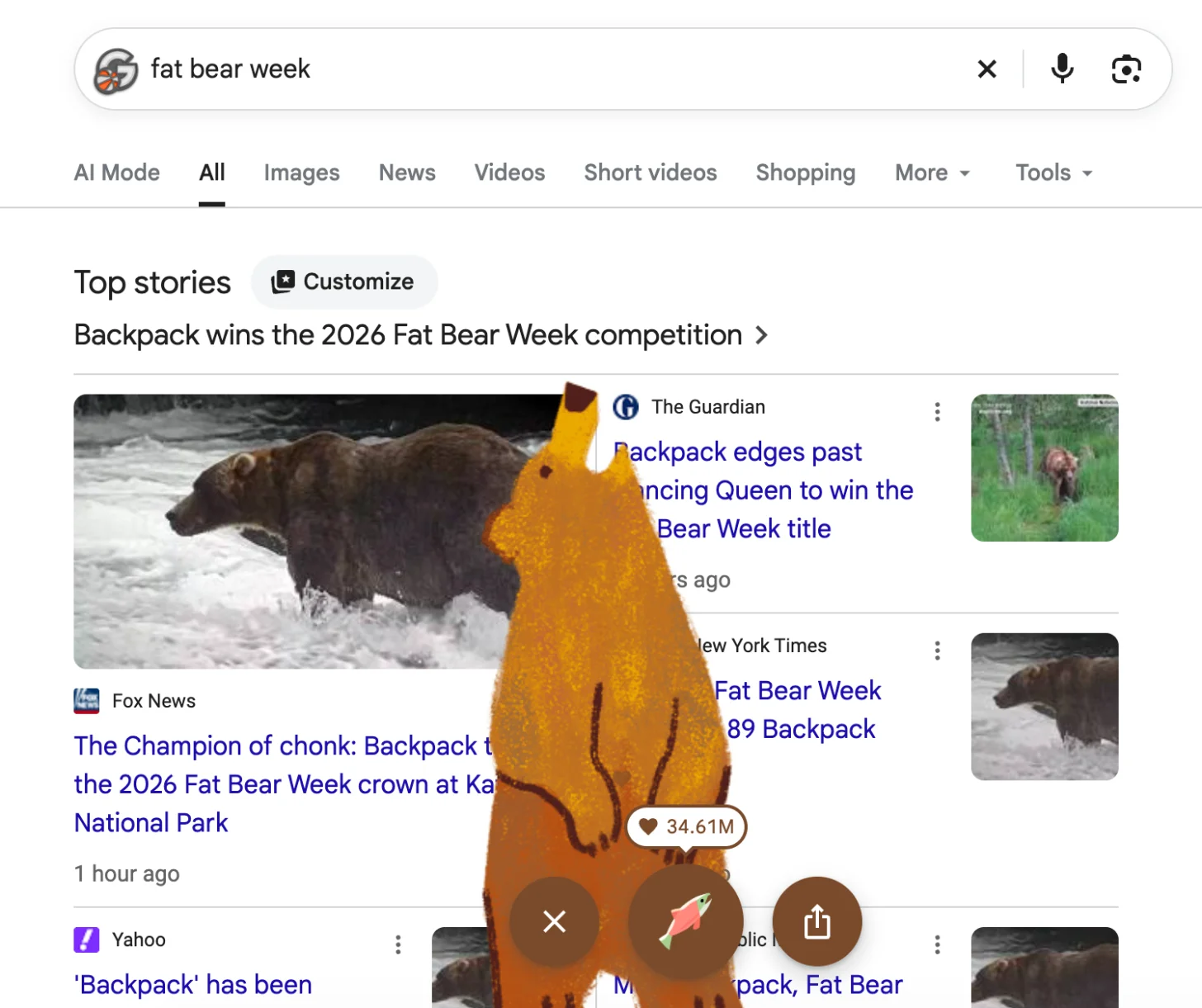
When it comes to “winning” the competition, Bruce said all the competitors are winners at the end of the day.
“They have already won in the fact that they are set to survive another winter hibernation,” she said. “They win all of the love.”
You may also like: Zoo welcomes baby porcupine for the first time in 121 years. It has its own 'emotional support log'
Featured Image: Screenshot via Google
2021’s top positive news stories about climate change, coronavirus, politics, people, and all the good things in between
→ The Best Good News From 2022
2021 was filled with a lot of heartbreak, pain, and injustice. When that happens, we’re always guided by the words of Mister Rogers:
“When I was a boy and I would see scary things in the news, my mother would say to me, ‘Look for the helpers. You will always find people who are helping.”
And looking back, 2021 was no exception. Where there were scary things in the news, there were also Helpers. All year long, every single time.
As we close this year out and look ahead to what 2022 will hold, we wanted to recap some of the top good news stories we shared each month of the past year. Most of these were originally shared on our good news Instagram — and are reshared here as they were reported at the time.
As they did for us, we hope these headlines will inspire you to join in the good work, and be a continued part of all the good to come in 2022.
This list is truly all of the top good news stories of the entire year. But to make things more bite-sized, we spun many of these stories off into smaller, more specific lists. You can explore our smaller "best of" lists from 2021 here:
→ Read all "best of 2021" good news stories.
- 12 LGBTQ+ Good News Stories From 2021
- 7 Pieces of Coronavirus Good News from 2021
- 12 Good News Stories About Climate Change from 2021
- 4 Ways the World Is Changing for the Better
- 15 Positive Good News Stories from December (So Far)
- The 9 Best Pieces of Positive Political News 2021
- 8 Kids Changing the World in 2021
- Best Good News in Global Health From 2021
- Good Animal News from 2021
- The Best Good News in Sports from 2021
- Positive Mental Health News Stories from 2021
- Best Refugee & Immigration Good News Stories from 2021
- Best Good News Websites
If you want to fill your next year with good news:
→ Get the week's best good news stories emailed to you every Tuesday
→ Subscribe to our monthly print good news newspaper
→ Bookmark this page so you can keep coming back for more good news
Good News Stories from January 2021
Paris is turning the Champs-Elysées into “an extraordinary garden.”
And, it will reduce car traffic by 50%! One of the city's most famous streets and attractions, the committee heading the redesign of the area said it's “The legendary avenue has lost its splendor during the last 30 years. It has been progressively abandoned by Parisians."
In response, Paris Mayor Anne Hidalgo approved plans to redesign it. The plans include reducing space for vehicles by half, turning roads into pedestrian and green areas, and creating tunnels of trees to improve air quality.
The firm who created the redesign renderings estimated that 100,000 people walk the avenue every day, 72% tourists and 22% Parisians who work there. It has extraordinarily high rents, and features an eight-lane highway used by an average of 3,000 vehicles an hour — most just passing through.
We love how Paris is creatively rebuilding and reimagining a once-beloved part of its city in a way that benefits those living in it, rather than car traffic and corporations.
After decades of work by activists, the Philippines raised the age of consent for sex from 12 to 16
After decades of lobbying from children’s rights activists, the Philippines are on track to approve a new law raising the age to consent to sex from 12 — one of the lowest ages of consent in the world — to age 16.
It's something activists have been pushing for decades, and hope the legislation will help protect young people in the country. Historically, prosecuting rape cases has been challenging for children as young as 12, because perpetrators can argue it was consensual.
While raising the age will deter sexual predators, activists acknowledge that much more needs to be done to combat sexual violence against and exploitation of children — like age-appropriate sex education from an early age, and changing "victim blaming" attitudes that are prevalent in the country.
But still, this is a really good point of progress to celebrate as we work toward the larger, more inclusive goal to protect children and young people from abuse and exploitation.
Raphael Warnock was elected to be the state of Georgia’s first Black senator
In the first of two senate runoff elections in Georgia, the Rev. Raphael Warnock won and will become the first Black senator to represent Georgia in the U.S. Senate. In addition to being the first from Georgia, Warnock will also become the 11th Black senator in all of U.S. history.
Representation among not just people in power, but *elected* people in power is so important. And while one Black person can't possibly represent the perspective of all — when we do have better representation, we get closer and closer to a more accurate depiction of what the country actually looks like, and the real-life, diverse perspectives within it.
According to 2018 U.S. Census data, around 55% of the country's Black population live in south and southeast regions — and 32.81% of Georgia's population is Black, the third-highest in the country (following Texas and Florida). In a state that has never before had Black representation at the federal level — and though long overdue, Warnock's election is a major progress point to celebrate!
Warnock was born and raised in Georgia, and is currently a preacher at the Ebenezer Baptist Church — the same church where the Rev. Dr. Martin Luther King Jr. once preached.
In the aftermath of the insurrection at the Capitol, one Congressman stayed until 3am helping clean up the mess
On January 6, 2021, as the results of the 2020 election were being certified by Congress, a mob of then-President Trump supporters breached the security barriers around the U.S. Capitol. They clashed with Capitol Police officers trying to secure the building itself, and eventually forced their way into the building by smashing windows and breaking down doors.
Members of the House and Senate, and then-Vice President Mike Pence were evacuated. Members of the mob were photographed on the House and Senate floors, destroyed property, and according to NPR, approximately 140 police officers were injured in the attack, and one passed away.
On one of the darkest days in American history, the heartbreak felt in Washington, D.C. and around the country was devastating. It was the first time in history we experienced a non-peaceful transfer of power — led and encouraged by the President himself. In the midst of that heartbreak — there were Helpers.
One of the most notable Helpers was Congressman Andy Kim from New Jersey. Congressman Kim was in the Capitol building until 3:00 AM helping clean up the trail of garbage — food containers, signs, etc. — left behind by the mob.
And later that night, members of Congress returned to the chamber to finish certifying the elections, and fewer lawmakers than expected objected to the free and fair results of the election.
‘The Bachelor’ Matt James gave his first impression rose to a contestant who shared about her disability and growing up deaf
Last season, Matt James made history as the first Black lead in Bachelor franchise history. At the end of the season premiere, James gave the first rose of the season — the first impression rose — to Abigail Heringer, who shared about her experience growing up deaf. When he gave her the rose, James told Heringer it was something he admired about her, that he appreciated her vulnerability sharing it, and that she was "a fighter."
Much like we're celebrating what having the first Black Bachelor means for representation on-screen, we're celebrating this good news for representation for the deaf and disabled community on-screen, too.
We don't often see these experiences represented or disclosed on-screen in our television entertainment, much less in dating relationships. We love how journalist @kendallciesemier put it, "If we see more examples of non-disabled people falling in love with disabled people, maybe we will chip away both at the idea that a disability is 'baggage' in a relationship, and that if it is, it’s unlike or worse than other kinds of 'baggage' people bring to relationships."
Last season on The Bachelorette, contestants opened up about their experience with addiction and an eating disorder — both protected conditions under the Americans with Disabilities Act — among others in past seasons of the franchise.
We still have lots of work to do to overcome the inaccessibility and ableism that makes living — and dating — with a disability more challenging, but we're celebrating this beautiful on-screen point of progress!
A coalition of more than 50 countries have committed to protecting 30% of the Earth’s land & oceans
The High Ambition Coalition (HAC) for Nature and People — including the UK and countries from six continents — pledged protect at least 30% of the planet’s land and oceans at the One Planet summit in Paris on Monday.
In the announcement, the HAC said the pledge was critical to prevent mass extinction of wildlife, and ensure clean air and water. The coalition of more than 50 countries will ensure protections are in place by 2030.
This is good news: Good news that will require accountability, follow-through, and ensuring human rights are also preserved along with the protection of the planet. And swift action needs to happen well before 2030 if we're to reverse the damage already (and currently being) done to the planet and natural spaces.
The HAC is co-chaired by France, Costa Rica, and the United Kingdom.
W. Kamau Bell and his community raised thousands of dollars to fund education projects around the United States
After Betsy DeVos resigned last week, W. Kamau Bell unofficially took over her role as Secretary of Education — by raising thousands of dollars for teachers, students, and classrooms with active fundraisers on Donors Choose.
Newark police officers didn’t fire a single shot in 2020 after a de-escalation training program
Two years ago, the Newark Police Department implemented a new de-escalation training program for its officers. And while Public Safety Director Anthony Ambrose told local news station that 2020 was the toughest year in his 34-year career in law enforcement, he said the program appears to be working.
In 2020, not a single Newark police officer fired their weapon while on-duty. Ambrose credited the de-escalation program, "These things, it takes time for it to work. And I think it worked.
A test of the new training came on May 30 during a Black Lives Matter protest, when about 1,700 people swarmed a precinct. No shots were fired, and nobody was severely injured.
Overall crime in Newark was down 6% from 2019, there wasn't an increase in homicides, and officers recovered more illegal firearms. In 2019, five shots were fired by officers.
Reimagining the way law enforcement works in our communities will take all of us — including officers themselves. We're celebrating the Newark police department's embrace de-escalation training, even amidst a tension-filled year. We're hopeful it will inspire more departments to pursue the same.
The Boston Red Sox hired Bianca Smith, the first Black woman to coach in the history of professional baseball
Bianca Smith and the Red Sox organization are making history! Beginning in the 2021 season, Smith will be a minor league coach with the Red Sox organization at their player development facility in Fort Myers, Florida.
"I think it's a great opportunity also to just kind of inspire other women who are interested in this game," Smith said on MLB Network. "This is not something I thought about when I was younger and I kind of fell into it being an athlete, so I'm excited to get that chance to show what I can do."
Smith joins other woman trailblazers in the sport: Last season, Alyssa Nakken became the first woman to coach on the field during a major league game for the San Francisco Giants. And in November, the Miami Marlins hired first woman general manager and first Asian American general manager, Kim Ng.
Representation matters: in sports, on coaching staffs, in office spaces, on television, in movies, and everywhere! Not only is it important for people to see themselves represented in all areas of employment, but diverse perspectives and experiences make us all better — in sports, too.
Around 200 veterans and volunteers cleaned up trash, signs and stickers left behind by the rioters who stormed the Capitol
After driving around the Capitol and downtown D.C., Navy veteran David Smith saw trash lining the streets, and signs and stickers with hateful, racist messages all over.
He wanted to do something about it, so he called on some fellow veterans and quickly organized a group of about 200 people for a cleanup of the area.
The Sunday following the riot at the Capitol, veterans and volunteers spent two hours picking up garbage, and using scrapers and adhesive remover to peel off signs and stickers with logos and symbols of neo-Nazi and alt-right groups on them.
“There was so much good energy, especially in the fallout of something so negative,” Smith told The Washington Post.
And the cleanup was part of a bigger operation for Smith. Back in June, he started an organization called Continue to Serve, with the goal of creating a community of veterans standing up for justice and equality.
“We want to empower like-minded veterans to get busy in activism and community service,” he said.
After the Ravens’ quarterback got an in-game concussion, Bills fans donated to his favorite charity
In yesterday's NFL playoffs game against the Buffalo Bills, the Baltimore Ravens' quarterback Lamar Jackson left the game in the fourth quarter with a concussion. The Ravens lost the game, but Bills fans stepped up to support Jackson — by sending in donations to his favorite charity, the Louisville Chapter of Blessings in a Backpack.
Blessings in a Backpack is a nonprofit that works to ensure children who receive meals through federal programs during the week, are also fed on the weekends. And during the pandemic, with school closures around the country, they're also making sure the children are fed every day of the week, too. Jackson is particularly connected to the Louisville Chapter due to his time playing at Louisville.
And this isn't the #BillsMafia's first time stepping up like this: in November they donated over $200,000 to support Oishei Children's Hospital in Buffalo in honor of their own quarterback's grandmother passing away.
It's unclear just how much total has been raised by Bills fans this time around, but it's a generous gesture of sportsmanship worth celebrating!
Volunteers removed over 9,000 pounds of trash from the Tennessee River
Over the course of three days, volunteers with Keep the Tennessee River Beautiful (KTNRB) partnered with Johnsonville State Historic Park for a river cleanup.
25 volunteers helped remove 9,208 pounds of trash from the Tennessee River — including 1,819 pounds on one day with youth from the Humphreys County 4H Club.
KTNRB hosts cleanups throughout the year, including another later this month with students from the University of Tennessee, according to a post on Facebook.
Norway is the first country in the world to sell more electric cars than standard fuel cars
In 2020, Norway became the first and only country in the world to sells more electric cars (54% of cars sold) than standard combustion engine cars (46%), according to the Norwegian Road Federation.
They got there after significant investment in infrastructure. In 1990, the government began working on an extensive network of fast-charging stations, which not only encouraged private industries to shift their production focus to electric vehicles, but consumers to purchase them as well. Previously, consumers assumed charging stations and capabilities wouldn't be as readily available, but were proven wrong.
Negative economic impact due to moving away from fossil fuels has also been proven wrong. New research from the Advanced Propulsion Centre found that moving toward electric vehicles could increase the UK’s GDP by £24 billion (about $32.8 billion).
And for a country with easy access to and an economically successful history with fossil fuels, Norway’s success story is a great example for countries around the world, and really good news for the planet and economies!
The University of Oregon is starting an environmental justice institute
The University of Oregon is starting an institute focused on environmental and racial justice thanks to a $4.5 million grant.
The Pacific Northwest Just Futures Institute for Racial and Climate Justice will be a collaborative effort between the university's College of Arts and Sciences and College of Design, as well as with the University of Idaho and Whitman College in Washington.
Studies have shown that climate change disproportionately impacts communities of color, and the institute will focus on those issues.
“This institute will combine the imaginative and scholarly work of the humanities with expertise in policy, design and historic preservation to help communities around the Pacific Northwest," Stephanie LeMenager, an English and environmental studies professor and co-organizer of the institute, said in a statement.
According to the university, a portion of the grant will also fund a scholarship program and environmental leadership training for students.
This is really good news: not just for addressing climate change, but to address other major issues that are intertwined with climate change — like racial justice. It's so exciting to know there will be a whole team of people researching, teaching, and learning more about how we can resolve environmental injustices, in the Pacific Northwest, and hopefully then all around the world.
Dressember has raised over $12 million to fight human trafficking and support victims
Human trafficking exists in every major city of the world. According to the United Nations and the International Labor Organization, more than 40 million people are currently being trafficked around the world, one in four of victims are children. Trafficking can include sexual exploitation, occurs in about 80% of cases, or forced labor, which is about 18% of cases. Victims can be any age, and any gender — though it disproportionately impacts women.
It's a big problem that we cannot ignore. And Blythe Hill founded Dressember as a creative way to make a really big difference: wearing a dress every day of the month of December to raise awareness and money for anti-human trafficking efforts and to support victims.
And in 8 years, Dressember has raised more than $12 million to fight human trafficking, raise awareness, and support victims. In 2020 alone, Dressember participants, called "advocates" raised a record $2.5 million.
On today's episode of the Sounds Good Podcast, Dressember's founder, @blythehill talks about the beginnings of the campaign, common misconceptions surrounding trafficking, and helpful ways we can make a difference and work towards ending it for good.
Denmark now officially and legally recognizes that sex without consent is rape
Danish law has changed to (finally) recognize that sex without consent is rape. They're only the 12th country in Europe to amend their laws, but both Spain and the Netherlands have announced plans to change theirs, too.
“This historic day did not come about by chance. It is the result of years of campaigning by survivors who, by telling their painful stories, have helped to ensure that other women do not have to go through what they endured," said Anna Błuś, @Amnesty International’s Women’s Rights Researcher.
According to the Danish Ministry of Justice, each year 11,400 women in Denmark are subjected to rape or attempted rape. Research from the University of Southern Denmark estimates it may have been as many as 24,000 in 2017 — but in 2019 only 1,017 rapes were reported to Danish police. Only 79 resulted in convictions.
These statistics show just how under-reported rape in Denmark is under-reported, and according to Amnesty International, even when victims do come forward, the chances of prosecution or conviction are really slim.
And while we need many, many more countries to step up and make similar changes to their laws, this is a standard-setting progress point that deserves celebrating!
Twitter launched its new ‘Birdwatch’ feature to combat misinformation on the platform
Twitter launched its newest feature, called Birdwatch, as a "community-based approach" to combating misinformation and disinformation on the platform.
“Birdwatch allows people to identify information in Tweets they believe is misleading or false, and write notes that provide informative context," Keith Coleman, Twitter's Vice President of Product, wrote in a press release.
For now, the forum exists in a separate section on Twitter, and is only available to select users on a first-come-first-serve basis.
Twitter hopes to use the forum to build a community of "Birdwatchers" that will help moderate and label tweets, and eventually have the feature right within the main Twitter site.
"Eventually we aim to make notes visible directly on Tweets for the global Twitter audience, when there is consensus from a broad and diverse set of contributors," the company said in a statement.
The spread of misinformation and disinformation on social media is a big problem, and while Twitter's solution is still in the works, it's really good news for making progress in tackling the issue!
The White House will have an American Sign Language interpreter at all daily press briefings
Beginning Monday, the White House announced they will have an ASL interpreter at all White House daily press briefings. In the announcement, press secretary Jen Psaki said the decision was "part of this administration's accessibility and inclusion efforts."
Daily press briefings are uploaded to the White House's YouTube page, and feature an ASL interpreter in the bottom right corner, who interprets both the initial remarks (from the press secretary as well as any guests in the briefing that day), as well as questions from reporters and the responses.
This is really good news for inclusion and access for the deaf and hard of hearing community! And really, good news for all of us — the world is a better place when we're all included.
General Motors announced it plans to only offer electric vehicles by 2035
By 2035, General Motors announced it plans to no longer make vehicles with diesel- and gasoline-powered engines. Their entire fleet will be exclusively electric vehicles.
The announcement is part of GM's plan to be completely carbon neutral by 2040. It also plans to use 100% renewable electricity to power its production facilities in the U.S. by 2030, and globally by 2035.
GM acknowledged that other factors like regulations and infrastructure are needed to help them reach this goal, but that the change is necessary.
“We feel like this transition is one that will protect all of our futures and will help us create a future that will benefit not only the planet, but the people,” Dane Parker, GM chief sustainability officer, said in a press conference.
General Motors is the engine (pardon the pun 😉) Chevrolet, Buick, GMC, and Cadillac. They also plan to introduce 30 new electric vehicles by 2025.
When more and more companies announce plans to embrace a carbon-free future, things change. Regulations change, consumer habits change, infrastructure changes, and minds change. We're celebrating this announcement with GM!
Stuck in a snowstorm, health care workers in Oregon gave expiring COVID-19 vaccines to other stranded drivers
Health care workers in Oregon were on their way to administer vaccines in Grants Pass when a snowstorm left them stranded on the highway. The six vaccine doses they had in tow were set to expire before the road would open back up, and rather than letting them go to waste — they decided to do some good with them.
They started going car-to-car to see if any other stranded drivers wanted to get the vaccine.
"Watching them go car to car in that horrible weather filled me with pride," one of the workers, Christi Siedlecki told NBC News. "I felt gratitude they were working so hard not to waste a single dose of vaccine, even in such horrible conditions."
"It is important for people to know how dedicated health professionals are to getting every single dose into people. My community should be so proud. I am," she said.
We are too.
Some health insurance companies are adding food to their coverage options
In the midst of the pandemic, we've seen all over the country that there are an increasing number of people without enough to eat. Insurers know that proper nutrition helps keep people healthy (and out of more expensive hospitals) — so some of them are adding that basic need to their coverage options.
“People are finally getting comfortable with the idea that everybody saves money when you prevent certain things from happening or somebody’s condition from worsening,” Andrew Shea, a senior vice president with the online insurance broker eHealth told the Associated Press.
Insurers like Oscar Health and Humana are paying for temporary meal deliveries, sending grocery store gift cards, and even teaching people how to cook healthier foods and meals.
Is this a long-term solution to everyone having their basic nutritional needs met? Absolutely not. Is it really good news that health insurance companies are stepping in to make sure that need is met for those who need it right now? Most definitely. It's also encouraging to see health insurers thinking about a person's needs outside of a doctor's office — daily health and nutrition!
It's likely also helping, even in a small way, keep hospitals open for COVID-19 patients, and others who need critical care that only a hospital can provide.
Good News from February 2021
The UK vaccinated almost 600,000 people in a single day for the first time
In a single day, the UK reported 598,389 people received the first dose of the coronavirus vaccine — the most since the country's vaccine rollout began.
Just a couple weeks ago, the UK announced they'd vaccinated more people than had received a positive test, too. In total, 8.9 million people have received their first dose so far.
These are really encouraging figures in the UK, and we're seeing good news around the world, too. The World Health Organization announced it had secured vaccine doses to start distributing to poor and lower-middle income countries.
A team of veterans and volunteers are restoring the home of a 94-year-old World War II veteran and Purple Heart recipient
Last year, 94-year-old World War II veteran Alfred Guerra's home was in such bad shape, he moved in with his daughter. Knowing how bad her dad wanted to be back in the home he'd lived in all his life — and having done all they could do to help make repairs — she put a call out to the community for help.
And the community stepped up. Though their restoration plans were delayed due to the pandemic, a team of fellow veterans and volunteers have gotten to work repairing walls, the roof, plumbing, electrical work and more at Guerra's home.
(Read more stories about veterans doing good)
Ikea bought 11,000 acres of forest in Georgia to protect it from development
An investment group with Ikea purchased 10,840 acres of forestland in southeast Georgia to protect it — and the diverse ecosystems within it — from development and deforestation.
The land is home to 350 plant and wildlife species, like the endangered longleaf pine and gopher tortoise. According to the U.S. Fish and Wildlife Service, before the European migration to North America, the longleaf pine forest covered more than 90 million acres — spanning from southern Virginia to Florida, and as far west as Texas. Today, less than 4% of that forest is left.
And Ikea wants to help protect it. The investment group's managing director Krister Mattson told CNN, "We truly believe responsible forest management is possible and we see that a large part of our responsibility towards the land we own — and by extension, the planet — is to restore forests and plant more than we harvest."
11,000 acres might not sound like much compared to its glory days of 90 million acres, but investments in protecting land like this forest in Georgia is something we need to see more of. if we have any hope to protect nature, wildlife, mitigate climate change, and save the planet.
Additionally, Ikea is a key contributor to problematic "fast furniture" industry — a trend which is doing a lot of harm not just to forests, but the subsequent waste once people discard the no-longer-trendy items.
This is a great step, and we're celebrating this investment news from Ikea — but it's not nearly enough. We hope to see more from Ikea, and hope even more companies who take from the land and resources make even bigger investments to give even more back to it.
The world is celebrating the life of 100-year-old Captain Sir Tom Moore who raised $45 million for the National Health Service last year
Today, Captain Sir Tom Moore died after contracting COVID-19. Last year, then 99-year-old World War II veteran Captain Tom walked laps around his garden to raise money for the frontline workers in the UK's National Health Service who were (and still are) courageously fighting the pandemic.
He inspired generosity in so many, and ended up raising a total $45 million for the NHS. He also inspired more fundraising campaigns, and received a knighthood from Queen Elizabeth.
In announcing his death, his family said, "The last year of our father's life was nothing short of remarkable. He was rejuvenated and experienced things he'd only ever dreamed of."
May we all be inspired by Captain Tom's remarkable final year of life, and let it rejuvenate us into doing the things we think we could only dream of.
For the first time ever, more than one woman is nominated for best director at the Golden Globes
For the first time in history, THREE women were nominated for "best director" at the Golden Globe Awards: Regina King for “One Night in Miami”, Emerald Fennell for “Promising Young Woman”, and Chloé Zhao for “Nomadland”.
Zhao is also the first woman of Asian descent to be nominated in the category. And the last time a woman was nominated in the director category was 6 years ago — in 2015, Ava Duvernay was nominated for "Selma".
Up until this year, in the Golden Globes' 77-year history, a woman had been nominated in the category just 7 times. This year, the 78th Golden Globes bring the total up to 10.
It's not nearly enough, but we're celebrating this moment of progress in history with Regina, Emerald, Chloé, and all the women working in the film industry! And we hope to see this trend continue and more women creators recognized for their contributions to their respective fields — directing, producing, acting, and more.
Inspired by a request from a teen with Cerebral Palsy, Nike developed and unveiled their new “hands-free shoe,” the Nike GO FlyEase
In 2012, then 16-year-old Matthew Walzer wrote Nike with a request: a hands-free sneaker he could put on without having to tie the laces.
Doctors told him he wouldn't ever walk, or talk without a lisp — diagnoses he proved wrong. In the letter he wrote, "At 16 years old, I am able to completely dress myself, but my parents still have to tie my shoes. As a teenager who is striving to become totally self-sufficient, I find this extremely frustrating, and at times, embarrassing."
He hoped to go off to college "without having to worry about someone coming to tie my shoes everyday.”
Matthew's letter landed in the hands of Tobie Hatfield, a Nike designer who designs for Paralympians, who reached out and quickly got to work on a prototype for Matthew to try out.
This week, Nike unveiled their final design, which will be available later this year.
While we know there are major problems in Nike's overall supply chain, this is really good news for so many people needing a hands-free, adaptive solution for their footwear! Inclusivity is so important, and nobody should feel like they can't put on their own shoes — whether they have Cerebral Palsy like Matthew, arthritis, reaching your feet during pregnancy (we see you moms-to-be!), or anything else these shoes will be so helpful for!
We're celebrating this creative solution to a problem for so many individuals, and are hopeful it will inspire even more creative solutions.
A teacher raised over $420,000 to forgive more than $42 million in medical debt
Over the past couple of days, former high school teacher @sharonsaysso and her online community (where she continues to teach) have been fundraising to forgive millions of dollars in medical debt through @ripmedicaldebt — if you've been around here for a bit, you know how much we love all the good RIP Medical Debt is doing in the world!
RIP Medical Debt purchases bulk amounts of medical debt from lenders at a hugely discounted price. They turn a $1 donation into $100 of medical debt forgiven. Sharon's initial goal was $20,000 to forgive $2 million.
When her community, the Governerds, quickly surpassed that, she upped it to $150,001 (to beat John Oliver's $150,000 donation in 2015 😊) — and now, they've raised over $420,000, which will turn into $42 million in medical debt forgiven. And it's still going up!
Based on our research, it appears this is the largest single amount raised for RIP Medical Debt — and it all happened because of thousands coming together to give whatever they could to help strangers with crippling medical debt.
Together, we can do really good things for each other.
(Listen to our conversation with Sharon McMahon about how her community achieved this)
The number of deaths caused by terrorism is down 54% since 2006
Is the world becoming more peaceful? Or less? How would we know if it was? In an effort to measure peace, entrepreneur and philanthropist Steve Killelea founded the Institute for Economics and Peace, a nonprofit global research institute that measures peace levels around the world.
The Institute created the conceptual framework for “Positive Peace,” which describes the attitudes, structures and institutions that underpin and sustain peaceful societies. Hint: Peace is more than just an absence of violence. The Institute’s work now informs influential institutions such as the United Nations and the World Bank.
It also informs the work we do here at Good Good Good! We've quoted, linked to, and referenced the Institute's @globalpeaceindex here, in the Goodnewspaper, and the Goodnewsletter.
And now, we're thrilled to have Steve on the #SoundsGood Podcast!
Steve also shares some good news about positive peace from data the Institute has collected.
The Empire State Building and 13 others are now exclusively powered by wind
As of January 1, all 13 buildings owned by the Empire State Realty Trust — including the iconic Empire State Building — are officially being completely powered by wind.
Their 14 buildings have more than 10 million square feet total, and with the purchase of the 3-year contract, the trust is now the largest real estate user of entirely renewable energy in the U.S.
The Empire State Building itself has run on renewables since 2011, and the trust had already cut the skyscraper's emissions by about 40%. By adding all its buildings, they'll avoid producing around 450 million pounds of carbon dioxide. According to reporting from The Washington Post, that's the equivalent of removing all New York City taxis from the road for a year.
Operating buildings is one of the largest sources of greenhouse gas emissions in the U.S. — and in New York alone, buildings generate over two-thirds of the city's entire carbon emissions.
We still have a long way to go in cutting emissions in New York City and all over the country, but this is a really big, incredible step in the right direction. We're celebrating the Empire State Realty Trust leading the way for more of the same!
Australia is making sure everyone in the country can get a COVID-19 vaccine – including refugees
As a part of their vaccine rollout plan, Australia said they will ensure anyone on Australian soil can get vaccinated — including refugees, as well as their neighbors on the Pacific islands like Papua New Guinea and Fiji.
"We will need to prioritize the most vulnerable and those likely to experience a serious disease, as well as frontline health and care workers and other essential service workers,” Australian Prime Minister Scott Morrison said during a speech.
The country plans to start vaccinations at the end of the month, and finish administering all of its 150 million doses by October.
Refugees around the world are among those most vulnerable to COVID-19, since many live in cramped conditions, and have limited access to healthcare and reliable information about the virus. And getting vaccines to more remote islands is logistically challenging, and some may not have the funds to purchase the vaccines on their own. We're celebrating with Australia for stepping up and stepping into meet this need!
People in Oakland are offering to accompany elderly Asian Americans in Chinatown to help them feel safe
In response to seeing the rise in attacks, violence, and racism towards the Asian American community, specifically the elderly, in Oakland, @jakeenbake posted on Instagram, "I'm sick of watching the videos and feeling helpless."
Jacob works graveyard shifts in the Chinatown area, and offered to make anyone who wanted feel more at ease by accompanying them to their car, waiting for their ride, so they wouldn't have to be alone.
There was such a massive response, Jacob created a separate Instagram and organization, @compassioninoakland to help pair volunteers with the most vulnerable in their community. In addition to safety measures like getting tested for COVID-19, adhering to social distancing guidelines, wearing masks, volunteers are trained and then paired with a "buddy".
People in need can request a chaperone ahead of time on their website, or text a number to request one on shorter notice.
See a need: meet a need. We love the way Jacob stepped up to meet a critical need of those in the community. And the way the larger community came together to help, too.
We need each other, right where we are, with what we have — even if what we have is a graveyard shift, walking shoes, and a desire to help.
Ford has started making N95 masks with clear panels to help people with a hearing impairment
For people who are deaf or hard of hearing, wearing and communicating through a mask is challenging, if not impossible. While we've seen some ingenious DIY clear-panel masks make their rounds to address this issue, Ford Motor Company has started working on an N95 mask with clear panels!
This is great news, because as the latest CDC research found, wearing a proper, tight-fitting mask (or double-masking!) is significantly more effective at stopping the spread of COVID-19. And this new N95 mask would do that, AND ensure those who need to see or use their mouth to communicate still can!
"We quickly identified that while it's difficult for everybody to wear a mask all day long, for folks suffering from hearing impairment, it's an even bigger challenge," Jim Baumbick, leader of Ford's PPE manufacturing effort, told CBS MoneyWatch. "That inspired us to think about how we could help serve those people because effectively [with a mask] you're taking away another sense from them that they rely on for communication and connection."
Plus, the company said it could help communication in general — as the mask allows you to see the speaker's expression while they're talking. Baumbick said they expect this to help improve communication and interactions between teachers and students and doctors and patients.
And maybe even all of us — no more explaining to someone that we are indeed smiling. We promise! 😊They're still developing the technology, and waiting on approvals, but expect them to be available in the spring.
Shell says its oil production has peaked and will continue to gradually decline annually
Because of shifting attitudes in favor of renewable energy and pressure from investors, Europe's largest oil and gas producer has been forced to gradually cut oil production and shift to greener energy.
In a statement, Shell announced that its "total oil production peaked in 2019," and that they expected it to continue to decline by 1-2% annually.
Thanks in part to a significant drop in oil consumption and market value at the start of the pandemic (that has since returned to pre-pandemic levels), oil companies like Shell have started shifting their investments to renewable sources like wind, solar, and hydrogen.
The damage corporations like Shell have done to cause climate change has been done. That said, this is really good news — and proof that pressure from consumers and investors, and shifts in public opinion really do make a difference.
New Zealand will offer free period products in all its schools starting in June
Several schools in New Zealand have been trialing a new "Access to Period Products" pilot program since last year. It was a success. And now, Prime Minister Jacinda Ardern and Associate Education Minister Jan Tinetti announced that beginning in June 2021, the program would be rolled out to ALL schools in New Zealand.
”There’s lots of barriers that shouldn’t exist for our young people,” Ardern said at a press conference. “And one of the things stopping our young people from going to school is an issue called period poverty. One in 12 of our students possibly miss school because they don’t have access to period products. That’s just not right and not in a country like New Zealand."
The program is opt-in for schools, and Ardern said they budgeted so that any school that wants to participate in the program will be able to.
The program has also raised awareness for a need for increased education surrounding periods. One former principal in a lower-income area of New Zealand said the issues she saw at school included embarrassment, stigma, missing classes, being "caught out" without product, cost, lack of knowledge, and discomfort.
This program is really good news for students in New Zealand, and we hope to see more of them in schools all around the world!
Volunteers made and delivered breakfast tacos to hundreds of Houston-area seniors without power
After they received a donation of 6,000 eggs, the nonprofit organization Texas Relief Warriors got to work cooking them to make and deliver hundreds warm breakfast tacos to two senior centers in the Houston area, plus hundreds of seniors at home who requested help.
The organization is used to responding in the aftermath of hurricanes, but adapted their operation to respond to the winter storm crisis that left millions without power for days — and food supplies running short.
Founder Cara Adams told ABC News, "We had our volunteers going door to door, going up stairs in the dark delivering tacos. [The seniors] were excited and hungry for hot food. They were so grateful."
Since delivery trucks haven't been able to get into the area due to weather and road conditions, grocery store shelves have been limited in their supplies, too. That, coupled with the extensive power outages, has left residents' own food supplies running low.
From the donation of eggs, to the quick action by volunteers to get food to a vulnerable community — it's inspiring to see everyone coming together in Texas.
*Make sure to check out our previous post for ways YOU can help our neighbors in Texas right now, from wherever you are.
While making her last stop, a Texas grocery delivery driver’s car got stuck in an icy driveway – the homeowners invited her to stay with them
As the snow picked up in Texas last weekend, Chelsea Timmons picked up one last grocery delivery, thinking she'd have enough time to make it back home.
When she got to her clients' home, despite her precautions, her car started sliding in the driveway, and got stuck. The homeowners, Nina Richardson and Doug Condon came out to help, but failing to free it, Timmons called AAA for a tow. Richardson and Condon invited her to wait inside their home, but a few hours later, AAA called and said they couldn't make it due to the storm.
"As soon as we found out that AAA couldn't come and the conditions were getting worse, it seemed silly to even imagine that she would go to a hotel," Richardson told CNN. "It didn't even occur to us."
As we now know, the terrible weather conditions went on a lot longer than anyone thought, and Timmons ended up saying with them for 5 days. Her suggestions to leave to go to a hotel were met with, "Our guest bedroom is better than the Hampton Inn," or "If you leave, what are you going to eat?" and "Are you sure you can make it there all the way?"
The couple said she became like "part of the family" really quickly, preparing meals and riding out the storm together. On Friday, the weather and roads cleared up enough for Timmons to make it home. They're still all keeping in touch.
Condon and Richardson hope others would have done exactly the same for a stranger that needed help.
Timmons said, "I am so grateful that they were not only able but willing to let a complete stranger into their home in the midst of a pandemic, in the midst of a storm... with no hesitation. They just opened their doors, opened their home and said, 'Come in and relax.'"
Cedar Rapids’ Willy Ray’s Q Shack took their barbecue to Texas to help feed people – just like they did in Iowa after the derecho storm
After the derecho storm hit Iowa in August 2020, Willie Ray Fairley, owner of the barbecue restaurant Willie Ray's Q Shack in Cedar Rapids, fired up his smoker and gave out thousands of free meals to people impacted by the storm.
After the winter storm in Texas last week that left millions without power, and immeasurable damage afterwards, the restaurant wanted to help those impacted across the country, too.
Willie Ray's put out a post on Facebook asking for volunteers with trucks willing to pull the smokers for a week-long trip to Texas where they would feed "as many people as we can." A day later, the post had about 1,800 likes, 339 comments and more than 1,900 shares.
Some people were saying "thank you," while others were offering up connections for hotels or setup help in Texas once they got there.
While packing up the trucks with supplies (like 40 bags of charcoal donated by a local Hy-Vee, and four tubs of barbecue sauce) and hitching up the smokers, even more members of the community stopped by to lend a hand packing the trucks, dropped off cash donations, and offer words of encouragement for Willie Ray and the volunteers headed south to help.
Neighbors helping neighbors helping neighbors.
The English National Opera developed “ENO Breathe” – a breathing rehabilitation program to help with COVID-19 patient recovery
To help patients recovering from COVID-19 regain their respiratory and vocal strength, the English National Opera worked with a London hospital to develop a breathing rehabilitation program called "E.N.O. Breathe."
Opera-singing coaches teach patients clinically-proven recovery exercises, adapted for coronavirus recovery and taught online. Participants say the program has helped both with their recovery, as well as with feelings of isolation.
They started thinking about the program with the hospital last summer, after reports of "long Covid" cases — symptoms like breathlessness, fatigue, and chest pain lasting for months — started emerging.
“Opera is rooted in breath,” Jenny Mollica, who runs outreach for the Opera told The New York Times. “That’s our expertise. I thought, ‘Maybe E.N.O. has something to offer.’”
She reached out to a respiratory specialist at one of the country’s biggest public hospital networks, Imperial College N.H.S. Trust — and learned that hospitals were also struggling to find a solution for their patients experiencing long-term breathlessness.
The program's goal was two-fold: teach patients to make the most of their lung capacity, and to breath calmly to help with anxiety that was also common in many "long Covid" patients.
And it was successful. As one patient reported, “The program really does help. Physically, mentally, in terms of anxiety.”
Now, E.N.O Breathe is expanding throughout the country.
This isn't the first time the English National Opera has stepped in to creatively help with COVID-19 either. Early on in the pandemic, their wardrobe department quickly got to work making protective equipment for hospitals during the initial shortage worldwide.
A group of truck and bus drivers are working to help end modern-day slavery
Today is Shine A Light On Slavery Day — a day to raise awareness for modern-day slavery, and the estimated 40 million victims around the world. Slavery today looks like anything from forced labor to human trafficking.
Modern-day slavery also exists in all 50 U.S. states, impacting hundreds of thousands of victims. Despite trafficking being illegal, it's a booming business. Most victims are women and children, and many of them are forced to work in the sex industry.
There are also so many people and organizations working to #EndIt — like Truckers Against Trafficking. Members of the trucking and bus industries are uniquely positioned to make a difference because these are common areas where traffickers recruit victims.
The group exists to educate, equip, empower, and mobilize members of the trucking and bus industries to play a part in making trafficking history by recognizing the signs of trafficking and then reporting it to law enforcement.
They offer workshops, educational materials, and online resources to assist industry workers in taking the necessary steps to help save a life. Truckers Against Trafficking also partners with law enforcement and government agencies to facilitate trafficking investigations.
And according to their annual report, in 2020, Truckers Against Trafficking surpassed 1 MILLION drivers registered with TAT training. To date, their members have made over 2,692 calls to the National Trafficking Hotline, and identified 1,296 victims.
We're celebrating these inspiring truck and bus drivers — and all those at work to end modern-day slavery for good.
Costco raised its minimum hourly wage to $16 per hour
Starting next week, Costco's minimum wage will increase to $16 per hour for all hourly employees, up from $15 per hour which it implemented last year — in addition to a hazard pay bonus for workers during the pandemic.
Costco's CEO Craig Jelinek made the announcement at a U.S. Senate Budget Committee hearing on worker wages at large companies, "It takes a lot of time to interview, find employees, lot of labor involved just trying to hire individuals. We want people to stay with us.”
Last week, Walmart announced it would increase its minimum wage to $15/hour, and the federal government is currently working to pass a measure that would increase the federal minimum wage to $15/hour by 2025.
Good News That Happened in March 2021
A New Jersey plumber drove to Texas to help fix broken pipes and other damage caused by the winter storm
We've all seen the images of burst pipes and other damage to homes caused by the winter storm in Texas. After hearing how overwhelmed and backed up local plumbers were, a New Jersey plumber, Andrew Mitchell (pictured right) drove his family and apprentice, Isaiah Pinnock (pictured left) down to help fix as many homes as they could.
The team of two at Mitchell’s Plumbing and Heating (@mitchells_plumbing_and_heating) has been there helping for about a week — and the work hasn't stopped. They extended their trip due to receiving so many calls from people needing help.
Chloé Zhao is the first woman of color to win Best Director at the Golden Globes
At the Golden Globes, Chloé Zhao became the first-ever woman of color and only the second woman ever to win the award for Best Director (Barbara Streisand won it almost 40 years ago).
Zhao won the award for her directing on "Nomadland", a film about a woman who, after losing everything in the Great Recession, embarks on a journey through the American West, living as a van-dwelling modern-day nomad.
It was also the first time in Golden Globes history that more than one woman was nominated in the category for Best Director: Regina King for “One Night in Miami”, Emerald Fennell for “Promising Young Woman”, and Zhao.
In her acceptance speech, Zhao read a quote about compassion from one of the nomads featured in the film, Bob Wells: "Compassion is a breakdown of all the barriers between us. A heart-to-heart bonding. Your pain is my pain. It's mingled and shared between us."
We're celebrating this good news for representation in the film industry!
A new European Union law requires companies to repair electronic goods for up to 10 years
Last month, a new law went into effect for the European Union's 27 member countries, requiring companies who produce electronic goods like refrigerators, TVs, and washing machines to repair them if they break for up to 10 years.
Sometimes referred to as the "right to repair" for consumers, it's part of an effort to reduce the environmental impact of these types of goods by making them longer-lasting, more durable, and energy-efficient.
Many of these types of electronic goods require special tools and/or parts that either aren't available to consumers to fix themselves, or it's extremely difficult to find them and then know how to even make the repairs.
Under the new law, manufacturers must make sure parts are available for up to a decade, even if it's just to professional repair companies that can ensure they are installed correctly. New products must also come with repair manuals, and made in a way that they can be taken apart with conventional tools when they can no longer be fixed — to help with recycling.
According to reporting from EuroNews, every year Europeans produce more than 35 pounds of electrical waste per person, about half of which is broken household appliances. The EU only recycles only about 40% of that.
The hope is that this new law will reduce this large amount of waste, and incentivize both companies to build longer-lasting products, and consumers to purchase products that they know will last longer.
This is great news for the environment, moving away from a "throw-away" mentality, and for reducing waste! We hope to see more "right to repair" laws take effect in more parts of the world, and including more electronic items like personal computers and smartphones!
Thousands of people are coming together to donate to AAPI GoFundMe campaigns to #StopAsianHate
Amidst a heartbreaking surge in violence directed at the Asian American and Pacific Islander (AAPI) community, thousands of people are coming together to donate to GoFundMe campaigns to #StopAsianHate.
In addition to GoFundMe's overall AAPI Community Fund, they created a "fundraising hub" filled with verified GoFundMe campaigns to support those in the AAPI community who have been directly impacted by violence, efforts to increase protection and security, AAPI-owned businesses, and more.
And thousands of people are stepping up to donate to the various campaigns. At the time of this posting, the AAPI Community Fund itself has raised over $375,000 of its $500,000 goal — plus donations made to individual fundraisers.
Check out the entire fundraising hub, and make a donation at gofundme.com/aapi
And learn other ways to support the AAPI community during AAPI Heritage Month during May and all year.
For the first time, the U.S. is giving an average of 2 million COVID-19 vaccine doses per day
Up from an average 1.3 million per day last month, the U.S. is now administering an average of over 2 million doses of the COVID-19 vaccine each day, according to data reported by the Centers for Disease Control and Prevention.
As of the numbers reported today, 54 million people in the U.S. have received at least one dose of the COVID-19 vaccine.
This news, on top of the COVAX program rolling out in its first country (Ghana), a third, single-dose vaccine being brought into the rollout program, the timeline of availability for all U.S. adults moved up two months is all really hopeful, encouraging news — not just for bringing a hopeful end to a devastating pandemic, but in saving lives, too.
Wear a mask (even better, double mask!). Stay physically distanced. Get a vaccine when it's your turn. Keep taking care of each other!
The U.S. reaches 2 million vaccine doses per day
It seems like there's more good vaccine news to share every day.
Yesterday we celebrated the U.S. reaching 2 million vaccine doses per day. Today we get to celebrate that 21% of adults, 56% of those over the age of 65, and 66% of those over the age of 75 are vaccinated. This means fewer hospitalizations, more lives saved, and a step closer to the goal we've been collectively working toward for a year.
Bookshop.org has generated £1 million for independent bookstores in the UK during the pandemic
Bookshop.org, the online bookstore that shares profits of sales with local, independent bookstores, launched with huge success in the U.S. in January 2020. Initially planning to launch in the UK in 2021 or 2022, once the pandemic hit, shops, publishers and authors in the UK asked them to speed up the timeline — and it launched in the UK in November 2020.
Just four months later, Bookshop.org announced it has generated over £1 million (about $1.38 million) in profit for the 410 independent UK bookshops selling on the site, and more than 200,000 UK customers have used it. £633,000 of the total profit has been distributed to bookshops chosen by the customer, and the remaining £367,000 was distributed equally among all the participating bookshops on the platform.
Bookshop.org allows independent bookshops to create their own virtual shopfront on the site, and for every sale, stores receive the full profit margin — 30% of the cover price. For sales not made through a specific bookstore, 10% goes to a pot that is split between all participating shops on the site. Bookshop handles all the fulfillment, customer service, and shipping.
In the U.S., now just over a year since launching, they've already generated over $12.2 million for independent bookstores.
If you've been around, you know we're HUGE fans of Bookshop.org (you can even shop some of our favorite books through them), and we're thrilled to see their local, independent bookstore-first model be hugely successful in the UK, too!
All charges have been permanently dropped against Kenneth Walker, Breonna Taylor’s boyfriend
In the events that led to the police shooting and killing of Breonna Taylor, her then-boyfriend, Kenneth Walker was arrested and charged with assault and attempted murder of a police officer after he shot one of the officers that broke into her home with a no-knock warrant.
Those charges were all dropped, and now Jefferson Circuit Judge Olu Stevens ruled Monday the charges would be "dismissed with prejudice" — meaning they've been dropped permanently, and Walker cannot be recharged again.
In an Instagram post, Walker celebrated the news saying, "I’m blessed for sure but there’s a lot more to be done we gonna get justice for Breonna Taylor."
When the officers burst into Taylor's apartment, they were not in uniform, leading Walker to think they were armed intruders. He fired a single shot, hitting an officer in the leg. The officers responded by firing 32 shots, killing Breonna Taylor.
We're celebrating with Walker, and that he won't face charges for what happened on March 13, 2020 ever again. And we will continue to work toward justice for #BreonnaTaylor, too.
440+ people in 42 states have pledged to donate over $295,000 from their stimulus checks
This week, Congress passed the latest stimulus package, which is expected to be signed in the coming day or so by President Biden. Included in it are $1,400 direct payments for many Americans.
For the two past rounds of direct payments, *hundreds* of people with the means to do so, pledged to give a portion of, or their *entire* stimulus check through @pledgemycheck. Donations range from a local organizations or small businesses in their community, to individuals needing help with rent payments, to nationwide organizations like Feeding America.
We love this simple way to make a really big difference. If you're in a stable financial situation, consider giving a portion — or all! — of your stimulus check to a neighbor, local business or organization who could use a little extra help right now.
For inspiration and to add your pledge to the list — check out pledgemycheck.org!
A veteran who uses a wheelchair went outside for the first time in 2 years after volunteers built a ramp at his home
When U.S. Coast Guard veteran Chuck Wood lost his left leg due to a blood clot, he began using a wheelchair. While he could get around his home, he wasn't able to go outside, since the front door leads right to a set of stairs.
He'd requested a ramp so that he could go out his front door again, and while permitting and other restrictions held up other organizations looking to help, California-based non-profit, Veterans of All War Riders (VAWR) made good on that request.
After construction was completed, Wood told Fox News, "It’s great to go out, get some sun, go check my mail. It’s been kind of hard because I couldn’t get out of here for two years."
VAWR also gave Wood a new, electric wheelchair. The organization was founded in May 2018, and helps veterans and their families with "anything they need," said VAWR President Richard "Sly" Randall. That includes anything from grocery delivery, rides to and from medical appointments, and wheelchair donations.
It's devastating that Chuck had to wait so long just to do something as simple as go outside his own home. We're celebrating these Helpers for making a huge difference in his life!
A new Colorado law makes it easier for women to know if they’re paid fairly
A new law that took effect this year in Colorado is making it easier for women to know if they're paid equally for equal work. The "Equal Pay for Equal Work Act" went into effect on January 1.
It includes provisions like:
— Preventing an employer from retaliating against an employee for discussing salaries with coworkers.
— Requiring job postings in the state to include a salary range.
— Not allowing employers to ask the salary an applicant currently makes.
— Requires employers to let all employees know about promotion opportunities, not just a select few.
As a part of the new law, employees can also contact their company's HR department and ask for a salary audit.
"Based on today's wage gap, white women would lose approximately $400,000 over the course of a 40-year career," Lauren Casteel, president and CEO of The Women's Foundation of Colorado, told Denver-based NBC affiliate KUSA. "For Latinas, the career losses are over $1.1 million, and then for Black women, a little over $900,000."
As the impact of this new law become clearer, we hope to see less pay disparity, and other states following suit!
Alaska became the first state to open giving COVID-19 vaccines to anyone who wants one
Last week, Alaska became the first state to drop any and all eligibility requirements for receiving a COVID-19 vaccine. Now, anyone 16 and older in the state who wants one, can get one.
"This does feel like a gigantic milestone in so many ways to get to the point where we can offer protection for anyone who wants it in the state," Zink said during a news conference with Dunleavy.
Alaska's chief medical officer said in a news conference that their officials were seeing open appointments on their vaccination schedules, and made the decision to open it up to all Alaskans who wanted a vaccine.
This is really exciting news that fills us with a lot of hope for the days and weeks to come — as more and more states reach this milestone, and a May 1 target date to make this option available in ALL of them!
Steven Yeun made Oscars history as the first Asian American to be nominated for best actor
On Monday, actor Steven Yeun made history as the first Asian American to ever be nominated for "best actor" at the Academy Awards for his role in "Minari."
Yeun plays Jacob, a Korean immigrant who moves his family from California to Arkansas in pursuit of his American dream. Yeun also received nominations for his role from the Screen Actor's Guild and Critics Choice Movie Awards.
"I read the script and I was blown away," Yeun told CBS This Morning. "I was in tears. Seeing the words of how a life similar to mine could be put on a page was very liberating."
The film was written by Lee Isaac Chung, based on his own family's story. Chung was nominated for best director and best original screenplay for "Minari" as well.
More good news for representation: The Oscars also included two women in the "best director" category for the first time ever. Chloé Zhao for "Nomadland" and Emerald Fennell for "Promising Young Woman." Zhao is the first Chinese woman and woman of color to be nominated in the category at the Oscars.
Representation on-screen and off-screen in the films that find our theater and television screens is incredibly important. By being introduced to stories different from our own, we can grow in knowledge and empathy for the experiences of others. And while this good news for representation is *long* overdue, we're hopeful there's only more to come.
The U.S. gave 100 million vaccines in just 58 days
The U.S. reached its goal of administering 100 million doses of the COVID-19 vaccine in just 58 days — weeks ahead of the original 100-day goal.
The White House also announced there will be enough vaccines to fully vaccinate every U.S. adult that wants it within 10 weeks.
With the U.S. ahead of schedule on vaccinations, the White House also announced it is finalizing plans to "loan" 4 million AstraZeneca vaccine doses — which has not been approved for use in the U.S., but has in other countries and by the WHO — to Mexico and Canada.
Press secretary Jen Psaki said in a press briefing that “ensuring our neighbors can contain the virus is a mission critical step, is mission critical to ending the pandemic.”
Over 50% of adults in the UK have received at least one COVID-19 vaccine dose
The UK reached a major milestone in its vaccination rollout: 51% of all adults in the UK have received at least one dose of the COVID-19 vaccine. They passed the halfway point last week Friday, after the National Health Service delivered its highest single day of vaccinations — 660,276 first and second doses.
26.9 million people in the UK have received at least one dose, and over 2 million have received both doses. The country extended the time allowed between doses from 2 to 12 weeks apart, since officials said the first dose still provides significant immunity. This helped more first-doses reach more people, faster.
This is an incredible milestone to celebrate in the fight to bring and end to the COVID-19 pandemic! And a testament to the efforts of all those involved to create and distribute the vaccine in record time.
It also serves as a reminder that the work is far from over: as more wealthier countries reach milestones like this, we need to make sure we're including countries without the funding and resources in our vaccination rollout plans.
We aren't fighting this as individual nations, and it will take a global rollout plan to truly bring an end to the pandemic.
U.S. Senate security now has its first all-women leadership team
Karen Gibson is the new U.S. Senate sergeant-at-arms, replacing the former top security official who resigned after the January 6 insurrection at the U.S. Capital.
Gibson and her top assistants, Deputy Sergeant-At-Arms Kelly Fado and Chief of Staff Jennifer Hemingway make up the first all-women Senate security leadership team since the office was established in 1789.
Gibson is a retired Army lieutenant general who served as director of intelligence for U.S. Central Command. According to the Senate's website, the sergeant-at-arms, formally known as the sergeant-at-arms and doorkeeper of the Senate, "is charged with maintaining security in the Capitol and all Senate buildings, as well as protection of the members themselves." Gibson's team will also be responsible for Senate computers, IT support, administering Senate recording and photography studios, media galleries, and other administrative services.
In her swearing-in on Monday, Senate Majority Leader Chuck Schumer called it a "great and historic day."
Women belong where important decisions — like the security and protection of our elected officials — are being made. We're sure Gibson and her team's perspective and insight will be invaluable to their new roles, and are celebrating these women making history during Women's History Month!
Thanks to Native tribes, all Oklahoma residents can now get the COVID-19 vaccine
All residents of Oklahoma are now able to get the COVID-19 vaccine — thanks to several Native tribes in the state.
Last week, the Chickasaw, Osage, Choctaw, and Citizen Potawatomi Nations opened vaccine appointments to the public, regardless of whether they are citizens of the tribe. The Cherokee Nation also opened appointments to anyone living in its 14-county jurisdiction.
The state itself is still in Phase 3 of vaccine rollout, full public rollout doesn't happen until Phase 4.
The Native tribes credit their infrastructure and community's commitment to herd immunity with the quick rollout. They were able to get the doses into arms quickly, which allowed them to receive more doses, and then expand distribution beyond their own tribal citizens.
For example, the Chickasaw Nation opened up a 16-lane drive through site, in addition to its 3 other locations, and has a team that travels to people's homes.
"We are a part of these communities, and they are a part of us," Dr. John Krueger, chief medical officer for the Chickasaw Nation told CNN. "The faster we can get all of us back to essential protection, the better it is for us and the better it is for everyone."
Many native health providers have outpaced the rest of the country in distributing the vaccine — which has beenn a bright spot in a pandemic that has seen Native people disproportionately affected by the virus.
We're so grateful for the good work of these Native tribes, and are inspired by their commitment to each other and their community and neighbors in distributing life-saving vaccines.
The world’s first 3D-printed school will be built in Madagascar, addressing the need for educational infrastructure
One of the barriers to education for children around the world is physical infrastructure — a place to go and learn. @thinkinghuts and their partners are looking to tackle that barrier with a new, innovative solution: 3D-printed schools!
Thinking Huts and architectural design agency Studio Mortazavi will soon build the world's first 3D-printed school on a university campus in Madagascar.
With technology developed by a Finnish company Hyperion Robotics (hello, global collaboration!), Thinking Huts says the school will be built using 3D-printed walls and locally-sourced materials for the doors, roof and windows. Members of the local community will also be taught how to replicate the construction process so they can build schools in the future.
The school will be built in under a week with less of an environmental cost than traditional concrete-based construction — the process uses less concrete overall, and the mixture emits less carbon dioxide compared to traditional concrete.
This is exciting news for Madagascar, and for children around the world facing this unnecessary barrier to education: a place with the resources for them to go and learn. Knowing how important early education is in fighting poverty, and opening up doors for people around the world, this is extra special good news!
New Zealand unanimously passed legislation providing paid leave after a miscarriage
Employers in New Zealand were already required to provide paid time off in the event of a stillbirth at 20 weeks or later — and new legislation, unanimously passed by Parliament, expands it to anyone who loses a pregnancy, at any time. Couples who have a miscarriage or stillbirth can get up to 3 days paid leave.
“I felt that it would give women the confidence to be able to request that leave if it was required, as opposed to just being stoic and getting on with life, when they knew that they needed time, physically or psychologically, to get over the grief,” said Ginny Andersen, the member of Parliament who drafted the bill.
Andersen said they believe New Zealand is the first to enact this kind of legislation, though others have related laws in place: In Australia, people who miscarry can take *unpaid* leave if they lose a pregnancy after 12 weeks, and in the UK, people who experience a stillbirth after 24 weeks are eligible for paid leave.
According to the Mayo Clinic, up to 20% of all known pregnancies in the U.S. end in miscarriage. In New Zealand, the Ministry of Health estimates that 10-20% of pregnancies end in miscarriage.
Sands New Zealand, an organization that supports parents who have lost a pregnancy, says 5,900 to 11,800 miscarriages or stillbirths occur each year. And according to the New Zealand College of Midwives, more than 95% of miscarriages occur in the first 12 to 14 weeks of pregnancy.
Though Andersen admits there's still much progress to be made, this legislation is really good progress for both acknowledging the statistics around pregnancy loss, the struggle women specifically face related to pregnancy and work, and caring for the physical and mental well-being of those who experience a pregnancy loss.
We're celebrating New Zealand making history with this legislation!
The scientist who developed one of the mRNA COVID-19 vaccines is now using the technology behind it to fight cancer
For two decades, Dr. Özlem Türeci, Chief Medical Officer and Co-founder at BioNTech, her husband Dr. Uğur Şahin, and her team were had been working on technology to use the body's immune system to attack tumors — then, last year they heard about an unknown virus infecting people in China.
They shifted gears, using the technology they'd worked on so far to develop one of the first COVID-19 vaccines to be given emergency use authorization around the world: the Pfizer-BioNTech mRNA vaccine.
Their swift work in getting the life-saving vaccine to people around the world resulted in funding to help them continue pursuing their goal of developing a new way to fight cancer.
Messenger RNA, or mRNA vaccines carry instructions into the human body for making proteins that teach it to attack a specific virus. That same idea can be applied to teach the immune system to take on tumors.
"We have several different cancer vaccines based on mRNA," Türeci told The Associated Press.
Türeci was born in Germany to Turkish immigrants, and credits the hard work and global collaboration for the swift development of the vaccines.
"It's about the effort of many, our team at BioNTech, all the partners who were involved, also governments, regulatory authorities, which worked together with a sense of urgency," she said. "The way we see it, this is an acknowledgement of this effort and also a celebration of science."
While it's difficult to predict when their new tool to fight cancer will be ready, Türeci said they "expect that within only a couple of years, we will also have our vaccines [against] cancer at a place where we can offer them to people."
This is incredible news for science and technology, and in the fight against both COVID-19 AND cancer!
A group of women in Yemen built and are now managing their own solar microgrid
Solar energy is empowering young women in Yemen! A group of women built and now manage their own solar microgrid, overcoming criticism to get their communities electricity.
With assistance from the UN Development Program, 10 women started the Friends of the Environment Station solar microgrid project — and now they now run it as their own business, providing affordable, renewable energy to a community living near a war zone.
The project has been so successful that now plans are in motion to replicate the project and build 100 microgrids around the country, which will not only provide clean energy to communities with no electricity but also employ local women and people displaced by civil war.
Currently, women make up just 7% of Yemen’s workforce, according to BBC. Career opportunities for women are severely limited, expanding this project will help empower even more women.
Station manager Iman Ghaleb Hadi Al-Hamali told BBC the work has given the group confidence and hope.
“We are graduates, but we had no job opportunities, so this project was a dream for us,” she told BBC.
The women have diverse roles on the project: Some read meters and converters, while others clean the batteries and solar panels.
“This work has given us more confidence and hope for a better future,” Al-Hamali said.
A new approach to making jet fuel from food waste cuts carbon emissions by 165%
Currently, when food scraps are used for energy, they're converted into methane gas — which contributes even more significantly to climate change. Scientists at the U.S. National Renewable Energy Laboratory have developed a new, more environmentally-friendly way to use it: jet fuel.
The researchers say they found a way to turn this waste into a type of fuel that works in a jet engine, which reduces both the carbon emitted from airplanes, as well as the emissions by diverting the would-be food waste from a landfill. In total, the approach cuts greenhouse gas emissions by 165% compared to fossil energy.
They plan to scale up their efforts, and are scheduled to begin test flights with Southwest Airlines in 2023.
Developments like this are so exciting to see, and encouraging to know people are working on sustainable solutions — even for air travel! And while this certainly won't eliminate emissions from air travel — and will need to be balanced with less air travel overall — it's great progress to celebrate!
50% of all U.S. seniors have now been fully vaccinated
Good vaccine milestone! According to Andy Slavitt, the White House COVID Response senior advisor, the U.S. has now officially fully vaccinated 50% of all seniors in the country.
Seniors have faced high risk of hospitalization and death from contracting COVID-19. This is really good, exciting news for the vaccination rollout, and for saving lives!
Also as of this posting, according to the CDC, more than one in five adults over 18 have received a full dose of the COVID-19, and 28.9% of the total population have received at least one dose.
Best Things That Happened in April 2021
Pfizer just reported its vaccine is showing 100% effectiveness in younger teens
Pfizer announced this morning that in its initial trials with young people between the ages of 12 and 15 years old, its vaccine is safe and 100% effective in preventing illness in younger teenagers.
In a study of 2,260 U.S. volunteers ages 12 to 15, preliminary data showed there were *zero* cases of COVID-19 among those who were fully vaccinated — and 18 cases among those given placebo shots, Pfizer reported.
They also announced that the side effects were similar to those seen in adults, like sore arm, fatigue, headache, fever, and chills.
Uğur Şahin, CEO of Pfizer's German partner, BioNTech, said in a statement with Pfizer that the results were "encouraging given the trends we have seen in recent weeks" regarding the spread of a more transmissible variant of the coronavirus.
While the trial continues, they plan to request emergency use authorization for 12- to 15-year-olds in the coming weeks. Pfizer's CEO said they hope to start vaccinating the age group before they go back to school in the fall.
While the adult trial of the vaccine was much larger, with more than 43,000 participants, so far it's encouraging to see the results that "it behaves the exact same way that it does in adults, or even better," said Dr. Buddy Creech, a pediatric infectious disease expert at the Vanderbilt University Medical Center in Nashville, Tennessee.
Creech told NBC News it was "exactly the news we hoped to hear."
Thanks to extensive conservation efforts, the American bald eagle population has quadrupled in the last decade
NO JOKE: the American bald eagle was almost extinct.
Thanks to extensive conservation efforts, like giving them protected status, banning the pesticide DDT, breeding programs and habitat protection around nesting sites — their numbers have quadrupled in since 2009.
In 1963, there were just 417 known bald eagle nesting pairs in the lower 48 states. But according to a new report from the U.S. Fish and Wildlife Service, the population is now thriving.
There are now an estimated 316,700 individual bald eagles in the contiguous United States, including more than 71,400 nesting pairs. For comparison, in 2009 the population was estimated to be 72,434 individuals, including 30,548 breeding pairs.
The eagle was one of the original species protected by the Endangered Species Act when it was enacted in 1973, primarily because DDT use after World War II decimated the population across the nation.
"Today's announcement is truly a historic conservation success story," U.S. Secretary of the Interior Deb Haaland said in a statement. "Announcements like ours today give me hope. I believe that we have the opportunity of a lifetime to protect our environment and our way of life for generations to come. But we will only accomplish great things if we work together.”
A group of Nepalese climbers spent 47 days removing 2.2 tons of trash from Mount Everest while tourists were away
A group of 12 climbers in Nepal spent 47 days collecting over 2.2 tons of trash around Mount Everest. The mountain had been collecting discarded items like plastic bottles, cans, food wrappers, kitchen waste, discarded oxygen cylinders and more.
With the pandemic shutting down a lot of tourism travel, the climbing community took the opportunity to clean up the famous climbing destination.
The expedition was the result of a partnership between Bally Peak Outlook and locals, and was lead by Nepalese climbers and environmental activist Dawa Steven Sherpa. According to reporting from The Telegraph, Steven Sherpa has been removing trash from the mountain since 2008.
The Swiss luxury brand Bally created Bally Peak Outlook to protect and preserve mountains and environments from the impact of excessive tourism and climate change.
The expedition sent the 12 climbers to clean up the 8 tallest mountains in Nepal.
Instagram is rolling out an auto-caption feature in stories to improve accessibility
Good news for accessibility! You may have already seen some people you follow using Instagram's latest feature: Auto-generated captions in Instagram Stories!
Instagram is in the process of rolling out the feature for everyone, which will improve accessibility in the app for all its users, especially those who are deaf and/or hard of hearing.
The feature works just like a typical sticker you'd place on your Story, but instead of adding a poll or tagging a product, it will automatically transcribe the audio in the story.
We've been so encouraged to see so many users manually transcribe the audio in their videos to aid in accessibility, and this exciting new feature will not only make it a little simpler to add captions, but hopefully expand the number of people doing it! We're celebrating this good, long-overdue news for the social media app.
A startup is fighting deforestation and climate change by replanting trees 6 times faster using drone technology
The severity and frequency of wildfires, combined with global deforestation is putting much of the world's trees and forests at risk. Seeing the inability of traditional methods of tree-planting to keep up, tech startup DroneSeed wanted to speed up and scale up reforestation efforts.
They created a special drone that can plant seeds 6x faster, and can plant seeds on 40 acres in a single day, according to their website. The drone is also able to plant seeds post-wildfire within 30 days.
And it's not just helping after wildfires. According to DroneSeed, 15 million acres of forest in the U.S. are turned into wood products every year. 300 million acres have been deforested worldwide since the 1990s. At current replanting rates, it would cost $100 billion to replant those areas.
"The reason we started this business is to make a dent in carbon emissions, and trees, far and away are our best source to do that," DroneSeed's CEO Grant Canary told Mashable. "There are no machines currently that humans have that can do that more efficiently."
DroneSeed also removes some other barriers to rapid reforestation: they plant seeds, so there's no need for a nursery, and they can include a number of different species in one "seed drop."
One of the best carbon-capture "technologies" out there = TREES. And DroneSeed might just be the best new tree-planting technology, getting seeds in the ground quickly, so they can grow and start sequestering carbon faster.
For the first time, the U.S. is giving an average 3 million COVID-19 vaccine doses per day
This time last month, we were celebrating the U.S. reaching the milestone of averaging 2 million doses per day — now, the U.S. is administering an average of over 3 million doses of the COVID-19 vaccine each day, according to data reported by the Centers for Disease Control and Prevention.
As of the numbers reported today, 104.2 million people in the U.S. have received at least one dose of the COVID-19 vaccine. More than half of those people are fully vaccinated.
Remember: As we celebrate this good news in the U.S., we need to be mindful of how important the *global* rollout of the vaccine is. We won't see an end of the COVID-19 pandemic until the whole world is able to be vaccinated. When you have the opportunity, encourage your elected officials to support the WHO’s COVAX global vaccine rollout program.
Wear a mask. Stay physically distanced. Celebrate when you see/hear friends, family, and neighbors get vaccinated. Get vaccinated when it's your turn. Keep taking care of each other
A Tallahassee church paid off $2.8 million of Floridians’ medical debt during Lent
St. Johns Episcopal Church in Tallahassee, Florida issued a challenge to its members at the beginning of Lent this year: to raise $10,000 over the Lenten season to forgive $1 million in medical debt for families in Florida through RIP Medical Debt.
The announcement on the church's website said: "Imagine a scenario where you need medical attention but must choose between going to the doctor or feeding your family. Or, imagine a situation in which a single trip to the emergency room ruined your credit rating and sent you into a debilitating debt from which you may never recover. As a parish, we can prevent such scenarios."
And church members rose to — and far exceeded — the challenge. Over the past few weeks, they raised $28,000, forgiving $2.8 million in medical debt.
RIP Medical Debt stretches $1 into $100 by purchasing debt in bulk from debt collectors and hospitals. They've paid off nearly $4 billion in medical debt since 2014.
And this latest donation will be a welcome surprise for so many families in Florida. In the challenge, the church had members imagine someone getting a letter telling them their debt was forgiven by donations from St. Johns, "Families can pay mortgages, utility bills, put food on their tables, and, most importantly, remain in the neighborhood.”
Medical debt is crushing and debilitating for so many. It shouldn't be this way. We're celebrating all those who helped their neighbors by paying off medical debt as a part of this church's challenge!
Researchers developed a strong new “bioplastic” that degrades in 3 months
To address the growing problem of excessive plastic pollution, scientists and engineers have long been working on alternative solutions. Researchers at Yale University developed a new "bioplastic" made from wood powder that matches the strength and versatility of plastic, but can then completely degrade in 3 months.
According to reporting from New Atlas based on the team's research published in the journal Nature Sustainability, the team used a biodegradable solvent to reduce wood powder (a typical waste product at lumber mills to "a slurry of organic polymers and cellulose with hydrogen bonding and entanglement at a nanoscale level." Then, the slurry was cast as a bioplastic, which was tested against "conventional" plastics.
It proved sturdy when holding liquid and exposed to UV light, but became "fractured" after two weeks when buried in soil, breaking down completely after 3 months.
The bioplastic can also be returned to its original "slurry" form, allowing it to be recovered and reused.
“There are many people who have tried to develop these kinds of polymers in plastic, but the mechanical strands are not good enough to replace the plastics we currently use, which are made mostly from fossil fuels,” co-author of the research, Yuan Yao told New Atlas. “We’ve developed a straightforward and simple manufacturing process that generates biomass-based plastics from wood, but also plastic that delivers good mechanical properties as well.”
This is really good news in the hunt to find a material that can rival the versatility and effectiveness of plastic, but with little to no impact on the environment. And since wood powder would normally go to waste, this could be a viable alternative!
The COVAX program has sent over 36 million COVID-19 vaccine doses to 86 countries
Today is World Health Day! If there was ever a year we saw world health on a global scale — it was this past year. Our shared experience as a globe with coronavirus opened heightened our awareness of what global health really means, and what it takes to achieve it.
"As COVID-19 as highlighted, some people are able to live healthier lives and have better access to health services than others — entirely due to the conditions in which they are born, grow, live, work, and age," the WHO said in a statement, "This is not only unfair: it is preventable."
COVAX is an initiative from the World Health Organization to make access to vaccines more equitable worldwide by delivering at least 2 billion free doses of COVID-19 vaccines to 92 low- and middle-income countries this year.
This week, they announced they'd reached 36 million doses sent to 86 countries around the world in pursuit of that goal.
So far, the majority of vaccine doses given have been in "a few, wealthy countries," said United Nations Secretary-General António Guterres.
This inequity is heartbreaking. Getting a vaccine to protect yourself from coronavirus shouldn't be reserved for only those countries that can afford it. We're celebrating all those who have stepped up to ensure our neighbors all around the world can access the vaccine too. Especially for this one — we need each other, and this pandemic won't be "over" until people in nations around the world are vaccinated.
A study found parole officer “empathy training” led to a 13% drop in parolee reoffending rates
A new study published in Proceedings of the National Academy of Sciences of the United States of American found that a 30-minute "empathy training" exercise for probation and parole officers (PPOs) led to a 13% drop in parolee reoffending, or recidivism rates.
Researchers working on the study set out to, according to the abstract of the study, "test whether an 'empathic supervision' intervention with PPOs — that aims to reduce collective blame against and promote empathy for the perspectives of adults on probation or parole (APPs) — can reduce rates of violations and recidivism."
The study was conducted with 216 PPOs overseeing more than 20,000 APPs. Researchers had the parole officers complete a 30-minute online exercise designed to grow their empathy for their parolees, as well as to instill a sense of purpose within *them* for the important work they do.
Over the course of 10 months, recidivism dropped 13% among parolees who had a PPO who received the empathy training.
These findings are incredibly encouraging, and in the words of the researchers "illustrate that very low-cost psychological interventions that target empathy in relationships can be cost effective and combat important societal outcomes in a lasting manner."
According to data from the World Prison Brief, the U.S. is the most incarcerated country in the world. Not only is incarceration, probation, and parole extremely costly financially, more importantly the negative impact on families, communities, and society is devastating.
Most of us probably aren't surprised to see the effectiveness and impact of increased training in empathy — it's so, so important. We're celebrating the positive initial results of this study, and hope to see it catch on!
President Biden just announced initial actions to address gun violence prevention
President Biden announced initial actions his administration will take to address gun violence prevention in the U.S. He addressed things like the proliferation of "ghost guns," weapon stabilizing braces, leadership over the agency that enforces U.S. gun laws, "red flag" laws for states, and more.
"Ghost guns" can be assembled at home using kits with no serial numbers, and buyers aren't subject to background checks. Biden instructed the Justice Department to develop rules to "stop the proliferation" of them, according to a White House press briefing, like serial numbers and background checks for buyers.
A stabilizing brace makes weapons more accurate when fired. The gunman in the recent Boulder, Colorado grocery store shooting used a pistol with an added brace. Biden instructed the Justice Department to develop clear rules that when a weapon has a stabilizing race, it is "subject to the requirements of the National Firearms Act," like registration and licensing.
"Red flag" laws allow law enforcement and family members to get a court order to remove firearms from someone who might be a threat to themselves or others. While Biden cannot pass national "red flag" legislation without Congress, he instructed the Justice Department to write and publish a template "red flag" legislation that states can use as a guideline, if they want to adopt laws sooner.
Biden also said multiple departments in his administration would be "investing in evidence-based community violence interventions," to reduce gun violence in communities "through tools other than incarceration."
Ahead of Biden's live address, founder of Moms Demand Action, Shannon Watts posted on Instagram, calling the announcement "a huge victory for the gun safety movement," and that the actions would save lives.
Biden also announced the nomination of David Chipman as the Director of the Bureau of Alcohol, Tobacco, and Firearms (ATF), the "key agency enforcing our gun laws." It hasn't had a confirmed director since 2015. Chipman was an ATF agent for 25 years, and currently advocates for commonsense gun safety laws with @giffordscourage.
→ Here’s how to take action to help end school shootings — and other forms of gun violence
A Virginia family’s nonprofit has donated over 32,400 pounds of food and 55,400 sandwiches during the pandemic
In June 2020, Amber and Sterling Marchand saw something devastating on the news: the spike in food insecurity and increased need at food pantries around the country, including right in their own Northern Virginia community.
"Food is a basic necessity, it shouldn't be a source of stress for a family," Sterling told People.
They wanted to do something to help. So, along with their four kids, they hosted a food drive right outside their home.
"The box kept filling and filling," Amber said. They knew they were on to something, and a month after that initial food drive, they turned the operation into a nonprofit: @bethegood_project. They also began partnering with local organizations like D.C.-based @marthastable.
One service Martha's Table provides is delivering hundreds of sandwiches to people experiencing homelessness in the city. When the Marchands learned they needed more sandwiches to meet the community's need, they started making those, too.
Now, hundreds of local volunteers make, pack, and deliver sandwiches (as well as food!) to the Marchands' home. Amber said when their 3-year-old sees boxes stacked in the house, he asks, "'Is this food for us or food for neighbors?' It's taught them how to think and care about other people."
Since that first food drive, Be The Good has donated over 32,400 pounds of food, 55,400 sandwiches, and this year started on their latest project: Little Free Pantries.
After learning some families face challenges actually getting food pantries due to transportation issues, they wanted to bring the pantry to them. They've installed 6 around their community so far, with more on the way.
"I hope they see that their community cares about them, that even in hard times like this, we're not forgetting about one another," Sterling said. "It's a good reminder that there are always people out there who genuinely want to help their neighbor."
More than 1 in 4 U.S. adults are now fully vaccinated against COVID-19
Good news in the fight against coronavirus in the U.S. — according to the latest CDC data, 1 in 4 adults in the U.S. are now fully vaccinated against COVID-19.
And more than one-third have received at least one dose of the two-dose vaccines.
As we're seeing more transmissible, and possibly more deadly variants of the virus surging, and an average 60,000 new cases still per day, this is hopeful news. And a great reminder that our collective, continued diligence now — wearing masks, physical distancing, and resisting the urge to get back to "normal" pre-pandemic activities — will help keep hospitals from being overwhelmed, allow time and space for more vaccinations to occur, and ultimately *save lives.*
And remember: As we see these encouraging vaccination numbers in the U.S., we need to be fighting for equitable access to vaccines all around the world. It's essential for bringing an end to the pandemic!
Hideki Matsuyama just won the Masters, making history as the first Japanese man to win a golf major
Hideki Matsuyama just won the Masters, making history as the first Japanese man to win both the Masters, and one of men's golf's four major tournaments overall.
He finished at 10-under par, earning his 15th win worldwide, and 6th on the PGA Tour. Matsuyama is the second man from an Asian country to win a major. Y.E. Yang of South Korea won the 2009 PGA Championship, another of the four major tournaments.
We're celebrating this good news for representation in golf, and in sports overall! Whether in sports, film, television, or elected officials, we'll always celebrate someone becoming the "first" and break down barriers. When more of us see people who look like and have a similar background as us reaching the highest levels of achievement, that's a really good thing.
Congratulations, Hideki!
Singapore now has one of the world’s largest floating solar farms – it can offset more than 4,000 tons of carbon dioxide every year
Singapore now has one of the world's largest floating solar farms — with 13,312 panels on more than 30,000 floats, it's about the size of seven football fields, according to Sunseap Group, the sustainable energy provider behind the project.
It's also capable of offsetting more than 4,000 tons of carbon dioxide each year — which is about the same as the annual greenhouse gas emissions from more than 900 passenger vehicles.
Frank Phuan, co-founder and chief executive officer of Sunseap, told The Straits Times, "This is an important milestone for Sunseap as we believe that offshore space like the sea, reservoirs, lakes... offers exciting opportunities for land-scarce and densely populated cities to tap solar energy."
This is a really great way to bring sustainable solar energy to places like Singapore, which is one of those cities Phuan referenced that's strapped for space for land-based installations.
Though this installation was closer to shore, those involved are hopeful the technology could be adapted for more remote areas at sea, expanding the capacity to utilize renewable solar energy.
A U.S. federal court affirmed a ban on offshore oil leases in the Arctic & Atlantic Oceans
A U.S. federal appeals court confirmed a ban on offshore oil leasing in most federal Arctic waters and all of the Atlantic Ocean.
A 2017 executive order from President Trump looked to sell oil leases in protected federal waters. When President Biden came into office, he signed an executive order restoring the no-lease protections.
This latest ruling from the 9th Circuit Court of Appeals means that areas previously subject to possible development “will be withdrawn from exploration and development activities regardless of the outcome of these appeals,” the court said.
This is really good news for protecting our oceans (and land, and air) from the devastating impacts of offshore oil drilling. And less time (and money) spent on offshore oil exploration and development = more time (and money) to invest in renewable infrastructure and resources!
France wants to give people money to trade in their car and buy an electric bicycle instead
Lawmakers in France just approved a measure to give car owners in the country €2,500 ($2,975) when they trade in their vehicle to buy an electric bicycle instead.
"For the first time it is recognized that the solution is not to make cars greener, but simply to reduce their number," Olivier Schneider of the French Federation of Bicycle Users told Reuters.
The measure is an amendment to an existing draft climate bill in France, aimed at reducing emissions by 40% from 1990 levels by 2030. If its adopted, it will be one of the first programs like it in the world.
Lithuania adopted a similar cash-for-clunkers program last summer, and it was hugely successful. It was so well-received by Lithuanians, the government actually increased the budget for the program to meet the demand, according to national news broadcaster LRT.
“The initiative received a lot of attention from the population. The number of applications exceeded all expectations," a spokeswoman for the Lithuania‘s Environmental Project Management Agency, who developed the program said.
We love this creative solution to getting old, gas-guzzling cars off the road, lowering traffic congestion, and reducing all the associated carbon emissions!
Half of all U.S. adults have now received at least one COVID-19 vaccine dose
The U.S. reached another vaccine rollout milestone: Just over 50% of all adults have now received at least one COVID-19 vaccine dose, according to data from the Centers for Disease Control and Prevention (CDC).
Nearly 130 million people 18 and older have received at least one dose of a vaccine, which is 50.4% of the U.S. adult population. And about 1 in 3 adults are fully vaccinated.
This is an exciting milestone to reach in the U.S., and one we should celebrate. But it comes amidst a heartbreaking reminder that just this week, we reached 3 million deaths worldwide, according to data compiled by Johns Hopkins University. Experts think it could be even more.
It's also a reminder that as vaccine distribution continues to be successful in the U.S., we need to be mindful of global distribution too — and help ensure equitable access to vaccines however we can.
This nonprofit is organizing immediate aid, advocating for long-term solutions, and building empathy around the U.S.-Mexico border crisis
This week on the Sounds Good Podcast, Good Good Good founder Branden Harvey sits down with Border Perspective founder Yonathan Moya to talk about what’s happening right now at the U.S.-Mexico border, the nuanced and complex historical and political contexts of immigration, and the opportunities we all have to create solutions.
We're facing a humanitarian crisis at the U.S.-Mexico border. According to NPR, more than 170,000 migrants were detained at the U.S. southern border in March 2021 — the highest monthly total since 2006. It's up 70% from February 2021, and includes almost 19,000 minors.
Challenging conditions in countries in Central America, exacerbated by the pandemic, has led to this record number of people seeking refuge in the U.S. At the same time, the number of refugees the U.S. is accepting it at an all-time low — plus the systems for even those who do want to seek legal resettlement in the U.S. are almost non-existent and/or antiquated.
The crisis at the U.S.-Mexico border is a result of compounding issues, and our guest on Sounds Good has been working to both provide immediate aid to those impacted by it — and help create long-term solutions that address the issues at the core of it.
Yonathan Moya grew up on the U.S.-Mexico border and sought out a way to tell the stories of the people living there. Following a nine-day photographic journey in 2017, he launched an organization supporting families along the border. Border Perspective leads service-learning trips along the south Texas border to provide opportunities to support local organizations that support immigrants and to better understand the complexity of immigration.
This episode is educational, perspective-widening, and inspiring. If you're confused about how to feel or how to help, this episode is for you.
All territories in Australia are phasing out single-use plastic items by 2025
Federal, state, and territory leaders across the entire country of Australia agreed to a comprehensive national plan to phase out single-use plastics by 2025.
The announcement came after different Australian states announced their own single-use plastic bans — those will all be replaced by the new National Waste Policy Action Plan. It includes phasing out phase-out of lightweight plastic bags, plastic misleadingly marketed as degradable, plastic straws, plastic utensils and stirrers, polystyrene containers, polystyrene consumer goods packaging, and microbeads in personal care products.
According to the Australian Bureau of Statistics, Australia generated 75.8 million tons of waste in 2019, 2.5 million tons of it classified as plastic waste. 9% of that plastic waste was recycled, and 84% of it sent to landfills.
This is great news for seeing an end to the wide-ranging use of single-use plastic items, and we hope it becomes the standard for other countries moving forward!
Climate Neutral just certified 230 brands – offsetting more than 700,000 tons of carbon
Happy #EarthDay! We're celebrating with our friends at Climate Neutral for certifying 230 brands for Earth Day, offsetting over 700,000 tons of carbon!
All 230 Climate Neutral companies have:
✅ Measured their 2020 carbon footprint, including all of the emissions from making and shipping their products or service.
✅ Offset all of their 2020 emissions by purchasing carbon credits, which support projects that remove carbon from the atmosphere or prevent emissions in the first place.
✅ Made a plan to reduce future emissions by implementing reduction methods.
And in more good news: Good Good Good is extremely proud to announce that we are one of those 230 companies! We've been working with Climate Neutral for the past few years to measure our annual carbon emissions, offset our entire footprint by investing in climate change solutions, and implement plans to reduce our emissions every year.
One of the areas of our business that impacts our carbon footprint most is the #Goodnewspaper: our monthly print publication filled with good news.
We wanted to make sure a newspaper filled with good didn't have a bad impact on the planet, so in addition to offsetting the emissions related to shipping, we've implemented ways to decrease the associated emissions in the first place.
We're so grateful to the team at Climate Neutral for their help in creating solutions for us — and for so many other companies looking to do good for the planet. We can make a difference!
Greta Thunberg donated €100,000 to support COVAX program
In an effort to support more equitable access to COVID-19 vaccines, Greta Thunberg announced her foundation is donating €100,000 to support the COVAX global rollout program.
COVAX is an intimation from the WHO to make access to vaccines more equitable worldwide by delivering at least 2 million free doses of COVID-19 vaccines to 92 low- and middle-income countries this year.
According to her tweet, and confirmed by CDC data at least in the U.S. — 1 in 4 people in high-income have received at least one COVID-19 vaccine.
In low- and middle-income countries, its 1 in 500.
In order for us all to be safe from this deadly pandemic, we ALL need to be protected — no matter where you live or what the income level of your country is. Keeping others safe keeps us all safe.
We’re grateful for people like Greta, organizations, and countries stepping up to meet this important moment and ensure vaccine equity globally.
A rancher in Texas installed wind turbines in the same fields that pumped oil for decades
79-year-old cattle rancher Bobby Helmers hosted oil rigs on his land for decades — 3 years ago, he swapped them for 6 massive wind turbines.
125 cows share the land with the turbines — and the turbines are contribute half of the ranch's revenue. The potential gain in revenue is what actually led Helmers to make the switch and install the turbines.
Oil reserves and profits can drop, he told TechXplore, while "in wind, the production is stable," and profit shares rise over the years. His income from oil, he said, fluctuated as the market did — but wind has proved to be much steadier.
We love hearing stories like this — whether the intention financial or environmental, more people seeing the benefits of and investing in renewable energy is a win for the planet!
A malaria vaccine developed by Oxford scientists is showing up to 77% efficacy
Today is #WorldMalariaDay! And we have good news to celebrate in the decades-long fight to end the deadly disease around the world — a vaccine developed by Oxford scientists is the first to reach and surpass the WHO’s goal of 75% efficacy.
The vaccine showed up to 77% efficacy in a trial of 450 children in Burkina Faso over 12 months.
The mosquito-borne parasite disease kills around 400,000 mostly young children every single year. Scientists are hopeful these initial results will significantly lower that death rate.
“What we’re hoping to do is take that 400,000 down to tens of thousands in the next five years, which would be absolutely fantastic," Professor Adrian Hill, director of the Jenner Institute told The Guardian.
Now, the vaccine moves to larger trials involving 4,800 children in four African countries. Hill said they hope to have approval by 2022, and by then would have the capacity to produce 200 million doses a year.
The ‘Climate Clock’ in New York City is now counting a more hopeful statistic, too: the percent of global energy coming from renewable sources
A public art project by artists Andrew Boyd, Gan Golan, and others — called "Metronome", but also known as the Climate Clock — was unveiled at One Union Square South in 1999.
It featured a clock not telling the time of day, but the estimated time remaining to significantly reduce carbon emissions and prevent some effects of global warming from becoming irreversible — about 7 years, according to the artists.
It communicated with each passing second the urgency of the climate crisis.
Last year, the artists upgraded the clock to include a more hopeful statistic, too — the percentage of global energy use coming from renewable sources. And this one is counting up, not down!
The number displayed is based on information from the Our World in Data project — swipe to see a map of their country breakdown. When they first turned it on, the world was at about 12% global renewable energy.
“It’s nice to have positive climate news,” a project participant Greg Schwedock told The New York Times. “That’s something that the environmental community can be proud of.”
The climate crisis is incredibly urgent, and while global adoption of renewables certainly isn't happening as fast as some would argue it needs to be — we still need to be mindful of the progress we ARE making as a global community.
This progress can inspire us to continue making both our individual choices that help reverse climate change, and continue advocating for changes to the larger systems that made it a crisis in the first place.
4 women who made history at the Academy Awards
Last night was historic for the Oscars — nine of the 20 nominees in the acting categories were people of color. It was a historic night for women, too:
→ Youn Yuh-jung became the first South Korean actress to win an Oscar, and the second of Asian descent to win for best supporting actress for her role in "Minari"
→ Mia Neal and Jamika Wilson became the first Black women to win the Oscar for best makeup & hairstyling for their work on "Ma Rainey's Black Bottom" alongside Sergio Lopez-Rivera
→ "Nomadland" director Chloé Zhao became the first woman of color, the first Chinese woman, and the second woman ever to win best director.
→ “Nomadland” also became the first film with a woman as both the director and lead actor (Frances McDormand) to win the Oscar for best picture.
The U.S. will give 60 million doses of AstraZeneca COVID-19 vaccine to other countries
The White House announced it would begin releasing its entire stock of AstraZeneca COVID-19 vaccines to countries around the world after it clears a final federal safety check.
This means about 60 million doses not being used by the U.S. will make their way around the world to countries in need of more doses in the coming months.
“Given the strong portfolio of vaccines that the U.S. already has and that have been authorized by the FDA, and given that the AstraZeneca vaccine is not authorized for use in the U.S., we do not need to use the AstraZeneca vaccine here during the next several months,” White House COVID-19 coordinator Jeff Zients said in a news briefing. “Therefore the U.S. is looking at options to share the AstraZeneca doses with other countries as they become available.”
The AstraZeneca vaccine is used widely around the world, but has not been authorized for use in the U.S. yet. About 10 million doses have already been produced in the U.S., and about 50 million more are set for production pending FDA approval.
This is really good news for the global vaccine rollout. The U.S. has already surpassed 50% of its population having at least one dose, and many other countries around the world are further behind.
Equitable access to the vaccine is so important, they shouldn’t be reserved for only the wealthiest countries in the world. This pandemic won’t be over until people in nations around the world are able to vaccinated, too.
An entrepreneur who lost her leg in a car accident invented a line of adaptive pants specifically for amputees just like her
Entrepreneur Erica Cole lost her leg in a car crash in 2018. After starting to wear her prosthetic leg, getting dressed in the morning became a challenge when nothing would fit properly over it. She quickly traded her personal style for practicality.
Then, drawing on her experience as a costume designer for plays and shows at her university, she took matters into her own hands and designed the perfect jeans — they were easy to get on and off, fit over her prosthesis, and were durable against the carbon fiber parts of it. It helped her so much, she thought it could help others, too.
Cole founded No Limbits in Fall 2018, and after winning pitch competitions and receiving seed funding, they've successfully developed and launched their first product on Kickstarter: a line of adaptive pants made specifically for amputees.
The Amp Pant has hidden zippers (on both legs, so they work no matter where your prosthesis is) to make dressing and undressing easy, areas reinforced with soft, durable fabric where No Limbits found prosthetics tend to rub through, and are tapered to account for any extra bulk from the prosthetic while maintaining a fitted shape
No Limbits' Kickstarter to produce the first run of the pants is currently live, and even if you aren't an amputee, they have a line of "Accessible Ally" merchandise for those who want to support their mission to make fashion more inclusive.
A new report predicts wind and solar energy could replace fossil fuels entirely by 2050
A new report published by the think tank Carbon Tracker says wind and solar energy could completely replace fossil fuel use by 2050.
It also says that if wind and solar power capacity continue growing at their current trajectory they "will push fossil fuels out of the electricity sector by the mid-2030s."
The report found that solar power had grown at an average annual rate of 39% over the last decade — almost doubling in capacity every two years, which is "faster than any previous energy technology."
Wind energy grew in capacity by 17% a year. Technological advancements for both renewable sources have helped reduce costs and contributed to their growth.
“We are entering a new epoch, comparable to the industrial revolution. Energy will tumble in price and become available to millions more, particularly in low-income countries. Geopolitics will be transformed as nations are freed from expensive imports of coal, oil and gas. Clean renewables will fight catastrophic climate change and free the planet from deadly pollution," said Kingsmill Bond, Carbon Tracker’s energy strategist and the report's lead author.
The report also pointed to the trend in financial markets, with clean energy companies raising more money than fossil fuel companies through public offerings.
As well as the potential in countries like Africa, which it estimates it holds about 39% of global potential and could become a "renewables superpower."
We're always encouraged to see reports like this confirming what a solid investment renewables are: financially, and for a secure future for the planet.
Positive News from May 2021
Pakistan is sending supplies and support to India to fight the country’s COVID-19 outbreak
Answering a call for help from India, Pakistan is sending supplies and offered their support to India in the country's fight against its record-setting COVID-19 outbreak.
"As a gesture of solidarity with the people of India in the wake of the current wave of Covid-19, Pakistan has offered to provide relief support to India including ventilators, Bi PAP, digital X-ray machines, PPEs, and related items," a statement from the Foreign Office said.
India is so dangerously low on oxygen supply, they requested assistance for it specifically in a news conference last week. Delhi Chief Minister Arvind Kejriwal appealed to countries in a news conference, "Please help us get oxygen, there will be a tragedy here."
Pakistan was one of the countries to answer that call. The U.S., British, and German governments also quickly pledged their support and announced they would help equip India with the medical supplies it needs.
It's so important to remember, especially for those of us living in a country that has higher rates of vaccination, that this pandemic is far from over. We need to continue to take care of each other, and advocate for support in fighting the pandemic around the globe: vaccines, medical supplies, and whatever else it takes.
A Sikh aid group is providing oxygen for people in need during the COVID-19 outbreak in India
As it becomes available, a Sikh aid group, Khalsa Help International, is purchasing and providing oxygen to people struggling impacted by the coronavirus outbreak in India.
India recently set a world record for the number of new cases in a single day, surpassing 345,000 cases — the most recorded since the start of the pandemic. The country also surpassed 2,000 deaths in a single day — and health experts fear it could get as high as 5,500.
The outbreak has led to many of those impacted by the virus unable to get the help they need due to overcrowded hospitals, which are also already low on oxygen supplies.
For those who aren't able to find space at a hospital to get treatment, this group is able to provide at least some help. Is it the perfect solution? No. Does it help someone get much-needed oxygen? It absolutely does, and its absolutely needed.
"People are dying on the streets. That's why we started this," the founder of Khalsa Help International and president of the Sikh temple where the oxygen is distributed, Rummy told Reuters.
Rummy said in one night, they saved an estimated 700 patients.
British Veterans Who Were Dismissed Being LGBTQ+ Can Now Reclaim Their Medals
In February of this year, the British government admitted that their pre-2000 policy to only allow heterosexual people to serve in the military was a “historic wrong,” CNN reported.
Only heterosexual people were allowed to serve in the British Armed Forces until the turn of the century, and service members whose sexuality was discovered often had their honors removed before they were discharged.
Now gay and bisexual British veterans who were stripped of their medals because of their sexuality will be able to reclaim them.
The change comes after a legal campaign by Falklands War veteran Joe Ousalice, who was forced from the Royal Navy after 18 years of service in 1993 for being bisexual. He told the BBC that when his superiors discovered his sexuality, "they cut [the medal] off [his] chest with a big pair of scissors."
"It was a very great injustice that this was denied to some members simply because of their sexuality,” U.K. Prime Minister Boris Johnson tweeted. “I hugely welcome the fact we can now address this historic wrong."
Activists have also urged the government to address claims for compensation, lost pension rights, the mental health of veterans, and other issues facing people who fell victim to the pre-2000 legislation.
H&M’s new rental service lets people borrow a suit for a job interview for free
H&M's new ONE/SECOND/SUIT service lets people rent a suit for 24 hours for a job interview — free of charge.
“Research shows that it takes less than one second for an employer to judge your ability based on your appearance,” said Sam Knight, H&M Experience Operations Manager.
People in need of a suit for a job interview can head to H&M's website, input their measurements, and a navy blue suit (complete with a white shirt and red handkerchief) will be sent to them. They can keep it for 24 hours, and return it when they're done. H&M even coordinates dry cleaning it once its returned — the whole thing is free of charge.
Fast fashion is incredibly problematic, and H&M is a key contributor to the industry. As clothing rental services grow in popularity, and more and more people embrace both that and shopping secondhand, reducing consumption overall — we're excited to see a company like H&M embrace it, too.
And we love that they've chosen helping people look and feel their best for this service!
On the program's website, in addition to both styling and interview tips, H&M says, "A suit isn’t an outfit. It’s confidence. A signal to the world and a reminder to yourself you’ve got what it takes."
Moderna just announced it will supply 500 million vaccines to the COVAX program
Breaking good news! Moderna just announced it will supply the WHO’s COVAX global vaccination program with 500 million of its vaccine doses later this year.
COVAX is the initiative to get COVID-19 vaccines to middle- and lower-income countries throughout the world. It's been struggling due to funding, vaccine supply, and other inequities.
Even though the vaccines won't be made available until later this year and into 2022, this is really good, hopeful news for the global vaccine rollout. Remember: If the pandemic is a threat to anyone, anywhere in the world, it's a threat to everyone, everywhere.
A new EPA rule will reduce the production & use of hydrofluorocarbons by 85% in 15 years
A new rule proposed by the Environmental Protections Agency (EPA) would reduce the production and use of hydrofluorocarbons (HFCs) by 85% over the next 15 years.
HFCs are extremely potent greenhouse gases, and are considered a major driver of global warming. They're being phased out worldwide.
“With this proposal, EPA is taking another significant step under President Biden’s ambitious agenda to address the climate crisis,” EPA Administrator Michael Regan said in a statement. “By phasing down HFCs, which can be hundreds to thousands of times more powerful than carbon dioxide at warming the planet, EPA is taking a major action to help keep global temperature rise in check.″
The EPA says it will prevent the equivalent of 187 million metric tons of carbon dioxide emissions from entering the atmosphere — which is about the annual greenhouse gas emissions for one out of every seven vehicles registered in the U.S.
And the initiative won't just help avoid the worst impacts of climate change, the EPA said it could also save the economy more than $280 billion over the next three decades.
HFCs are being phased out all around the world, and now the U.S. will join the global effort. The effort also bipartisan, environmentalist, and business community support. There are companies already working on — and implementing the use of — HFC-alternatives.
The U.S. has now begun reuniting families that were separated at the U.S.-Mexico border
Earlier this week, the U.S. began reuniting families that were separated at the U.S.-Mexico border under the "zero-tolerance" policy.
Four families were reunited in what Homeland Security Secretary Alejandro Mayorkas called “just the beginning” of the larger reunification effort.
Mayorkas gave minimal details about the families: one Honduran mother and one Mexican mother were separated from their children in late 2017. The children were 3 years old at the time, as well as “teenagers who have had to live without their parent during their most formative years.”
An estimated over 5,500 children were separated from their parent/s at the U.S.-Mexico border under the Trump administration's "zero-tolerance policy" of criminally prosecuting anyone who crossed the border illegally. The policy ended in June 2018 under a court order.
ACLU lawyer Lee Gelernt said of the known family separations, about 1,000 are believed to still be separated, and more than 400 parents still need to be located.
“We continue to work tirelessly to reunite many more children with their parents in the weeks and months ahead,” Mayorkas told reporters. “We have a lot of work still to do, but I am proud of the progress we have made and the reunifications that we have helped to achieve.”
While we're really excited about this news, and are hopeful for the reunification stories that will surely follow it, we're feeling the heartbreak of thousands of separated families — and are supporting the efforts of those working tirelessly to bring them back together.
Ahead of Mother’s Day, brands invited customers to opt-out of emails that might be difficult to receive around the holiday
Today is difficult for a lot of people, and a growing number of brands are acknowledging that, too. Ahead of Mother's Day (and looking forward to Father's Day), brands invited their customers to opt-out of receiving promotional emails and communications that might be challenging for them to receive around the holiday.
NPR counted more than a dozen brands who sent messages out, like Our Place, Etsy, Jeni’s, and Milk Bar.
In an especially difficult, heartbreaking year with so much loss, it gives us hope to see so many more brands taking a human-centered (rather than profit-centered) approach and recognizing the varying life experiences of their customers.
Many people struggle with these holidays for a lot of different reasons, losing parents or children, are struggling with fertility issues, and/or relationships with family members are strained or complicated.
Author and grief advocate Megan Devine told NPR, "there are so many ways to lose a mother or to lose mothering."
All of those experiences are valid, and should be considered not just in how we market goods and services, but in our every day interactions with each other.
Be the good today, and every day, neighbors.
The percentage of Americans struggling with hunger is now at the lowest level since the pandemic began
In late April, the percentage of adults living in households that "sometimes or often" didn't have enough to eat dropped to just over 8%, down from nearly 11% in March 2021. The drop came right after a third round of stimulus payments went out.
“Money helps,” Diane Whitmore Schanzenbach, economist and director of the Institute for Policy Research at Northwestern University, who has been tracking hunger rates closely throughout the pandemic told Politico. “We’re continuing to see signs of progress. That’s exciting. That’s good news.”
The Census Bureau has been conducting regular surveys to learn how people are doing on issues like household debt, missed rent payments, and utilizing food banks.
With COVID-19 restrictions preventing Barcelona's Islamic population from celebrating Ramadan at the usual indoor venues, a Catholic church has offered up its open-air cloisters for Muslims to eat and pray together.
Today is the last day of Ramadan! Earlier this month, in order to help those celebrating Ramadan also comply with COVID-19 safety guidelines, a Catholic Church in Barcelona shared its open-air “cloisters” so the city’s Islamic population could eat and pray together.
During Ramadan, Muslims don’t eat between sunrise and sundown, and at sundown they break the day’s fast with a meal called Iftar. Since they typically gather at indoor venues, which wasn’t possible with COVID-19 restrictions.
According to Reuters, every evening of Ramadan, which began at sundown on April 12, between 50-60 Muslims — most of them experiencing homelessness — would gather together in the church, and receive a meal made by volunteers.
“We are all the same... If you are Catholic or of another religion and I am Muslim, that’s fine,” 27-year-old Hague Oubrahim, who attends the dinners said, “We are all like brothers and we must help each other too.”
Father Peio Sanchez, the church’s rector, said they see the meeting of different faiths as “emblematic of civic coexistence,” as reported by Reuters.
Massachusetts reported no deaths from COVID-19 for the first time since June 2020
On Tuesday, the state of Massachusetts had no deaths from COVID-19 reported to its health agencies. It's the first time the state has had zero deaths reported since June 30, 2020 — and the second time since June 1, 2020.
That same day, the state also reached a vaccination milestone, crossing 3 million full vaccinations.
The International Energy Agency is now forecasting 40% more renewable energy growth than expected in 2021
In its latest update, the International Energy Agency revised some of its previous forecasts for renewable energy growth:
— It raised the growth forecast of solar and wind energy capacity by 25% from figures it released just 6 months ago
— It now forecasts 40% higher growth of renewable energy in 2021 than it did a year ago
These new figures put renewable energy matching coal by next year, and the IEA says renewable energy will overtake coal and gas globally by 2024.
The IEA said there was a “huge” 280 gigawatts (GW) of renewable capacity, mostly wind and solar, installed globally last year — which is about 45% higher than in 2019.
In their report they added that this “exceptional” level of annual additions will be the “new normal” in 2021 and 2022, and could potentially grow even faster in subsequent years.
Swipe to see the big jump from 2019-2020 that resulted in the adjusted forecast. This is really good, hopeful news for renewable energy adoption, and moving away from fossil fuels... globally!
Snapchat is redesigning its camera technology to better capture a wider range of skin tones
Snap, Inc. — the parent company of Snapchat — announced a new initiative to redesign its camera technology to better capture a much wider range of skin tones, it told Axios.
Some context: Snap engineer Bertrand Saint-Preux said that historically, the chemical processes behind film development used light skin as its chemical baseline. Digital photography and computer cameras had similar issues.
While technology has improved for both, Snapchat's "inclusive camera" initiative will address biased assumptions even beyond skin tone that its camera development could have had at the onset — like "preferred" shapes of faces (ie: smaller, thinner noses are "better) in facial recognition for filters.
Snap is working with directors of photography in the film industry to learn their techniques for best capturing actors with darker skin tones. Some of the techniques will include adjusting images after they've been captured, like correcting brightness and exposure, improving the front camera and flash's ability to capture low light and properly illuminate skin tone, and more.
We know that so many of the systems and tools we use every single day haven't been developed in an inclusive, equitable way — and social media and technology are no different. We're excited to see Snapchat (which has made its share of mistakes in the past) recognizing this, and taking initiative to work towards a better, more equitable solution.
The largest coal miners’ union said it will accept a switch to renewable energy in exchange for jobs
The largest coal miner's union in the country, the United Mine Workers of America announced they would accept a transition away from fossil fuels in exchange for jobs in the renewable energy industry, investment in making coal cleaner, and financial support for miners who lose their jobs.
“There needs to be a tremendous investment here,” Cecil E. Roberts, the president of the United Mine Workers of America, said in an interview. “We always end up dealing with climate change, closing down coal mines. We never get to the second piece of it.”
Transitioning to renewable energy (and quickly!) is critical for slowing and reversing climate change — and considering the people working in the fossil fuel industry needs to be a key part of that transition, too.
The union's plan includes things like creating new jobs in "coal country" through tax credits that would subsidize the making of solar panel and wind turbine components, and funding the reclamation of abandoned mines that are a public health risk.
They also want to see investment in carbon capture and storage technology, which would allow the mines to store carbon, rather than release it into the atmosphere — and allowing mines that implement the technology to stay open.
Many of the proposals in the plan, presented with West Virginia Senator Joe Manchin, are also already included in President Biden's jobs and infrastructure plan, too.
We're so excited to see more and more people — from lots of different, would-be competing sectors — getting on board and working together to come up with solutions and plans to adopt renewable energy around the country, and do our part in stopping climate change.
A New Study Found that Most Young People Would Support A Friend Who Came Out As Transgender
A new study found that almost all young people would support a friend if they came out as transgender.
Just Like Us, a LGBTQ+ youth charity based in the United Kingdom, surveyed youth from the ages of 11 to 18 in 375 schools and colleges.
Of the 2,934 pre-teens and teens surveyed, 39% identified as LGBTQ+ and:
— 84% of all respondents reported they would support their close friends if they came out to them as transgender
— 96% of LGBTQ+ respondents said they would be supportive, and 76% of those not identifying as LGBTQ said the same.
More than half of the respondents, 57% added that they already have a friend or peer who is trans.
And when asked if they believed their teachers would be supportive of a trans student when they came out, about 76% said they do.
“We are really glad that, with this independent research, we are able to shine a light on the opinions of young people themselves and how supportive they are of their trans peers,” Dominic Arnall, chief executive of Just Like Us, said in a statement.
— On International Day Against Homophobia, Transphobia, and Biphobia, we acknowledge that these statistics aren't true everywhere. We wanted to share them to celebrate that change is possible, and that while the fight against homophobia, transphobia, and biphobia isn't over, we have a lot of progress and hope to celebrate, too.
When we can imagine a better, more inclusive and accepting future, we can then work to keep building it.
Australians installed a record number of rooftop solar panels in 2020 – now one in four homes in Australia have them
According to data from the Clean Energy Regulator, in 2020 over 362,000 rooftop solar PV installations were issued in Australia — a 28% increase over 2019, and a record-breaking number of rooftop solar panels.
Australia has the most rooftop solar panels in the world, with more than 2.68 million rooftop solar power systems have been installed in Australia in total as of late December 2020 — meaning one in four Australian homes have solar panels on their roofs!
"Australia is one of the sunniest places on the planet. We lead the world in PV capacity on a per capita basis at 591 watts per person which is almost eight times the worldwide average," Senior Experimental Scientist Michael Ambrose told Tech Xplore.
The increase in solar panel use is both lowering carbon emissions, and helping the planet!
Weekly deaths from COVID-19 in the U.S. just fell to their lowest in 14 months
According to a Reuters analysis of state and county data, deaths from COVID-19 in the U.S. fell to their lowest in nearly 14 months last week. Additionally, the number of new cases declined for the fifth week in a row.
For the week ending on May 16, total deaths reported were 4,165 nationwide — the lowest weekly since March 2020, when the total was 2,293.
Back in January, the U.S. was peaking at a devastating and heartbreaking over 3,000 deaths per day, it's now averaging around 600.
We're hopeful and celebrating these numbers trending down, but even one death is still far too many. Lets continue to do our part to keep our neighbors and communities safe — and do whatever we can to bring an end to COVID-19 around the globe. Get vaccinated, encourage others to get vaccinated, wear your mask (when/where it's recommended or required, we know the guidance has changed here!), and continue advocate for global vaccine access and equity.
We'll only get through this together.
Four U.S. states reported zero COVID-19 deaths for the first time in months
Arizona, Massachusetts, Minnesota, and Texas all recently reported days with zero COVID-19 deaths for the first time in months.
Texas in particular reached the milestone for the first time since March 2020.
This good news comes as reporting also showed the entire country reporting the lowest number of daily deaths from COVID-19 in 14 months.
We're hopeful and celebrating these zero-death days — but know the numbers aren't the same in other parts of the country, and in other parts of the world.
We should all continue to do our part to keep our neighbors and communities safe — and do whatever we can to bring an end to COVID-19 around the globe. Get vaccinated, encourage others to get vaccinated, wear your mask (when/where it's recommended, requested, or required), and continue advocate for global vaccine access and equity.
Wix launched a new ‘Accessibility Wizard’ tool to help its users detect and fix accessibility issues on their websites
Today is Global Accessibility Awareness Day! According to The World Bank, 15% of the world's population, or about 1 billion people have some form of disability — and many of them rely on web accessibility features to navigate the internet.
Knowing these statistics, and that a majority of website accessibility issues come from developer mistakes — either because they are unaware that their websites aren't accessible, or they don't know how to fix them — Wix developed a solution.
Wix recently launched their new 'Accessibility Wizard' — a first-of-its-kind tool that will allow their 200 million users to scan their websites to detect accessibility issues, and then guide them through the process to resolve them.
The tool adheres to website accessibility standards as set by the Web Content Accessibility Guidelines, the international guidelines for standardized web content accessibility.
"The web is meant to be a place for everyone, and we push our platform and products to serve this vision," said Nir Horesh, Head of Accessibility at Wix. "In developing the first-ever Accessibility Wizard, we hope to encourage our users to build sites that are more inclusive and that everyone can visit and enjoy."
The Accessibility Wizard will help users with things like accessible templates, full keyboard functionality, alternative texts, heading tags, site language, and more. The tool is available to Wix users at no additional cost.
Access to information, products, and services on the web shouldn't be limited to people with specific abilities only. The web as many of us know it was designed this way — but we can design a better, more inclusive, and accessible way that includes everyone.
We're celebrating with Wix for developing and launching this tool for its users to help move in that direction!
Scientists just discovered ‘a new class of compounds’ that kill liver and breast cancer cells
Scientists at Oregon State University just discovered what they call "a new class of compounds" that can effectively kill liver and breast cancer cells.
Their findings, published in the journal Apoptosis, describe their discovery and characterization of compounds: Select Modulators of AhR-regulated Transcription (SMAhRTs).
The researchers identified a molecule that activates aryl hydrocarbon receptor (AhR) signaling "and kills liver and breast cancer cells." They studied cells from a common type of liver cancer, as well as those from "triple negative" breast cancer, which accounts for 15% of breast cancers with the worst prognosis.
“We focused on these two types of cancers because they are difficult to treat and have limited treatment options,” Siva Kolluri, a professor of cancer research at Oregon State, told local news outlet KVAL. “We were encouraged by the results because they are unrelated cancers and targeting the AhR was effective in inducing death of both of these distinct cancers.”
The lead researcher, Edmund Francis O'Donnell III, said "This is an exciting development which lays a foundation for a new class of anti-cancer therapeutics acting through the AhR."
We might not be cancer researchers, or scientists, and the technicalities of this research and development might be over our heads — but we ARE still thrilled to learn about the helpers working hard to develop new, innovative ways to treat cancer — something that has surely impacted most, if not all of us in some way.
For the first time since June 2020, the U.S. is reporting fewer than 30,000 new daily COVID-19 cases
The U.S. is reporting fewer than 30,000 new COVID-19 cases per day, the lowest levels since June 2020. Daily deaths are also the lowest they've been since last summer.
The U.S. is reporting about 25,700 coronavirus cases daily, down 39% from two weeks ago. Deaths are also down 14% to an average of 578 per day.
According to data from the CDC, U.S. Census, and state reporting, almost half of all people living in the U.S. have received at least one dose of a coronavirus vaccine — and though we've seen the pace of vaccinations slowing down, it's still growing by two percentage points per week.
“I think by June, we’re probably going to be at one infection per a hundred thousand people per day, which is a very low level,” Dr. Scott Gottlieb, former head of the Food and Drug Administration, said on CBS "Face The Nation".
Right now, the U.S. rate is 8 cases per 100,000, down from 22 during the most recent peak in mid-April.
Remember: As we continue to receive good, encouraging news like this in the U.S., we need to continually shift our focus to the global fight against the pandemic!
On the anniversary of his death, George Floyd’s family announced a $500,000 fund to support the Minneapolis Black community
On May 25, 2020 we all received the devastating news of George Floyd's murder by a police officer in Minneapolis, Minnesota. One year later, as we reflect on the tragedy that occurred, we stand with all those feeling overwhelmed and grieved by the injustice and inequality we saw that day, and that still exists today.
There have no doubt been points of progress to celebrate over the past year — and we should all stop to do so, allowing them to inspire our continued efforts toward greater justice and equality.
We're also inspired by the commitment and work of George Floyd's family. Today, one year after George's death, the Floyd family announced a $500,000 George Floyd Community Benevolence Fund to support the predominantly Black neighborhood in Minneapolis where he was killed. The fund will award grants to businesses and community and charitable organizations that benefit those living in the area, according to a statement from the family's legal team.
While we don't believe the Floyd family bears any responsibility to pay for improvements to the community where George was killed — we're inspired by the intention behind the fund, as described by his brother, Terrence:
"George's legacy is his spirit of optimism that things can get better, and our family wants to bring that hope to the community where he died, so that together we can make things better for the Black community in Minneapolis and beyond."
May we all draw inspiration from George, his family, and use whatever resources we have to bring hope, a spirit of optimism, and positive change wherever it's needed.
World Central Kitchen is providing emergency food assistance to thousands of people and families in Gaza
When disaster strikes, you can all but guarantee World Central Kitchen is standing by ready to help.
According to the United Nations, 58,000 Palestinians in Gaza are officially considered "internally displaced persons." And according to World Central Kitchen, 2,800 families have lost their homes completely. They are dealing with power and water outages — making it challenging, if not impossible to access food, too. This is all on top of an existing humanitarian crisis and food insecurity due to COVID-19.
Enter: World Central Kitchen. They've partnered with American Near East Refugee Aid to prepare thousands of fresh, nourishing meals for people displaced or unable to access food in Gaza.
They're also working with local organizations to prepare and distribute the meals: approximately 50 women are preparing the meals at 5 kitchens in Gaza, with produce coming from 25 local farmers.
They started producing meals a day after the ceasefire was announced, and plan to expand their efforts to utilize local restaurants when its possible.
The U.S. added over 116,000 square miles of protected ocean to save endangered humpback whales
The National Marine Fisheries Service (NMFS), National Oceanic and Atmospheric Administration (NOAA), and Commerce agencies of the Biden administration gave final approval for the protection of 116,098 square nautical miles of the Pacific Ocean as "critical habitat" for three populations of endangered humpback whales.
The regulation, which went into effect on May 21, aims to protect the endangered species from ship strikes, entanglement in fishing gear, and oil spills.
One population of endangered humpback whales that feeds off California’s coast contains fewer than 800 individuals. The biggest threats to the whales are ships and fishing gear.
“Today is a good day for humpback whales and the ocean all living things depend on,” Todd Steiner, executive director of Turtle Island Restoration Network, said in a statement. “Designating 116,000 square miles of critical habitat in the ocean is something to celebrate, but whales, turtles and dolphins still need additional protection from industrial fishing and ship strikes to recover and thrive."
Like Steiner said, we're celebrating this good news — and continuing the fight to protect humpback whales, ocean habitats, and all the marine life who call them home from preventable threats.
The U.S. Army expanded its ‘allowed hairsyles’ for women and made other updates to its ‘grooming’ policy for soldiers
This month, the U.S. Army announced it was expanding its list of approved hairstyles for women to include ponytails, braids, and more.
The newest changes mean women can keep their hair in a bun, single ponytail, two braids, or a single braid; locks, braids, twists, or cornrows can come together in one or two braids or a ponytail; and braids or a ponytail can go as far down as the bottom of the shoulder blades.
Previously, women soldiers were only allowed to wear their hair in a tight bun, which resulted in hair loss and other hair damage, especially for Black women.
“This new modification is more practical for our female Soldiers. It allows them flexibility in a tactical environment, while maintaining a professional appearance in garrison,” said Sgt. Maj. Brian C. Sanders, Army G-1 Uniform Policy Branch Sergeant Major. “This change also helps to alleviate hair loss and damage to the scalp.”
In the announcement, the Army said they revised the policy following the Department of Defense mandate that they revisit all their policies, "Through feedback from the Force resulting in a clear, consolidated policy recommendation from a group of Soldiers, the Army reconsidered and approved the wear of ponytails."
The new policy also eliminates the minimum hair length of 1/4-inch for those who prefer to shave their head, and it "removes potentially offensive language used to describe several hairstyles."
They also made other updates to the 'grooming policy' for soldiers, including allowing hair highlights in natural colors, lipstick and nail polish in "non-extreme" colors for women, and clear nail polish for men, and earrings in combat uniform for women.
We welcome these changes by the Army! While not perfect, it's incredibly more inclusive than the previous policy.
Good Things That Happened in June 2021
The UK reported zero deaths from COVID-19 for the first time since July 2020
For the first time since July 2020, the UK announced it had no deaths from COVID-19. Official figures showed all four UK nations recorded no new deaths within 28 days of a positive Covid-19 test. In total, the UK has seen 127,782 deaths from the coronavirus.
The same day they reported zero deaths, the UK also reported 3,165 daily new cases of the virus, and more than 288,000 daily vaccinations.
We'll never get tired of seeing these headlines, and look forward to the day zero deaths are a reality for all people in all countries.
Dr. Jane Goodall just became the first ethologist and fourth woman ever to win the prestigious Templeton Prize
Dr. Jane Goodall was awarded the 2021 Templeton Prize, becoming the first ethologist and fourth woman ever to win the prize. According to the announcement, the prize "celebrates her scientific and spiritual curiosity" and "rewards her unrelenting effort to connect humanity to a greater purpose."
“We are delighted and honored to award Dr. Jane Goodall this year, as her achievements go beyond the traditional parameters of scientific research to define our perception of what it means to be human,” said Heather Templeton Dill, president of the John Templeton Foundation. “Her discoveries have profoundly altered the world’s view of animal intelligence and enriched our understanding of humanity in a way that is both humbling and exalting."
Goodall was the first to discover that chimpanzees engaged in activities that we previously thought were exclusive to humans: creating tools, having individual personality, forethought, and complex societies, and under certain circumstances waging war and showing compassion.
The Templeton Prize is one of the world's largest lifetime achievement awards. Founded by the late philanthropist and global investor Sir John Templeton, it's awarded annually "to honor those who harness the power of the sciences to explore the deepest questions of the universe and humankind’s place and purpose within it."
In her acceptance speech, Goodall said, “I have learned more about the two sides of human nature, and I am convinced that there are more good than bad people. There are so many tackling seemingly impossible tasks and succeeding. Only when head and heart work in harmony can we attain our true human potential.”
We're deeply grateful for Jane Goodall's conservation work, and the connections she's made between animals, humans, and the entire natural world. We're thrilled to see her work recognized in this way.
Brazil is finalizing legislation that would pay farmers to preserve the rainforest
The Brazilian government announced they are finalizing new legislation that would offer financial incentives to farmers to preserve undeveloped rainforest and savannah.
During an online event announcing the planned legislation, Agriculture Minister Tereza Cristina Dias said the new rules would allow farmers to get paid if they decide not to clear land for agriculture or to raise livestock, even if in some areas they are legally permitted to.
The legislation comes after international pressure to curb deforestation and preserve the rainforest.
Though farmers would still be allowed to cut down forests to make room for livestock or crops, the new law would offer incentives for them *not* to do so.
They did not announce a timeline for the bill yet, but this is encouraging news, and hopefully will be a great incentive for farmers to preserve key areas of land, and the biodiversity and climate regulation that comes with it!
The U.S. is sending 25 million of its surplus COVID-19 vaccines around the world
The U.S. just announced its plan to send 26 million surplus COVID-19 vaccines to countries around the world, like India, Canada, Mexico, South Korea, and more through the COVAX global vaccine sharing program.
According to the White House's announcement on Thursday, the vaccines could begin being shipped out as soon as that day.
"We are sharing these doses not to secure favors or extract concessions," President Biden said in a statement. "We are sharing these vaccines to save lives and to lead the world in bringing an end to the pandemic, with the power of our example and with our values."
Nearly 19 million doses will go to the COVAX program for distribution in Latin America and the Caribbean, South and Southeast Asia, and Africa. And 6 million doses will be sent directly to India, Canada, Mexico, and South Korea.
The U.S. also announced it would be lifting restrictions to allow more countries to purchase U.S.-made supplies for vaccine production.
Biden has pledged to share 80 million vaccines total this month internationally, including 60 million AstraZeneca doses.
We've said it before: If the pandemic is still a threat anywhere, it's a threat everywhere. We're celebrating this good news from the White House to bring an end to the global pandemic — globally!
Twitter’s ‘read before you retweet’ prompt resulted in 40% more article opens and is now a permanent feature on the app
Last year, Twitter rolled out a new beta feature for when users attempted to retweet an article they hadn't clicked into. When tapping "retweet," Twitter displayed a prompt advising the user to first read the content before sharing it.
The goal of the prompt was to promote “informed discussion” and “healthier conversations." And it worked.
Twitter Communications announced that:
📰 People opened articles 40% more often after seeing the prompt
📰 People opening articles before retweeting increased by 33%
In the announcement, they added, “Some people didn’t end up RTing (retweeting) after opening the article—which is fine! Some Tweets are best left in drafts 😏."
Because of these encouraging results, Twitter moved the feature out of beta and it's now a permanent feature on the app. Go ahead, try it! Just head over to Twitter, find a tweet that includes a link to an article, and tap retweet!
We all know social media can have a less-than-good impact on things like mental health, genuine human interaction, misinformation, and more. While this might not be a perfect solution from Twitter, we're celebrating that they're working on ways to combat it — and hope even more innovation will follow!
COVID-19 cases in the U.S. just hit the lowest point since the pandemic began
According to data from the COVID Tracking Project, CSSE Johns Hopkins University, and state health departments, COVID-19 cases in the U.S. just hit the lowest point since March 2020.
In the past week, the U.S. averaged about 16,500 new cases per day, a 30% improvement over the prior week. New cases either declined or remained the same in all 50 states.
Amsterdam banned fossil fuel advertisements from its entire metro system
The Amsterdam City Council banned all advertisements for products and services that promote fossil fuels — like gas-powered cars and cheap airline flights — from its entire metro system.
According to the company that places ads in Amsterdam's metro system, CS Digital Media, the metro's 4 million weekly passengers have between 4 and 8 minutes of average waiting time on platforms.
According to CS Digital Media's CEO Radjen van Wilsem, they want that time and ad space to be used for "advertisers to tell how we move forward in changing the environment.”
They also hope the ban will inspire other cities in The Netherlands to do the same.
About 10% of ads currently running will be discontinued, like ones for rental cars and cheap flights throughout Europe. The ad company will give financial incentives to companies that want to advertise renewable energy and electric vehicles.
Banning advertisements on public transportation might not seem like a big deal — but when we think about the messages we see throughout the day, ones that promote a fossil-fuel-intensive lifestyle probably make up quite a few of them. And whether we like it or not, those messages and images have power to impact our choices.
When the ads we see better reflect the future we want to see, it has the potential for more people to see and then make positive changes in their own life and lifestyle, too!
Male teachers across Spain are wearing skirts to class to support students and fight homophobia, bullying, and gender norms
Male teachers across Spain are joining the Clothes Have No Gender (#laropanotienegenero) movement, which started in October 2020 after a student, Mikel Gomez was expelled and referred to psychologists after wearing a skirt to school.
Gomez made a viral TikTok about the incident, saying he wanted to show support for feminism and diversity by wearing the skirt. Jose Piñas (pictured at right) was one of the first teachers to join the movement and wear a skirt to class.
Piñas tweeted with the photo, "20 years ago I suffered persecution and insults for my sexual orientation in the institute where I am now a teacher… many teachers, they looked the other way."
Two more teachers, Manuel Ortega (left) and Borja Velazquez (center) joined in and started wearing skirts to class after one of their students was bullied for wearing an anime shirt. The student was called homophobic slurs and eventually changed out of embarrassment.
Ortega tweeted, "A school that educates with respect, diversity, co-education and tolerance. Dress how you want! We join the campaign #clotheshavenogender."
Teachers are the best. We're proud of these ones for joining in to support and advocate for their students!
Worldwide, weekly COVID-19 cases have declined for the past 6 weeks
According to reporting from Bloomberg, weekly COVID-19 cases have declined for the past 6 weeks globally.
This good news comes as Reuters reported India's case count is at its lowest in 2 months, and the country is easing lockdown restrictions. It also comes as the global vaccination effort is further ramping up.
The U.S., specifically, is also seeing its lowest case count since the pandemic started in March 2020.
A giant, semi-autonomous, solar-powered sailboat is set to begin collecting, treating, and recycling plastic waste from oceans
Created by The SeaCleaners, Manta is a giant, hybrid sailboat designed to collect, treat and repurpose large volumes of floating plastic debris in highly polluted waters: oceans, along coastlines, in estuaries, and in the mouths of large rivers.
It relies primarily on solar power, and runs autonomously 75% of the time. Expected to be in use in 2024, Manta will be able to clean up 5,000 to 10,000 tons of plastic waste every year.
We love technology for good. While we believe wholeheartedly in reducing consumption of plastic (and other) waste in the first place, and coming up with creative solutions to stop it from ever reaching waterways at all — the reality is, there's so much plastic pollution there right now that also needs an innovative, creative solution.
We're celebrating with The Sea Cleaners for developing this technology to address the heartbreaking problem of plastic pollution in waterways!
A 17-year-old pilot rescues and flies animals across New Mexico, saving them from euthanized
An Albuquerque high school student got his pilot’s license in December and is already using it for good. He rescues and flies animals all over New Mexico, saving them from being euthanized.
A nonprofit called Barkhouse in Las Cruces, New Mexico, has more pets that it has room for, so they help get these animals to cities where there are eager adopters but fewer pets to adopt.
After the nonprofit’s go-to pilot had an issue with a plane engine, they started asking for help from the flight community. Now, they’re working with SAMS Academy Aviation to fly these rescue missions — while giving students much-needed flight time.
“We realized we have this perfect opportunity where we have students who need cross-country flight time,” Lauren Chavez, chief flight instructor at SAMS Academy Aviation, told KRQE.
Cody Anderson, a 17-year-old high school student and pilot, helped transport 22 puppies and two adult dogs from Las Cruces to Albuquerque. From there, another pilot in the “relay mission” took them to Aurora, Colorado.
The academy says the best part of this collaboration is that the dogs aren’t going from shelter to shelter. These transports are taking them straight to their forever homes.
The academy has only done flights with dogs so far but hopes to start transporting cats and other animals in the near future.
The first hospital in Canada to admit a COVID-19 patient just had its first COVID-free day
GOOD NEWS! The first hospital in Canada to admit a COVID-19 patient just had its first COVID-free day.
Lions Gate Hospital admitted its first COVID-19 patient at the end of January 2020, and last week had its first day without a single positive COVID-19 case since then.
Dr. Kevin Mcleod, an internal medicine specialist at Lions Gate tweeted, "The hospital I work at had the very first case of covid in Canada in January of 2020. Today we have…wait for it… zero covid cases in the hospital. First time since that first case! Very optimistic. Vaccines are working!"
This is extremely hopeful news for the success of vaccine rollouts in countries around the world — and we need to continue to ensure access to vaccines is equitable globally so even more countries can see good news headlines like this!
A Taiwanese architect and engineer created the world’s first hospital ward made entirely out of recycled trash
We LOVE this good news story highlighted in this week's #Goodnewsletter! // When the pandemic hit, many of architect and engineer Arthur Huang's constructions projects were put on hold. And like so many others who wanted to help, he knew he could do something to address the need for more medical supplies and hospital space.
Huang is the co-founder and CEO of Miniwiz, a Taiwan-based company that transforms different types of waste into more than 1,200 materials that can be used for construction, interiors, and consumer products.
When shipping of conventional building materials was impacted by the pandemic, Miniwiz started making them out of a plentiful material: trash.
"We have been building medical parts, medical components and a medical modular ward system all out of local trash," Huang told CNN.
And they built the Modular Adaptable Convertible (MAC) ward at Fu Jen Catholic University Hospital in Taipei — the world's first hospital ward made entirely out of recycled trash. The walls are lined with 90% recycled aluminum panels, the insulation is made from recycled polyester, and cupboard handles and clothes hooks are made from recycled medical waste like personal protective equipment (PPE).
"We don't need to create new things," Huang said. "We just need to use our ingenuity, innovations, and our good heart and good brain to transform these existing materials into the next generation of products.”
We couldn't agree more!
In 2020, the U.S. consumed a record amount of renewable energy
According to new data released by the U.S. Energy Information Administration, U.S. consumption of renewable energy in 2020 grew for the 5th year in a row — reaching a record 12% of total U.S. energy consumption.
Renewable energy was also the *only* source of U.S. energy consumption that increased in 2020 from 2019 — both fossil fuel and nuclear consumption declined.
The renewable energy sources included wind and solar (these two saw the most growth), hydroelectric, biomass, and biofuel.
12% may not sound like a lot — and it's definitely not where we need to be — but celebrating points of progress like this in the transition to renewable energy is so important. Knowing we're making progress can help each of us continue to do our part, hold corporations and those in leadership accountable.
We can make a difference.
A record-high number of humpback whales were counted in Japan this year
A record 1,087 humpback whales in 670 pods were observed migrating to waters off Amami Oshima Island in Japan between December 2020 and March 2021, according to research by the Amami Whale and Dolphin Association.
Humpback whales migrate to waters around the island in the winter to breed and raise young. Among the 670 pods were 105 pods with mothers and calves — also a record high. One pod stayed in the area as long as 48 days.
Research on whales began in 2014 as part of the Environment Ministry's cetacean research program. Confirmed whale numbers have been increasing for six consecutive years and exceeded the previous record of 971 whales in 578 pods last season. This season's count surpassed 1,000 whales for the first time.
Humpback whales spend their summers in cold waters off the Kamchatka Peninsula in northeastern Russia and migrate south to waters around Japan in the winter breeding season.
The species was decimated by commercial whaling in the 19th and early 20th century. But thanks to global conservation efforts, most humpback whale populations are no longer endangered, and the population continues to increase.
Maine is now the first U.S. state to pass legislation to divest from fossil fuels
The state of Maine just passed a new law that will require all state funds to be divested from fossil fuel assets — becoming the first in the U.S. to do so statewide.
Agencies impacted by the new law must develop a divestment plan by 2026.
"Fossil fuel industries are simply not as stable as they once were, so a move toward divestment makes both financial sense and supports our overall renewable energy goals," Maine Senate majority leader Eloise Vitelli said in a statement earlier this month.
As we look to a future that's less (and not at all) dependent on fossil fuels, we're celebrating the news of Maine's statewide divestment from those assets!
India just gave over 9 million COVID-19 vaccine doses in one day
According to India's vaccine tracker, on Monday the country administered over 9 million vaccine doses — 8.2 million of them first doses, and the remaining were second doses.
Tuesday, they gave 5.4 million doses total, and yesterday 6.4 million doses — bringing its daily average up from about 3 million per day, to 7 million.
This is really good news in the global fight against COVID-19! Plus, the WHO just announced that new cases of and deaths from COVID-19 are at their lowest globally since February.
Philadelphia is dimming the city’s lights to make it safer for migrating birds
Earlier this year, the lights in Philadelphia didn’t shine as brightly as usual as a coalition worked to prevent millions of migrating birds from crashing into skyscrapers and onto the sidewalk.
Bird Safe Philly announced the Lights Out Philly initiative, a voluntary program in which external and internal lights in buildings are turned off or dimmed at night during the spring and fall.
The coalition formed after the city’s largest collision event in 70 years was reported last October — hundreds of dead birds were found around the city.
Birds navigate during migration using celestial cues, and when they can’t see stars on a cloudy night they get confused by bright city lights, NPR reported. Windows also pose a problem because birds might see a reflection of trees or the sky.
Scientists estimate between 365 million and one billion birds are killed by collisions with buildings or other outdoor structures in the U.S. every year, and it can take a toll on some species.
The program runs from April 1 through May 31 and from August 15 to November 15. Property managers and tenants are asked to voluntarily switch off lights between midnight and 6 a.m., especially in a building’s upper levels, lobbies, and atriums. The initiative has the added benefit of reducing energy consumption.
The Building Owners and Managers Association of Philadelphia, which represents over 475 members who own or manage commercial properties or provide services to buildings, told NPR the response has been “extremely robust.”
The National Audubon Society established the first Lights Out program in 1999 in Chicago. Philadelphia now joins 33 other cities in enacting this type of program, including New York, Boston, Atlanta, and Washington, D.C.
Italy’s first publicly-authorized mural of two women kissing was unveiled in Rome
We spotted this good news headline in the "Celebrating Queer Joy" hopeful headlines section of The Pride Edition of the Goodnewspaper — and we HAD to track down a photo!
Italy's first-ever publicly-authorized lesbian street art, a pixel art mural of two women kissing, was unveiled at a subway station in Rome earlier this year.
"Before today no public institution in Italy had ever authorised murals showing a kiss between two women or two men," actor Paolo Turano told Italian news outlet La Repubblica on behalf of Gay Help Line.
The mural was created by street artist Krayon, in collaboration with Zon Productions agency with the support of the local town hall authorities.
The mural also displays a phone number to reach a center against homotransphobia, which offers support to victims and reportedly receives about 20,000 calls a year.
The location of the mural is symbolic, too — not far from a plaque memorializing Paolo Seganti, who was killed in a homophobic attack in 2005.
We're thrilled to see better representation for the LGBTQ+ community in all forms of creative expression: music, movies, television, art... and street art!
Lego announced it’s working on developing bricks made out of recycled plastic bottles
In the company's latest move towards building (pardon the pun) a more sustainable business, Lego announced it began working on a prototype for bricks made out of recycled plastic bottles.
"The biggest challenge on our sustainability journey is rethinking and innovating new materials that are as durable, strong and high quality as our existing bricks — and fit with Lego elements made over the past 60 years," Tim Brooks, Lego's vice president of environmental responsibility, said in a statement.
The company says they've tested hundreds of formulas, and have landed on a prototype that meets "several" of their quality and safety standards. They still have a way to go before rolling out the bricks, but this is a really exciting development in addition to other pledges the company has made.
In 2020, Lego announced it to invest up to $400 million in sustainability efforts, including its Sustainable Materials Program, social initiatives, and making Lego's manufacturing operations carbon neutral by 2022. Lego also pledged to eliminate single-use plastics in its packaging by 2025. They also have a "Lego Replay" program that lets people donate used bricks to be gifted to a child in need (And it's free! Check it out at givebackbox.com/lego).
"We know kids care about the environment and want us to make our products more sustainable," said Brooks. "Even though it will be a while before they will be able to play with bricks made from recycled plastic, we want to let kids know we’re working on it and bring them along on the journey with us."
Currently, Legos are made with a non-recyclable plastic that's also found in many other childrens' toys. Brooks acknowledged Lego has a long way to go, but that they are "pleased with the progress we’re making."
We'll celebrate any step towards a more sustainable, planet-mindful future!
In April 2021, a record 25.7% of electrical generation in the U.S. came from renewable sources
According to a new analysis of data from the U.S. Energy Information Administration (EIA), renewable sources provided a record-setting 25.7% of all U.S. electrical generation in April 2021!
Data provided by the EIA through April 30, 2021, and in the first four months of 2021, renewables accounted for 22.5% of total electrical generation — up from 22.0% over 2020. Ten years ago, in the first four months of 2011, renewables were 13.7% of the total electric generation.
Sometimes good news is slow, steady progress over time. And while we know we need to make the switch to renewables much quicker than this to avoid catastrophic impacts of climate change — it's important that we recognize and celebrate these progress points. They'll inspire us to keep going!
Best Good News from July 2021
Over 325 million people worldwide are pledging to go plastic-free for the month of July
#PlasticFreeJuly begins tomorrow! In 177 countries around the world, more than 325 million people have taken Plastic Free July’s pledge to go plastic-free for the month of July.
From refusing all single-use plastics, to refusing the top 4 plastic items (bags, bottles, straws, and coffee cups), to going completely plastic-free for the entire month, Plastic Free July is a great way to raise awareness about our daily plastic consumption, practice making sustainable swaps, and form new, better, long-term habits that are healthier for the planet!
Because it's such a durable, cheap (except for the environmental cost) material to make, plastic has found its way into so many areas of our daily lives. It's extremely difficult to recycle, lasts forever, are made with chemicals that come from fossil fuels, microplastics are extremely harmful to waterways and marine life, and much more. There are rare cases where plastic can be a useful material, but our daily use of it has far exceeded its value.
The good news: there are so many other options. Many coffee shops are accepting reusable containers again, you can bring your own bags to the grocery store, opt for non-plastic-packaged food items, choose soda in a can instead of a bottle, and much more.
Want to join in, take action and be the good in July (and beyond)? Sign up to take the Plastic Free July challenge, and you'll even get resources, ideas, and encouragement throughout the month.
The U.S just announced it will add a third gender marker to all U.S passports
Non-binary, intersex, and gender non-conforming will soon be able to select a gender other than "male" or "female" when applying for a U.S. passport. The U.S. State Department announced this week that it would be adding a third gender marker to the current "male" and "female" options.
In a statement released by the department, the move is part of its commitment "to promoting the freedom, dignity, and equality of all people – including LGBTQI+ persons."
The department said it the process of adding the third gender marker to its systems would take time, and they were "evaluating the best approach to achieve this goal."
But starting right away, people will be able to self-select either "M" or "F" on their passport application without providing medical documentation if their passport does not match their gender on other citizenship or identity documents. The same will be true once the third marker is added (reportedly, it will be an "X").
“This is an important step towards achieving meaningful progress for LGBTQ equality in America, and will empower and enable millions of citizens to travel domestically and internationally with greater confidence that the United States recognizes their gender identity,” Human Rights Campaign President Alphonso David said in a statement.
The U.S. will join countries like Australia, Canada, Germany, India, Nepal and New Zealand in having a third gender marker option on its passports.
More than 7,300 schools in the U.S are solar powered, an 81% increase since 2014
According to the 2020 Brighter Future report solar installations at schools grew 81% since 2014 — bringing the number of schools across the U.S. powered by solar energy up to 7,332.
The report was released by Generation180, a non-profit that advocates for campuses to gain more access to solar power.
Additionally, total solar capacity installed at schools also grew 139% since 2014.
Solar-powered schools now make up 5.5% of all public and private K-12 schools, up from 3% in 2014. According to the report, the average school solar installation size is 182 kW.
California leads the way with the most schools having solar installations — 2,430 schools have deployed 616 MW of solar in the state. The next closest is New Jersey with 621 schools.
We love seeing and celebrating the progress we're making towards adopting 100% renewable energy solutions!
Maine Introduced a bipartisan bill to shift recycling costs from taxpayers to corporations
Maine just introduced a bipartisan bill to shift some of that cost from a city's taxpayers to corporations and packaging manufacturers. If the bill is passed, it will be the first state to implement such a law.
Maine would join several Canadian provinces and all European countries to have "extended producer responsibility programs" or EPR, for packaging.
The proposed legislation would put the cost of collecting and recycling materials and disposing of non-recyclable packaging on large packaging producers, rather than solely on cities' taxpayers. The idea being to financially incentivize corporations and manufacturers to create packaging that is easier to recycle.
If this sounds a little far-fetched — you may actually already have an EPR program in your community! Many states already have them for toxic and bulky products like pharmaceuticals, batteries, paint, carpeting, and mattresses. This would be just like those programs — but for packaging, which makes up about 40% of a city's waste, according to the Product Stewardship Institute.
“These are tried-and-true strategies,” CEO of the institude Scott Cassel told the Washington Post. "None of these first bills will be perfect. But this is a path that we need to start down in the U.S.”
The U.S. used to ship a lot of its recycling and other waste around the world to places like China, which in 2018 said it would no longer accept it. We already needed to come up with better, more sustainable recycling and waste solutions, and we're excited to see Maine introducing a way to hold corporations accountable for their part of the issue.
Maine's been at the forefront for a while too: they were one of the first to pass a "bottle bill" in the 1970s, required manufacturers to cover recycling costs for computers and televisions, and its 2019 styrofoam ban goes into effect soon.
Rome just held an overnight vaccination drive for the city’s homeless, migrants, and “most fragile”
Nearly 900 people came to Rome's Santo Spirito hospital over the weekend to get a COVID-19 vaccine at an overnight vaccination drive — called Open Night — organized by health authorities in the region.
The drive was targeted for “people on the margins of society, the most fragile,” said Angelo Tanese, the director general of ASL Roma 1, the region’s largest local health unit.
People who aren't registered in Italy's health service, or don't have an official residence or a social security number aren't able get a vaccine through the country's coronavirus vaccine rollout — so the event organizers wanted to make sure they were still able to get one.
That night, doctors and nurses gave the Johnson & Johnson vaccine to nearly 900 people experiencing homelessness, undocumented migrants, foreign students, and foreign workers who can legally work on Rome, but are not registered with the national health service.
Tanese said around 80% of those who received vaccines were undocumented migrants.
The event even featured a jazz pianist to play for those in line waiting for their vaccine, and handed out free coffees and breakfast in the morning of the overnight vaccine drive.
Ensuring the vaccine is available and accessible to *everyone* is crucial to ending the pandemic. We're celebrating this vaccination drive organized in Rome that targeted those who might be overlooked or excluded from the national rollout!
India is installing solar panels over its canals
Though still a much better option than the alternative, even renewable energy options come with drawbacks. Solar energy, for example requires the use of *a lot* of land.
And for highly populated countries like India, space can sometimes already be an issue. The country has still committed that at least 10% of its energy production will come from solar by next year — and they came up with a creative way to help reach that goal.
Part of a $100 billion solar energy investment, India is installing solar panels over its existing irrigation canals, rivers, and offshore in reservoirs. Not only does this conserve space and land efficiently, it also serves a dual purpose of reducing water evaporation.
For example, according to reporting from Knovhov, a ten-megawatt plant has conserved almost 40 acres of land and could stop well over 23 million gallons of water from evaporating every single year. Plus, the lower temperatures caused by the water bodies underneath the solar panel systems increases panel efficiency by around 2.5 to 5%.
There are some logistical hurdles to overcome: The waterways can also cause corrosion, so the systems need a special coating, making them more expensive to produce.
Still, we're celebrating this creative solution and India's commitment to reaching its solar energy production goals!
After growing his hair out for 6 years, an Alabama teenager cut it off and raised over $45,000 to help children with cancer
After losing a friend to brain cancer when they were in middle school, now 18-year-old Kieran Moïse started growing his hair out. He hoped to one day donate it to make wigs for children who had lost their hair due to cancer treatment.
"Kieran has always been known for his hair. It was a big part of his personality and who he was," Kieran's mom, Karen Moïse said. "But he has always been the most compassionate and caring person. Since he was 6 years old, he somehow had the mindset of raising money and giving it to people who need it, and that never changed."
Upon graduating high school, and before entering the U.S. Air Force Academy, Moïse organized a live event to cut his hair, as well as an online fundraising campaign through St. Jude called "Kieran's Curls for Cancer." His goal was to raise $1,000 for each of the 19 inches he'd be donating.
A goal he far surpassed. At the time of this post, Moïse has raised $45,846 for St. Jude Children's Research Hospital.
On the fundraising page, Moïse wrote, "One of my good friends in middle school died from cancer and I know St. Jude's really helped his family. This is just one way that I feel like I can give back."
In Utah, there was nearly a 50% drop in human-caused wildfires over the 4th of July holiday
Some belated good news to celebrate based on data from the holiday earlier this month! Despite dry conditions in the region, new data from the Utah Division of Forestry, Fire and State Land showed that between June 28 and July 4, there were 46 human-started wildfires in Utah. And most of them were put out the same day.
In that same time period in 2019, there were 69 human-started wildfires. And in 2020, there were 88 — almost double the number seen this year.
Kaitlyn Webb, the forestry division's communications coordinator said the sharp decrease in human-caused wildfires are due to people being more cautious surrounding fireworks, and adhering to restrictions based on current weather conditions.
“They’re taking to heart our terms of fire sense and being aware of the drought conditions we’re in and what that means for travel, recreation and work, however you might engage in accidentally starting a fire,” Webb told The Herald Journal.
We have the opportunity to make choices every day that take care of the planet, rather than putting it in danger — we're so encouraged by this story, and hope it inspires you to keep make those sustainable, planet-friendly choices. It does matter, and it does make a difference!
A Michigan school district will now offer universal Pre-K to families regardless of income
The Lansing School District just announced that it will offer free universal Pre-K to all families in the school district beginning this fall — regardless of family income.
The school district's new superintendent Benjamin Shuldiner made the announcement in a press conference, "Having children be in a school earlier with great teachers, with great support networks, they're going to do better."
Families living in the Lansing School District with a 4-year-old child will be welcomed "with open arms (and) reduce the bureaucracy of saying you have to qualify based on this or that," Shuldiner said.
Right now, according to reporting from the Lansing State Journal, Michigan's state-funded preschool program does offer tuition-free services, but it's only for children whose families are at or below 250% of the federal poverty line, or about $66,250 annually for a family of four.
"This creates a more inclusive program for the whole community," Interim Deputy Superintendent Sergio Keck told the Lansing State Journal.
We're celebrating with all the families who this will positively impact in so many ways — and with the Lansing School District for implementing a more equitable, inclusive program for families and children in its community!
69% of U.S. adults have now received at least one COVID-19 vaccine dose. Nice!
Good news for vaccinations! According to the latest data from the CDC, 69% of adults in the U.S. have now received at least one dose of the COVID-19 vaccine — and 60% are fully vaccinated.
And the percent is even higher among older adults, with 89.5% of those 65 and older receiving at least one dose, and 79.8% fully vaccinated.
In total, for those 12 years and older, 163 million have officially received at least one vaccine dose — or 56.8% of the population.
We're so close to reaching that 70% milestone for vaccinated adults, and with cases rising due to the Delta variant in parts of the country — continuing to advocate for and help our neighbors (close by and around the world!) get vaccinated is so important. And of course, the higher the percentage, the better to protect younger children and those who cannot be vaccinated.
New technology will soon make wind turbine blades fully recyclable
A coalition of industry and academic leaders has developed a new technology to ensure the material used to make wind turbine blades is fully recyclable. The new technology overcomes the final hurdle on the journey towards a fully recyclable wind turbine.
Within three years, the initiative, called Circular Economy for Thermosets Epoxy Composites, aims to present a fully scoped solution ready for industrial adoption, based on commercialization of the new technology.
The new technology consists of a two-step process: Firstly, composites are disassembled into fiber and epoxy. Secondly, through a novel chem-cycling process, the epoxy is further broken up into base components similar to virgin materials. These materials can then be reintroduced into the manufacturing of new turbine blades — offering a new circular pathway for epoxy resin.
But this initiative aims to close this recycling gap and enable a significant step forward in the elimination of waste across the wind energy industry. When fully developed, the solution may also have an impact for other industries that rely on thermoset composite in production, such as automotive and aviation.
Texas representative Colin Allred Just took his second paternity leave – in 2019, he became the first congressman in U.S. history to take one
In 2019, following the birth of their first child, Texas Representative Colin Allred became the first member of Congress in U.S. history to take a paternity leave.
And now, after the birth of his second child, he announced he'll be taking another, month-long one to help support his wife, Alexandra Eber and 2-year-old son during their new child's first few weeks of life.
“Family is so important and I will continue working so all parents have the opportunity to be with their new baby during this special time,” Allred said in a statement. “Being there for your partner and newborn during this critical period leads to better outcomes for kids, dads and their partners, and men taking paternity leave promotes equality for working moms.”
In a letter to People, Allred also commented on his time in the NFL saying it "was a big deal if you missed the game for the delivery of your child," and that even if players did, there was no room to take time off during those first few critical weeks. He hopes to break down the stigma and expectation surrounding both paternity leave, and family leave in general surrounding the birth of a child.
Allred's announcement also comes as the federal government works to move forward the American Families Plan, which would include 12 weeks of paid family leave — to care for a new child, sick parent, or any other family need.
Among 41 of its "peer" countries — the U.S. is the only nation that does not mandate any paid leave for new parents. The smallest amount required among those 41 countries is in Ireland, which mandates about 2 months.
We're celebrating with Representative Allred, his family, and are hopeful his example will lead to some true, positive change in the U.S.
Coral coverage in Australia’s Great Barrier Reef increased by as much as 39% in 2021
According to the latest report from the Australian Government's Great Barrier Marine Park Authority, Australian Institute of Marine Science (AIMS), and CSIRO, coral coverage in the country's Great Barrier Reef increased by as much as 39% in the summer of 2020-2021.
In the northern part of the reef coverage increased by 27%, in the central part of the reef coverage increased by 26%, and in the southern part coverage increased by 39%.
Summer in Australia falls between the months of December to February, and is a critical time for reefs to recover from winter and weather events.
According to the report, "Summer 2020-21 was a relatively good year for the Reef’s corals. No major cyclone or prolonged high sea temperature disturbance events occurred. Many reefs will have been able to continue their recovery from past impacts."
Other metrics that improved for the health of the Reef — there were no areas anywhere in the Reef with high or medium levels of coral bleaching. Though corals can survive bleaching, but its an indication the reef is under stress, and prolonged stress can eventually kill the coral.
We need coral reefs to survive because of the ecosystems they uphold — so many marine species depend on them for survival. A summer of recovery for one of the world's most important ecosystems, the Great Barrier Reef is incredibly good news to celebrate!
Hopeful News from August 2021
The rate of new vaccinations in the U.S is now at its highest in weeks
On Sunday, the CDC reported 816,203 COVID-19 vaccine doses were administered in the U.S. — marking the fifth straight day more than 700,000 shots were given. It also increased the seven-day average of doses given to 662,529 per day — the highest its been since July 7.
While those figures aren't as high as April when vaccinations peaked at nearly 2 million per day, they're still really encouraging — especially in states with low vaccination rates that are seeing more cases due to the Delta variant.
In fact, in the states seeing some of the highest case numbers — like Louisiana, Florida, Arkansas, Mississippi, Alabama and Missouri — for three consecutive weeks, they also have now been seeing the highest rates of vaccination in the country.
Following outbreaks of the Delta variant, according to data from the CDC, from July 1 to July 28, Louisiana saw almost 4 times its seven-day average of first vaccine doses. Mississippi more than tripled their 7-day average. Missouri, Arkansas, and Alabama have all almost doubled theirs in the last month.
"It's not as optimal as we would like, but anything that trends in a positive direction with respect to vaccination is fantastic," Dr. Bertha Hidalgo, an associate professor of epidemiology at the University Alabama at Birmingham, told The New York Times. "It's absolutely not too late because Delta is, unfortunately, likely not the only variant that we may see unless we continue to increase vaccination rates."
While we wish it hadn't taken something as devastating as the Delta variant to lead to an increase in vaccinations — but we're celebrating the news that more people are recognizing the life-saving and community-protecting benefits of the vaccine, and making the decision to get theirs!
The ‘world’s most powerful turbine’ just started sending clean, renewable power to the grid in the U.K
After more than 15 years of research development, a new 80-yard long tidal turbine from Orbital Marine Power has officially started sending clean, renewable power back to an energy center in Scotland.
What Orbital Marine Power calls the "world's most powerful tidal turbine," the O2 is expected to operate for the next 15 years with the capacity to meet the annual electricity demand of around 2,000 UK homes with clean, predictable power.
“This is a major milestone for the O2 and I would like to commend the whole team at Orbital and our supply chain for delivering this pioneering renewable energy project safely and successfully. Our vision is that this project is the trigger to the harnessing of tidal stream resources around the world to play a role in tackling climate change whilst creating a new, low-carbon industrial sector," Orbital CEO, Andrew Scott said in a statement from the company.
The turbine is anchored in a body of water in the north of Scotland called the Fall of Warness with a subsea cable connecting it to an onshore electricity network.
Harnessing tidal and marine energy has the potential to contribute a significant portion of the world's clean, renewable energy needs. We're celebrating this step closer to a world that isn't dependent on fossil fuels to meet our energy needs!
Uganda is paying farmers to grow trees to help reserve deforestation
New data released by the state-run National Forestry Authority (NFA) in May showed the proportion of the country covered by trees rose from 9% in 2015 to 12.4% in 2017.
In a tweet about the figures, the NFA said its 2019 National Biomass Study, due out in December, will likely show that tree cover has increased further.
Stuart Maniraguha, the NFA's director of plantations development, said the data — collected using remote-sensing equipment and researchers on the ground — suggests things could be looking up for Ugandan farmers struggling to grow mainly rain-fed crops in increasingly extreme weather.
"As an agricultural country, (more forests) means more reliable rainfall," he told the Thomson Reuters Foundation. "It indicates that we are on a positive journey towards economic and ecology restoration."
Protection of the world's forests is seen as vital to curbing global warming as they store planet-heating carbon and help regulate the climate through rainfall and temperature.
To help provide affordable housing, a new program in Charleston will pay people to build backyard homes
It was part of a series of efforts to bring more affordable housing to the city, where, according to a 2020 report, half of renters and a third of homeowners are cost-burdened, home prices are rising faster than wages, and new supply falls well behind demand.
Permitting ADUs wouldn’t solve the problem, says Geona Shaw Johnson, director of the city’s Department of Housing and Community Development, but it could help. Johnson says Charleston knew from looking at other cities’ experiences that relaxing the rules alone wouldn’t generate a glut of new backyard apartments.
“It’s not likely people are running to local governments and raising their hand and saying, ‘I want to sign up right away,'" she said.
So to complement the new zoning rules, Charleston is planning to launch a small program aimed at helping homeowners finance the construction of accessory dwelling units, as the Post and Courier reported. The city is planning to spend around $200,000 to help up to 10 homeowners pay for the construction of new units.
Johnson says the city is planning to finalize the program and begin accepting applications sometime this summer.
“Charleston is doing this because we have identified ADUs as one additional opportunity … to effectuate change,” she says. “Our goal is to increase the availability of housing, and we see this as an opportunity to do it.”
Half of the U.S population is now fully vaccinated against COVID-19
As of this morning, 50.1% of the total U.S. population is now fully vaccinated against COVID-19, according to data from the CDC. The country reached the halfway mark on Friday.
According to the White House's COVID-19 data director, Cyrus Shahpar, the seven-day average of new vaccinations is up 11% from last week and up 44% over the past two weeks.
This is really good, hopeful news as the Delta variant continues to impact areas with fewer safety restrictions and lower vaccination More people are getting the vaccine, and getting it quickly. If you're able, the COVID-19 vaccine is an incredible way to protect not only yourself, but to be a good neighbor to those around you!
We still have work to do to get that percentage even higher — and we need vaccination percentages to get to equitable levels around the world. Let this good news inspire that good work!
We can all do our part to help us get there: be a vaccine advocate, help people who are unsure find the information they need, tell your elected officials to make sure COVAX (the global vaccination program) has all the resources it needs, wear a mask when you're indoors, and keep being kind to each other.
For the first time, the average pay for restaurant and grocery store workers is over $15 an hour
According to the Bureau of Labor Statistics, for the first time in history, the average pay for both restaurant and grocery store workers in the U.S. has surpassed $15 an hour.
Overall, nearly 80% of U.S. workers now earn at least $15 an hour, up from 60% in 2014.
Restaurant workers in particular saw the largest jump from pre-pandemic wages — with non-manager workers earning $13.86 on average in January 2019, and $15.31 as of June 2021.
While this trend is encouraging, it's important to remember that it's still the *average* pay — some make more, and some make less. As the federal minimum wage remains at $7.25 an hour, it's encouraging to see employers and entire industries recognizing the need to compensate employees with an adequate wage for the cost of living throughout the country.
That, and without them, employers can't operate. We're celebrating this good news that these essential workers are being paid more!
A group of eviction-enforcers in Tucson is helping people stay in their homes - and saving the community money
Kristin Randall worked as a hydrologist for the U.S. Geological Survey for several years before being elected as a constable — a court-mandated officer tasked with enforcing evictions.
Randall told High Country News that numerous residents expressed shock, telling her they had never been notified. In many Western states, including California, Utah and Nevada, tenants must be notified prior to eviction.
As Randall did more of her rogue courtesy stops, the rate of evictions tumbled — replaced by a new model of tenant advocacy, something she dubbed the “minute-entry program.”
Soon another constable in a different precinct — Bennett Bernal, a former city council member’s aide — followed Randall’s lead, as did Joe Ferguson, an Arizona Daily Star journalist-turned-constable. Together, their three precincts, out of Pima County’s 10 total, accounted for most of the county’s eviction cases. But they were determined to change that.
And they did. Their approach resulted in fewer evictions, and even saved their precincts money. It also led to working with the Pima County supervisor to create a new permanent position in the constables’ office: a behavioral health specialist to accompany them on courtesy stops.
Thanks to fire crews, 3 large wildfires in the Pacific Northwest U.S. are now 100% contained
According to the U.S. Forest Service in the Pacific Northwest, thanks to the work of fire personnel, 3 large wildfires in the region — including the Bootleg Fire — are now 100% contained.
The Bootleg Fire had burned across 413,000 acres in 39 days — it's one of the largest wildfires in Oregon's history. At one point, more than 2,000 fire crew members were assigned to it alone.
This is really good news as we hear reports daily of heat waves, wildfires, and toxic air conditions throughout the western United States. However, there are still 26 active wildfires not contained in Washington and Oregon spanning 473,000 acres.
As we think of the firefighters, forest service staff members, and all those working to contain the wildfires and protect both people and animals — we also need to be mindful of each of our part in what's happening around the world. Wildfires, heat waves, and other extreme weather events have intensified (and will continue to) in recent years due to the impact of climate change caused by human activity.
Be mindful of the daily choices you make, the policies you support, and the leaders you vote for and hold accountable in how they are — or aren't — considering the health of the planet!
For the first time in nearly 7 weeks, the U.S gave over 1 million COVID-19 vaccine doses in one day
According to the White House, for the first time in nearly 7 weeks — the U.S. had a one-day total of 1 million COVID-19 vaccines administered!
Among those 1 million: 562,000 newly vaccinated people.
We're celebrating this news that more and more people are making the decision to get vaccinated!
Oregon public schools will provide free period products to students starting this fall
Good news for students who menstruate in Oregon! All public schools in the state will provide free period products for students beginning this fall.
“This new program will help students participate actively in classes and school activities by alleviating some of the economic strain and experiences of shame that are often barriers for menstruating people accessing their education,” Sasha Grenier, a sexual health and school health specialist with the Oregon Department of Education told The Oregonian.
According to a study conducted by @periodmovement and @shethinx, “16% of students have chosen to buy period products over food or clothes as a result of the pandemic -- with Latinx, rural, low income, and college students being the most impacted.”
The passage of the Menstrual Dignity Act by Oregon's legislature is meant to address that heartbreaking statistic.
“This is a progressive policy, but also a bipartisan one,” said Michela Bedard, executive director at PERIOD, in a statement. “Because menstruation does not discriminate from race, class or political affiliation, we can all cheer the passing of this law.”
Cities across the U.S are testing out a new way to help residents: giving them cash
The rationale is that people know best what they need, and letting them make decisions on how to use the money, without restrictions, is direct and empowering, and doesn’t require a big bureaucracy to implement.
Chelsea is one of several U.S. cities experimenting with unconditional cash transfers to help some residents quickly — an idea that could become the basis for an alternative to traditional welfare and other safety net programs that have existed for decades.
The U.S just donated 1.75 million doses of Moderna’s COVID-19 vaccine to Mexico
Good news for global vaccine distribution! The U.S. just donated 1.75 million doses of Moderna's COVID-19 vaccine to Mexico, and 500,000 doses to the Palestinian Authority to distribute in the West Bank and Gaza Strip.
According to Our World in Data, as of August 22, 44% of Mexicans had received at least one Covid-19 vaccine shot.
“These vaccines will help protect the lives of people in Mexico,” Eduardo Mendoza, who manages Direct Relief operations in Mexico and helped facilitate the donation, said in a statement. “Every lot of vaccine brings us closer to the end of the pandemic.”
And for Palestinians, the vaccines were provided through the WHO’s COVAX global vaccine distribution program. According to the Palestinian Authority, 300,000 of the doses will be distributed in the West Bank, and 200,000 will be sent to Gaza.
COVID-19 is reportedly surging among Palestinians, after students returned to school last week.
Greta Thunberg’s Fridays for Future movement is working to rescue Afghan climate activists
A group of nearly 260 activists and their families, aged one to 80 years, have been waiting to be rescued for over a week, spokespeople for Fridays for Future told the Thomas Reuters Foundation.
The Afghan campaigners have been engaged in climate activism and social justice work in their country.
"We need help. Fridays for Future is a relatively new organization. We need better links with established humanitarian NGOs and experienced contacts to help us put these names on evacuation lists," said Sarah Greenfield Clark, co-founder of Climate 2025, a non-profit that supports emerging movements.
Thunberg and other activists are hopeful that increased attention for these activists will result in humanitarian assistance.
A woman-founded, Afghanistan-based start-up is sending live security alerts to Afghans to help keep them safe
From apps to air miles, charities, companies, and citizens worldwide to use everyday technology to help Afghan refugees and those in Afghanistan — doing everything from resettling refugees or helping those left behind.
One of those tech tools is helping keep residents safe with live security alerts. Founded by Sara Wahedi, the Afghan-based start-up Ehtesab runs a mobile app that delivers live security alerts, notifying users about anything from traffic jams to roadblocks at their location, or more grave events such as bombings and fires.
In July, as security concerns mounted, it crowdfunded to expand coverage outside Kabul and launch a text-based alert service for those who do not own a smartphone.
Uplifting News from September 2021
Houston’s ‘Mattress Mack’ is letting Louisiana evacuees stay at his furniture store for free - and sent a 30-truck convoy filled with donated relief supplies to the state
In the wake of devastation caused by Hurricane Ida in Louisiana, we're looking for the hope and the helpers.
One of them you may have heard of before: Houston's Jim “Mattress Mack” McIngvale. Like they did during Hurricane Katrina, Mattress Mack's furniture store, Gallery Furniture opened for Louisiana residents who evacuated for the storm to stay at for free.
Vaccinations in rural parts of the U.S. just grew by the fastest rate in 6 weeks
According to CDC data analyzed by rural publication The Daily Yonder, the number of rural Americans who got a COVID-19 vaccine grew by nearly 300,000 last week, which was the largest single-week gain since mid-July.
In the past three weeks, the weekly number of new vaccinations of rural residents grew by more than two thirds — and as much as 88%, like it did in Missouri.
This is really good news, as vaccinations in rural parts of the country have fallen behind that of more metropolitan areas. We celebrate growth in vaccinations wherever they happen, but especially in areas that need it most — whether in rural parts of the U.S., or in countries around the world.
A solar microgrid has kept the power on at an affordable, net-zero apartment building in New Orleans
We're still watching the recovery and relief efforts underway in the wake of #HurricaneIda — from Louisiana to New York.
As utility workers are still working hard to bring power back to those without it, we were inspired to see a model of what the future of architecture and infrastructure in our cities and communities could look like.
A 50-unit affordable apartment building in New Orleans called the St. Peter Apartments is the first net-zero apartment complex in Louisiana. On top of the building, 450 solar panels send power to battery storage located onsite.
The system needed repair after the storm (which was delayed due to road closures), but the building was back to having power 2 days after Ida made landfall — and while the buildings around it were still without power.
“It came back online, and we were able to give people almost eight hours of electricity running off the battery,” Lauren Avioli, the director of housing development at SBP, the nonprofit behind the 50-unit building, told Fast Company.
The building was designed to be as efficient and resilient as possible — whether or not there's a natural disaster. Half of the units are prioritized for veterans, and many are transitioning out of homeless shelters or recovery centers.
“It’s not just post-disaster emergency power,” she says. “It’s also helping people at the property save money on a blue sky day because we can use some of the energy that’s being generated by the solar panels to run the building. By doing that, we’re not pulling all of our power off the city grid. And so we’re not charging the tenants for all the kilowatts that they’re using, because, obviously, what’s coming from the solar panels is free.”
75% of U.S. adults have now received at least one COVID-19 vaccine dose
Good news for U.S. vaccinations! This week, the country reached the milestone of 75% of adults having received at least one COVID-19 vaccine dose. The CDC reported that 64.5% of adults are fully vaccinated.
And the percent is even higher among older adults, with 92.6% of those 65 and older receiving at least one dose, and 82.2% fully vaccinated.
In total, including those 12 years and older, over 208 million people have received at least one vaccine dose — or 62.7% of the total U.S. population.
This is really encouraging news to celebrate and drive our continued work to advocate for and help our neighbors (close by and around the world!) get vaccinated. The higher this percentage gets in the U.S. and globally, the better to protect younger children and those who cannot be vaccinated.
France just fast-tracked granting citizenship to 12,000 frontline workers
France announced a fast-track process that has granted citizenship to over 12,000 frontline workers whose jobs put them at greater risk during the pandemic.
“Frontline workers responded to the call of the nation, so it is right that the nation takes a step towards them,” Citizenship Minister Marlène Schiappa said in an announcement. “The country pulled through thanks to them."
According to reporting from The Guardian, the application was expedited from its usual two years, and the residency requirement was cut from five years to two.
Schiappa said 16,381 had applied and 12,012 applications were approved — including "health professionals, security or maintenance agents, childcare, cashiers, home help, garbage collectors" and more.
We're celebrating with all these new French citizens, and with all of France — what an incredible way to honor and recognize those who are making a huge difference in your country's communities!
Seven late-night TV shows are teaming up for ‘Climate Night’ to talk about climate change
A group of late-night television show hosts are teaming up to address and raise awareness about climate change on "Climate Night."
On Wednesday, September 22, seven late-night shows will focus on climate change and produce original content surrounding the topic.
The shows set to participate in Climate Night: “The Tonight Show Starring Jimmy Fallon” and “Late Night With Seth Meyers” on NBC; “The Late Show With Stephen Colbert” and “The Late Late Show With James Corden” on CBS; “Full Frontal With Samantha Bee” on TBS; “Jimmy Kimmel Live” on ABC; and “The Daily Show With Trevor Noah” on Comedy Central.
It was organized by writer and producer Steve Bodow, who has worked on both "The Daily Show" and "Patriot Act with Hasan Minhaj."
“Climate change, obviously, is something we’re all dealing with,” Bodow told The New York Times. “We’re all talking about it. We all need to be talking about it. What if these shows all talked about it at once? It makes a statement that they’re all willing to do this.”
If you're like us, you often find yourself disappointed in the lack of consistent coverage climate change receives on television, especially in news segments. And while one night is certainly progress worth celebrating — it's not even close to the coverage the topic deserves.
As Stephen Colbert said it, “I’m proud to dedicate one entire night of my show to the climate, so I can say I wasn’t part of the problem, I was 1/365th of the solution."
The threat of climate change needs to be a regular, consistent, 365-day part of news and current events coverage.
New water vending machines are giving 600,000 people in Nairobi access to cheap, clean water
The more than 600,000 residents living in one of Nairobi's largest slums have struggled with water access for years, a problem exacerbated by frequent bouts of city-wide water rationing, which has been ongoing since 2017.
But soon, Mukuru residents will be able to fill a jerry can with clean water for as little as 50 Kenyan cents, using token-operated vending machines that the city government is installing in an effort to ease the slum's water stress.
Kagiri Gicheha, an engineer at the Nairobi City Water and Sewerage Company (NCWSC), which is helping develop the system, said the project is in the final stages, only awaiting the installation of the vending machines.
The Kenyan clean water vending machines, each costing 200,000 shillings, mean Mukuru residents will no longer be at the mercy of the slum's informal, exploitative water market, Gicheha said.
"This is a way of controlling the cartels that have long been stealing water in the slums because this is an automated system that is very easy to manage," he said.
The cost of the water from the vending machines is just enough to keep up with maintenance — and its a vast improvement from the inflated prices the cartels would charge people.
India is cutting emissions using biogas digesters that turn food waste into clean energy
Until four years ago, garbage disposal meant one thing to Savitri Bai Patil — stinking, putrefied heaps of trash spread around her neighborhood in Pune, in western India.
But now the streets of the Ashok Meadows housing complex where she lives are clear, with workers picking up garbage from residents' doorsteps each day and turning some of it into electricity.
Since 2017, the complex has fed its food waste into a digester that converts it into biogas used to light the area's streetlights, park, social club, and gym.
"Clean energy from our rancid food leftovers, vegetable peels, and other such throwaways? It is unbelievable how the concept of waste management has changed in the past few years," Bai Patil, 62, told the Thomson Reuters Foundation.
A Nashville startup is helping bring clean energy to parts of the U.S. where the grid is the ‘dirtiest’
To meet emissions targets and transition the country to clean energy, renewable energy systems are being installed throughout the U.S. — not necessarily in the places where it will make the most difference, but where it's easiest to do so because of state policies.
A Nashville-based startup called Clearloop is working to speed up the adoption of renewable energy in places like Tennessee where fossil fuels make up a larger portion of energy production.
“If government’s not going to move and invest in climate solutions and decarbonize the grid in our area, we were going to do it,” cofounder and CEO Laura Zapata told Fast Company.
Clearloop's first project, a 2,000-panel solar field in Jackson, Tennessee, is funded by brands that want to offset their own carbon footprints. While not a new idea entirely, Clearloop's approach is.
Many larger companies that invest in new renewable energy projects sign expensive agreements to buy power from a solar farm for decades — a challenging approach for smaller companies.
“Our thesis was that for every Facebook and Microsoft, there are thousands of other companies that are willing and able to invest in decarbonizing the grid, but don’t have the ability to sign up for power purchase agreements,” Zapata says.
To participate in a project with Clearloop, there’s no minimum required investment. Once they have sufficient startup funding from brands, Clearloop gets financing for the rest.
“We’re really looking at distressed communities and seeing where a solar project or climate action investment can be seen as an economic development tool,” Zapata said.
The U.S. announced it will donate 500 million more COVID-19 vaccine doses globally
The U.S. announced it will purchase 500 million more Pfizer COVID-19 vaccines to be donated to countries around the world, bringing the total number donated by the U.S. to 1.1 billion.
While this is really good news, and a step in the right direction — we acknowledge it's not even close to enough. Lower- and middle-income countries are still falling devastatingly behind higher-income countries' vaccination rates. That needs to change much more rapidly than it's projected to.
As long as there are countries around the world with dangerously low vaccination rates, not only with the death toll continue to rise, but the virus will continue to be able to mutate and send variants throughout the world.
It's 500 million more than were promised yesterday, which is a positive step worth celebrating — and we need to continue to advocate for even more.
A California organization is fighting racism in surfing by offering free surf lessons to Black, Indigenous, people of color
A California based organization, @color_the_water, is fighting racism by offering free surf lessons to Black, Indigenous, people of color. While surfing is a great way to move the body, it hasn’t always been accessible to everyone.
Historically, there aren’t a lot of Black, Indigenous, people of color who surf due to deliberate exclusion and hostile environments in surfing, as reported in Color the Water’s documentary on racism in surfing. The nonprofit is hoping to encourage change both in and out of the water.
Color the Water began in the aftermath of the murder of George Floyd. The organization started just by offering free surfing lessons to Black, Indigenous, people of color in the Los Angeles area, and now works as a diverse, anti-racist, inclusive and safe space year round for hundreds of BIPOC surfers.
“We are here to create equity, so that we can have a safe space to enjoy the ocean,” Color the Water co-founder David Malana told ABC7. “The ocean belongs to no one, and is a gift we should all be able to enjoy.”
Color the Water’s founders are passionate about what they do and have firsthand experience with discrimination in the sport. David Malana is a first generation Filipino American educator and creator and Lizelle Jackson is a former professional volleyball Their free surfing lessons for Black, Indigenous, people of color are just the start of their impact — and they’re funded entirely by donations which help keep their lessons completely free for those who want to participate.
The Fridays for Future movement just resumed mass street protests for the first time since the pandemic began
From Nairobi and Barcelona, to London and Washington, D.C., youth climate protesters in Greta Thunberg’s Fridays for Future movement have resumed mass street protests for the first time since the pandemic began.
Though their numbers are lower than pre-pandemic, activists are confident more will be in attendance in the coming weeks.
California just passed a historic law protecting garment workers, requiring hourly pay and more
California Governor Gavin Newsom just signed into law the Garment Worker Protection Act (SB62), which includes protections for long-exploited garment workers in the state.
Under the new law, all garment workers must now be paid by the hour, instead of "by the piece" — which corporations and fashion brands had exploited to pay workers unfair wages. According to reporting from Fashionista, the average hourly rate of a garment worker in Los Angeles was $6/hour.
The law also holds companies accountable for labor violations. Previously, brands would use layers of subcontractors to get away with and avoid liability for unethical working conditions.
"Today we won justice for garment workers," Senator María Elena Durazo, who introduced the bill, said in a statement. "For too long, bad-actor manufacturers have exploited garment workers toiling in unsanitary conditions for as little as $5 an hour. I applaud Governor Newsom for signing this important legislation to safeguard legal wages and dignified working conditions for this highly-skilled workforce and level the playing field for ethical manufacturers that are doing the right thing."
"Garment workers have been exploited and failed by the system for far too long, and because of the tireless organizing efforts of those workers and the bold action that Governor Newsom took today, the industry will become something California can be proud of," Marissa Nuncio, director of the workers' rights group Garment Worker Center said in a statement.
We're celebrating this news with the state of California, its 45,000-some garment workers, and all of us — fair, ethical working conditions is good news for everyone!
→ Learn how to support garment worker rights
Good News That Happened in the World in October 2021
A Portland church built tiny homes in its parking lot to help people experiencing homelessness
A 10-unit tiny home village is currently under construction at the Bridgeport United Church in Northeast Portland.
“So much about this work is about building relationships and restoration of community. It’s not just about housing. And so, some of the residents have been helping to build the site and have been involved in the process and we look forward to having them here,” Reverend Tara Wilkins told local CBS affiliate KOIN.
In April, Portland passed a law called the "Shelter to Housing Continuum" which eased zoning restrictions to allow for more housing and shelter options — like tiny homes.
The church wasted little time in doing their part to help provide shelter for their neighbors experiencing homelessness.
Nearly 100 years after the land was seized, California returned ‘Bruce’s Beach’ to its rightful Black owners
in 1924, a resort for Black families owned by Willa and Charles Bruce, called Bruce's Beach was seized by the town of Manhattan Beach. The city claimed they wanted to use the land to build a park, when in reality historical records showed the land was condemned because the owners and their customers were Black, and included complaints from white neighbors living there at the time.
Over the years, ownership of the property transferred from the city to Los Angeles County — and now, nearly a century after it was first seized, the county is returning ownership of the property to the descendants of the Bruce family.
California Governor Gavin Newsom signed a new law that would allow the county to transfer ownership — the previous state law prohibited it and required the county to use it for public recreation.
According to reporting from NBC Los Angeles, at the bill's signing Newsom said, "I want to apologize to the Bruce family for the injustice that was done to them. We haven't always had a proud past."
The UN just declared access to a clean, healthy environment is a fundamental human right
The U.N. Human Rights Council declared that access to a clean and healthy environment is a fundamental human right.
While the resolution is not legally binding, supporters and climate activists are hopeful it will help set global standards, and climate lawyers say it could help them build arguments in cases that involve the environment and human rights.
The resolution was first proposed by Costa Rica, the Maldives, Morocco, Slovenia and Switzerland in the 1990s — and passed with overwhelming support, with 43 votes in favor, and 4 opposed (Russia, India, China and Japan). The U.S. is not currently in the 47-member Council, and therefore did not vote.
"This has life-changing potential in a world where the global environmental crisis causes more than nine million premature deaths every year," said David Boyd, U.N. advisor on human rights and the environment, who called the decision a "historic breakthrough."
Costa Rica's ambassador, Catalina Devandas Aguilar, said the decision will "send a powerful message to communities around the world struggling with climate hardship that they are not alone."
Google has now banned all ads that spread climate misinformation
Across its platforms — including YouTube — Google announced it will no longer display advertisements that promote inaccurate claims about climate change.
In a statement, they announced “a new monetization policy for Google advertisers, publishers and YouTube creators that will prohibit ads for, and monetization of, content that contradicts well-established scientific consensus around the existence and causes of climate change."
The policy also applies to content that contains climate misinformation, "referring to climate change as a hoax or a scam, claims denying that long-term trends show the global climate is warming, and claims denying that greenhouse gas emissions or human activity contribute to climate change."
This is incredibly good news in the fight against climate misinformation. For years, the science behind the existence and threat of climate change has been clear — and it only got clearer with the recently released IPCC report. We're celebrating this move by Google to move us into a post-climate-change-denial internet.
Denmark is repurposing old wind turbine blades as bike shelters, pedestrian bridges, guard rails, and more
There's no doubt we need to move toward sustainable, clean energy solutions like wind power, but even these positive solutions come with challenges we need to solve — like the waste involved.
Wind turbine blades are made with materials that are difficult to recycle once the blades can no longer be used. The estimated lifespan of a blade is 20 years, and given the rate of wind energy expansion, experts estimate that by 2050 nearly 40 million tons of material from the global wind industry will be in need of disposal.
But, we have good news: People are already solving this waste problem!
Norway is on track to reach 100% of new car sales being electric vehicles by April 2022
According to a new analysis released by the Norwegian Automobile Federation, Norway is on track to reach 100% of all new car sales being sales of electric vehicles (EVs) by April 2022 — three years ahead of schedule.
Monthly new car sales data from Norway’s Road Traffic Information Council has the last new internal combustion engine (ICE) vehicle set to leave the dealership that month. The Norwegian government’s original target date to reach that milestone was 2025.
Some of the EVs sold are hybrids, so the country's use of fossil fuels won't be completely gone, and there will still be existing ICEs on the road and able to be re-sold.
Still, this is incredibly good news — an electrified transportation system is becoming a reality, not just a far-off dream!
In response to survey results, Lego says it plans to remove all gender bias from its toys
After conducting a global survey, Lego announced its plans to remove gender stereotypes and bias from its toys.
Lego commissioned the survey, which found that 71% of boys were afraid they would be made fun of if they played with what they described as “girls’ toys” — and that fear was shared by their parents.
“Parents are more worried that their sons will be teased than their daughters for playing with toys associated with the other gender,” said Madeline Di Nonno, the chief executive of the Geena Davis Institute on Gender in Media, who conducted the research.
The survey also found that while parents still encouraged sons to do sports or Stem activities, daughters were 5x more likely than boys to be encouraged to participate dance and dressing up, and 3x more likely to be encouraged to participate in baking.
Which is a problem, because all of these activities help nurture skills in everyone, regardless of gender — like spacial skills, critical thinking, nurturing, and creativity.
As a result of these and other alarming statistics in the data, Lego started making some changes. Lego no longer labels any of its products “for girls” or “for boys”. On the company's website consumers search by themes (which they call "passion points"), not gender. They're also working to incorporate more female role models and designers.
“Our job now is to encourage boys and girls who want to play with sets that may have traditionally been seen as ‘not for them’,” Goldin added.
Since the beginning of 2021, the Geena Davis Institute has been auditing and consulting Lego to “address gender bias and harmful stereotypes." We hope to see more companies follow their lead
The U.S. just issued its first passport with an ‘X’ gender marker on it
The U.S. just issued its first passport with an "X" gender marker on it, an option the State Department says it expects to make more widely available next year.
Dana Zzyym, an intersex activist from Fort Collins, Colorado, told The Associated Press that they received that historic passport. Zzyym had previously served in the Navy and has been in a legal battle since 2015 with the State Department to get a passport that did not require Zzyym to lie about their gender by picking either male or female.
“Intersex, nonbinary, and transgender people need identity documents that accurately reflect who we are, and having mismatched documents can create problems with safety and visibility,” said Mary Emily O’Hara of GLAAD.
You may never have had to consider whether or not your legal or travel documents accurately reflect who you are or how you identify — but so many people in the U.S. have (and continue to). We celebrated the news that this third, gender-neutral, non-binary gender option would soon be added to U.S. passports — and are celebrating this historic milestone, too!
Positive News That Happened in November 2021
The largest Dutch pension fund announced it will no longer invest in fossil fuel companies
Ahead of the COP26 UN Climate Change Conference (which started today), the largest pension fund in The Netherlands announced it would top investing in fossil fuel companies.
The Dutch ABP fund said the move was a longtime request from their members, and was prompted by recent climate reports.
According to reporting from the Associated Press, ABP manages the pension savings of more than 3 million Dutch government and education workers. Nearly 3% of its assets, or $17.4 billion is currently invested in fossil fuels.
The head of climate and energy at the Dutch branch of Greenpeace, Faiza Oulahsen, said it was “fantastic news in the fight against the climate crisis."
“This step by ABP is extremely important and makes clear once again that the time of coal, oil and gas is passing,” Oulahsen said. “Quitting fossils is the only logical answer to scientists’ warnings. We also expect this step from other financiers, major polluters and governments.”
“We want to contribute to minimizing global warming to 1.5 degrees Celsius. Large groups of pension participants and employers indicate how important this is to them,” ABP Chairman of the Board Corien Wortmann said in a statement.
“The ABP Board sees the need and urgency for a change of course,” she added. “We part with our investments in fossil fuel producers because we see insufficient opportunity for us as a shareholder to push for the necessary, significant acceleration of the energy transition at these companies.”
We expect to see more of this kind of good news in the near future — and are celebrating this milestone of progress as we work toward building a world without fossil fuels!
The U.S. Senate just confirmed the first openly LGBTQ+ woman to serve on a federal appeals court
Beth Robinson, a Vermont Supreme Court judge who served as co-counsel in the country’s first case to establish that LGBTQ+ couples deserve the same legal protections afforded to straight married couples, was confirmed by a 51-45 Senate vote on Monday as President Joe Biden’s nominee to the U.S. Court of Appeals for the 2nd Circuit.
The 19th reports that Robinson is the first out LGBTQ+ woman to serve on a federal appeals court, following the appointment of Judge Todd Michael Hughes in 2013 — the first LGBTQ+ person to hold such a position.
A new report found that the installation of electric vehicle charging infrastructure in the U.S. is outpacing forecasts
A 2017 report from the National Renewable Energy Laboratory (NREL) found that, to support an estimated 15 million "light-duty" plug-in electric vehicles (PEVs) on the road by 2030, the U.S. would need 601,000 "Level 2" and 27,500 "DC fast" charging ports.
As of March 2021, the U.S. had surpassed 100,000 ports installed. The NREL conducted a new analysis based on the 2017 report to see if the country was on track to meet those estimated charging needs.
The report found that about 15.2% of the necessary Level 2 ports and 63.8% of the DC fast ports have been installed as of March 2021.
It's important to note that the report also found the number of Level 2 ports per 1,000 PEVs currently on the road dropped down to 52.4% of the estimated charging needs. The number of DC fast ports per 1,000 PEVs on the road was 10.1% of the estimated charging needs.
That's a lot of numbers, but compared with what NREL said the projected need would be at this point — of 40.1% of Level 2 ports and 1.8% of DC fast ports — this is good news!
In the report, the NREL said, "This indicates that infrastructure development is keeping up with — and even surpassing —forecasted needs."
They also noted, however, that 56.7% of public DC fast ports are on the Tesla network, and are therefore only readily accessible to Tesla drivers.
Still, this is incredibly good news for U.S. electric charging infrastructure — as more "fueling" stations are available and accessible for drivers, more people will find it easier to switch to a PEV!
To help reduce single-use plastic, Hawaii’s first zero-waste, reusable to-go container program just launched in Maui
In an effort to help reduce the use of single-use plastic, Hawaii's first zero-waste, reusable to-go container program — @huizerohawaii — just launched in Maui. HuiZero's stainless steel to-go containers are food safe, easy to clean, and infinitely reusable.
According to Kevin Watkins II, owner of Maui Sustainable Solutions LLC which helped created the program with @mokuroots owner Alexa Caskey — HuiZero's mission is to help eliminate single-use plastic and curb plastic pollution across all the Hawaiian islands.
In places like Hawaii, single-use plastic pollution can be especially problematic due to its proximity to the ocean, and therefore marine life and marine ecosystems. Protecting them is so important.
Participating restaurants purchase the HuiZero containers, and when a customer orders food to go, they pay a $10 deposit for the reusable container. Then, the next time they order from a participating restaurant, they bring the container back and receive either $10 cash or a $10 credit towards their food.
Customers don't even need to wash the tins themselves — the restaurants just add them in with the rest of their dirty dishes to get washed, rinsed, and sanitized.
So far, the program has 13 participating restaurants. The creators also worked with relevant local government agencies to make it happen — proving that thoughtful, passionate citizens and governments can work together to make real, positive change in their community!
We love seeing programs like HuiZero emerging in cities around the country — and hope it can inspire more just like it.
Three nations are now ‘carbon negative’ - absorbing more carbon than they produce
The heavily forested Himalayan kingdom of Bhutan — which measures its success in "Gross National Happiness" — hasn't made a net-zero pledge, like a growing number of nations.
That's because it is already "carbon negative", absorbing more climate-changing emissions each year than it produces.
Bhutan absorbs more than 9 million tonnes of carbon each year, while its economy, designed to reduce fossil fuel use and waste, produces less than 4 million tonnes.
A new land fund is helping Black farmers in Detroit purchase the neglected land they’ve transformed into vital food sources
In the center of a residential neighborhood in Detroit, surrounded by empty lots and houses in disrepair, a once-abandoned lot was transformed into a community garden, called Nurturing Our Seeds.
“Nine years later, we are still planting,” Erin Cole, the great-great-niece-in-law of the woman who started the garden, told Grist.
It now stretches across several blocks, and has become an anchor for the neighborhood, providing affordable and nutritious produce, hosting events, and reminding the community that people still live on Helen Street, despite the derelict homes, and that they still care.
But for the nearly decade that the family has tended the land, they never actually owned it. Erica and her husband asked the city about purchasing it, but were told they didn’t qualify for Detroit’s side lot program because of taxes they owed on the house leftover from her aunt.
Over 100 experts and advocates are demanding the world’s largest PR firm drop all of its fossil fuel clients
A group of over 100 creators, educators, and advocates just shared a joint statement to Edelman, demanding they drop all its clients that are causing climate destruction.
"As experts in sustainability and advocates dedicated to climate justice, many of us are frequently asked by public relations and advertising agencies to participate in sustainability campaigns. Yet many of these same agencies are simultaneously working with fossil-fuel corporations to spread climate denial and misinformation," the statement, published on Clean Creatives, said.
According to Clean Creatives, "Edelman does more work for fossil fuel interests than any PR agency on earth."
In the statement, the advocates said private conversations with the firm went "nowhere," and were now publicly demanding Edelman "drop ExxonMobil and all other fossil-fuel clients. Ending advertising and PR for fossil-fuel companies is a crucial step toward climate justice."
The statement also invites other thought leaders, advocates, activists, creatives, influencers, and social media managers to join the #EdelmanDropExxon campaign and pressure the advertising and PR industry to drop fossil fuel clients.
We're celebrating these advocates — and all those who have joined them since — in using their voice and influence to advocate for change in one of the largest sources of climate misinformation and greenwashing: PR and advertising.
Senator Kirstin Gillibrand and Meghan, Duchess of Sussex are working together to get paid leave passed in the U.S.
Last month, Meghan wrote a letter to House Speaker Nancy Pelosi and Senate Leader Chuck Schumer as an “engaged citizen and parent” who recently gave birth to her second child.
Leave for their family was essential to provide the best care they could for their daughter, she wrote, but it’s a benefit most Americans go without.
“No family should have to choose between earning a living and having the freedom to take care of their child,” Meghan wrote, adding that for the United States to “continue to be exceptional, then we can’t be the exception” on paid leave.
As The 19ths reports, the U.S. is one of only a handful of nations that does not offer the benefit.
In just 5 years, the number of women-owned businesses grew by 21% to nearly 13 million total
Good news: More women are becoming entrepreneurs than ever before! The early 2000s have been a prosperous point in time, particularly for women. Despite an ever-persistent wage gap, women-owned businesses are on the rise.
A report commissioned by American Express found that, between 2014 and 2019, the number of women-owned businesses climbed 21% to a total of nearly 13 million.
The same report found that businesses owned by Black women represent the highest rate of growth in the number of total women-owned businesses.
Yet, not everything is rose-tinted. There are still persistent wage gaps, workplace sexism, and other challenges facing women entrepreneurs.
Expanding global treatment access, both Merck and Pfizer now allow for generic production of their COVID-19 antiviral pills
Following a similar announcement from drugmaker Merck in October, Pfizer has now agreed to share the patent for its COVID-19 antiviral treatment pill with generic drugmakers so they can make and sell it inexpensively in low- and middle-income countries around the world.
Pfizer announced it granted a royalty-free license for its pill to the Medicines Patent Pool, a nonprofit backed by the United Nations. This will allow manufacturers to take out a sublicense, get the pill's formula, and then make and sell it (really inexpensively) to be used in 95 countries around the world. Merck's royalty-free license includes 105 countries.
The countries included are mostly in Africa and Asia, and in parts of the world where access to the vaccine has been extremely low. It's important to note that a number countries, like Brazil, who are experiencing devastating death tolls from COVID-19, were excluded from the list of countries that can purchase the cheaper pills.
Pfizer said its drug, sold under the name Paxlovid, reduced hospitalizations by 89% and also prevented deaths. It must be given with a booster medicine called ritonavir.
According to its preliminary findings, Merck's COVID-19 pill, called molnupiravir, reduced hospitalizations by 50% and prevented deaths entirely when it was given within five days of when symptoms began.
We know it's so important that the pharmaceutical industry are held accountable for the ways they've profited off of so many health crises — COVID-19 included. At the same time we demand that, we're also celebrating this step towards equity in treatment for COVID-19 globally.
New AI technology is helping speed up recovery efforts and support communities after wildfire disasters
"You could not hire enough firefighters," said Brent VanKeulen, deputy director of the Western Fire Chiefs Association (WFCA). "You can’t fly enough planes. You can’t get enough dozers on the ground to meet the challenge of what we’re facing now."
Over the last year, public safety teams have tested a new tool in western states like California and Oregon, and results have been promising. The tests involve imagery taken by a 360-degree camera both before and after a fire.
Thanks to cloud computing and machine learning, that visual product can be transformed into mapping data that shows what, where, and how badly things were damaged. It does days or weeks of manual work in hours, helps recovery teams start their work — where its needed most — quicker.
An all-women coral conservation group in Indonesia is reviving coral reefs and training others to do the same
There has been no shortage of alarming articles and videos in recent years about the imminent and inevitable destruction of the world's coral reefs — one of the key components to a healthy ocean and marine ecosystem. Heartbreaking images of bleached, broken corals have been the bellwether of the climate crisis for many coastal communities.
These images paired with messages of hopelessness have made many apathetic and fatalist about the plight of our coral reefs. Luckily, some grassroots environmental groups have looked past the despair to find solutions.
“Although we've made great strides in the gender representation in ocean research and conservation, we still have work to do,” the group's founder Rose Huizenga told Global Voices.
The first major city to enforce a citywide food waste policy, Milan is working to cut its food waste in half by 2030
The Gallaratese Hub — one of three currently in Milan — is part of the city’s pioneering efforts to cut down food waste. Milan is the first major city to enforce a citywide food waste policy, relying on the wide-ranging cooperation of public agencies, food banks, charities, NGOs, universities, and private businesses.
In 2015, Milan launched a new Food Policy aimed at creating a more sustainable food system. The next year a memorandum of understanding, entitled “Zero Waste,” was drawn up to halve food waste by 2030 and implement a new method for recovering and redistributing surplus food.
“It’s about making our food systems more sustainable and less wasteful,” Federica Giannotta, head of advocacy and Italian programs at Terre des Hommes Italy, the NGO running the solidarity supermarket as well as outreach distribution, told Reasons to be Cheerful. “And of course helping those families that are really in need of support.”
Interior Secretary Deb Haaland is working and remove all derogatory language from all U.S. public lands
Haaland announced Friday that the agency is establishing a task force to identify and remove derogatory terms used in the names of public land features such as valleys and lakes, beginning with the word “squaw.”
Haaland signed an order that identifies the word — an ethnic slur to describe Indigenous women — as derogatory and establishes a Derogatory Geographic Names Task Force to rename the 650 places on federal land that contain it.
As reported by The 19th, she signed another order creating an Advisory Committee on Reconciliation in Place Names, made up of history experts, members of the general public and representatives from Indigenous communities, that will review and recommend changes to other derogatory words used as names on federal land.
“Our nation’s public lands and waters should be places to celebrate the outdoors and our shared cultural heritage, not to perpetuate the legacies of oppression. Indigenous people, and in particular women, know how offensive this word is, and I’m proud to be in a position to rid federal places of it,” Haaland said during a visit to Alcatraz Island.
Portugal just became the fourth European Union country to stop using coal plants
Good news for the planet and clean energy! 🌎 Portugal just became the fourth country in the European Union to completely stop burning coal to produce electricity. The country's last coal-fired power plant, the Pego plant near Lisbon officially stopped generating last weekend.
As reported by the Associated Press, coal is the single largest source of greenhouse gas emissions. The end of its use in another country is really good news. Portugal follows Denmark, Austria, and Sweden in eliminating coal.
“Coal’s dire economics and public desire for climate action are driving faster and faster phase outs across Europe,” said Kathrin Gutmann, campaign director for Europe Beyond Coal, which aims to ensure coal is phased out in Europe by 2030.
The news wasn't all good, though, Portugal reportedly plans to convert the Pego plant into one that burns wood pellets — though less damaging to the planet than coal, it's another unsustainable solution.
“Freeing ourselves from our biggest source of greenhouse gases is a momentous day for Portugal. But it is soured by the prospect of the plant being converted to burn forests,” Francisco Ferreira, head of the Portuguese environmental association ZERO told AP.
There are other proposals for the plant on the table though, including solar power and electric vehicle production.
We're celebrating this news with Portugal, and are hopeful more countries will follow their lead — and that they'll continue in a more sustainable direction with converting the plant!
Selena Gomez just launched a new media platform to help end mental health stigmas
Singer, actress, and producer Selena Gomez, her mother, Mandy Teefey, and The Newsette founder Daniella Pierson, are teaming up to launch a new media platform — called Wondermind — to help address, challenge, and end the stigma surrounding mental health.
Launching in Feburary 2022, Wondermind will challenge these stigmas by offering educational resources, daily exercises such as journaling, tips from licensed therapists, and podcast interviews with mental health professionals and celebrities.
“Mental health is something that is very close to my heart,” Gomez wrote in an announcement on Instagram. “It is so important to have places where people can come together and understand that they’re not alone in their mental fitness journey.”
Good News from December 2021
→ We rounded up the best good news from December 2021 in this separate positive news roundup
If you made it all the way through this good news recap, you are our kind of person.
As a gift to fill your next year with good news, here's 20% off a Goodnewspaper subscription. Just use the code RECAP2021.
Thank you for celebrating a year's worth of good news with us. We're looking forward to another year filled with hope, positivity, and action.
I have a confession to make: I didn’t masturbate until I was 21 years old.
It may have been because of internalized purity culture or shame, but looking back, I think it was simply because I didn’t know what or how to begin.
Women and femmes aren’t taught to prioritize our pleasure. In fact, it’s often thought of as an afterthought for many. And for a while, sex toys weren’t even something I could imagine buying. It was too embarrassing. Pleasure! The horror!
Turns out, solo sex and integrating sex toys into my sexual wellness routine has been such a big part of my healing and wellness journey.
But I want to know that what I’m using is good for not only my body, but also the planet. I want to know that I’m not contributing to landfill pile-ups and am investing in items that will last.
When it comes to sexual pleasure and wellness, there is no one-size-fits-all approach, and luckily, there are brands stepping up their game and thinking about pleasure for people with vulvas and those without.
As temperatures rise and things get… hotter… sex toy brands are taking care of the planet, too.
Buying sustainable and eco-friendly sex toys is just one more individual ethical choice we can make in our lives to better the planet while we continue to advocate for systemic change.
Note: Please be mindful of any allergies or physical limitations when using these products. Consult your doctor if you have any questions or concerns.
You might also like our deep-dives on: Ethical Porn | Eco-Friendly Bedding | Eco-Friendly Lube | More Eco-Friendly Sex & Intimacy Products
By the way, some of the links in this article are from our partners and affiliates, which means we may earn a commission at no extra cost to you. Everything in this article was independently and honestly written by the Good Good Good team. Thank you for your support!
What to look for in sustainable and non-toxic sex toys:
When researching sustainable sex toys, myself and the editorial team at Good Good Good researched items that were body-safe, made with non-toxic and eco-friendly materials, part of an ethical production cycle, made to last — and designed to help you feel good.
Here’s a little bit more information on the metrics we considered to share the best sustainable sex toys with you:
Materials
It’s simple: look for materials that are good for the body and good for the planet. We are looking for body-safe materials such as latex- and phthalate-free, medical-safe silicone, glass, stainless steel, and ABS plastic. Body-safe items are often certified by third-party testing organizations, like the FDA or RoHS.
Remember: the most body-safe materials are the ones you aren’t allergic to! Be mindful of a toy’s contents before you start playing in case you have an allergy.
While it’s important to look for materials that are not harmful to our bodies, it’s important that they are also not harmful for the planet. Think: recyclable, compostable, biodegradable.
You likely already know what it means for an item to be recyclable, but compostable and biodegradable are words that are often used interchangeably, though they have some key differences.
A product being biodegradable means an item can be broken down without oxygen and turns into carbon dioxide, water, and biomass, but can sometimes still take hundreds of years.
Compostable, however, means that an item can break down into carbon dioxide, water, inorganic compounds and biomass in small pieces in about 90 days.
Ethics
Keep your eyes out for sexual wellness brands that value making the world a better place — not only by taking steps toward a more eco-friendly future, but also by giving back to communities and fostering equitable and safe work environments.
We also look for brands that are inclusive and use language that isn’t binary or shameful when it comes to sexual health.
Quality
A big part of sustainability is knowing you are buying a product that is long-lasting. It’s important to look for an item that is rechargeable or doesn’t require charge or batteries at all in order to use them. You can also research warranties and recycling policies with the brand you’re shopping from.
A product that is biodegradable and has great recyclable packaging but only lasts a couple of months is not as sustainable as, say, something with less environmental considerations but lasts a decade.
Don’t just buy a product because it is marketed as sustainable. The goal is to find the thing you are going to enjoy the most and get the most out of — and is hopefully also made well and with intention for the planet.
This isn’t just a one-and-done moment, people!
Our reviews of the best body-safe and sustainable sex toys:
The brands you see listed in this section sent Good Good Good’s writer some sample products to review for this article — allowing us to review based on hands-on experience.
Our reviews are always honest. Receiving free products for testing never impacts our writing — and brands don’t have any influence on our writing or editorial process.
vibe from maude
Maude’s three-speed internal and external vibrator is a chic and minimal toy that can be used for solo play or with a partner. The vibe is USB-chargeable and comes in three different colors and a canvas travel pouch.
What’s good: Maude regularly shares its passion for sustainability and sustainable values for all its products.
The brand uses locally manufactured shipping cartons with 7% pre-consumer recycled content and 39% post-consumer recycled content with a total recycled content of 46%.
Not only is maude committed to sustainability, but the company partners with SIECUS (Sex Ed for Social Change), Advocates for Youth, and Peer Health Exchange to support comprehensive sex education standards through advocacy, educational curriculum, and accessibility across the country.
Materials: The vibe is phthalate- and latex-free, water-resistant, and made with 100% platinum-grade silicone that is RoHs and FDA certified.

Our review:
Look and feel: Out of all the sex toys I’ve tried, maude is simply top of the game when it comes to soft-touch and aesthetic.
Its minimal and modern design is great for those wanting a no-fuss toy. Also, if you’re looking for a sex toy to double as bedside table decor, maude is the brand for you. Like, it’s that cute.
User experience: I wish the vibe was just a little longer, closer to the length of maude’s other toy, the spot, because, as someone with joint pain, it can start to feel laborious to hold onto something smaller.
However, for a quick self-pleasure moment — which does often happen quickly because of the intensity of the vibration — it is a fun option. I also like that it can be used internally without the girth of a standard dildo or vibrator, although I found I gravitated toward external use more often.
Other thoughts: Because there are only three vibration options, someone looking for more variety or less intensity may want to skip this product. But I enjoy it for its simplicity and ability to get straight to the point… literally.
On a full charge, it lasts up to 2.5 hours, and maude recommends you charge after every use with the accompanying USB charger. Each vibe comes with a canvas case with a zipper that holds the toy and the charger for discreet on-the-go pleasure.
Other maude products to explore:
- Spot
- Cone
- Drop
- Other related items: Lubricants, massage candles, bath soaks, condoms & libido supplements
→ Explore our full review of all maude sex toys
Womanizer from Lovehoney

The Womanizer is a clitoral stimulator toy that is completely recyclable and made from biodegradable materials. The toy is latex- and phthalate-free, splash-proof, rechargeable, and has a runtime of 240 minutes.
What’s good: While not all of Lovehoney’s products are sustainable or eco-friendly, the brand is making moves with certain products to be kinder to the earth, like partnering with organizations such as Love Not War, for eco-friendly product lines.
Outside of vibes, the brand makes other products, like lingerie, that are made with recycled, pre-consumer fabrics that would otherwise end up in landfill.
Lovehoney is also committed to supporting diversity and notes: “We delighted to be part of an exciting new collaboration by joining Stonewall’s Diversity Champions program. The partnership builds on Lovehoney’s existing commitment to LGBTQ+ inclusion, using the power of our product knowledge, product offering, and commitment to inclusive content.”
Materials: The Womanizer is made with a special Biolene material, which is largely made from renewable raw materials. According to the brand, it’s “more environmentally friendly than typical plastic and avoids environmentally harmful waste.”

Our review:
Look and feel: The Womanizer is hefty in the hand feels like plastic, but it’s easy to hold and operate. It’s a cute blush pink color with a removable silicone suction cup for easy cleaning.
User experience: I am such a sucker (wink, wink) for a suction sex toy and the Womanizer is no exception. It has twelve intensity levels, which is really nice for those who like to play with build-up or want something more intense.
While Lovehoney says it’s extra quiet, I didn’t find that to be the case. Although, the “smart silence function” — which means it doesn’t turn on unless it touches skin — is a nice feature.
Other thoughts: I love everything the Womanizer is about, except the name. While this doesn’t impact its eco-friendliness, it’s something to note.
This toy also only offers clitoral stimulation, so if you are looking for something with internal play capabilities as well, this toy may not be the match.
Otherwise, it’s a stellar toy that delivers unique sensations for those with vulvas.
A couple of final sustainability notes I really enjoy include the toy’s shorter charging cable to cut down on waste, and the fact that the brand plants a tree for every Premium Eco vibrator sold.
→ Shop the Womanizer from Lovehoney
Other Lovehoney products to explore:
- Rose Clitoral Stimulator
- Rechargeable Silicone Body Massager
- High Roller Remote Control Rotating Prostate Massager
Meile Vibrator from Lovehoney x Love Not War

Meile is a vibrator featuring a ball-shaped tip that delivers 11 functions with precision. It is 100% waterproof, rechargeable, and has a runtime of 60 minutes when fully-charged.
What’s good: Love Not War is using quality materials to make environmentally friendly sex toys that are built to last. The brand uses recycled and recyclable materials, and even narrows down onto the little details, like using soy ink on the card packaging.
Love Not War has won a Green Product Award for its products and has a custom-built factory that is powered by green energy, though the brand hopes to one day reach carbon-zero manufacturing.
Materials: This toy is made out of body-safe silicone and the inner body and end ring is made with 100% recycled aluminum. The motor pack in the base is made with a plastic that is biodegradable, and the brand’s logo is engraved onto the toy with a laser, so there is no ink or chemicals used.
Additionally, the rechargeable batteries are compatible with all Love Not War vibe heads and all shipping materials are recyclable.
Our review:
Look and feel: This vibrator is simple and sleek and is unexpectedly heavy for its size, but I like that. For me, it was easy to hold for long periods of time. With four speeds and seven patterns of vibration, you are able to get exactly the feel you want.
User experience: Cue the TikTok sound… “Just buy it, you don’t have to rationalize everything…” because this is a real find of a vibrator.
The precision of the ball-shaped tip makes it easy to deliver sensation right where you want it, and it can be used all around the body.
When using it with my partner, I found it to be fun to play and tease in many areas, and then ultimately use the highest setting to get from zero to 100… really fast. In the spirit of TMI, let me just be honest and say it got really wet.

Other thoughts: The intensity of this vibe is no joke, so if you are looking for something a little lighter, you may have to work your way up to the Meile. If you have problems holding slimmer toys, this may create issues as well. It comes with a carrying bag and you simply unscrew the base from the tip to recharge.
→ Shop the Meile vibrator from Lovehoney x Love Not War
Other Lovehoney x Love Not War products to explore:
- Laska Sustainable Rechargeable Rabbit Ears Vibrator
- Maya Sustainable Rechargeable Bullet Vibrator
- Koi Sustainable Rechargeable Wand Vibrator
Com Vibrator from Dame

A take on the classic wand shape, Dame has upgraded its Com vibrator to feature comfort and easy handling.
What’s good: Dame doesn’t have explicit sustainability information on its website, but the company was founded by two women: one a sexologist and the other an MIT engineer, and uses non-toxic and body-safe materials.
Dame’s big selling feature is its commitment to ending the “pleasure gap,” — the fact that women are less satisfied with sexual activity than their male counterparts.
All Dame vibes are rechargeable and made to last.
Materials: The Com, along with all of Dame’s vibrators, are made with medical-grade silicone (with the exception of the Zee, which is soft-touch ABS plastic).

Our review:
Look and feel: I adore the periwinkle color (the Com also comes in a rose quartz color) and the shape feels unique to any wand I’ve seen. The body-safe silicone is soft and inviting.
User experience: I’ve been curious about using more wands and love how ergonomic this one feels during use. While other vibrators are more buzzy, this one is more rumbly and offers a deeper vibration I really enjoy.
There are five intensity levels and five pattern modes, and I found there’s more variation in between each setting that I haven’t found in other toys.
Other thoughts: The Com is chic and comes with a soft carrying case and magnetic USB charging cable, and runs for an hour at its highest charge.
Other Dame products to explore:
Eco-Ebony WaterSlyde Aquatic Stimulator from Lovability
The WaterSlyde is a bath attachment that diverts water right where it counts. It easily attaches to your bathtub faucet with a simple bow and next thing you know, you’re welcoming a new sensation with the power of water.
If you’re someone who’s trying to ease into sex toys or looking for something totally different from your everyday vibe, Lovability’s WaterSlyde could be the toy you’ve been searching for.
What’s good: While each WaterSlyde is recyclable, I tried out the Eco-Ebony version, which is made from 100% post-consumer recycled plastic. In an email to Good Good Good, the brand also shared that in the future, other colors of the WaterSlyde will be made with post-consumer resin.
The brand also uses packaging made from recycled paper and partners with organizations such as 1% for the Planet and Women’s Voices from the Earth, who are championing efforts towards a healthier planet.
Materials: The Eco-Ebony WaterSlyde is made of body-safe recycled and recyclable material, never requires batteries, and lasts a lifetime. The toy comes with a self-gripping ribbon and velcro strap to attach to your bathtub faucet.
Our review:
Look and feel: I have to be honest that upon opening, the WaterSlyde felt reminiscent of something I’d find in a gynecologist office for an exam. It isn’t the sexiest thing to look at, but once I read the instructions, I felt better about what to expect and its intended use. Plus, the material feels sturdy and durable.
User experience: I’m not a big bath-taker to begin with and don’t tend to use that time to partake in self-pleasure, but for the sake of the experiment, I tried it and it was… anticlimactic.
Despite its 4.5-star review on Lovability’s website, it was a fine experience and could be a good opportunity to just simply get someone in the mood, but for solo pleasure, WaterSlyde alone left something more intense to be desired.
Other thoughts: While Lovability notes that the WaterSlyde can be used while filling up your bathtub, I simply don’t want to be sitting in an empty tub when trying to access pleasure.
Because of that, I feel unsure of the sustainability factor of having to have the water constantly running in order to use the toy, but I get the idea. If I’m wanting a more “manual” experience, I’ll opt for my own fingers before I reach for this again.
One thing I do enjoy is that the brand listened to customer feedback and sent a velcro strap alongside a self-gripping ribbon to keep the toy on the faucet. The item is also disability-friendly.
→ Shop the WaterSlyde from Lovability
Other Lovability products to explore:
Other natural and eco-friendly sex toys to shop:
For this section, we’ve conducted research, read dozens of reviews, and included a breakdown of the environmental considerations of each item — but we have not yet tried them out ourselves.
We will continue to update this article over time.
The Whisperer from Smile Makers

This soft lipstick vibrator delivers delicate vibrations designed for new moms – or anyone that’s experienced a pause in pleasure. There’s no penetration, only super-gentle clitoral stimulation.
What’s good: The Whisperer is good because, unlike many other sex toys, it’s goal is to provide gentle stimulation, which can be key for someone trying to get in touch or back in touch with their self-pleasure.
It’s rechargeable, making it a long-lasting toy you can use again and again. Smile Maker’s entire goal was to make vibrators for people who had never used them before — but were curious. Creating these sex-positive and approachable toys for all with longevity in mind is a big plus in our book.
Materials: The Whisperer is made from FDA-approved, body-safe silicone and includes a charger with 11.5mm pin. Smile Makers recommend cleaning with warm, soapy water before and after every use.
→ Shop The Whisperer from Smile Makers
Other Smile Makers products to explore:
Saro from The Natural Love Company

The Saro is a classic rabbit vibrating dildo from The Natural Love Company’s ocean plastic line. The Saro has 12 settings, which offer different sequences or strengths of vibration, including the new whisper-quiet “gentle touch” mode.
What’s good: The Natural Love Company plants a tree for each purchase and another for every review received. The company is currently planting trees in Madagascar in light of the terrible deforestation the region has experienced in recent years. Each tree will bring back displaced wildlife, reduce soil erosion, and restore humidity conditions.
The Natural Love Company is also a part of 1% for the Planet, is powered by renewable energy, has carbon-negative delivery worldwide, and its packaging is single-use plastic-free. Its slogan? “Sex shouldn’t cost the planet.”
Materials: The Saro is made from recycled ocean plastic, coated with soft, sanitary-grade silicone. It has a magnetic charging system and is fully waterproof.
→ Shop the Saro from The Natural Love Company
Other The Natural Love Company products to explore:
- Jasmine Clitoral Sucking Vibrator
- Davana Vibrating Prostate Massager with Remote
- Organic, Water-Based Lube and Toy Cleaner
Dalia from Désirables

The Dalia is a G-spot massager created with vaginas in mind. The matte finish of the porcelain will give you a good grip even when used with lubricant.
The Dalia is a dual-end dildo; you can use either end to reach and stimulate your G-spot and use the rounded tip to assist you during your pelvic floor’s training and relaxation exercises.
What’s good: Désirables believes that achieving orgasm in the fastest possible way can be the opposite of what intimacy should be, so the company created porcelain toys.
The Désirables website says: “We do not use any plastic other than medical grade silicone: used in the medical field. For most of our products we have found a material that has been around for centuries and has all the characteristics needed in a luxurious intimacy accessory; Porcelain.”
Not only is Désirables prioritizing non-toxic products for the body, but believes in the health of the planet, as well, by creating long-lasting products that don’t require charging or won’t break down over time. Plus, each item is handcrafted by local potters.
Materials: Porcelain easily fits within the palm of your hand, thanks to Désirables’ ergonomic shape. The pressure will be put on the stones, instead of your hands or joints.
Porcelain is also 100% body safe, extremely durable, hypoallergenic, non-porous, thermo-conductive, and easy to wash and disinfect.
→ Shop the Dalia from Désirables
Other Désirables products to explore:
Biodegradable Vibrator from Gaia

Biodegradable and recyclable vibrator, the Gaia Eco is crafted from starch-based bioplastic and features a slim bullet design with a tapered tip for internal or external stimulation. The Gaia has multi-speed vibrations and a quiet motor.
What’s good: Gaia praises itself as the creator of the first biodegradable vibrator. It’s fully recyclable and compostable, however, it does require two AA batteries for use.
Materials: The Gaia vibrator is made out of “BioFeel” which is a starch-based bio-plastic. It’s body-safe, phthalate-free, and waterproof. When you’re ready to retire your Gaia, take it to your local recycling center and it will biodegrade within 47-90 days in a commercial composting facility.
→ Shop the Biodegradable Vibrator from Gaia
Other Gaia products to explore:
Medlar from the Natural Love Company

Medlar is a cock ring crafted to complement the curves of the vulva with appropriately sized vibrating prongs to hug the clitoris, bridging the gap between internal and external stimulation.
With 10 rhythms and a user-friendly magnetic charging system, Medlar is a quiet device ensuring intimate experiences remain discreet — and it’s waterproof, so you’re ready for the shower or bath.
What’s good: As noted above, the Natural Love Company’s eco-friendly efforts are some of the most advanced among sexual wellness companies listed. Plus, we wanted to make sure we added in a penis-friendly option in this list. It’s important that all of us have access to safe, eco-friendly pleasure — and the Natural Love Company is making this option available.
Materials: Medlar is water-safe up to a depth of 8 inches and made out body safe, sanitary grade silicone.
→ Medlar from the Natural Love Company
Other the Natural Love Company products to explore:
Gemini by Unbound Babes

The Gemini has a curved and beaded dual-end dildo used for internal stimulation and external massage. Made from specially toughened borosilicate glass, the Gemini is non-porous, hypoallergenic, and plays well with all types of lubricant. Glass toys like Gemini are long-lasting and recyclable.
What’s good: Unbound Babes admits its sustainability efforts aren’t as great as they’d like them to be, but the company is still considerate about its environmental impact.
The brand’s exterior shipping boxes are made of recycled material and over time, have greatly reduced the amount of plastic in overall packaging, while still ensuring that items are safely and hygienically packed.
Unbound Babes has also decided to remove small storage bags from some of its packaging, in order to make it more sustainable and does not split shipments unless specifically requested by customers.
Materials: The Gemini is made from eco-friendly glass, which is safe for the body and easy to recycle.
→ Shop the Gemini from Unbound Babes
Other Unbound Babes products to explore:
Pure Wand by Njoy

The Njoy Pure Wand is crafted with perfect curvature and ample reach so you can lay back and relax while you pleasure yourself or your partner with a firm, controlled massage.
What’s good: The Pure Wand is made with stainless steel, and while Njoy notes that there are cheaper grades of stainless steel available, the brand says it is not willing to budge on quality.
Because of the medical-grade materials, the Pure Wand is made to last.
Materials: The Pure Wand is made out of 316 medical-grade stainless steel that is always body-safe and created for maximum comfort and pleasure.
→ Shop the Pure Wand from Njoy
Other Njoy products to explore:
Magic Wand by Ohhcean

The Magic Wand is a vibrator with seven vibration settings made out of upcycled ocean-bound plastic. The wand is waterproof and fully rechargeable via the included USB cable.
What’s good: Ohhcean was the first sex toy range made with ocean-bound plastic. They are made in collaboration with #tide, a company that creates lots of various products from ocean-bound plastic — including these toys!
#tide organizes beach clean-ups and pays fair wages to waste-pickers and fishermen who collect plastics. This secures raw materials for the certified, durable, and safe #tide ocean material used in Ohhcean toys.
While Ohhcean’s products are not available in all countries, you can head to the brand’s website to sign up with your email to be the first to know about their latest drops.
Materials: In collaboration with #tide, Ohhcean’s toys are made from ocean-bound plastic and a thin layer of body-safe silicone. #tide created a durable solution to plastic pollution that is based on circular principles.
Through the collection and upcycling of ocean-bound plastic into a premium raw material, the brand puts plastic waste back into a circular economy and contributes to the protection of various ecosystems.
→ Shop the Magic Wand from Ohhcean
Other Ohhcean products to explore:
Milli Vaginal Dilator

Milli is the first and only all-in-one expanding vaginal dilator specially designed to help people with vaginal tightness. It gradually expands from 15mm to 40mm inside your vagina at a pace that you control.
What’s good: In order to access various sizes of vaginal dilators, you often have to buy multiple items and sizes to reach your goals. Milli is helping people create less waste by having multiple sizes in one product. Plus, it’s also rechargeable!
Materials: The Milli has a body-safe silicone covering and a discreet, portable USB chargeable carrying case.
→ Shop the Vaginal Dilator from Milli
Other Milli products to explore:
- Currently Milli only offers one product
At 4 a.m. on the Saturday before this year’s Austin marathon, Summer Willis began crawling.
For the next 22 hours, she stayed on her hands and knees until she reached the halfway point of a race that hadn’t technically begun. As a sexual assault survivor and advocate, Willis was trying to raise awareness about a bill that bears her name, aimed at fixing what she and many others saw as a flaw in Texas’ sexual assault laws.
“It felt like a crawl to be able to share my story for the first time, to be able to date my husband, to acknowledge what happened to me,” Willis said. “Every step of it felt like an excruciating crawl, and that felt like the ultimate metaphor.”
The morning of the marathon, Willis — who ran the marathon the day after her 13-mile crawl — found herself right across the street from where she was assaulted over 10 years ago. As she crossed the finish line, several Texas lawmakers joined her, including Reps. Julie Johnson and Donna Howard and Congressman Lloyd Doggett.
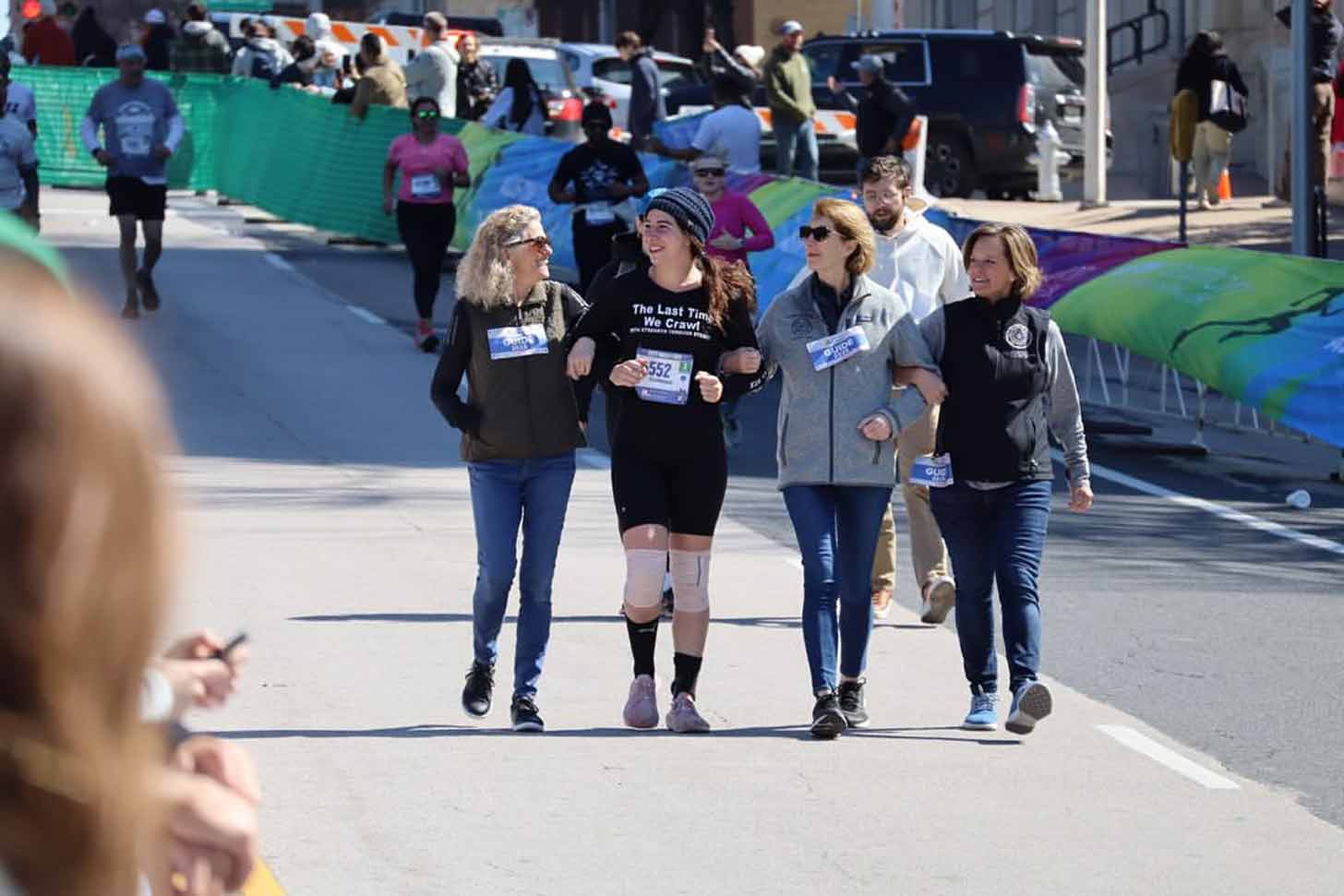
House Bill 3073, also known as the Summer Willis Act, amends what advocates called a sexual assault loophole in Texas laws and clarifies the definition of consent. Previously, state laws had what experts called a “laundry list” of what does not constitute as consent, but not all sexual assault cases fit neatly in this list, making already difficult to prosecute cases even harder for prosecutors to pursue.
HB 3073 amended a provision of the law that stated if someone was assaulted while they were too inebriated to consent, it was only considered assault if the perpetrator purposely drugged the victim.
That meant that it wasn’t considered a sexual assault if the alleged victim had themselves gotten too intoxicated to consent. Or, as was the case with Willis’s experience, if one person drugs the victim but a different person assaults them, that was also not legally recognized as sexual assault.
An earlier version of HB 3073 included language that would have made it a crime to continue the sexual act after someone had withdrawn their consent, but that provision was removed from the bill. Several other states recognize the ability to withdraw consent in their sexual assault laws, including Oklahoma, Vermont, and Utah.
It took several more months, a lot of campaigning, and the work of many other advocates to give it momentum in the Legislature. The bill passed the House before stalling at the Senate, which is where the bill had died in the past two legislative sessions.
This time, the bill passed in the last 30 minutes on the last day of the legislative session, and Gov. Greg Abbott signed it on June 20.
“The passage of the Summer Willis Act is a clear statement that Texas will not tolerate sexual violence — and that we will no longer allow confusion about consent to be a shield for predators,” said Sen. Angela Paxton, who sponsored this bill, in a statement to The Texas Tribune.
After her assault, Willis runs marathons to raise awareness
Willis was a sophomore at University of Texas Austin when she attended a fraternity party and was handed a drink. After that, the rest of the night became blurry, she said, and although she doesn’t remember the assault, she remembers her assaulter telling her about it the next morning.
For years, she didn’t tell anyone about what happened. She moved out of Austin, studied abroad, worked for Teach for America, met her husband, and became a mom. Three months before she turned 29, Willis learned about a woman named Julie Weiss who ran 52 marathons in 52 weeks to raise money for pancreatic cancer, which had claimed her father’s life.
Inspired by Weiss, Willis decided to run 29 marathons in a year to raise awareness for sexual assault survivors. She was four months postpartum, still breastfeeding, and not a runner. Her first marathon was in Lake Tahoe, and she had arrived but her luggage did not.
“The airline had lost my breast pump, and my boobs metastasized, and I literally couldn’t even lift my arms up while I was running the first day,” Willis said.
She completed that marathon with her arms down, and then completed 28 more in the next year. Along the way, Willis met survivor after survivor who shared stories similar to her own. Willis wanted to do more to help, so she connected with the Texas Association Against Sexual Assault (TAASA).
“That’s when they told me even if you tried to press charges, your rape doesn't count in Texas because one person handed you a drink and another person raped you,” Willis said. They told her about their work on HB 3073, and that’s when Willis started brainstorming ways to raise awareness, such as crawling the Austin marathon.
Bill failed twice before this year
In 2021, during the 87th Texas Legislature, TAASA first began trying to pass a version of the bill, which passed in the House but was not given a hearing in the Senate and died there. The next session, the same thing happened even though the Governor’s Sexual Assault Survivors’ Task Force had the bill as one of its legislative recommendations.
Lavinia Masters, who has been a member of the task force since 2019, said one of the challenges they encountered was lawmakers being unable to agree on a definition of consent.
She was thrilled when Willis began helping bring public attention to the bill this year. But the bill once again began to stall in the Senate. Katiana Soenen, a sexual assault survivor and advocate, and her mom Paulina Pizarro, said that as the legislative session neared its end, they were getting word that there wasn’t much hope left for the bill. Still, she was determined to keep fighting.
“You need this bill. It’s safety. It’s common sense,” said Soenen, who was born and raised in Texas but now lives in Washington D.C.. “People want Texas to be a safe state.”
Pizarro, Soenen’s mom, rallied a group of 18 mothers who knew Soenen as a child and asked them to call senators every day about the bill.
“Some of these moms I haven’t talked to since [Soenen] was in middle school,” Pizarro said. “It was so uplifting to know that these women still cared, regardless of how our girls had gone on different paths and we’ve gone on different paths.”
A vote with minutes to spare
Meanwhile, Willis held a press conference and took to social media. Celebrities like Monica Lewinsky and Christy Turlington mentioned the bill on their platforms. For Willis, it was important to get as much attention about this bill as possible, especially when most people weren’t aware of the weaknesses in Texas law that it sought to address.
On the last day of the session, Willis sat with a group of advocates waiting for their bill to be called.
“I think it was 9:30 p.m., we thought they were going to be going ‘til midnight, 1 a.m. like they usually do, but they [said] they’re closing for construction in 30 minutes,” Willis said. “We all started crying.”
But then, HB 3073 was called and within minutes, the bill passed.
“And then we were all crying because we were so overjoyed. Everyone put their heart and soul into getting that bill passed,” Willis said. “It may be named after me, but it was so many people doing such hard work.”
The law will go into effect Sept. 1.
“The criminal justice system now has the appropriate tool in this bill to be able to obtain more prosecutions of people who are willing to sexually assault somebody who cannot give consent, and therefore, the rest of the population will have greater safeties,” said Heather Bellino, the chief executive officer at Texas Advocacy Project, an organization that provides free legal services to survivors of sexual assault, domestic violence, and human trafficking.
HB 3073 will put the Texas Penal Code’s definition of consent into Texas sexual assault laws, which Janna Oswald, an assistant district attorney in Harris County and division chief of the Adult Sex Crimes Division, called a key change.
Previously, the definition of consent was applied to other crimes such as theft or assault but not sexual assault. Oswald recounted a case where two coworkers were sharing a hotel room and the woman woke up to a man assaulting her.
The woman froze. Previously, Texas laws did not consider this a crime since consent was not explicitly denied, but now that consent has been defined, a case like this can be prosecuted due to the fact that consent was not clearly given.
Oswald said that while she has more tools to prosecute more types of sexual assault cases, she understands the concerns about overprosecution and said that HB 3073 won’t necessarily make prosecuting sexual assault cases easier.
“It doesn't make the cases more of a slam dunk to a guilty on these cases,” Oswald said. “But it allows us to hold accountable people that we do know are predatory a little bit easier.”
“It’s just a step”
Soenen said this bill signifies to survivors like herself that they are not silenced and they are not powerless. Working on this bill reaffirmed to her that people do care, and when you speak about your experiences, change is possible.
“It's just a step, and so much more progress that needs to happen in Texas,” Soenen said. “I think seeing that change was possible meant so survivor.”
Willis is proud to have helped get her namesake bill passed, but she won’t be able to get justice for her own case. By the time she had processed her assault enough to want to pursue legal action, the 10-year criminal statute of limitations had passed.
Willis said she already plans on working to expand the statute of limitations for sexual assault cases during the next Texas Legislature. Such a change likely wouldn’t apply to her case because new criminal laws are rarely applied retroactively.
“I don't believe justice has a time limit,” Willis said.
This article originally appeared in The Texas Tribune. The Texas Tribune is a nonprofit, nonpartisan media organization that informs Texans — and engages with them — about public policy, politics, government, and statewide issues. Learn more at texastribune.org.
Header image courtesy of Summer Willis/Instagram
The world’s largest mural made entirely of recycled plastic bottle caps has just made its debut in El Salvador.
Coming in at 13 meters high — or about 42.6 feet — the mural depicts a colorful Gioconda, or “Latin Mona Lisa,” and was installed on the side of a building in the Zacamil neighborhood of San Salvador.
The artist behind the piece is Óscar Olivares, a Venezuelan artist born in 1996. The 29-year-old is no stranger to making art out of recycled materials — he has 46 works displayed around the world — but this is his biggest piece yet, made out of over 100,000 plastic bottle caps.
“El Salvador has been a great school that has taught me the great role that art plays in the transformation of a nation,” Olivares shared in an Instagram caption, which has been translated to English.
“But also it has taught me about friendship, teamwork, kindness, and about the light that is in each person, even when darkness surrounds him.”

The mural was installed on Building 88, an apartment building in the Zacamil neighborhood, which is being revitalized from an area once defined by violence.
“In the past, gangs used graffiti and urban art to mark territory,” Olivares told AFP.
Now, it has a different meaning — one that is accessible to the people who live in the neighborhood.
“We’re not experiencing it in a museum,” he added. “We’re experiencing it in a working-class community.”

The art itself depicts something of a renaissance for El Salvador, showing a Latin American woman with dark complexion, curly hair , and dressed in the colors of the Salvadoran flag.
According to EuroNews, Olivares calls the woman “Salvadoran Mona Lisa,” though she does not represent anyone in particular.
“For him, she embodies any ordinary citizen,” EuroNews reported, “because the renaissance of El Salvador and Latin America, he says, is in ordinary people.”
To gather all of the materials required for the piece, residents of Zacamil worked with the National Association of Collectors and Recyclers of El Salvador to collect plastic lids over the course of several months.

The project was funded by Full Painting and Custom Made Stories Foundation, an organization dedicated to revitalizing Zacamil through sustainable, culturally-significant art projects.
The most important thing about the work, Olivares told AFP, is “the impact it has on every viewer and every person who took part,” giving them “a totally different view of plastic waste.”
Although Olivares used the materials in their original colors and did not paint them, it still took months to gather, wash, and sort the caps. The installation itself took about three weeks, as Olivares and his team used a special adhesive to put each bottle cap in place.
“No matter how big the mural is, the gift I'm taking with me is even bigger,” Olivares wrote on Instagram. “The friends, the pets, and so many moments that without leaving, they already fill me with reasons to return. Zacamil … has transcended and will become a model for the world.”
🇸🇻 ¡Hemos terminado, en El Salvador, el mural de tapas mas alto del mundo! Con mas de 100.000 tapas de plastico.
— Oscar Olivares (@Olivarescfc) February 21, 2026
Esta obra se encuentra en el Edif 88 de la Colonia Zacamil, una zona que esta transformandose en un enorme museo al aire libre con CMS Foundatio pic.twitter.com/MH6PmWCLgA
You may also like: Indigenous-designed mural doubles as a giant solar power generator, reducing 150 tons of CO2 emissions annually
Header image courtesy of Full Painting/Instagram
Just a few months ago, Zoe De La Paz was a mechanical designer for an engineering firm in Chicago. She made about $75,000 annually and split a city apartment with a roommate.
But then, she visited Yellowstone National Park and realized something needed to change.
Or, just about everything.
“It was what made me realize that life was too short and that I was very unhappy at my corporate job,” she told CNBC Make It.

With a hobbyist background as a teen cosplayer, she knew how to sew, and she was itching to pivot to a more creative career.
“I do think it's possible to work in a creative field without falling under the title of a starving artist,” De La Paz said in a video for CNBC. “The path is not as laid out, yellow brick road-style, as it is like a corporate career. It really is something that you build for yourself. But I also think that that's why, as an end result, that the path of an artist is such a fulfilling one.”
After a few costuming gigs in Chicago, De La Paz was ready to branch out even further. She began researching other options in 2026 and found her golden ticket: A seamstress job for the uniform department of Xanterra Parks & Resorts, which operates hotels and lodges in Yellowstone National Park.

De La Paz works a full-time schedule and mends uniforms for thousands of workers at the facilities. Sometimes she gets to partake in creative upcycling projects, too.
“From a young age, I had been told that work must be work and play must be play, and that there isn’t necessarily a world that allows both to coexist with one another,” De La Paz said. “I never thought that my hobby could become my career.”
She took the leap in June of this year. Now, she makes $19.25 an hour and spends her days at the sewing machine. She lives in Yellowstone National Park’s Mammoth Village, in dormitory-style housing. Her job is actually located across state lines, and every day she hops on a shuttle from Wyoming to Montana.

The housing at Mammoth Village costs $96 per month, and the amount is automatically deducted from De La Paz’s pay, covering a dorm room, Wi-Fi, and utilities. She shares a communal bathroom, laundry facilities, and other common areas.
“The trade-off is really worth it to me because I get to live in one of the most beautiful places in the world,” she told CNBC. “Living and working in a national park … is honestly sometimes emotionally overwhelming for me just because it’s just so indescribably beautiful.”
She said her food and living costs are also significantly cheaper than they were in the city, and in her free time, she gets to enjoy activities in the park like horseback riding and hiking. Plus, if friends and family want to visit, they can pay just $5 a night to stay in a dorm room, too.

De La Paz’s time at the park is not permanent, however. Her seasonal contract will soon come to an end, but she plans to keep working in the costuming and sewing industry.
“My season has had its fair share of growing pains and annoyances as one would expect, but I am so indescribably grateful for this time at Yellowstone,” De La Paz wrote on her Instagram account.
“I will never regret the summer I lived in a dream. “[I’m] looking ahead to my new chapter with butterflies and nerves, but feeling so supported and loved by the people sending me off.”
To CNBC, she said, “Being here has changed my life.”
You may also like: This artist collects trash from national parks — and then paints it: 'A zero-waste practice'
Featured Image: Courtesy of Xanterra Parks & Resorts
Springfield, Ohio isn’t usually a must-visit place for most podcast tours. But for Tim Miller, Sarah Longwell, Jonathan V. Last, Sam Stein, and Bill Kristol of The Bulwark, it was a non-negotiable.
The Bulwark, a media company that openly states it’s “on the side of liberal democracy,” traveled to Springfield on September 25 for a live show described as “an evening of politics and community among friends.”
All profits from the event were donated to the Haitian Support Center, an on-the-ground nonprofit helping Springfield’s Haitian community with food, transportation, legal assistance, and other basic needs.
It all comes amid a major United States Immigration and Customs Enforcement crackdown in Springfield.
A Supreme Court ruling earlier this summer enabled the Trump administration to terminate temporary protected status for approximately 330,000 Haitians nationwide, and in response, ICE agents have ramped up arrests in Springfield, where about 15,000 Haitian immigrants call home.
Hundreds of arrests and detentions have been carried out in the area since the protections expired.
“The Haitian community in Springfield is under siege. People who came to America legally and built productive, beautiful lives now hide in their homes, afraid to go outside because masked, armed agents of the state may abduct them,” The Bulwark wrote in an update after the event.
“They cannot go grocery shopping. If they are sick or hurt, they cannot go to the doctor or the hospital. They cannot take their children to school.”
In early 2026, The Bulwark team also traveled to Minneapolis to support coverage of Minnesota’s fight against ICE and “show solidarity” for victims of state violence, Renee Good and Alex Pretti. As many mainstream reports corroborate, The Bulwark team saw a state united.
“When we went to Minneapolis last winter, we encountered a city and a state united against totalitarianism,” Last wrote in a recent recap. “Literally every person I met was outraged at what the federal government was doing.”
This was not the case in Springfield, he said.
“I wish that Springfield was an uplifting story about the power of community coming together in the face of authoritarianism. But it wasn’t,” he wrote. “It’s the story of parts of the community coming together to oppose authoritarianism while other parts stand off to the side either quietly nodding in support of the authoritarians or openly cheering them on.”
He went on to say that while The Bulwark community’s fundraising support was essential, it was only one step toward fending off injustice in Springfield and beyond.
“It is not enough to help victims. We also have to organize to fight and win power,” he wrote, alluding to the upcoming midterm elections. “And if we get power, we must use it. Without illusions or remorse.”
In the meantime, through ticket sales and individual donations, The Bulwark community has raised over $428,000 for the Haitian Support Center.
“We’re honored to do our part to help bring more attention to the outrages that our government is perpetrating in our name,” The Bulwark team wrote. “We’re honored that so many of you are part of this effort.”
On the fundraising page, they added: “Every contribution helps support the people doing this work and sends a simple message to our friends in Springfield: You are not alone.”
You may also like: Amid ICE crackdown, this Minneapolis sex shop has transformed into a donation center for neighbors in need
Featured Image: Hannah Yoest/Courtesy of The Bulwark
When “Heated Rivalry” became a hit, many chalked up the TV show’s success to the well-choreographed male-on-male sex scenes between all-star hockey rivals-turned-lovers Shane Hollander, played by Hudson Williams, and Ilya Rozanov, played by Connor Storrie.
And while those scenes indeed feature acting, directing, and intimacy coordination applauded by viewers and critics alike, they are just a fraction of what is so compelling about this tiny production.
Initially a $12 million project produced by Canadian company Crave and led by showrunner Jacob Tierney, it was acquired by HBO Max and is now the most-watched scripted acquired title in the streaming platform’s history.
Over 10.6 million U.S. viewers were recorded as of February 2026, with the audience growing 400% between the show’s debut in November 2025 and a mere three months later.

Rachel Reid, the author of the book series that led to the television spinoff, has also seen a surge in book sales, leading publishers to take a chance on LGBTQ+ stories and authors with renewed vigor.
An entire queer publishing company, Pansy, launched after seeing the success of the show and book series on such a mainstream scale.
“The belief still prevailed in the industry that queer books would only appeal to niche audiences and that straight female readers — who make up the majority of the market — would be turned off by gay sex,” co-founder of Pansy, Matt Cain, told PinkNews.
“The ‘Heated Rivalry’ novels have blown both of those beliefs apart. But outrageously, those books weren’t published in print in the U.K. until the launch of the hit TV series. I think that’s indicative of the industry’s disinterest and disengagement in mainstream queer fiction. Pansy is here to make sure that doesn’t happen again.”
Ongoing discourse about the story continues to dominate social media, collective effervescence radiates from sports bars where crowds gather to re-watch episodes (a “reheated rivalry,” the most devout call it), and tattoo ink permanently marks fans with the memory of how the show made them feel.
But “Heated Rivalry” isn’t just a capitalistic success story, or a case study in the growing interest in LGBTQ+ romance novels.
It is a rare and wonderful example of what happens when stories about LGBTQ+ people go beyond tragedy.
How ‘Heated Rivalry’ has encouraged equality in sports
One actor who has a small part in “Heated Rivalry” is Harrison Browne, a trans man who played for the then-National Women’s Hockey League for years. In 2016, Browne came out as trans in an article for ESPN and said he found a surprising amount of acceptance.
“I was voted into the then-NWHL All-Star Game. The year I came out, my jersey was the third most-sold in the entire league. Even the color commentators switched between she/her pronouns for everyone and he/him for me, and they never slipped up,” Browne told Good Good Good.
It was all a byproduct of the vastly more inclusive culture in the women’s league compared to the men’s side of professional hockey, Browne said. But still, he could not medically transition and still play for the women’s league.

Though he had a storied career, including competing with Team Canada, it was time to hang up the skates for his own safety and sanity. It was then that Browne decided to turn to acting.
“I heard from a lot of people that they watched me play a game and seeing them reflected in me made them feel less alone,” Browne said. “I didn't know any transmasculine actors [at that time] and I was like, maybe I could try that.”
The call for a small role in “Heated Rivalry” came like any other, with a self-tape and audition process. He got the role of Connors, a member of Rozanov’s team. He said he believes he was one of the only actors on the show who had a professional hockey background, and of course, the added dynamic of his queerness brought another layer to the whole experience.
“When I watched it, I was just like I was engulfed by it as an audience member,” Browne said of the show. “I cry every time I watch it. It really brought up a lot for me, having to hide my identity because I was afraid of losing a scholarship, afraid of losing the opportunity to represent my country, just keeping a lot of things under wraps because of the love of this sport that I had.”
While trans participation in both youth and professional sports is a hot topic these days, “Heated Rivalry” has inspired curious queer athletes to take to the ice for the first time — or to make their return to it.
NBC News reported a surge in LGBTQ+ hockey leagues in both the U.S. and Canada following the show’s debut. And some professional athletes, like hockey player Jesse Kortuem, even said he decided to finally come out as gay this year as a result of the show.
These strides mean a lot to Browne.
“These are people that gave up hockey and are finding their way back to the sport,” he said. “They felt like they couldn’t play because they were gay, and now people are coming into adulthood, and coming back to it and finding the joy in it.”
Real-life men’s hockey culture remains less-than-welcoming to players, Browne said, though he has enthusiastically collaborated with professional leagues over the years to bring greater diversity and inclusion to the ice.
He goes into further detail in his book, “Let Us Play: Winning the Battle for Gender Diverse Athletes,” which he wrote with his sister and published in 2025. He said it’s about embracing that “both things can be true:” wanting accountability for institutions that have excluded LGBTQ+ athletes — and “wanting better” for the future.
And nowhere was that better future more in reach than at a recent hockey game at Madison Square Garden, where Browne waded through a sea of Hollander and Rozanov jerseys.
“When you wear a Hollander or Rozanov jersey, you’re actually walking around with a Pride flag on your back,” Browne said.
“It’s a symbol that says ‘this whole place is for you.’ And seeing that, it makes me think, ‘“Heated Rivalry” is actually making men’s hockey a safer environment.’”
What queer love stories like ‘Heated Rivalry’ mean to frontline activists fighting for LGBTQ+ youth
LGBTQ+ fans of “Heated Rivalry” have found a special kind of reprieve in the show. While it includes plenty of plot points and character arcs that grapple with pain and loss, ultimately, the show is not a tragedy.
And while the timing of its release seems pointed, it was not created in response to adversity faced by the LGBTQ+ community — but simply to tell a love story: Joy for the sake of joy.
This, on its own, provides a level of hope and optimism mainstream media rarely affords to LGBTQ+ characters. And it feeds a hungry audience of viewers desperate to know that happy endings are theirs to imagine.
For Raelee Sweet, the education manager at It Gets Better, a nonprofit dedicated to uplifting LGBTQ+ youth, the show is especially meaningful. Sweet leads storytelling initiatives for queer youth, helps build digital tools on LGBTQ+ mental health, conducts workshops around the country, and has supported grantmaking projects for over 170 youth-led programs nationwide.
The work is rewarding, but not without its challenges.
“Like most nonprofits working with the LGBTQ+ community, we’ve seen a dip in major funding over the last couple of years,” Sweet told Good Good Good.
“But deeper than that is the safety and morale of the youth that we work with. Some have had to pull out of projects or even ask to have their names removed from past projects, for fear of retaliation. How do you tell young people ‘it gets better’ when the world looks so bleak?”
The young people continue to give them hope, Sweet said, and their team has been resilient in facing challenges, but “Heated Rivalry” has been one of the best motivators to keep going.
“I’ll be honest, I don’t watch a ton of queer content these days. You get tired of seeing the same tropes over and over that don’t reflect the experiences of the people you work with every day,” Sweet said. “But ‘Heated Rivalry’ filled a hole in my heart that I didn’t know was there.”
Their favorite scene is one that many find themselves returning to, when (spoiler alert) another of the show’s gay couples — Scott and Kip — finally kiss on live television after one of them wins a championship game.

The scene cuts to the show’s leads, Shane and Ilya, watching the events unfold, the universe finally giving them permission to love out loud in the same way.
“I sobbed, thinking of the young people I work with every day, and how they might get to have more and more moments like that,” Sweet said.
They said they’ve re-watched the show twice, calling it a “warm blanket,” that makes them feel “rejuvenated to get back to work the next day — despite what’s happening in the news.”
The real-world psychological impact of hopeful stories about LGBTQ+ people
Dana Ménard, Ph.D. and associate professor of psychology at the University of Windsor in Ontario, Canada, studies wellbeing and resilience as they relate to sex, sexuality, and gender identity.
This has made her something of an expert in “Heated Rivalry” in recent months.
While she said the show’s happy ending provides an escape during a particularly difficult time for LGBTQ+ people, the characters and plot lines within the story also serve as a blueprint, especially for our closest relationships, whether between romantic partners, family members, friends, or teammates.
“I found the parental relationships on this show particularly touching. All of the parents have their own challenges, but they rise to the occasion, even if they struggle at first,” Ménard told Good Good Good.
“The show models that growth, and the honest communication that it requires. I think there are a lot of good examples here of how to parent a queer child, and also how to parent an adult child: Be available, be clear in your support, be affectionate.”
Regardless of what role viewers might play in the lives of LGBTQ+ people, or whether viewers are queer themselves, Ménard sees “Heated Rivalry” as an artifact of the moment that provides real support to people most in need of the promise of a better tomorrow.
“I think hope and joy can change our lives. I’m reminded of a story by Ray Bradbury from 1984, ‘The Toynbee Convector,’ where a man claims to have traveled into the future and seen a world where all the major problems were addressed: poverty, environmental catastrophe, cancer — all gone,” Ménard said.
“Over a hundred years later, on his deathbed, when that beautiful civilization has been brought to pass by the people who believed in his vision, he confesses that he never made the trip he claimed to have made but instead invented the whole story from scratch and fabricated records to support the lie. He knew that by sharing this illusion, he would give everyone hope, and from there, the confidence to make the necessary changes because we already knew it was going to happen.”
The world where “Heated Rivalry” takes place, she said, is a place “where love is accepted, where one can be authentic, where people strive to understand one another better.”
“We could collectively make that world a reality off the screen,” Ménard concluded. “And lots of people are working towards that vision every day.”
A version of this article was originally published in The 2026 Pride Edition of the Goodnewspaper.
You may also like: This NHL team is selling 'Heated Rivalry' jerseys. The proceeds will be donated to a queer and trans hockey league
Header image by Sabrina Lantos/HBO Max
According to a study by Australian Associated Motor Insurers Limited, kangaroos are responsible for roughly 90% of all wildlife-vehicle collisions in Australia, followed by wallabies, wombats, and deer.
That high percentage is due in large part to the sheer number of kangaroos that live in the Australian wilds. In 2024, the Australian government reported that there were about 35.3 million kangaroos in the country — or roughly 1.36 kangaroos for every person.
In 2019, Volkswagen began pioneering a solution that aimed to reduce kangaroo-vehicle collisions with a new front-bumper safety feature called a “RooBadge.”
By partnering with Helena Bender, Ph.D., and associate professor Graeme Coulson, the country’s leading kangaroo behaviorist from the University of Melbourne, the automobile manufacturer designed high-frequency sounds that would alert — and deter — approaching kangaroos.
“The RooBadge utilizes a unique approach to audio-based deterrents by mixing meaningful sounds to kangaroos (like bird alarm calls, predatory sounds, and kangaroo foot thumps) with synthetic sounds,” Volkswagen stated on its website.
“With multiple species of kangaroo found across Australia, all of which react differently to different sounds, producing a single sound to deter them all is nearly impossible,” the manufacturer explained.
“So, in a world-first innovation, RooBadge uses machine learning to compare its GPS coordinates against kangaroo distribution data to optimize its sound, deterring the kangaroo species that inhabit that location.”
Volkswagen is also working with the Wildlife Information Rescue and Education Service to improve its kangaroo distribution data and identify new “hotspots” for kangaroo collisions.
According to the latest official update from Volkswagen, the safety feature is currently undergoing its fourth round of testing.
“The main thing is we would never come to market with anything that doesn’t work, and especially in this space,” Volkswagen commercial vehicles director Nathan Johnson told CarsGuide.
“We’ll continue going through the testing process, making sure that it is a viable option.”
In addition to keeping kangaroos off of busy roads, Volkswagen believes that once their RooBadge technology is perfected, it could be replicated for other animals at the forefront of wildlife conservation efforts.
“Animal collisions are a global problem, with deer being the most significant issue across Europe and North America,” the company stated. “So, we’re working with partners overseas to adapt RooBadge to deter deer and other problem animals worldwide.”
In the meantime, government officials and wildlife experts have been trying to get the word out through road safety PSAs and “Kangaroo Crossing” signs.
“It’s really important that drivers are on the lookout for wildlife on the roads — particularly at dawn and dusk,” Chris Emerson, an insurance research specialist, told the Australian Broadcasting Corporation.
“If you spot an animal on the road while driving, remember to brake but don’t swerve, as this may cause a collision with other cars,” they added. “When driving in an area where animals could be present, take note of any signage about local wildlife and slow down.”
Unfortunately, a sad reality is that a struck kangaroo may be carrying a baby kangaroo — called a joey — in their pouch. Joeys typically stay inside their mother’s pouch for about six to 10 months after they’re born, depending on the species.
If a joey is orphaned in a car accident, WIRES works with a network of volunteers to rehabilitate them. Volunteers like Diane Kirkland, who has been rescuing injured and orphaned joeys on roads in western New South Wales for almost a decade.
“I’m a sucker for animals, and I look at it this way: Even if one dies, I am happy to say that it didn’t die out on the open road, out in the cold,” Kirkland said. “It was loved, it was looked after.”

She’s lost count of the number of joeys she has raised and released on her farm.
“Once they don’t have a bottle anymore, they are not in a yard anymore; they just roam the property,” Kirkland explained.
“If they do come home, they lie on the lawn. I always leave a bucket of water out for them; I leave pellets out for them in case they need something extra besides the dry grass.”
You may also like: India uses color psychology to prevent wildlife collisions: 'Red roads, green intent'
Featured Image: Volkswagen
Scientists at Southern Illinois University, Carbondale have successfully transformed plastic waste into an edible, vanilla-flavored cookie.
It all started with a prompt from NASA’s Deep Space Food Challenge and a grant from the National Science Foundation: Could we use the world’s growing plastic pollution crisis to turn one problem into a solution for another?
“Global food demand is expected to rise 35–56% by the year 2050, and about 30% of the world population will be at risk of hunger in the future,” SIUC associate professor Lahiru Jayakody said in a statement. “The way to address that, I believe, is by using microbes.”
So, Jayakody and his research team programmed yeasts to turn plastic and agricultural waste into edible proteins and flavored molecules.

The final product is an upcycled cookie called a µBite.
“We were trying to develop technologies for plastic upcycling to make more valuable products,” Jayakody said. “We thought, why not focus on making food? Because plastic is carbon and food is carbon.”
The team used polyethylene terephthalate, or PET, one of the most common forms of plastic — which is often used to make soda and water bottles. PET contains molecules with a lot of carbon, which can be rebuilt into something like a protein through the use of chemical reactions and solvents in a lab.
But Jayakody wanted to try breaking down that PET with microbes instead.
“Microbes are very clever,” he said. “So, we are using their traits to solve the problems we created.”
In the past, scientists have used microbes, like yeast, as “miniature factories” to make new molecules. One of the biggest examples of this is insulin; instead of it being extracted from animals, yeast can be programmed to make it instead.
Jayakody and graduate student Sandhya Jayasekara programmed baker’s yeast, among other types of yeast, to convert molecules in plastic waste into proteins, vitamins, and flavorings.
Here’s how they actually did it: The researchers took PET plastic, discarded corn plant stalks and leaves, and other agricultural waste, and put it through a process called oxidative hydrothermal dissolution.
This method uses water and oxygen at high temperatures to break down tough material into “microbe-accessible pieces.”
Those pieces are then fed to the programmed yeasts, which turn them into new food ingredients, like proteins, fats, and acids. The researchers also added fiber, starch, and sweetener before extruding the final mixture through a 3D printer to form the cookie shapes.

The µBites, which are pronounced “micro-bites,” almost look like animal crackers. But they aren’t quite ready to win the everyday consumer’s affections.
With their preliminary research, the scientists found that the cookies are safe to eat, but they are awaiting approval to conduct taste tests.
“For now, the cookies have received high marks on aroma, with most participants agreeing that they would be willing to eat the cookies in resource-limited situations,” a press release said.
The overall goal, stemming from NASA, is to support humans on deep space missions, or even, according to the American Chemical Society, “colonies on the moon or Mars.”
But they can also be used on Earth for populations that are in dire circumstances without food.
In the future, Jayasekara plans to use yeasts that produce more food additives, like vanilla flavoring or beta-carotene that the body can convert into vitamin A.
“We’re using microbes to develop the cookie into a more attractive, consumer-friendly product,” Jayasekara said.
You may also like: From mushroom caskets to coral cremations, these eco-friendly burials are gaining popularity
Featured Image: Rusty Bailey/SIUC Media & Communication Resources
In August 2025, Florida Governor Ron DeSantis ordered the removal of roughly 400 “non-standard” pieces of street art, the majority of which were rainbow-colored, Pride-themed, or generally associated with the LGBTQ+ community.
“We will not allow our state roads to be commandeered for political purposes,” DeSantis wrote on X.
In his order, DeSantis cited concerns over the road safety of pedestrians and drivers, despite evidence that brightly painted roadways actually reduce traffic accidents and increase pedestrian safety.
Overnight, rainbow-colored sidewalks, crosswalks, and murals were ripped up from streets across Florida — including the memorial for the 49 victims of the Pulse nightclub shooting.
Two months later, in October 2025, Texas Governor Greg Abbott echoed DeSantis’ remarks when he ordered the removal of LGBTQ+ Pride crosswalks and other road markings that “advance political agendas” and “ideologies.”
In the months since, people have found creative ways to circumvent the bans in Florida and Texas.
Residents, business owners, and city officials have installed rainbow bike racks, moved rainbow crosswalks to sidewalks, painted fence posts, revamped private parking lots with LGBTQ+-friendly murals, and displayed rainbow laser beams in the night sky.
Most recently, El Paso responded to the ban by wrapping Pride-themed “cylinders” around city street lights in the heart of downtown.
“Celebrating Pride Month in El Paso!” The City of El Paso’s official Instagram account shared on June 3. “We’re excited to announce the installation of colorful Pride-themed decorative cylinders on streetlights around Pride Square.”
The cylinders bear the Intersex-Inclusive Progress Pride Flag, the most current and comprehensive version of the LGBTQIA+ pride flag, which was designed by Valentino Vecchietti in 2021.
“These installations can be viewed downtown on Stanton Street, between Franklin and Missouri avenues,” the post continued. “Join us in creating a welcoming atmosphere for all residents and visitors during this vibrant month of activities and events!”
Amber Perez, the executive director of the Borderland Rainbow Center, told KTSM it was a chance for city officials to show support for El Paso’s LGBTQ+ community.
“One of the things that has been the most amazing about all of this work is the collaboration between the City, local queer organizations, and activists,” Perez said. “That’s how all of this has kind of come to fruition, trying to figure out other ways to continue to uplift the community while still staying legal.”
Perez said it’s not the first time that community activists have had to stand up and say, “Hey, we’re here.”
And it won’t be the last.
“I think last year’s Pride across the nation was a little bit more subdued. There was a lot of fear within the community,” Perez admitted. “There was just this feeling of like, nobody knows what’s really going to happen.”
“And I think this year we’re seeing a bounce back from that — saying, ‘You know what? Whatever happens, it doesn’t matter. We are here, we are queer, and we exist.’”
You may also like: To end LGBTQ+ youth homelessness, Wisconsin is planting flowers in sidewalk cracks
Header images via the City of El Paso Instagram
Last July, United States Transportation Secretary Sean Duffy, issued a memo to governors, urging them to “improve mobility and safety on roadways” by removing rainbow Pride crosswalks and street art installations.
While some states like Florida and Texas have complied, and others, like Idaho and Utah continue to implement Pride flag bans on government buildings, most places have rejected the memo.
In fact, cities like Miami Beach, St. Petersburg, San Antonio, and more, have creatively defied their local directives, installing rainbow bike racks or sidewalk displays instead.
While California has not implemented bans on Pride displays, its cities remain vocally supportive of LGBTQ+ rights. San Francisco Mayor Daniel Lurie has just announced a bold public art installation that will celebrate Pride Month, the World Cup, and the Fourth of July all at once: Rainbow sky lasers.
The artwork is called “7X7,” a display in Civic Center Plaza with 49 rainbow-colored beams of light, one beam for each square mile of San Francisco.

The display made its debut on June 21 and will light the sky through July 4. According to a press release from the city, it will be visible across San Francisco and the Bay Area.
“As our city welcomes people from around the world this summer for Pride, July Fourth, and the World Cup, we are showing the creativity, energy, and spirit that make San Francisco the greatest city in the world,” Lurie said in a statement.
While the mayor did not expressly discuss recent Pride display bans across the country, he did make it clear that San Francisco is a city that celebrates its diverse residents and visitors.
“We have always been a city that leads with our values, and we’re demonstrating that with this installation,” Lurie said. “Whether you live here or you’re coming to visit, whether you’re in one of our neighborhoods or coming downtown, there’s so much to be excited about in San Francisco this summer.”
The artwork was conceived and produced by Illuminiate, an organization that creates large public art installations in the Bay Area.
The rainbow lasers will be visible throughout Pride Month, and will share airspace with a 4.1-mile rainbow laser installation along Market Street during June 27 and 28, billed as the world’s largest Pride flag, according to the city’s press release.
But the display will change colors to represent the American flag on July 4, Illuminate clarified.
“The beams change color across the run, shifting to rainbow hues during Pride Weekend and the colors of the American flag on July 4,” the organization’s website reads.
“The laser systems sit roughly ten feet above the ground on a custom truss, so visitors and families can walk freely beneath the entire installation and look straight up through the canopy of light.”

Regardless of what people are celebrating, the goal is to create a public art piece that inspires and brings people together.
“One of the things that makes San Francisco such a great place to live is that you can find moments of joy, beauty, and connection in our public spaces,” Sarah Madland, San Francisco Recreation and Park Department’s general manager, said in a statement.
“Projects like ‘7X7’ bring people together, activate our civic spaces, and create experiences that are free and accessible to everyone.”
You may also like: To end LGBTQ+ youth homelessness, Wisconsin is planting flowers in sidewalk cracks
Header image courtesy of San Francisco Office of the Mayor
One of the less glamorous aspects of working as a national park ranger includes cleaning trash out of some of the country’s most beautiful, sacred spaces.
With more than 4.5 million annual visitors, Yellowstone National Park rangers work constantly to remove litter from the park — especially its popular hydrothermal areas like the Old Faithful and Midway Geyser Basin.
Some items are the kind of trash that’s common everywhere: Food wrappers, tissues, and water bottles. But with unexpectedly high gusts commonly sweeping through the park, visitors may also lose more than they expect on a visit to the iconic geysers.
“No matter the type of debris, it needs to be removed,” an article by the United States Geological Survey explained. “Foreign material of any kind can damage or permanently alter a hydrothermal feature, whether from clogging its water supply, blocking or diverting its runoff channel, or polluting it with chemicals and sediment.”

In fact, the USGS continued, Morning Glory Pool in the Upper Geyser Basin famously changed its color in the twentieth century as a result of trash and items thrown in by visitors.
So far this year, Yellowstone’s geology team has removed more than 20,100 pieces of trash, along with over 5,000 rocks and sticks — and shockingly, 280 visitor hats — from the park’s geothermal areas.

“Favorites this year include a FIFA 2026 Men’s World Cup hat, a baseball cap with ‘COWBOY HAT’ on it, and a Roblox bucket hat from St. Kitts and Nevis,” the USGS reported of the hundreds of hats. “After the 2026 season is over, any re-wearable hats will be washed and donated to local organizations.”
While visitors would likely be bummed to lose a hat in the high winds of the park, there are other interesting items that park rangers see a lot of.
And that includes a lot of coins.
“Contrary to (apparently) popular belief, hot springs are not wishing wells! In addition to clogging hydrothermal feature vents, throwing in coins can harm bacterial and algal formations in hydrothermal areas, damage that can take months to years to undo,” the USGS stressed.

As of September 2026, Yellowstone staff have collected more than $18.00 in coins. Some are intentionally thrown into hot springs and geysers, while others may be accidentally dropped between boardwalk planks. Coins found this year also include other types of currency, including pesos, yen, euros, and Canadian dollars.
The most common items found in the park this year include:
- 54 camera lens caps
- 47 hair ties
- 17 baby pacifiers
- 20 hotel key cards
- 42 pencils
- 36 pairs of sunglasses

Items winning the title of most bizarre include Airpods, golf tees, an inhaler, six different Invisalign retainers, 15 fake nails, floss picks, and a lump of glittery slime, likely a children’s toy.
Plenty of other kids’ toys find their way into the park, like mini figures, bouncy balls, fidget spinners, and rubber ducks.
The USGS also listed some staff-favorite items, which included seven Polaroid photos — many depicting the hydrothermal feature they were found in — Yellowstone souvenir pennies, and Pokémon cards.

“The park’s Geology Program staff, trained in safe hydrothermal navigation, do the bulk of this removal work,” the USGS explained, “roving the park’s hydrothermal areas to take out trash, hats, rocks, sticks, and anything else that doesn’t belong — all in addition to their other work of chemical and temperature monitoring, hydrothermal area incident assessment, and public education.”
To make the work easier on park staff, visitors are encouraged to “stash their trash,” which includes stowing away any wrappers, paper items, or “other easily windblown items” deep in pockets, bags, or, ideally, trash cans.
And one final reminder from the USGS?
“If you’re adventuring in a windy area, consider tightening or taking off your hat.”
You may also like: DIY off-roaders race in public lands trash pickup contest. They ended this year with 5M pounds cleaned
Featured Image: Dietmar Rabich/Wikimedia Commons (CC BY-SA 4.0)
This story was originally published by Grist. Sign up for Grist's weekly newsletter here.
President Donald Trump’s second term has been a nightmare for global cooperation on climate change.
Trump has yanked the United States from the Paris climate agreement, attacked a global agreement on a carbon tax for cargo ships, and threatened countries with tariffs if they get too vocal about climate.
This week brought a notable exception. World leaders at the United Nations General Assembly on Thursday approved a unanimous resolution on how to handle sea level rise, and the United States did not block it from moving forward.
The passage of the accord represents a rare win for multilateralism, made all the more notable by the fact that the agreement includes references to climate change and climate aid for developing countries.
The declaration could bring new momentum to efforts to help small island states, said Philip Davis, the prime minister of the Bahamas, in an interview with Grist.
“Our landmass is less than 3 meters above sea level, we are already seeing our land being swallowed by water, and the global effort to stem the carbon footprint has stalled,” he said. “I think this declaration will perhaps heighten the flow of action.”
For many low-lying countries, the implications of this agreement could be profound. Some island nations, like Tuvalu and the Marshall Islands, face almost total inundation over the next century as rising temperatures melt the world’s ice sheets and glaciers. It had never been clear what would happen to those sovereign nations.
Under the agreement, those states will continue to exist as political actors even if their landmass disappears.
They’ll also retain control over their old maritime borders, the stretch of sea extending from the coastline over which a country has exclusive control for fishing, energy development, and other military and economic activity.
Mario Tama / Getty Images via Grist
The declaration is the result of a campaign by the Alliance of Small Island States, an influential bloc of low-lying island nations.
Recent rulings from international legal bodies have helped affirm countries’ continued rights in the face of sea level rise, but the world’s leaders had never endorsed those rulings.
“What was long treated as a legal ‘presumption’ is now an affirmation,” said Kamal Amakrane, the managing director of the Global Center for Climate Mobility and the climate envoy for Trinidad and Tobago, which helped initiate talks toward a global declaration. He noted that the world has agreed to preserve small islands “by consensus, in a year when consensus has been hard to come by.”
The document enshrines strong protections for states at risk of losing land. It holds that countries “can … maintain their maritime zones in the face of physical changes resulting from sea level rise,” a principle that the document calls a “presumption in favor of continued statehood.”
That echoes a landmark climate ruling from the International Court of Justice last year, which held that “once a State is established, the disappearance of one of its constituent elements would not necessarily entail the loss of its statehood,” and which affirmed that international law requires countries to respect one another’s established borders.
The declaration will go a long way toward helping secure the future of small island states. For the Bahamas, protecting pristine ocean territory is essential to its tourism-driven economy. Davis said that the legal protections will safeguard his country and others against efforts to claim ocean territory for industries like deep-sea mining.
“This cannot be a free-for-all,” he said. “This cannot be might is right, and might takes what is there.”
The agreement also includes strong language recognizing that developed countries and historic emitters have an “urgent” obligation to provide “expanded access” to adaptation funds for small island states.
This money could build seawalls or restore mangrove forests to protect coastlines from rising water, or it could help relocate populations from flood-prone areas.
Charly Triballeau / AFP via Getty Images via Grist
The declaration on its own won’t do anything to increase the money available to states like the Marshall Islands. Wealthy countries are currently giving poor ones about $130 billion a year in grants and low-interest loans for clean energy and adaptation, well below the level that experts believe is necessary to avoid catastrophic impacts.
The world agreed in 2024 to reach $300 billion in annual aid by 2035, but it’s too early to gauge progress toward that target.
Even then, much of that finance is in the form of loans, which are hard for many island states to afford — the Bahamas has billions of dollars of debt already, much of it stemming from damages after 2019’s Hurricane Dorian.
Even so, the mention of adaptation was welcome for island nations. Language about climate aid has been much contested at recent United Nations climate talks, with wealthy nations rejecting calls for trillions that could build flood walls and elevate sinking islands.
Trump has gone further and rejected almost all international aid obligations, dismantling the U.S. Agency for International Development and pulling out of dozens of treaties.
Yet neither the State Department nor other finance-averse countries rejected the language in the sea level rise declaration. (The State Department did not respond to a request for comment by publication.)
The reason for the cooperation by the United States is that legal protections against sea level rise are in every country’s interest, said Bryce Rudyk, a law professor at New York University who also serves as a legal advisor to the Alliance of Small Island States.
The United States and other rich nations could lose land to sea level rise, and in some countries a shifting maritime border might jeopardize sovereign control over natural resources like oil, minerals, or offshore wind.
“Everyone will lose land, and no one wants to lose ocean territory,” he said. “I think that’s why they were fine with making these relatively strong statements. … It’s in everyone’s interest to say, ‘We don’t want states just disappearing.’”
Featured Image: Wang Fan / China News Service / VCG via Getty Images via Grist
Written by Jake Bittle.
On August 26, devastating flash floods struck five districts in Nepal along the Nepal-Tibet border. As of August 31, the death toll topped 1,000 people, with more than 4,400 still unaccounted for in both Nepal and China, CNN reported.
Tens of thousands of people have been affected, with homes destroyed, roads and bridges collapsed, and communities cut off from any support.
The event was initially reported as an earthquake of magnitude 4.4. But then, the United States Geological Survey later determined the tremor was caused by glacial rock and ice collapsing, registering a magnitude of 5.2.
This glacial collapse then triggered a massive release of water, mud, rock, and ice that careened down valleys and overtook the Lhende Khola, Bhoteskoshi, and Trishuli rivers.
The world watched on as terrifying videos showed buildings being obliterated in mere seconds as the rushing floods cascaded into communities.
As of Saturday, August 29, fundraising platform GoFundMe has created a hub page to help people affected by the unprecedented floods.
The hub contains verified fundraisers for locals who have created their own GoFundMe pages, as well as nonprofit organizations that are responding in the area.
Currently, the nonprofits listed for their support in the area include All Hands & Hearts, Americares, Binaytara, DirectRelief, Mercy Corps, GEM, Oxfam, Save the Children, One Heart Worldwide, World Central Kitchen, and Wine to Water.
The hub provides one simple page for people who want to make a difference to find fundraisers to support.
On the hub, the GoFundMe page reads, “many people were tragically killed after devastating floods hit Nepal, injuring thousands and leaving homes and businesses devastated. The GoFundMe community is coming together to help people rebuild and recover. Support for verified relief fundraisers and nonprofits will help those affected continue their recovery. Our Trust & Safety team will continue to update this page with more fundraisers as they are verified.”
According to GoFundMe, every fundraiser displayed on GoFundMe hub pages is verified by the platform’s “Trust & Safety experts.”
Donations on GoFundMe are protected by the “GoFundMe Giving Guarantee” — which offers a full refund if something isn’t right. On rare occasions when a GoFundMe fundraiser is found to be fraudulent, misused, or otherwise violates policies, the platform will give donors their money back, no matter where they donated from, for a full year after donating.
Featured Image: Courtesy of GoFundMe
At Good Good Good we celebrate the good in the world — and provide practical tools to help our community become the good in the world.
Knowing that refugees joining new communities in the United States will have a large number of diverse needs, we're inspired by those on the frontlines of supporting these new community members.
Nonprofit organizations and individuals are already welcoming refugees at airports across the United States and beginning the resettlement process. We get to celebrate the good these organizations are doing — and then join in to support their work.
Upon entering the United States, refugees will need support settling into their new communities. They'll need access to affordable housing, support getting jobs, help to get their kids set up with childcare and their new schools, and basic supplies like home goods, toiletries, and more.
There are organizations, nonprofits, mutual aid groups, and NGOs positioned to resettle refugees in (nearly) every state in the United States.
Many of these organizations rely on donations from individuals (like you) as well as financial support from state and local governments. You can see a breakdown of how much money your state allocates towards refugee services — and how many refugees they support — via Refugee Council USA's toolkit.
When you find the best refugee charity working in your community, you'll have the opportunity to support them financially or sign up as a volunteer.
You can take things a step further and call your elected officials to advocate for your state to welcome more refugees and also increase budgets for services. Check out our guide on how to contact your representatives, and know that you reaching out can truly make a meaningful difference.
How to help refugees in the United States — whether they're from Afghanistan, Syria, Ukraine, or anywhere else:
The United States has long been a safe place for people fleeing war, conflict, and persecution.
Welcoming refugees into the United States is not only secure, vetted, and safe — it's also good for communities, creating safer towns and more prosperous economies.
Opportunities to aid refugees in the U.S. are everywhere:
We've listed ways to help each organization below (based on what they've specifically mentioned they need support with). For most organizations, the most effective ways you can help are to donate your time and money.
But if you have the following skillsets or opportunities, almost every organization would be thrilled to hear from you:
- There’s a particular need for Dari or Pashto speakers to help with translation and interpretation at all stages of the settlement process for Afghan refugees. (But if you speak other languages, your help with translation and interpretation will be helpful for communities settling in the United States from other regions.)
- As organizations work to resettle families and individuals, they'll be looking for fairly priced short-term and long-term housing. If you have a spare room or guest house in a community that's receiving refugees, an organization might love to partner with you to provide a temporary place to stay for new arrivals. Similarly, if you're a landlord and can provide good housing at a fair price, please reach out to a local resettlement organization.
- If you're an employer who might have job opportunities for refugees, reach out to a local refugee resettlement organization to see how you might be able to help.
Popular refugee charities serving most or all states:
Some organizations support communities across the United States, with or without regional offices. For those organizations, we've listed their bio here — and then mentioned them under the states they serve below:
1. HIAS
Founded as the Hebrew Immigrant Aid Society in 1881 to assist Jews fleeing programs in Russia and Eastern Europe, HIAS has touched the life of nearly every Jewish family in America and now welcomes all who have fled persecution.
HIAS works around the world to protect refugees who have been forced to flee their homelands because of who they are, including ethnic, religious, and sexual minorities. For more than 130 years, HIAS has been helping refugees rebuild their lives in safety and dignity.
Sign up to volunteer or make a donation
2. Lutheran Immigration and Refugee Service
For over 80 years, Lutheran Immigration and Refugee Service has been "a champion for refugees and migrants from around the globe."
They've welcomed more than 500,000 refugees and migrants. Through the Long Welcome, they help ensure that refugees and migrants are protected, embraced, and empowered in a world of just and welcoming communities.
You can volunteer, advocate, engage your community or make a financial donation
3. United States Conference of Catholic Bishops
USCCB, in partnership with its network of 50 refugee resettlement affiliate offices across the country, has historically relied upon Catholic parishes and other local community groups to “welcome the stranger.” The Parishes Organized to Welcome Immigrants and Refugees (POWIR) initiative seeks to develop a base of support through community sponsorship, mentorship, and volunteerism to welcome newly arrived refugees and Afghan Special Immigrant Visa holders (SIVs).
4. Episcopal Migration Ministries
Episcopal Migration Ministries is a Christian nonprofit organization that welcomes refugees, educates communities, and mobilizes congregations to advocate for the protection and rights of all migrants.
Volunteer, advocate, or make a donation
5. International Rescue Committee
The International Rescue Committee provides opportunities for refugees, asylees, victims of human trafficking, survivors of torture, and other immigrants to thrive in America.
Each year, thousands of people, forced to flee violence and persecution, are welcomed by the people of the United States into the safety and freedom of America. These individuals have survived against incredible odds.
The IRC works with government bodies, civil society actors, and local volunteers to help them translate their past experiences into assets that are valuable to their new communities. The IRC helps them to rebuild their lives.
6. World Relief
World Relief creates partnerships between local Christian churches and refugees to give everyone a place to call 'home'.
They work with local partners to meet refugees at their first point of safety, providing emergency aid to families living in temporary shelters - including clean water, food, tarps, hygiene kits, and other essential items
As refugee families realize they may never return home, they often face an overwhelming loss of hope. Alongside local partners, World Relief works to combat this by providing trauma counseling, mother and parent groups, and safe spaces and literacy clubs for refugee children to learn, grow and play.
As refugees begin to rebuild their homes and lives, they help families find housing, learn English, pursue employment, build friendships and create long-term support systems.
Donate, sign up as a volunteer, or advocate for your church to partner with World Relief
Organizations that help refugees you can support in your state — state by state
For states where the only major refugee-resettlement organization is a national organization without a regional office, we reference the nonprofit organization below — but include details in our national list above.
Find your state (or a state near you) and find a way to make a difference for refugees in your community:
Refugee Organizations in Alabama
USCCB
(See above for details on any of the top six refugee support organizations)
Refugee Organizations in Alaska
USCCB
Refugee Organizations in Arizona
Lutheran Social Services of the Southwest
Since 1975, LSS-SW has served some of the world’s most persecuted people living in Tucson and Phoenix. Violence and armed conflict chase millions of people from their homes, their families, and their countries, forcing them to seek safety in other countries around the world. With volunteers and community co-sponsor teams, LSS-SW builds self-reliant foundations for approximately 400 refugees each year.
Volunteer, donate goods, or make a financial donation
International Rescue Committee — Tuscon, Glendale
The International Rescue Committee provides opportunities for refugees, asylees, victims of human trafficking, survivors of torture, and other immigrants to thrive in America. Each year, thousands of people, forced to flee violence and persecution, are welcomed by the people of the United States into the safety and freedom of America. These individuals have survived against incredible odds.
The IRC works with government bodies, civil society actors, and local volunteers to help them translate their past experiences into assets that are valuable to their new communities. In Tucson, Glendale, and other offices across the country, the IRC helps them to rebuild their lives.
Episcopal Migration Ministries
Volunteer, advocate, or make a donation
Refugee Organizations in Arkansas
Canopy — Northwest Arkansas
At the height of the refugee crisis in 2015, dozens of community members in Arkansas were heartbroken by the images of innocent people washing up on the shores of Greece. They wanted to do something to help, but quickly found that there was no way to support refugees in Arkansas because there wasn't a resettlement agency in the state. While other states were taking in thousands of people a year, Arkansas wasn't effectively taking any. But all across Northwest Arkansas, the grassroots interest in welcoming refugees continued to grow. In partnership with Lutheran Immigration and Refugee Service (LIRS), Canopy decided to get organized to see how they could get involved as a community.
Volunteer, build a welcome kit, or make a donation
Refugee Organizations in California
Second Families — San Diego
Second Families provides assistance with non-food items and resources to ease new arrivals’ transition into their new homes in Southern California. Working together with resettlement agencies in San Diego, their volunteers and donors aim to support refugees and other displaced people so they have the basic necessities to rebuild their futures. They provide furniture, housewares, clothing, personal care items, school supplies, and electronics to new arrivals. They also provide enrichment programs for kids, guidance and advocacy navigating our American systems, scholarships for driving lessons for first-time women drivers, college guidance, and more.
Donate household goods or make a financial donation
Tiyya Foundation — Santa Ana, Los Angeles
Tiyya has been working with refugees (specifically, families from Afghanistan) in the Santa Ana and Los Angeles area since 2010.
Donate gift cards that Afghan families can use to buy supplies such as hygiene items and diapers
Sahaba Initiative — San Bernardino
This San Bernardino-based organization "supports low-income families through a weekly food pantry and other outreach efforts". They'll be helping resettle four or five Afghan families. Each family will require roughly $25,000 in funding.
You can donate money or help connect them with affordable housing options
International Institute of Los Angeles
According to The Daily Bulletin, this organization has been helping immigrants integrate into their new lives in Los Angeles for 100+ years. In August, they resettled 47 families — and expect to help more than 300 Afghan evacuees over the course of the next year.
The institute is looking for families willing to provide temporary housing for newly arriving Afghans — particularly those with families of five or more people — as well as landlords who can help with long-term housing.
Voice of Refugees — Southern California
This Anaheim-based group partners with churches, businesses, and individual volunteers to help refugees build new lives in Southern California.
You can donate gently used clothing and furniture. Or donate to their Walmart registry, where you can buy items like bedding and microwaves that will be used to furnish Afghan refugee families' new homes.
World Relief Southern California
World Relief Southern California creates partnerships between local Christian churches and refugees to give everyone a place to call 'home'.
For Southern California residents interested in “walking alongside” Afghan families or helping to sponsor them as they arrive, contact World Relief Southern California at 714-210-4730 or at jserrano@wr.org.
International Rescue Committee
HIAS
Sign up to volunteer or make a donation
Refugee Organizations in Colorado
African Community Center — Denver
ACC operates a reception and placement program through ECDC, the Ethiopian Community Development Council. Basic resettlement services are provided for up to 90 days, and case management and employment services may be provided for up to 5 years. Additional supportive services are provided through the generous contributions of partners, individuals, family foundations and former refugees.
Nest a home, make a donation, or volunteer
International Rescue Committee
Lutheran Immigration and Refugee Service
You can volunteer, advocate, engage your community or make a financial donation
Refugee Organizations in Connecticut
USCCB
Refugee Organizations in Delaware
HIAS
Sign up to volunteer or make a donation
Refugee Organizations in Florida
Church World Service South Florida
CWS South Florida "welcomes, feeds, and clothes newcomers; reunites and strengthens families, and enables resettled immigrants to become self-sufficient and integrated members of U.S. society."
Catholic Charities
Catholic Charities "puts faith into action to serve the most vulnerable in our community, advocating for justice, human dignity and quality of life, while reflecting the compassion of God in Christ."
You can make a donation or sign up as a volunteer
HIAS
Sign up to volunteer or make a donation
USCCB
World Relief
Donate, sign up as a volunteer, or advocate for your church to partner with World Relief
International Rescue Committee
Lutheran Immigration and Refugee Service
You can volunteer, advocate, engage your community or make a financial donation
Refugee Organizations in Georgia
New American Pathways — Atlanta
New American Pathways is an Atlanta based nonprofit with the mission of Helping Refugees and Georgia Thrive. Their vision is for new Americans in metro Atlanta to become successful, contributing, and welcomed members of Georgia’s communities. They fulfill our goals by offering the most comprehensive, fully integrated continuum of services targeted to meet the specific needs of refugees and other immigrants in Georgia.
Refuge Coffee Co. — Atlanta
Refuge Coffee Co., a 501c3 non-profit business, exists to serve the global community in Clarkston through coffee-related job creation, job training, social networking, and commerce.
Make a donation or order coffee
Lutheran Immigration and Refugee Service
You can volunteer, advocate, engage your community or make a financial donation
World Relief
Donate, sign up as a volunteer, or advocate for your church to partner with World Relief
International Rescue Committee
Refugee Organizations in Hawaii
Pacific Gateway Center
Pacific Gateway Center’s steadfast purpose is to serve the disadvantaged, uprooted and the displaced. Since their founding in 1973, their story has been defined by the meaningful and effective ways we empower Hawaii’s low-income residents, immigrants, refugees, and other vulnerable populations in rebuilding their lives with hope, respect, dignity.
Make a donation to support PGC
Refugee Organizations in Idaho
Agency for New Americans — Boise
The Agency for New Americans (ANA) helps refugees achieve self-sufficiency in their new lives by providing the skills, education, and support necessary during their resettlement period.
Their mission is to improve the educational, social and economic well-being of new Americans and communities in which they live by creating individual, agency and public-private partnerships.
College of Southern Idaho Refugee Program — Twin Falls
CSI Refugee Programs is a comprehensive one-stop refugee service program combining initial resettlement services for newly arriving refugees, through Case Management services and on-site English Language Training, as well as employment counseling and placement with local employers.
Donate items or make a financial donation
International Rescue Committee
Refugee Organizations in Illinois
RefugeeOne
RefugeeOne creates opportunity for refugees fleeing war, terror, and persecution to build new lives of safety, dignity, and self-reliance.
Volunteer, advocate, hire a refugee, or make a financial donation
The Ethiopian Community Association of Chicago
The Ethiopian Community Association of Chicago will help support Afghan refugees in the resettlement process. Services include airport pickup, placement into affordable housing, English language classes, job readiness training, financial literacy, health education, and more.
Donate to The Ethiopian community Association of Chicago
World Relief
Donate, sign up as a volunteer, or advocate for your church to partner with World Relief
USCCB
Refugee Organizations in Indiana
Exodus Refugee
Exodus has a long history of welcoming refugees, and asylees from many countries, cultures, languages, faiths, and political opinions. They began in 1981 with the mission to serve the legal needs of immigrants and Cuban refugees, who had arrived as part of the Mariel boatlift in 1980. Since that time, Exodus has helped thousands of refugees establish their lives in Indiana.
Donate, volunteer, and advocate
USCCB
Refugee Organizations in Iowa
USCCB
Refugee Organizations in Kansas
USCCB
International Rescue Committee
Refugee Organizations in Kentucky
Kentucky Refugee Ministries
"From furnishing a family's first apartment in the United States to homeownership counseling. From English classes to citizenship preparation. From early childhood support to career development. KRM's continuum of services empowers newcomers to rebuild."
Donate items, donate money, or volunteer
Refugee Organizations in Louisiana
USCCB
Refugee Organizations in Maine
USCCB
Refugee Organizations in Maryland
The African Community Center
The African Community Center operates a reception and placement program through ECDC, the Ethiopian Community Development Council.
International Rescue Committee
Lutheran Immigration and Refugee Service
You can volunteer, advocate, engage your community or make a financial donation
Refugee Organizations in Massachusetts
Lutheran Immigration and Refugee Service
You can volunteer, advocate, engage your community or make a financial donation
USCCB
HIAS
Sign up to volunteer or make a donation
Refugee Organizations in Michigan
Bethany Christian Services — Grand Rapids and Southeast Michigan
Bethany Christian Services helps refugee families resettling in the U.S. by collaborating with local churches and individual volunteers to ensure a smooth transition into their new community.
You can sign up as a volunteer, get your church involved, and make a donation
Lutheran Immigration and Refugee Service
You can volunteer, advocate, engage your community or make a financial donation
USCCB
HIAS
Sign up to volunteer or make a donation
Refugee Organizations in Minnesota
Ummah Project — Minneapolis and Twin Cities
Ummah Project s a nonprofit organization that is established to improve the life of Somali youth in Minnesota. Ummah Project Inc comprise a diverse group of Somali and American friends who are willing to break the cycle of youth violence in the Somali community in Minneapolis and around the Twin Cities.
The International Institute of Minnesota
"We seek a community where New Americans can find respect, support, and safety, and where they can achieve their full potential in their new lives."
Arrive Ministries
Arrive Ministries is a Christian non-profit organization dedicated to the cause of the refugee and immigrant.
Lutheran Immigration and Refugee Service
You can volunteer, advocate, engage your community or make a financial donation
USCCB
Refugee Organizations in Mississippi
USCCB
Refugee Organizations in Missouri
Della Lamb Community Services — Kansas City
Della Lamb's mission is to inspire a kinder Kansas City. They empower their clients to meet the "challenges of education, employment, and self-sufficiency in an ever-changing world."
Jewish Vocational Services — Kansas City
"JVS is committed to providing safety and opportunity for refugees in Kansas City. With an eye on enhancing our community through inclusion and accessibility for all, we help hundreds of refugees each year make Kansas City their home."
USCCB
Refugee Organizations in Montana
International Rescue Committee
USCCB
Refugee Organizations in Nebraska
Refugee Empowerment Center
The Refugee Empowerment Center resettles refugees who are transitioning from vastly different backgrounds into American life. They focus on helping their clients live and work productively, further their education, and achieve a better life for themselves and their children.
Their goal is to empower resettled refugees by helping them obtain the skills necessary for economic self-sufficiency, developing support networks, and creating space for joy.
Donate, volunteer, or read good news on their site
USCCB
Lutheran Immigration and Refugee Service
You can volunteer, advocate, engage your community or make a financial donation
Refugee Organizations in Nevada
African Community Center — Las Vegas
African Community Center (ACC) is a branch office of the Ethiopian Community Development Council, Inc. ACC opened its doors in 2003 with only 79 refugees. It has now grown to a capacity of resettling up to 400 refugees. Today, ACC continues to develop programs that respond to the needs of newcomers to the Las Vegas metropolitan area.
USCCB
Refugee Organizations in New Hampshire
Ascentria Community Services
Ascentria Care Alliance empowers people of all backgrounds to rise together and reach beyond life's challenges. They use an innovative client-centered care model to help vulnerable individuals and families in transition move forward and thrive - physically, intellectually, socially, spiritually, and economically.
Donate, volunteer, or apply to work there
Refugee Organizations in New Jersey
Interfaith-RISE
Interfaith Refugee and Immigrant Services and Empowerment (Interfaith-RISE) is an official affiliate site of the US Committee for Refugees & Immigrants. They are committed to resettling refugees in central NJ, assisting asylum seekers before and after release from Elizabeth Detention Center, and supporting local faith and civic groups as they advocate for and work with refugees in their communities. Interfaith-RISE assists with housing, ESL, social services, education, medical assistance, mental health services, transportation, and supportive community integration as families and individuals journey towards self-sufficiency and independence.
Church World Service — Jersey City
Though its Refugee Resettlement Program, CWS Jersey City provides comprehensive case management and employment services aimed at empowering newly arrived refugees to build a foundation for long-term self-sufficiency and success in the U.S. Services for refugees include basic needs support, case management, cultural orientation, health access assistance and intensive job preparation and placement services.
International Rescue Committee
USCCB
Refugee Organizations in New Mexico
Lutheran Immigration and Refugee Service
You can volunteer, advocate, engage your community or make a financial donation
USCCB
Refugee Organizations in New York
Journey's End Refugee Services
Journey's End Refugee Services, Inc. is a Christian community-based organization with the mission of welcoming refugees without regard to ethnic origin or creed and to assist them to become healthy, independent, contributing members of the community.
InterFaith Works
InterFaith Works of Central New York, through education, service and dialogue, affirms the dignity of each person and every faith community and works to create relationships and understanding among us.
USCCB
HIAS
Sign up to volunteer or make a donation
Lutheran Immigration and Refugee Service
You can volunteer, advocate, engage your community or make a financial donation
International Rescue Committee
Refugee Organizations in North Carolina
USCCB
HIAS
Sign up to volunteer or make a donation
Lutheran Immigration and Refugee Service
You can volunteer, advocate, engage your community or make a financial donation
World Relief
Donate, sign up as a volunteer, or advocate for your church to partner with World Relief
Refugee Organizations in North Dakota
Lutheran Immigration and Refugee Service
You can volunteer, advocate, engage your community or make a financial donation
USCCB
Refugee Organizations in Ohio
Community Refugee & Immigration Services — Columbus
Community Refugee & Immigration Services (CRIS) is an independent non-profit organization that serves the refugee and immigrant populations in Central Ohio. They have over 50 staff members from all over the world who speak many different languages. Their wide array of programs and services aim to facilitate sustained self-sufficiency and successful integration for the people we serve.
Among other things, CRIS is a refugee resettlement agency. As an affiliate of Church World Service, we have a cooperative agreement with the Department of State to directly receive and place refugees in our community.
Go through a Good Neighbor training, sign up as a volunteer, or make a donation
HIAS
Sign up to volunteer or make a donation
USCCB
World Relief
Donate, sign up as a volunteer, or advocate for your church to partner with World Relief
Refugee Organizations in Oklahoma
USCCB
Refugee Organizations in Oregon
Catholic Charities — Portland
Catholic Charities provides refugee resettlement and case management services to individuals and families who seek to make Oregon their new home.
Refugee Care Collective — Portland
Refugee Care Collective mobilizes the city of Portland to serve diverse populations of refugees being resettled in the Portland Metro area, in order to empower refugees to rebuild their lives and step more fully into self-sustainability.
Build a restart kit, volunteer, or make a donation
USCCB
Lutheran Immigration and Refugee Service
You can volunteer, advocate, engage your community or make a financial donation
Refugee Organizations in Pennsylvania
USCCB
HIAS
Sign up to volunteer or make a donation
Lutheran Immigration and Refugee Service
You can volunteer, advocate, engage your community or make a financial donation
Refugee Organizations in Rhode Island
USCCB
Dorcas International Institute of Rhode Island
Dorcas International Institute of Rhode Island is a 501(c)(3) non-profit that provides programs and services to immigrants, refugees, and those looking to overcome cultural, educational, economic, and language barriers. Dorcas International has worked to empower newcomers for nearly 100 years and strives to create a welcoming environment for all who come to settle in the Ocean State.
Donate goods, donate money, or volunteer
Refugee Organizations in South Carolina
Lutheran Immigration and Refugee Service
You can volunteer, advocate, engage your community or make a financial donation
World Relief
Donate, sign up as a volunteer, or advocate for your church to partner with World Relief
Refugee Organizations in South Dakota
Lutheran Immigration and Refugee Service
You can volunteer, advocate, engage your community or make a financial donation
USCCB
Refugee Organizations in Tennessee
Nashville International Center for Empowerment
NICE's mission is to ensure refugees and immigrants achieve their full potential now and for generations to come.
Advocate, donate, volunteer, or buy candles
Bridge Refugee Services
Bridge Refugee Services' mission is to provide opportunities for refugees to rebuild their lives after suffering persecution so that they may become productive, contributing members of the community.
World Relief
Donate, sign up as a volunteer, or advocate for your church to partner with World Relief
USCCB
Refugee Organizations in Texas
RAICES Texas
RAICES is a nonprofit agency that promotes justice by providing free and low-cost legal services to underserved immigrant children, families, and refugees. With legal services, social programs, bond assistance, and an advocacy team focused on changing the narrative around immigration in this country, RAICES is operating on the national frontlines of the fight for immigration rights. They defend the rights of immigrants and refugees, empower individuals, families, and communities, and advocate for liberty and justice.
Refugee Services of Texas
Guided by the principles of human compassion and dignity, Refugee Services of Texas welcomes refugees, immigrants, and other displaced peoples, and supports them in integrating and thriving in their new communities.
Advocate, donate, and volunteer
World Relief
Donate, sign up as a volunteer, or advocate for your church to partner with World Relief
USCCB
Lutheran Immigration and Refugee Service
You can volunteer, advocate, engage your community or make a financial donation
International Rescue Committee
Refugee Organizations in Utah
International Rescue Committee
USCCB
Refugee Organizations in Vermont
USCRI Vermont
USCRI Vermont has been welcoming newcomers to Vermont since 1980. In the last 40 years, over 8,000 refugees have started new lives in Vermont with assistance from USCRI. Refugees resettled in Vermont come primarily from Bhutan, Bosnia, Burma, Burundi, Congo Brazzaville, Democratic Republic of Congo, Iraq, Kosovo, Sudan, Somalia, Syria, and Vietnam. Newly arrived refugees receive a comprehensive set of linguistically and culturally appropriate services, with a goal of attaining self-sufficiency.
Refugee Organizations in Virginia
USCCB
Lutheran Immigration and Refugee Service
You can volunteer, advocate, engage your community or make a financial donation
International Rescue Committee
Refugee Organizations in Washington
HIAS
Sign up to volunteer or make a donation
World Relief
Donate, sign up as a volunteer, or advocate for your church to partner with World Relief
USCCB
Lutheran Immigration and Refugee Service
You can volunteer, advocate, engage your community or make a financial donation
International Rescue Committee
Refugee Organizations in Washington, D.C.
The Refugee Service Center
The Refugee Service Center offers case management and employment support services to recent refugees, asylees, and victims of trafficking residing in Washington DC as they seek to make a new start in the United States.
HIAS
Sign up to volunteer or make a donation
Refugee Organizations in West Virginia
USCCB
Refugee Organizations in Wisconsin
Catholic Charities
Wisconsin's Catholic Charities are contributing to needs of Afghan Refugees arriving at Fort McCoy.
You can donate personal care items via their Amazon wishlist, make an "unrestricted" monetary donation on their website, or volunteer in a number of ways.
HIAS
Sign up to volunteer or make a donation
World Relief
Donate, sign up as a volunteer, or advocate for your church to partner with World Relief
Lutheran Immigration and Refugee Service
You can volunteer, advocate, engage your community or make a financial donation
Refugee Organizations in Wyoming
In a statement to The Cowboy State Daily, Wyoming governor Mark Gordon's spokesman, Michael Pearlman, said. “The governor has no interest in accepting refugees.”
You can take a moment to contact Governor Gordon and Wyoming's state leaders to let them know how you feel about this decision.
Immigrant Hope
While Wyoming doesn't resettle refugees in the state, for refugees and immigrants who have made their way into Wyoming, the organization Immigrant Hope helps provide immigrants with support finding a pathway to legal residency or citizenship.
You can make a donation or get your faith community involved
Thank you for taking action and being a part of the good in the world.
If you know of a great nonprofit organization serving refugees that isn't included in this list, please let us know! Email us at hello@goodgoodgood.co. We'll do our best to update this list over time
Toronto’s new neighborhood, Ookwemin Minising, is turning traditional urban design on its head.
With a goal to make space for more housing without sacrificing green space, planners of the new neighborhood are substituting streets with parks and plazas.
“The street is almost like a public courtyard,” Rasmus Astrup, design principal and senior partner at SLA, the Denmark-based firm that was part of the design team for the new neighborhood, told Fast Company, “like a linear park.”
A half-mile pedestrian route called Centre Commons will act as a car-free main street, home to 400 trees, which the development touts as “Canada’s longest and most ambitious year-round car-free space.”

While other side streets will allow for vehicles, they will still prioritize large areas of green space. Other streets will also serve as climate-friendly infrastructure by reducing urban heat, managing stormwater, supporting biodiversity, and more.
“Rainwater is captured, filtered, and reused through integrated green infrastructure, while diverse planting strategies create habitats for local species and improve microclimate comfort year-round,” a press release from GHD, another firm on the project, described.
The name is also a nod to the design of the neighborhood.
Ookwemin Minising means ‘place of the black cherry tree’ in Anishinaabemowin/Ojibwemowin.
“This name honors the natural history of the land, recognizes a vision of environmental restoration, and highlights the future care of Indigenous plant communities,” a report for the city of Toronto reads.

The tree-forward design will not only honor nature but integrate the community’s infrastructure with the natural environment.
“This project demonstrates how infrastructure and public space can work as one integrated system,” Chris Hunter, GHD’s chief executive officer for the Americas, explained.
“By embedding climate resilience, water management, and low-carbon strategies directly into the streetscape, we’re creating infrastructure that not only performs at a high level but also enhances everyday life and supports long-term sustainability.”
The idea is to make the neighborhood conducive to sustainability while also prioritizing beauty and community gathering spaces.

The teams behind the design are calling it a “Growing Streets” concept, which reimagines streets as “dynamic, living systems.” The sponge-like streets will absorb rainwater, provide walkability and mobility to residents, and offer mixed-use spaces for retail and cultural purposes.
The neighborhood is projected to support about 21,000 people and 2,900 jobs, with occupancy expected in the early 2030s.
“In Ookwemin Minising, we start with life between buildings,” SLA’s Astrup said in a statement. “By designing streets and public spaces first, we create the conditions for a truly great neighborhood, one where nature, culture, and everyday life are deeply intertwined.”
“Growing Streets is about designing urban spaces that evolve over time, that invite people in, and that allow both community and ecology to flourish together.”
You may also like: These new NYC basketball courts double as massive sponges that mitigate flooding
Featured Image: Courtesy of GHD, SLA, Trophic Design, Allies and Morrison
- Researchers have designed a model to simulate how widely distributed rooftop rainwater collection tanks combined with smart rooftop sprinkler systems could help moderate urban heat island effects.
- The model used Tokyo as a case study and found temperature reduction benefits inside homes and outdoors during heat waves. The more rooftop sprinkler systems installed, the more significant the cooling benefits would be.
- The researchers say the model could be adapted to predict how the system would help reduce heat in cities around the globe, and serve as an economical natural defense against intensifying global warming. Field tests would be the next step.
It’s a hot summer day in the city. The sun beats down relentlessly on asphalt and concrete, while tall buildings mercilessly snuff out any hope of a cooling breeze, intensifying urban heat island impacts.
Urbanites around the world know the feeling well. And with an increasing number of potentially deadly heat wave days due to a warming climate, it’s only becoming more familiar.
But ask the same city dwellers how they feel when the barometer drops and a soft summer rain breaks the heat. That relief is something a group of researchers hope to artificially replicate using widely distributed rainwater collection tanks and smart rooftop sprinkler systems.
The team, led by Zhonghua Zheng, an associate professor of urban climate and environmental data science at the University of Manchester in the U.K., used machine learning and artificial intelligence to create a new model that can help cities bring down internal temperatures in buildings and even cool outdoors during heat waves. Their proposed system includes a rooftop rainwater collection tank and a sprinkler system that activates at a specific outdoor temperature threshold to water the roof.
Evaporation cools roof temperatures, Zheng explained in a Mongabay interview. “It has a dual benefit to cool both the indoor temperature and outdoor temperature.”
The researchers used Tokyo as a case study due to Japan’s temperate climate, seasonal changes, and leadership in rainwater collection. The model found that the strategy would indeed bring down high surface and air temperatures if widely adopted across an urban setting. The team’s findings were published in the journal Earth’s Future.
Moving forward, Zheng said, “we want to expand [this innovation] to cities all over the world.”
The approach is relatively simple and comparatively economical, using existing rainwater so as not to tax municipal water systems, and offering cooling via well-understood natural principles.
“People [are] already doing rainwater harvesting.” Zheng said. “Some cities are doing water sprinkling, although I don’t know where the water comes from. So then we’re thinking ‘Can we combine this as an integrated system?’”

Battling the heat island effect
Cities are among the areas most affected by climate change. That’s because urban heat islands are much hotter than the surrounding countryside — up to 7° Fahrenheit (5° Celsius) hotter on average in U.S. cities; highly developed urban areas at mid-afternoon can see temperatures 15-20°F (8-11°C) higher.
“Cities have a higher temperature than the natural land,” explained Xuhui Lee, a climate scientist at Yale University in the U.S., who wasn’t involved in the research. That extreme heat is due to “lack of evaporation. If you’re in a place with buildings, wind’s cut off. That’s an important part of warming. Another is human [heat] sources,” including air-conditioning, transportation, and industry, Lee added.
“We found [that the rooftop rainwater sprinkler system] can help to lower … temperatures,” said study co-author Junjie Yu, also from the University of Manchester.
The model found that the systems could lower the number of hours and days in extreme heat wave conditions within certain parameters. The degree of improvement depended on three main variables: Larger tanks meant more water could be used to fight heat. The intensity of the sprinkler system had less overall benefits past a low threshold, while the ambient temperature at which the system was triggered was critical in determining the level of benefit gained.

Rooftop rainwater sprinklers offer other benefits
This simple cooling method could save lives. Many people lack air-conditioning, Yu said. Older adults, people with preexisting health conditions, and the urban poor are disproportionately impacted by heat. A minimum of 35,000 excess deaths were recorded in Europe and thousands more became ill in Asia during heat waves this summer. In addition, Zheng noted that less electricity used for AC helps bring down greenhouse gas emissions.
Another benefit the researchers hope to study is the degree to which widely distributed rainwater collection tanks could decrease urban runoff and flooding due to climate change-intensified downpours. Such extreme precipitation events quickly overwhelm outdated combined sewer outflows, bypassing sewage treatment plants, and allowing raw sewage and other pollutants to flow directly into streams and estuaries in major cities including New York, Paris, and London, threatening public health.
“Our integrated system can have different co-benefits,” Zheng said, though the researchers put their strongest emphasis on reducing the UHI effect: Cooler outdoor temperatures during heat waves, and better indoor cooling could save lives.
“There is kind of a chain,” Zheng added. “By using the device, we will reduce heat exposure. By reducing heat exposure, there’s a [positive] health impact.”

Further studies needed for global implementation
The new computer model can be adapted to calculate the impact for different cities in different climate zones, but implementation will take time and commitment.
“I think all the cities in the world can use this model,” Yu said. But he cautioned that rainwater sprinkler systems may not prove to be as helpful in tropical areas, where humidity is already high. “It’s really dependent on [a city’s] background climate.”
When it comes to adapting the systems for poor rural villages and the suburbs, questions remain: What are the costs of installation? How effective is the system if it’s individually installed on a home or building as opposed to being implemented community-wide?
“It’s going to be a local solution,” Lee said. “You need to bring it into the real world first. Set up a few houses and test it out. The idea is cool though.
“You need both big solutions to reduce greenhouse gases, and then you have little solutions to help with the warming that is going to happen in the next few decades,” Lee added.
This article was originally published on Mongabay.
Featured Image: Silar/Wikimedia Commons (CC BY-SA 4.0)
When we’re faced with intimidating challenges, reasons to give up, or exhaustion, it’s extremely tempting to lose sight of what fueled our initial convictions.
Hope has fueled movements, allowed us to seek solutions to problems we (or others) have faced, and has remained a comforting and steady practice to keep moving us forward — despite mounting obstacles.
Hope isn’t just a buzzy word in cheesy quotes (hello, toxic positivity) or self-help books, though.
John Parsi, executive director of the Hope Center, says that while optimistic people see the glass as half full, hopeful people ask how they can fill the glass full.
“Hope requires a person to take responsibility for their wants and desires and take action in working towards them,” Parsi says.
So whether you’re looking to start, sustain, or complete something, we hope the books included in this list inspire you to take action and work towards whatever goals you have in front of you.
P.S. We’ve linked Amazon for convenience and accessibility, but we’re also linking to our favorite Amazon alternatives: Bookshop and Libro.fm, which are both great ways to support small, independent bookstores when you buy physical books and audiobooks. (Learn more about Amazon alternatives for books and audiobooks)
Some of our links are affiliate links, which means that we may earn a commission if you buy something via this list. Thanks for supporting Good Good Good’s mission at no extra cost to you!
The Best Books About Hope
“The Book of Hope: A Survival Guide for Trying Times” by Douglas Abrams and Jane Goodall
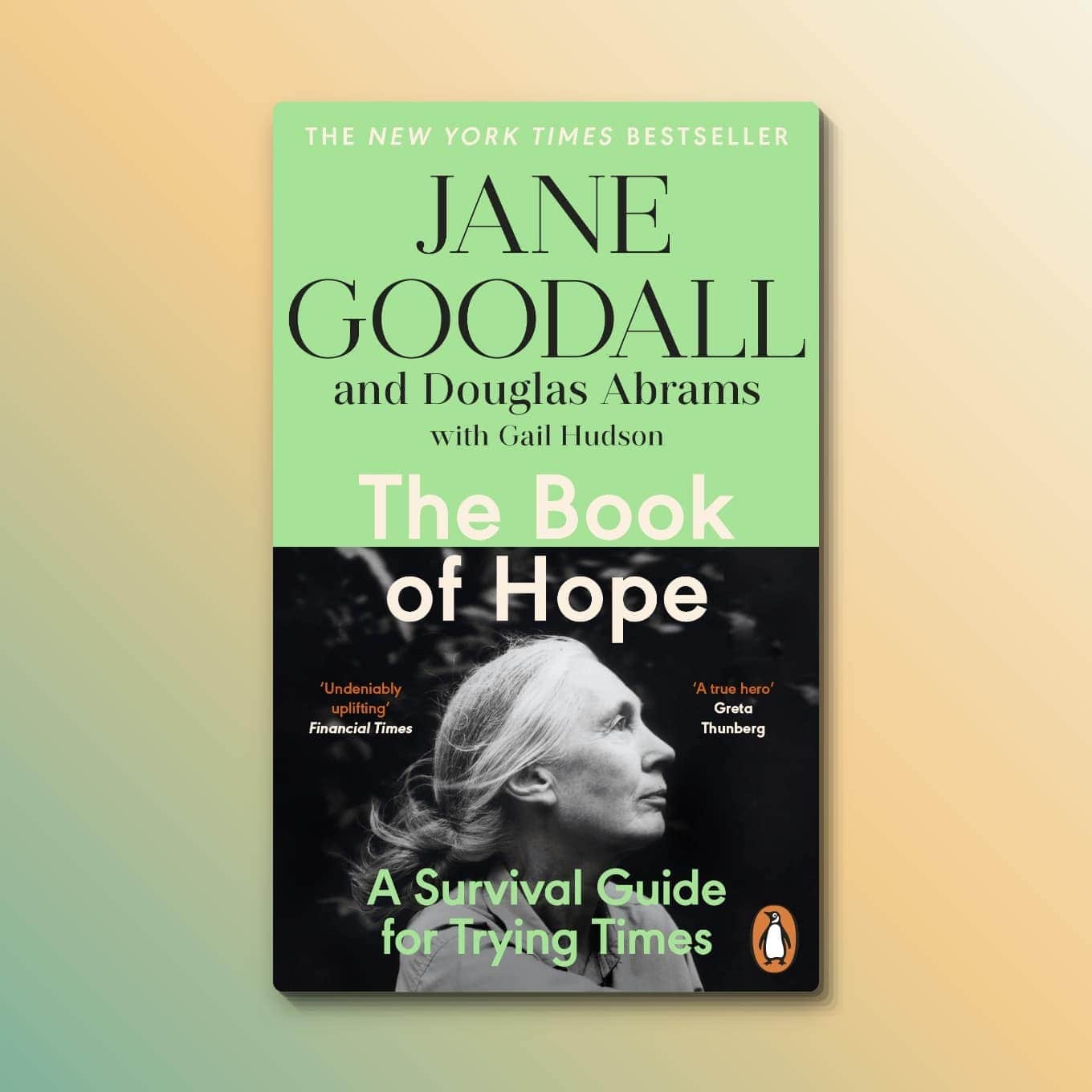
Genre: Memoir, Nonfiction
Amazon | Bookshop | Libro.fm
Globally celebrated primatologist and conservationist, Jane Goodall, teamed up with Douglas Abrams, bestselling co-author of “The Book of Joy,” to explore the most sought-after and least understood aspects of human nature: hope.
“The Book of Hope” is an intimate look at hope and the heart and mind of a woman who has dedicated a lifetime to fighting for our future.
“Call Us What We Carry: Poems” by Amanda Gorman

Genre: Poetry
Amazon | Bookshop | Libro.fm
Formerly titled “The Hill We Climb and Other Poems,” bestselling author and presidential inaugural poet Amanda Gorman captures hope and healing through her collection of poems on history, language, identity, and erasure.
“You Are Here (For Now): A Guide to Finding Your Way” by Adam J. Kurtz
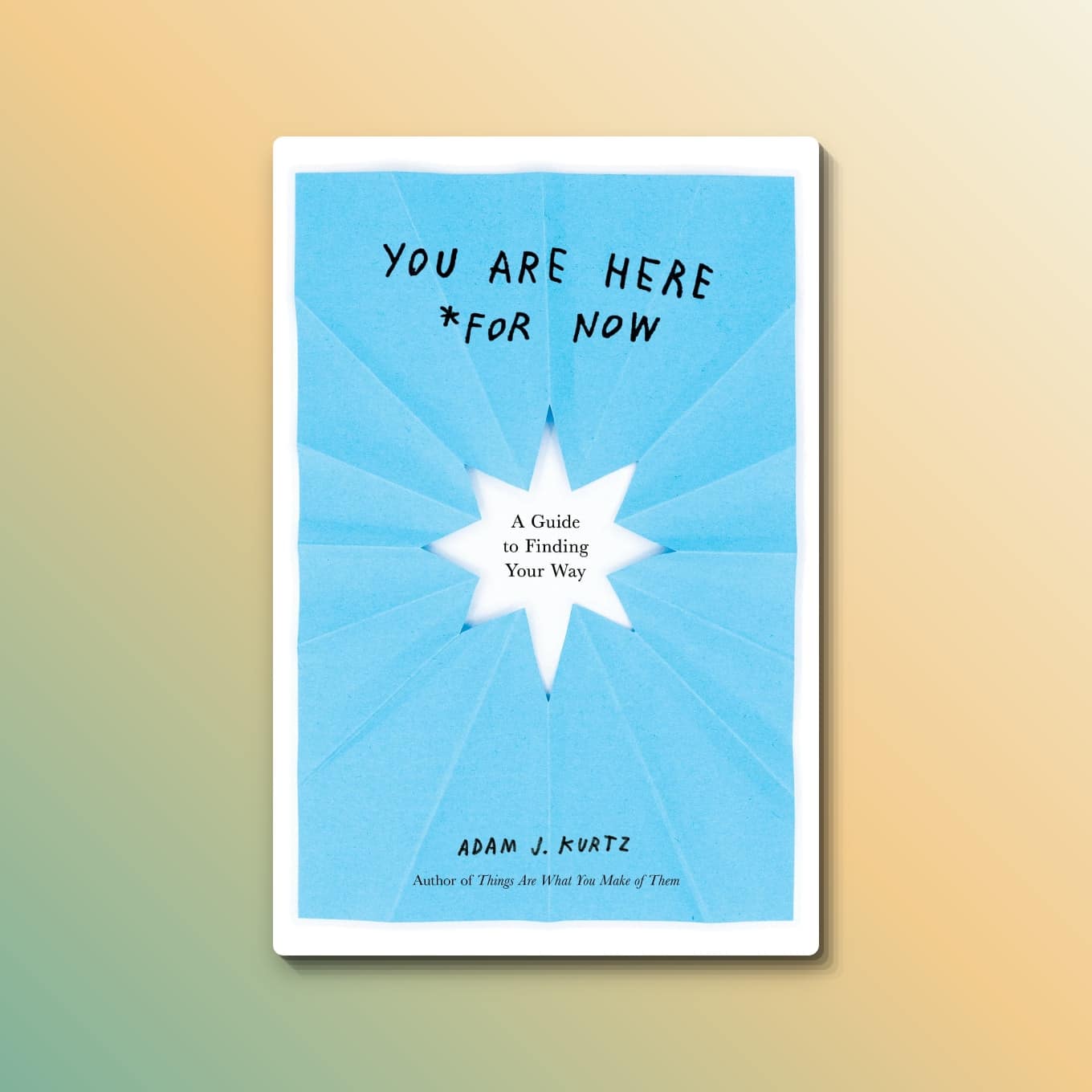
Genre: Self-Improvement, Nonfiction
Amazon | Bookshop | Libro.fm
Adam J. Kurtz (aka @adamjk) is an artist and author whose illustrative work is rooted in hope, humor, and a touch of darkness. “You Are Here (For Now)” is a candid collection of essays and illustrations that explore mental health, identity, setbacks, and finding humor in the unknown — this is a great read for the wanderer, recent grad, creative, or human figuring out what’s next.
We’ve previously published an excerpt from the book on our site.
“Carry On: Reflections for a New Generation” by John Lewis
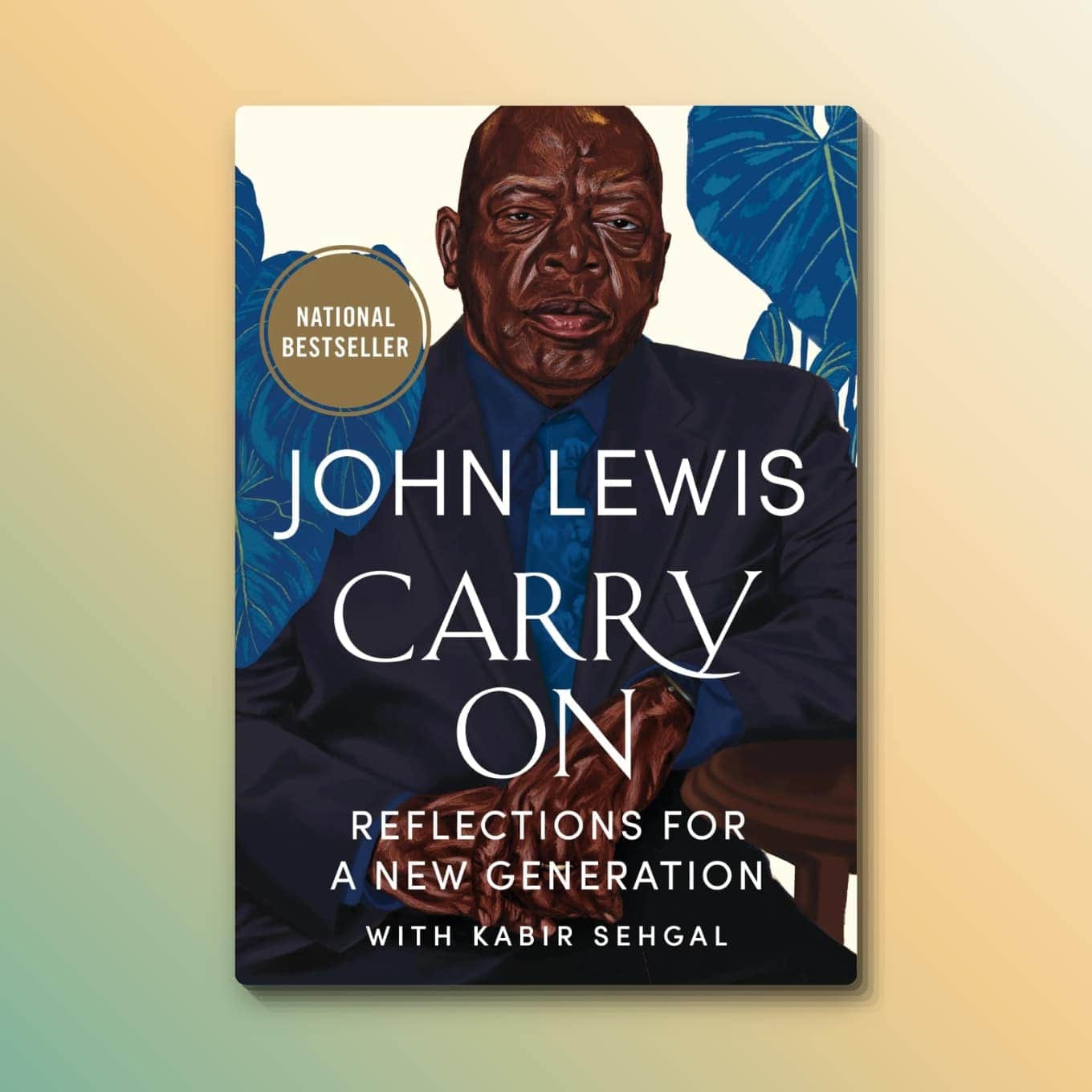
Genre: Memoir, Nonfiction
Amazon | Bookshop | Libro.fm
“Carry On” is a powerful collection of reflections from the late Congressman and Civil Rights activist John Lewis. Sharing his thoughts and wisdom on activism, spirituality, politics, hope, and more, his unrelenting fight for equality and call for “good trouble” was his final message of hope to future generations.
“Man’s Search for Meaning” by Viktor E. Frankl
Genre: Memoir, Nonfiction
Amazon | Bookshop
In “Man’s Search for Meaning,” author and psychiatrist Viktor Frankl shares his moving account of life in Nazi concentration camps and his exploration to find meaning and survival amid insurmountable adversity. Based on his own experience — and the experiences of others he treated later in his psychiatric practice — Frankl argues that suffering is unavoidable, however, we can choose to find ways to cope, find meaning, and move forward with newfound purpose.
“His Truth Is Marching On: John Lewis and the Power of Hope” by Jon Meacham
Genre: Biography, Nonfiction
Amazon | Bookshop | Libro.fm
From the Pulitzer Prize-winning author of “The Soul of America,” Jon Meacham explores the life of John Lewis — the late, great civil rights leader and U.S. congressman. A believer in caring for one’s neighbor, Lewis spent a lifetime fighting for the systemically powerless. His work, activism, and story offer inspiration to current and future generations working toward social and political change.
“Hope in the Dark: Untold Histories, Wild Possibilities” by Rebecca Solnit
Genre: Nonfiction
Amazon | Bookshop | Libro.fm
Historian, activist, and author of “Men Explain Things to Me,” Rebecca Solnit offers an alternative, counter piece of work to combat the despair many feel fighting for progress.
Drawing on her decades of environmental, cultural, and political activism, Solnit makes a radical case for hope in the midst of widespread uncertainty.
“The Humans: A Novel” by Matt Haig
Genre: Fiction, Humor
Amazon | Bookshop | Libro.fm
For those who love a good novel to get lost in, may we introduce you to “The Humans,” a story about an extraterrestrial visitor that arrives on Earth, whose first impressions of the human species are less than positive. Taking the form of a prominent mathematician at Cambridge University, the visitor slowly realizes there may be more to this strange species than he initially thought.
As the visitor begins forging bonds, he begins to see hope and beauty in the imperfect species he finds himself surrounded by — and begins to question the very mission that brought him there.
“Everything Is F*cked: A Book About Hope” by Mark Manson
Genre: Nonfiction
Amazon | Bookshop | Libro.fm
For those who feel like everything’s f*cked, bestselling author Mark Manson (you might know him from his popular book “The Subtle Art of Not Giving A F*ck”) offers a blunt dissection of the very human desire to hope. This counterintuitive guide draws from research and wisdom of philosophers such as Plato, Nietzsche, and Tom Waits, as well as analyzes our relationships with money, entertainment, and the internet.
“Wilding: Returning Nature to Our Farm” by Isabella Tree

Genre: Memoir, Nonfiction
Amazon | Bookshop | Libro.fm
While climate anxiety can get the best of us, “Wilding” is a book that provides tangible hope. When Isabella Tree and her husband were forced to accept that their land in West Sussex — farmed for centuries — was economically unsustainable, they decided to step back and let nature take over. Despite Tree and her husband facing considerable opposition, their journey to bring nature back to the depleted 3,500 acres of land soon brought extraordinary change.
“How Dare the Sun Rise: Memoirs of a War Child” by Sandra Uwiringiyimana

Genre: Memoir, Nonfiction
Amazon | Bookshop | Libro.fm
Sandra Uwiringiyimana was just ten years old when she survived a massacre in the Democratic Republic of the Congo. After fleeing to the U.S. with her surviving family members, she soon found a way to cope, adjust, and move forward through art and activism — finding hope through creativity and resilience.
“A Paradise Built in Hell: The Extraordinary Communities That Arise in Disaster” by Rebecca Solnit

Genre: Nonfiction
Amazon | Bookshop
Award-winning author Rebecca Solnit — who famously coined the term “mansplaining” — is known for her work in revealing human nature. In “A Paradise Built in Hell,” Solnit seeks to understand why communities band together in crises and catastrophes. Whether manmade or natural, this book explores the reasons why people become altruistic, resourceful, and brave in the midst of disaster.
“Becoming” by Michelle Obama
Genre: Nonfiction, Memoir
Amazon | Bookshop | Libro.fm
While Michelle Obama needs no introduction, the former First Lady of the U.S. — and the first Black American to serve in that role — gives us a peek into the experiences that helped shape her.
From her childhood on the South Side of Chicago to her years as an executive balancing the demands of motherhood and work, to her time in the White House, Obama explains how she found her voice and established herself as a powerful advocate for women and girls in the U.S. and around the world.
“The Impossible Will Take a Little While: A Citizen’s Guide to Hope in a Time of Fear” edited by Paul Rogat Loeb
Genre: Nonfiction
Amazon | Bookshop | Libro.fm
Fighting for political, environmental, or social change takes a toll on the best of us. This anthology brings together fifty stories and essays across nations, eras, wars, and political movements to show the value (and hope) of seemingly doomed situations. Together, these writers and activists explore a path of meaningful community involvement and healing — offering people motivation to continue fighting for a better world.
“Ladder to the Light: An Indigenous Elder’s Meditations on Hope and Courage” by Steven Charleston
Genre: Nonfiction, Spirituality
Amazon | Bookshop
Choctaw elder and Episcopal priest Steven Charleston offers words of courage and hope rooted in spirituality and Indigenous wisdom. This meditative book is centered on cultivating resilience and resisting darkness.
“Educated: A Memoir” by Tara Westover
Genre: Nonfiction, Memoir
Amazon | Bookshop | Libro.fm
Tara Westover was 17 years old when she first entered a classroom. Born to survivalists in the mountains of Idaho, Westover was raised preparing for the end of the world. Eventually, she left her home for the outside world — ultimately receiving a Ph.D. in history from Cambridge University. “Educated” is Westover’s deeply personal story of the struggle for self-invention and healing.
“Tomorrow Will Be Different: Love, Loss, and the Fight for Trans Equality” by Sarah McBride, Foreword by Joe Biden
Genre: Nonfiction, LGBTQ+
Amazon | Bookshop
A profoundly empowering memoir about gender identity by activist and the first openly transgender state senator in U.S. history, Sarah McBride. “Tomorrow Will Be Different” is McBride’s story of love, loss, and a message of hope for the LGBTQ+ community and their allies.
“Where to Begin: A Small Book About Your Power to Create Big Change in Our Crazy World” by Cleo Wade
Genre: Nonfiction
Amazon | Bookshop | Libro.fm
Cleo Wade’s “Where to Begin” is your official permission slip to start small, start local, and start now. Building on the wisdom of Wade’s national bestseller “Heart Talk,” this book will help you stay connected to hope during difficult moments and remind you of the power that showing up can have in effecting positive change. This book is about where to begin.
“Hope Is a Verb: Six Steps to Radical Optimism When the World Seems Broken” by Emily Ehlers
Genre: Nonfiction, Memoir
Amazon | Bookshop
Using her experience as an environmental activist, author Emily Ehlers offers her perspective and solution on how to effectively create change — while staying sane in the process. Offering humor, hope, and meaningful action, “Hope Is a Verb” points readers toward attainable, simple steps to a world of opportunity and stability.
“We Have Always Been Here: A Queer Muslim Memoir” by Samra Habib
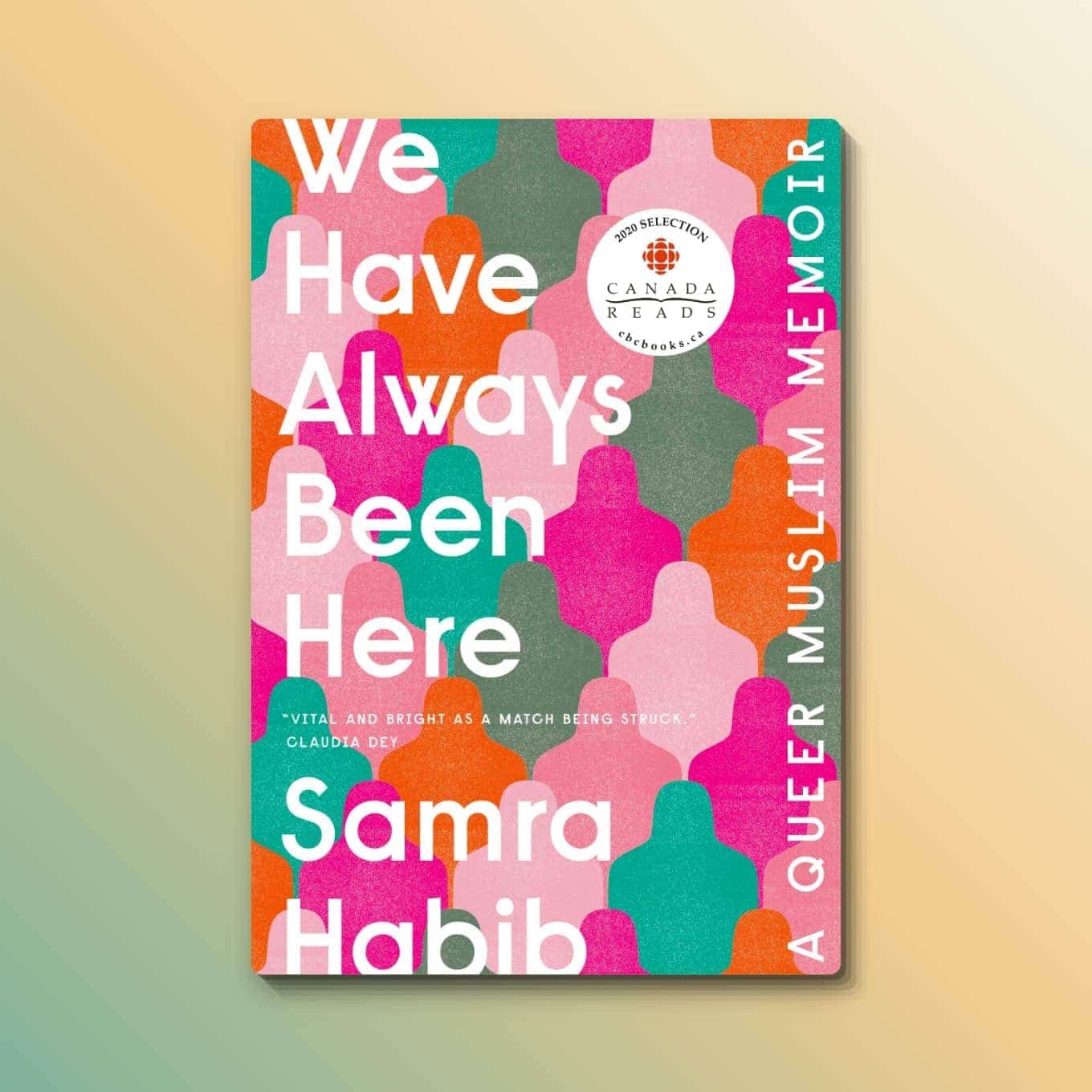
Genre: Nonfiction, LGBTQ+
Amazon | Bookshop | Libro.fm
Samra Habib spent most of their life seeking a safe way to be themself — a young, queer Muslim. Growing up in Pakistan, they faced regular threats from Islamic extremists before emigrating to Canada as refugees and finding freedom away from their past religious obligations. A beautiful memoir of forgiveness and family (both chosen and not), “We Have Always Been Here” is a rallying cry for anyone who has ever felt out of place and a testament to the power of fearlessly liberating their true selves.
“Reasons to Stay Alive” by Matt Haig
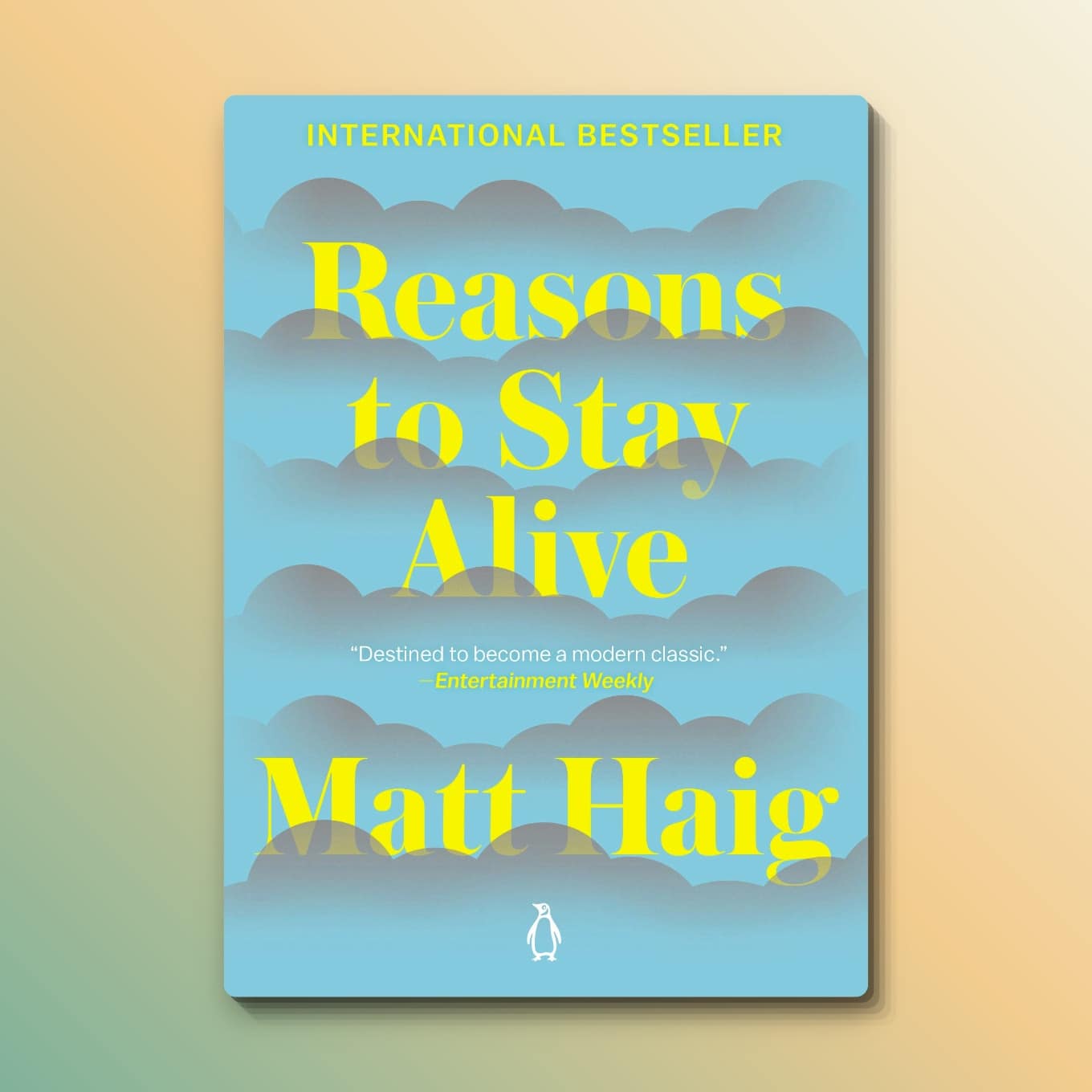
Genre: Memoir, Nonfiction
Amazon | Bookshop | Libro.fm
“Reasons to Stay Alive” is Matt Haig’s (author of “The Midnight Library” and “How to Stop Time”) raw account of his struggle with depression and journey to finding and creating hope for himself. A funny, moving, and joy-filled exploration of how to live, love, and feel better, Haig uses his experiences to help pave a pathway for others to find their own form of healing and encouragement.
Long-time Good Good Good followers will remember our profound podcast conversation with Haig about his mental health journey.
“My Seven Black Fathers: A Young Activist’s Memoir of Race, Family, and the Mentors Who Made Him Whole” by Will Jawando
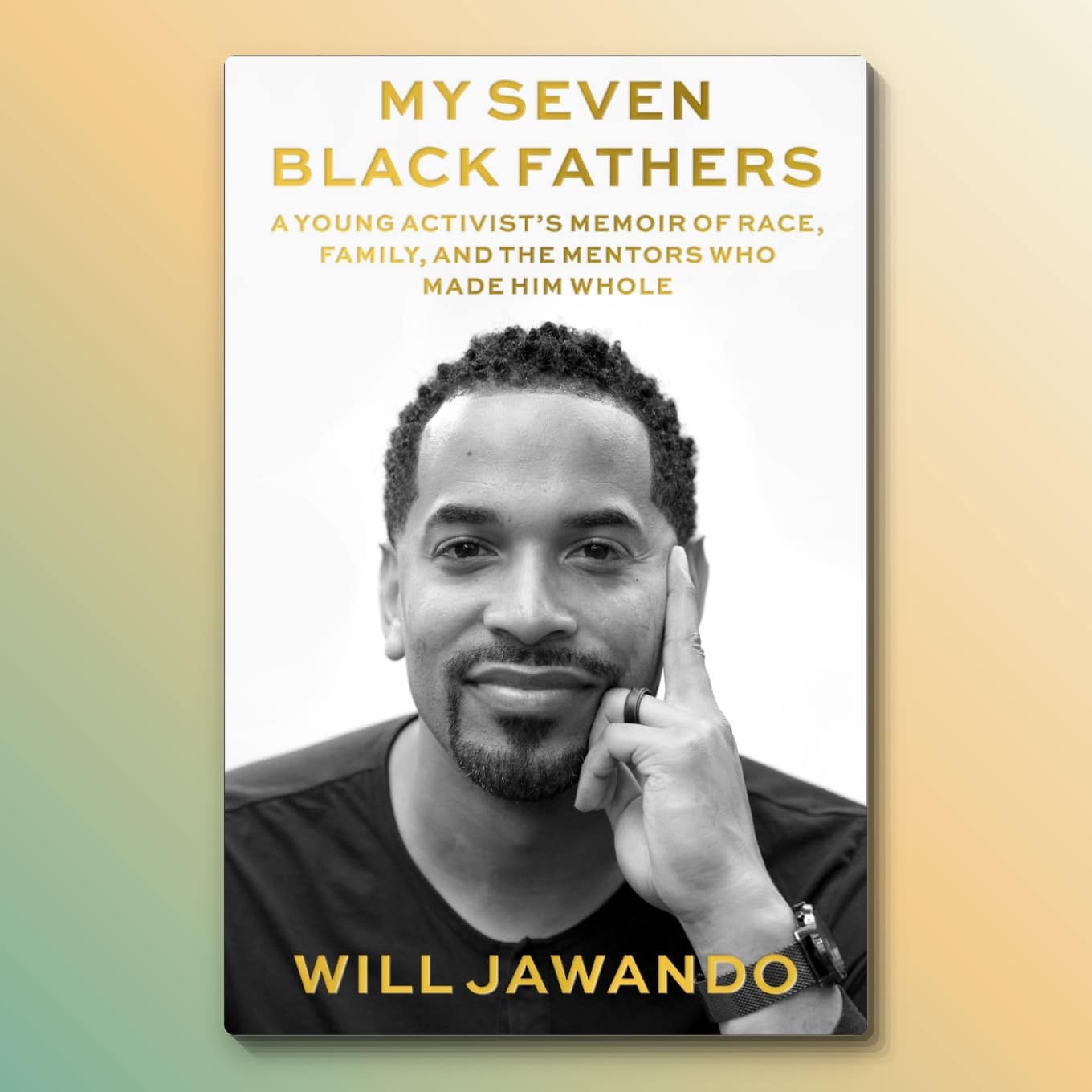
Genre: Nonfiction, Memoir
Amazon | Bookshop | Libro.fm
Drawing from his personal experiences and involvement in My Brother’s Keeper Alliance — President Obama’s national initiative to address persistent opportunity gaps facing boys and young men of color — author Will Jawando writes a story that beautifully displays a transformative way for Black men and young boys to shape the next generation.
"Hope: The Autobiography" by Pope Francis
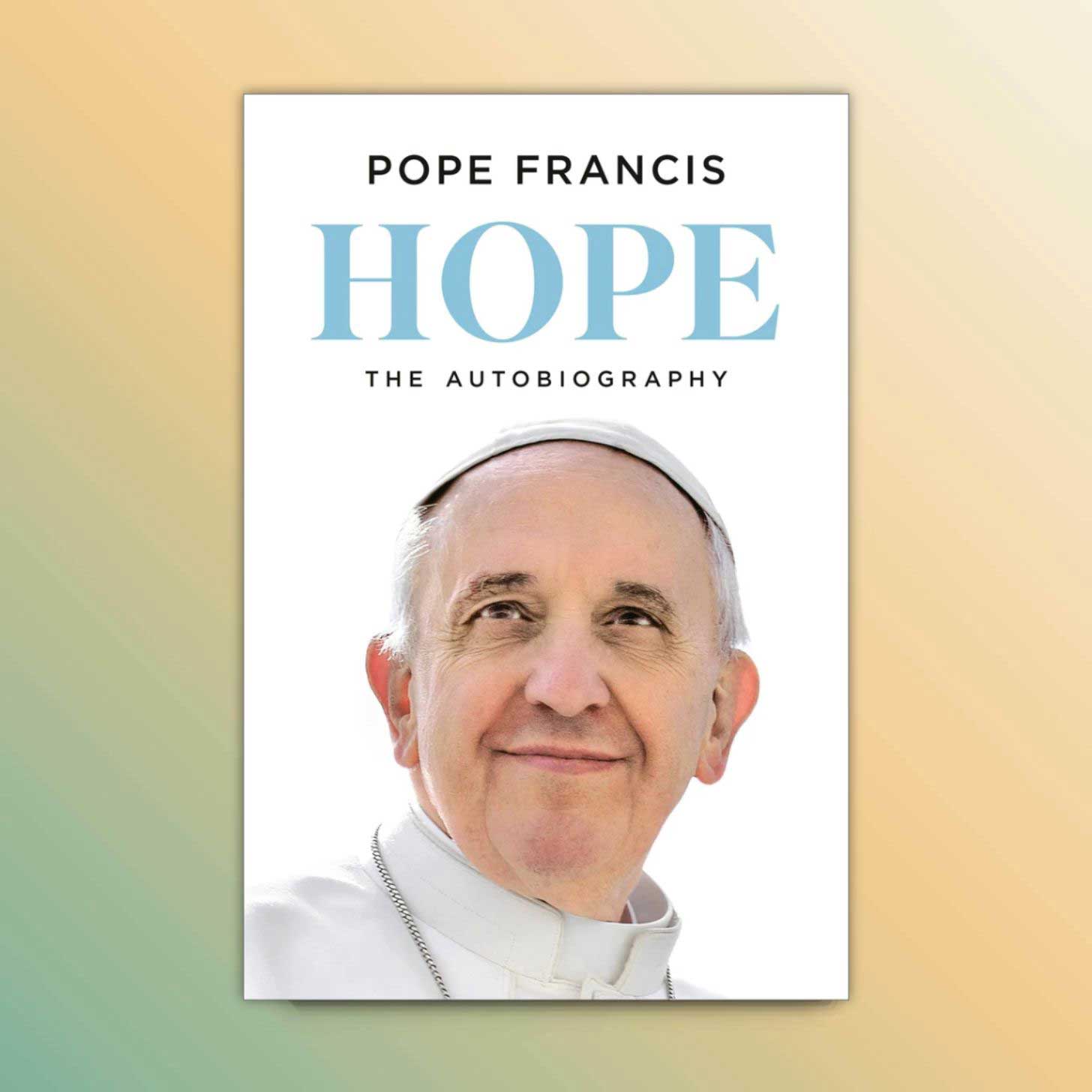
Genre: Memoir, Nonfiction
Amazon | Bookshop | Libro.fm
The first autobiography in history to ever be published by a Pope, this book was written over the course of six years and explores Pope Francis's early life, his vocation, adult life, and the whole of his papacy.
Known for his illuminating thoughts on the environment, LGBTQ+ Catholics, gender, war, and even technological developments, "Hope" touches on all of these concepts, while still reading a very human — and sometimes funny — narrative.
You might also like:
The LGBTQ+ community has a rich and inspiring history of activism, resilience, and courage. From the Stonewall Riots to the fight for marriage equality, LGBTQ+ folks and their allies have worked tirelessly to secure the rights and dignity of queer people around the world.
While there’s still so much work to be done, it’s important to recognize the incredible progress that has been made and honor the individuals who have dedicated their lives to providing safe, inclusive spaces for every human being — regardless of their sexual orientation or gender identity.
Their tireless efforts have shown us what’s possible when we come together in pursuit of a more just and equitable world.
But this isn’t just about celebrating the achievements of the past.
It is also about recognizing the work that still needs to be done and how we can all contribute to the ongoing issues facing LGBTQ+ folks everywhere.
Whether we choose to volunteer, donate, or simply educate ourselves and others, we all have a role to play in building a world where everyone is free to be their most authentic selves.
We’ve gathered some of the most recognizable activists who have used their platforms as a way to create visibility and take action.
From Harvey Milk to Marsha P. Johnson, these individuals have profoundly impacted the world and paved the way for future generations to one day reach equality for all.
Famous People Who Fought and Are Fighting for LGBTQ+ Rights
Harvey Milk
Harvey Milk was a civil and human rights leader who, in 1977, became the first openly gay politician to be elected to public office in the United States when he won a seat on the San Francisco Board of Supervisors.
As he engaged in activism, community organizing, and politics, Milk quickly became known as a champion for the LGBTQ+ community, minorities, immigrants, women, and children.
Milk’s unprecedented public authenticity gave hope to queer people everywhere at a time when the community was facing widespread hostility and discrimination. Unfortunately, he was assassinated in November 1978 — just 11 months after taking office.
Despite his short tenure, he made a lasting impact and legacy of activism on the LGBTQ+ community by sponsoring a bill that banned discrimination based on sexual orientation in public accommodations, housing, and employment.
He inspired thousands of people worldwide — politicians, activists, and individuals — who have taken steps to fight discrimination against marginalized groups.
He was posthumously awarded the Presidential Medal of Freedom in 2009, and his words continue to resonate with activists and advocates around the world today.
Related: Read the best quotes from Harvey Milk
Elliot Page

Elliot Page is an Oscar-nominated actor (for his role in “Juno”), a producer, director, and LGBTQ+ activist. He first came out as gay in 2014 at a Human Rights Campaign conference and became a vocal advocate for LGBTQ+ rights. In 2020, Page came out as transgender and became the first openly transgender man to appear on the cover of TIME magazine in March 2021, which was shot by trans photographer Wynne Neilly.
He’s since spoken out against bills targeting trans youth in Florida, Alabama, Texas, and North Dakota and encouraged people to educate themselves about bills in their own states.
Elliot also regularly raises money for LGBTQ+ charities, speaks up about LGBTQ+ issues, and uses his platform to challenge queerphobia.
Despite facing harassment, abuse, and threats of violence, Page continues to be a vocal and inspiring advocate for the LGBTQ+ community, championing the rights and visibility of trans people everywhere.
Marsha P. Johnson

Marsha P. Johnson — the “P” stood for “Pay It No Mind,” a phrase that became her motto — was a prominent figure of the gay rights movement in New York City during the 1960s and 1970s.
Holding intersecting identities as a Black trans woman, she was a tireless advocate for LGBTQ+ rights, particularly for homeless LGBTQ+ youth, those affected by HIV and AIDS, and transgender people.
She became an outspoken critic of the early gay rights movement, speaking out against the transphobia her community experienced.
Marsha and her friend Sylvia Rivera (more on her later!) co-founded the group Street Transvestite Action Revolutionaries (S.T.A.R), which later opened the STAR House in 1972 — a shelter for gay and trans homeless youth that provided food, clothing, emotional support, and a sense of family.
Marsha’s life was tragically cut short when her body was found in the Hudson River in 1992. She was only 46.
Today, Johnson’s efforts are at the center of numerous documentaries and even inspired New York City to commission its first transgender monument honoring Johnson. Decades after her passing, she is still one of the most influential figures in the gay liberation movement and remains one of the most recognized and admired LGBTQ+ advocates.
Related: Read the best quotes from Marsha P. Johnson
Halsey

Halsey is known around the world for her killer voice and music, however, her commitment to fighting for LGBTQ+ rights is what’s quickly cemented her as a role model for many — showing us that it’s possible to use one’s fame and influence to make a positive impact.
As a bisexual musician, Halsey often uses her platform to raise awareness and promote acceptance for the LGBTQ+ community. In the past, she’s been vocal about the challenges of being bisexual, including the erasure and misconceptions surrounding bisexuality.
She often uses her music as a tool to interweave her sexuality into her lyrics, hoping to break down barriers and challenge common stereotypes. In doing so, Halsey has become a beacon of hope and inspiration for many young people struggling to come to terms with their own sexuality.
While she’s known to be a vocal advocate for mental health and suicide prevention awareness, transgender rights, and support for sexual assault victims, she’s determined to do more to help.
In a recent announcement, Halsey shared she’s partnering with Hard Rock Live to perform reimagined versions of her songs, adding that donations and proceeds for the shows will benefit two LGBTQ+ organizations (Outright International and Human Rights Campaign).
Barbara Gittings
Barbara Gittings was a prominent LGBTQ+ rights activist known for her advocacy work in the 1950s and ’60s — a time when homosexuality was considered a mental illness and criminalized in many states.
Gittings was a founding member of the Daughters of Bilitis, the first lesbian civil and political rights organization in the U.S. She also edited the organization’s magazine, The Ladder, which served as a vital resource for the LGBTQ+ community at the time.
Gittings is best known for her activism in the American Library Association (ALA), where she successfully lobbied for the inclusion of LGBTQ+ literature in libraries across the country.
She organized the first gay and lesbian participation in a public library conference in 1971 and later established the Gay Task Force of the American Library Association. Gittings’ activism in the ALA helped pave the way for the inclusion of LGBTQ+ literature and resources in libraries today.
Audre Lorde

Audre Lorde was an American writer, feminist, and civil rights activist who played a significant role in advancing social justice and equality. As one of the leading figures in the Black feminist and lesbian and gay rights movements, Lorde used her voice to communicate the intersections of race, gender, and sexuality to a broad audience.
She often celebrated the beauty and strength of Black and lesbian identities while speaking out against oppression and inequality.
In addition to her literary contributions, Lorde co-founded Kitchen Table: Women of Color Press, one of the first publishers dedicated to amplifying women of color.
She later became a founding member of the Combahee River Collective, a Black feminist lesbian organization that was formed in response to the lack of representation in both feminist and civil rights movements.
Lorde’s activism also played a significant role in the 1980s Afro-German movement — a term she coined — where she lent her support to fight intersectional racism and inspire German Black women to use their voices.
In 1985, Lorde was invited to Cuba along with a group of Black women writers to discuss the status of lesbian and gay individuals in Cuba. Lorde’s legacy as an activist, writer, and feminist is one of courage and unwavering commitment to global social justice and equality.
Related: Read the best quotes from Audre Lorde
Sylvia Rivera
Sylvia Rivera was a transgender rights activist and drag performer. A key figure in the 1969 Stonewall Inn uprising, Rivera was a tireless advocate for those silenced and disregarded by larger movements — particularly the larger gay rights movement of the 1960s and ’70s, which often excluded transgender people and people of color.
Rivera later co-founded the Street Transvestite Action Revolutionaries (S.T.A.R.) with fellow activist Marsha P. Johnson, which helped provide support for transgender youth and sex workers.
Throughout her lifetime, Rivera was a tireless advocate for the most marginalized members of the LGBTQ+ community, including homeless youth and transgender people of color.
Related: Read the best quotes from Sylvia Rivera
Lisa Power
Lisa Power is a British HIV and queer rights activist and campaigner. She became secretary general of the International Lesbian and Gay Association in 1988 and helped launch the Pink Paper, a UK-based publication focused on gay and lesbian issues.
The following year, she co-founded Stonewall to expand access to queer-friendly support in her community. She later became the policy director of the Terrence Higgins Trust, which continues to provide UK residents with essential sexual health resources such as helplines, HIV testing, and counseling.
She became the first openly queer person to speak for LGBTQ+ rights at a UN conference in New York City.
In 2020 she worked with Dan Vo and the National Museum Cardiff to create “Queer Tours,” which aim to uncover hidden LGBTQ+ histories in Cardiff. Her passion and unwavering dedication to providing crucial access and rights for her fellow LGBTQ+ community has allowed countless folks the opportunity to feel seen and heard within their communities.
Sue Sanders
Sue Sanders is an emeritus professor of the Harvey Milk Institute and LGBTQ+ and disability rights activist. Sanders was a teacher by profession and became involved in activism in the 1970s through her work with the Gay Teachers Group.
Sanders is a long-time member of Schools OUT UK, an organization that campaigns for LGBTQ+-inclusive education and support for students and teachers. She co-founded LGBT+ History Month in 2004, which has since been celebrated every February to promote the recognition and celebration of LGBTQ+ history and culture.
In 2011 Sanders founded The Classroom, a platform with over 80 free lesson plans for teachers to use in the classroom that touch on LGBTQ+ issues, tied to the national curriculum.
For over 40 years she’s used her expertise and lived experiences to educate others on women’s studies and combating homophobia in schools, universities and other organizations.
Bayard Rustin
Bayard Rustin was an American civil rights leader and activist, best known for his work as a strategist and organizer of the Civil Rights and the LGBTQ+ rights movements.
A close advisor to Dr. Martin Luther King Jr., he played a key role in the organization of the 1963 March on Washington for Jobs and Freedom and in 2013 was posthumously awarded the Presidential Medal of Freedom, the nation’s highest civilian honor, for his activism.
Despite his significant contributions to social justice, Rustin faced significant discrimination and marginalization due to his sexual orientation. He was an openly gay man in a time when being so was widely stigmatized and criminalized — facing significant obstacles to his activism as a result.
Nonetheless, Rustin remained a tireless advocate for justice and equality throughout his lifetime and is remembered today as an important figure in the fight for civil and human rights.
James Baldwin

James Baldwin was an American novelist, essayist, and openly gay Black civil rights activist. He was born in 1924 in Harlem, New York, and grew up in poverty where, despite the challenges he faced, became a renowned writer and leading voice in the Civil Rights Movement of the 1960s.
In his works, which were controversial for their time, Baldwin often explored the intersectionality of race, class, and sexuality and highlighted the struggles faced by folks who were discriminated against based on their sexual orientation.
His second novel, “Giovanni’s Room,” published in 1956, dealt explicitly with queer identity. It was published at a time when few other writers dared to publish queer literature.
He was an early advocate for gay rights and was one of the first public figures to speak openly about the intersection of race and homosexuality, as he did during his famous lecture titled “Race, Racism, and the Gay Community” at a meeting of the New York chapter of Black and White Men Together in 1982.
His willingness and courage to be his most authentic self created a ripple effect in American culture as a whole and within the LGBTQ+ community.
Related: Read the best quotes from James Baldwin
Miss Major Griffin-Gracy

Miss Major Griffin-Gracy is a transgender rights activist and a community leader who has dedicated her life to advocating for the rights and well-being of transgender people — particularly those who are incarcerated or living in poverty.
Born in 1940, she came out as transgender in the 1960s and faced many hurdles during her life — including homelessness and incarceration — challenges that ultimately fueled her activism. She was also a participant in the Stonewall riots, a turning point in the LGBTQ+ rights movement.
In the decades since, Miss Major has worked with a number of organizations and initiatives dedicated to supporting incarcerated transgender people, including the San Francisco-based Transgender Gender-Variant & Intersex Justice Project.
Today, she spends her time working on building Griffin-Gracy Historical Retreat and Educational Center (or more commonly known as House of GG’s), a safe haven and retreat house for the transgender community.
Her life and work have also been the subject of several documentaries, including “Major!” She continues to be an inspiring and influential queen in the ongoing fight for transgender rights and equality.
Phill Wilson
Phill Wilson is an internationally recognized HIV/AIDS activist and founder of the Black AIDS Institute, a think tank with a mission to eliminate AIDS in Black communities.
Wilson was diagnosed with HIV in 1985 and has since devoted his life to fighting against the disease, promoting HIV/AIDS awareness, and advocating for the rights of people living with it.
Wilson has also served on the Presidential Advisory Council on HIV/AIDS, a platform he used to discuss the stigma and discrimination faced by people living with the virus — like himself.
He has been an advocate for greater access to HIV testing, treatment, and care, as well as for policies that address the root causes of health disparities in Black communities.
Wilson’s work has had a significant impact on the fight against HIV/AIDS in America and beyond and paved the way for many to access lifesaving healthcare.
Miley Cyrus

Miley Cyrus is an American singer, songwriter, and actress. You might know and love as an entertainer, however, it’s the work as an LGBTQ+ activist that has us sending love her way!
Cyrus, who identifies as pansexual, has been a vocal advocate for the LGBTQ+ community, using her platform to speak out against discrimination and promote acceptance.
As a result of this activism, she founded the Happy Hippie Foundation, a nonprofit that focuses on supporting homeless and LGBTQ+ youth.
Through the foundation, she helps fund programs that support homeless youth, LGBTQ+ youth, and other vulnerable populations. All Happy Hippie operational costs are funded privately, which means that 100% of its donations directly benefit youth in need.
An outspoken advocate for LGBTQ+ rights, animal welfare, and environmental issues, Cyrus has opted to use her influence (and phenomenal voice) as a way to promote love, acceptance, and compassion toward one another — especially the queer community.
Billie Jean King

Billie Jean King is a former American tennis champion and an outspoken advocate for gender equality in sports and LGBTQ+ rights.
King won a total of 39 Grand Slam titles during her career, including 20 Wimbledon titles, and is considered one of the most successful tennis players of all time. No big deal.
King became the first woman to defeat a former male Wimbledon Champion in “The Battle of the Sexes” and was the first tennis player — and woman no less — to be named Sports Illustrated’s Sportsperson of the Year in 1972.
Though her accomplishments on the court certainly set her apart, it wasn’t until she was publicly outed as a lesbian in 1981 when she began to devote her effort into creating more visibility on issues affecting LGBTQ+ individuals.
In 2009, President Barack Obama presented King with the Presidential Medal of Freedom, the nation’s highest civilian honor, for championing the rights of women and the LGBTQ+ community. King was the first female athlete to receive the award.
She currently serves on the Board of the Elton John AIDS Foundation and National AIDS Fund, as well as founded the Billie Jean King Leadership Initiative in 2014 — a nonprofit organization that seeks to rid workplaces of discrimination based on race, gender, and sexuality.
King’s legacy of achievement and advocacy continues to inspire female and LGBTQ+ athletes around the world.
RuPaul
RuPaul is a fierce and fabulous American drag performer, TV host, recording artist, and activist. He’s widely recognized as the host of the Emmy-winning reality competition show, “RuPaul’s Drag Race” — a show that has transitioned the obscure subculture of drag into mainstream.
He’s an icon for the LGBTQ+ community and has been a vocal advocate for LGBTQ+ rights throughout his career.
RuPaul’s work doesn’t stop there, though, as he’s used his status and business savvy for activism, becoming the first “Viva Glam” ambassador for M.A.C. cosmetics’ AIDS fund, which helped raise millions for the cause.
RuPaul’s impact on the world of drag and the LGBTQ+ community cannot be overstated. His career and “Drag Race” have given many other drag queens a platform to perform and, most importantly, secure financial stability for themselves through corporate sponsorships.
RuPaul’s larger-than-life persona and charisma have helped drastically change the way millions of people view and appreciate the fabulousness of drag culture.
Dylan Mulvaney
Dylan Mulvaney is a trans actress, comedian, and content creator who is best known for her TikTok series “Days of Girlhood,” where she highlights her transgender journey every day.
Throughout 2022, Mulvaney has delighted her over 8 million followers (including Lady Gaga) with queer joy and exciting milestones: from fun makeup routines, surgery consultations, and adding tampons to her purse to give to other women in the bathroom — to modeling in New York Fashion Week and attending the Forbes Power Women Summit.
Most importantly, she’s made the internet — and the world — feel like a safer place for other trans people.
Related: Read Dylan Mulvaney’s essay for Good Good Good about her first Pride as a trans woman