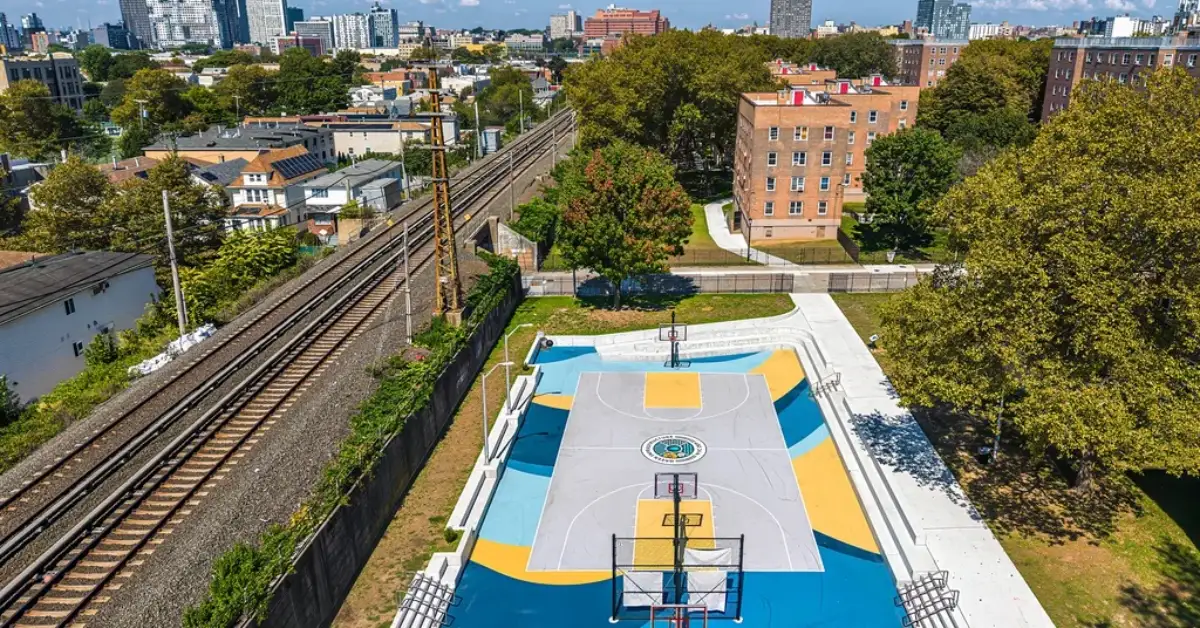
Three years after Hurricane Ida flooded New York City, the former Adams administration was still figuring out how to help residents rebuild — and mitigate future disasters.
One solution came in the form of a simple basketball court in Queens.
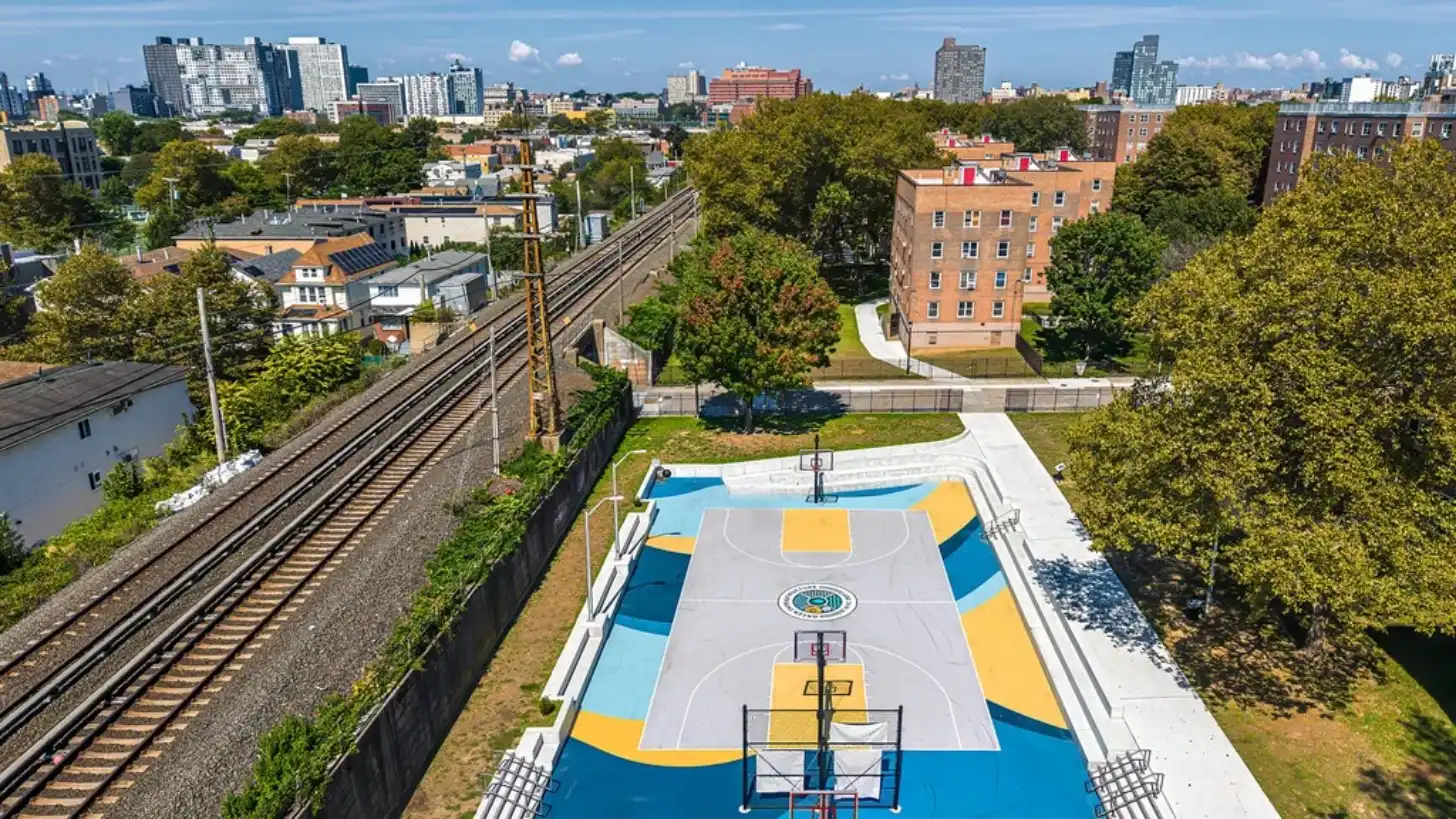
Developed by Brooklyn-based landscape architecture firm Grain Collective, two “sunken” basketball courts were built beside New York City Housing Authority’s South Jamaica Houses in Queens.
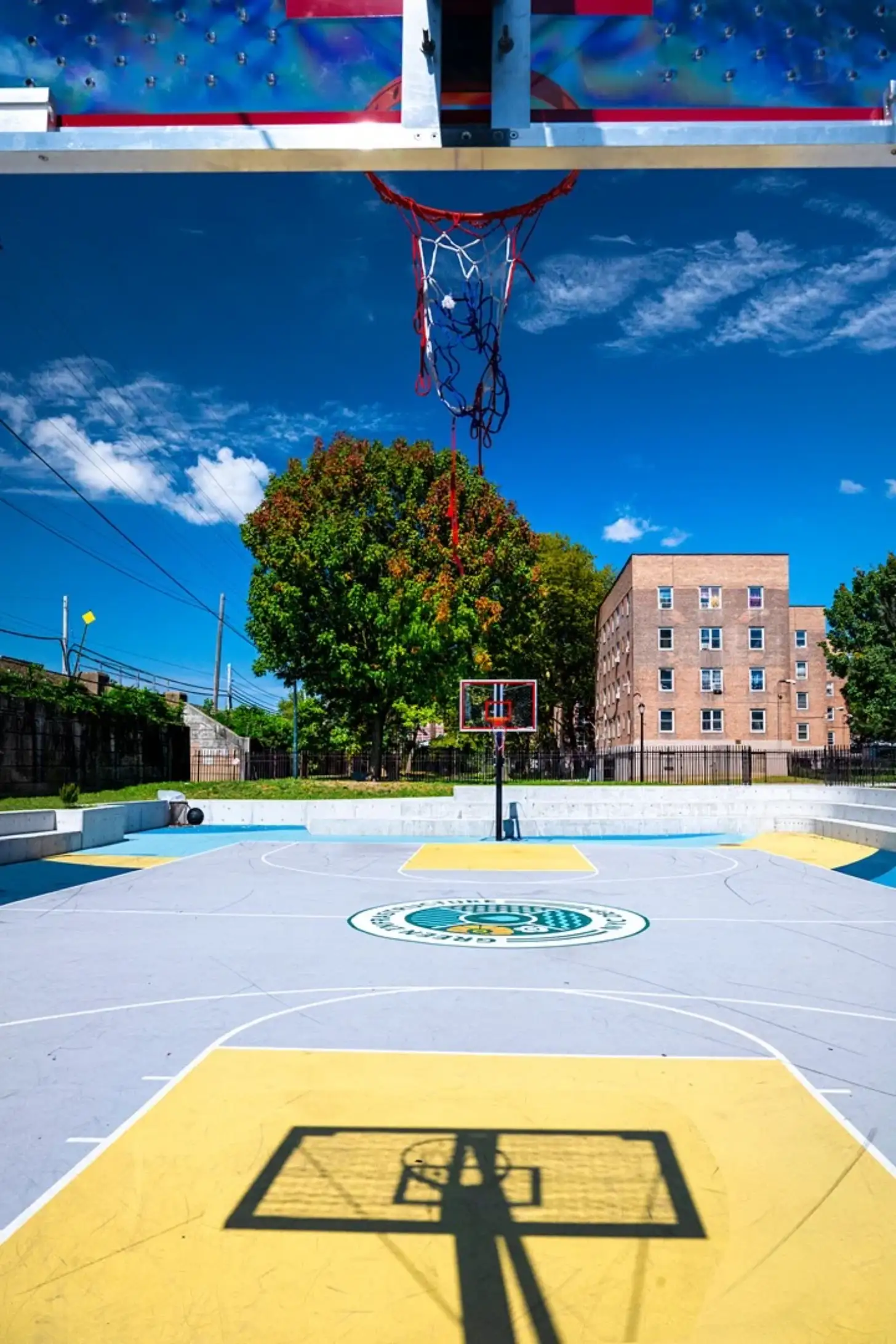
Brightly colored with blue and yellow paint, the basketball courts are not just a vibrant transformation of the neighborhood’s once-derelict courts, but a built-in flood mitigation system, retaining water during flash floods.
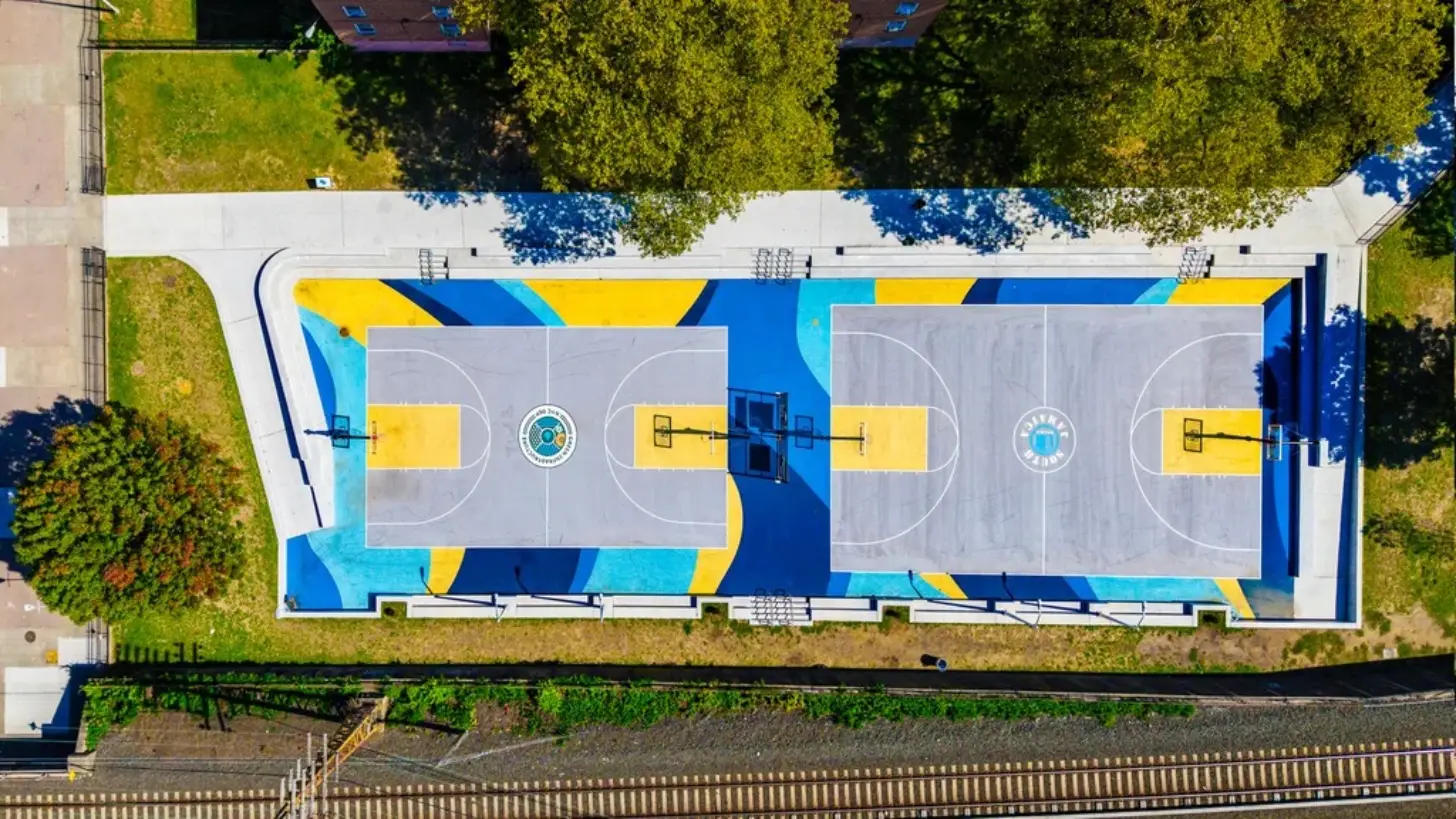
While the city’s aging sewer system can quickly become overwhelmed, leaving water pooling into the streets amid flash floods, these basketball courts are designed like a retention basin, storing water to keep it from reaching nearby homes and neighborhoods.
The stormwater is stored in underground pipes, and then filtered by bio-retention basins before slowly releasing back into the ground.
Each court can hold up to 330,000 gallons of water, half the volume of an Olympic-sized swimming pool.
“[The court] becomes like a sponge, which basically holds the water as much as it can,” Runit Chhaya, principal at Grain Collective, told Fast Company. “It helps in not putting stress on the city storm system during a flood event.”
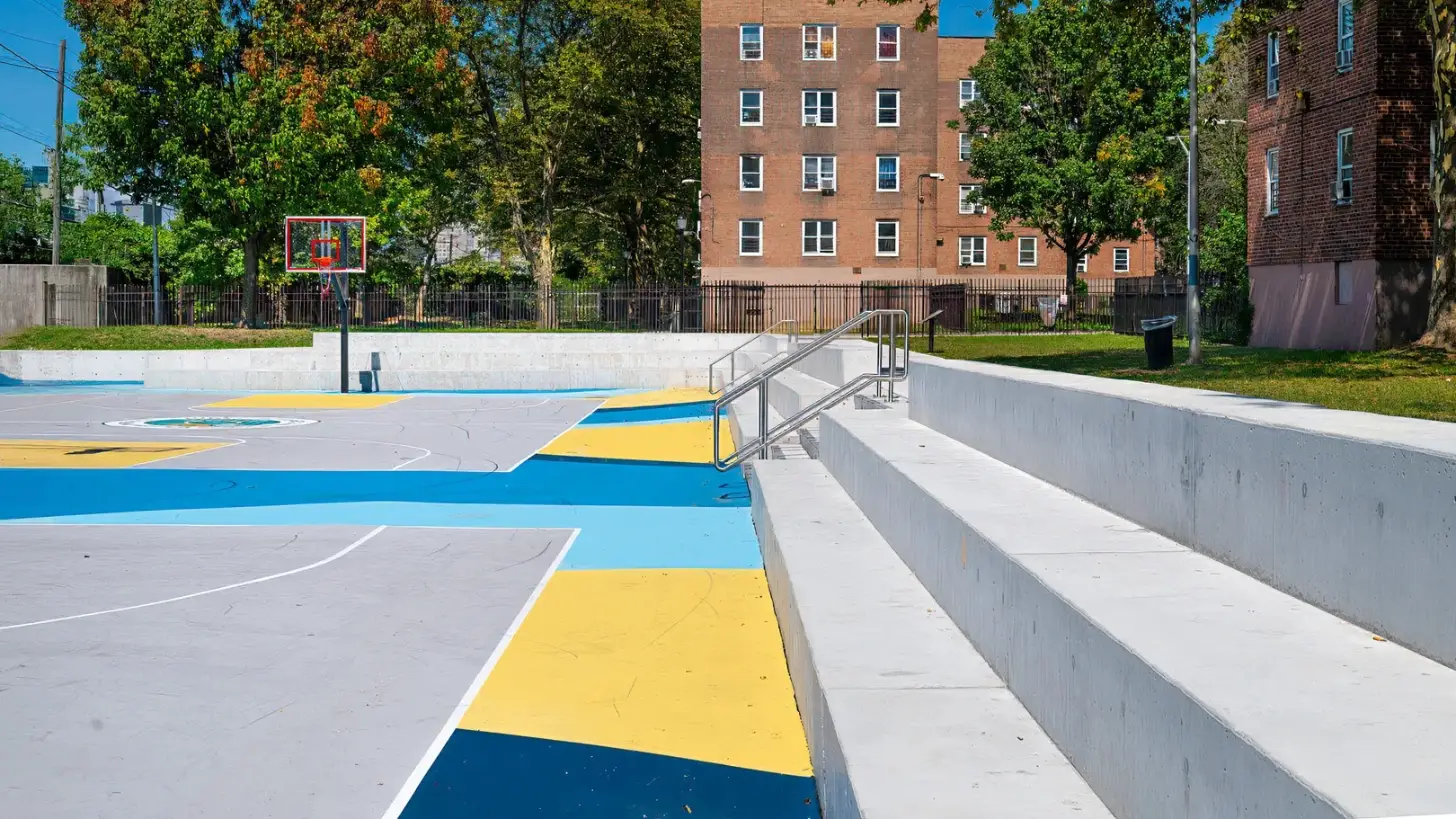
The courts are called Water Square and were inspired by similar projects in Copenhagen and Rotterdam. The $5 million drainage system they sit atop was designed by Grain Collective, along with engineers from Hazen and Sawyer, and the urban planning firm Marc Wouters Studios.
At the time of their deployment, Mayor Eric Adams was still in office.
“Investments like these are a key part of public safety and affordability,” Adams said in a press conference about a year ago. “Every dollar we spend on flood infrastructure, we will save $7 in prevented damage.”
The NYCHA property provided a unique opportunity to bring to life a climate resiliency project that had been years in the making.
“NYCHA is unique in having large pieces of property within very dense neighborhoods that provide the opportunity to mitigate stormwater overflows in a way that most properties do not,” Siobhan Watson, vice president of sustainability at NYCHA, told Fast Company.
But in Queens, where neighbors had been let down by their local government before, Grain Collective partners had to take a thoughtful approach.
“It’s very hard to go to these communities and just start talking about climate change and flood protection because they are thinking about basic needs, and we are talking about infrastructure they didn’t even ask for,” Chhaya explained to Fast Company.
“So you kind of change the story — and it’s an honest story that, hey, it’s actually a win-win situation. You’re going to get an upgraded amenity.”
Providing residents with a new and improved basketball court was the big draw — and the food mitigation solution was just another layer underneath.
“The amenity becomes the engine through which you explain the extra [resiliency] benefits,” Chhaya added to Dezeen. “It’s by engaging with the residents that you build stewardship towards the project.”
Designers also say that with the 3-foot-deep “sunken” build of the basketball court, it can have multiple purposes, like supporting movie nights or farmer’s markets on the property.
And now, residents get to enjoy it.
“The basketball court was a great addition to the community. It was done as a side effect, so to speak, to them putting in this water retention system,” Manny Martinez, president of the South Jamaica Houses Resident Council, told The City Reporter. “People are loving it.”
More flood mitigation projects are also in the works, with Grain Collective working on a similar playground redesign at another “cloudburst” site in East Harlem.
Current Mayor Zohran Mamdani has also recently announced an additional $43 million being funneled into the Bureau of Coastal Resilience, a city agency in charge of building more than 100 floodgates in Lower Manhattan.
Whether it’s massive floodgate infrastructure or neighborhood-level mitigation strategies like the Water Square basketball courts, the city is attempting to build resilience to a changing climate.
“As climate change accelerates, so, too, must our efforts to protect our communities,” Mamdani said in a statement. “This investment ensures the bureau can keep pace with the billions of dollars in infrastructure coming online in the next few years.”
You may also like: South Korea deploys new ferry that cleans up oil spills while people ride
Featured Image: Courtesy of Grain Collective