If you’re anything like me, you have a lot of feelings — and you’re a sucker for a cute T-shirt. So, it’s a win-win when I can wear those feelings on my sleeve (literally).
Wearing shirts that represent mental health awareness or give back to a reputable cause supporting mental healthcare is a great way to end the stigma of mental illness, celebrate mental health awareness holidays like Mental Health Awareness Month, raise valuable funds, and find community with like-minded folks.
The thing is, though, aesthetics are important, and people probably aren’t too stoked to wear a shirt that says “hey, I’m depressed!” or that just has an awareness ribbon on it (though, if you do, all power to you). So, we found some collections of mental health awareness apparel that will hopefully complement your style — and support you and your community along the way.
Of course, we don’t think it’s great to profit off of someone’s disability or mental health condition, so we made sure that all the brands we’re about to tell you about have a history of donating profits to credible organizations or funds that provide mental healthcare.
Let’s get to it!
By the way, some of the links in this article are affiliate links, which means if you make a purchase after clicking a link, we may earn a commission at no extra cost to you. Thank you!
Brands that make mental health shirts and apparel you can wear proudly
Other People Fund
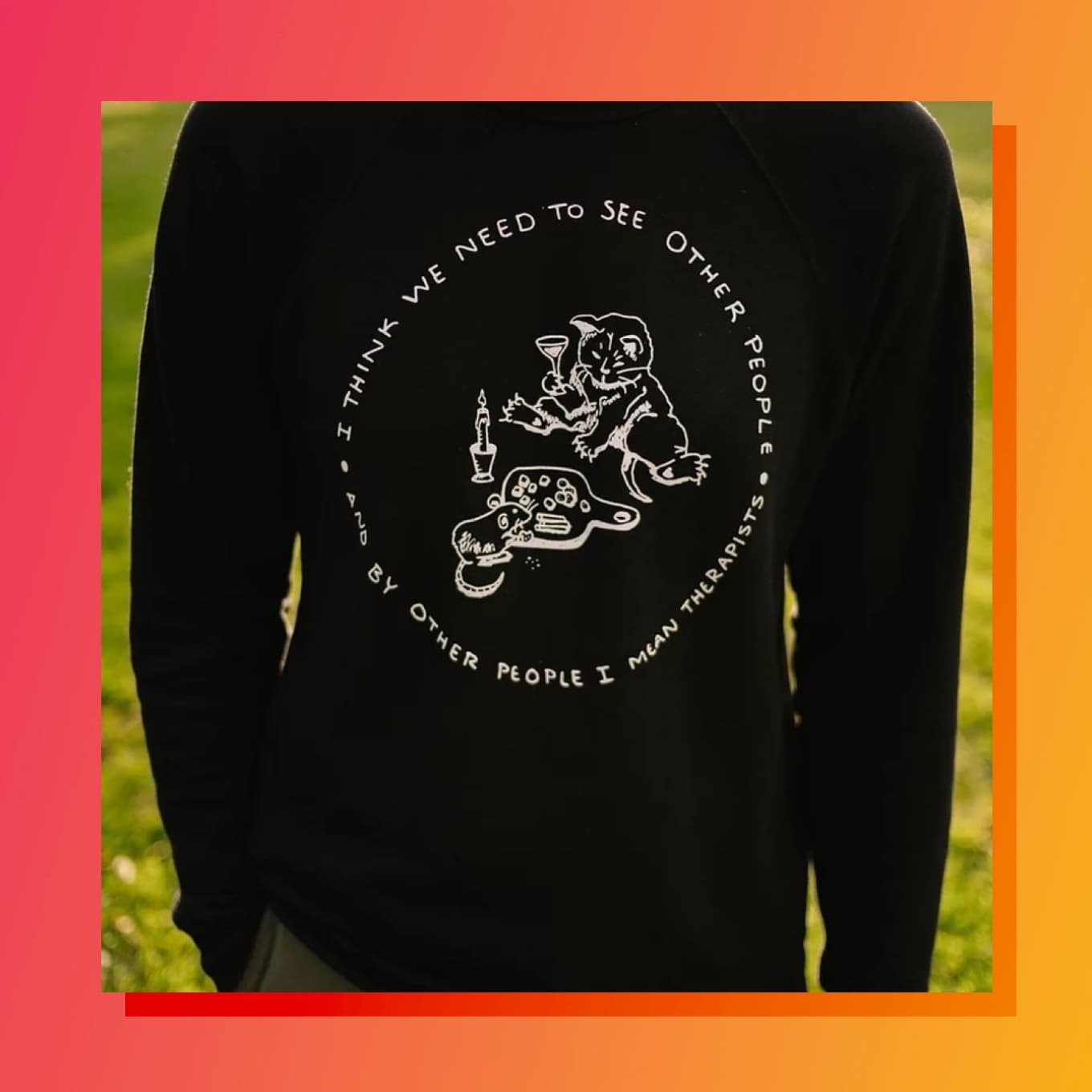
We’re starting off strong with a brand that’s been sported by tote bag enthusiast Harry Styles!
Other People Fund is an apparel brand known for its design, stating “I think we need to see other people. And by other people I mean therapists.”
All proceeds from all items — like this tote bag and sweatshirt — go directly to the company’s sister nonprofit Support for the Psyche. The organization provides financial aid for applicants who are seeking mental health treatment.
IDONTMIND
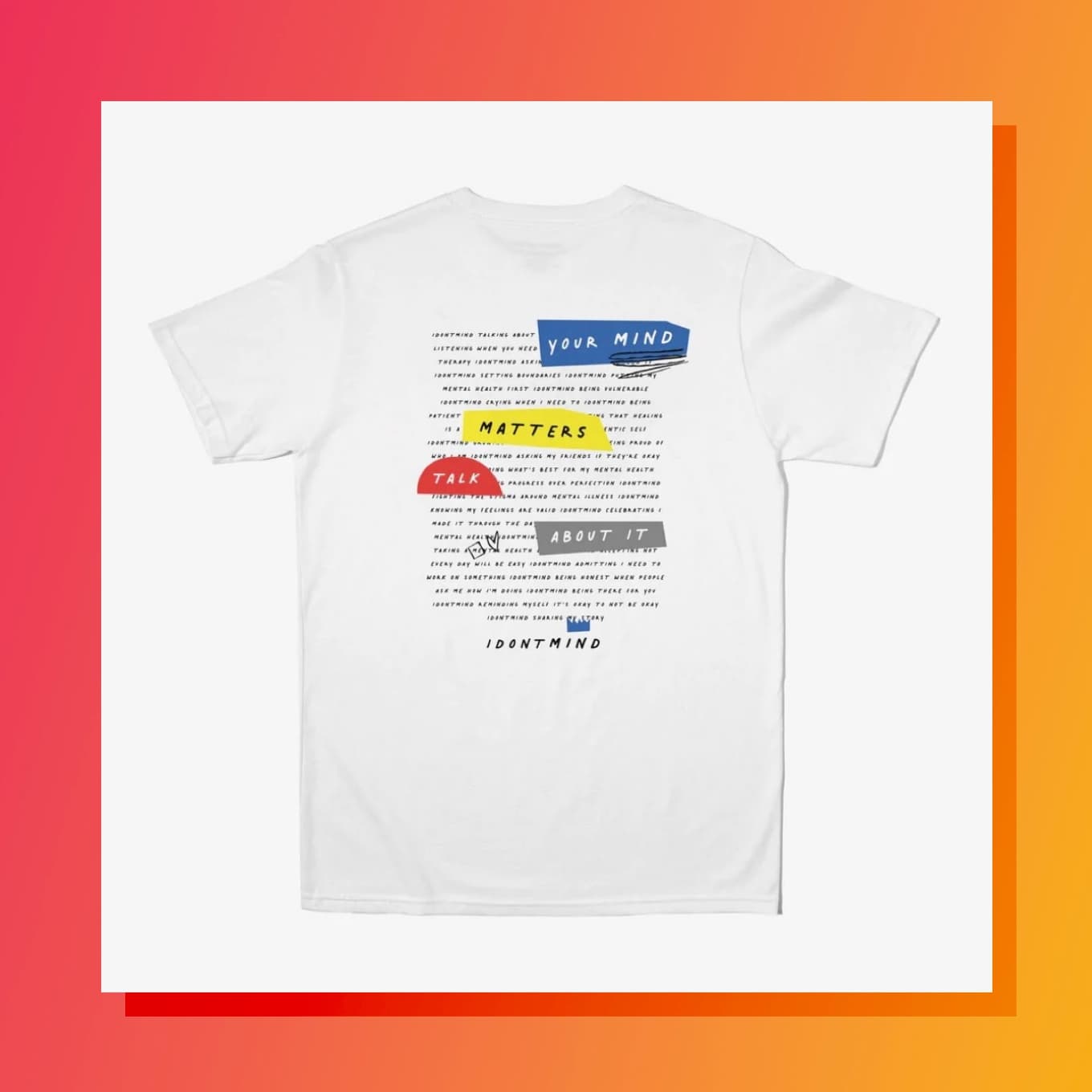
IDONTMIND is an awareness campaign with a mission to inspire open conversations about mental health. With well-designed merch like tees and socks, 100% of the brand’s proceeds support the IDONTMIND campaign at Mental Health America.
IDONTMIND also offers an insightful blog about mental health, as well as accessible information about finding a therapist, mental health screenings, and various resources for specific conditions.
Find The Good Brand

Find The Good is a brand that creates apparel to help people “through the bad days, the rainy days, the ups and downs, and whatever else stands between you and a smile on your face.” Plus, we love name!
Signature designs in the Find The Good shop include smiley faces, as well as the brand’s “three simple words” to encourage shoppers to seek support and discover more good in the world. 10% of the company’s profits go to Mental Health America.
Self Care is for Everyone
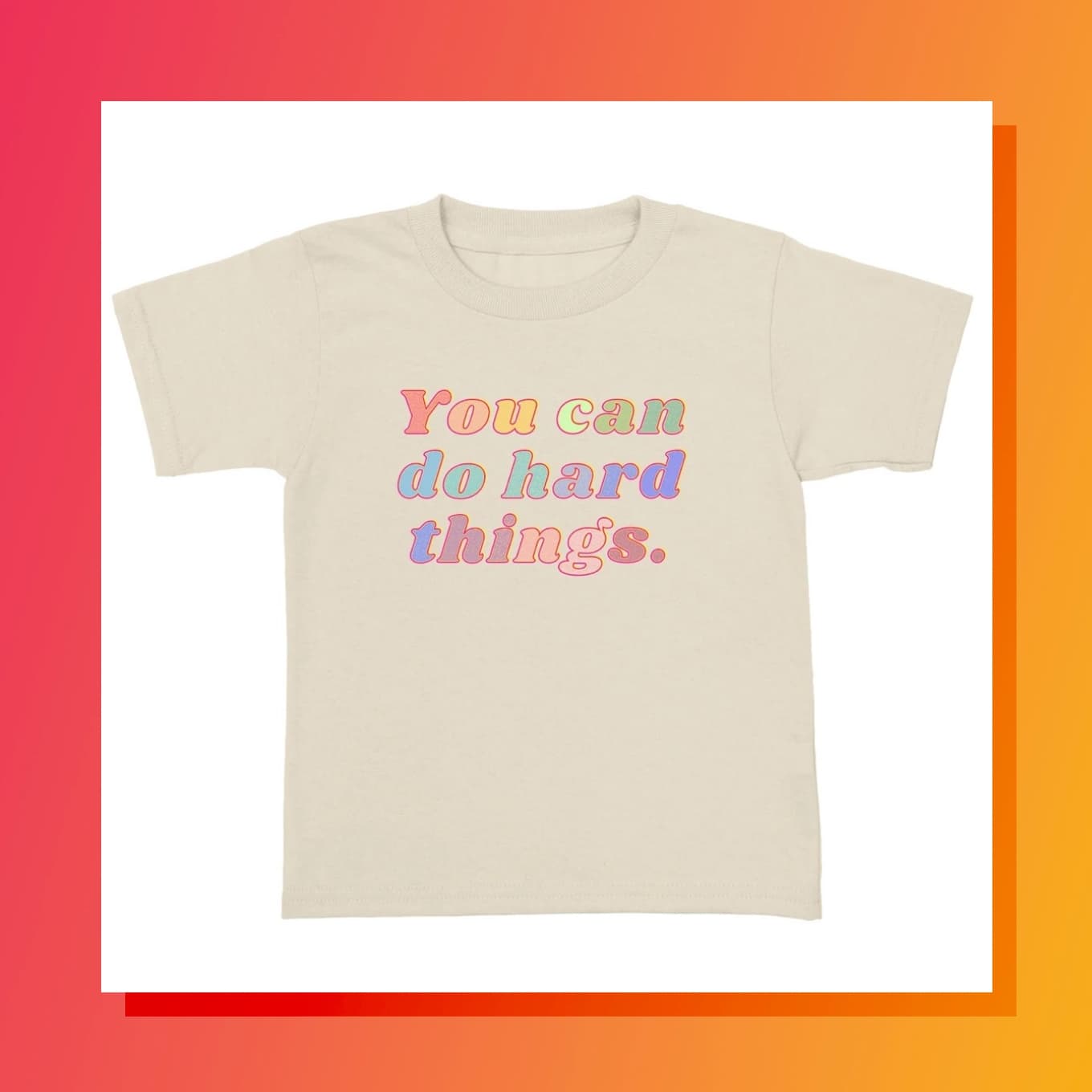
Self Care is for Everyone was founded in 2018 on World Kindness Day. The brand’s goal is to congregate around shared communities of folks with mental health conditions and spread kindness and self-care reminders to all — in the form of cute merch items like shirts (we love the Glennon Doyle-inspired We Can Do Hard Things shirt) and stickers. Each package also comes with a voucher for one month of free therapy!
Since its founding, the company has contributed over $550,000 back to the mental health community through nonprofits and independent artist partnerships. Self Care is for Everyone commits, at minimum, 10% of its net profits to mental health and suicide prevention initiatives, donating to organizations like The Trevor Project, The Loveland Foundation, Crisis Text Line, and more.
Own Your Stigma

Own Your Stigma was created to open up conversations around mental illness and help remove all shame, negativity, and guilt that society has attached to it. By purchasing a store item — like a crewneck or a beanie — customers can “own” their “stigmas,” by wearing their experiences for everyone to see.
In addition, a percentage of the brand’s monthly sales are donated to organizations that provide and support mental healthcare. Plus, you can get 15% off when you use our code 'GOOD15.' (PS: we don't gain anything from you using this code; thanks to Own Your Stigma for this gift to our readers!)
Happiness Project
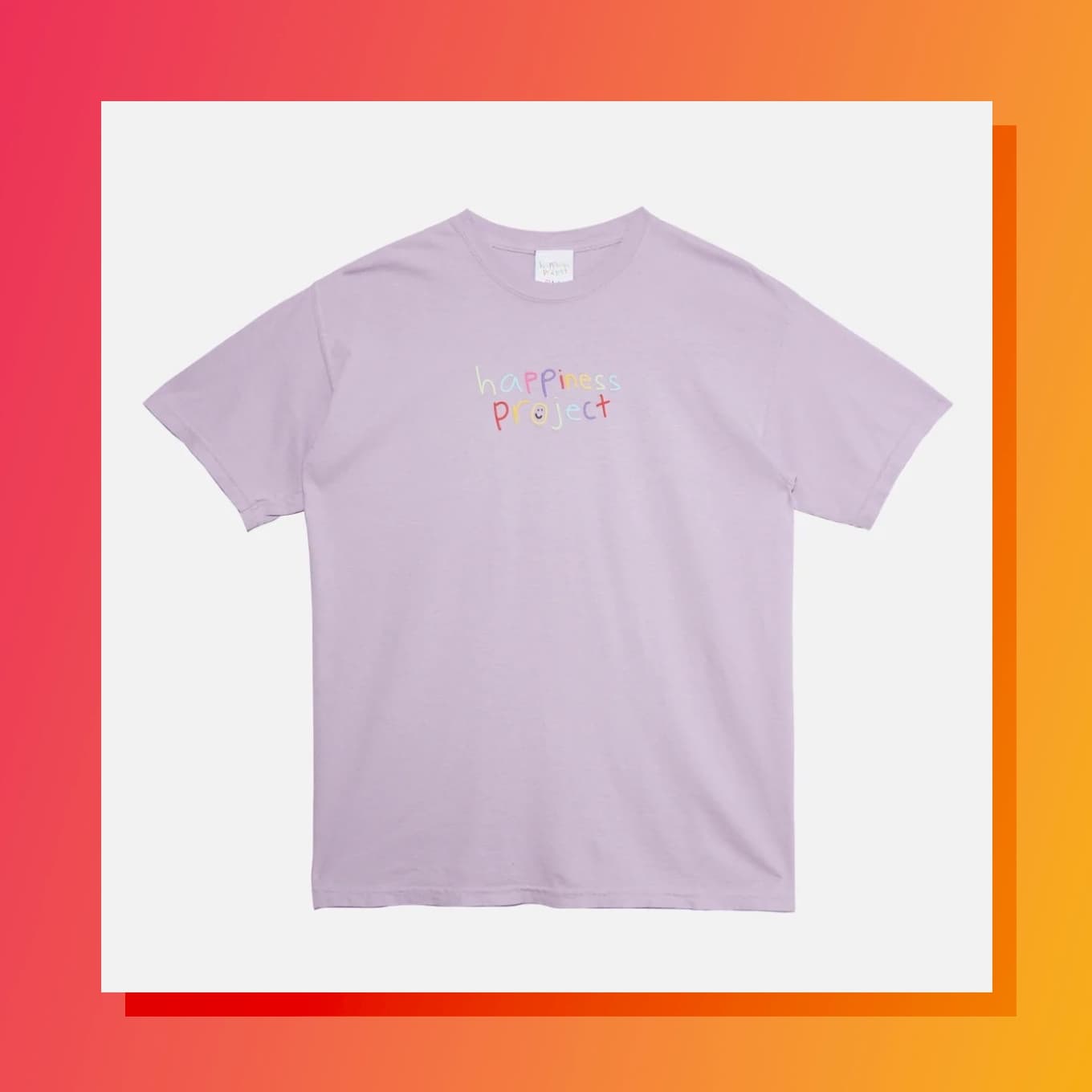
Happiness Project makes “clothes with a purpose,” honoring the legacy of a classmate who died by suicide. Offering colorful and fun hoodies and tees, Happiness Project donates 15% of its net profits to the American Foundation for Suicide Prevention. Since its founding in 2017, the company has donated over $100,000 to mental health organizations.
Recently, Happiness Project teamed up with TOMS for an extra special collection.
To Write Love on Her Arms
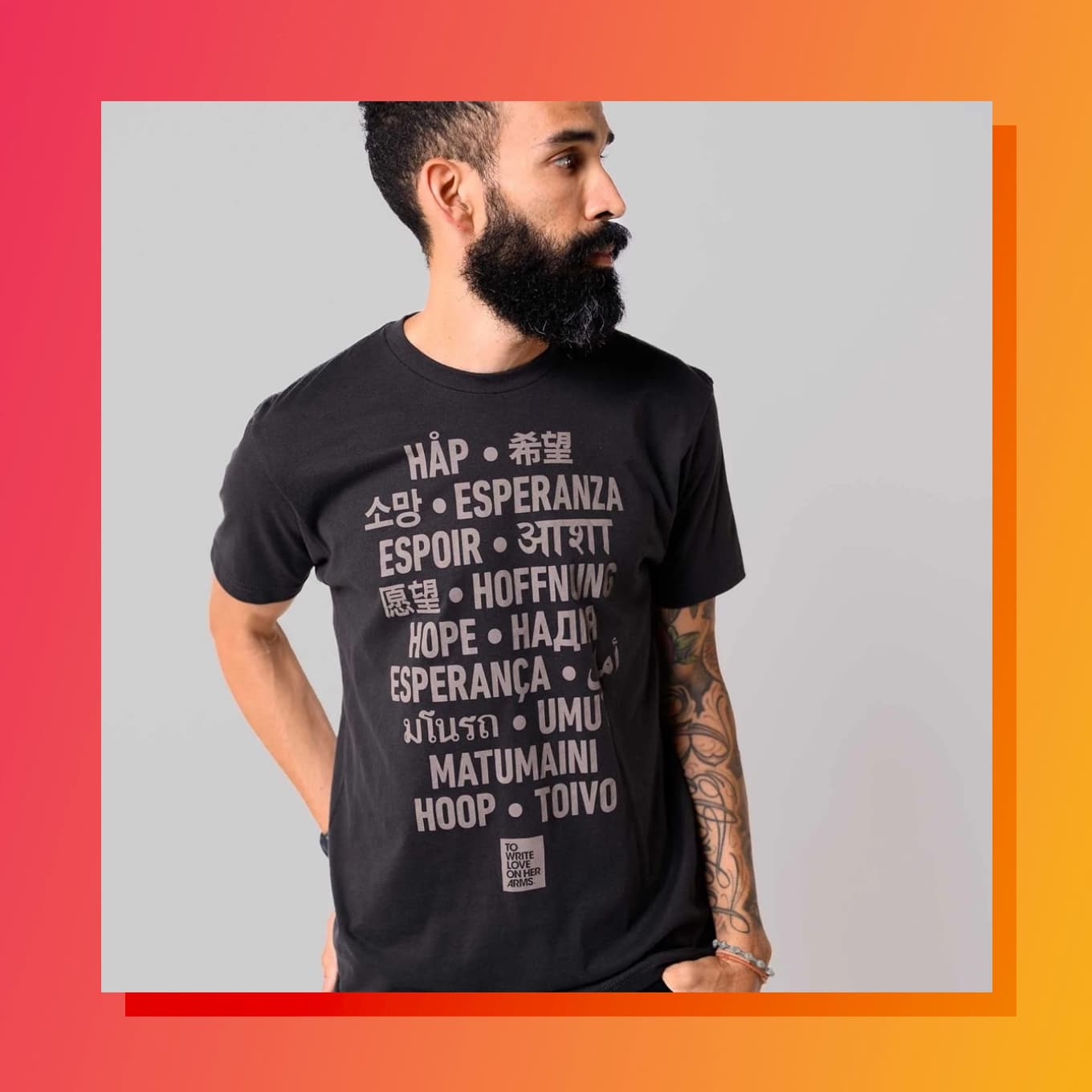
To Write Love on Her Arms (TWLOHA) is a nonprofit movement dedicated to presenting hope and finding help for people living with depression, addiction, self-injury, and suicide. TWLOHA is much more than an apparel brand, as funds from shirts and other merch items go towards the organization’s efforts. Their messages and designs are so good that they’ve inspired countless people to get mental health tattoos.
With a daily self care app, treatment and recovery scholarships, and nationwide events, TWLOHA seeks to provide folks with community support, financial aid, and personal empowerment.
STAY
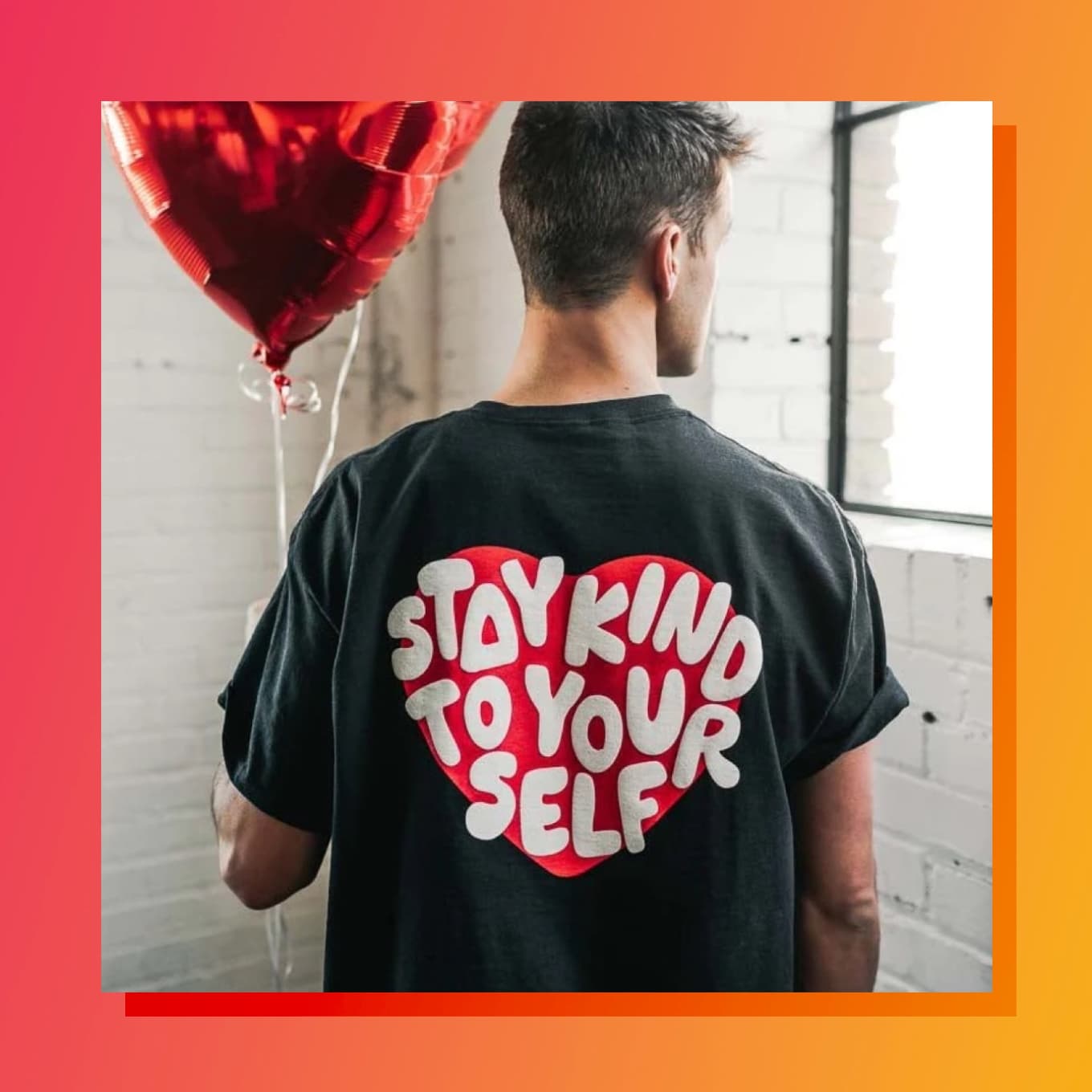
STAY is a brand with a mission to inspire self-actualization, positive mental health, and staying kind to all. The word “stay” is often included in apparel designs, encouraging people to continue, even when times are at their toughest.
Whether shirts remind people that there’s a place for them, or to lean on one another when they need a little support, the brand encourages community and resilience. In fact, 10% of proceeds benefit three partner charities: American Foundation for Suicide Prevention, the National Alliance on Mental Illness, and the Anxiety & Depression Association of America.
Get help if you need it.
We know that it can be hard to find the help, support, and community you need when you're struggling with your mental health.
If you are in immediate need of safety, please contact the following:
Emergency Medical Services
911
National Suicide Prevention Lifelines
suicidepreventionlifeline.org
Call 988
Crisis Text Line
Text CRISIS to 741-741
And if you are not in immediate crisis and would still like access to more resources, visit our list of Mental Health Resources for more information.
The carbon-curbing project goes beyond traditional planting projects by getting sponsors to pay to keep trees alive until they mature
— Plan participants commit to funding three years of tree care
— Kenya's natural forest cover has increased about 1.5% since 2018
— Critics say new trees are no substitute for mature forests
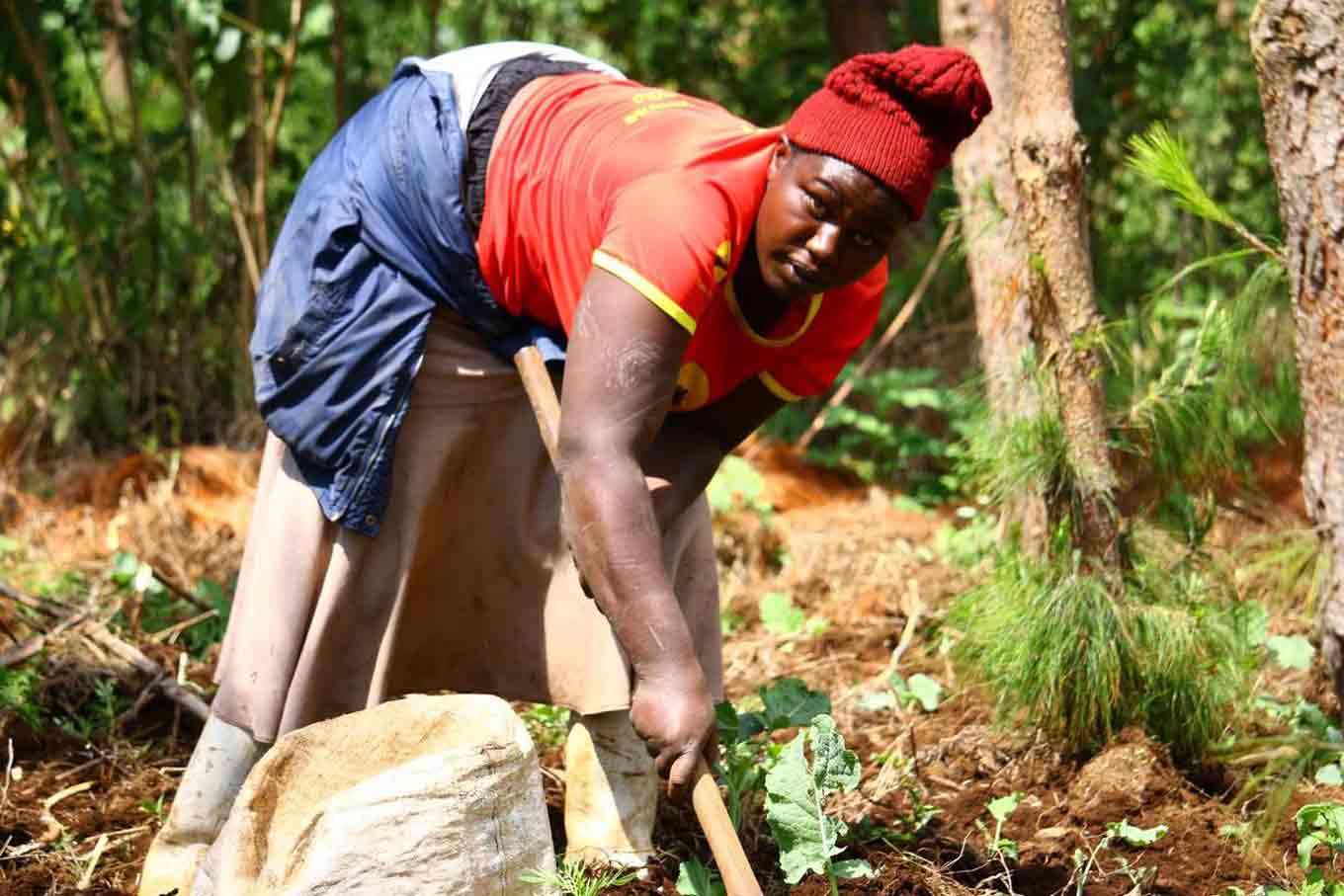
When Ruth Karanja is planting and nurturing trees with her local conservation group in their central Kenyan village, she's thinking about water.
Her hope is that the trees she looks after under a government program allowing organizations to "adopt" forests for conservation will help protect the local water catchment so she and other farmers in Kiabariki can increase their potato yields.
In recent years, crops in the area have been depleted by unusually hot weather and drought that have left the land parched and dried up the Kitiri river, which cuts through Nyandarua County, in the summer months.
"The trees will improve the environmental condition and the agricultural fortunes of the community," Karanja told the Thomson Reuters Foundation as she planted tree saplings with other members of her community forest association (CFA).
By the way, you might also like: Reasons to Adopt a Dog
"The rains will become plentiful and the water volume in the Kitiri river — a lifeline in the village — will increase."
Kenya launched its national tree-planting drive in 2018 with the aim of having 10% of the country covered in natural forest by the end of 2022 – up from 7.4% four years ago - in a bid to cut its greenhouse gas emissions and fight climate change.
That same year, the Adopt-a-Forest program was started to address the lack of after-care, a major flaw in many forest-planting projects in Kenya and beyond, said Eric Tetea Nahama, head of partnerships at the Kenya Forest Service (KFS).
Nonprofit groups and companies often earn green bragging rights by planting trees, then walk away, expecting local communities to spend their own time and money looking after the saplings - which results in many being left to die, Nahama said.
"We needed to move quickly and develop a strategy and guidelines for engaging partners that ensure trees don't die after planting them," he said.
The initiative connects charities, corporations and government organizations — both Kenyan and foreign — with community forest associations, which plant trees on sites chosen and managed by the KFS.
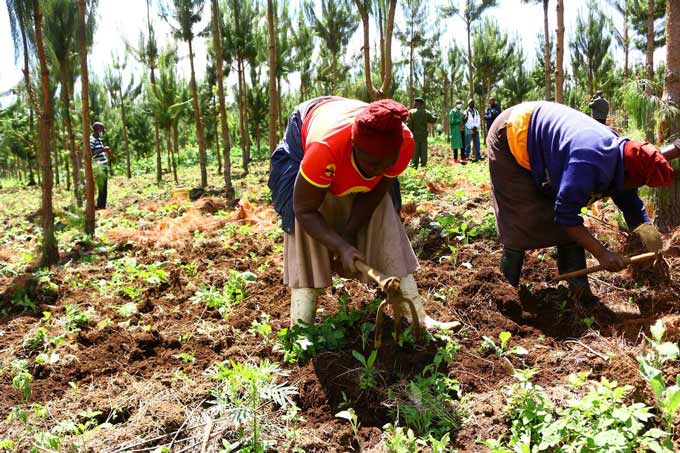
The backers commit to paying for the care of the trees for at least three years, by which point they are considered strong enough to withstand droughts, floods and other climate-linked stresses.
According to Nahama, 80% of the trees planted under the program grow to maturity, compared with less than half of trees under more traditional programs.
"We are now emphasizing growing trees as opposed to (simply) planting them," he said.
Growing Partnerships
Scientists say protecting forests is one of the cheapest and most effective ways to curb climate change because trees suck carbon dioxide, the main gas heating up the planet, from the atmosphere.
As of March, more than 90 organizations had signed up to adopt a section of forest, covering a total area of 44,548 hectares (110,000 acres), Nahama said.
The KFS helps identify which indigenous tree species are best suited to each area - including cedar, cypress and olive - and trains community groups on how to care for them.
The funding pays for the seedlings and their care, including nurseries to raise saplings, electric fences to protect young trees from wildlife and boreholes to provide water, Nahama said.
Community members can make an income by selling seedlings to the organizations involved in the project, he explained.
They can also use the freshly planted areas to farm among the growing trees which shade young crops from intense sunlight and help the soil hold moisture.
But they are not allowed to cultivate maize, to stop the fast-growing crop from competing with the trees for water and nutrients.
Once the trees have matured, CFA members are allowed to cut down a small share for firewood or to sell as timber, as long as they immediately replace any that have been felled.
The collaboration between the government, communities and organizations is vital to keeping trees healthy and discouraging illegal cutting, said Victor Kabutbei, forest station manager for North Kinangop Ward.
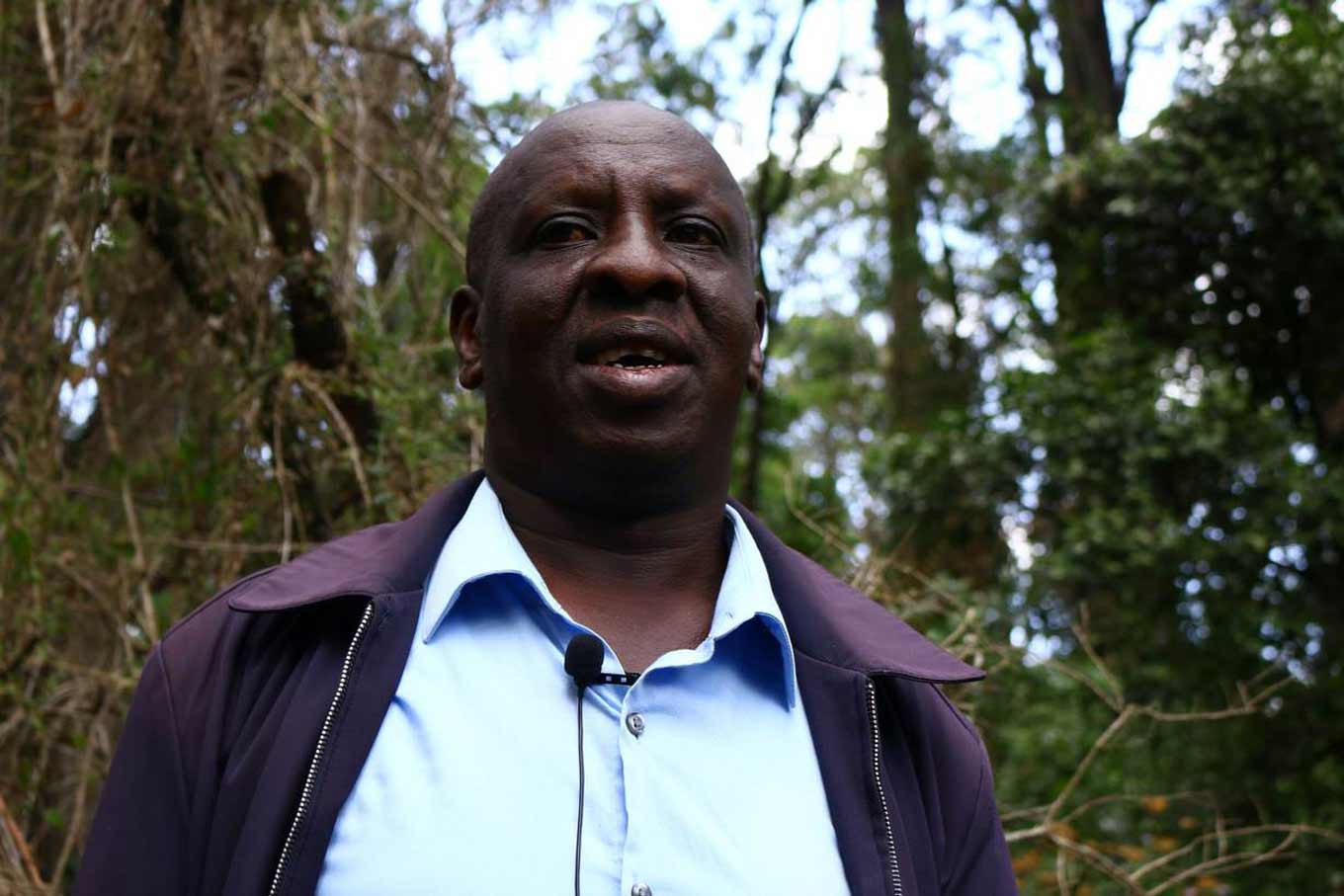
Although one forest ranger is supposed to patrol and monitor 400 hectares, in reality each is responsible for an area nearly three times that size, Kabutbei noted.
"KFS cannot be everywhere, every time, so we need other partners," he said.
Job Creation
Among an expanding list of county governments, international nonprofits and private companies, California-based environmental group Eden Reforestation Projects is so far the biggest contributor to the program.
The group has planted more than 13,500 hectares around Kenya at a cost of about $0.15 per tree, said Andrew Kinzer, its international director for Africa.
Making organizations responsible for specific forest areas means progress can be monitored, audited and managed over time, which is not always possible with more traditional planting projects, he added.
Kenya's natural forest cover has increased by about 1.5% since 2018 to 8.8%, according to government figures. There is no data to show how much – if any – of that growth can be attributed to the Adopt-a-Forest program.
But critics say tree planting is a poor replacement for the loss of mature forests, mainly because new trees take decades to absorb the same amount of planet-warming emissions.
Nicholas Oguge, head of the natural capital project at Environmental Incentives, which develops conservation programs for other groups but is not working on Adopt-a-Forest, said Kenya needed greater commitment to provide resources for growing trees long term.
That, he noted, is the only way tree planting will help Kenya curb its greenhouse gas emissions, while also expanding scarce income opportunities for women and young people.
"You are going to create green inclusive jobs... by growing trees under a reforestation program," he said.
This article was originally published by the Thomson Reuters Foundation, the charitable arm of Thomson Reuters, that covers the lives of people around the world who struggle to live freely or fairly.
In May 2022, the Sacramento Police Department held a "gas for guns" buyback event for unwanted firearms in the community. At the buyback event, people could not only turn in unwanted firearms anonymously — no questions asked — but they were also given a $50 gas gift card.
The event was supposed to last five hours, but it saw a much higher turnout than the police department expected — they gave out all their gas cards in under an hour. And even then, people still came to turn in their unwanted firearms without receiving a gift card.
"Among other reasons, community members most commonly cited a lack of experience or knowledge with firearms, lack of knowledge of the legality of the firearms, or an inability to safely store the firearms as the main reasons for participating in the exchange," the police department wrote.
The Sacramento Police Department said on Facebook that 134 people dropped off firearms, including at least one assault weapon, components of privately manufactured "ghost guns," and "multiple other illegally configured firearms."
"I truly believe violent crime prevention is a shared responsibility and today's overwhelming community participation is evidence of the success we can achieve together," said Sacramento Police Chief Kathy Lester.
That same day at a Brooklyn church, according to NPR, New York City officials said that people turned in a total of 69 weapons.
What happened in San Francisco and Brooklyn aligns with trends across the United States, where gun buyback programs have grown in popularity.
Hosted by police departments, local churches, nonprofit organizations, and even sports teams, these events are seeing unprecedented numbers of guns being donated to be decommissioned to organizations like RAWtools, which turns them into gardening tools.
The overall goal of gun buyback events is to reduce the number of firearms available in a community overall, and a lower rate of gun ownership would correlate with a lower rate of gun violence. However, it's important to note that research shows gun buyback programs are most effective at reducing gun violence when implemented along with other programs, like universal background checks, firearm registration, and more. Additionally, critics of the events say it can disproportionately target communities with a statistically higher likelihood of finding themselves in a position of needing to defend themselves with a firearm.
While an imperfect solution on their own, gun buyback events have been shown to help get illegally obtained firearms out of our communities, offer safe disposal for those who no longer want their firearm, and more.
And when implemented alongside other solutions, they have the ability to help change the disproportionately high rates of gun ownership in America.
Good Good Good is trying a new format for communicating good news, using tweets to make stories more interesting and digestible.
We collected recent tweets about gun buyback programs across the country. These tweets are a reminder that even though the United States' gun violence problem feels impossible to solve, progress is slowly and surely being made.
Looking for more good news and ways to make a difference against gun violence? You might like these articles:
- Guide: How To Stop Gun Violence
- Guide: How To Stop School Shootings
- Quotes About Gun Control
- Guide: How To Help Buffalo
- Meet the Parkland Students Continuing To Make a Difference
- This School Bus Art Project Might Help End Future Gun Violence
Guns are being donated to RAWtools to be decommissioned and turned into gardening tools across the United States:
Instead of selling her gun collection, one Twitter user's wife chose to have them turned into gardening tools
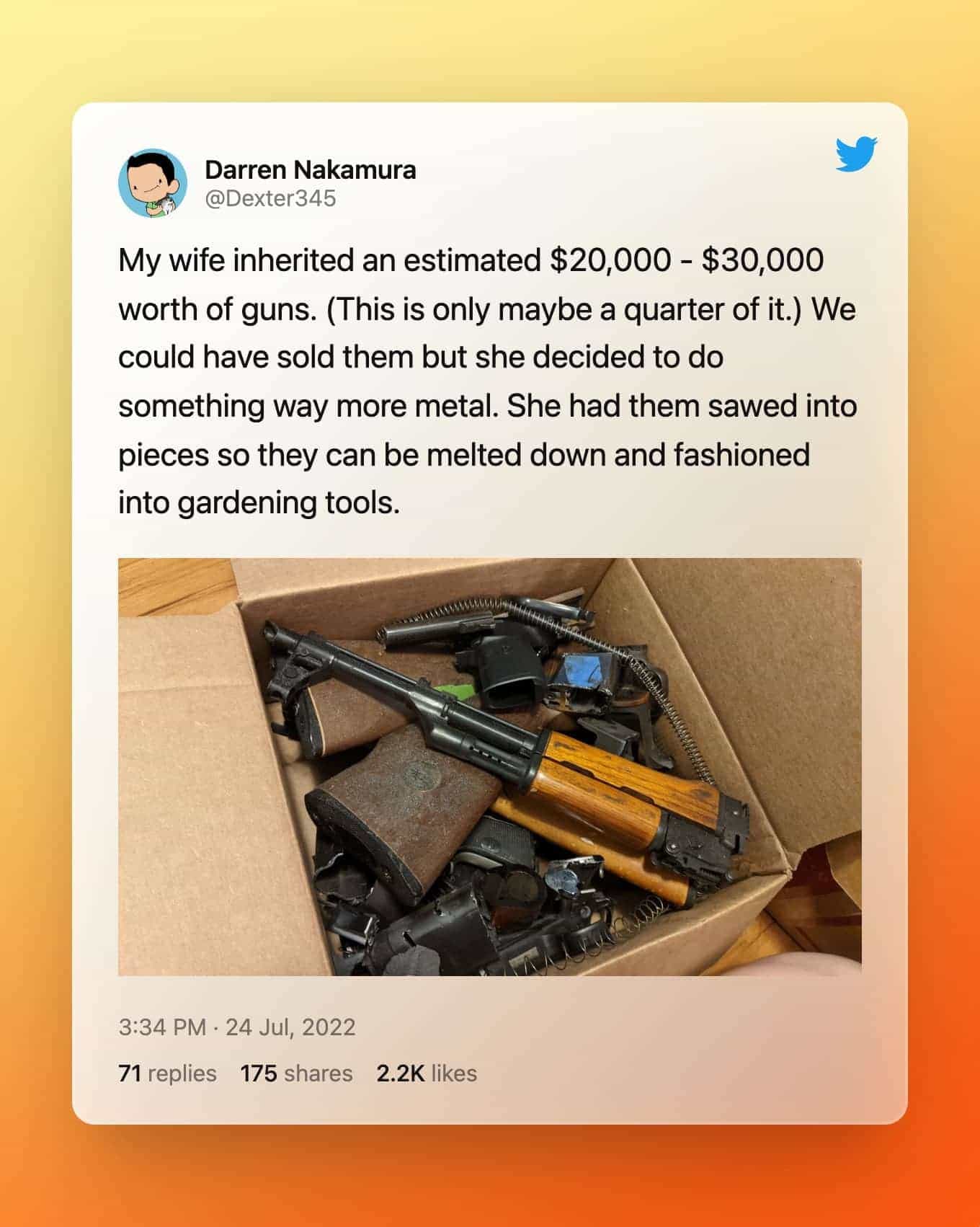
After she inherited as much as $30,000 worth of guns, Darren Nakamura's wife opted not to sell them. Instead, she donated them to RAWtools to be given a new life.
"She had them sawed into pieces so they can be melted down and fashioned into gardening tools," Nakamura wrote in a tweet along with a photo of a box of some of the decommissioned firearms.
RAWtools is the leading organization decommissioning firearms
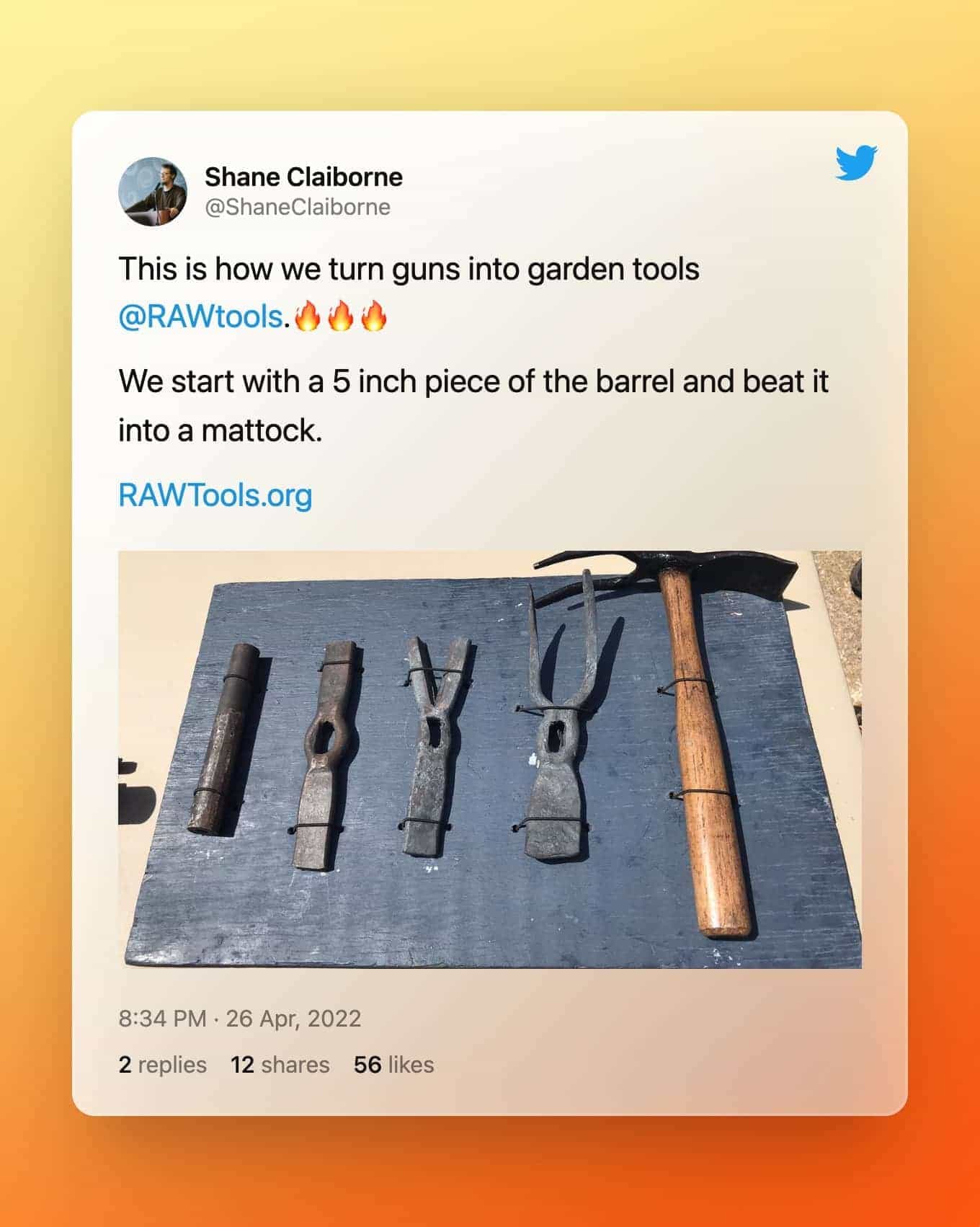
Turning "swords into plowshares" — quite literally — RAWtools' mission is to “disarm hearts and forge peace” by choosing which tools we use to navigate conflict.
On their website, RAWtools says, "As we lose more than 100 people a day to gun violence in the United States, it’s becoming more and more clear that guns have no place in conflict resolution."
Through their Sword to Plow program, gun owners can donate a firearm and get a garden tool made from it for free.
RAWtools makes its garden tools available for purchase
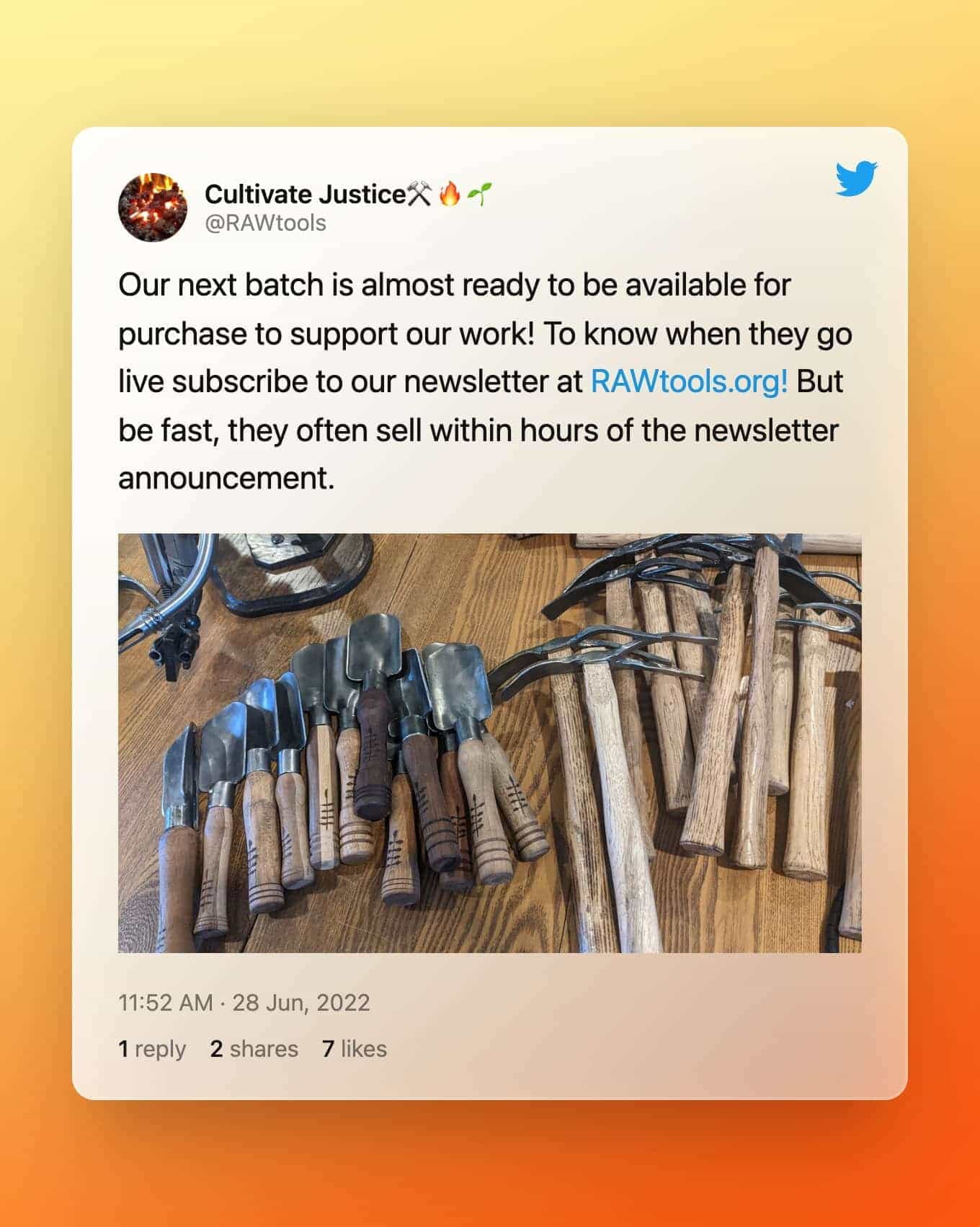
Additionally, RAWtools makes their gardening tools available for purchase — and they sell out quickly. The funds from the sales of the garden tools go to support their work, which includes nonviolence training, bystander intervention, and other ways to help people learn "a new set of tools" to resolve conflict.
Dozens of local groups around the United States have joined the RAWtools network
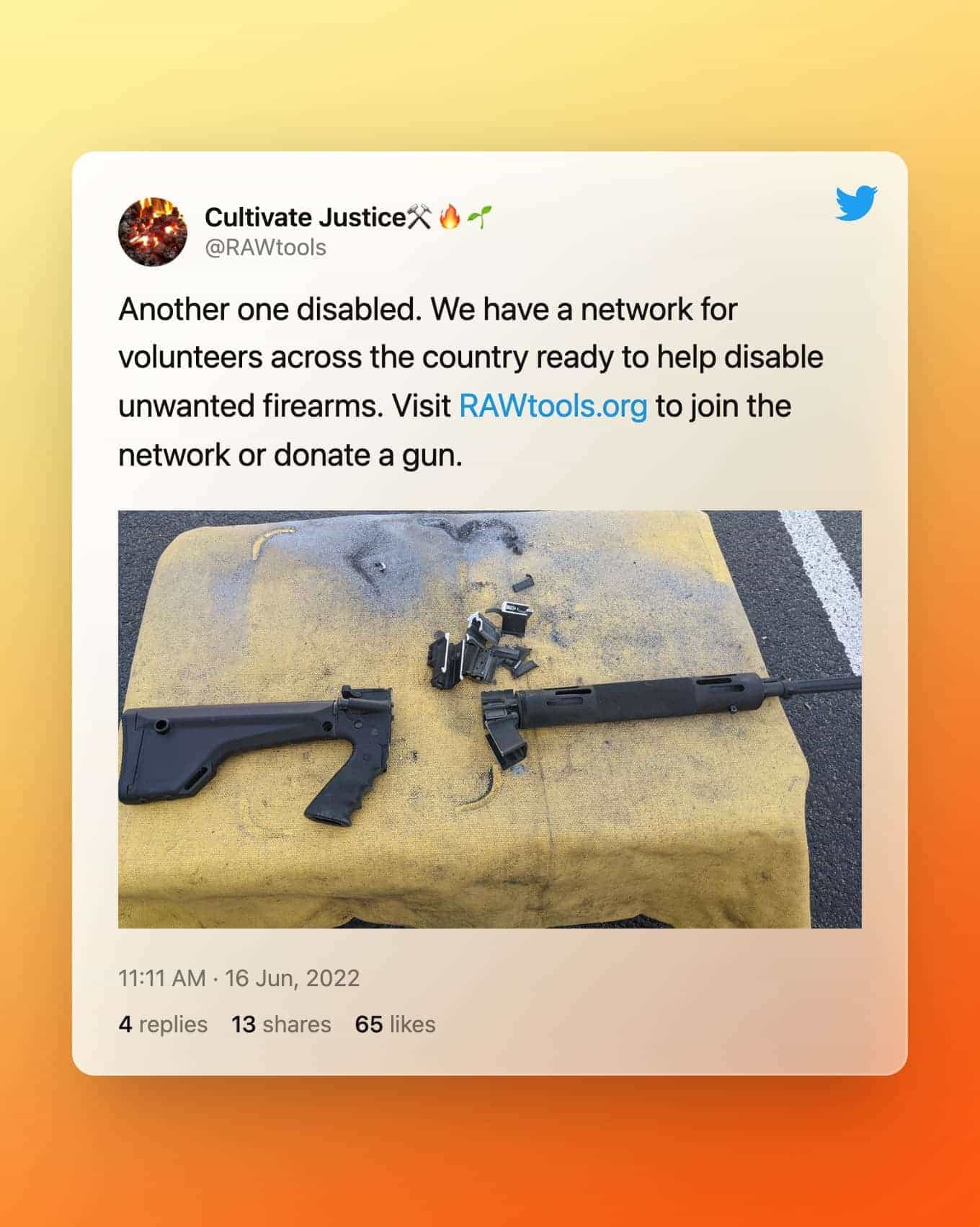
RAWtools' mission is possible because of a nationwide 'Disarming Network' of volunteers trained to safely decommission firearms. With a growing and notable lack of accountability among local police departments, a valid concern with buyback events is what happens to the guns after they are turned in.
With RAWtools, the gun owner and trained volunteer meet in a safe, public location, and the guns are immediately and permanently decommissioned on-the-spot — they will never be able to fire a bullet again.
The Denver Broncos partnered with RAWtools to host a series of gun buybacks in their community
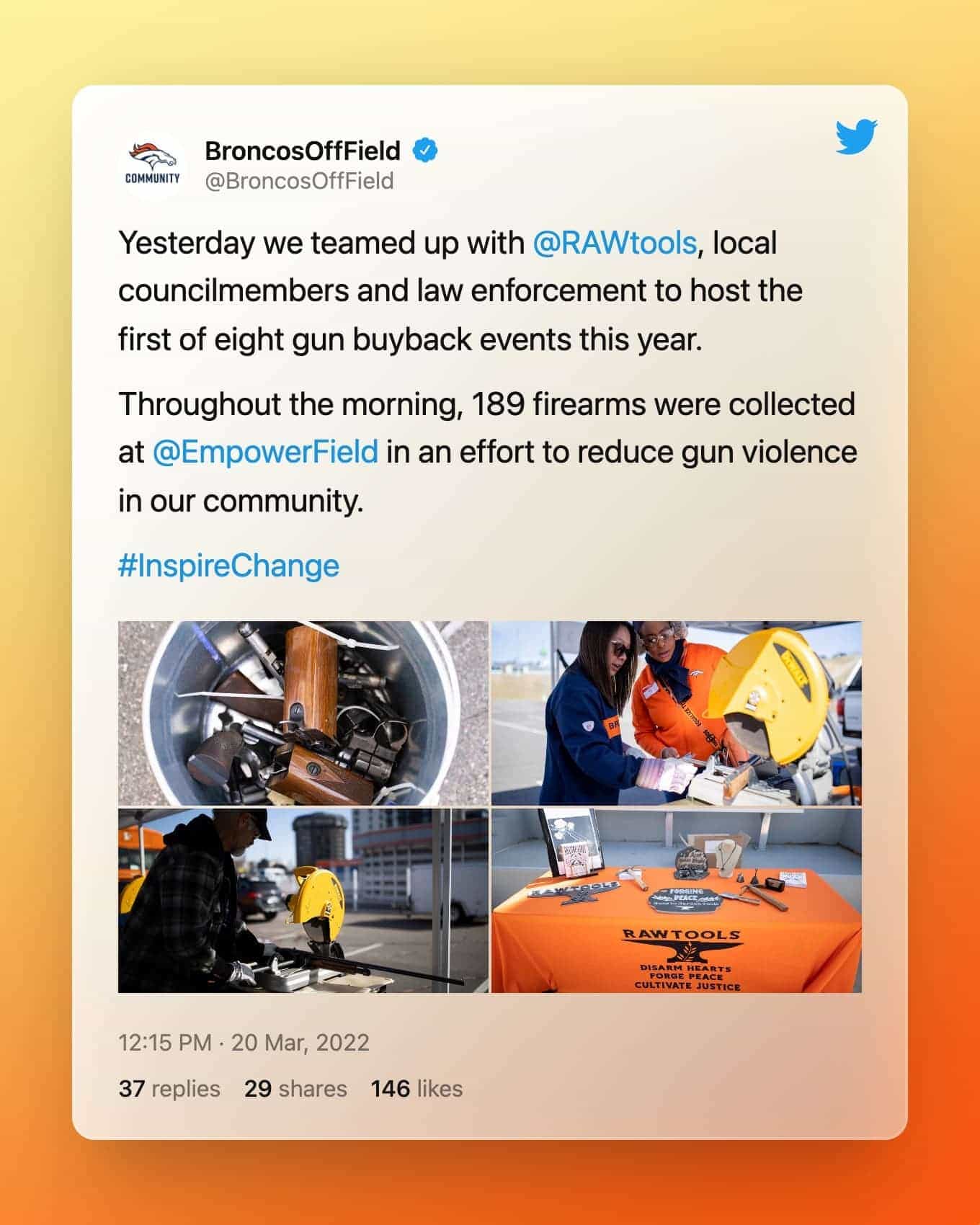
While some gun buyback events are hosted by local law enforcement, cities, churches, and more — companies and organizations that care about the safety of their communities are joining them in the effort, too.
In March 2022, the Denver Broncos hosted the first of eight planned gun buyback events, and reported 189 firearms were collected at their stadium grounds, decommissioned on the spot, and donated to RAWtools to be made into gardening tools.
More than 1000 guns have been anonymously donated during Broncos events
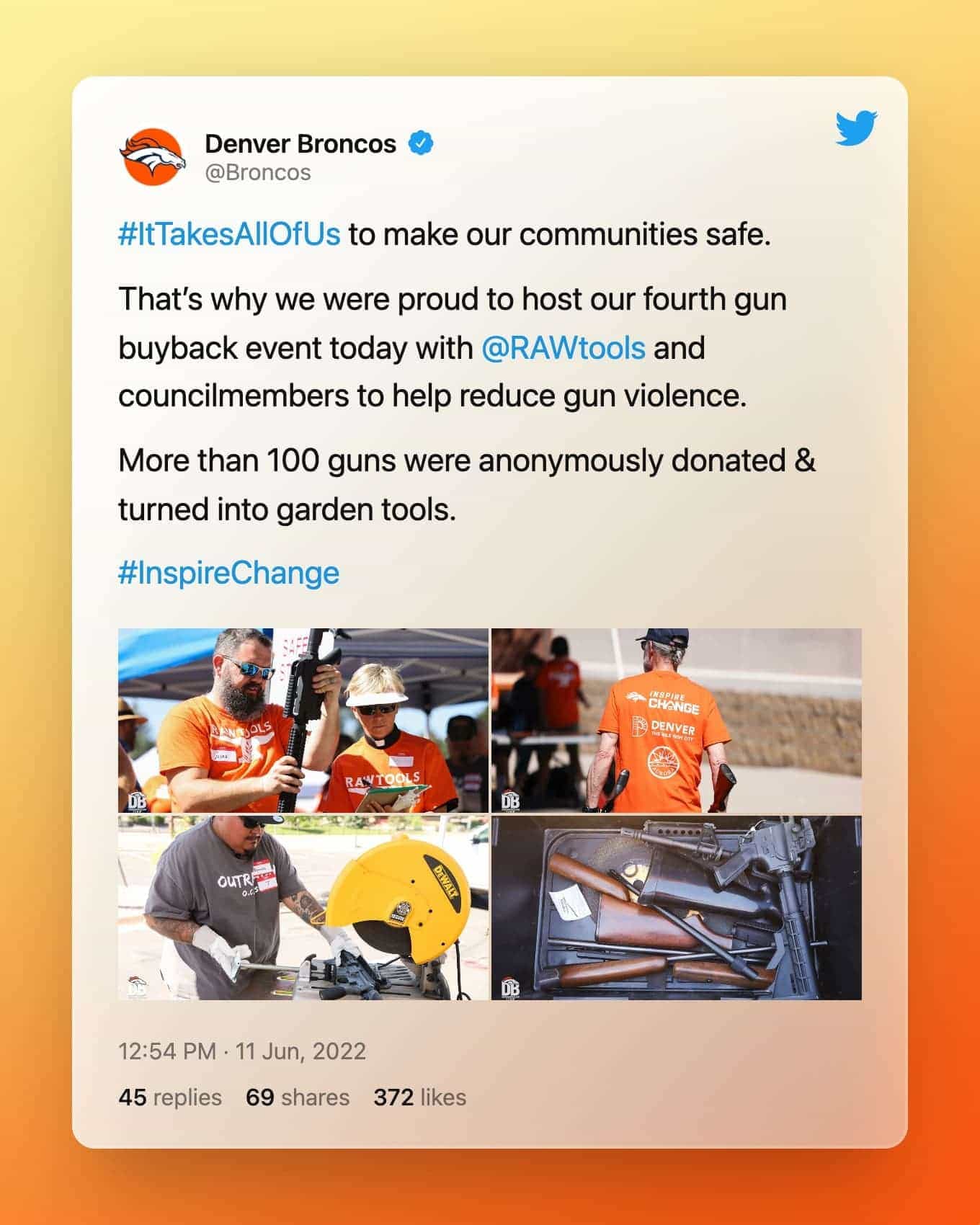
At their fourth buyback event with RAWtools, the Broncos collected more than 100 guns to be turned into garden tools.
Beyond Broncos events, Denver has hosted more events
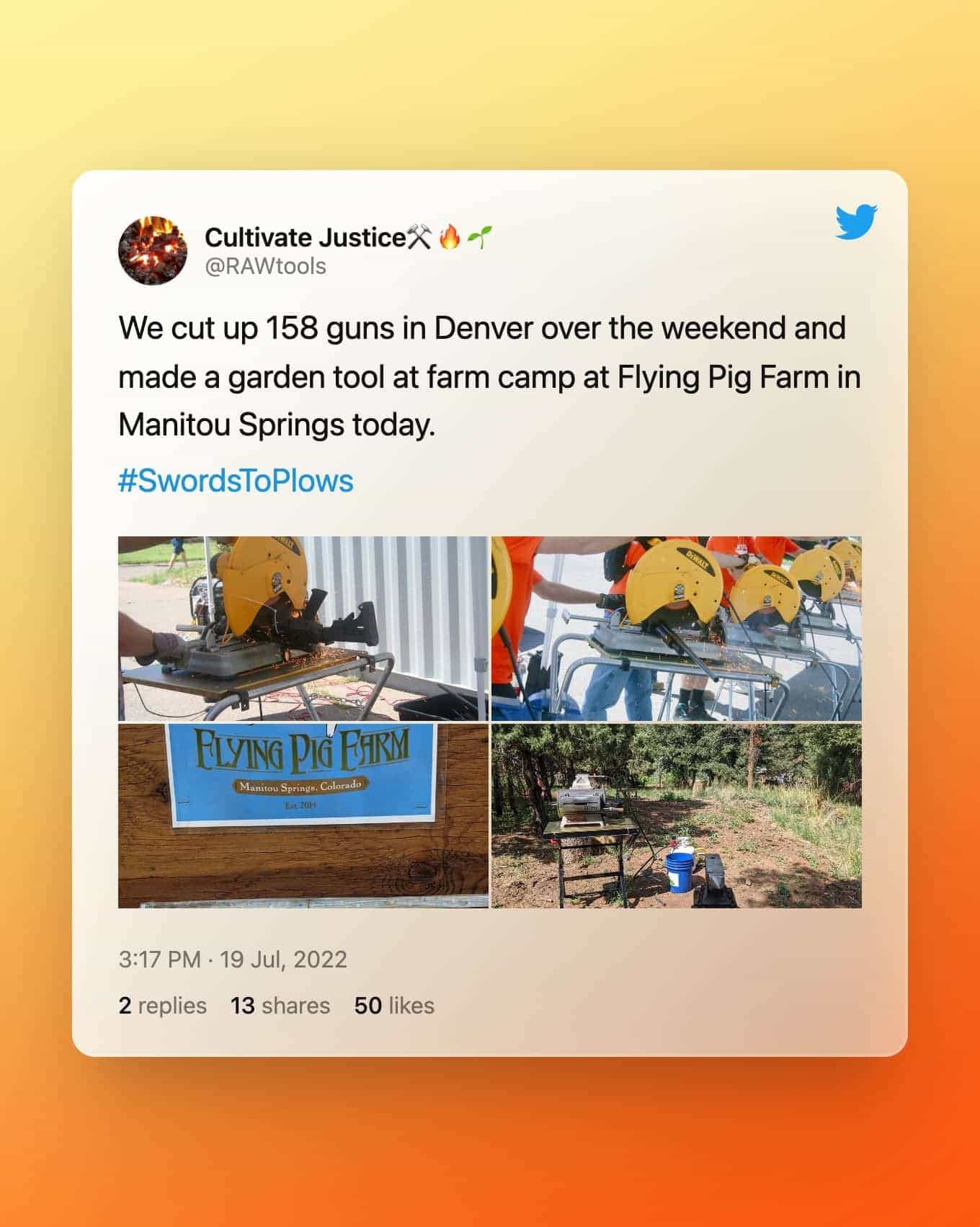
In addition to the Broncos' events, a RAWtools event in Denver in July 2022 resulted in 158 guns donated to be made into garden tools.
Santa Fe has hosted similar gun buyback events with RAWtools
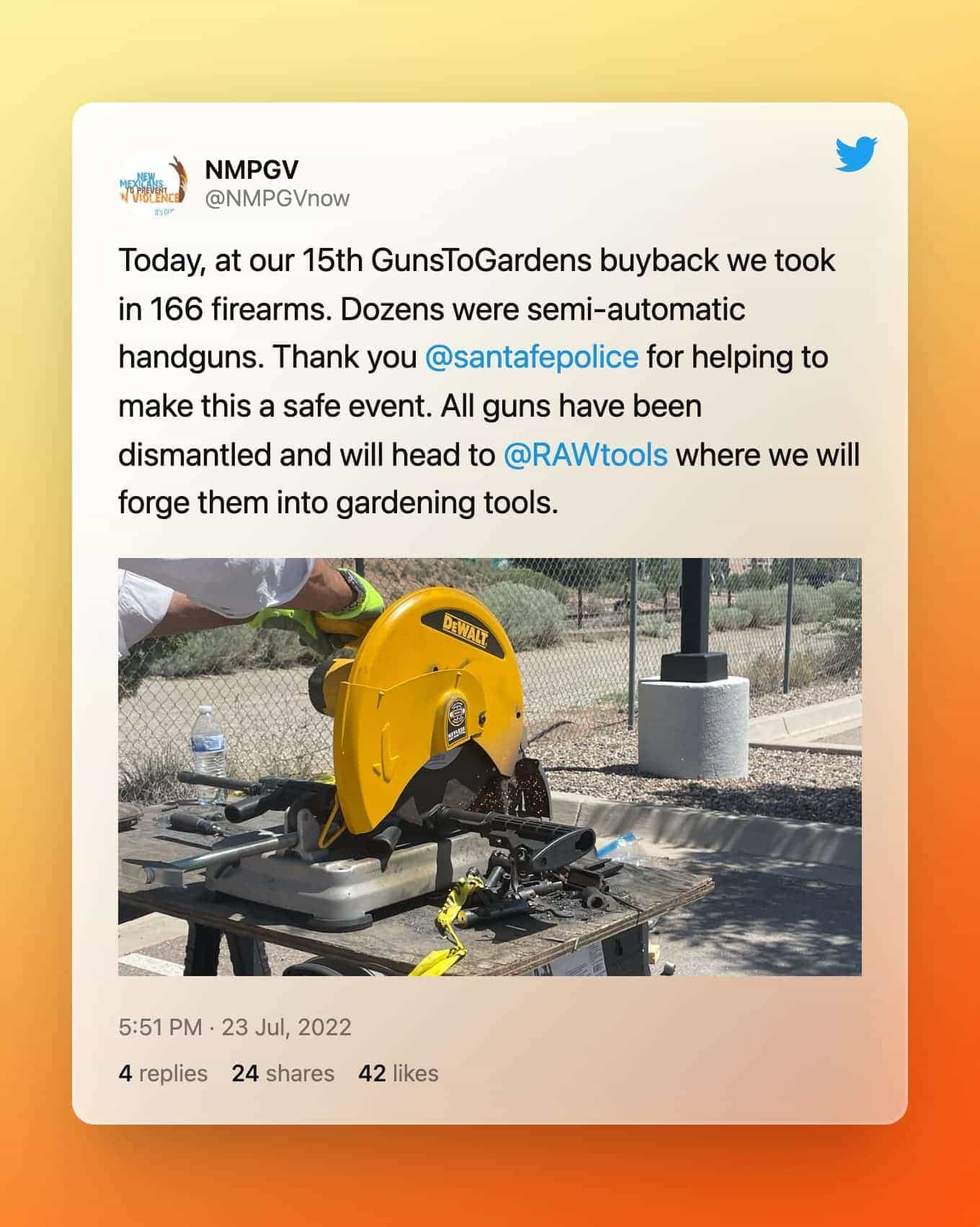
Also in July 2022, New Mexicans to Prevent Gun Violence hosted their 15th "GunsToGardens" buyback event, where they collected 166 firearms. All of the guns, including dozens of semi-automatic handguns, they said in a tweet, were dismantled on site and donated to RAWtools to be turned in to gardening tools.
Gun buyback programs aren't a new thing
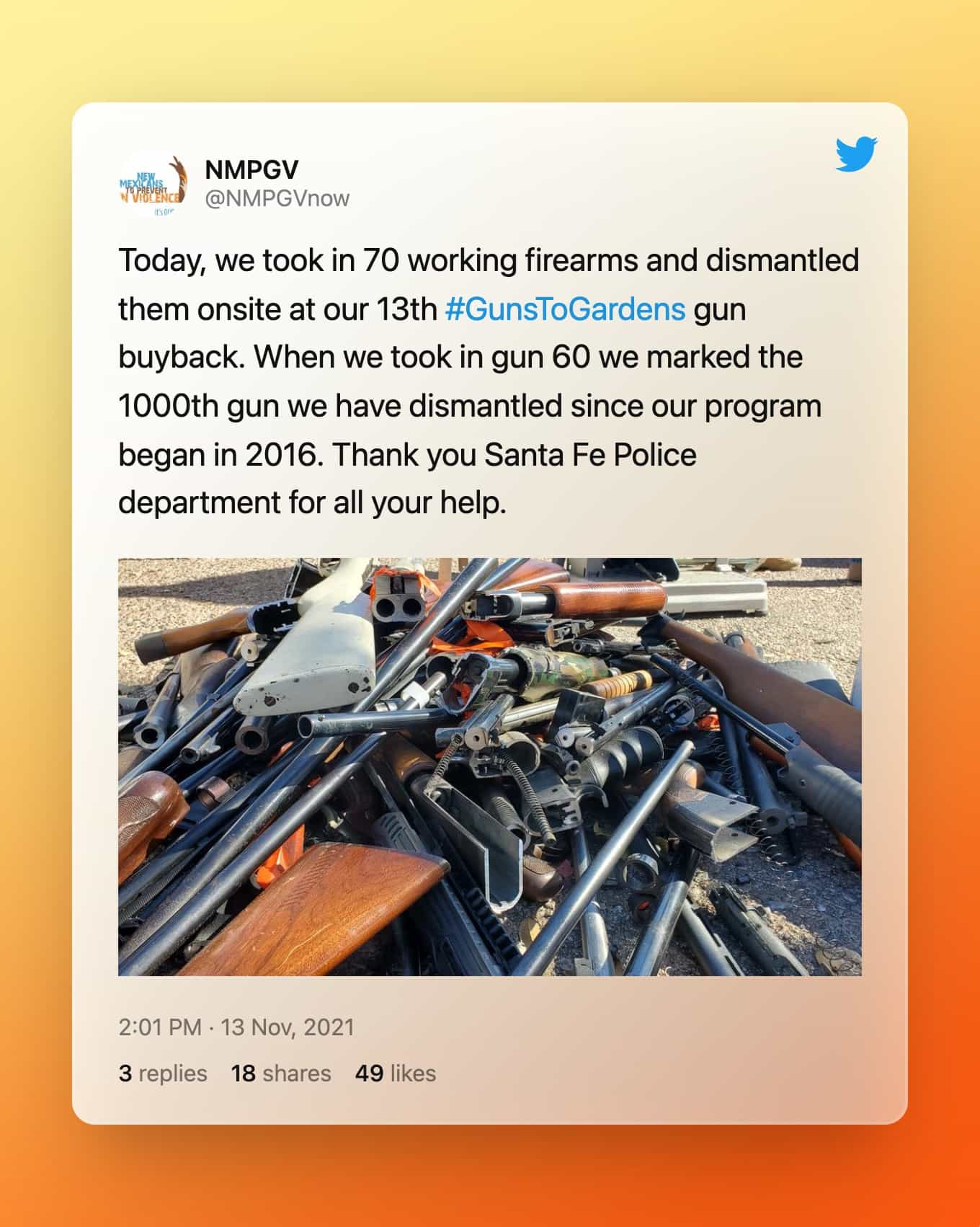
New Mexicans to Prevent Gun Violence has hosted "GunsToGardens" gun buyback events since 2016, and have dismantled and donated over 1,000 guns total in that time. In the context of the rate of gun ownership nationwide, that might not seem like a lot — but it's 1,000 fewer guns than New Mexico had before, and that's good progress worth celebrating.
If you want to help reduce the number of guns in your community and turn more "swords into plows," host an event with RAWtools where you live.
RAWtools is seeking volunteers across the United States
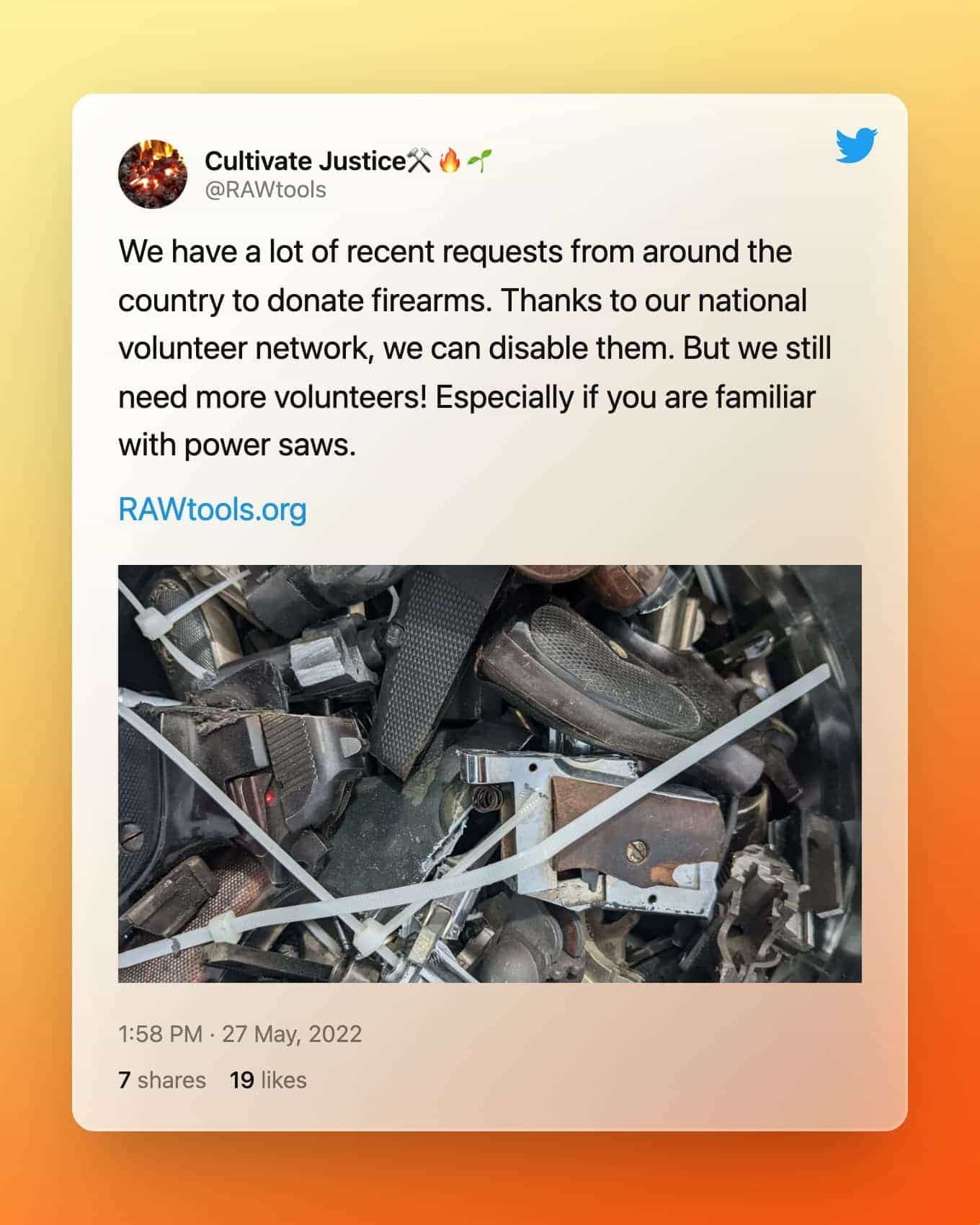
Whether you're a gun owner or not, you can sign up to volunteer with RAWTools and help meet the overwhelming demand they've seen lately for people wanting to donate their guns to be made into garden tools. Especially if you're familiar with power tools, this is a great way to take action to prevent and end gun violence in your community.
Every time college student Aniket Samudra has to fill out a form, the address section stumps him. House number, street name, the name of his building — none of these things apply to him.
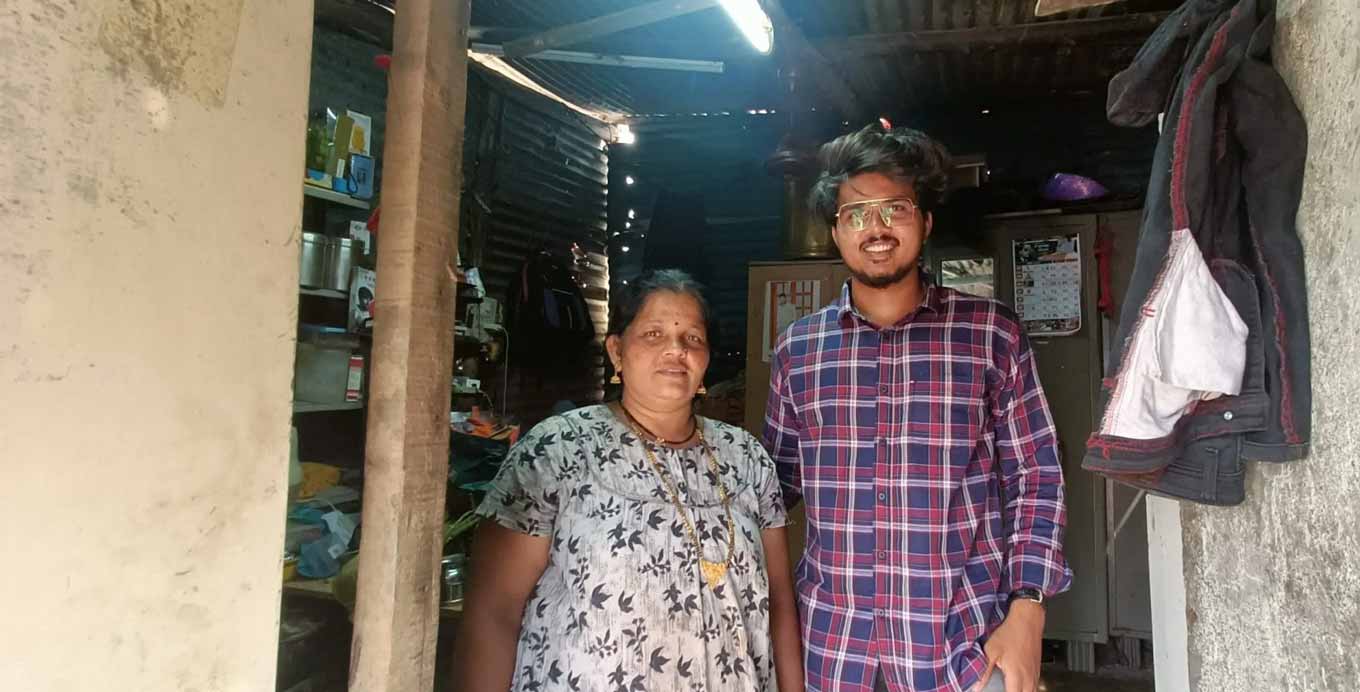
Which isn’t to say that Samudra doesn’t have a house. He lives in Laxmi Nagar, a slum in the western Indian city of Pune, in a cramped one-room home with tin-sheet walls — and no address.
Tens of millions of India’s slum dwellers share this problem, residing in tiny, poorly marked dwellings that have no unique street address of their own. Sometimes an entire slum, with thousands of residents, will share a single address.
In a world that often assumes that anyone’s house can be located, this creates all sorts of problems. Packages and mail don’t arrive at the doorstep. Firefighters struggle to locate blazes. Even the simple act of inviting someone to your home can involve a seemingly endless description of trees, shops and temples at which to turn left or right.
But the bureaucratic consequences are often even more damaging. Not having a unique address makes it difficult to get a government ID, along with all the public benefits that bestows. A lack of address can keep bank accounts, voting rights, even internet access out of reach.
Though billions of people have no official address, the world’s systems are set up as though everyone does.
So recently, when a blue plate with numbers and letters emblazoned on it was affixed to Samudra’s front door, its modest appearance belied the impact it would have on his life.
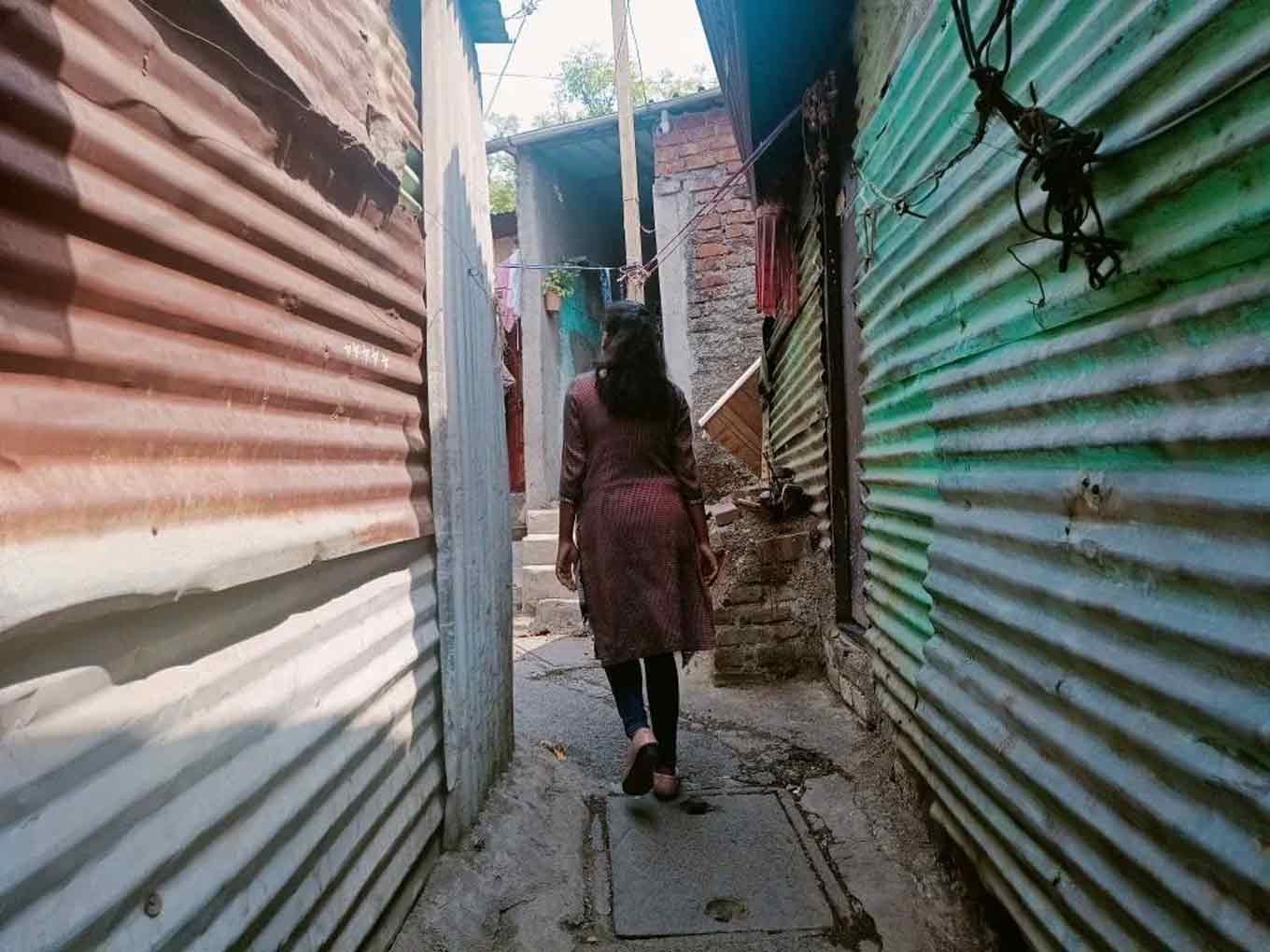
The sequence on the plate, FRR5+XV7M, is called a Plus Code. Developed by Google, these codes act as unique addresses, much like a house number. Enter it into Google Maps and you can find your way right to Samudra’s door.
Plus Codes are derived from the latitude and longitude of a location, and are open-source. “This system is based on dividing the geographical surface of the Earth into tiny ‘tiled areas,’ attributing a unique code to each of them,” according to Google.
Devising an accurate and navigable addressing system for places where traditional addresses don’t work has long been a challenge — and not just in lower-income countries or slums. Qatar is largely without street names or postal addresses. So is Accra, the capital of Ghana, a city of two million people. Most rural residents of West Virginia didn’t have addresses until 1991.

In India’s densely packed city of Kolkata, the nonprofit Addressing the Unaddressed has been confronting this challenge since 2012, long before Plus Codes came along. Co-founder Alex Pigot says they originally used a system he developed called Go Codes, which were similar in concept to Plus Codes. In 2018, they switched to Plus Codes and expanded their team with Google’s support.
“Instead of 10,000 houses we were doing every year, we did 150,000 between June 2018 and the end of 2019,” says Pigot. He estimates that out of the 300,000 slum dwellings in Kolkata, they’ve addressed around 200,000.
In Samudra’s slum, addressing began in 2019 by Pune-based NGO Shelter Associates, which has also addressed slums in three other cities in western India. According to Smita Kale, a mapping and data expert at Shelter Associates, the first step is figuring out where addresses don’t exist, which they do by identifying slum pockets using Google Earth.
After verifying their information with the local government, the fieldwork begins. Manual maps are drawn denoting homes, drainage networks, manhole chambers, community toilets and other landmarks. Then the map is digitized and each household’s Plus Code is generated by Google’s algorithm. Finally, rectangular blue plates displaying the code are stuck on doors throughout the slum.
Once they’ve given the homes addresses, Shelter Associates surveys the residents within on topics like sanitation and vaccination. In Kolkata, Pigot’s organization also conducts a survey after the addressing process is complete.
“[We] identify the people who are missing something — a birth certificate, voter card, bank account — because what we’re trying to do is give people a better identity.” He estimates that about five percent of slum dwellers have no proof of identity whatsoever.
“Those people have fallen through the cracks and are completely invisible and find it very difficult to identify themselves.”
Addressing the Unaddressed helps people open bank accounts and apply for voter ID and ration cards using their Plus Codes. They also train postal carriers in how to use the codes to deliver mail.

Pigot says having a unique addressing system is especially critical in an era of climate change, when disasters are more frequent and more intense. “If there is a disaster you know how many people are involved in order to either save them, compensate them or relocate them.”
Sana Shakil Sheikh says she felt a wave of joy when she first saw the dotted blue line on Google Maps showing the way to her home up a small slope in Laxmi Nagar. “Now we don’t have to give detailed instructions to relatives when they visit us,” she says.
The Plus Code also makes it easier for others to find her family’s small home-based trinket shop. Her friend and neighbor Priyanka Salunkhe says the first thing she did after her two-floor shack got a Plus Code was order a shirt for her brother. To her amazement, it was delivered directly to her door.
Getting communities to use Plus Codes has been easy, says Pratima Joshi, executive director at Shelter Associates. Convincing the government to use them, however, is another matter.
About a third of India’s urban population resides in slums, yet the government doesn’t recognize slum settlements as legitimate housing, says housing rights activist Shubham Kothari. “It only accepts it as a dilapidated house or encroached space or illegal structure.” Until that perspective changes, authorities won’t care about providing addresses to slums, he says.
It is “a huge governance issue,” says Joshi. “It is important that these locational IDs get built into regular governance, and this is going to be a huge step for us to get them to accept it.”
The pandemic got them part of the way there — when authorities were scrambling to monitor patients in densely populated areas and designate containment zones, some of them came to realize the importance of locational IDs, says Joshi.

In the city of Kolhapur, where all of the city’s more than 16,000 slum households now have Plus Codes, integrating those codes into official government records has finally begun.
Prashant Pandat from the water department at Kolhapur Municipal Corporation told me his team is adding Plus Codes as a new field in their database. Pandat has been using the codes to analyze water access in Kolhapur’s slums.
“[The Plus Code system] helps us know who has legal water connections and who doesn’t,” he says, adding that the same can be done for electricity connections, and that almost every municipal department in the city can use Plus Codes.
“The property tax department will benefit. So will the department of licensing, to know what commercial activities are going on in the slum.” In the town of Pimpri-Chinchwad, not far from Pune, municipal authorities plan to utilize Plus Codes for solid waste management. “Whether that family is giving their garbage to the collection van, whether it is segregated, who is defaulter — for that purpose they want to use Plus Codes,” says Kale.
Doors in slums typically have several numbers written on them by hand because different municipal departments conduct their own surveys and have their own numbering systems. “That is not usable,” says Kale. “[Plus code] is uniform.”
Unlike some other addressing techniques, Plus Codes have a pattern, says Pigot. “If you move the pin along [the map] you see that [for nearby addresses] only the last one or two digits change. The rest remain the same.”
Another reason he decided to adopt Plus Codes is that they are developed by Google, a global company with enormous reach that can strive toward universal adoption of a single system, which is one of the biggest challenges in addressing.

In Laxmi Nagar, some initially suspected that the new address plates being affixed to their homes could lead to their eviction, a fear that reflects the fraught relationship between slum dwellers and authorities. This is why Kothari sees the challenge of addressing slums as more political than technical.
He believes that Plus Codes are “a very important technological innovation which has promising potential,” but only if they are “backed by appropriate political will.”
Without government sanction, authorities may choose to ignore Plus Codes altogether. “If the government is willing to take up a project with Google, I am more than happy,” says Kothari.
Pigot says authorities need to recognize slum dwellers as vital to urban society. They are street sellers, delivery people, house cleaners and construction workers. If the whole service community is driven out of a city, only the middle class will be left, and soon they will be gone, too, leaving behind a derelict city, he says.
Last year, the country’s postal department consulted Pigot for their Digital Address Code project in which each address in India would be assigned a unique code based on its geospatial coordinates. He’s been approached by people in Bangladesh and Brazil, and organizations like Slum Dwellers International and the United Nations Habitat have shown interest. “There’s a sort of wave of support building to get people addresses,” he says.
The social safety net in the U.S. can sometimes feel like more gaps than threads.
Last fall, a Seattle Times reporter and photographer followed Grandma and Gonzo, two longtime campers who hoped to be caught in it. They moved from tents in an encampment near Bitter Lake to temporary housing in a hotel, as a step — they hoped — toward a permanent home.
They share a life spent mostly outside, conflicted relationships with their addictions, personalities roughened by the realities of survival and an ability to build and foster community on the streets.
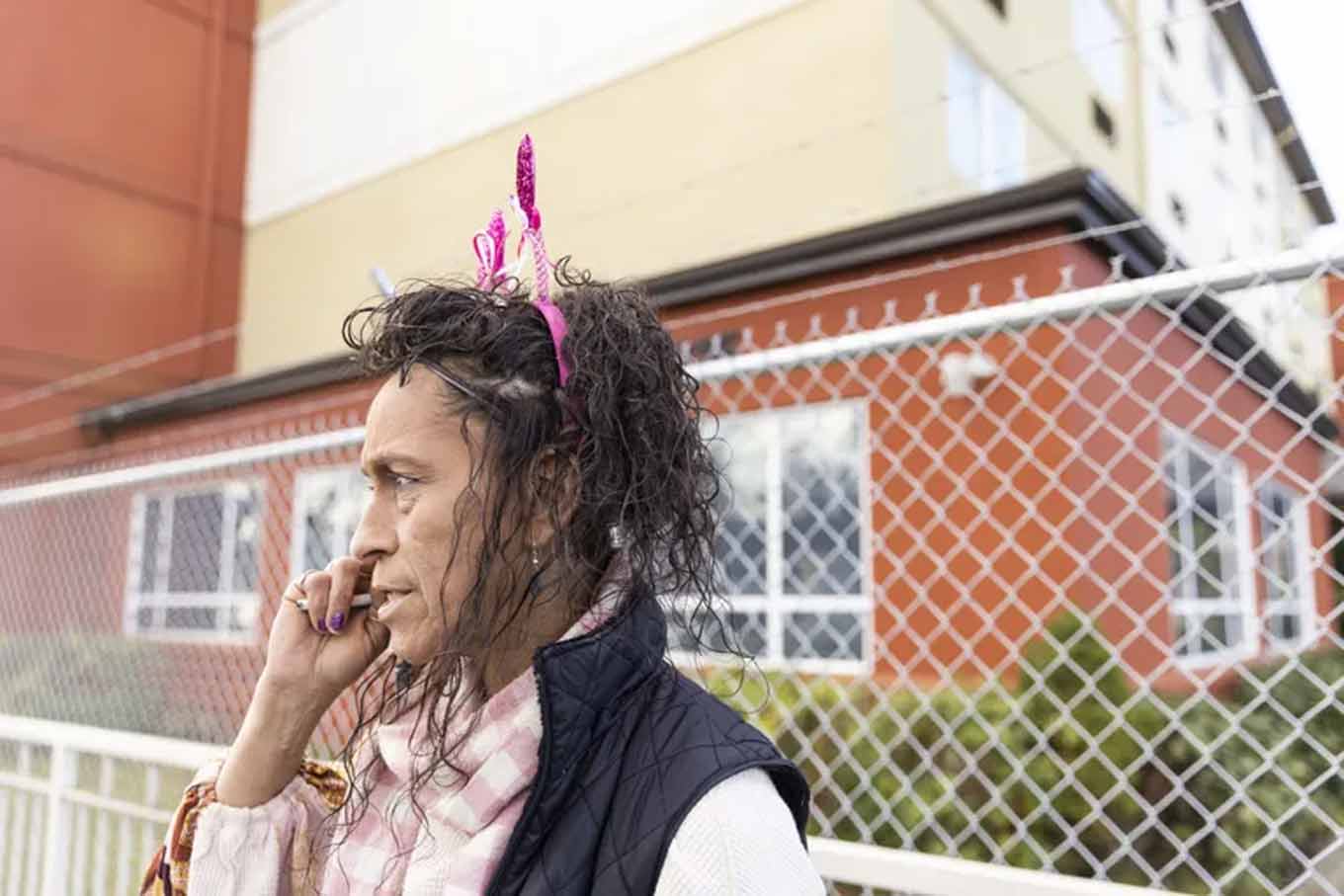
One made it to housing, one didn’t.
During the months of reporting, the city was testing a slow-and-steady approach of clearing encampments, focused on helping people who are often left out of the homelessness system because their challenges are so complex. Since then, a new mayor has accelerated the pace of rousting encampments.
As Seattle wrestles to find the best approach, these two show how tenuous the path to a stable home can be for each person walking it.
Gonzo
It’s Nov. 4, 2021 — the birthday of Kanen Walker, who goes by “Gonzo.”
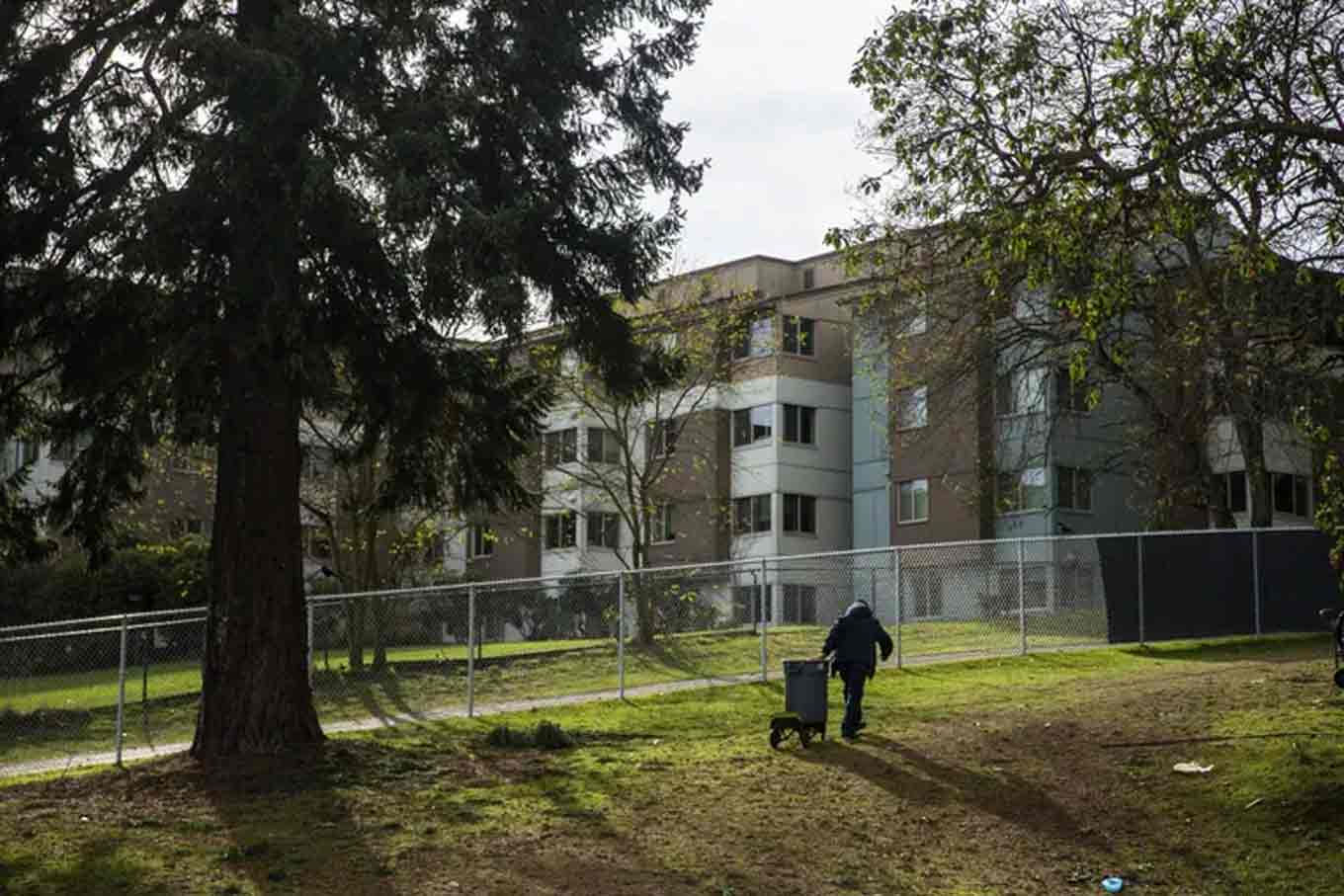
It’s also move-out day for Gonzo and 15 other campers on the shore of Bitter Lake in North Seattle, which borders a K-8 school and a playfield.
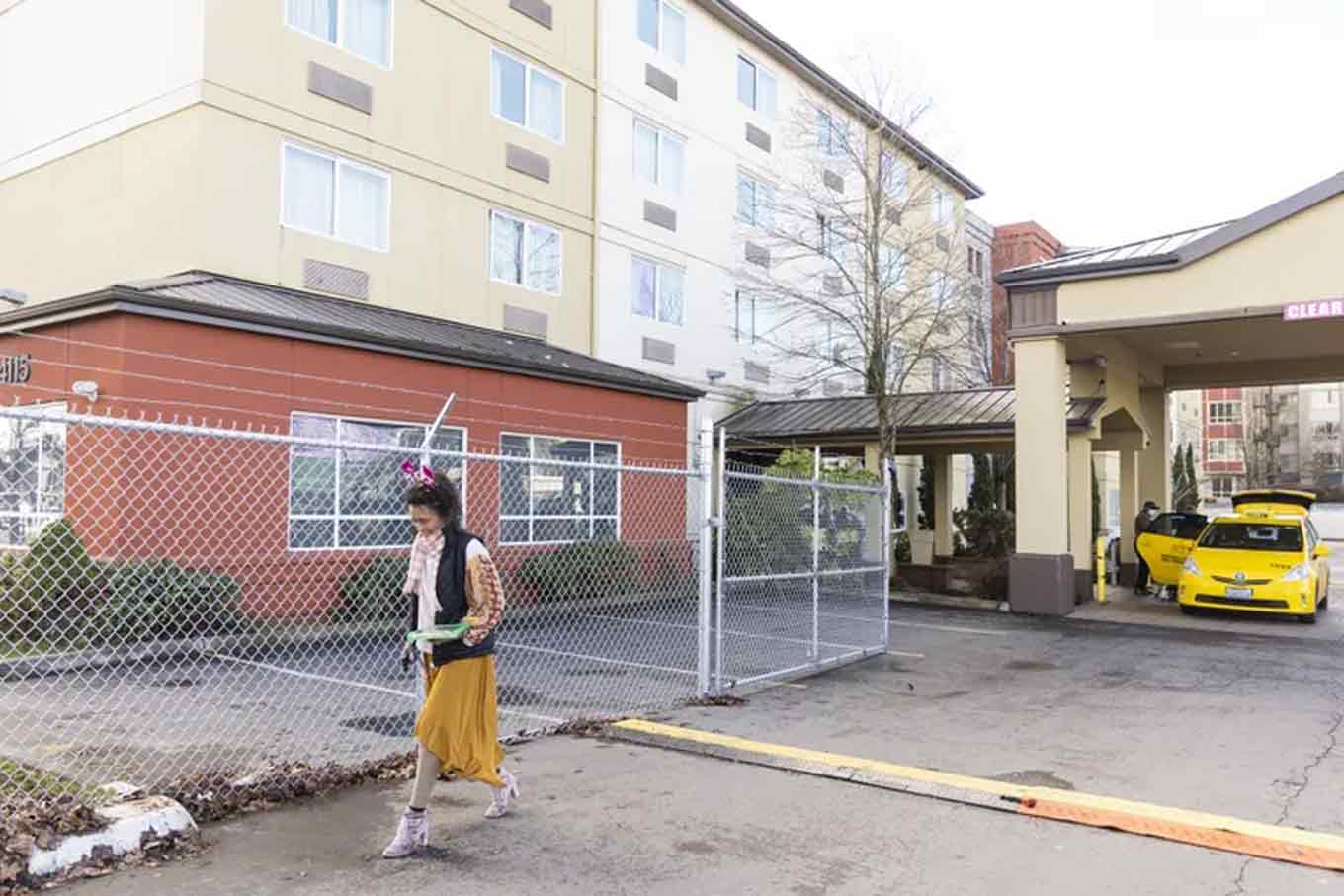
Gonzo was reluctant to give up his freedom on the streets for the rules of the hotel shelter opening nearby — a former Holiday Inn now called the Mary Pilgrim Inn. But the school district is clearing the encampment’s residents and he thinks he is ready to be inside.
The odds to get a home for Gonzo and the rest leaving this camp are not very good. In 2020, only 1 in 4 people left a homelessness program in King County for long-term housing. Two-thirds were unaccounted for.
In the past, Gonzo would shuffle from one encampment to the next until he sought shelter himself.
Then, it was just a mat to sleep on next to dozens of others and he had to be out early the next morning.
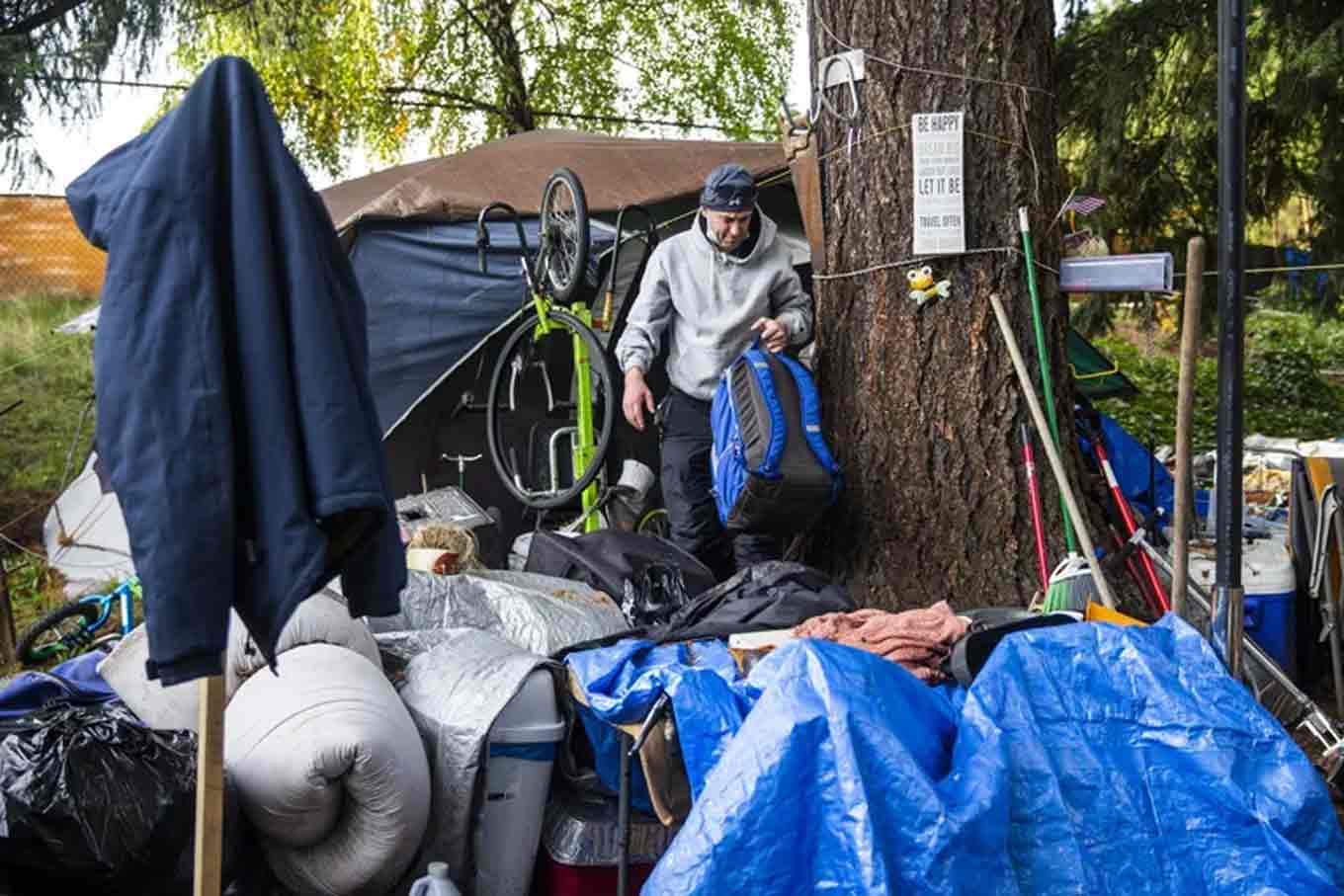
The homeless system has never offered Gonzo much. Better to simply go it alone outside.
But this time, he decided to take a chance on something new.
Gonzo’s tents are in the far corner of the encampment at Bitter Lake — one he sleeps in, and one he keeps his prodigious amount of belongings in. They abut a fence hung with tarps that hide them from the Broadview-Thomson playground on the other side, where just feet away, he can hear students playing at recess.
A canvas print, bungeed to the tree next to his sleeping tent, reads, “BE HAPPY; LIVE LIFE ON PURPOSE; DREAM BIG; ENJOY EVERY MOMENT.”
He’s the kind of person few used to try to help.
Gonzo, who was born in Marysville and has family in Moses Lake, has been homeless off and on since he was 18. He has three assaults on his record from more than 15 years ago. He says he wants to get a job welding, his former trade.
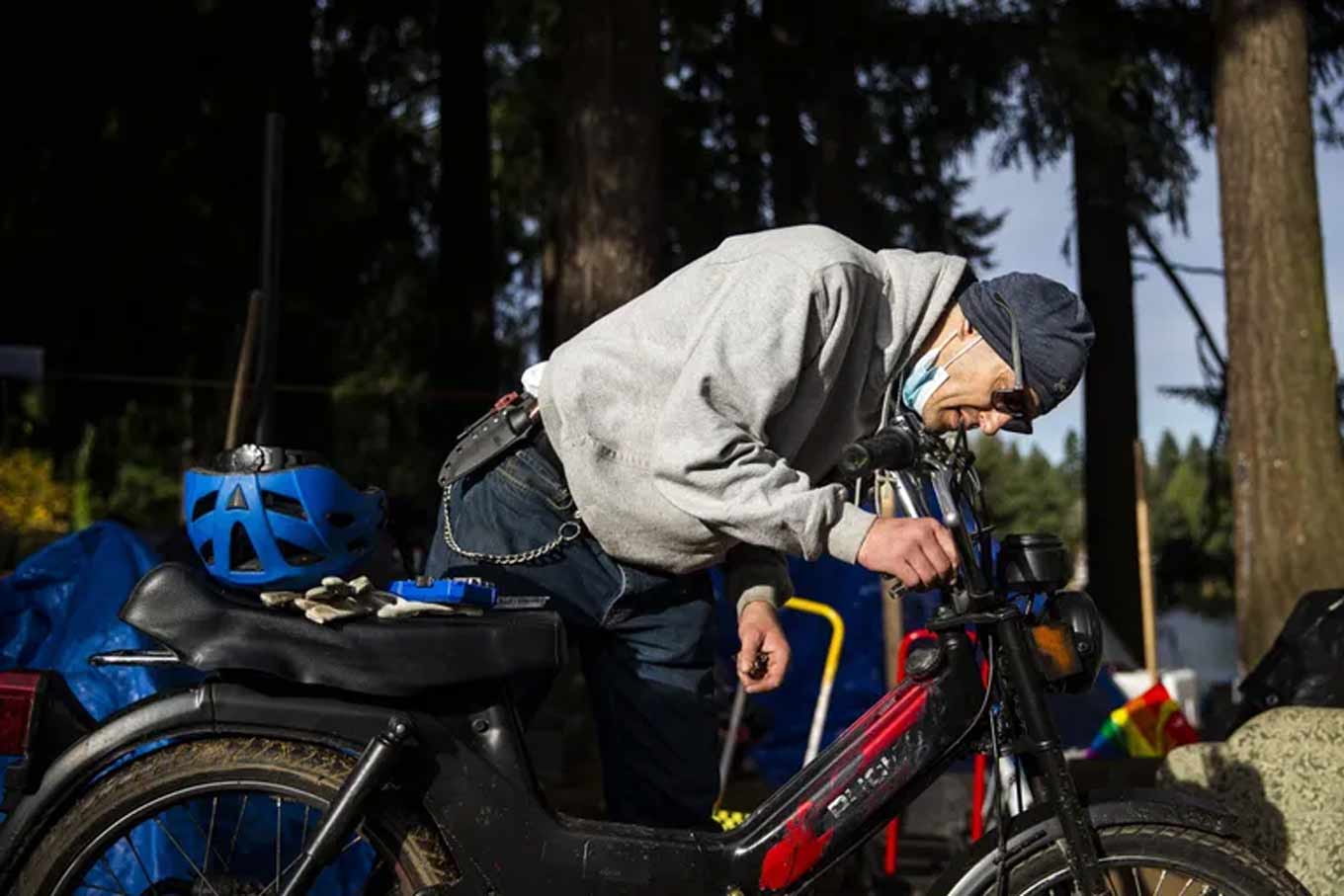
He values his privacy and autonomy, and has been through rehab about four times but never been able to get housing, so each time he left the treatment center and returned to the street.
“The one thing you don’t want is to go back around the people in the area that you were,” Gonzo says. “But you don’t have another option.”
When the offer for shelter came at Bitter Lake, Gonzo mulled whether to say yes because of all the rules, which seemed to him like a leash.
He knew several campers who’d gotten rooms and some level of privacy at a nearby shelter, but they were still coming back to their tents because they were “unrestricted.” After all, the Bitter Lake camp has actually been pretty calm compared with other encampments.
But things there have been deteriorating, like they always did. As longtime campers would move into shelters or tiny houses, random campers from elsewhere moved into the empty tents.
Gonzo began to see more theft, which made him livid.
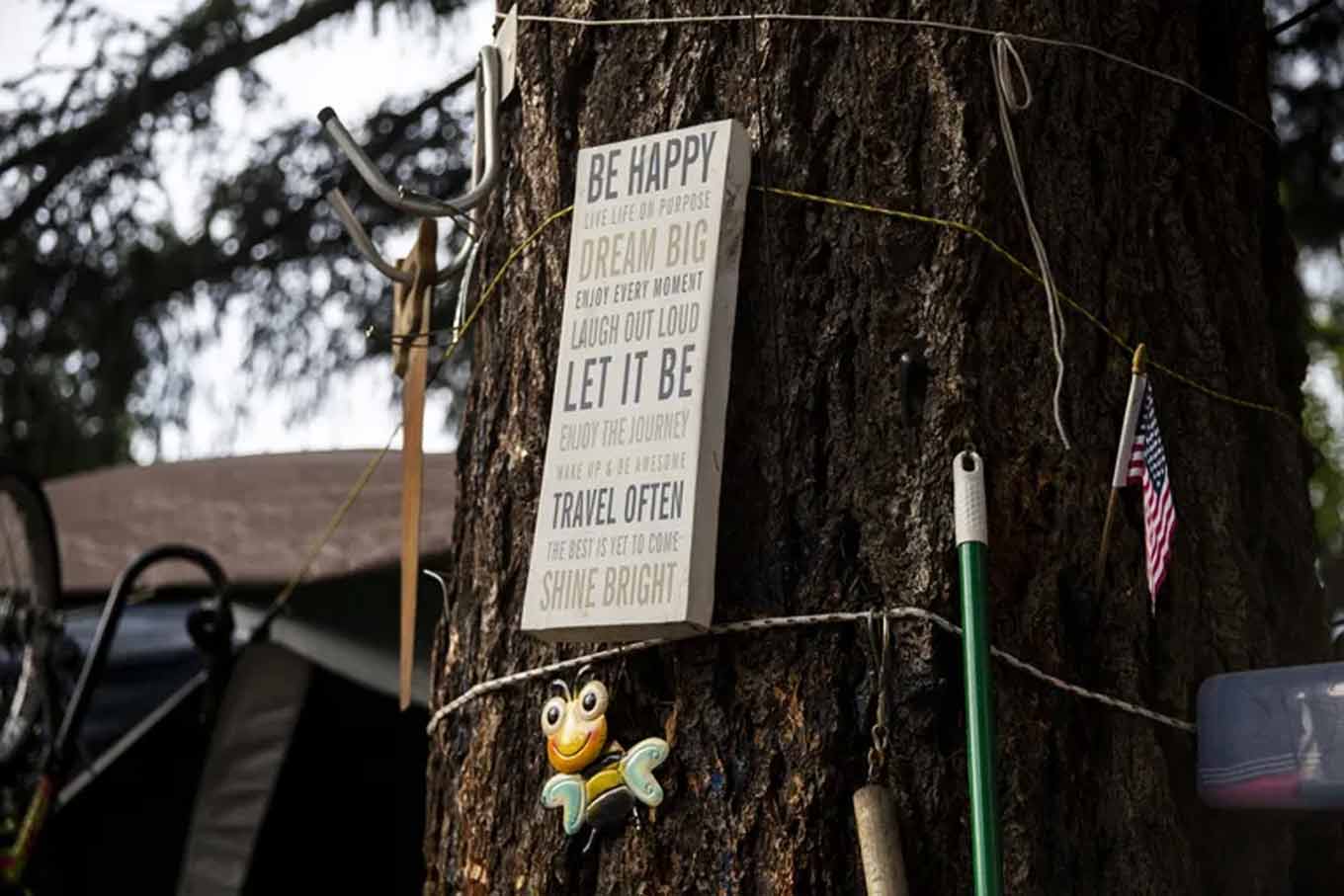
Gonzo is a powder keg of righteous fury, rising in just seconds to such volatility that sometimes he has to ride away on his bike. He speaks boldly of violence for anyone who steals from him, but he is generous with his friends.
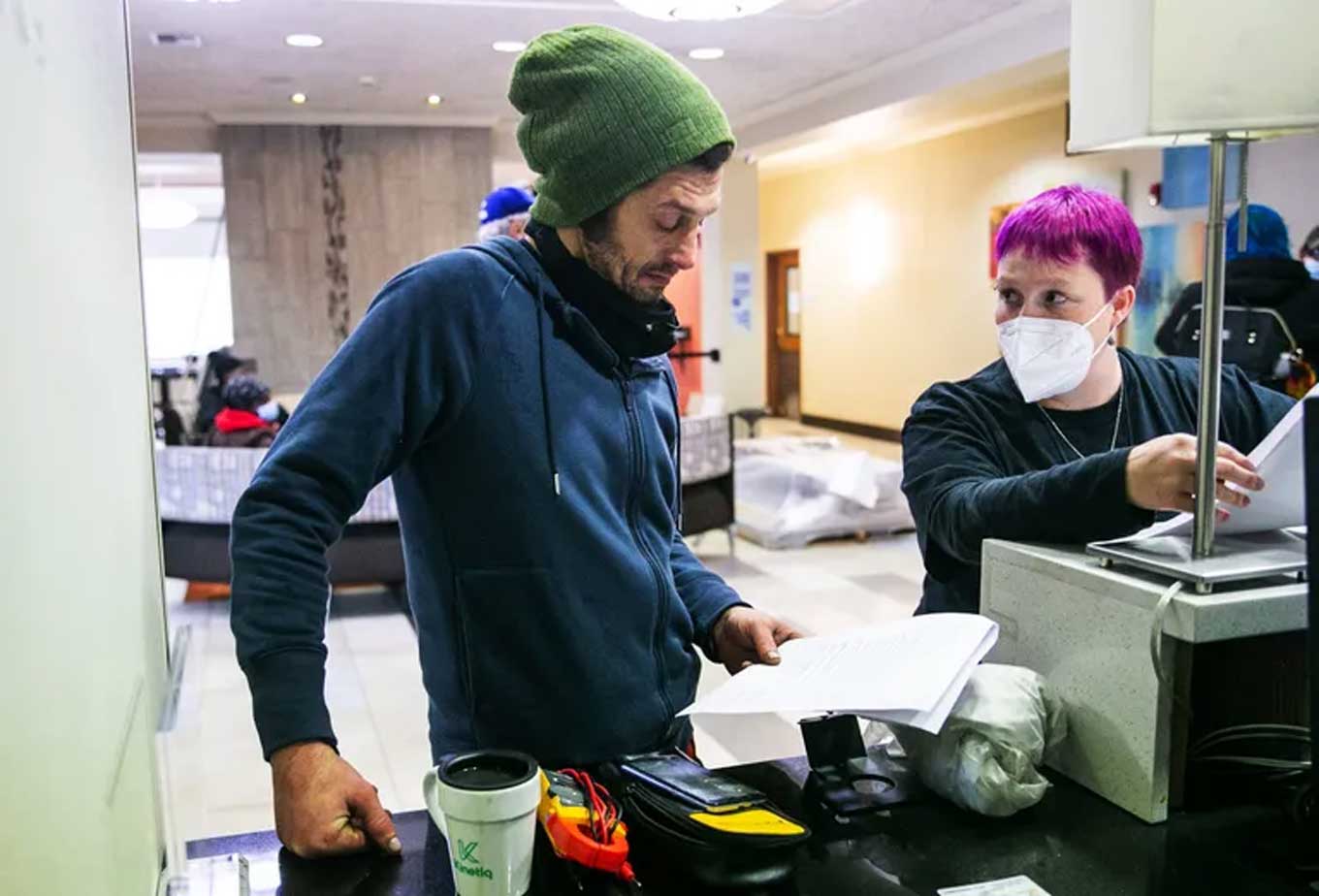
On move-in day, Gonzo is feeling Zen in the busy lobby of the Mary Pilgrim. He has a cup of coffee in his hand and bags under his eyes as a woman explains to him the rules of his new temporary home. The coffee is really good, he says, or maybe he just hasn’t had coffee in a long time.
It’s obvious this hotel was rushed into a shelter. When the county got the keys, its fridges were still stocked with sausage and biscuits for continental breakfasts. Wrapped furniture from upstairs rooms fills the breakfast area.
Each day of its first week has seen a new group of people move in, whether from a camp like Bitter Lake or from a hotel shelter elsewhere.
New intakes come into what used to be the hotel gym, now a doctors’ office. A “hot box” for cooking people’s clothes replaces the exercise machines, and staff encourage new residents to use that and the gym shower before entering their rooms. Bedbugs were a plague at a previous hotel.
Baggies contain harm reduction kits of needles and straps. Over the next few months a tremendous amount of methamphetamine and fentanyl will circulate through this hotel, killing two residents.
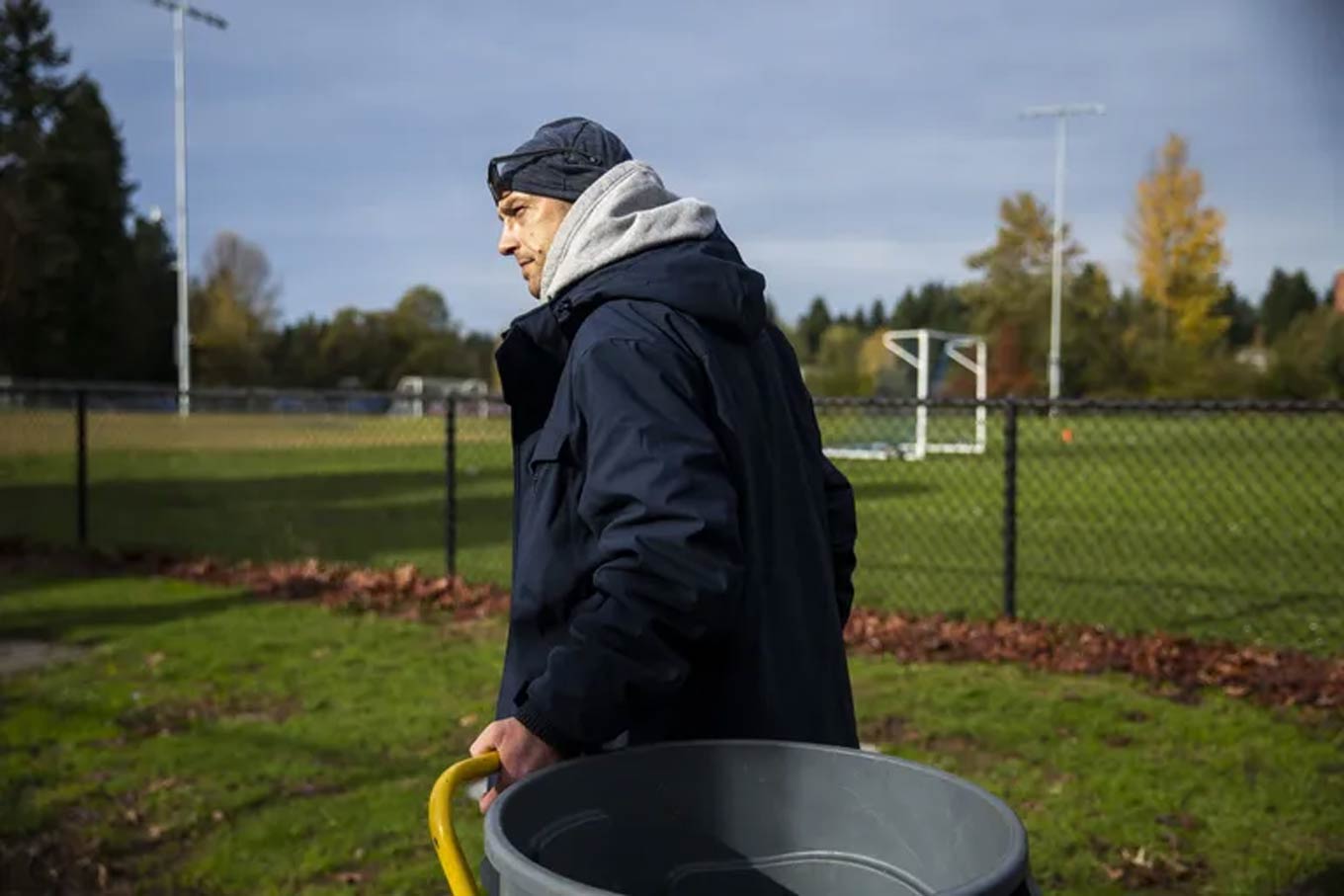
The gym windows look out on the hallway, which doctors and staff can now use to “prescreen” someone who’s not psychiatrically stable before they enter.
Rates of assault on the staff at the nonprofit’s shelters are high, and have risen since the pandemic tightened access to crisis mental health beds. The last quarter of 2021 had 56 assaults on staff, up from 39 the quarter before.
So there are rules.
The rules strike Gonzo as strict, and the woman explaining them, severe: No outside visitors or cooking food in the rooms, check in with staff every 24 hours and a case manager once a week, and no calling 911 from the room phone.
The check-ins let staff know you’re OK, said the Downtown Emergency Service Center’s housing director Noah Fay, and police and emergency responders are already called to the hotel frequently. If every resident could call 911 from their room phone, the neighborhood would complain more.
One key final rule: You can’t turn down your third offer of a lease.
Gonzo is fine with that one.
Move-in day feels like a miracle to Gonzo, but it starts like a bad dream: Someone is already in his room.
Most people in the hotel are going to have a roommate, case manager Jon Pacher explains to him, and there’s probably not a single open.
This is not what Gonzo was told when he agreed to move in.
“I have too many valuable things,” Gonzo says. “I do not steal and everyone steals from me so this is not going to work.”
Pacher says he’ll check if there’s a single available. Irate, Gonzo waxes grandiose about how unchurched and “evil” Seattle is.
“A bunch of Amer-I-Can’ts in this state, in Seattle. Not Americans,” Gonzo says. “The centrifuge of evil and bad and negativity is Seattle. In the world. It’s the largest crossroads on Earth.”
At the front desk, Pacher tells Gonzo he can have a room with two beds and they’ll put another Bitter Lake camper in the bed next to him, which Gonzo could accept because he trusts most of his former neighbors.
Pacher gets a key card for the new room, 225. They go up the stairs and open the door.
“Whoa,” Pacher says, surprised. “225 is a single.”
Gonzo’s demeanor changes instantly.
“It’s all the Lord,” Gonzo says, whooping. “You cannot explain this. You can’t. It says downstairs this is a double, but we come up here and it’s a what? Uh huh? That’s a little bit of magic.”
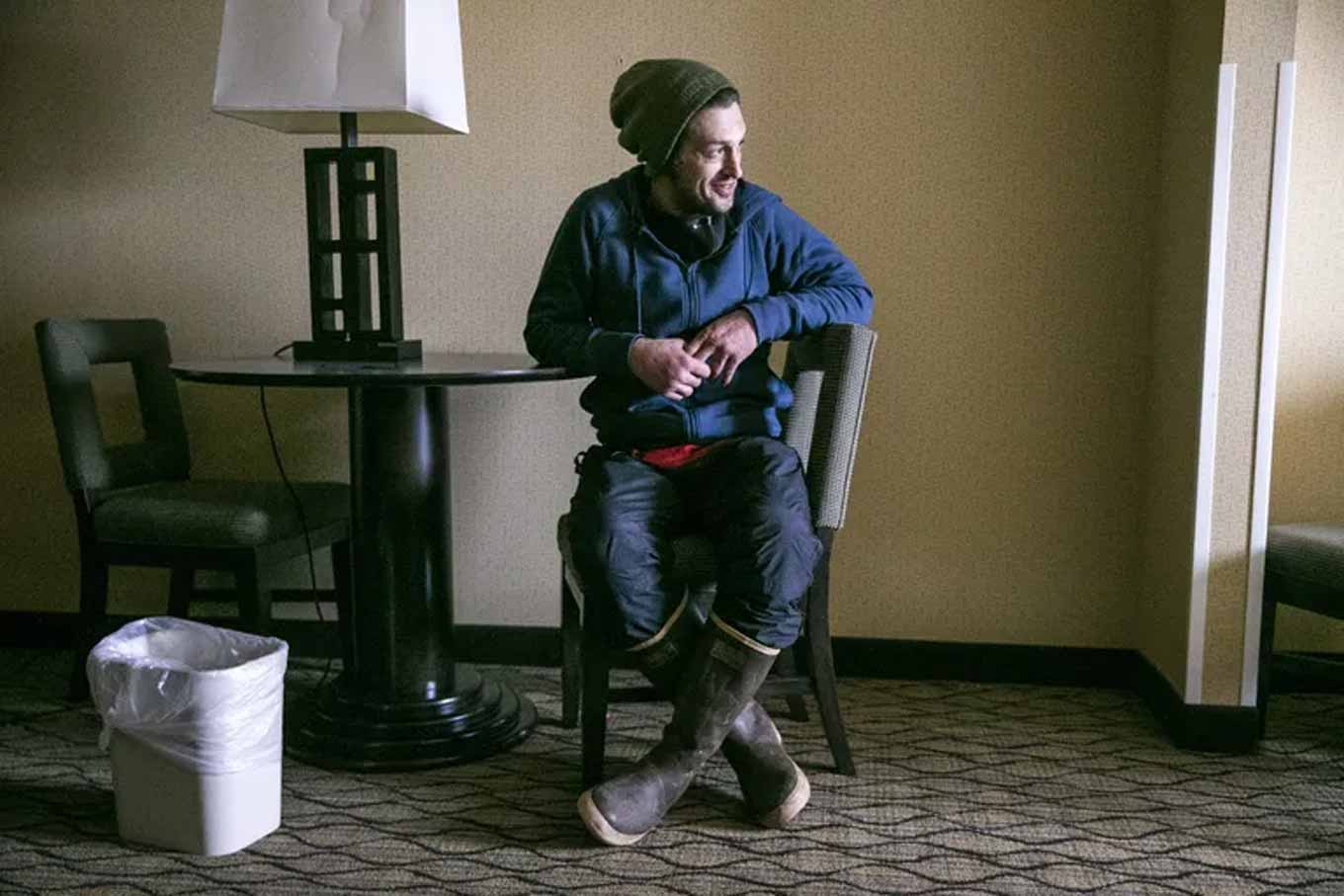
Gonzo looks out his new window at Aurora Avenue — at the pawnshop, used car dealerships and sewer repair shop across the street.
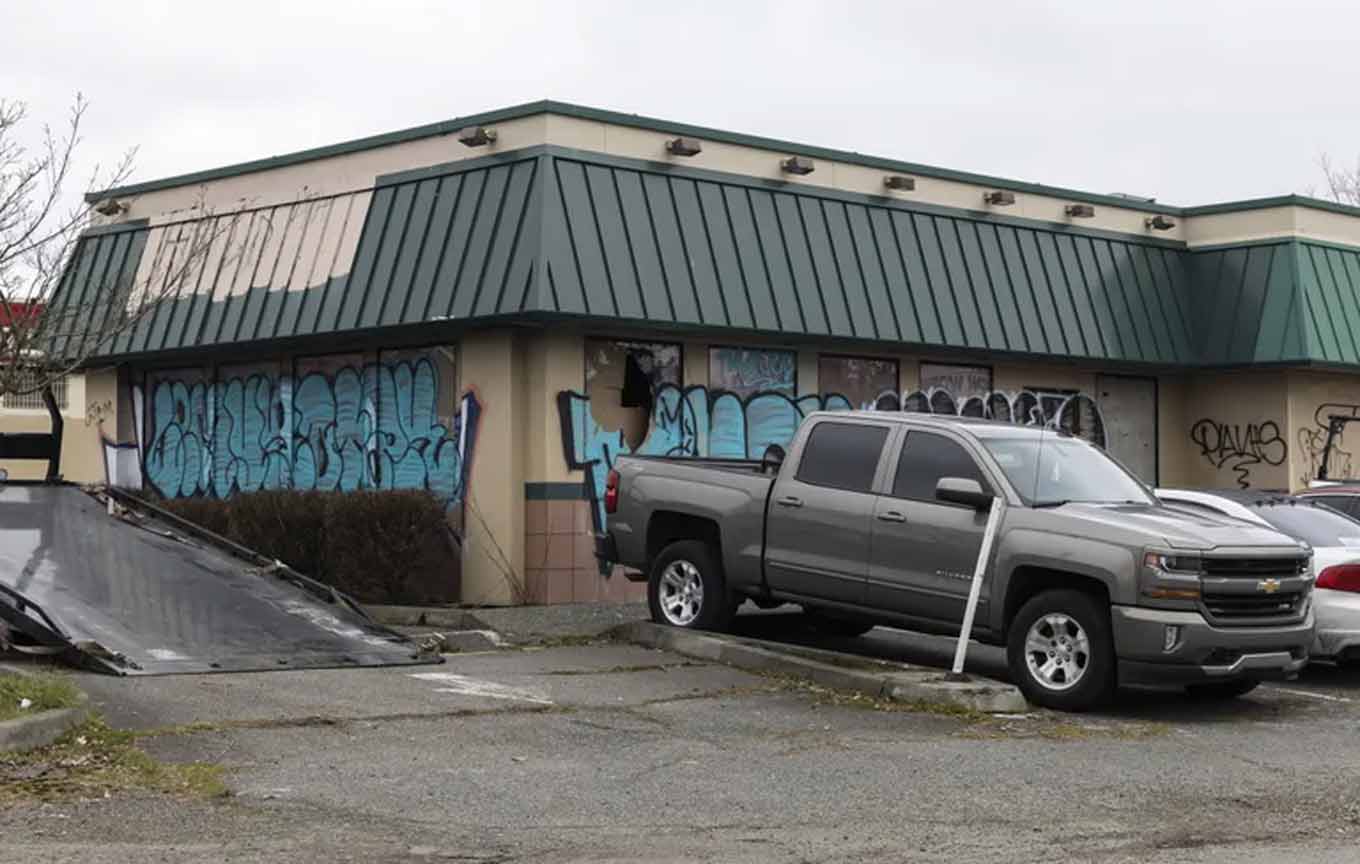
Half a block up, next to an O’Reilly’s, an abandoned Taco Time has a paint-spattered drive-thru sign and smashed windows.
In four months, Gonzo would be sleeping in its walk-in freezer.
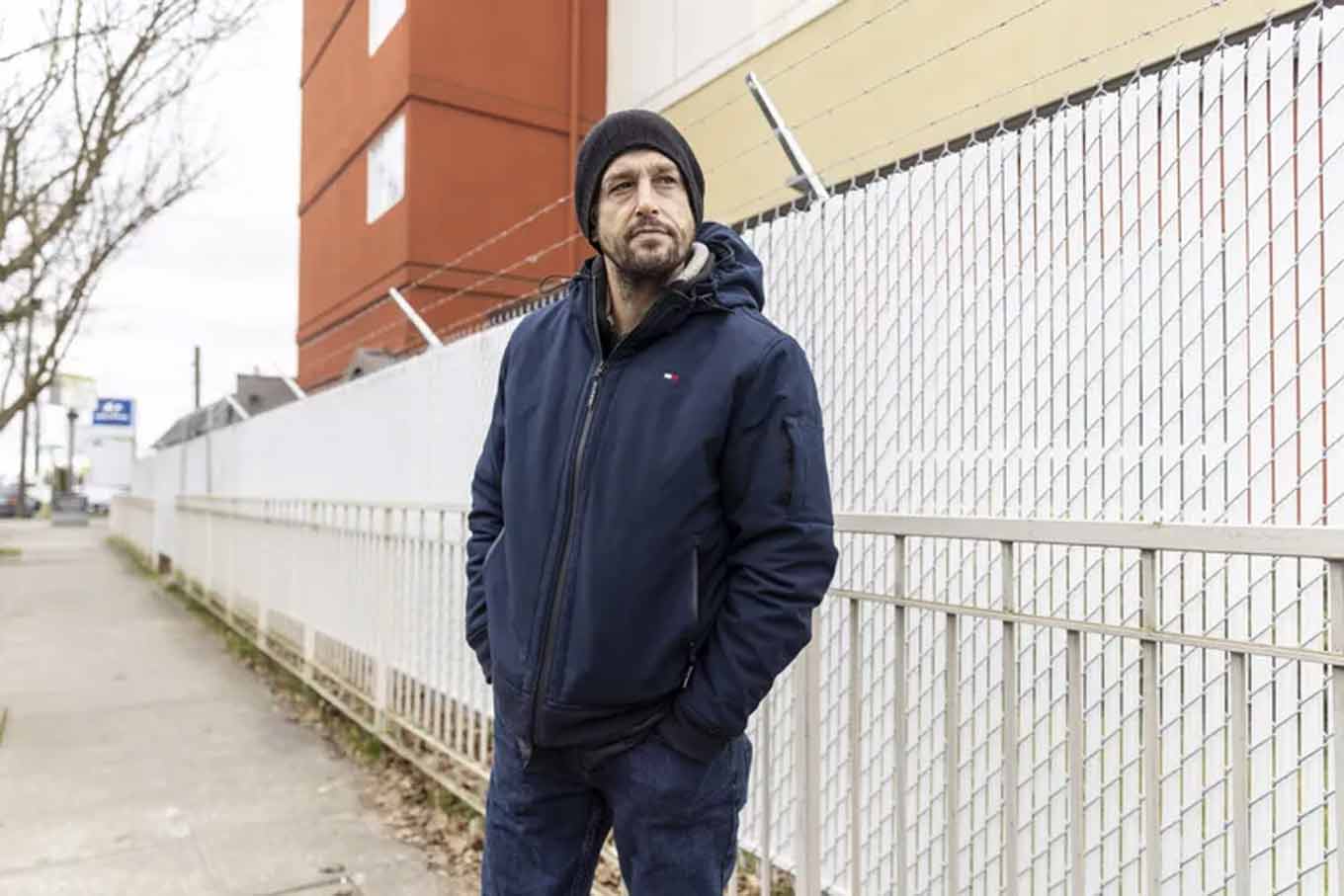
He met a girl sleeping down the hall at the Mary Pilgrim Inn who had a roommate she didn’t like, and he invited her over, repeatedly. It would have been a simple kindness and the start of a romance when he was living on his own, but here, broken rules.
Fay wouldn’t comment on Gonzo’s situation, but he said it’s not the nonprofit’s practice to kick people out just for breaking rules like that — there must have also been an “acute safety issue.”
“Bull[expletive],” Gonzo said.
Gonzo maintains that his experience at the Mary Pilgrim Inn was the worst he’s had in shelter. He is resentful of the way the promise it offered was taken away.
And yet, if he were offered another shot?
He would take it.
Grandma
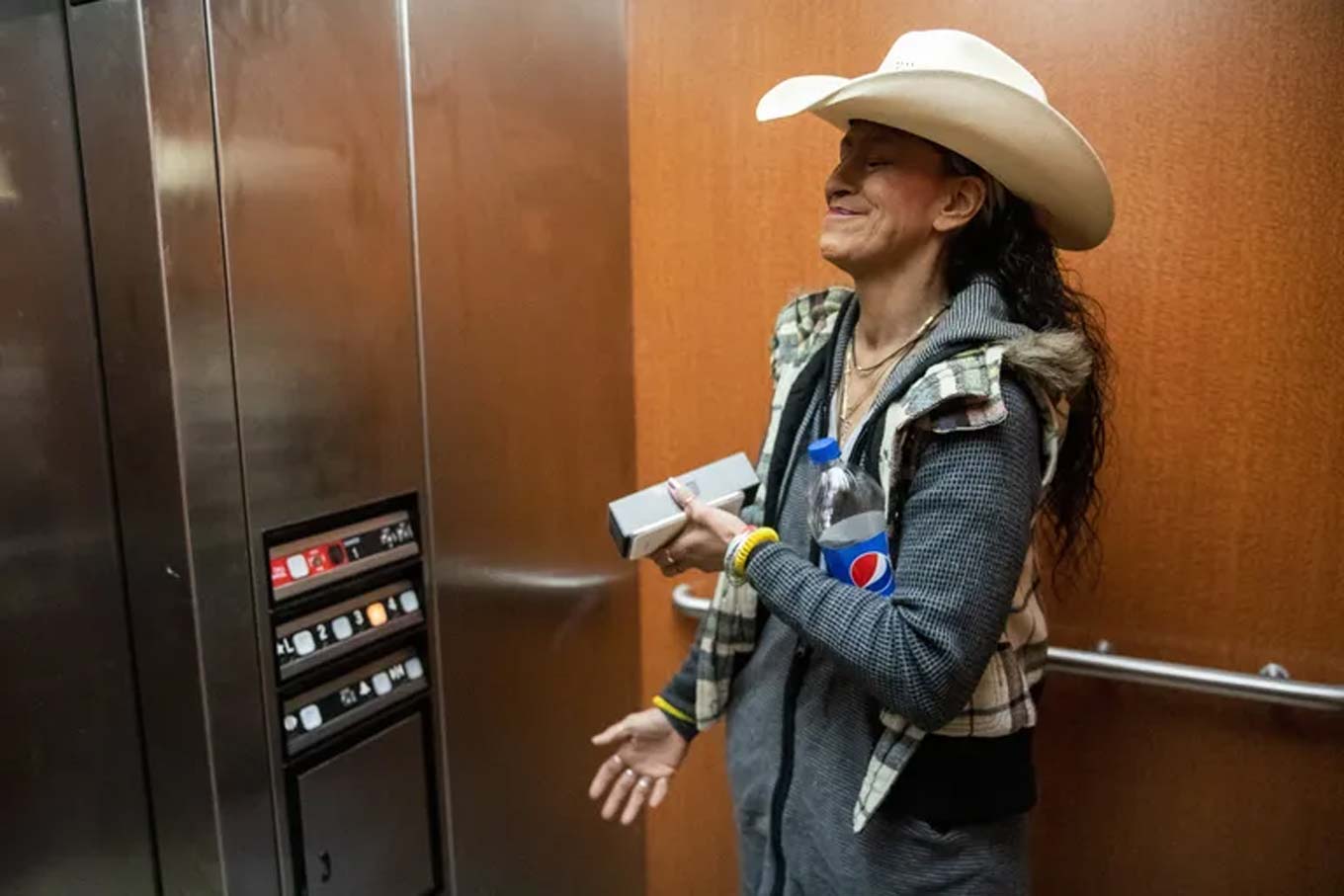
“Grandma” Monet Corona bursts out of the elevator playing “Rap God” by Eminem on a portable speaker balanced on a packed suitcase, wearing pink velour heels, a burnt-orange dress and a Valentine’s Day headband with two hearts bouncing like cat ears out the top.
It’s Jan. 31, 88 days after move-in day, and Grandma believes she’s minutes from being kicked out of the Mary Pilgrim.
Gonzo and Grandma both came from Bitter Lake and share similarities. Gonzo first experienced homelessness as a teen; Grandma turned 13 in a homeless shelter and she’s been homeless on and off for nearly 40 years since. They both use drugs, but say they are functional.
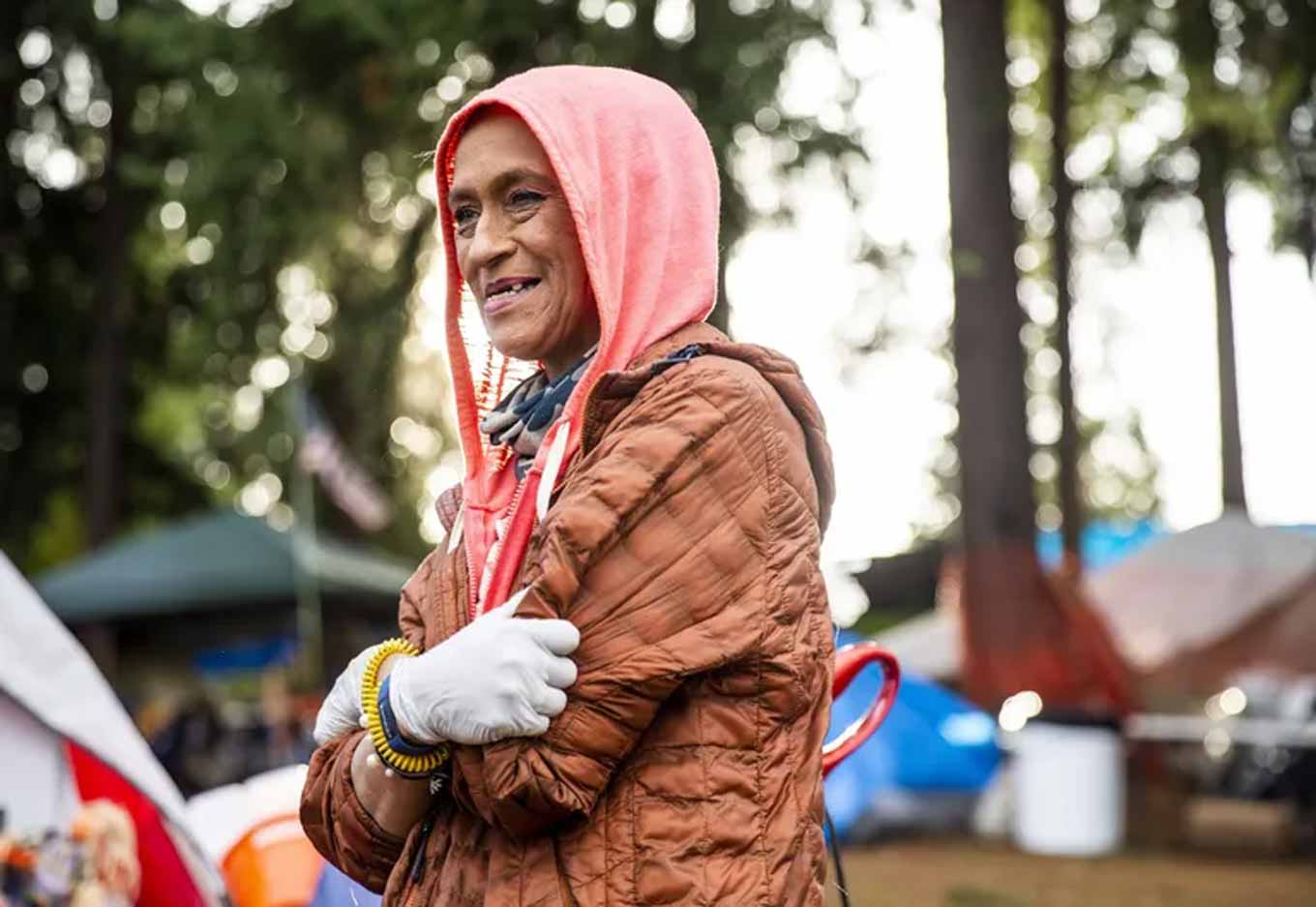
She moved into the Mary Pilgrim the same day as Gonzo and lives one floor above his.
And like Gonzo, Grandma’s odds of making a break with the streets don’t look good at first glance.
Early statistics for these hotel shelters show better results at keeping people from returning to the street than much of the shelter system. While the model works for the majority of people, those who’ve been outside the longest pose the toughest challenges.
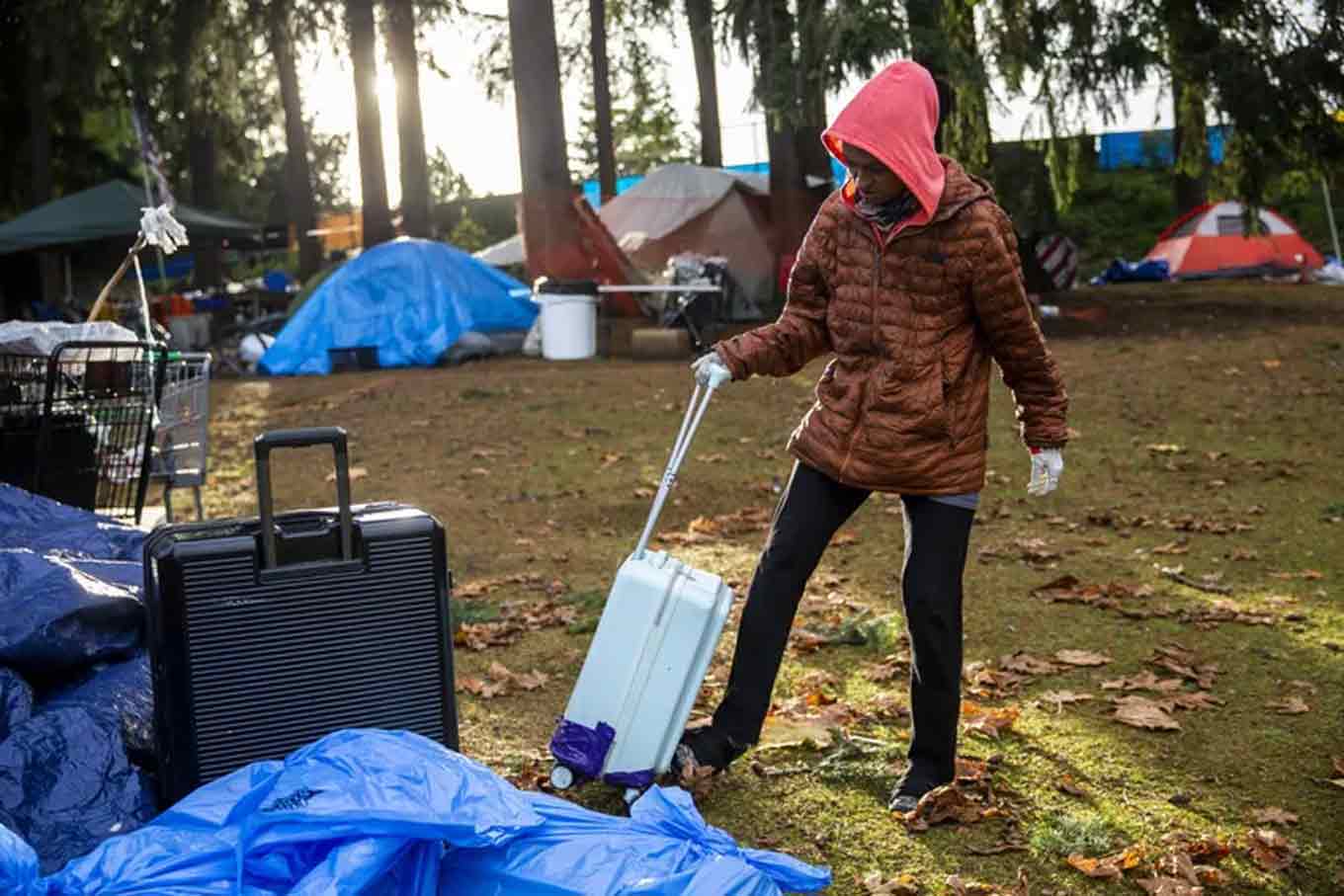
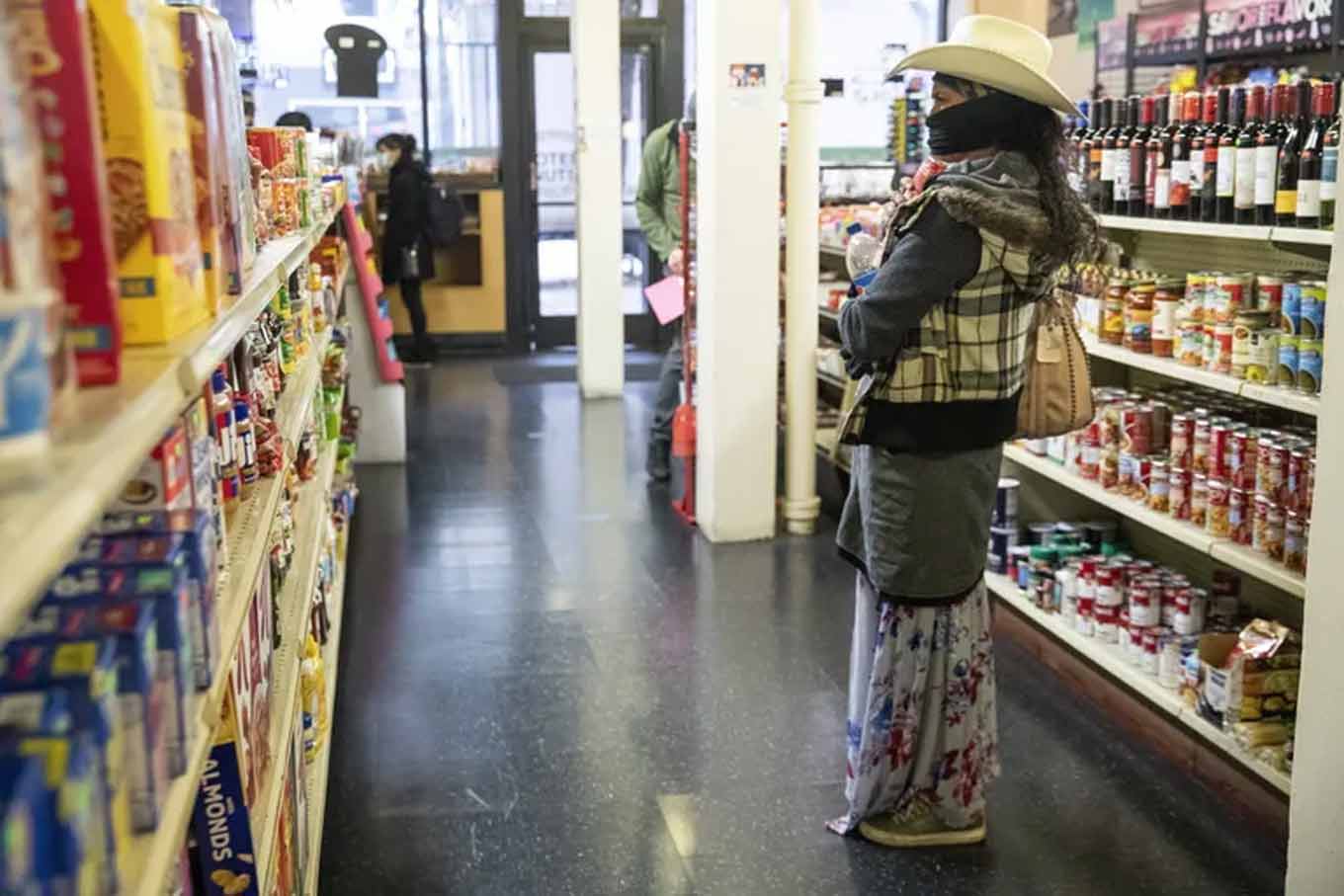
Once, when she got housing after a long time on the street, Grandma put her tent on top of her bed so she could sleep. She was in a hotel leased by the city of Seattle earlier in 2021, she says, but when it closed last year, she went to the Navigation Center, and then got kicked out of there.
But Grandma has a few advantages over Gonzo when it comes to another shot at housing. The more vulnerable someone is to danger or death on the streets, the easier it is to get a bed. Grandma is 52, a decade older than Gonzo, and says she has six different mental diagnoses, including bipolar disorder and PTSD.
Perhaps most important, years of living outside are catching up to Grandma. She’s got pneumonia. Going back to a tent could kill her.
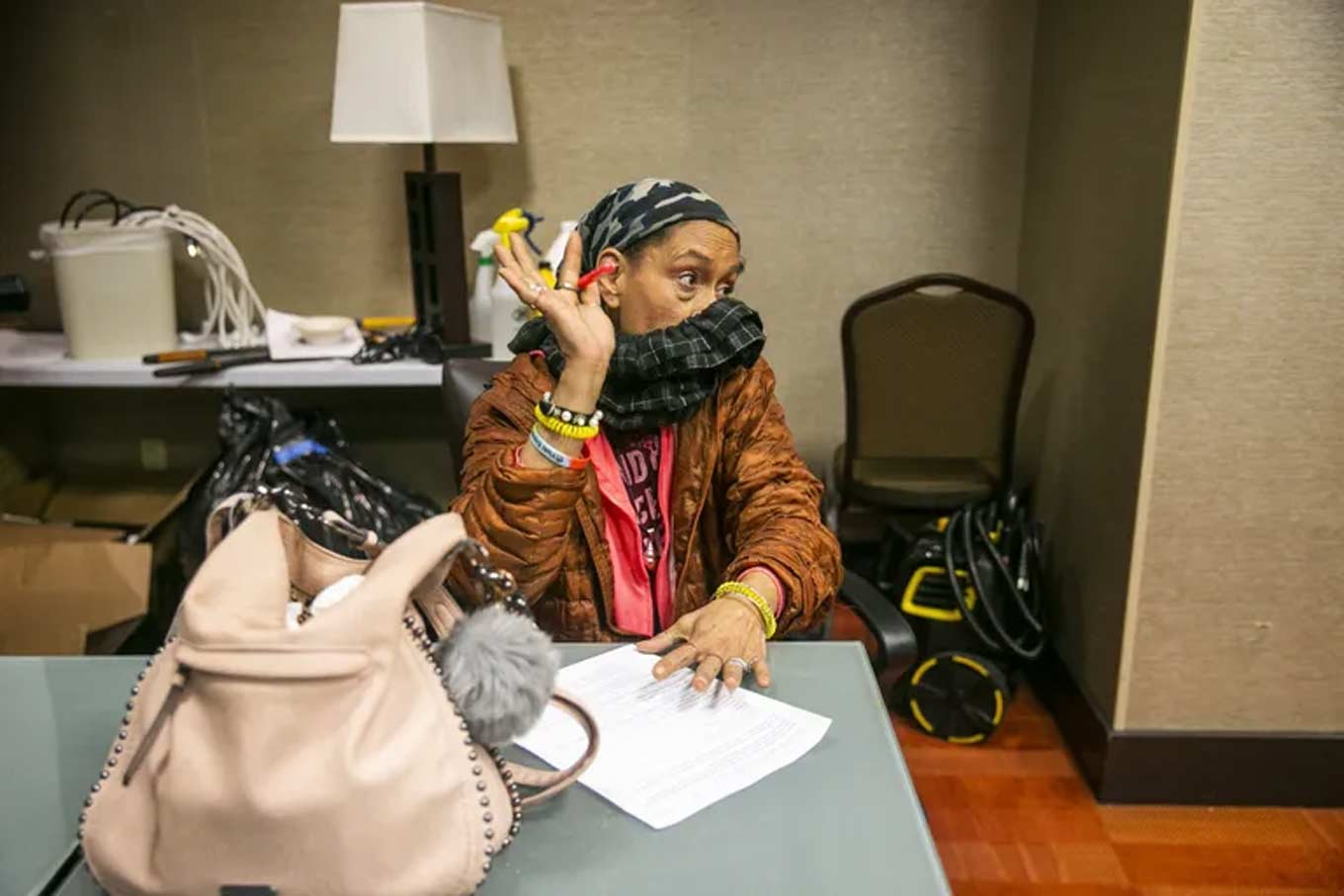
“I lost my composure last night,” Grandma says, smoking on the sidewalk of Aurora Avenue.
Last night, a staff member tried to open the door for a room inspection and Grandma “slammed the door back on her.” According to Grandma, that escalated to staff telling her she has to move out today.
Her hotel room is full of odds and ends. Troll dolls. Two stuffed Baby Groots. Flowers in wineglasses. Clothes everywhere. On one wall hangs a pair of boxing gloves, because she’s a fighter, she says.
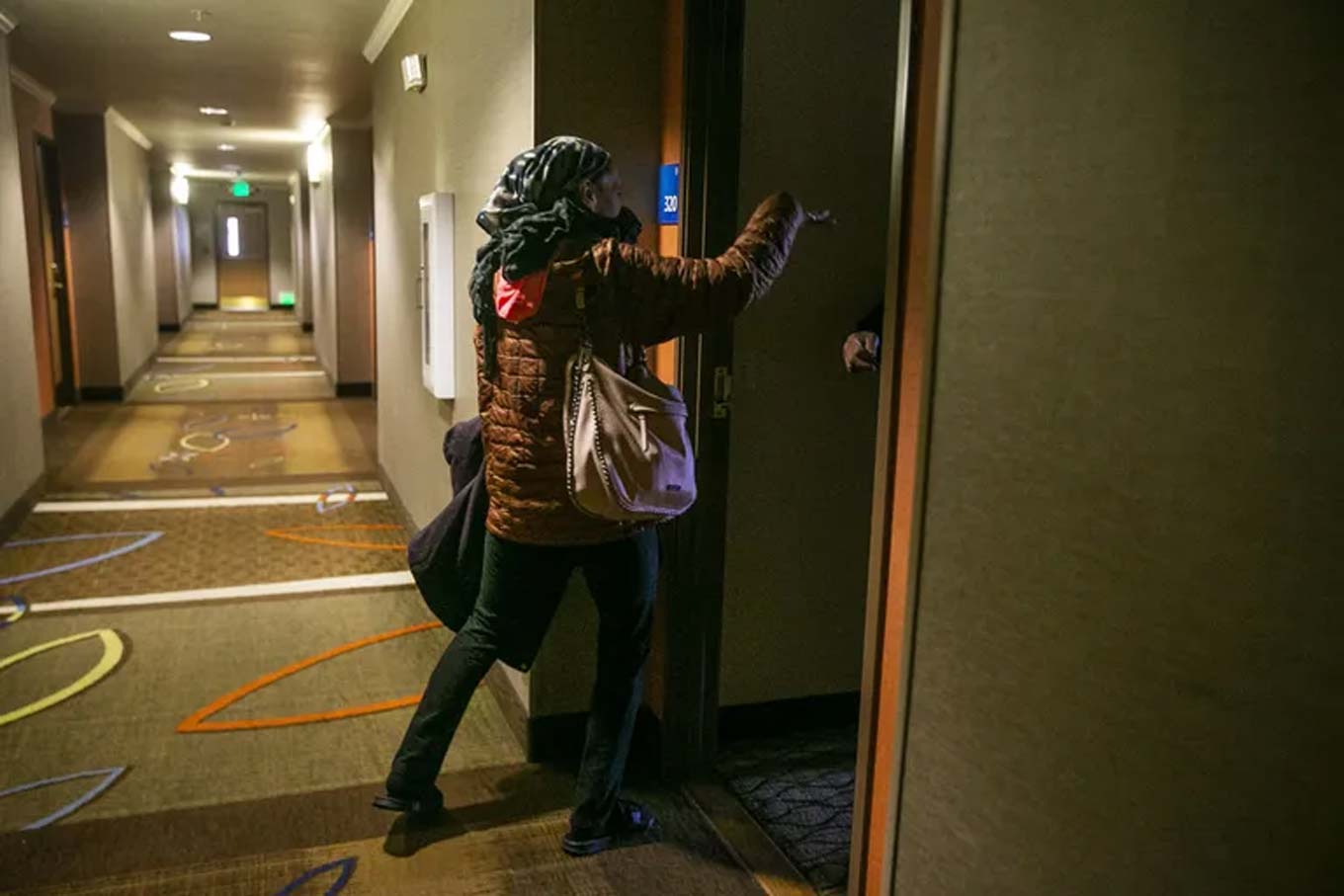
On the door, a note tells Grandma she needs to check in at the front desk or she’s in danger of losing her bed.
She says she does not have hoarding disorder — something that afflicts nearly 1 out of 5 homeless people, according to a 2020 study — but staff have told her several times to consolidate. She’s hidden clothes under her mattress as a result.
“We’ve had enough taken from us. You have no right to sit there and tell me I need to get rid of half my wardrobe — that’s the only thing I own,” Grandma says.
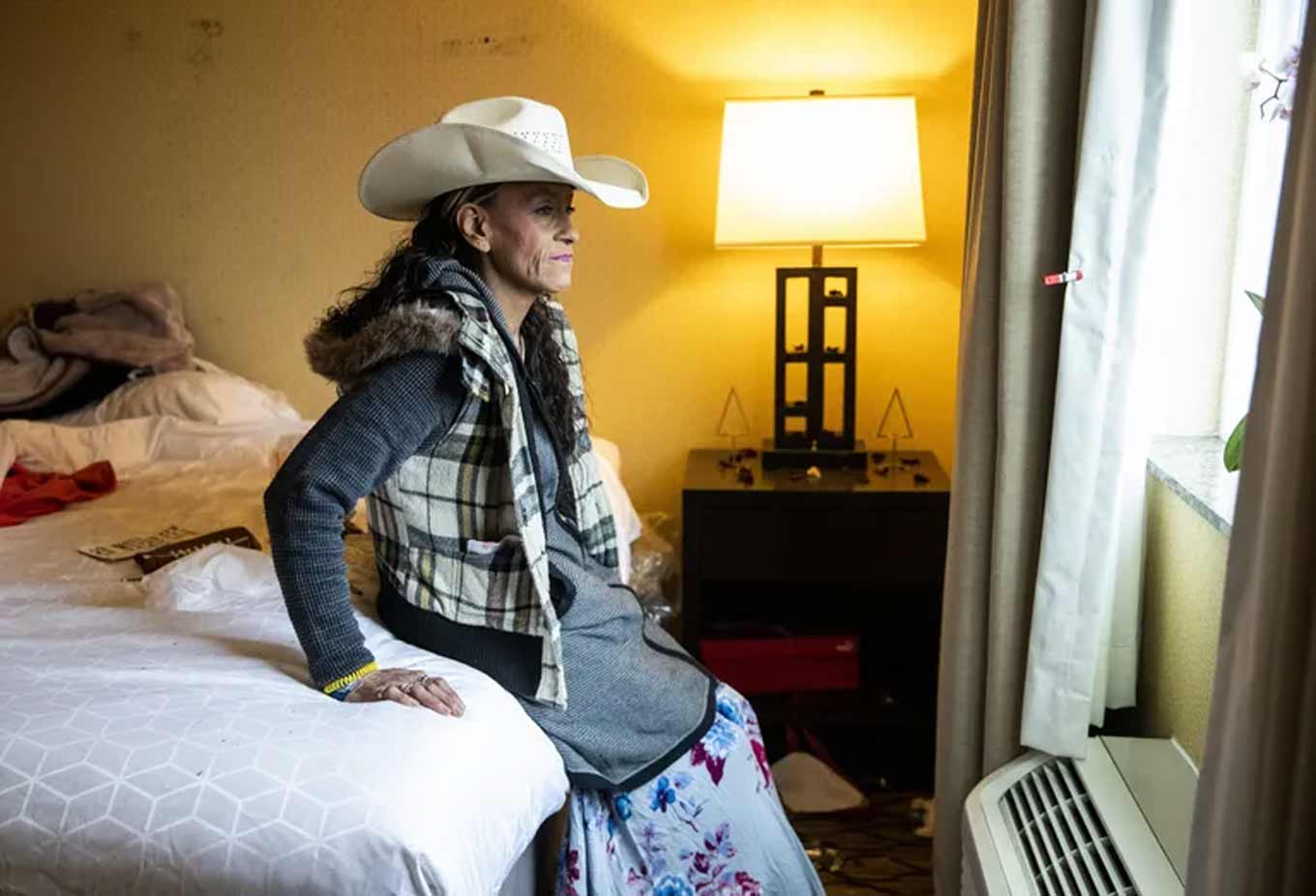
That’s not the only rule she has clashed with staff on. They have key cards to her room, but she blocks the door with electrical tape and a propped-up umbrella every time she enters; she says she’s been raped too many times to allow anyone unfettered access.
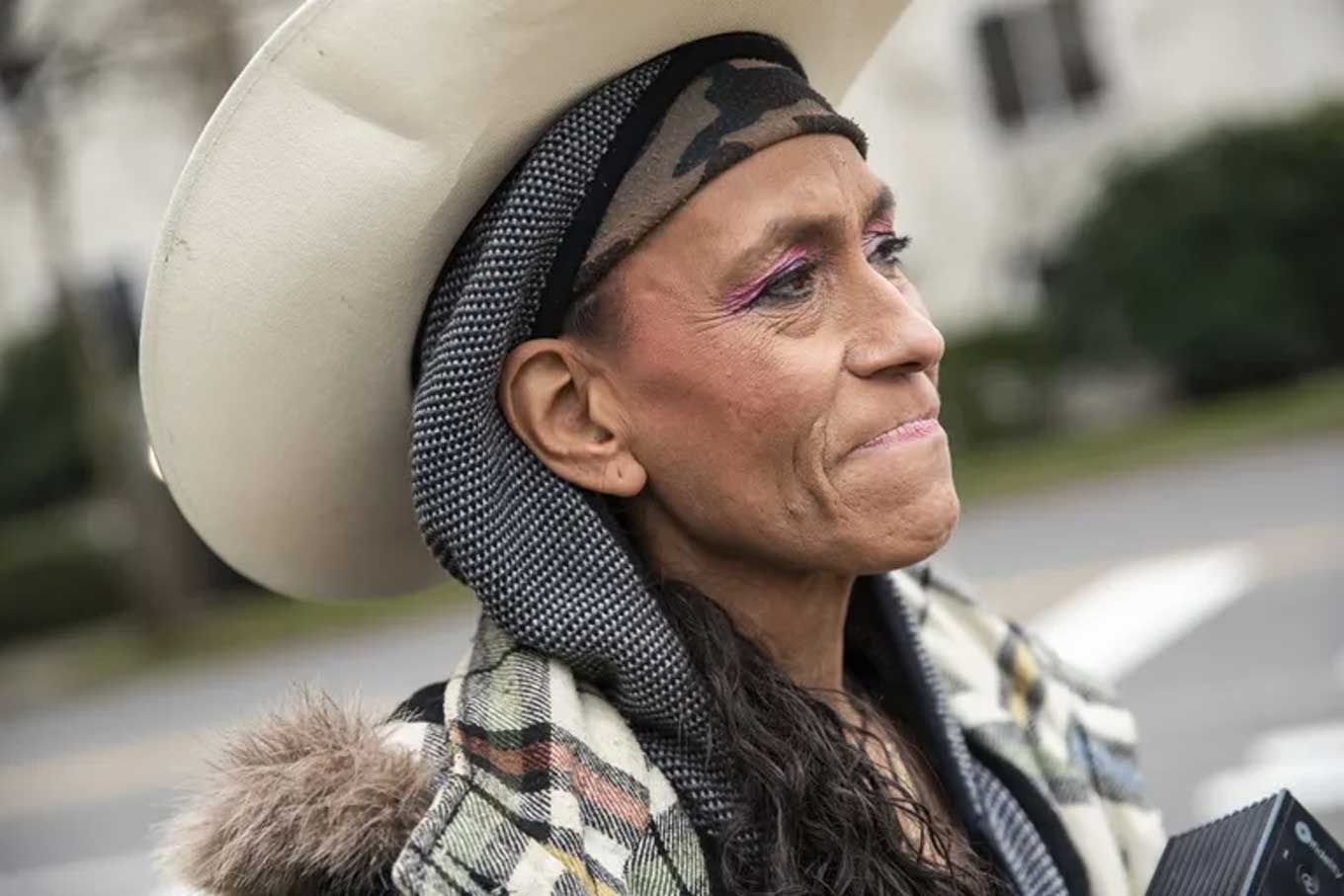
A laundry list of trauma spills out of her if you talk to her for mere minutes. She weeps suddenly and might be laughing a minute later.
Although Grandma is angry about the threat of eviction hanging over her head, this has happened to her before, and it happens to a lot of people.
In 2021, a quarter of the people who got shelter or housing in King County had already been in shelter before and lost it.
Grandma thought this shelter would be different.
The county spent $17.5 million to buy the 99-room Mary Pilgrim to create a shelter that’s not full of mats on the ground. Grandma can’t stay forever, but gets her own space while a case manager works to find more permanent housing.
The shelter operator is famous nationwide for working with the toughest people to house, pioneering the “housing first” approach of getting someone stable housing and then working to treat things like sickness, mental disorders or addictions.
“Nobody who comes here needs to fear that they’re going to be cast back out onto the street,” King County Executive Dow Constantine said last year of the effort.
While that’s not true, it’s more true than for the average shelter. In roughly the first six months after the Mary Pilgrim Inn opened last year, it served 139 people and asked 10 people to leave. Five others left to go back to encampments, 11 went to an institution such as a hospital, nursing home or jail, and 19 just left at some point and haven’t returned.
That is the nature of running a “low-barrier” shelter for people who have lived outside, according to Fay, and the results at the Mary Pilgrim Inn, so far, are promising. Housing placements are roughly on par with other emergency shelters — almost a quarter.
“Even though ‘housing first,’ I think, is the right approach, housing is not a panacea,” said Dr. Russell Berg, the hotel doctor. “It doesn’t fix every problem. And a lot of the challenges that folks have that have contributed towards their homelessness will still be there when they’re housed.”
In the first month Grandma was at the Mary Pilgrim, a friend was beaten by another resident until he was unrecognizable, according to Grandma and others. A spokesperson for the Inn said that resident was transferred, although he would not say where.
Berg said he’s seen people from encampments, like Grandma, struggle more in the hotel than people who came from old-fashioned shelters.
“All the Bitter Lake ones, we’re strong-willed,” Grandma said. “Strong-minded. We’re not sheep.”
This is why some people may not be able to get housed in the system. Mistreated and traumatized by a life of constant struggle, some may need advanced mental health care, and a rare few may just not be able to get along with the staff and with fellow residents, who also have traumas and disorders.
Dennis Culhane, a national expert on homelessness program design, said the housing-first model is great for a majority of people. It is backed up by research that shows its effectiveness. But Culhane said some people need more supervision.
“We know there are a few people for whom repeated attempts to be placed in housing lead to failure,” Culhane said.
Thankfully, Grandma isn’t one of them.
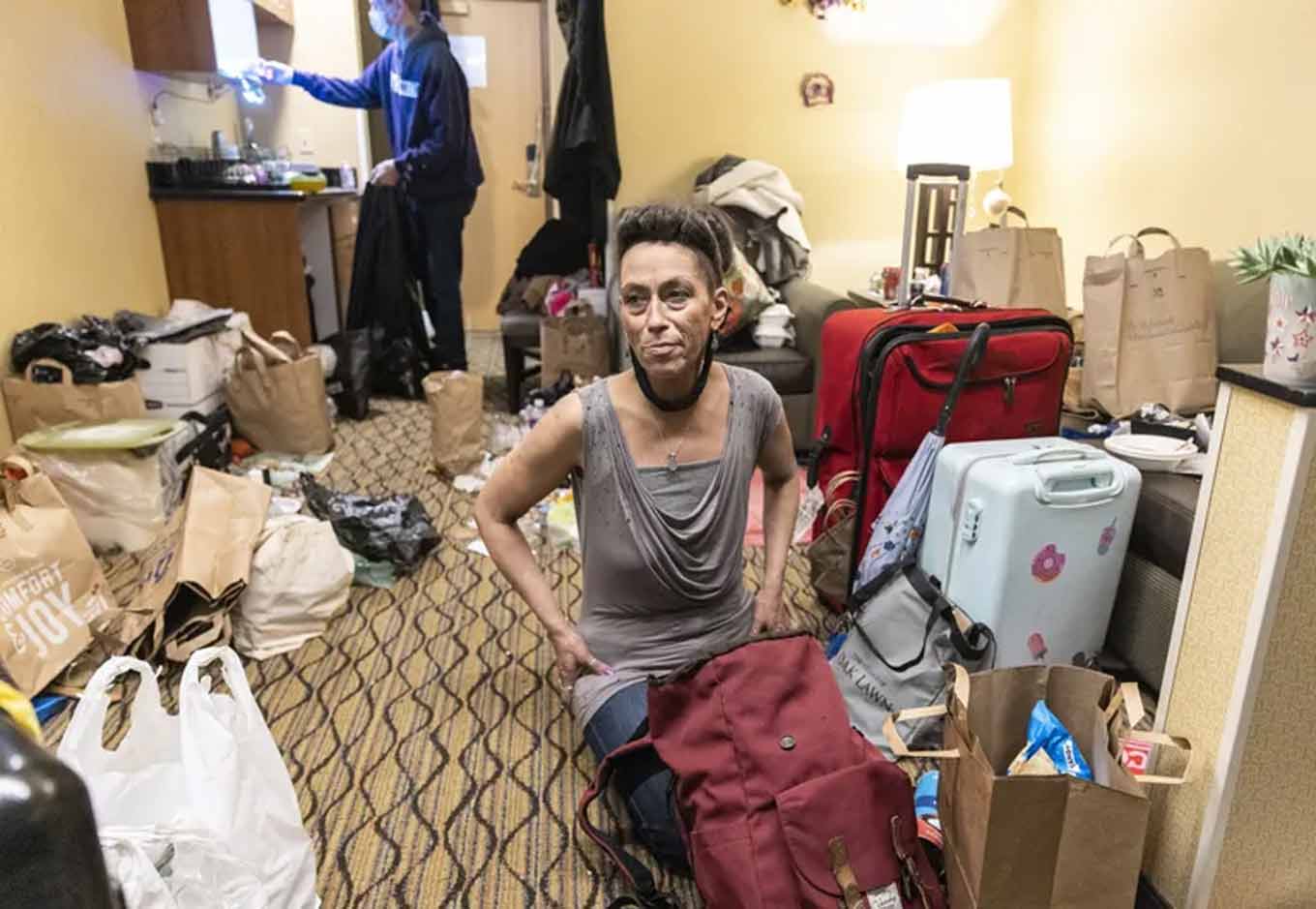
Grandma didn’t get kicked out in January.
She had called The Seattle Times in her panic and thinks that helped her be allowed to stay.
But it could be because Grandma has been making progress in her journey to stability: She’s reconnected with her husband, who is also homeless, after years of separation in a swirl of encampments and mental episodes. She really likes her case manager, Natalie Zemaitis, who got her a replacement driver’s license and was working on getting her stimulus money from the government.
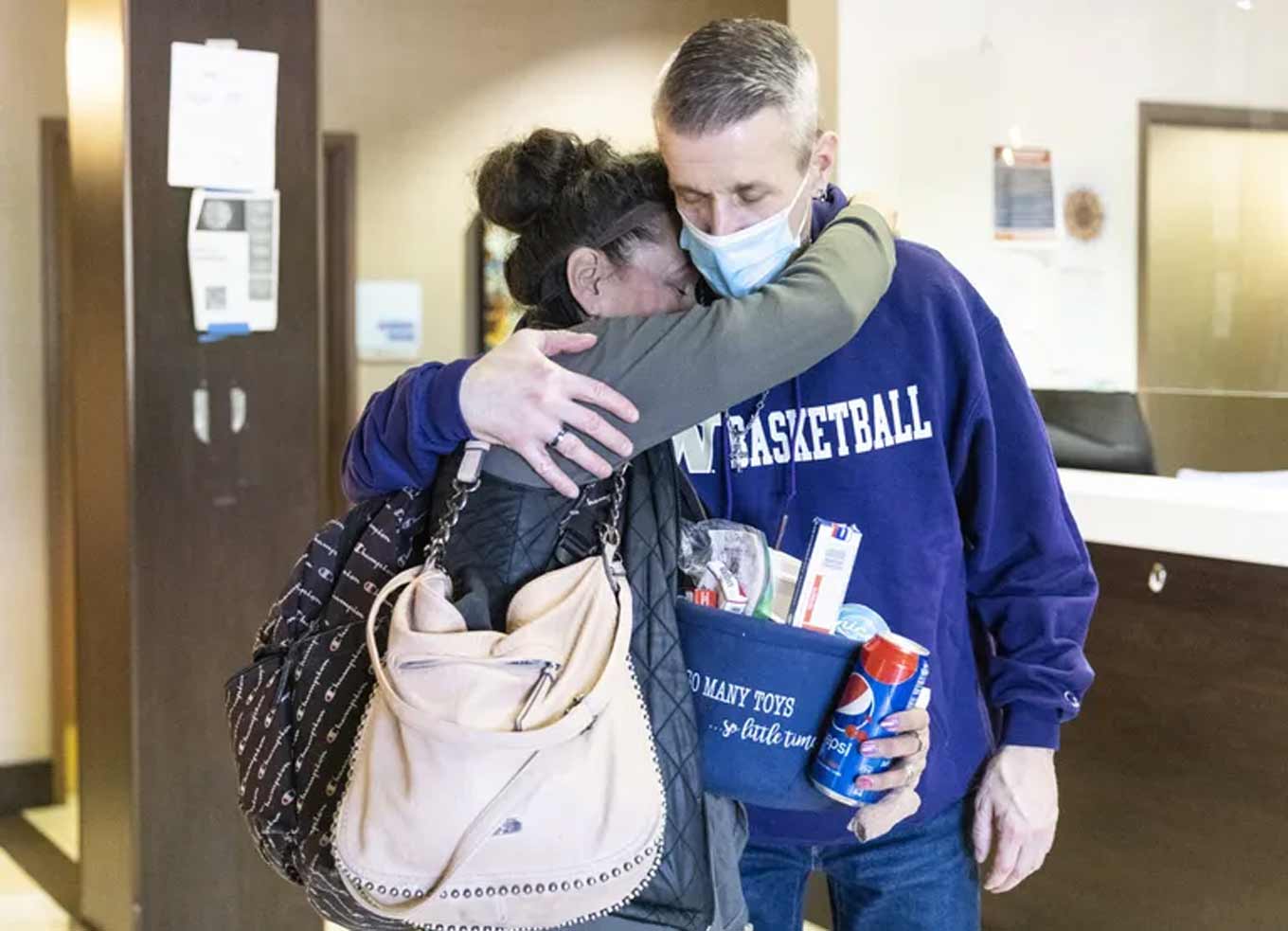
Zemaitis assessed whether Grandma qualified to be at the top of the housing waitlist, and Grandma said she got the highest score possible.
In March — one month after Gonzo ended up back on the street — she got a spot in a permanent supportive housing complex in South Lake Union, also run by the Downtown Emergency Service Center.
By now, a quarter of the 16 Bitter Lake campers have returned to the street, either voluntarily, kicked out or both, depending on who tells it.
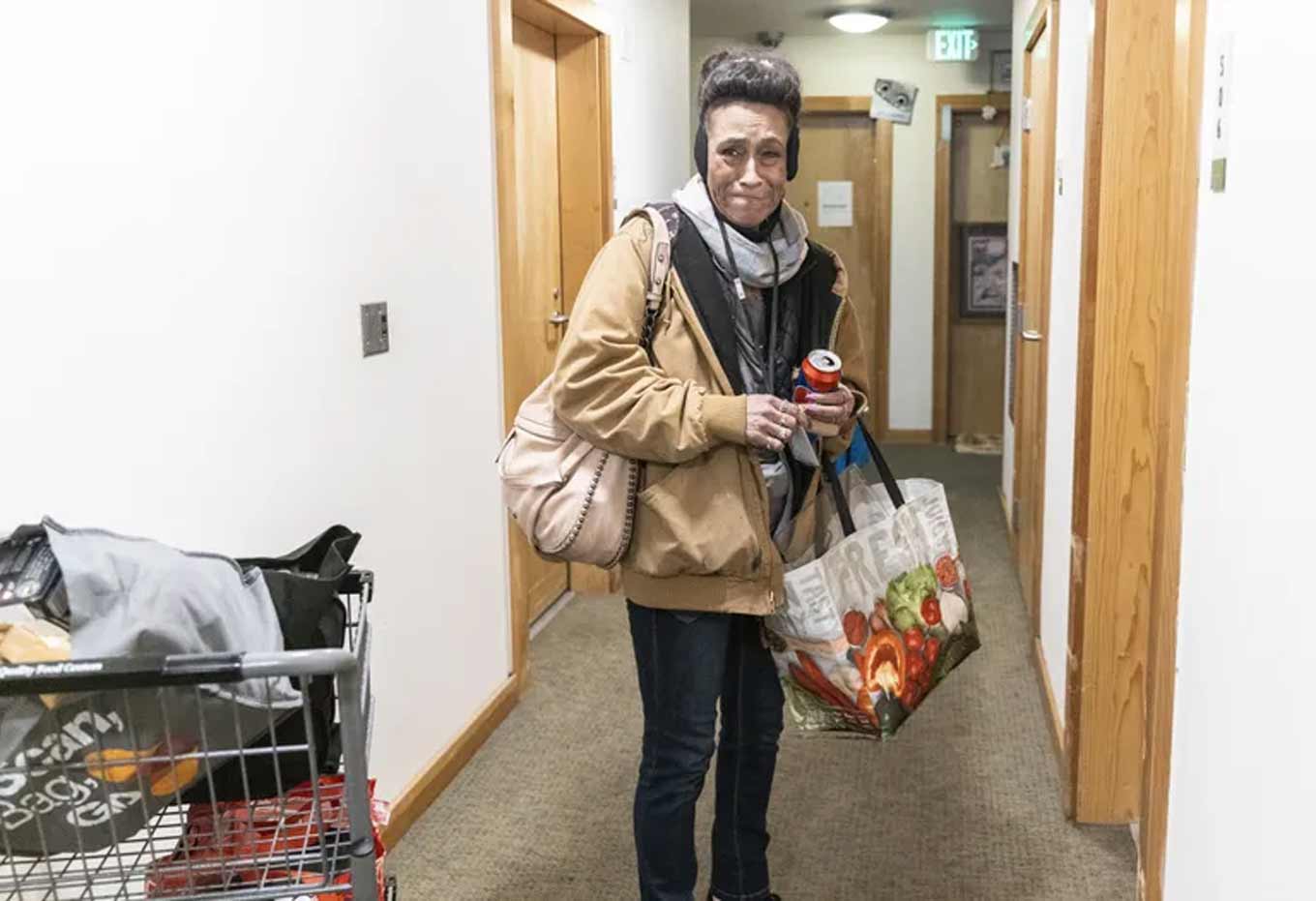
Grandma truly never has to leave her new program if she doesn’t want to — of the 5,670 who got permanent supportive housing in King County in 2021, only six returned to the streets in the following six months.
And she has more autonomy here. Her husband can stay three nights a week, she can cook for herself, and she’s working on accessing mental health treatment.
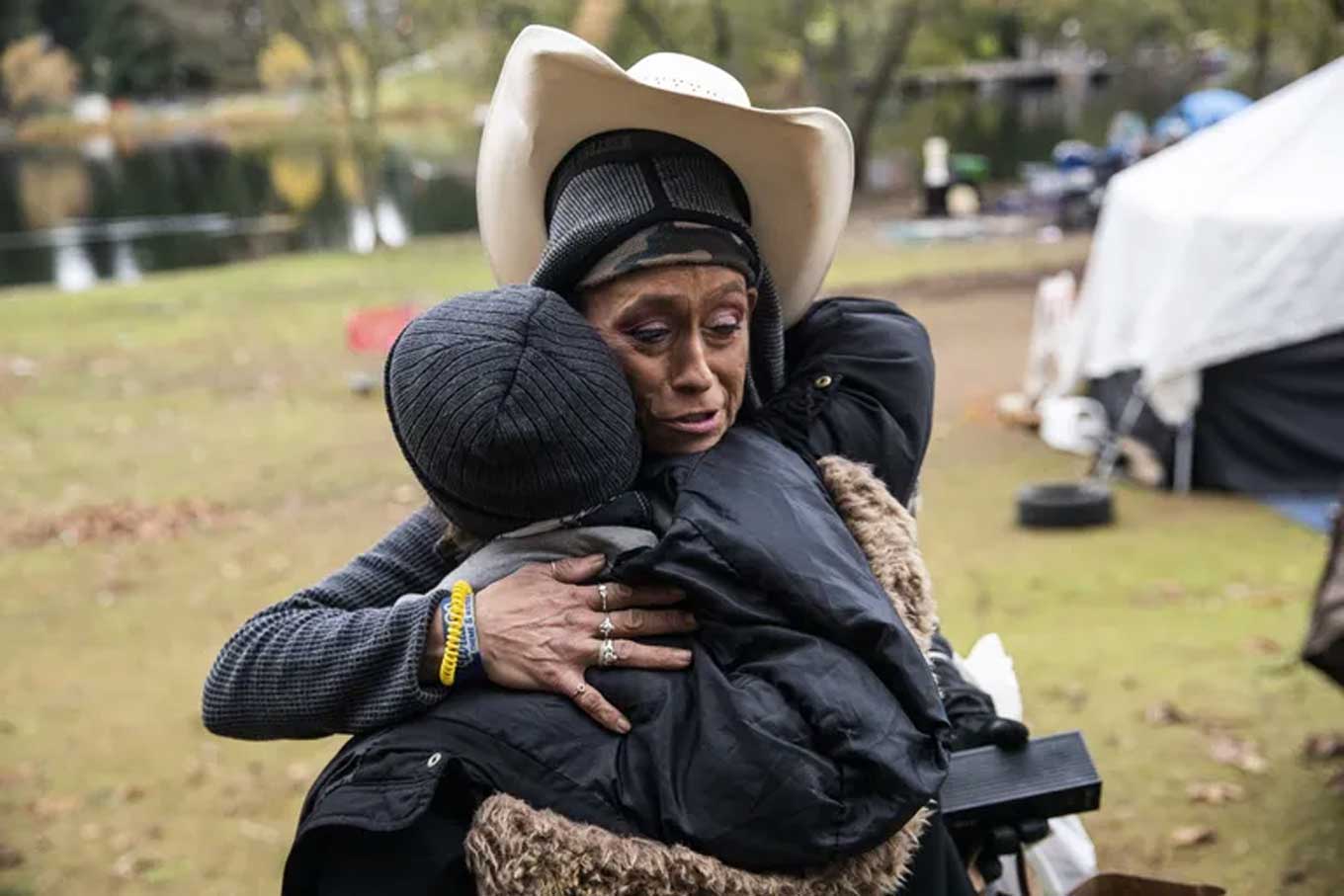
She walks into the middle of the kitchen, takes a look at the donated plates and silverware, and starts crying.
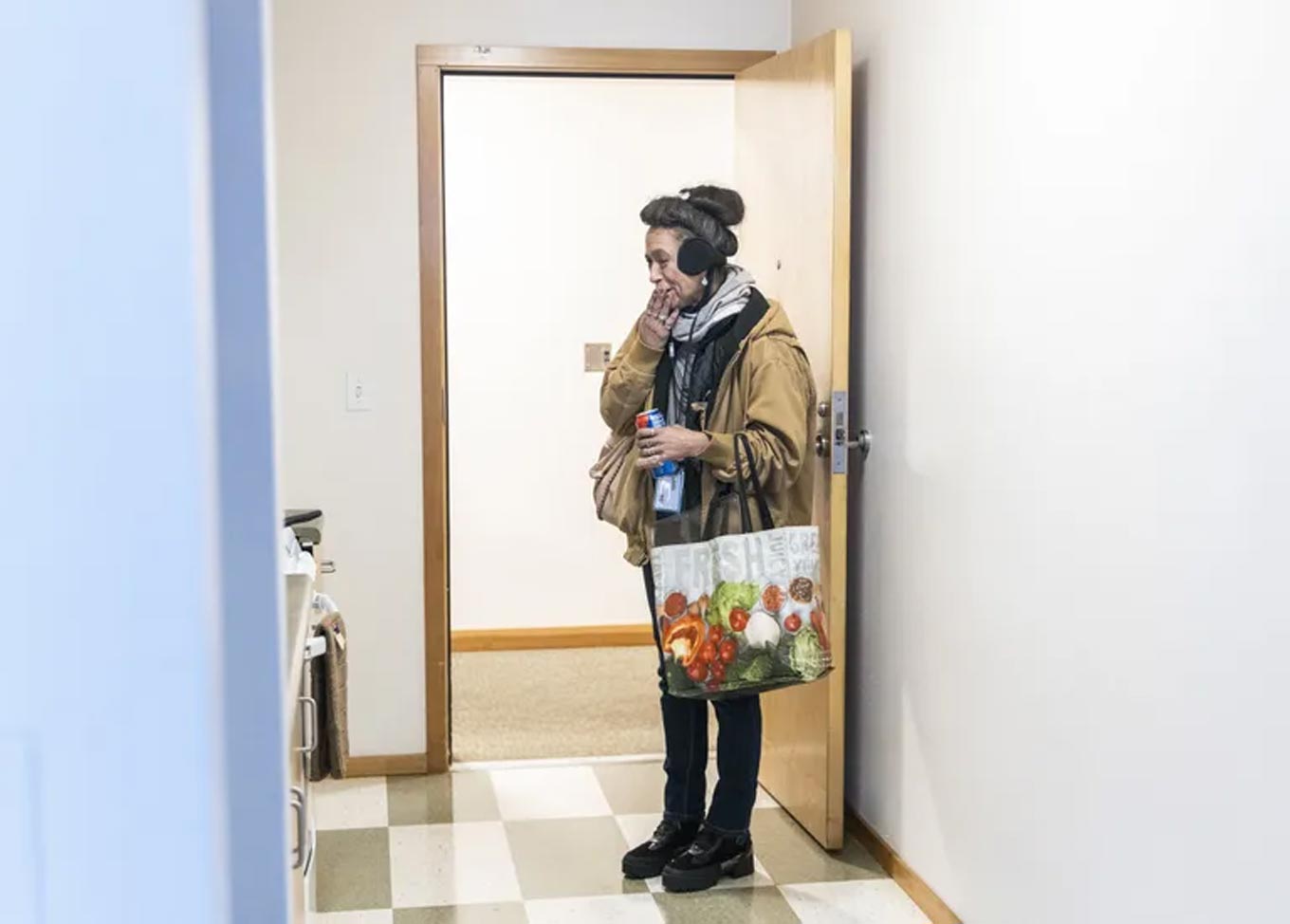
“Ten years of waiting for this — 10 years,” she says to Zemaitis, sniffling.
“Now it’s your own place,” Zemaitis replies. Days like these are her favorite part of the job.
Grandma’s husband brings the first of her bags in from the elevator. He’s currently sleeping outside and trying to see if he can get into an open room at the Mary Pilgrim.
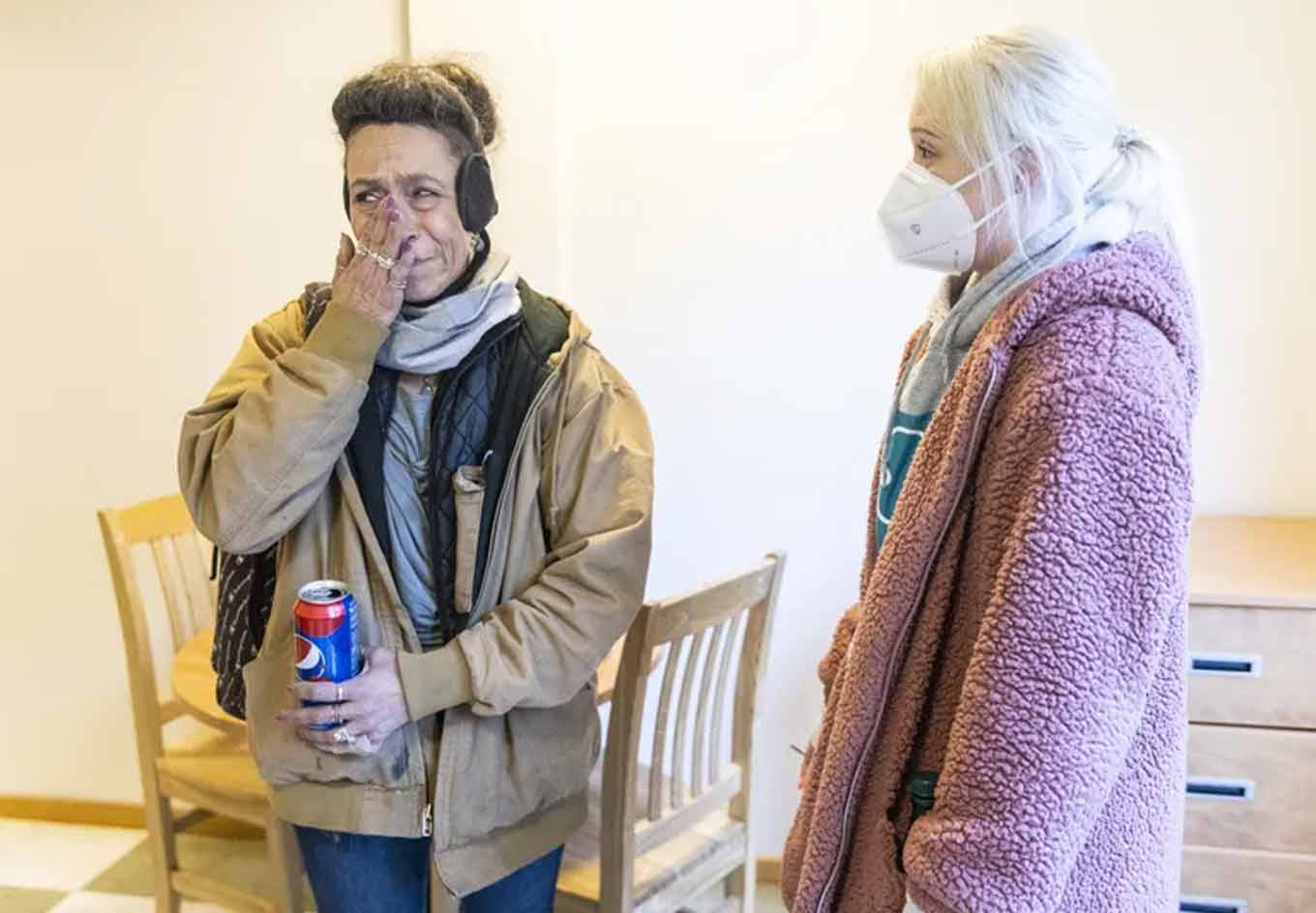
“You’ll take good care of my husband, won’t you?” Grandma says.
Zemaitis’ face is hard to read behind her mask. “We’ll work on that referral, OK?” she says.
The effects of climate change are impacting us and our planet every day — from devastating floods and destruction of lands, to rising temperatures, and raging wildfires. However, where there is heartbreak and climate anxiety, there are also helpers giving us hope.
A large-scale win for reforestation efforts, the Biden Administration just announced plans to plant over 1 billion new trees across millions of acres of burned and dead woodlands in the Western part of the country.
Ecologists and foresters are battling the increasing brunt of wildfires and insect infestations, leaving the government overwhelmed by the need to plant new trees, as forests struggle to naturally regenerate.
According to NPR, there is a backlog of 4.1 million acres in need of replanting, meaning the U.S. Department of Agriculture will need to quadruple the number of tree seedlings produced in nurseries to meet forestation needs.
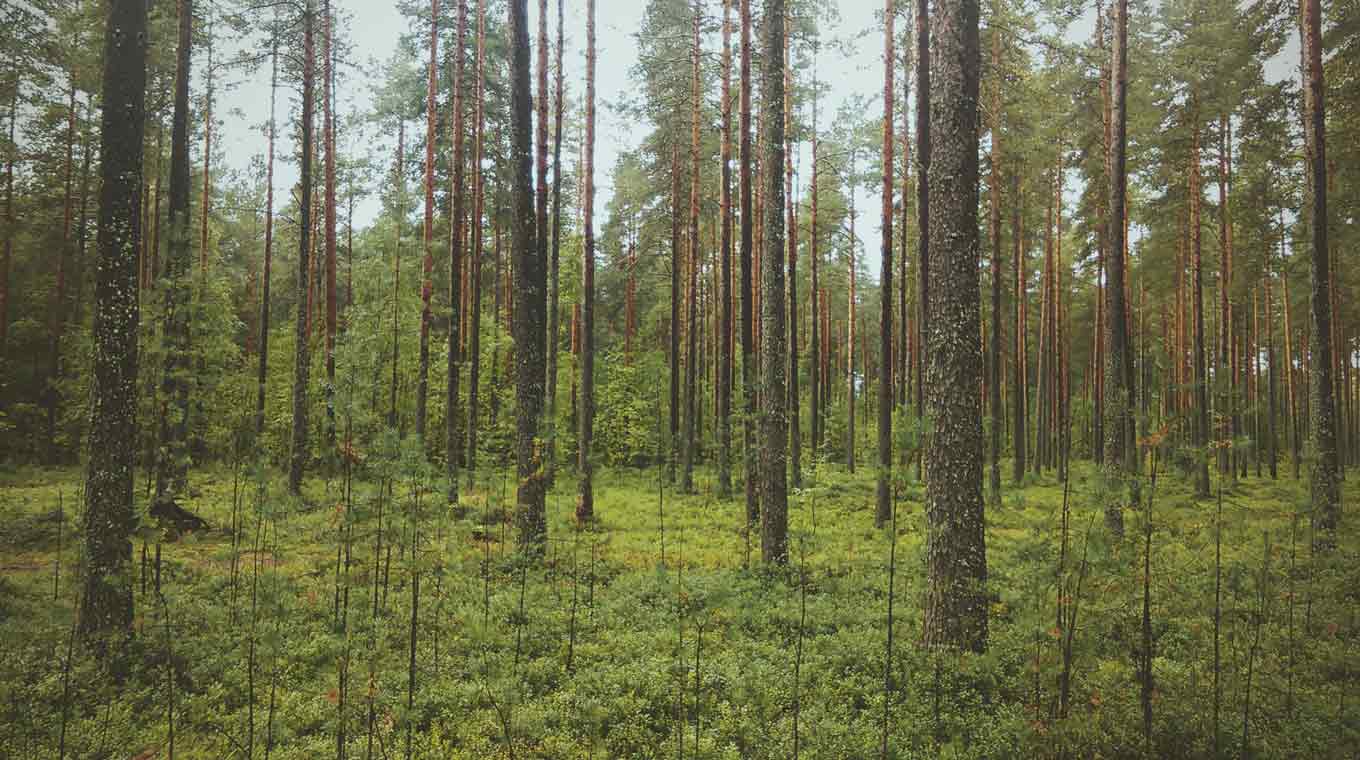
The Forest Service (TFS) will scale up its replanting efforts from 60,000 acres a year, to about 400,000 acres.
“Forests are a powerful tool in the fight against climate change,” Agriculture Secretary Tom Vilsack said in a statement. “Nurturing their natural regeneration and planting in areas with the most need is critical to mitigating the worst effects of climate change while also making those forests more resilient to the threats they face from catastrophic wildfire, historic drought, disease outbreaks and pest infestation.”
Last year, Congress passed bipartisan legislation directing the Forest Service to plant 1.2 billion trees over the next decade. TFS will spend more than $100 million this year on reforestation work, and spending is expected to increase following these federal appropriations.
“Our reforestation efforts on national forests only increase through strong partnerships with other federal agencies, tribes, state and local governments, communities and organizations,” U.S. Forest Service Chief Randy Moore said in a statement. “We recognize that successfully increasing reforestation on national forests is dependent on these strong partnerships.”
Why is this good news?
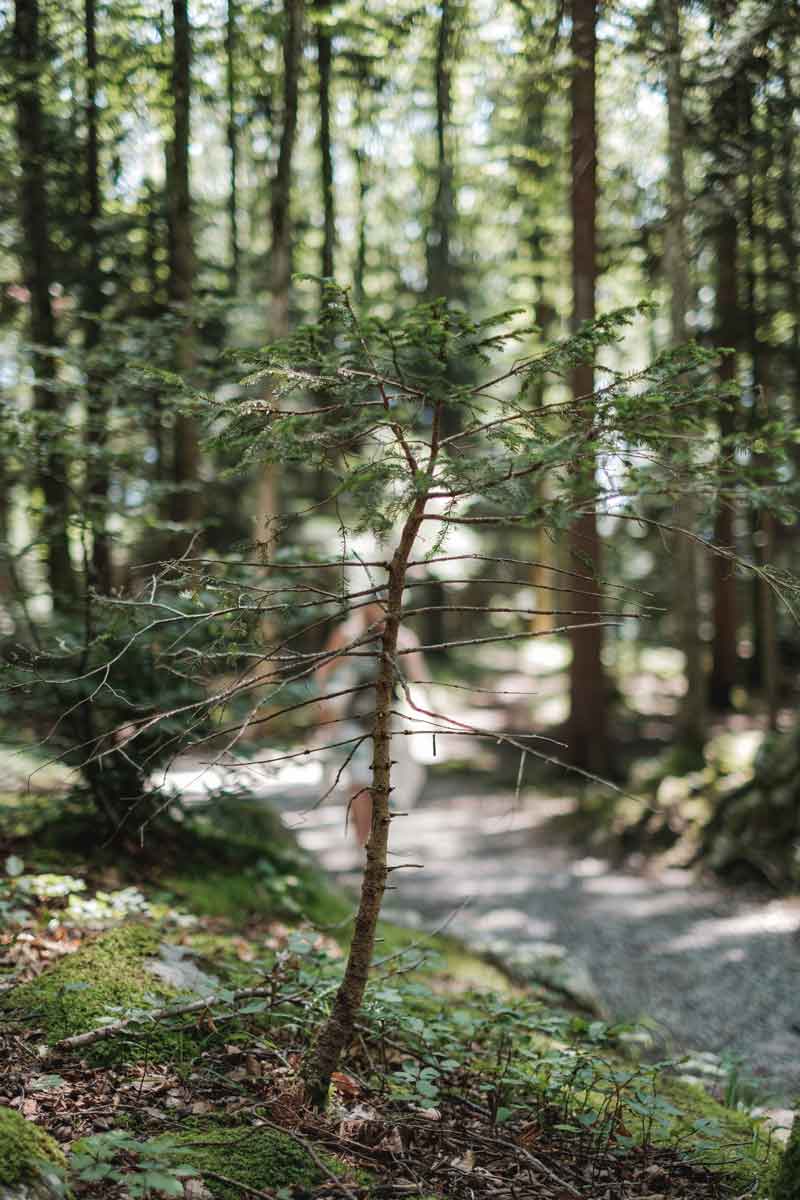
This story gives us hope because it shows that the government is willing to take (bipartisan!) action to protect the planet. The world desperately needs more trees, and committing money, resources, and federal support to reforestation efforts is one step toward caring for the health and safety of Americans and the land we occupy.
(It’s important to note that most Americans live on stolen land, and Indigenous peoples have long been the guardians and protectors of the forests we all know and love. To learn more about the land you reside on and how you can support Native tribes in your area, check out this digital map of Indigenous territories, treaties, and languages.)
What's the nuance?
We don't always love to cover political "pledges" because too often, that's the end of the story. Sometimes a failure to keep a promise is outside of political leader's control and sometimes it's a cynical lie to gain short-term favor from press and constituents.
We're choosing to cover this story because the funding for this initiative was already allocated within last year's successful infrastructure bill, so it's unlikely to be derailed by an act (or lack of action) from Congress.
And while the Forest Service will need to scale up their tree planting efforts, and seed and sapling supply chains will need to scale up, there's no indication they won't be able to keep up with the increased demand.
The other nuance worth mentioning: This action alone won't solve climate change. There's much more that can and should be done by the federal government. But every individual action step within that broader solution should be celebrated, encouraged, and covered.
Does planting trees actually help fight climate change?
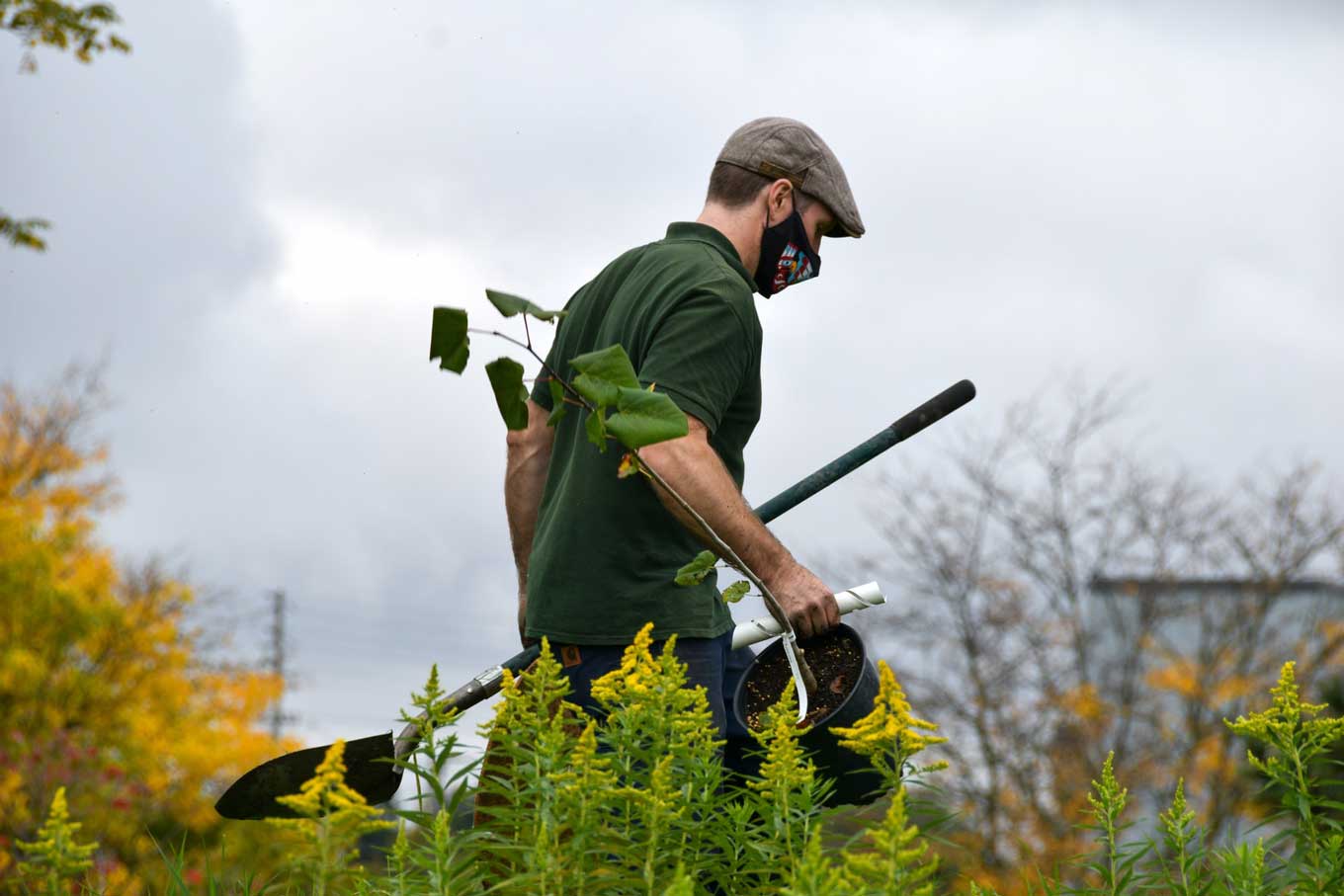
The short answer is: yes! Trees are one of the most important elements of our environment, cleaning the air we breathe, filtering the water we drink, and providing habitats for 80% of the globe’s biodiversity.
One Tree Planted also reminds us that forests provide jobs to over 1.6 billion people, absorb harmful carbon from the atmosphere, and are vital to the makeup of 25% of all medicines.
More trees means more clean air and water, strengthened biodiversity, incredible social impact, and healthier people and planet.
What can you do to help protect forests?
This news shows us that federal action can indeed be taken to support the natural world. Continue to advocate for climate legislation by contacting your representatives and encouraging the media to responsibly cover climate change. (Hot tip: we’d recommend this article on the secrets to passing climate policy for some good talking points.)
Personal responsibility is certainly not the only way to save the planet, but our individual actions do matter! Smokey Bear has some great tips on preventing wildfires in your area.
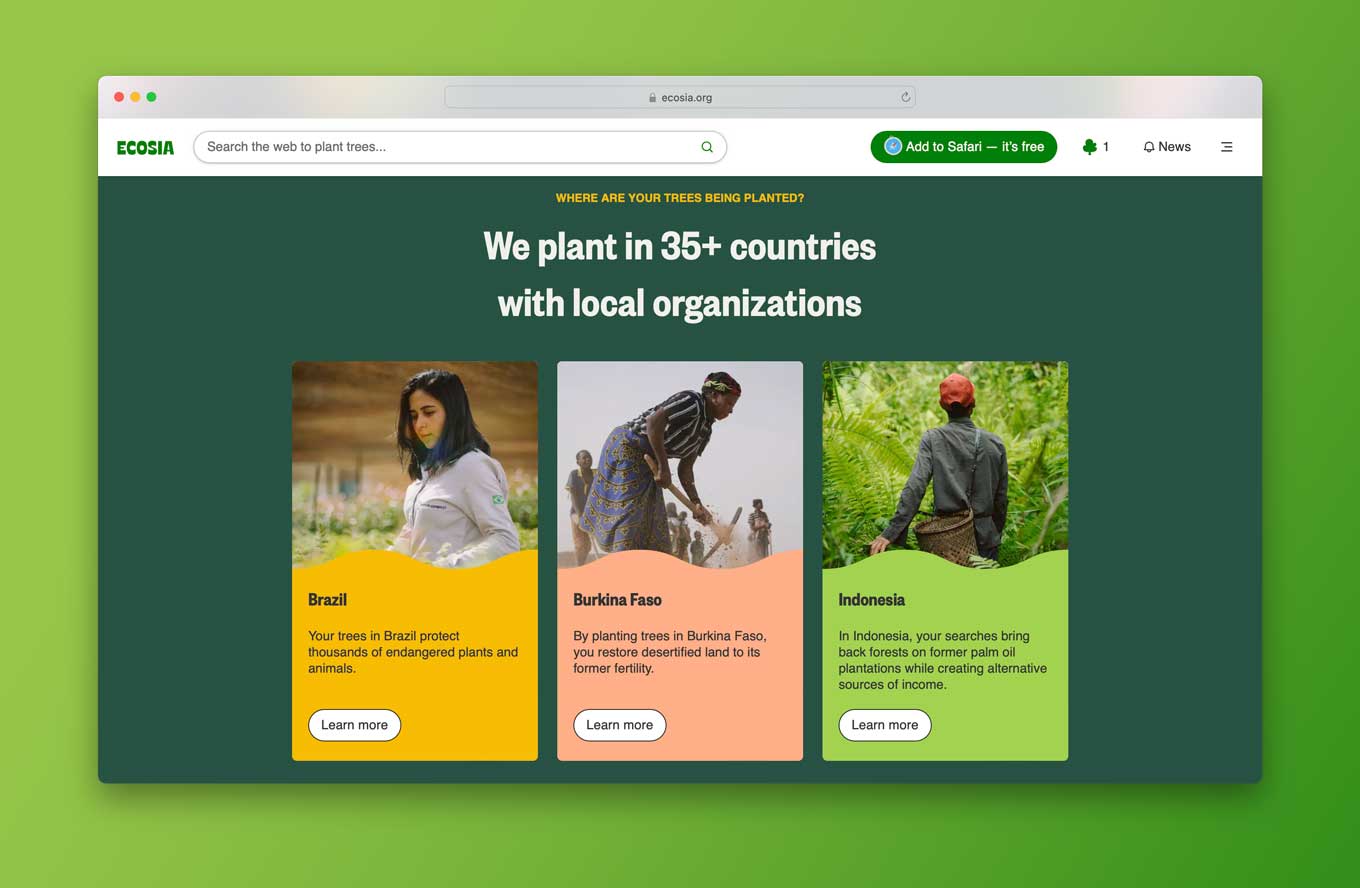
Another great way to plant trees is to switch your default search engine from Google to Ecosia, which uses the money it makes from ads to plant trees. (And yes, they’re legit.)
You can also donate your dollars to support organizations outside of government agencies working on reforestation efforts across the country. We’re big fans of Cambium Carbon, Reforestation Hub, One Tree Planted, and American Forests.
If there were one place on the planet impervious to the ravages of the pandemic, you might have guessed it would be the Navajo Nation.
Viewed from a distance, it seems impregnable, a remote, self-contained country spread across three U.S. states — Arizona, New Mexico, and Utah — and encompassing more than 27,000 square miles, its ancient boundaries marked by four sacred mountains: Dibé Ntsaa (Hesperus Mountain) on the north, Tsoodził (Mount Taylor) on the south, Sisnaajiní (Blanca Peak) on the east, and Dook'o'oosłiid (San Francisco Peaks) on the west.
As it turns out, you would have guessed wrong. Terribly wrong. The first cases of COVID-19 in Navajo Nation were diagnosed in March 2020, the outbreak spread by a church gathering in a small town in northeastern Arizona. Two months later, there had been 100 pandemic deaths in Navajo Nation, which reported a higher per capita infection rate than any of the 50 U.S. states.
As of mid-May 2022, more than 53,000 COVID cases had been confirmed there — that's a 32 percent infection rate — and 1,770 deaths. With a population of about 165,000, there has been one death for every 93 people living in the Nation.
"That's a huge percentage of our population," laments Emma Robbins, who grew up not far from the Grand Canyon. "It hit all of us hard on the reservation. We lost so many Elders, and so we've lost libraries of wisdom, language, tradition. That's something we'll never get back. That's not just a loss of life; it's a loss of our culture. It highlighted what has always existed: We don't have the same things that other Americans do."
Those disparities contributed directly to the tragic losses suffered by the Navajo during the pandemic. Many residents travel great distances to find a grocery store or a place to buy other necessities, and when they would return to the reservation, the infection came with them. And with several generations of a family often sharing one small home, and a third of households living below the federal poverty level, Navajo Nation became a fertile breeding ground for COVID-19.
Furthermore, in the months before a vaccine became available, the Navajo Nation lacked ready access to what was recommended as a principal deterrent to the spread of the illness. "When COVID came, what's the first thing they said?" asks Curt Ward. "'Wash your hands.' Well, when you don't have running water, that's tough to do."
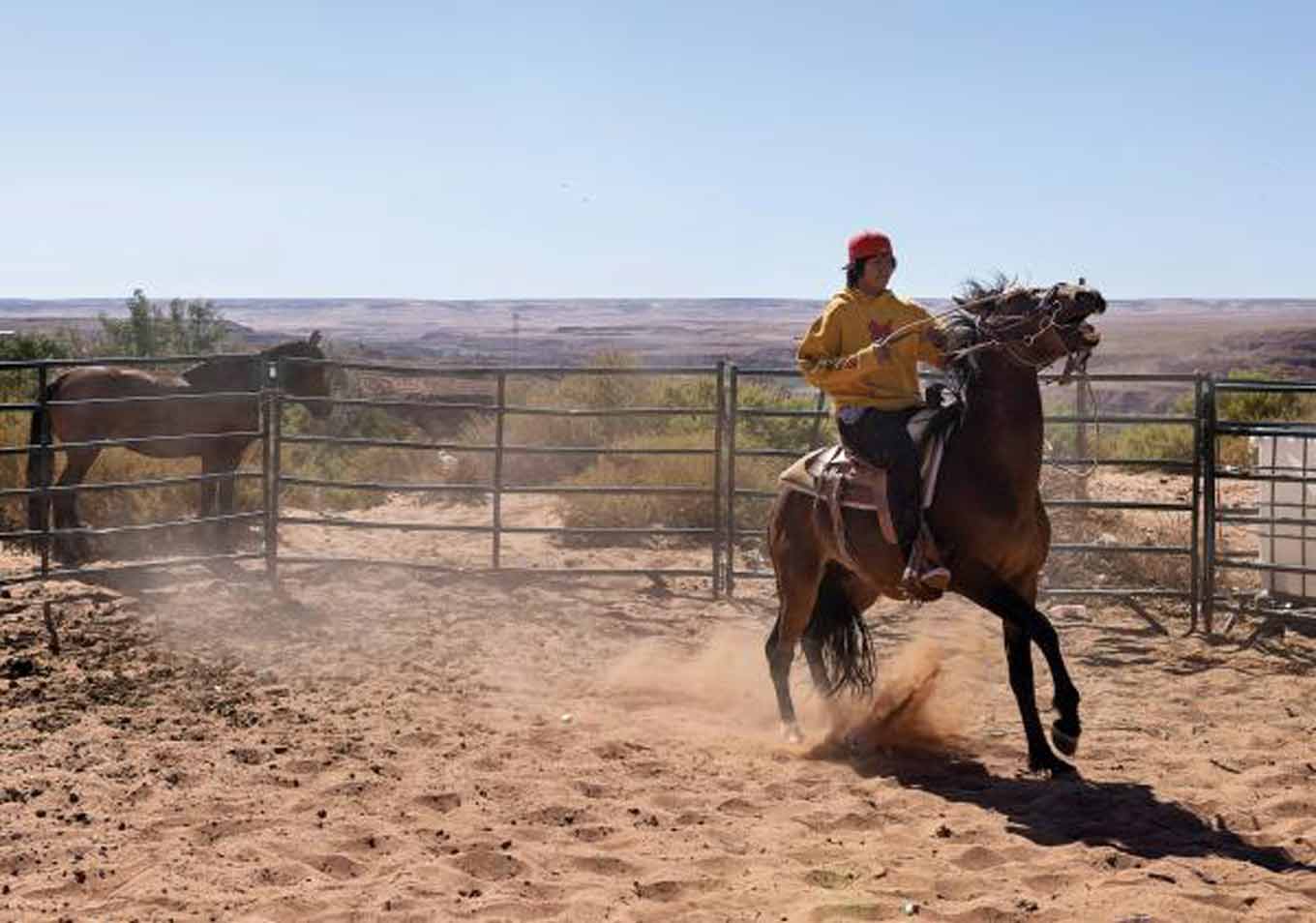
A member and past president of the Rotary Club of Gilbert, Arizona, Ward is a relative newcomer to the Southwest. "I moved here from Iowa in 2014, and water poverty was a new thing to me," he says. Even before the pandemic, Ward had begun reading about the water problems in the Navajo Nation, and he was shocked to learn that while the average American uses 80 to 100 gallons of water per day, the average Navajo uses only seven. "And in some cases," Ward says, "it's less than that."
Robbins knows all about the shortage of water in the Nation, only she learned about it firsthand. She'd grown up in Tuba City — which she describes as "the largest community on the rez" — and her family had access to running water. But she remembers how, when she was a girl, her grandparents, aunts, uncles, and cousins would travel to her family's home to shower and fill containers with water before returning to their own waterless homes. And she blames her grandmother's death from cancer on the scores of abandoned uranium mines that dot the Nation and pollute below-ground water sources.
Ward lives in a suburb of Phoenix, about 200 miles south of Tuba City, but he and, as it turned out, other Rotarians were eager to do what they could to assist the Navajo in their quest for water.
"People who think the Navajo wouldn't know what to do with water if they had it are just dead wrong," he says. "They value it; they worship it. They just don't have any of it. We don't need to teach the Navajo about water; we just need to help them get it."
Rotary stood ready to do that, as did Robbins, who had left the reservation in her teens to attend college and begin her career as an artist. And, as ever, the Navajo people, the centuries-old caretakers of their homeland, were poised to proceed. Only one more thing was needed to complete the tetrad, that fourth point of the compass with which to map out the way to water.
"There’s no other place in the United States like it. It’s so beautiful."
"I have always been obsessed with water," admits George McGraw. "My mom would take me to the zoo, she would turn around, and I would be stripped naked and running in the fountain by the entrance. You can't keep me out of it."
In 2009, McGraw graduated from Loyola University Chicago with a bachelor's in philosophy, though the most significant thing he learned there lies outside that realm.
"As a millennial from a middle-class background, I was privileged," he explains. "I didn't know that so many people didn't have access to water. I was flabbergasted to find out about that in college and immediately wanted to do something about it."
Two years after graduation, McGraw started an organization called DigDeep. Today, on its website, it's described as "a human rights nonprofit working to ensure that every American has clean, running water" — but it didn't exactly start out that way.
DigDeep initially operated in Cameroon and South Sudan, where it built water systems in rural areas. Then, in 2013, DigDeep got a phone call from a woman who wanted to make a donation — only she insisted that the money be used in the Navajo Nation.
She had been volunteering there and saw homes built without kitchens or bathrooms because there wasn't access to running water. In fact, as McGraw learned, 30 percent of the families in the Nation were living without running water.
"That was definitely an aha moment for me," McGraw says. "I hadn't realized there were so many people in my own backyard without access. We hadn't even thought about working in the U.S."
He would more fully comprehend the breadth of the problem as DigDeep and the U.S. Water Alliance prepared Closing the Water Access Gap in the United States: A National Action Plan, a 95-page report published in 2019. "We didn't even know that the total number of people [in the U.S. without access to water and basic indoor plumbing] was 2.2 million until we did that study," McGraw says.
DigDeep handed off its last international project to local partners in 2016 and has since concentrated its efforts in the United States, working in Appalachia and other parts of the country. But DigDeep's greatest impact has come in the Southwest with its Navajo Water Project, which began in 2014 when the organization installed a water system for a Navajo family in Thoreau, New Mexico. Thoreau — pronounced thuh-ROO — is also home to the St. Bonaventure Indian Mission and School, which provides opportunities for education, employment, and housing and offers a variety of social services that, among other things, make available clothing, food, and water to the people of the eastern portion of the Navajo Nation.
Among the mission's employees is Darlene Arviso. Most days you can find her driving a big yellow tanker truck filled with 3,500 gallons of water, which she delivers to Navajo homes scattered among the mesas in the desert outside Thoreau. Only half-jokingly, McGraw calls Arviso the real founder of DigDeep. Everyone else knows her as the Water Lady.
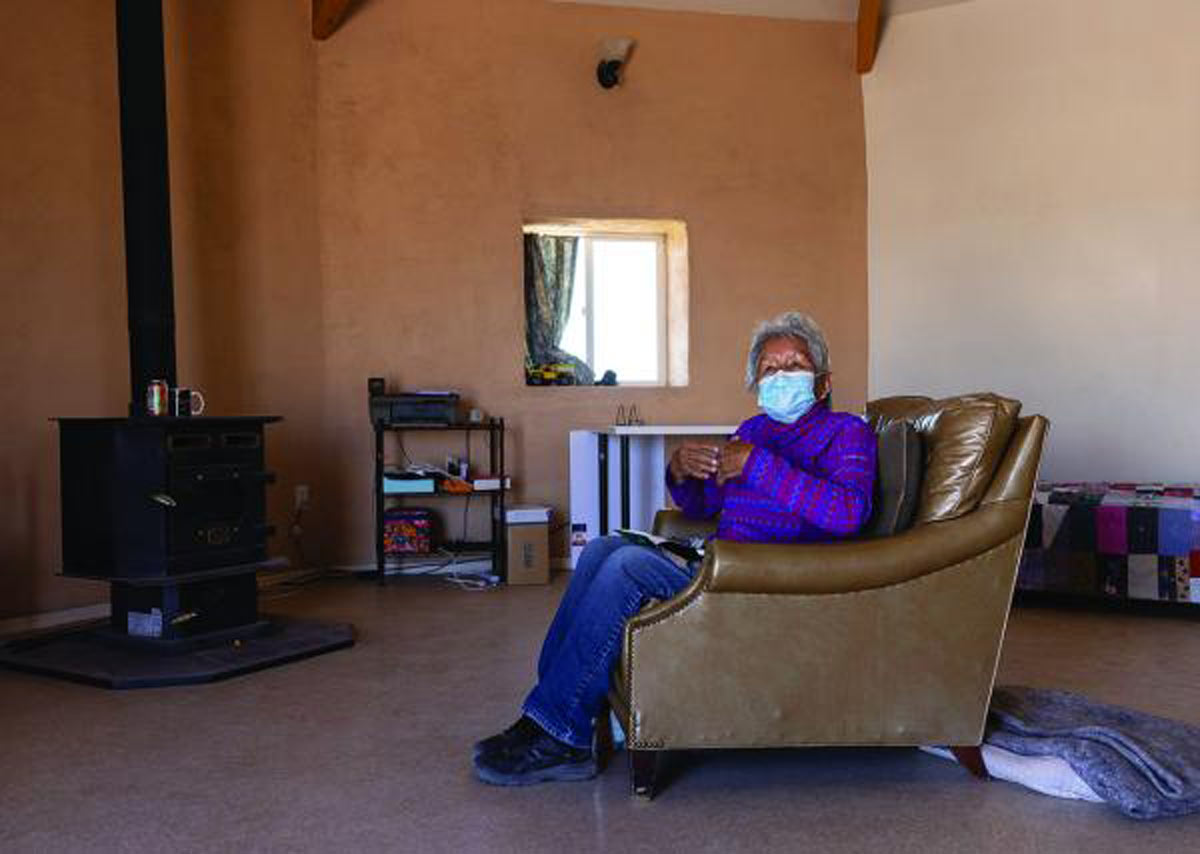
DigDeep worked closely with St. Bonaventure and Arviso, and it also cultivated close relationships with the residents of the Navajo Nation. "The entire Navajo Water Project is Indigenous-led from top to bottom," says McGraw.
"That really is everything. It's the key to long-term sustainability for these projects. We're building off-grid systems at people's homes, and those systems will be owned by those homeowners and maintained and upgraded by them. Our projects last a long time only if people feel a sense of ownership and participation.
"But it's also a way to right the wrong that caused the problem initially. These communities were left out of the decision making about water in the beginning. So first and foremost, engaging impacted communities around this work, giving them agency and power back, and letting them make these decisions is a way to right that wrong."
Of course, members of Rotary are familiar with that approach, which they employ globally in all their projects, many of which involve water and sanitation. So perhaps it was inevitable that DigDeep and the Navajo would before too long find a committed ally in Rotary.
In 2016, members of the Rotary Club of Gilbert attended a water conference in Phoenix, and one of the presenters was DigDeep. Its representative explained the organization's work in the Navajo Nation, and how it was bringing water to the people living there.
DigDeep's method is ingeniously simple. It begins with an explanatory visit by DigDeep project managers to the home of the family it's assisting. The next morning, DigDeep delivers a 1,200-gallon cistern, which is then buried outside the home (so the water won't freeze).
Technicians plumb a sink, water heater, filter, and drain line; where families don't have electricity, which is often the case, they install a solar panel, battery array, and electrical hookup to provide electricity to power the pump and lights. A tanker truck arrives and fills the cistern with clean water through an above-ground valve, and the homeowner receives training to operate, maintain, and repair the system, as well as a number to call should they encounter problems. All that unfolds over 24 hours.
The culminating moment occurs when everyone gathers around the sink, the faucet is turned on, and fresh water pours out, a moment often accompanied by the shedding of tears. "It can be really emotional," explains Emma Robbins, who, after attending art school, living in Argentina, and running an art gallery in Chicago, returned to her people and now serves as the director of the Navajo Water Project.
"The most impactful moment for me can be when there are Elders who have never had running water. It's really beautiful, and, in an indirect way, when somebody gets running water, especially an Elder, it helps us continue to thrive as a people and a culture."
The Gilbert Rotarians attending the DigDeep presentation learned another detail: each installation cost $4,500. Curt Ward explains what happened next: "Our members came back and said, 'What do you think? Could we raise 4,500 bucks and sponsor one of these tanks?'" The answer was a resounding yes — and things took off from there.
"I was just minding my own business, reading up on this stuff, when I got a call from a Rotarian in our district who attends an annual friendship conference with District 4185 in Mexico," Ward recalls. The caller said there was "quite a bit of interest" among members of the Mexican district in co-sponsoring a global grant to support the Navajo Water Project. If the Gilbert club could raise $30,000, he was confident the members of Rotary in Mexico would match it.
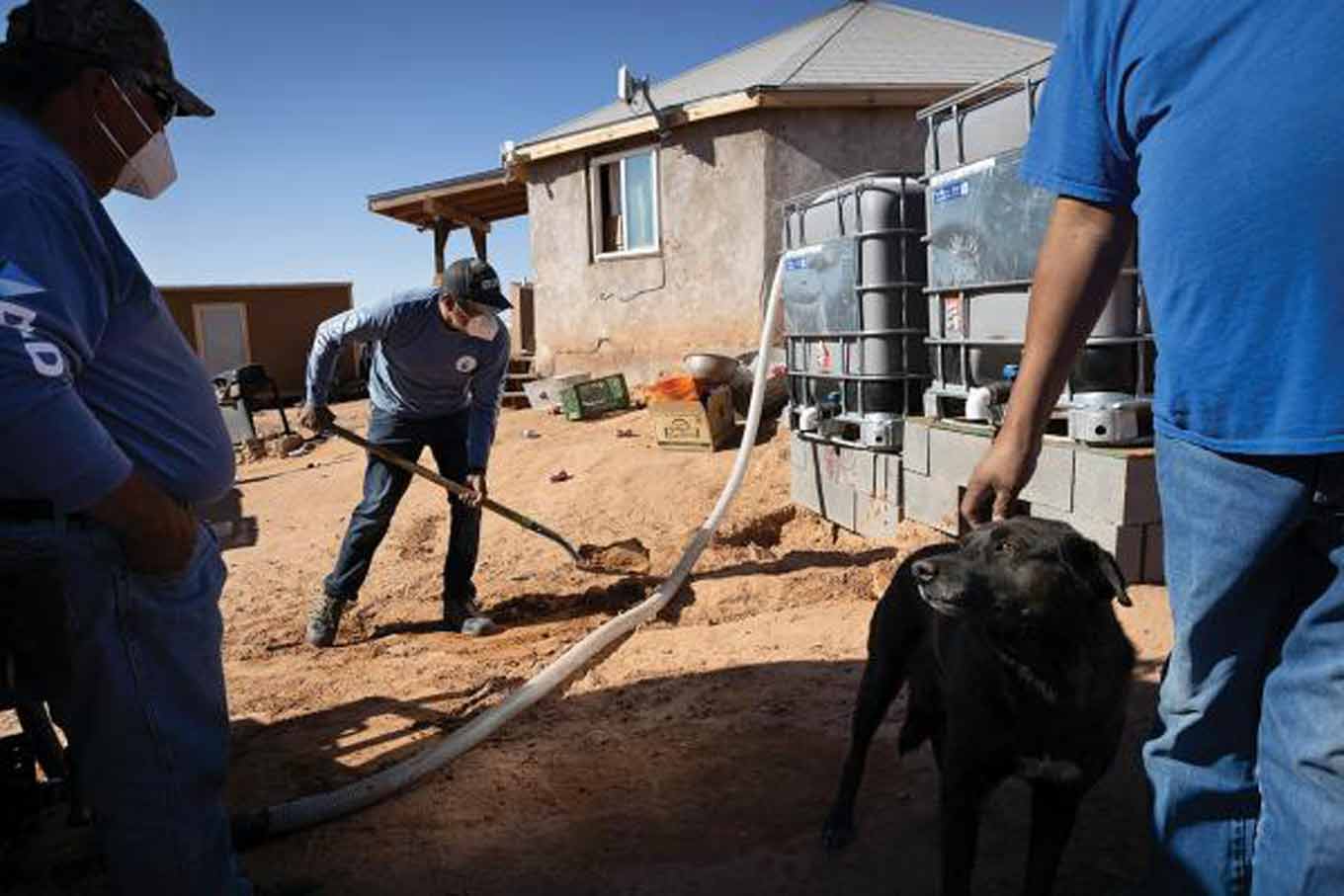
"That was beyond the scope of our small club," Ward says. "But we could go around to other clubs in Phoenix's East Valley, describe the project, and see if we could stir up interest." He also reached out to Jim Bissonett, a member of the Rotary E-Club of the Southwest and the district's Rotary Foundation chair. (After a 2017 district merger, Ward's and Bissonett's clubs became part of the newly created District 5495.)
Not only did Bissonett provide information about securing a global grant, he too became an ardent supporter of the project — a not-uncommon response. "You wouldn't believe how many people want to participate," Bissonett says. "Once we got a little publicity, we got calls from around the country. There was so much enthusiasm."
Other people of action emerged to make significant contributions and take leadership roles, including David Simmer, the 2019-20 governor of District 5495 — McGraw calls him a "champion" — and, in California, Rotary Club of Hollywood member Melody St. John, whom Simmer describes as the project's "fundraising diva." And members of Rotary from across the Southwest also leapt at the opportunity to take part.
"The real story is, this is our backyard," says Bissonett, who particularly recalls the eagerness of Gary Whiting of the Rotary Club of Sun Lakes, Arizona, a past district governor, who said, "We want to do a project like that!"
Soon enough, they'd all get their chance — that is, until the unexpected intervened.
In May 2018, the Rotary Club of Gilbert and its international partner in Mexico, the Rotary Club of San Andrés Cholula, launched the first phase of Rotary's participation in the Navajo Water Project. Backed by a $78,000 global grant, they provided home water systems for 18 families — that's 64 individuals — near Thoreau.
A year later, Whiting and the Sun Lakes club finally got their chance when they partnered with the Rotary Club of Brantford-Sunrise, Ontario, and completed a second phase; also set near Thoreau, it provided home water systems to 33 families — that's more than 100 individuals — with the support of a $144,000 global grant.
Exactly as Jim Bissonett had seen, word spread and enthusiasm among members of Rotary for the Navajo Water Project grew exponentially. That's when St. John came on board, coursing through California like a mountain freshet and raising interest in the project, and the money to support it, at an unprecedented rate.
When she was done, St. John, the 2019-20 governor of District 5280, had helped secure a significant portion of another round of funding, which included cash contributions from 56 clubs, as well as District Designated Funds from 13 districts in six countries.
"We actually had to shut down the funding on the grant" because so many people wanted to contribute, says Simmer. At the time, in the fall of 2019, Simmer's zeal was exceeded only by his optimism.
"We will soon be working on the next grant in the series, the fourth in what may turn out to be 12 to 20 grants to work on this problem in the Navajo Nation."
The final tally for the third global grant for the Navajo Nation totaled $395,000; its international partner was the Rotary Club of Mérida-Itzaes, Mexico, and its host club was the Rotary Club of Four Peaks (Fountain Hills), Arizona — though, due to St. John's efforts, participants considered the project as "jointly hosted" by Districts 5495 and 5280.
(Erica Gwynn, the manager of The Rotary Foundation's water, sanitation, and hygiene area of focus, also singled out for praise the thorough community assessment conducted in the preliminary stages of this third phase of the project.)
The grant would provide home water systems for about 80 Navajo families near Dilkon, Arizona, and nine systems had been installed by early 2020. That's when the pandemic struck, and everything shut down.
Well, not everything. Due to strict quarantine restrictions, DigDeep could no longer interact directly with residents of the Navajo Nation, but it still had a job to do.
"For the first 18 months of the pandemic, we had to pivot to emergency water work," McGraw says. "We delivered more than a million gallons of water and set up temporary water access tanks at almost 1,500 homes."
About a fifth of those 275-gallon tanks were funded by members of Rotary, who, according to Curt Ward, "peeled off" $75,000 of the grant money to provide interim pandemic relief.

"It was amazing how available these Rotary folks were," says McGraw, "not getting lost in their own fear for themselves and their families, but asking, 'How can we help the people that are the most vulnerable?' Those champions of ours really went to bat for us and were able to make some of the dollars a little flexible and extend timelines a little. But the thing that really stands out was the level of availability and communication at a time when it was tough to get in touch with anybody."
And now DigDeep had another ingenious idea, although one sadly inspired by loss: the death in May 2020 of Ernest Largo, a member of the Navajo Water Project and another casualty of the pandemic in Navajo Nation. "It really shook the organization to its core," McGraw remembers, but the loss inspired the team to find a way to continue working.
Desperate, like other members of the team, to get back to work despite the quarantine, DigDeep water technician Kenneth Chavez had an idea. He recalled a winter night he had spent on his land in Navajo Nation. He'd brought some bottled water, and when he awoke the next morning he remembered he'd left it outside in his car. He went to retrieve it, fully expecting to find it frozen, but when he opened the suitcase where he had packed it, he found the bottled water nestled among his clothes, unfrozen.
Soon, DigDeep was employing a heated "suitcase" as a temporary adjunct to its home water system, an above-ground, outdoor unit connected to the underground cistern that allowed homeowners access to water without worrying that it would freeze.
Now DigDeep, again with an assist from Rotary, was able to resume installation of the water systems without entering homes — and the systems could be easily upgraded to in-home systems when the impact of the pandemic diminished. That's exactly what began to happen earlier this year, and Bissonett is hopeful that Phase 3 of Rotary's involvement in the Navajo Water Project can be completed by spring 2023.
As for Ward, he remains as committed to working with the Navajo as when he first learned about water poverty in the Southwest. "You can't walk away from it," he insists.
And Robbins, who has worked closely with Ward, looks forward to continuing her partnership with him and with Rotary. "I love it when Navajos are doing work for Navajos," she says, "but it's also important for us to have strong allies and advocates. And that's what Rotary has been for us."
“These communities were left out of the decision making about water.”
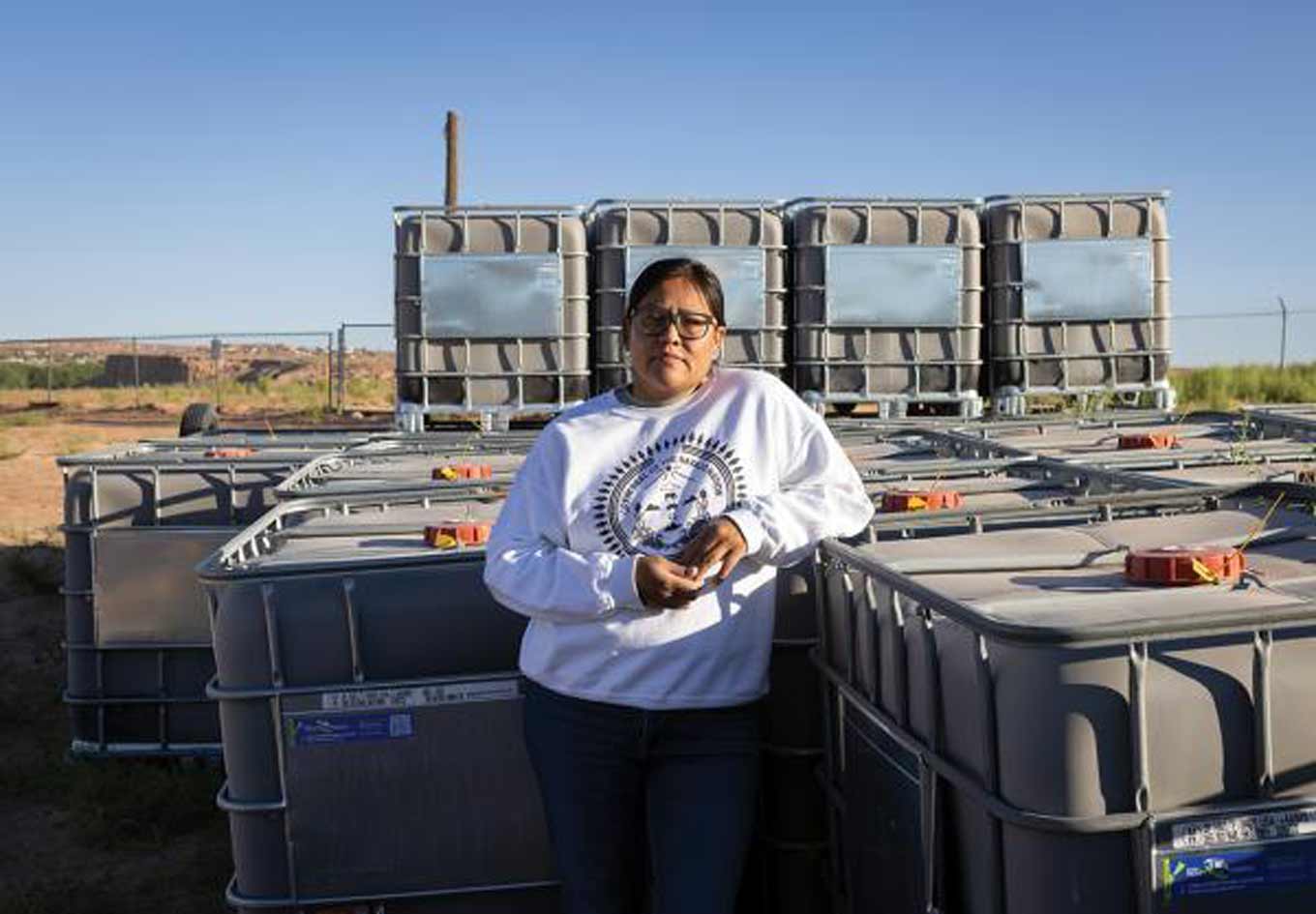
I first learned about Rotary's involvement with DigDeep and the Navajo Water Project in September 2019 when David Simmer visited RI headquarters in Evanston, Illinois. Like everybody who hears about the project, I was immediately and immensely interested, and I followed up Simmer's visit with a long telephone conversation with George McGraw and an exchange of emails with Emma Robbins.
I wanted to visit the Navajo Nation and report this story on site, and they advised me to come the following spring when the heat would not be so intense.
I made plans to fly into Albuquerque, New Mexico, in April and drive for several days to see for myself what DigDeep, Rotary, and the Navajo had accomplished near Thoreau and Dilkon. As it happened, Melody St. John had plans to be out there at the same time, as did McGraw and Robbins. Most important, Robbins promised I'd have the opportunity to meet and speak with the Navajo families who had benefited, or were about to benefit, from the project.
We all know what happened — or didn't happen — next. Since then, I've been viewing everything that's been going on in the Navajo Nation from a distance. Like everyone else, I suppose, I assumed the pandemic would be short-lived, and when that proved not to be the case, I let this story sit dormant for a spell.
And then, with the pandemic well into its second year, I began to report the story again: conducting long interviews by phone; studying maps; and reading through global grant applications, the ancillary reports and studies that Curt Ward sent me, and a half dozen books about Navajo history and culture.
Ward and Jim Bissonett and others sent me snapshots of the work on the Navajo Water Project that had been conducted near Thoreau before the pandemic. I studied them closely, though I was more intrigued by the photos they sent me of the desert, the red buttes and mesas, and the two separate photos of brightly painted graffiti from the Navajo Nation: the words WATER IS LIFE in large, colorful letters. Or as the Diné — the Navajo — would say it, tó éí ííná át'é.
I already had a limited sense of the place, especially from a four-day hike I'd made years earlier through the rugged Paria River canyon, following and, for the first two days, wading through that waterway from a remote point in Utah until it spilled 38 miles later into the Colorado River in Arizona, right up against the northwestern border of the Nation.
Along the way, I'd seen petroglyphs of human figures and half-familiar animals that had been carved high up on a wall of red Navajo sandstone more than 100 years before Columbus was born.
But this wasn't enough, and I pressed everyone I spoke to with one question: What's it like in Navajo Nation? "Intense and very beautiful," says McGraw, "a place of extremes."
I asked Robbins what it was like to grow up there, and after dismissing my question with a laugh — "What's it like to grow up in Chicago? Or Beverly Hills? Or Kentucky?" — she went on to rhapsodize the desert and the rock formations, the canyons and the dinosaur tracks, the juniper and piñon trees that grow at higher elevations. "There's no other place in the United States like it," she says. "Oh my gosh, it's so beautiful. I'm so lucky to be from here."

I was grateful for all of this. Some of the gaps in the story were filling in, but something was missing, something I thought I'd never get to see: the moment when the water is turned on. Then I got a gift in the form of a URL link.
In spring 2018, a film crew and reporter for the PBS NewsHour had traveled to New Mexico to file a story about the lack of water in
Navajo Nation and the efforts by DigDeep to ameliorate that. Some of the Rotarians who had been raising funds for McGraw and his team were invited to come up and lend a hand, and several traveled to Thoreau to assist in the installation of a water system in the small home that Tina Bicenti shared with her five children.
The seven-minute report, which aired 20 June 2018 — it's still online, if you want to take a look — begins with Darlene Arviso driving her big yellow St. Bonaventure tanker truck across the desert, so I finally get to see the Water Lady in action. Bicenti's yard is swarming with men and women in yellow T-shirts and other Rotary garb.
Among them are Curt Ward and Jim Bissonett, who says, "We're going to change the lives of this family dramatically from the water they were carrying in pickle jars to their house to actually having running water."
Annie Begay, a 23-year-old field coordinator for DigDeep who, like Robbins, had grown up in the Nation, tightens the last screws on a rooftop solar panel. Inside the home, Bicenti flips a switch and hollers, "Lights! We have power!"
Everyone gathers around the kitchen sink, including ginger-haired George McGraw, looking boyish, despite the mustache, and holding one of Bicenti's twin 6-month-old girls.
Bicenti twists a faucet and water gushes into the silver sink.
The big, bright smiles around the room outshine the newly installed electric lights, and Bicenti's preteen son wipes a tear from one eye.
He's wearing an electric-blue T-shirt, and in big white and yellow letters it shouts: MY TIME IS NOW.
I’m the founder of Good Good Good — the media company that highlights good news and ways to make a difference. Since our founding, I’ve always worked hard to make sure that even though we cover positive news, our company and content don’t fall into the toxic positivity trap.
There’s a lot of good news in the world — but celebrating that good news should never come at the expense of ignoring the injustices in the world. In fact, most of the best good news in the world is a direct response to the injustices in the world. It’s not possible to fully appreciate solutions without also paying attention to the problems.
Toxic positivity is harmful, shallow, and leaves each of us missing out on the breadth of the human experience. Fortunately, we can learn how to avoid toxic positivity.
So, what is toxic positivity?
Toxic positivity is the idea that we should always maintain a positive outlook, even when we’re struggling or it feels like the world is burning around us.
The reality is: Life is hard, there are bad things that happen in the world, and each of us will experience loss, pain, and challenges in our lives. That heaviness should be acknowledged, not brightsided.
When bad things happen in the world, it’s important to be able to acknowledge those for what they are. When there’s a natural disaster, a violent tragedy, or another racial injustice, it’s inappropriate to pretend that those problems aren’t happening or to minimize how harmful they are.
For someone who is struggling, it’s damaging to to hear toxic positivity from friends or log onto social media and see people saying to “just stay positive.”
And it’s just as damaging to share toxic positivity with others, it’s also bad to perpetuate these ideas to yourself internally. We each need to be reminded that our “negative” emotions are not bad. They’re normal and important.
At the same time, positivity in general isn’t a bad thing; it just needs to be in the correct context. In fact, that’s something we work hard to practice at Good Good Good. The word we use for it is “hope”; we prefer to use the word hope over alternatives like “optimism” and “positivity” because it carries more nuance and intentionality.
It’s possible to be hopeful without subscribing to toxic positivity. The difference between toxic positivity and hopefulness is:
- Toxic positivity ignores the bad things that happen in the world and sits on the sidelines.
- Hopefulness pays attention to the heartbreak, pain, and injustices of the world and plays an active role in creating solutions to those problems.
The “positivity” of hopefulness comes from paying attention to bad things, responding to those bad things by seeking to make a difference, and then feeling hopeful knowing that you’re not powerless and that you have the ability to create positive change in the world. That's healthy.
For a deeper dive into non-toxic hopefulness, check out our collection of quotes about hope.
What are some examples of toxic positivity?
Toxic positivity is anything that tries to hide the grief behind a fake smile. A few phrases and ideas that are examples of toxic positivity include:
- “Good vibes only”
- “Look on the bright side”
- “It could always be worse”
- “Just be grateful for what you do have”
- “Don’t be so negative”
- “There’s a silver lining”
- “Just focus on the positive”
- “Just be optimistic”
- “God only gives you what you can handle”
- “Don’t worry; be happy”
What are some great toxic positivity quotes?
Famous Quotes
“Toxic positivity is a cultural force that reinforces: “If you believe it you can achieve it!” “The only thing in your way is you!” “The key to success is a positive mindset!” “If you want to be healthy you must be positive!” “God will never give you more than you can handle!” … Toxic Positivity leaves us feeling alone, and disconnected. It stops us from communicating. It stifles creativity and change. It silences people. It labels things as “happiness inducing” and “happiness preventing.””
— Whitney Goodman
“Discomfort is the price of admission to a meaningful life.”
— Susan David
“We cannot selectively numb emotions, when we numb the painful emotions, we also numb the positive emotions.”
— Brené Brown
“Love does not require taking an uncritical stance toward the object of one’s affections. In truth, it often requires the opposite. We can’t be of real service to the hopes we have for places — and people, ourselves included — without a clear-eyed assessment of their (and our) strengths and weaknesses.”
― Annette Gordon-Reed, On Juneteenth
“Everything worthwhile in life is won through surmounting the associated negative experience. Any attempt to escape the negative, to avoid it or quash it or silence it, only backfires. The avoidance of suffering is a form of suffering. The avoidance of struggle is a struggle. The denial of failure is a failure. Hiding what is shameful is itself a form of shame.”
— Mark Manson, The Subtle Art of Not Giving a F*ck: A Counterintuitive Approach to Living a Good Life
“We think that denying our emotions makes us stronger and more resilient, but the research shows that it actually makes us LESS resilient.”
— Brené Brown
“Hope confronts. It does not ignore pain, agony, or injustice. It is not a saccharine optimism that refuses to see, face, or grapple with the wretchedness of reality. You can't have hope without despair, because hope is a response. Hope is the active conviction that despair will never have the last word.”
— Cory Booker
“When we honestly ask ourselves which person in our lives means the most to us, we often find that it is those who, instead of giving advice, solutions, or cures, have chosen rather to share our pain and touch our wounds with a warm and tender hand.”
— Henri Nouwen
“Hope is a funny thing because in a way it’s everywhere. Like, people will say ‘Everything happens for a reason’ or ‘It will all work out in the end’ — which are very hopeful sentiments — it’s just that they’re also, you know, bullshit. And for me anyway, they just don’t hold up in the face of real suffering. But I’ll tell you what does hold up for me. There’s an Emily Dickinson poem that starts out, ‘Hope’ is the thing with feathers - That perches in the soul - And sings the tune without the words - And never stops - at all.’
And you’ll notice that Emily Dickinson doesn’t say that one never stops hearing the song of hope — only that it doesn’t stop playing.
I’m really sorry that you’re in so much pain, and your pain is real, but the song of hope is still singing. And I know you can’t hear it, but someday soon you will.”
— John Green
“When people we love are suffering, we want to make it better. But sometimes — often, in fact — you can't make it better. I'm reminded of something my supervisor said to me when I was a student chaplain: "Don't just do something. Stand there.”
— John Green, The Anthropocene Reviewed
“I am highly suspicious of attempts to brightside human suffering, especially suffering that — as in the case of almost all infectious diseases — is unjustly distributed. I’m not here to criticize other people’s hope, but personally, whenever I hear someone waxing poetic about the silver linings to all these clouds, I think about a wonderful poem by Clint Smith called “When people say, ‘we have made it through worse before.’” The poem begins, “all I hear is the wind slapping against the gravestones / of those who did not make it.” As in Ibn Battuta’s Damascus, the only path forward is true solidarity — not only in hope, but also in lamentation.”
— John Green, The Anthropocene Reviewed
“Feelings or emotions are the universal language and are to be honored. They are the authentic expression of who you are at your deepest place.”
— Judith Wright
“Optimism doesn’t mean that you are blind to the reality of the situation. It means that you remain motivated to seek a solution to whatever problems arise.”
— The Dalai Lama
“To be optimistic is to assume things will work out. To be hopeful is to realize things can work out if you work at them. Hope requires responsibility and agency; optimism relieves us of both. In rooting for your sports team, choose optimism. In rooting for democracy, choose hope.”
— Eric Liu
“Sometimes being a friend means mastering the art of timing. There is a time for silence. A time to let go and allow people to hurl themselves into their own destiny. And a time to prepare to pick up the pieces when it’s all over.”
— Octavia E. Butler
“There’s no difference between a pessimist who says, ‘It’s all over, don’t bother trying to do anything, forget about voting, it won’t make a difference,’ and an optimist who says, ‘Relax, everything is going to turn out fine.’ Either way the results are the same. Nothing gets done.”
— Yvon Chouinard
“Toxic positivity is pressuring people to look on the bright side. They have to suppress anxiety, anger, sadness, and grief.
Healthy support is shielding people from the dark side. You invite them to express their pain, and show them they’re not alone and won’t feel it forever.”
— Adam Grant
“Optimism isn’t a belief that things will automatically get better; it’s a conviction that we can make things better.”
— Melinda Gates
“No person is your friend who demands your silence, or denies your right to grow.”
— Alice Walker
“Hope is an embrace of the unknown and the unknowable, an alternative to the certainty of both optimists and pessimists. Optimists think it will all be fine without our involvement; pessimists adopt the opposite position; both excuse themselves from acting.”
— Rebecca Solnit, Hope in the Dark
“I am essentially optimistic. Being alive is incredible. Life is extraordinary and beautiful. It can be hard and sad and terrifying, but it’s all we’ve got.”
— James Frey
“What I am trying to cultivate is not blind optimism… but radical hope.”
— Junot Diaz
“I am very optimistic, and I always think positive, but within reason and never getting too far ahead of the game.”
— Luis Fonsi
“I always like to look on the optimistic side of life, but I am realistic enough to know that life is a complex matter.”
— Walt Disney
“The pessimist complains about the wind; the optimist expects it to change; the realist adjusts the sails.”
— William Arthur Ward
“Toxic positivity is forced, false positivity. It may sound innocuous on the surface, but when you share something difficult with someone and they insist that you turn it into a positive, what they're really saying is, My comfort is more important than your reality.”
— Susan David, on Brené Brown’s podcast, Dare To Lead
Quotes from Whitney Goodman, the author of 'Toxic Positivity: Keeping It Real in a World Obsessed with Being Happy'
“Contrary to popular belief, there are no negative emotions. There are only emotions that are harder to experience or that cause more distress for certain people, and the more you suppress those emotions, the harder they are to manage.”
— Whitney Goodman, Toxic Positivity: Keeping It Real in a World Obsessed with Being Happy

“In my work, I’ve noticed that people with invisible illnesses or disabilities are scared of acting too positive because then people won’t believe that they’re sick. They’re afraid of being too negative because then they aren’t being strong or fighting hard enough. They can’t win.”
— Whitney Goodman, Toxic Positivity
“Live a life that challenges you, fulfills you, has meaning, and brings you moments of joy. Open yourself to all emotions and experiences. Discover what you value and follow it until the end, knowing that sometimes life is going to hurt and that’s what makes it worth living.”
— Whitney Goodman, Toxic Positivity
“You can't think your way out of feeling. Understanding why someone did something hurtful won't always make it hurt less. Developing an understanding of why something is happening and making those connections is important. Without awareness there is no change.”
— Whitney Goodman
“Sometimes positivity is just denial.”
— Whitney Goodman

Seeking good news that doesn't fall into the toxic positivity trap? Join our good news emails — and even sign up for our snail mail Goodnewspaper.
At Good Good Good, we find and share good news every day. But we work hard to make sure that in our effort to share the good, we never neglect to pay attention to the bad. Similarly, in our pursuit of the light, we don’t want to dismiss the dark.
We’ve collected the best quotes about darkness to point to the importance and power of darkness — and to help you appreciate the light more than ever.
And if you want more: Check out our curated quotes about light and our ultimate collection of quotes about finding light in the darkness.
Explore these quotes about darkness
Famous Quotes About Darkness
“Someone I loved once gave me a box full of darkness. It took me years to understand that this too, was a gift.”
— Mary Oliver
“Knowing your own darkness is the best method for dealing with the darknesses of other people.”
— Carl Jung
“Look at how a single candle can both defy and define the darkness.”
— Anne Frank
“I wonder if that’s how darkness wins, by convincing us to trap it inside ourselves, instead of emptying it out. I don’t want it to win.”
— Jasmine Warga
“Darkness cannot drive out darkness: only light can do that. Hate cannot drive out hate: only love can do that.”
— Martin Luther King Jr.
“Even a happy life cannot be without a measure of darkness, and the word happy would lose its meaning if it were not balanced by sadness.”
— Carl Jung
“When you look ahead and darkness is all you see, faith and determination will pull you through.”
— Drake
“Creativity — like human life itself — begins in darkness.”
— Julia Cameron
“You will fear the darkness only to the extent that you yourself are not providing light.”
— Marianne Williamson
“No situation is so dark that there is not a ray of light!”
— Norman Vincent Peale
“All the darkness in the world cannot extinguish the light of a single candle.”
— St. Francis of Assisi
Dark Quotes About Life
“I think we all have light and dark inside us.”
— Sean Penn
“I would rather walk with a friend in the dark, than alone in the light.”
— Helen Keller
“Hope begins in the dark.”
— Anne Lamott
“Live with grace and dignity. It’s a middle finger to the darkness.”
— Jamie Tworkowski, If You Feel Too Much: Thoughts on Things Found and Lost and Hoped For
“By running from what we fear, we feed the inner darkness!”
— Tara Brach
“As far as we can discern, the sole purpose of human existence is to kindle a light in the darkness of mere being.”
— Carl Jung
“Faith is a bird that feels the light when the dawn is still dark.”
— Rabindranath Tagore
“Everyone is a moon, and has a dark side which he never shows to anybody.”
— Mark Twain
“Why not dare yourself to become a shining positive light where darkness is the only thing known?”
— Edmond Mbiaka
“To all who walk the dark path, and to those who walk in the sunshine but hold out a hand in the darkness to travel beside us: Brighter days are coming. Clearer sight will arrive. And you will arrive too. No, it might not be forever. The bright moments might be for a few days at a time, but hold on for those days. Those days are worth the dark.”
— Jenny Lawson, Furiously Happy: A Funny Book About Horrible Things
→ Read more quotes about life
Inspirational Quotes About Shadows
“The shadow is the greatest teacher for how to come to the light.”
— Ram Dass
“Light and shadow are opposite sides of the same coin. We can illuminate our paths or darken our way. It is a matter of choice.”
— Maya Angelou
“I thought the most beautiful thing in the world must be shadow.”
— Sylvia Plath, The Bell Jar
“There are no shadows in the dark. Shadows are the servants of light, the children of fire. The brightest flame casts the darkest shadows.”
— George R. R. Martin
“Keep your face always toward the sunshine — and shadows will fall behind you.”
— Walt Whitman
“I think that light and shadow have exactly the same duality that exists between life and death.”
— Manuel Alvarez Bravo
“Never fear shadows. They simply mean there’s a light shining somewhere nearby.”
— Ruth E. Renkel
On Darkness & Light
“The darkness declares the glory of light.”
— T. S. Eliot
“To see a candle’s light one must take it into a dark place.”
— Ursula K. Le Guin
“Every moment of light and dark is a miracle.”
— Walt Whitman
“In the midst of darkness, light persists.”
— Mahatma Gandhi
“However vast the darkness, we must supply our own light.”
— Stanley Kubrick
“Hope is being able to see that there is light despite all of the darkness.”
— Archbishop Desmond Tutu
“Whenever you see darkness, there is extraordinary opportunity for the light to burn brighter.”
— Bono
More Deep Dark Quotes, Sayings, and Captions
“The presence of fear and darkness does not mean that the hopeful parts of me cease to exist.”
— Erin Frye, in a blog post for TWLOHA
“Darkness exists to make light truly count.”
— Ryan O’Neal, Sleeping At Last
“Hello darkness, my old friend! I’ve come to talk with you again!”
— Simon & Garfunkel, Sound Of Silence
“The darkest night brings the brightest stars.”
— James B. Comey
“These woods are lovely, dark and deep, but I have promises to keep, and miles to go before I sleep, and miles to go before I sleep”
— Robert Frost, Stopping by Woods on a Snowy Evening
“Fear grows in darkness; if you think there’s a bogeyman around, turn on the light.”
— Dorothy Thompson
Every day the Good Good Good team collects the best good news in the world and shares it with our community. Here are the highlights for this week!
If you want to get good news in your inbox every day, join the Goodnewsletter — the free daily newsletter designed to leave you feeling hopeful.
The Best Positive News We're Celebrating This Week —
Botswana is on track to becoming the first African country to have zero babies born with HIV
Botswana once had the highest HIV prevalence rate in the world, but thanks to a national campaign to stop the transmission of the virus from mothers to their children, that rate is rapidly declining.
The Prevention of Mother-To-Child Transmission (PMTCT) program started in 1999 to encourage pregnant people to get tested for HIV. If they test positive, they are immediately put on antiretroviral therapy (ART), and their children are given ART for up to six weeks after birth. If they test negative, they are retested throughout their pregnancy and while breastfeeding.
And the program is working. Transmission rates have fallen from 40% in 1999 to below 1% in 2021, a “groundbreaking achievement” as the WHO called it. While Botswana still has a high adult HIV prevalence rate of 20%, they are on their way to being the first country in Africa to completely eliminate mother-to-child transmission of the virus.
After it was wrongfully stolen from them, Los Angeles County just officially returned Bruce’s Beach to descendants of its original Black owners
In 1912, Willa and Charles Bruce purchased the land that would become Bruce’s Beach, a thriving beachfront resort where Black people could come and enjoy the beach in then-segregated Los Angeles County.
The Bruces received persistent racist harassment from their neighbors until 1924 when Manhattan Beach officials took the land from the Bruces to build a park. In the decades since the land was transferred to the state, and then to the county. In a recent ceremony on the property, the deed of ownership was officially returned to descendants of Charles and Will and is back in the Bruce family.
State Senator Steven Bradford authored the bill that allowed for the land transfer back to the family and said while it doesn’t completely undo the injustice, “it represents a bold step in the right direction,” and “a template for other states to follow."
Sharon McMahon and the ‘Governerds’ community raised over $1.1 million in one weekend for teachers
Former classroom teacher turned Instagram educator, Sharon McMahon, has done it again. In addition to her regular “government for grownups” lessons on social media, McMahon is known for leading major fundraising efforts with her digital community — over 965,000 ‘Governerds,’ named for their participation in McMahon’s digital social studies classroom.
This time of year, it’s common to see teachers sharing their “Clear the List” classroom wishlists and asking friends, family, and followers to help get their classrooms ready for a new school year. Last year, McMahon opened a teacher grant program and raised over $560,000 with her digital community.
Her goal this year was to reach $1 million in funding to give back to teachers from every corner of the U.S. And in just one weekend, the community met and exceeded that goal and raised over $1.1 million, which will go directly to teachers in the form of grants.
Dubai just built the world’s largest vertical farm, and it uses 95% less water than traditional farming methods
Dubai currently imports around 90% of its produce from other countries, but that’s about to change. It just built the world’s largest vertical farm, which will grow an estimated 2 million pounds of produce every year.
The 333,000-square-foot facility grows lettuce, arugula, spinach, and mixed greens using 95 percent less water than they’d require in a field. The plants also don’t require pesticides or herbicides due to the controlled growing environment.
While the facility uses a lot of electricity to cool and power the artificial intelligence that provides the plants with the nutrients, light, and humidity they need to optimally grow — it’s possible that the fossil fuels used to power it (which will ideally be renewable in the near future) would be offset by how much carbon they used to emit importing produce.
A Detroit community came together to save a local, independent bookstore after it lost $35,000 to online credit card fraud
27th Letter Books in southwest Detroit prioritizes diversity and inclusion in the titles it stocks on its shelves. Because of this commitment to diverse voices and perspectives, it’s become a beloved part of the community — as many independent bookstores do.
Less than a year after first opening its doors, someone pretending to be a legitimate customer started placing online orders using fraudulent credit cards totaling more than $35,000.
The case is under investigation, but the bookstore’s owners still needed help coming up with the funds to keep their doors open, so they set up a GoFundMe. The community quickly rallied around them, raising over $35,000 within 10 days, most of it in smaller increments of $10 or $15.
“Don’t be afraid to ask for help and reach out to your communities. I don’t think we could have been able to get through this without all of that support,” co-owner Erin Pineda told WXYZ Detroit.
With help from Jane Goodall, a city in Canada just planted its 10 millionth tree in a decades-long regreening campaign
For the last four decades, the City of Sudbury in Ontario has been working to plant trees as part of a massive regreening effort to fight climate change and restore a healthy environment and ecosystem in the region. Since the project started in 1978, 80,000 hectares of land have been recovered.
Mayor Brian Bigger told the CBC that when he was a child in Sudbury in the 1960s, the area was "black rock, dead tree stumps, and a desolate landscape."
"Who could have imagined that within a single generation — roughly 40 years — we would transform our city into a center of environmental innovation and reclamation," Bigger said.
Prime Minister Justin Trudeau and Jane Goodall planted the 10 millionth tree together.
An artist and urban planner in Buffalo is helping the community make 'peace maps' in place of 'crime maps'
Saira Siddiqui wanted to replace "crime dots" with "peace dots" to capture and create a visual representation of all the good that goes on in the City of Good Neighbors.
The Buffalo artist and urban planner started the Peace Dot Project, which collects moments of peace and random acts of kindness that people experience around the city — and then literally puts a dot on a map. The project’s inspiration came from the maps that traditionally track crime scenes.
Siddiqui told WKBW, "We are always mapping data. We are taking hard data about crime, health, and wealth disparities. One day, I thought, 'Why are we mapping these disparities? Where are all the peace dots at?'"
More good news of the week —
Working with nature instead of against it, farmers are adapting to climate change through regenerative farming. Regenerative farming helps the planet and people, allowing farmers to restore and nourish ecosystems while growing food.
Colombia is now the first country in the Western hemisphere to protect 30% of its ocean territory. The area will be protected from oil exploration, fishing, and other extractive activities.
To help address the rising cost of housing, some school districts are building affordable housing to retain their teachers. The creative solution is also addressing the intersecting issue of widespread teacher shortages.
Finland is now the first country in the world to pass a legally binding carbon negativity law. The country will be legally bound to reaching net-zero emissions by 2035 and be carbon negative by 2040.
Land-based aquaculture startups are producing healthier fish without polluting the sea. It’s a better alternative to traditional fishing methods, which often involve pollution, rampant pest infestation, high mortality, dangerous conditions, and more.
A couple in Iowa bought back their small town’s newspaper from a media giant. They wanted “people to know what's happening in their town and be able to make decisions about what they like and what they don't like.”
Black farmers are growing fresh, local, affordable food, to fight back against health inequities caused by segregation. Racist policies like “redlining” continue to contribute to poor health outcomes in Black communities, creating food deserts and more.
A group of large construction companies is working together to decarbonize concrete. Traditional concrete is extremely carbon-intensive, and the group is working on setting standards and creating markets for low-carbon concrete.
Starting in September, Spain is making some of its publicly-owned train journeys available for free. The country announced the effort to help both with rising costs of living, and to reduce fuel consumption.
Millennials are currently highly underrepresented in all levels of U.S. government, but organizations are helping improve those statistics. Having a range of age groups represented in government helps ensure all important issues and perspectives are represented.
Solar panels at a rural Arkansas school saved it enough money to give teachers a $15,000 raise. The town installed around 1,500 solar panels, which saved it about $600,000 — and those savings were passed along to teachers.
The Biden Administration just pledged to plant 1 billion new trees across millions of acres of burned and dead woodlands in the Western part of the country. The initiative is already funded — and will help respond to climate change and wildfires.
Understanding many people have a fear of aging, activists are helping people age joyfully — instead of fearfully. “What if instead of seeing aging as something to defeat and conquer, we were to embrace what gets better with age, and work to amplify these joys while mitigating the losses of youth?”
Thirty-five faith institutions around the world announced a multimillion-dollar divestment from fossil fuel companies. They also called for an immediate end to new oil and gas projects, and said it was “morally imperative” to divest rather than profit from “activities which hasten the climate crisis.”
Wild bison are back in the UK for the first time in thousands of years. Because of their natural behavior, the bison are expected to transform a commercial pine forest into a vibrant, wild, natural woodland.
Two greenhouse domes on the Colville Reservation will house the state’s first 'agrivoltaics' project, where food and electricity can grow in tandem on small acreage.
Two geodesic domes are being built in Nespelem, 16 miles north of the Grand Coulee Dam and the headquarters of the Colville Indian Reservation. Ricky Gabriel jokes that they look like Thunderdome from the dystopian 1985 movie Mad Max.
Gabriel, an Okanogan County contractor, sees the Nespelem domes as a challenging math puzzle, requiring precisely cut and fit wood braces to create the ball-like structures that will be covered by transparent crystal plastic to become greenhouses.
The domes consist of 20 straight sides that create half-balls that are almost 20 feet tall and 35 feet in diameter. They each make room for roughly 1,000 square feet of crop space to grow a variety of vegetables and flowers, spread out horizontally and stacked on shelves vertically.
These compact growing spaces also leave room for solar energy to grow outside. An adjacent two rows of solar panels will be capable of producing up to 20 kilowatts of electricity a year.
The solar cells will provide electricity to heat and run the watering equipment for the domes. The food and surplus electricity will go directly to nearby homes. And the planning and execution of this so-called agrivoltaic project will be an example to be spread across the grid to planners, farmers and engineers interested in learning more about this new way of using farmland to grow both food and electricity at the same time.
“The community is very excited about it,” said Tauni Bearcub, the project’s manager for Konbit (pronounced “kone-beet”), a Boulder, Colorado, company specializing in food-growing programs with an emphasis on Native American lands. She is also a member of the Colville nation.
The project is due to be ready by July — less than a month after President Joe Biden ordered emergency measures to boost supplies to U.S. solar manufacturers and declared a two-year tariff exemption on solar panels from Southeast Asia. This will be Washington’s first venture into agrivoltaics, the mingling of solar-power panels with growing crops.
The idea of agrivoltaics first surfaced in 1981 in Germany as a proposal by scientists Adolf Goetzberger and Armin Zastrow that solar panels and agriculture can share the same land to make it more profitable. The concept took off about 10 to 12 years ago as the costs of solar power dropped. This practice, also known as agrophotovoltaics in Germany and solar sharing in Asia, remains more common in Europe than in the United States.
In the United States, agrivoltaics has gained toeholds mostly east of the Mississippi River while also popping up in Arizona, Colorado, Oregon and now Washington in the West.
“The East Coast has been a little more proactive on this one,” said Chad Higgins, an associate professor in the biological and ecological engineering department at Oregon State University.
Agrivoltaic sites are small. Jordan Macknick, lead energy water and land analyst at the National Renewable Energy Laboratory in Golden, Colorado, estimated that crops and solar panels jointly use only about 50 acres of land nationwide. The Nespelem site is about one-third of an acre.
Macknick said agrivoltaics does not appear practical for farms with hundreds and thousands of acres, but these projects are more appropriate to install on a small scale. “The sweet spot is 20 acres or less,” he said.
There are three types of agrivoltaic ventures. The first is solar panels among crops. Second is grazing by sheep or other animals munching grass in the shade of solar panels, which can be found in New York and Minnesota.
The University of Minnesota installed 30 kilowatts’ worth of solar panels on a dairy farm in 2018 to conduct a 2019 study on how the cows interact with the solar panels. That study determined that the cows sought the shade of the solar panels, causing them to graze less. The university plans follow-up studies on the cows’ reproductive performance plus the long-term effects on their health, milk, fat, and protein production, as well as weight and body condition.
The third type of agrivoltaics involves flowers, in which bees wander around the solar panels collecting pollen to make honey. Such projects can be found in Vermont, Minnesota, Illinois and Wisconsin.
The hair-care company Aveda keeps beehives on its campus in Blaine, Minnesota. It added a 900-kilowatt array of solar panels to the field of flowers used to generate electricity for its campus.
National acreages on the grazing and beekeeping agrivoltaics are not available.
Solar panels and farming flourish best on the same types of level, loose soil that accommodates both crops and steel beams. Even with growth in agrivoltaics, the need for clean power is likely to increase tensions over rural land use in many places. Estimates for the amount of land required to meet Biden’s 100% clean electricity goal by 2035 range from an area bigger than Delaware to a footprint the size of South Dakota.
“There’s going to be massive pressure on agricultural lands from solar,” Higgins said last September at a Washington State University Extension Service video conference in San Juan County on agrivoltaics. Higgins did not respond to several email and phone requests for an interview. San Juan County farmland — which is also very expensive real estate — has been steadily shrinking in recent years, and he offered agrivoltaics as one answer to that challenge.
Agrivoltaics requires a delicate balancing act among sunlight, costs, solar panels and crops. The solar portion and the crops portion have a very complicated relationship.
A major challenge comes in deciding what crops will be grown. There are limits on the height — usually six to eight feet — of the solar panels, which translates to how much expensive steel must be used. The height and angles of the panels affect the shade and sunlight reaching each row of crops. It’s worth noting that not all crops need sunlight all day, and some do better when shaded some of the time. The space between the rows of solar panels must accommodate the biggest piece of farm equipment to be used. Another wrinkle is that the types of crops may change from year to year.
“For the most part, the solar part of the equation is much more straightforward,” said Macknick of the National Renewable Energy Laboratory.
“Ag needs to adapt to whatever solar array is there,” said Byron Kominek, a co-owner of Jack’s Solar Garden of Longmont, Colorado, which has four acres of solar panels and works closely with the lab.
One universal truth appears to be that the generation of electricity is the bigger and more reliable money-maker on these farms. Macknick estimated that the electricity sales from a site could reach up to twice as much as the crop sales.
Another complicating factor is regulations. Agrivoltaics combines industrial and agricultural rural land uses, a concept that does not fall neatly into zoning regulations almost anywhere. Macknick and Higgins said land-use rules vary from county to county.
When Jack’s Solar Garden, which produces 1.2 megawatts of electricity a year, was first proposed five years ago, its host county would allow only 100 kilowatts to be produced on its farmlands, so they had to get the local zoning rules changed.
Insurance is another headache, with competing priorities from usually separate entities: Developers want a restricted site, while farmers want easy access. Oregon State University is just opening an experimental agrivoltaics farm with many different governments and owners involved.
“The insurance conversations were spicy. Who is liable for what?” Higgins said, adding that the attorneys “ran through months and months and months of ‘what if’ solutions.”
In the video conference, Higgins noted that a major obstacle to deploying electric cars in great numbers is their limited range coupled with the lack of rural charging stations. Strategically placed agrivoltaic farms could serve future rural and interstate highway charging stations, he speculated.
Enter Konbit, whose projects include extremely small farms, including the agrivoltaic operation in Nespelem. “If you grow food on microfarms, why not add photovoltaics?” said Konbit founder Sanjay Rajan.
Rajan is a longtime Colorado entrepreneur specializing in financing small ventures such as boosting textiles being produced in India and providing food for the poor, especially Native Americans. Originally an engineer, he has M.B.A.s from Columbia University and the London Business School.
Rajan brought in Hugo Grisetti, a longtime architect of geodesic domes from Brooklyn, to design the Nespelem domes.
The Colville nation does not have an energy department, and Konbit is not connected to Nespelem Valley Electric Co-Op. The $100,000 Nespelem project is being paid for with federal grants. A $48,000 annual National Renewable Energy Laboratory grant will be used to gather data from the Nespelem project for three years. The actual annual operating budget still needs to be pinned down. “It’s a prototype. We don’t know yet,” said Konbit’s Bearcub.
The Colville reservation is divided into four districts, and Bearcub hopes to eventually install one set of domes in each district.
Macknick said of the Nespelem project, “We’re hoping it will be a model to really expand.”
This article was originally published by Crosscut.
Visit crosscut.com/donate to support nonprofit, freely distributed, local journalism.
If you’ve been on the internet for a little while, you’ve likely heard of Hank and John Green in one way or another. The pair is known as the vlogbrothers on YouTube, but they are both responsible for their own individual contributions to “decreasing world suck,” or — in other words — doing good.
John is a renowned author (“The Fault in Our Stars,” anyone?), and you have almost certainly spotted Hank on your TikTok FYP as the app’s resident science nerd and ethical digital media industry leader (don’t worry; he’s also an amazing author and the founder of VidCon).
Between the duo’s annual Project For Awesome and their Awesome Socks Club, they have been on a mission to use their platform to uplift others financially. But recently, the Greens have taken on a new endeavor: coffee for good.
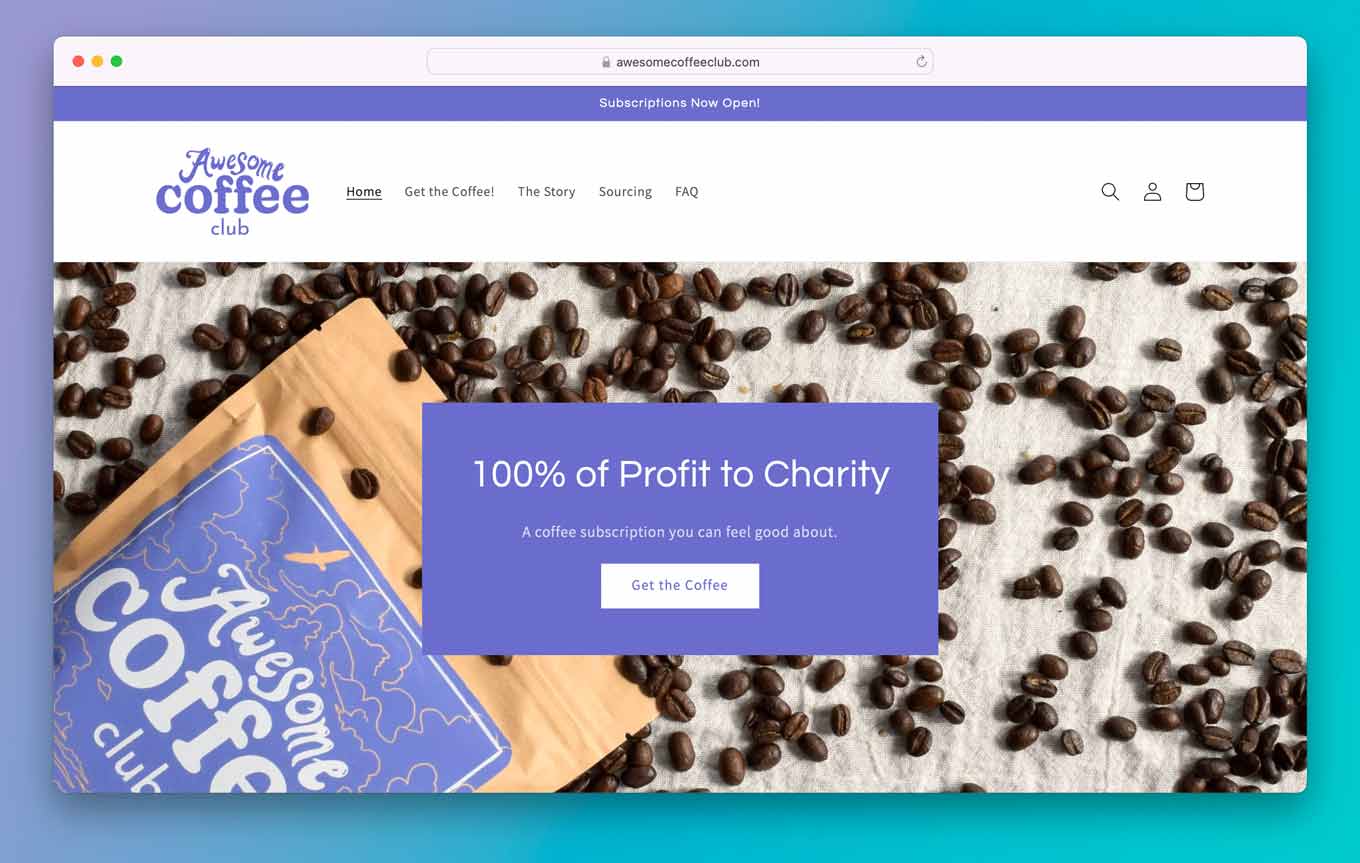
What is the Awesome Coffee Club?
Just like the Awesome Socks Club, the Awesome Coffee Club (ACC) is a subscription model that sends folks ethically-made items with 100% of profits donated to strengthen maternal and child health in Sierra Leone.
The Awesome Socks Club donated well over $900,000 to help strengthen healthcare systems in impoverished communities, and the Greens have focused on using those funds — and the subsequent funds from the ACC — to build a teaching hospital for maternal health in Sierra Leone.
The Greens have been long-time supporters of nonprofit Partners in Health, founded by Dr. Paul Farmer, and their efforts to “radically reduce” maternal and child mortality in Sierra Leone stem from this ongoing relationship, which strives to raise $25 million over five years.

The hospital broke ground in April 2021, and the Maternal Center of Excellence (MCOE) is well underway with changing lives in Sierra Leone, where the maternal mortality rate is 1 in 20 (though this rate is quickly declining, thanks to the help of frontline healthcare workers and government initiatives like these).
“The MCOE will be owned by the people of Sierra Leone through their government, and it will be staffed almost entirely by Sierra Leonean healthcare workers and supported and funded to a large degree by the government of Sierra Leone,” John said. “The heroes of this story are the people… who sacrifice so much to help vulnerable women deliver safely.”
John shared that leaders from Partners in Health are fully capable of saving women’s lives, but they just need the right tools to do it.
“That is our challenge and our opportunity,” Green continued. “To help provide the tools to this community so they can radically reduce maternal and child mortality.”
The ACC is one way supporters can directly assist in the building and funding of this hospital. The goal of the subscription services like the sock and coffee clubs is to give folks a reliable product they’d use all the time and be able to support the cause all at once.
“We think by reorienting our consumption habits to be more effectively redistributive, the world can suck less,” John said in a TikTok. “That’s the model.”
As of April 2023, the ACC had generated over $100,000, while the entire vlogbrothers community (affectionately referred to as Nerdfighteria) has raised over $20 million to help begin construction of the hospital. John says: “we’re just getting started.”
How does Awesome Coffee Club source its coffee?
In addition to providing necessary funding to the maternal health projects in Sierra Leone, the ACC is dedicated to doing good for coffee farmers and the communities where they work.
By developing the “Don’t Forget To Buy Awesome Green Coffee Sourcing Framework” (classic Green brother naming system, by the way), the company focuses on three main criteria for sourcing coffee beans: community, environment, and compensation.
On August 1, 2023, John announced on Twitter that they were re-launching the Awesome Coffee Club website — including a new “About” page, which outlines the coffee procurement, roasting, and shipping process.
“We source our beans directly from farmers and collectives. Currently the majority of our coffee comes from the Green Coffee Company, a collective based out of the Antioquia region of Colombia,” the website states.
“The majority of our coffee is grown in Salgar, Colombia by the Green Coffee Company. This collective of over 36 farms is working to change the coffee industry by retaining seasonal labor as full time and guaranteeing them fair wages, pensions, and paid time off for vacations and sick leave.”
Awesome Coffee beans are also grown in communities that actively work to eliminate deforestation and engage in regenerative agriculture, incentivizing farmers to use existing coffee groves rather than clearing forests for new ones.

“We know much more about where and how our coffee beans are grown, harvested, and processed than most coffee companies do,” the ACC website reads.
“We pay higher-than-market rates for Awesome Coffee beans, and we guarantee a minimum payment to farmers, even if market rates drop. This means we get the very best beans available while also increasing farmer income. Farming and processing coffee is hard work that deserves fair pay, which is why we work directly with farmers’ collectives and pay these farmers a premium.”
This does, of course, also mean that the coffee people buy is going to be a tad more expensive than the beans they might get at the supermarket. ACC offers ground and whole coffee beans for $22 a bag.
However, consumers can feel good about the conscious choice to subscribe to ACC, and as John reminds his followers: “Nobody who owns the Awesome Socks or Awesome Coffee Club benefits financially from it.”
In the next stage of the ACC process, coffee is shipped from Colombia to the Greens’ partner coffee roaster, First Crack, in St. Louis, Missouri — where the beans are roasted into light, medium, and dark roasts.
Lastly, coffee makes its way to the Greens’ owned an operated shipping facility, DFTBA, in Missoula, Montana — where beans are packaged and shipped to over 10,000 subscribers every month.
Why is this good news?
ACC provides a model for ethical and thoughtful business practices and reimagines how our daily consumption can benefit other people and the planet.
As Hank says in a TikTok, ACC is an example of how we can use our ambitions in a way to help others, not just in the name of “greed or comparison.”

“There are really big problems in the world, and some of them are objectively easy for everyone to agree that they should be solved,” Hank says.
“That is a flame. That is a flame that is easy to light and easy to fan, for me to try and drive new, interesting things. If we can make the things we’re doing be about that, then I want to do it.”
How else can I support maternal and child health in Sierra Leone?
Not a coffee drinker? Don’t have $22 to spare every month? That’s okay! There are other ways for you to learn more about and support the efforts to confront the maternal and child mortality crisis in Sierra Leone.
The first is free if you have a Netflix subscription. Watch the documentary “Bending The Arc,” which tells the story of how Paul Farmer, Jim Yong Kim, and Ophelia Dahl started the international movement at the center of some of the world’s most pressing humanitarian crises. Essentially, it’s the story of Partners In Health, and how this organization continues to “bend the arc” towards truth, justice, and equality.
If you’re more into socks, you can subscribe to the Awesome Socks Club for $13.75 a month and receive a super fun pair of socks designed by an independent artist, with all of the profits going directly to the Maternal Center of Excellence. Or if you use soap (we hope you do!) you can check out their newest charity endeavor: Sun Basin Soap. The Green brothers will likely release more products on their new website, Good.Store, soon.
If you’re an internet power-user and want to raise money for John and Hank Green’s nonprofit, Foundation to Decrease World Suck (which will then be donated to Partners in Health and several other community-chosen nonprofits during the annual Project for Awesome), you can score free donations for every new browser tab you open via Tab for a Cause.
If you want to get weird, order Pizza John merch during Pizzamas each fall.
Lastly, you can set up a recurring donation with Partners in Health to fund these maternal and child health projects.
You might also like:
- The Best John Green Quotes About Hope
- The Best Hank Green Quotes About Decreasing World Suck
- The Best Paul Farmer Quotes About Health and Justice
- This Instagram Community Is Raising Millions For Teachers
This article was first published in August 2022 — and continues to be updated as the story develops.
This year, the UK version of popular reality television show Love Island is sponsored by second-hand giant eBay. It’s a significant deviation from the fast fashion brands Love Island has partnered with to date, including the now collapsed Missguided, which famously advertised a £1 (USD $1.20) bikini during an episode in 2019, and I Saw It First, which spent three years providing contestants with a new wardrobe that viewers could buy in real-time via the Love Island app.
In contrast, the islanders of 2022 are dressed in pre-loved clothes chosen by celebrity stylist Amy Bannerman, who has worked with stars including Jonathan Van Ness, Lena Dunham, and Rita Ora.
The allure of fast fashion was first thrown into question on the program in 2021 when contestant Brett Staniland refused the wardrobe on offer, choosing instead to take his own clothes to the Love Island villa. The model and academic has been outspoken about the business model underpinning fast fashion brands, which he says “exploits women in their supply chains and exploits communities all over the world.”
He sees Love Island’s new partnership with eBay as an opportunity to show viewers — 43 percent of whom are under the age of 30, according to YouGov — that there’s something for everyone in the second-hand market.
“Love Island, along with social media and influencers from the show, has subconsciously taught us to buy new stuff constantly, that clothing is disposable, and that in order to be cool, or relevant, or just accepted, we have to wear new outfits every time we leave the house,” he says. “This is going to help change all that.”
So is this move by Love Island UK a green flag for a broader embrace of slow fashion in Europe? In March, the EU adopted a strategy for sustainable and circular textiles as part of its wider ambitions to take on Europe’s toxic relationship with excess and disposability.
The strategy aims to improve the fashion industry’s low rates of wear, re-use and repair at a time when every second, somewhere in the world, a truckload of textiles is heading for landfill or incineration.
Things are looking up for rates of re-use. According to the thredUP 2022 Resale Report, Europe’s second-hand apparel market is expected to grow twice as fast as its overall apparel market by 2026. This increase coincides with the growth of online marketplaces for second-hand clothes like Depop and Vinted. Since its 2008 launch in Lithuania, Vinted has amassed 50 million members across 16 markets in Europe and North America.

“When we started, second-hand was mostly the domain of vintage fashion lovers, [but] now it’s become much more widely accepted and adopted,” says Natacha Blanchard, consumer lead for Vinted.
As a measure of its success, in 2019 Vinted became Lithuania’s first tech unicorn after raising €128 million (USD $140 million), which it plans to invest in growing the platform further.
Alongside the rise of platforms like Vinted, which specifically focus on third-party resale, pre-existing European brands and retailers including Zalando and COS have made moves into the resale space.
The UK-based start-up Responsible recently raised €5.8 million (USD $6.6 million) for its “re-commerce” technology solution that allows brands to buy back clothes. It’s a shift in line with EU ambitions for an extended producer-responsibility scheme where brands are held accountable for their products beyond the point of sale.
The digitalization and onboarding of big brands is undoubtedly helping to mainstream re-use. However, when devising new measures for circularity in fashion, Jana Žůrková of Brussels-based advocacy non-profit RREUSE stresses that existing structures have to be taken into account.
This includes social enterprises that have been actors in the field of clothes collection, sorting and resale for decades, creating on average 20 to 35 jobs per 1,000 tons of textiles collected.
While clothing prices in the EU decreased by over 30 percent (relative to inflation) between 1996 and 2018, the average household expenditure on clothing has increased.
For Žůrková, the race to churn out clothes at ever cheaper price-points means the worst types of textiles are being used, scuppering attempts to improve circularity in the textiles industry in any kind of meaningful way.

“The problem we have been observing for many years [is that] the volumes [of collected clothes] are going up, while the proportion of reusable items is going down,” says Žůrková.
Currently, the resale of clothes covers the costs of collection and sorting, but if mandatory collection — EU member states have an obligation under waste legislation to establish separate collection of textile waste by 2025 — brings in even more non-reusable textiles, there are concerns that the system could collapse.
This is what Liz Rickets, co-founder of the Or Foundation, a nonprofit based in Ghana, says is happening in Kantamanto Market in Accra, where the decreasing quality of clothing (15 million garments arrive in Kantamanto Market every week) means second-hand retailers are being driven into debt as they struggle to sell garments for a price that covers transport and storage costs.
To this end, eco-design requirements that essentially ban poor quality textiles and support durability and repair will be key to supporting second-hand retail, take-back services, and renting and repair business models in Europe and beyond.
Revolutionizing repair is London-based Sojo, the Deliveroo-style app which connects people to repair and alterations services with the technology and convenience Gen Z has become so used to.
Sojo founder Josephine Philips had the idea towards the end of her final year at university studying physics and philosophy. “So nothing to do with fashion, or really tech, or apps, or even anything like that,” she laughs.
Philips had begun engaging with second-hand clothing but found the process of getting clothes altered “incredibly archaic, inconvenient, fragmented [and] decentralized … the whole thing felt like it needed to be reinvented,” she says.
The company won’t disclose figures on app downloads or uses, but Philips is candid about her initial ambitions of scaling quickly coming up against the reality of operational logistics.
However, with the €2.2 million (USD $2.4 million) Sojo recently secured in pre-seed funding and interest from brands approaching Philips for partnerships, the company has tapped into a market for repair that is clearly ready to be fulfilled.
For Philips, making slow fashion practices like repair more accessible goes hand in hand with education. She knows that consumer behavior and mindsets need to shift, and, while conscious of the “echo chamber” in the sustainable fashion space, she is optimistic that change is afoot. Love Island‘s spotlight on second-hand fashion is a good indication that such ideas are going mainstream.
Christel Droogmans decided to be part of the change Philips refers to when, after 30 years in the financial services industry, she decided to redirect her energy “into a project which is for the future and not for the past.”
Inspired by a visit to the ReTuna project in Sweden, dubbed “the world’s first recycling shopping mall,” Droogmans co-founded Yuman Village, a center in Brussels, selling circular products including second-hand and upcycled fashion.
The vision is to support circular entrepreneurs and build a community around different ways of consuming, with drop-off points for unwanted clothes which are distributed among partners to create local production loops.
Rental and subscription services are also trying to encourage new ways of consuming fashion, with service models such as Hurr Collective, Hirestreet and thelittleloop (all founded since 2018) becoming increasingly relevant. Charlotte Morley, founder of thelittleloop, was a hit on the BBC’s Dragon’s Den (the equivalent of Shark Tank in the US) when she pitched her rental marketplace for children’s clothing.
“The ability to access things as and when they’re needed, for less money, and none of the guilt of fast fashion, just makes so much sense,” says Morley, who previously worked in the defense industry and whose business recently partnered with John Lewis, a brand of high-end department stores operating throughout the UK.
So, while previous Love Island alumni present a filtered version of fast fashion in Instagram squares and TikTok fashion hauls, a growing number of people are getting “the ick” as exploitative labor practices, pressures on water and land use, greenhouse gas emissions, and the release of microplastics get harder to ignore.
But, while Europe’s slow fashion movement is growing, so too is the global fast fashion industry. Circularity, say experts, cannot therefore just be about making recycling easier and more efficient while maintaining current levels of consumption. It has to be about a fundamental reimagining of how we design, value and take responsibility for clothes. New European companies are showing glimmers of this future.
When anger over everything from the killing of unarmed people of color to new restrictions on access to abortion bubbles over, many Americans act on it.
One avenue for someone who has gotten fed up with current events is to take part in protests, such as marching for gun reform in response to mass shootings. Another is by what nonprofit and philanthropy scholars like to call “rage giving” — charitable donations motivated by strong emotions and dissatisfaction with the political climate.
In our new book about this phenomenon, we explain that people often donate to nonprofits following breaking news about events they consider to be tragic or unjust. By donating, people may feel they are addressing the wrong they want to see righted, or they can express a strong politically driven view or value.
Divisive moments
When news coverage grows and collective anger culminates in high-profile marches, rage givers can experience an emotional release by channeling their feelings into something they consider positive.
Quick bursts of anger sometimes called “fury triggers” usually drive these gifts.
We have found that waves of rage giving are often sparked by divisive political moments. These unexpected spikes in donations are typically fueled by extensive media coverage.
For example, after the mass shootings in Uvalde, Texas, and Buffalo, New York, donations to groups that support gun violence victims in both communities surged.
And, shortly after the May 2022 leak of the Supreme Court’s draft decision to overturn Roe v. Wade, NARAL Pro-Choice America, an organization that advocates for access to abortion, saw a 1,400% increase in donations within 24 hours.
Likewise, the Brigid Alliance, a nonprofit abortion fund that provides financial and logistical help for people seeking abortions, saw the number of its donors quadruple from May to July. The gifts ranged from $5 to $50,000.
Growth following 2016 election
Rage giving isn’t limited to guns or abortion. Nor is it new.
But there are many signs that the phenomenon grew ahead of, during and after the heated 2016 and 2020 presidential elections. Many people who were concerned about immigration, civil rights and sexual assault and harassment during those highly polarized periods sought out opportunities to give to nonprofits and political action committees as quick and easy ways to express their outrage.
The ease and growth of online giving, up 42% in the three years ending in 2021, makes it simpler for rage givers to express their outrage. There’s no longer a need to mail a check or make a phone call.
Rage giving is, to be sure, partisan in that anger and outrage can provoke political mobilization, action and higher voter turnout.
But nonprofits on both sides of the political and cultural divide have reaped windfalls from rage giving in recent years. Giving to pro-gun organizations like the National Rifle Association, for example, can surge when gun control measures are in the news –as is generally the case after mass shootings.
More likely to be women and Democrats
In 2017, we commissioned a survey that identified 520 people who said they had donated to a nonprofit of their choice after feeling unbridled anger during the 2016 presidential election. Based on that data, we estimated that about 58% of these rage givers were women and 80% were white.
About 44% said they were Democrats, roughly 35% said they were Republicans and the remaining 21% identified as independent voters. Because the shares of Americans who lean toward one major political party or the other is more evenly matched, we found that, at that moment in time, Democrats were more likely to donate this way than more conservative Americans.
When thinking about the candidates in the 2016 presidential election and the stances each candidate takes on social and environmental issues, one rage giver from North Carolina said in response to our survey, “I’m just sick about it,” she said. “We’ve got to do something.”
We also found the surveyed rage donors were likely to be civically engaged – through behaviors such as volunteering, voting, contacting elected officials and participating in marches and protests. Rage giving, as a form of collective action, aligns with other helping behaviors by giving a voice to the underserved and unheard.
More research is needed to get a clearer picture of why certain people do this. But based on what we’ve learned so far, we believe that people who engage in rage giving see philanthropy as a type of civic engagement and that their gift, along with other donations, makes a difference.
Ecosia is a search engine that uses its advertising revenue to fund tree-planting projects.
— Since its launch in 2009, the company has financed the planting of more than 124 million trees.
— In March 2021 alone, the Berlin-based company made nearly 2 million euros ($2.4 million), more than 40% of which went directly to tree planting in 14 countries across five continents, according to their financial reports.
— Mongabay spoke with Ecosia’s chief tree-planting officer, Pieter van Midwood, to learn more about Ecosia’s business model, its approach to tree planting, and the reforestation sector.
Almost everyone has heard of a Google search. But what about Ecosia, the search engine that uses its advertising revenue to plants trees? Can a click make a difference?
Mongabay spoke with Ecosia’s chief tree-planting officer, Pieter van Midwood, to learn more about Ecosia’s business model, its approach to tree planting, and the reforestation sector.
The Berlin-based company Ecosia launched in 2009. It has since financed the planting of more than 125 million trees. In March 2021 alone, Ecosia brought in nearly 2 million euros ($2.4 million), according to its monthly financial report. More than 40% of the money went directly to planting trees in 14 countries, including Burkina Faso, Brazil, and Indonesia.
“It should be noted that Ecosia was created with this purpose,” Van Midwood said, “to mobilize finance for restoration — and every initiative we discuss in our company is led by the question of how it will help us to plant even more trees.”
The ads on Ecosia are delivered by Bing, and Ecosia earns revenue when a user clicks on an ad. Some, more lucrative keyword advertisements are more valuable to Ecosia than others. Because not every user clicks an ad each time they search, Ecosia earns an average of 0.5 cents (Euro) per search, so it takes approximately 45 searches to finance the planting of one tree.
Ecosia finances tree-planting efforts in areas where biodiversity is at risk and where the local community can participate in and benefit from the projects. And while Ecosia brings the money, a network of more than 50 partner organizations do the on-the-ground work of growing seedlings, planting trees, and maintaining reforested plots.
“[Ecosia is] simple. They’re right to the point, friendly, and they believe in what you do. And if you keep doing your excellent work, I think you’ll just get more trees,” Laury Cullen, director of the Institute for Ecological Research (IPÊ), one of Ecosia’s partners in Brazil’s Atlantic Forest, told Mongabay.
“They try to visit us every year… I think that’s the very best way to report to your donor that you are doing the right stuff. They can see your work on the ground and not just the paper reports.”
Tree planting has become a hot topic in recent years, with many groups, companies and governments scrambling to plant trees to offset carbon emissions and address climate change. But trees are about more than climate, Van Midwood says.
“Now, everyone wants to plant trees, sometimes for the right, but also, I think, sometimes for the wrong reasons,” he said. “If we are going to see trees as a silver bullet to solve climate change, you know, this is an incredibly dangerous development … we really can’t afford to just focus on trees, we also have to reduce emissions.”
“Trees are very inspirational things. We shouldn’t kind of only see them as a way to store carbon.”
Pieter van Midwoud discussed these issues and more during an interview with Mongabay staff writer Liz Kimbrough. This interview has been lightly edited for style and clarity.
Tell me about your background and your current role at Ecosia.
Pieter van Midwoud: I hold an M.Sc. in forest and nature conservation from Wageningen University & Research in the Netherlands. After my studies, I worked in the development and management of carbon standards for holistic reforestation projects.
In 2016 I joined Ecosia, the search engine that plants trees, as their first tree-planting officer.
Since then I have been working, together with my team, to create and develop a portfolio of 60 reforestation projects all around the world. We have developed a standardized way of sourcing, developing, implementing and monitoring our projects, that I think is quite unique in its relatively simple yet consistent approach, allowing all kinds of different projects and setups to work with us.
What is unique about Ecosia’s approach to tree planting?
Pieter van Midwoud: Ecosia is a search engine that uses its profits from advertising revenue to plant trees. Thanks to searches from our 15 million global users, we have been able to finance over 124 million trees since Ecosia was founded in 2009.
It should be noted that Ecosia was created with this purpose — to mobilize finance for restoration — and every initiative we discuss in our company is led by the question of how it will help us to plant even more trees.
For actually planting those trees, we currently work with around 50 different partners. We helped many of these partners to professionalize and scale their work on the ground, resulting in a vibrant and very results-focused group of organizations. Together with them we plant over 800 different tree species, around 10% of which are threatened (or worse), according to the IUCN Red List.
We want to trigger our partners to think not about how many trees they want to plant, but about what interventions are needed to ensure more trees are growing after three years. Therefore we are pioneering the use of seedballs, direct seeding, natural regeneration and even firefighting. Whatever is the sound approach in the socioeconomic context to bring trees back.
All planting locations get reported to us, and on a good day, we have over 100 locations reported to us with GPS coordinates and pictures of where trees have been planted. We monitor the trees for three years, and from the end of May this year, are kick-starting monthly monitoring by using Planet Dove 3-meter resolution [satellite imagery], where we compare NDVI [normalized difference vegetation index] development against peer sites and reference areas. We want to spearhead how restoration is done and inspire the sector.
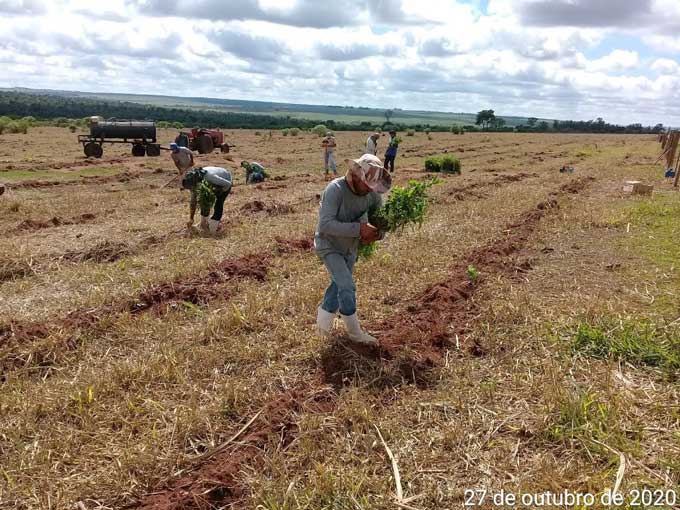
How does Ecosia choose projects to fund? How do you establish that a project is legitimate?
Pieter van Midwoud: Projects apply to Ecosia through our online form, but we also ask our partners about other projects and source them via our network.
As part of our due diligence, we go extensively through the project proposal and always suggest changes based on our experience with others. During these calls, you get a feeling for how serious the potential partner is. In addition, we do reference calls and general checking in our networks and online.
Then, we usually start with a smaller one-year contract, so both the partner and Ecosia experience how the collaboration works in practice. If traveling allows, we visit the project to see the work on the ground, or we ask locally embedded auditors in our network to visit the project on our behalf.
Our contracts with the partners have clearly defined milestones and payments that relate to those milestones. In addition, we have WhatsApp groups with all our projects, through which they frequently share stories and information from the field.
Often, these pictures land within the hour on our social media channels, so interested followers also see what is going on in the field.
What advice would you give to those who want to invest in tree planting?
Pieter van Midwoud: At the very minimum: if you pay someone for planting trees, ask the locations of where those trees are planted. At Ecosia, we require a polygon (shapefile) for areas on which more than 200 trees are planted.
You should also ask how many trees and which species are planted within the area.
However, if you really want to invest some serious money into tree planting, make sure you work with an organization that has expertise in designing, implementing and monitoring these projects. Like you would do with any other business venture.
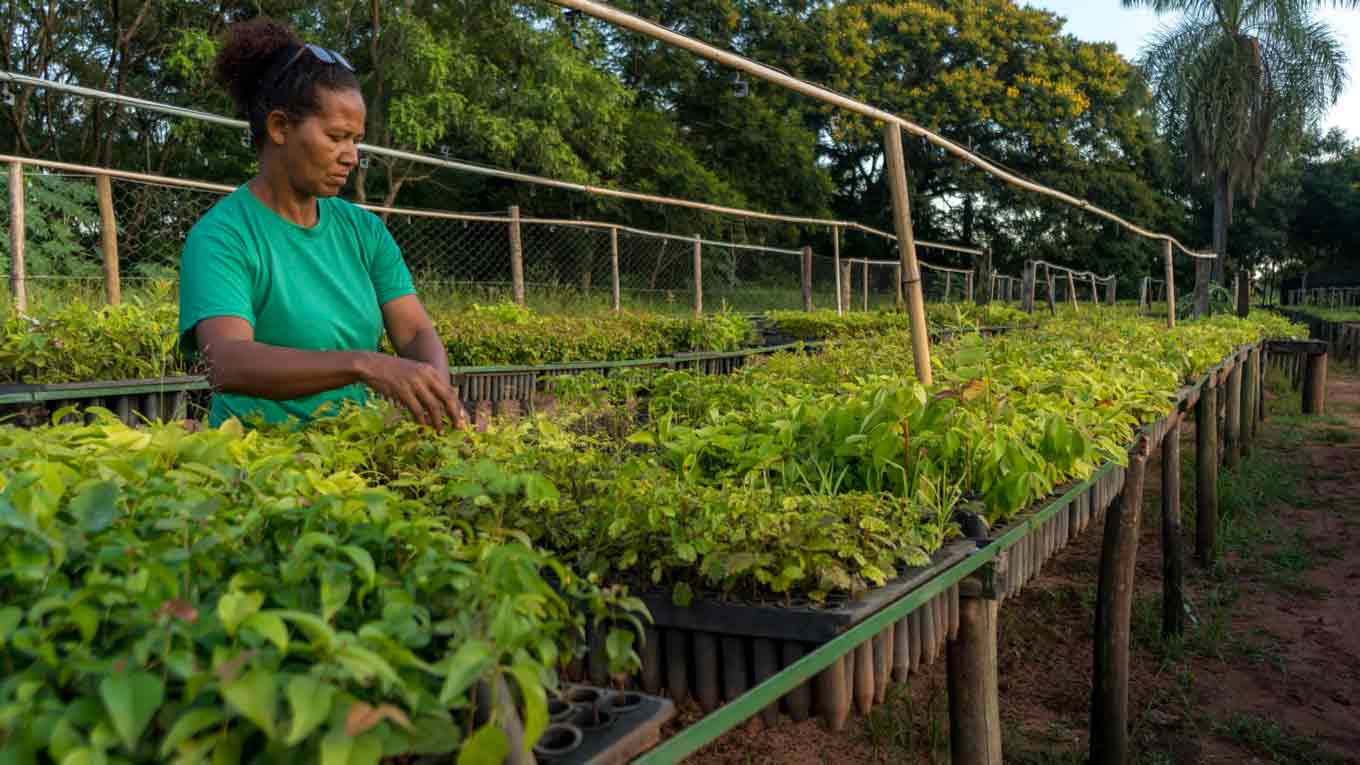
What are your thoughts on the tree-planning sector in general
Pieter van Midwoud: Because of the strong demand there currently is, the sector is developing rapidly, including all the success and errors that come with that. I see groups preparing themselves to milk the money out of this market as efficiently as possible and others that are very serious about the impact they want to have, but that actually have no idea about numbers and techniques and just say things that they feel is reasonable.
But: tree planting is not easy. Even planting a single tree is hard work, and if you want to scale it, you need to understand very much the dependencies, infrastructure, and so on, that go with it. And tree planting is not a technical activity alone; half of the longevity of the work depends on designing it within the right local socioeconomic framework.
Getting all those small individual parts right and then making the project fly, and fly well, is actually close to rocket science. And even rocket science has the advantage that there are no people living on the moon that need to be involved in the project.
I am also skeptical about the strong focus on the carbon sequestration power of trees. Yes, trees absorb carbon dioxide, but locally their push to biodiversity, their value to people, their role in adapting agriculture to climate change is way more critical.
I am fine if carbon markets help good projects to become a reality, but appreciating trees only because of carbon means also disappreciating trees when the “trees and carbon” hype is over, which would be incredibly stupid and dangerous.
This interview by Liz Kimbrough was originally published on Mongabay.
On a sunny morning in southern Arizona this spring, members of the Arizona Water Defenders gathered at a park in the small town of Douglas to answer residents’ questions about water — and to collect signatures for a citizen-led ballot initiative that would, for the first time, regulate the region’s aquifer.
The crowd that came was small but diverse. An hour into the community meeting, an artist arrived with a large, colorful map of the region’s geology that he was excited to show the Water Defenders.
A retired educator and her grown son came on foot and offered to go door-to-door in their neighborhood in support of the cause. Two students from the local community college rolled up on their longboards, and a man out on a mission of his own — handing out flyers he’d written about the value of God's love — also stopped to listen.
All signed in support of the initiative.
Who are the Arizona Water Defenders?
The Arizona Water Defenders, a grassroots group, was formed in March 2021 by southeastern Arizona residents who were concerned about local wells going dry and increasingly visible ground fissures and land subsidence. There has been agricultural pumping in the area since the 1940s, but in recent years, as large-scale dairy and nut producers have bought land in the area and drilled deep new wells, water table drawdown has become more noticeable and worrisome.
After contacting the Arizona Department of Water Resources and reading the state’s Groundwater Management Act, the Water Defenders began the process of initiating a ballot measure that would create Active Management Areas (AMAs) — geographic designations in which the state’s strictest groundwater regulations apply — for the Willcox and Douglas basins, southeastern Arizona's two watersheds.
In May, the Cochise County Elections Office approved the ballot initiative for the Willcox Basin; the Water Defenders will submit the signatures they collected for the Douglas Basin on July 6.
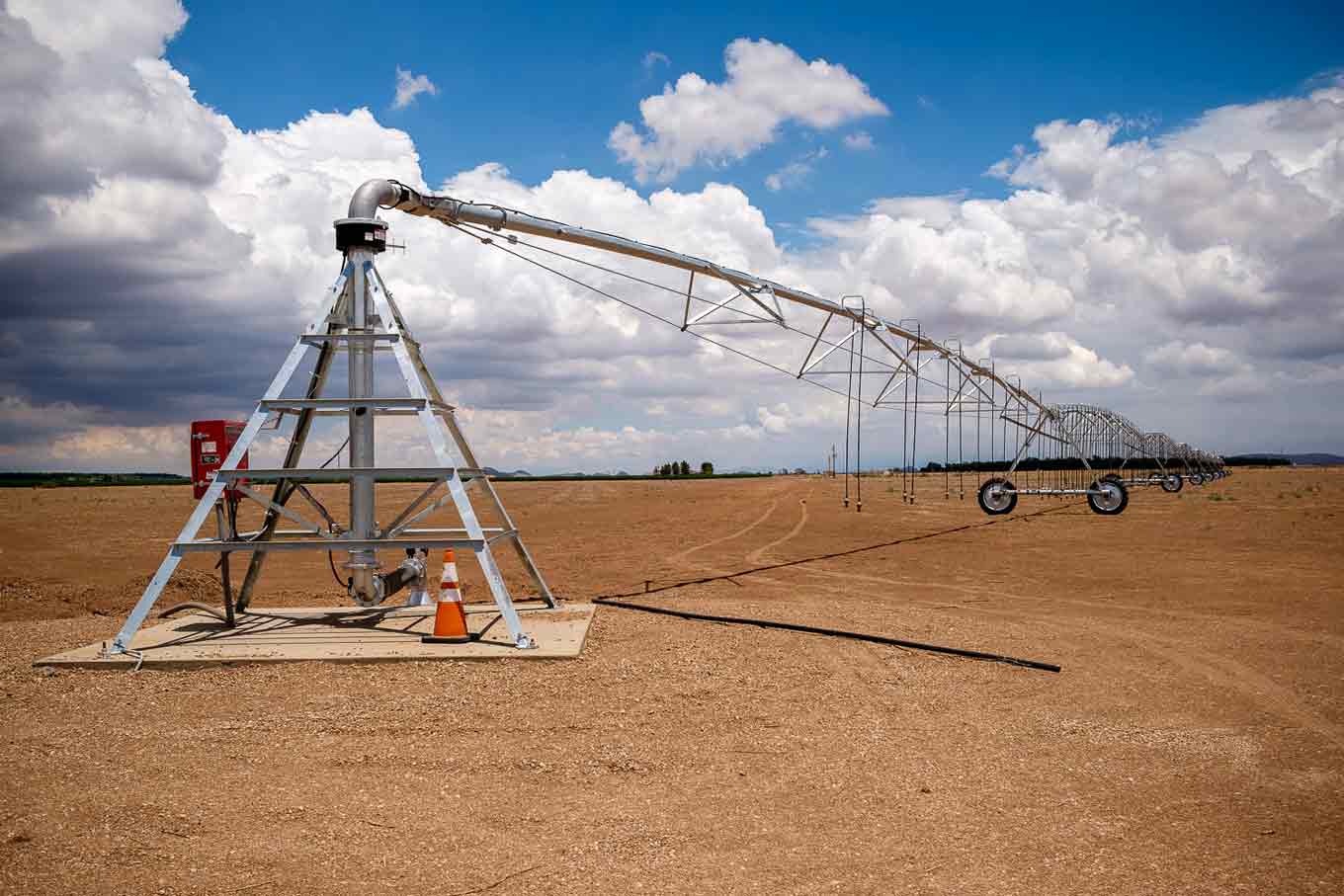
If voters approve the Willcox and Douglas AMAs in November, the new management areas will be the first in the state to have been created by citizen petition. Though other examples of collaborative groundwater management exist in the West — voluntary reductions in well use in Colorado’s San Luis Valley, for example, as well as the San Joaquin Valley of California's Collaborative Water Action Program — most have come from state mandates.
There have been other groundwater-related ballot initiatives, including the bans on groundwater export proposed in California’s Siskiyou and San Luis Obispo Counties, but those have largely failed.
If the Water Defenders' ballot initiatives succeed, they will show that local, democratic approaches to regulating the West's increasingly scarce water resources are possible.
Together, the 1,910-square-mile Willcox Basin and the 750-square-mile Douglas Basin form the Sulphur Springs Valley, all of which is located in Arizona’s Cochise County, except for a small fringe.
After the county loosened its agricultural permitting regulations in 2012, Riverview LLP, a Minnesota-based dairy, began buying land on the eastern side of the valley. The dairy has drawn local concern and some animosity because its financial resources have enabled it to drill unusually deep wells, which many believe have dramatically affected the water table.
High Country News reported in August 2021 that since 2015, the company has drilled about 80 wells in the Willcox Basin and six more in the Douglas Basin. Most of them are at least 1,000 feet deep.
Legally, there are no limits as to how deep Riverview and the other agribusinesses that have recently bought land in the valley can dig wells, a fact that points to a paradox at the heart of Arizona’s groundwater law.
The state’s Groundwater Management Act came into being in 1981, after the federal government threatened to withhold Arizona’s share of Colorado River water until the state curbed its excessive groundwater usage. The law created four Active Management Areas for the areas where the aquifers were experiencing the greatest strain.
These management areas hold 80% of the state’s population and account for 70% of its water use. Yet by square mileage, they represent just 13% of Arizona’s total land area.
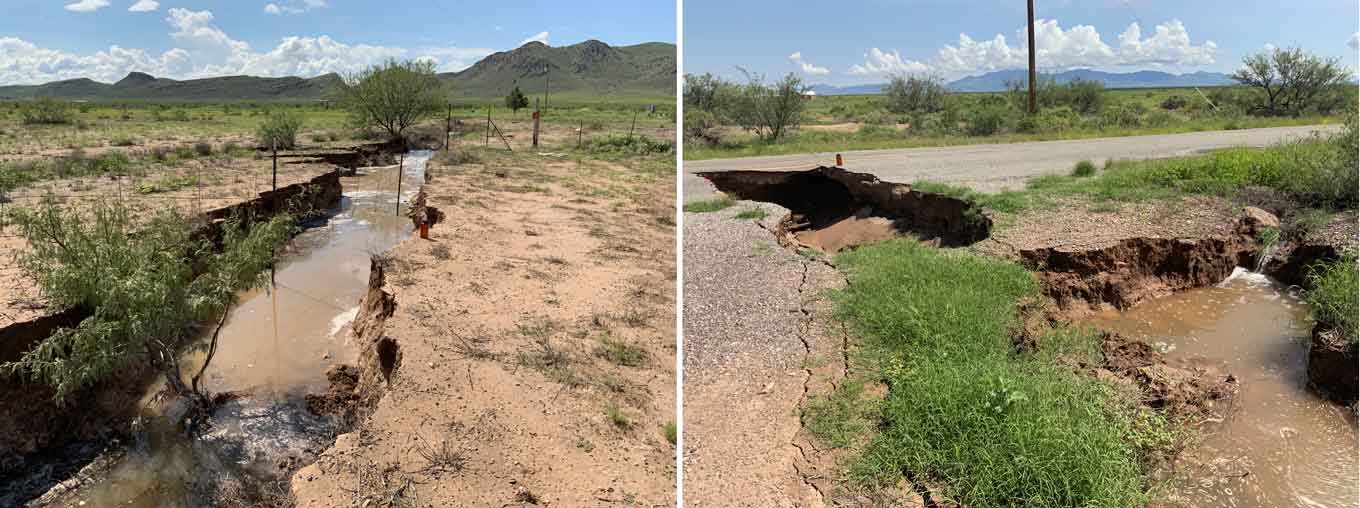
Within these regulated regions, Arizona’s groundwater law is “one of the most comprehensive groundwater codes in the nation,” writes historian Thomas Sheridan in Arizona: A History.
According to Susanna Eden of the University of Arizona’s Water Resources Research Center, each management area is required to produce a conservation plan every 10 years, and there are rules about the volume of water groundwater users can pump.
But in areas not regulated by an AMA — including the Douglas and Willcox basins — there is no oversight of groundwater use. That’s what the Water Defenders hope to change this November.
(The Douglas Basin is designated as an Irrigation Non-Expansion Area, but it doesn't regulate the amount water that can be used; it only prohibits new land from being irrigated.)
In the summer of 2021, the Water Defenders — which Ash Dahlke, the group's chair, described as a “pretty scrappy group” that includes “a lot of teachers and librarians” — began the process of collecting signatures. The support of 10% of the basin’s registered voters is needed to put the creation of an AMA on the ballot.
“People agree we need something,” said Bekah Wilce, the Water Defenders’ treasurer. Wilce is optimistic that the group’s “hard work on the ground of talking to people” will pay off. “People didn’t know this was possible,” she said, but “they understand its importance.”
If voters approve the AMA proposals in November, the director of the Arizona Department of Water Resources will have 30 days to visit the basins and establish goals for the management area. The state also appoints advisory committees to represent the basins’ users. The department and the committees will then have two years to draft initial management plans for the new AMAs.
But not all residents are on board with the proposal. Farmer Claire Owen said that it’s “too late” for new AMAs to be effective, because the water table has already dropped too much. “They messed up when they wrote the law in 1981,” he said. “Everybody should have had the same regulations.”
Jim Graham, who grows pistachios and grapes at Cochise Groves, said he is concerned but cautiously optimistic about the valley’s groundwater. He feels that an AMA is the “wrong tool. … It’s like going to the toolbox when you need a hammer and coming back with a saw.” Graham is also worried about the possible economic impact of new regulations.
Nathan Watkins of San Ysidro Farms doesn’t think that AMAs will mitigate Riverview's impact on the basins, at least not in the way that advocates hope they will.
“The dairy has changed the whole character of this valley because it bought out all the local farmers. We’ve lost our sense of community,” he said. Though he says he is unhappy about Riverview’s 1,500-foot-deep wells, he believes that the water table would still be dropping “even if the family farmers were still here.”
The Arizona Water Defenders believe that the intensive groundwater pumping by agribusiness has to be reined in, Wilce said, in order to ensure long-term groundwater access for small farmers and non-farming residents.
She emphasizes that AMAs are designed to respond to, and be shaped by, the needs of communities. “We need as many groundwater users as possible to be part of the process and have their voices heard in crafting our new AMAs.”

For years, residents of Belmont County in Eastern Ohio suspected something was wrong with their air. Their corner of rural Appalachia was far from the vehicle exhaust and heavy industry of big cities, but many regularly experienced headaches, nausea, and fatigue, as well as trouble breathing.
They suspected that fracking operations, which are heavily concentrated in this part of the state, might be releasing toxic compounds into the air.
When monitoring by state air regulators didn’t detect anything out of the ordinary, some residents decided to take matters into their own hands. They installed portable air sensors — which test for pollution by shooting a laser beam into the air and measuring the light that bounces back — throughout the county, thanks to funding and research support from several universities and nonprofit organizations.
The results confirmed some of their worst fears: Air quality in the area frequently exceeded standards set by the World Health Organization, according to a study published last month in the journal Environmental Research Letters. The citizen-run sensors picked up high levels of benzene, toluene, and fine particulate matter, contaminants linked to elevated risks of cancer and heart disease.
The Belmont County project is part of a wave of community air monitoring efforts taking off around the country, from Chicago to St. Louis. In recent years, low-cost air sensors like those deployed in Ohio have become significantly cheaper and easier to use, while more residents have started to realize that federal and state monitoring programs can’t capture the true scope of air pollution in their towns or neighborhoods. These localized projects, in turn, have revealed worrying levels of pollutants in areas that the federal government otherwise deems safe.
Last year, low-cost monitors installed at a convent near Pittsburgh helped pick up emissions of volatile organic compounds, or VOCs – a pollutant not tracked by EPA monitors – near a new ethane cracker plant used in plastics manufacturing that Shell was constructing in the area. Community sensors in San Francisco’s Outer Sunset neighborhood have consistently detected levels of particulate matter that exceed the U.S. Environmental Protection Agency’s average daily exposure standard.
Garima Raheja, a PhD candidate at Columbia University and lead author of the Belmont County study, said she’s been in touch with other community groups, from Louisiana’s Cancer Alley to the Bronx in New York City, to help them design their own air monitoring projects.
“There are attempts to do this all over the world,” Raheja said. “And the more we talk about it, the more we publish, the more we broadcast that it’s happening, it really helps those movements connect to each other.”
Under the Clean Air Act, the EPA is required to monitor the air for certain types of “criteria” pollutants, like particulate matter, ozone, and sulfur dioxide. If levels exceed federal limits, the agency can declare the area in “non-attainment” and require local authorities to bring down air pollution levels.
On a large scale, this system has led to drastic improvements in air quality, with levels of the most common pollutants dropping by 78 percent in the 50 years since the Clean Air Act was introduced.
But traditional air monitors are costly and require time, expertise, and laboratory access to use, meaning that regional air quality agencies typically rely on a small number to cover an entire city or county. Belmont County has only three sensors for an area that covers nearly 550 square miles, with hills and valleys that can concentrate pollutants in wildly different amounts depending on the location.
The existing monitors, Raheja said, didn’t reflect the “heterogeneity of the different levels of air pollution experienced by people living in different parts of the community.” At the same time, residents have grown increasingly alarmed by the proliferation of fracking in the area, with Ohio’s oil production more than five times higher now than it was a decade ago.
Two local advocacy groups, Concerned Ohio River Residents and the Freshwater Accountability Project, applied to collaborate with the American Geophysical Union’s Thriving Earth Exchange, a program that pairs scientists with communities seeking their expertise.
Working with researchers from Columbia University and the Massachusetts Institute of Technology, they installed 60 low-cost air sensors designed by PurpleAir, a for-profit company, and nearby Carnegie Mellon University in homes, schools, and churches.
The sensors, though less precise than the EPA monitors, are simple to use and upload their readings to a real-time map that can be accessed with an internet connection. They also cost tens of thousands of dollars less than EPA monitors.
Over the next two years, the sensors detected spikes in fine particulate matter and VOCs, some of which correlated with increased reports of headaches, nosebleeds, and other health effects from residents.
These didn’t show up on the regional EPA monitors, which only take readings at certain times and might not be close enough to catch the worst of the polluted air. Raheja and her team were also able to map plumes of pollution coming from a nearby natural gas plant, showing how wind patterns could influence which homes experienced spikes and when.
Most critically, the devices put a number to the air quality on a hyperlocal level and helped residents understand when it was unhealthy or dangerous, said Lea Harper, managing director of the Freshwater Accountability Project.
Prior to the study, many in Belmont County downplayed their own symptoms, feeling that nothing could be done about them.
Others denied that fracking – a major economic force in the region – had any negative impact on Belmont’s air quality, Harper said.
Finally having numbers gave advocates like her a new tool to organize residents, as well as prepare for potential legal action against the companies emitting these pollutants in the future.
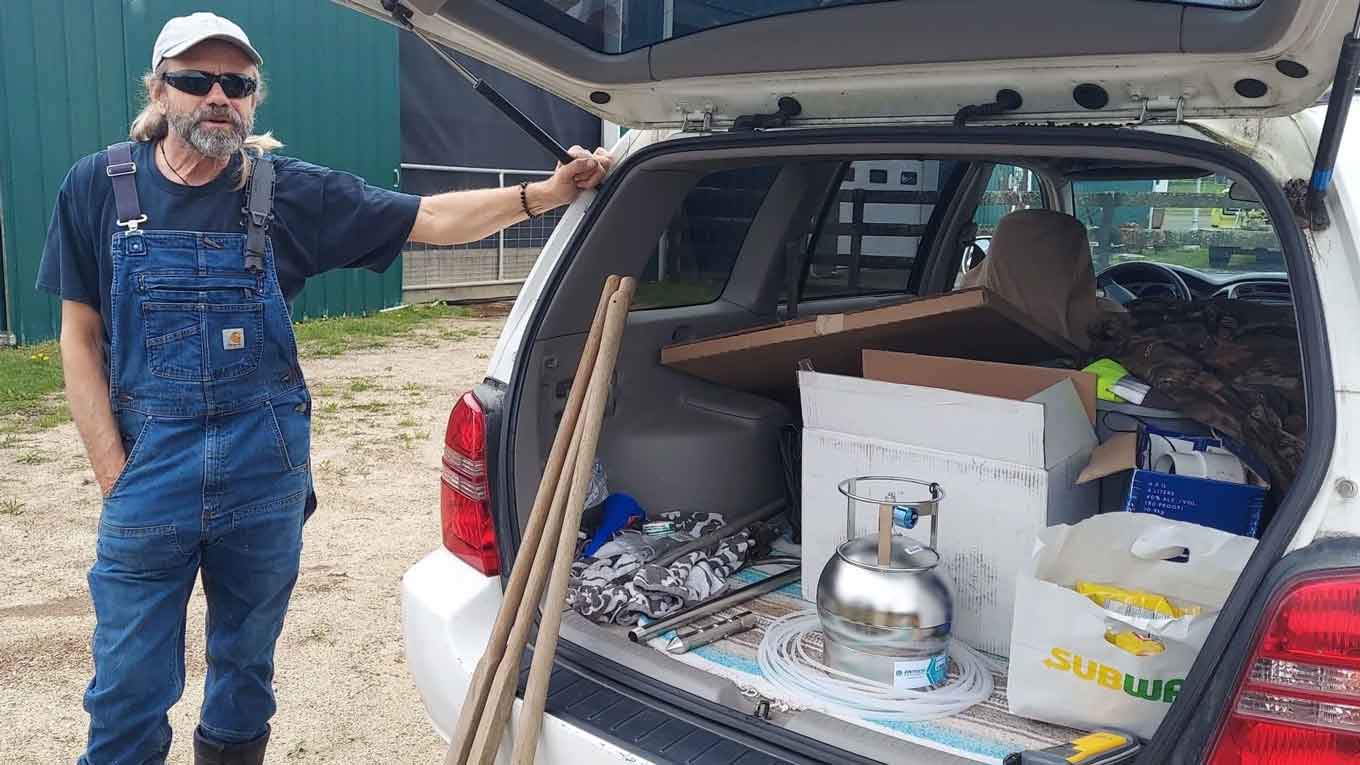
“To have at least some ability to verify and validate people’s concerns has been much more empowering than anything I was able to do before,” Harper said. Using the results, she convinced many residents to install air filters for when pollution levels spike.
With concrete data to support their gut feelings, community members could take action to protect themselves, said Yuri Gorby, a microbiologist and volunteer scientist with the Thriving Earth Exchange.
Gorby, who grew up near Belmont County, helped set up the sensors and interpret the results, and was able to develop close connections with residents because of his own roots in the region. One couple in their 70s, Gorby said, called him after they woke up in the middle of the night with headaches; the monitor inside their home showed a spike in VOC levels, and he advised them to leave the house for their own safety.
Raheja said that this kind of partnership between residents and scientists helped differentiate the project from other examples of “citizen science,” when researchers enlist the help of locals to help them gather data, but leave once the results are finalized. These types of studies rarely take into account what the residents themselves want to learn about their surrounding environment.
In contrast, “the community pitched this project,” Raheja said. “The goals are set by the community, and we follow suit and help them make it happen.”
The EPA itself has started to embrace citizen science. These projects, according to an EPA spokesperson, “can help fill data gaps and can be important tools for local residents in working with their state, local, or tribal nation governments to improve the quality of the air that we breathe.”
One example is the AirNow Fire and Smoke Map, which sources air quality data from nearly 13,000 sensors managed by individuals or local groups. It provides smoke and pollution information during wildfire events to communities that might live far from an official EPA monitor.
Monitoring on its own, though, won’t be enough. Currently, the EPA does not use data from low-cost sensors like PurpleAir to make regulatory decisions, such as declaring that an area is in non-attainment.
Raheja said agencies with the power to reduce emissions and penalize polluters need to take the results of studies like the one in Belmont County into consideration, and begin including community members in the decision-making process.
Attempts to do so in states like California, where a 2018 law established air monitoring programs that incorporate data from sensors located in environmental justice communities, have so far failed to deliver the results that many advocates pushed for.
Another entrenched problem is the EPA’s own standards for air pollutants, which are less stringent than many health experts believe are necessary to protect human well-being.
The World Health Organization, for example, recommends capping annual levels of fine particulate matter at 5 micrograms per cubic meter, while the EPA allows three times that amount. Some types of VOCs, meanwhile, are not regulated by the EPA at all.
“The goal is to reduce these emissions, and the goal is to help the communities breathe better,” Raheja said.
“We need to do the science, but we also then need to do the policymaking to change something based on the science.”
At Good Good Good, we’re all about finding good news, while acknowledging the realities of the injustices of the world.
In our work, we come across beautiful “light in the darkness” quotes all the time. As a team, we slowly started collecting our favorite light and darkness-themed quotes and are publicly sharing the comprehensive collection for the first time.
We’ve also created separate collections of the best quotes about light and the best quotes about darkness.
May these quotes help you to always seek the light — and to be the light. (And we’ll be here to help you along your journey, by continuing to share hope-filled good news stories every day and every month.)
Quotes About Dark and Light
Famous Quotes
“It is better to light one small candle than to curse the darkness.”
— Eleanor Roosevelt
“Hope is being able to see that there is light despite all of the darkness.”
— Archbishop Desmond Tutu
“Only when we are brave enough to explore the darkness will we discover the infinite power of our light.”
— Brené Brown
“It’s so much darker when a light goes out than it would have been if it had never shone.”
— John Steinbeck
“Now is the time to rise from the dark and desolate valley of segregation to the sunlit path of racial justice. Now is the time to change racial injustice to the solid rock of brotherhood. Now is the time to make justice ring out for all of God's children.”
— Martin Luther King Jr.
“Gotta have opposites, light and dark and dark and light, in painting. It’s like in life. Gotta have a little sadness once in awhile so you know when the good times come. I'm waiting on the good times now.”
― Bob Ross
On Light and Dark
“However vast the darkness, we must supply our own light.”
— Stanley Kubrick
“Maybe you have to know the darkness before you can appreciate the light.”
— Madeline L’Engle
“In the midst of darkness, light persists.”
— Mahatma Gandhi
“Darkness cannot drive out darkness: only light can do that. Hate cannot drive out hate: only love can do that.”
— Martin Luther King Jr.
“We can easily forgive a child who is afraid of the dark; the real tragedy of life is when men are afraid of the light.”
— Plato
“I will love the light for it shows me the way, yet I will endure the darkness because it shows me the stars.”
— Og Mandino
“Every moment of light and dark is a miracle.”
— Walt Whitman
“Your path is illuminated by the light, yet darkness lets the stars shine bright.”
— J.L.W. Brooks
“It is during our darkest moments that we must focus to see the light.”
— Aristotle
“Why blame the dark for being dark? It is far more helpful to ask why the light isn't as bright as it could be. ”
— Rob Bell
“People are like stained-glass windows. They sparkle and shine when the sun is out, but when the darkness sets in their true beauty is revealed only if there is light from within.”
— Elisabeth Kübler-Ross
“Don’t let this darkness fool you. All lights turned off can be turned on.”
— Noah Kahan
Light in the Darkness Quotes
“It is often in the darkest skies that we see the brightest stars.”
— Richard Evans
“Light must come from inside. You cannot ask the darkness to leave; you must turn on the light.”
— Sogyal Rinpoche
“In order for the light to shine so brightly, the darkness must be present.”
— Sir Francis Bacon
“Don’t fight darkness — bring the light, and darkness will disappear.”
— Maharishi Mahesh Yogi
“You may be the only person left who believes in you, but it’s enough. It takes just one star to pierce a universe of darkness. Never give up.”
— Richelle E. Goodrich
About Candles
“To see a candle’s light one must take it into a dark place.”
— Ursula K. Le Guin
“We are not here to curse the darkness, but to light the candle that can guide us through that darkness to a safe and sane future.”
— John F. Kennedy
“Instead of cursing the darkness, light a candle.”
— Benjamin Franklin
“You can curse the darkness or light a candle. The choice is yours.”
— Patrick Kane
“Know that darkness is merely the absence of light. You can be the small candle that defeats the vast darkness.”
— Jonathan Lockwood Huie
“How far that little candle throws his beams! So shines a good deed in a weary world.”
― William Shakespeare, The Merchant of Venice
“All the darkness in the world cannot extinguish the light of a single candle.”
— St. Francis of Assisi
Related: Check out these incredible eco-friendly candles
Light Quotes
“Your existence brings a light into this world like no other. Please keep that light shining.”
— TWLOHA
“There is always light. If only we’re brave enough to see it. If only we’re brave enough to be it.”
— Amanda Gorman
“There are two ways of spreading light; to be the candle or the mirror that reflects it.”
— Edith Wharton
“As we work to create light for others, we naturally light our own way.”
— Mary Anne Radmacher
“Nothing can dim the light that shines from within.”
— Maya Angelou
“Is there anything more loyal than the sun?”
— Mary Oliver
“As we let our light shine, we unconsciously give other people permission to do the same. As we are liberated from our own fear, our presence actually liberates others.”
— Marianne Williamson
“Just as one candle lights another and can light thousands of other candles, so one heart illuminates another heart and can illuminate thousands of other hearts”
— Leo Tolstoy
“A candle loses nothing when it lights another candle.”
— Thomas Jefferson
“There is a crack in everything, that's how the light gets in.”
— Leonard Cohen
"A day without sunshine is like, you know, night."
— Steve Martin
“Shining a light on someone else doesn’t diminish mine. Take time here to encourage people and lift them up.”
— Bernice King
Darkness Quotes
“Be loved. Be known. Love people and know people. Be so brave as to raise a hand for help when you need it. Make friends and make sure they know they matter. Be loyal to them and fight for them. Remind them what’s true and invite them to do the same when you forget. If you do some losing or you walk with someone else in their defeat, live with dignity and grace. It is a middle finger to the darkness.”
— Jamie Tworkowski, If You Feel Too Much: Thoughts on Things Found and Lost and Hoped For
“Look at how a single candle can both defy and define the darkness.”
— Anne Frank
“To all who walk the dark path, and to those who walk in the sunshine but hold out a hand in the darkness to travel beside us: Brighter days are coming. Clearer sight will arrive. And you will arrive too. No, it might not be forever. The bright moments might be for a few days at a time, but hold on for those days. Those days are worth the dark.”
— Jenny Lawson, Furiously Happy: A Funny Book About Horrible Things
“The presence of fear and darkness does not mean that the hopeful parts of me cease to exist.”
— Erin Frye, on an article for TWLOHA.
“Why not dare yourself to become a shining positive light where darkness is the only thing known?”
— Edmond Mbiaka
“Walking with a friend in the dark is better than walking alone in the light.”
— Helen Keller
“Someone I loved once gave me a box full of darkness. It took me years to understand that this too, was a gift.”
— Mary Oliver
Short Quotes on Dark vs. Light
“The darkness declares the glory of light.”
— T. S. Eliot
“Whenever you see darkness, there is extraordinary opportunity for the light to burn brighter.”
— Bono
“I think we all have light and dark inside us.”
— Sean Penn
“It is as if the smallest amount of light is infinitely more powerful than massive amounts of dark.”
— Rob Bell
On Shadows
“The shadow is the greatest teacher for how to come to the light.”
— Ram Dass
“Light and shadow are opposite sides of the same coin. We can illuminate our paths or darken our way. It is a matter of choice.”
— Maya Angelou
“Never fear shadows. They simply mean there’s a light shining somewhere nearby.”
— Ruth E. Renkel
“Keep your face always toward the sunshine - and shadows will fall behind you.”
— Walt Whitman.
“I think that light and shadow have exactly the same duality that exists between life and death.”
— Manuel Alvarez Bravo
“There are no shadows in the dark. Shadows are the servants of light, the children of fire. The brightest flame casts the darkest shadows.”
— George R. R. Martin
More Darkness and Light Quotes
“I have learned things in the dark that I could never have learned in the light, things that have saved my life over and over again, so that there is really only one logical conclusion. I need darkness as much as I need light.”
— Barbara Brown Taylor
“Your mind is a galaxy. More dark than light. But the light makes it worthwhile. Which is to say, don't kill yourself. Even when the darkness is total. Always know that life is not still. Time is space. You are moving through that galaxy. Wait for the stars.”
— Matt Haig, Reasons to Stay Alive
“A visionary is one who can find his way by moonlight and see the dawn before the rest of the world.”
— Oscar Wilde
“It is the responsibility, yet the individual choice, of each of us to use the light we have to dispel the work of darkness, because if we do not, then the power of falsehood rises.”
— John Lewis, Across That Bridge
“Happiness can be found, even in the darkest of times, if one only remembers to turn on the light.”
— J.K. Rowling, Harry Potter and the Prisoner of Azkaban
“Light is to darkness what love is to fear; in the presence of one the other disappears.”
— Marianne Williamson
“Even a happy life cannot be without a measure of darkness, and the word happy would lose its meaning if it were not balanced by sadness.”
— Carl Jung
“Listen, the obvious thing to remember is without dark, there is no light, and without light, there is no dark.”
— Jessica Capshaw
“I have to interweave my poetry with purpose. For me, that purpose is to help people, and to shed a light on issues that have far too long been in the darkness.”
— Amanda Gorman
“No situation is so dark that there is not a ray of light!”
— Norman Vincent Peale
At Good Good Good, we're all about looking for the light. Every day we discover and share good news stories from around the world, highlighting the people, ideas, and movements shaping the world for the better.
Despite the very real darkness in the world, there's no shortage of people creating light and making a positive difference.
We love the metaphor of shining light in the darkness — because we all have the ability to seek the light and be the light.
Dive into these quotes — and then go even deeper with our quotes about light in the darkness and quotes about darkness.
Explore the Best Inspirational Quotes About Light
Popular Quotes About Light
“There is a crack in everything, that's how the light gets in.”
— Leonard Cohen
“The shadow is the greatest teacher for how to come to the light.”
— Ram Dass
“Hope is being able to see that there is light despite all of the darkness.”
— Desmond Tutu
Inner Light Quotes
“Nothing can dim the light that shines from within.”
— Maya Angelou
“As we let our light shine, we unconsciously give other people permission to do the same. As we are liberated from our own fear, our presence actually liberates others.”
— Marianne Williamson
“People are like stained-glass windows. They sparkle and shine when the sun is out, but when the darkness sets in their true beauty is revealed only if there is light from within.”
— Elisabeth Kübler-Ross
On Hope
“There is always light. If only we’re brave enough to see it. If only we’re brave enough to be it.”
— Amanda Gorman
“You can't see the future coming — not the terrors, for sure, but you also can't see the wonders that are coming, the moments of light-soaked joy that await each of us.”
— John Green, The Anthropocene Reviewed
Be The Light Quotes
“There are two ways of spreading light; to be the candle or the mirror that reflects it.”
— Edith Wharton
“As we work to create light for others, we naturally light our own way.”
— Mary Anne Radmacher
“Just as one candle lights another and can light thousands of other candles, so one heart illuminates another heart and can illuminate thousands of other hearts.”
— Leo Tolstoy
“Only when we are brave enough to explore the darkness will we discover the infinite power of our light.”
— Brené Brown
“Light must come from inside. You cannot ask the darkness to leave; you must turn on the light.”
— Sogyal Rinpoche
“You are a light. You are the light. Never let anyone — any person or any force — dampen, dim or diminish your light. Study the path of others to make your way easier and more abundant. Lean toward the whispers of your own heart, discover the universal truth, and follow its dictates… Release the need to hate, to harbor division and the enticement of revenge. Release all bitterness. Hold only love, only peace in your heart, knowing that the battle of good to overcome evil is already won. Choose confrontation wisely, but when it is your time don’t be afraid to stand up, speak up, and speak out against injustice. And if you follow your truth down the road to peace and the affirmation of love, if you shine like a beacon for all to see, then the poetry of all the great dreamers and philosophers is yours to manifest in a nation, a world community, and a Beloved Community that is finally at peace with itself.”
— John Lewis, Across That Bridge
“It is the responsibility, yet the individual choice, of each of us to use the light we have to dispel the work of darkness, because if we do not, then the power of falsehood rises.”
— John Lewis, Across That Bridge
On Darkness & Light
“I will love the light for it shows me the way, yet I will endure the darkness because it shows me the stars.”
— Og Mandino
“Never fear shadows. They simply mean there’s a light shining somewhere nearby.”
— Ruth E. Renkel
“Light and shadow are opposite sides of the same coin. We can illuminate our paths or darken our way. It is a matter of choice.”
— Maya Angelou
“Why blame the dark for being dark? It is far more helpful to ask why the light isn't as bright as it could be.”
— Rob Bell
“It’s so much darker when a light goes out than it would have been if it had never shone.”
— John Steinbeck
“Only in the darkness can you see the stars.”
— Martin Luther King Jr.
→ Read more quotes about light in darkness
Short Quotes
“No situation is so dark that there is not a ray of light!”
— Norman Vincent Peale
“Keep your face always toward the sunshine — and shadows will fall behind you.”
— Walt Whitman
“Your existence brings a light into this world like no other. Please keep that light shining.”
— TWLOHA
More Deep Quotes To Light Up Your Life
“Is there anything more loyal than the sun?”
— Mary Oliver
“It is during our darkest moments that we must focus to see the light.”
— Aristotle
“A candle loses nothing when it lights another candle.”
— Thomas Jefferson
“A day without sunshine is like, you know, night.”
— Steve Martin
“Shining a light on someone else doesn’t diminish mine. Take time here to encourage people and lift them up.”
— Bernice King
“The light you bring into this world is beautiful, irreplaceable, and needed.”
— TWLOHA
“When we set our minds against one another, when we focus on destructive energy and propagate the negative notions of separation, division, discrimination, rejection, domination, and war, we waste our power in a futile attempt to debase, degrade, and even destroy the light in others.”
— John Lewis, Across That Bridge
“Light is less something you see directly and more something by which you see all other things.”
— Richard Rohr
Over the last several decades — and certainly over the last few years — the world has come to understand the profound importance of public health.
Whether you're a health care professional, a student, an activist, or a concerned community member, may these quotes about public health support you in your fight for equitable health care for all:
Hopeful and Energizing Public Health Quotes
Famous Quotes
“For he who has health has hope; and he who has hope, has everything.”
— Owen Arthur

“Of all the forms of inequality, injustice in health is the most shocking and inhumane.”
— Martin Luther King Jr.

“Public health is a powerful tool to level that playing field, to bend the arc of our country away from distrust and disparities and back towards equity and justice.”
— Leana S. Wen

“Communities and countries and ultimately the world are only as strong as the health of their women.”
— Michelle Obama

“We've taken on the major health problems of the poorest — tuberculosis, maternal mortality, AIDS, malaria — in four countries. We've scored some victories in the sense that we've cured or treated thousands and changed the discourse about what is possible.”
— Paul Farmer

“Public health depends on winning over hearts and minds. It's not enough to just have a good policy, you have to convince people to actually follow it.”
— Leana S. Wen

“Where you live should not determine whether you live, or whether you die.”
— Bono, lead singer of U2 and founder of (RED) and ONE

“The way we work in public health is, we make the best recommendations and decisions based on the best available data.”
— Tom Frieden

“I've always been interested in public health approaches because it seems to me we have this yearning for silver bullets, and that is not in fact how change comes about. Change comes through silver buckshot — a lot of little things that achieve results. That's a classic public health approach.”
— Nicholas Kristof

Health Equity Quotes
“There is an enormous difference between seeing people as the victims of innate shortcomings and seeing them as the victims of structural violence. Indeed, it is likely that the struggle for rights is undermined whenever the history of unequal chances, and of oppression, is erased or distorted.”
— Paul Farmer

“If we start treating addiction as a public health issue, with more compassion, and without the criminal element, our society will be better off and violence and public safety will improve as a result. We'll also be taking a big step in taking down the prison-industrial complex that disproportionately harms communities of color.”
— John Fetterman
“We can start with housing, the sturdiest of footholds for economic mobility. A national affordable housing program would be an anti-poverty effort, human capital investment, community improvement plan, and public health initiative all rolled into one.”
— Matthew Desmond
“Why treat people and send them back to the conditions that made them sick?”
— Michael Marmot

“But if you're asking my opinion, I would argue that a social justice approach should be central to medicine and utilized to be central to public health. This could be very simple: the well should take care of the sick.”
— Paul Farmer
“Solving our region’s biggest health challenges can only be achieved by innovative African-led solutions, which combine global and local frameworks.”
— Ritgak Tilley-Gyado
“The unhoused crisis in our country is a public health emergency, and a moral and policy failure at every level of our government.”
— Cori Bush
“Disease only treats humans equally when our social orders treat humans equally.”
— John Green, The Anthropocene Reviewed

Quotes About Health Care
“It is time that we take control and find a way to curtail the explosive costs of health care. Small businesses deserve a chance to channel these funds toward other needs, such as expanding and creating more jobs for the economy.”
— Christopher Bond

“If access to health care is considered a human right, who is considered human enough to have that right?”
— Paul Farmer

“The essence of global health equity is the idea that something so precious as health might be viewed as a right.”
— Paul Farmer
“Imagine the world's most beautiful hospital — full of magnificently trained staff and plentiful supplies. Now imagine that certain people — mostly the poor and vulnerable — are unable to access this hospital. I would argue this gleaming and perfect hospital is not a good hospital. Quality of care means very little without availability of care, which is why the U.S. has so many beautiful hospitals and such terrible healthcare outcomes.”
— John Green
On Environmental Health
“Renewable energy could reduce emissions but also create jobs and improve public health.”
— Paul Polman
“When elected officials abandon our environment and ruin our natural resources, public health is endangered. I know the importance of providing a clean environment for our children; I have attended more than one funeral for a child who has died from an asthma attack.”
— Gwen Moore
“This is not a partisan debate; it is a human one. Clean air and water, and a livable climate are inalienable human rights. And solving this crisis is not a question of politics. It is our moral obligation.”
— Leonardo DiCaprio
“In addressing climate change by reducing emissions, we are preventing the worsening of health conditions around the world, and… by improving so many different conditions that can be improved through climate measures — such as improving food and water, food security and water safety — we are actually improving health conditions.”
— Christiana Figueres
“Climate change is intrinsically linked to public health, food and water security, migration, peace, and security. It is a moral issue. It is an issue of social justice, human rights and fundamental ethics. We have a profound responsibility to the fragile web of life on this Earth, and to this generation and those that will follow.”
— Ban Ki-moon
“A ruined planet cannot sustain human lives in good health. A healthy planet and healthy people are two sides of the same coin.”
— Dr. Margaret Chan
On Hunger
“This isn’t one of those rare diseases that we don’t have the solution for. We know how to fix hunger.”
— Josette Sheeran

“For me, an area of moral clarity is: you're in front of someone who's suffering and you have the tools at your disposal to alleviate that suffering or even eradicate it, and you act.”
— Paul Farmer
“I have the audacity to believe that peoples everywhere can have three meals a day for their bodies, education and culture for their minds, and dignity, equality and freedom for their spirits.”
— Martin Luther King Jr.
More Global Health Quotes
“There is considerable merit to the notion of treating gun violence as a public health matter.”
— Peter Bergen

“Pioneering spirit should continue, not to conquer the planet or space… but rather to improve the quality of life.”
— Bertrand Piccard
“If compassion is so good for us, why don’t we train our health care providers in compassion so that they can do what they’re supposed to do, which is to transform suffering?”
— Joan Halifax

“You can resurrect an economy, but you can’t resurrect a person.”
— Dr. Orrett Thane
“The obligation of the government to protect the public health, safety, morals, and general welfare.”
— Allan Wolf
“To end preventable child deaths from malnutrition, we need a targeted approach focused on the world’s food and health systems working together.”
— Blythe Thomas
“Why should there be hunger and deprivation in any land, in any city, at any table, when man has the resources and the scientific know-how to provide all mankind with the basic necessities of life? There is no deficit in human resources. The deficit is in human will.”
— Martin Luther King Jr.
