Frustrated by slow action on climate threats, youth activists are trying more targeted confrontations with bankers and politicians
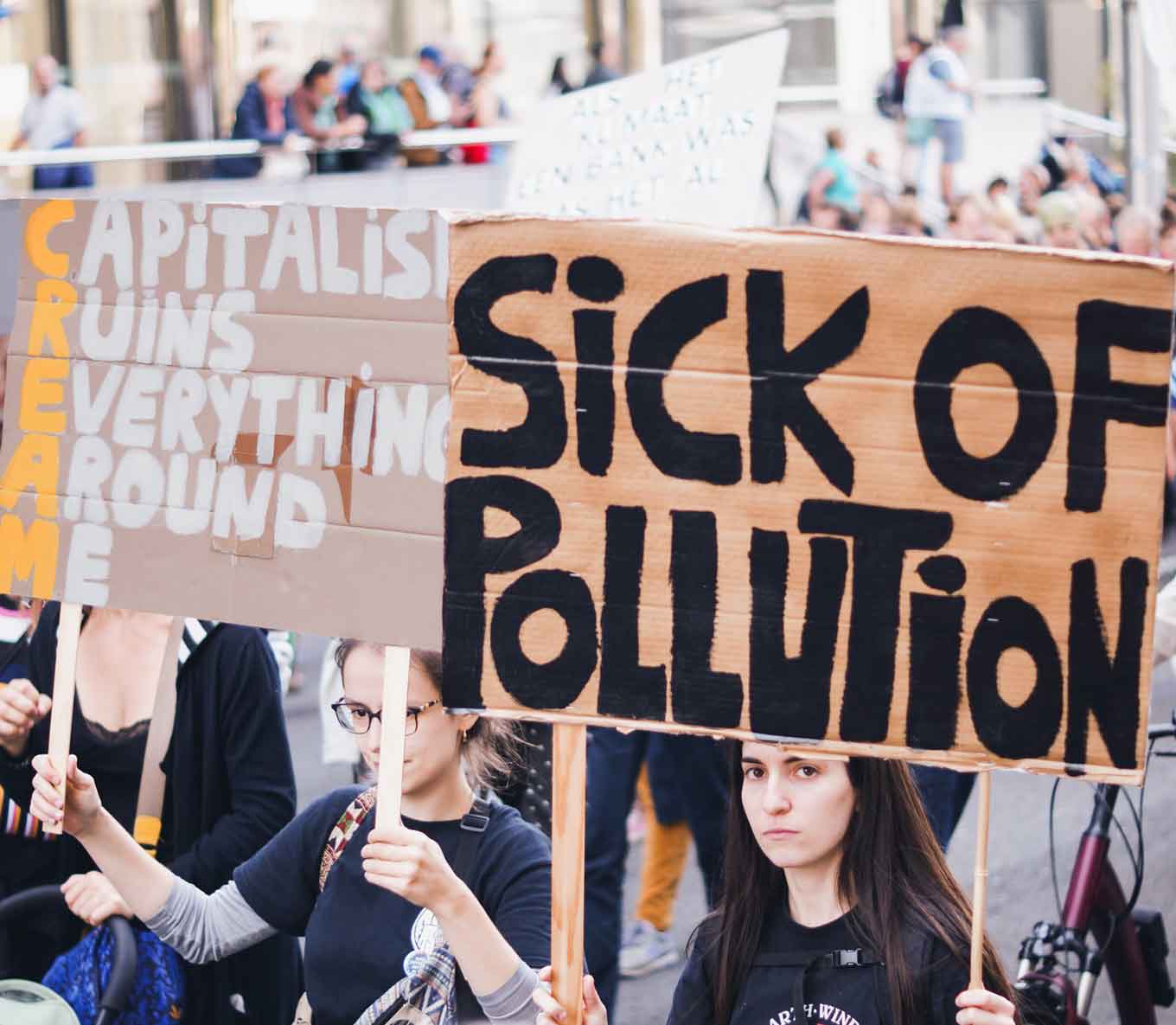
— Youth activists frustrated by slow action on climate threats
— Targeted confrontation with key leaders now popular
— Ukraine war, other hot topics incorporated in efforts
Before the COVID-19 pandemic hit, more than 6 million people flooded into the streets in 2019 as part of mass Fridays for Future protests, aiming to force governments and companies to act more swiftly to slash emissions and curb climate change.
But while the protests boosted public awareness of climate threats, the response from institutions was largely reports, letters, and "creative accounting", said German activist Luisa Neubauer, who with Sweden's Greta Thunberg helped organize the strikes.
"They're trying to blind us with the nice words and promises, and prevent us from looking into the details and (calling) them out," the 26-year-old told the Thomson Reuters Foundation.
Now, with mass climate protests dampened by years of COVID-19 restrictions, youth activists have been exploring new ways to hold institutions to account and accelerate action to avoid the worst impacts of a hotter planet.
That includes targeting protests more selectively at leaders of major institutions - from governments to banks - who hold the power to shift both the policies and money behind climate-wrecking emissions.
As fossil fuel emissions continue to rise, despite pledges of cuts, "we need to apply everything we have," Neubauer said. "We, as a movement, should be everywhere."
Dana Fisher, a sociologist who studies climate activism at the University of Maryland, said the shift marks a key evolution in climate activism.
"Fridays for Future certainly did bring out young people in ways that we hadn't seen before - for a very small moment in time," she said.
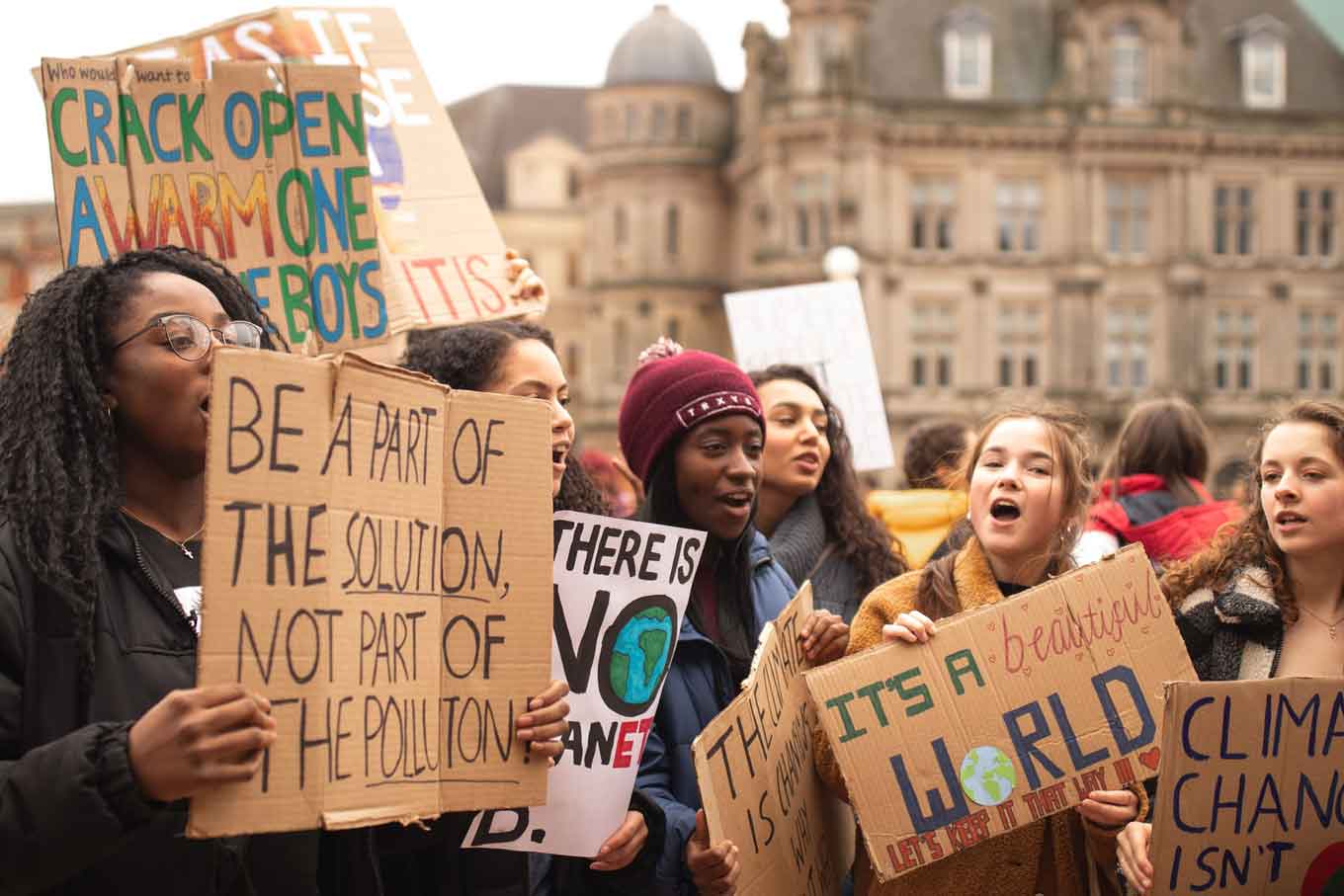
"What we've seen is that a lot of climate activists have become really frustrated with the lack of progress," she added, with many now thinking targeted confrontation and disruption are "the only way forward".
Neubauer said her work has also shifted to trying to call out "greenwashing" by banks and other companies keen to portray themselves as acting on climate threats while making little real change.
This week she met with Deutsche Bank in Frankfurt, working with Ugandan youth activists to pressure the bank to abandon financing for a proposed new oil pipeline in East Africa and other fossil fuel expansion.
"They invest in fossil fuels and try to show the public that they are doing something else," said Ugandan activist Evelyn Acham, who insisted Deutsche Bank officially distance itself from the East African Crude Oil Pipeline (EACOP).
Acham said it is too dangerous to openly protest in the street in Uganda, but her 'Rise Up Movement' is finding other ways to pressure banks, such as by organizing meetings with bank officials and sending them the latest U.N. climate change reports.
"I'm so scared of the future," she said in a telephone interview. "That's why I speak up and I just can’t go back and stay comfortable when people are dying."
Climate 'Villains'
Many young activists are now directly targeting climate polluters and their enablers in politics, finance, and the media, said Oscar Berglund, a lecturer at the University of Bristol who researches climate protest movements.
"There's a more specific focus on the climate 'villains,'" he said, adding that many current protesters were politicized by the Fridays for Future movement.
One of the movements making headlines in Britain is Green New Deal Rising. Since launching last August, its volunteers have sought - and filmed - confrontations with key politicians such as British finance minister Rishi Sunak.
The activists — primarily in their early 20s — recently disrupted an oil and gas industry event in Parliament with loud speeches accusing the companies of driving both the climate crisis and higher energy costs.
BREAKING: Tonight we disrupted the oil and gas industry's summer shindig at Parliament to point out that whilst they pop champagne, we are in a cost of living crisis because of the mess the government and they created!
— Green New Deal Rising (@GNDRising) June 20, 2022
We demand a Green New Deal and justice for workers now. pic.twitter.com/seY878gSrN
"We feel that, too often, decision makers go unchallenged," said Hannah Martin, co-executive director of Green New Deal UK, which organizes the movement.
Activists hope to build a multi-party coalition of political support for more radical and swift climate action.
Popularized in the United States by politicians such as U.S. Rep. Alexandria Ocasio-Cortez of New York, "green new deal" proposals aim to address climate change alongside social justice problems such as inequality and racial discrimination.
Martin says younger climate activists "understand the interconnectedness of these issues," which is why they campaign on a variety of political causes, including attacking the British government's policy to send asylum seekers to Rwanda.
The group has surprised UK parliamentarians at public events and inundated them with persistent questions, something Martin calls an accessible way for grassroots activists to get politicians "on the record" about their green views and actions.
"At the end of the day, they're our representatives and they should be held accountable," she said.
Ukraine War Links
Some young climate activists have also found ways to link their fight to hot-button issues.
In Poland, the war in neighboring Ukraine persuaded climate justice activist Wiktoria Jędroszkowiak to drop out of university and travel across Europe to confront politicians on fossil fuel financing.
When her phone buzzed at 5 am with a call from a friend saying the Russians had invaded Ukraine, her first reaction was to rush to a Polish train station to help arriving refugees.
"But after a moment we realized, 'Wait, this is not our job,'" the 20-year-old said. "I mean, like, we're climate justice activists. We know what this war is about."
For Jędroszkowiak and fellow campaigners, merging action on the Russian invasion and climate change is a natural fit.
Staunching the flow of Russian fossil fuels could help dry up funding for the invasion while curbing climate change and potentially stoking renewables investment, they say.
In May, at the European Parliament in Strasbourg, the Eastern European activists cornered French President Emmanuel Macron, calling him out for not forcing French oil and gas company TotalEnergies to retreat from Russia.
Another recent confrontation posted online showed Jędroszkowiak being accosted by security at the Austria World Summit after repeatedly asking Frans Timmermans, who leads the European Commission's Green Deal work, about the EU's policy on green investments.
Enough of empty words. I confronted @TimmermansEU today.
— Wiktoria Jędroszkowiak (@wjedroszkowiak) June 14, 2022
How can you boast about being a climate leader, and then support gas & nuclear in the taxonomy? 🤯
If you are serious about the war in Ukraine & climate crisis, call for the EU Parliament to object the taxonomy🔥 pic.twitter.com/GuQyKj5D06
Jędroszkowiak said politicians seem anxious to avoid youth activists, highlighting this week's G7 leaders summit in a closed-off castle in Germany's Bavarian Alps.
But confronting politicians face-to-face and interrupting speeches are an important way to break through to them and to wider audiences, she said.
"We want to shatter all of these theatres they create and reveal their lies," she said, in a social media message. "Our power now lies in being unpredictable and everywhere."
This story was originally published on the Thomson Reuters Foundation, the charitable arm of Thomson Reuters, that covers the lives of people around the world who struggle to live freely or fairly.
The days of legal segregation in the U.S. are past us, but Black folks continue to feel the health effects of racist policies that took place when it was law.
Practices such as “redlining” — where the federal government mass-produced housing subdivisions for white people in the 1930s and required that none of the homes be sold to Black people — continue to contribute to poor health outcomes in our communities.
During that time, the Federal Housing Administration (FHA) refused to insure mortgages in and around Black neighborhoods, which were colored red on maps to indicate “risky” for lending. According to the FHA, property value declined wherever we lived — which is not true.
Now, decades after white people secured homes in the suburbs while we were pushed into urban housing projects, the health effects have become clear.
Black communities once deprived of lending and investment suffer from lower life expectancy, higher rates of chronic diseases, and worse COVID-19 outcomes.
“Food deserts,” or communities that lack access to affordable fresh fruits and vegetables, are just one consequence of segregation. Compared to 31% of white people, only 8% of Black people live in a census tract with a supermarket.
The result: It’s hard for us to access fresh, affordable food. But a new crop of Black farmers is closing the gaps.
The Connection Between Segregation and Health Outcomes
Medical doctor and professor of equity in health and healthcare at Johns Hopkins University, Lisa A. Cooper, was shocked when she learned there was a connection between segregation and poor health outcomes in her Black patients.
“I was seeing [Black] people coming in with high blood pressure, diabetes, obesity, cancers, at much younger ages than I would see white people,” she recalls.

Cooper took a closer look at the lives of her patients and realized the neighborhoods they lived in were a part of the problem. On top of transportation issues making it hard to get back and forth to medical care, she noticed they struggled with “terrible life circumstances that would make it stressful for anybody to really be healthy.”
Cooper says these circumstances include people “not being able to afford their rent or their family members being incarcerated,” as well as “there being violence in their neighborhoods that kept them from being able to exercise.”
Cooper, a native of Liberia, dug into the history of segregation in the U.S. and realized the conditions of Black neighborhoods didn’t have anything to do with Black people — it has everything to do with policy.
“They didn’t just end up like that by happenstance. They ended up like that because there were policies that have been put in place like 40, 50 years ago and longer,” she says.
One-in-five Black residents — or about 8.3 million — lack easy access to fresh food, according to data from the McKinsey Global Institute and McKinsey Institute for Black Economic Mobility.
These Black communities also tend to have more convenience stores selling foods low in nutritional value versus farmers markets, restaurants, and grocery stores.
“What I’ve found to be the solutions are really in the people in communities that are impacted by this,” Cooper says about solving health inequalities caused by segregation.
Opening a Certified Naturally Grown Farm
Bobby Wilson, CEO of the Metro Atlanta Urban Farm, is one of many residents around the country who got tired of watching his predominantly-Black city struggle to access fresh food.
In 2009, he used his retirement funds to buy five acres just minutes from downtown Atlanta and started planting seeds.
During the pandemic, when the local food system was impacted, and it was harder to utilize indoor stores, the farm fed 25,000 families with boxes of tomatoes, okra, greens, swiss chard, and other crops that were in season.
“I like to think and feel that I am having one of the greatest impacts that one individual can have on marginalized and underserved communities across this country,” Wilson says.
Since Wilson has operated the certified naturally grown farm, Atlanta has seen growth in the city’s access to fresh food. As of 2020, 75% of city residents now live within a half-mile of fresh food, compared to 32% in 2015.
The farm is located on the north end of College Park, a town that’s 80% Black with a 29.5% poverty rate, and on the south end of East Point, which is 77.5% Black with a 23% poverty rate.
Wilson says some people in those communities don’t have cars and will walk to the farm “with their buggies and their baskets so that they can be loaded up in wagons so that they can take them back to their home.”
A supermarket accessibility map created by the United States Department of Agriculture (USDA) confirms several households in College Park and East Point lack vehicles and are more than one-half mile from a supermarket.

The disparity of Black neighborhoods lacking supermarkets has been coined as “supermarket redlining,” when chain markets refuse to plant stores in impoverished communities or relocate existing stores to wealthier areas.
Sound familiar?
“We see people commuting on the sidewalk on a regular basis going to this grocery store that’s on the north side of the farm. And so it’s the only grocery store within miles from the area of the farm,” Wilson says looking out the window of the home that sits on the land.
By understanding his community, Wilson and his supporters at the farm have been able to accomplish a lot. They’ve been recognized by politicians and agriculture organizations like the Natural Resource Conservation Service, an agency part of the USDA.
And while he’s had an “impact on those who have power and privilege,” Wilson says supporting those in need is most important.
“In my mind, that little lady that walks up here pushing her basket that needs food for her and her grandchildren — those are the people that I really want to have an impact on,” he says. “Those are the people that I really want to be able to make a difference in their lives.”
The Metro Atlanta Urban Farm is part of a network of Black-led farms, gardens, and organizations working to solve food inaccessibility in Black communities.
To name a few, Soul Fire Farm in Petersburg, New York, Soilful, and Dreaming Out Loud in Washington, D.C., Feed Our Soul in Los Angeles, and FreshLifeOrganic in Houston are committed to planting seeds in their regions.
“Food is the tool. Community organizing is what we really do,” Wilson says. “We use agriculture as the tool to get to the hearts and the souls of the people and to fight for injustice that is permeated within our society.”
Marie Reed has always had trouble sleeping when it rains.
Growing up in Southbridge — a neighborhood in Wilmington, Delaware, about 5 miles from President Biden’s home and about 5 feet above sea level — Reed experienced bunking in the living room with her parents and eight brothers during storms, in case they had to flee to higher ground.
Some downpours would call for a bucket brigade to bail out the basement. On rare occasions, stormwater mixed with raw sewage bubbled out of sewers and into streets and cellars.
For most of the six decades that she’s lived in the community, flooded homes, yards, and streets have been the norm. So when the remnants of Hurricane Ida caused dangerous flooding elsewhere in the city last fall, Reed was ready. “I was sitting here waiting,” she says. “I had my bag packed and everything.”
But something seemingly odd happened: Her street in Southbridge didn’t flood. The Christina River, which winds around the community, separating it from the rest of the city, didn’t swell from the storm like the nearby Brandywine River. About 2.5 inches of rain drenched the neighborhood, but this time there was a new natural space to capture the downpour.
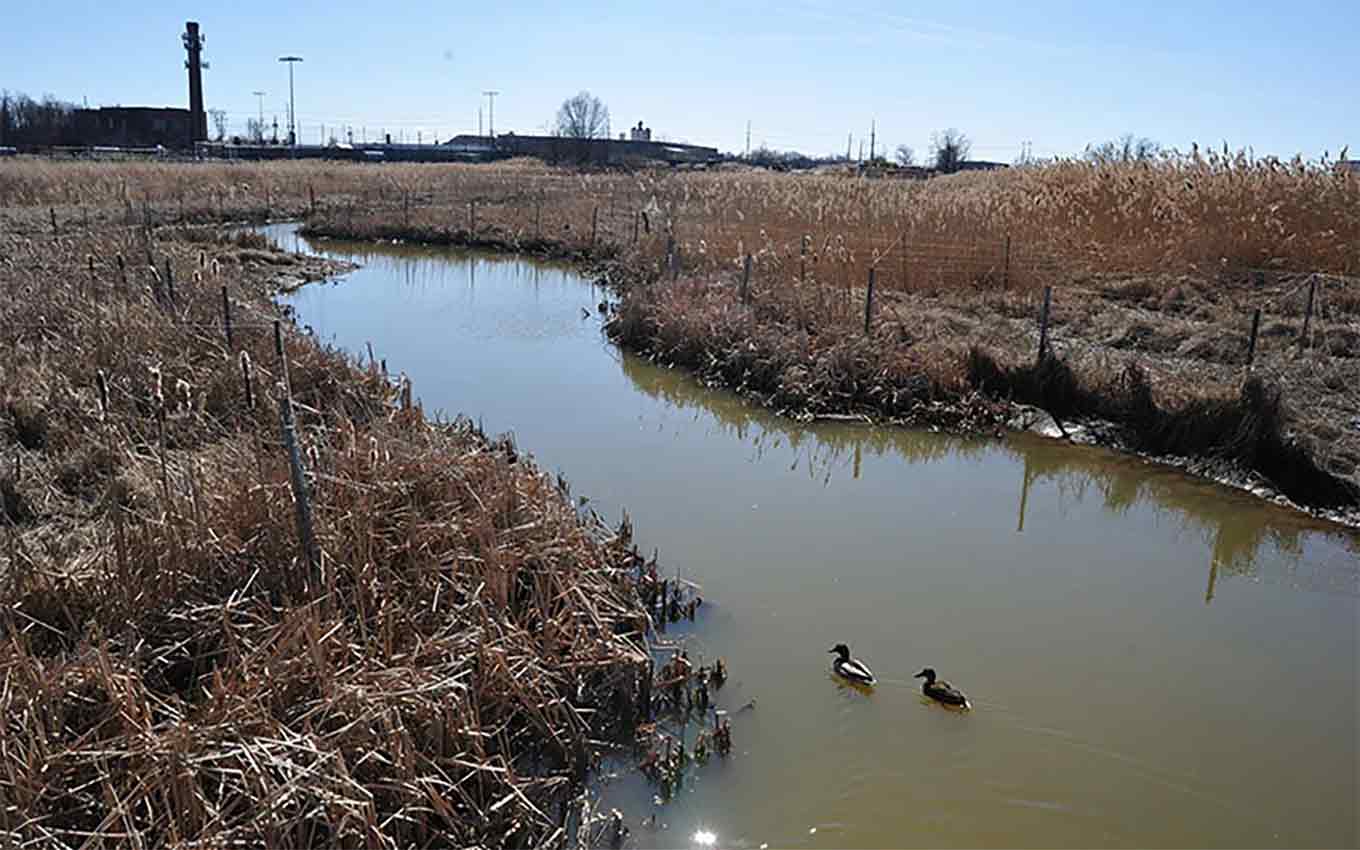
Reed and others credit a $30-million wetland park with minimizing flooding from recent heavy rains by absorbing stormwater like a sponge.
The park, which is expected to open to the public this summer, restored a 14-acre wetland and added a boardwalk that allows residents to watch wildlife, stroll to a nearby shopping center — and worry a little less about floodwaters.
Green infrastructure like the South Wilmington Wetlands Park reduces the risk of inundation and erosion during storms, while filtering pollutants, sequestering carbon, and providing recreation opportunities.
Such projects use native vegetation, rocks, and even shellfish to replicate landscape features, such as the marsh that likely existed here prior to industrialization, when this area was tended by the Indigenous Lenni-Lenape people.
These solutions, which can be as small as a backyard rain garden, often are cheaper, more pliable in the face of environmental changes, and don’t tend to fail as catastrophically as “gray” infrastructure like concrete sea walls or sewers.
In storm-prone areas and sea-level rise hotspots like the Mid-Atlantic and Gulf Coast, mimicking the natural world will be an essential tool for adapting to climate change, says Timon McPhearson, an ecologist at The New School and a lead author of the Intergovernmental Panel on Climate Change report.
Green infrastructure developed with community involvement also can foster environmental justice by mitigating the climate and health risks and other inequalities seen in low-income and Black and brown communities.
As such projects become more common, some worry underserved and overburdened neighborhoods are being overlooked, raising the risk of “green gentrification.”
“We need to rethink green infrastructure as a kind of infrastructure that can provide multiple benefits to multiple hazards,” says McPhearson, who is one of nine researchers examining the equity of green infrastructure planning in 20 cities. “One of the solutions is that our planning process must change. It has to have community input,” he says.
“Communities know what their problems are and have their own ideas about how to solve them,” he adds. “But if they’re not involved in the planning process, then their voices are not heard.”
Working with nature
Riffing on nature to, say, create wetlands, restore coastal shorelines, or expand green spaces, can reduce flooding, minimize heat islands, and provide access to natural resources and recreation like bike paths — often at a lower cost than traditional gray infrastructure.
Involving residents in the planning, building, and enjoyment of nature-based solutions also gives them a stake in their neighborhoods, which can foster the feeling of environmental stewardship needed to support climate action, says Joshua Moody of the nonprofit Partnership for the Delaware Estuary.
“If you’ve got that good outreach, that good engagement with people, maybe it’s not just buying time at that point, it’s generating unseen human momentum,” Moody says.
“Green infrastructure as a single tactic in a single place is definitely not the answer. How we completely redesign our landscapes is going to have the big impact.”
Just a few years ago, the site of the South Wilmington Wetlands Park was an eyesore, an expanse of long-abandoned mounds of dirt riddled with invasive plants and PCBs, heavy metals, and other carcinogens from the industrial waste dumped there over the decades.
Today, a boardwalk winds through a restored marsh where channels of water flow across the landscape toward the Christina River. Great blue herons and Canada geese have returned and dot the park, which is expected to officially open to the public this summer.
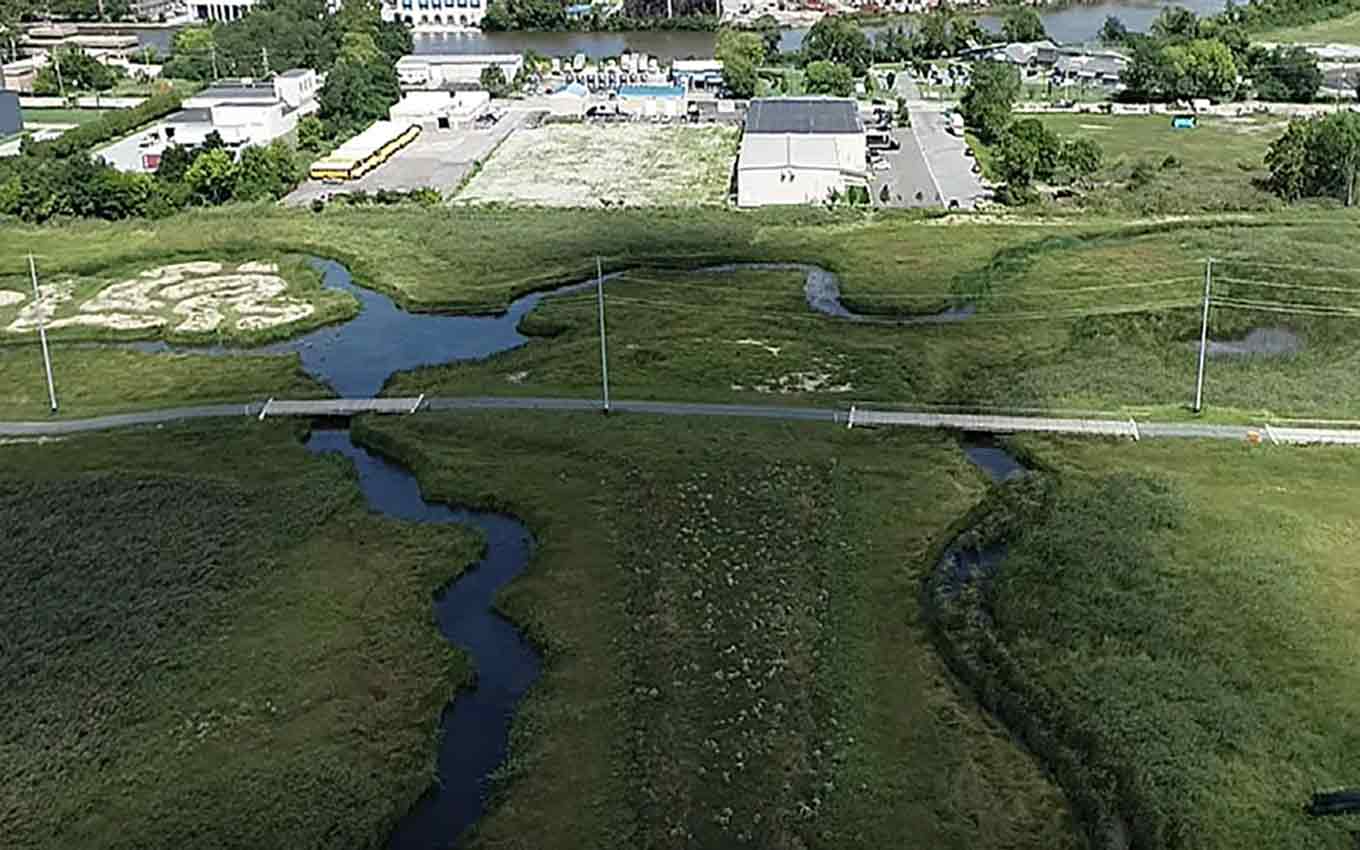
Although sea-level rise projections paint a dire picture for the city, Reed praises the park for alleviating flooding in Southbridge. But she says more must be done to address the environmental injustices in her neighborhood and others nearby.
Especially in the wake of a 2017 report that found this area of Delaware faces a much higher cancer and respiratory-illness risk than most, residents like Reed are speaking up about how they’re tired of being a dumping ground.
“Everything over here is contaminated,” Reed says. With significant redevelopment investments being made in the city on the other side of the river, Southbridge residents want to make sure they’re no longer overlooked. The wetland project gives Reed hope that change really is coming.
“Of course, things are going to be happening within the state, within the city, and we have to have our plan together,” she says. “We’ve got our community plan, and what we want for the community is just a matter of working and executing it.”
Shifting to a 'collective power'
Angela Chalk has spent almost a decade encouraging her neighbors in the 7th Ward of New Orleans to use green infrastructure, not only to protect their families from rising waters and temperatures, but also as a way to reconnect with each other and the culturally rich city they call home.
But she believes respectful collaboration among residents, policymakers, academics, and community organizations is the only way to ensure such projects reflect the needs of communities of color throughout the city.
Like Reed, Chalk grew up in a city where storms demanded careful preparation. She remembers securing shutters and filling the bathtub and pots with water as a child while hunkering down inside. Her family rode out Hurricanes Betsy and Camille as they ravaged the city in the 1960s, and endured many other storms over the years.
Such experiences are the norm for residents of New Orleans, a city that’s always been at war with water.
Historically, the city has relied on gray infrastructure like levees, flood walls, and pumps. But by the 1990s, such measures began showing their limitations.
In the spring of 1995, when “a rain of biblical proportions” made it impossible for her to get home, Chalk realized that the city’s rapid development during her lifetime had caused more runoff and exacerbated flood risk, she says.
Ten years later, Hurricane Katrina overwhelmed the elaborate system of levees and pumps, which failed to protect the city. That’s when people began to demand change.
New Orleans began embracing green infrastructure as a solution — not only to the chronic challenge of managing water in a city sinking below sea level, but to the environmental and social inequities of the region. It has spent more than $260 million on everything from the creation of neighborhood stormwater and flooding control systems to an investment in an 18-acre trail-lined park. New Orleans has also tapped those funds to support small rain gardens around the city.
City officials say the state also has made significant investments in both green and gray infrastructure to bolster coastal resilience.
The federal government provided $141.2 million for the Gentilly Resilience District, which includes a water garden, wetlands, natural stormwater management systems, and other amenities in the neighborhood, which is bordered on three sides by water.
Resident-driven projects like localized tree plantings also have sprung up in neighborhoods throughout the city, including the 7th Ward, where Chalk now lives in a house her grandfather won in a card game in 1942.
Chalk leads Healthy Community Services, a nonprofit that she founded in 2013 to teach residents about climate change and the need for infrastructure to mitigate it.
The organization works with the community on projects like “green blocks,” in which people commit to keeping storm drains clear, using rain barrels, and more.
Throughout the country, states from New York to California are moving to establish state-owned public banks that would serve the public. This is good news for climate justice.
Public banks are funded by a proportion of state tax revenue and mandated by their bank charter to provide flexible, low-cost, and sustainable lending to small businesses, farmers, and nonprofits that traditionally have been excluded from conventional lending.
Unlike commercial banks, public banks aren’t beholden to shareholders and aren’t for personal banking; you can’t make deposits there.
Instead, imagine a piggy bank that a state (or city) deposits its savings into and uses to dole out low-interest loans, funding projects that serve the public.
There are more than 900 of these institutions globally. But there’s only one in the United States, the Bank of North Dakota, which has a century-long track record of local investments and supporting small businesses and farmers.
While major banks are beginning to embrace sustainable finance, issuing loans for environmental and social impact, change is slow, and it’s unclear whether this funding is reaching the local organizations that need it most.
Philanthropic institutions aren’t much help either; just 2 percent of their donations go toward organizations focused on climate and environmental issues. BIPOC-led climate organizations face even steeper funding challenges.
As a Black climate organizer in New England, I hear this frustration often from fellow organizers: Public awareness of climate justice is growing, but where is the money to fund it? Fluctuating government budgets and the patchwork of tax breaks and grants are piecemeal solutions.
“I’ve seen so many advocacy groups with solid, community-informed climate plans that have yet to be funded. These plans are literally sitting on shelves,” says Raya Salter, an attorney who sits on the environmental justice advisory board at the Coalition for Green Capital.
Public banks can also benefit individuals and communities by providing low-interest loans to renewable energy startups, local food entrepreneurs, and farmers deemed unworthy by traditional lenders — those with few assets to serve as collateral or less cash for a down payment.
The growing community of Black farmers would especially benefit. After decades of national dispossession and discrimination by the U.S. Department of Agriculture, they are still waiting on $4 billion in debt forgiveness that President Biden promised a year ago.
Black entrepreneurs are returning to the agricultural sector, but they need capital to scale their businesses. Large, private banks have a well-known history of discriminatory lending practices, and they tightened lending requirements at the height of the pandemic. As a result, they are approving far fewer loans for small business owners.
Public banks operating abroad have long understood the importance of financing green initiatives that struggle to attract capital otherwise. For instance, Germany’s Kreditanstalt für Wiederaufbau public bank is internationally hailed for committing nearly half of its lending, valued at 35 billion euros, to low-carbon projects like retrofitting aging urban buildings for energy efficiency. Banco Popular, a worker-owned public bank in Costa Rica, provides special credit lines for electric taxis, cars, and buses to incentivize consumer purchasing of electric vehicles.
Last winter, I struggled to pay my heating bills after a series of intense snowstorms hit the Northeast — and I wasn’t alone. Roughly 28 percent of U.S. households experience some form of energy poverty and struggle to pay their utility bills.
Historically redlined neighborhoods experience disproportionately hotter temperatures, which means higher energy bills on especially sweltering days.
Community solar installations (solar panels that produce energy for a community, allowing residents to receive utility credits) are one of many solutions that could help reduce energy bills while allowing communities to pivot away from fossil fuels.
Impact investors and community development financial institutions still drive the bulk of clean energy funding; commercial banks are noticeably absent when it comes to funding local projects like community solar.
It’s not that green investments aren’t profitable — the Bank of North Dakota, which invests heavily in such projects, continues to see annual profits in the millions. But their value accrues over many years and is dispersed across whole communities rather than individual shareholders. Because of their mandate, public banks are legally obligated to prioritize social benefit over profit, so unlike conventional banks, they tolerate the long-term horizon that climate-related projects require to demonstrate benefit.
Public banks are legally obligated to prioritize social benefit over profit, so unlike conventional banks, they tolerate the long-term horizon that climate-related projects require to demonstrate benefit.
They may also make communities more resilient when threatened by storms, flooding, or other climate-related disasters, by offering rapid response loan funds, low-interest financing, and special credit lines for emergency services.
The Bank of North Dakota has always led disaster-recovery efforts after major flooding and drought events — an immediate lifeline for small agricultural operators.
While public banks are well-equipped to take on problems related to the environment, large private banks can exacerbate them.
Cities and states routinely deposit public tax dollars in commercial banks, which, in turn, invest those funds in extractive industries like fossil fuels. In fact, the 60 largest banks in the world have invested $3.8 trillion in fossil fuels since the Paris Agreement.
Here in Massachusetts, the vast majority of state funds — including residents’ public tax dollars — are deposited in the Massachusetts Municipal Depository Trust, with holdings in tobacco companies, oil producers, mining, and everything in between.
“The fight for public banks is really about divesting from extractive, polluting practices and reinvesting in our communities,” says Dwaign Tyndal, executive director of Alternatives for the Community and Environment, Boston’s oldest environmental justice advocacy organization.
The relationship between big banks and fossil fuels helps explain why legislation has been difficult to pass. Between 2011 and 2017, state lawmakers across the country introduced more than 100 public-banking related bills.
Yet only California and New Jersey passed laws giving the state (New Jersey) and municipalities (California) the authority to establish public banks. Still, neither state has worked through the committee hearings, community meetings, and business modeling required to establish them.The COVID-19 pandemic hasn’t helped.
While alternative finance does exist for individuals in the form of local banks and credit unions, these institutions operate on a small scale and don’t have the capacity to direct government funding toward climate projects.
The banking system is largely opaque to the general population, and the concept of public banks lacks the widespread support and public understanding necessary to make this a legislative and bureaucratic priority.
A 2019 report by the Northeast-Northwest Institute found a phased approach — like passing a feasibility study to explore public banking — produces more legislative activity than bills to establish a public bank outright.
This gradual strategy gives policymakers and activists time to run educational campaigns and commission research to demonstrate the benefits of a public bank, increasing the likelihood that one will eventually be created.
Still, states across the country are pursuing public banks. Massachusetts currently has a bill before committee that would establish a public bank, which is due to be voted on by the end of May.
If you live in the Bay State, call your local representatives and tell them it’s time to prioritize community over profit.
But whatever state you’re in, you can find a local advocacy group through the Public Banking Institute.
Let’s stuff our tax dollars in piggy banks that serve the people who need them most.
Header image courtesy of Getty Images via Grist
There are hundreds of national and international days dedicated to raising awareness for — and celebrating — groups and causes within the disability community.
At Good Good Good, we share stories that leave our community feeling more hopeful and empowered to make a positive difference. For years we've privately collected and curated a comprehensive list of important cause-themed holidays and awareness months that we've used to create content for our Instagram, Goodnewsletter, and Goodnewspaper.
We made our Monthly Cause Awareness Calendar publicly available earlier this year.
We’ve also published:
- Heritage Months Calendar
- International Days Calendar
- Environmental & Sustainability Calendar
- LGBTQ+ Pride Calendar
- Black Holidays Calendar
- Animal Awareness Calendar
- Pet Holidays Calendar
Plus, these articles tangential to disability days and months:
- Health Awareness Calendar
- Healthcare Recognition Calendar
- Mental Health Awareness Calendar
- Cancer Awareness Calendar
- HIV/AIDS Awareness Calendar
And now we're publishing this calendar specifically related to the disability community. Our hope is this resource will help you or your organization bring attention to important issues and communities.
Remember, the disability community is not a monolith. Always listen first to members of the community you're talking about — not caretakers, media, or other outside sources. Listen to how they refer to themselves, what issues they highlight, and the tone in which they speak about their disabilities.
Where applicable, we've included resources (usually good news around particular topics — or action steps on how to make a difference) — and encourage you to share them if you find them helpful.
We've worked hard to make this the most comprehensive collection of disability days and months on the internet. Always double-check dates (via the links we included), as organizers may occasionally change dates.
Bookmark this page and revisit it as often as you need. We'll continue to update it over time.
Holidays & Awareness Months For Disabilities
January
Days
World Braille Day - January 4th
Paget’s Awareness Day - January 11th
Moebius Syndrome Awareness Day - January 24th
World Leprosy Day - Every last Sunday of January
Weeks & Months
Glaucoma Awareness Month
Cervical Health Awareness Month
Learn about the women fighting in court for access to HPV vaccines
February
Holidays
National Women Physician Day - February 3rd
World Cancer Day - February 4th
While too many people die from cancer every year, it’s worth celebrating the rapid rate at which cancer deaths are decreasing
International Epilepsy Day - Every 2nd Monday of February
World Day of the Sick - February 11th
Congenital Heart Defects Awareness Day - February 14th
National Donor Day - February 14th
International Childhood Cancer Day - February 15th
National Heart Valve Disease Awareness Day - February 22nd
World Encephalitis Day - February 22nd
Rare Disease Day - February 28th or 29th
Weeks & Months
Jewish Disability Awareness & Inclusion Month
Low Vision Awareness Month
White Cane Week - 1st week of February
Tinnitus Awareness Week - 1st full week of February
Congenital Heart Defects Awareness Week - February 7th to 14th
National Eating Disorders Awareness Week - Last week of February or the first week of March
March
Holidays
Disability Community Day of Mourning - March 1st
International Wheelchair Day - March 1st
World Teen Mental Health Day - March 2nd
World Hearing Day - March 3rd
Breast Implant Illness Awareness Day - March 8th
National Women and Girls HIV/AIDS Awareness Day - March 10th
World Kidney Day - Every 2nd Thursday of March
National Trisomy 18 Awareness Day - March 18th
World Down Syndrome Day - March 21st
World Tuberculosis Day - March 24th
U.S. National Cerebral Palsy Awareness Day - March 25th
Purple Day for Epilepsy - March 26th
Amniotic Fluid Embolism (AFE) Awareness Day - March 27th
Weeks & Months
Cerebral Palsy Awareness Month
Color Therapy Month
Colorectal Cancer Awareness Month
Deep Vein Thrombosis (DVT) Prevention Awareness Month
Developmental Disabilities Awareness Month
Endometriosis Awareness Month
Essential Tremor Month
Kidney Month
Multiple Sclerosis Awareness Month
Red Cross Month
Self-Injury Awareness Month
Brain Injury Awareness Month
National Trisomy Awareness Month
World Glaucoma Week - 2nd full week of March
National Eating Disorders Awareness Week - Last week of February or the first week of March
April
Holidays
World Autism Awareness Day - April 2nd
Learn about why autistic people don’t support World Autism Awareness Day
Hypoxic Ischemic Encephalopathy Remembrance Day - April 4th
Bohring-Opitz Syndrome Awareness Day - April 6th
World Health Day - April 7th
Cushing Disease Awareness Day - April 8th
Teal Day (for Counselors) - April 8th
National Youth HIV & AIDS Awareness Day - April 10th
Parkinson’s Disease International Awareness Day - April 11th
Functional Neurological Disorder (FND) Awareness Day - April 13th
World Hemophilia Day - April 17th
Congenital Diaphragmatic Hernia Action Day - April 19th
World Meningitis Day - April 24th
World Malaria Day - April 25th
Read the good news about the new malaria vaccine that could save millions of lives
World Wish Day - April 29th
International Guide Dog Day - Every last Wednesday of April
Weeks & Months
Autism Acceptance Month
Cushing Disease Awareness Month
National Donate Life Month
Learn about how donating life can be an impactful way to give back to your community
Paralyzed Veterans Across America Month
Limb Loss and Limb Difference Awareness Month
Parkinson’s Awareness Month
Sarcoidosis Awareness Month
Stress Awareness Month
Counseling Awareness Month
Follow our guide to learn how to find a counselor that works for your needs and your budget
Porphyria Awareness Week - April 10th to 17th
Oral, Head, and Neck Cancer Awareness Week - April 11th to 17th
World Primary Immunodeficiency (PI) Week - April 22nd to 29th
May
Holidays
International 5p Syndrome Awareness Day - May 5th
World Asthma Day - May 5th
International Day for Osteogenesis Imperfecta - May 6th
National Children’s Mental Health Awareness Day - May 7th
World Ovarian Cancer Awareness Day - May 8th
World Red Cross & Red Crescent Day - May 8th
Ependymoma Awareness Day - May 10th
World Lupus Day - May 10th
International Awareness Day for Chronic Immunological and Neurological Diseases (CIND) Day - May 12th
International Mucopolysaccharidoses (MPS) Awareness Day - May 15th
Global Accessibility Awareness Day - Every 3rd Thursday in May
Global Accessibility Awareness Day - May 19th
Mental Health Action Day - May 19th
International Behcet’s Disease Awareness Day - May 20th
International Blue Cone Monochromacy Awareness Day - May 20th
World Autoimmune Arthritis Day - May 20th
International Day to End Obstetric Fistula - May 23rd
National Schizophrenia and Psychosis Awareness Day - May 24th
Learn more about Schizophrenia and other commonly misunderstood mental disorders
World Thyroid Day - May 25th
World Multiple Sclerosis Day - May 30th
Weeks & Months
Mental Health Awareness Month
Read Good Good Good’s comprehensive guide on ideas and activities for celebrating Mental Health Awareness Month
Fibromyalgia Awareness Month
National Asthma and Allergy Awareness Month
ALS Awareness Month
Apraxia Awareness Month
American Stroke Month
Arthritis Awareness Month
Better Speech and Hearing Month
Bladder Cancer Awareness Month
Borderline Personality Disorder Awareness Month
Brain Tumor Awareness Month
Celiac Awareness Mont
Cystic Fibrosis Awareness Month
Ehlers-Danlos Syndrome (EDS) Month
Hepatitis Awareness Month
High Blood Pressure Education Month
Huntington’s Disease Awareness Month
Lupus Awareness Month
Lyme Disease Awareness Month
Read the good news about the new mRNA vaccine that may offer protection against Lyme
Mobility Awareness Month
Multiple Sclerosis Awareness Month
Myositis Awareness Month
Older Americans Month
Brain Tumor Action Week - Week-long event in May
Face Equality Week - Week-long event in May
Deaf Awareness Week - 1st full week of May
Brain Injury Awareness Week - 2nd week of May
Mental Health Awareness Week - Week-long event in May
National Eosinophil Awareness Week - Week-long event in May
June
Holidays
National Cancer Survivors Day - Every 1st Sunday of June
Learn about Dr. Hadiyah-Nicole Green changing the way America treats cancer
World Brain Tumor Day - June 8th
International Albinism Awareness Day - June 13th
CDKL5 Worldwide Awareness Day - June 17th
Autistic Pride Day - June 18th
World Sickle Cell Day - June 19th
Global Day of Recognition of ALS/MND - June 21st
Dravet Syndrome Awareness Day - June 23rd
Neuropathy Action Awareness Day - June 23rd
World Vitiligo Awareness Day - June 25th
PTSD Screening Day - June 27th
Helen Keller’s Birthday - June 27th
World Scleroderma Awareness Day - June 29th
Arthrogryposis Awareness Day - June 30th
Weeks & Months
Alzheimer’s and Brain Awareness Month
Read about this music program supporting people with Alzheimer's
Antiphospholipid Antibody Syndrome (APS) Awareness Month
Migraine and Headache Awareness Month
Hemiplegic Migraine Awareness Month
Audiobook Appreciation Month
Audiobooks are a great accessibility tool — check out our recommendations for the best audiobook platforms (that aren't Amazon's Audible)
PTSD Awareness Month
Read about how one veteran, Richard Casper, is using art and music to help others with PTSD
Learning Disability Week - June 20th to 26th
Helen Keller Deafblind Awareness Week - Last week of June
July
Holidays
Gastrointestinal Stromal Tumor (GIST) Awareness Day - July 13th
World Sjogren’s Day - July 23rd
National Seasonal Affective Disorder (SAD) Day - July 24th
Samaritans Awareness Day - July 24th
Americans with Disabilities Act Anniversary - July 26th
World Hepatitis Day - July 28th
Gastroschicis Awareness Day - July 30th
Weeks & Months
Read and share Good Good Good’s complete guide to celebrating Disability Pride Month — written by activist Daphne Frias
BIPOC Mental Health Month
Fragile X (FXS) Awareness Month
National Cleft & Craniofacial Awareness & Prevention Month
National Wheelchair Beautification Month
Sarcoma and Bone Cancer Awareness Month
August
Holidays
Esther Day - August 3rd
Read and share this guide about how to celebrate Esther Day
National Nonprofit Day - August 17th
National Senior Citizens Day - August 21st
Grief Awareness Day - August 30th
Weeks & Months
Don’t Be a Bully Month
Read and share Hank Green’s iconic quote about bullying
Spinal Muscular Atrophy Awareness Month
Stevens-Johnson Syndrome (SJS) Awareness Month
September
Holidays
World Duchenne Awareness Day - September 7th
International Fetal Alcohol Spectrum Disorder Awareness (FASD) Day - September 9th
World Suicide Prevention Day - September 10th
Read about student advocates taking the lead to curb campus suicide
Celiac Disease Awareness Day - September 13th
World Lymphoma Awareness Day - September 15th
National HIV/AIDS and Aging Awareness Day - September 18th
Usher Syndrome Awareness Day - September 19th
World Alzheimer’s Day - September 21st
World Chronic Myeloid Leukemia (CML) Day - September 22nd
International Day of Sign Language - September 23rd
International Ataxia Awareness Day - September 25th
World Lung Day - September 25th
Mesothelioma Awareness Day - September 26th
Limb Girdle Muscular Dystrophy Awareness Day - September 30th
Weeks & Months
Suicide Prevention Week
Read our guide to Suicide Prevention Week activities & explore the best quotes about suicide prevention
National Disability Voting Rights Week - Week-long event in September
International Week of the Deaf - Last week of September
Achalasia Awareness Month
Childhood Cancer Awareness Month
Alopecia Awareness Month
Lymphoma Awareness Month
Craniofacial Awareness Month
National Guide Dog Month
National Hydrocephalus Awareness Month
National Suicide Prevention Awareness Month
Read and share this guide on how to participate in Suicide Prevention Month — plus, how to help someone who’s contemplating suicide and read about how suicides fell when gay marriage was legalized
Orthostatic Tremor Awareness Month
Pain Awareness Month
Listen to our podcast interviews with Ruthie Lindsey and Grace Theisen about their experiences dealing with chronic pain
Peripheral Artery Disease (PAD) Awareness Month
Polycystic Ovary Syndrome Awareness Month
Prostate Awareness Month
Spinal Cord Injury Awareness Month
Thyroid Cancer Awareness Month
World Alzheimer’s Disease Month
October
Holidays
Disabled Authors Day - October 2nd
Read and share the best books about disabilities — written by disabled authors
World Day of Bullying Prevention - October 5th
American Veterans Disabled for Life Awareness Day - October 5th
World Cerebral Palsy Awareness Day - October 6th
International Trigeminal Neuralgia Awareness Day - October 7th
Team Margot Stem Cell and Bone Marrow Awareness Day - October 7th
PANDAS/PANS Awareness Day - October 9th
World Mental Health Day - October 10th
Explore our guide to activities to celebrate World Mental Health Day — and, of course, explore Good Good Good’s collection of mental health resources
World Sight Day - October 13th
Learn about the app Be My Eyes — a free app that connects people who are blind or experience low-vision with sighted volunteers for assistance
Metastatic Breast Cancer Awareness Day - October 13th
World Thrombosis Day - October 13th
Blind Americans Equality Day - October 15th
World Osteoporosis Day - October 20th
Breast Reconstruction Awareness (BRA) Day - Third Wednesday of October
Disability Mentoring Day - Third Wednesday of October
International Stuttering Awareness Day - October 22nd
Learn about STAMMA, an organization helping end the stigma around stuttering
World Polio Day - October 24th
Hydrocephalus Day - October 25th
World Stroke Day - October 29th
Weeks & Months
ADHD Awareness Month
Explore Good Good Good’s resource guide — featuring the best podcasts, blogs, and TikToks about ADHD
Breast Cancer Awareness Month
Listen to Good Good Good’s interview with Paige More, founder of The Breasties
Colon Cancer Awareness Month
Depression Awareness Month
Listen to our podcast interview with John Moe, a comedian fighting depression with humor — and read about the U.S. decreasing depression stigma for the first time
Down Syndrome Awareness Month
Dwarfism Awareness Month
Dysautonomia Awareness Month
Dyslexia Awareness Month
Audiobooks are a great accessibility tool for people with dyslexia — explore our guide to the best audiobook apps
Eczema Awareness Month
Liver Cancer Awareness Month
Learning Disability Awareness Month
National Disability Employment Awareness Month
Raynaud’s Awareness Month
Rett Syndrome Awareness Month
Selective Mutism Awareness Month
Spina Bifida Awareness Month
Dyslexia Awareness Week - Begins on the first Monday of October
OCD Awareness Week - Every 2nd week of October
Read our guide to how to support someone with OCD
Dyspraxia Awareness Week
International Epidermolysis Bullosa Awareness Week - October 25th to 31st
November
Holidays
International Stress Awareness Day - November 2nd
Aicardi Syndrome Awareness Day - November 8th
World Usability Day - November 11th
Veterans Day - November 11th
Explore these Veterans Day ideas and use this holiday as an opportunity to support disabled veterans
World Pneumonia Day - November 12th
World Pancreatic Cancer Day - Every third Thursday of November
World Diabetes Day - November 14th
World Ohtahara Sydrome Awareness Day - November 15th
World COPD Day - Every third Wednesday of November
Giving Tuesday - First Tuesday after Thanksgiving
Learn how to volunteer with or donate to disability rights organizations for Giving Tuesday (and explore more ideas to make a difference)
Weeks & Months
COPD Awareness Month
Dercum’s Disease (Adiposis Dolorosa) Awareness Month
Diabetes Awareness Month
Epilepsy Awareness Month
Lung Cancer Awareness Month
Pancreatic Awareness Month
Movember
International Stress Awareness Week - Every 1st week of November
December
Holidays
World AIDS Day - December 1st
Explore good news about the fight against HIV/AIDS in the U.S. around the world
International Day of Persons with Disabilities - December 3rd
Get inspired by leading disability activists around the world
Judith Heumann’s Birthday - December 18th
International Day of Epidemic Preparedness - December 27th
Weeks & Months
Constipation Awareness Month
HIV/AIDS Awareness Month
Is this list missing a holiday or awareness week/month? Let us know. We want to ensure this list is comprehensive and inclusive.
Nelson Mandela, the iconic political leader in South Africa who fought against the country's system of racial segregation, is beloved by activists, peacemakers, and justice-seekers around the world.
He was born in 1918 in the village of Mvezo, in the Eastern Cape province of South Africa. Mandela attended primary school in Qunu, and then went to Healdtown, a Wesleyan college. In 1939, he began studying law at the University of Witwatersrand.
During his time at university, Mandela became involved in politics and joined the African National Congress (ANC), a political party that fought for the rights of black South Africans.
In 1948, the Apartheid government came to power and began implementing a system of racial segregation. This system discriminated against black people in every area of life, from education and housing to employment and even where they were allowed to walk.
Mandela became one of the ANC’s leaders in the fight against Apartheid. In 1961, he helped establish the military wing of the ANC, which carried out acts of sabotage against government targets in an effort to stop the implementation of Apartheid.
In 1962, Mandela was arrested and sentenced to life in prison for his involvement in these activities.
He spent the next 27 years in prison, during which time he became a symbol of the struggle against Apartheid. In 1990, Nelson Mandela was released from prison and began negotiations with the South African government. These negotiations led to the first free elections in South Africa in 1994, in which Mandela was elected as the country's first black president.
During his presidency, Mandela worked to heal the divisions within South Africa and promote reconciliation between the different racial groups. He also helped establish the Truth and Reconciliation Commission, which aimed to provide a way for victims of Apartheid to tell their stories and for perpetrators to ask for forgiveness. Nelson Mandela stepped down as president in 1999, but continued to work for peace and human rights until his death in 2013.
Nelson Mandela was an inspirational figure who fought for the rights of all people, regardless of race. His legacy continues to inspire people around the world to stand up for what is right. Every year, Mandela Day is celebrated on July 18th.
We’ve collected his most meaningful and inspirational quotes. May they leave you feeling energized and empowered to make a difference in your community.
The Best Nelson Mandela Quotes To Leave You Inspired To Make an Impact —
Famous Quotes
“Education is the most powerful weapon which you can use to change the world.”
— Nelson Mandela
“When a man is denied the right to live the life he believes in, he has no choice but to become an outlaw.”
— Nelson Mandela
“It is in your hands, to make a better world for all who live in it.”
— Nelson Mandela
“A winner is a dreamer who never gives up.”
— Nelson Mandela
“Overcoming poverty is not a task of charity, it is an act of justice.”
— Nelson Mandela
Related: Read the best quotes about poverty & the best quotes about justice
“What counts in life is not the mere fact that we have lived. It is what difference we have made to the lives of others.”
— Nelson Mandela

“I learned that courage was not the absence of fear, but the triumph over it. The brave man is not he who does not feel afraid, but he who conquers that fear.”
— Nelson Mandela
“May your choices reflect your hopes, not your fears.”
— Nelson Mandela
On leadership
“Lead from the back — and let others believe they are in front.”
— Nelson Mandela

“As I have said, the first thing is to be honest with yourself. You can never have an impact on society if you have not changed yourself... Great peacemakers are all people of integrity, of honesty, but humility.”
— Nelson Mandela

“As we let our own light shine, we unconsciously give other people permission to do the same.”
— Nelson Mandela

“A leader… is like a shepherd. He stays behind the flock, letting the most nimble go out ahead, whereupon the others follow, not realizing that all along they are being directed from behind.”
— Nelson Mandela
“Sometimes, it falls upon a generation to be great. You can be that great generation. Let your greatness blossom.”
— Nelson Mandela
“Real leaders must be ready to sacrifice all for the freedom of their people.”
— Nelson Mandela

On education
“A good head and good heart are always a formidable combination. But when you add to that a literate tongue or pen, then you have something very special.”
— Nelson Mandela
“The power of education extends beyond the development of skills we need for economic success. It can contribute to nation-building and reconciliation.”
— Nelson Mandela
“If there is one appeal I could make, it is that young people must take it upon themselves to ensure that they receive the highest education possible so that they can represent us well in future as future leaders.”
— Nelson Mandela
“No country can really develop unless its citizens are educated.”
— Nelson Mandela
On freedom
“For to be free is not merely to cast off one’s chains, but to live in a way that respects and enhances the freedom of others.”
— Nelson Mandela

“I have walked that long road to freedom. I have tried not to falter; I have made missteps along the way. But I have discovered the secret that after climbing a great hill, one only finds that there are many more hills to climb. I have taken a moment here to rest, to steal a view of the glorious vista that surrounds me, to look back on the distance I have come. But I can only rest for a moment, for with freedom come responsibilities, and I dare not linger, for my long walk is not ended.”
— Nelson Mandela
“Money won't create success, the freedom to make it will.”
— Nelson Mandela
“I have never cared very much for personal prizes. A person does not become a freedom fighter in the hope of winning awards.”
— Nelson Mandela
“There is no easy walk to freedom anywhere, and many of us will have to pass through the valley of the shadow of death again and again before we reach the mountaintop of our desires”
— Nelson Mandela
“No single person can liberate a country. You can only liberate a country if you act as a collective.”
— Nelson Mandela
On forgiveness
“Resentment is like drinking poison and then hoping it will kill your enemies.”
— Nelson Mandela
“As I walked out the door toward the gate that would lead to my freedom, I knew if I didn't leave my bitterness and hatred behind, I'd still be in prison.”
— Nelson Mandela
“You will achieve more in this world through acts of mercy than you will through acts of retribution.”
— Nelson Mandela
“If you can find it in yourself to forgive then you are no longer chained to the perpetrator. You can move on, and you can even help the perpetrator to become a better person too.”
—Nelson Mandela
On life
“There is no passion to be found playing small in settling for a life that is less than the one you are capable of living.”
— Nelson Mandela

“I like friends who have independent minds because they tend to make you see problems from all angles.”
— Nelson Mandela
“It is in the character of growth that we should learn from both pleasant and unpleasant experiences.”
— Nelson Mandela
“What counts in life is not the mere fact that we have lived. It is what difference we have made to the lives of others that will determine the significance of the life we lead.”
— Nelson Mandela
“Live life as though nobody is watching, and express yourself as though everyone is listening.”
— Nelson Mandela
→ Read more quotes about life
Inspirational quotes
“One cannot be prepared for something while secretly believing it will not happen.”
— Nelson Mandela

“It is what we make out of what we have, not what we are given, that separates one person from another.”
— Nelson Mandela
“I never lose. I either win or learn.”
— Nelson Mandela
“Do not judge me by my successes, judge me by how many times I fell down and got back up again.”
— Nelson Mandela
“It is not where you start but how high you aim that matters for success.”
— Nelson Mandela
Related: Read more positive quotes
On change
“There is nothing like returning to a place that remains unchanged to find the ways in which you yourself have altered.”
— Nelson Mandela
“One of the things I learned when I was negotiating was that until I changed myself, I could not change others.”
— Nelson Mandela
“Everyone can rise above their circumstances and achieve success if they are dedicated to and passionate about what they do.”
— Nelson Mandela
Related: Read the best quotes about activism
On love
“No one is born hating another person because of the color of his skin, or his background, or his religion. People must learn to hate, and if they can learn to hate, they can be taught to love, for love comes more naturally to the human heart than its opposite.”
— Nelson Mandela
“A good head and a good heart are always a formidable combination.”
— Nelson Mandela
“The path of those who preach love, and not hatred, is not easy. They often have to wear a crown of thorns.”
— Nelson Mandela
Short quotes
“I am not a saint, unless you think of a saint as a sinner who keeps on trying.”
— Nelson Mandela
“Appearances matter — and remember to smile.”
— Nelson Mandela
“Nothing is black or white.”
— Nelson Mandela
“Quitting is leading too.”
— Nelson Mandela
More motivational quotes for #MandelaDay and every day
“I am fundamentally an optimist. Whether that comes from nature or nurture, I cannot say. Part of being optimistic is keeping one's head pointed toward the sun, one's feet moving forward. There were many dark moments when my faith in humanity was sorely tested, but I would not and could not give myself up to despair. That way lays defeat and death.”
— Nelson Mandela
Related: Read the best quotes about optimism
“Without language, one cannot talk to people and understand them; one cannot share their hopes and aspirations, grasp their history, appreciate their poetry, or savor their songs.”
— Nelson Mandela
“It is said that no one truly knows a nation until one has been inside its jails. A nation should not be judged by how it treats its highest citizens, but its lowest ones.”
— Nelson Mandela
“A critical, independent and investigative press is the lifeblood of any democracy. The press must be free from state interference. It must have the economic strength to stand up to the blandishments of government officials. It must have sufficient independence from vested interests to be bold and inquiring without fear or favor. It must enjoy the protection of the constitution, so that it can protect our rights as citizens.”
— Nelson Mandela
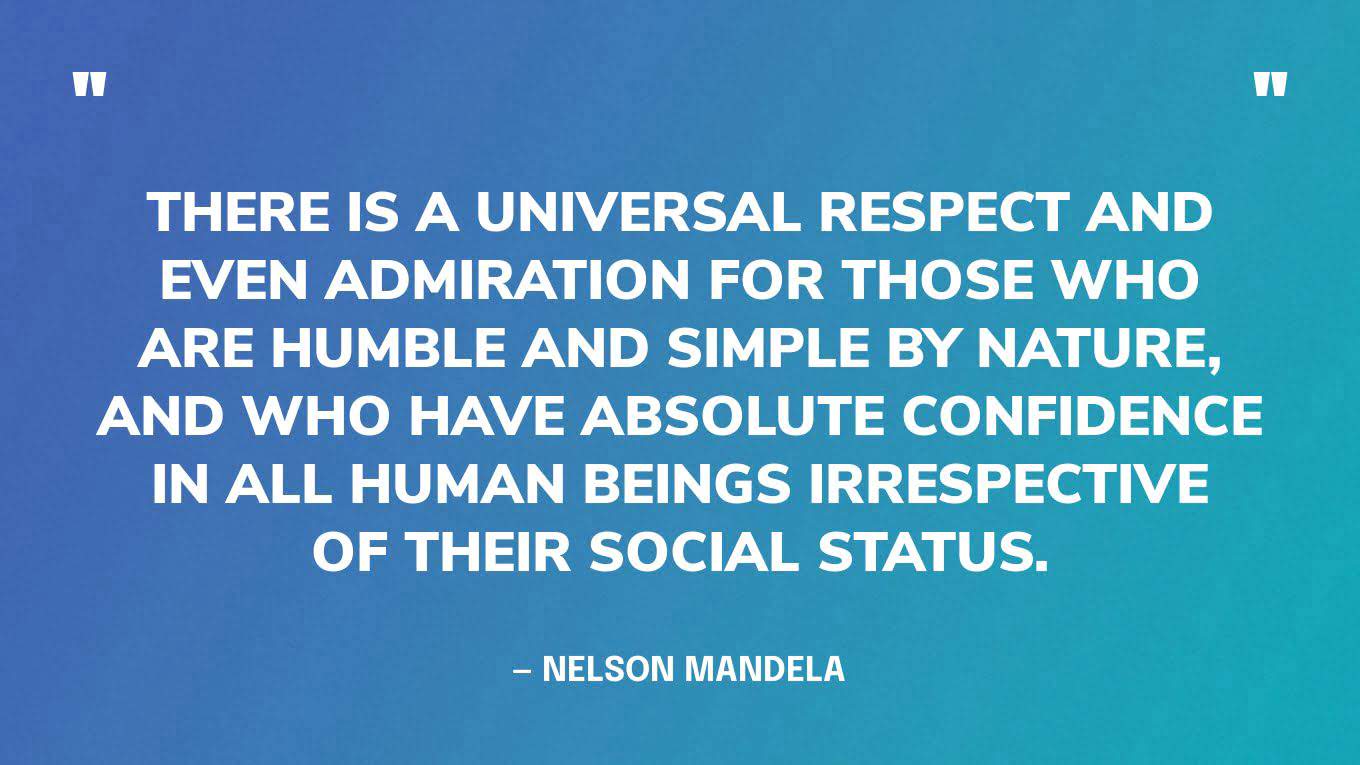
“There is a universal respect and even admiration for those who are humble and simple by nature, and who have absolute confidence in all human beings irrespective of their social status.”
— Nelson Mandela
“It is not our diversity which divides us; it is not our ethnicity, or religion or culture that divides us. Since we have achieved our freedom, there can only be one division amongst us: between those who cherish democracy and those who do not.”
— Nelson Mandela
A massive force is reshaping the fashion industry: secondhand clothing.
According to a new report, the U.S. secondhand clothing market is projected to more than triple in value in the next 10 years — from $28 billion in 2019 to $80 billion in 2029 — in a U.S. market currently worth $379 billion.
In 2019, secondhand clothing expanded 21 times faster than conventional apparel retail did.
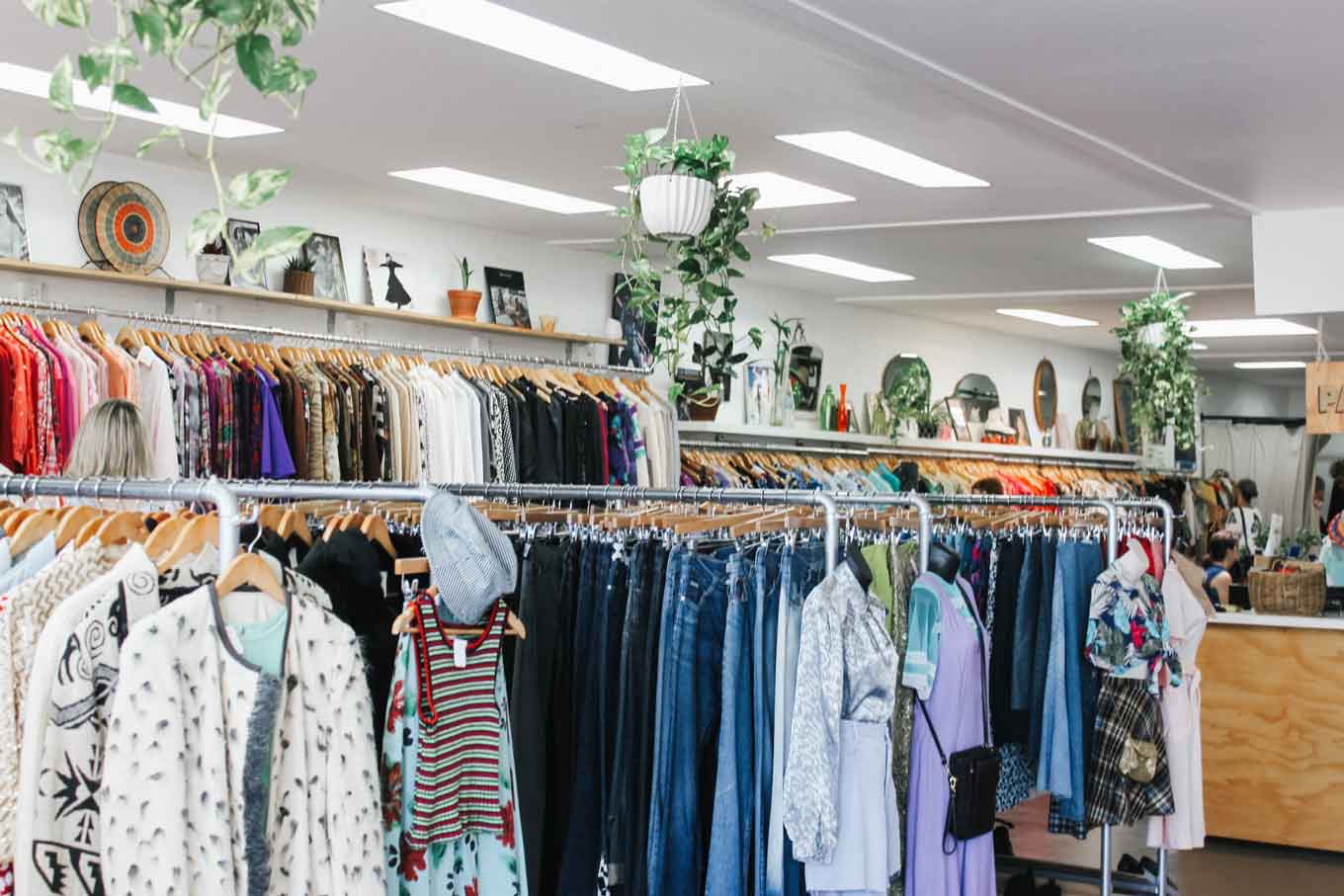
Even more transformative is secondhand clothing’s potential to dramatically alter the prominence of fast fashion — a business model characterized by cheap and disposable clothing that emerged in the early 2000s, epitomized by brands like H&M and Zara.
Fast fashion has grown exponentially over the last two decades, significantly altering the fashion landscape by producing more clothing, distributing it faster and encouraging consumers to buy in excess with low prices.
While fast fashion is expected to continue to grow 20% in the next 10 years, secondhand fashion is poised to grow 185%.
As researchers who study clothing consumption and sustainability, we think the secondhand clothing trend has the potential to reshape the fashion industry and mitigate the industry’s detrimental environmental impact on the planet.
The next big thing
The secondhand clothing market is composed of two major categories, thrift stores and resale platforms. But it’s the latter that has largely fueled the recent boom.
Secondhand clothing has long been perceived as worn out and tainted, mainly sought by bargain or treasure hunters.
However, this perception has changed, and now many consumers consider secondhand clothing to be of identical or even superior quality to unworn clothing.
A trend of “fashion flipping” — or buying secondhand clothes and reselling them — has also emerged, particularly among young consumers.
Thanks to growing consumer demand and new digital platforms like Tradesy and Poshmark that facilitate peer-to-peer exchange of everyday clothing, the digital resale market is quickly becoming the next big thing in the fashion industry.
The market for secondhand luxury goods is also substantial. Retailers like The RealReal or the Vestiaire Collective provide a digital marketplace for authenticated luxury consignment, where people buy and sell designer labels such as Louis Vuitton, Chanel, and Hermès.
The market value of this sector reached $2 billion in 2019.
The secondhand clothing trend also appears to be driven by affordability, especially now, during the COVID-19 economic crisis.
Consumers have not only reduced their consumption of nonessential items like clothing, but are buying more quality garments over cheap, disposable attire.
For clothing resellers, the ongoing economic contraction combined with the increased interest in sustainability has proven to be a winning combination.
More mindful consumers?
The fashion industry has long been associated with social and environmental problems, ranging from poor treatment of garment workers to pollution and waste generated by clothing production.
Less than 1% of materials used to make clothing are currently recycled to make new clothing, a $500 billion annual loss for the fashion industry.
The textile industry produces more carbon emissions than the airline and maritime industries combined. And approximately 20% of water pollution across the globe is the result of wastewater from the production and finishing of textiles.
Consumers have become more aware of the ecological impact of apparel production and are more frequently demanding apparel businesses expand their commitment to sustainability. Buying secondhand clothing could provide consumers a way to push back against the fast-fashion system.
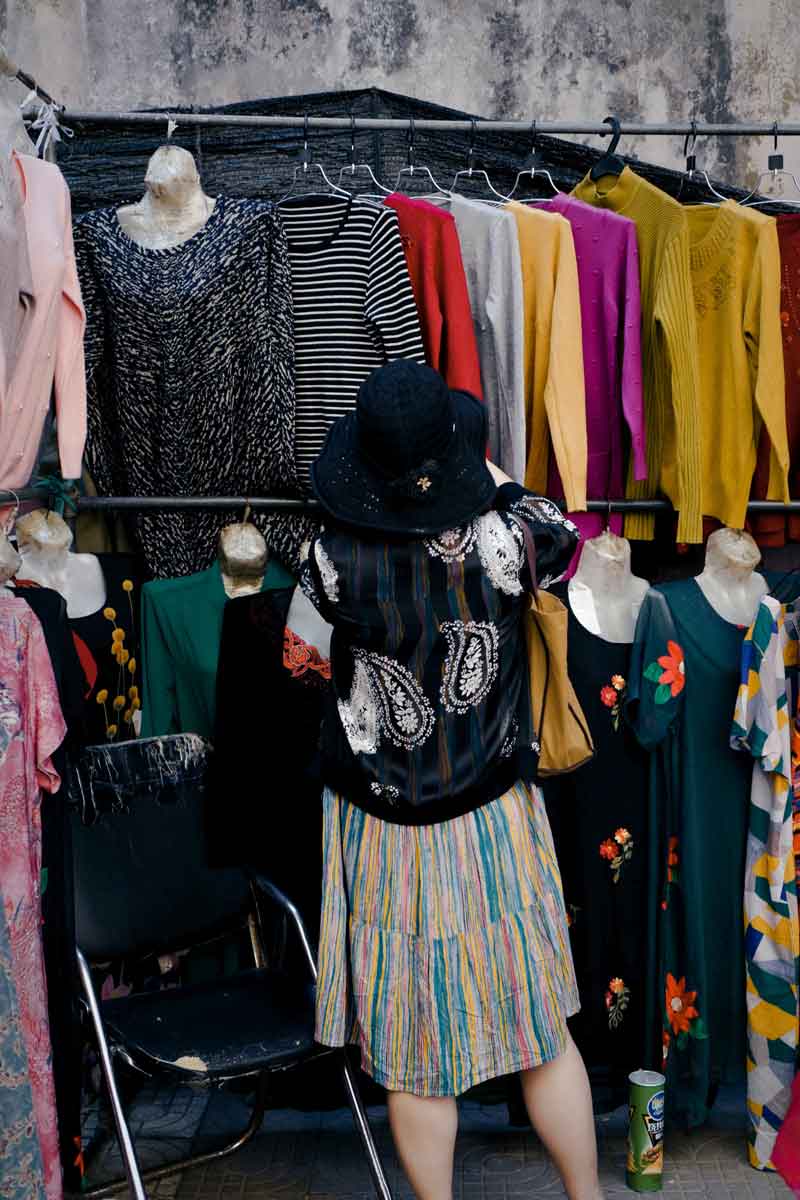
Buying secondhand clothing increases the number of owners an item will have, extending its life – something that has been dramatically shortened in the age of fast fashion. (Worldwide, in the past 15 years, the average number of times a garment is worn before it’s trashed has decreased by 36%.)
High-quality clothing traded in the secondhand marketplace also retains its value over time, unlike cheaper fast-fashion products. Thus, buying a high-quality secondhand garment instead of a new one is theoretically an environmental win.
But some critics argue the secondhand marketplace actually encourages excess consumption by expanding access to cheap clothing.
Our latest research supports this possibility. We interviewed young American women who regularly use digital platforms like Poshmark. They saw secondhand clothing as a way to access both cheap goods and ones they ordinarily could not afford. They did not see it as an alternative model of consumption or a way to decrease dependence on new clothing production.
Whatever the consumer motive, increasing the reuse of clothing is a big step toward a new normal in the fashion industry, though its potential to address sustainability woes remains to be seen.
Jane Goodall is one of the world's most celebrated primatologists and conservationists. You may know her from her groundbreaking research on chimpanzees, her journey to study chimps in the field in Tanzania at age 26, and her lifelong commitment to chimpanzee protection and animal conservation as a whole.
In 2002, she founded the Jane Goodall Institute, which supports chimpanzee conservation efforts around the world. Goodall's work has inspired people of all ages to appreciate and respect animals and our natural environment.
And now, she’s been turned into a Barbie doll.
Mattel unveils the new Jane Goodall Barbie doll
Mattel, the toy-making company that creates Barbie, unveiled the Jane Goodall Barbie as part of its Inspiring Women Series — and the best part? It’s made of recycled ocean-bound plastics.
In addition, Goodall’s Barbie was introduced with Barbie’s “2022 Barbie Career of the Year Eco-Leadership Team,” which is a doll set that includes dolls representing a conservation scientist, renewable energy engineer, a chief sustainability officer, and an environmental advocate.
In addition, both Goodall’s Barbie and this new Eco-Leadership Team doll set have been certified as carbon neutral by Climate Impact Partners.
Protecting the planet is the new pink.
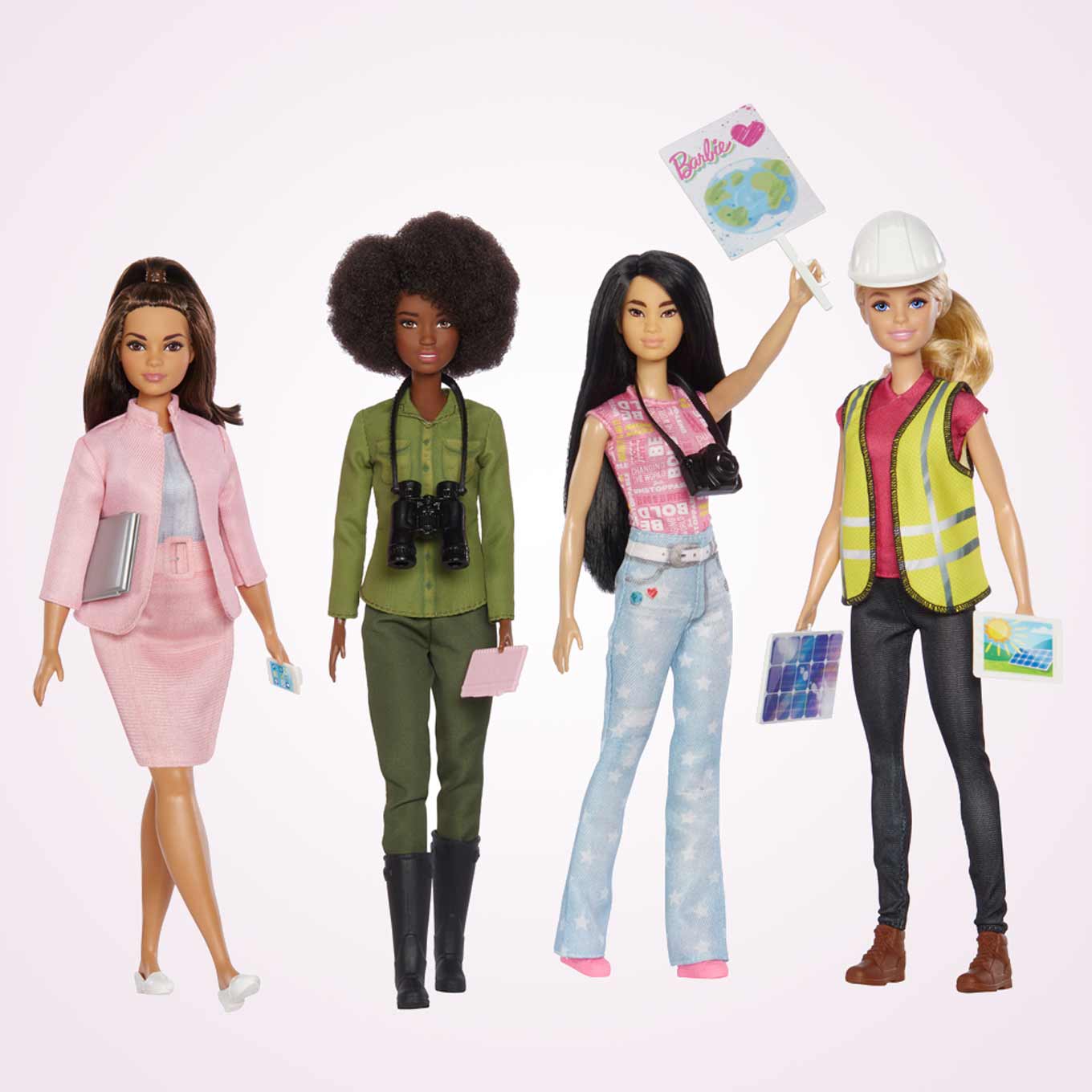
“Kids need more role models like Dr. Jane Goodall,” Lisa McKnight, Mattel's executive vice president and global head of Barbie and dolls, said in a statement. “We hope that this collection and homage to a groundbreaking pioneer for women in science and conservation inspires kids to learn more about green careers, how they can protect the planet, and act out sustainable stories through doll play.”
The doll is made in Goodall’s likeness and is styled to match her look. Dressed in a khaki shirt and shorts, holding a notebook, wearing a pair of binoculars, the doll is accompanied by David Greybeard, the first chimpanzee Goodall worked with during her research at Gombe National Park in east Africa.
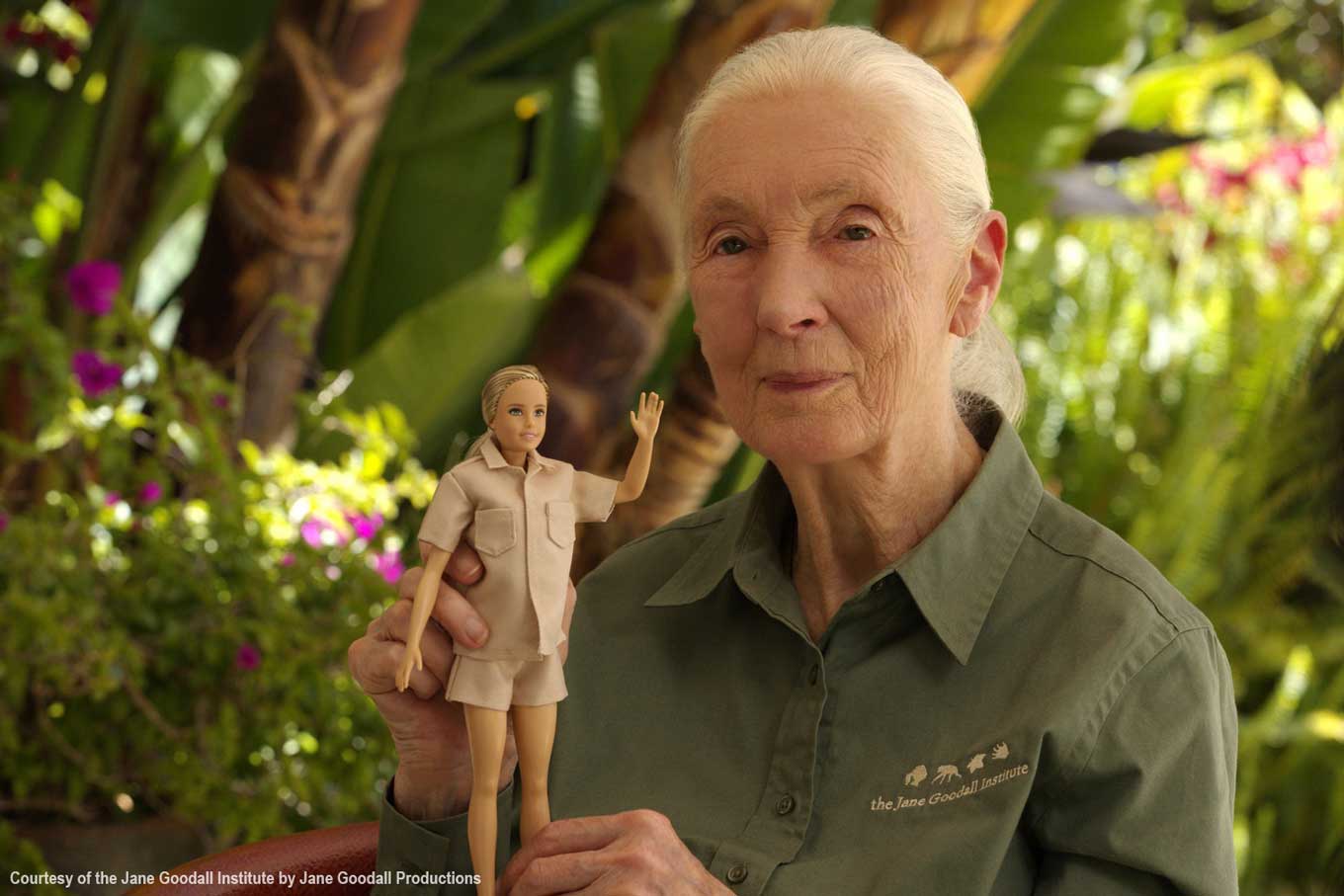
Sales of this Barbie also support the Jane Goodall Institute and her youth service movement Roots & Shoots, which helps teach children about environmental impact.
Additionally, Barbie and Roots & Shoots are issuing a global challenge (#NaturallyCuriousJane) to encourage kids to discover the little steps they can take to make big changes. This includes nature observation journaling, community mapping, and increasing local green spaces. Barbie lovers can also engage in Goodall’s story by watching a special episode of Barbie’s You Can Be Anything YouTube series.
“I’m thrilled to partner with Barbie and encourage young children to learn from their environment and feel a sense that they can make a difference,” Goodall said in a statement. “Through this partnership, I hope to inspire the next generation of eco-leaders to join me in protecting our planet and remind them they can be anything, anywhere — on the field, in the lab, and at the table.”
Mattel’s sustainability goals
In addition to this doll being made of recycled plastics, Mattel has shared its corporate goal to achieve 100% recycled, recyclable or bio-based plastic materials in all products and packaging by 2030.
Part of these corporate sustainability efforts include using the Barbie platform to educate and promote sustainable everyday behaviors that will help inspire action.
This is not the first of Mattel’s environmental advocacy initiatives. The company has implemented a PlayBack program that makes it easy for customers to recycle their toys, encouraging a circular economy.
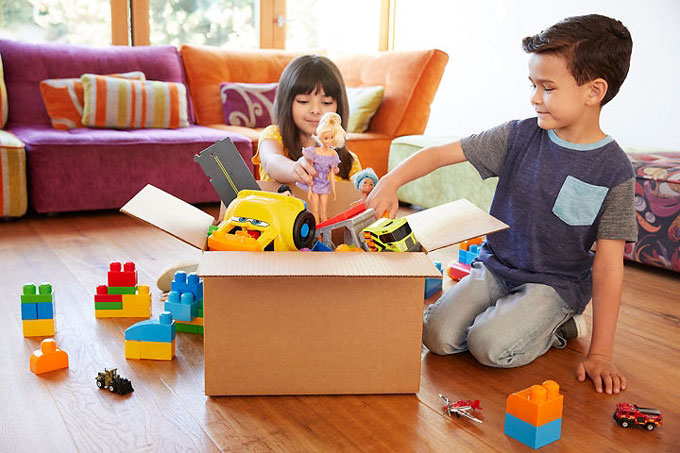
Folks can download a prepaid shipping label and send their loved toys back to Mattel to recover materials for new products or downcycled into other plastic products or renewable energy sources.
“Play should not have a shelf life or be tossed away,” the Mattel PlayBack website reads. “We design toys to be loved, cherished, and passed on from one generation to the next, and we aim to make them from materials that can live on in new toys and in new ways.”
Why is this good news?
In line with Barbie’s ongoing commitment to empowering young girls to be anything they want to be (though girls are not the only ones who play with Barbies, and that’s awesome, too!), the Jane Goodall Barbie provides a new avenue for Barbie lovers to learn more about taking care of the environment.
Inspired by real history-makers like Goodall, young people now have a tangible item to represent those who inspire them to make the world a better place.
“I wanted a doll to be me before this idea came up,” Goodall told Reuters. “I’ve seen… little girls playing with Barbie dolls, and certainly at the beginning, they were all very girly-girly, and I thought little girls need… some choice.”
From athletes and veterinarians, to environmentalists and astronauts, Barbie gives young girls, who grow up to be women that are underrepresented in various professional fields, the ability to see someone who looks like them doing work that can change the world.
“Mattel has changed its range of dolls, and there’s all kinds of astronauts and doctors and things like that,” Goodall also shared with Reuters. “So many children learn about me at school. They’ll be thrilled to have the Barbie doll.”
How can you make a difference?
Most companies don’t make ethical and sustainable choices on their own. They make changes because their customers demand it of them, or they see an opportunity to make more money.
By intentionally choosing to only buy sustainably-made toys (and other eco-friendly products) that align with your (and your child’s) values, you ensure that companies are incentivized to make the right choices.
You can also reach out to companies (like Mattel) to specifically ask for the changes you wish to see. There’s no doubt that Barbie’s sustainability changes were made, in part, because of the protests of environmental activists that began more than a decade ago.
You might also like:
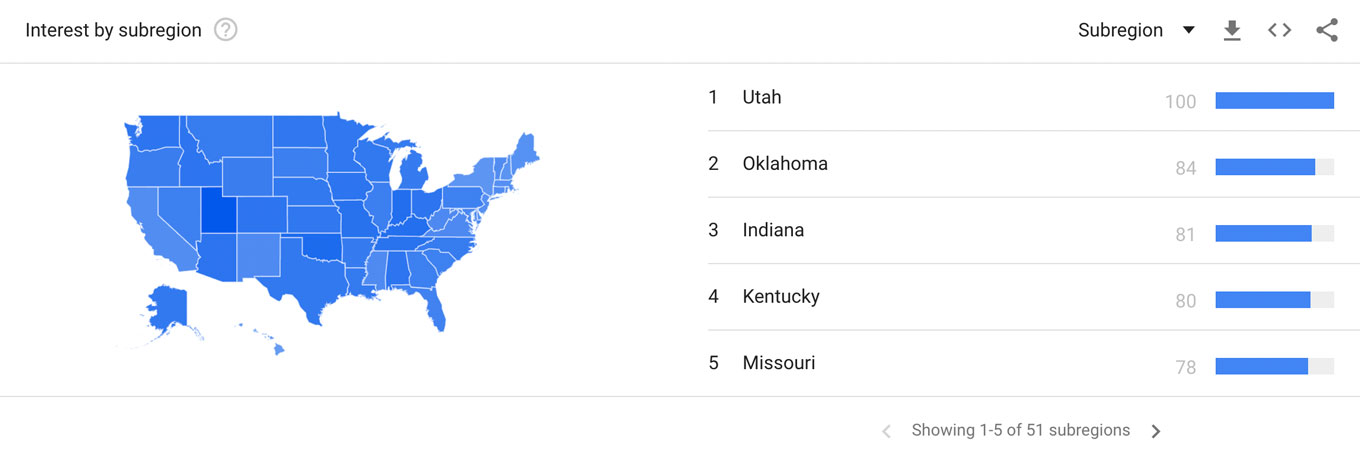
In the days and months following both the leak and the official release of the Supreme Court decision overturning Roe v. Wade, Google search queries for "get a vasectomy" (and other related searches) peaked and reached an all-time high.
According to data from Google Trends, the search "get a vasectomy" reached its all-time "peak popularity" in June 2022 — almost double the last time the search term peaked, in September 2021.
This Google Trends data is aligned with what urologists and doctors are seeing across the country, too. In Florida, urologist Doug Stein (also known as the "Vasectomy King" for his advocacy of the procedure) told The Washington Post he went from receiving four to five vasectomy requests a day — to 12 to 18 requests per day now.
Stein's colleague John Curington also told The Post that “at least 60 or 70 percent are mentioning the Supreme Court decision” and citing Justice Thomas’ opinion on contraception being next, which wasn't something that ever made it into the doctor-patient conversation, “until this week.”
A urologist in Los Angeles reported a “300 to 400 percent” increase in vasectomy consultations, and an Iowa-based urologist who trained under Stein reported seeing a “200 to 250 percent” increase in website traffic specifically for information about vasectomies.
The responsibility of contraception has historically (and still today) fallen on women and people with uteruses, and has long come with its own challenges — from access, affordability, pain, side effects, and more.
Why is this good news?
We're celebrating the news that more sperm-carrying individuals (even if it's their partner doing the Googling!) are sharing the responsibility of managing contraception and taking care of their own reproductive health — and supporting the reproductive health of others.
The interest seems to be sustaining all over the United States. We've even seen a spike of interest in Canada and Australia.
How can readers make a difference?
Women and uterus-owners have historically carried the burden of birth control, but it doesn’t have to be this way. Partners can explore different birth control methods and even consider joining a trial for new male birth control.
Beyond birth control, you can make a difference for reproductive rights in general. Read our guide to how to support reproductive justice in response to Dobbs — and learn more about what actually reduces abortion rates.
What’s the process of getting a vasectomy?
According to Mayo Clinic, the usual first step is to simply have a conversation with your doctor, who will ensure you understand the procedure.
You’ll then schedule an appointment for the procedure, which is often done at your doctor’s office or at a surgery center under local anesthesia.
The 10-minute procedure will, through a small incision, stop the supply of sperm to your semen by cutting and sealing the tubes that carry sperm.
After the surgery, you simply need to avoid sexual activity for a week — and you might need an ice pack.
According to Planned Parenthood, it may take up to three months after a vasectomy for your semen to no longer contain any sperm. Until this point, you should continue using other birth control.
A vasectomy is not recommended for people who want to have biological children in the future. While reversals are possible, this surgery is considered “a permanent form of male birth control.”
The process is nearly 100% effective in preventing pregnancies.
→ You can read Mayo Clinic’s entire guide to vasectomies
What’s the nuance?
Vasectomies have been safe, accessible, and largely affordable for more than 75 years but only 10-20% of men in North America and Europe have gotten the procedure.
It’s disappointing that it took so long (and the loss of women’s rights) to see an increased interest in vasectomies — but it truly is encouraging to see an increased number of new appointments. (And navigating the American health care system is no easy feat!)
Perhaps next year’s data on the number of vasectomies will look a lot different.
According to the United States Department of Agriculture, up to 40 percent of food in the U.S. is wasted, yet 35 million people in the U.S. experienced hunger in 2019.
Instead of feeding hungry people, much of Americans’ food ends up in landfills, where it doesn’t break down properly and releases methane, a greenhouse gas that is at least 28 times more potent than carbon dioxide, according to the Environmental Protection Agency.
Plus, resources such as land, water, labor, energy are wasted in producing, processing, transporting, preparing, storing, and disposing of discarded food.
One company has a creative solution to food waste and addresses both access and affordability of healthful foods plus the environmental impact of sending food to landfills.
What is 'Too Good To Go'?
Founded in 2015, Too Good To Go is an app that allows its users to purchase surplus food from local restaurants and stores.
Nearly 160,250 cafes, restaurants, grocery stores, bakeries, and hotels are a part of the Too Good To Go network that has helped divert 148 million meals, according to the company’s website.
Right now Too Good To Go is available in 15 countries. The Danish company just expanded to the U.S. last year in New York City, Boston, Jersey City, Philadelphia, and Washington, D.C. The company expanded to the West Coast in May 2021 and announced that they’re planning on expanding to more U.S. cities throughout 2022.
“Time is ticking,” Jonas Mallisse, Too Good To Go’s head of expansion in the United States, told Sustainable Brands.
“Climate change is real, and mitigating food waste is the best way to fight it. If you want to address food waste, you have to change mindsets. We need to in-spire people to take action also at home, not only in restaurants and bakeries.”
One of the company’s recent campaigns involved working with policymakers to educate people about the difference between “Best By” dates and “Use By” dates, which can cause confusion for consumers.
(A “Best By” date indicates when a product will be of best flavor or quality. It is not a purchase or safety date, whereas a “Use-By” date is the last date recommended for the use of the product while at peak quality. It is not a safety date, except for when used on infant formula. If the date passes during home storage, a product should still be safe and wholesome if handled properly until the time spoilage is evident, according to the U.S. Department of Agriculture.)
Additionally, Too Good to Go works with hunger-relief organizations such as food banks in every city it operates in to address food scarcity.
“Food waste and food security go hand-in-hand, and we have ambitious plans to work with several big organizations at the moment to see how we can make an even bigger impact there,” Mallisse said.
One of the best parts of the app is that it’s affordable — you can buy quality local food for under $3, making it a solution that anyone with a smartphone can take advantage of.
Where is Too Good To Go available?
Too Good To Go initially launched in Europe, but has since expanded to the United States and other parts of the world. Too Good To Go is currently in the following countries and cities, and is quickly growing to more:
Available in these countries:
- United States
- United Kingdom
- Austria
- Belgium
- Canada
- Denmark
- France
- Germany
- Ireland
- Italy
- Norway
- Poland
- Portugal
- Spain
- Sweden
- Switzerland
- The Netherlands
Available in these U.S. cities:
- Austin, Texas
- Baltimore, Maryland
- Boston, Massachusetts
- Chicago, Illinois
- Los Angeles, California
- Newark, New Jersey
- New York City, New York
- Philadelphia, Pennsylvania
- Portland, Oregon
- Providence, Rhode Island
- San Francisco, California
- Seattle, Washington
- Washington, D.C.
- ... and surrounding areas
How To Use Too Good To Go
1. Download the app
Too Good To Go is available as an app on iOS and Android. Once you've downloaded the app, you'll share your location and immediately see all Too Good To Go's partner shops.
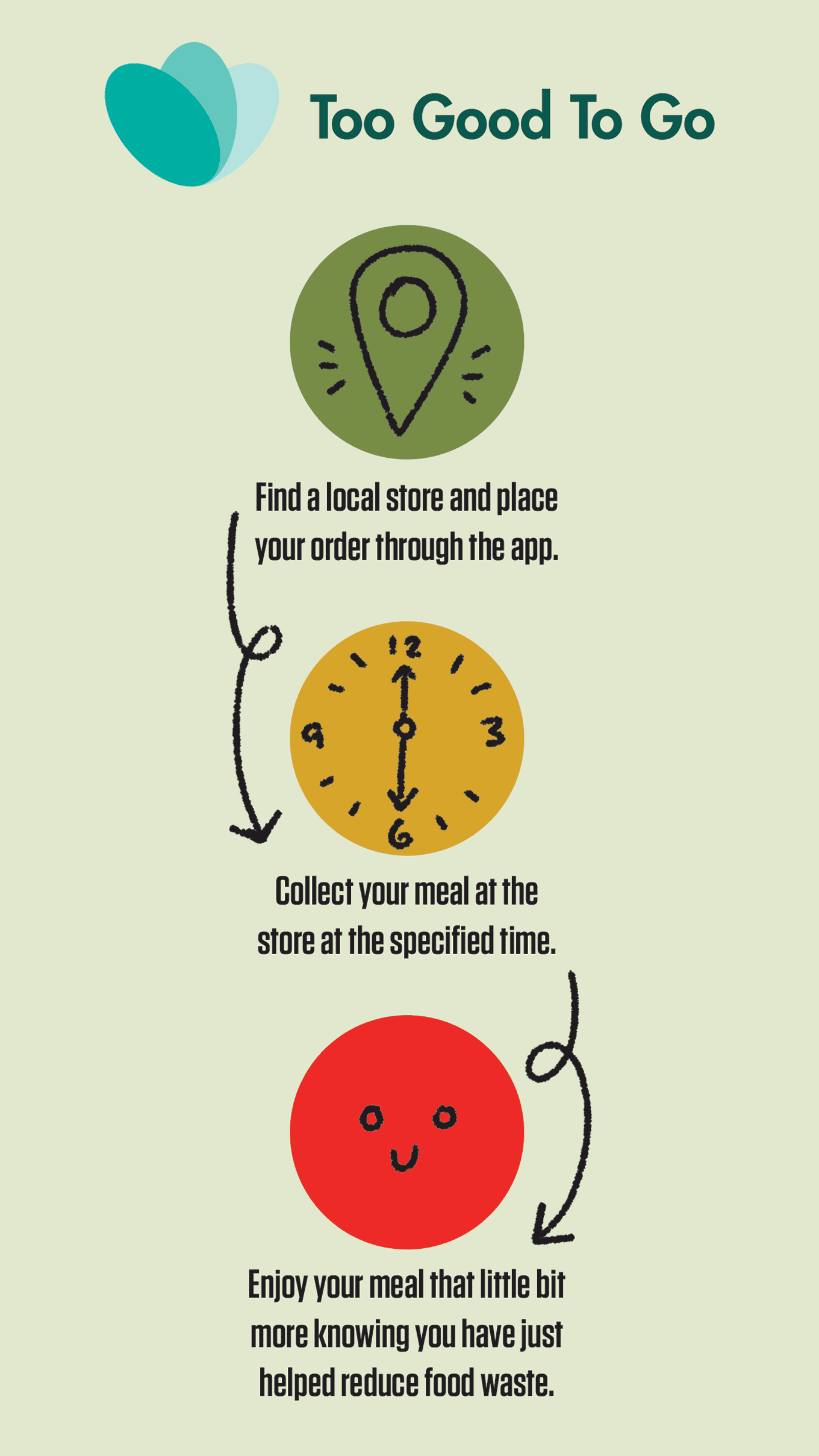
2. Browse for food and businesses that stand out to you.
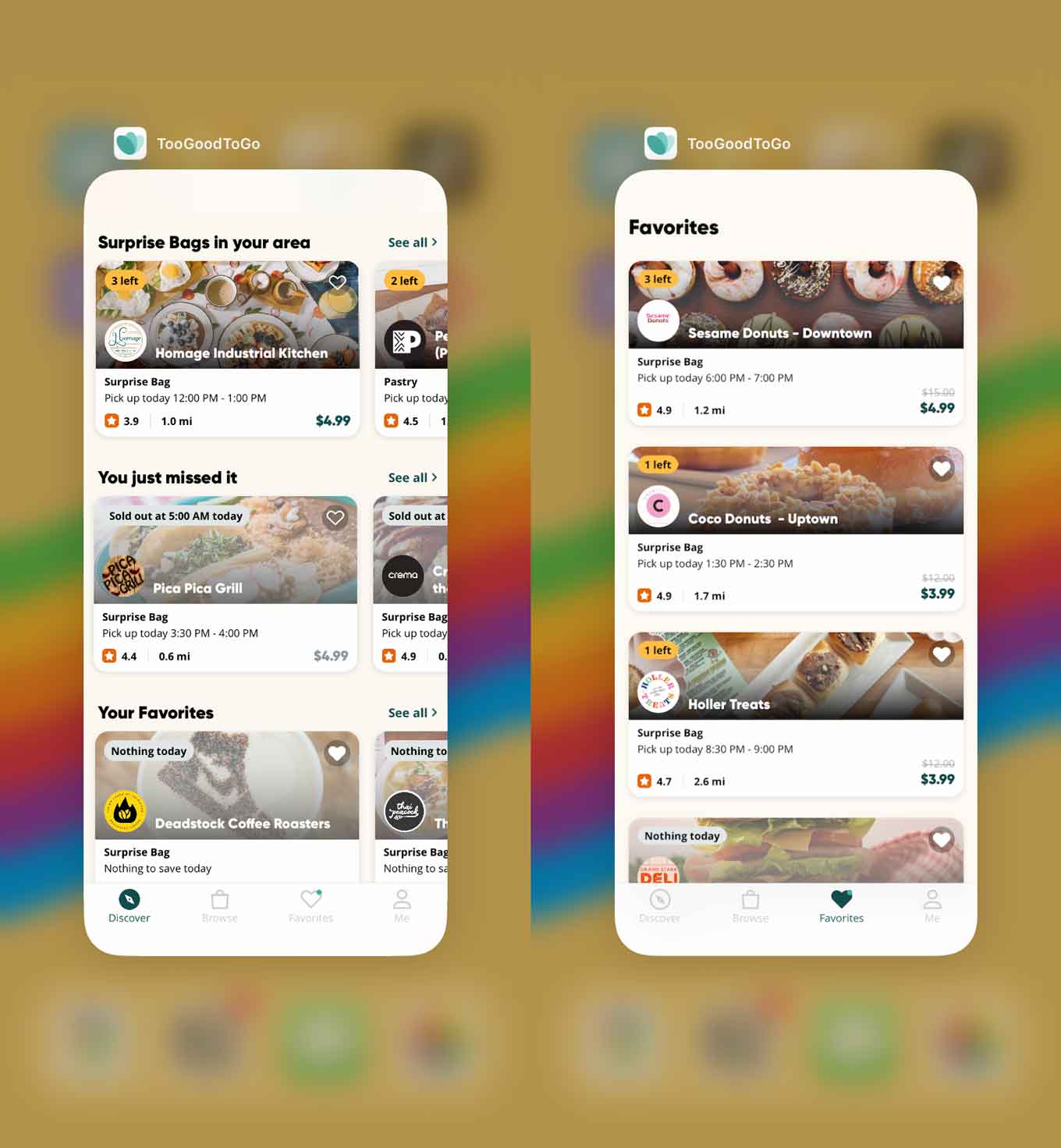
We recommend beginning by going through the Browse tab and looking for favorite local restaurants and shops that look interesting to you, marking them as 'favorites' as you go along. This will make it easier to quickly find deals in the future.
As you scroll, you'll see that some offerings are already sold out for the day while others aren't available yet. One thing we love about Too Good To Go is that it doesn't encourage shops to overproduce for the app. Shops will usually only have a few leftover meals — and they only sell that many. When they're sold-out, they're sold-out.
(This is why we also recommend turning on notifications for the app, and regularly checking the app. You never want to miss out on a delicious deal and a chance to reduce waste.)
3. Reserve your 'Surprise Bag'
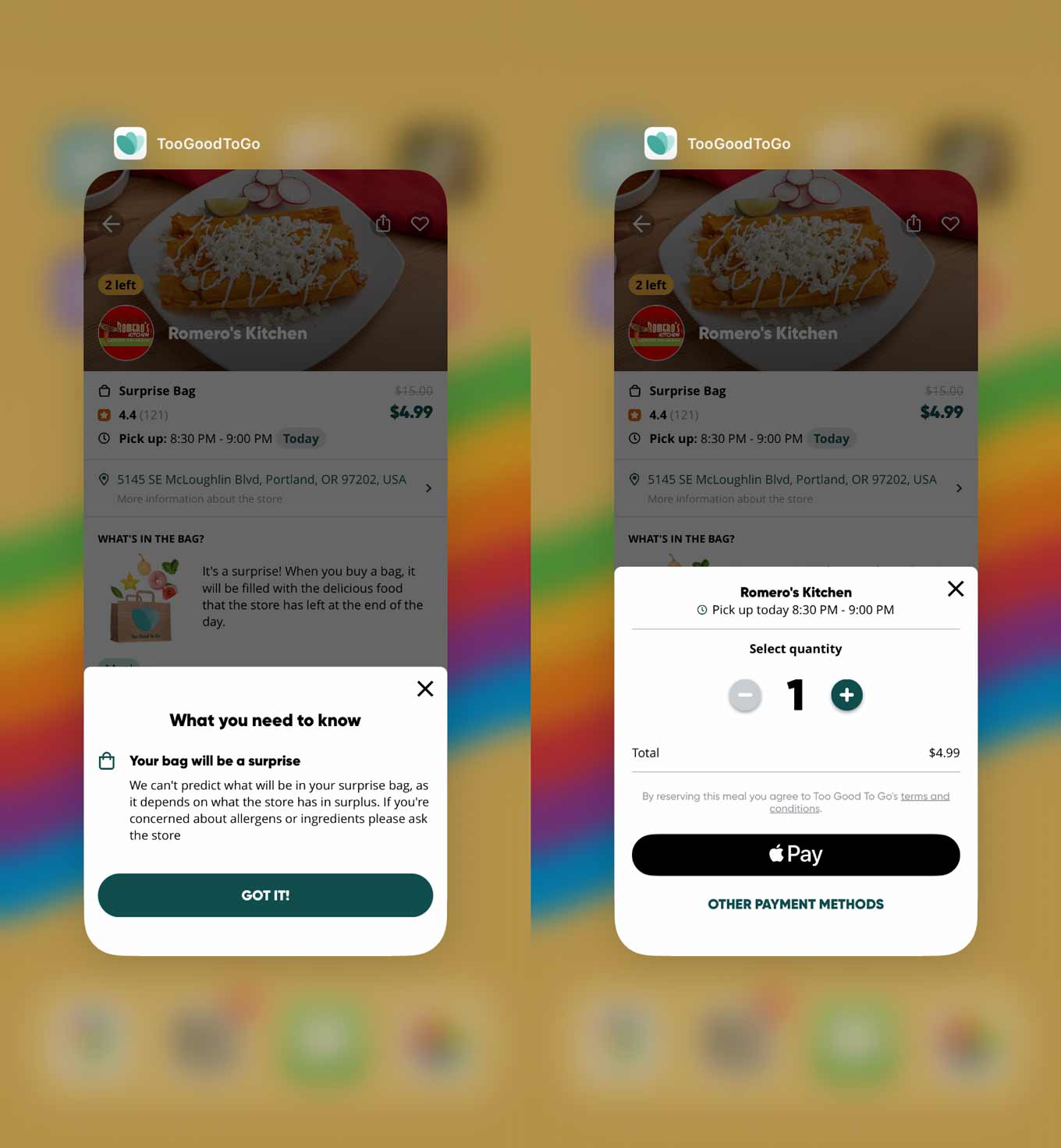
When you find an offering that's available, you'll be able to tap on it to see more information:
How much does this meal normally go for compared to now?
(Usually it's big savings!)
What time can I pick it up?
(Often it's at the end of the day before closing.)
Anything else you need to know?
(Allergies, ratings, should you bring your own to-go container, etc...)
Once everything looks good to you, go through the checkout process to reserve the meal. Again, you'll be reminded what time you can go pick up your food. There's usually a window of time — and you've got to make sure you show up within those parameters.
4. Pick up your order
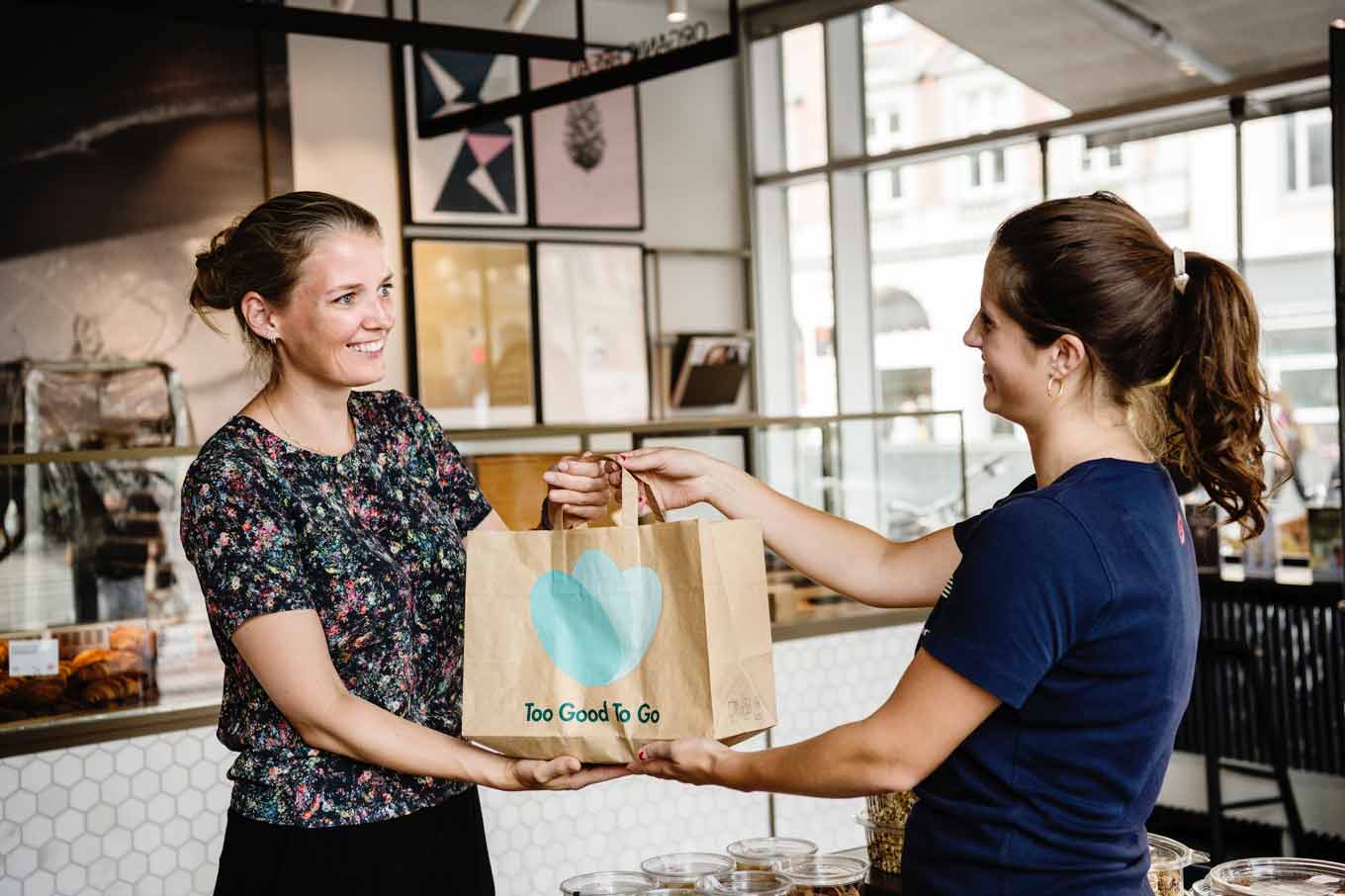
Head over to the shop within the specified timeframe. Once you arrive, you'll usually just go up to the front counter and say that you have a Too Good To Go order to pick up.
Depending on what you ordered, your order may take some time. For example, the coffee shop next door to my house uses Too Good To Go to offer up their pastries at the end of the day. I usually walk in with my Too Good To Go reservation and am able to walk out 30 seconds later. But I've also ordered from restaurants where I arrive and they tell me what they can make with their leftover ingredients. They offer me a few options and then prepare the meal of my choice over about 15 minutes. Every shop and Surprise Bag is a little bit different.
At the counter you'll show your Too Good To Go app and mark the deal as "redeemed".
5. Enjoy
Lastly, you'll walk out of store triumphantly, enjoy your food, and get to brag to your friends about how you saved money and the planet.
More Ways To Reduce Food Waste
If you're looking for more opportunities to reduce food waste, we have a few ideas for you:
- Research how you can compost in your community. Some cities will have curbside pickup for your compost, while in other communities you may need to find a community garden or create your own backyard compost pile.
- Beyond Too Good To Go, several other companies are working to reduce food waste such as Imperfect Produce, Misfits Market, Pulp Pantry, or SOULMUCH. (Whatever you order, make sure prepare, eat, and enjoy all the food so nothing goes to waste.)
- Find more ways to reduce food waste in your life:
Commit to eating your leftovers.
Learn about what expiration dates actually mean.
Only buy what you need.
Find places in your community to give back and donate food if you buy too much.
You might also like:
→ How Many People Die of Hunger — And How To Solve World Hunger
→ These AAPI Women Are Helping Feed East Asian Elders
→ The Best Quotes About Hunger & Feeding the Poor
→ This Startup Is Ensuring Free Meals For Food-Insecure Families Are Just a Text Away
→ This Incubator Is Helping Underrepresented Food Entrepreneurs Launch Businesses
→ The Ultimate Misfits Market Review
In 2018, Manuel and Patricia Oliver lost their son, Joaquin in the mass shooting at Marjory Stoneman Douglas High School in Parkland, Florida.
In their healing process, the couple started a nonprofit called Change the Ref (CTR), with the mission of increasing awareness of mass shootings and reducing the public influence of America’s largest gun lobby group, the National Rifle Association (NRA).
Over the years, CTR has worked to empower “Future Leaders” by using urban art and nonviolent creative confrontation to expose the effects of mass shootings in America.
With tools like education, conversation, and activism, CTR shares the corruption of the NRA and works to find solutions to bring healing — and ultimately, a more peaceful future.

What’s the Yellow Bus Project?
The latest initiative from CTR is The NRA Children’s Museum, or The Yellow Bus Project, which is a mobile museum made of 52 empty school buses, honoring the 4,368 children whose lives have been lost to gun violence since 2020. The procession of buses is a mile long.
Some buses include exhibits of artifacts, photos, videos, audio recordings, and personal memories of the children who lost their lives to guns.
The first stop of the project? Texas Senator Ted Cruz’s house.
Cruz is a major NRA-backed politician and has left much to be desired in his responses to the gun violence pandemic. Organizers said they chose his home as the inaugural location for the bus procession because he is a top recipient of funding from the NRA in Texas.
This is especially relevant following the recent mass shooting at an elementary school in Uvalde, Texas.
“To commemorate this horrific historic moment, we are showing American voters the toll these politicians have taken on our children's lives with this all-too-real archive,” Manuel Oliver said in a press release.
“And this is only the beginning. We will not stop with Sen. Ted Cruz. To every politician who has stood by, taken NRA money, and refused to listen to the people they represent: the museum is on the way to honor you next.”
The goal of the powerful visual is to invite young people across America to demand stricter gun laws — and show politicians the consequences of their inaction.
“We want to display, for the voters who keep these politicians in office, the consequences of those choices. We want voters to remember which politicians are in the pocket of the NRA when they visit the polls in November,” Patricia Oliver said in a press release.
“We urge everyone to join us in our mission to fight for every innocent soul lost to gun violence and to demand universal background checks on gun sales.”
As part of the demonstration, the Olivers presented Sen. Cruz with a “gift” from their late son: a letter he wrote when he was 12 years old, asking for background checks on gun sales.
The letter, from a young Joaquin reads:
“Dear US gun owner,
I am writing this letter to talk to you about how we are going to solve this gun law movement. Most of you have a problem with the idea of a universal back ground check. Why are you mad that there’s a back ground check if it’s for your own good? Maybe you are fond of having crazy people with death machines. You shouldn’t have anything against back ground checks if you’re innocent.
Thank you,
Joaquin Coral Springs”
Less than five years after writing the letter, Joaquin was killed by gun violence.
In their press release, the Olivers share that they hope receiving this gift will spark a realization and understanding that receiving political donations from gun lobbyists isn’t worth an innocent child’s life.
Why is the NRA Children's Museum good news?
While it’s heartbreaking that any demonstrations like this must occur, and that there are any empty seats on these school buses at all, what CTR and The Yellow Bus Project are doing is a courageous and creative act of resistance that should be celebrated.
In Texas specifically, legislation for universal background checks is a common-sense gun law reform that an overwhelming percentage of constituents support, including Republican voters. As of June 2021, 71% of Texans, including 61% of Republicans, supported such measures, according to the Texas Politics Project.
This project demonstrates that folks are willing to mobilize (literally) towards change.
How can you make a difference?
First, CTR is calling for all supporters to sign a petition to demand that lawmakers take action in requiring universal background checks. In addition, supporters can quickly call, tweet, or email Sen. Cruz from a button on the project’s website.
We’d also suggest donating to CTR so they can keep up the amazing work to support young people with creative activism.
However, there are so many ways for you to support the work to protect children from gun violence. Whether it’s calling your representatives, learning more about gun violence, organizing or attending a gun amnesty event, or donating to organizations and leaders on the front lines, we have a full guide of ways you can help stop gun violence.
Hans Rosling was a Swedish doctor, statistician, “possibilist”, and public speaker who devoted his life to improving global health. He was also a passionate advocate for using data to help decision-makers understand and solve complex problems in the world.
He studied medicine at the Karolinska Institute in Sweden and public health at St. John's Medical College in India. He later worked as a doctor and studied outbreaks of konzo. In the early- and mid-200s, he began to develop his unique approach to data visualization, which he used to communicate complex statistical concepts to lay audiences.
Rosling became a global celebrity (at least in a particular niche) in 2006 when he gave a now-famous TED Talk about the power of data to improve the world. He went on to co-found the Gapminder Foundation, a nonprofit organization that promotes the use of data to improve global health and education.
Rosling was named one of TIME's 100 Most Influential People in 2012 and was given the Harvard Foundation Humanitarian Award in 2012. Rosling died of cancer in 2017. His book, Factfulness, was released posthumously — and became an instant New York Times Bestseller.
We've collected Hans Rosling's best quotes about global health, optimism, the state of the world, and how to make a difference.
Explore Hans Rosling's Best Quotes From Factfulness, TED Talks, and More —
Famous Quotes
“Cultures, nations, religions, and people are not rocks. They are in constant transformation.”
— Hans Rosling, Factfulness: Ten Reasons We're Wrong About the World—and Why Things Are Better Than You Think
“There’s no room for facts when our minds are occupied by fear.”
— Hans Rosling, Factfulness
“It is quite relaxing being humble, because it means you can stop feeling pressured to have a view about everything, and stop feeling you must be ready to defend your views all the time.”
— Hans Rosling
“The goal of higher income is not just bigger piles of money. The goal of longer lives is not just extra time. The ultimate goal is to have the freedom to do what we want.”
— Hans Rosling, Factfulness
“Everyone seems to get the world devastatingly wrong. Not only devastatingly wrong, but systematically wrong. By which I mean that these test results are not random. They are worse than random: they are worse than the results I would get if the people answering my questions had no knowledge at all.”
— Hans Rosling
“Factfulness is… recognizing that a single perspective can limit your imagination, and remembering that it is better to look at problems from many angles to get a more accurate understanding and find practical solutions. To control the single perspective instinct, get a toolbox, not a hammer.
• Test your ideas. Don’t only collect examples that show how excellent your favorite ideas are. Have people who disagree with you test your ideas and find their weaknesses.
• Limited expertise. Don’t claim expertise beyond your field: be humble about what you don’t know. Be aware too of the limits of the expertise of others.
• Hammers and nails. If you are good with a tool, you may want to use it too often. If you have analyzed a problem in depth, you can end up exaggerating the importance of that problem or of your solution. Remember that no one tool is good for everything. If your favorite idea is a hammer, look for colleagues with screwdrivers, wrenches, and tape measures. Be open to ideas from other fields.
• Numbers, but not only numbers. The world cannot be understood without numbers, and it cannot be understood with numbers alone. Love numbers for what they tell you about real lives.
• Beware of simple ideas and simple solutions. History is full of visionaries who used simple utopian visions to justify terrible actions. Welcome complexity. Combine ideas. Compromise.”
— Hans Rosling, Factfulness
“This is how much the world has changed: just 20 years ago, 29 percent of the world population lived in extreme poverty. Now that number is 9 percent.”
— Hans Rosling
→ Read more positive quotes about poverty
“Does saying “things are improving” imply that everything is fine, and we should all relax and not worry? No, not at all. Is it helpful to have to choose between bad and improving? Definitely not. It's both. It's both bad and better. Better, and bad, at the same time. That is how we must think about the current state of the world.”
— Hans Rosling, Factfulness
On Being Optimistic and The World Being Good
“Here’s the paradox: the image of a dangerous world has never been broadcast more effectively than it is now, while the world has never been less violent and more safe.”
— Hans Rosling, Factfulness
“Every group of people I ask thinks the world is more frightening, more violent, and more hopeless — in short, more dramatic — than it really is.”
— Hans Rosling, Factfulness
“People often call me an optimist, because I show them the enormous progress they didn't know about. That makes me angry. I'm not an optimist. That makes me sound naive. I'm a very serious “possibilist”. That’s something I made up. It means someone who neither hopes without reason nor fears without reason, someone who constantly resists the overdramatic worldview. As a possibilist, I see all this progress, and it fills me with conviction and hope that further progress is possible. This is not optimistic. It is having a clear and reasonable idea about how things are. It is having a worldview that is constructive and useful.”
— Hans Rosling, Factfulness
“I want people, when they realize they have been wrong about the world, to feel not embarrassment, but that childlike sense of wonder, inspiration, and curiosity that I remember from the circus, and that I still get every time I discover I have been wrong: “Wow, how is that even possible?”
— Hans Rosling, Factfulness
“Remember: things can be bad, and getting better.”
— Hans Rosling, Factfulness
“Think about the world. War, violence, natural disasters, man-made disasters, corruption. Things are bad, and it feels like they are getting worse, right? The rich are getting richer and the poor are getting poorer; and the number of poor just keeps increasing; and we will soon run out of resources unless we do something drastic. At least that’s the picture that most Westerners see in the media and carry around in their heads. I call it the overdramatic worldview. It’s stressful and misleading. In fact, the vast majority of the world’s population lives somewhere in the middle of the income scale. Perhaps they are not what we think of as middle class, but they are not living in extreme poverty. Their girls go to school, their children get vaccinated, they live in two-child families, and they want to go abroad on holiday, not as refugees. Step-by-step, year-by-year, the world is improving. Not on every single measure every single year, but as a rule. Though the world faces huge challenges, we have made tremendous progress. This is the fact-based worldview.”
— Hans Rosling, Factfulness
→ Read more positive quotes about hunger
“This is data as you have never known it: it is data as therapy. It is understanding as a source of mental peace. Because the world is not as dramatic as it seems. Factfulness, like a healthy diet and regular exercise, can and should become part of your daily life. Start to practice it, and you will be able to replace your overdramatic worldview with a worldview based on facts. You will be able to get the world right without learning it by heart. You will make better decisions, stay alert to real dangers and possibilities, and avoid being constantly stressed about the wrong things.”
— Hans Rosling, Factfulness
“Last year, 4.2 million babies died. That is the most recent number reported by UNICEF of deaths before the age of one, worldwide. We often see lonely and emotionally charged numbers like this in the news or in the materials of activist groups or organizations. They produce a reaction. Who can even imagine 4.2 million dead babies? It is so terrible, and even worse when we know that almost all died from easily preventable diseases. And how can anyone argue that 4.2 million is anything other than a huge number? You might think that nobody would even try to argue that, but you would be wrong. That is exactly why I mentioned this number. Because it is not huge: it is beautifully small. If we even start to think about how tragic each of these deaths is for the parents who had waited for their newborn to smile, and walk, and play, and instead had to bury their baby, then this number could keep us crying for a long time. But who would be helped by these tears? Instead let’s think clearly about human suffering. The number 4.2 million is for 2016. The year before, the number was 4.4 million. The year before that, it was 4.5 million. Back in 1950, it was 14.4 million. That’s almost 10 million more dead babies per year, compared with today. Suddenly this terrible number starts to look smaller. In fact the number has never been lower.”
— Hans Rosling, Factfulness
"If people want to help with something, it's good to know where the problem is … [for example] the problem of lack of schooling for girls is not a global problem. It is not a developing world problem, it's a problem in the poorest 2 billion. But there it's an extremely severe problem … Men in Afghanistan have half the schooling of women in the world. But young women in Afghanistan have one-seventh of the men in Afghanistan. This is the world I would like to explain.”
— Hans Rosling, in The Guardian
→ Read more quotes about hope
On the Media
“Forming your worldview by relying on the media would be like forming your view about me by looking only at a picture of my foot. Sure, my foot is part of me, but it’s a pretty ugly part. I have better parts.”
— Hans Rosling, Factfulness
“You should not expect the media to provide you with a fact-based worldview any more than you would think it reasonable to use a set of holiday snaps of Berlin as your GPS system to help you navigate around the city.”
— Hans Rosling, Factfulness
“The world cannot be understood without numbers. But the world cannot be understood with numbers alone.”
— Hans Rosling, Factfulness
“When things are getting better we often don’t hear about them. This gives us a systematically too-negative impression of the world around us, which is very stressful.”
— Hans Rosling, Factfulness
“Never leave a number all by itself. Never believe that one number on its own can be meaningful. If you are offered one number, always ask for at least one more. Something to compare it with.”
— Hans Rosling, Factfulness
“And thanks to increasing press freedom and improving technology, we hear more, about more disasters, than ever before. When Europeans slaughtered indigenous peoples across America a few centuries ago, it didn’t make the news back in the old world. When central planning resulted in mass famine in rural China, millions starved to death while the youngsters in Europe waving communist red flags knew nothing about it. When in the past whole species or ecosystems were destroyed, no one realized or even cared. Alongside all the other improvements, our surveillance of suffering has improved tremendously. This improved reporting is itself a sign of human progress, but it creates the impression of the exact opposite.”
— Hans Rosling, Factfulness
“Beware of exceptional examples used to make a point about a whole group.”
— Hans Rosling, Factfulness
→ Read more quotes about good news and quotes about bad news
Short Quotes
"Fame is easy to acquire, impact is much more difficult.”
— Hans Rosling
“To control the negativity instinct, expect bad news.”
— Hans Rosling, Factfulness
“Something frightening poses a perceived risk. Something dangerous poses a real risk.”
— Hans Rosling, Factfulness
“Look for systems, not heroes.”
— Hans Rosling, Factfulness
“Look for causes, not villains.”
— Hans Rosling, Factfulness
“Slow change is still change.”
— Hans Rosling, Factfulness
“The only proven method for curbing population growth is to eradicate extreme poverty”
— Hans Rosling, Factfulness
More Quotes
“Human beings have a strong dramatic instinct toward binary thinking, a basic urge to divide things into two distinct groups, with nothing but an empty gap in between. We love to dichotomize. Good versus bad. Heroes versus villains. My country versus the rest. Dividing the world into two distinct sides is simple and intuitive, and also dramatic because it implies conflict, and we do it without thinking, all the time.”
— Hans Rosling, Factfulness
“I remember the words of Ingegerd Rooth, who had been working as a missionary nurse in Congo and Tanzania before she became my mentor. She always told me, “In the deepest poverty you should never do anything perfectly. If you do you are stealing resources from where they can be better used.”
— Hans Rosling, Factfulness
“When abortion is made illegal it doesn't stop abortions from happening, but it does make abortions more dangerous and increase the risk of women dying as a result.”
— Hans Rosling, Factfulness
“Ask yourself, “What kind of evidence would convince me to change my mind?” If the answer is “no evidence could ever change my mind about vaccination,” then you are putting yourself outside evidence-based rationality, outside the very critical thinking that first brought you to this point.”
— Hans Rosling
“Categories are absolutely necessary for us to function. They give structure to our thoughts. Imagine if we saw every item and every scenario as truly unique — we would not even have a language to describe the world around us. The necessary and useful instinct to generalize, like all the other instincts in this book, can also distort our worldview.”
— Hans Rosling, Factfulness
We’ve got something controversial to say: we’re sick of bubble baths and face masks. Don’t get us wrong — those have their place, and an indulgent purchase can be lovely now and again. But when it comes to self care, we want you focused on your health; not your wealth.
In fact, the World Health Organization (WHO) defines self care as “the ability of individuals, families, and communities to promote health, prevent disease, maintain health, and to cope with illness and disability with or without the support of a healthcare provider.” WHO’s definition of self-care recognizes that individuals have varying levels of active agency in managing their own health in a number of ways.
In more lay terms, Mental Health Match calls self care “anything we deliberately do (or refrain from doing) with our own well-being in mind.”
Certainly, this can include a pedicure or a luxury vacation, but it also sometimes means touching wet food in your sink while you do the dishes, setting important boundaries with the people in your life, or starting a new medication, even though it all feels uncomfortable and scary.
Self care is also a way to do more good in the world. Think of it this way: when you have the tools to take care of yourself and live a life that feels good and uplifting, you can better show up for your community, your relationships, and the causes you care about.
And we don’t want you to get the idea that self care is the same as self optimization. You don’t need to fall into the “that girl” trap; you simply deserve to give yourself the same grace, compassion, and love as you give others.
Healing is a journey; not a job. When we learn to be proactive (instead of perfect) with our self care, we learn to spend more time being ourselves instead of working on ourselves.
And guess what? The world needs more of what you’ve got.
Here’s a list of 101 self care ideas to help you feel good and be the most you you can be. Please note: you don’t have to do all 101 things to practice self care. It’s not a contest! Take what resonates, and leave what doesn’t.
Some of these links are affiliate links — which means that if you buy something mentioned in this article, we may receive a commission in return. Thank you! As always, we only recommend things we genuinely love.
By the way, you might also like these self-care resources: The Best Self-Care Apps | Self-Care Quotes | How To Practice Proactive Self-Care | How To Cheer Yourself Up | How To Build a Self-Care Kit | Self Care Journals & Planners | Self-Care Affirmations | International Self-Care Day | Self-Care Gifts
The Ultimate List of Self Care Ideas —
Self care you can practice at home:

- Take care of your space. Declutter, wipe down surfaces, or reorganize. Sometimes it can be hard to find the motivation to do chores or clean up, but once it’s done, you’ll feel fresh and clear-headed.
- Make a “megabed” and have a big movie or TV night with all the cozy mattresses, couches, cushions, pillows, and blankets. “Ted Lasso” awaits.
- Try a little mixology! Whether you include alcohol or just make a fun little mocktail, take your time crafting the perfect beverage and mindfully watch it take form, from presentation to the perfect sip.
- Rearrange your furniture. You can make a new meditation spot, or just change up your desk layout, but getting a fresh perspective can make all the difference.
- Give yourself a massage. Light a candle, put on some music, pick the perfectly-scented lotion, and allow yourself a little peace and quiet.
- Bake something yummy. Try a new recipe, and don’t you dare skimp on the chocolate chips.
- Find a new documentary, podcast, or book to learn more about a topic you’ve been interested in. Devote an afternoon to soaking it all in.
- Create a lending system with your book collection. Organize your bookshelf and find a book to loan out to each of your friends. Bonus points if they do it too and you create a little personal library system!
- Clean your makeup brushes. We don’t need to talk about how long it’s been; just do it.
- Try a new craft, or check out some tips from an art therapist on TikTok who can give you prompts to guide a healing creative project.
- Go through your home, look for places you can make sustainable swaps, and make a wish list of items you want to invest in. Helping the planet helps you, too! (Here’s a bonus tip: divest from Amazon and check out other recommendations for sustainable items like candles, mattresses, and even dog poop bags!)
- Create a zine. Have something to say? Want to doodle about a day in your life? Learn more about zines and how to make one.
- Hang out on your porch, deck, or backyard and enjoy a slow moment outdoors. Listen to the wind chimes, gaze up at the sky, or just rock in place for a few peaceful moments.
- Start a hobby just for you. Don’t make stuff to monetize, and don’t feel like you need to share it on the internet. Whether it’s making mosaics, riding your Peloton, or collecting mechanical keyboards, do your thing! (Check out our list of ideas for hobbies!)
- Send snail mail. Make a card yourself, or grab some eco-friendly stationery, stick on a stamp, and drop that baby in the mailbox to send some gratitude to a loved one.
- Conversely, stop getting junk mail! Yep, we’ve got a guide to help you do that, too. Say goodbye to those unwanted fliers and coupons, folks.
- Vacuum, sweep, and dust all the nooks and crannies. The dust bunnies have overstayed their welcome.
- Take an online bystander intervention training class. You’ll feel safer and more empowered playing a role in keeping community members safe.
- Put all the special awareness months and holidays in your calendar. Think ahead about how you want to celebrate and honor them.
- Learn how to properly recycle. Then, set up a new recycling disposal system in your home. And go all out on those fancy containers — who’s stopping you?!
Self care practices to add to your regular routine:
- Don’t just pick up a hobby; pick up a screen-free hobby that will transform your “just another five minutes” habit on Twitter into a full-blown skill (knitting, anyone?)
- Subscribe to the Goodnewspaper, a publication filled with good news and action items in your mailbox each month. It’ll make you feel hopeful and empowered to do more good.
- Try some yoga. If you’re anything like us, YouTube’s resident yogi, Adriene Mishler (and her angel of a dog, Benji) will become your new bestie.
- Do some journaling. Whether you keep a regular gratitude journal or need some prompts to get you started, journaling is a great way to strengthen your memory and reduce stress.
- Donate to a mutual aid fund on a monthly basis. Community care is a form of self care, and it’s scientifically proven to make us happier. When we take care of one another, we build networks to rely on when we fall on hard times, too.
- Go to therapy! We know folks face a number of barriers when it comes to mental healthcare, but hopefully our guide to finding the right therapist will get you off on the right foot.
- Hit up the farmer’s market. Is there anything better than some fresh produce, a bouquet of flowers, and supporting your local agricultural providers? We think not!
- Volunteer in your community. You can apply your unique skills anywhere, help others, and feel fulfilled and empowered all at once. Visit VolunteerMatch to find the right opportunity for you!
- Spend time in nature. You can go all out and try the 1,000 Hours Outside challenge or just take a regular walk. Either way, ecopsychologists tell us that nature is key for our physical health and cognitive function.
- Give yourself time to do nothing at least once a week. Whether “nothing” means taking a nap or watching a mindless TV show to help you get into a relaxed state, you deserve it!
- Set up automatic payments for all your regular bills so you don’t have to worry about remembering what’s coming next. When the first of the month comes around, Future You will be like “thanks, Past Me!”
- Get yourself a little treat. No, there is nothing better than an iced coffee or a little candy bar at the gas station. We rest our case.
- Take an intentional break from the news. Setting boundaries with news consumption helps you better process the important information and filter out the overwhelming stuff.
- Take an epsom salt bath. Epsom salts break down into magnesium and sulfate in water and help with stress relief, inflammation, and sore muscles.
- Sign up for a meal subscription service! There are tons of coupons and discount codes for meal subscription boxes, and they really do take the guesswork out of a big daily care task: feeding yourself.
- Sign up for a fun exercise class or activity. It doesn’t have to be power weightlifting; you can enjoy dance or Zumba, or join an intramural sport like baseball or badminton! It’s always easier when you have a buddy.
- Mend or repair your well-worn clothes and other personal belongings. This helps extend the life of your beloved garments and is an act of service to yourself.
- Wear an outfit you really love, some jewelry that makes you feel exquisite, or a nail color that feels empowering. Build your personal style based on what feels good and true to you.
- Turn off your alarms one day a week. If that isn’t doable for you, try to wake up without an alarm at least once a month. Prepare your family or loved ones that you’ll be off the clock, and let the rest overtake you.
- Ask for a hug or cuddle, or some sort of physical touch, from someone you love. There are some serious soothing and co-regulation benefits from this act of affection.
Things to do for yourself daily:
- Take a deep breath. Actually, lots of deep breaths.
- Get your body moving. We’re not forcing you to become a marathon runner, but a little exercise goes a long way. As John Green says in a now-iconic TikTok, much to his chagrin, going on “stupid walks” for his “stupid mental health” works.
- Practice meditation and mindfulness. Apps like Headspace, Calm, and Breethe are a great place to start.
- Make time for personal grooming. Brushing your teeth or taking a shower are sometimes Herculean tasks, so we’re proud of whatever your hygiene habits look like today.
- Drink more water. You’ve heard it a million times, so what’s one more? Check out this hydration calculator to help you know how much H2O your body needs.
- Snuggle your dog, cat, or bunny (or just spend time around animals). Scientific evidence shows that pets reduce our stress levels and provide unconditional companionship.
- Stretch those muscles. Just a few minutes of stretching can set you up for success every day.
- Wear sunscreen. Okay, fine, you can have a little skin care routine, as a treat. And as a cancer preventative.
- Water your plants. Bring nature to you! Taking care of something else is also a great catalyst to treat ourselves with kindness, too.
- Recite meaningful affirmations. Positive affirmations help us maintain a positive self-view and help us visualize our desires and needs.
- Similarly, read positive quotes for a boost of inspiration, hopefulness, and empathy. Explore our whole collection of Good Good Good-approved quotes. And of course, check out our list of inspiring self care quotes.
- Go to bed at a reasonable hour. Prepare a helpful nighttime routine, stick to a good bedtime, and maintain a consistent sleep schedule to keep yourself well-attuned to one of your core needs: rest.
- Practice a daily sensory activity. It can be as simple as listing things you can feel, smell, or see, but you can also try using fidget toys, smelling flowers, or swaying in a hammock.
- Take more pictures. Make albums of things you’re grateful for, or start a random collection of smiley faces or hearts you see out in the wild. It’s bound to cheer you up now — and again in the future.
- Create a wind-down routine to ease out of your workday — especially if you work from home. It helps to use transition activities to help you ease out of work-mode and into relaxation.
- Nourish yourself with delicious food. Snack on a favorite brand of crackers, cook yourself something tasty, and actually try to avoid the foods that make your stomach hurt (We know, the cheese is hard to resist).
- Don’t let the laundry pile up. Wash and dry your clothes when you need to, but also consider creating systems that work for you. (Ahem, what if you didn’t even have to fold your clean clothes?)
- Enjoy the silence. When was the last time you turned off your phone, TV, music, or podcast? Allow yourself even just one moment a day of quiet time.
- Do something active during your TV time. Lift little weights, bring Hulu to the treadmill, or even clear off some counter space during your new favorite binge. You don’t have to do this every time, but sometimes it helps decrease that couch fatigue.
- Moisturize. A dab of hand cream can’t make all the difference, but it can be a welcome start.
Free ways to preserve your bank account and your peace:
- Subscribe to the Goodnewsletter! We send out daily emails filled with good news that will shift your perspective and turn the heartache into hope.
- Light a candle. Pick your favorite scent in your collection (because, come on, we know you have a collection, and let it put you at ease.
- Organize your digital files. Delete the random screenshots, make some new folders on your desktop, and ooh and ahh at your simplified system.
- Borrow an e-book or audiobook from your local library or Libro.fm and get those brain waves flowing.
- Create a playlist of music you like to dance to. Then dance to it.
- Call your representatives. Demand a better life for you and your community members by advocating for the causes you care about. (You can call after hours and leave a voicemail if phone calls make you anxious!)
- Limit your social obligations. Sometimes the pressure to be around people can be a little much. What’s the saying about the pleasure of canceled plans? Yeah, it's an instant relief.
- On the other hand, you can also spend some more time with friends. Sometimes we just need a shoulder to lean on or a good gossip session.
- Call and make that appointment you’ve been putting off. Whether it’s the doctor, the mechanic, or the DMV, you deserve to check those annoying tasks off your list.
- Lie on the floor. Physical therapists say this is a grounding activity that can help with your posture and even alleviate anxiety.
- Crawl. It’s not just for babies! Crawling — or quadrupedal movement — has a number of mental and physical health benefits. Give it a try!
- Listen to a bedtime story. Embrace your inner child and hop on this live bedtime story feed on TikTok every night for a childhood classic.
- Camp out in the backyard or lie under the stars. If you have camping gear and a safe outdoor space, take some intentional time to feel the simultaneous small-ness and big-ness of the universe.
- Get to know yourself better with a personality assessment! There are lots to choose from: Myer’s Briggs, Enneagram, Human Design, and more.
- Have a picnic! Raid your pantry or fridge for some yummy goodies, pack a blanket and some bug spray, and enjoy the great outdoors.
- Write out your values or discover what you’re passionate about. While value assessments are often tools for career growth, this can also be a great way to better understand yourself and what is most important to you.
- Create a self care kit with items you already have at home. Grab an extra fidget toy, some sour candy, a coloring book, and any other soothing self care materials you’d like to include, and have a kit on standby for those high-emotion moments.
- Have a TED Talk marathon. These bite-size videos are awesome alternatives to other digital media if you want to learn something new. We’d recommend some classics on vulnerability, injustice, and storytelling.
- Go give the world a “superbloom.” OK, this one might not be totally free, but it’s definitely on the affordable side! Grab some wildflower/native grass seeds and sprinkle those babies in your community for some all-natural pollination.
- Create a finance tracker/spreadsheet. It’s not the cutest thing to do, but it definitely helps you take care of all the big stuff in your life. We love this free budgeting template from financial hype woman Berna Anat, or this starter graphic on finances from Ellyce Fulmore!
Digital self care for the age of doom-scrolling:
- Unfollow accounts that aren’t sparking joy. Comparing yourself to strangers on the internet again? Give ‘em a little mute or unfollow. I promise, you’re not hurting anyone’s feelings.
- On the other hand, follow new and cool content creators that speak to you! We have some roundups of our favorite LGBTQ+ creators and animal influencers using their platforms for good to get you started.
- Join a social media network that doesn’t suck your soul. We’d recommend Communia, an app for women and non-binary folks, as well as MeWe, a social network designed for people; not data.
- Set timers on your phone’s digital wellbeing — or Screen Time — controls. Guilty of the endless scroll? Put a stop to it. Give yourself an allotted amount of time on certain apps per day by adjusting your digital wellbeing settings on your phone.
- Listen to a mental health podcast. There’s a whole world of podcasts out there. Try finding a few about mental health that resonate with you to help you learn and grow.
- Turn off unnecessary notifications. Past 5 p.m? Ditch those work notifications. Don’t want to see who’s liking your Facebook posts from a decade ago? Toggle those notifications off.
- Unsubscribe from emails. We all have a treasure trove of retailers or newsletters cluttering our inboxes. Unsubscribe to the ones you no longer need.
- Text a friend out of the blue. A DM or an Instagram comment always feels nice, but if you’re thinking about a pal, shoot them a message (or — gasp! — give them a call) and start a more intentional conversation.
- File for email bankruptcy. This is when you delete all your emails knowing that if someone wants to contact you, they’ll send you another message. This is not for the faint of heart, but if you’re feeling overwhelmed or shameful because you can’t keep up with your emails, Branden gives you permission to use this strategy.
- Make Ecosia your default search engine. Ecosia plants trees every time you search online. Put all those curiosities to good use and make it your default search engine!
- Sign up for Tab For A Cause. This is a browser extension that raises money for nonprofits every time you open a new tab. For those of us with a trillion tabs open at all times, it’s the most effortless way to help a good cause.
- Try Duolingo instead of the endless social media scroll. Sure, the Duolingo owl on TikTok may have inspired you to learn French, but you can put the social media app down for an hour now. Oui?
- Create mood boards on Pinterest. This may be one of the least toxic popular social media platforms out there. Hop on Pinterest and create mood boards for all kinds of fun stuff: positive affirmations, DIY projects, or dream outfit combos.
- Join an online community or support group. There are loads of online support groups that help folks work through their mental health or connect with somebody who has a similar experience. Find yours!
- Find Internet resources with a specific niche in mind. Looking for a like-minded digital ADHD community? Maybe you want some resources for Black mental health. It’s all out there!
- Make your life a little bit easier by rearranging the apps on your phone or adding your favorite websites to your browser bookmarks. Consider hiding the apps and sites that hurt more than they help.
- Use the BeMyEyes app to help a visually impaired person see. This do-good app allows blind or low-vision folks to video chat with a volunteer who can help them navigate the world a bit better.
- Virtually tour a museum anywhere in the world. Need a change of scenery without the price of an international flight? Check out a digital museum tour for any number of museums across the globe.
- Check out a live puppy cam. Sit in on a litter of puppies for a few minutes for a much-needed bark break.
- Download a mood tracker app. Apps like Daylio or WorryWatch help you easily document your mood changes and journal about your feelings daily.
- Read good news, too. If you like this list, there’s a lot more good news and good recommendations where it comes from! Stay updated with our content at Good Good Good, or find other awesome good news websites, good news apps, good news podcasts, and even good news subreddits to help you feel more hopeful.
The truth is: There are a lot of problems in the world.
Climate change, poverty, divisive politics, racism, consumerism, mental health struggles, access to health care, natural disasters, malnutrition, gun violence, and more...
These problems can sometimes feel insurmountable.
But you know what other problems also felt insurmountable? Chattel slavery, the depleting ozone layer, women's suffrage, polio, civil rights for Black Americans, and so much more...
But for each of these injustices, ordinary people stepped up to something, to create change, to make a difference.
These problems weren't solved overnight , and there's still more work to be done, but it's clear that the collective work of countless individuals had led to significant progress — saving and improving lives around the world.
And today, each of us can do the same for the injustices we see all around us. Each of us have the power to make a difference — in big and small ways.
May we learn from difference makers from the past and present about how to make a difference in the world, in our countries, in our communities, and for the individual people we encounter every day.
Dive into these beautiful, inspirational quotes about doing good in the world — and then go out and make a difference yourself.
You might also like: 35+ ideas on ways to make a difference around the world and in your community
You might also like: The best quotes about change
Quotes About Helping Others and Making a Difference
Famous Inspirational Quotes
“One person can make a difference, and everyone should try.”
— John F. Kennedy
“We can change the world and make it a better place. It is in your hands to make a difference.”
— Nelson Mandela
“If you cannot feed a hundred people, feed one.”
— Mother Teresa
“Anyone who thinks that they are too small to make a difference has never tried to fall asleep with a mosquito in the room.”
— The Dalai Lama
“I am only one, but I am one. I cannot do everything, but I can do something. And I will not let what I cannot do interfere with what I can do.”
― Edward Everett Hale
“Service to others is the rent you pay for your room here on earth.”
― Muhammad Ali
“There is always light, if only we're brave enough to see it. If only we are brave enough to be it.”
— Amanda Gorman
You might also like: Quotes about doing good | Quotes about activism | Quotes about kindness | Quotes about giving back | Quotes about caring
In the World
“We live in a world in which we need to share responsibility. It’s easy to say it’s not my child, not my community, not my world, not my problem, then there are those who see the need and respond. I consider those people my heroes.”
— Fred Rogers
“Human progress is neither automatic nor inevitable... Every step toward the goal of justice requires sacrifice, suffering, and struggle; the tireless exertions and passionate concern of dedicated individuals.”
— Martin Luther King, Jr., American civil rights leader
“Peace is the opposite of dreaming. It’s built slowly and surely through brutal compromises and tiny victories that you don’t even see. It’s a messy business, bringing peace into the world.”
— Bono, musician & co-founder of Product (RED) and ONE
“No one has a right to sit down and feel hopeless. There is too much work to do.”
— Dorothy Day, Catholic social activist & journalist
“Activism is my rent for living on the planet.”
— Alice Walker, American writer & social activist
In the Lives of Others
“What you do for yourself dies with you when you leave this world, what you do for others lives on forever.”
— Ken Robinson
“Never worry about numbers. Help one person at a time, and always start with the person nearest you.”
— Mother Teresa
“When you see something that is not just, not fair, or not right, you have to do something. You have to say something. Make a little noise. It's time for us to get into good trouble, necessary trouble.”
— John Lewis
“The true meaning of life is to plant trees, under whose shade you do not expect to sit”
— Nelson Henderson
“You may find that making a difference for others makes the biggest difference in you.”
— Brian Williams
“Regardless of whatever I do, I know what my purpose is: to make a difference in people’s lives.”
— Tim Tebow
“We can't just hope for a brighter day, we have to work for a brighter day. Love too often gets buried in a world of hurt and fear. And we have to work to dig it out so we can share it with our family, our friends, and our neighbors.”
— Dolly Parton
“Fight for the things that you care about, but do it in a way that will lead others to join you.”
— Ruth Bader Ginsburg, Former Associate Justice of the Supreme Court of the United States & co-founder of the Women's Rights Project at the ACLU
In the Life of a Child
“Don’t expect change to happen overnight, even if it’s not always visible it’s making more impact than you think.”
— Emma Watson
“When you encourage others, you in the process are encouraged because you're making a commitment and difference in that person's life. Encouragement really does make a difference.”
— Zig Ziglar
“What you do makes a difference, and you have to decide what kind of difference you want to make.”
— Jane Goodall
“If your presence doesn’t make an impact, your absence won’t make a difference.”
— Trey Smith
On How One Person Can Make a Difference
“I alone can’t change the world, but I can cast a stone across the waters to create many ripples.”
— Mother Teresa
“Joy can be real only if people look upon their lives as a service and have a definite object in life outside themselves and their personal happiness.”
— Leo Tolstoy
“Each of us can make a difference. It doesn’t have to be anything spectacular. Keep the neighbor’s kid while she goes to the store or to the doctor, or befriend somebody in need. I don’t mean you have to take them into your home, but you can find a place for them to stay or see that they get food. You can do an act of kindness every single solitary day, because it’s needed.”
— Opal Lee
“It's the action, not the fruit of the action, that's important. You have to do the right thing. It may not be in your power, may not be in your time, that there'll be any fruit. But that doesn't mean you stop doing the right thing. You may never know what results come from your action. But if you do nothing, there will be no result.”
— Mahatma Gandhi
“I have one life and one chance to make it count for something... My faith demands that I do whatever I can, wherever I am, whenever I can, for as long as I can with whatever I have to try to make a difference.”
— Jimmy Carter
“Do it! What are you waiting on? Do it! Stand up for what you believe in. The world needs your voice. Whoever you are, you have something to say. Say it.”
— Kerry Washington, American actress, director, and activist
“How wonderful it is that nobody need wait a single moment before starting to improve the world.”
― Anne Frank
“I’ve learned that you shouldn’t go through life with a catchers mitt on both hands. You need to be able to throw something back.”
— Maya Angelou
“Few will have the greatness to bend history itself, but each of us can work to change a small portion of events. It is from numberless diverse acts of courage and belief that human history is shaped. Each time a man stands up for an ideal, or acts to improve the lot of others, or strikes out against injustice, he sends forth a tiny ripple of hope, and crossing each other from a million different centers of energy and daring those ripples build a current which can sweep down the mightiest walls of oppression and resistance.”
— Robert F. Kennedy
“One person can make a difference. You don't have to be a big shot. You don't have to have a lot of influence. You just have to have faith in your power to change things.” — Norman Vincent Peale
“You do only live once, and I feel like if I’m able to make a difference on this planet and make it just a little better than I found it, then I’ve done my job.”
— Bindi Irwin
On Making a Difference Together
“Do your little bit of good where you are; it is those little bits of good put together that overwhelm the world.”
— Archbishop Desmond Tutu, South African Anglican bishop & human rights and anti-apartheid activist
“Each of us can make a positive difference if we commit ourselves to do so.”
— Dr. Cornel West
“We can change the world and make it a better place. It is in our hands to make a difference.”
— Nelson Mandela
“No one changes the world alone and no one doesn’t change it at all.”
— Hank Green
“The world would be a paradise of peace and justice if global citizens shared a common definition of love which would guide our thoughts and action.”
— bell hooks
“In a society that functions optimally, those who can should naturally want to provide for those who can't. That's how it's designed to work. I truly believe we're here to take care of one another.”
— LeVar Burton
“One person can make a difference. You don't have to be a big shot. You don't have to have a lot of influence. You just have to have faith in your power to change things.”
— Norman Vincent Peale
Short Motivational Quotes
“In a gentle way, you can shake the world.”
— Mahatma Gandhi
“The need is great and so are the opportunities to make a difference.”
— Paul Newman
“I have one life and one chance to make it count for something…”
— Jimmy Carter
“When you cease to make a contribution, you begin to die.”
— Eleanor Roosevelt
“Make a difference about something other than yourselves.”
— Toni Morrison
“It's easy to make a buck. It's a lot tougher to make a difference.”
— Tom Brokaw
“Be who God meant you to be and you will set the world on fire.”
— St. Catherine of Siena
“I am no longer accepting the things I cannot change. I am changing the things I cannot accept.”
— Angela Davis, American political activist & academic
“I've found the cure for depression is action”
— Yvon Chouinard, founder of Patagonia & climate activist
For Teachers
“There is no greater reward than working from your heart, and making a difference in the world.”
— Carlos Santana
“In this life we cannot always do great things. But we can do small things with great love.”
— Mother Teresa
“If you believe you can make a difference, not just in politics, in public service, in advocacy around all these important issues, then you have to be prepared to accept that you are not going to get 100 percent approval.”
— Hillary Clinton
More Make a Difference Quotes
“A joyful rebellion is you living differently not because you’re mad at how things are but because you are swelling with joy at the thought of how things could be.”
— Kid President
“We have the potential to help people out of poverty, out of disease, out of slavery, and out of conflict. Too often, we turn the other way because we think there's nothing we can do.”
— Alicia Keys
“I cannot prevent anyone from getting angry, or mad, or frustrated. I can only hope that they’ll turn that anger and frustration and madness into something positive”
— Harvey Milk, first openly gay elected official in California
“What is Apple, after all? Apple is about people who think 'outside the box,' people who want to use computers to help them change the world, to help them create things that make a difference, and not just to get a job done.”
— Steve Jobs
“I have a little different definition of evil than most people. When you have the opportunity and the ability to do good and you do nothing, that's evil. Evil doesn't always have to be an overt act, it can be merely the absence of good.”
— Yvon Chouinard, founder of Patagonia & climate activist
“The purpose of life is not to be happy. It is to be useful, to be honorable, to be compassionate, to have it make some difference that you have lived and lived well.”
— Ralph Waldo Emerson
You might also like: 20+ ways to give back to your community
Giant sequoia trees are a majestic and historic signifier of the West Coast, with groves in California’s Yosemite National Park that have aged over 2,000 years to stand tall today.
However, climate change has increasingly threatened these trees. Severe drought and higher temperatures contribute to increasingly volatile weather, which builds up “forest fuel” and makes natural cycles of forest fires much more dangerous.
NPR reports since 2015, devastating wildfires have ravaged the state, destroying homes and businesses — and these tremendous, old-growth trees. In the last two years, fire has killed off nearly 20% of all mature giant sequoias.
One way to protect the sequoias? Intentional fires.
What is a prescribed fire?
Intentional burning or “prescribed fires” occur when expert foresters and ecologists reduce forest “fuel” by allowing a controlled fire to pass through areas that would cause less damage than an uncontrolled fire.
Prescribed and intentional fire management practices have long been cultivated by Native American tribes, and they continue to advocate for their effectiveness today. In fact, in practice with mechanical and other forest thinning practices, intentional fires are vital to prevent disastrous wildfires.
Foresters have been practicing these intentional burns in Yosemite for a half-century, working to reduce forest fuel, which just this year, has allowed the blaze to pass through the Mariposa Grove, Yosemite's biggest and best known old-growth sequoia cluster, with these trees unscathed.
“The fire entered the grove and luckily we had 50 years of prescribed fire history,” Yosemite forest ecologist Garrett Dickman told NPR. “So it could have been a very different outcome if we hadn’t been preparing for this fire for decades.”
Using intentional fires to protect ancient sequoias
The Washburn Fire in Yosemite and Sierra National Forest broke out on July 7 of this year, though first responders were quick to contain the blaze. Many area residents and business owners have been able to return home after evacuating for a little over 10 days.
The fire, which is assumed to have been started by human causes, was accelerated by dry, built-up forest fuel. However, when it began to enter the Mariposa Grove, it swept directly into the area of the most recent prescribed fire, which dramatically slowed its intensity.
Dickman told NPR this led to a major decrease in the fire’s spread and intensity, allowing firefighters to immediately engage and steer the fire around the grove, setting up large sprinkler systems, removing smaller trees, and clearing away debris.
The “good fires” created by decades of intentional burns protected the old-growth sequoias and the immediate surrounding area.
This successfully-contained wildfire may serve as a case study to help reduce catastrophic wildfires, though climate change has rapidly changed the entire ecosystem, weakening trees that have historically been able to withstand low-intensity fires (and even need a little fire to reproduce!)
Ecologists and foresters like Dickman are calling for the Forest Service to accelerate the pace, scale, and support for its intentional fire program.
The Giant Sequoia Lands Coalition is working closely with federal and state agencies, and other NGOs, to improve the research, tools, and techniques of intentional fires.
At the end of the day, if leaders hope to reduce catastrophic wildfires and preserve the future of the historic sequoias, they will need to consider the creative solutions at their feet and prioritize these significant, science-backed practices in the face of raging climate change.
Why is this good news?
It’s very clearly good news that experts have helped save an especially valuable and historic grove of sequoias, but it also brings us tremendous hope that this can hopefully be a catalyst for improved prescribed burn practices.
By having a widespread example of the success of intentional fires, climate activists have a more accessible case study to point to when advocating for these practices.
Though, again, we must remind you that Indigenous peoples have known about and practiced these controlled fires for years.
What can you do to help protect forests?
As Smokey Bear says: “Only you can prevent forest fires.” We’d like to remind you that a lot more nuance comes with this slogan, but there are some small actions you can take to help keep wildfires under control.
(Maybe we should change it to “Everyone in your community can work together to hold elected officials accountable in confronting and preventing climate change, and in turn, prevent devastating wildfires?” We’ll workshop it.)
Here are a few personal responsibility tips for those of you in areas with a high risk of wildfires:
How to personally prevent wildfires
- Stay vigilant of posted information about wildfire risks and fire potential in national parks and public lands.
- Practice smart campfire safety (Smokey’s got some great tips!).
- Carefully burn your backyard debris. (Again, Smokey’s got the hookup on backyard burning info)
- Take care of and know how to use equipment safely, from grills, to lawn care equipment, and vehicle safety.
How to advocate for climate protection on a large scale
On a larger scale, you have a role to play in combating climate change on a policy level. Especially if you live in California or another high-risk wildfire area, call your elected officials and let them know you support the expansion of intentional fire practices.
Additionally, you can help make sure the general news media is spreading correct information about climate change. Check out our guide to climate change coverage and follow the action steps to communicate with media platforms for more accurate news coverage.
How to learn more about intersectional environmentalism and climate justice
Lastly, you can learn so much more about the fight for a better future for both people and the planet. We are big fans of the following resources and hope they’ll help you on your climate justice journey, too:
- Read Leah Thomas’s book, “The Intersectional Environmentalist: How To Dismantle Systems of Oppression to Protect People + Planet.”
- Read “A Bigger Picture” by climate activist Vanessa Nakate.
- Support and learn from organizations like The Solutions Project and American Forests.
- Fight your climate anxiety with some good news stories about climate change. We’ve got a whole section of our website dedicated to topics about protecting the environment!
In 2020, Amanda Litman, the co-founder of Run For Something, took to Twitter to remind her audience why her organization only works with political candidates under 40.
“Every generation has it rough,” she tweeted. “But millennials are dramatically underrepresented in government. If we were proportionally present in Congress, there’d be about 100 of us. Instead, there are about 25. At last count, we made up barely 5% of the 7,383 state legislators nationwide.”
The Pew Research Center backs up her stats. In February of 2021, Pew reported minor increases in millennial representation in Congress. There were 31 millennials in the House of Representatives (which is made up of 432 members), and just one millennial in the Senate (out of 100 members).
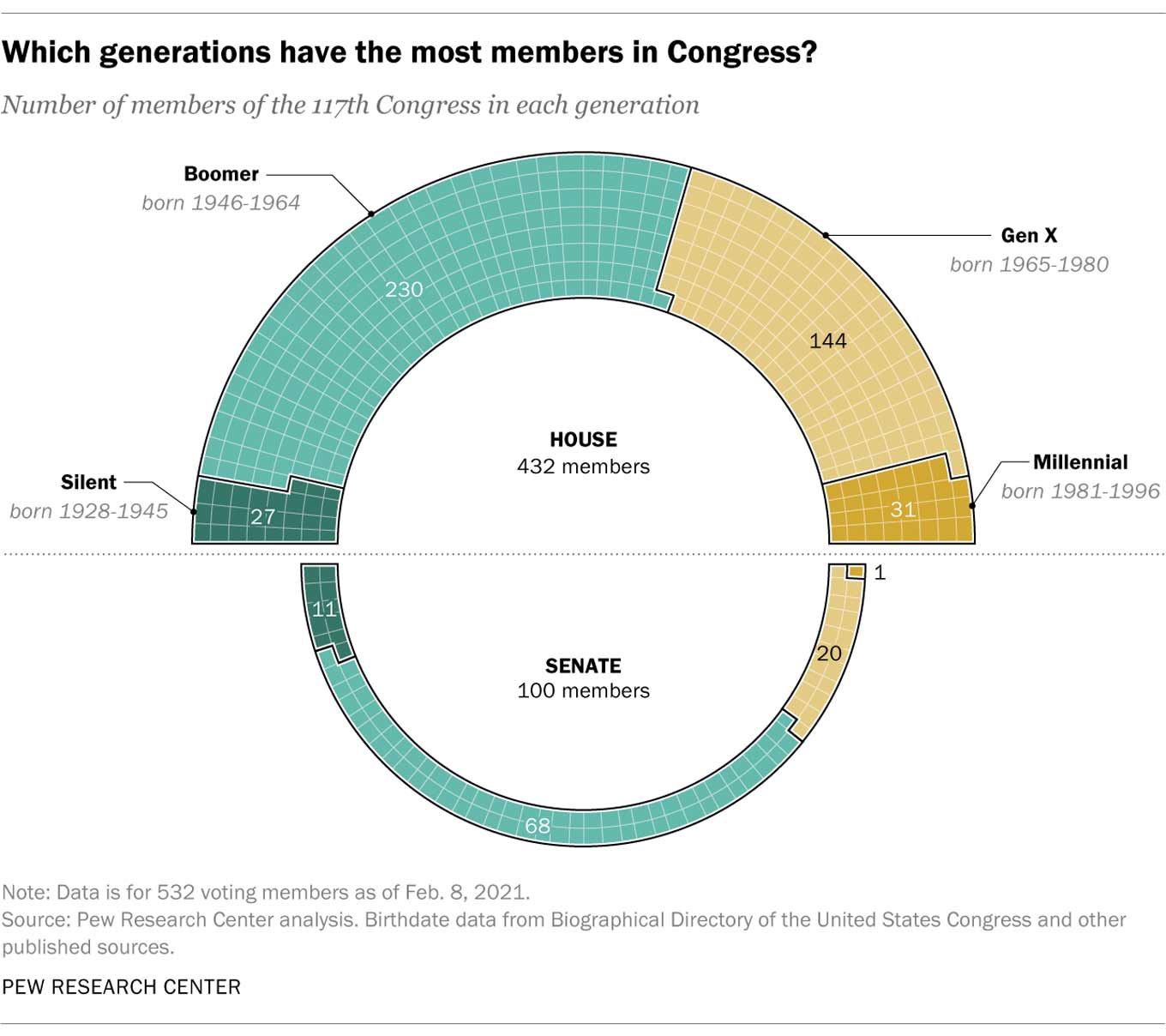
At the same time, however, younger generations are beginning to make up the majority of America’s voting blocs.
According to TIME, millennials and members of Gen Z — which together make up the demographic of American adults born since 1981— now represent 31% of the electorate. TIME also shared significant increased voter turnout from young Americans, up by 11% in the 2020 election.
Increased millennial representation in politics is vital for increased diversity in all political arenas, as well as a means to maintaining a truly representative democracy.
Tim Royers is an educator in Nebraska, where he is running for a seat in the state legislature. He is 37.
"There are important issues that impact people at different points in their lives, and ideally you want a range of age groups represented in our state legislatures to help give voice to all important issues."
“There are important issues that impact people at different points in their lives, and ideally you want a range of age groups represented in our state legislatures to help give voice to all important issues,” Royers said.
“One of the biggest human flaws that we have is that we presume that what was true for us is implicitly true for others who are going through similar experiences. As a millennial who is in the back half of his 30s, I also recognize that I'm losing touch with some issues that are more pressing for Generation Z — which is all the more reason for every generation to have strong representation in elected offices.”
Though heavily outnumbered, millennial politicians are often quite popular; Alexandria Ocasio-Cortez, Pete Buttigieg, and Dan Crenshaw among them.
Of course, flaws in electoral politics and valid disillusionment are partly to blame for low millennial political engagement. Still, the future is at our feet, and change is coming — despite that change happening over years, and even decades.
In the meantime, how do younger politicians keep the momentum going?
A number of grassroots organizations and boot camps work exclusively with young politicians to change the face of American politics, both on a national level and within their own neighborhoods.
These organizations and boot camps help young leaders get started running for office:
Run For Something
Run For Something aims to “create a party that reflects the changing face of our electorate” by recruiting and supporting young, diverse candidates. They lower the barriers to entry for young candidates by helping with tactical and strategic support, mentorship, training, and fundraising.
New Politics
New Politics is a bipartisan organization working to revitalize democracy by developing and electing young leaders who put community and country over self; especially those with previous experience in the military, Americorps, or the Peace Corps.
Arena
Arena convenes, trains, and supports the next generation of candidates and campaign staff through training programs, career initiatives, free toolkits and resources, and robust candidate support.
Besides these robust candidate resources, young politicians need our help to get elected. You can support them by volunteering for or donating to their campaigns, but Royers said the easiest thing you can do is vote.
"If more millennials and Gen Z turn out to vote, it changes the landscape of elections dramatically."
“If more millennials and Gen Z turn out to vote, it changes the landscape of elections dramatically,” Royers said. “I know that many are disillusioned because they feel that lawmakers are failing to address their concerns, but until younger adults vote, it's going to stay that way. If younger voter rates start to go up, you will absolutely see a shift in messaging and campaign agendas to sell themselves to the evolving voter base.”
This article was first published in The Generations Edition of the Goodnewspaper.
You can join thousands of people who subscribe to our monthly Goodnewspaper. Become a subscriber today.
It’s hard to avoid existentialism when we think about the passage of time. Will we do enough with our lives? How long will our beauty and energy last? Will we be surrounded by loved ones when we grow old?
The fear of aging is an ironic (and very Western) concern, seeing as aging and dying are the only things all humans have in common. In many cultures, old age is an irreverent status, as elders offer invaluable wisdom and acumen.
However, for many Americans — especially American women — aging is seen as something to mourn.
Older bodies and faces are increasingly devalued, as people associate age with decreased health, regeneration, or energy. Sure, aging indeed comes with natural health considerations, but the lack of value or appreciation for aging is a byproduct of a culture enamored with youth.
Ingrid Fettell Lee, a writer and designer obsessed with joy, believes that aging has become a new task for women, forcing them to do so with grace and appropriateness, to slowly disappear the older they get.
She urges a new perspective.
“What if instead of seeing aging as something to defeat and conquer, we were to embrace what gets better with age, and work to amplify these joys while mitigating the losses of youth?” Fettell Lee writes.
“I’m not suggesting we paper over the very real challenges, both physical and mental, that come with aging. But can we view these challenges without judgment or shame and instead look for joyful ways to navigate them?”
Aging joyfully isn’t a new concept, nor is it a marketing scheme; it’s just a trend in human nature. According to a 2011 Gallup survey, people’s sense of well-being was the highest in childhood and old age.
Many older individuals feel a greater sense of freedom with age, inviting them to chase their truest selves, and leave the unimportant angst behind.
In a culture where angst seems to prevail, and young people face uncertain futures, aging with joy is a radical act of humanity. And the conversation is changing to reflect this.
Ashton Applewhite is an author and activist who runs a clearinghouse full of anti-ageism resources called Old School, as well as a blog called “This Chair Rocks.” Her dream is to show people — especially women — how it is both liberating and uniting to age.
“Aging is not a problem to be ‘fixed;’ it is a natural, powerful, lifelong process that unites us all,” she writes for The Big Issue. “Aging isn’t something annoying that old people do; it’s a journey each of us embarks on the day we’re born.”
Similarly, TikTok has become a place for middle-aged and older women to share their aging journeys joyfully. Amelia Crook (@misplacedstyle) has launched a startup after reclaiming her style (and gray hair). @StyleLikeU, a platform dedicated to the self-acceptance revolution, ran a campaign on Defying Ageism. They interviewed beloved style icon Stacy London (you probably know her from “What Not To Wear”).
“This idea that I'm supposed to be frozen in time is ludicrous,” London says. “I don’t need to be who I was at 32. I need to be who I am. There’s something about not playing small in a world that always makes you feel that way, that is an act of bravery and beauty like no other.”
So, how do we embrace aging? How do we face this unknown future, where we wake up older each day, with rebellious joy?
We can start by approaching our surroundings (and bodies) with a sense of awe and wonder. Pause, look around, and seek the mundane and ordinary with conscious curiosity.
From buying yourself flowers (yes, there’s an actual study from Rutgers and La Salle University linking your flower purchases to improved memory and mood) to attending social events (like church, bingo, or sporting events), epidemiological studies suggest that enriching your daily environment mitigates neurological changes associated with Alzheimer’s and dementia.
Another research-backed practice? “Awe walks,” an intentional way of turning a traditional stroll into one that shifts your attention outward, rather than inward. For example, instead of thinking about that strained relationship, you’re focusing on the colorful leaves you walked past.
A study conducted by the American Psychological Association reported that participants who simply took 15 minutes out of their day to engage their bodies and minds with outdoor awe walks enhanced positive emotions that helped foster social connection and help overall wellbeing.
More than its cognitive effects, awe walks involve movement, which in itself can be a powerful source of joy. The ability to dance, swim, and play can be pathways to joy well into our older years.
The joy of aging isn’t about abandoning our youth, it’s about balancing learned wisdom with childlike wonder, grounded confidence with conscious curiosity, and innate depth with delicious delight.
This article was first published in The Generations Edition of the Goodnewspaper.
You can join thousands of people who subscribe to our monthly Goodnewspaper. Become a subscriber today.
Former classroom teacher turned Instagram educator, Sharon McMahon (@sharonsaysso), has done it again.
McMahon is known for leading major fundraising efforts with her digital community — over 966,000 ‘Governerds,’ named for their participation in McMahon’s digital social studies classroom. Within the first weekend, the community had raised over $1.1 million to support teachers across the country.
The funds will go directly to teachers in the form of over 2,000 grants, each worth $500.
More than 17,500 teachers have applied for these grants, and McMahon shared on Instagram that donations would stay open for another week to get more money directly into the hands of teachers.
As of time-of-publication on July 22nd, the final day to donate, Governerds had raised more than $1,264,016.
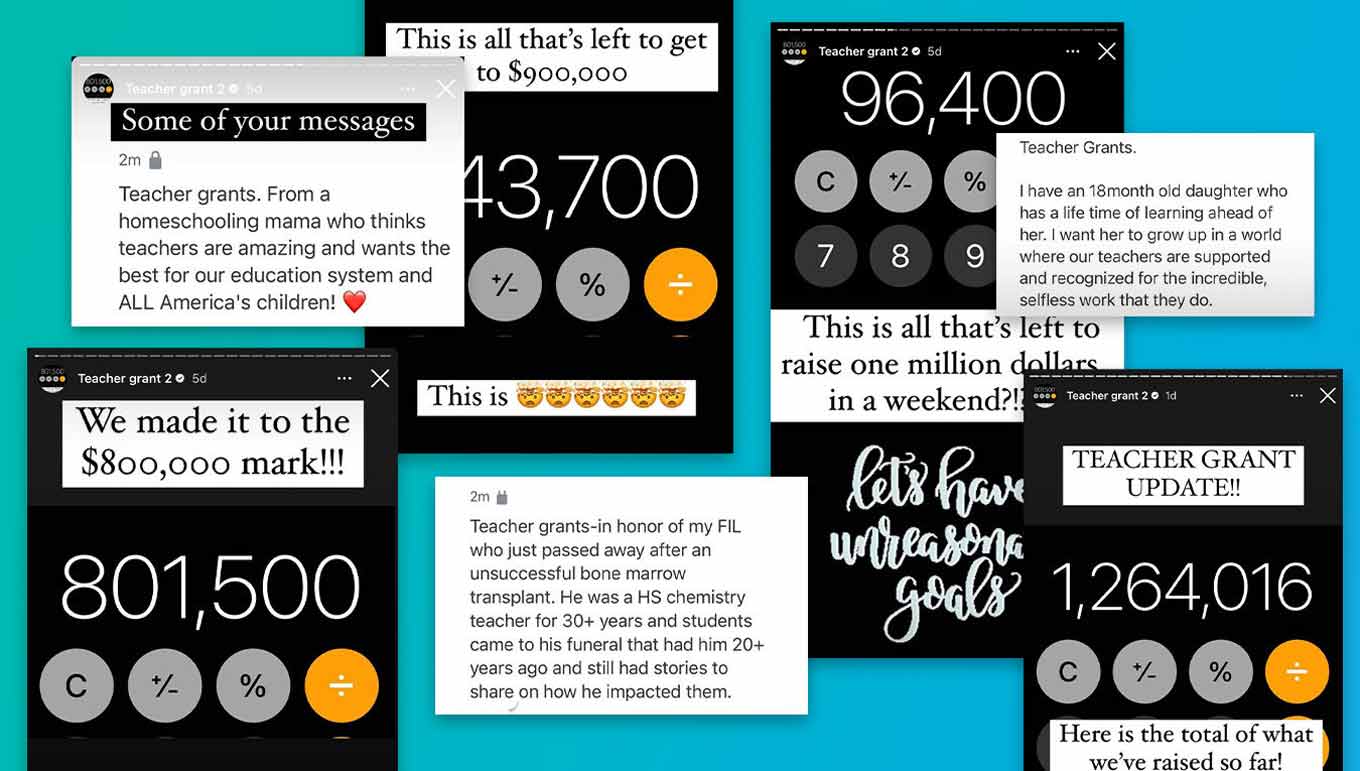
Why does Sharon McMahon offer teacher grants?
Last year, McMahon opened her teacher grant program and raised over $560,000 with her digital community. Her goal this year was to reach $1 million in funding to give back to teachers from every corner of the U.S.
“Clear the list initiatives are great, and I support them. But sometimes teachers need things you can’t get on Amazon,” McMahon shared on her Instagram stories.
“Sometimes teachers need food and hygiene products for their students. They need curriculum items you can’t get on Amazon. They need materials schools aren’t providing.”
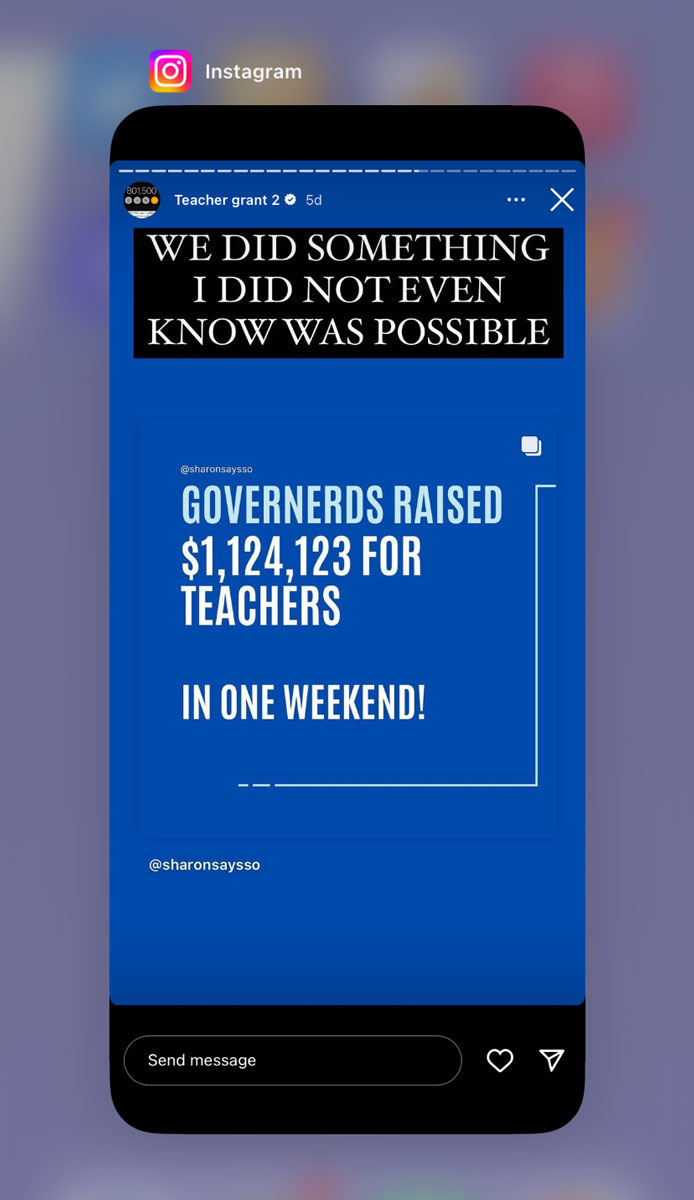
As a former teacher, McMahon shared how difficult the profession was and empathized with the current education crisis in America, where a Gallup poll showed that teachers are the most burned-out employees in the country.
This burnout — caused by political vitriol, COVID-19, lack of pay and resources, and increased workplace demands — has led to a historic teacher shortage.
"If a person comes to the ER with a gaping abdominal wound and also heart disease, first we must address the abdominal wound. The patient has to live through the night to have heart surgery down the road.
We have to try to keep teachers in classrooms this year — and also work to address the systemic issues."
Although the solution to this major cultural issue is to tackle it at the root with sweeping systemic changes, McMahon knows that, in crisis, the first thing she can do is mobilize her community.
“If I could fix 50+ educational systems here on Instagram before the start of school, I would,” McMahon shared on Instagram.
“If a person comes to the ER with a gaping abdominal wound and also heart disease, first we must address the abdominal wound. The patient has to live through the night to have heart surgery down the road. We have to try to keep teachers in classrooms this year — and also work to address the systemic issues.”
The grants are designed for teachers to use however they please — on classroom supplies, health items, food staples, and more.
One teacher who received a grant from McMahon commented on Instagram, expressing gratitude for the initiative.
“I received a grant last year, and it came at a time when I was suffocating, and I needed help,” the commenter writes. “I needed materials, and I needed a community to support me. Governerds were there for me. Love this corner of the Internet, and thanks @sharonsaysso for being in our corner, backing us up, and saying what so many of us teachers are afraid to.”
What other fundraising efforts have @sharonsaysso and the Governerds been a part of?
Besides this enormous fundraising effort, McMahon and the Governerds have raised millions for other causes. Prior to this year’s teacher grant initiative, the community raised over $560,00 to pay off medical debt for 74,474 people, and supported relief efforts in Ukraine, donating more than $600,000 to World Central Kitchen and CARE.
McMahon collects contributions via PayPal, Venmo, and Cash App, creating ease for donors. She shares transparent documentation of the accumulation of funds, and encourages people to give what they can — whether that’s 50 cents or $1,000.
How can you make a difference for teachers?
Just like Sharon, we can all do what we can with what we have to help others. You can start by following Sharon McMahon on Instagram (@sharonsaysso) and keep an eye out for future Governerd fundraisers on her platform.
You can also independently support teachers in your own communities by donating to organizations like Donors Choose, Classful, Fund for Teachers, or the NEA Foundation.
Consider getting involved during Teacher Appreciation Week — or simply ask administrators the best way you can help teachers right now.
You can also read more good news stories about education — and support the organizations and efforts that inspire you.
Every day the Good Good Good team collects the best good news in the world and shares it with our community. Here are the highlights for this week!
If you want to get good news in your inbox every day, join the Goodnewsletter — the free daily newsletter designed to leave you feeling hopeful.
The Best Positive News We're Celebrating This Week —
The number of independent bookstores is at its highest in years — and their owners are more diverse than ever before
The American Booksellers Association (ABA), the trade group for independent bookstore owners, says it now has 2,010 members at 2,547 locations — 300 more than it had in Spring 2021, and the most members it has had in years.
That’s doubly significant because in 2020 the ABA also tightened its rules to only allow stores which “primarily sell books” (over 50 percent of inventory), as opposed to any stores offering books.
While the ABA credits the spike in members to owners that delayed their memberships during the pandemic, over 100 of them are stores that opened in the last year — dozens of them by non-white owners.
The ABA has historically been predominantly white, and one of its board members acknowledged in June 2020 that it had not done enough to “break down barriers to membership and service for Black, Indigenous, and people of color.
→ Read more & explore the best non-Amazon online bookstores
Germany now has its first Black female cabinet minister, a child of refugees from Mali
Aminata Touré’s parents arrived in Germany from war-torn Mali in 1992. As The Guardian reports, Touré grew up in Germany’s refugee housing, and just officially took her post as minister for social affairs.
She said she’s committed to tackling racism and social inequality in the country. In one of her first interviews since becoming a minister, she said, “As a black woman in this society, it is basically the case that you are often underestimated and treated as a stereotype — that was the case before I took up this post, and as well now that I’m in it.”
In her role, she’ll work on issues covering social, youth, family, senior citizens, integration, and equality, which she’s “200% passionate about.” The life experience she brings to the role will undoubtedly bring a much-needed perspective to Germany’s policies.
As many as 150 fin whales were just spotted feeding off the coast of Antarctica
After commercial whaling grew exponentially in the 20th century, fin whale populations were reduced to one to two percent of their original size, according to University of Hamburg marine mammal ecologist Dr. Helena Herr. Herr said only “a couple thousand” were left.
Seeing the devastated populations, in 1982, the International Whaling Commission banned the practice. A new study published in Scientific Reports reported the first “scientifically documented observation of fin whales feeding en masse off Antarctica’s Elephant Island.” That’s a really positive sign for a species whose population was driven to such low numbers, especially when they were once abundant in the area.
“[If] you enforce management and conservation, there are chances for species to recover,” Herr told The New York Times.
Add this as another example of whale-related good news in the world.
Google searches for "get a vasectomy" reached an all-time high across the U.S.
Historically, the responsibility of contraception has fallen primarily on those with the capacity to become pregnant — and it has long come with added challenges, from access, affordability, pain, side effects, and more.
In an encouraging change, more sperm-carrying individuals (even if it's their partner doing the Googling!) appear to be sharing the responsibility of managing contraception and taking care of their own reproductive health.
In the days and months following both the leak and the official release of the Supreme Court decision overturning Roe v. Wade, Google search queries for "get a vasectomy" (and other related searches) peaked and reached their all-time "peak popularity" in June 2022.
Foresters and ecologists are helping save ancient sequoia with ‘good fires’
Climate change increasingly threatens the West Coast’s giant sequoia trees, like those in California’s Yosemite National Park that have aged over 2,000 years to stand tall today. As NPR reports, in the last two years, fire has killed off nearly 20% of all mature giant sequoias.
One way to protect these important members of our planet’s ecosystem is with intentional burning or “prescribed fires,” which occur when expert foresters and ecologists reduce forest “fuel” by allowing a controlled fire to pass through areas that would cause less damage than an uncontrolled fire.
Prescribed and intentional fire management practices have long been cultivated by Native American tribes, and they continue to advocate for their effectiveness today. In fact, in practice with mechanical and other forest thinning practices, intentional fires are vital to prevent disastrous wildfires.
And foresters have been practicing these intentional burns in Yosemite for a half-century, and just this year, it allowed a fire to pass through the Mariposa Grove, Yosemite's biggest and best known old-growth sequoia cluster, leaving the trees unscathed.
More good news of the week —
The U.S. House passed a bill to protect the right to same-sex marriage. Though passage in the Senate is not a guarantee, it’s an important step to celebrate (and one you can ask your Senator to support).
A traveling school bus museum is honoring victims of gun violence. The Yellow Bus Project is made of 52 empty school buses, honoring the 4,368 children whose lives have been lost to gun violence since 2020.
India has now banned 19 types of single-use plastics to help combat pollution. The ban includes straws, cutlery, packaging films, plastic sticks for balloons, candy and ice cream, cigarette packets, and more.
A traveling school bus museum is honoring victims of gun violence. The Yellow Bus Project is made of 52 empty school buses, honoring the 4,368 children whose lives have been lost to gun violence since 2020.
This delicious app allows you to access affordable food and reduce food waste in your community. Too Good To Go is currently reducing food waste in 15 countries and 13 U.S. cities.
Reshaping the fashion industry, secondhand clothing is projected to more than triple in the next 10 years. In 2019, secondhand apparel expanded 21 times faster than conventional apparel retail did.
Delaware is giving free solar panels to low-income residents. The state's new pilot program is also covering 70 percent of rooftop solar costs for moderate-income participants.
A new study found that dolphin poop plays a “significant role” in helping coral reefs survive. By excreting waste in shallow lagoons, the dolphins provide vital nutrients to the coral, and reinforce the need to protect the dolphins, too.
This Texas city is now offering free medical and dental services to its residents. All residents got free health screenings, too.
The Dutch parliament just approved legislation to make working from home a legal right. The Netherlands is now one of the first countries in the world to make it a legal right.
Dallas is using COVID relief aid to help get thousands of people experiencing homelessness into permanent housing. States and localities received more than $5 billion in federal stimulus money to address homelessness during the pandemic, and they’re using it to develop long-term solutions.
“Green infrastructure” projects are protecting communities and the people and animals living in them from the impacts of climate change. Nature-inspired engineering projects also center the needs of the climate crisis’ frontline communities.
Once nearly extinct, Indigenous communities are leading the effort to bring back bison. The animals are great for biodiversity, and benefit the entire ecosystem they live in.
An international nonprofit is using fan activism, training, and community building to empower fans from across the globe and make the world a better place. Fandom Forward has already had a major impact in countless areas, like LGBTQ+ equality, education and libraries, voting, and climate change.
Jane Goodall is becoming a Barbie as part of Mattel’s “Inspiring Women Series.” The doll designed in her likeness comes with a chimpanzee and is the first in the series to be made with recycled ocean-bound plastic.
Every month at Good Good Good, we plan upcoming good news content for our Instagram, Goodnewsletter, Goodnewspaper, podcast, website, and more. Our work is always centered on hopeful stories about people making a difference in the world — and action steps on how each of us can join in with that good work.
With so many holidays, awareness days, pride weeks, and heritage months happening all year long, we’ve been slowly collecting all of these events in a private internal calendar for years.
We made our Monthly Cause Awareness Calendar publicly available earlier this year. We also published:
- The Ultimate Calendar of Heritage Months
- Disability Awareness Days Calendar
- Environmental & Sustainability Days Calendar
- Animal & Pet Awareness Calendar
- Cancer Awareness Months Calendar
- Mental Health Days & Awareness Months Calendar
And now we’re publishing this calendar specifically related to the LGBTQ+ community.
Contrary to popular belief, Pride days aren’t all packed together during Pride Month in June — they’re actually celebrated all throughout the year.
Our hope is this resource will help you or your organization bring attention to important issues and communities — not just during Pride Month, but all year long.
Where applicable, we’ve included resources around highlighted holidays — usually in the form of good news around particular topics — or action steps on how to make a difference. We encourage you to share them if you find them helpful.
We’ve worked hard to make this the most comprehensive collection of LGBTQ+ days and months on the internet. Always double-check dates, as organizers may occasionally change dates.
Bookmark this page and revisit it as often as you need. We'll continue to update it over time.
Holidays & Awareness Months For the LGBTQ+ Community
January
Holidays
Alice Nkom’s Birthday - January 14th
Rev. James Lewis Stoll’s Birthday - January 18th
Dolly Parton’s Birthday - January 19th
Celebrate this ally’s birthday by reading Dolly Parton’s most inspiring quotes — including about human rights and the LGBTQ+ community
Trans Prisoner Day of Action and Solidarity - January 22nd
Brazilian National Day of Transgender Visibility - January 29th
Weeks & Months
National Blood Donor Month
Use this day to advocate for the rights of gay men to be able to donate blood
No Name-Calling Week - Every third week of January
February
Holidays
Anniversary of the Appointment of the First Openly Gay United States Federal Judge, Joseph Gale - February 6th
National Black HIV/AIDS Awareness Day - February 7th
National Freedom to Marry Day - February 12th
Audre Lorde’s Birthday - February 18th
→ Read and share Audre Lorde’s most powerful quotes
Chosen Family Day - February 22nd
Weeks & Months
Aromantic Spectrum Awareness Week - Week after February 14th
March
Holidays
Zero Discrimination Day - March 1st
International Women’s Day - March 8th
Janet Mock’s Birthday - March 10th
Bayard Rustin’s Birthday - March 17th
International Day for the Elimination of Racial Discrimination - March 21st
Two-Spirit and Indigenous LGBTQ+ Awareness to Celebration Day - March 21st
International Transgender Day of Visibility - March 31st
Read and share the ultimate guide on how to celebrate Transgender Day of Visibility
Weeks & Months
Women’s History Month
Read and share our guide to celebrating Women’s History Month
Bisexual Health Awareness Month
National LGBTQ+ Health Awareness Week - Every last week of March
April
Holidays
GLSEN Day of Silence - April, Day Varies
National Youth HIV & AIDS Awareness Day - April 10th
National Transgender HIV Testing Day - April 18th
Nonbinary Parents Day - Every third Sunday in April
Phill Wilson’s Birthday - April 22nd
Lesbian Visibility Day - April 26th
Weeks & Months
Lesbian Visibility Week - Full week after April 26th
National Deaf LGBTQ+ Awareness Week - Week Varies
May
Holidays
International Family Equality Day - Every 1st Sunday of May
National Honor Our LGBT Elders Day - May 16th
International Day Against Homophobia, Transphobia, and Biphobia - May 17th
World AIDS Vaccine Day - May 18th
Read about the potential good news about an AIDS vaccine
Agender Pride Day - May 19th
World Day of Cultural Diversity for Dialogue and Development - May 21st
Harvey Milk Day - May 22nd
Read the best quotes from Harvey Milk
Pansexual and Panromantic Visibility Day - May 24th
Meet these celebrities you may not know are pansexual
Laverne Cox’s Birthday - May 29th
Weeks & Months
Mental Health Awareness Month
Read about how to celebrate Mental Health Awareness Month so you can better support the LGBTQ+ community
Queer and Transgender Asian American/Pacific Islander Week - Every last week of May
June
Holidays
Brandi Carlile’s Birthday - June 1st
Troye Sivan’s Birthday - June 5th
Read about Troye Sivan’s acting debut in a film that fights HIV/AIDS stigma
HIV Long-Term Survivors Day - June 5th
Pulse Night of Remembrance - June 12th
World Refugee Day - June 20th
Learn about the organization Rainbow Railroad is helping LGBTQ+ refugees and this guide on how to celebrate World Refugee Day
Larry Kramer’s Birthday - June 25th
First Use of LGBTQ+ Pride Flag - June 25th
Learn about the meaning of the first Pride flag — and every LGBTQ+ Pride flag that’s come since
LGBTQ+ Equality Day - June 26th
Learn about the meaning of LGBTQIA+ and other acronyms
Anniversary of the Legalization of Same-Sex Marriage in the U.S. - June 26th
National HIV Testing Day - June 27th
Stonewall Uprising Anniversary - June 28th
Queer Youth of Faith Day - June 30th
Read about the young activists leading Queer Youth of Faith Day
Weeks & Months
Pride Month
Read the ultimate guide on ideas for how to thoughtfully celebrate Pride Month — and explore this curated list of the best LGBTQ+ pride quotes
July
Holidays
Sylvia Rivera’s Birthday - July 2nd
International Non-Binary People’s Day - July 14th
International Drag Day - July 16th
Weeks & Months
Disability Pride Month
Read and share our guide about the intersection between the disability community and the LGBTQ+ community — and learn how to celebrate Disability Pride Month
Non-Binary Awareness Week - Week-long event around International Non-Binary People’s Day
August
Holidays
James Baldwin’s Birthday - August 2nd
Read more iconic quotes from James Baldwin
Transgender Flag Day - August 19th
Learn more about the history of the Transgender Pride Flag and its meaning
Marsha P. Johnson’s Birthday - August 24th
Read about Marsha P. Johnson and dive into her best quotes
Women’s Equality Day - August 26th
Weeks & Months
Transgender History Month
Gay Uncle’s Day / Guncle’s Day - Every second Sunday in August
September
Holidays
National HIV/AIDS and Aging Awareness Day - September 18th
10th Anniversary of U.S. Repeal of ‘Don't Ask, Don't Tell’ - September 20th
Anniversary of the Founding of It Gets Better Project - September 21st
Celebrate Bisexuality Day / Bi Visibility Day - September 23rd
National Gay Men’s HIV/AIDS Awareness Day - Last Friday of September
Weeks & Months
Bisexual Awareness Week - Starts on the Sunday before September 23rd
Ally Week - Last week of September
Banned Books Week
Support LGBTQ+ authors with our guide to how to fight book bans
National Suicide Prevention Week
Read and share this guide on how to take action during Suicide Prevention Week — and read the best quotes about suicide prevention
National Suicide Prevention Awareness Month
Read and share this guide on how to take action during Suicide Prevention Month — and read about how suicide rates dropped when gay marriage was legalized
October
Holidays
Dan Savage’s Birthday - October 2nd
International Lesbian Day - October 8th
National Coming Out Day - October 11th
Matthew Shepard Death Anniversary - October 12th
International Pronouns Day - October 18th
Spirit Day for LGBTQ+ Youth - October 19th
Learn how to support LGBTQ+ youth and take action
LGBT Center Awareness Day - October 19th
Intersex Awareness Day - October 26th
National Transgender Children Day - October 26th
Weeks & Months
LGBTQ+ History Month
Read about LGBTQ+ history from before Stonewall
National Bullying Prevention Month
Asexual Awareness Week (Ace Week) - Last full week of October
November
Holidays
Intersex Day of Remembrance - November 8th
RuPaul’s Birthday - November 18th
International Transgender Day of Remembrance - November 20th
International Day for the Elimination of Violence Against Women - November 25th
Giving Tuesday - First Tuesday after Thanksgiving
Learn how to volunteer with or donate to LGBTQ+ organizations for Giving Tuesday (and explore more ideas to make a difference)
Weeks & Months
Transgender Awareness Week - First two full weeks of November
National Homeless Youth Awareness Month
December
Holidays
World AIDS Day - December 1st
Explore good news about the fight against HIV/AIDS in the U.S. and around the world
Pansexual/Panromantic Pride Day - December 8th
Meet these celebrities who have come out as pansexual
Human Rights Day - December 10th
International Day to End Violence Against Sex Workers - December 17th
Trans Youth Day - December 28th
Is this list missing a holiday or awareness week/month? Let us know. We want to ensure this list is comprehensive and inclusive.