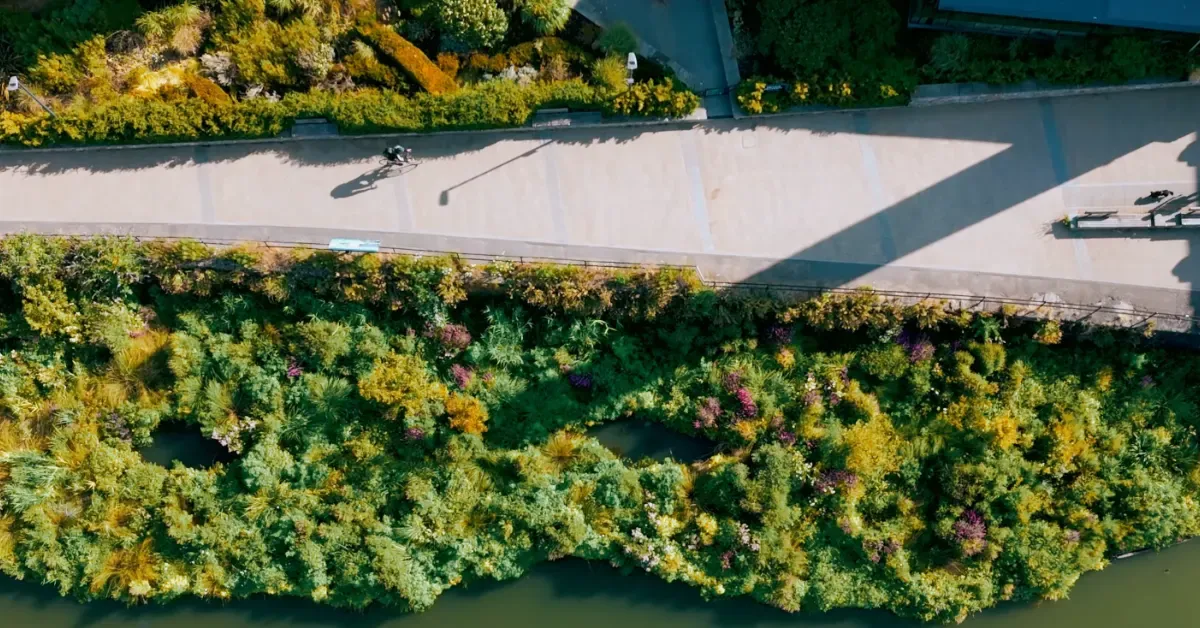
“What if we can make our towns resilient against floods, heat waves, and droughts, whilst boosting biodiversity and mental health?” asks documentary filmmaker Cameron in a YouTube video. “Right now, all around the world, people are finding incredible ways to bring nature back into our cities. And we’re here in Bristol to do exactly that.
Nicoll is the creative director at Planet Wild, a nature protection organization. It regularly releases YouTube videos about new environmental projects, and their short doc on “floating wetlands” currently has over 1.5 million views.
“Turns out wetlands aren’t just incredibly important for wildlife,” Nicoll explained. “They also keep temperature and water level stable. You know, the kind of thing we humans really need to survive. And this is why all over the world, people are bringing wetlands back into our cities.”
Julia Newth is a volunteer for WWT, the wetland charity. Over the next few years, the WWT is set to complete 200 new wetland projects to “bring nature back.”
“When you start to install wetlands across the city, whether that’s a small rain garden, a drain pipe wetland … to a lake in your local park, it’s really sort of magical, and everyone in the city benefits from wetlands,” Newth said.
By building and planting “floating wetlands” along the concrete embankments of Bristol Harbour, WWT is building a wildlife corridor through the city center — and creating habitats, absorbing floodwaters, and cooling the city down all the while.
In the video, Nicoll joined climate activist and good news correspondent Sam Bentley in building two floating platforms, 100 square meters and 16 square meters, respectively.

First, they constructed the modular structures. Every element of the platform was recycled, recyclable, and biodegradable, from old drinking water pipes to coconut husks.
Next, they dropped buoyant clay pellets atop the structure to create a stable plant bed that wouldn’t wash away. They then topped the plant beds with more than 20 native plants.
“So above water, we have this land planting system that creates an oasis for pollinators and a safe haven for nesting birds. But the real magic happens underneath,” Bentley said.
“As these plants grow, their roots go super deep into the water, creating a refuge for marine life, cleaning the water, taking all of those pollutants out, and also regulating the water temperature too.”
After creating the platforms, Nicoll immediately saw a real-world impact.
“So we literally just installed the floating wetland, and we’ve seen a baby seagull, who was stuck in the water, use the ramp, and climb up onto the platform, and that’s just saved its life,” Nicoll said. “It’s just unbelievable to witness.”
“And that is the beauty of this project,” he continued. “Nature is just waiting beneath the concrete and the asphalt. And once you give it a chance, it’s immediately making our cities more biodiverse, safer and simply nicer places to live. And because it’s such a simple solution, it can easily be copied around the world.”

“So our funding here is not only transforming Bristol, but it’s also creating a blueprint for future wetland cities everywhere.”
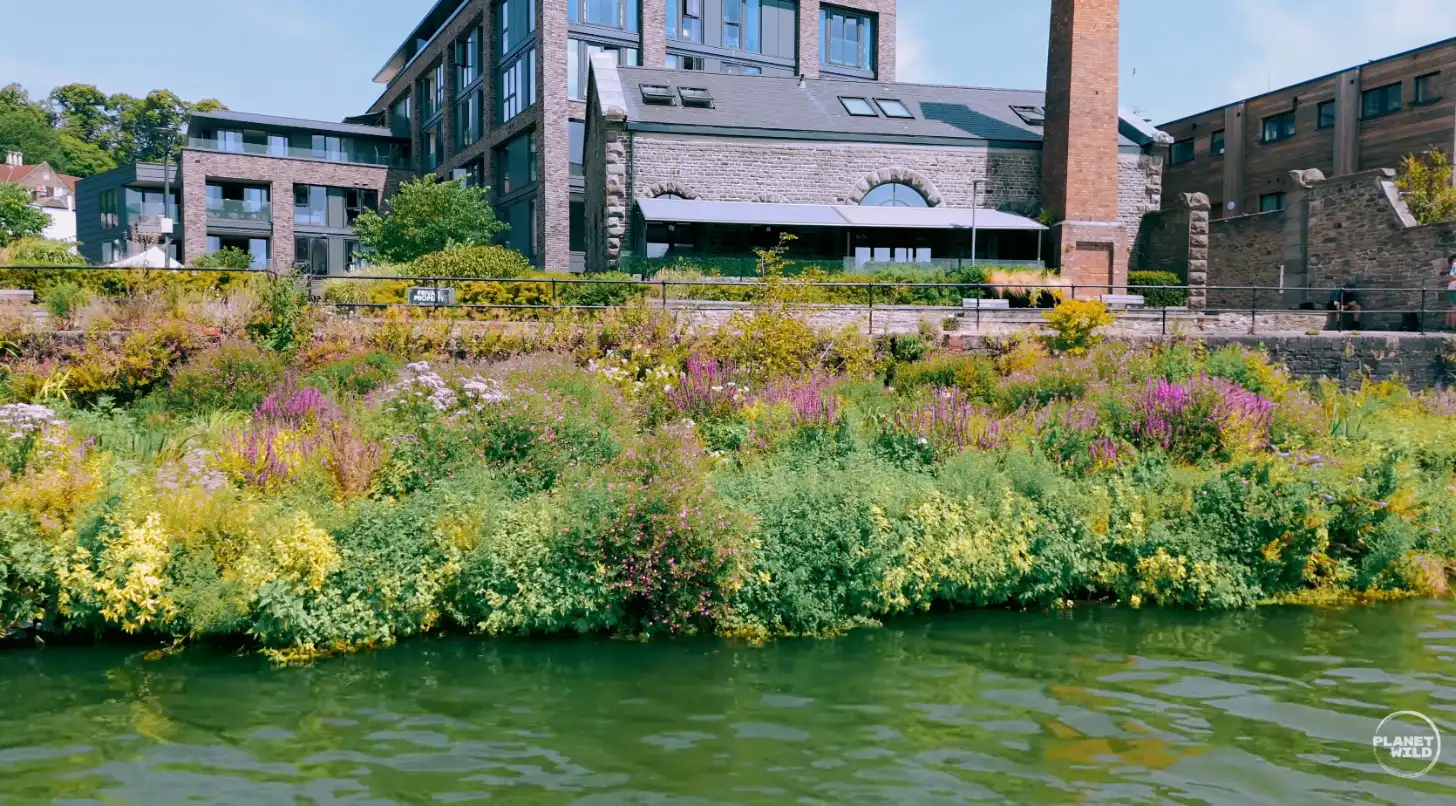
Nicoll pointed out how a floating wetland constructed in 2024 had blossomed in the last two years.
“You can see the difference,” he said. “It’s just full of life. There are families of birds in there. It’s full of insects. I’ve seen loads of fish swimming underneath. Just incredible what can happen in such a short space of time.”
Watch the full video below:
You may also like: 1,000 people buried their underwear across Switzerland. The unusual study helped researchers gauge soil health
Featured Image: Screenshot via @planet-wild/YouTube