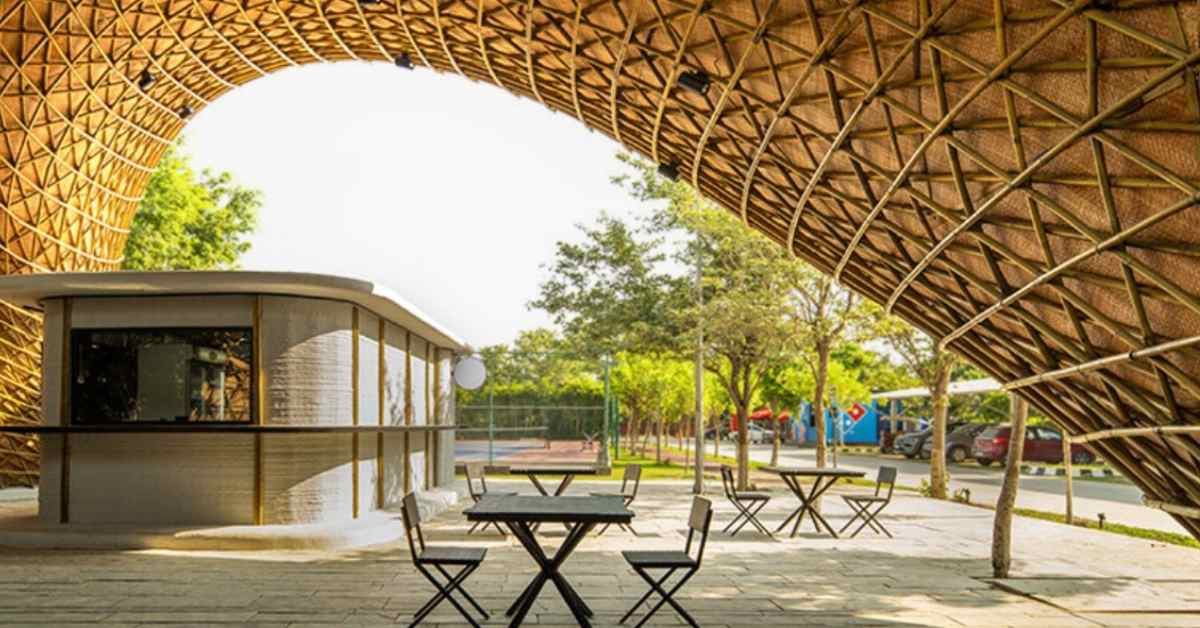
There’s a spot on the Ashoka University campus in Sonepat, Haryana, that was once just a barren patch of trees.
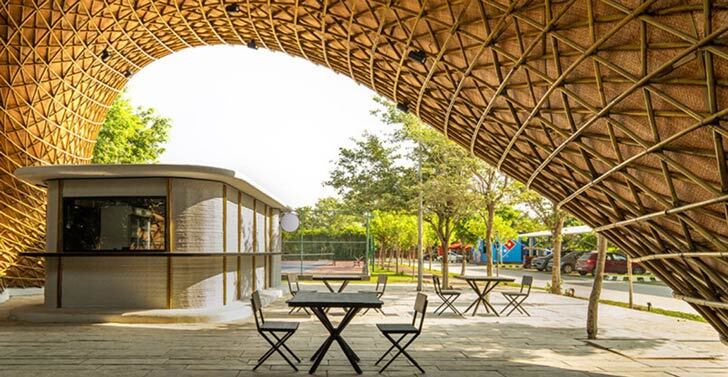
When tasked with transforming it into a bustling new food hall for university students, architect Apoorva Shroff didn’t just leave the trees be. She integrated them into a new outdoor canteen framed by 650 square meters of arching bamboo.
Her massive, winding structure — which offers a shaded canopy to 3D-printed kitchen stalls and recycled furniture — is called “The Hungry Caterpillar” in a nod to Eric Carle’s beloved book and the playful spirit she was hoping to imbue into the project.

“The idea was to transform the space into a food street with character, something that went beyond the conventional notion of a campus canteen,” Shroff told Architectural Digest. “Today, it’s not only a place to eat, but also to pause, interact, and reflect.”
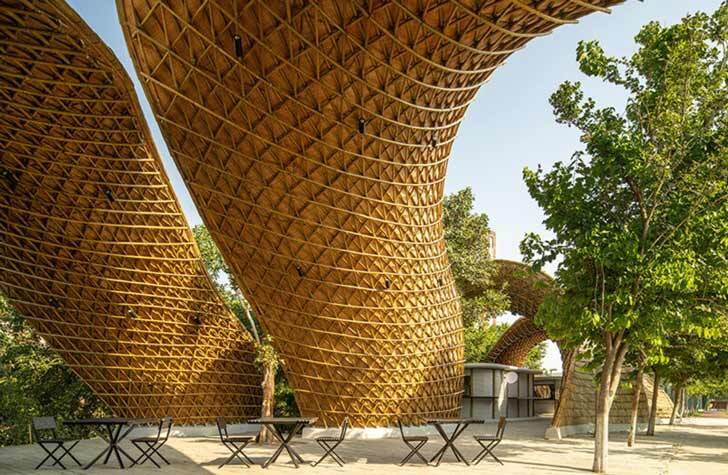
Shroff, who enrolled in a bamboo school in Bali years ago, has a deep connection to the core material. For her, the woven bamboo design symbolizes “resilience, lightness, and continuity, the qualities we see both in nature and in learning.”
“The structure as a whole represents growth and interdependence,” she said.
Since Shroff founded Lyth Design — an architecture studio based in Mumbai — in 2022, she has made a point of sourcing construction materials with as little environmental impact as possible.
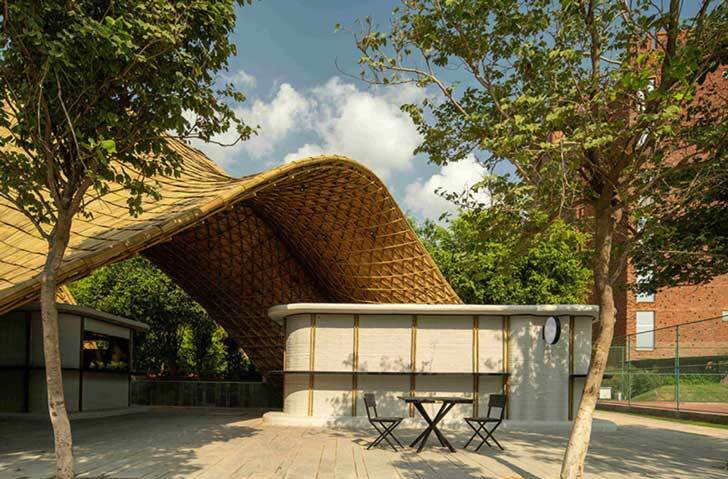
In “The Hungry Caterpillar,” for instance, Shroff used treated bamboo that helped sequester 350 tons of carbon dioxide.
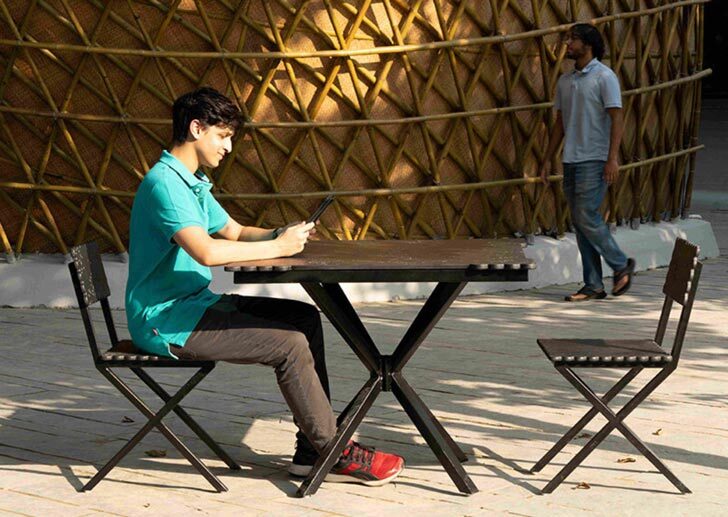
She also worked with Playcycle to build the chairs and tables out of recycled plastic, and Micob India to 3-D print modular kitchens from concrete and assemble them onsite.
This December, her emphasis on creating beautiful architecture without compromising on sustainability earned her the Sustainable Design of the Year award at the Architect and Interiors India Aces of Space Design Awards 2025.
“The Hungry Caterpillar is quite unlike anything I’ve done before,” Shroff said when accepting her award. “It emerged from a vivid image after my first site visit. I imagined a cocoon nestled within lush canopies, symbolising safety, growth, and constant evolution.”
“The project was envisioned with responsible, conscious design at its core, where sustainability was the foundation,” she continued. “Beyond its form, the caterpillar represents learning, harmony with nature, and continuous growth. It holds a special place for me as a reflection of our commitment to meaningful, sustainable spaces.”
“Receiving this award and recognition is deeply gratifying and encourages us to continue pushing boundaries in conscious design.”

You may also like: See the first house made fully out of polycarbonate: 'It's LEGO for professionals'
Header image via Lyth Design