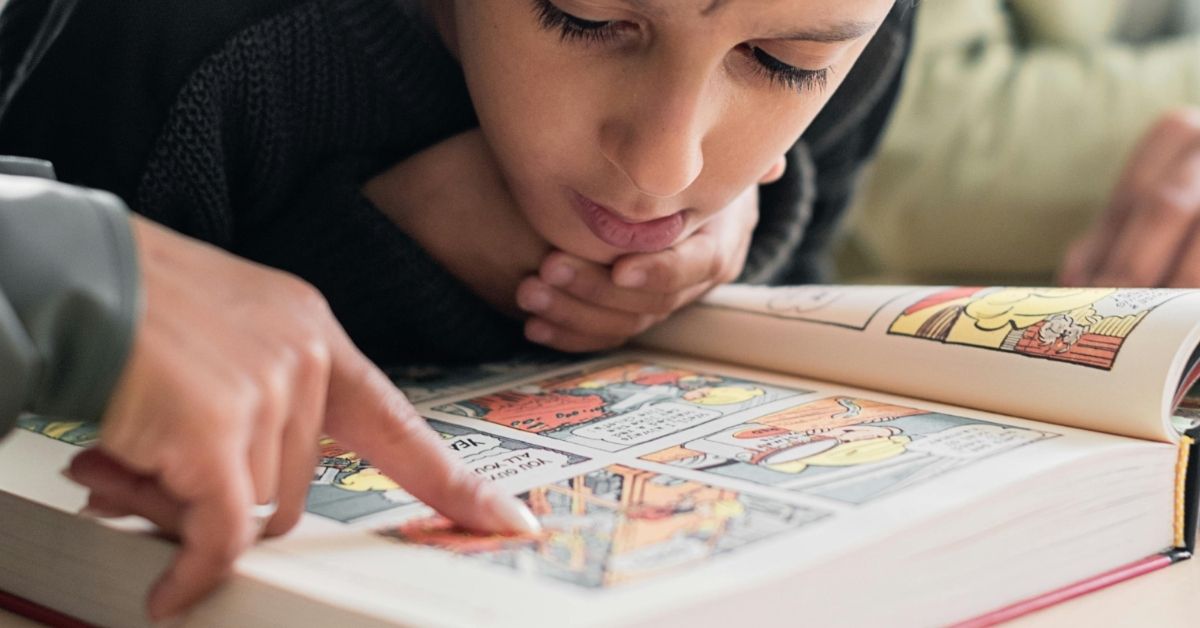
Every Fourth of July since 2006, the Carnegie Corporation of New York has commissioned comic books that feature the stories of real-life naturalized citizens and their extraordinary lives for a series titled “Great Immigrants, Great Americans.”
On the first page, against a sky-blue backdrop dotted with cityscapes, the introduction reads: “In this comic book, naturalized U.S. citizens tell their immigrant stories in their own words: how they built careers, fled war zones, united with family, found belonging, created a new home, and made America a better place.”
In June, Carnegie partnered with the National Council of Teachers of English to bring the comics into classrooms nationwide. The initiative kicked off with a summer cohort, where teachers met to create middle and high school classroom resources based on the comic book series.
“I’m really pleased and excited that Carnegie wanted to bring in teachers from across the country to lead this work, rather than create something on their own and have teachers react to it,” Emily Kirkpatrick, executive director of NCTE, told K-12 Dive. “That’s something that I wish a lot of other entities in our world would model.”
The stories within each comic are as diverse as the people they portray. One includes the story of Mona Hanna, who was born in the United Kingdom after her family fled Iraq during the Baath regime. She later immigrated to the U.S. and would go on to become the pediatrician and public health advocate whose research uncovered the Flint water crisis.
“It’s impossible for me to separate me from my background,” Hanna writes in her self-authored comic. “The circumstances that shaped me led me to advocate for children. My story is an immigrant’s story.”
All of the immigrants in the comic series are modeled after superheroes, a colorful and eye-popping parallel that, according to Kirkpatrick, makes it easier to draw kids in.
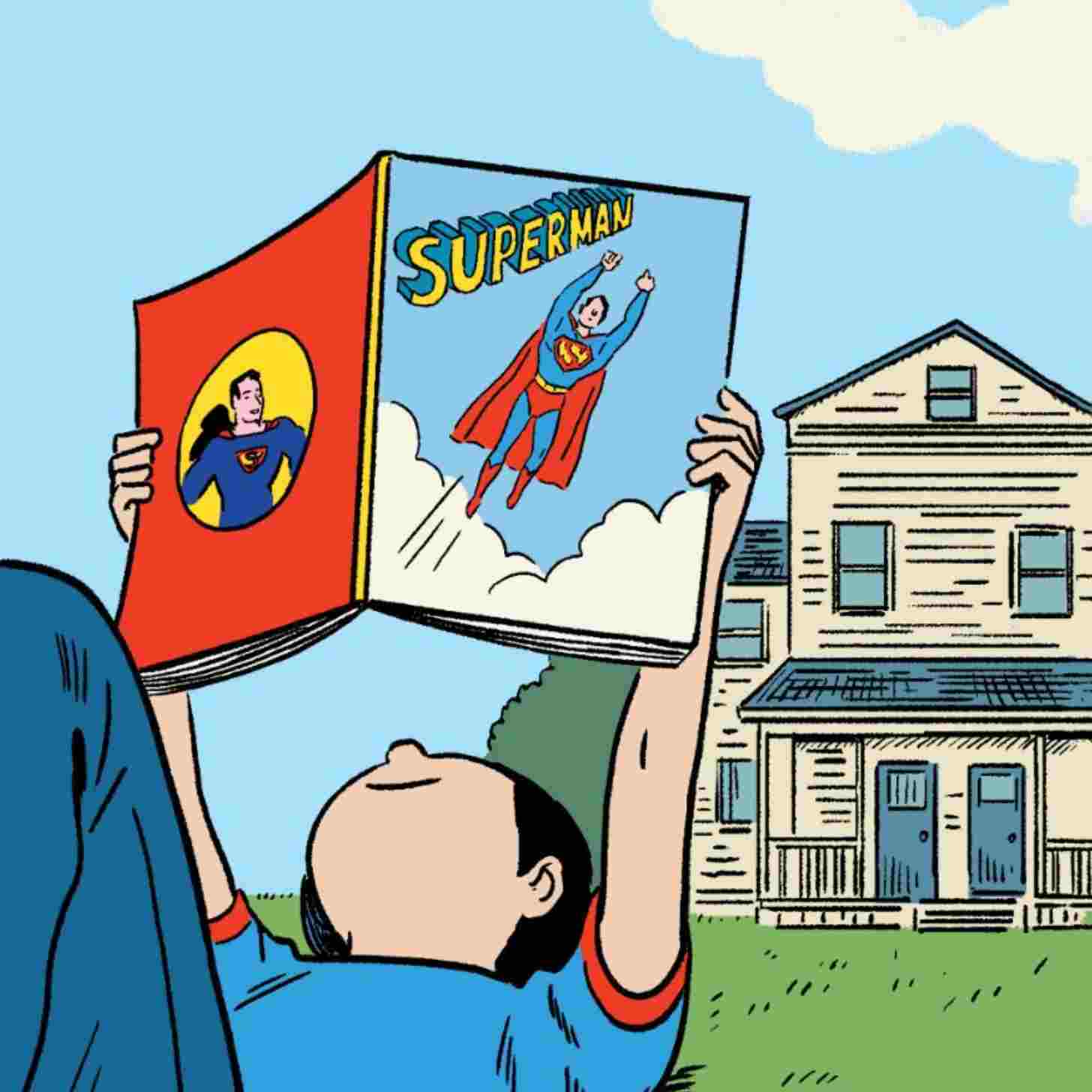
“We know that the more that an individual reads, the better a reader they become. So one of the most important things an educator can do is find the type of content that’s most attractive to a student,” said Kirkpatrick.
Kirkpatrick praised the comic book series — and the Carnegie cohort — as a creative way for teachers to share resources.
“This is really important, especially when we’re seeing so much turnover in the teaching profession,” Kirkpatrick said. “We need to find new and novel ways to encourage and engage teachers, and NCTE really sees evidence that we’re on to something.”
A version of the article originally appeared in the 2025 Education Edition of the Goodnewspaper
Header image via Mikhail Nilov / Pexels