The National Aquarium in Abu Dhabi is home to the Middle East's longest walking underwater tunnel. Through it, visitors can walk 35 feet below the surface, surrounded by a massive 5,000,000-liter ocean tank glittering with thousands of sea creatures.
But The National Aquarium is more than a tourist attraction. It’s one of the world’s leading centers in marine life rehabilitation — particularly when it comes to its sea turtle conservancy.
To date, the aquarium has saved the lives of over 1,300 sea turtles, and its latest patient is one of its most harrowing cases yet.
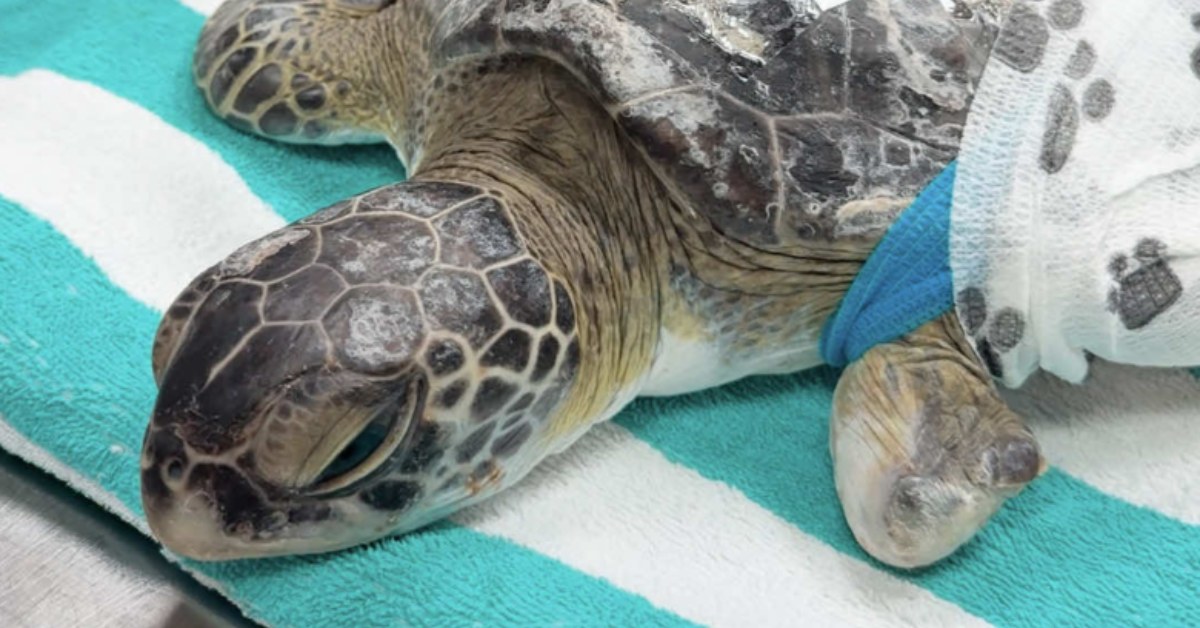
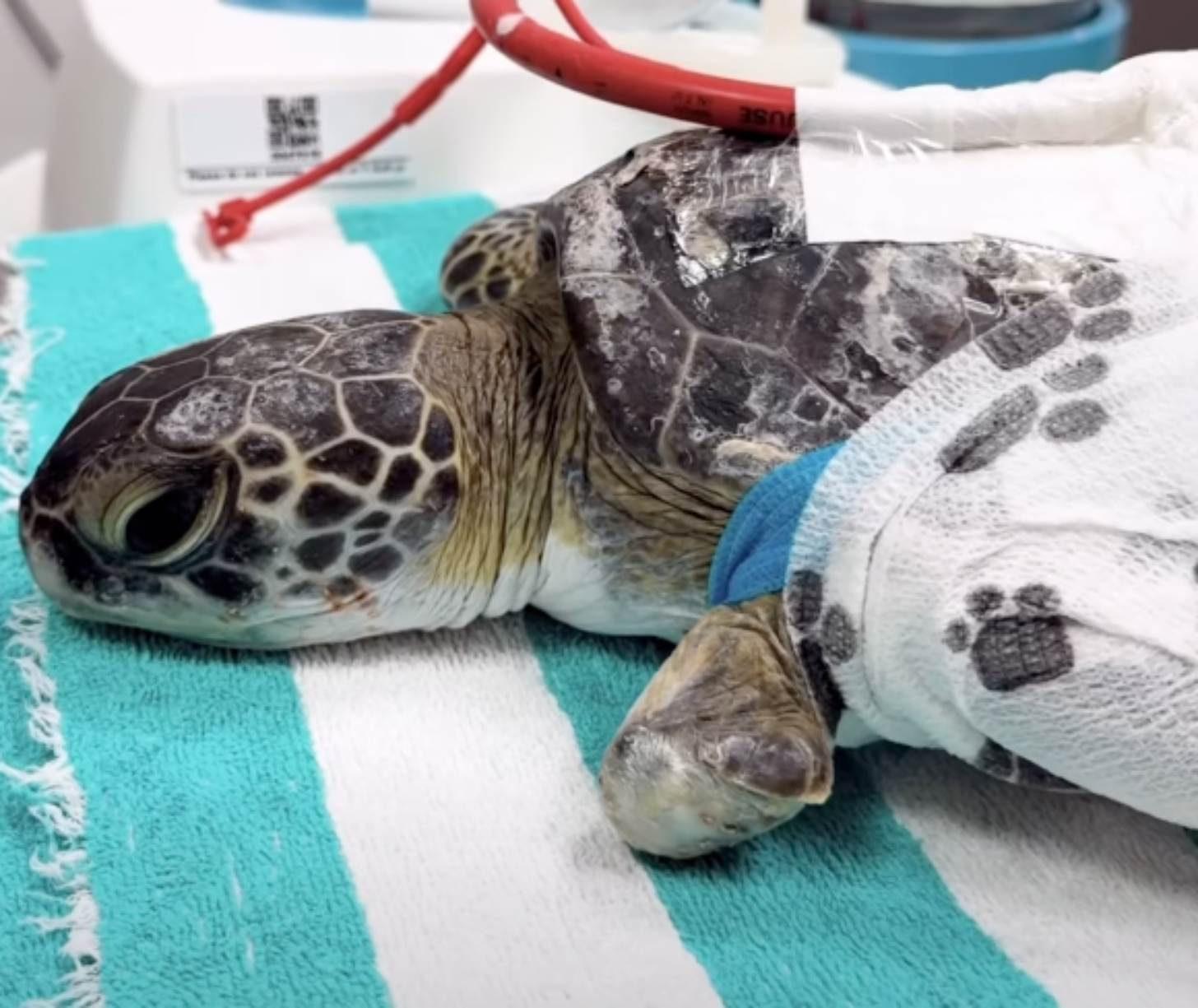
“Today, we have Kraken,” Aisha, a turtle team care member, said in an Instagram Reel that The National Aquarium shared on April 27. “He is a green sea turtle [who] came with a huge crack along its carapace, as well as under here on the plastron.”
A sea turtle’s carapace is the top of its shell, while its plastron is the shell underbelly that protects its vital organs. For an injury to cut through both, Aisha explained that it would have had to have come from a boat strike, “probably from a propeller.”
“Kraken also has a missing front flipper,” she added. “So when we looked at him when he first came in, we were just worried if the boat hit any of the important organs or the spine as well.”
Fortunately, after X-ray imaging, the veterinary staff was able to breathe a sigh of relief.
“Nothing seems to be damaged,” Aisha assured.
But Kraken wasn’t out of the woods yet. If a crushed and cracked shell is left untreated, bacteria and debris can enter the wound, leading to fatal infections or blood poisoning. It can also lead to long-term problems with swimming, buoyancy, and everyday survival if a sea turtle’s shell isn’t reformed properly.
That’s why The National Aquarium called him one of their “most special rescue cases” yet.
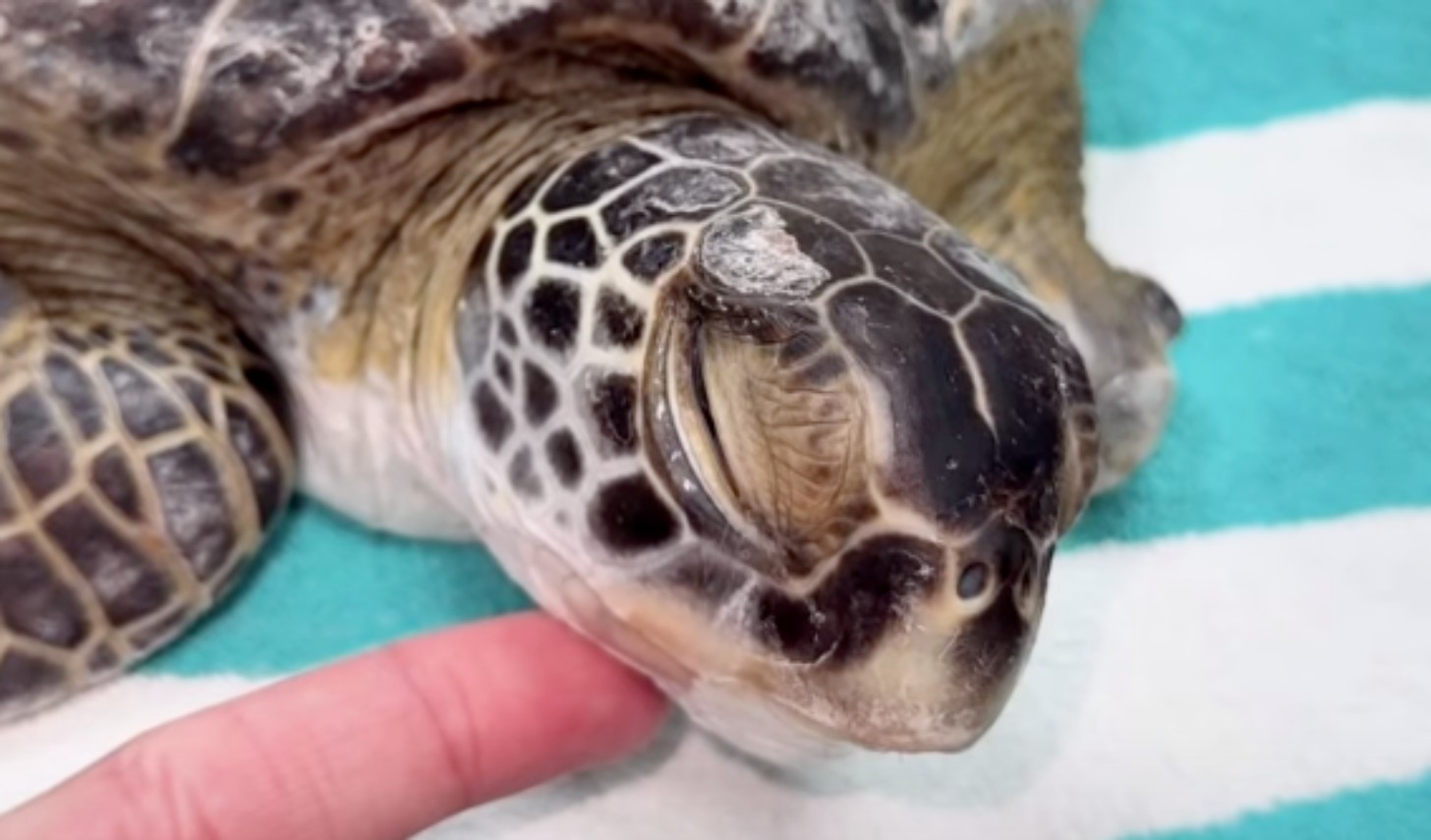
“What we’re doing here is negative pressure therapy,” Aisha explained. “How that works is we create this suction or vacuum, so everything can come together, expel any of the extra fluids, and help with the healing process.”
Negative pressure wound therapy was first pioneered for humans in the 1990s. In the last decade, wildlife veterinarians have adapted the technique to treat severe injuries in sea turtles — in a process that’s sometimes called “Turtle VAC” therapy.
In the procedure, a wound is sealed with an airtight, adhesive drape, while a suction tube connects the dressing to a mechanical vacuum pump, which applies gentle, continuous negative pressure.
Over time, the suction draws out infectious fluids, stimulates blood flow, and reduces swelling. It also accelerates tissue regeneration, cutting down on a sea turtle’s recovery time in the process.
Because sea turtles are, by nature, marine animals, waterproof bandaging and “marine-grade” sealants are used to protect the vacuum seal and ensure that seawater is unable to reach the wound.
“This is one of the first times we've ever done it here in the aquarium, especially with it fractured this way,” Aisha said.
Although Kraken’s injury was extraordinarily severe, it is by no means uncommon. Unfortunately, marine life boat strikes are one of the prevailing threats to endangered sea turtles, alongside entanglement in fishing gear, plastic ingestion, environmental pollution, and poaching.
A few weeks after Kraken was saved in Abu Dhabi, another green sea turtle was rescued 7,800 miles away in Juno Beach, Florida.
On May 21, the Loggerhead Marinelife Center shared the story of its patient, Aelin.
“This juvenile green turtle came to us with brutal injuries from an accidental boat strike in the intracoastal waterway in late March,” the rescue center posted on Instagram.
Like Kraken, Aelin required negative pressure wound therapy.
“Aelin is battling her way through recovery and making great progress thanks to customized care by our team,” they said. “After being dry-docked with a wound vac to stabilize her shell, followed by surgery to remove dead bone and more wound vac time, Aelin is on the mend and out in one of our larger hospital pools. She is getting regular exams and wound cleaning as she continues to heal.”
Today, both sea turtles are recovering from the same surgery, half a world apart.
“We really hope Kraken has a fast recovery,” Aisha said in The National Aquarium video. “Everything is looking well so far, and we’re just really hoping that, from now on, things go forward and the healing process goes well.”
You may also like: See these ‘crusty green’ sea turtles after two months of rehabilitation: ‘The difference is remarkable’
Header image via The National Aquarium, Abu Dhabi / Instagram