Indigenous perspectives have long been taken for granted, if not altogether ignored or intentionally suppressed. In 2024, while running for a Senate seat representing Arizona, Rubén Gallego pointed out a disheartening trend — politicians only seemed to care about Native communities and their environmental campaigns in the last two weeks of election season.
“Far too often, politicians only visit Arizona's tribes in the run-up to an election,” Gallego told The Arizona Republic last year. “Their voices deserve to be heard.”
Last year, Gallego visited all of Arizona’s 22 federally recognized tribes, even hiking eight miles below the rim of the Grand Canyon to Supai village, which is widely considered the most remote community in the country.
Throughout Gallego’s campaign tour, issues like water rights, land stewardship, and protections against uranium mining continued to surface, giving him a more complete picture of the primary problems his Native constituents were facing.
“He's been here, he's seen it now, and he felt the land, you know,” Johnny Lehi, Jr. of the San Juan Southern Paiute tribe told NPR.
After winning his Senate seat in November 2024, Gallego kept his word, both defending the Baaj Nwaavjo I'tah Kukveni – Ancestral Footprints of the Grand Canyon National Monument — from the mounting threat of uranium mining and reintroducing the Northeastern Arizona Indian Water Rights Settlement Act.
While the fate of the latter is currently unknown, its introduction to Congress provides tribal members with a critical opportunity to address their legislators directly.
“This legislation establishes our homeland, ensures our water rights, and provides for secure infrastructure,” Lehi said in support of the bill, which seeks to restore the water rights of the Colorado River Basin to the Navajo Nation, the Hopi Tribe, and the San Juan Southern Paiute Tribe. “It has been a long time coming and we are excited about the new challenges and opportunities that will surely follow.”
This tireless fight for advocacy is one the people of the Southern Sierra Miwuk Nation are well acquainted with. In 1969, the National Park Service evicted the last tribal members from Yosemite National Park by destroying the village of Wahhoga.
“The Park Service came and burned the cabins out … everyone who was living there just dispersed and had to go out into the surrounding towns,” Deborah Tucker, a member of the American Indian Council of Mariposa County, told the National Parks Conservation Association.
In 2018, the NPS pledged to share co-stewardship with the AICMC and restore tribal control to Wahhoga Village. Today, after years of rebuilding, their influence can be seen throughout the park in acorn granaries, roundhouse ceremonies, and newly constructed traditional Miwuk dwellings.
Tucker said it’s “finally really flourishing.”
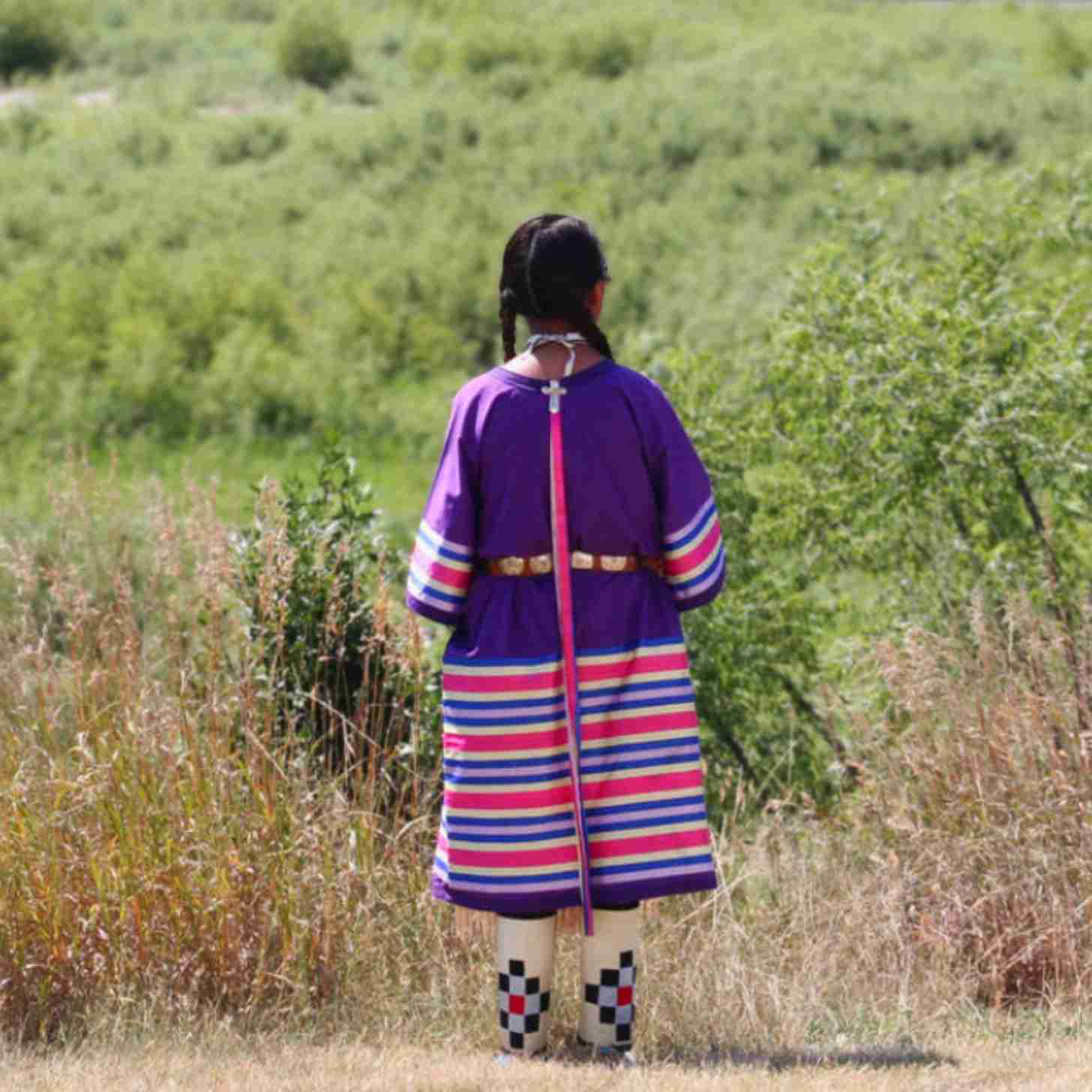
“This is their fight, their partnership, their passion,” Tucker said of her tribal elders and parents, who were displaced in 1969. “I’m just trying to do everything I can to see it come through in my dad’s lifetime.”
Wahhoga’s redemption is part of a new chapter of Indigenous stewardship — an era which demands that Native voices be prominently featured in the narrative of national parks and included in decisions that shape their ancestral land.
At Hawaiʻi Volcanoes National Park, visitors are now greeted with a short film series on kūpuna, or community elders, who teach hula, kālai kiʻi carving, and crop cultivation.
At Glacier National Park, tourists can travel through the scenic landscape by way of Backpacker’s Ferry, a Blackfeet-owned tour group that pairs breathtaking views with insight into the rich cultural history of the region.
And when people enter through any of Yellowstone National Park’s five entrances, they now pass by traditional teepees patterned with tribal stories.
“We’re hoping that guests use it as an opportunity to reflect and think about the 27 associated tribes of the lands that are now known as Yellowstone National Park,” Victoria Cheyenne, of the Northern Cheyenne and Aymara nations, told Wyoming Public Media.
As Native communities work to safeguard forgotten histories, they’re also protecting the land for future generations to come.
Since 2015, the Hoonah Native Forest Partnership has been working to revive the 17,000 salmon streams in Tongass National Forest in Southeast Alaska — the nation’s largest national forest.
Combining ancestral Tlingit knowledge with modern science, the partnership ensures that Alaska Native communities have a leadership role alongside the Alaska Department of Fish and Game Subsistence Division and the U.S. Forest Service to continue the stewardship work they have carried on for centuries.
It’s in line with the HNFP’s mission statement: “Ch’u tleix áwé kugaagastee” — a Tlingit phrase that means, “Let it exist forever.”
Most recently, the HNFP finished a 7-year stream restoration project, in which forest crews painstakingly used hand tools to reshape and restore 400 yards of fish habitat that had all but vanished because of erosion.
“These lands are the traditional territory of our people,” said Richard Chalyee Éesh Peterson, president of the Central Council Tlingit and Haida Indian Tribes of Alaska. “As a federally recognized tribe, it’s our responsibility to steward these lands on behalf of our people.”
A version of this article originally appeared in the 2025 National Parks Edition of the Goodnewspaper.
Header image via the National Park Service