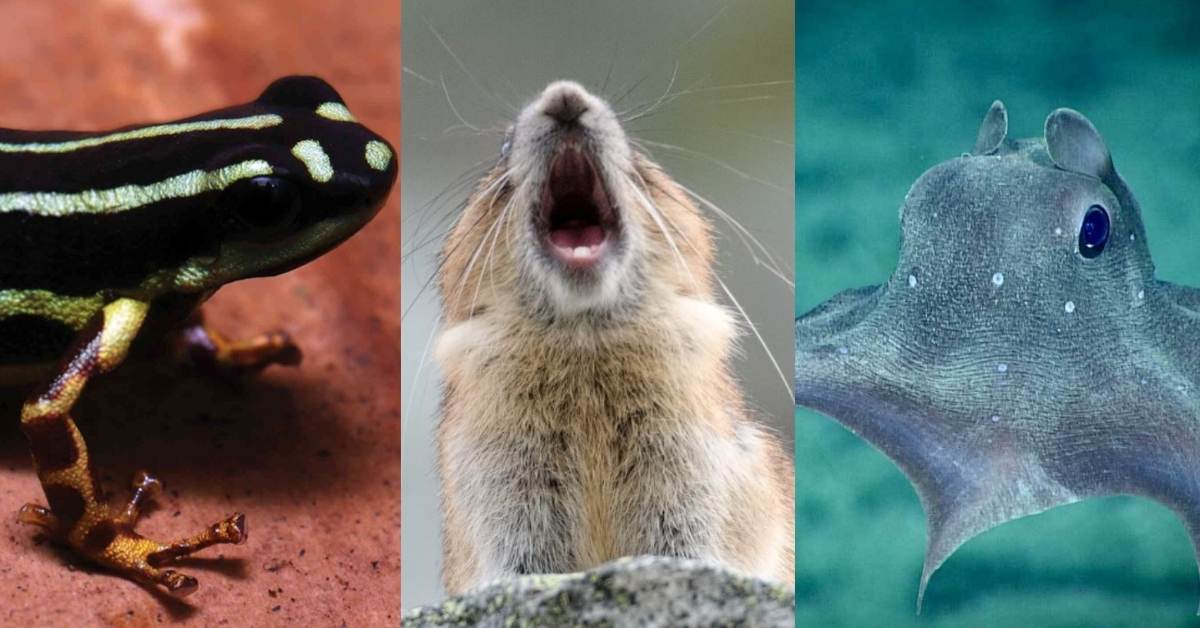
Scientists uncovered thousands of new species in 2025, from deep-sea oddities to rare mountain dwellers. As the butterflies, frogs, and sea creatures made headlines, they spurred new action for conservation efforts the world over.
The "aquamarine" poison dart frog of the Amazon
In 2023, amongst the Juruá River basin forests of Brazil, scientists found a new type of poison dart frog with copper metallic legs.
In May, they finally published their discovery in the scientific journal PLOS One, introducing it as Ranitomeya aquamarina in honor of its striking blue color.
“The specific epithet ‘aquamarina’ is a Latin adjective that means ‘pale blue-green’, referring to the coloration of the dorsal-lateral stripes of the new species,” wrote Evan Koch, a postdoctoral researcher at the National Museum of the Czech Republic who led the research team.

“Another aspect that led us to use this epithet was the metallic blue and greenish tones of the stripes, which resemble seawater,” he explained. “Additionally, aquamarine is a gemstone, which philosophically conveys the value of this discovery.”
The “curiously isolated hairstreak” butterfly
Scientists identified a new butterfly species in Canada that had gone unnoticed for centuries, despite living in the well-studied region of the Blakiston Fan landform of Waterton Lakes National Park.
The butterfly, now named Satyrium curiosolus, was long believed to be a subpopulation of the half-moon hairstreak — until researchers realized there was no evidence of gene flow between the two.
“We propose ‘curiously isolated hairstreak’ as the common name due to its disjunct and unusual distribution,” wrote Zachary G. MacDonald, lead study author and postdoctoral fellow at the University of California.
.jpg)
“Far more than a taxonomic update, this discovery reveals a lineage shaped by 40,000 years of evolutionary solitude,” stated the Wilder Institute, which supported the research. “An ancient survivor tucked away in one of Canada’s most iconic and ecologically rich landscapes.”
The trash-eating sea cucumber with more than 200 legs
In June, professors at the Institute of Ocean Sciences and Limnology in Mexico released a study on a new type of sea cucumber.
In the Biodiversity Data Journal, the scientists — Francisco A Solís Marín, Andrea A Caballero Ochoa, Carlos A Conejeros-Vargas — described the McDaniel sea cucumber as a “pale pink violet” creature with zig-zagging rows of 214 tube-like feet.

They can be found at sea depths ranging from 70 feet to 1,400 feet — hungrily roaming for “bottom sediments with its peltate tentacles.”
The behavior has earned sea cucumbers the nickname “janitors of the sea.”
The deep-sea dumbo “flapjack” octopus
In 2022, researchers discovered over 1,000 new species in and around Carnarvon Canyon and Gascoyne Marine Parks in Western Australia.
In 2025, they confirmed that one of those creatures was the Carnarvon flapjack octopus, a rare and unusual species of dumbo octopus characterized by ear-like fins. Its name came from its ability to flatten down like a pancake to escape ocean predators.

“This species discovery increases our understanding of Australia’s deep-sea ecology and biodiversity,” Tristan Verhoeff, a doctor and volunteer systematic taxonomist at the Tasmanian Museum and Art Gallery, said in a press release.
“Describing new species is also essential for future work on their ecology, and assessing populations for conservation.”
The “diamond-eyed” toad found in a tropical paradise
In the mountain streams of subtropical Yunnan, herpetologists recently uncovered a new species of Xenophrys tongbiguanensis, or Tongbiguanen horned toad.
Although it looks similar to India’s Xenophrys ancrae, the Tongbiguan horned toad has vertically oriented, diamond-shaped pupils rather than horizontal ones.
Its copper-brown iris, encircled by a golden ring, also sets it apart from other Asia-Pacific amphibians, including species like the orange-eyed Giant Himalayan Horned Frog.
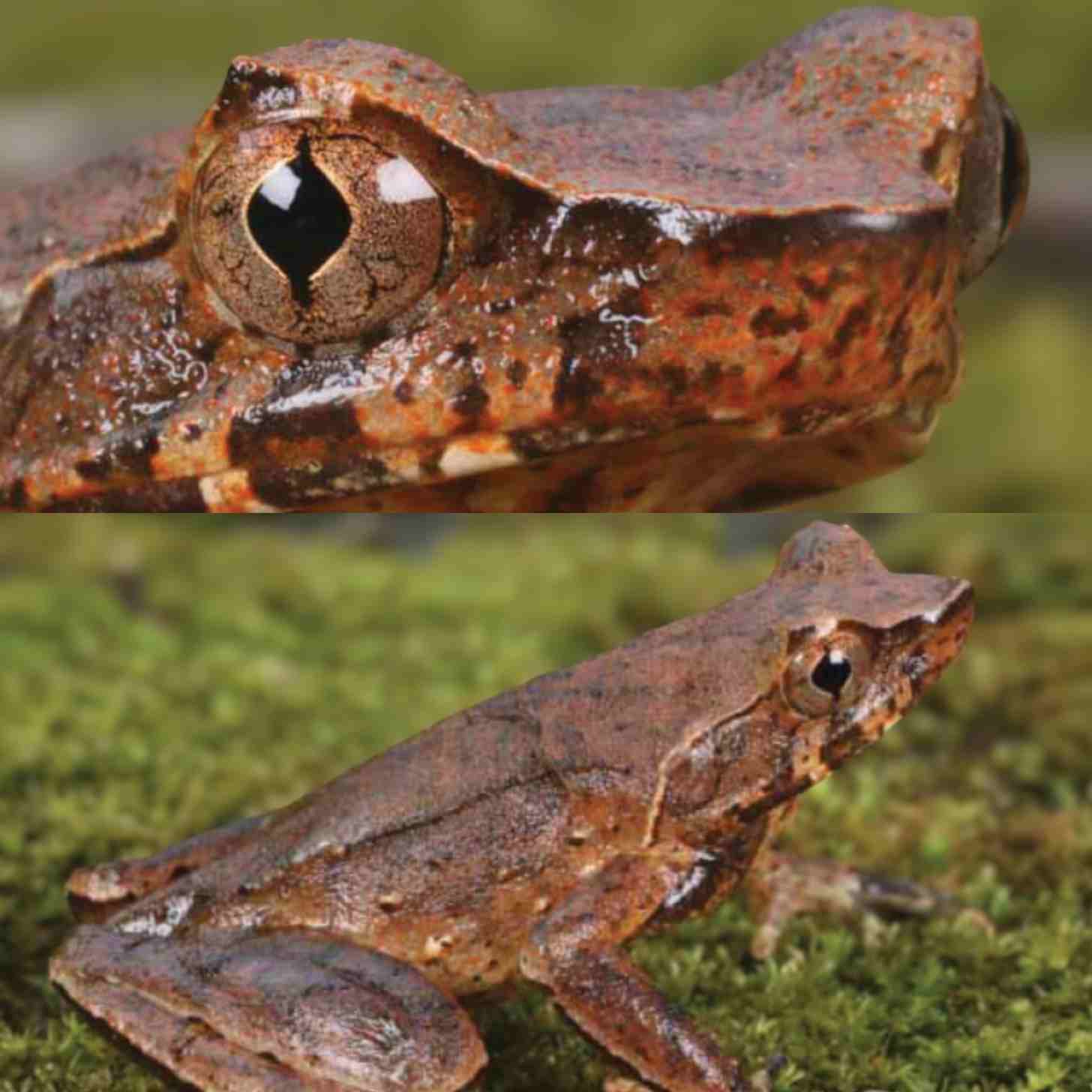
“The Tongbiguan Provincial Nature Reserve may harbor more hidden herpetological diversity than previously postulated,” lead researcher Yun-He Wu wrote for Zoosystematics and Evolution. “It is one of the richest regions in Yunnan for amphibians and reptiles.”
The blue “eyeliner boy” bees were found in Texas and Oklahoma
A new species of mining bee recently surprised scientists in Texas and Oklahoma with its physical appearance.
The males of the newly discovered Andrena androfovea boasted a facial feature typically only found in female bees — a fuzzy structure called fovea on the inside of each eye.
The structures' resemblance to eyeliner led to their nickname: “Eyeliner boys.”
The bee is also unusual for its penchant for collecting pollen from flowers of the nightshade variety.
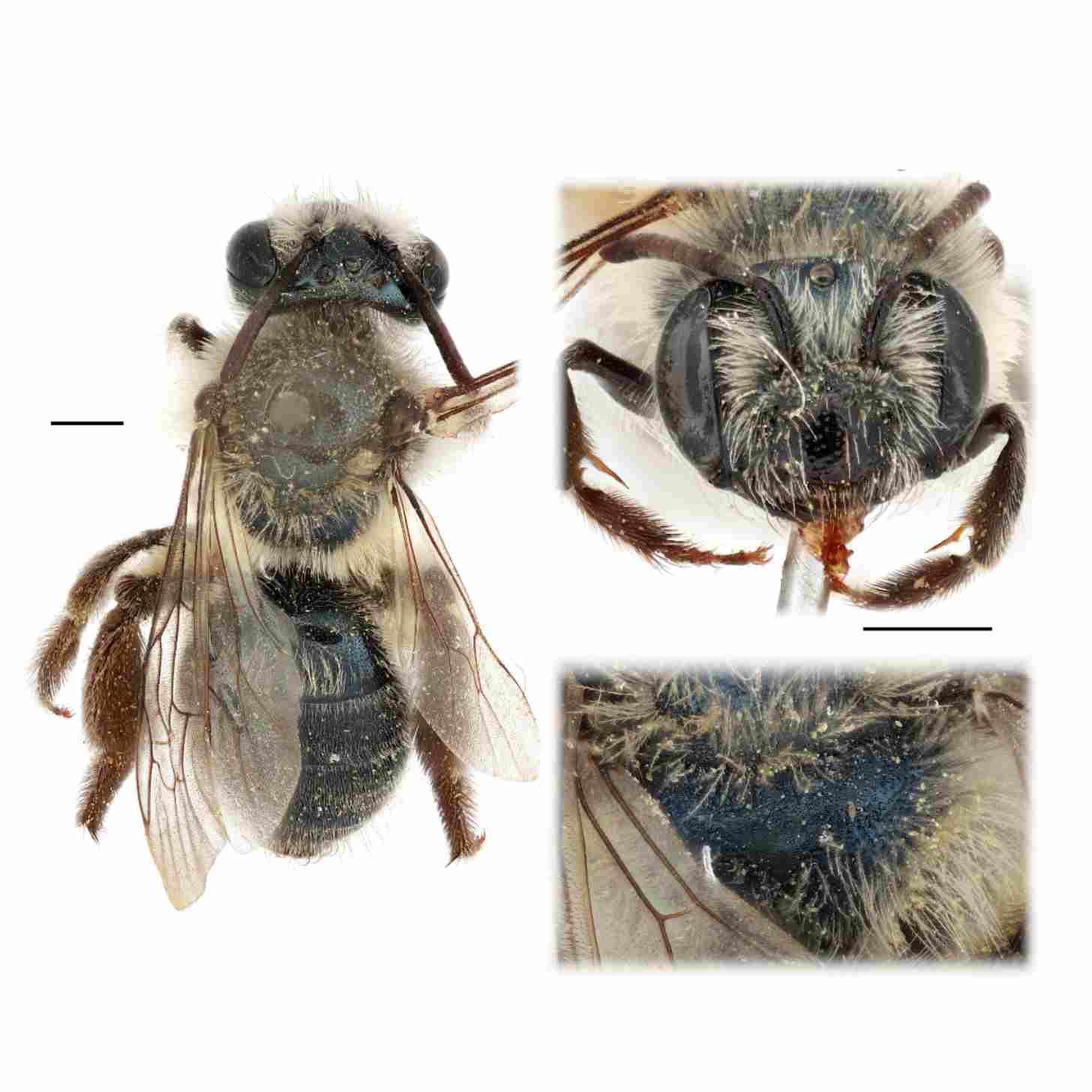
“And as far as we know, out of the, I think, something like 1,500 or 1,700 species of Andrena in the world … we know of no other Andrena that is a picky pollen eater of members of the nightshade family,” said James Hung, an assistant professor of biology at the University of Oklahoma and co-author of the study, published in Ecology and Evolution.
“So that’s a pretty special and unique evolutionary innovation that this species has decided to take on for itself.”
New species of half male, half female spider named after a “One Piece” character
In 2025, researchers at the Chulalongkorn University Museum of Natural History discovered a new type of burrowing spider in the forests of Kanchanaburi, Thailand.
Spectacularly, one of the specimens had orange coloring on its left side and blue-gray on its right side, exhibiting a rare condition known as bilateral gynandromorphism.
“The species is named [Damarchus inazuma] after Inazuma, a character from the Japanese manga ‘One Piece,’ known for the ability to change sex between male and female,” the researchers wrote in the scientific journal “Zootaxa, in regards to the long-running manga of the same name.
“This color arrangement closely mirrors the sexual dimorphism observed in this species, with males exhibiting white coloration and females displaying orange,” they continued.

“The Inazuma style is characterized by bilateral asymmetry, presenting distinct coloration with orange on the left side and white on the right side.”
Surprisingly, it’s not the only new species to be named after a “One Piece” character in 2025. A deep-sea limpet, or sea snail, found 5,922 meters below sea level, was given the name B. Wadatsumi — after the fish-man Large Monk Wadatsumi — in July.
New species of crocodile newt with 'orange and black' coloring
At the highest peak of Doi Soi Malai mountain in northwestern Thailand, scientists scooped up a new species: the Tylototriton soimalai, or Doi Soi Malai crocodile newt.
With black-and-orange coloring, V-shaped heads, and “knob-like warts,” the new kind of crocodile newt joined a colorful array of aquatic salamanders that are threatened by extinction.
In his research, lead author Porrawee urged local governance to embrace better conservation practices for the species’ sake.
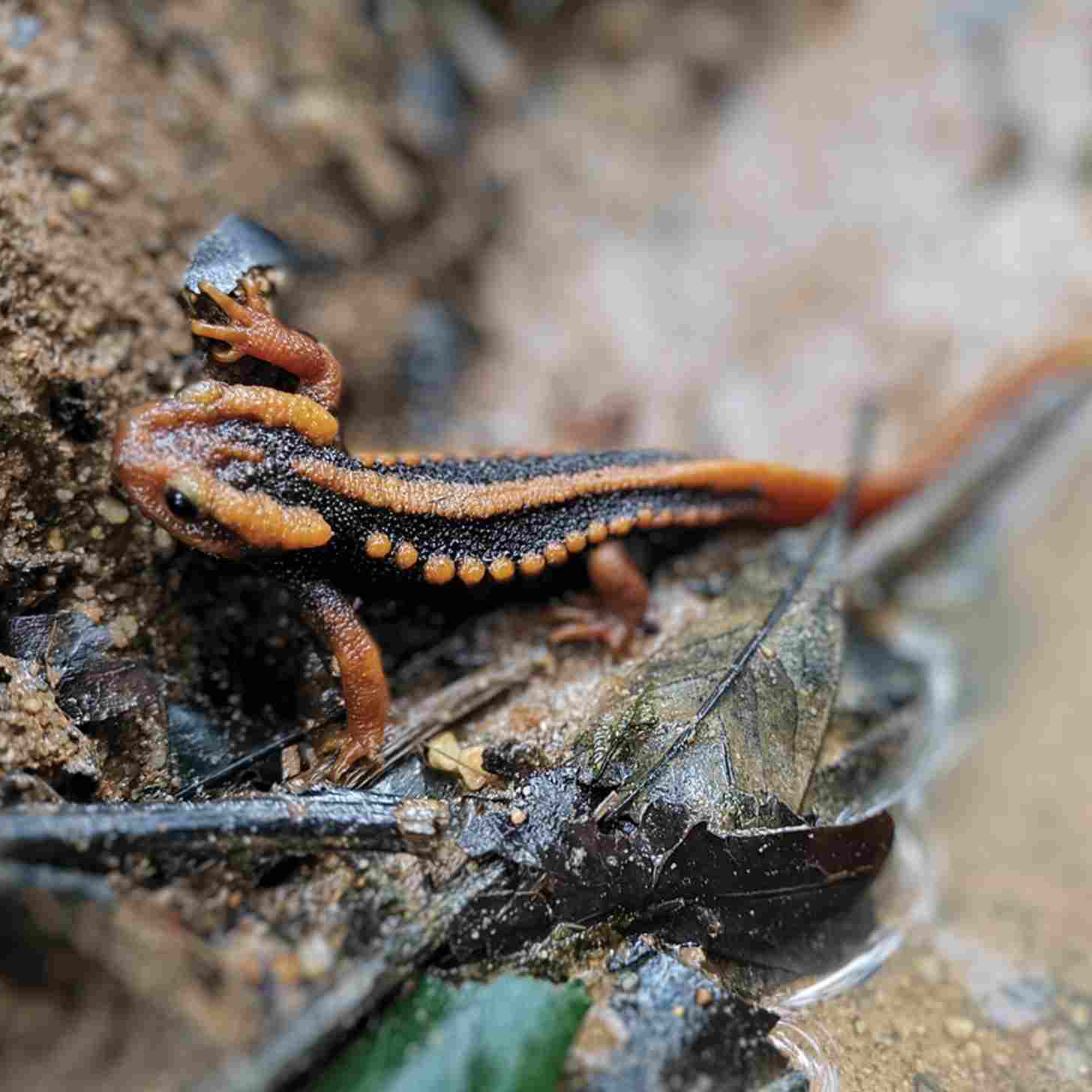
“In addition to the road disturbances mentioned earlier, both the areas surrounding and within Mae Tuen Wildlife Sanctuary have been heavily impacted by habitat alteration and deforestation, leading to forest fragmentation,” Pomchote, a professor at Chulalongkorn University, Thailand, explained in his study.
“A conservation plan is urgently needed for this new species.”
New species of pika found in the Himalayas after 20 years of research
After more than two decades of research, scientists at the Sichuan Academy of Forestry have confirmed the existence of two new pika species in the Himalayas.
Using data collected in 2003, 2023, and 2024, researchers identified the mountain-dwelling species as Ochotona galunglaensis and O. legbona.
“Our findings highlight the previously underestimated diversity within Conothoa and contribute to a more comprehensive understanding of pika diversity in the Himalayan region,” Pan Xuan and Wang Xuming observed in their study, which was published in Ecology and Evolution.
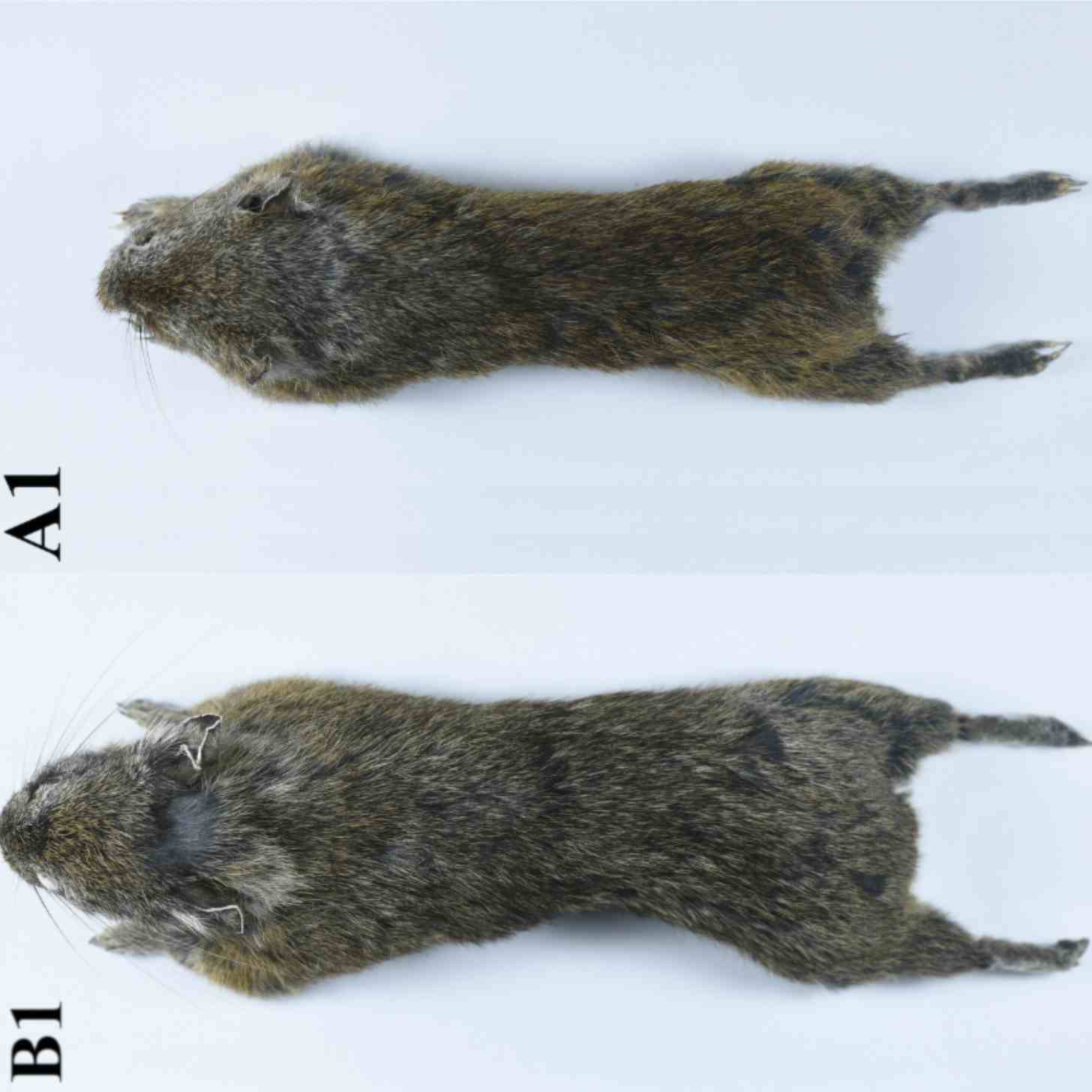
Pikas are hamster-sized lagomorphs related to rabbits and hares, known for their high-pitched calls used to communicate and deter predators.
The two newly identified species join about 30 known pika species found across Asia, North America, and Eastern Europe.
Header images via NOAA Ocean Exploration & Research (CC BY-SA 2.0) and Rick Cameron / Flickr (CC BY-NC-ND 2.0) and Koch et al., 2025, PLOS One (CC-BY 4.0)