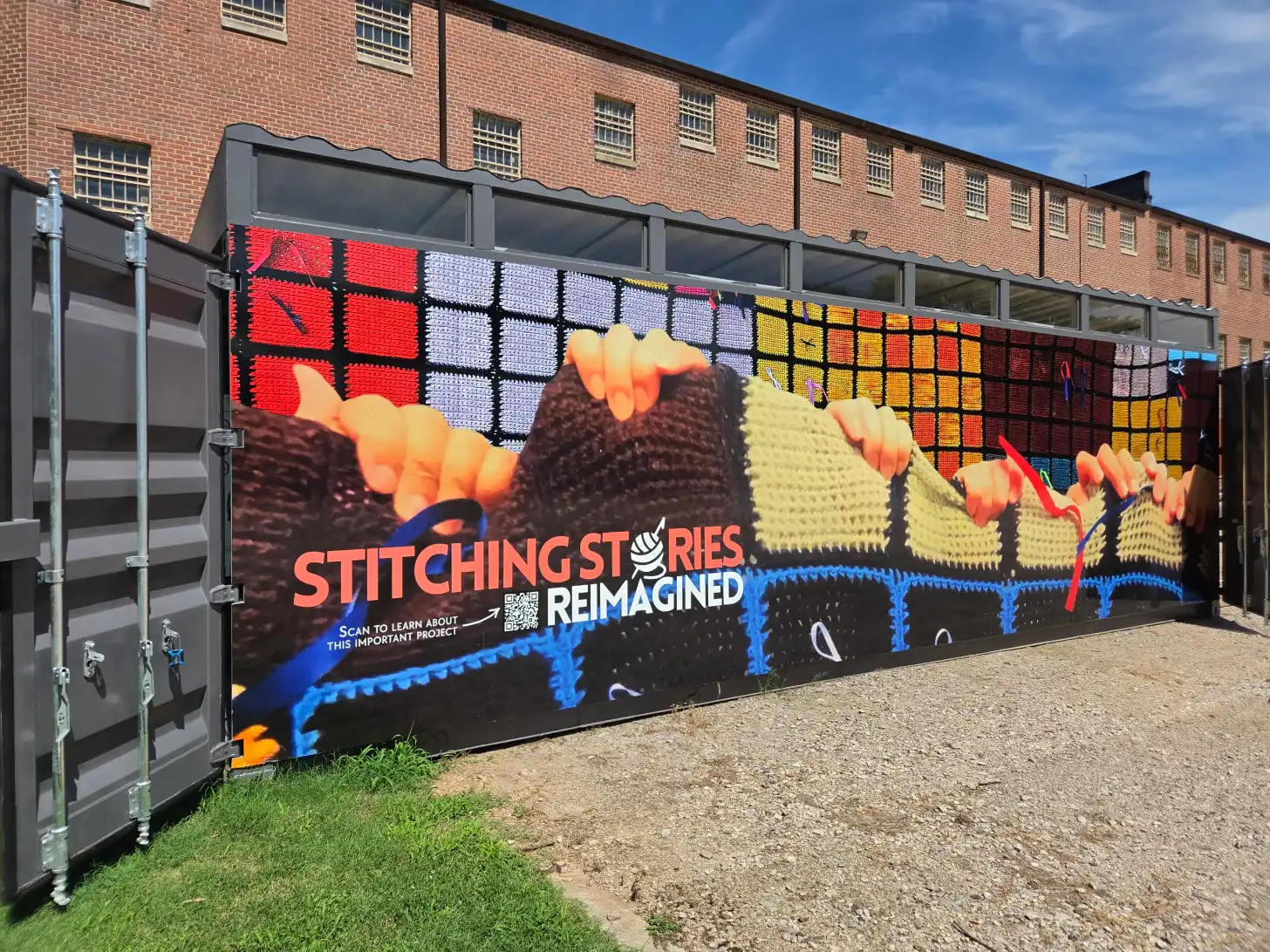
It is hard to imagine finding hope in a steel cargo container. But Shirlye Grandy sees life, fellowship, and beauty in the metal box that sits on the Dix Park campus in Raleigh.
Grandy served nearly six years in the N.C. Correctional Institution for Women, but now holds the title of public arts project coordinator for Arise Collective, a Raleigh nonprofit dedicated to helping incarcerated women across the state.
Grandy told members of the N.C. Joint Reentry Council last week that her life was profoundly changed in 2019 when she joined a small group of women at NCCIW crocheting items to be donated and sold. The proceeds were used to help parents on the outside bring children to see those who were incarcerated.
But when COVID-19 hit, everything changed. Prison visits and classes were canceled. There was no outside work. In the minimum custody unit where Grandy and the other women were housed, more than 100 prisoners contracted the virus in one week.
“But what that did was it brought us together as sisters in incarceration,” Grandy said. “It turned into something much larger. It showed that we are determined, we have life, and we are not giving up.”
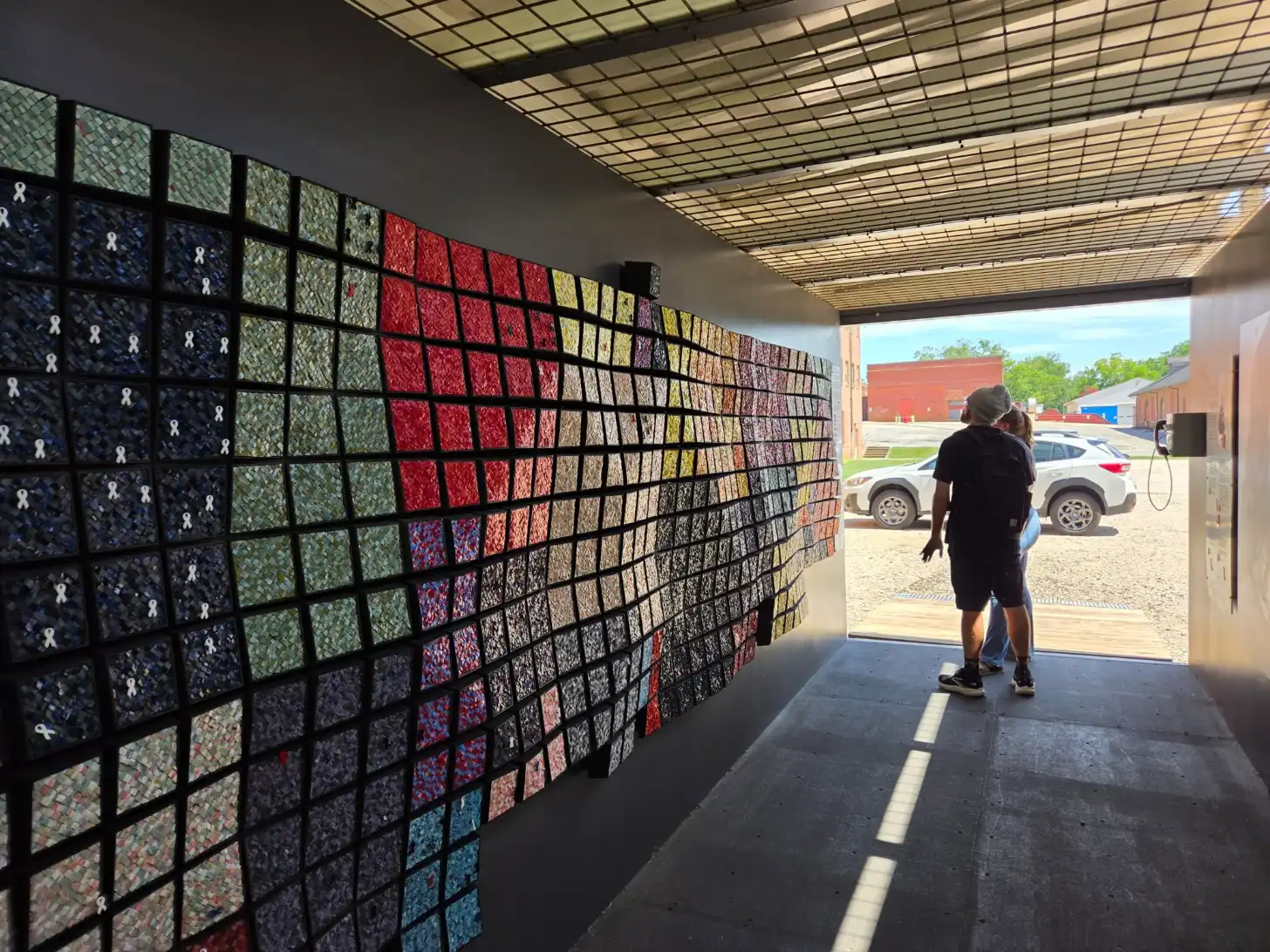
The women of H.A.T.S. — that’s Handmade and Totally Special — used each week to crochet. Each colorful section joined together represented a year that a woman served behind bars.
Grandy recalled carefully crocheting six squares to mark her own sentence.
“My friend Faye Brown, who passed away from COVID, had 40,” Grandy told the reentry council.
When the 25-foot-long prison quilt was finished just before Mother’s Day 2021, other incarcerated women were invited to tie ribbons to the squares to recognize the children they left behind and the lives lost by family and friends while they were in prison.
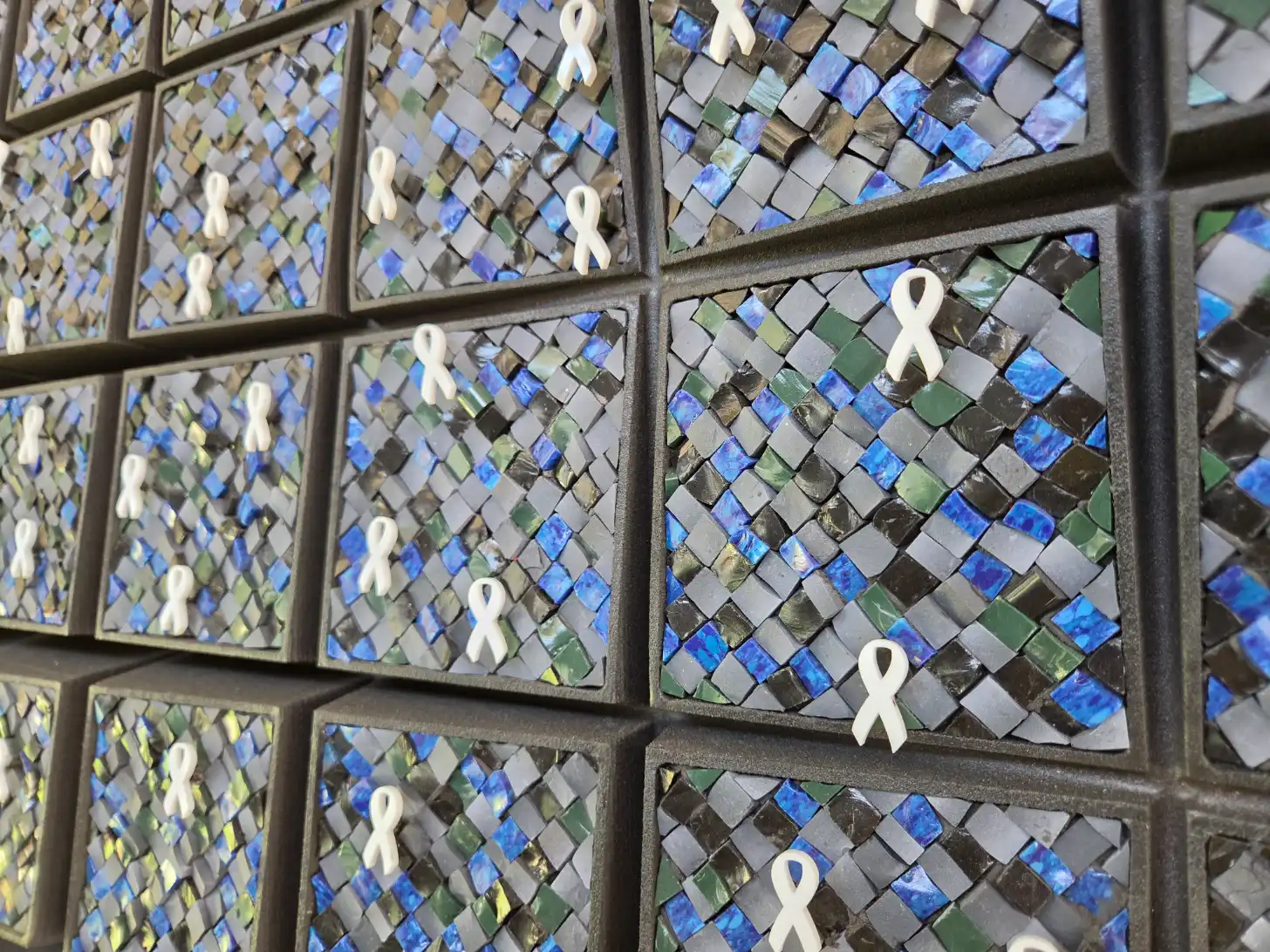
According to research by The Sentencing Project, the U.S. has seen a 525% increase in the number of incarcerated women between 1980 and 2021, roughly twice the rate of increase for men. Eighty percent of incarcerated women are mothers.
Grandy lost her own mother during her incarceration.
Jennifer Jackson, chief executive officer for Arise Collective, says opportunity for the crocheters struck two years later when the Z. Smith Reynolds Foundation and the Mellon Foundation issued a grant proposal to create permanent public art to tell the stories of historically marginalized communities.
“There’s a community of people who have been touched by incarceration across our state that has been hidden,” said Jackson. “We made a pitch that they consider this a community, as we were defining it, as one that fit within their grant guidelines.”
The foundations selected Arise and the Stitching Stories Quilt to be reimagined and transformed for the public.
Four artists — Carlos González García, David Wilson, Eliza Redmann, and Owens Daniels — spent the next three years transforming the crocheted quilt into a durable mosaic that captures the lives of the often-forgotten women. On the opposite wall of the shipping container, a mirrored wall portrays the original artists with the phrase, “We are you.”
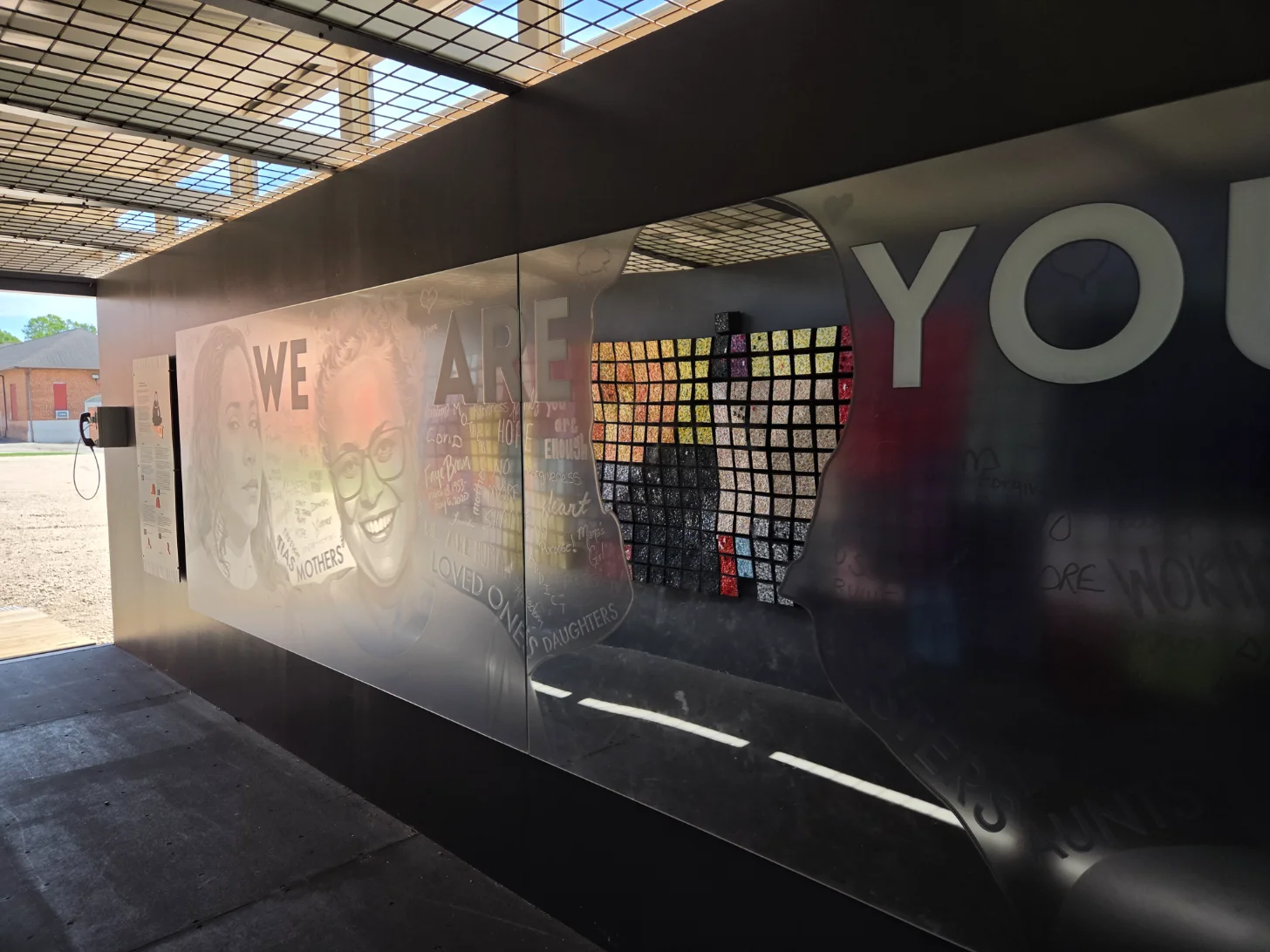
The work will be displayed on the Dix Park campus until September when it will move to Wilmington.
The project is also an opportunity for the public to learn more about mass incarceration and the challenges that arise after leaving prison.
Each year, more than 18,000 individuals are released from North Carolina state prisons. Without a support network, 49% of those are rearrested within two years.
North Carolina is part of a national initiative to reduce the recidivism rate by 30% by 2030. Its goal is to improve reentry services that help people leaving prison find employment, healthcare, and housing. Formerly incarcerated people are up to 10 times more likely to experience homelessness than the general population.
Grandy credits Arise Collective with helping her successfully transition to a better life after her release. This summer, she’s giving tours of the Stitching Stories exhibit.
She told those gathered at the All Faiths Chapel at Dix last week that while she never liked to talk about herself, she was proud of what her quilting sisters had accomplished.
“In a space that could have been the most dangerous and disastrous and dark place, we created light and beauty,” Grandy said.
Later this year, Grandy will complete her master’s program at Duke Divinity School. She said others who have served their time also deserve a second chance.
“None of that would be possible without good transition programs,” Grandy said, ”places where women like me who want to do something different with their life after incarceration have a place to go and grow and learn how to be a person again.”
This article was written by Clayton Henkel and was originally published by NC Newsline.
Featured Image: Clayton Henkel/NC Newsline