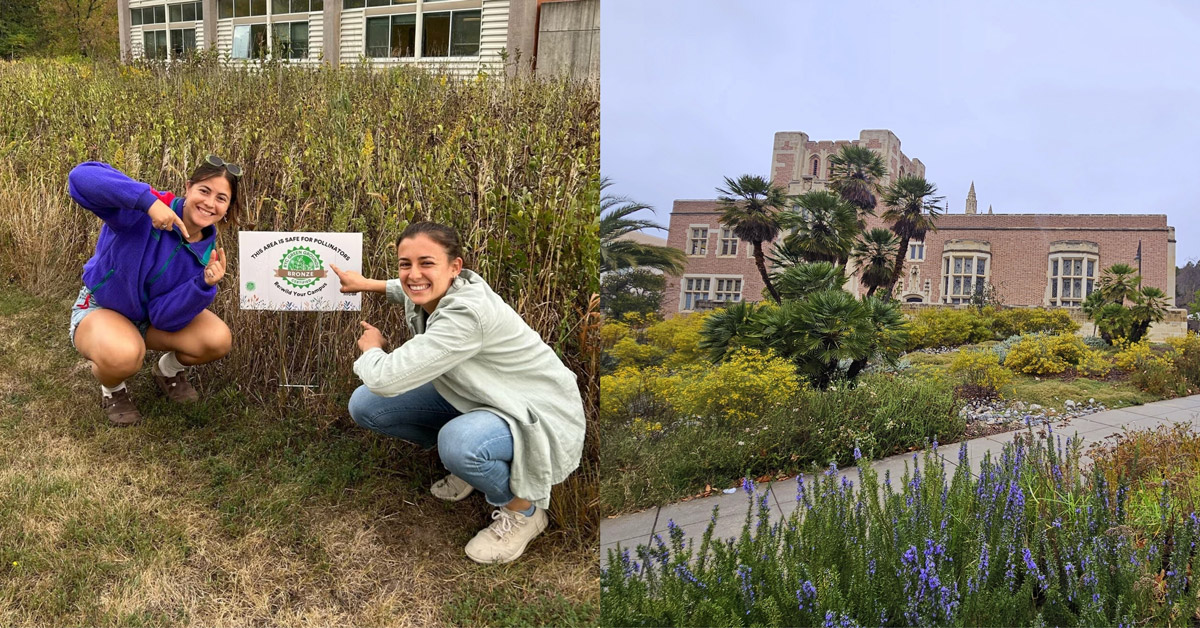
In 2017, Mackenzie Feldman and Bridget Gustafson were playing beach volleyball at University of California-Berkeley when they found out that their practice courts had been sprayed with an herbicide linked to cancer and environmental harm.
They immediately went to the powers that be and offered for the entire volleyball team to pull weeds around the courts if it meant the school would stop spraying the herbicides.
The campaign quickly took off on campus, and now UC Berkeley manages 95% of its grounds — 1,171 acres — organically and without the use of inorganic fertilizers, chemical pesticides, fungicides, and herbicides.
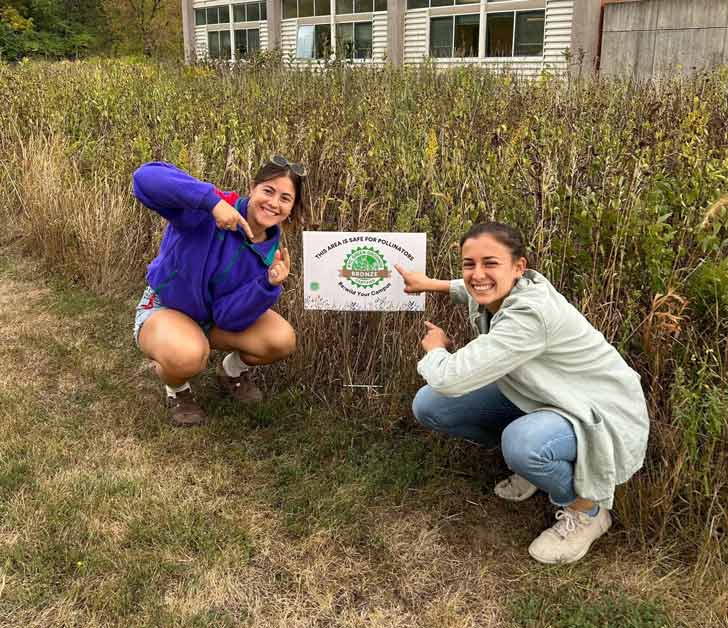
Then, the effort snowballed even bigger. Feldman and Gustafson launched Re:wild Your Campus, a nonprofit that equips college students and university groundskeepers with the resources they need to transform campuses into biodiverse spaces for pollinators, all without toxic chemicals.
They created the RYC Green Grounds certification with support from experts, groundskeepers, students, and sustainability professionals, to give college campuses the tools they need to take action and set an example for other schools.
“It goes above and beyond reducing pesticide use to incentivize regenerative landcare practices that will increase biodiversity, reduce water use, improve soil health, and take campus sustainability efforts to the next level,” the nonprofit’s website explains.
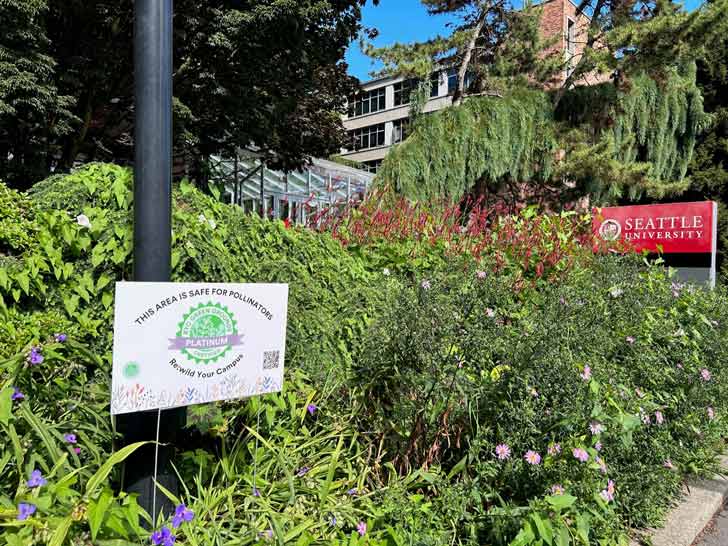
By 2025, 15 college campuses were Green Grounds Certified, and over 700 students and administrators had been trained to carry out rewilding projects on their own grounds.
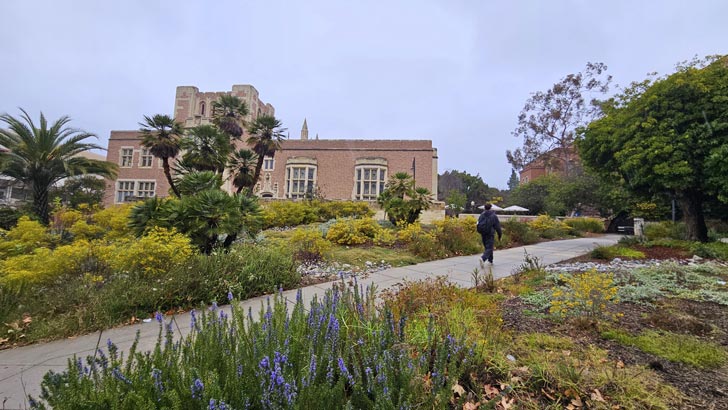
UCLA, which received its Green Grounds Certification in 2025, earned a gold-level credential, which it credits to “long-standing efforts” to transition turf spaces to drought-tolerant plants. Over 30,000 square feet of turf was converted to California native, drought-tolerant plants on campus, a press release from UCLA shared.
“This certification reflects the hard work of so many at UCLA,” Nurit Katz, UCLA’s chief sustainability officer, said in a statement.
“The goal is setting an example with climate-resilient landscapes that also support human and ecological health that hopefully become standard way beyond our campus.”
In addition to the young women’s original effort to stop the use of harmful herbicides, their work now extends to improving soil health, increasing biodiversity, reducing emissions, and building skills for communities of young people wanting to do more for the planet.
“Every spray of chemicals tells the same story: short-term aesthetics over long-term health,” Re:wild’s website shares. “But we know another future is possible — one where campuses nurture biodiversity, protect people, and connect communities back to the natural world.”
A version of this article was originally published in The 2026 Environment Edition of the Goodnewspaper.
You may also like: School gardens lead to more positive attitudes about the environment, study finds
Header images courtesy of Re:wild Your Campus and Nurit Katz/UCLA