Ontario, Canada’s 18-year-old Ribal Zebian is no stranger to innovation. Last year, he made headlines for building a wooden electric vehicle while he was still in high school.
Now an engineering student at Western University, he’s set his sights on a new project: A modular home to help alleviate the housing crisis in his home city of London, Ontario.
“We have around 1,800 homeless people, and that number is rising, right?” Zebian said in an interview with CTV News.
He said he wants to help end homelessness, but that he’s also concerned about home prices in general and how they will continue to impact housing in the future.
“Essentially, what I’m trying to do is bring a home to the public that could be built in one day, is affordable, and still carries some architecturally striking features,” he told the London Free Press.
“We don’t want to be bringing a house to Canadians that is just boxy and that not much thought was put into it.”
So, he went to the drawing board and designed a modular home that can reportedly be assembled in just one day.
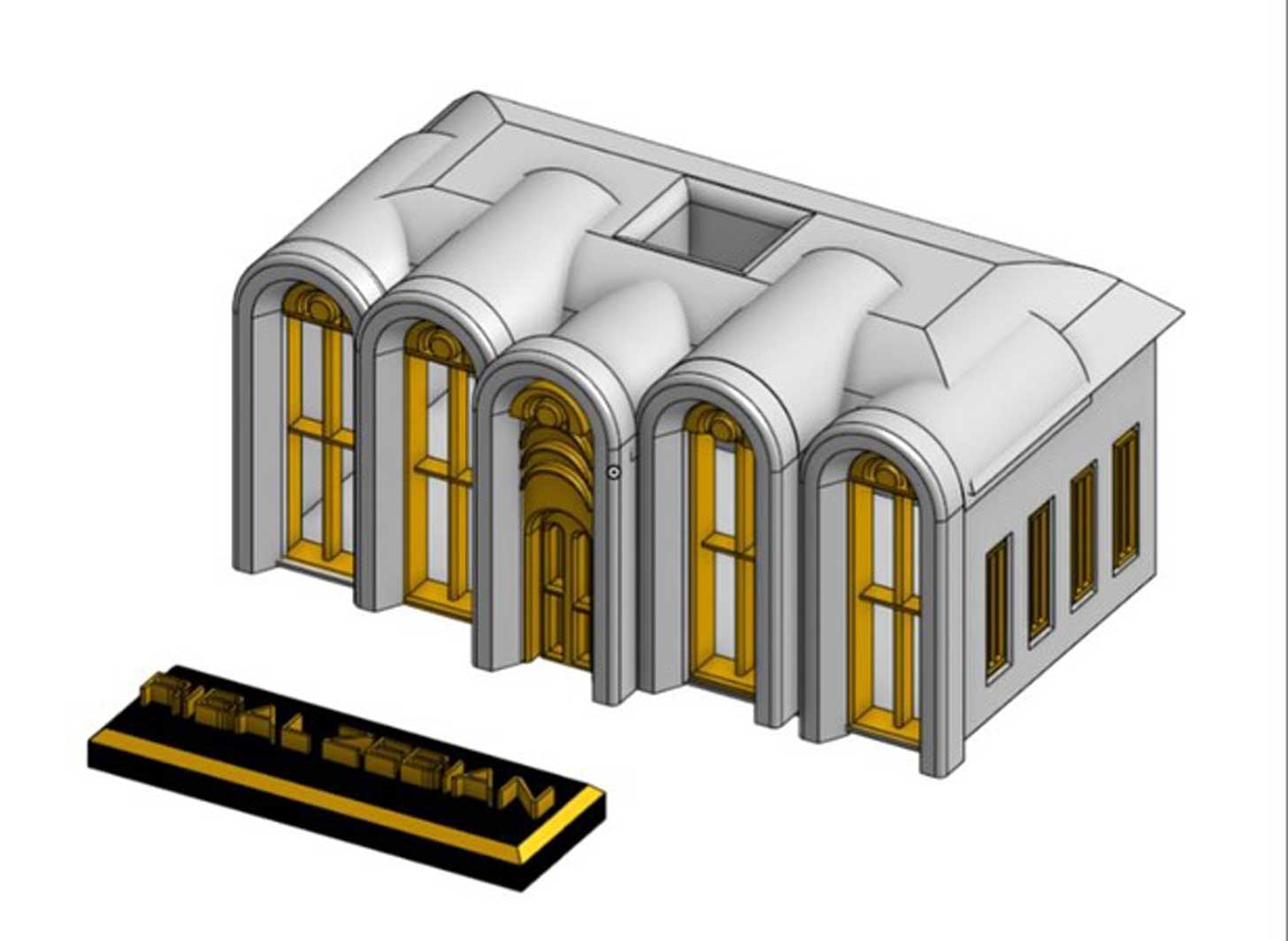
The home is made of fiberglass panels and thermoplastic polyethylene terephthalate, or PET, foam. He said these choices were made because of how sturdy and replicable they are.
“With fiberglass you can make extravagant moulds, and you can replicate those,” Zebian told CTV News. “It can be duplicated. And for our roofing system, we’re not using the traditional truss method. We’re using actually an insulated core PET foam that supports the structure and structural integrity of the roof.”
Zebian’s current prototype measures 8 feet by 5 feet by 8 feet. It’s a small shelter, but he said it can be scaled up to three times that size, adding that he hopes to begin a larger prototype in the coming months.
According to the London Free Press, Zebian does not see the homes as permanent dwellings but rather a transitional housing option to help get people off the streets.
“These could be removed from the ground … and you could, essentially, change your location,” he said.
But his design process didn’t end with a prototype.

The young innovator plans to live in one of his modular home builds for a full year beginning in May 2026. The goal is to work out any and all issues before actually taking the design to manufacturers. He wants to prove his invention can actually be deployed to help people facing homelessness.
“We want to see if we can make it through all four seasons- summer, winter, spring, and fall,” Zebian told CTV News. “But that’s not the only thing. When you live in something that long and use it, you can notice every single mistake and error, and you can optimize for the best experience.”
Modular homes — often called prefabricated homes — are not a new concept. Many housing organizations have leveraged easy-to-build tiny homes, often built in sections in a factory and later pieced together on-site, to mass-produce housing to confront homelessness or provide shelter in times of disaster.
But with the crisis on the rise, Zebian sees his prototype acting as a necessary addition to the existing homelessness solution infrastructure.
“We need to be quick; we need to be efficient,” Zebian told the London Free Press. “We can’t wait for new opportunities to come; we have to chase those opportunities.”
In the meantime, he is in talks with agencies supporting homeless individuals, hoping to use one of his prototypes as proof of concept for their intended purpose. And once he has lived in one himself, he plans to partner with manufacturers to mass-produce the model and get more people in homes as soon as possible.
Longtime affordable housing advocate Gary Brown is encouraged by what he sees so far.
“Are tiny homes the entire answer? No, but it’s a part of the solution,” housing advocate Gary Brown told CTV News. “I’ve seen quite a few going up in other cities, and it’s something London itself is kind of lagging behind a little bit.”
For Zebian, being a part of the solution is all he wants.
“My purpose,” he writes in his Instagram bio, “is nothing more and nothing less than serving humanity.”
You may also like: Teen creates Rubik's cube-inspired tiny home to help those experiencing homelessness
Header image courtesy of Ribal Zebian/Instagram