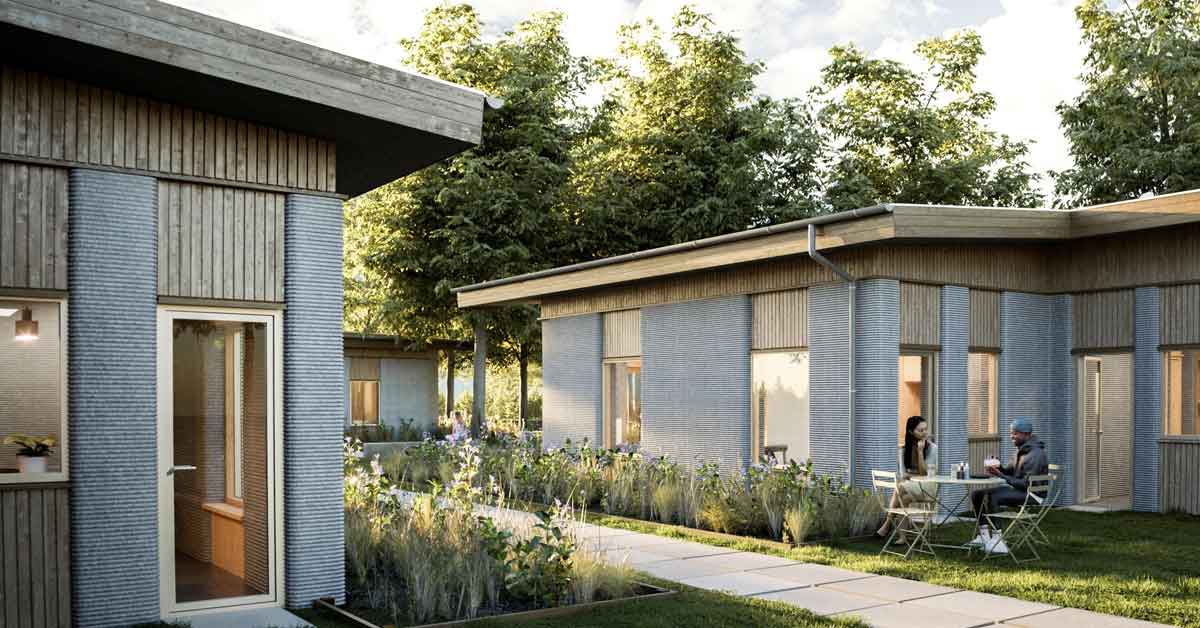
Europe’s largest 3D-printed housing development has just been completed.
Called Skovsporet, or “The Forest Trail,” the development is now home to 36 student apartments in the town of Holstebro, Denmark.
It all started when NordVestBO, an affordable housing organization in Western Denmark, reached out to 3DCP Group to produce multiple housing units using the COBOD BOD 3D construction printer — a method that is widely known as cheaper, more efficient, and more sustainable than traditional construction methods.

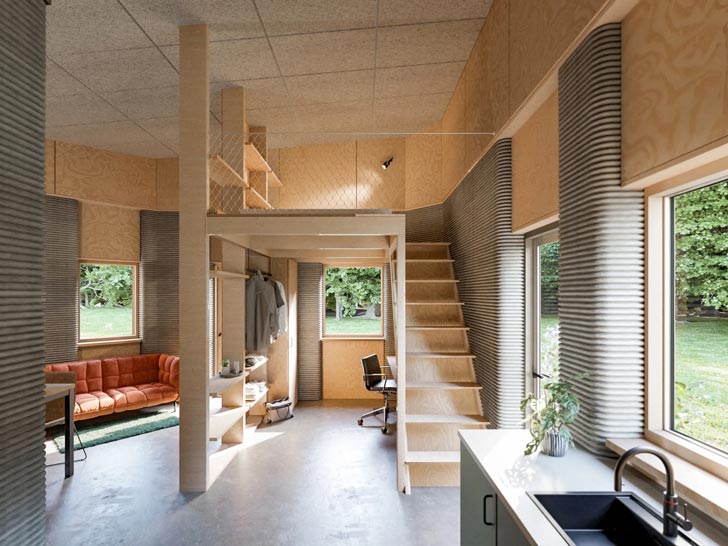
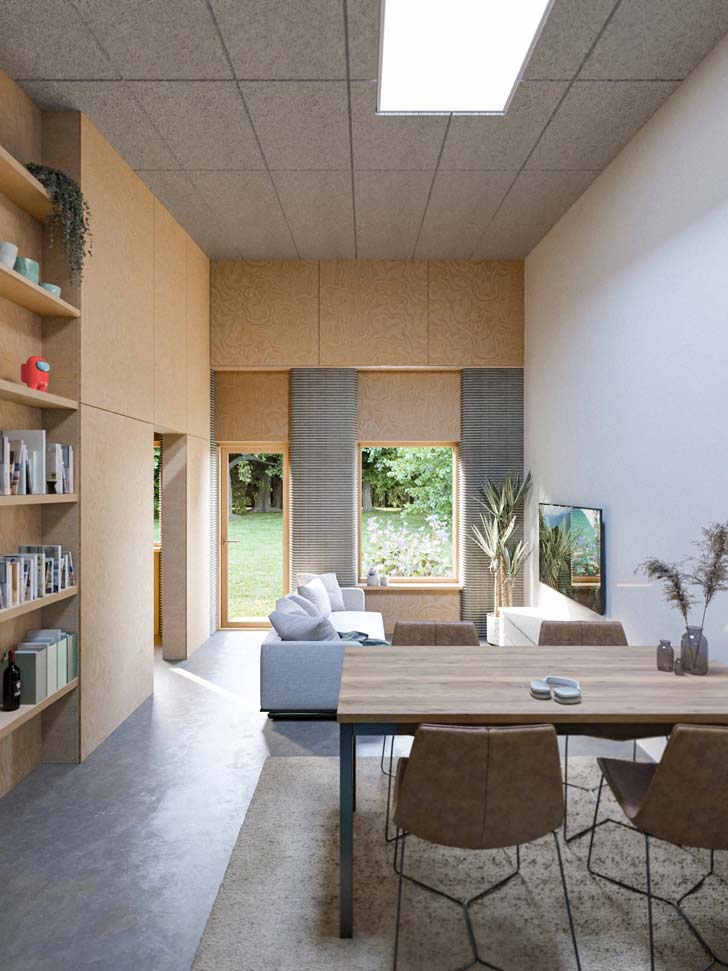
The 3DCP Group used the printer to create 36 units, ranging from 431 to 538 square feet. With the exterior made from a cement-like mixture, which is printed in layers out of a nozzle, the basic structure of the apartments is now complete. Each apartment, when fully move-in ready, will include a kitchen, study area, lounge, bathroom, and double bed.
The structures also have large roof windows and slanted ceilings, which bring natural light into each space. Designed by firm SAGA Architects, they are also completed with coated plywood and glass complements to add character.
Arranged into six buildings, the development sits around a shared courtyard with landscaped gardens and walking and biking paths.
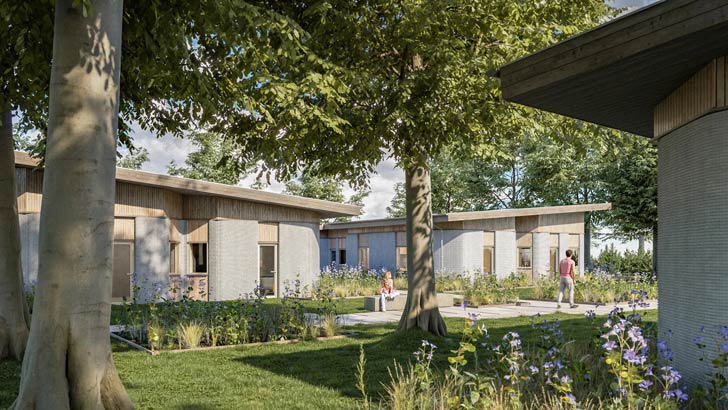
While the development looks aesthetically pleasing, it was also easy to build.
By automating the process, 3DCP Group achieved accuracy across all printed walls, which was overseen and operated by a small, three-person team. And they finished the project rapidly.
“Over the course of the project, printing productivity increased significantly,” a statement from COBOD explained.

“The first six units [of the] apartment building required several weeks to complete, while the final one was finished in only five days, equal to more than one apartment per day. This productivity gain demonstrates how 3D construction printing can scale efficiently, producing multiple housing units with consistent quality, lower labor requirements, and optimized project timelines.”
Sustainability was also a major factor in this approach. The Skovsporet project was made using D.fab concrete, a low-carbon cement material.
“Because the printing process deposits material only where it is structurally required, waste generation is significantly lower than in conventional construction,” COBOD explained.
“The project was also designed to respect its natural surroundings, with print beds carefully positioned between existing trees to preserve 95% of the site’s trees, a clear demonstration that advanced construction methods and sustainable design can coexist.”
With all of this in mind, 3D-printed homes continue to scale worldwide. And for 3DCP group, Skovsporet represents the future of building more affordably and sustainably.
“Skovsporet proved that 3D construction printing can meet the strict requirements of subsidized housing while delivering high precision and productivity,” Mikkel Brich, co-founder of 3DCP Group, said in a statement.
“As we deepened our understanding of the technology, we increased productivity from one building to the next, and are confident we can build even faster in future projects.”
You may also like: California's first 3D-printed neighborhood is nearly complete. The concrete homes are bulletproof and fire-resistant
Header image courtesy of SAGA Architects