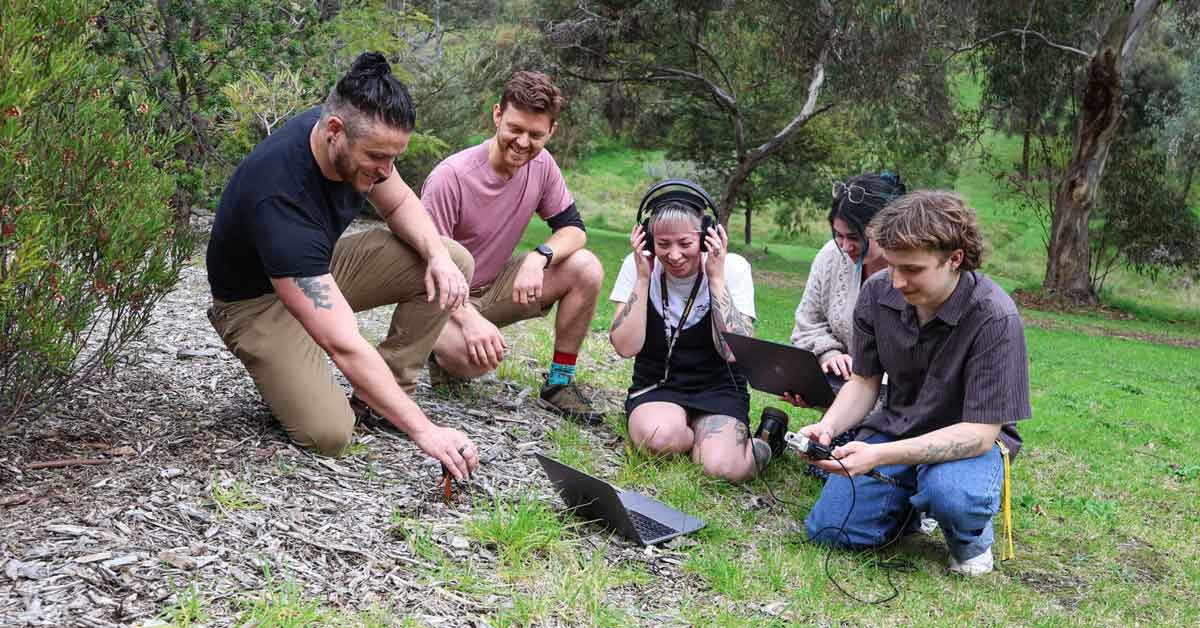
In an attempt to study soil health, a group of scientists from Australia’s Flinders University planted microphones in the ground to see if the acoustics of ants and worms would be a solid indicator of biodiversity.
Not to fast forward to the end of the song, but … they were.
“It’s a bit like going to the doctor,” ecologist Jake Robinson told The Guardian. “They put a stethoscope on your chest, take a health check, listen to your beating heart. … We’re doing something similar in the soil.”
Since the tapping sounds of millipedes or gliding echoes of a snail are indiscernible to the human ear, the researchers set up microphones that picked up vibrations from contact with the dirt and then amplified the recording by 20 decibels.
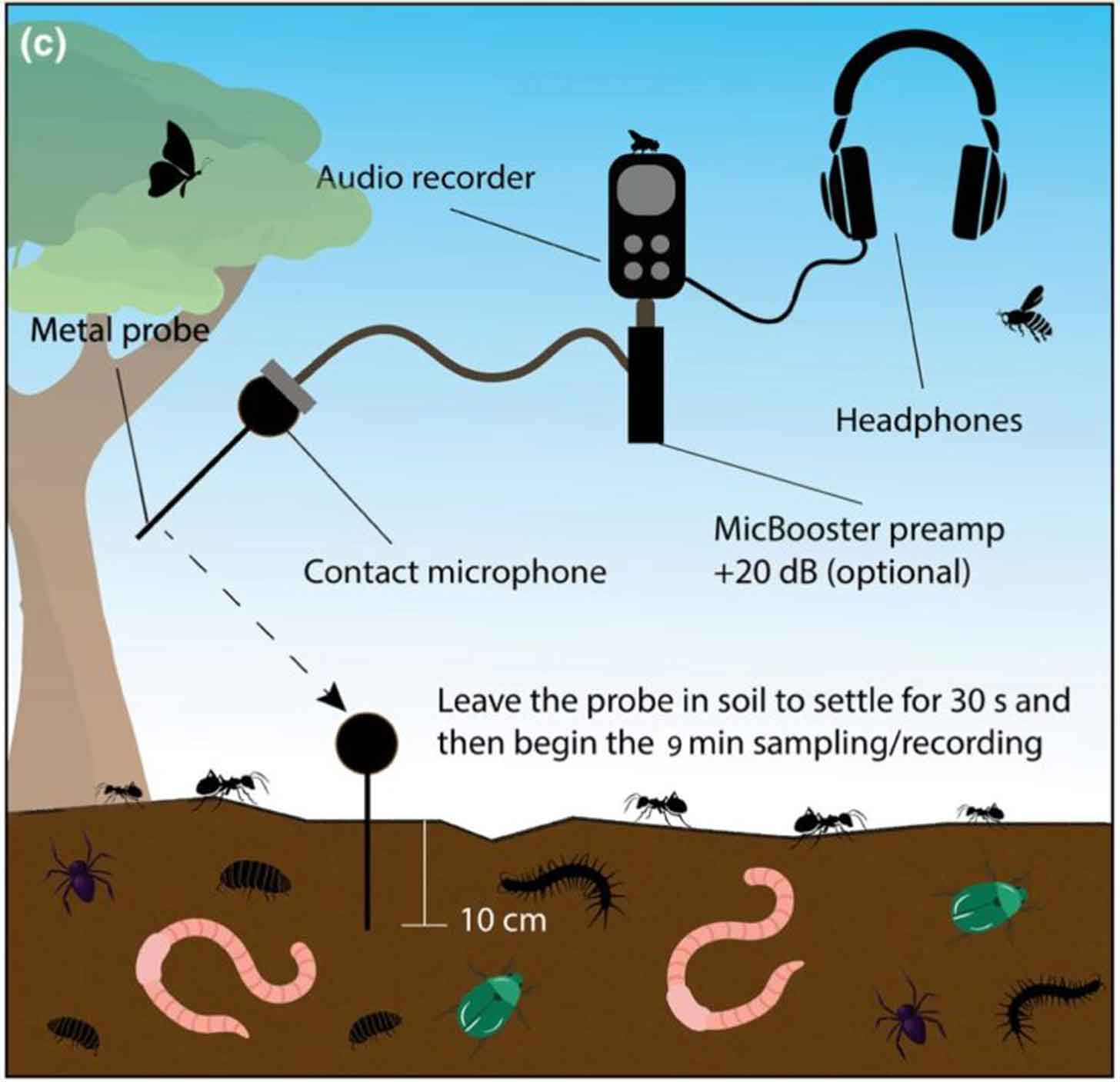
Land in Adelaide Hills in South Australia was filled with plants and tiny animals. It was also home to diverse “invertebrate instrumentals,” creating a soil symphony of crackles, pops, and clicks.
But unhealthy soil only made bland white noise, according to their research.
Because insects and other invertebrates build up soils and improve their nutrient content, their presence underground indicates whether the soil is healthy.
“It’s clear acoustic complexity and diversity of our samples are associated with soil invertebrate abundance — from earthworms, beetles to ants and spiders — and it seems to be a clear reflection of soil health,” Robinson said in a statement for the university.
“This technology holds promise in addressing the global need for more effective soil biodiversity monitoring methods to protect our planet’s most diverse ecosystems.”
Until now, traditional methods of studying soil health have included costly DNA tests, or disruptive traps and digging to identify these music-makers.
But the acoustic method could pave the way for researchers, conservationists, and farmers to detect — and fix — soil degradation with ease.
“Restoring and monitoring soil biodiversity has never been more important,” Robinson added, sharing that an affordable “rock” concert might be available to more people soon.
“We’re trying to democratize it, so everyone can just buy their own little recorder and microphone.”
You may also like: Amsterdam builds cat-friendly staircases along its canals to protect feline residents
A version of this article was originally published in The 2024 Animals Edition of the Goodnewspaper.
Header image courtesy of Flinders University