Fast fashion is inexpensive, so when clothes become worn or damaged, replacing them often seems easier than repairing them.
Clothes are often worn just seven to ten times before they are thrown away. And 92 million tonnes of textile waste is burnt or ends up in landfill every year.
Repairing clothes can be one of the most significant ways to reduce their environmental impact. Extending a garment’s life by just nine more months can reduce its carbon, water, and waste footprints by up to 20%.
But people can be put off repairing their clothes due to cost, lack of sewing skills, equipment, and time.
Historically, repair has been associated with wartime necessity and domestic drudgery — such as darning socks. Wearing repaired clothing has historically been viewed as a sign of financial hardship, so people tried to make their repairs as invisible as possible to avoid stigma.
Increased uptake in repair is still often linked to economic pressures, but public attitudes to repair are changing.
Today, we are not just embracing hidden repairs — some people are actively showing them off through visible mending.
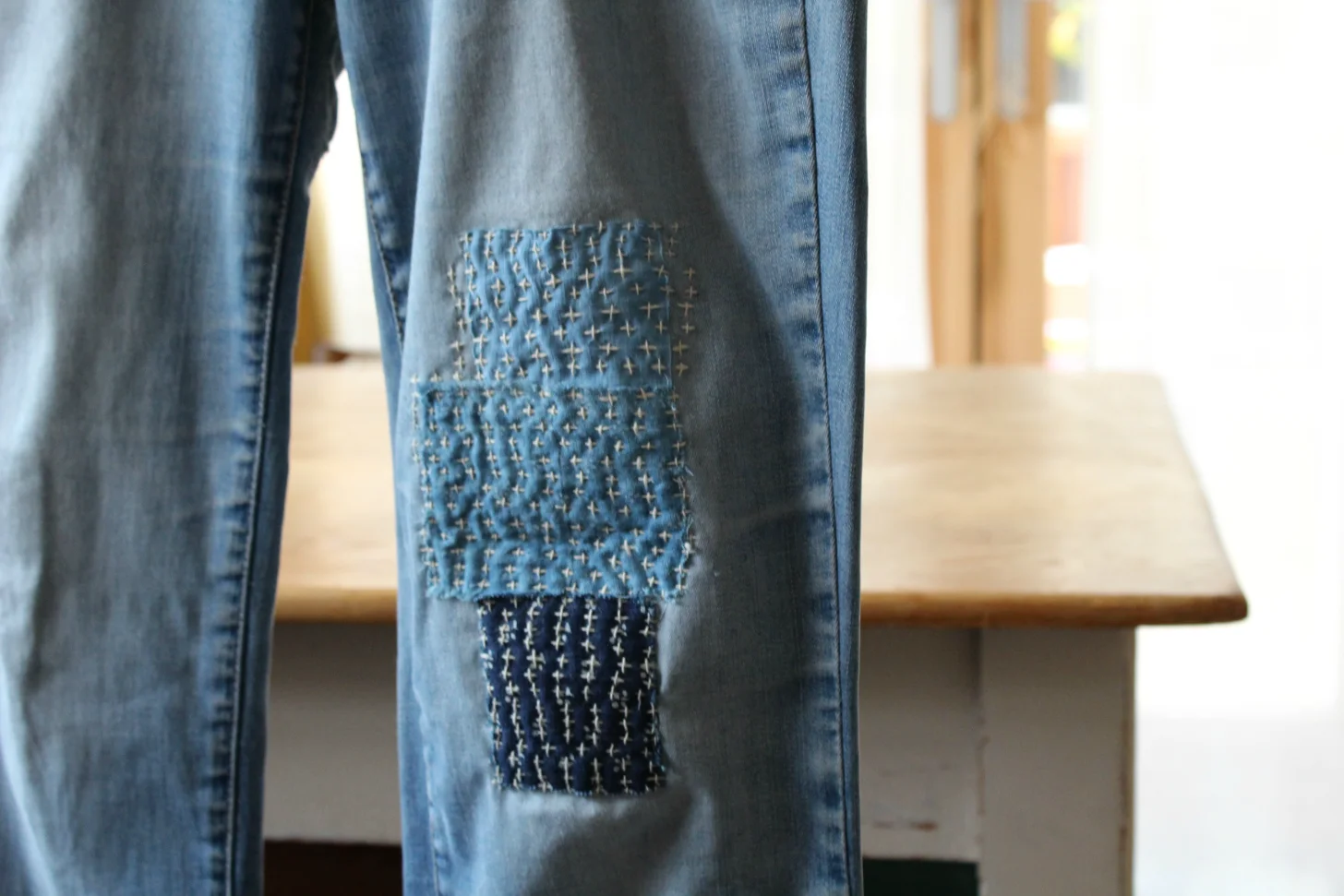
Visible mending involves repairing worn patches, tears, and holes in clothes using techniques and materials that are deliberately noticeable — such as colourful stitching, embroidery, and decorative patches — so that the repair is highlighted rather than hidden.

Visible repair has been linked to the centuries-old Japanese repair technique kintsugi — where broken pottery is fixed using a lacquered resin and decorated with gold. This emphasises damage as an important part of an object’s history. It has inspired the non-commercial fashion brand, Golden Joinery, to invite people to visibly mend holes and rips in their clothing with golden thread.
Visible mending has also been inspired by sashiko, a 400-year-old Japanese folk embroidery. Its repeated running stitches were traditionally used to strengthen work clothing but are now used to add decorative geometric patterns to clothing and home textiles repairs. This adds beauty to something damaged.
Although visible mending was once seen as a quiet, grassroots resistance movement to fast fashion, its popularity is growing rapidly.
Alongside a host of books published on the topic, the movement has grown quickly on social media with users tagging and showing off their repairs. The hashtag #VisibleMending has more than 56 million views on TikTok.
Plus, clothing haul videos, in which people show off their latest fast-fashion purchases, are being contested by mended haul videos where clothing repairs are shown off instead.
Embracing visible repair
Some retailers are also promoting visible repair.
Second Cashmere, a sustainable cashmere brand in Glasgow, sells recycled cashmere and restored knitwear to give clothes headed to landfill a second life. They help customers extend the lives of their cashmere by selling mending kits and provide a repair service where customers can have their items repaired invisibly or visibly.
The outdoor clothing brand Patagonia also offers a product repair service.
Patagonia inspires their customers to adopt a DIY approach to their own repairs at home — offering repair kits, replacement trims, spare parts, plus repair guides and video tutorials.
Their worn wear program encourages customers to embrace the marks of repair as an important part of a garment’s story. Customers are invited to show off their patched up and repaired items with pride.
Researchers have argued that brand repair initiatives such as these are beneficial because they can turn passive consumers into active participants in the life of their products. Plus, they can reduce replacement rates and increase consumer confidence in the brand’s support for sustainability.
Decorative stitching is often seen as a symbolic demonstration of sustainability values and resistance to disposable fast fashion. It’s also an expression of personal character and creativity. Visible repair demonstrates how repair is shifting from a cultural stigma that must be hidden to something that’s celebrated.
This article was written by Amber Martin-Woodhead and Martyn Evans from Manchester Metropolitan University, and Elaine L. Ritch from Glasgow Caledonian University, and was originally published by The Conversation.
Featured Image: Heather/Flickr (CC BY 2.0)