What’s for lunch?
For millions of school students, the answer may be fresh lettuce and tomatoes, apples and carrots grown by nearby farmers, or, in a few states, fresh lamb or haddock, raised or caught locally.
Local foods, once rare on school lunch trays, are gradually becoming more available in school cafeterias as states promote fresh produce, legumes, meats and fish.
Farm-to-school programs aim to improve the quality of school lunches and educate students about nutrition and where their food comes from. Programs also provide new markets for growers, which can strengthen local economies.
Nearly all states have a farm-to-school program, but at least 10 states enacted laws this year or last boosting theirs, though some measures faced opposition over increased food costs.
When restaurants closed during the pandemic, small farmers, ranchers and fishermen found farm-to-school programs a lifeline.
“COVID hit us pretty hard. It was a major setback,” said Phil Raymond, a first-generation farmer who grows artisan lettuces, microgreens and herbs in Okemos, Michigan, near East Lansing. His regular customers, including restaurants, country clubs and caterers, cut back or stopped ordering altogether.
Raymond, who with three friends founded Blue Mitten Hydroponic Farms in 2016 and is general manager and sales manager, had never thought of selling to schools.
“We didn’t know that was an option. We figured they went with the big distributors,” he said in an interview.
Then he connected with 10 Cents a Meal for Michigan’s Kids and Farms, a state farm-to-school program that matches funding for what schools spend on Michigan-grown fruits, vegetables and legumes with grants up to 10 cents a meal.
Now Raymond delivers weekly four-variety, mixed-case lettuce to four or five school districts in his county.
“It’s quite a lot of lettuce — more than we expected,” he said.
In addition to Michigan, states that passed legislation this year or in 2021 to expand farm-to-school programs include California, Hawaii, Illinois, Maine, Maryland, Nebraska, Vermont, Virginia and Wyoming, according to the National Farm to School Network.
The nonprofit advocates for local food and nutrition education for children and for strengthening family farms and communities.
Hawaii’s new law requires public schools and other state institutions to spend at least 10% of their food dollars locally by 2025, with increases up to at least 50% by 2050.
In California, Democratic Gov. Gavin Newsom signed the Buy American Food Act earlier this week, which requires certain schools to buy American foods unless they are at least 25% higher in price than imports.
In California and around the country, farm-to-school programs face several hurdles, including potentially higher food costs, shortages of staff to prepare the local foods and sometimes a lack of available farmers.
California state education groups opposed the legislation, saying it would lead to price gouging and unaffordable, increased costs for school districts.
“Well-intentioned but harmful” is how the coalition of education groups described the bill.
Michigan’s 10 Cents a Meal program started as a pilot project in eight counties in the 2016-2017 school year with a $250,000 budget. The Michigan legislature has continued to grow the program, doubling state funding last year and again this year, to $9.3 million for 2022-2023. It now serves 585,000 students in 57 of 83 counties.
“The 10 Cents a Meal program feeds our kids and supports family farmers and growers,” said Michigan Gov. Gretchen Whitmer, a Democrat, when she signed the bill in July. “As we continue our economic jumpstart, we have to make sure everyone has the resources and support they need to succeed.”
Nearly every U.S. state and territory has a farm-to-school program and, while programs vary, each includes at least one of these elements: local food procurement, food education or school gardens, according to the National Farm to School Network.
Some states buy only fresh produce, while others include dairy, meat and grains. Coastal states, such as Maine and Massachusetts, include fish.
While studies have not conclusively shown improved academic achievement or increased fruit and vegetable consumption, research has shown students are more likely to try new foods in a farm-to-school setting.
An added benefit of farm-to-school programs for school food services is reliability.
“We’ve really seen great strides with the program. Especially with supply chain issues, schools that have a relationship with local growers are having an easier time getting their groceries,” Wendy Crowley, the Farm to School Program consultant for the Michigan Department of Education and lead contact for grantees, said in an interview.
Farm-to-school began with a few schools in different states in the late 1990s, then started rolling with the federal Farm to School grant program in 2013. The federal government has delivered nearly $75 million in grants, reaching more than 25 million students in nearly 60,000 schools.
The nation’s schools bought more than $1.2 billion in local foods in the 2018-2019 school year, about 20% of their food budget, and milk accounted for more than half of what they ordered locally. That's according to the 2019 Farm to School Census, the most recent survey conducted by the U.S. Department of Agriculture Food and Nutrition Service.
Challenges to using local foods include cost — local is more expensive — as well as the staff and space needed to prepare the foods and the difficulty finding local suppliers, the survey found.
Maine schools rarely serve fresh fish, even though Maine is a coastal state, because of the cost, said Robin Kerber, coordinator of the state’s Farm and Sea to School program. The high cost also means many children may not see fresh fish on their dinner plates and don’t know whether they like it.
“There are a lot of communities where the parents are fishermen or lobstermen, but the family can’t afford to eat it,” she said in an interview.
After restaurants closed due to the pandemic in 2020, Maine used COVID-19 relief money to help fishermen sell fish. The state created a Local Foods Fund (formerly the Local Produce Fund) to match school districts $1 for every $3 up to $7,500 spent on produce, value-added dairy, protein or minimally processed foods.
The Maine Coast Fishermen’s Association donates excess fresh haddock, hake, monkfish and pollock from their catches to a location in Portland where schools pick up what they need.
The Maine Farm and Sea to School program also promotes local produce, supplies recipes and holds cooking classes and a cook-off.
Trent Emery, a first-generation produce farmer in Wayne, Maine, 17 miles west of Augusta, is a former teacher who started farming exclusively in 2009, first selling as a CSA (Community Supported Agriculture) provider and to farmers markets.
To operate his 15-acre Emery Farm and greenhouses year-round, he developed relationships with schools and other institutions and now makes daily deliveries.
Through the Farm and Sea to School program, he delivers seasonal produce — beets to watermelons — to four school districts, for about 10% or 15% of his total business.
“I’d like for more schools to buy from our farm and from farmers in general,” he said.
This year, Vermont increased the budget for the state Farm to School and Early Childhood program to $500,000, and the legislature passed a universal school meals law, so that every child in Vermont is entitled to free school meals.
Nebraska established a farm-to-school program in 2021 and added early childhood education to the program this year.
Last year, Wyoming established the Protein Enhancement Project. A pilot project since 2017, the program has a budget of $25,000 to provide grants to schools to match their cost of processing donated beef, bison, lamb, pork and poultry starting in 2023.
California and Hawaii this year moved to require schools and other state agencies to buy local. Hawaii’s Farm to School law now requires the departments of education, health, public safety, defense and the University of Hawaii system to spend at least 10% of their food dollars on local fresh or local value-added, processed, agricultural food by 2025, with increases every five years, until 50% of food purchases by the departments are local by 2050.
In California, the agricultural community has complained for years that schools buy cheap imports of peaches and other fruit for school lunches, even though Buy American is a federal requirement of the National School Lunch Program, and the state has a Buy California law on the books.
California state Sen. Anna Caballero, a Democrat, sponsored the Buy American Food Act bill that will require state schools, community colleges and state universities, other than the University of California, to buy American foods unless they cost 25% more than imports.
“We have an agricultural industry to protect,” she said in an interview. “We saw what happened during the pandemic when shortages occur. This is a national security issue.”
The law will strengthen federal Buy American policy at the state level while protecting farm workers and the agricultural industry, she said.
The measure had bipartisan legislative support, but the education community pushed back.
The California School Boards Association, on behalf of the California County Superintendents Educational Services Association and local school districts, had urged Newsom to veto the bill, saying in a news release the 25% was an “unreasonable standard” that would lead to price gouging as schools implement the new universal free school lunch service.
Vernon Billy, CEO and executive director of the California School Boards Association, declined repeated requests for an interview.
In his statement, Newsom said requests for additional resources will need to be included in the annual budget process.
Caballero said there’s money in the budget to cover the extra cost, though the money is not earmarked, and opponents say it could be used for other school meal costs.
The law says buying American foods is a requirement, but it includes no penalties.
“This is not a gotcha,” Caballero said. “We’re not looking to make life difficult for the school districts.”
Every day the Good Good Good team collects the best good news in the world and shares it with our community. Here are the highlights for this week!
If you want to get good news in your inbox every day, join the Goodnewsletter — the free daily newsletter designed to leave you feeling hopeful.
The Best Positive News We're Celebrating This Week —
Asian Americans and Pacific Islanders in Texas are helping remove language barriers ahead of the midterm elections
A recent report found that more than half of Asian Texans — the fastest-growing demographic in the state — believe the government has not done enough to help with access to election, candidate, and other information in their own languages. The gap in accessible information leads many to not participate in elections at all.
While some counties have been required by federal law to offer materials translated into Vietnamese, since more than 5% of the population speaks it, Asian American and Pacific Islander communities speak more than 100 languages — so a huge gap remains.
The nonpartisan organization Asian Texans for Justice and others in the state are working to help close that gap by offering a variety of language assistance resources: translating election information and candidate bios, creating election protection hotlines, and more.
For the first time, investment in wind and solar energy is on track to outpace oil and gas drilling this year
Analysts have found that in 2022, spending on wind and solar projects is projected to reach $494 billion — compared to $446 billion for oil and gas drilling, marking the first time ever more money will be invested in clean energy than fossil fuels.
While it’s discouraging to know that so much money and investment is still going to fossil fuels — it’s a pivotal moment of progress, and a trend worth celebrating as we look to a future where little to nothing is invested in fossil fuels.
Amidst rising fuel prices, fossil fuel production around the world has been inconsistent — it’s gone up in some places, and down in others. In the U.S. specifically, the Energy Information Administration is projecting that renewables will generate more power in the country this year than coal.
All forecasts, trends, and data, though, paint a hopeful picture of a fossil-fuel-free future.
A pioneering rewilding project has resulted in the first (surprise!) baby bison born in the U.K. in thousands of years
In July, a rewilding project in the United Kingdom released three female bison into the wild, with the hopes of familiarizing them with the area, and eventually releasing a male into the area so they could reproduce naturally.
As a defense mechanism against predators, bison mothers hide their pregnancies, so the project didn’t know one of the females was pregnant when they relocated here. She went missing for a few days and had been giving birth in a secluded location.
The calf is the first bison born in the U.K. in thousands of years, and it will help the project study how bison can be “ecosystem engineers” and restore wild habitats. All of Europe’s 9,000 bison descended from just 12 zoo animals, which saved the species from extinction in the early 20th century.
The latest protests in Iran are part of a long history of women’s resistance in the country
On September 16, the death of a 22-year-old Kurdish-Iranian woman, Mahsa Amini while she was in the custody of Iran’s morality police set off a wave of protests and demonstrations across the country.
Bringing together people from different religions, genders, and more, the protests are the latest, and reportedly greatest threat the country’s regime has faced. For decades, women in particular have led movements to fight for their basic rights.
The women leading these protests against the mandatory hijab law have made it into something even bigger: targeting the very foundations of the regime and its ideological taboos.
The Salt Lake City Council unanimously approved a tiny home village for people in Utah experiencing homelessness
To help provide housing for people experiencing homelessness in Utah, the Salt Lake City Council just unanimously voted to approve a project that will lease around eight acres of city-owned land to build a tiny home village.
The 430-home “The Other Side Village” will serve as "recovery housing" and have other services and resources like a clinic, job opportunities, and more.
The city’s mayor first announced the project in April 2021, and it’s both part of a larger tiny house movement to address homelessness, and modeled after a similar and renowned project in Austin, Texas.
The International Energy Agency says global carbon emissions from energy will peak in 2025
The world’s leading energy organization, the International Energy Agency’s (IEA) latest report found that, thanks to a rise in planned government investment in clean energy following Russia’s invasion of Ukraine, carbon emissions from energy will peak in 2025.
The IEA called the investment a “historic turning point” in the transition away from fossil fuels. Planned investments by governments around the world will total $2 trillion by 2030.
Unfortunately, according the IEA, current government policies lead to global temperatures still rising to 2.5 degrees Celsius. Now that governments can see how implementing and investing in clean energy puts the world on a better trajectory — we’re hoping to see all the necessary investments in clean energy.
An Iranian woman is using technology to unite Iran for change
The Iranian Revolution in 1979 changed Firuzeh Mahmoudi’s life, just like it changed the lives of everyone in Iran, just like it changed the fortunes of a nation. Amidst oppression, destruction, and heartache, Mahmoudi had the opportunity, vision, and courage to make a difference for her country.
With a background in environmental activism, she put her skills to use to create United for Iran, an independent nonprofit focused on civil liberties in Iran.
United for Iran has, among other things, created the “Irancubator,” which uses technology to support communities in Iran, the Iran Prison Atlas, a massive, interactive database of all the political prisoners in Iran, and an app that serves as a period tracker and helps women understand of what their legal rights are.
Though Mahmoudi is blacklisted and cannot visit the country, the influence and impact of United for Iran is at work even today amidst the current protests — all with a vision for a better Iran.
More good news of the week —
With the help of students, an organization is restoring New York City’s once-flourishing oyster beds. The oysters will help naturally filter the water, attracting other underwater life, and protecting shorelines from future storms.
Iranian men are joining the “fight against darkness” for women’s equality, life, and freedom in Iran. Standing beside women in the streets, some think their joining in the protests could be a watershed moment for the movement.
The U.S. Department of Agriculture is investing $53 million in the WIC nutrition program for women and children. The money will be awarded in grants to improve outreach efforts, improve technology, and enhance shopping experiences.
The suicide rate among U.S. military members dropped by 15% from 2020 to 2021. The Army was the only branch that increased, but in the first six months of this year, it dropped 30% compared to last year.
Carbon emissions from fossil fuels are projected to rise by under 1% this year, well under the 6% rise in 2021. While good progress to celebrate, and proof that it’s possible, emissions need to decline even more dramatically.
Denver launched a wildly popular rebate program to help more of its residents get and use e-bikes. After the first rebate vouchers were claimed within days of launching, the city released more and they were gone in minutes.
Student protesters flooded the field during the University of Pennsylvania’s homecoming football game to demand change. They want the university to “be a good neighbor” and save a low-income housing complex, pay its fair share in property taxes, and end fossil fuel investments.
Zimbabwe just became the first country in Africa to approve an HIV prevention drug. The World Health Organization called it a “crucial step” and offered its support to develop programs to implement the drug safely and effectively.
Some U.S. states are getting more than $66.7 million for conservation efforts to protect the most at-risk species. The funding will go to 16 states and Guam and cover over 13,500 acres of habitat for 162 species.
The Miss England competition had its first makeup-free participant in its 94-year history. Melisa Raouf participated makeup-free to challenge society’s “unrealistic beauty standards.”
The employment rate for workers with disabilities reached 23.3% in November 2021 — the highest since 2008. Disabled workers have long been fighting for remote work and more flexibility, and the pandemic has resulted in a positive shift.
A huge marine reserve in the Pacific Ocean has led to the recovery of tuna and other migratory fish in the area. Fishing is banned in the Papahānaumokuākea Marine National Monument and its helped species recover in surrounding waters.
NASA and the NOAA just confirmed the ozone layer is still shrinking. The ozone hole reached an average area of 8.9 million square miles this year, continuing an overall shrinking trend.
Same-sex marriage is now legal in all 32 of Mexico’s states. Lawmakers in the final state, Tamaulipas just voted to legalize same-sex marriage.
The Biden administration is giving $1 billion in grants for school districts to purchase electric buses. Nearly 400 school districts spanning all 50 states and Washington, D.C., several tribes, and U.S. territories will receive grants for electric buses.
Between the “Be Kind” graphic T-shirts in every department store and Harry Styles crooning his signature reminder to “Treat People With Kindness,” the concept of kindness is rather trendy in our current climate.
But kindness goes beyond a fleeting trend or a singular act; it’s a lifestyle and mindset shift that implores us to meet the world — and each other — with greater empathy and justice.
Kindness asks us to extend our approach beyond niceties and good manners, and into transformative action, compassionate and intentional inclusion, and empowering solutions.
Kindness is a choice, a muscle we all flex, and could frankly use a little more of our attention.
World Kindness Day — which takes place every year on November 13 — is a great opportunity to deepen our relationship with kindness and connect with one another in new and exciting ways.
We’ve compiled some ideas to help you celebrate World Kindness Day and World Kindness Week.
By the way, some of the links in this article (like books!) are affiliate links, which means if you make a purchase after clicking a link, we may earn a commission at no extra cost to you. Thank you!
What is World Kindness Day?
World Kindness Day is an international holiday first introduced in 1998 by the World Kindness Movement. The holiday is devoted to promoting kindness throughout the world, understanding the positive potential of large and small acts of kindness, and unifying together as human beings.
Activities To Celebrate World Kindness Day —
Learn
Learn about the science of kindness.
There is real science about the power of being kind. In fact, research even suggests that doing good for others is contagious. Now that’s a virus we can get behind!
Learn a little more about the science behind kindness and then apply what you’ve learned to the relationships and situations in your life. Here are a few resources to get you started:
- The Science of Kindness by the Random Acts of Kindness Foundation
- The Bystander Effect Experiment as part of Participant’s “Science of Empathy” series
Read a book about kindness.
Whether you’re shopping picture books for your kiddo or doing your own reading, there are loads of incredible books out there that teach us more about being kind to one another.
Check out some our recommendations:
- “The Power of Kindness: The Unexpected Benefits of Leading a Compassionate Life” by Piero Ferrucci | Read on Amazon | Read on Bookshop | Listen on Libro.fm
- “Be Kind” by the Dalai Lama | Read on Amazon | Read on Bookshop
- “Deep Kindness: A Revolutionary Guide for the Way We Think, Talk, and Act in Kindness” By Houston Kraft | Read on Amazon | Read on Bookshop | Listen on Libro.fm
- “The War for Kindness: Building Empathy in a Fractured World” by Jamil Zaki | Read on Amazon | Read on Bookshop | Listen on Libro.fm
Listen to a talk or a podcast about kindness.
Would you rather get your kindness info in audio format? We’ve got you covered!
Here are a few amazing talks and podcasts about kindness to add to your queue:
- “Maia & Alex Shibutani — Taking Kindness to the Olympics” on Sounds Good
- “Orly Wahba — Using Kindness to Empower Others” on Sounds Good
- “Kindness Legacy: How Small Acts of Kindness Create Global Impact” by Denise Walker for TEDxWhite Rock
- “James Rhee on Kindness, Math, and the Power of Goodwill” on Dare to Lead with Brené Brown
- “The Power of Kindness” by Raegan Hill for TEDxDeerfield
Read and share quotes about making a difference for others.
If there’s one thing we love at Good Good Good, it’s a really great quote. Bite-size words of wisdom from leaders and changemakers really can compel us to do more good — or at least take part in our collective humanity.
We’ve compiled a list of the best quotes about kindness — check it out!
Here are a few more quote roundups to give you a little inspiration:
- Quotes about optimism (from optimists)
- Quotes about making a difference in the world
- Quotes about hope to encourage & inspire you
- Quotes about activism (from activists)
- Quotes about social justice
- Quotes about positivity
Random Acts of Kindness
Do a random act of kindness.
Pledge to yourself that you will do at least one random act of kindness each day. While these actions might seem small, that doesn’t make them any less important.
You’d be surprised how picking up litter, leaving a review for a favorite local business, or writing a thank you note to a teacher can make a positive impact on yourself and your community.
We’ve even compiled a list of over 100 ideas to practice random acts of kindness — check it out!
Help one person.
We know it might seem trite, but even helping one person makes a massive impact. The ripple effect of doing something that lightens the load for someone makes it that much easier for them to do the same for someone else… and so on.
Whether you’re babysitting for a friend for free, cooking a meal for your neighbor, or even just letting someone go first before you in line, your one small action can change the trajectory of their entire day, week, or even month.
Help a lot of people by advocating for systemic change.
Kindness is not only limited to our neighbors, but our entire world. Practice kindness by advocating for the planet, for entire communities of people, or even your school curriculum.
Taking action can take shape in a lot of different ways. Start by thoughtfully consuming the news, calling your elected officials, supporting mutual aid funds, or volunteering to support a cause you care about.
We can’t change the entire world all on our own, but what we do within our communities and circles mobilizes everyone around us to move the needle, too.
Other Ways to Take Action
Put up a Don’t Give Up sign.
In response to increased suicide rates, Amy Wolff of Oregon, started putting up yard signs with hopeful messages like “don’t give up,” and “you’re worthy of love.”
Her neighbors caught on and wanted in on the action, and quickly the initiative grew into a full nonprofit, distributing signs and other “Don’t Give Up” products around the world.
Whether you order via Wolff’s organization or make a sign of your own, something as simple as a reminder not to give up can be a tremendous act of kindness for others.
Be a little kinder to yourself, too.
While it is vital to make a difference in the lives of others, we all know that we fundamentally cannot pour from an empty cup. Being kind to yourself, taking more time to rest, and investing in your own care is an act of love for yourself, and for the people around you.
Start by incorporating some proactive self-care ideas (not just hot cocoa and face masks, but those are great, too!) into your routine.
Frequently Asked Questions
What is the purpose of World Kindness Day?
As outlined by the World Kindness Movement, an NGO composed of organizations from around the globe, the purpose of World Kindness Day is “to highlight good deeds in the community focusing on the positive power and the common thread of kindness which binds us.”
Celebrations of World Kindness Day have included concerts, dance events, distribution of “kindness cards,” speaking events, mental health advocacy, and more.
What is the theme of World Kindness Day 2022?
The theme of World Kindness Day 2022 is “Be Kind Whenever Possible.” The theme is taken from a Dalai Lama quote: “Be kind whenever possible,” His Holiness says. “It is always possible.”
What is the hashtag for World Kindness Day 2023?
The primary hashtag for World Kindness Day is simply #WorldKindnessDay, though many people also use #WKD, #SpreadKindness, #BeKind, #KindnessMatters, #Kindness, and #KindnessDay.
What color do you wear for World Kindness Day?
You can wear whatever color you’d like for World Kindness Day! There is no official color for the holiday. In the past folks have worn cardigans in honor of Fred Rogers, or encouraged people to wear yellow, as it symbolizes happiness and gratitude.
When did World Kindness Day start?
World Kindness Day is an international holiday first introduced in 1998 by the World Kindness Movement. Although not officially recognized by the United Nations, the holiday is now celebrated around the world annually on November 13.
Bright parasols, wooden sun loungers and expanses of golden sand suddenly appear every summer on what was once a traffic-clogged, 3.3 kilometer road along the banks of the River Seine in the heart of Paris.
The so-called “Paris Plages” have been coming to the picturesque waterside location since 2016, after Mayor Anne Hidalgo, following two years of consultation, decided to take the controversial step of closing the road to motor vehicles.
“This used to be such a stressful corner of the city,” says Françoise Genet, 38, sipping on a glass of lemonade as her two boys dig around in the sand. “It’s not quite the Côte d’Azur, but now I almost feel like I’m on vacation here.”
Under Mayor Hidalgo, Paris has done as much as any city in the world to wage a war on cars amid a growing awareness of the damaging impact they have on cities.
Passenger cars emit huge amounts of pollution and are an inefficient use of finite public space. They are Europe’s second-largest source of greenhouse gas emissions and the leading killer of children.
Copenhagen has calculated that for each kilometer cycled by a resident, society reaps a benefit of €0.64 ($0.64), whereas each kilometer driven costs us €0.71 in impacts on health, safety and the environment.
But over recent years, Paris has implemented an array of measures to prioritize pedestrians, cyclists and transit while bringing car use screeching to a halt.
In addition to pedestrianizing the Seine’s quayside, the French capital has banned heavily polluting diesel cars through the creation of a low-emission zone (which will become progressively more stringent from now until 2030), reduced drivers’ access to major streets, expanded green areas, and promoted other ways getting around the city.
(During the pandemic, 50 kilometers of cycle routes were added to the existing 700 kilometer network).

As a result, the proportion of journeys by car in Paris has dropped about 45 percent since 1990, according to a paper published by the journal Les Cahiers Scientifiques du Transport.
At the same time, the use of public transit has risen by 30 percent and the share of cyclists has increased tenfold.
Separate research released by the Parisian Urban Planning Workshop (Apur) found the number of cars in the city has fallen — more and more quickly — every year since 2012. That means that while nine out of ten French people have a car, only three in ten Parisians do.
“A lot of what has been happening in Paris is very exciting,” says Rachel Aldred, a professor of transport at London’s Westminster University. “It is seizing the opportunity to change.”
Aldred says that in order for European nations to meet their climate goals, other cities will have to follow the same route.
The European Union aims to have 100 climate-neutral cities by 2030 — a goal that will require car use to fall by 40 to 50 percent. “That requires substantial changes,” she adds, “but I think that big changes are possible.”
The latest projects in Paris include enforcing a new citywide speed limit of 30 kilometers per hour and establishing car-free zones outside schools.
One of the most radical new measures is a “peaceful zone,” set to launch in 2024, that will make it illegal to drive across the city center without stopping (albeit with exceptions for various groups of drivers), effectively banning cars that aren’t absolutely essential — a policy the city estimates could cut through-journeys by up to 70 percent.
Meanwhile, wider efforts to create a 15-minute city — where every resident’s needs, for leisure and work, can be reached by bike or foot in a quarter of an hour — will put the brakes on car use even further.

“Hidalgo has been much more anti-car than her predecessors,” says Pierre Zembri, professor of urban planning and transport at the University of Paris Est Marne La Vallée and director of the City Mobility Transport Laboratory. “That’s clear.”
But if the transition away from motor vehicles is not done carefully, Zembri says it risks being regressive, punishing those who have little choice but to enter the city by car and shifting traffic to the suburbs.
He cites the example of the gilets jaunes, or yellow vests, an anti-establishment movement that swept across France in 2019 due to the cost-of-living crisis for some of France’s poorest that was partly due to high fuel taxes.
“Most people don’t enter Paris by car for pleasure,” adds Zembri. “These people are delivery drivers, shopkeepers, artisans. [By cracking down on cars] traffic won’t just evaporate. It will push the problems to the suburbs, where they don’t have a choice but to take the car because of the more limited transport options.”
Since 1990, the proportion of journeys by car in Paris has dropped about 45 percent, use of public transit has risen by 30 percent and the share of cyclists has increased tenfold.
Professor Aldred acknowledges the tricky path municipalities must navigate, both practically and politically, in trying to cut car use. “There’s a split between Paris and Greater Paris, with that tussle over the ringroad between them,” she says.
“Hidalgo has power over the road network. But the risk is you only make things better in the historic core — you’re seeing a reduction in inner Paris, but not so much outside.”
Yet fears of pushing the traffic problem into poorer suburbs might not necessarily be founded. For the first time, in 2020, the amount of cars in the Greater Paris region, known as Ile-de-France, declined.
While in 2014, the region’s vehicle fleet increased by 90,868 vehicles, over the following five years it steadily declined, until the real drop in 2020.
Although pandemic lockdowns played a role, Paris’ policies to restrict cars “accelerated the exit of old vehicles from the fleet without them being replaced by new ones,” according to Apur.
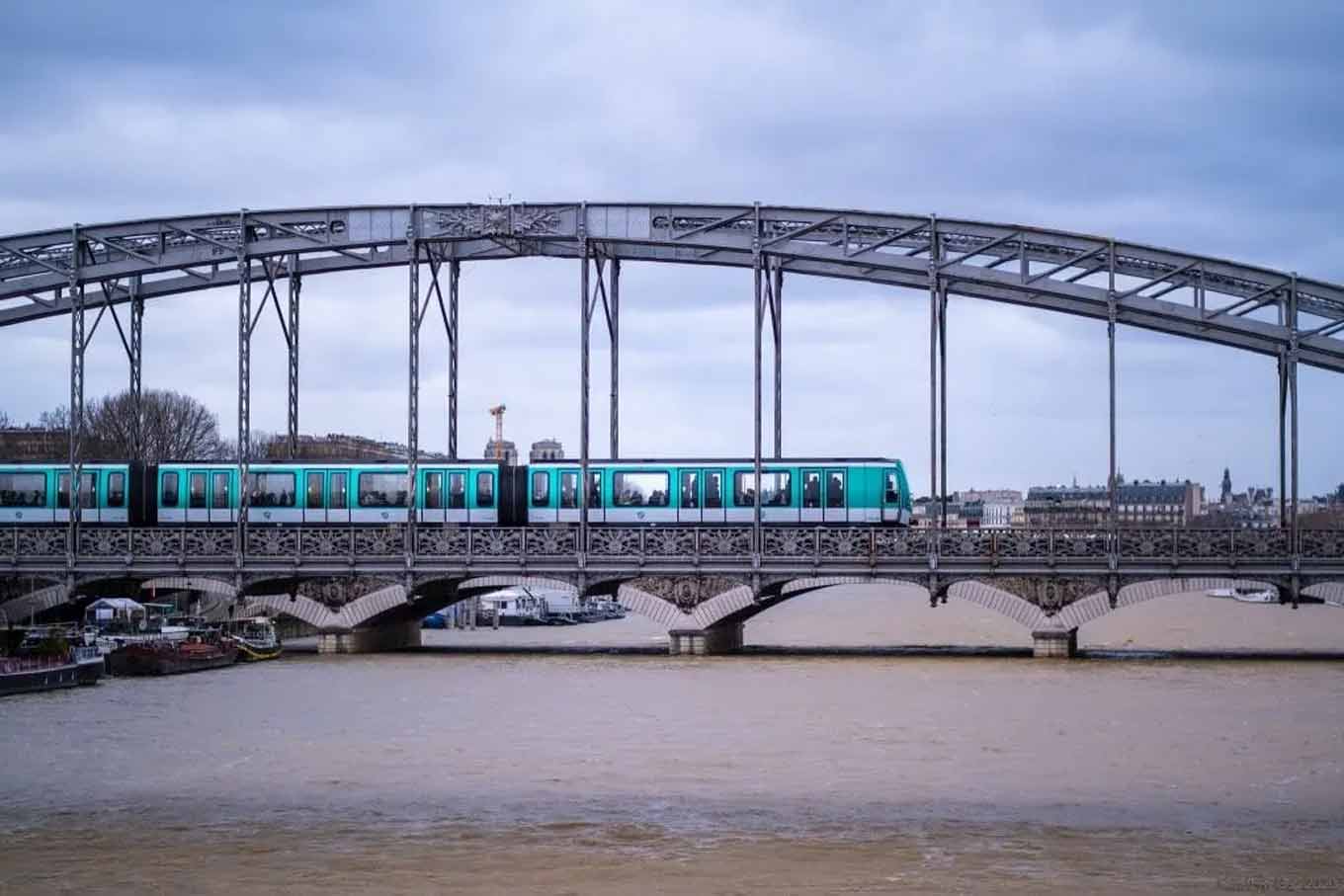
But for Aldred, a key factor is a shift in attitudes. The world is reaching a state of “peak cars,” she believes, and behavior change is being driven by younger people.
She says that the car, long a symbol of freedom, is increasingly coming to be seen as inconvenient, expensive and ecologically indefensible.
The road ahead, nonetheless, varies hugely depending on geographies and demographics. Parisians have a richly developed public transport network, including the metro, tramways, buses and longer-distance RER trains, as well as a supply of electric scooters and self-serve bicycles, both municipal and private.
The city’s high density, too, means that walking is often a viable option. But Aldred says that cars are sometimes necessary for people’s mobility and social inclusion needs, especially those with disabilities, and so alternatives to driving must be provided.
“But it’s important to note car-centric cities disadvantage the marginalized,” she adds, citing research in the UK that found nearly 90 percent of the highest-income households own at least one car, but in the lowest-income households 40 percent do not.
Paula Kuss, who led research into the ways European cities have been able to curb car use, drawing on nearly 800 peer-reviewed studies and case studies, found that a particularly effective measure was a congestion charge, which London, Milan, Stockholm and Gothenburg used to reduce traffic in the city center by 12 to 33 percent.
Other approaches included Oslo’s replacement of parking spaces with pedestrianized streets and bike lanes, and Rome’s restriction, with fines used to finance public transport — both reduced car traffic by 10 to 20 percent.
The Dutch city of Utrecht reduced the share of commuters traveling by car by 37 percent by providing mobility services including free public transit for employees and workplace shuttle buses.
Bristol in the UK and Catania in Italy both cut car commutes to their universities by 24 to 27 percent by providing free public transport for students and incentives for staff to use car-sharing, walking, biking, or public transport.
“I think a combination of measures is really effective,” says Kuss, of Lund University. “Especially when you see holistic approaches for mobility, such as what Paris is doing with the 15-minute city.”
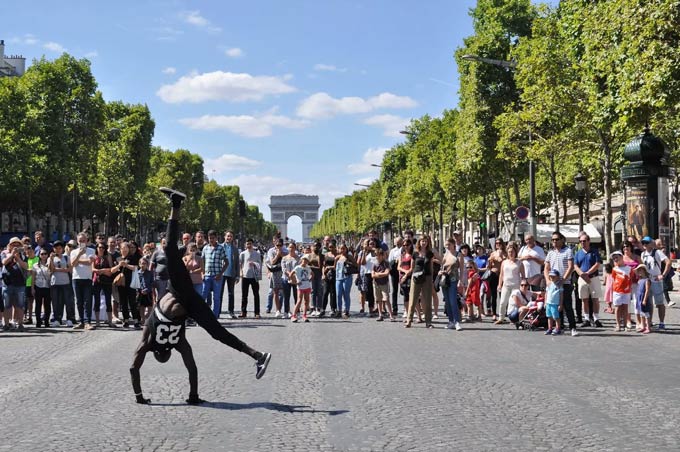
Kuss outlines three sectors to consider the relevance of any initiative: suitability in the local context (size, population), feasibility (financial resources, workforce) and novelty (how radical is it compared to past or current policies).
“In Lund, it might be difficult to implement because the city might be too small to have a congestion zone,” she says.
“It could be difficult to create a cordon, digital or otherwise. And how do they go about charging?”
But even with a few roadblocks to contend with, as the planet hurtles towards the point of irreversible global warming, Kuss argues that towns and cities around the world must accelerate their efforts to crackdown on cars.
“The change has to happen very quickly and radically,” she says.
April Campbell remembers always loving birds, even as a child — though she didn’t know what to do about this curiosity until she reached adulthood.
“There were no members of my family that were birders,” Campbell recalls. “All I knew was that I really liked nature and birds and wanted to learn more about them.”
Campbell, who is Black, eventually adopted birding as a hobby after she completed medical school. But she quickly learned that the local Washtenaw Audubon chapter – in liberal, affluent Ann Arbor, where she lived – lacked Black and Brown birdwatchers.
“There were never any people of color, and not just African Americans, but there weren’t any Asians, no Latino — nobody,” Campbell says. “There were…usually older white people; most of them were either retired or were very well-to-do with a lot of vacation time.”
According to a 2019 U.S. Fish & Wildlife Service report, just 6% of birders are Black. Campbell, now a retired medical doctor, realized that birding events held by her local Audubon chapter were not accessible to Black and low-income folks.
“There was really very limited-to-no outreach to other people besides the immediate group. It made it very difficult if you didn’t have a car,” Campbell says. The meetings were often held in areas that were not on any bus route, requiring a vehicle to get to and from outings.
Campbell says she would mention these concerns to the chapter leadership repeatedly. “I was told well, ‘we’re a welcoming group,’ and ‘we welcome everybody to come,’” she recalls.
“I said, well, welcoming someone to come is one thing, but actually doing outreach and going out to them is quite another. It got to the point where I became an irritant. And they accused me of being just an angry Black person.’”
In 2020, the same day as the George Floyd murder, the racism and racial exclusion Black birders endure came under a national spotlight. In New York City, lifelong birder Christian Cooper was birdwatching in Central Park when he requested a white woman to leash her dog per city regulations.
The woman’s aggressive response, calling the police to report “an African American man [was] threatening” her life, went viral.
Black people’s assertiveness when in spaces that are deemed white is often interpreted as aggression.
It’s a reality encapsulated by birder J. Drew Lanham’s 2013 article “9 Rules for the Black Birdwatcher.” No. 1: Expect to be mistaken for the only other black birder at the bird festival. No. 2: Carry three forms of ID at all times. No. 3: Never bird while wearing a hoodie.
Around the U.S., as the Washington Post reported last year, the birding community is undergoing a racial reckoning as it decides how to deal with the names of birds that honor proponents of slavery and white supremacy.
The National Audubon Society itself is named after a slaveholding birder who contributed to white supremacist ideology and worked against abolitionists.
In July, the Seattle chapter voted to become the organization’s first large chapter to drop its name, and advocated for the national society to do the same.
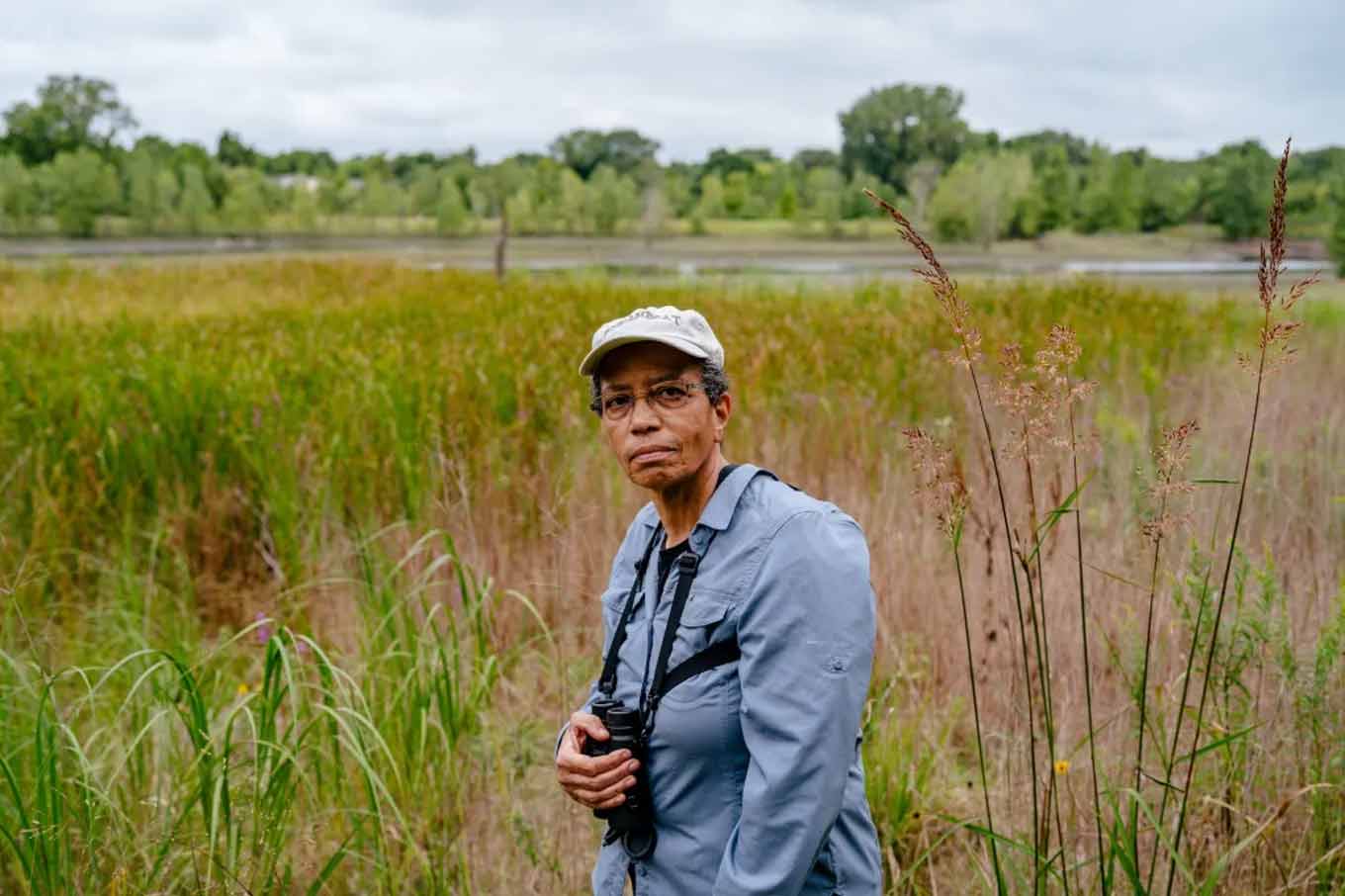
Back in Michigan, Campbell decided to leave the Washtenaw Audubon group and create her own local group for Black birders — BIPOC Birders of Michigan.
“I called it BIPOC Birders of Michigan because I wanted to be acknowledged that the goal was to have this statewide,” Campbell says.
Finding a local Audubon chapter willing to work with her took a while. In Michigan, local chapters operate autonomously and are unaffiliated with each other and with the National Audubon Society.
At first, Campbell hoped to work with the state chapter, Michigan Audubon, but found a good fit with Detroit Audubon.
“Detroit Audubon has undergone what I would describe as a sea change in their entire philosophy of birding and outreach,” Campbell says. “And they have a number of young new people who are really dedicated to making this work.”
She’s also building partnerships with other metro Detroit chapters and continues working with supportive Washtenaw Audubon members.
“It was really a matter of partnering with people willing to go the distance and bypassing the people in the way,” says Campbell.
Since Campbell’s departure, the Washtenaw Audubon chapter brought on Victor Chen as its education chair to help strengthen diversity efforts.
“Washtenaw Audubon is very aware of the lack of diversity in our membership and people participating on our bird walks,” Chen says. As education chair, he is tasked with creating more inclusive programming for Black people and other people of color.
Chen says he’s happy to hear about Campbell’s success with the BIPOC Birders of Michigan. “I hope that we can support her in whatever way possible, especially since much of the work we’re trying to do at Washtenaw Audubon stems from conversations I’ve had with April,” he says.
The Washtenaw chapter placed a DEI statement on its website in 2020; Campbell says she doesn’t recall being asked to participate in creating the statement.
(Washtenaw Chapter president Juliet Berger says she did not recall why Campbell left the group. “I’m very sorry that she did not feel supported. That was not our intention here,” she says.)
Brittany Leick, a program coordinator at Detroit Audubon, was thrilled to join forces with Campbell. She had been hoping to diversify Detroit Audubon’s membership, so Campbell’s project offered a potential solution to a problem many chapter members had already identified.
“It’s unfortunate, but the reality is for a large portion of the lifetime of our organization, and even today, most people refer to Detroit Audubon as a primarily white organization,” she says. “It shows in many of our attendees as well, and I don’t like that. I don’t want that to be how it is.”
Other chapters within the Great Lakes region have identified similar concerns, according to Troy Peters, director of engagement for Audubon Great Lakes, a regional chapter of the organization. He sees a primary need to expose communities of color to birding as an opportunity they may not recognize.
“It’s not like [Audubon chapters] are saying, ‘Hey, we have all these people that are interested to come and get involved with what we’re doing and we don’t know how to get them involved. It’s more, ‘We are trying to get people involved,’” he says.
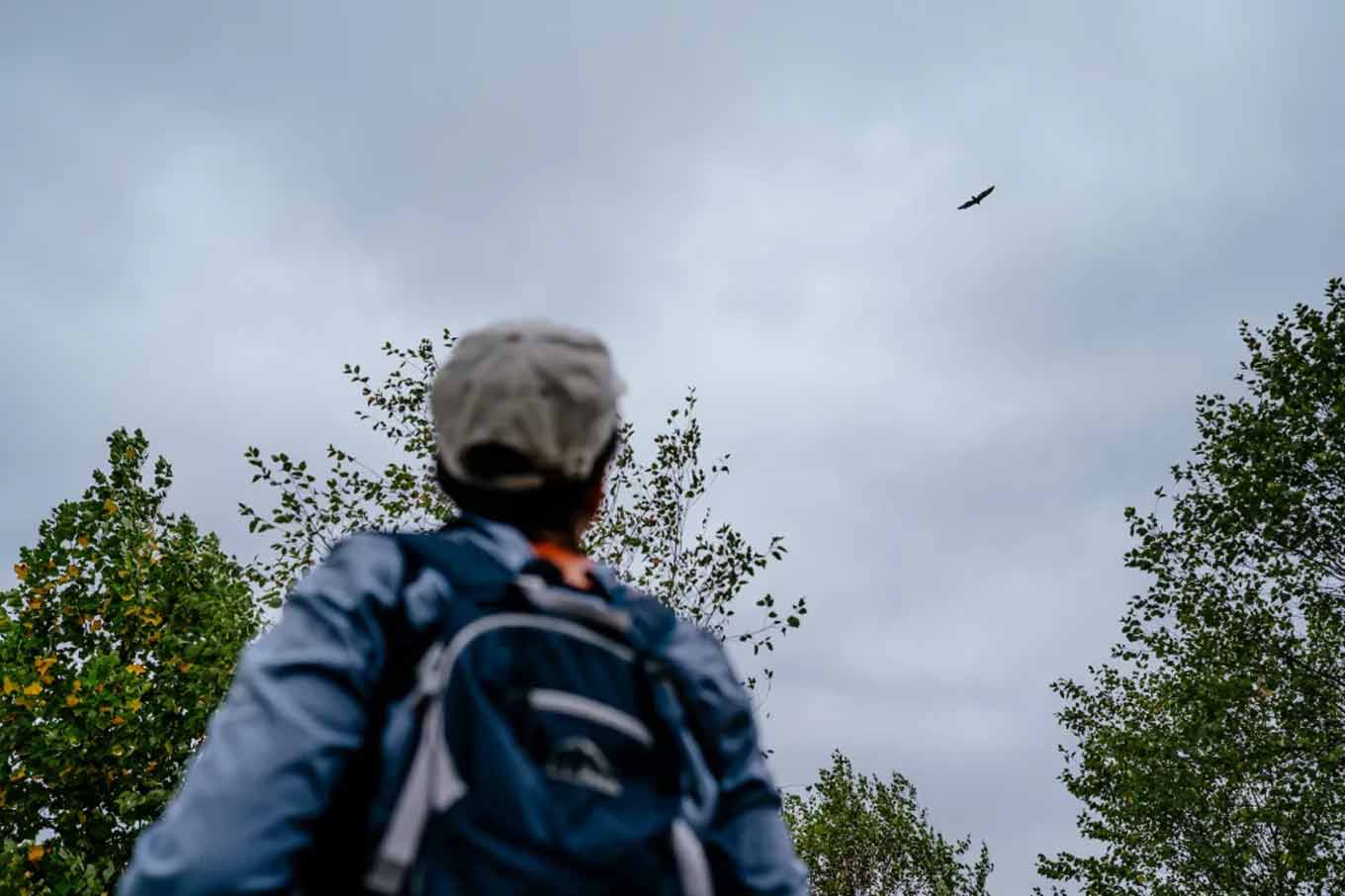
One way Great Lakes Audubon is doing that is through its Wild Indigo Nature Explorations, which is designed to build lasting relationships between urban communities of color and their local natural areas.
The program currently exists within cities of the region’s five states, including Detroit, Chicago, Milwaukee, Columbus, and Gary, IN.
It’s one example of how to encourage grassroots leadership in Black communities where Audubon has lacked engagement, according to Peters.
“[This] gives us more of an opportunity to develop that pipeline of grassroots leadership, that will change both the complexion of membership and… making it a movement [so] that people are not just joining the things that we’ve always done,” he says.
BIPOC Birders of Michigan held its inaugural event — Blacks, Browns, and Birds — in early June, leading a bird-watching tour through the trails of Detroit’s Palmer Park and ending with a conversation about the joys and challenges Black Birders face. Detroit Audubon helped distribute flyers among Black communities and loaned equipment for the program.
Campbell hoped the event would create a safe haven for Black and Brown people of all birding experience levels. At Campbell’s request, Detroit Audubon decided not to advertise the event widely.
“Everyone was worried that if we did [advertise], we’d have way too many white people,” Leick says. “So we stuck to that commitment.”
Campbell advises Black people who are interested in birding to start right in their own neighborhoods. When visiting a park or natural area, she advises bringing a friend to be safe and to bring a whistle to make noise in case of trouble.
“I don’t want fear to impede people from enjoying what a great resource to us is and what we’re entitled to, what belongs to us every bit as much as to white people,” she says.
She hopes to eventually have local chapters of BIPOC Birders of Michigan throughout the state and to secure funding for binoculars and other equipment.
She’d also like to establish BIPOC outdoor birding camps for young people and scholarships for Black youth who want to go into ornithology or wildlife biology or work in conservation.
“So that’s how I like to see it go, so that more people of color, and particularly African Americans can achieve their dreams in this regard,” she says.
For Campbell, birding helps her clear her mind — not just noise from cars and leaf blowers, but the background noise of the news and the tremendous pressure everybody’s under to make a living and care for their families.
“Layered on top of that is the background noise of intergenerational trauma that is always there, as Black people, that we just can’t escape,” she says. “We can’t just wake up one day and have that all disappear. But we certainly can mitigate it. That’s what happens to me when I’m in nature — a calmness and a feeling that the birds…don’t see me as a Black woman.”
“I can be who I am, and it’s just really freeing. It’s very quiet to know that you don’t have to answer questions; you don’t have to justify who you are or justify your existence on the planet to a cardinal or a robin.”
This story is published collaboratively with Grist and Next City as part of the Equitable Cities Reporting Hub for Environmental Justice.
Cats and dogs eat a lot of meat. In the U.S., they gobble up about a quarter of the calories derived from livestock. If they were counted as a country, America’s pets would rank fifth in global meat consumption.
Producing all that food generates about 64 million tons of carbon dioxide a year, not to mention the land, water, and other resources required to farm animals.
As pet ownership rises, Americans increasingly see their critters as family members. An ensuing trend toward premium and “human-grade” diets has further stressed the carbon-intensive livestock industry.
But it also represents a pattern that may bode well for the planet — pet food generally tends to mirror shifts in consumer preferences for people, with a growing emphasis on things like health, quality, and sustainability.
As eco-friendly alternatives (particularly alternative proteins) establish themselves in our grocery aisles, the pet aisle may not be far behind. One particular ingredient is emerging as a promising option for our furry friends: insects.
Insects have gotten a lot of attention in the past decade or so as a mega-efficient, protein-rich superfood of the future.
A number of cuisines, particularly in Asia, Africa, and South America, have included insects for thousands of years, but many people remain squeamish about the idea of eating bugs.
Dogs don’t have the same hangups.
Anne Carlson, the founder and CEO of Jiminy’s, discovered this when she began experimenting with bringing insect protein to the pet food industry.
She started with cricket treats — which dogs went crazy for — then worked with scientists and veterinarians to determine if crickets and “grubs,” or black soldier fly larvae, could provide complete nutrition for dogs.
Studies showed that they could, and that the bugs also offered an array of compelling health benefits.
(Her team is pursuing similar research for cats.)
But Carlson was always looking at it from the angle of curbing emissions. For her, it was a personal matter.
In 2016, after a stint working for a big pet food company, Carlson was pondering her next move. A conversation with her then-college-aged daughter gave Carlson a new outlook on her career when her daughter said she didn’t want to have kids.
“Her reason was she was worried about what the world was going to be like by the time they grew up,” Carlson says. “And she was talking about climate change.”
Carlson felt a pressing sense of responsibility to be part of creating a world in which her daughter would want to raise children. “I actually decided right then that no matter what I did, it was going to be fighting climate change,” she recalls.
She founded Jiminy’s later that year.
Today, the company offers dry and wet dog food and treats made of insects; its products are available in around 1,400 pet stores nationwide and online through popular retailers like Chewy.
Although several other companies now offer insect protein treats, Jiminy’s remains the only company in the U.S. selling bug-based dog food.

We talked to Carlson about her journey to bring a more sustainable form of protein to the pet market, and what she sees as the future of the industry. Her responses have been edited for length and clarity.
Q. Tell me about the Jiminy’s origin story. How did you get the idea to launch an alt-protein company for pets?
A. A little bit after that conversation [with my daughter], I got approached to lead a pet food company. They were framing it as a sustainable alternative for pets. It was grass-fed beef. I absolutely fell in love with this idea of sustainability and pets, but I was like, “You know what? Cows are never gonna be the answer.”
I started thinking, “What could be a protein source that would be sustainable for pets? And could it be humane as well?” Because that would be awesome.
When you look at traditional protein, it’s pretty terrible from a lot of different perspectives.
I started throwing different types of protein sources onto a page. I actually put an insect on the page. I don’t know why. I don’t know what inspired me to do it, but I kept coming back to it. Then I saw that the U.N. had done a study saying that insects could be the answer to world hunger.
I ordered roasted crickets online. When I got them, I fed them to my dogs to see what they would do. And the drool started right away. I knew I had something that was gonna work.
When you think about a dog — I don’t know, do you have a dog?
Q. I do!
A. You know if the drool starts, they’re really loving something. And it was flowing freely. Of course, I had to try it, too. I tried the crickets — and they tasted good! It was a little scary the first time I put it in my mouth, but once you get past that, you’re like, “Oh, it tastes like a sunflower seed.” It’s nutty, it’s earthy. We were kind of off to the races at that point.
Q. So you were inspired by the U.N. study about insects as a solution for human diets, and you translated that to pet food. How did that work?
A. We started with the crickets, because they are the easiest to wrap your head around. We like to call them the gateway bug — but when you look at it, you can see it is a fantastic protein source. It has all of the amino acids that you need to be a complete protein.
When you’re working with dogs, you’re looking for 10 essential amino acids, and this delivers it in the quantities that you need. So I knew it was a good protein source, but then you start digging into it and you’re like, “Oh, but it also has minerals and vitamins and fiber.”
All of these other things make it into even more than just a protein source. It really is a superfood.
And what I loved about working with the dogs is that I felt like I could have a huge impact quickly, if I was able to make a food that was complete and balanced that they could eat every day. Because if you think about it, if I were to make something for people — like, say I make a breakfast bar.
Best-case scenario, even if you ate it every single day, I’d only be impacting about 7 percent of your eating occasions. But if I make a food for dogs, I can impact 80 to 90 percent of their eating occasions with one product.
Q. That makes sense. Speaking of the impact, could you give me a quick rundown of some of the benefits of farming insects instead of livestock?
A. You bet. It’s kind of fun, actually. Let me just give you sort of an analogy here: If you had an acre of land and you put cows on it, at the end of a year, you’re gonna get 192 pounds of protein. If you had chickens, you get 265 pounds of protein. But if you had crickets? Sixty-five thousand pounds of protein at the end of the year. And grubs, over a million pounds of protein.
[Statistics come from a lifecycle assessment by insect producer EnviroFlight.]
And there’s a lot of reasons why. They have a shorter lifespan. For crickets, it’s approximately six weeks. They also reproduce at a super-high rate. So if you think about a cow, it’s having one to two babies at a time and it takes nearly a year to gestate, but grubs are laying 500 eggs at a time.
The other thing that’s really cool is that there’s no waste. You’re using the entire animal. They’re roasted and ground and the entire animal is used. Even their bedding [and excrement] is used. That’s what they call frass, which is this amazing fertilizer.
Q. Jiminy’s is a pioneer and remains the only U.S. company offering complete-diet dog food made from insect protein. What were some of the challenges getting started?
A. The biggest challenge was proving that it was safe for the dogs. You could look at the nutritional analysis on it, but there was still a question as to whether or not the dogs could actually digest it.
We worked with Iowa State and AnimalBiome to do a bunch of studies, and they were all published and peer reviewed. And all of that went into proving that it was safe to use in a food.
When we started, we focused on treats. In order to do the food, we had to do all those studies — we knew it was really important to be able to prove that it was truly digestible and it had utility.
And the great news is, what we found is that it is as digestible for dogs as chicken or beef.
The other thing we were able to prove is that, because it’s got that fiber that comes from the exoskeleton, that feeds the good bacteria in the dog’s gut. It’s also hypoallergenic — for dogs that have food allergies, oftentimes this is a great solve for them.
Q. What has been the reaction from pet owners in the five years that Jiminy’s products have been on the market?
A. It’s kind of funny, it’s really shifted. At the beginning, when we would say we’re making dog treats with cricket protein, almost always, it was like, “Wait, what?” You’d have to explain that cricket protein is a thing. Now, people are like, “Oh, cool, I’ve heard of that!”
And sometimes they’ll ask us, “Oh, were you on Shark Tank?” Because there were a couple of companies making [insect-based] products for people on Shark Tank — and we’re like, “No, that’s not us! But yeah, it’s like that!”
“When we say we’re reducing the carbon pawprint, it just makes sense.”
The other thing that’s really shifted is, during the pandemic, more people adopted pets. And the people who adopted pets had more time to research what they were going to give to their pets – what kind of food. And one of the other things that’s been happening is pet ownership is starting to shift younger and younger, which is great for us.
Millennials and Gen Z are closing in on 50 percent of the pet ownership in the U.S. — and they just get it. When we say we’re working with insect protein, they’re like, “That’s so cool!”
And when we talk about the sustainability, they’re like, “Yes, that’s important to me.” When we say we’re reducing the carbon pawprint, it just makes sense. They know what we’re talking about.
Q. What’s your vision for where the pet industry could be in 10, 20, or 30 years?
A. It needs to change so much. There needs to be sustainability across the board. I do see some great things that are happening in certain areas. Petco now has this [refill option] for cat litter; you can actually bring your own container and scoop the litter into your own container and take it away, rather than getting another plastic container.
I think that’s a great example of innovation in another category within pets. But I’d love to see rethinking of the materials that are used for leashes and collars. I mean, think about going into one of those superstores and how many different types of products there are, and then think about how much plastic there is.
We need to get away from these materials that can’t be reused or recycled. And I’d like to see other proteins being used that are sustainable as well — getting away from the cow and the chicken that is just so problematic.
Q. What about your daughter? Has she shared her thoughts on the company, and how your vision has impacted her?
A. She hasn’t said absolutely that she wants to have kids, but she’s more open to the idea than she was before. I think there’s more hope. She sees what we’re doing, she sees what others are doing.
And we’re trying to [approach sustainability] not just from the products that we make, but we’re trying to make sure that everything we do is moving in the right direction.
We’re moving our packaging to sustainable packaging.
We’re offsetting [our shipping] by planting trees. We planted over 65,000 trees already.
Everything that we do, we try to put it through the lens of, is this the best solution? Is this the best answer, when we think about climate change?
Atop the Tibetan plateau in Qinghai province, northern China, sits the Longyangxia Dam facility, a 27-square-kilometer solar farm that is filled with a sea of four million deep blue-colored photovoltaic panels.
When construction was finally completed in 2017, it became the largest solar farm in the world, capable of producing 850 megawatts of power — enough to supply electricity for 200,000 households.
But now the Longyangxia Dam facility has been shunted out of the world’s top 10 largest solar farms. In fact, it’s not even in China’s top three.
“People don’t really comprehend the scale China is operating at,” says Tim Buckley, a global energy analyst and director of think tank Climate Energy Finance.
“The solar industry was dominated by Japan 15 years ago, then the Germans really ran with it 10 years ago. But China invested in its own right and has scaled up incredibly.”
Today, China has the world’s largest renewable power capacity, including 323 gigawatts of solar, around a third of the entire global total. President Xi Jinping wants to increase that to 1,200 gigawatts by 2030 — more than the world’s current total — but rapid deployment means the country is likely to reach the target years early.
In 2022, it’s set to add a further 108 gigawatts of solar power, double last year’s record amount.
Experts say that China’s glowing solar power success shows there is light at the end of the tunnel for a global green energy transition. Renewable energies like solar are key to reducing emissions in the electricity sector, which is the single largest source of global CO2 emissions.
According to the International Energy Agency, if the world is to reach net zero by 2050, almost 90 percent of electricity will need to come from renewable sources, with solar and wind likely accounting for most.
“I think we will see a massive energy transition and it will happen much more quickly than many of us expect,” says Professor Martin Green, an expert in solar energy at Australia’s University of New South Wales.
“It seemed like science fiction a few years ago. But it’s all in place now and just needs scaling up and the will to do so.”
The climate benefits of China’s solar revolution are clear: As the world’s largest CO2 emitter, China’s efforts to decarbonize its energy system will be critical, and it has committed to becoming carbon neutral by 2060.
Solar is a great way to do so: Within about four to eight months, solar panels have offset its manufacturing emissions, and have an average lifespan of 25 to 30 years.
China’s rapid shift away from coal-burning will also help reduce air pollution in its smog-clogged cities, benefiting public health as well as the environment.
Huge infrastructure investment has also kept China’s economy ticking along at an impressive pace. Last year, the country’s public and private investment in clean energy was $381 billion, according to the IEA, greater than all of North America by a margin of $146 billion.
China is likely to invest a further 13 trillion renminbi ($1.89 trillion) in green energy through 2025, according to ANZ Research, the equivalent of 16 percent of its total infrastructure investment.
The upshot of all this investment has been a downward impact on cost. As technology has improved and scale has increased, the cost of producing electricity with solar panels has plummeted dramatically: from $106 per watt in 1976 to $0.38 per watt in 2019.
The last decade alone has seen an 80 percent decrease, meaning it is now cheaper to produce electricity through new solar projects than fossil fuels.
And it’s set to fall further: Researchers project that solar could provide 43.2 percent of China’s electricity needs in 2060 for less than $0.03 cents per kilowatt-hour. It’s a point that has not been missed by big business — BYD, one of the world’s largest electric vehicle manufacturers, stopped making combustion engine vehicles in April and now only produces electric or heavily electrified hybrids.
“Relative to competition, solar has never been more affordable, even with inflation,” says Buckley. “And I expect costs to come down dramatically across this decade.”
Yet the geopolitical consequences of China’s domination of solar power have led to imbalances in solar supply chains, according to a report published in July by the IEA. Manufacturing has moved out of Europe, Japan and the US over the last decade.
Now, China’s share in key manufacturing stages of solar panels — polysilicon, ingots, wafers, cells and modules — exceeds 80 percent, and is set to rise to more than 95 percent. That presents an “energy security” risk for many nations, as recent global events have shown.
“The rise in solar efficiency thanks to China is huge and the whole world has benefited from it,” says Heymi Bahar, senior analyst at the IEA and author of the report.
“But with the pandemic and Russia’s invasion of Ukraine, many governments are realizing that their supply chains must be diversified. They can’t allow themselves to be vulnerable.”
After years of falling further behind, the US is aiming to ramp up its role in the solar revolution. In August, President Joe Biden signed into law the biggest climate bill ever passed in the US, which includes $369 billion for clean energy.
It includes billions in subsidies for the clean tech manufacturing sector to compete with China as a key supplier of critical equipment for renewables, as well as grants and loans for auto companies to produce electric vehicles, $3 billion for the U.S. Postal Service to buy zero-emissions vehicles and $2 billion to accelerate research.
“There’s a technology race that the US is losing,” says Buckley. “But as soon as the US comes to the party, you know they will come at a million miles an hour.”
Professor Green argues that a more diversified industry, which is already beginning to emerge, will provide greater supply chain security and stability.
Europe has plans to take up solar much more quickly because of Ukraine, he says, India is quickly growing capacity, while Vietnam has had a big rise in solar energy consumption and Chile has ramped up installation.
“Now the whole world knows how to make solar cheaply,” he says. “While I don’t think that Europe or the US will be able to produce as much as China or as cheaply, there will be trade tariffs to balance that out.”
Some constraints, however, remain. Solar requires significant upfront spending on capital — even if it is paid back handsomely over the years-long lifespan of panels — and that requires political backing.
The sparsity of sunlight in cold regions like northern Europe is another issue, but even that is being addressed with the development of subsea cables, capable of transporting solar energy thousands of kilometers.
And there are concerns about the impact of massive solar farms on ecosystems, but growing recognition of that risk has spurred the development of pollinator-friendly solar scorecards and farms that integrate solar and livestock.
For now, it’s full beam ahead: the IEA projects that solar will provide at least a third of global energy by 2050. But that will require global production capacity to more than double by 2030, for existing production facilities to be modernized, and the development of grids and storage.
The role of electric vehicles — what Buckley calls “batteries on wheels” — are likely to play a role in accelerating solar, too.
“I don’t see why solar can’t get dramatically bigger than it is today,” he says.
In 2005, Dressember founder Blythe Hill first learned about human trafficking, a multimillion dollar criminal industry generating about $150 billion yearly worldwide. More than 40 million people are affected, one in four of whom is a child.
When Hill was a child, something traumatic happened to her that shaped her and eventually compelled her to combat human trafficking. When she was just four years old, she was molested for the first time.
“It was someone I should’ve been able to trust,” Hill said. “I had to unpack that for years and years afterward. The impact it had on me and my identity and my sense of worth gave me a glimpse into the exploitation that millions of women and girls experience every day. It took me a while to make that connection — that ‘oh, this is why this matters so much to me.’”
When she learned about trafficking, she felt helpless. She wasn’t a doctor or lawyer or social worker, but she wanted to help.
“I felt so fired up but felt so frustrated and powerless because I was a student and had no money to donate and didn’t feel qualified or called to move toward a career that would qualify me,” Hill said. “But I felt a passion to contribute.”
In 2009 she launched Dressember, a challenge to wear a dress for every day of the month of December. It wasn’t yet connected to any cause, just a fun style challenge.
But Hill’s friends started joining year after year, and after seeing the success that Movember had in raising funds for men’s health issues, she turned Dressember into an anti-trafficking fundraiser in 2013.
More than 1,000 people participated that first year.
When she had the idea to turn Dressember into a campaign, it was a “no-brainer,” Hill said. “Finally this would be my way to engage in this fight.”
She decided to first raise funds for International Justice Mission, a human rights organization headquartered in Washington, D.C.
“We set a huge, scary goal to raise $25,000, and then we hit that in three days,” Hill said.
They ended up raising $165,000 that first year. The very next month after the first Dressember campaign, Hill knew she was onto something. She filed for 501(3)(c) certification, and the next Dessember, they raised more than double what they raised the first year.
It grew each year. In the nonprofit’s first seven years, they raised more than $10 million benefiting anti-trafficking organizations.
Now Dressember is an international community of anti-slavery advocates working to end human trafficking.
Their vision: a world without slavery.
Their tool: a dress.
The challenge is simple: Every December, participants commit to wearing a dress — or tie — every day for 31 days, regardless of the occasion or weather.
Their vision: a world without slavery. Their tool is a dress. The challenge is simple: Every December, participants commit to wearing a dress — or tie — every day for 31 days, regardless of the occasion or weather.
Participants set up fundraising pages and campaign for the month to benefit Dressember’s 14 partners, which include International Justice Mission and The A21 Campaign, among others.
Participants can sign up as teams, and they receive ongoing support and community through the organization’s many resources, including a Facebook page, where more experienced participants share tips and encouragement for first-timers.
You don’t have to wear a different dress every day. Dressember offers resources for how to style the same dress in several ways, and advocates get creative with how to wear a dress in unconventional places or situations — such as going to the gym or even going to work or running errands, which can be especially challenging in cold climates.
Just last year, more than 7,000 people participated in Dressember. One of them, RuthAnn Deveney, lives in Pennsylvania, where it’s predictably cold each winter. She said wearing a dress in the winter makes for a great talking point.
She’s participated since 2014 and now leads a team each year. She says wearing a dress to raise funds uniquely works because women are disproportionately affected by human trafficking, and a dress stands as a symbol for standing up for women.
“Dressember is special because it activates and mobilizes the everyday advocate,” Deveney said. “The qualifications [to participate] aren’t lofty. It’s a very accessible symbol to take on. We take something everyday and ordinary and elevate it to provoke conversation to bring awareness to injustice. It’s an invitation to information. The dress is a platform.”
Since trafficking is a complex and often dangerous landscape, you have to be highly qualified to help in survivor-facing situations. So fundraising is often one of the only ways the average person can make a difference.
“It’s hard to get involved, and for good reason,” Hill said. “But there are a lot of people who have a great deal of passion for this issue and not many options for how to get involved other than writing a check or drawing a red X on their hand.”
Dressember is a tangible way to show your support, and the group has found that wearing a dress or tie is a fun, approachable way to talk about something heartbreaking and a way to engage with an issue where it’s easy to feel hopeless or unhelpful.
“There aren’t a lot of fun ways to talk about such a horrifying issue,” Hill said.
“When you have something that allows you to bounce around between dark and light and fun and fashion versus the heavy, horrifying reality of human trafficking, it makes it a lot more digestible for people who traditionally shut down when they hear about an issue like this.”
“[A dress] makes it a lot easier to talk about and a lot easier to listen to. People have fun with it. It’s a conversation-starter that’s disarming and nonthreatening.”
A version of this article appeared in a December 2019 edition of the Goodnewspaper.
Frequently Asked Questions:
What is the point of Dressember?
Dressember's annual campaign encourages participants to wear a dress every day of December as a way to raise money and awareness for the fight against human trafficking. The organization partners with leading organizations to dismantle trafficking in a number of ways.
What organizations does Dressember donate to?
Dressember provides financial resources to organizations working to bring an end to human trafficking and support survivors. Dressember supports Olive Crest, Truckers Against Trafficking, Businesses Ending Slavery & Trafficking, The Freedom Story, Pathfinders, youthSpark, Cast LA, Anti-Slavery International, International Justice Mission, Love 146, Willow International, A21, and Restore NYC.
Where can I learn more about Dressember?
Watch this documentary about Dressember, available for free on YouTube:
How can I participate in Dressember?
You can participate in Dressember by wearing a dress (or tie) every day of December as a fundraiser, by donating to other advocates' fundraisers, by donating to the organization throughout the year, or by helping bring attention to the organization and its mission to stop human trafficking.
Is Dressember legit?
Yes, Dressember is legit. Dressember has been a registered 501(c)(3) organization since 2014. During that time, they've raised more than $16 million and donated directly to organizations with proven impact. They make all of their financial statements available publicly and have been certified Platinum in Transparency by GuideStar.
Every day the Good Good Good team collects the best good news in the world and shares it with our community. Here are the highlights for this week!
If you want to get good news in your inbox every day, join the Goodnewsletter — the free daily newsletter designed to leave you feeling hopeful.
The Best Positive News We're Celebrating This Week —
Addressing both e-waste and power outages, a Nigerian company is recycling old laptop batteries into solar lanterns
After seeing a need for locally made, affordable electronics using parts not easily accessible in the country, Nigeria-based Quadloop’s founder Dozie Igweilo found a way to turn would-be e-waste into solar lanterns.
Not only does Igweilo’s solution help reduce the amount of electronic waste in the country, but it also meets another significant need: light during the country’s regular power outages. It’s also helping alleviate some of the financial burden of purchasing fuel for electricity.
The secondhand clothing market is projected to triple in value in the next ten years
👻 Here’s a spooky statistic: the amount of plastic waste in costumes thrown away in a year is equivalent to discarding 83 million plastic bottles. 👻
In light of that and some other truly terrifying data surrounding the waste associated with Halloween and costumes, in particular, there’s a bit of encouraging news for those of us who want to see more costumes “made” out of what we already have or using thrifted pieces: secondhand clothing sales are booming.
While fast fashion is expected to grow 20% in the next 10 years, secondhand fashion is poised to grow 185% — and the secondhand clothing trend has the potential to reshape the fashion industry and mitigate the industry’s detrimental environmental impact on the planet.
Thanks to growing consumer demand and new digital platforms like Tradesy and Poshmark that facilitate the peer-to-peer exchange of everyday clothing, the digital resale market is quickly becoming the next big thing in the fashion industry.
A restaurant in San Antonio is honoring the lives of 53 migrants who died in the tractor-trailer with a Día de los Muertos altar
Today is Día de los Muertos, and a restaurant in San Antonio is honoring the holiday with a special tribute to the 53 migrants that were found dead in a tractor-trailer earlier this year.
Mi Tierra set up and displayed an altar for residents, customers, and guests to pay tribute to the Mexican, Honduran, and Guatemalan migrants who lost their lives.
“We highlight, celebrate, and prayerfully embrace the families of every man, woman, and child who lost their lives as they journeyed towards a life of opportunity and justice in the United States. Our hearts are forever marked by the knowledge of their strength, courage, and faith to wander out into the many unknowns, above all consequence, on their quest for the American Dream,” Deborah Cortez, the altar’s creator told a local news station.
Philadelphia is tackling both food insecurity and a lack of green spaces by planting fruit trees all over the city
In Philadelphia, roughly one in six households are food insecure — higher than the national average of 12 percent. And while many are familiar with growing vegetables in backyards, rooftops, and urban farms, there’s another approach gaining popularity among policymakers, nonprofits, and residents: planting food-bearing trees.
With seasonal fruit trees in almost every neighborhood, Philadelphia provides a roadmap for others to follow. A residential tree-giveaway program, a community-informed strategic plan for tree cover, and collaboration with the nonprofit Philadelphia Orchard Project (POP) are just a few ways the city is working to bring food-bearing trees to neighborhoods most in need.
In addition, residents, joined by community gardens, schools, and hospitals, are driving the trend.
Decades of protections and restoration projects reverse the collapse of a critical lake and ecosystem in California
In 1994, under court orders, California finalized its plans to repair the 780-square mile Mono Lake following extensive damage from a human-caused drought. Without these plans and protects, experts say the ecosystem would have collapsed completely in the early 2000s.
Among other things, the city cut water diversions from the lake by 80% to give the lake and streams time to heal. Now, water levels have increased, migratory birds have resumed their regular stop at the lake, and key tributaries have been restored.
The lake’s recovery serves as a prime example of what happens to vulnerable ecosystems when we protect and work to restore them — and should other efforts to heal degraded and warming ecosystems.
Scientists are growing coral reefs seven to twelve times faster than normal by delivering them an electric current
In nature, coral grows at a creeping half-centimeter per year through the accretion of minerals dissolved in seawater, which form a thick layer of substrate. But on electrically charged reefs, the electric current takes on some of the heavy lifting and allows the reefs to grow seven to twelve times faster.
Hastening coral growth is not the only benefit of a small shot of electric current. The buzz ensures a continuous deposit of calcium carbonate, which makes these reefs self-repairing. They are also more resilient to tsunamis, cyclones, and storms.
A North Carolina middle schooler is helping fight period poverty at his school
After witnessing his friends start getting their periods and, with no access to free period products at school, had to go home, a sixth grader in North Carolina decided he wanted to help.
To Jayden Hooker, periods are a natural part of life and shouldn’t be taboo. His mother helped him learn more, especially about the issue of period poverty, which nearly a quarter of all students experience. And 84% of students have missed class themselves or know someone who has due to a lack of access to period products.
Now, Jayden spends his time raising money and collecting donations for period product dispensers at his school. Parents, PTO members, and others have donated enough products for 2-3 dispensers to be installed and stocked for the school year.
More good news of the week —
Bumble made its cyberflashing detection software available as open-source code for the wider tech community to use. Bumble’s “Private Detector” tool alerts users when they've been sent an obscene photo and automatically blurs the image.
India announced men and women cricketers will receive equal pay. The Board of Control for Cricket in India announced the pay equity policy as a “first step towards tackling discrimination.”
A cafe in Tuscon, Arizona is also an employment training program for people with mental illnesses. Café 54’s motto is “Fresh Food, Fresh Start” and helps employees gain new skills and land a permanent job in the workforce when they’re ready.
After a year of being “closed” due to high demand, John and Hank Green’s Awesome Socks Club is back open for sign-ups. Subscribers get a monthly pair of socks that give back — 100% of profits go to support maternal health in Sierra Leone.
Harry Styles helped register over 54,000 new voters ahead of the midterm elections. Styles offered fans who registered to vote a chance to win travel and tickets to his annual “Harryween” show, and set a new single-day record for HeadCount.
The Miss Universe Pageant is now owned by a transgender media tycoon. Anne Jakkaphong Jakrajutatip, one of the richest transgender women in the world, wants “to evolve the brand for the next generation.”
For the first time in history, New Zealand’s Parliament has an equal number of women as men. The country has long been a leader in women’s political representation, becoming the first country to give women the right to vote in 1893.
Akron just became the eleventh city in Ohio to ban conversion therapy for children. The new ordinance is effective immediately and comes two weeks after a similar ban in Cleveland.
Miami Beach just adopted an ordinance banning hairstyle discrimination. The City Commission voted unanimously to expand existing human rights protections that already prohibited discrimination based on characteristics like weight and height.
Environmentalists are celebrating Lula da Silva’s election as the next president of Brazil. He has already promised to fight record-high deforestation that occurred under the previous president, and send representatives to the UN’s climate conference.
In New Zealand, wages for some of the lowest-paid jobs have risen almost twice as fast as the national average. The average pay for wait staff, baristas, and bar staff has risen by more than 12%.
The first openly trans and non-binary artists earned the number-one spot on the Billboard Hot 100 chart. Sam Smith and Kim Petras’ song “Unholy” was number one in the week ending on October 20.
After a two year conflict between north Tigray and federal forces, both parties agreed to end the civil war in Ethiopia. Millions have been displaced by the conflict, and the prime minister said the agreement was a “monumental” breakthrough.
Tokyo just started recognizing same-sex partnerships by issuing official certificates. While not full marriage equality, LGBTQ+ rights activists are celebrating the important, hopeful progress.
Julia Roberts confirmed that Martin Luther King Jr. and Coretta Scott King paid the hospital bill for her birth. The actress said their families first met when the Kings asked her mother, who ran a theater school, if their kids could enroll since they couldn't find a place that would accept them. (P.S. Read our favorite MLK quotes and Coretta Scott King quotes.)
Hank and John Green are known by millions for a wide range of accomplishments. From providing free educational videos with Crash Course, to writing bestselling novels like The Fault in our Stars and An Absolutely Remarkable Thing, to establishing a long-term fanbase known as Nerdfighters from their vlogbrothers YouTube channel, the Green Brothers have become familiar names to internet users worldwide.
Even with this impressive list of achievements, one of the brothers’ biggest impacts has been fundraising.
In collaboration with Partners in Health, Hank, John, and the Nerdfighter community have pledged to raise over $30,000,000 to combat the maternal and child mortality crisis in Sierra Leone.
Among a host of wacky, creative projects to raise money, the Awesome Socks Club has found its footing (pun intended) and is raising millions for charity.

What is the Awesome Socks Club?
At its core, the Awesome Socks Club is a subscription service created by Hank and John Green that provides members with a new pair of socks each month.
“I have terrible news: you are going to have to keep buying socks for the entire rest of your life,” Hank teased in a recent Awesome Socks Club promotional video. “I also have amazing news, because I noticed this problem for myself, and I solved it for you.”

This convenience model mimics many subscription services; individuals can sign up to have a necessary product delivered to their doorstep automatically. In nearly every other aspect, though, the Awesome Socks Club differs drastically from a typical subscription service.
First, and most importantly, all profits generated from the Awesome Socks Club are donated to charity. From its founding in 2020, 100% of profits from the Awesome Socks Club have been donated to support Hank and John’s ongoing partnership with Partners in Health.
Donating 100% of its profits (rather than just some of its profits) sets Awesome Socks Club apart from other socks brands that give back.

Secondly, Awesome Socks earned their name by being, well, awesome. Each month’s socks feature a new design by an independent artist, giving talented creators an exciting canvas to showcase their work. The designs are all secret, giving subscribers a fun surprise to look forward to each month.
The socks aren’t just aesthetically impressive; they are also high quality and are created with garment makers and the planet in mind.
Awesome Socks are produced by Pacific Manufacturing, a company known for producing high-quality textile and upholding strict policies to create a healthy workplace. Sustainability is not an oversight, either. All packaging used to ship Awesome Socks is compostable to remain as environmentally friendly as possible.
A Million-Dollar Idea
As John often states, Hank is somewhat infamous in the nerdfighter community for presenting “million-dollar ideas” of varying absurdity. A majority of these ideas may never see the light of day.
Others — like an internet-video convention that would grow to become VidCon or the invention of 2D glasses — found success. The Awesome Socks Club is the latest million-dollar idea to live up to its name.

“Here is the idea as Hank pitched it to me,” John explained. “What if every month a pair of wonderful socks appeared at your house, and your ankles were happy, and all of the profit — not some, or most, but all — went to support stronger healthcare systems in impoverished communities? I was like, ‘That’s not a million-dollar idea.’ And I was wrong.”
Now entering its third year, the Awesome Socks Club has grown to over 40,000 subscribers and has surpassed the million-dollar threshold each year. Just as it was always intended, 100% of this money has gone to charity.

How do socks from Awesome Socks Club make a difference?
Since 2019, Hank, John, and their fanbase have been committed to raising at least $25,000,000 to support the construction, staffing, and supplying of a new hospital in the Kono District of Sierra Leone. All profits from the Awesome Socks Club are currently donated to this effort.
The project, led by Partners in Health, is focused on providing the community with a maternal and pediatric teaching hospital. This commitment was made in response to health crises in the Kono District, which had the world’s highest maternal mortality rates.
The Nerdfighter community embraced this project fully and has provided continued support for the cause. In just over three years, the community has pledged over $30,000,000 to the Maternal Center of Excellence in Sierra Leone with Partners in Health.

Thanks to the support of generous donors like Nerdfighteria, ground was broken for construction of the hospital in April 2021.
The work accomplished by Partners in Health goes far beyond the Maternal Center of Excellence. The organization was co-founded by the late Dr. Paul Farmer with a mission to “bring the benefits of modern medical science to those most in need of them and to serve as an antidote to despair”
Partners in Health works to meet this goal through multiple projects around the globe, all with a focus on sustainable relief. It is not enough to build a hospital in an area of need if the community is not prepared to maintain it. That is why Partners in Health provides healthcare resources in all forms, from construction and supplies to education and training.
Nerdfighteria’s support for Partners in Health has come in many forms.
In addition to the Awesome Socks Club, Hank and John host annual fundraiser events like the Project for Awesome and Pizzamas.
The Awesome Socks Club is not the Green brothers’ only subscription club either; the Awesome Coffee Club provides high quality, sustainably sourced coffee delivered to members’ doors and Sun Basin Soap offers the same convenient delivery... but for artisan soaps.

How can I sign up for an Awesome Socks Club subscription?
To ensure adequate supply, Awesome Socks Club subscriptions used to be open to new members only during limited dates.
As of August 2023 — with the launch of Good.Store — the Awesome Socks Club is now open for new subscribers 365 days per year.
In a tweet announcing the change, Good.Store said, “Gone are the days of having to wait once a year to sign up for the Awesome Socks Club! Now the club is open every day! And every day is the best day to sign up and start getting Awesome Socks in your mailbox.”
Members can sign up at awesomesocks.club and good.store/pages/awesome-socks.
Subscribers can choose from two types of socks — ankle or mid-calf crew — and select their preferred size. Their socks socks are made of 37% cotton, 34% nylon, 26% polyester, and 3% lycra.
The Awesome Socks Club costs $13.75 per month with no additional charge for shipping.
“You need socks, and you’re going to have to buy them from someone,” said Hank. “You might as well buy them from someone who donates 100% of the profit to charity.”
How else can I support maternal and child health in Sierra Leone?
Don’t need socks? Don’t have extra money to spare every month? That’s okay! There are other ways for you to learn more about and support the efforts to confront the maternal and child mortality crisis in Sierra Leone.
The first is free if you have a Netflix subscription. Watch the documentary “Bending The Arc,” which tells the story of how Paul Farmer, Jim Yong Kim, and Ophelia Dahl started the international movement at the center of some of the world’s most pressing humanitarian crises. Essentially, it’s the story of Partners In Health, and how this organization continues to “bend the arc” towards truth, justice, and equality.
If you’re more into socks, you can subscribe to the Awesome Coffee Club and receive delicious (and ethically-sourced) coffee beans every month, with all of the profits going directly to the Maternal Center of Excellence. Or subscribe to Sun Basin Soap for the same do-good experience... but for artisan soaps.
If you’re an internet power-user and want to raise money for John and Hank Green’s nonprofit, Foundation to Decrease World Suck (which will then be donated to Partners in Health and several other community-chosen nonprofits during the annual Project for Awesome), you can score free donations for every new browser tab you open via Tab for a Cause.
If you want to get weird, order Pizza John merch during Pizzamas each fall.
Lastly, you can set up a recurring donation with Partners in Health to fund these maternal and child health projects.
Frequently Asked Questions
How much does Awesome Socks Club cost?
The Awesome Socks Club costs $13.75 each month. Subscriptions are valid for a year and provide one pair of socks delivered per month. Shipping is free, and subscribers may cancel their subscriptions at any time.
What charity does Awesome Socks Club support?
All of the profit generated by the Awesome Socks Club currently supports Hank and John Green’s continued work with Partners in Health to build, staff, and maintain the Maternal Center of Excellence in Sierra Leone’s Kono District.
How much has the Awesome Socks Club raised?
The Awesome Socks Club has raised over $1,000,000 for charity since it was launched in late 2019.
Is Awesome Socks Club a nonprofit?
The Awesome Socks Club is not a nonprofit or charity. Instead, it is a business that elects to donate all of its profits to charity. If you are interested in contributing directly to a nonprofit, you can directly support the Maternal Center of Excellence from Partners in Health.
When can I sign up for an Awesome Socks Club subscription?
Awesome Socks Club subscriptions are now available all year long. While subscriptions had previously only been open once or twice per year — they are currently available 365 days per year.
Every November, Jennifer Seifert stared at her leftover Halloween pumpkins and felt one thing: guilt.
“They’re still perfect and Thanksgiving is here. What am I gonna do with them?” she recalls thinking. So in 2017, while buying eggs from a farmer in her area of Loudoun County, Virginia, she asked if he might have any use for perfectly good, weeks-old pumpkins. “He said, ‘Of course, my animals would love them!’”
This friendly conversation was the seed of Pumpkins for Pigs, an online list of US farms that take pumpkin donations. Five years later, though it’s still virtually a one-woman show (her friend lends a hand with design), the website now features 360 farms from 37 states.
“Every day we get a couple more farms or animal sanctuaries. I’m hopeful we’ll get to 400 this year,” Seifert says. “I want people to realize how sustainable and do-able this is.”
The US grows over two billion pounds of pumpkins each year, according to the USDA. Some estimates show that over half of that goes to landfill rather than being composted or eaten.
Like all food waste, pumpkins rotting in landfills create methane, a potent greenhouse gas that contributes to climate change. Fortunately, pigs, chickens, goats and other animals happen to adore pumpkins.

Though Seifert started by asking people to donate only uncarved pumpkins, she has since heard from farmers who would also love to accept carved pumpkins, as long as they’re free of oil-based paint (water-based is okay), unbleached and not rotten.
(Some people apparently bleach jack-o’-lanterns to retard mold growth.)
“I had to put out a PSA about the no bleaching,” Seifert says. “Every year you learn something new!”

Using the weight of an average pumpkin, Seifert estimates that farms that are registered on Pumpkins for Pigs diverted roughly 540 tons of pumpkins from landfill last year.
Some US zoos take pumpkin donations too. The Oakland Zoo works with local pumpkin patches like Moore’s Pumpkins and Fuji Melon Pumpkin Patch to take their surplus. But in years when the patch donations are slim, the zoo encourages Bay Area residents to donate their uncarved pumpkins.
(Check the zoo’s social media to find out how to drop yours off.)

Marketing Manager Isabella Linares says elephants and hyenas especially love the orange fruit. “The hyenas rip it apart!” she says.
Zookeepers cook it up for the vervet and squirrel monkeys. Lions won’t eat pumpkins, Linares says, but zookeepers will use them as an enrichment tool, hiding meat treats inside.
One organization in the UK is promoting the consumption of Halloween pumpkins, too — but by people. The British didn’t always embrace dressing in costume on October 31, but as Halloween gained popularity there, pumpkin waste increased too.
Nine years ago, a London-based environmental organization called Hubbub started an “Eat Your Pumpkin” campaign.
“While the trend of carving a pumpkin had turned up here, there isn’t as much of a culture of eating pumpkins in the UK as there is in the US,” says Aoife Allen, Hubbub’s director of food, fashion and communities.
“We wanted to challenge that and remind people that pumpkins are food.”

Not only that, they’re nutritious food, high in vitamin A, fiber and antioxidants like beta carotene, lutein and zeaxanthin. Roasted pumpkin seeds, which make a yummy snack, are a rich source of zinc and magnesium, and a good source of protein and fiber to boot.
In the years since, Hubbub has run pumpkin festivals and pumpkin parties in the weeks before Halloween. Though that died down during the pandemic — when they ran a mostly virtual campaign — it returned with a bang this year.
In addition to a slickly produced “No Pumpkin Left Behind” video, which played before spooky movies in theaters across the UK, the charity got social media influencers to share recipes and cooking tips on Instagram.
The most commonly used variety of pumpkin for jack-o-lanterns, at least in the US, is the Howden. You can use them for baking (in pies or breads) or in soups with warming spices. Other types of pumpkins like sugar pie, kabocha and hubbard are suitable for simple preparations.
Cut them up, toss them in olive oil and salt, and roast them in the oven at 425 degrees Fahrenheit. You can then sear them in rosemary butter and serve with pepitas and pomegranate seeds. (A bonus with kabocha is that you don’t need to peel it.)
Seifert at Pumpkins for Pigs says if there isn’t a farm in your area listed on the PFP website, start by calling vendors from your local farmers’ market.
“If they say yes, let us know who they are, and we would love to add them to our site,” Seifert says. “But most important: Do donate them. Don’t let them go to waste!”
On a sunny morning in early August, a group of seven women dressed in hard hats and yellow long-sleeve shirts marched single file, carrying chainsaws, axes and other hand tools toward a thicket of pine trees.
In the background loomed Yosemite National Park’s characteristic granite monoliths.
When they arrived, their supervisors gave them their assignment for the day: building burn piles on the floor of Yosemite Valley.
Guadalupe Ruiz put on her safety goggles and gloves. With her hair pulled back in two long braids, she began to hack away at a towering pile with a chainsaw, while other crew members dragged logs and branches full of green pine needles across the forest floor to form other piles, which will be set on fire later in the season when the weather is less fire-prone.
This type of maintenance is an essential component of fire management, allowing fuels to be burned in a controlled manner rather than becoming part of a larger, more destructive fire later on.
But though the maintenance is routine, this crew who carried it out is uncommon: They were all women. The Yosemite Women’s Fire Internship is part of a new pilot program launched last year to bring more women into wildland firefighting in the National Park Service (NPS).
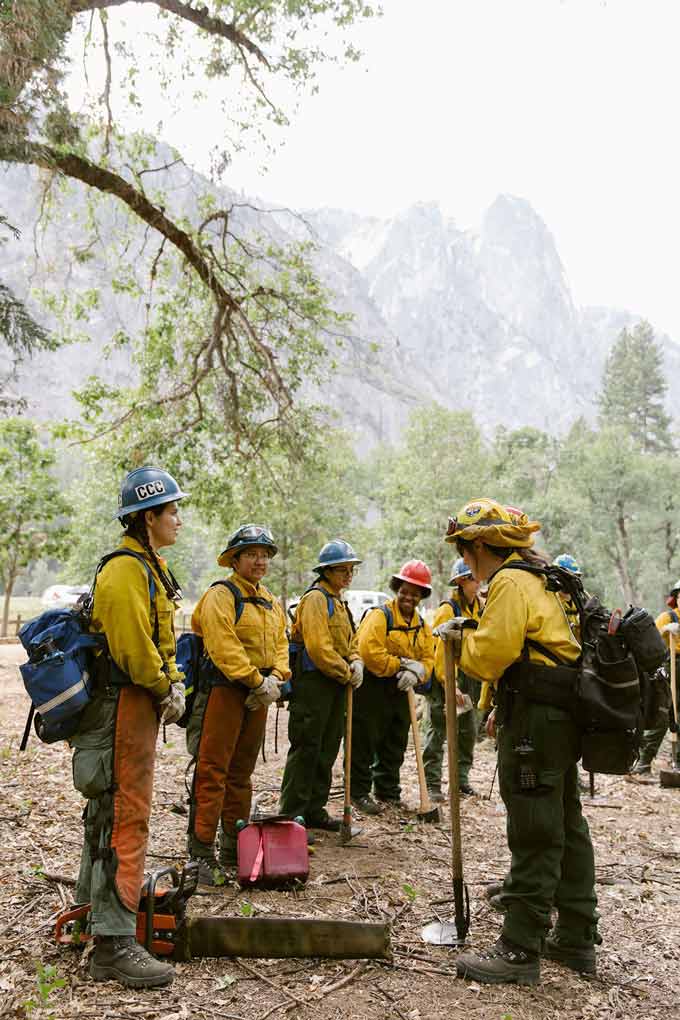
As wildfires worsen due to climate change and states like California deal with a growing shortage of firefighters, the need to diversify the workforce is as much about practicality as it is about equity.
Only about 12 percent of wildland firefighters are women, and even less ascend to leadership positions, with women making up less than 5 percent of NPS wildland fire leadership at the park level.
Working in wildland firefighting also opens up opportunities in other fields related to natural resource management, said Robin Verble, a researcher at the Missouri University of Science and Technology.
“It’s one of the most open gates into natural resource professions out there in terms of job availability,” she said.
“If women are to get into natural resources and in ecology and in those kinds of fields and want to get into the federal system, it’s making sure that gate is up.”
Those other types of jobs, which could range from forest or fire ecology to wildlife management, are also exciting to Ruiz, who has a degree in wildlife biology. And the Yosemite training aims to expose her and the rest of the crew to other kinds of jobs in the park.
While the crew worked on the burn piles, a woman park biologist was sent to talk to them about her job and to discuss recent bear activity in the area. Ruiz peppered her with questions, excited to learn more about her work.
Still she and other corps members expressed a sense of duty when it came to fighting fires. “I want to help out because there is this great need of people and I can do it. My body is able to do this work,” she said.
But like other fields dominated by men, societal bias and discrimination have made it difficult to grow and retain the number of women like Ruiz in the field.
The 10-week Yosemite program — plus all-women crews in Wyoming’s Grand Teton National Park and a newly launched program in Alaska’s national parks — is aiming to provide a smoother entry for women, giving them the opportunity to become certified for federal wildland firefighting in a more welcoming environment.
The Yosemite Women’s Fire Internship pulls from a pool of existing members of the California Conservation Corps (CCC), a paid conservation work development program for residents ages 18 to 25.
Unlike the Civilian Conservation Corps — a program started under President Franklin D. Roosevelt aimed at putting men to work in the nation’s parks and forests — the California version has been co-ed since its launch in 1976. However, women make up only 25 percent of corps members.
Depending on which of the 24 centers they are located at, the work CCC members do ranges from apprenticeships in conservation, habitat restoration and energy to emergency management assistance in fires, floods and mudslides.
Part of the CCC’s mandate is to recruit from low-income or otherwise marginalized populations, providing a pathway into good jobs. The corps requires that participants who don’t have a high school diploma participate in the education program that allows members to take classes alongside their corps work to earn one.
Tricia “TeeTee” Andrews, who grew up in Compton, a city in southern Los Angeles, said the program has changed her life.
She first heard about the CCC a few years ago through her little brother. Andrews, who dropped out of high school nearly a decade ago, was working at Walmart.
“He was like, ‘Hey, this is a program. You need money. Sign up,’” she said. “I just wanted my diploma. That’s what really got me.”
This June, she graduated from a CCC high school. She’s also gotten her driver’s license and a CDL, which allows her to drive larger vehicles like school buses or semi-trucks.
“Me joining the C’s really prompted me to get my life together,” she said.
Before she came to Yosemite, she was working in the CCC’s energy program, where she helped retrofit buildings with energy-efficient light bulbs and was trained in solar installations. Most of the other corps members at her center were men.
“I’m small, 4’10”, and then surrounded by dudes who are like 5’10”. And I’m just looking up to them trying to give them directions. … It can be very intimidating,” she said.
In the Yosemite crew, though, she and others expressed feeling supported and comfortable asking questions and learning in an environment that felt less competitive than at their centers, where their gender often puts them in the minority. Having two women lead the crew inspired Andrews.
“I think it’s tough now, but I bet it was even tougher back then,” she said of her supervisors. “Those are two women that I look up to, and I’m like, ‘Well, I can actually relate to you. You know things that I’m going through, things that the whole crew is going through, [like] how do we overcome these obstacles? How do we not let our gender get in the way of what we can accomplish?’”
While there is still a ways to go in combatting discrimination, Tami Skaggs — one of the crew supervisors, who has been working in fire since the 1990s — said she has noticed a positive change among men on field crews over the years.
“Especially with this younger generation, they’re more respectful to the women and the LGBTQ community,” she said.
Still, Andrews would like there to be more racial diversity; while the crew was fairly representative, she was the only Black participant in the Yosemite pilot program.
“I’m probably the only one out here that is rocking natural hair,” she said with a grin.
She continued: “It’s important, right? Because we can do it,” she said. “It just needs to be more open. You need to feel more accepted. We deserve to be in this line of work.”
Mirna Camey, another corpsmember, moved from Guatemala five years ago as an asylee. Before applying for the CCC and the Yosemite Women’s Fire Internship, she was working as a cook at a Mexican restaurant and at a supermarket. Now she too is earning her high school diploma — she completed high school in Guatemala, but the requirements didn’t transfer over.
Camey has fallen in love with wildland firefighting and working outdoors. She first became interested in fighting fires in 2020, when California experienced a record fire season. “When I see something that’s hard, I want to do it, I want to have that experience.” Camey said.
The park service’s strategic plan aims to double the amount of women fighting wildfires in the parks by 2024 through training and mentorship.
The program gives them a head start.
Participants have the opportunity to earn a red card, which provides them with the credential they need for entry-level firefighting with federal agencies.
By completing the training, they will have all the basic training requirements fulfilled and learn important skills like how to use a chainsaw and hand tools, how to work on a crew, and how to read the weather and topography before heading out into the field.
Finally, they have to complete a pack test, which requires carrying 45 pounds for three miles in 45 minutes or less.
But despite these competencies, they will likely still face barriers. Verble of Missouri S&T in June published a survey of more than 700 wildland firefighters detailing difficulties they had with the industry, from low pay to mental health issues. Access to affordable child care was overwhelmingly cited by women as a barrier to the job.
“When they’re wildland firefighters, women are less likely [than men] to be married, they’re less likely to have affordable child care, they’re less likely to have children,” Verble said. “Wildland fire is not compatible with being a primary caretaker for a kid, which still disproportionately falls to women.”
Women were also more likely to report workplace violence then men, though reports of sexual assualt did not vary between genders.
For years the U.S. Forest Service, another federal agency that has firefighting crews, has come under scrutiny for pervasive sexual harassment and the way it handles sexual misconduct in the agency.
In December 2016, a House committee held a hearing to address the ongoing sexual harassment and gender discrimination after media outlets including The Washington Post and PBS Newshour reported on dozens of firefighters who described a workplace hostile to women.
Verble said that in the qualitative data, which she and her co-authors have yet to release, comments made by women about their workplace get “grim real fast.”
Reports of sexual assault in crew bunk housing, or just working in an exclusionary environment, led some women to feel demoralized. One woman said that when she spoke up she was called “a bitch.”
“After reading 3,800 comments or so, I’m left a lot more perplexed. … I think to some extent, there needs to be a real hard look at the leadership in wildland fire,” Verble said.
“Because there’s obviously some structural level thing that’s allowing some of these cultural and attitudinal things to remain in place.”
For these reasons, Verble does fear that these all-women programs might not prepare participants for the realities of the field.
“In some ways, I worry about those programs being a disservice, because they give you the skill set, but they don’t give you the resilience and the feeling of this really hegemonic culture,” she said.
“They kind of let you have this rosy view of what it’s going to be like and maybe that’s good. Maybe that inspires you and helps build some confidence in a way that I didn’t get to do.”
Bequi Livingston, one of the first women ever recruited to join the elite Smokey Bear hotshot crew back in the 1980s and an advocate for getting more women into the service, said the pilot program could help combat some of the bias that women have faced by ensuring they have the skills the need before they join a crew.
In the late 1970s, when the Forest Service was sued for unfair hiring practices, it was required to fill at least 43 percent of jobs with women. The requirement has expired, but there is still a perception that agencies are only hiring women because of their gender, fueling the idea that women don’t belong in the field. In a study published in 2020 on recruitment and hiring for the U.S. Forest Service in the Pacific Northwest, 75 percent of women said they felt out of place specifically because of their gender.
“The intention was good … but the delivery sucked,” Livingston said. “But that was a huge turning point. … That’s how I got my permanent employment.”
The first year she was offered a job through the decree, though, she turned it down. “I actually made a statement that I refuse to be a token woman, that I only want to be hired for a job based on my qualifications in knowing that I was the top candidate.”
Livingston is a proponent of women getting more opportunities to join the firefighting workforce. She experienced discrimination at her first job, when her manager, who assumed she was a man based on her name, tried to push her into office work when she showed up for her first day of firefighting.
It’s why she helped start a training program with the Forest Service in 2012 called the Women in Wildland Fire Bootcamp. She felt like these early hiring sprees weren’t prioritizing preparing women for the work. Her training, like the program in Yosemite, aimed to fill that gap in the hiring process.
“It was really to set people up for success and absolutely ensure that they were fully prepared and knew exactly what they were getting into,” she said.
After working in the field all morning, the women walked back to the emergency services complex where they sat around a picnic table eating packed lunches. They recounted some of the experiences they already faced working in the men-dominated CCC.
Corps member Marlene Chavez said the men back at her center questioned whether she’d receive different or less rigorous training with an all-women crew. (It is the same training men receive.) She was worried that they might judge her.
“I’m kind of nervous to go back,” she said. “I just hope that I get on a fire crew and that they don’t bug me.”
Many program participants expressed that they felt the need to constantly prove themselves and put in extra effort to be respected. They seemed aware of the perils of being underrepresented in the field, but also empowered to face the challenges ahead.
About half of them raised their hands when asked if they wanted to work in wildland firefighting after the program, excited by the opportunities to combat blazes across the West and contribute to conservation-minded work.
Cheyenne Haffner, a gregarious woman who, at 18, was the youngest of the group, recounted how she initially heard about the training program through TikTok.
“I saw this video and it was literally this girl posted up in the middle of a forest building a trail,” she said.
“She literally just takes her phone and she’s like, this is what I do and it’s literally just trees everywhere. She’s covered head-to-toe in mud, dirt and sweat.”
Haffner, who grew up in Stockton, a small city in the agricultural heart of the state, thought to herself: “I want to get paid to go work in a forest. I don’t care what I’m doing. But I want to go do work in a forest.”
Once she joined the CCC, she ended up working at a supply camp for a wildfire in New Mexico. It was there she found out she had been accepted into the Yosemite program.
At the time, she was worried about not being strong enough, so she borrowed the pack of a woman firefighter and used it to carry around weight in her spare time at the work site.
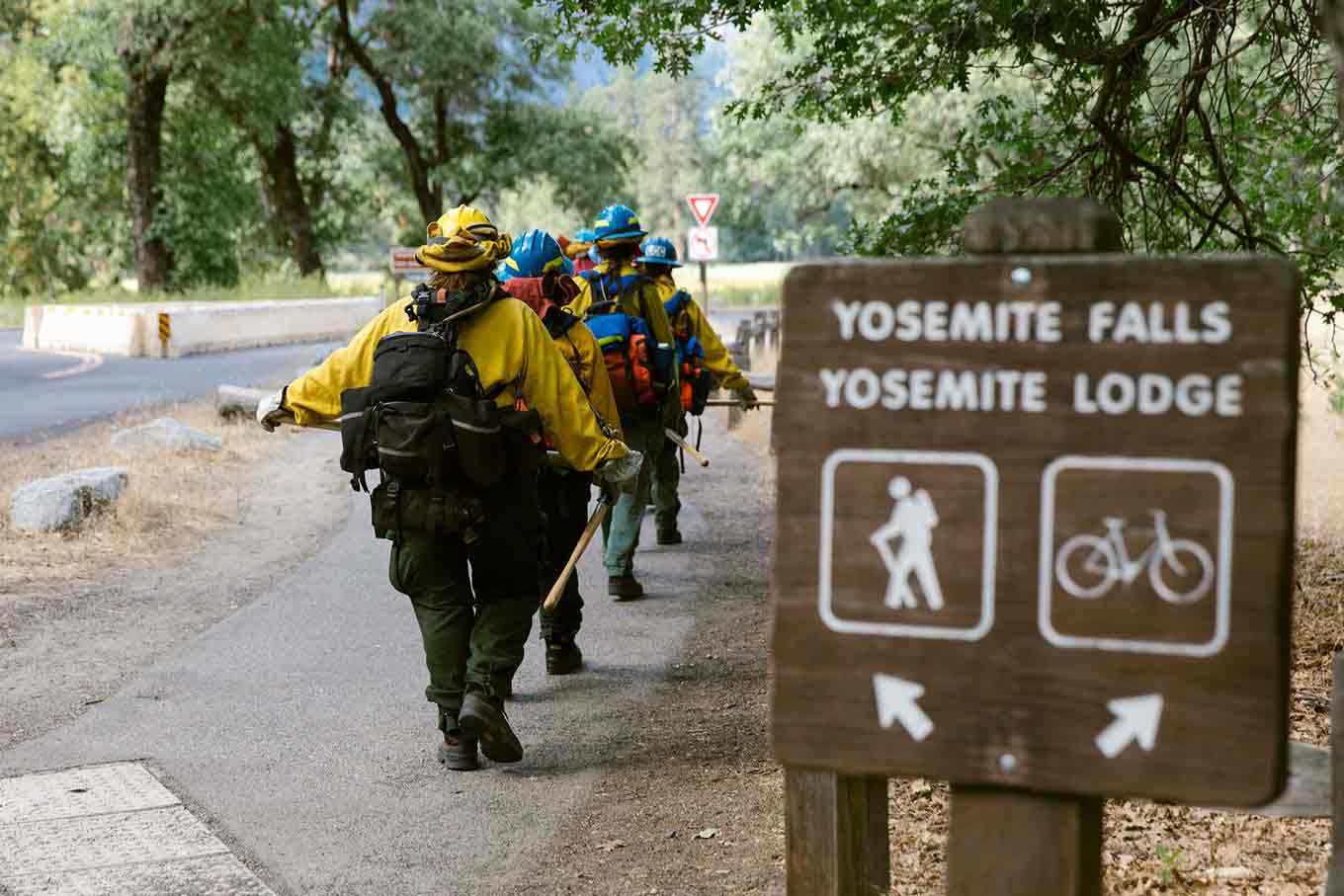
Toward the end of their training, the corps members joined a Helitack crew — firefighters that travel by helicopter — to spend a few days monitoring the Red Fire, a conflagration sparked by a lightning strike in the southern part of the park.
For days they camped a few miles from the fireline, making sure it didn’t grow too large or get out of control. Fire management in the parks sometimes means allowing burns to clear out dead trees and other forest fuels naturally.
For Haffner, the experience added a new dimension to wildland firefighting. “It was really great being able to sit out on the fire line and hear the sounds of the trees torching, to hear the crackling of the fire,” she said.
“I feel like I’m actually more prepared to do the firefighting because I was able to have a calm opportunity to watch a fire burn and learned all the science stuff behind it.”
Now her plans are to apply for firefighting positions at Yosemite when the hiring process opens in October. If that doesn’t work out she said she’s happy to spend a few more years growing at the CCC and perhaps exploring other programs.
At 18, she still feels like she has a lot of life skills to learn, she said.
Still, when asked if firefighting is in her future, she responded: “It’ll definitely be my career for life.”
This article was originally published by The 19th.
We live in a land of giants, legends, and ancient history. Early descriptions of the regions that would eventually become our national parks, most often told by explorers or laborers, were so foreign and fantastical to the average person that they simply weren't believed.
Even today, the parks' grandeur can only fully be comprehended in person. But the majesty of Yosemite, Sequoia, and Yellowstone proved all too real, prompting a radical idea; some say it was America's best idea ever.
The idea was simple and conceived in earnest: preserve these lands so that they might flourish and feed the human spirit of every generation to come.
Thanks to the National Park Service, more than 15 billion visitors since 1904 have had the chance to do just that: to experience the impressive scale, history, and raw beauty of these environments.
The creation of the national parks as we know them today — over 400 areas, with 85 million acres in 50 states and other territories — was a hard-won achievement.
It was a battle fought by pioneers, politicians, scientists, and artists alike to preserve these environments well beyond the scope of their own lives. Individuals like Theodore Roosevelt, and countless others were integral in facilitating these protections.
In August 1916, President Woodrow Wilson signed the Organic Act, which officially established the National Park Service as a federal bureau in the Department of the Interior.
The NPS was tasked with protecting the national parks and monuments already established up to that point and any future parks that would be created.
A 1933 executive order transferred 56 preexisting monuments and historical sites to the purview of the NPS. Today, new national parks are generally created through acts of Congress.
The importance of these lands goes back further than explorations of the Western wilderness, further than the passage of protective legislation.
Many of the regions in which the national parks reside are significant cultural heritage sites for the communities of Native Americans, Native Alaskans, and Native Hawaiians who have lived and flourished in those lands since time immemorial. The first stewards of these lands lived here long before the NPS; protecting and sharing these histories is an essential duty of the NPS as it attempts to preserve the legacy of its parks.
Using a variety of historical sources such as the National Park Service, Stacker compiled a list of the 25 oldest established national parks in America. The area of each park is current as of 2017. Any parks that have been disbanded since their founding or have merged with other national parks are not included in the list.
Read on for an overview of the history and defining characteristics of the 25 oldest national parks —
You might also like:
- Find out which days are “fee-free days” at national parks
- Get ideas for how to celebrate National Park Week
- Explore the best quotes about national parks
- Shop the best gifts for national park lovers
- Learn more about the “land back” movement returning land to Native communities

25. Kings Canyon
- Location: California
- Date established as park: March 4, 1940
- Area: 461,901 acres
- Recreational visitors in 2019: 632,110
- Recreational visitors in 2020: 415,077
- Recreational visitors in 2021: 562,918
Kings Canyon resides in the southern Sierra Nevada mountains, adjacent to Sequoia National Park. Its dramatic geography — with glacial valleys, rocky outcrops, and expansive meadows, all of which was brought to prominence in the late 19th century by John Muir — is often compared to the legendary Yosemite. But one of its most well-known and visited features is Grant Grove, an expanse of mighty redwoods and home to the General Grant Tree, one of the largest living trees in the world.

24. Olympic
- Location: Washington
- Date established as park: June 29, 1938
- Area: 922,649 acres
- Recreational visitors in 2019: 3,245,806
- Recreational visitors in 2020: 2,499,177
- Recreational visitors in 2021: 2,718,925
Olympic National Park, located on Washington's Olympic Peninsula, is defined by its geographic isolation. Olympic contains three distinct ecosystems—temperate rainforests, Pacific coastline, and glaciated mountains, the most famous of which is Mount Olympus—making it one of the most ecologically diverse parks in the U.S.
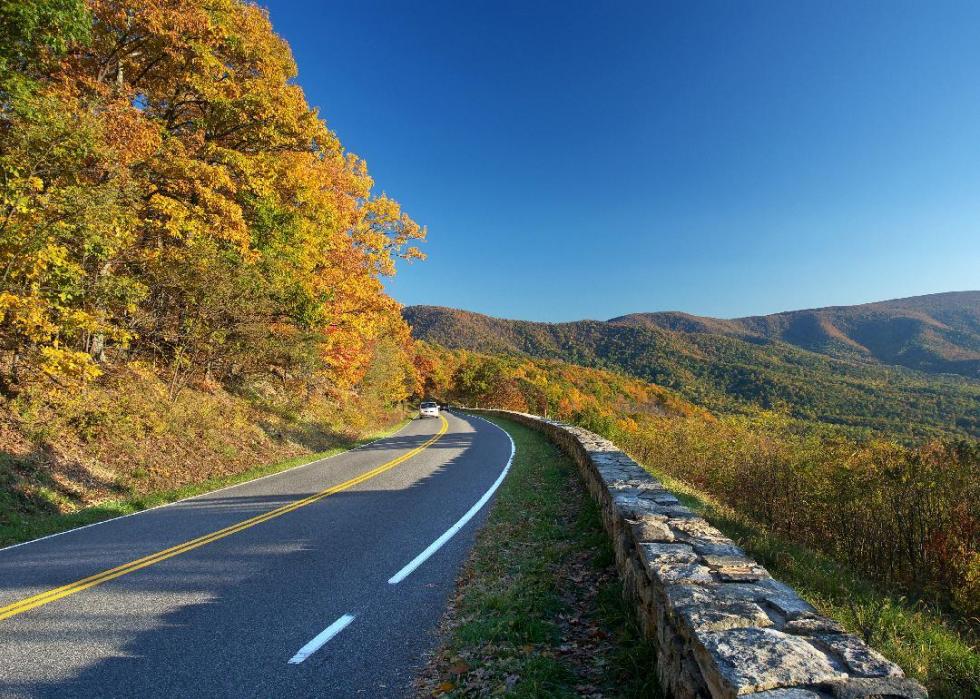
23. Shenandoah
- Location: Virginia
- Date established as park: Dec. 26, 1935
- Area: 199,218 acres
- Recreational visitors in 2019: 1,425,507
- Recreational visitors in 2020: 1,666,265
- Recreational visitors in 2021: 1,592,312
Just over an hour's drive away from D.C., Shenandoah offers a stunning perspective on East Coast wilderness, including 300 square miles of the Blue Ridge Mountains. Shenandoah's most prominent feature is Skyline Drive, a road that traverses the entirety of the park with over 70 overlooks of the Shenandoah Valley. But Skyline Drive and the park as a whole were not always so accessible. Adhering to Jim Crow laws, private operators implemented what they claimed were "separate but equal" facilities throughout the park until it was fully integrated in 1950.
22. Great Smoky Mountains
- Location: Tennessee, North Carolina
- Date established as park: June 15, 1934
- Area: 522,427 acres
- Recreational visitors in 2019: 12,547,743
- Recreational visitors in 2020: 12,095,720
- Recreational visitors in 2021: 14,161,548
Great Smoky Mountains National Park is regularly among the most-visited parks in the nation. It is also the most biodiverse park in the national park system—over 19,000 species have been documented and scientists believe up to 100,000 undocumented species may live there. Its creation was more complicated than that of other national parks, requiring extensive fundraising, the purchase of thousands of small farms, and the removal of those who lived there previously.

21. Everglades
- Location: Florida
- Date established as park: May 30, 1934
- Area: 1,508,934 acres
- Recreational visitors in 2019: 1,118,300
- Recreational visitors in 2020: 702,319
- Recreational visitors in 2021: 942,130
Everglades National Park—established thanks to the efforts of former-land-developer-turned-conservationist Ernest F. Coe—is the largest subtropical wilderness in the U.S. It was also the first national park created to protect an ecosystem at risk. The park is home to many federally threatened and endangered species, including the West Indian manatee and the Florida panther.

20. Carlsbad Caverns
- Location: New Mexico
- Date established as park: May 14, 1930
- Area: 46,766 acres
- Recreational visitors in 2019: 440,691
- Recreational visitors in 2020: 183,835
- Recreational visitors in 2021: 349,244
Carlsbad Caverns, located in the Guadalupe Mountains of New Mexico, is defined by its unique and long geological history, most of which is hidden from sight. This national park contains one of the Earth's oldest and best-preserved fossilized reefs. Capitan Reef is a record of a 250 million-year-old Permian-age ocean teeming with life in the present-day arid, mountainous region bordered by the Chihuahuan Desert. Also hidden below the surface of the Earth is an extensive system of limestone caves decorated by a variety of calcite deposits, the viewing of which is a popular activity for park visitors.

19. Grand Teton
- Location: Wyoming
- Date established as park: Feb. 26, 1929
- Area: 310,044 acres
- Recreational visitors in 2019: 3,405,614
- Recreational visitors in 2020: 3,289,638
- Recreational visitors in 2021: 3,885,230
Grand Teton National Park is characterized by the rugged Teton Mountain range, clear alpine lakes, and the well-known Jackson Hole valley. Human presence in the region goes back nearly 11,000 years. The park was also a popular destination for mountaineers, fur trappers, and dude ranchers.

18. Bryce Canyon
- Location: Utah
- Date established as park: Feb. 25, 1928
- Area: 35,835 acres
- Recreational visitors in 2019: 2,594,904
- Recreational visitors in 2020: 1,464,655
- Recreational visitors in 2021: 2,104,600
Bryce Canyon is the land of hoodoos, or irregular rock spires. In fact, it's home to the largest concentration of hoodoo formations on Earth. The park's topography is singularly striking, a relic of far off periods in Earth's evolution. Bryce Canyon was initially designated as a national monument in 1923 before the land was sold to the federal government and established as a national park five years later.
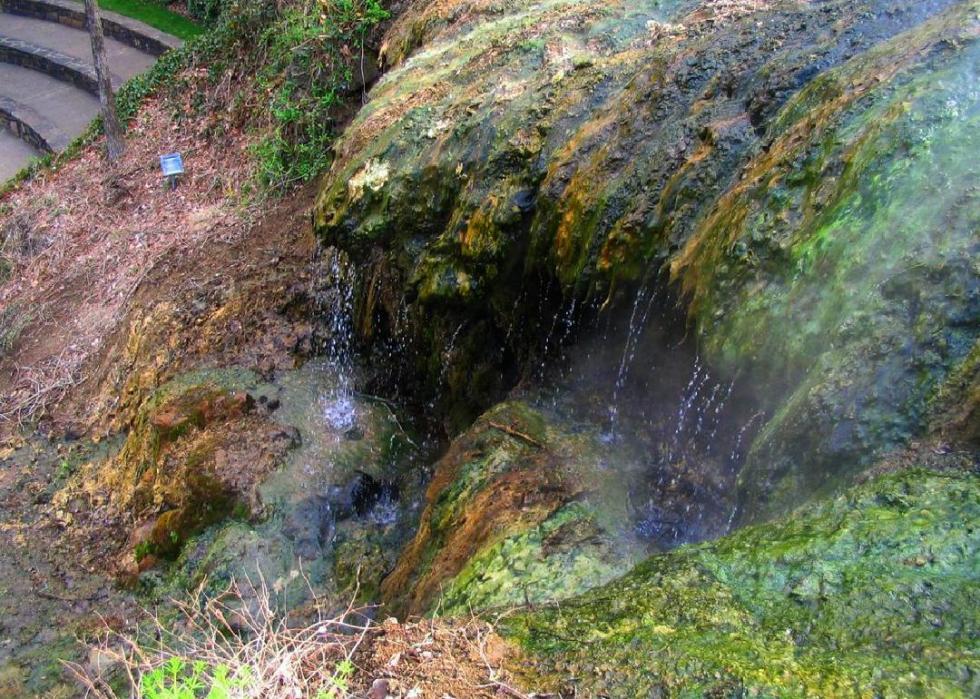
17. Hot Springs
- Location: Arkansas
- Date established as park: March 4, 1921
- Area: 5,548 acres
- Recreational visitors in 2019: 1,467,153
- Recreational visitors in 2020: 1,348,215
- Recreational visitors in 2021: 2,162,884
As its name suggests, Hot Springs National Park is known for its geothermal pools. The city of Hot Springs and successful bathhouse industry grew around and in response to the region's unique hydrothermal features.
16. Zion
- Location: Utah
- Date established as park: Nov. 19, 1919
- Area: 147,237 acres
- Recreational visitors in 2019: 4,488,268
- Recreational visitors in 2020: 3,591,254
- Recreational visitors in 2021: 5,039,835
Zion National Park has a long human history dating back to nearly 6000 B.C. when small semi-nomadic family groups inhabited the region. With its deep canyons, vast plateaus, sandstone cliffs, and river formations, Zion has no shortage of striking geological panoramas. Zion was initially established as Mukuntuweap National Monument by President William Howard Taft in 1909. Fearing that a Native American name would deter visitors, the region was renamed Zion to reflect the Mormon population residing there at the time.

14. Acadia (tie)
- Location: Maine
- Date established as park: Feb. 26, 1919
- Area: 49,075 acres
- Recreational visitors in 2019: 3,437,286
- Recreational visitors in 2020: 2,669,034
- Recreational visitors in 2021: 4,069,098
Acadia was the first national park east of the Mississippi River and is the only national park in the Northeastern U.S. Covered in spruce-fir forests, outlined by the rocky Atlantic coastline and dotted with dozens of lakes and ponds, Acadia is quintessential Northeastern wilderness. Popular recreational activities include hiking, kayaking, rock climbing, and leaf-peeping in the fall.

14. Grand Canyon (tie)
- Location: Arizona
- Date established as park: Feb. 26, 1919
- Area: 1,201,647 acres
- Recreational visitors in 2019: 5,974,411
- Recreational visitors in 2020: 2,897,098
- Recreational visitors in 2021: 4,532,677
Grand Canyon National Park is characterized by its staggering vastness. At 277 miles long, 18 miles wide, and over a mile deep, the Grand Canyon is a uniquely impressive and inspiring geological wonder. It is also a place steeped in spiritual significance for several Native American cultures. One of the park's biggest early advocates who pushed to protect and preserve the land was President Theodore Roosevelt, calling it "the one great sight which every American should see."

13. Denali
- Location: Alaska
- Date established as park: Feb. 26, 1917
- Area: 4,740,911 acres
- Recreational visitors in 2019: 601,152
- Recreational visitors in 2020: 54,850
- Recreational visitors in 2021: 229,521
Denali National Park and Preserve is home to North America's highest mountain peak: Denali, formerly known as Mount McKinley. The word Denali means "the high one" in the Indigenous Athabaskan language. Charles Sheldon—a millionaire in the railroad industry and an amateur naturalist—was the first person to propose establishing Denali as a national park to protect its wildlife from trophy hunters and even hand-delivered the bill outlining the park's creation to President Woodrow Wilson.

12. Lassen Volcanic
- Location: California
- Date established as park: Aug. 9, 1916
- Area: 106,589 acres
- Recreational visitors in 2019: 517,039
- Recreational visitors in 2020: 542,274
- Recreational visitors in 2021: 359,635
The stark landscape of Lassen Volcanic National Park tells the story of a violent, volatile past. Volcanoes, fumaroles, geysers, and other hydrothermal features give this park its distinct eruptive quality, serving as a keen reminder of how active the Earth is just below our feet. Visitors can spend time at Juniper and Butte Lakes, or observe the many hydrothermal features (assuming they follow all safety precautions).

10. Haleakalā (tie)
- Location: Hawaii
- Date established as park: Aug. 1, 1916
- Area: 33,265 acres
- Recreational visitors in 2019: 994,394
- Recreational visitors in 2020: 319,147
- Recreational visitors in 2021: 853,181
Haleakalā National Park, located on the island of Maui, is a place of great cultural and biological importance. According to legend, it was here the demigod Maui lassoed and trapped the sun in order to make the days longer. In Hawaiian, Haleakalā means "house of the sun." The park, being so geographically isolated, is home to many endemic species of plants and animals, which visitors can glimpse on trails, day hikes, and guided tours.
10. Hawaiʻi Volcanoes (tie)
- Location: Hawaii
- Date established as park: Aug. 1, 1916
- Area: 323,431 acres
- Recreational visitors in 2019: 1,368,376
- Recreational visitors in 2020: 589,775
- Recreational visitors in 2021: 1,262,747
Like Haleakalā, Hawaiʻi Volcanoes National Park is a place steeped in tradition and biodiversity. The park is home to Kīlauea and Mauna Loa, two of the world's most active volcanoes. In Hawaiian culture, Kīlauea is believed to be the home of the goddess Pele. The park offers several day hikes and additional trails on which visitors can explore the park's dramatic and culturally rich landscape, as well as its unique wildlife.

9. Rocky Mountain
- Location: Colorado
- Date established as park: Jan. 26, 1915
- Area: 265,795 acres
- Recreational visitors in 2019: 4,670,053
- Recreational visitors in 2020: 3,305,199
- Recreational visitors in 2021: 4,434,848
Rocky Mountain National Park provides some of the most dramatic landscapes in the entirety of the National Parks System. It holds the title of being the park at the highest elevation on the popular traverse Trail Ridge Road. Naturalist Enos Mills was the driving force behind the creation of Rocky Mountain National Park after falling in love with the area as a boy. He spent the majority of his life advocating for the park and training the next generation of stewards to do the same.

8. Glacier
- Location: Montana
- Date established as park: May 11, 1910
- Area: 1,013,126 acres
- Recreational visitors in 2019: 3,049,839
- Recreational visitors in 2020: 1,698,864
- Recreational visitors in 2021: 3,081,656
Glacier National Park has been nicknamed the "Crown of the Continent" and it's not difficult to understand why. When it was established in 1910, the park had over 100 glaciers, making its name choice obvious. Today, only 25 remain. One of the most popular features of the park is the Going-to-the-Sun Road, which traverses the length of the park. The road takes visitors on a drive across dramatic landscapes and by several National Historic Landmarks established shortly after the park's incorporation.

7. Mesa Verde
- Location: Colorado
- Date established as park: June 29, 1906
- Area: 52,485 acres
- Recreational visitors in 2019: 556,203
- Recreational visitors in 2020: 287,477
- Recreational visitors in 2021: 548,477
Mesa Verde National Park is probably best known for its preservation of the Pueblo cliff dwellings dating back to A.D. 600. In total, the park contains over 5,000 archaeological sites denoting the region's long human history. Its more modern history is also full of intrigue: The Pueblo sites were discovered by a rancher named Richard Wetherill and were excavated and partially pillaged by a Swedish aristocrat named Gustaf Nordenskiöld. The area's establishment as a federal national park was vehemently opposed by a writer named Virginia McClurg, who believed it should be a "woman's park."

6. Wind Cave
- Location: South Dakota
- Date established as park: Jan. 9, 1903
- Area: 33,971 acres
- Recreational visitors in 2019: 615,350
- Recreational visitors in 2020: 448,405
- Recreational visitors in 2021: 709,001
Wind Cave was the world's first cave to be designated a national park. It was named for the winds that pass through its entrance; according to local oral history, it is as if the mouth of the cave is breathing. The cave is also known for its rare calcite formations, including boxwork, an elaborate honeycomb-like structure formed by layers of calcite spears. The park also contains one of the world's few remaining mixed-grass prairies, home to native species like bison, elk, and prairie dogs.
5. Crater Lake
- Location: Oregon
- Date established as park: May 22, 1902
- Area: 183,224 acres
- Recreational visitors in 2019: 704,512
- Recreational visitors in 2020: 670,500
- Recreational visitors in 2021: 647,751
Crater Lake National Park has a violent past that begat the pristine vistas we know today: 7,700 years ago, Mount Mazama was taken down by a two-day volcanic eruption. What was left after the swift fall was Crater Lake caldera. At 1,949 feet, Crater Lake is the deepest lake in the U.S., and its water is some of the clearest in the world. Rim Drive is the most popular route in the park; the path takes visitors around the entirety of the caldera rim.

4. Mount Rainier
- Location: Washington
- Date established as park: March 2, 1899
- Area: 236,382 acres
- Recreational visitors in 2019: 1,501,621
- Recreational visitors in 2020: 1,160,754
- Recreational visitors in 2021: 1,670,063
Mount Rainier National Park's most prominent feature is its namesake, Mount Rainier. The active volcano is the tallest peak in the Cascade mountain range. Juxtaposed with expansive meadows full of wildflowers, Rainier dominates the park's landscape. John Muir summited Mount Rainier in 1888 and the experience would compel him to lead the efforts of establishing the region as a national park.
3. Yosemite
- Location: California
- Date established as park: Oct. 1, 1890
- Area: 761,748 acres
- Recreational visitors in 2019: 4,422,861
- Recreational visitors in 2020: 2,268,313
- Recreational visitors in 2021: 3,287,595
As it does today, Yosemite had the ability to inspire its earliest visitors with its grandeur. With its ancient giant redwoods, deep valleys, and vast meadows, it was viewed as something to be protected at all costs—not for the privileged few or for profit, but for generations to come. Sen. John Conness, John Muir, and Capt. Charles Young were a few of Yosemite's most unrelenting protectors.

2. Sequoia
- Location: California
- Date established as park: Sep. 25, 1890
- Area: 404,063 acres
- Recreational visitors in 2019: 1,246,053
- Recreational visitors in 2020: 796,086
- Recreational visitors in 2021: 1,059,548
As its name suggests, Sequoia National Park is best known for its ancient, giant redwood forests. Home to the world's largest tree, General Sherman, Sequoia National Park is a testament to nature's ability to endure not just time, but human meddling. The giant sequoias were subject to logging operations in the 1880s. Thanks to the trees' tendency to splinter and the efforts of advocates like the Sierra Club, the establishment of Sequoia as a national park ended all logging operations.

1. Yellowstone
- Location: Wyoming, Montana, Idaho
- Date established as park: March 1, 1872
- Area: 2,219,791 acres
- Recreational visitors in 2019: 4,020,288
- Recreational visitors in 2020: 3,806,306
- Recreational visitors in 2021: 4,860,242
Yellowstone National Park is the oldest National Park in the United States.
The early descriptions of Yellowstone recounted by prospectors and explorers who passed through the region were so extreme that they were often laughed off as fantasy. Descriptions of its unparalleled size and eruptive earth—all the things we stand in awe of still today—finally forced an expedition into the territory to validate the claims once and for all. One year after the expedition, President Ulysses S. Grant signed a bill making Yellowstone the first national park.
You might also like:
- Find out which days are “fee-free days” at national parks
- Explore the best quotes about national parks
- Shop the best gifts for national park lovers
- Learn more about the “land back” movement returning land to Native communities
This story was originally published by Stacker and republished pursuant to a CC BY-NC 4.0 License.
Most of us know the last part of the year as a time of giving. Whether that comes in the form of thoughtful gifts for your loved ones, opportunities to volunteer your time within your community, annual charitable donations, or even just a tin of cookies shared among friends — ‘tis the season.
This all culminates in Giving Tuesday, when nonprofits across the country (and across the world) rely on the generosity of donors and volunteers to fuel end-of-the-year initiatives.
And it makes a difference.
What is Giving Tuesday?
The biggest day of giving every year, Giving Tuesday is a celebration of radical generosity, which is the concept that “the suffering of others should be as intolerable to us as our own suffering,” according to the official Giving Tuesday website.
In 2024, Giving Tuesday donations totaled a record $3.6 billion in the United States alone. Additionally, there were an estimated 36.1 million people who participated by giving, volunteering, or donating in some other way than a monetary donation.
Radical generosity invites people to give what they can to create systemic change and reminds us that we each can drive an enormous amount of positive change by using our time, skills, goods, and advocacy to help others.
This year, Giving Tuesday falls on December 2, 2025. Whether you’ve been saving your spare change for this moment all year, or you’re new to Giving Tuesday, we’ve compiled a list of ways you can celebrate this annual tradition of altruism.
The Best Ideas on How To Celebrate Giving Tuesday
Donate
Give to a nonprofit serving your community.
We can all probably rattle off the names of some of the world’s largest nonprofit organizations pretty easily. While these groups do incredible, large-scale work, it’s vital to remember that your small, local nonprofits always need your support.
Find a local group that is actively doing work within your community to channel your funds this year. You’ll be amazed by the difference you can make — and how quickly you’ll be able to see that difference manifest for your very own neighbors.
Give to an organization protecting our planet.
It can be overwhelming to pick one cause near and dear to your heart for Giving Tuesday. If you’re passionate about protecting the planet, here are a few great options to consider donating to this year.
Check out:
- Sunrise Movement
- Intersectional Environmentalist (Learn more about the intersectional environmentalism movement.)
- Indigenous Environmental Network
Give to an organization helping refugees and migrants.
This was a difficult year for refugees and migrants all across the globe. Help folks displaced by war, crisis, and political unrest land on their feet and find the resources to heal and thrive.
Check out:
Give to an organization that protects animals.
Whether you’re passionate about wildlife conservation or giving furry friends a loving home outside of a shelter, there are plenty of worthy organizations that would appreciate your support.
Check out:
Give to an organization strengthening global health.
In the last few years, global health has become an even more prevalent cause than ever before. Do your part to support the work of doctors, researchers, and communities most affected by global health crises.
Check out:
- Partners in Health (You can also support Partners in Health via Awesome Coffee Club and Awesome Socks Club.)
- (RED)
- Safe Abortion Action Fund
Give to an organization fueling racial justice movements.
Racial injustice pervades every aspect of American life. Help reconcile and rebuild the systems that oppress our BIPOC neighbors.
Check out:
Give to an organization ensuring people are fed.
Food insecurity has become especially challenging across the United States this year. Help feed people by supporting food banks and other organizations providing nutritious food to people in need.
Check out:
Give to an organization that protects LGBTQ+ youth.
In America, LGBTQ+ youth experience extreme levels of bullying, harassment, and social isolation, as well as an increased risk of homelessness. Help support the mental health and safety of LGBTQ+ youth this Giving Tuesday.
Check out:
Give to a mutual aid fund.
Mutual aid is one of the oldest and most effective ways to distribute support in a community. Most mutual aid groups are led by organizers and activists and don’t have the traditional hierarchical structures of nonprofits or for-profit organizations.
By supporting a mutual aid fund (say, a group that provides funds to trans folks seeking gender-affirming care, or an organization that feeds neighbors experiencing food insecurity), your money goes directly back to your own community neighbors in need — and not to someone’s salary.
→ Learn more about mutual aid and find a group to support in your area.
Give to activists and educators.
Think about your favorite activists who use their online platforms to educate folks, or the organizers in your community who are always on the front lines of a protest or distribution sites.
The work they do is invaluable — but often unpaid.
Consider sending them some direct financial support through apps like Venmo, PayPal, or Cash App. Some well-known activists might also have virtual tip jars or donation sites to help fund their work.
Give to matching funds.
During Giving Tuesday, you'll likely see some nonprofits talk about matching funds. This usually means that a large donor has offered to match every donation that comes in dollar for dollar. That means that your $10 donation automatically unlocks a another $10 donation — essentially turning your donation into a $20 donation.
Jump at the opportunity to support this kind of fundraiser because it helps bring in a lot of financial support for nonprofits in a short period of time — and it encourages large donors to continue offering more matching funds in the future.
Similarly, you can ask if your employer offers matching funds for employee donations — which will help unlock even more money for your favorite nonprofits.
Give to “non-sexy” expenses.
You know what a lot of nonprofits might need that you don’t consider when making a donation? Printer ink. Toilet paper. Pens.
The non-sexy expenses of an organization are necessary things that don’t always get the glitz and glam of ribbon-cutting ceremonies or giant check presentations — but are nonetheless vital to the operation of an organization.
Some groups might have a digital wishlist where you can help purchase necessary supplies, or you can donate items directly to a cause.
Consider a recurring donation.
Instead of trying to make a last-minute decision about where to spend your philanthropic dollars each month, consider setting up a recurring donation to a cause close to your heart.
Even if it’s just $5 a month, a recurring donation tells an organization that there is ongoing support backing its mission — and it makes your life a little more convenient!
Just like you might have auto-pay set up on your streaming services or bill payments, if you have the means to spread the love, a recurring donation can be easily added to your monthly budget.
Take Action
Post on social media about your favorite cause or organization.
Use your social media profiles for good! Even if you don’t have a huge following, your audience is probably like-minded and also cares about making the world a better place.
Share about a cause you’re supporting on Giving Tuesday and encourage others to do the same. Many nonprofits might have shareable social media graphics you can use to spread the word, too. It also makes an impact if you’re comfortable sharing why you care about this cause or how it has impacted your life.
On some social media platforms, you can even create your own community fundraisers right from your profile!
Throw in a quote about giving back while you're at it.
Give the world more hope.
At Good Good Good, we’re pretty keen on the idea that hope mobilizes people to do more good. We all like to have proof that we’re moving in the right direction.
Start by reading and sharing some good news stories — then you can follow Good Good Good on Instagram or TikTok, or sign up to receive our free daily newsletter full of good news from around the world.
Get the kids involved.
Giving kids the tools and resources to learn creative problem solving skills is one of the best ways to foster a spirit of generosity and kindness from an early age. #GivingTuesdaySpark is a great initiative that helps young people get involved in the Giving Tuesday mission.
The website helps young people find inspiration, provides a toolkit to rally friends and loved ones, and a platform to share their projects with the world.
(You can also check out our favorite good news stories about kids making a difference for inspiration.)
Buy Products That Give Back
Shop brands and items that give back.
You’re probably already buying your loved ones special gifts this time of year, so why don’t you multitask and consider buying products that give back at the same time?
We know there’s an overwhelming amount of stuff the Internet is trying to sell you, so we made it a little easier and compiled a few gift guides with products and brands vetted by our team — that give back.
Check out:
- The Ultimate Guide to Gifts that Give Back
- Socks That Give Back & Donate to Charity
- Best Gifts for Animal Lovers (That Give Back)
- Best (RED) Products To Fight AIDS & Save Lives
Give a Goodnewspaper.
That thing about finding more hope to fuel more good action? We make a whole newspaper about it every single month. Gift a Goodnewspaper subscription to someone who could use a little more hope — delivered straight to their front porch.
Or better yet, subscribe to the paper yourself and spread the love every month by sharing your copy (or copies) after you’re done reading!
It’s the gift that keeps on giving.
Volunteer
Volunteer your time.
There are countless ways to volunteer your time and make a difference in the world. Whether you’re serving meals at a local shelter, picking up trash with a neighborhood cleanup group, shopping for and distributing winter coats to those in need, or perhaps hosting an event that raises funds and awareness for a certain cause, you can give back to your community in a way that is fun and engaging for everyone!
Sign up to volunteer virtually.
Sometimes in-person volunteering isn’t the most accessible, or it can be overwhelming to get started in a new environment. Luckily, there are a variety of great virtual volunteer opportunities out there!
Check out:
- Becoming a mentor for Develop For Good
- Volunteering for the Smithsonian’s digital projects
- Using your unique skills to virtually volunteer through Catchafire
- Becoming a Crisis Text Line counselor
- Know another language? Volunteer as a translator through Translators Without Borders
Volunteer your talents.
We all have something unique to offer the world. Identify what you’re a rockstar at and what you can contribute, pick a mission that gets you fired up, and combine the two.
For example, a photographer could teach a free photo editing class to a community arts collective. Someone who loves to crochet could host a knit-a-thon to make mittens for folks experiencing homelessness. Home chefs can make double portions to distribute to nurses working overtime during the holidays.
There is no limit to your creativity. What will you do with it?
Give blood.
Save a life this Giving Tuesday! Give a literal life force by volunteering to donate blood. You can even make it easy by downloading the Red Cross Blood Donor App to check your eligibility, find a donation center near you, and schedule a time to donate.
Do a random act of kindness.
Not sure what your Giving Tuesday will bring? Decide the day of to do a handful of random acts of kindness! There are so many ways, both big and small, to spread a little kindness.
From holding a door open for a stranger or tipping a little extra, to taking a bystander intervention training or writing a thank you note to a teacher, the possibilities are endless.
→ Check out 100+ random acts of kindness ideas
More Ideas
Practice self-care.
There’s one universal truth many of us are still learning: You can’t pour from an empty bucket. If you’re going to give back — and give back beyond Giving Tuesday — you need to take care of yourself.
Proactive self-care gives us the energy we need to show up for the causes we care about and operate from a place of love and community. And that’s what matters most when it comes to doing good.
→ Check out 100+ self-care ideas
Switch to apps that give back.
There are a million ways to make a difference with your time and money — but did you know you can also give back with actions you already do every day?
When you sign up for Tab for a Cause, the free app will raise money for charities every time you open a new tab. (If you have as many tabs open as I do, that’s a lot of money.)
Similarly, if you switch your default search engine from Google to Ecosia, you’ll plant trees every time you search the internet.
→ Explore even more apps that make a difference
Give all year long.
Just like other awareness holidays, Giving Tuesday should be a catalyst for your lifestyle — not an exception to the rule. Spend part of this day planning out how you can best practice radical generosity moving forward.
One of our favorite tips? Whenever you read the news and a story breaks your heart, take action.
Whether you only have a few minutes to call your senator or have a little more flexible spending money to donate to support a nonprofit that’s working at the heart of the world’s biggest issues, you can give back and be a part of the solution.
Frequently Asked Questions
When is Giving Tuesday?
Giving Tuesday takes place on the first Tuesday after Thanksgiving. Following a weekend of major spending and consumerism, it provides an opportunity to do more good. In 2025, Giving Tuesday is on December 2nd.
How do I participate in Giving Tuesday?
Individuals can participate in Giving Tuesday in many ways, including donating to an organization they care about, sharing kindness with their neighbors, providing items or services to those in need, volunteering in-person or virtually, and spreading awareness on social media.
Who founded Giving Tuesday?
Giving Tuesday was created in 2012 by Henry Timms to help counteract the spending of Black Friday and Cyber Monday through philanthropic giving to charities. The initiative began in the United States and quickly made its way to more than 70 countries.
What are some good quotes for Giving Tuesday?
We’ve collected the best Giving Tuesday quotes for you to use in posts, captions, emails, and more.
What is the hashtag for Giving Tuesday?
Those who want to promote Giving Tuesday on social media can use the hashtags #GivingTuesday or #GivingTuesday2025. Instagram users can also search @GivingTuesday to add official Giving Tuesday GIFs to their Reels and Stories. Shareable graphics and images are also available on givingtuesday.org.
Veterans Day is a national holiday in the United States celebrated on November 11th, dedicated to honoring veterans and active military members.
Its origin began in 1918, marking the end of the first World War, and was quickly adopted by countries around the world as Armistice Day, which later became a federal holiday in 1938.
However, in the aftermath of World War II and the Korean War, veteran organizations successfully urged Congress to amend the 1938 act by swapping “Armistice” with “Veterans.” This change was approved in 1954, allowing American veterans of all wars to be honored.
Today, ceremonies like the official wreath-laying at the Tomb of the Unknown Soldier in Arlington National Cemetery, parades, and other celebrations are held in cities around the country.
It has become a day of recognition, respect, and gratitude for those who have and continue to risk their lives in pursuit of the protection and safety of others.
Though it’s important to celebrate the courage and strength of these fearless people, it’s also an opportunity for us to listen and learn from this community.
Veterans Day should not be the only day we celebrate veterans, rather, it should be a jumping-off point for us to continue to fight and advocate for these folks at home — 365 days of the year.
We’ve gathered a list of meaningful ways to do that:
Ideas and Activities To Celebrate Veterans Day:
Say thank you.
We, as civilians, may not fully ever understand the scope of just how much veterans have sacrificed for our continued safety at home and abroad.
Whether or not it’s Veterans Day, going out of your way to genuinely thank a person in uniform or someone you know who is a part of the veteran community is a natural and meaningful way to show your appreciation for what they’ve done.
Gratitude can take many forms, though.
If you know a veteran, try writing a letter, postcard, or email that recognizes them on Veterans Day — and encourage others to do the same! Organizations like Soldiers’ Angels can help get you started.
You can also find the closest military installation and send your letter there. Small (but meaningful) acts of kindness like these, even anonymously, are often profoundly appreciated.
Go beyond saying ‘Thank you.’
While approaching military folks with gratitude and respect is an important and special act, there are other ways to express those feelings.
Instead of simply thanking a veteran for their service, go a step further and find an appropriate moment to sit down and genuinely ask them how they’re doing right now, what they’re passionate about, or anything else you might discuss with another human.
Getting curious about a veteran’s story, work, and ambitions is a powerful way of letting them know that their commitment to service is continuously evolving.
→ Read one veteran’s request to go beyond simply saying ‘thank you’
Read good news about veterans.
At Good Good Good, we love to turn our attention to the progress and systemic change happening within our communities — and the veteran community is no exception.
Celebrate and share the good news happening within the veteran community:
- High school students build tiny house village for homeless veterans states away: 'A great civics lesson'
- 'Wolfdog' sanctuary helps veterans with PTSD heal in 'non-traditional therapy' program
- Seattle home transformed into first-ever shelter for homeless LGBTQ+ veterans
- Retired veteran teams up with nonprofit to build free ramps for senior and disabled neighbors
→ Read more good news being done for veterans and by veterans
Support a veteran environmental organization.
Veterans continuously use their skills and knowledge to give back to the environment and fight climate change through restoration projects.
Organizations like Force Blue are providing combat diving veterans with a way to leverage their specialized skills for coral reef conservation.
You can support Force Blue’s ability to continue its efforts by learning more about the amazing work the organization is doing or making a donation.
Support a veteran disaster response organization.
As we continue to see an increase in climate disasters (such as hurricanes and wildfires), organizations like Team Rubicon — a veteran-led humanitarian organization — are deploying military vets and first responders to support global communities before, during, and after disasters and crises.
Donating to veteran-led disaster response organizations allows trained ex-military members to step in and address the most pressing issues of our day.
Support a veteran arts organization.
According to the Department of Defense, one in five veterans of the Iraq and Afghanistan wars is diagnosed with post-traumatic stress disorder.
Art is proven to be an effective solution to addressing mental health.
Organizations like CreatiVets and The Veterans Art Project use different art forms — including songwriting, visual arts, music, and creative writing — to help veterans and their families cope with service-related trauma through self-expression.
Supporting these and similar arts organizations that center the veteran community allows them to transform their unique stories and struggles into inspiring and impactful art that can help encourage continued healing.
If you're struggling with mental health or you need support, please reach out and get support. Check out our mental health resources for hotlines to call or text today.
Call your elected officials.
Take a moment and call your elected representatives to advocate for those who have, are, and will be protecting our country.
These folks are often at the whims of our elected officials and get left behind when it comes to providing essential services such as mental health support and expanded healthcare benefits.
(We created the ultimate guide on how to contact your elected representatives to help you get started!)
Enjoy time in a national park.
There’s much to be said about the healing and transformative power of the outdoors. A beautifully unique way to commemorate Veterans Day is by enjoying one of the more than 420 national parks that the U.S. has to offer.
Each year the National Park Service announces several “fee-free days” to ensure that parks remain accessible to everyone. Veterans Day is one of those days.
Use this day to encourage those in and out of the military to step out and enjoy the beautifully vast and diverse land we call home. It can serve as a grounding reminder of the lengths those in service take to preserve and protect spaces, like our national parks, for generations to come.
Note: Many national parks are either closed or understaffed due to the current federal government shutdown. Research the conditions of your nearest park or national monument before visiting.
Frequently Asked Questions:
What was Veterans Day originally called?
Although we know November 11th as Veterans Day, it was originally called Armistice Day. Its origins can be traced to World War I and the armistice agreement that ended it on November 11, 1918. The following year, many countries, including the U.S., adopted it as a day of remembrance.
What’s the difference between Veterans Day and Memorial Day?
While there is some overlap between Veterans and Memorial Day, there is a distinction. Memorial Day (observed on the last Monday of May) honors those who died in military service, Veterans Day (which is celebrated on November 11th) recognizes armed service members who are living and deceased.
What is the theme for Veterans Day in 2025?
Each year, the Department of Veterans Affairs invites artists to help design an official poster for Veterans Day. This year, the theme is “Service to our Nation.” The poster is distributed to VA facilities and military installations.
Stephen O’Malley loves cycling so much that he not only rides his bike 10 miles to work, even in the depths of winter — he incentivizes his 163 employees to do the same.
O’Malley, based in Manchester, UK, is the CEO of Civic Engineers, a civil engineering firm that’s also a certified carbon-neutral company working towards eliminating all of its emissions by 2030.
A big part of that effort is the company’s cycle-to-work scheme, which it introduced in 2015 as part of a broader UK government initiative to get more people out of cars.
The program essentially allows employees to spread out the cost of a new bike over 12 months, saving them up to 40 percent as the payments come directly out of their salaries and aren’t taxed. It has been used by over 1.6 million commuters working for over 40,000 different employers since it was rolled out by the UK government in 1999.
Civic Engineers’ efforts, which have seen around a fifth of its employees across Glasgow, London and Leeds benefit from the cycle-to-work initiative, are part of a wider trend.
For much of modern motoring history, free employee parking has come as a standard workplace perk — one that companies spend huge sums of money to provide.
This has largely held even as cities have gotten increasingly serious about incentivizing people to drive less. Yet fees and restrictions on workplace parking are among the most effective tools we have for reducing car use.
A recent study from the Lund University Centre for Sustainable Studies identified such measures as having the potential to reduce car commuting by up to 25 percent.
Now, as companies strive to reach self-imposed carbon reduction goals, and workers themselves demand that their employers become more environmentally minded, an array of corporate initiatives are taking shape to incentivize more sustainable commutes, and make free employee parking a relic of the past.
Getting creative to cut carbon
O’Malley’s team at Civic Engineers save around 13 metric tons of carbon emissions annually by donning their lycra instead of reaching for their car keys.
“Our team are very focused on their carbon footprint as part of their values and the cycle-to-work scheme is an enabler for them to purchase a bike for their commute,” says O’Malley. “We know from our employee surveys that this is an important benefit to them.”
This has proved true at, of all places, Lyft’s offices in San Francisco. In 2014, the ride-hailing company introduced a monthly fee of $260 for employee parking, and used 100 percent of the revenues it generated to subsidize more sustainable transportation costs for employees who didn’t drive to work.
At first the program bombed.
As it turned out, $260 was too big an ask, and Lyft headquarters found itself awash in empty parking spaces and accusations of unfair worker treatment.
But when it reduced the fee to $150, the initiative took off: the number of employees who drove to work fell by double digits, and the non-drivers were happy with the program’s kickback for other modes of transportation.
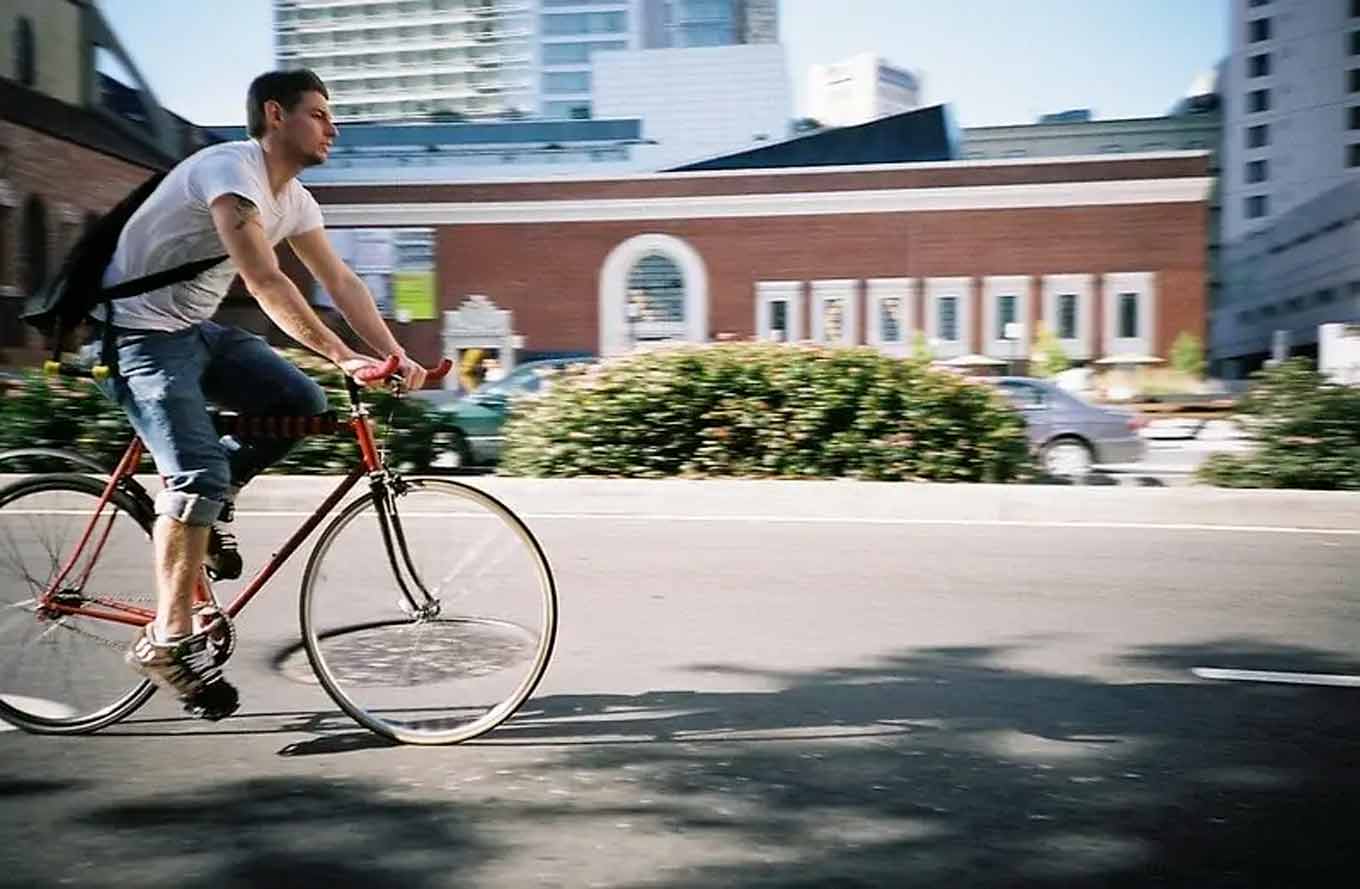
Other programs give commuters the choice between free parking at work or another benefit of equal value, like renting an apartment closer to a transit station. When the state of California did this in 1992, vehicle travel to work fell by 12 percent.
In many cases, these changes aren’t being foisted on an unwilling workforce.
According to a Deloitte report, two-thirds of organizations feel pressured by their employees to implement more policies that counteract climate change.
An IBM survey revealed that 69 percent of the 14,000 workers polled were more likely to accept a job with an organization they consider to be environmentally sustainable — and to stay there.
For those who have little choice but to drive, initiatives like the UK’s Electric Car Scheme are also taking the pressure off net-zero targets. Launched earlier this year, hundreds of companies have already signed up over 25,000 employees.
The program is similar to the cycle-to-work initiative, in that tax-free salary deductions towards an EV can be spread out over time, saving up to 60 percent of the cost. Its carbon emissions reduction is already the equivalent of planting 100,000 trees.
Building in equity
The most frequent criticism leveled at such programs is their impact on lower-income workers.
While the c-suite executives may be able to pay extra to keep driving to work, the critique goes, those below them are forced to adapt to “incentives” that essentially require them to commute more sustainably.
The UK’s cycle-to-work scheme in particular has attracted criticism for being unavailable to people on minimum wage, as the bike payments coming out of their salary would take them below a legally acceptable pay rate, prompting calls for the scheme to be reformed in a more inclusive way.
What’s more, self-employed people, who represent more than 13 percent of the UK labor market, are ineligible.
And because urban real estate is often the most expensive, lower-income employees are more likely to live further from transit options.
To fill these gaps, worker shuttle services like Google’s famous employee buses are becoming more common across a range of industries. UK shuttle provider Kura certainly thinks there is a market to be built here. Kura estimates one 49-seater coach can take 31 low-occupancy cars off the road.
Kura’s software uses postcode analyses to calculate optimal pickup points at public transit stops and residential hubs. These analyses are then converted into a published timetable, with routes created exclusively for its business customers.
Companies using Kura shuttles include those transporting staff to and from shifts at factories and call centers.
For example, at Spooner Industries, a UK manufacturer of commercial drying, baking and cooling equipment, staff save 88 miles on average per shared journey compared with individual commutes, Kura’s calculations confirm.
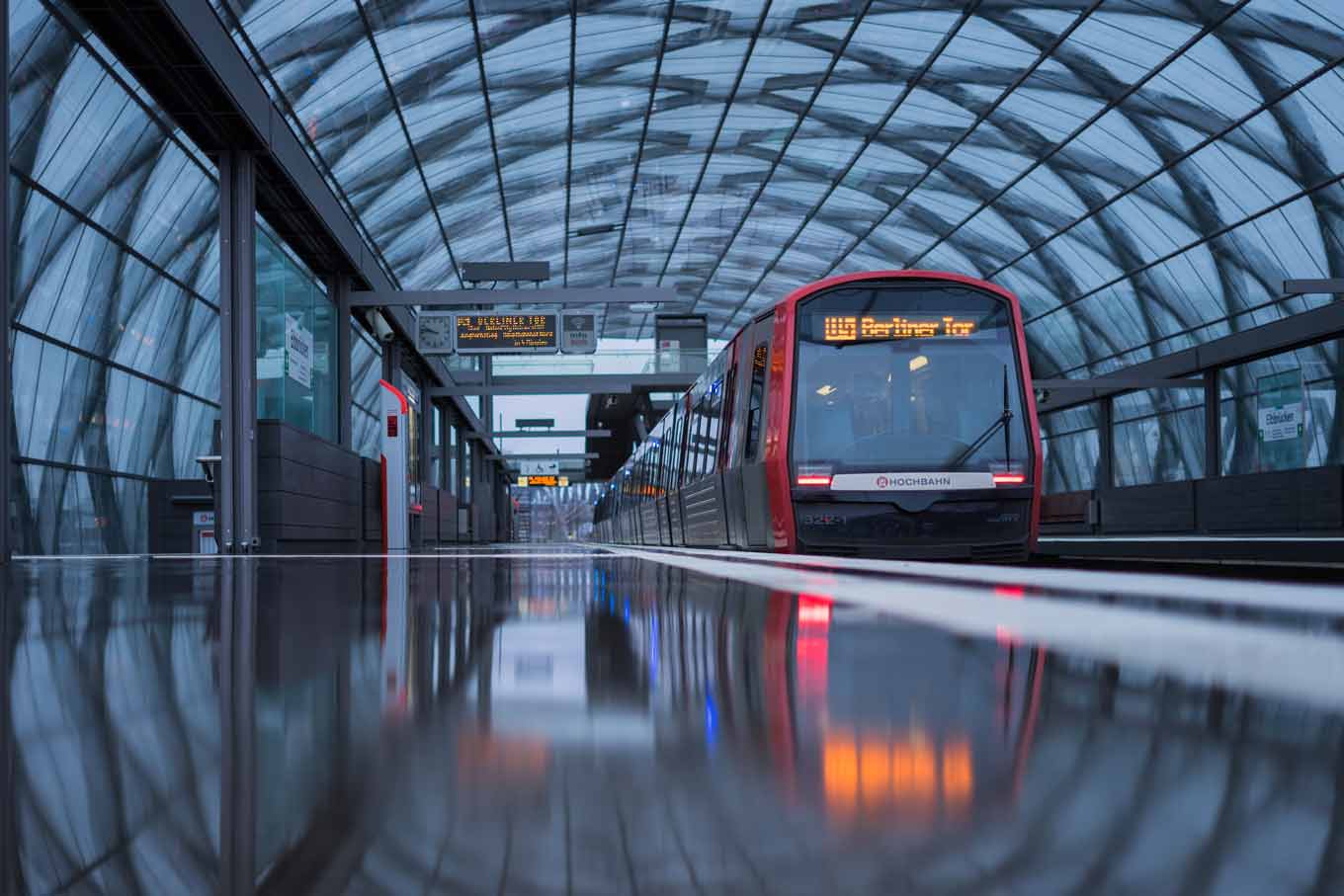
“Alternatives to single-occupancy car use, such as shared transport, would not only help businesses meet their net-zero targets, but also increase their appeal to current and future employees through showcasing their sustainability efforts,” says Kura CEO Godfrey Ryan.
Shuttle services also give businesses the opportunity to employ more people who may not have another way to commute into work, Ryan adds, because they don’t have a car or live near a transit station, or both.
Extending financial incentives for green transport options beyond the corporate sector does look to be the most challenging aspect of these programs, but company and civic leaders are already recognizing this.
Ukrainian refugees across the UK are being given free bikes to help them access training, volunteering and skills opportunities as well as attend English lessons and job interviews, and get to work once they’ve landed a job.
London Mayor Sadiq Khan has also just requested that Transport for London, provider of the Tube underground train service, offer free travel to its lowest paid contract staff, which include security, catering and cleaning staff.
Their gratitude may be due to the money saved more than environmental concerns, but either way, Kura’s Ryan says investing in sustainable staff transport subsidies will become non-negotiable for employers.
“It’s clear that in cities like London a lot of command-and-control employers have relied on their employees enduring the daily hell and high cost of the commute without any negative impact on staff satisfaction or retention rate,” he says.
“This is now changing, as supporting, and even financing, a greener commute is now an important ingredient of any employer brand.”
According to the U.S. Census Bureau, of the more than 154 million Americans who commuted to work in 2021, just 616,153 did so by bike. If this figure seems both incredibly small and surprisingly big, that's because it is.
Cars and public transit accounted for more than 120 million of all commutes, dwarfing the number of bike rides. But the number of bicyclists actually exceeded the number of people who used commuter or long-distance rail to get to work. In fact, they more than doubled the number of commuter rail users.
Of course, this isn't exactly an apples-to-apples comparison — commuter rail goes to and from metro areas, while bicyclists tend to commute within the metro limits — but it does show that, against some other forms of transportation, bike commuting was a competitive means of travel.
Not all cities are bike-friendly. A lack of dedicated bicycle lanes combined with road systems with too many one-way streets colludes in many cities, making commuting by bike less practical than bus or train. According to the Bike League, even walking is a more popular alternative to getting to work than riding a bike.
But this is not to say there aren't cities where bike commuting is on the rise; quite the contrary — certainly for the 10 cities on this list.
Using data from the Bike League, the Census Bureau, the National Highway Traffic Safety Administration, and several cities' websites, Velotric looked into the 10 cities in the U.S. where bike commuting has increased the most. Seventy-six cities identified by the Bike League based on population and bicycle-friendliness were ranked by how much bicycle use increased between 2015 and 2020 per 10,000 people. This list focuses on commuting data: the trip from home to the workplace and vice versa.
Fewer people were commuting to workplaces in general in 2021 due to the COVID-19 pandemic, but in the following cities, commuting by bicycle increased, nonetheless.
#10. Cheyenne, Wyoming
- Increase in bike commuters: 13 more commuters per 10K people
- Bikers per 10K in 2020: 40
- Bikers per 10K in 2015: 27
Walking and biking are more common than public transportation in Wyoming's capital. The city layout lends itself to such forms of transportation. What passes for public transit is very little different from rideshare service—the Cheyenne Transit Program is a reservation-based service. But commuting is set to evolve in Cheyenne and will include a boost to bike-friendly features.
In 2020, the Cheyenne Metropolitan Planning Organization approved its Connect 2045 to promote transportation investments over the next 25 years. This program will expand the bicycle network, bike lanes, and bike routes and is accepting proposals regarding changes to traffic patterns, road restrictions, and transportation in general. One of the program's main focuses is solving the disconnection between the different bike network areas to create easy and more comfortable rides.
#9. Detroit, Michigan
- Increase in bike commuters: 14 more commuters per 10K people
- Bikers per 10K in 2020: 67
- Bikers per 10K in 2015: 52
In 2009, Talking Heads band member and cycling advocate David Byrne declared Detroit one of the top eight biking cities in the entire world. In his book, "Bicycle Diaries," Byrne wrote about riding in the city: "I bike from the center of town out to the suburbs. It's an amazing ride—a timeline through a city's history, its glory and betrayal."
He may not be alone in embracing two-wheeled rides. Since 2011, biking spaces have grown citywide, boasting more than 260 miles of bike lanes, 50 of which are protected, and many of which were included in streetscape planning that used federal and state investments.
#8. Boise, Idaho
- Increase in bike commuters: 14 more commuters per 10K people
- Bikers per 10K in 2020: 271
- Bikers per 10K in 2015: 256
Organizations like the Boise Bicycle Project, a cooperative that promotes riding in the city through refurbishing bicycles and other initiatives, has helped energize the biking community with events and education opportunities. On the city level, the Boise City Council's initiative, City Go, has greatly incentivized public transit use and bike sharing. This program includes a card that allows users to pay for city center buses and access other perks such as a Cycle Learning Center, bike air and repair stations, bike-share options, and free bike parking in secure locations.
#7. Wichita, Kansas
- Increase in bike commuters: 21 more commuters per 10K people
- Bikers per 10K in 2020: 43
- Bikers per 10K in 2015: 21
Wichita has more than 100 miles of bicycle paths, of which the Arkansas River Path is the most popular. Although Wichitans still rely heavily on other forms of transportation for commuting purposes, the number of bike commuters per 10,000 people is rising, more than doubling since 2015. The city operates a bike-share program in partnership with Tandem Mobility.
The city launched its bike-sharing system in May 2017, which includes 200 bikes and 40 stations, with annual plan prices of $30, free rides under one hour, and a reduced student rate of $20.
#6. Washington D.C.
- Increase in bike commuters: 22 more commuters per 10K people
- Bikers per 10K in 2020: 422
- Bikers per 10K in 2015: 401
In May 2022, the District Department of Transportation announced an initiative, GoDCgo, to support bike use among people commuting to work and promote sustainable transportation. The initiative offers school district employees up to $200 toward purchasing a new bike for commuting. As of October 2022, more than 170 school staffers have taken advantage of the offer.
In the fall of 2021, Metro customers became eligible to use the city's bike-share program in an attempt to make up for the delays on the district's subway system. The program allowed people to earn up to 10 free bike rides up to 45 minutes across stations in the city, as well as in Maryland and Virginia.
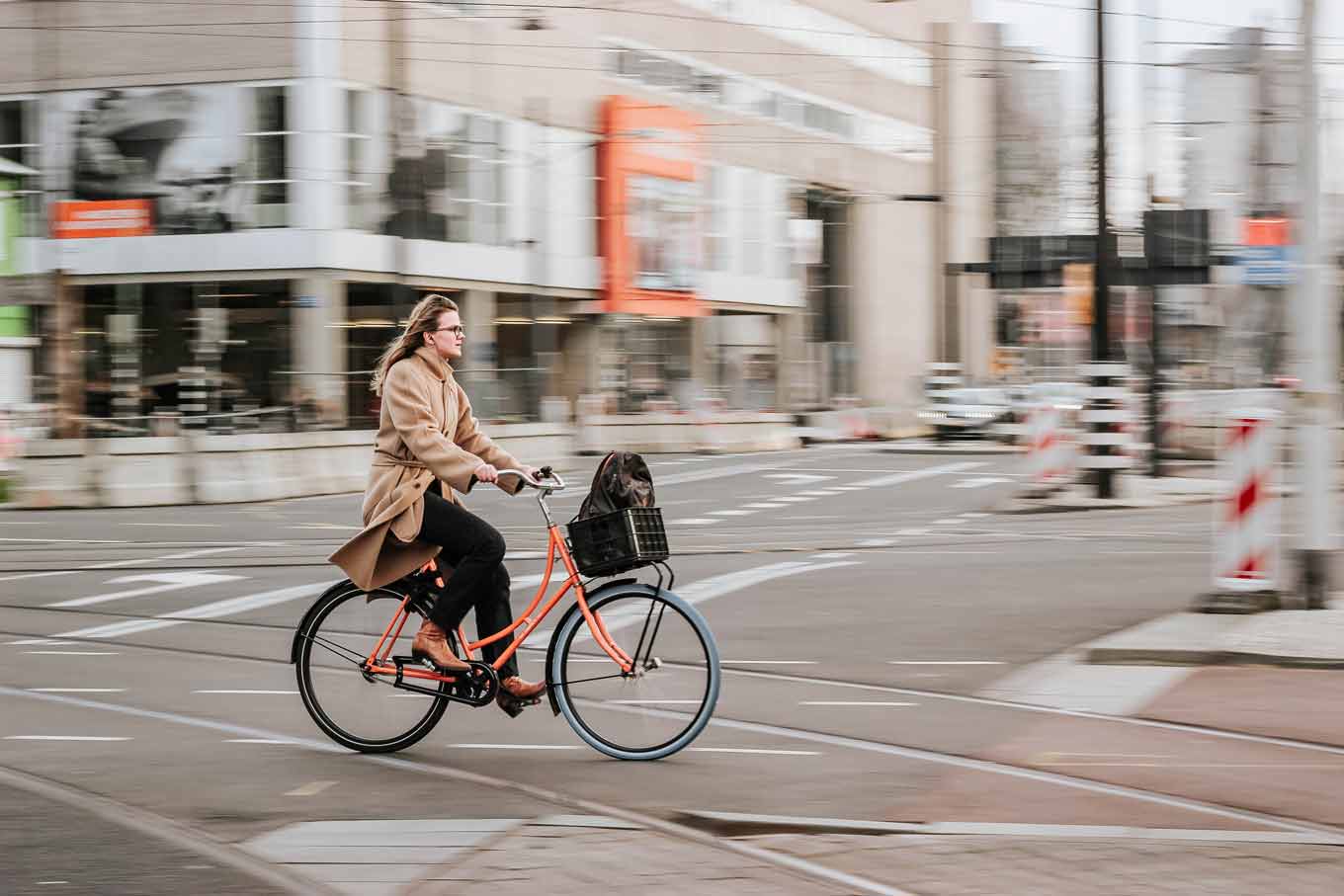
#5. Atlanta, Georgia
- Increase in bike commuters: 27 more commuters per 10K people
- Bikers per 10K in 2020: 111
- Bikers per 10K in 2015: 84
Atlanta, while a major metropolitan area, has the advantage of being one of the least dense cities in the U.S. This fact may well contribute to the low number of bicyclist fatalities on its roadways. Another contributing factor may be that since 2015 the city has had a chief bicycle officer who works specifically on developing bike-related projects and promoting bike initiatives across the city.
The city has a bike-share program and openly accepts requests from the community to install bike racks within the public right-of-way.
#4. New York City, New York
- Increase in bike commuters: 28 more commuters per 10K people
- Bikers per 10K in 2020: 132
- Bikers per 10K in 2015: 104
Between 2020 and 2021, public transportation ridership in the city dropped 31%. This was despite New York being the only city in the country to have an increase in total commuters during COVID-19, among other U.S. cities with the most bike commuters. With nearly 30,000 people per square mile, those commuters who turned away from public transit had to go somewhere.
Almost 56,000 commuters chose to go to work by bike in New York City last year, making it the city with the most bike commuters in the country. Bike commutes in the city have tripled in the past 15 years. About 530,000 cycling commutes are made daily in the city, according to the city's Department of Transportation.
The department's Green Wave plan, established in 2019, is a citywide program that, among other efforts, is focused on expanding protected bike lanes. This initiative installed 29.5 lane miles of protected bicycle lanes in 2020. New York's bike-share system, City Bike, is also popular with both resident commuters and visitors alike. In August 2022, the system had 146,000 active annual members and 840,000 casual members, all averaging about 115,000 rides per day.
#3. Boston, Massachusetts
- Increase in bike commuters: 29 more commuters per 10K people
- Bikers per 10K in 2020: 218
- Bikers per 10K in 2015: 189
One of Boston's biggest biking successes was the establishment of 20 mph safety zones to promote traffic calming and reduce fatalities as part of its Neighborhood Slow Streets program.
There has also been a transformation in bike lanes available to commuters in the city. In 2020, most of Boston's bike lanes were separate from the rest of the traffic, a significant safety program improvement. Since 2018, the Go Boston 2030 transportation plan has focused on developing complete streets featuring dedicated bike lanes and boosting vehicle driver awareness of bicyclists with smart traffic signals and clear pavement marking bike-only areas.
#2. Burlington, Vermont
- Increase in bike commuters: 53 more commuters per 10K people
- Bikers per 10K in 2020: 624
- Bikers per 10K in 2015: 570
Located by Lake Champlain, Burlington allocated $1.5 million of its FY 2022 budget to bike and pedestrian improvements around the city. Protected bike lanes and the construction of a dedicated lane on a busy roundabout are measures city planners hope will further increase bike commuting beyond the increase experienced since 2015.
While the Burlington Greenway is the keystone bike path near the lake, the city also features bike-friendly roadways, dedicated paths, and e-bike rentals for residents and visitors. The city has been a League of American Bicyclists "Bike Friendly Community" since 2005. The city's 2017 Walk Bike Master Plan included initiatives such as new pavement markings, additional bike racks, and repurposing right-of-way access on select corridors for the application of bike lanes.
#1. Portland, Maine
- Increase in bike commuters: 54 more commuters per 10K people
- Bikers per 10K in 2020: 211
- Bikers per 10K in 2015: 157
Nope, the top-growing bikeable city for commuters isn't Oregon's Portland, the "Rip City" known as a biking haven. In fact, the Pacific Northwest city's number of bike commuters has dropped steeply since 2015.
Instead, it's the Portland on the opposite side of the country. Though the Maine city is known for frigid winters, few may know that it features 45 miles of bike lanes. It recently launched a bike-share program that clocked 2,220 rides during its first month. Its bike-share fleet currently consists of 150 pedal and 50 electric bikes.
The city has also opened its continued development of bike-friendly infrastructure to all Portlanders via its Better Bikeways Initiative, which features a crowdsourced mapping system and a robust public engagement platform.
This story was originally published by Stacker and republished pursuant to a CC BY-NC 4.0 License.
- Knik Arm Services is the second oil company to cancel its oil and gas lease for a tract of land in the largest wildlife reserve in America, the Arctic National Wildlife Refuge, following fierce opposition by the Indigenous Gwich’in committee and environmental groups.
- The Biden administration is intent on continuing Trump-era policies by supporting oil drilling in Alaska’s northern slope amid rising energy costs in the country – despite the president’s campaign promises to ban new oil and gas leases.
- Land in the refuge will still be available for lease to oil and gas companies in 2024, the U.S. Bureau of Land Management told Mongabay.
- Drilling and subsequent infrastructure development in the Arctic would have significant impacts on the tundra and would be disruptive to wildlife like caribou and polar bears.
The Gwich’in people of northern Alaska were disappointed when the Democratic-held U.S. Congress did not include a provision in the Inflation Reduction Act to protect the Arctic National Wildlife Refuge (ANWR) – an area the Trump administration officially opened to future drilling in 2017.
However, for decades now, the Gwich’in Steering Committee has taken the protection of the Arctic’s Coastal Plain into their own hands and mounted a fierce opposition against oil drilling in the region – resulting in the exit of the second oil company last month.
“These exits clearly demonstrate that companies recognize what we have known all along: drilling in the Arctic Refuge is not worth the economic risk and liability that results from development on sacred lands without the consent of Indigenous peoples,” said the Gwich’in Steering Committee in a press statement.
When the Gwich’in people learned that the Coastal Plain of the ANWR would be at risk from oil development during the second year of the Trump administration, they doubled down on their efforts to encourage banks and insurance companies to align with Indigenous rights and speak out against oil and gas development on the reserve.
The Gwich’in people have been fighting for the protection of ANWR’s Coastal Plain since the 1980s after Congress passed a law that safeguarded only 80 percent of the reserve, leaving out an area critical to the livelihood of Indigenous groups in northern Alaska – its Coastal Plain. Lease auctions began in 2021.
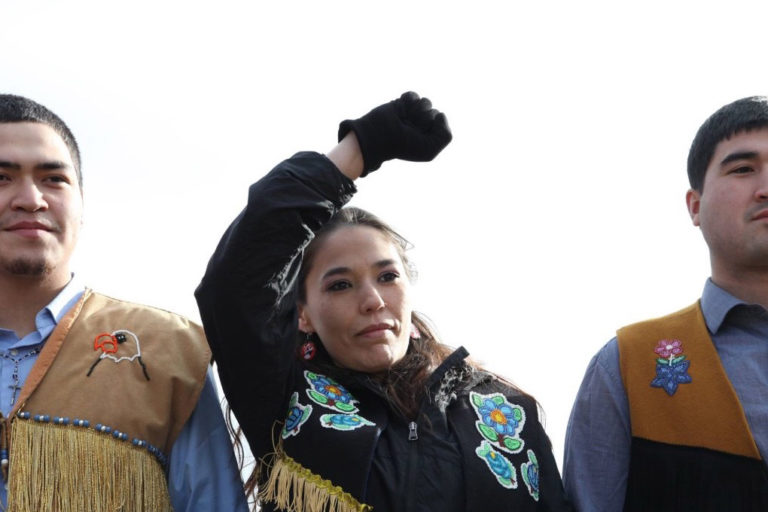
According to the committee, 29 global banks have implemented a policy to decline underwriting oil and gas projects on the refuge and 14 international insurances companies have said they will not insure development projects in ANWR.
On August 16, the U.S. Bureau of Land Management (BLM) canceled Knik Arm Services’ (KAS) 19,669-hectare (48,603-acre) lease in the Coastal Plain of ANWR after the company indicated it wanted to finally give up its tract just 19 months after purchasing its lease.
BLM told Mongabay that it has since directed the Office of Natural Resources Revenue (ONRR) to refund KAS to the tune of over $2 million.
KAS is the second company that asked BLM to cancel its oil and gas lease. In June, Regenerate Alaska, a subsidiary of Australia’s 88 Energy, also gave up its lease and requested a refund from BLM.
“If these leases had been developed, that likely would have included seismic testing, infrastructure like road and well pads, all of which are damaging to the tundra and disruptive to wildlife like caribou, polar bears and birds,” Ellen Montgomery, public lands campaign director at Environment America, told Mongabay.
Montgomery, whose organization advocates for protecting the refuge alongside the committee, says that the exits of the two oil companies are evidence that the lease sale in January 2021 was a flop.
Just days before Biden took office, the Trump administration held an auction for the right to drill in the refuge.
It was projected that $1.8 billion would be raised from two lease sales, but it only attracted $14.4 million in initial bids with nine of the 22 tracts of land leased — most of which were from state-owned Alaska Industrial Development and Export Authority (AIDEA).
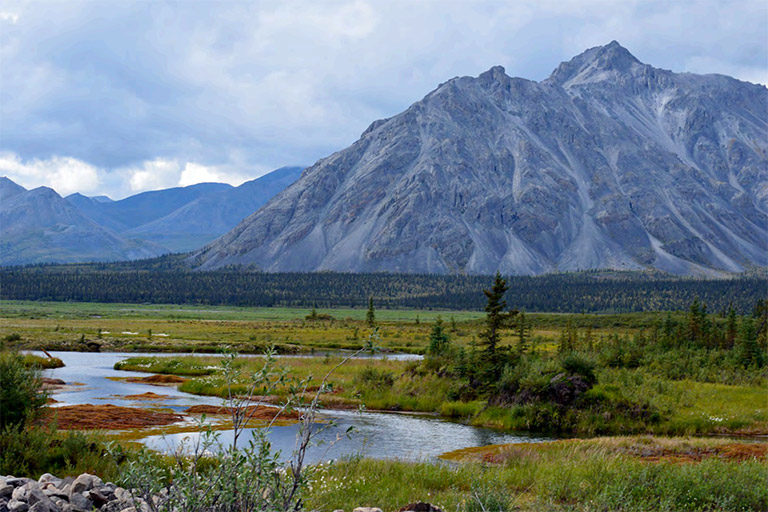
Alaskan officials have long supported oil drilling in the Arctic. In fact, it was Alaska’s Republican Senator Lisa Murkowski who sponsored the Senate bill to permit drilling on 809 hectares (2,000 acres) of the refuge. President Trump later introduced a budget that included drilling in the refuge to raise budget revenues for the state.
During his presidential campaign, Biden pledged to ban new oil and gas leases to combat climate change. Upon taking office, he issued a temporary moratorium on all oil and gas activity in the Arctic Refuge.
However, as the U.S. experiences an energy deficiency amid Russian sanctions and high energy prices pricking citizens, the Biden administration is supporting one oil and gas project in the region — despite pledges to scale back on Trump-era drilling projects.
Arctic land still for sale
ANWR spans 7.8 million hectares (19.3 million acres) — an area about the size of South Carolina — with of land, glaciers, alpine lakes and river deltas.
It holds great cultural significance to the Native peoples of the region, including the Gwich’in tribe, who for generations have depended on the migratory porcupine caribou (Rangifer tarandus granti) herd that births and calves in the Coastal Plain.
ANWR also provides vital denning habitat for endangered polar bears.
ANWR has been at risk from oil development since 2017 when the Republican-held U.S. Congress passed legislation authorizing drilling in the reserve despite objections of many Indigenous leaders and environmental groups.
State agency AIDEA still has oil leases in ANWR, and another lease sale is required by 2024 as per a provision in the 2017 Tax Act.
According to an email by Brian Hires, a spokesperson for BLM, these oil leases may be available for sale in the future now that they have been canceled.
Since July, the Gwich’in Steering Committee told Mongabay, they have been calling on Congress and President Biden to repeal the leasing mandate to prevent another lease sale and recognize the rights of Indigenous communities that are being overlooked in Alaska.

“What happens in the Arctic does not stay in the Arctic,” said the committee in a statement to Mongabay. “Americans need to understand that what is happening to Arctic communities is coming to their regions — rising sea levels, economic impacts, erosion of beaches and shorelines. The Arctic refuge is where we must take a stand to address climate change.”
An estimated 1,400 gigatons of carbon is currently embedded in the world’s permafrost, mostly in the Arctic and sub-Arctic, according to scientists. But the prediction that the Earth could experience dramatic and very dangerous warming if a major proportion of existing permafrost has not been a risk that has deterred the Biden administration energy goals.
In fact, the release of an environmental analysis by the U.S. Department of the Interior for the ConocoPhillips project known as Willow, for an oil development on the National Petroleum Reserve in Alaska, is seen as the Biden administration signaling its support for oil drilling in the state’s northern slope, despite his campaign promise to ban new oil and gas leases.
This project was later blocked by a federal judge, who ruled that the environmental review did not sufficiently consider the project’s effect on climate change and wildlife.
The environmental impact study (EIS) of Willow said the project would have similar impacts like that of oil drilling in ANWR. According to the project’s revised EIS, oil extraction would devastate wetland and wildlife habitats such as caribou and polar bears. Permafrost will thaw.
The comment period for the new drafted EIS ended on August 29, and whether this study will be approved is yet to be seen. In the meantime, ConocoPhillips said in its EIS that the company is in the process of acquiring other necessary permits that will kick-start the Willow project.
Protection of Coastal Plain and wildlife
But the fight against drilling in the Arctic is still ongoing. In September 2021, a group of conservation groups sued the U.S. Fish & Wildlife Service to challenge a regulation they say would allow oil and gas operators to harass, harm and potentially kill polar bears on land and sea in Arctic Alaska.
“These lands are sacred, and we — the Gwich’in people — will never give up fighting to protect the Arctic Refuge,” Bernadette Demientieff, executive director of the Gwich’in Steering Committee, said in a press statement.
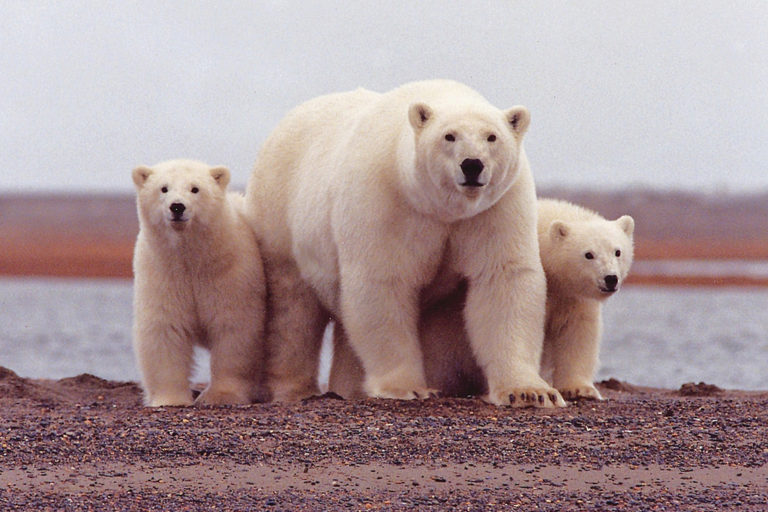
Legislation is pending in both houses of Congress that would protect the refuge by designating its Coastal Plain as wilderness under the National Wilderness Preservation System while at the same time protecting subsistence rights of the Arctic Indigenous Peoples. This would prevent the Coastal Plain from being leased to oil and gas companies.
“Any legislation claiming to take climate action must include protecting sacred lands in the Arctic Refuge from drilling,” Demientieff said in a press statement.
Apart from KAS and Regenerate Alaska giving up their respective tracts, Chevron and Hilcorp have paid $10 million to Arctic Slope Regional Corporation to exit their legacy leases, which allowed for oil and gas exploration in the Arctic Refuge in the 1980s.
The U.N. has thrice sounded alarms about the harm and human rights violations that proposed oil and gas development in the sacred Coastal Plain could pose to the Gwich’in.
According to Montgomery of Environment America, given the immense opposition to oil drilling in the Arctic, the AIDEA should now cancel their leases and leave the refuge to people and wildlife who rely on the Arctic refuge for survival.
“The effects of this are national but, on a local level, Indigenous communities in the Arctic —particularly the Gwich’in — are faced with an existential threat to their villages and culture,” said the committee.
The Gwich’in tribe is just one of many Indigenous groups in Alaska opposing an extractive industry.
In the state’s southwest and remote Yukon-Kuskokwim region, three distinct Alaskan Native groups, the Yup’ik, Cup’ik and Athabascan people, are opposing plans to construct a 6,474-hectare (15,998 acres) open-pit gold mine near the Kuskokwim River watershed.
This project is feared to have grave impacts on salmon habitats, traditional ways of life and the community’s health.
The Gwich’in committee says their fight against oil drilling in ANWR is not over. “While we gladly welcome the news of these exits, it is a reminder of how much more work is necessary to protect this sacred land, our animals and our people,” the committee said in a statement.
This article was first published by Mongabay and was generously made available to Good Good Good.
Banner Image: The Gwich’in First Nation cultural gathering of all the Gwich’in peoples from Yukon, Alaska, and Northwest Territories in in 2014. Here, people discuss important issues, such as threats from oil and gas development projects. Image courtesy of Mongabay.
Every day the Good Good Good team collects the best good news in the world and shares it with our community. Here are the highlights for this week!
If you want to get good news in your inbox every day, join the Goodnewsletter — the free daily newsletter designed to leave you feeling hopeful.
The Best Positive News We're Celebrating This Week —
John and Hank Green’s sock subscription service has raised millions to build a maternal health hospital in Sierra Leone
Since 2019, Hank and John Green, along with their fanbase, have been committed to raising at least $25,000,000 to support the construction, staffing, and supplying of a new hospital in the Kono District of Sierra Leone. They’re reaching this goal through a number of projects — one of them is a sock subscription service.
Now entering its third year, the Awesome Socks Club has grown to over 40,000 subscribers and has surpassed the million-dollar threshold each year. Just as it was always intended, 100% of this money has gone to charity.
Each month’s socks feature a new design by an independent artist, which is a secret to subscribers until their monthly sock shipment arrives, and are high quality and created with garment workers and the planet in mind.
Since New Zealand first did in 1893, countries all around the world have been granting women the right to vote
There’s no doubt the women's rights movement is alive and well today. And though there is still much progress to be made, from equal pay to reproductive rights, it’s important to look back to see how far we’ve come. And with Election Day tomorrow, one key area of progress to celebrate has been women’s suffrage.
In 1893, New Zealand became the first self-governing country to give women the right to vote — and in the years that followed, more and more followed suit, like Australia, Denmark, Germany, and Britain. The U.S. ratified the 19th Amendment in 1920 giving women the right to vote — just over 100 years ago.
More recently, Saudi Arabian women were granted the right to vote in 2011, when King Abdullah issued a decree ordering that women be allowed to stand as candidates and vote in municipal elections. And as of 2021, 20% of the parliamentary seats in Saudi Arabia were held by women.
→ 50 countries that gave women the right to vote
Millennials are significantly underrepresented in U.S. government — but change is coming
In February of 2021, the Pew Research Center reported minor increases in millennial representation in Congress. There were 31 millennials in the House of Representatives (which is made up of 432 members), and 20 millennials in the Senate (out of 100 members).
Increased millennial representation in politics is vital for increased diversity in all political arenas, as well as a means to maintaining a truly representative democracy.
In addition to millennial and Gen Z voters making up a larger percentage of the voting population, boot camps and organizations like Run For Something are helping improve generational representation ratios by recruiting and supporting young, diverse candidates.
Libraries around the country are adding bikes to their inventory to improve access to bicycles
A number of barriers keep cities from developing inclusive, thriving biking communities, like unequal distribution of infrastructure, car traffic, storage space, and cost. And while bike-share programs can help bridge the gap, people without a bank account can’t use them.
Thankfully, there’s a growing movement of bike libraries across the U.S., and while they all work differently, they share the same goal: increasing free access to bikes.
Of many incredible services libraries offer, these programs are part of a larger movement toward making cities more bike-friendly and communities helping provide repairs.
Thanks to a collaboration between Indigenous and settler communities, a giant Amazon rainforest fish made a comeback
The pirarucu, also known as arapaima fish can weigh up to 440 pounds, by far the largest of 2,300 known fish species in the Amazon. It’s also a staple food source for the Deni Indigenous people but was nearly driven to extinction by illegal and unsustainable net fishing.
Now, the pirarucu is thriving again, thanks to a partnership between settler communities, which are able to utilize the forest’s resources up to protected areas, and Indigenous peoples. The groups work together to sustainably fish and manage the pirarucu.
Amazon rainforest experts say the collaboration is unlike anything they’ve seen in the region and is an example to all of us of how we can come together to protect and conserve the planet and its resources.
Combat diving veterans are now using the skills they learned in the military to restore ocean health
For veterans of combat diving, life after the military can lack a sense of purpose. Now a nonprofit is giving these military veterans a new mission by employing their unique underwater skills to restore ocean health.
Veterans of combat diving are used to mission-focused work, so transitioning back to civilian life and working at a desk can be a difficult adjustment for many veterans.
Enter Force Blue, a nonprofit that unites military veterans with the world of coral reef conservation for the betterment of both.
A Marine Corps veteran is using art to help other service members heal
According to the Department of Defense, one in five veterans of the Iraq and Afghanistan wars are diagnosed with post-traumatic stress disorder. Richard Casper is one of those soldiers.
Within his first four months in Afghanistan, Casper’s Humvee was struck by improvised explosive devices. His friend was killed by a sniper during the ambush, and Casper suffered a traumatic brain injury.
Coming home, he struggled with depression and suicidal ideation, but he found the healing power of art and music — and co-founded an organization called CreatiVets to help other veterans who are suffering.
Casper’s art and work with CreatiVets has caught the attention of TIME Magazine, the iconic School of the Art Institute of Chicago, and prominent country music artists, and he even spent time with President George W. Bush to discuss the impact music and art have had on his recovery.
More good news of the week —
President Biden just signed an international climate treaty that was first passed the Senate with bipartisan support. If fully implemented, the Kigali Amendment will avert upward of 0.5 degrees Celsius of warming by the end of the century.
Sesame Street now has its first-ever Latino executive producer. Sal Perez started working on Sesame Street 16 years ago as a production coordinator and will now oversee all production for the show’s 53rd season.
Lena Horne just became the first Black woman to have a Broadway theater named after her. Horne passed away in 2010 and was an actress, singer, dancer, and civil rights activist who notably took part in the 1963 March on Washington.
A South Carolina community came together to defeat a proposed LGBTQ+ book ban at their local library. The city council voted 9-3 to keep LGBTQ+ books accessible at the library.
A veterans group launched a campaign to recruit 100,000 veterans to help fill an election worker shortage. Vet the Vote partnered with Power the Polls specifically for the midterms, but anticipate their efforts will continue in future elections.
A Nevada county is working to ban the sale of cats, dogs, and other pets in pet stores. The county commission’s move comes in response to support from animal welfare advocates, businesses, and local shelters being overwhelmed with adoptable pets.
Maxwell Frost just made history as the first member of Gen Z in Congress. Frost made gun violence a centerpoint of his campaign and secured representation for the growing generation of new voters.
The U.S. Fish and Wildlife Service made Emperor Penguins a protected species. They said it “reflects the growing extinction crisis” due to the impact of climate change on sea-ice habitats.
Germany and Norway announced they want to revive their fund to help Brazil protect the Amazon rainforest. The countries first set up the fund in 2008 but stopped making payments to it after the previous president weakened protection measures.
The U.K. just set a landmark new wind energy generation record. Onshore and offshore wind farms generated more than 20 gigawatts for the first time last week.
Massachusetts voters elected the first openly lesbian governor in U.S. history. Maura Healy ran on a platform of investing in housing, public transportation, clean energy, and job training.
The European Union approved a law that will effectively ban sales of new petrol and diesel cars starting in 2035. The deal also increased the required emissions reduction percent for new cars sold beginning in 2030, from 37.5% to 55%.
New data shows there was an 11% decline in veteran homelessness since 2020, the largest drop in over 5 years. The Biden administration report shows there’s been a 55% decline in veteran homelessness since 2010.
Learning mindfulness and saving pollinators, veterans are taking up beekeeping post-military service. Hives for Heroes helps support veterans’ mental health while addressing the decreasing population of honeybees.
Veterans and military retirees will get an 8.7% cost-of-living adjustment added to their disability compensation. The largest increase in 40 years, it is equal to the Social Security increase.
On a recent Saturday morning, Pamela McGhee and several neighbors were busy at work in a community garden on Detroit’s East Side, weighing food scraps and assessing compost piles for compliance. Items in the compost are assessed according to a “yuck” and “yay” system. “Yuck” items, like animal bones and meat, which do not compost well, were discarded; “yay” items, including fruit peels and coffee grounds, were added to the pile.
McGhee and her neighbors are participating in a pilot program to build zero-waste systems for Detroit. It’s something they say the city sorely needs. For decades, Detroit was home to one of the country’s largest waste incinerators.
Detroit Renewable Power burned thousands of tons of trash each day, releasing toxic fumes — nitrogen oxide, sulfur dioxide, carbon monoxide and lead particles — into the air. Nearby residents kept their windows closed to avoid the stench. They said the incinerator, located in a low-income, majority-Black neighborhood, contributed to the city’s high asthma rates, which are 46% higher than Michigan’s state average.
Three out of four of McGhee’s children have asthma; her sister does too. “It was terrible,” she said. “You could smell it just about every day in the summer, and in the wintertime too.”
The existence of the incinerator also discouraged investment in alternative waste management systems, like recycling or composting, according to the nonprofit Global Alliance for Incinerator Alternatives (GAIA). In 2014, Detroit became the last major U.S. city to implement citywide curbside recycling; today, its waste diversion rate is only 4%, compared to the state average of more than 19%.
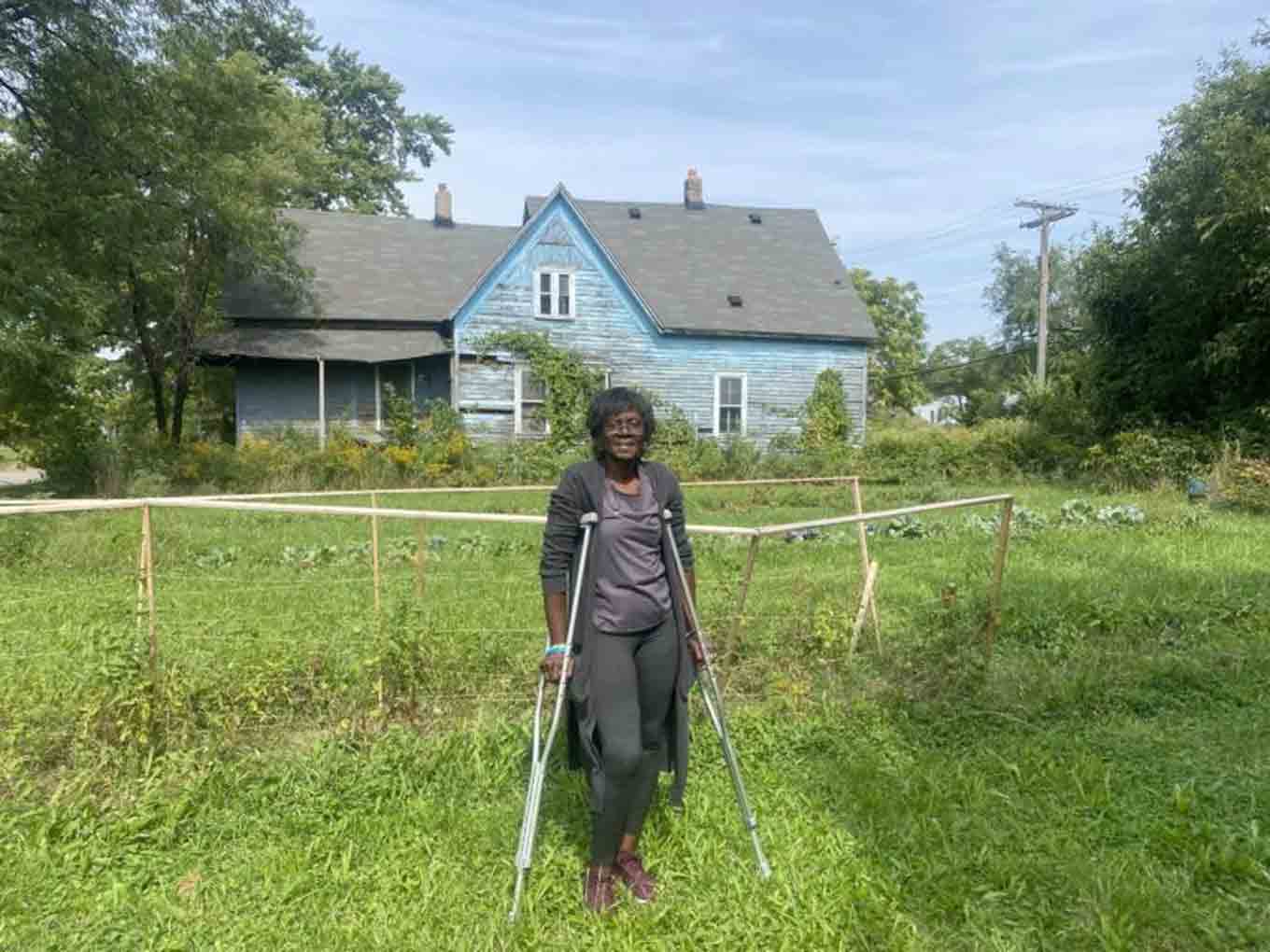
East Side residents formed Breathe Free Detroit, one of several groups behind a successful campaign to shut down the incinerator; the plant closed in 2019. Now, that same group is working with the city to develop a composting system.
“Our communities still face a lot of respiratory and health problems because of the pollution that was caused from the incinerator,” said KT Andresky, Breathe Free Detroit’s campaign organizer. Andresky said that many of her neighbors see a direct line between composting and recycling and improving their community health.
According to the Environmental Protection Agency, food waste is the most common material found in landfills and sent to incinerators in the U.S, comprising 24% of landfill materials and 22% of combusted municipal solid waste.
A citywide composting program would create local jobs, decrease truck traffic and emissions from waste pickup and provide organic fertilizer for community gardens like the one in which McGhee was volunteering, Andresky said. It would also help the U.S. reach its climate goals: food that decomposes in landfills is a major source of methane, a potent greenhouse gas. Composting and recycling could help reach net-negative waste-sector emissions by 2030, according to a new report by GAIA.
But Detroit organizers didn’t have much experience with community-wide composting, so when they began developing their program they turned to an unlikely mentor more than 8,000 miles away: the Mother Earth Foundation in The Philippines. Over the past 20 years, the organization has earned a reputation for training low-income communities, government agencies, civic organizations and businesses in zero-waste practices.
“Culturally, [composting] has been part of our ancestral practices,” said Rap Villavicencio, a program manager at the Mother Earth Foundation. “As an agricultural country, the Philippines has been using and producing a lot of organic wastes since the early days,” he said.
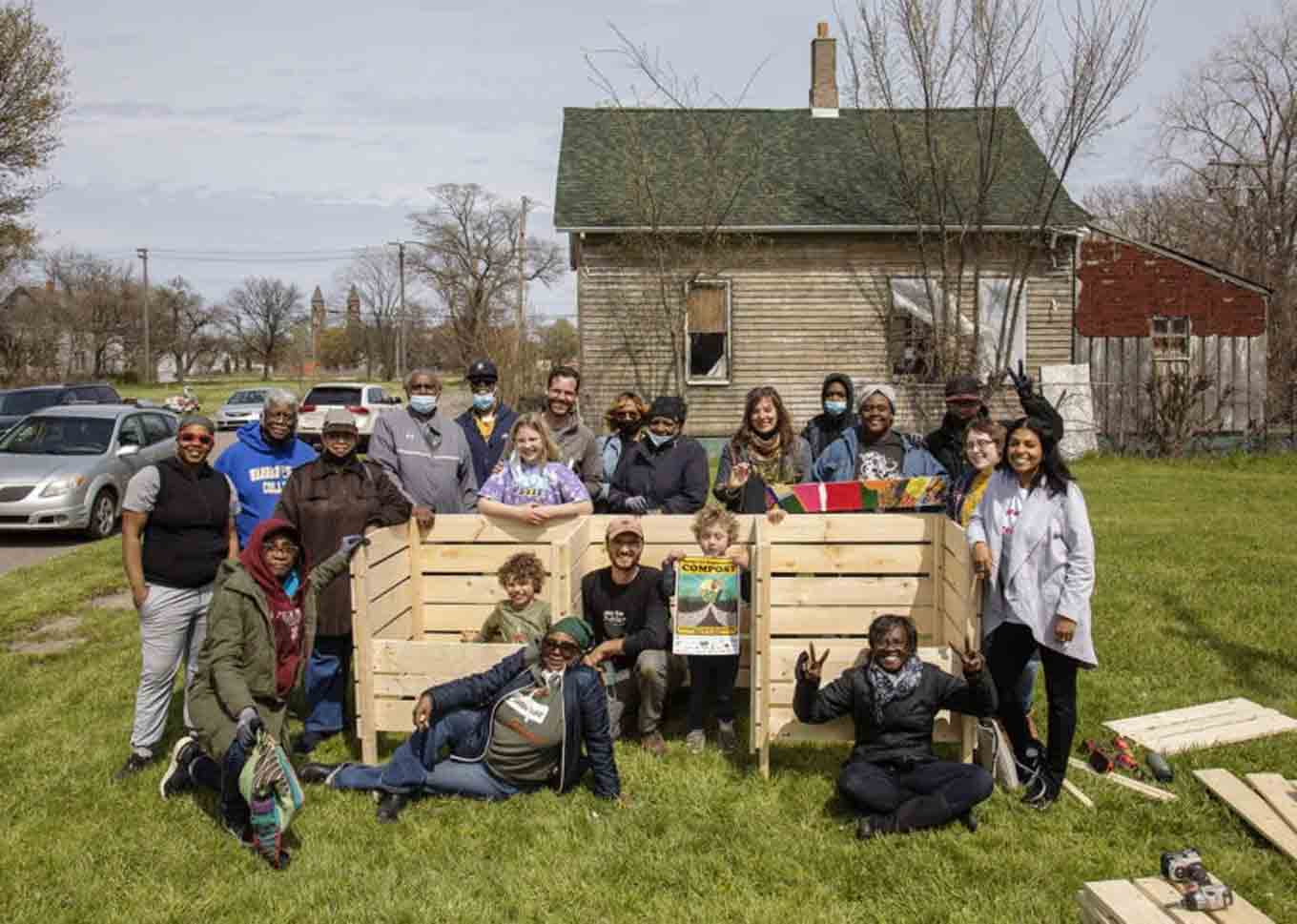
Despite that ancestral knowledge, few citywide systems were helping communities keep organic matter out of landfills, Villavicencio said. “We cannot rely on the large-scale anymore,” he said. “We need to empower every household, every sector to do their own composting.”
For more than a decade, the organization has set up compost training programs in communities across the country; it helped one neighborhood in Manila divert 92% of its solid waste from landfills, according to a report from the U.S. Agency for International Development.
It was that success at the local level that convinced organizers with C40 Cities, a global network of metropolises that collaborate on climate solutions, to connect the Mother Earth Foundation with Breathe Free Detroit.
Starting in November 2020, the two groups organized monthly calls, in which Mother Earth Foundation organizers offered advice based on their experiences setting up community composting systems.
“It’s just really important for us to learn from and be guided by some of the most impacted communities across the world because these communities are experts in understanding the solutions for the problems that they face on a daily basis,” said Andresky.
The Robert Wood Johnson Foundation, a funder of C40, provided the volunteers, including McGhee, stipends for participating in training sessions and collecting data on her community’s composting practices. The foundation’s grant also included money for materials, staffing of the pilot, and data analysis. Next spring, Breathe Free Detroit and its partners plan to share that data with city officials. Members of Mother Earth Foundation and community organizers in Detroit plan to visit each other’s cities early next year, Andresky said.
The Manila-Detroit partnership is part of a larger effort helmed by C40 Cities to connect U.S. communities with non-U.S. groups to advance climate justice and public health.
“Climate change is so overwhelming often, and it requires so many innovative ideas, and really, transformation at the root,” said Nia Mitchell, manager of U.S. health and equity climate for C40 Cities. International collaboration has a lot to offer, Mitchell said. “Being able to be inspired by and demonstrate that new strategies can work is one really big benefit,” she said.
The Detroit-Manila partnership isn’t the only one of its kind led by C40 Cities. Officials in Jackson, Mississippi, have partnered with their counterparts in Barcelona to study how replacing asphalt with vegetation can combat urban heat islands. Community organizations in Lawrence, Massachusetts, have studied Fortaleza, Brazil on how to make the city’s streets more bicycle- and pedestrian-friendly.
Cities learning from one another is easy — it’s scaling those solutions that proves challenging, said Josh Sorin of the Centre for Public Impact, another organization working to bring together cities across the world to address climate change.
“There are some exciting examples at the moment of cities learning from one another’s experiments and solutions to address the climate crisis in their cities,” he said. “However, the greater challenge we see is the need for cities to embed and influence insights from individual experiments into broader city policies, and even regional and national policies,” Sorin said.
“At the end of the day, it’s really about relationships,” Mitchell, of C40, said. “To have trust amongst these cities, to really confront these problems together, to lean on each other’s expertise together only makes us stronger and makes our ability to confront climate change, globally, that much more possible.”