If there's anything we can learn from everything in the news today, it's that everybody is interconnected. The actions someone takes across the world can have ripple effects that impact you and me — for good or for bad.
That's why, we have the great opportunity to choose to give back and live lives of generosity. Each of us has the power to make a meaningful difference in someone's life by giving.
We should do what we can to create systemic change and work together to use our time, skills, goods, and advocacy to help others.
Fortunately, we've taken the time to track down all of the best quotes about giving and generosity.
Whether you're here seeking quotes to inspire your own generosity, you work for a nonprofit that's working to encourage potential donors to give, or you're doing something in-between — we've got your back.
You might also like:
- The Best Gifts That Give Back
- The Best Giving Tuesday Ideas
- How To Give Back To Your Community
- The Best Random Acts of Kindness Ideas
- The Best Quotes for Giving Tuesday
The Best Quotes For Giving
Famous Giving Quotes
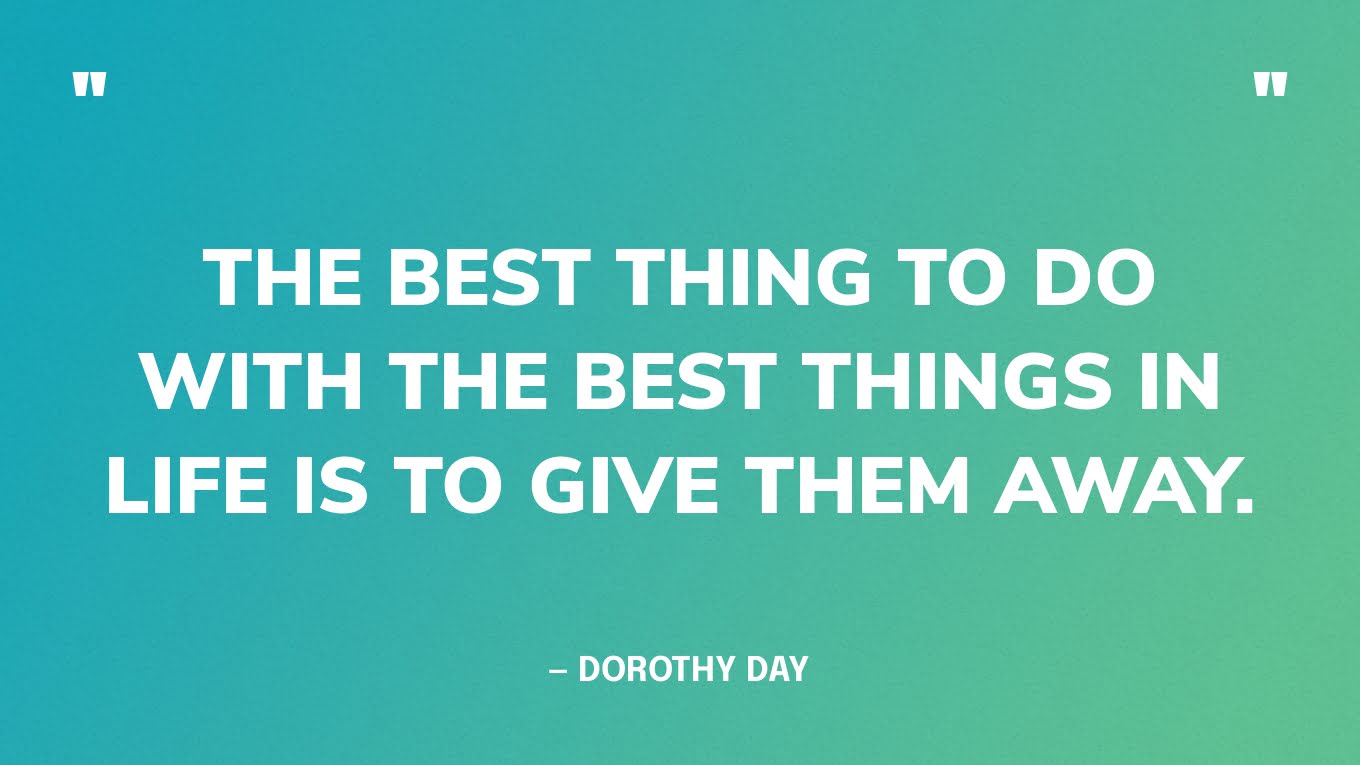
“The best thing to do with the best things in life is to give them away.”
— Dorothy Day
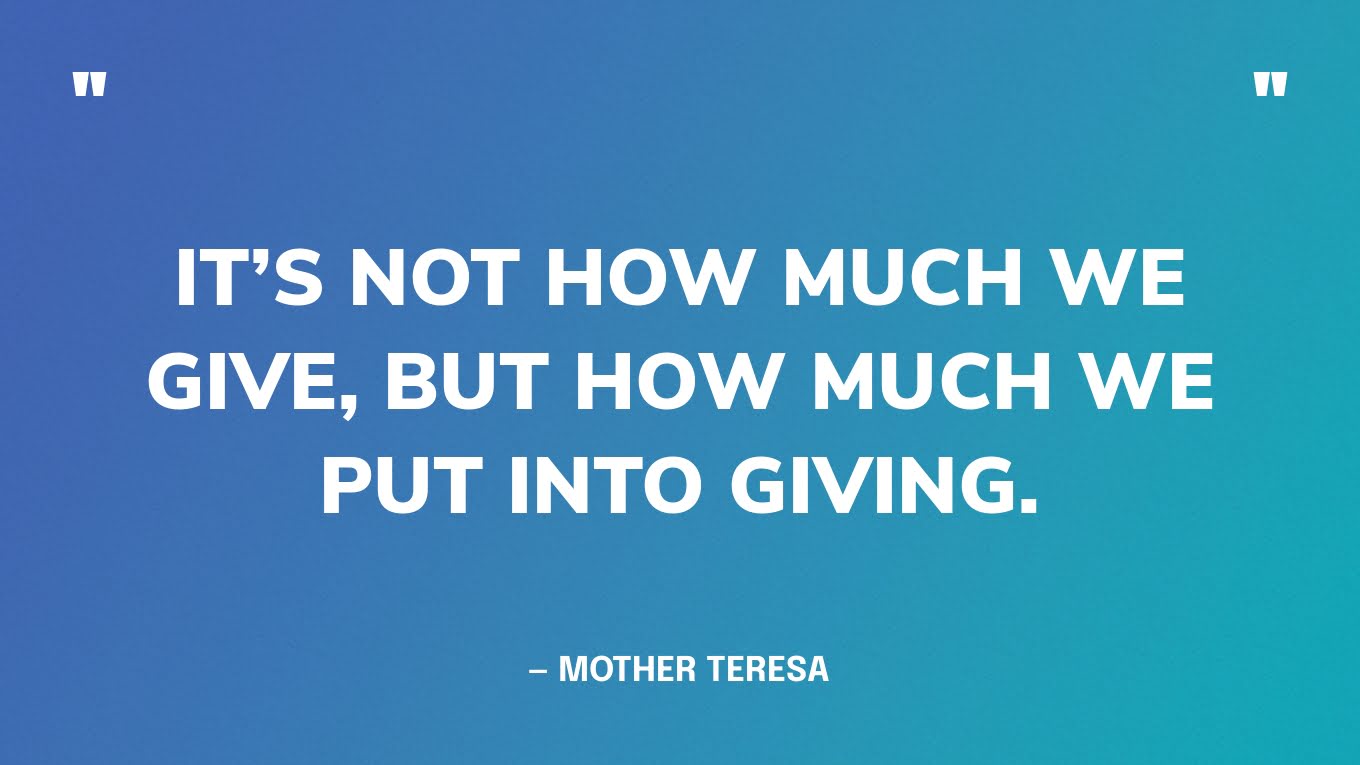
“It’s not how much we give, but how much we put into giving.”
— Mother Teresa
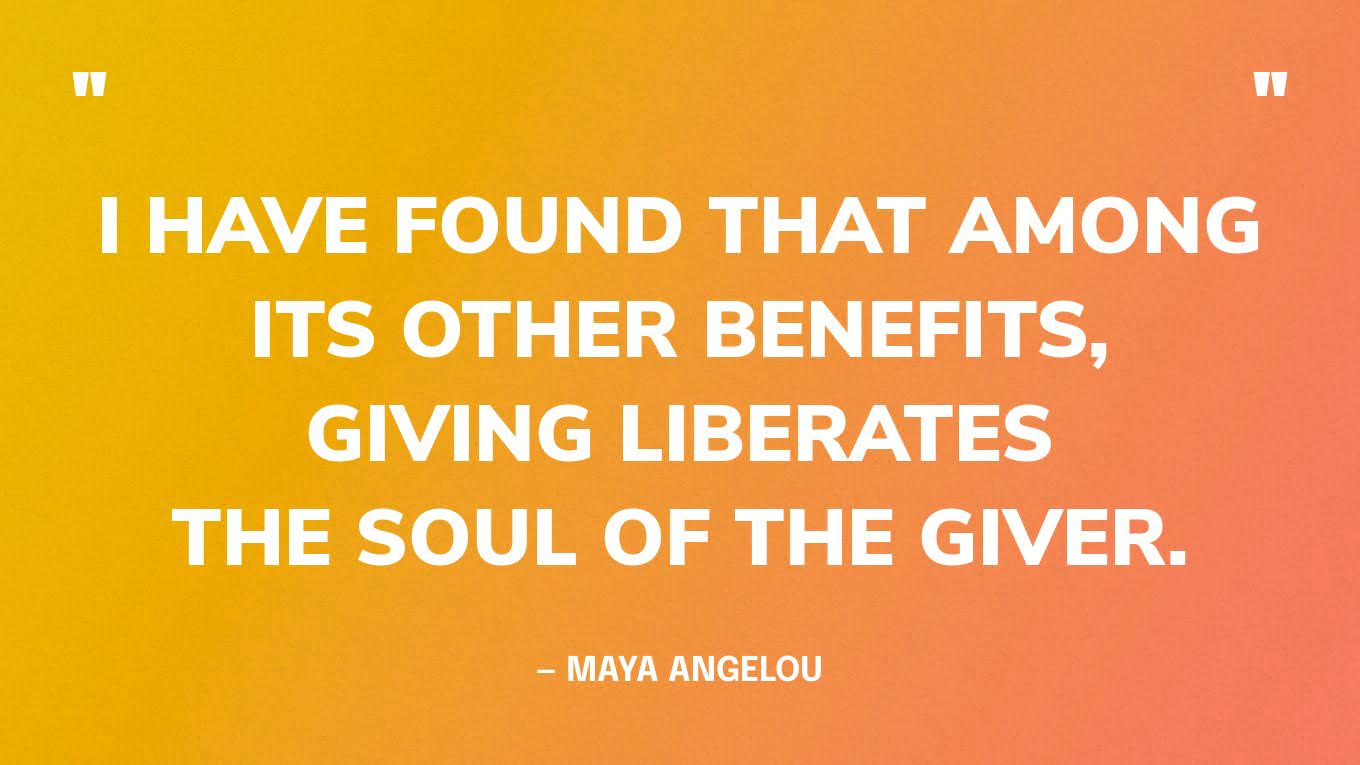
“I have found that among its other benefits, giving liberates the soul of the giver.”
— Maya Angelou
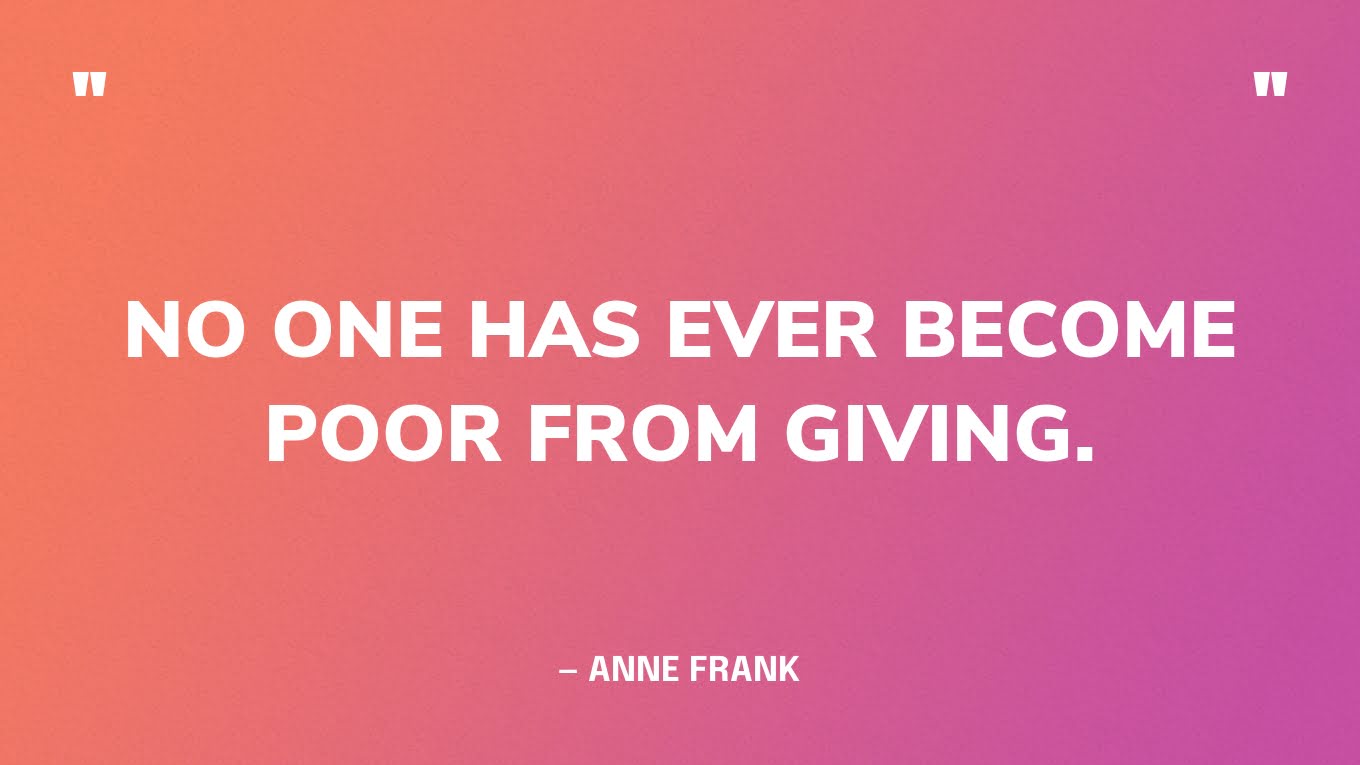
“No one has ever become poor from giving.”
— Anne Frank
“In a society that functions optimally, those who can should naturally want to provide for those who can’t. That's how it's designed to work. I truly believe we’re here to take care of one another.”
— LeVar Burton
“I think the importance of doing activist work is precisely because it allows you to give back and to consider yourself not as a single individual who may have achieved whatever, but to be a part of an ongoing historical movement.”
— Angela Davis
“If you see someone without a smile today, give ‘em yours.”
— Dolly Parton
On Helping Community
“As you grow older, you will discover that you have two hands — one for helping yourself, the other for helping others.”
— Audrey Hepburn
“It's not about giving back if you're successful or a celebrity or how much money you have: it's about your responsibility as an adult to help others.”
— Trisha Yearwood
“Giving back is the right thing to do, whether it's donating clothing or even just a smile to someone who needs it.”
— Becky G
“The best way to find yourself is to lose yourself in the service of others.”
— Mahatma Gandhi
Inspirational Quotes
“Service to others is the rent you pay for your room here on earth.”
— Mohammed Ali
“We make a living by what we get. We make a life by what we give.”
— Winston Churchill
“Too often we underestimate the power of a touch, a smile, a kind word, a listening ear, an honest compliment, or the smallest act of caring, all of which have the potential to turn a life around.”
— Leo Buscaglia
“Life’s most persistent and urgent question is, “What are you doing for others?””
— Martin Luther King Jr.
On Receiving
“What you pour out into the world is poured right back into you.”
— Matshona Dhliwayo
“All of us, at some time or other, need help. Whether we're giving or receiving help, each one of us has something valuable to bring to this world. That's one of the things that connects us as neighbors — in our own way, each one of us is a giver and a receiver.”
— Fred Rogers
“I’ve learned that you shouldn’t go through life with a catchers mitt on both hands. You need to be able to throw something back.”
— Maya Angelou
“You only have what you give. It’s by spending yourself that you become rich.”
— Isabel Allende
“I absolutely believe in the power of tithing and giving back. My own experience about all the blessings I've had in my life is that the more I give away, the more that comes back. That is the way life works, and that is the way energy works.”
— Ken Blanchard
On Kindness
“Kindness is universal. Sometimes being kind allows others to see the goodness in humanity through you. Always be kinder than necessary.”
― Germany Kent
“Wherever there is a human being, there is an opportunity for kindness.”
— Seneca
“No act of kindness, no matter how small, is ever wasted.”
—Aesop
“Mutual caring relationships require kindness and patience, tolerance, optimism, joy in the other's achievements, confidence in oneself, and the ability to give without undue thought of gain.”
— Fred Rogers
“Each of us can make a difference. It doesn’t have to be anything spectacular. Keep the neighbor’s kid while she goes to the store or to the doctor, or befriend somebody in need. I don’t mean you have to take them into your home, but you can find a place for them to stay or see that they get food. You can do an act of kindness every single solitary day, because it’s needed.”
— Opal Lee
“Self-compassion is simply giving the same kindness to ourselves that we would give to others.”
— Christopher Germer
“The smallest act of kindness is worth more than the grandest intention.”
— Oscar Wilde
On Gratitude
“Gratitude begins in our hearts and then dovetails into behavior. It almost always makes you willing to be of service, which is where the joy resides. It means that you are willing to stop being such a jerk. When you are aware of all that has been given to you, in your lifetime and the past few days, it is hard not to be humbled, and pleased to give back.”
— Anne Lamott, Help Thanks Wow: The Three Essential Prayers
“In ordinary life, we hardly realize that we receive a great deal more than we give, and that it is only with gratitude that life becomes rich.”
— Dietrich Bonhoeffer
“When I came here as a child, I will never forget sailing into New York Harbor for the first time and beholding the Statute of Liberty. I did not have to face refugee camps or the kind of danger that many refugees endure. But like all refugees, I shared a hope to live a safe life with dignity and a chance to give back to my new country.”
— Madeleine Albright
“Feeling gratitude and not expressing it is like wrapping a present and not giving it.”
— William Arthur Ward
On Generosity
“Give for the right reason — and that is, give for no reason at all.”
— Frank Sonnenberg, The Path to a Meaningful Life
“These days there is a lot of poverty in the world, and that’s a scandal when we have so many riches and resources to give to everyone. We all have to think about how we can become a little poorer.”
— Pope Francis
“Remember that the happiest people are not those getting more, but those giving more.”
— H. Jackson Brown Jr.
“The most truly generous persons are those who give silently without hope of praise or reward.”
— Carol Ryrie Brink
“When you're in a position to have gotten so much, the gift at this point is giving back.”
— Paul Stanley
More Quotes About Giving To Others
“What is important is family, friends, giving back to your community, and finding meaning in life.”
— Adrian Grenier
“I've been giving back since I was a teen, handing out turkeys at Thanksgiving and handing out toys at toys drives for Christmas. It's very important to give back as a youth. It's as simple as helping an old lady across the street or giving up your seat on the bus for someone who is pregnant.”
— Queen Latifah
“I am a huge believer in giving back and helping out in the community and the world. Think globally, act locally I suppose. I believe that the measure of a person's life is the affect they have on others.”
— Steve Nash
“I'm committed to giving back to the community and will continue to do whatever I can to help people in need.”
— Al Horford
“You don’t have to be rich to give; your gift can be as simple as a smile.”
— Frank Sonnenberg, Soul Food: Change Your Thinking, Change Your Life
You might also like: Quotes about doing good | Quotes about making a difference | Quotes about activism | Quotes about kindness | Quotes about caring
Small business owners rely on customers and clients to pay the bills, put food on the table, and thrive doing work they are truly passionate about.
The Small Business Administration generally defines a small business as an independently owned, for-profit enterprise that employs 500 or fewer people. While employee and revenue rates vary across industries, small businesses are independently owned and operated and are completely separate from large corporations.
Small businesses in your community might include retail and restaurant offerings like boutiques, bodegas, or bakeries, or tradespeople like artists, barbers, carpenters, or photographers. Or, hey — it might be a small media company that creates a print Goodnewspaper every month.
Supporting a small business makes a massive impact on your local economy. The benefits of shopping small include community support, excellent and personalized customer service, innovation and creativity, job creation, and a smaller carbon footprint.
So, when you decide to — say, shop for a soy wax candle from your local boutique, or buy all of your girlfriends a bracelet from the same artisan maker every year — you are investing in your community, paying someone’s salary, and taking care of the planet more intentionally than if you were to shop exclusively with big box retailers.
And one of the best excuses to get your reusable tote shopping bags ready? Small Business Saturday, baby.
This year, Small Business Saturday falls on November 30. It’s always the Saturday following Thanksgiving, and it’s a great way to use your dollars to shop for the holidays — and invest in the small shops you know and love.
Since there are so many small businesses out there that need your support, we’ve compiled this guide to help you celebrate Small Business Saturday in style this year.
We’ve outlined ways to support your favorites when you don’t have a huge budget, how to find new small businesses to shop, and how to do it all sustainably!
By the way, some of the links in this article are affiliate links, which means if you make a purchase after clicking a link, we may earn a commission at no extra cost to you.
You might also like: The best good news stories about small businesses
How much do people spend on Small Business Saturday?
Your Small Business Saturday dollars definitely make a difference. Consumers spend over $184 billion on Small Business Saturday, according to a 2023 American Express survey. The holiday season is often a make-or-break time for small business owners, and choosing to support them means keeping the lights on.
Statistics & Facts About Small Business Saturday:
As we shared, supporting small businesses isn’t just good for individuals, it’s a major element to a healthy economy. Here are a few helpful stats and facts that point to the big impact small businesses have on our economy:
- There are over 33 million small businesses currently operating in the U.S.
- Over the past 25 years, small businesses have been responsible for 12.9 million net new jobs, accounting for two out of every three jobs added to the economy.
- In 2021, 51 million shoppers participated in Small Business Saturday, and more than 50% of Americans say they will shop small again this year.
- 67 cents of every dollar spent in a small business stays in the local community.
- 55% of small business owners expect that Small Business Saturday will make up a significant portion to their overall holiday sales this year
- Small businesses donate 250% more than larger businesses to local nonprofits and community causes.
How to Celebrate Small Business Saturday This Year:
Shop local businesses.
The first item on this list is definitely the most obvious, but it’s also a permission slip to treat yo-self.
Make a conscious effort to shop from a local business, even for yourself! Shopping small and local reduces your carbon footprint by cutting the need for shipping and emissions, directly helps members of your community, and often leaves you with some really unique and one-of-a-kind finds.
Not sure where to find some local businesses to shop? Browse a local tourism website or Instagram page, do a deep dive on Yelp, or even ask your friends for a list of their favorite local shops.
Buy gifts from small businesses.
Okay, fine. You should probably spread the love a little, too. Can you challenge yourself to buy a certain percentage of your annual holiday gifts from small businesses?
We’ll help you get started! Many of our gift guides include items from small businesses.
Check a few of them out:
Good Good Good’s eco-friendly gift guides: Ultimate Guide To Eco-Friendly Gifts | Inexpensive | For Him | For Her | For Mom | For Kids | For Employees & Coworkers
Thoughtful gift guides for every kind of person: Gifts for Animal Lovers | Gifts for Pets & Their People | Gifts for National Park Lovers | Gifts for Environmentalists | Gifts for Self-Care | Gifts That Give Back | Sustainable Stocking Stuffers
Get something unique and especially meaningful: Experience Gifts | Consumable Gifts | Sentimental Gifts
Buy gift cards from small businesses.
Don’t want to struggle to find the perfect gift for someone? Get a handful of gift cards for a small business! This is always a win for the pickiest people in your circle and still constitutes a great, thoughtful gift.
I mean, who wouldn’t want the equivalent of a handful of free lattes from their favorite local cafe?
Eat at locally owned and operated restaurants.
We get it: sometimes our favorite chain restaurants beckon us. But if there’s one day a year to pick a locally-owned and operated restaurant over a major chain, it’s Small Business Saturday!
Remember to always tip well and be patient with retail and service workers — but especially on a busy weekend like this one.
Hire a small business or local service provider.
Shopping, dining — and a show! There are other ways to support small businesses outside of a shopping spree. Consider purchasing a voucher for a service like a photo session, nail appointment, or paint-n-sip class. You can even round out your big holiday weekend with a movie at a local indie theater.
There are a variety of ways to support small service providers or gift a unique local experience — get creative!
Host an event with a small business.
Are you hosting the holidays with the whole fam this year? Ditch the kitchen nightmare for a party room at a local restaurant, or hire a local company to cater for your crew.
You could also look into hosting an event at a local rental space, gallery, or retail area for those holiday gatherings (like company parties) this year.
Leave a positive review for a small business you love.
You don’t have to spend any money at all to support a small business. Take some time out of your day to leave a handful of positive reviews for your favorites!
Hop on Google, Facebook, or Yelp and explain what you love about this business and how it’s provided a positive experience for you. It truly makes a difference.
Shop sustainable small businesses.
We’ve already established that shopping small is a great way to reduce your carbon footprint. Best of all? Shopping a sustainable small business.
A sustainable small business will be very transparent about its sustainability practices, including packaging, recycling and waste management, labor practices, manufacturing materials and methods, and more. Many may also be certified by outside organizations that have audited the methods and materials used to make its products.
Some of our favorite small sustainable small businesses also offer lots of products that help you live a more eco-conscious lifestyle.
→ Shop our ultimate gift guide for eco-friendly gifts
Support small businesses that give back.
Small businesses are often mission-driven to give back to certain causes, or were even created to solve a problem or fill a need that ends up helping lots of other people. Spend your dollars and offer your support to small businesses keen on giving back this season.
→ Shop our ultimate guide for gifts that give back
Support artists and influencers.
We all have a handful of favorite artists or creators we follow online. Chances are, those artists also sell goods like original works, prints, merchandise, and more. Check out the link in their bio to see what they’re offering. Shopping from their stores is a great opportunity to go beyond simply following artists on social media to directly support individuals and communities.
Support businesses owned by historically marginalized groups.
We’ve got to talk about the elephant in the room: Capitalism. No matter how you slice it, the U.S. economy has been built on a racist, hetero-patriarchal system that has long oppressed and marginalized various groups of people. Oof.
LGBTQ+, Black, Indigenous, Hispanic, AAPI, and other people of color-owned businesses should definitely be at the top of your shopping lists.
When you shop businesses owned by historically and intentionally marginalized groups, you help close wealth gaps, celebrate unique and diverse cultures and artistry, create opportunity, and help develop a more just and equitable economy that supports everyone — not just the folks at the top.
Want some help finding diverse businesses? We’ve got you covered!
→ Find Black-owned businesses to support
→ Find LGBTQ+ businesses to support
→ Find AAPI-owned businesses to support
→ Find Indigenous-owned businesses to support
→ Find Hispanic and Latinx businesses to support
→ Find women-owned businesses to support
Shop directly from a business, instead of through a third-party app or retailer.
Sometimes, a little convenience can make our lives a lot easier, but we have to keep in mind that this convenience might come at a price for others.
Food delivery apps often charge high fees to restaurants. Instead of ordering takeout via Grubhub or DoorDash, order straight from the local restaurant.
Lots of small businesses sell their products via big box stores. Instead of shopping from a small brand on Amazon or Target, simply search for the small brand and place your order directly on their own website.
By doing this, you put more money directly back into the business and keep business owners from paying fees. Go you!
Shop from independent bookstores.
Meg Ryan and Tom Hanks, we’re tapping you in.
If you’re seen the classic romantic comedy “You’ve Got Mail,” or you’ve shopped at an indie bookstore, you know how intrinsic a local bookstore is to the identity of a community.
These bookstores bring readers together and provide a human element to reading communities that giant retailers simply cannot. We challenge you to trade the two-day shipping for a gift-wrapped book shelved by one of your neighbors and notice the difference.
Take some time to walk through a local bookstore in your community — and maybe even strike up a conversation with the owners to get some amazing personalized book recommendations.
If you need to shop online, websites like Bookshop.org and Libro.fm help you support the indie booksellers of your choice from the comfort of your couch.
And if you need some more options, definitely check out our Amazon bookstore alternatives and Audible alternatives for audiobooks.
Shop on Etsy.
A goldmine for custom gifts, unique finds, and handmade creations, Etsy is a seller's marketplace where you can find just about anything. Keep an eye out of authentic makers and artists — and not drop-shippers.
Search for your next purchase knowing that the money you spend will support an individual artisan or small business — that I’m almost certain will be happy-dancing all season long.
Post about a small business you love on social media.
Another free option for Small Business Saturday is to share your love for your favorites on social media. Make a little guide to your go-to local shops, post a TikTok of the best scores of the season, or share a small business’s promo post to your Instagram Stories.
A simple share, save, or comment can lead to a life-changing sale for a small business owner. (We’re speaking from experience.
Consider cutting ties with Amazon.
Although a lot of small businesses use Amazon (like, over 2 million small businesses) as a way to reach more customers, it’s definitely not the best place to shop small.
Among a long list of criticisms (and a 2023 lawsuit by the FTC!), Amazon has a significant negative impact on the environment, contributes to overconsumption, treats its employees and contractors poorly — and collects data about businesses that sell on its site and then uses that data to create and promote its own competing products.
So, while there’s certainly something to be said for the accessibility of Amazon, you’re much better off supporting a small business directly than by giving Bezos and Jassy a peek at your shopping list.
→ Check out our ultimate guide to the best Amazon alternatives
Start your own small business.
What better way to celebrate Small Business Saturday than by getting the ball in motion to start a small business of your own. Have you been thinking about making the jump, creating unique products, or offering services that align with your skillset?
If the entrepreneurial spirit calls, perhaps you’ll want to take a listen. Start by learning about starting a small business from the Small Business Association!
Get ready for Giving Tuesday.
Supporting small businesses is great, but make sure you stay on track with your budget to show up for Giving Tuesday and prepare to donate to, volunteer with, or spread awareness for your beloved causes and nonprofits.
→ Explore the best Giving Tuesday celebration ideas and share some Giving Tuesday quotes
Frequently Asked Questions:
When is Small Business Saturday?
Small Business Saturday takes place on the Saturday following Thanksgiving. In 2024, it will take place on November 30. The day is dedicated to driving customers to local businesses and embracing positive impacts on employment, economic well-being, and community vitality.
Who invented Small Business Saturday?
In 2010, Small Business Saturday was started as a collaboration between American Express, in partnership with the National Trust for Historic Preservation, Boston Mayor Thomas M. Menino, and Roslindale Village Main Street. The next year, the U.S. Senate unanimously passed a resolution to honor the holiday in all 50 states.
What is the hashtag for Small Business Saturday?
The official hashtag for Small Business Saturday is #ShopSmall, though many will also use #SmallBusinessSaturday to help promote and identify their businesses during this busy season. Local business associations might also have specific hashtags for their area to help people find small businesses to support in their own communities.
What are some Small Business Saturday quotes?
Here are a few quotes you can use in captions, newsletters, or blog posts for Small Business Saturday:
- “As consumers, we have so much power to change the world by just being careful in what we buy.”
— Emma Watson - “When you buy something made by a person, there is something special there, and you feel it. The consciousness with which a thing is made is often more important than the thing itself.”
— J. Donald Walters - “We have to keep small businesses healthy in order to keep our economy strong.”
— Keith Haynes - “Every time you spend money, you’re casting a vote for the kind of world you want.”
— Anna Lappe - “A small business is an amazing way to serve and leave an impact on the world you live in.”
— Nicole Snow
→ Read more quotes about Small Business Saturday
→ Read more quotes about small businesses, in general
What is the tagline of Small Business Saturday?
American Express and partnering businesses can recognize Small Business Saturday with the slogan: “Shop Small.” Businesses may have stickers, graphics, or other displays that show the official “shop small” insignia.
You might also like:
→ Where To Find Black-Owned Businesses To Support
→ Cities Are Boosting the Economy by Rewarding Those Who Shop Local
→ More Women Are Becoming Entrepreneurs Than Ever
The header image for this article was illustrated by Good Good Good Art Director Carra Sykes for The Small Business Edition of the Goodnewspaper.
Every month, there are hundreds of national and international celebrations dedicated to raising awareness and support for meaningful causes.
For those working to bring attention to important topics, it can be challenging to keep track of the next relevant awareness event. We’re here to help.
At Good Good Good, we aim to help people feel more hopeful and do more good. For years we’ve privately curated a comprehensive list of important cause-themed holidays that we’ve used for creating content on our good news Instagram, our Goodnewsletter, our Goodnewspaper, and on this very website.
We’ve organized this list of observances and events by month — and are making them public for the first time. Our hope is that this will help you or your organization bring attention to important issues.
Where applicable, we’ve included resources (usually good news around particular topics, action steps on how to make a difference, or relevant quotes) — and encourage you to share them if you find them helpful.
The main days and months you should know about for February are:
| February Holidays | Date |
| Black History Month | February 1 |
| Humpback Whale Awareness Month | February 1 |
| World Cancer Day | February 4 |
| Shine a Light on Slavery Day | February 13 |
| Random Act of Kindness Day | February 17 |
| World Day of Social Justice | February 20 |
February is the second month of the year in the Julian and Gregorian calendars. It typically has 28 days, except in leap years when it has 29 days. It continues the season of winter in the Northern Hemisphere and summer in the Southern Hemisphere. February is renowned for Valentine’s Day, a celebration of love and affection.
Explore our comprehensive list of national and international months, weeks, days, and birthdays for the month of February:
February Celebrations:
Awareness Months
There are several awareness months celebrated in February — though the five that often get the most attention include Black History Month, Humpback Whale Awareness Month, National Cancer Prevention Month, American Heart Month, and Jewish Disability Awareness and Inclusion Month.
Adopt a Rescued Rabbit Month
American Heart Month
Black History Month
Explore ideas and activities for to celebrate Black History Month
Dog Training Education Month
Humpback Whale Awareness Month
Read good news about humpback whales
Jewish Disability Awareness and Inclusion Month
Low Vision Awareness Month
Marfan Awareness Month
National Bird-Feeding Month
National Cancer Prevention Month
National Cat Health Month
Pet Dental Health Month
Teen Dating Violence Awareness and Prevention Month
Awareness Weeks
Tinnitus Awareness Week
1st full week of February
National School Counseling Week
1st full week of February
Congenital Heart Defects Awareness Week
Week-long event in February
Homes for Birds Week
Week-long event in February
Aromantic Spectrum Awareness Week
Week after February 14th
National Nestbox Week
Week-long event in February
National Justice for Animals Week
Week-long event in February
Read our entire collection of dozens of good news stories about people making a difference for animals
Bird Health Awareness Week
Week-long event in February
Black Climate Week
Third full week of February
National Invasive Species Awareness Week
Last Monday of February
National Eating Disorders Awareness Week
Last week of February or the first week of March
Awareness Days
Lunar New Year - Based on lunar calendar
National Freedom Day - February 1
World Hijab Day - February 1
World Wetlands Day - February 2
National Wear Red Day - February 2
National Women Physicians Day - February 3
World Cancer Day - February 4
Learn about the good news about the fight against cancer and meet one doctor changing the way we treat cancer
National Mail Carrier Day - February 4
Transit Equity Day - February 4
Time to Talk Day - 1st Thursday of February
Anniversary of the Appointment of the First Openly Gay United States Federal Judge, Joseph Gale - February 6
National Black HIV/AIDS Awareness Day - February 7
Safer Internet Day - February 8
International Epilepsy Day - 2nd Monday of February
National Day of Women and Girls in Science - February 11
Get inspired by Afghan girls who are bypassing the Taliban through underground coding classes
World Day of the Sick - February 11
National Freedom to Marry Day - February 12
Shine a Light on Slavery Day - February 13
Read about one nonprofit that found a creative way to combat human trafficking with a fashion challenge
Valentine’s Day - February 14
This day can often be filled with waste, but we put together a guide for celebrating a sustainable Valentine’s Day and a guide to eco-friendly Valentine’s Day gifts
Anniversary of the Parkland Shooting - February 14
Read about the Parkland students who became activists and are working to bring an end to gun violence — and also about how to stop school shootings
Congenital Heart Defects Awareness Day - February 14
National Donor Day - February 14
World Bonobo Day - February 14
Douglass Day - February 14
World Hippopotamus Day - February 15
International Childhood Cancer Day - February 15
Marfan Awareness Day of Giving - February 15
Random Act of Kindness Day - February 17
Try one of these ideas for random acts of kindness and read about how to celebrate Random Acts of Kindness Day
Project For Awesome - 48-hour event in February
Learn more about Hank and John Green’s annual Project For Awesome
World Pangolin Day - 3rd Saturday of February
The Great Backyard Bird Count - 3rd Sunday of February
World Whale Day - 3rd Sunday of February
Read good news about humpback whales and learn how noise reduction can save whales
Day of Remembrance - February 19
World Day of Social Justice - February 20
Check out our curated collection of the best quotes about social justice
National Heart Valve Disease Awareness Day - February 22
Chosen Family Day - February 22
International Polar Bear Day - February 27
Rare Disease Day - February 28
There’s good news to be celebrated about science’s progress against rare diseases
World Encephalitis Day - Last day of February
Notable Birthdays
Birthdays of leading activists, nonprofit leaders, and other world-changers:
Frederick Douglass’ Birthday - February 1
Langston Hughes’ Birthday - February 1
Harry Styles’ Birthday - February 1
Elizabeth Blackwell’s Birthday - February 3
Amal Clooney’s Birthday - February 3
Rosa Parks’ Birthday - February 4
Read and share the best Rosa Parks quotes
Mia Farrow’s Birthday - February 9
Thomas Edison’s Birthday - February 11
Abraham Lincoln’s Birthday - February 12
Susan B. Anthony’s Birthday - February 15
Audre Lorde’s Birthday - February 18
Read and share the best Audre Lorde quotes
Yoko Ono’s Birthday - February 18
Read and share the best quotes from Yoko Ono
Ansel Adams’ Birthday - February 20
Rihanna’s Birthday - February 20
Sidney Poitier’s Birthday - February 20
Read about Sidney Poitier’s Hollywood legacy
Elliot Page’s Birthday - February 21
John Lewis’ Birthday - February 21
Read and share the best quotes from John Lewis
Nina Simone’s Birthday - February 21
Steve Irwin’s Birthday - February 22
W. E. B. Du Bois’ Birthday - February 23
You might also like: The Best February Quotes
Explore More Events:
Main Awareness Calendars: All Awareness Holidays | Heritage Months | International Days
More Awareness Calendars: Animals | Pets | Environment & Sustainability | LGBTQ+ | Black & African American | Mental Health | Disability | Cancer | HIV/AIDS
Awareness Days & Months: January | February | March | April | May | June | July | August | September | October | November | December
Is this list missing a holiday or awareness week/month? Let us know. We want to ensure this list is comprehensive and inclusive.
This article was first published in 2022 — and is continually updated.
There are hundreds of national and global holidays dedicated to raising awareness and support for meaningful causes — with the most well-known being heritage months throughout the year.
At Good Good Good, we aim to help people feel more hopeful and do more good. For years we’ve used these heritage months to help our community celebrate good news and take action to make a difference (via our popular good news Instagram, our Goodnewsletter, and our Goodnewspaper).
We’ve curated a list of all major heritage months to help you or your organization bring attention to important communities and issues.
And where applicable, we’ve included resources specific to these causes — and encourage you to share them if you find them helpful. (We’ll be adding more resources over the course of the year.)
You can go beyond this list of heritage and history months with our Ultimate Awareness Days & Months Calendar — which dives into a number of diverse holidays to celebrate throughout the year.
Bookmark this page and revisit it as often as you need. We’ll continue to update it over time.
Top National Heritage Months & Celebrations
| Heritage Month | Month |
| Black History Month | February |
| Women's History Month | March |
| Irish American Heritage Month | March |
| Greek American Heritage Month | March |
| Arab American Heritage Month | April |
| Asian American & Pacific Islander Heritage Month | May |
| Jewish American Heritage Month | May |
| LGBTQ+ Pride Month | June |
| Caribbean American Heritage Month | June |
| Immigrant Heritage Month | June |
| Disability Pride Month | July |
| French American Heritage Month | July |
| Transgender History Month | August |
| Hispanic Heritage Month | September 15 |
| German American Heritage Month | October |
| Filipino American History Month | October |
| Italian American Heritage Month | October |
| Native American Heritage Month | November |
February: Black History Month
February is Black History Month! This annual month-long celebration is an opportunity to celebrate and remember that Black history is American history, Black culture is American culture, and Black stories matter.
→ Explore: How To Celebrate Black History Month
March: Women’s History Month
Women’s History Month is an annual celebration in the United States that honors the contributions of women to events in history and modern society.
Women’s History Month intersects with International Women’s Day — which takes place on March 8 each year.
→ Explore: How To Celebrate Women’s History Month
April: Arab American Heritage Month
In April 2021, President Biden officially recognized Arab Heritage Month, an annual celebration that honors the diverse and vibrant aspects of Arab American identity, culture, and experience.
Although this recognition is relatively recent, Arab Americans have long contributed to and shaped American society in various areas such as literature, food, music, and culture.
→ Explore: How To Celebrate Arab American Heritage Month
May: Asian American and Pacific Islander Heritage Month
May is Asian American Pacific Islander Heritage Month, a celebration of the many contributions and achievements of the AAPI community.
Given the vast diversity of the AAPI community, it’s important to recognize that the AAPI umbrella is not a monolith. During May, we get to point our attention to the concerns and needs of the AAPI community and find long-term ways to support them.
→ Explore: How To Celebrate AAPI Heritage Month
May: Jewish American Heritage Month
Jewish American Heritage Month, recognized in May each year, is a celebration of the Jewish community’s achievements and contributions to the United States of America.
To quote President Biden, “The Jewish American story, and the story of our Nation as a whole, is fueled by faith, resilience, and hope. It is a story defined by a firm belief in possibilities, the resolve to make real the promise of America for all Americans, and a commitment to perfecting our Union.”
→ Explore: How To Celebrate Jewish American Heritage Month
June: LGBTQ+ Pride Month
Although Pride Month has become known for beautiful, boisterous rainbow parades throughout the country, the LGBTQ+ community celebrates this month in honor of a long, tumultuous history towards equal rights in the United States.
→ Explore: How To Celebrate Pride Month
July: Disability Pride Month
For 30+ years, July has been an important month for the disability community, as it was the month the Americans With Disabilities Act was passed in 1990.
Disability is a spectrum encompassing a vast uniqueness of illnesses. However, it is essential to recognize that, contrary to the societal norm, disability should not be seen as existing “without.”
→ Explore: How To Celebrate Disability Pride Month
September: Hispanic Heritage Month
Hispanic Heritage Month (September 15 - October 15) is an annual celebration in the United States that honors the history, culture, and contributions of Americans whose ancestry can be traced to 20 countries and one territory — which includes Mexico, Central and South America, the Caribbean, and Spain.
While the official and more common umbrella term, “Hispanic” is something that most of us are familiar with, this (as we’ll touch on later) does not represent the diverse races, cultures, and Indigenous languages that encompass this large community. This is why you may also see this recognized as Latinx Heritage Month.
→ Explore: How To Celebrate Hispanic Heritage Month
November: Native American Heritage Month
November is Native American Heritage Month! This annual month-long celebration is an opportunity to come together to honor and celebrate the culture, traditions, history, and contributions of American Indians and Alaskan Natives.
Though Native Americans make up about 2.5% of the total U.S. population, their history and contributions are of critical importance to the nation’s history. Unfortunately, much of it has been forgotten or overlooked.
→ Explore: How To Celebrate Native American Heritage Month
Explore More Events:
Main Awareness Calendars: All Months In Order | All Awareness Holidays | Heritage Months | Awareness Months | International Days | Social Media Holidays
More Awareness Calendars: Animals | Pets | Environment & Sustainability | Books | Libraries | Religion | LGBTQ+ | Black & African American | Hispanic | Women | Mental Health | Health | Healthcare | Disability | Cancer | HIV/AIDS
Awareness Days & Months: January | February | March | April | May | June | July | August | September | October | November | December
During the holiday season, it’s not uncommon to see giving initiatives that allow you to “adopt a family” or donate toys to children in need. While these are awesome ways to give back every year, there are still tons of folks from different communities who could use a little extra love.
Take LGBTQ+ youth (specifically transgender youth), for example. These young people face extraordinary risk, as anti-trans legislation and social isolation can lead to unsafe conditions in abusive or unstable housing situations.
Trans youth are the focus of increasingly volatile legislative attacks, and in 2023 alone, state legislatures across the U.S. introduced over 500 anti-LGBTQ+ bills, according to a legislative tracker from the ACLU.
These bills often attempt to make healthcare for trans youth a crime, exclude trans youth from participating in sports, target parents of trans youth, perpetuate harmful stigmas, and more.
The damage of these anti-trans bills — and the sociopolitical narrative surrounding trans people — is deadly. In fact, 42% of LGBTQ+ youth seriously considered attempting suicide in 2021, including more than half of transgender and nonbinary youth, according to the Trevor Project.
But the good news is that we can point to a clear solution. Again, according to the Trevor Project, LGBTQ+ youth who had access to spaces that affirmed their sexual orientation and gender identity reported lower rates of attempting suicide.
What better gift to give young trans folks this year, than the affirmation, support, and love they truly deserve?
Meet Trans Santa.
What is Trans Santa?
Trans Santa takes the “adopt a family” approach and provides gifts to transgender youth in need — safely and anonymously.
The organization is a mutual aid social media campaign that connects “Santas” everywhere with trans youth in need. The goal is to support trans and non-binary youth who are houseless, in foster care, or otherwise without vital support by giving them the gifts they want and the affirmation they need from anonymous and safe donors all over the world.
If you’ve been looking to step up your game as a trans ally, this might be the solution.
“We want to show trans young people that they are loved, supported, and have a family of people around the world who care about them and want them to succeed,” the Trans Santa website reads.
“Transness is so beautiful and we are celebrating our magic!”
The organization is funded through nonprofit Allies in Arts, which supports BIPOC, women, and LGBTQ+ artists who are underrepresented in creative industries.
Trans Santa operates year-round in support of trans youth, but its main initiative is a large Christmas project for trans and non-binary youth under 24.
How does Trans Santa work?
During the holiday season, Trans Santa opens applications to trans folks under age 24. Applicants submit their first names, ages, and information (like an email address and what state or country they are from), as well as a handwritten “letter to Santa” and a link to their wishlist.
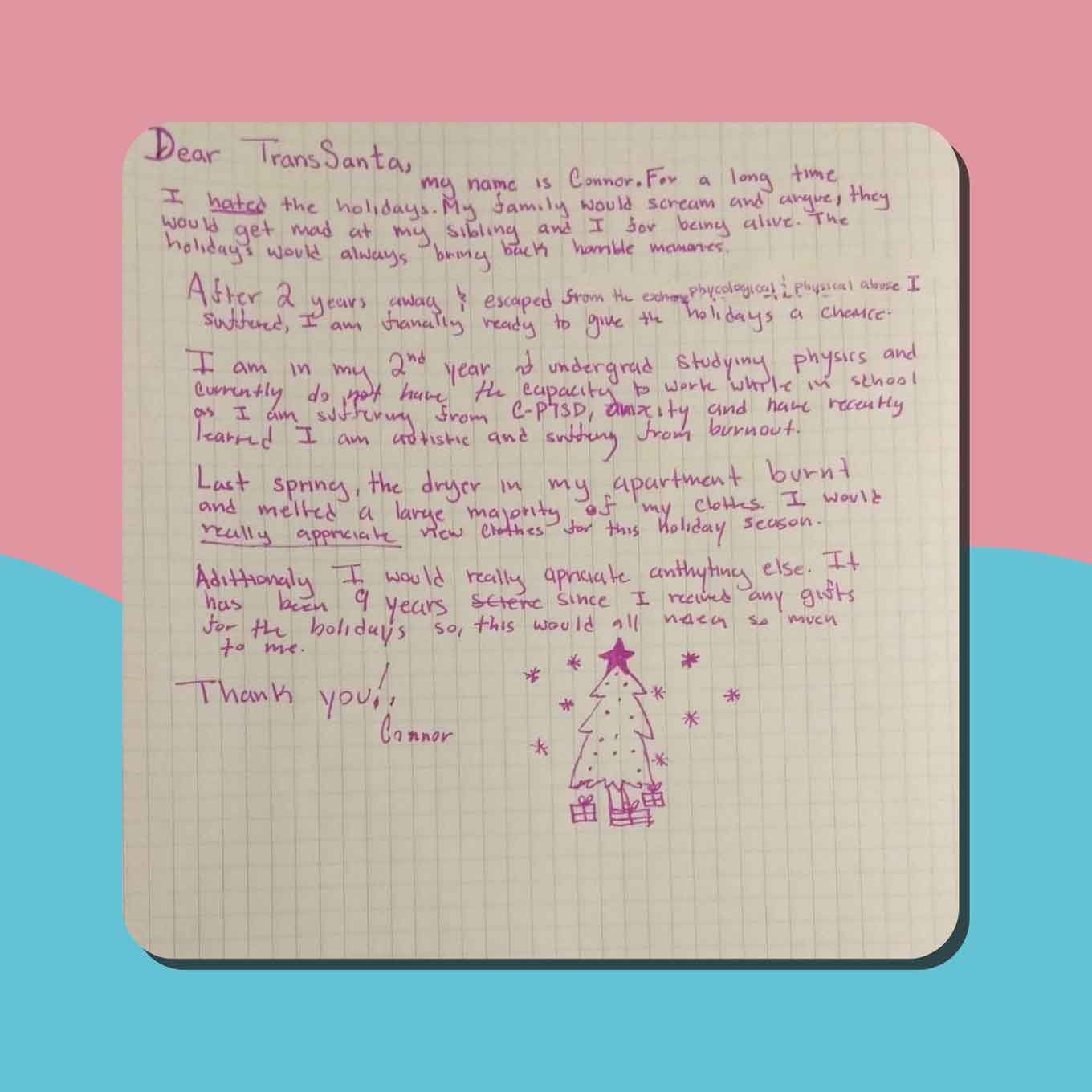
After the application window closes (this year, the deadline is December 8), the organization posts submissions on its social media pages so followers and “Santas” can find each individual’s Amazon registry and anonymously buy the things they’ve asked for.
The process is simple and direct so supporters know that their goods will be sent directly to the youth.
Trans Santa also shares links to individual registries on its website to make gift-giving even easier.
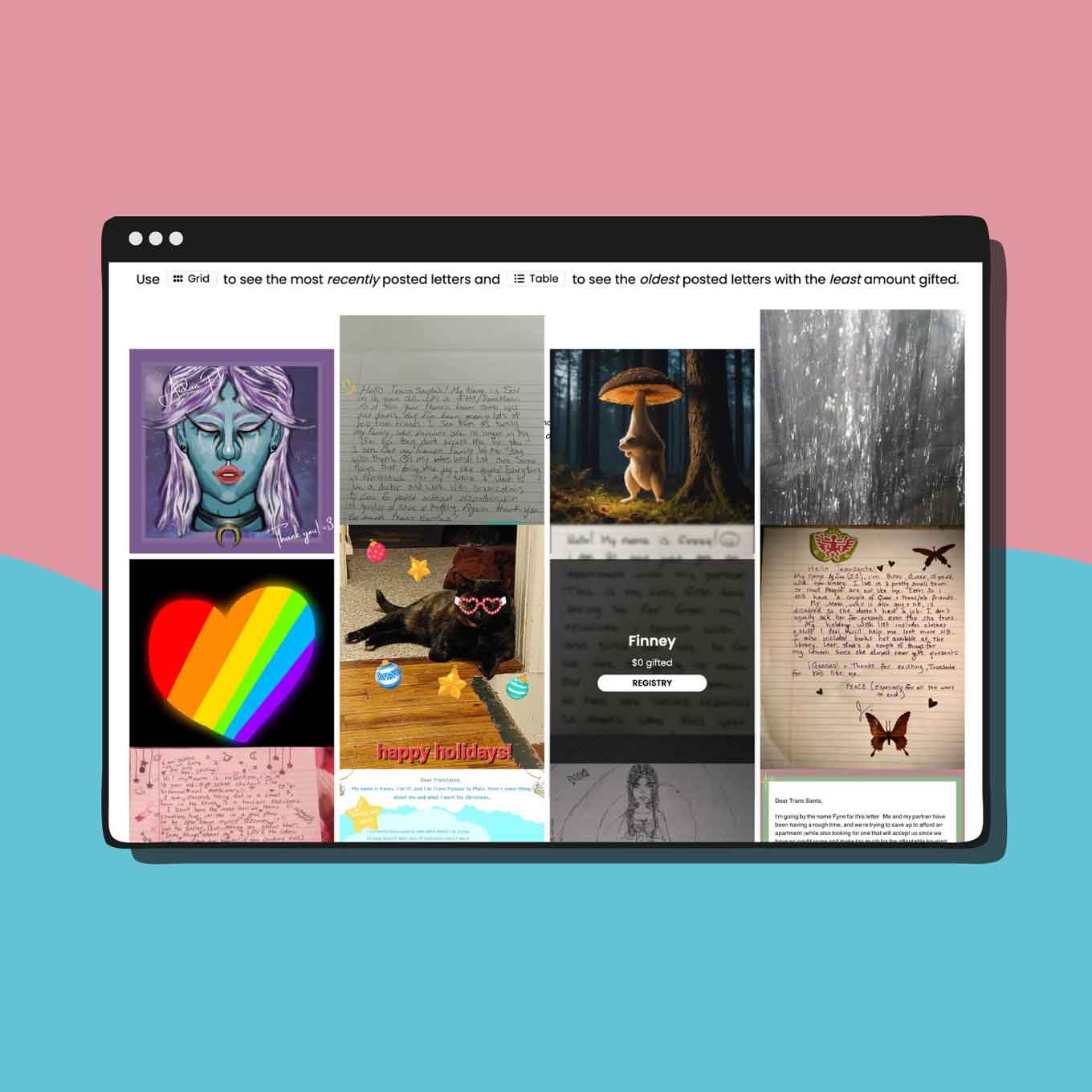
The wishlists also often include gender-affirming clothes, or items like binders, that may be difficult for trans youth to obtain safely. They are not extravagant gifts, but necessary items that help affirm trans youth and help them take care of themselves, their pets, and their loved ones just a bit better.
Current and past submissions fill the Trans Santa Instagram page, including handwritten letters to Santa and original artwork.
Submissions come from folks like Conor, who is 19, hasn’t celebrated the holidays with family in nearly a decade, and is looking to rebuild an affirming wardrobe after a fire in their apartment.
Or there’s Ryan, a disabled trans artist who faces homophobia and transphobia at home but uses art as a healing outlet, and would just like some art supplies and gender-affirming clothes.
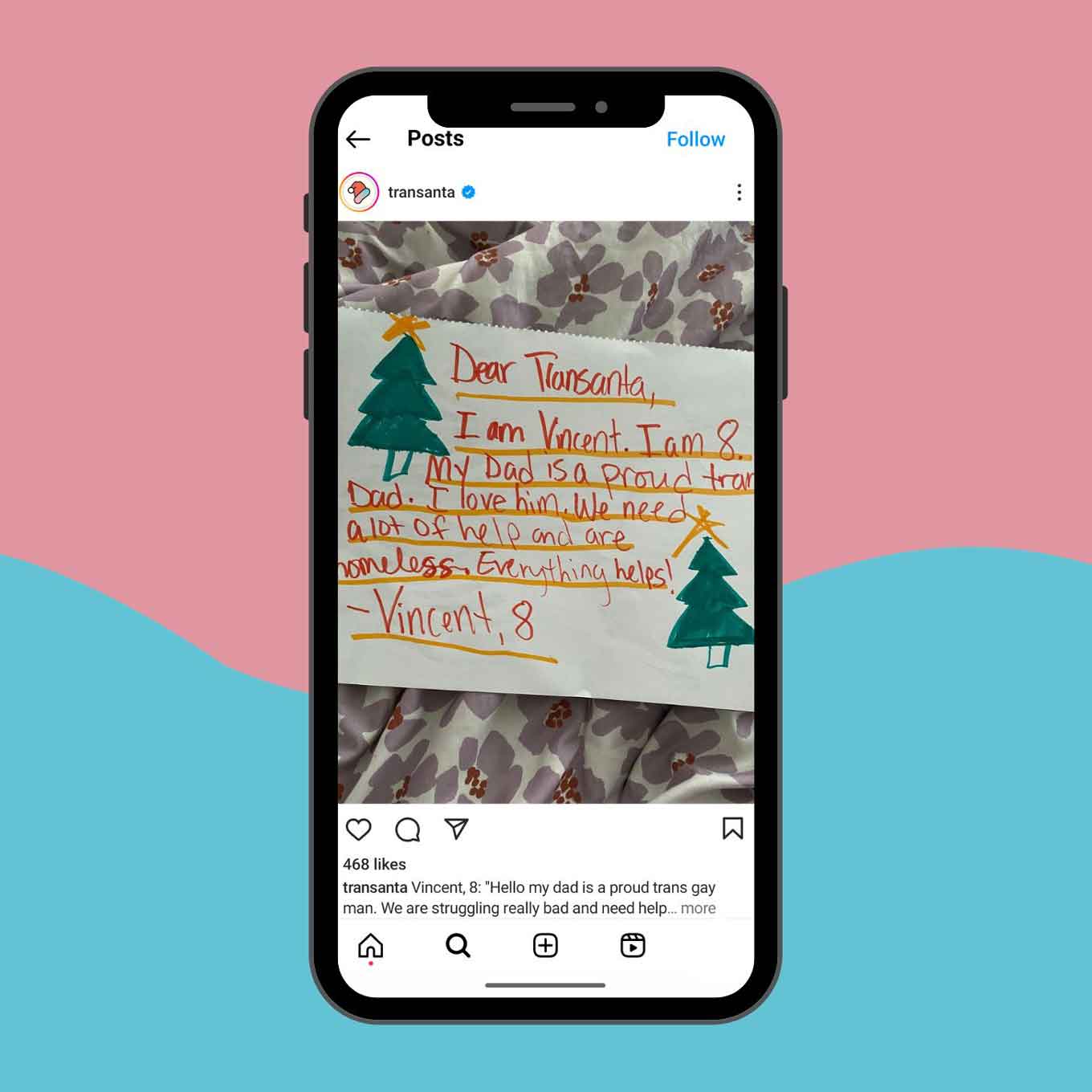
There’s even 8-year-old Vincent, who wrote a letter to Santa on behalf of his trans father, asking for “help with everything,” as their family is “couch surfing from home to home.”
Outside of the gifting project, Trans Santa also works with other organizations to uplift trans and non-binary individuals, encourages followers to shop from queer and trans-owned businesses, and more.
What is the impact of Trans Santa?
Creating safe, welcoming environments for LGBTQ+ youth to be their authentic selves is vital to their survival. LGBTQ+ youth who reported having at least one accepting adult were 40% less likely to report a suicide attempt in 2019.
Young trans people face oppression across the world and increasingly lack access to things like school, healthcare, safe housing, and life opportunities. This is also compounded by already difficult life conditions for trans youth, particularly Black and Brown young people, who face multiple unjust systems.
Even if you are not a parent, teacher, or community leader that works with young people, you have a role in making trans youth feel loved and included in your community.
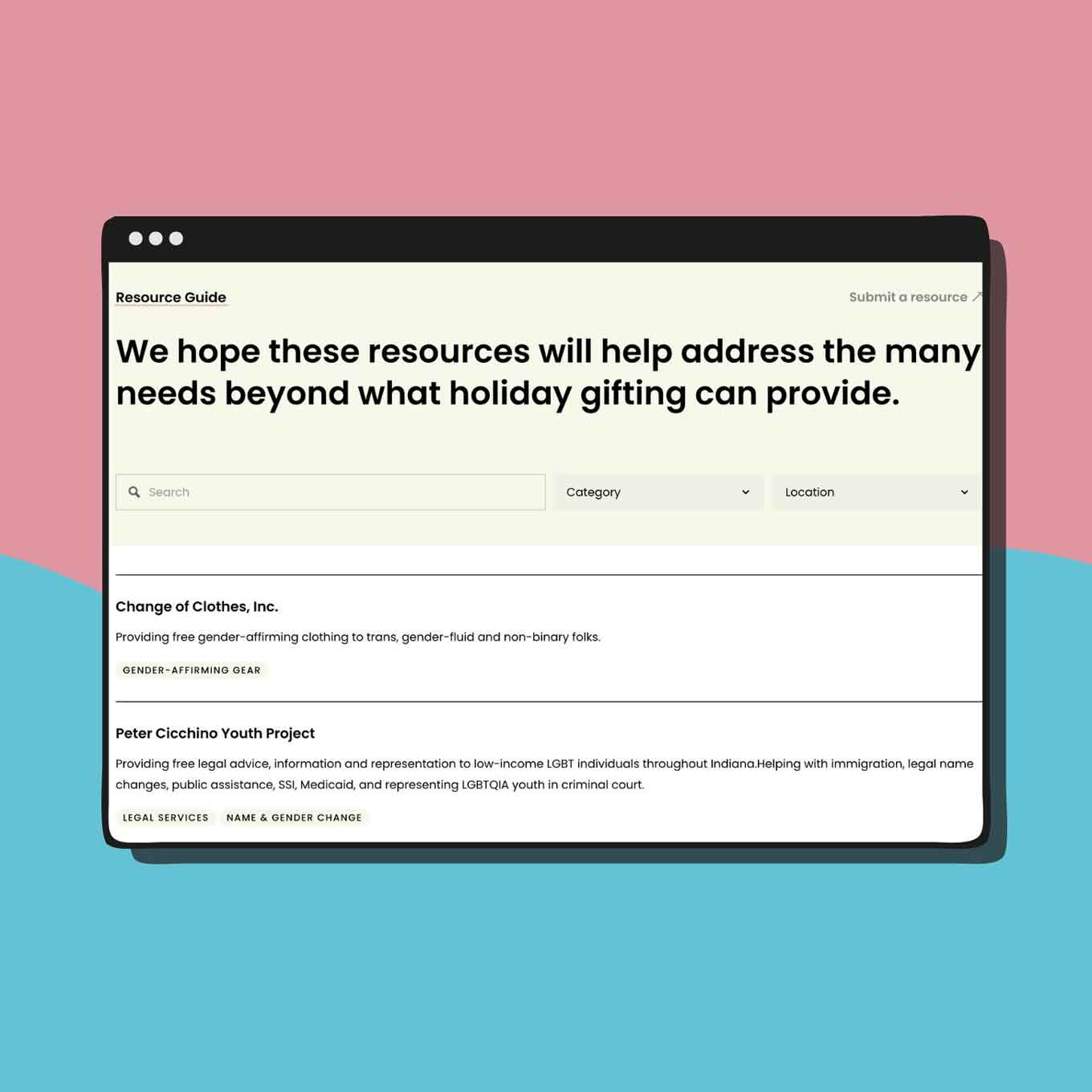
Trans Santa provides an easy and straightforward way to unite us all in the mission to protect and uplift trans kids.
“Ultimately, our capacity for love, care, and connection can disrupt some of the structural limits on our survival opportunities and create more space for people to thrive and continue rich trans legacies of social and political transformation,” the Trans Santa website reads.
“By investing in trans care, you are investing in trans survival.”
While Trans Santa does not have clear estimates for the youth that will be supported this year, the organization reported on Giving Tuesday that it has received over 1,900 letters from trans youth so far in 2023.
In 2022, donors shared gifts with 3,842 trans youth.
“Trans Santa has taught me that [I] am not alone,” Mary, an 18 year old recipient, shared with the organization. “That the world was also created for me. For us. I am more at peace than [I] have ever been in my life.”
How can you make a difference?
If you’re interested in supporting trans youth during the holidays (and all the time) you can become a Santa and shop items on the wishlists shared by Trans Santa.
You can also contribute to the mission directly (and consider being a monthly supporter) to help show young trans people that they are loved and supported.
Trans Santa also accepts volunteers. You can visit the project’s website to learn more and sign up.
Of course, all of these exciting and intentional community care projects are driven by the desire to see systemic change in support of LGBTQ+ youth.
Do your part to make the world safer for trans youth by checking out our guides to supporting the LGBTQ+ community and standing in solidarity with trans folks.
Editor’s Note: This article is sponsored by Misfits Market — but we didn’t tell our writer that it was sponsored when she wrote it. We used this fun and sneaky trick to ensure she shared her honest opinion and so readers can trust the content of this review.
The opinions shared in this review are independently and honestly written by Megan Burns — without any brand influence. The opinions are her own.
(Surprise, Megan! Sorry we tricked you!)
Some of the links in this article are affiliate links, which means if you make a purchase after clicking a link, we may earn a commission from our sponsors at no extra cost to you. Thank you!

Did you buy a head of lettuce at the grocery store with all the best intentions to make some New York Times Cooking section-worthy salads for your weekly lunches? Only to “accidentally” forget about it all week until it’s wilted to the point of inedibility? No? Just us?
That’s a silly (though admittedly, very real) example of a larger, pervasive global problem: food waste.
The heartbreaking reality is, 30% of the world’s population live in a state of food insecurity — all while a third of the world’s food supply is wasted every year.
And if you can believe it, the problem gets worse. Food waste is both a humanitarian crisis and contributes significantly to the climate crisis.
In addition to the energy and water it takes to grow, harvest, transport, and package food being wasted when it’s discarded, as uneaten food rots in a landfill, it produces loads of methane — a greenhouse gas at least 28 times as potent as carbon dioxide.
In just the United States, food waste generates the equivalent of 32.6 million cars worth of greenhouse gas emissions. And it’s not improving.
While some responsibility for our food waste problem certainly falls on consumers — some food is wasted before you even have the option to purchase that well-intentioned bag of romaine.
In an effort to present beautiful produce displays to their consumers, grocery stores will reject perfectly good food items that don’t meet their arbitrary standards: bananas that aren’t the right size, apples that aren’t the right color, or zucchini that are a little misshapen.
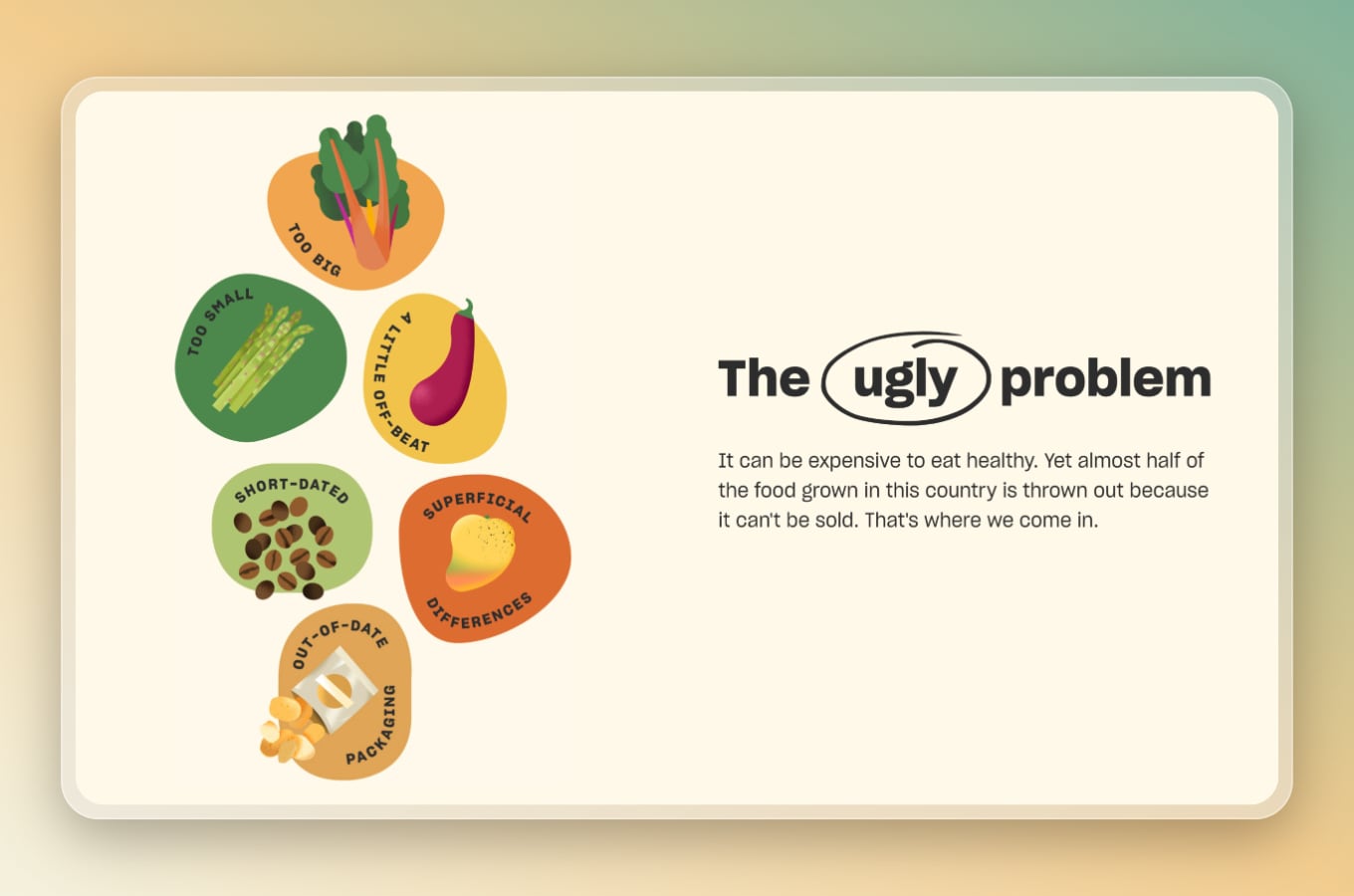
In addition to these superficial visual standards, food items that are in outdated packaging, short-dated (best-by date is within six weeks), or simply in excess may also meet their fate in a landfill before you even have the chance to buy them.
As people working to both reduce our personal carbon footprint and hold systems and corporations accountable for their contributions to the climate crisis — we were excited to hear about any opportunity to eliminate the food waste that is largely outside of our personal control.
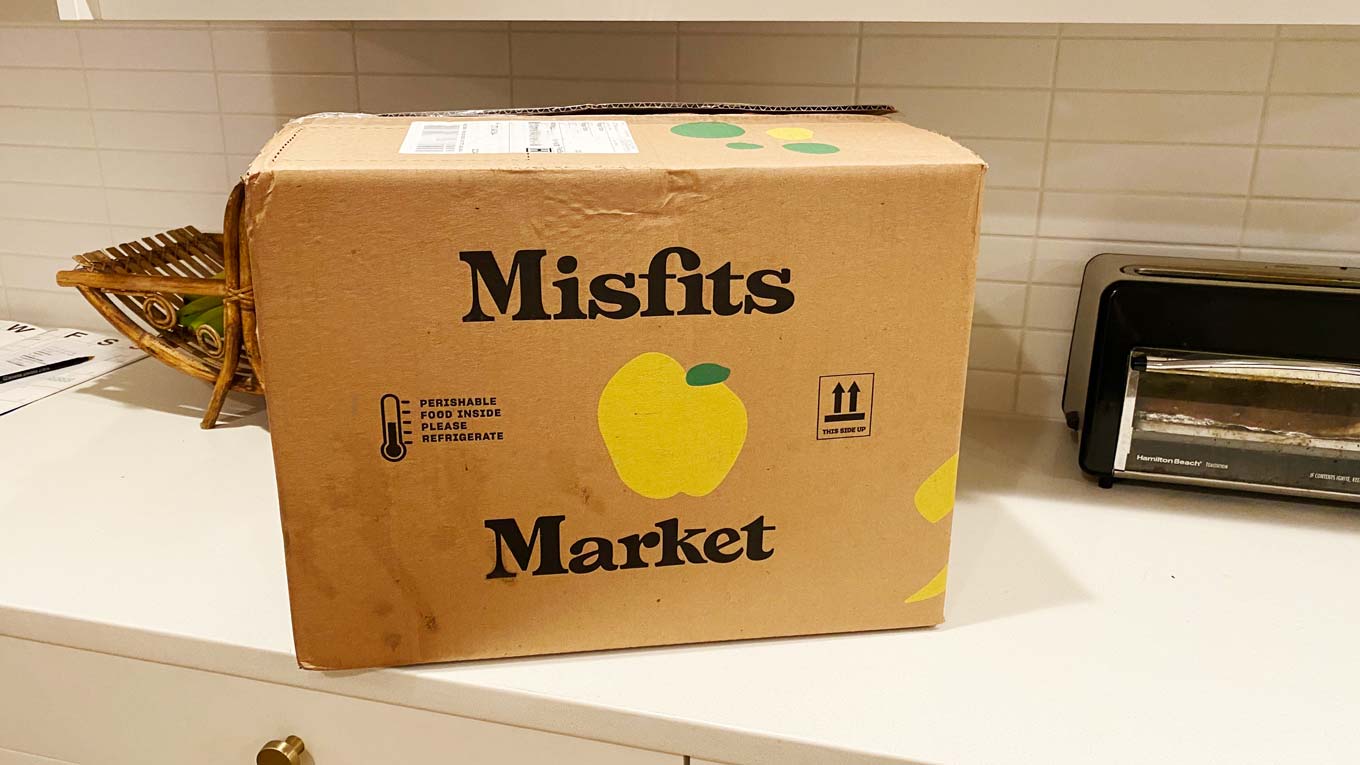
Fortunately, we’re here with an authentic review of Misfits Market, to give you another option to help reduce food waste during your weekly grocery haul.
What is Misfits Market?
First, let’s start off this review by explaining what Misfits Market is:
Misfits Market is an online grocer working to do two main things: make high-quality food more affordable and accessible and help break the cycle of food waste.
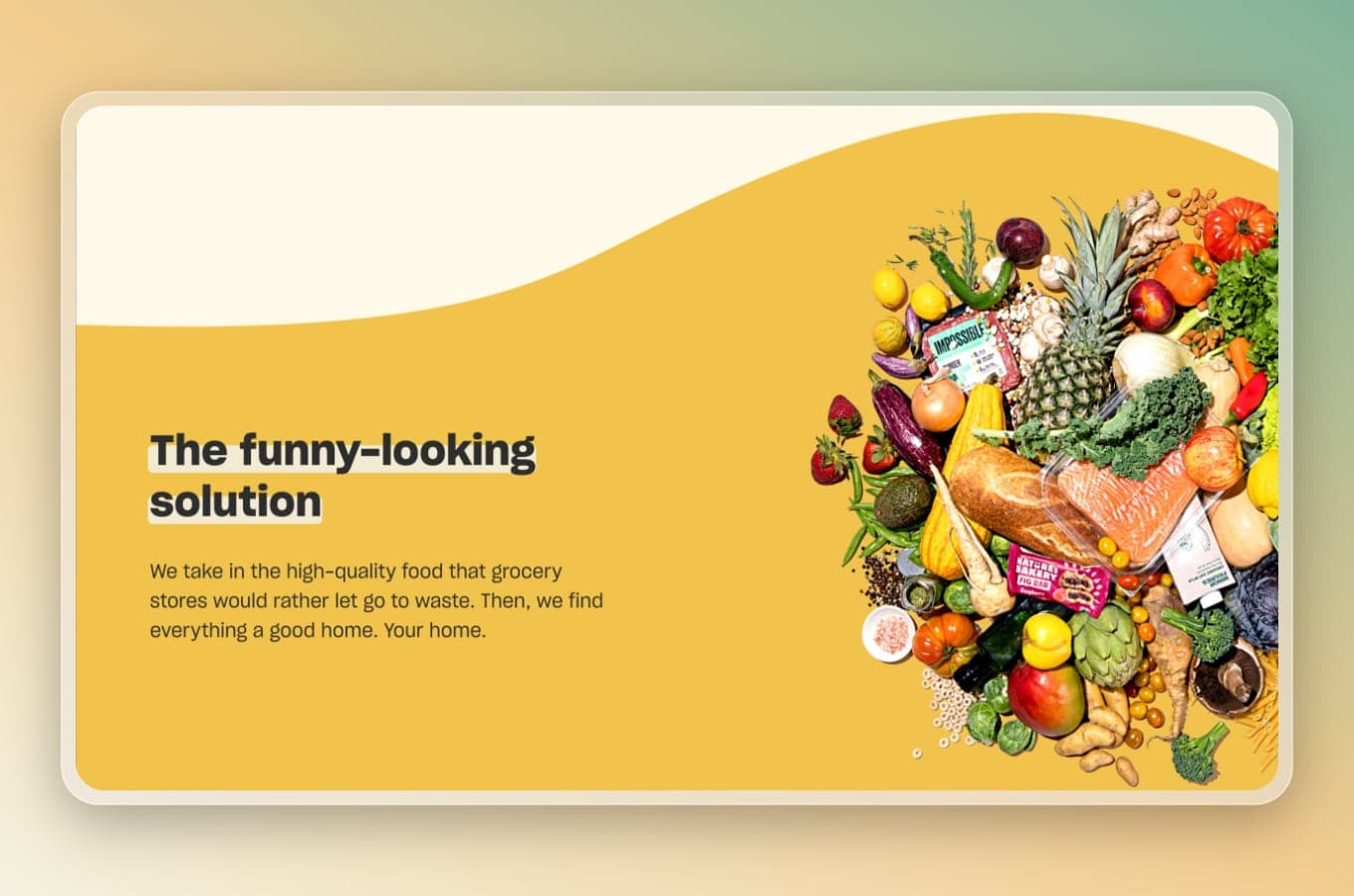
Essentially, they mail you a box of food at a great price and reduce food waste in the process.
Working directly with farmers and food producers primarily in the Americas, Misfits Market gets access to high-quality fruits, vegetables, and lots of other food items.
Some items come from further away based on what’s in season. For transparency, they have a list of what foods are currently being rescued and where they come from.
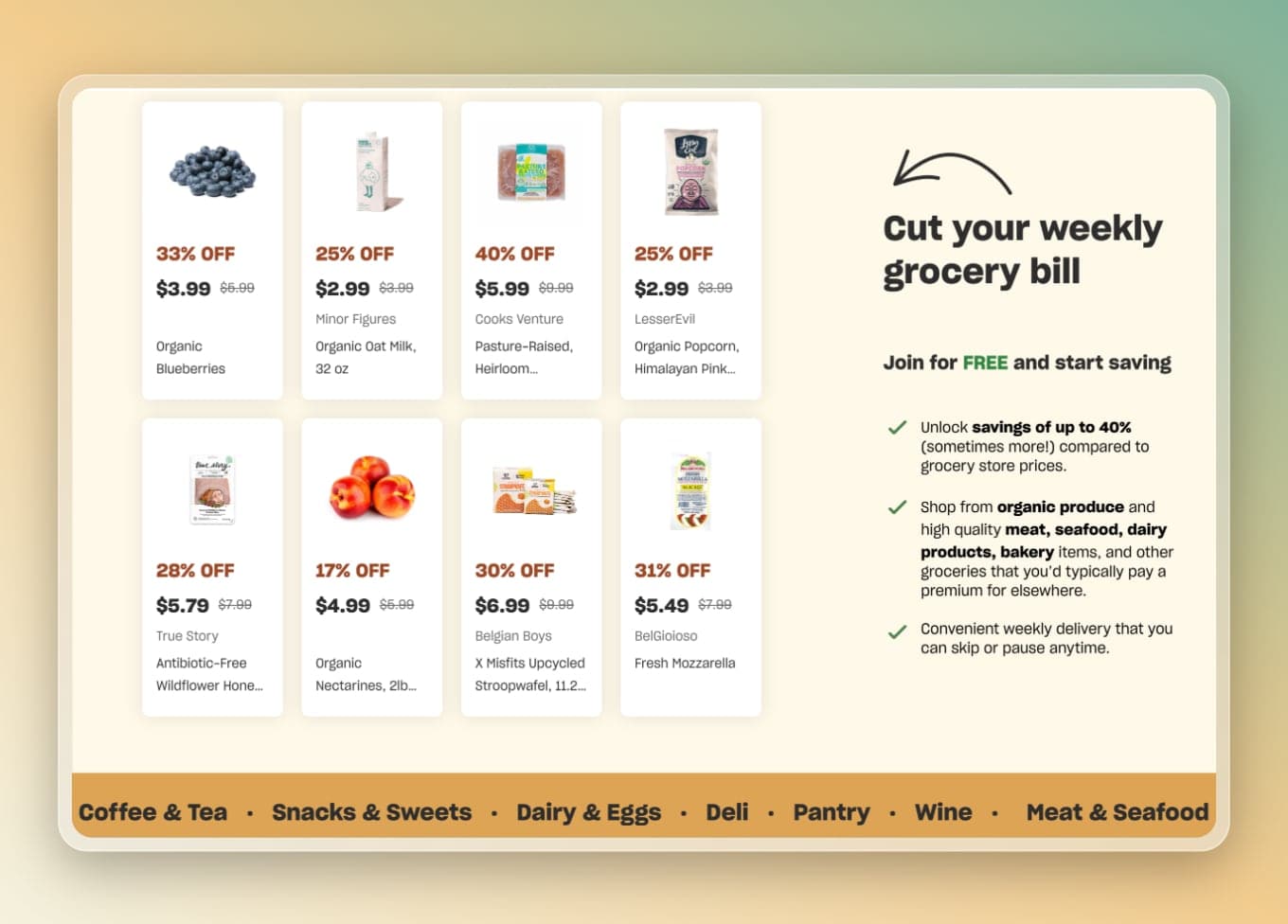
While some of the produce the brand sends falls into the “looks a little strange” (a.k.a. the misfits!) category, most of it is simply excess. It’s why Misfits Market describes what it does as “rescuing” food.
Misfits Market cuts out the middleman and rescues food, pantry staples, wine, and other groceries, and as a result, claims to offer consumers food products up to 40% cheaper than grocery stores.
How does Misfits Market work?
What do they offer?
While most people might think of fruits and vegetables when they think of Misfits Market, their offerings go way beyond produce.
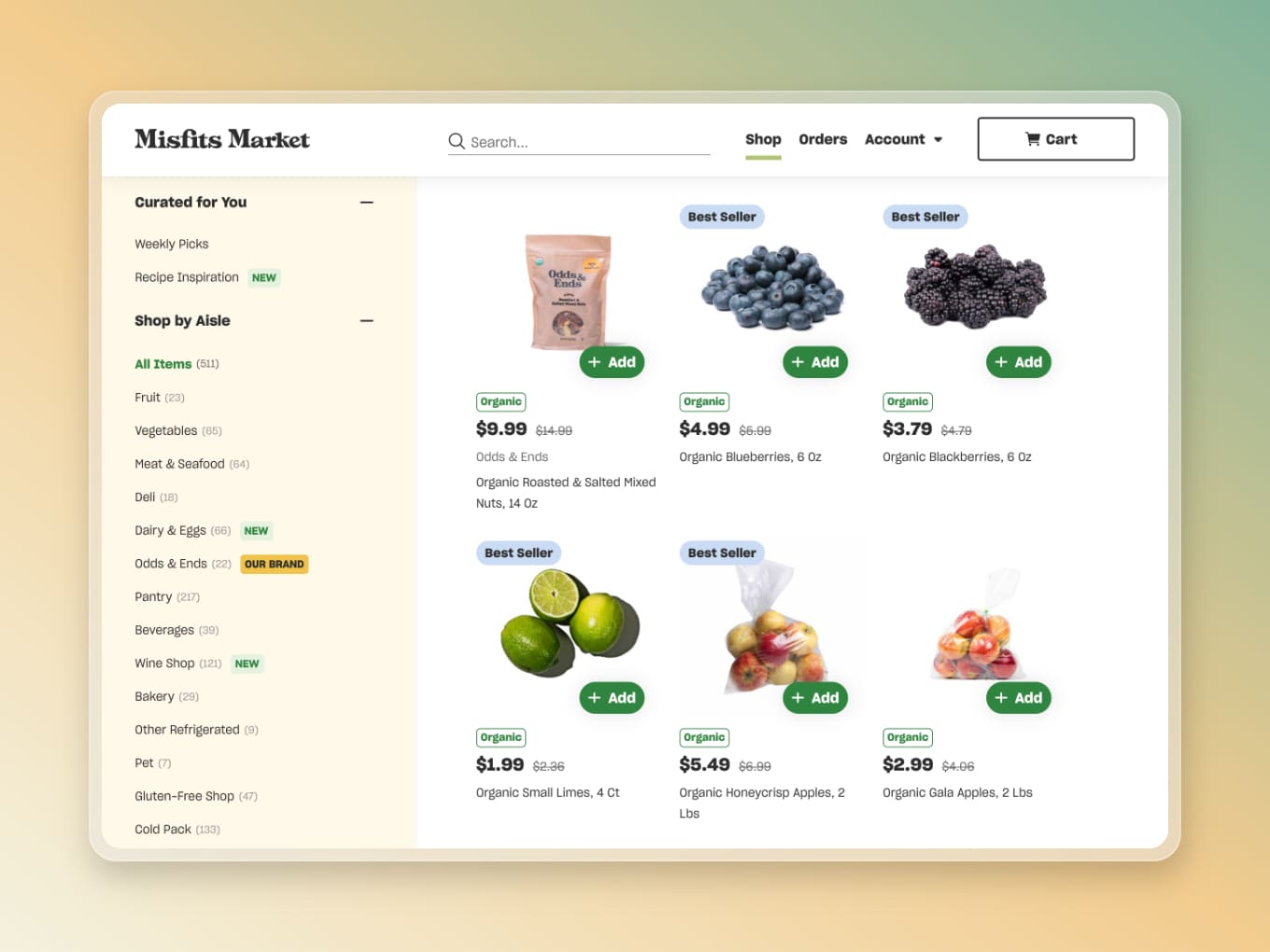
Misfits Market offers:
- Fruits
- Vegetables
- Meat, Seafood & Plant-Based Proteins
- Milk (Dairy & Non-Dairy)
- Pantry Staples
- Beverages
- Snacks
- Eggs
- Pet Food
- Coffee
- Wine
Subscription and shipping
Unlike a meal box subscription, Misfits Market doesn’t have a set subscription “fee.” Once you sign up, you can access the items offered in the market — and you can add as few (as long as you meet the $35 order minimum) or as many items as you’d like.
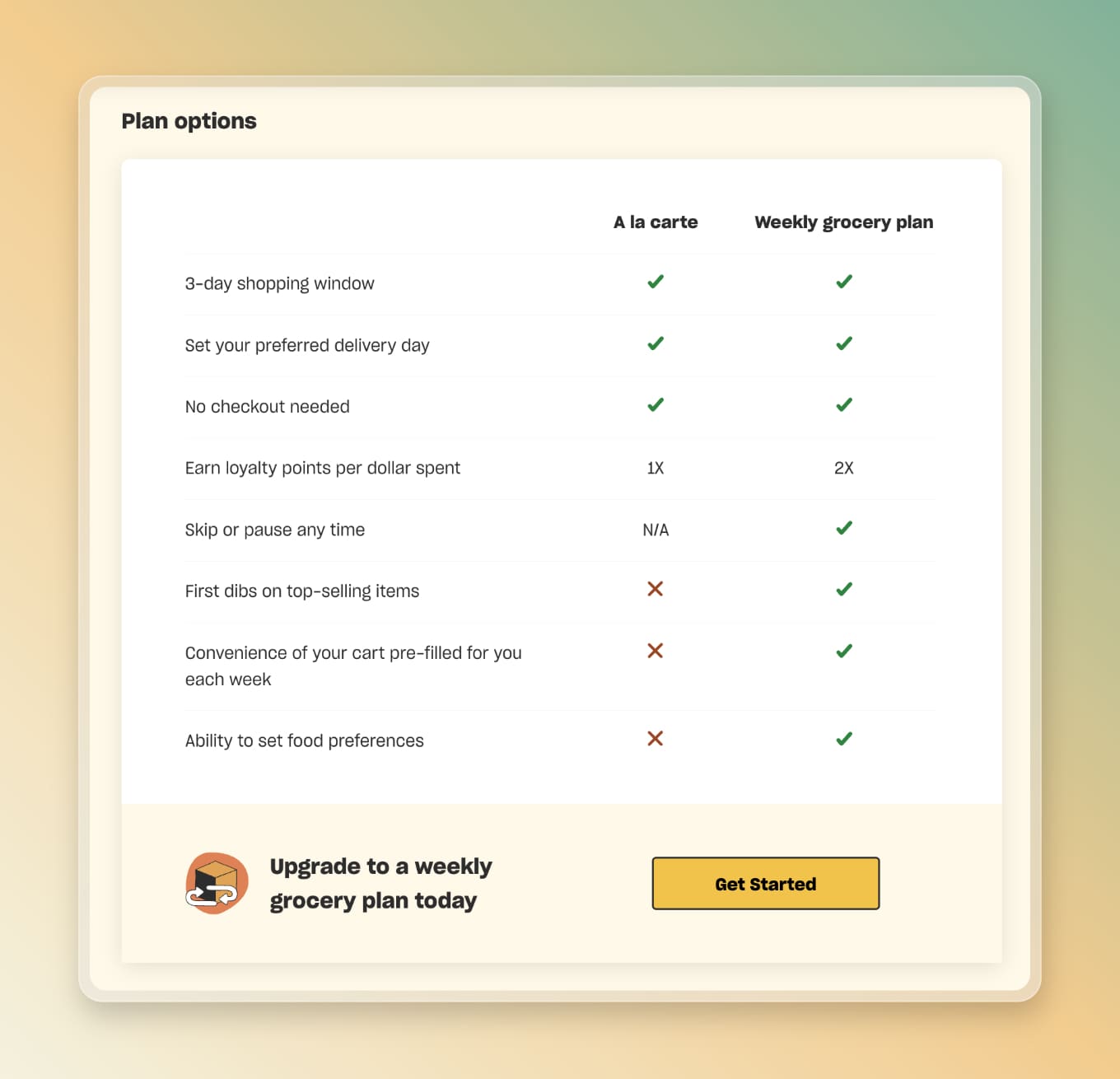
Depending on how often you’d like groceries sent to you, customers can choose between their weekly grocery plan or a-la-carte shopping:
Weekly Grocery Plan: Misfits Market will automatically fill your cart with items it thinks you’ll like — but you can still make adjustments to it!
A-La-Carte Grocery Plan: Customers can use this to plan to build their own box each time they order. This plan is especially great for customers who want to order less frequently.
Customers with a weekly grocery plan can pause or cancel it at any time with no penalties or fees. A-la-carte shoppers can simply not build an order for that week.
Ordering from Misfits Market
Each week, Misfits Market will notify you when your three-day “shopping window” is open. If you’re on a weekly grocery plan, it’ll pre-fill your cart with items it thinks you’ll like, but you can change your box’s items at any point within your shopping window.
Most of the produce is organic and are clearly labeled as such; they also have a limited amount of conventional items for people who want to shop at lower price points.

You can add or remove as many items as you’d like — you just need to make sure your box is above the order minimum. If your order doesn’t meet the $35 minimum, Misfits Market will skip it automatically. (This ensures shipping is more economical and better for the planet.)
When your shopping window closes, your order will be placed and shipped to you on the preferred shipment date you set, which you can also change at any time. There’s a flat shipping rate, and you’ll get tracking information so you can prepare to receive your box.
An honest review of Misfits Market
In order to ensure this review is helpful and reliable, Misfits Market sent Good Good Good team member Megan a code to pick out her own groceries and have her own authentic experience. This review is her honest feedback:

Ordering Experience:
Filling my Misfits Market box was incredibly easy, especially since Misfits pre-selected some items it thought I might like. I removed the ones I wasn’t interested in, added the produce staples I usually pick up at the grocery store each week like apples and grapes, and perused some of the other pantry staples they offered.
I didn’t have a weekly meal plan set for the week, so I approached filling my box with the mindset of getting the “usuals” that always are on my grocery list and in my IRL cart at the grocery store: snacks like apples and grapes, oat milk for coffee, broccoli and cauliflower for easy dinner sides.

Though the list of foods it’s currently rescuing is expansive and always changing based on seasonality and what’s available, Misfits does recommend shopping as soon as your shopping window opens because items can sell out.
I didn’t have any trouble finding or ordering my weekly staple items, but if you were planning for a specific or more complex recipe, you may still need to make a quick stop at your local grocery store for some items.
Personally, physically going to the grocery store is not my favorite chore of the week, so I loved the ease of adding the weekly grocery staples and knowing they’d come to me without having to make another monotonous trip for them.
Plus, I saved probably an hour of my time (driving, browsing, checkout, etc.), and definitely some money compared to the days I shop on an empty stomach!
Packaging:
My order came in a recyclable (or reusable!) brown box, and the padding inside was fully recyclable curbside, too. It came with two ice packs in the bottom, which can be emptied into the trash bin, and the outer bag can be recycled at a plastic film recycling drop-off site.
All of my items all arrived safe and sound on my doorstep, and everything was still cold that needed to be. I was especially thrilled to see the padding could be recycled curbside, which is in line with other food and meal delivery boxes I’ve used.

My heart definitely sank a bit when I saw the two ice packs, as I already have a pile of these in my garage. They can be reused, but if I got a box delivered every week, that’s more than I’d ever need — and likely more than I can share with others.
And while they can be emptied into the trash, it makes the bag extremely heavy, and I’ve ended up having to reinforce my trash bags to accommodate it. That kind of seems to defeat the purpose?
Recently, I received a meal kit box that had a “sink safe” ice pack which could be dumped right down the drain vs. in the trash — and I’m hoping to see more of those used by cold-delivery services like Misfits in the future.
(Editor's Note: Misfits Market reached out to share that gel packs are not used in any shipments that do not include perishable inventory, and gel packs are dynamically allocated based on how much inventory is in a shipment to keep perishable orders at safe temperatures in transit.)
Food:
I primarily included fruits and vegetables my husband and I regularly work into meals in my box, including broccoli florets, cauliflower, apples, blackberries (the only item I got that was not organic), limes, lemons, grapes, and more.
I was also excited to see that Misfits Market had Minor Figures brand oat milk available 20% cheaper than traditional retail. My favorite local coffee shop uses it and I wanted to try it for myself. The verdict is in: it’s delicious!

We also cook with olive oil almost daily in our house, so I added a tin of Misfits Market’s Odds & Ends brand of Spanish extra virgin olive oil to my box. I love that it comes in an easily-recyclable metal tin, because I recently started reusing and just refilling an olive oil bottle I already have.
All of the produce items were delicious, fresh, and equivalent to what I’d buy at a traditional grocery store. I did notice some of my items were ripe and needed to be consumed relatively quickly, so I’d be more mindful of that in the future when I select items and be ready within a day or two to consume them or work them into a meal.
In conclusion:
Pros
- I saved as much money as they claimed I would
- I helped prevent food waste
- I got to eat delicious, nutritious, and fresh food
- Lots of premium options available
The biggest pro of Misfits Market, in my view, is the fact that you literally get to consume nutritious, fresh food that would have likely been wasted.
I especially think this is a great fit for people who like to have fruits and vegetables around the house for snacking — not having to make a trip to the store to get your weekly essentials is a huge life assist on Misfits’ part.
The cost savings are also significant. While I personally don’t eat or cook with a lot of meat at home anymore — I did want to note that the Misfits Market website had pasture-raised ground chicken available recently for 40% off retail.

I did a quick, comparable online order from a local chain grocery store of the items I got from Misfits Market, and the estimated savings were right around what Misfits predicted: I saved just over $20 by ordering the items through Misfits Market.
Not to mention, a lot of organic and premium items like the oat milk and olive oil options weren’t even available through my local grocery store.
Cons
- Some items need to be consumed right away
- Ice packs create more waste than I’d like
- Not clear about emissions saved vs. emitted with shipping
Since some items are short-dated, be prepared to consume items right away. I made the mistake of letting the bag of grapes I ordered in my box sit for a bit too long, and they went bad. Check best-by dates, and be prepared to eat and/or fruits and vegetables in your meals relatively quickly.
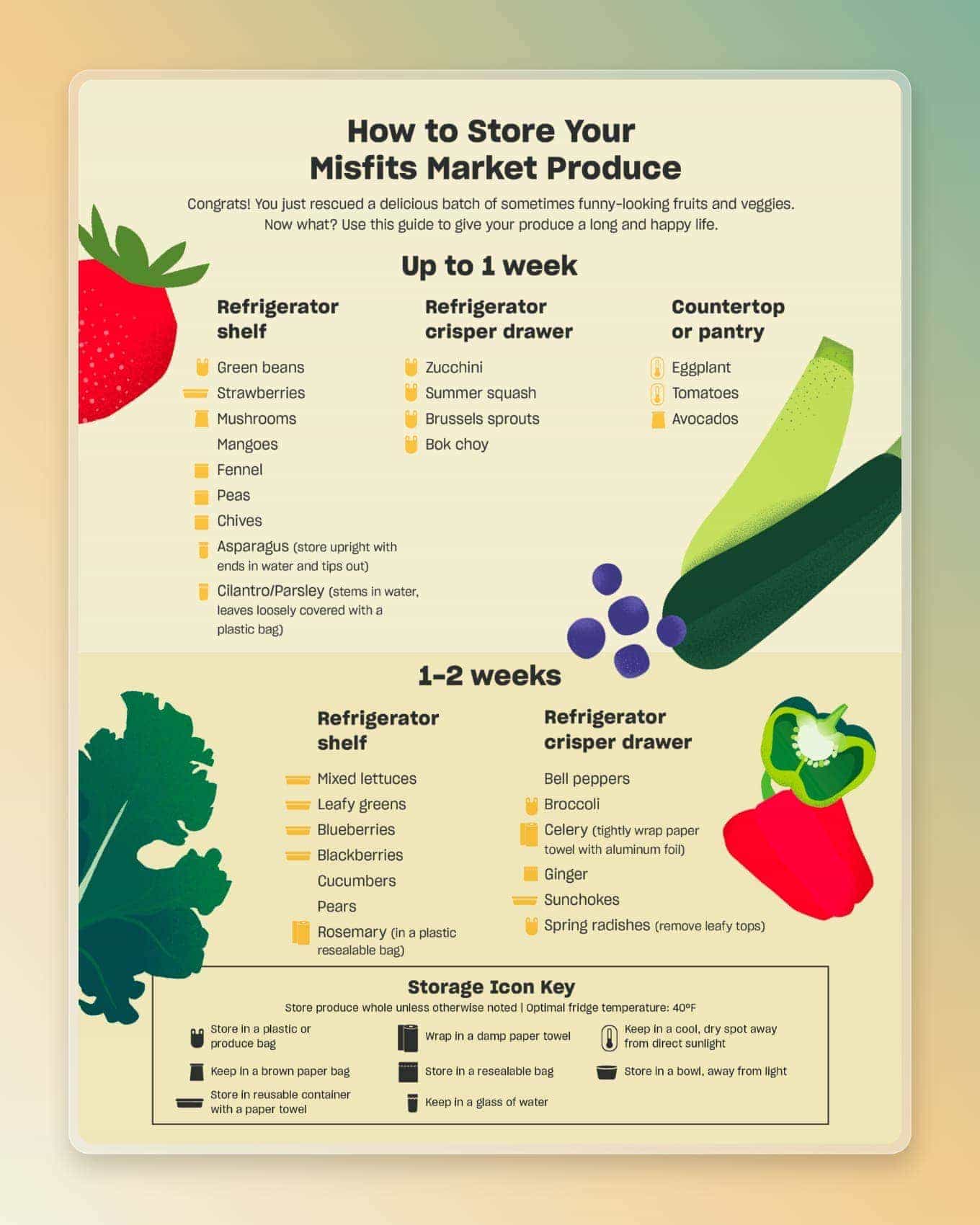
(Editor's note: Misfits Market does have a number of helpful guides to correctly store and preserve your fresh produce.)
As I mentioned before, the ice packs that come in the shipment are also a relatively significant pain point. If you get a weekly box, these will pile up quickly, and add quite a bit of waste (and weight) to your trash can. I’d also make sure you have plastic film recycling available near you, if your goal is to reduce waste!
Lastly, I’d be curious to know how the methane saved from keeping food out of landfills stacks up against the carbon emissions it takes to ship each of these boxes to people all over the country. In the future, it could be cool if they added a “methane savings” tracker so I can measure my impact.
Knowing that methane is significantly more concentrated than CO2, I assume it ends up as a net-win overall, but was hoping to find information about that on Misfits’ website.
(Editor’s Note: A new study from University of Michigan researchers did find that meal kits have a much lower overall carbon footprint than the same meals purchased at a grocery store.)
Though Misfits is certainly meeting an immediate, urgent need in reducing food waste, the model doesn’t necessarily seem like the most efficient, effective way to solve this particular problem related to food waste. I’d love to see more effort to tackle systemic issues like eliminating superficial standards at grocery stores, shipping to central locations for people to shop, changing misconceptions and standards around best-by dates, and more.
(Editor’s Note: The brand does have a number of blog posts about food justice, best-by dates, and the food system as a whole.)
In Summary
Overall, I’m really impressed with Misfits Market’s mission to solve major issues surrounding food waste, and think they do an excellent job to both provide an incredible solution and educate consumers.
Using Misfits Market is a great way to reduce your personal carbon footprint, save perfectly good, delicious food from becoming waste, save time and money, and challenge the many flaws of the traditional grocery store model.
You can sign up for Misfits Market by simply visiting the brand’s website and clicking “Get Started.” Don’t forget to use code GOOD10 for $10 off your first order.
Frequently Asked Questions
What’s in a Misfits Market box?
Misfits Market boxes are completely customizable, and customers can choose from the market’s seasonal selection each week. The market usually offers a wide selection of fruits, vegetables, meat, seafood, plant-based proteins, deli items, pantry staples and snacks, dairy and eggs — and even wine and pet items.
Is Misfits Market really cheaper?
Misfits Market prices can range up to 40% off traditional grocery store retail prices. While that only works out to, say, 50 cents off a couple of avocados, in the scheme of a whole order, it can add up to a whole lot of savings.
The brand also just added a Misfits Perks program where customers can earn even more savings on orders. While it doesn’t currently accept SNAP/EBT benefits, Misfits Market is hoping to be able to launch it soon.
How much does Misfits Market cost?
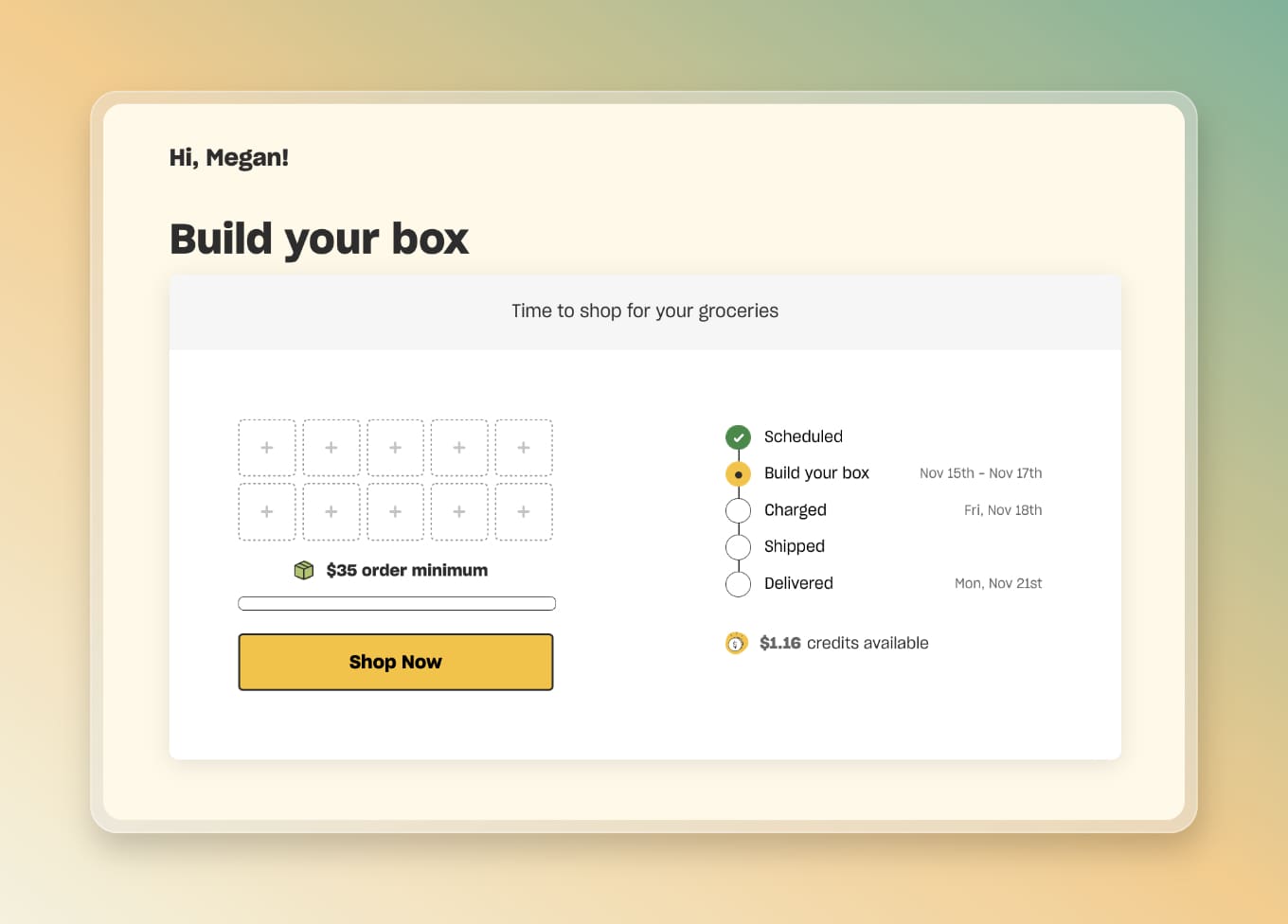
Misfits Market is free to join, and as long as you meet the $35 order minimum, you can spend as much or as little as you want on groceries. You can order at intervals that work for you, whether that’s getting a weekly box, or shopping a-la-carte when you need a restock.
How is Misfits Market delivered?
Misfits Market delivers its shipments in cardboard boxes with fully-curbside-recyclable insulated padding inside to keep food items protected in hot and cold weather. Boxes also include ice packs that can be emptied into your trash bin and the outer bag recycled at a plastic film recycling drop-off location.
You can sign up for Misfits Market by simply visiting the brand’s website and clicking “Get Started.” Don’t forget to use code GOOD10 for $10 off your first order.
You might also like:
In 2021, Giving Tuesday donations in the United States totaled a record $2.7 billion. 35 million people participated — up 6% from 2020!
Giving Tuesday is a celebration of radical generosity — the idea that “the suffering of others should be as intolerable to us as our own suffering.”
Radical generosity invites people to give what they can to create systemic change and reminds us that we each can drive an enormous amount of positive change by using our time, skills, goods, and advocacy to help others.
This year on Giving Tuesday, nonprofits and mission-driven organizations are working hard to drive awareness around important issues and opportunities to make a difference.
We’ve collected the best Giving Tuesday quotes to inspire generosity and motivate giving:
→ Don’t forget to check out our guide to the best ideas for celebrating Giving Tuesday this year.
→ Plus, explore more quotes for giving.
The Best Giving Tuesday Quotes
Famous Quotes
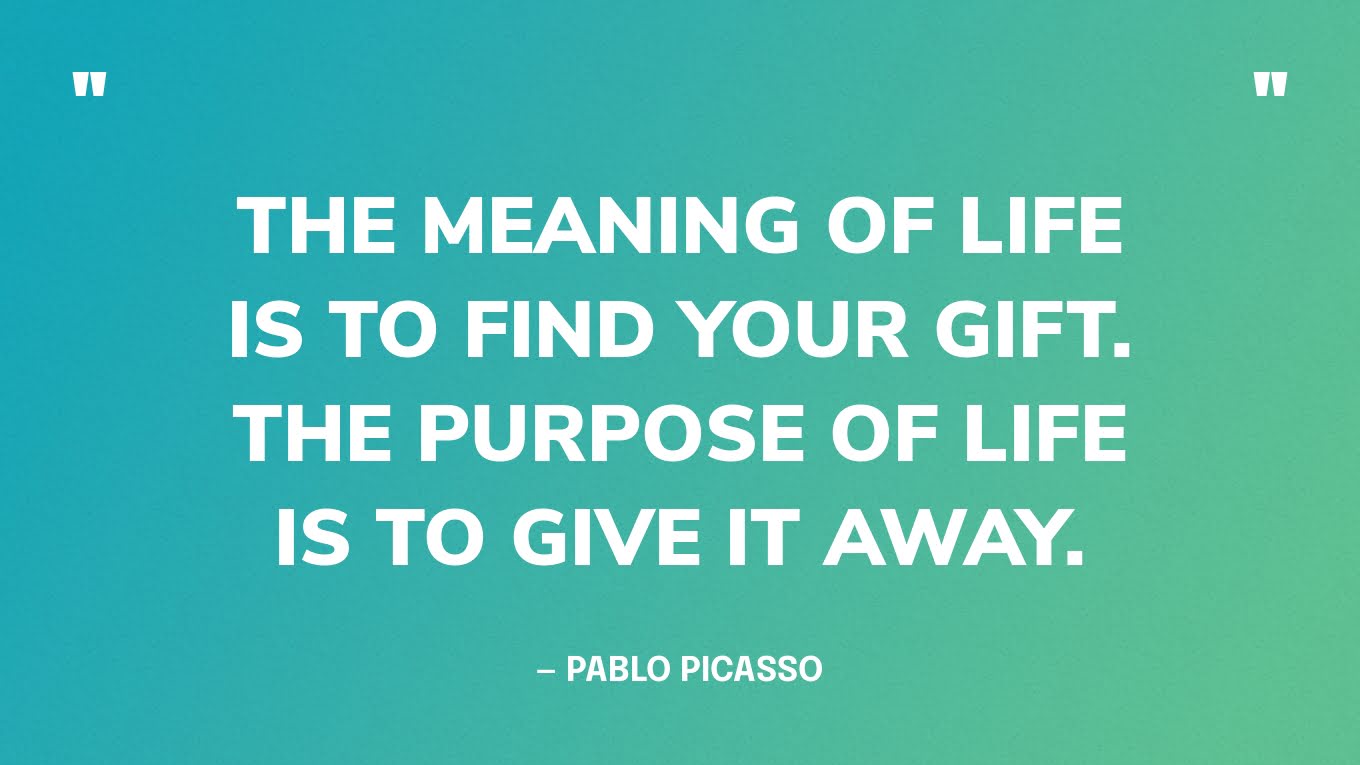
“The meaning of life is to find your gift. The purpose of life is to give it away.”
— Pablo Picasso
“Everyone can be great because everyone can serve.”
— Martin Luther King Jr.
“Only a life lived for others is a life worthwhile.”
— Albert Einstein
“Remember that when you leave this earth, you can take with you nothing that have received — only what you have given.”
— St. Francis of Assisi
“When you learn, teach. When you get, give.”
— Maya Angelou
“The best way to find yourself is to lose yourself in the service of others.”
— Mahatma Gandhi
→ Explore more quotes about how to make a difference
About Giving Tuesday
“This Giving Tuesday please remember that it’s not about how much you can give. Big things happen when we all chip in a buck or two. And your time is valuable! If you’re able, consider spending a few hours volunteering in your community this season.”
— Chasten Buttigieg
“I know y’all are about to get spammed with Giving Tuesday emails but hope you'll consider giving to people that do meaningful work. Give to the artists, freelancers, organizers, musicians, content creators, crafters, podcasters & others who create/offer life sustaining things.”
— Alicia Crosby Mack
“We all can do a little bit more than we’re doing — and today’s a great day to start. This Giving Tuesday, I invite you to think about what YOU can do to give back. Is there a program you can support? Do you have anything you want to donate? How do you plan to give back today?”
— Van Jones
“We can [make a difference] in a number of innovative ways: traditional donations and volunteerism, of course, but also by urging our employers to align with causes, using our leverage and our voice in the workplace to encourage companies to engage in social responsibility in bold ways; and outside of work, using our voice and our social presence to advocate for social change.”
— Asha Curran, CEO of Giving Tuesday in Forbes
On Generosity
“That's what I consider true generosity: You give your all, and yet you always feel as if it costs you nothing.”
— Simone de Beauvoir
“Gentleness, self-sacrifice, and generosity are the exclusive possession of no one race or religion.”
— Mahatma Ghandi
“To give without any reward, or any notice, has a special quality of its own.”
— Anne Spencer Lindbergh
“The most truly generous persons are those who give silently without hope of praise or reward.”
— Carol Ryrie Brink
On Charity
“Giving is not just about making a donation. It is about making a difference.”
— Kathy Calvin, former President and Chief Executive Officer of the United Nations Foundation

“The best thing to do with the best things in life is to give them away.”
— Dorothy Day
“You have not lived today until you have done something for someone who can never repay you.”
— John Bunyan
“Service to others is the rent you pay for your room here on earth.”
— Mohammed Ali

→ Read more quotes about activism
Motivational Quotes
“Remember that the happiest people are not those getting more, but those giving more.”
– H. Jackson Brown Jr.

“As you grow older, you will discover that you have two hands — one for helping yourself, the other for helping others.”
— Audrey Hepburn
“Those who are happiest are those who do the most for others.”
— Booker T. Washington
“We make a living by what we get. We make a life by what we give.”
— Winston Churchill

On Doing Good For Others
“Love cannot remain by itself — it has no meaning. Love has to be put into action and that action is service.”
— Mother Teresa
“In a society that functions optimally, those who can should naturally want to provide for those who can’t. That's how it's designed to work. I truly believe we’re here to take care of one another.”
— LeVar Burton
“Do all the good you can,
By all the means you can,
In all the ways you can,
In all the places you can,
At all the times you can,
To all the people you can,
As long as ever you can.”
― John Wesley
“I’m committed to giving back to the community and will continue to do whatever I can to help people in need.”
— Al Horford
“Life’s most persistent and urgent question is, “What are you doing for others?””
— Martin Luther King Jr.
“Everyone can be a humanitarian. All it takes is one act to help someone else.”
— Valerie Amos
→ Read more quotes about justice
On the Joy of Giving
“Happiness exists on Earth, and it is won through prudent exercise of reason, knowledge of the harmony of the universe, and constant practice of generosity.”
— José Marti
“I absolutely believe in the power of tithing and giving back. My own experience about all the blessings I've had in my life is that the more I give away, the more that comes back. That is the way life works, and that is the way energy works.”
— Ken Blanchard
“Since you get more joy out of giving joy to others, you should put a good deal of thought into the happiness that you are able to give.”
— Eleanor Roosevelt
“Gratitude begins in our hearts and then dovetails into behavior. It almost always makes you willing to be of service, which is where the joy resides. It means that you are willing to stop being such a jerk. When you are aware of all that has been given to you, in your lifetime and the past few days, it is hard not to be humbled, and pleased to give back.”
— Anne Lamott, Help Thanks Wow: The Three Essential Prayers
“I have found that among its other benefits, giving liberates the soul of the giver.”
— Maya Angelou
→ Read more quotes about humanity
More Captions
“Too often we underestimate the power of a touch, a smile, a kind word, a listening ear, an honest compliment, or the smallest act of caring, all of which have the potential to turn a life around.”
— Leo Buscaglia
“Each of us can make a difference. It doesn’t have to be anything spectacular. Keep the neighbor’s kid while she goes to the store or to the doctor, or befriend somebody in need. I don’t mean you have to take them into your home, but you can find a place for them to stay or see that they get food. You can do an act of kindness every single solitary day, because it’s needed.”
— Opal Lee
“For it is in giving that we receive.”
— St. Francis of Assisi
“I’ve learned that you shouldn’t go through life with a catchers mitt on both hands. You need to be able to throw something back.”
— Maya Angelou
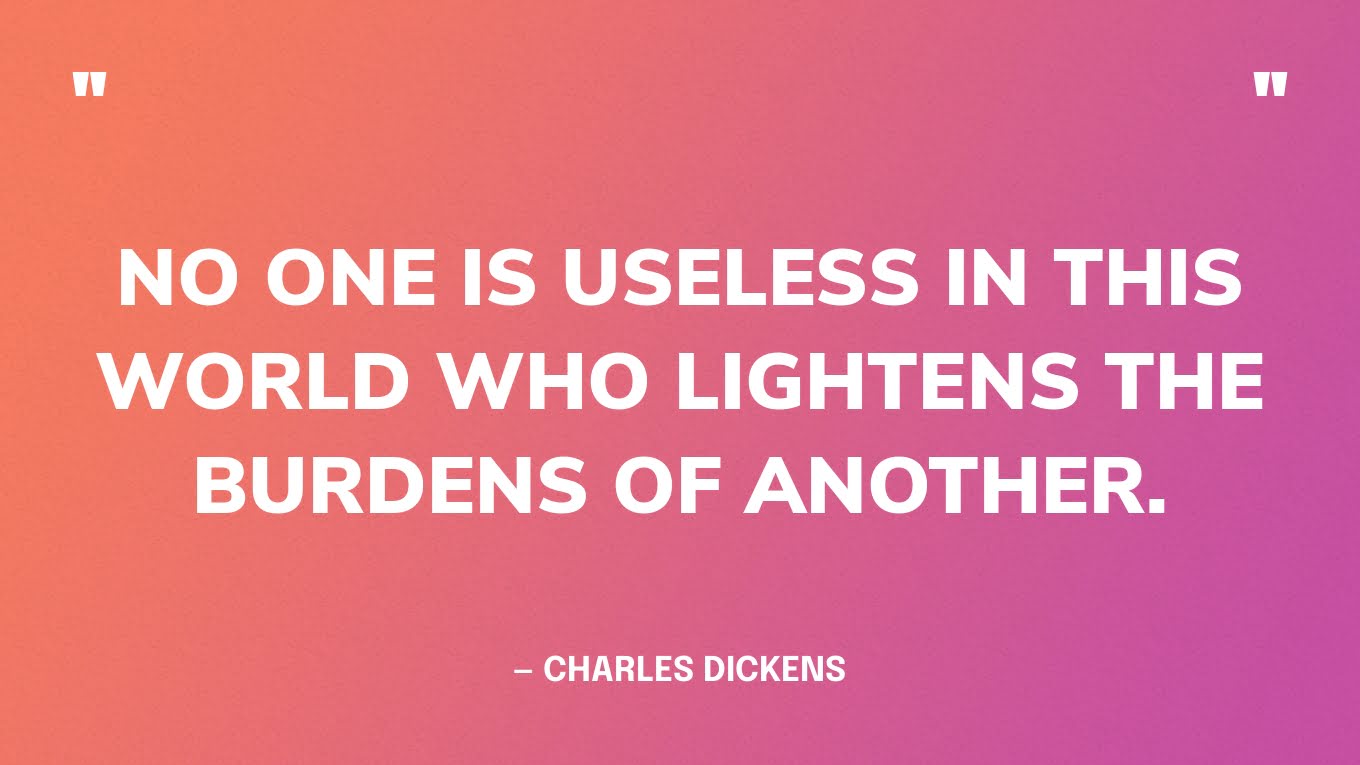
“No one is useless in this world who lightens the burdens of another.”
— Charles Dickens
“Another world is not only possible, she is on her way. On a quiet day, I can hear her breathing.”
— Arundhati Roy
You might also like:
Every day the Good Good Good team collects the best good news in the world and shares it with our community. Here are the highlights for this week!
If you want to get good news in your inbox every day, join the Goodnewsletter — the free daily newsletter designed to leave you feeling hopeful.
The Best Positive News We're Celebrating This Week —
Scientists in Switzerland developed efficient, transparent solar panels that can double as windows
Getting lots of natural light and generating electricity at the same time? Scientists in Switzerland are making it possible with transparent solar cells that can be used to make electricity-generating windows — and they just reached a new efficiency record, too.
The low-cost dye-sensitized solar cells use photosensitized dye on a semiconductor surface that converts visible light into energy. Previous versions of the type of solar cells were dependent primarily on direct sunlight, but a new scientific breakthrough found a way to make them absorb light across the entire spectrum of visible light.
A wind turbine in Denmark broke the record for the most electricity generated in 24 hours
Breaking the previous record set by a turbine in Germany, Siemens Gamesa's 14-222 DD offshore wind turbine prototype, situated at a test center in Denmark, generated 359 megawatt-hours (MWh) worth of electricity in 24 hours.
For context, every resident of New York City uses 13,452 kilowatt-hours (kWh) in the span of a year — so the prototype turbine generated enough energy for one NYC resident to have electricity for 27 years.
The company achieved this milestone in large part by making the turbine blades larger — the prototypes are larger than the Statue of Liberty. According to Siemens, each turbine can provide enough energy to power about 18,000 households annually.
This new record is a significant point of progress in the transition to clean energy.
The LANDBACK movement is returning stolen land, bringing healing, and addressing climate change
The LANDBACK movement is growing in reach as non-Native individuals, conservation organizations, and government entities reckon with what it means to live on lands taken from tribal nations.
Native leaders and LANDBACK organizers say that the theft of Native lands, stolen to create the U.S. and generate private wealth for white people, is the root of systemic injustices propelled by extraction and capitalism, like climate change.
LANDBACK can bring a kind of justice to a historical and ongoing harm, as well as address the crisis of climate change.
Once rare on school lunch trays, more states are making fresh, local food more available in school cafeterias
Farm-to-school programs aim to improve the quality of school lunches and educate students about nutrition and where their food comes from. Programs also provide new markets for growers, which can strengthen local economies.
Nearly all states have a farm-to-school program, but at least 10 states enacted laws this year or last boosting theirs, though some measures faced opposition over increased food costs.
And when restaurants closed during the pandemic, small farmers, ranchers, and fishermen found farm-to-school programs a lifeline.
Thanks to measures prioritizing pedestrians, the number of trips made by car in Paris has been cut in half
Passenger cars emit huge amounts of pollution and are an inefficient use of finite public space. They are Europe’s second-largest source of greenhouse gas emissions and the leading killer of children.
But over recent years, Paris has implemented an array of measures to prioritize pedestrians, cyclists, and transit while bringing car use screeching to a halt.
In addition to pedestrianizing former streets, the French capital has banned heavily polluting diesel cars through the creation of a low-emission zone (which gets progressively more stringent from now until 2030), reduced drivers’ access to major streets, expanded green areas, and promoted other ways getting around the city.
Combating racism and white supremacy along the way, Detroit is building a thriving Black birding community
According to a 2019 U.S. Fish & Wildlife Service report, just 6% of birders are Black. April Campbell, who adopted birding as a hobby after completing medical school, realized that birding events held by her local Audubon chapter were not accessible to Black and low-income folks.
And around the U.S., the birding community is undergoing a racial reckoning as it decides how to deal with the names of birds that honor proponents of slavery and white supremacy.
In an effort to diversify the birding community and create safe spaces in traditionally hostile environments, Campbell created her own local group for Black birders — the BIPOC Birders of Michigan.
Dozens of people in Nova Scotia worked together to rescue a pod of 16 dolphins stranded by low tide
A Digby, Nova Scotia resident noticed a pod of dolphins stuck in the mud as the tide went out, and put in a call for the region’s marine animal response team. When they couldn’t make it in time, she enlisted the help of local first responders — and made a post on social media.
The first people who arrived to help were three teenage boys, and dozens more followed. In total, about 40 people helped get the dolphins onto tarps and sleds to pull them into deeper water. Within a couple of hours, the dolphins were all safely returned to sea
"Seeing how everybody came together yesterday, it was truly amazing for these beautiful creatures who… if it wasn't for everybody, it may not have ended so well for them," one resident said.
More good news of the week —
California just awarded 96 million in climate grants for 10 communities on the frontlines of the climate crisis. Climate mitigation is an important part of addressing climate change, and some communities are disproportionately impacted.
Icelandair announced they will offer carbon-free domestic flights by 2030. The airline is partnering with two startups working on emission-free planes, and flights could start as soon as 2026.
France just passed legislation requiring all parking lots with spaces for at least 80 cars to be covered with solar panels. The legislation goes into effect for both new and existing parking lots starting in July 2023 — next summer!
Pursuing “food sovereignty,” Indigenous farmers are reclaiming their time-honored farming techniques. Food sovereignty is the right to access culturally appropriate meals produced locally using sustainable methods and agricultural practices.
A Massachusetts museum just returned about 150 sacred artifacts to the Lakota Sioux peoples. It’s important progress, but just a fraction of the estimated 870,000 artifacts possessed by colleges, museums, and even the federal government.
Thanks to Indigenous opposition, a second oil company canceled its oil and gas drilling lease in the Arctic National Wildlife Refuge. When the Biden administration didn’t add protections for the area, the Gwich’in people of northern Alaska took matters into their own hands.
Voters in Colorado passed a universal free school lunch ballot measure in the midterm elections. Following a now-expired federal pandemic free lunch program, this new measure will provide free meals for all public school students.
Students at a Pennsylvania elementary school are growing produce for a neighboring community without those food options. Thanks to a grant, the students are building a whole farmstand.
A resident complained about a Pride flag at a New Zealand high school, so the community put up 300 of them. Hobsonville Point Secondary School flew the Pride flag for their second annual “Little Gay Out” event for about 200 LGBTQ+ students.
The U.S. and UAE reached an agreement to spend $100 billion to add 100 gigawatts of clean energy capacity globally by 2035. The United Arab Emirates is an OPEC oil producer, so it’s an encouraging announcement for the global clean energy transition.
A remote Indigenous community in Australia is leading a 3D-printed home revolution and changing lives in rural communities. Up to 30% of homes in rural Australia could be 3D-printed by 2030 as a means of tackling the housing crisis.
Rarely in the sport’s spotlight, a photographer is prioritizing visibility for Black women and nonbinary surfers. Gabriella Angotti-Jones’ goal is to challenge surfing’s intense “localism” culture, the idea that waves only exist for locals of that area.
A more sustainable alternative to the carbon-intensive meat industry, feeding pets insects could help lower their carbon “pawprint.” Pet owners’ trend toward premium, “human-grade” diets is putting even further stress on the livestock industry.
The Marine Mammal Protection Act is celebrating 50 years of protecting both marine animals and overall ecosystem health. The act was passed in 1972 and protects animals like whales, dolphins, manatees, and sea lions.
Philanthropists acquired nearly 10,000 acres of koala habitat in Australia for conservation. The Australian Wildlife Conservancy will manage the land alongside ecologists to restore the crucial habitat for koalas and other species.
The United Nations reports that 1.6 billion people live in inadequate housing conditions, while at last count, more than 100 million people have no housing at all. It’s a big number that helpers are working to shrink through a variety of international affordable housing efforts.
The Institute of Global Homelessness (IGH) is one of the first international organizations to focus its efforts on homelessness as a global phenomenon, working especially to help those living on the street or in homeless shelters.
IGH believes that an innovative mix of program interventions, well-coordinated local systems, and effective policies can be scaled, connected, and accelerated internationally to reduce and end homelessness on the world stage.
“Our vision is a world where everyone has a home that offers security, safety, autonomy, and opportunity,” the IGH website reads.
Given that each country, city, and community has a different history, framework, and population to consider, organizations like the United Nations and IGH have their work cut out for them.
Zooming into individual regions can allow us to gain valuable insights into solutions and systems that have worked outside of our American perspectives. Here are a few examples of international affordable housing that can inspire us and serve as a case study for the future.
Innovative Affordable Housing Solutions
Housing & Development Board Flats

Location: Singapore
Singapore is known as one of the world’s best when it comes to social housing. Over 80% of the population currently lives in publicly governed and developed housing, meaning the government owns most of the land and manages inflation and property management with smart policies.
These social housing units are full of mixed-income communities and prioritize “kampong” (social cohesion). Apartment blocks use “void decks,” or vacant spaces on ground levels, and common corridors, to integrate and connect diverse tenants.
Contractors are also financially incentivized by the government to build sound structures and maintain immaculate conditions for residents. Additionally, Singapore prioritizes elderly citizens through a Senior Priority Scheme that houses seniors in central and familiar environments.
Savonnerie Heymans Public Housing
Location: Belgium
In Belgium, social housing can be provided by municipalities, public companies, co-ops, or nonprofits. The Savonnerie Heymans, a project out of Brussels, was a joint initiative by the city’s social services center and a private architecture firm.
The Savonnerie Heymans housing project creatively adapted the use of an old soap factory to create 42 low-energy residences. It’s known for its diverse population and vibrant village-like community, with a number of shared facilities, including a game library, mini-forest garden, playgrounds, and a 3D-landscaped park.
Ésta es tu Casa Program
Location: Mexico
In Mexico, many low-income families are met with a self-help approach to social housing, where families play a major role in building their own homes.
However, the Ésta es tu Casa (“This Is Your Home”) project was introduced to aid households whose incomes were less than five times the minimum wage to build and improve their homes. The initiative has boosted social housing and now incorporates sustainability priorities.
Tower Hatert

Location: The Netherlands
There are about 2.4 million social rental projects in the Netherlands, and the Dutch social rental sector owns about 31% of all housing stock. In big cities like Amsterdam, that percentage is above 50%.
In the Dutch city of Nijmegen, Tower Hatert is just one example of thoughtfully designed social housing. Built in 2011, the 13-story building houses 72 apartments and a healthcare center on the ground floor.
Its unique architecture resembles a leaf, as non-aligned balconies ensure that each unit gets enough natural light, and the building is made with FSC-certified wood planks and aluminum panels.
We’ve all been there: Your upstairs neighbor seems to be dragging bricks across the floor, jumping on a trampoline, or singing in the shower like they’re in the front row of Coachella.
While it’s fun to poke the ceiling with a broom or tweet a passive aggressive note, what would be even better is if we all worked just a little more to be good neighbors.
A 2018 Pew Research study found that roughly a quarter of American adults under 30 didn’t know any of their neighbors. It got us wondering: What would those numbers look like if we just reached out a nonjudgmental hand?
Neighborhoods are fertile ground for deep, rich communities, where people can count on one another, delight in their shared humanity, and add meaning to what might seem like just another residential street.
There are loads of discriminatory housing practices in the U.S. that keep diverse communities from true connection and opportunity, but your willingness to trust and connect may just be a catalyst for change in your corner of the world.
In the book The Little Book of Lykke: The Danish Search for the World’s Happiest People, author Meik Wiking details how the art of togetherness impacts lifelong satisfaction and health, quoting a Danish proverb: “It is better to have a good neighbor than a distant friend.”
Plus, being a good neighbor is exactly what Mister Rogers would want us to do.
Here’s how you can start making it a beautiful day in your neighborhood:
How To Be a Good Neighbor
1. Introduce yourself (and even create a neighborhood directory)
Whether it’s a note in a mailbox, a hand-delivered treat, or a simple shout across the yard, introducing yourself to your neighbors is the first step.
Go even further and create a directory with contact information and special skills! (You can even use the excuse of it being “in case of emergencies” if you’re nervous to ask).
2. Respect the rules of community living
The golden rule of community: be kind. It’s important to share the same courtesies, like keeping quiet hours or shared laundry room expectations. If there is a conflict, learn to resolve it in a restorative, helpful way (ahem, don’t call the cops).
3. Set up systems to share & support
Little free libraries, tool lending systems, communal pantries, or reliable child care go a long way. What can you implement in your area?
4. Go the extra mile to connect
Start a book club, a meal train rotation, margarita nights on your front porch, an intramural soccer group, outdoor play hours, or just a regular movie night. Sharing space allows neighbors to engage and trust one another. Plus, it’s just fun!
5. Celebrate and delight in your community
Whether it’s a block party, picnic, trash cleanup, or holiday event, find time to delight in and take care of your community; not just when you’re in desperate need of a babysitter.
You might also like:
- How To Give Back To Your Community
- Quotes About Giving Back
- Sustainable Products For Every Room in Your Home
A version of this article was first published in the Goodnewspaper — Good Good Good’s monthly print newspaper filled with good news and ways to make a difference.
You can also find more good news in the Goodnewsletter — the free daily email filled with reasons to feel hopeful.
For those of us who spend an unmentionable amount of time scrolling through Zillow listings, it might be fair to say that we use the app more for manifestation purposes rather than intentionally buying a home. Or is that just me?
From the housing market’s supply and demand dilemma to the burden of repaying student loan debt, today’s consumers are met with a housing market they can’t afford.
In fact, home prices have soared a whopping 118% since 1965 (adjusting for inflation), despite income only increasing by 15%, according to a report by online brokerage Clever Real Estate.
This reality forces many like Bernard Glinton, a Silicon Valley bus driver, to sleep in his car because he can’t afford to live in the community he works in, and Boston high school teacher Kelly Henderson who also can't afford to live in the community where she teaches.
“For people in the private sector, they’re probably saying ‘Oh poor you, you can't live in the community where you work, what's the big deal?’” Henderson shared in an NPR interview. “And I guess part of the nature of public education and why it's a different kind of job, is that it's all-consuming — as it should be.”
While affordable housing is a multilayered issue, it’s important that we both acknowledge the systems that put many in this position (restrictive zoning regulations being one of them) while also recognizing the people and organizations diligently working towards creative solutions for those who have been shut out.
Creative Affordable Housing Solutions:
Permanent Supportive Housing is Key in Addressing Chronic Homelessness
While short-term temporary solutions are always needed to address immediate problems, permanent supportive housing has become a proven long-term strategy to addressing chronic homelessness.
This approach pairs housing with case management and supportive services, allowing the person to be met in a more holistic, solutions-driven manner.
According to the National Alliance to End Homlessness, investments in permanent supportive housing have helped decrease the number of chronically homeless individuals by 8% since 2007.
In addition to ending homelessness, research shows that permanent supportive housing can also increase housing stability and improve health.
A cost-effective solution, permanent supportive housing has been shown to lower public costs associated with the use of crisis services such as shelters, hospitals, jails and prisons.
For example, Anawim Housing — the largest provider of permanent supportive housing in the state of Iowa — manages over 536 housing units, and provides stable housing to 380 individuals who have experienced homelessness, live with a mental illness, substance use disorder, physical disabilities, HIV/AIDS, or are fleeing domestic violence. Altogether, they’ve served 1,200 individuals within its community who needed access to safe, affordable housing.
Municipalities Are Now Turning Vacant Lots into Affordable Housing Opportunities
A long-time vacant parking lot in Hell’s Kitchen (a neighborhood on the West Side of Midtown Manhattan in New York City) is officially set to become an affordable housing option for many after its city council voted to approve the construction of The Lirio, a supportive housing project for homeless individuals, long term survivors of HIV/AIDS, and families.
The city also green-lit a commitment to offer below-market-rate ground-floor commercial space for local beloved grocers and businesses.
Similarly, the abandoned historic Los Angeles County General Hospital, a once cutting-edge medical facility, is closer to becoming an affordable housing option after the county’s board of supervisors voted to advance plans to overhaul the art deco building.
This progress comes from locating millions of dollars in local and state funding to create liveable units, after supervisor Hilda Solis began advocating to repurpose the building in 2018.
The county had originally looked into multiple uses for the old general hospital, but the increasing concern for affordable living ultimately guided them to create plans, which include 500 low-cost apartments for unhoused and extremely low-income Angelenos.
Dutch Retirement Home Offers Students Free Rent For Time Spent with Elderly Residents
Since 2012, Humanitas, a retirement home out of Deventer, Netherlands, has been offering university students rent-free housing in exchange for 30 hours of volunteer work with its senior residents.
Students are asked to do anything from preparing meals, to facilitating social media training, and music lessons — effectively providing residents with the social interaction needed to remain physically and psychologically healthy.
The program, led by Humanitas Deventer CEO Gea Sijpkes, has inspired social organizations in other parts of Europe to explore similar opportunities as well.
Sijpkes shared with PBS NewsHour that this program not only aims to provide affordable housing for students, but it’s also an opportunity for people young and old to be “good neighbors.”
Affordable Housing For Indigenous Communities
In an effort to provide quality affordable housing for Indigenous communities, Chilean architects are incorporating insight from the Indigenous Mapuche community to create culturally-informed dwellings.
Together, architects from Underraga Devés Arquitectos, NGO TECHO (also known as Un Techo para Chile), and the Mapuche community created a housing community of 25 two-story “ruka” dwellings that honored and incorporated culturally significant features.
Those features include the east-west orientation of the house, with doors opening towards the east to greet the rising sun. The project falls within a larger effort consisting of 415 traditional social dwellings.
In the U.S., The Chief Seattle Club — a nonprofit combatting homelessness among Seattle’s Indigenous people — announced the completion of ʔálʔal (“home” in Lushootseed) in January 2022. It has become a landmark permanent housing development for Indigenous people who were formerly homeless, financially struggling, or veterans.
ʔálʔal features a nine-floor building with 80 housing units, a healthcare facility, and social services. It even includes a cafe that serves traditional foods and items from Indigenous-owned businesses!
Tiny Home Communities For Those Transitioning Out of Homelessness
What might have originally seemed like a temporary trend, tiny homes have grown to be an innovative, affordable, and scalable solution for cities and organizations looking for alternative, accessible homeownership solutions.
The New Arroyo Seco Tiny Home Village, funded and built by the City of Los Angeles, is the largest tiny home village in California with 117 units and 224 beds.
Since November 2021, it has provided an immediate pathway for homeless individuals in the area to find permanent and stable housing. The village also provides onsite case management, mental health services, and job training and placement.
Community First! Village in Austin, Texas is another affordable, permanent housing and a supportive community for folks transitioning out of chronic homelessness. A development of Austin-based nonprofit Mobile Loaves & Fishes, this 51-acre community provides affordable, permanent housing and a supportive community.
Community First! also offers its residents “micro-enterprise opportunities” which are on-site skill-building and job opportunities that encourage self-sufficiency.
LA and Austin are only two of many cities across the U.S. — like Occupy Madison in Madison, Wisconsin and Dignity Village in Portland, Oregon — using tiny homes as a creative solution to meet the needs of their community.
3D Printers and Shipping Containers Being Used as Instruments For Affordable Housing
If you’ve ventured into building a home — especially during the pandemic — you know it can take up to a year or longer to complete. Habitat for Humanity and 3D-printing construction company Alquist partnered to build the first 3D-printed house: a three-bedroom, two-bath concrete structure, which can withstand hurricanes and tornadoes. The exterior only took a mere 28 hours to construct.
In many cases, 3D printers can take less than 24 hours to print the foundation and walls for a small home at a fraction of the cost of typical construction — with the average cost being $10,000 according to The Zebra. Once the blueprint is created and sent to the printer, it prints material layer by layer, not only saving homeowners time but providing them with a more economical option than what is traditionally seen on the market.
Other nonprofits like New Story, an organization working to address homelessness in South and Central America, joined forces with ICON, a construction technology startup to print 500 houses in Tabasco, Mexico.
This Organization is Using “Bridge Building” To Connect Renters with Affordable Rental Units
The Metro Housing Collaborative (MHC), an Omaha-based nonprofit founded in 2021, is addressing the housing crisis within its community by doing creative “bridge building.” MHC works with 30+ community partners in order to develop beneficial relationships between property managers, community partners, and tenants.
Serving the surrounding metro area, this organization has built up a network of affordable rental units and community resources for tenants while also simultaneously increasing occupant retention rates and decreasing vacant units for property managers.
A version of this article was first published in the Goodnewspaper — Good Good Good’s monthly print newspaper filled with good news and ways to make a difference.
You can also find more good news in the Goodnewsletter — the free daily email filled with reasons to feel hopeful.
Late on Saturday, November 20, a gunman opened fire at an LGBTQ+ nightclub in Colorado Spring. At least five people were killed, and more than 18 people were injured.
Police responded, took the suspect into custody, and injured victims were taken to several hospitals.
Colorado Governor Jared Polis released a statement praising the first responders who immediately worked to save lives at the nightclub:
“We are eternally grateful for the brave individuals who blocked the gunman likely saving lives in the process and for the first responders who responded swiftly to this horrific shooting. Colorado stands with our LGTBQ community and everyone impacted by this tragedy as we mourn together.”
We’re devastated by this news — which is especially heartbreaking because November 20 is Transgender Day of Remembrance. The nightclub, Club Q, was planning to host an “all ages drag brunch” on Sunday morning to honor the holiday, which is meant to honor those who have been killed or harmed by anti-transgender violence.
At Good Good Good, we wanted to ensure we quickly shared some resources to help our community process their grief, mobilize for safety and justice for LGBTQ+ folks, and take action for common-sense gun reform.
In the heartbreak, we always find hope. Let’s lift each other up.
We’ll be updating this article with more news, resources, and ways to take action as we learn more. Stay tuned.
How To Make a Difference:
Support the LGBTQ+ community by donating to Human Rights Campaign
This devastating act of anti-LGBTQ+ violence has no place in this country. Organizations like Human Rights Campaign work to end violence and discrimination against all LGBTQ+ people and “realize a world that achieves fundamental fairness and equality for all.”
→ Donate to Human Rights Campaign
Donate to verified GoFundMe campaigns
Several people and groups have organized GoFundMe campaigns to raise funds for those affected by the horrific shooting in Colorado Springs.
GoFundMe curated the top fundraising campaigns and verified them with their Trust & Safety specialists. GoFundMe has a “GoFundMe Guarantee” that ensures you can have the option of a full refund for up to a year if it turns out that a campaign wasn’t trustworthy or something wasn’t right.
These mutual aid campaigns will directly support the shooting victims, their loved ones, recovery costs, and funeral costs.
Support the trans community on Transgender Day of Remembrance
November 20 is Transgender Day of Remembrance, an annual holiday that honors the lives of transgender and gender non-conforming people, who are disproportionately affected by violence.
At least 32 trans people were killed this year, according to a report from the Human Rights Campaign.
One simple way to make a difference is by donating to the National Center for Trans Equality — an organization committed to increasing understanding and acceptance of transgender people through policy and societal change. They describe their mission as working “to replace disrespect, discrimination, and violence with empathy, opportunity, and justice.”
→ Donate to National Center for Trans Equality
Support LGBTQ+ health in Colorado Springs
According to a 2021 survey, the local queer community in Colorado Springs is “lacking physical, mental and sexual health services, which leaves them at greater risk of sexually transmitted infections, including HIV.”
Fortunately, the Colorado Health Network is working to change that by providing healthcare resources. You can help support their efforts by making a donation.
→ Donate to Colorado Health Network
Support local LGBTQ+ organizations in Colorado Springs
In the last several years, community resources, health resources, meeting spaces, and nonprofits have come and gone, because they didn’t have enough community support.
Colorado Springs is home to several large conservative and Christian organizations, like Focus on the Family, which have been outspokenly against LGBTQ+ rights and marriage equality. This has made it challenging for pro-LGBTQ+ organizations and businesses.
One simple way you can make a difference is by supporting these local entities, which will, in turn, support the LGBTQ+ communities they serve.
Here’s a list of nonprofits to get you started:
- Colorado Health Network (mentioned above)
- Transformative Freedom Fund
- One Colorado
- Inside/Out Youth Services
- Hey719
- Equality Center of Colorado Springs
- Citizens Project
- PFLAG Colorado Springs
- Southern Colorado AIDS Project
- Inside/Out Youth Services
- Peak Area Gender Expressions (PAGE)
- Urban Peak Colorado Springs
Support local LGBTQ+-owned businesses in Colorado Springs
Similarly, you can support businesses that are owned by and serve members of the LGBTQ+ community.
If you’re local or planning a future visit to Colorado Springs, please visit these businesses as soon as possible. If you aren’t local, look for opportunities to buy a product from them online or share this list with someone who lives nearby.
Here are a few recommendations, courtesy of Visit Colorado Springs:
- The Gallery Below
- Eden Salon & Barber Shop
- ICONS
- Headliners Hair Studio
- MODO Salon & Montage Salon
- Painting with a Twist (North)
- Pens & Needles Custom Tattoo Company
- Picnic Basket
- Latisha Hardy Dance & Co
- Nexus Community Fitness
- Club Q (the club where this shooting took place)
Call your elected officials and demand they act to prevent future mass shootings
Compared to other countries, the United States has a significant gin violence problem, lacking good systems in place for law enforcement, mental health professionals, or other authorities to intervene before shooting occur. Our gun safety laws are extremely weak, and remain unchanged despite attacks like these.
And while gun lobbyists spend a lot of time and money getting politicians to not act on gun safety measures, gun safety and common sense laws are extremely effective and have strong bipartisan support.
Contact your local, state, and federal elected officials, share your concerns, and ask them to enact proven, popular solutions to prevent mass shootings: secure storage laws, extreme risk laws, and universal background checks.
(We previously created a resource on how to help stop school shootings. While this wasn’t a school shooting, the guide may also be also helpful in this situation.)
→ Explore more ways to reduce gun violence
Fred Rogers once said: When I was a boy and I would see scary things in the news, my mother would say to me, “Look for the helpers. You will always find people who are helping.”
It’s clear that, in the midst of this tragedy, the LGBTQ+ community and the Colorado Springs community is filled with countless Helpers. Those of us outside of Colorado can learn from and be inspired by these Helpers — and we can join in and become Helpers ourselves by supporting them.
Listen — we know your brain is probably filling up with cyber deals and pleas from businesses you follow. And we don’t want to add to that mountain.
But we also know you might be doing some shopping... and if you are, we’d love to assist you in making sure some of your purchases make a difference, are sustainably and ethically made, and maybe even fill the world with more good news.
So we have a few things for you in this post. Dive in if it sounds helpful!
Inside this post:
- Good Good Good’s best deal of the year
- Your guide to the best gifts that give back (and more)
- A roundup of cyber deals from ethical and sustainable brands
- How to celebrate Small Business Saturday and Giving Tuesday

Everything you need for a “good good good” Black Friday, Small Business Saturday, Cyber Monday, and Giving Tuesday:
First: The best Goodnewspaper sale of the year —
Get good news delivered for only $5 per month!
Every month, we make a beautiful print newspaper filled with good news: The Goodnewspaper. It arrives in the mail full of inspiring stories, beautiful art for your walls, and ideas for how to make a difference.
The Goodnewspaper is normally $8/month — but right now we’re offering it for only $5/month. It’s our biggest sale every year and you don’t want to miss it.
Plus, this weekend only: For every new subscription or gift subscription, we’ll donate $1 to Native Land Conservancy.
Perfect for gifting to your loved ones — or simply picking up for yourself!
→ Shop the sale and use the code GIVEGOOD!
Get your own Goodnewspaper subscription:
$5 / month (instead of the usual $8 / month)
→ Subscribe & Save
Use the code GIVEGOOD
Gift a Goodnewspaper subscription:
3 Month Gift Certificate
$15 (usually $24)
→ Gift 3 months
6 Month Gift Certificate
$30 (usually $48)
→ Gift 6 months
12 Month Gift Certificate
$53 (usually $84)
→ Gift 12 months
Use the code GIVEGOOD
FYI: After you complete your Gift Subscription checkout, we’ll email you a gift certificate that you can forward or print for your recipient. Then they’ll be able to sign up for their own Goodnewspaper subscription for free.
Good gift inspiration —
Explore Good Good Good’s ultimate gift guides. We rounded up the best sustainable, ethical, and thoughtful products —
Gifts That Give Back: Ultimate Guide
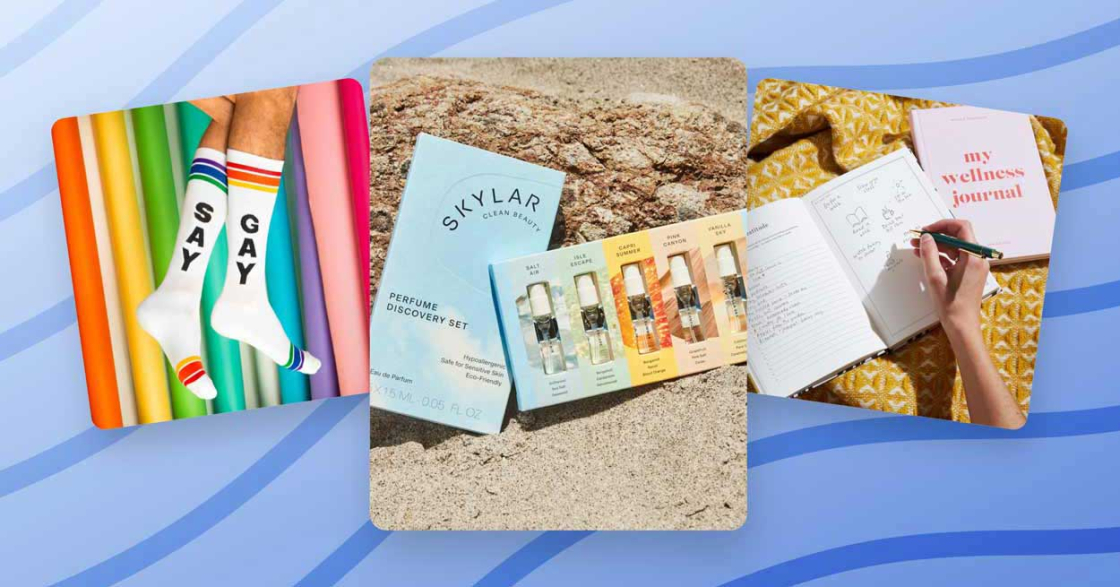
The Best Consumable Gifts (To Reduce Waste)

The Best Sustainable Stocking Stuffers
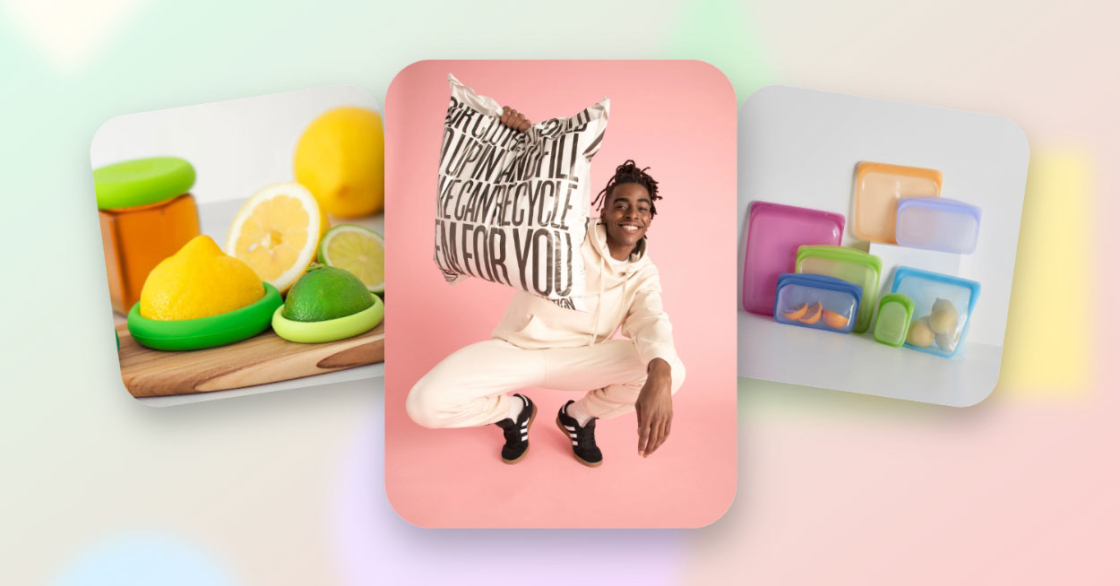
The Best Socks That Give Back To Charity
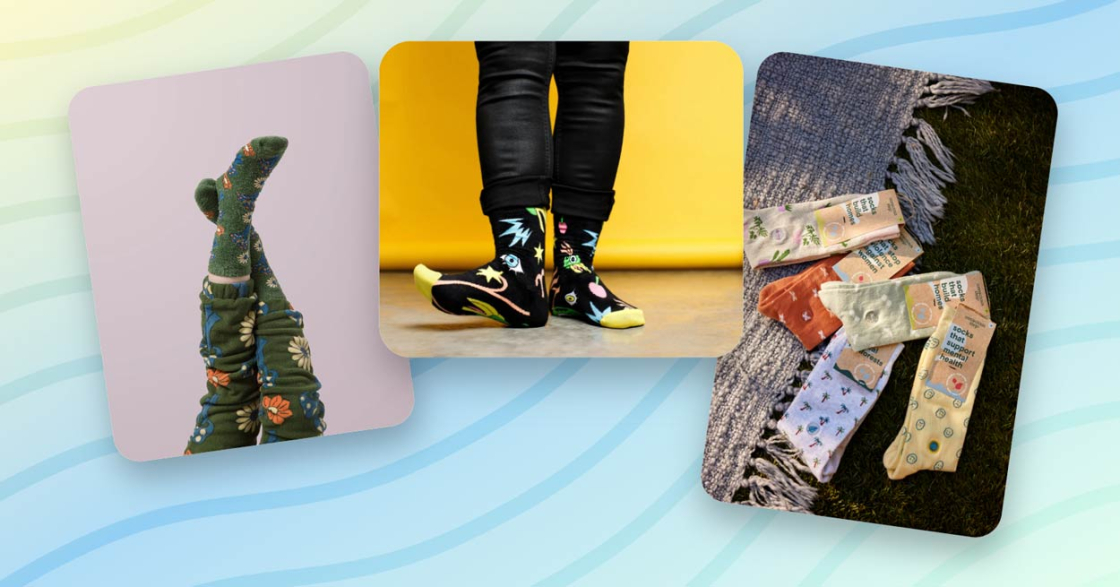
Sustainable Gifts For Him
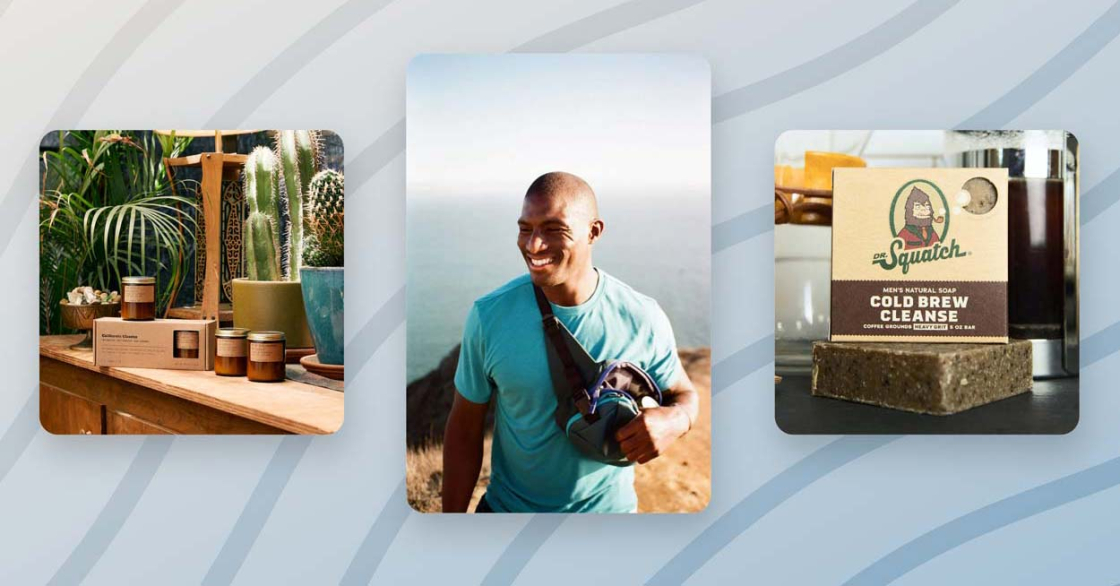
Gifts For Environmentalists
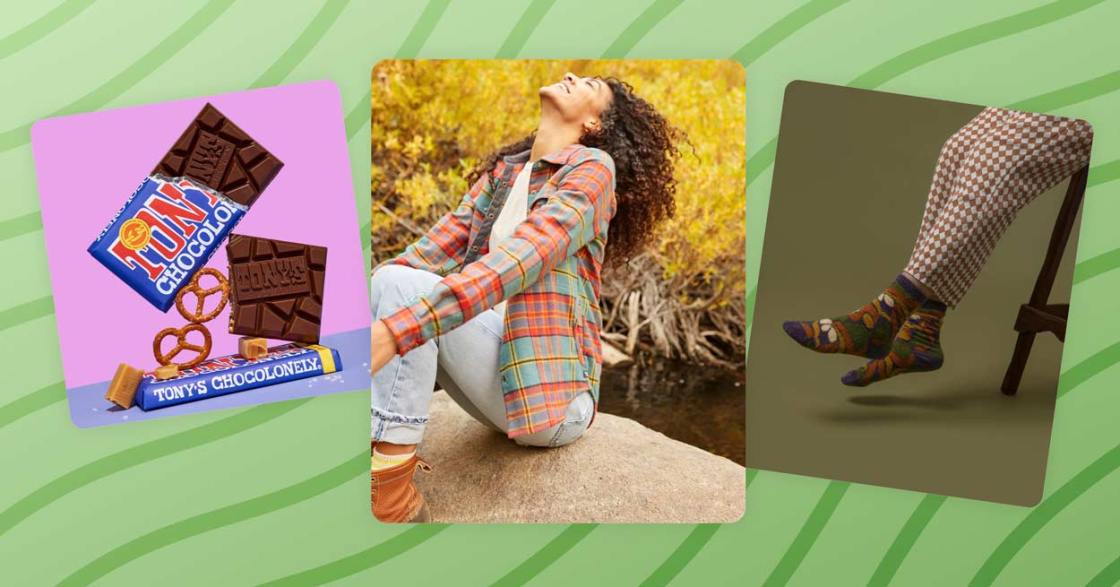
Gifts For Animal Lovers (That Give Back)
The Best Gifts For National Park Lovers
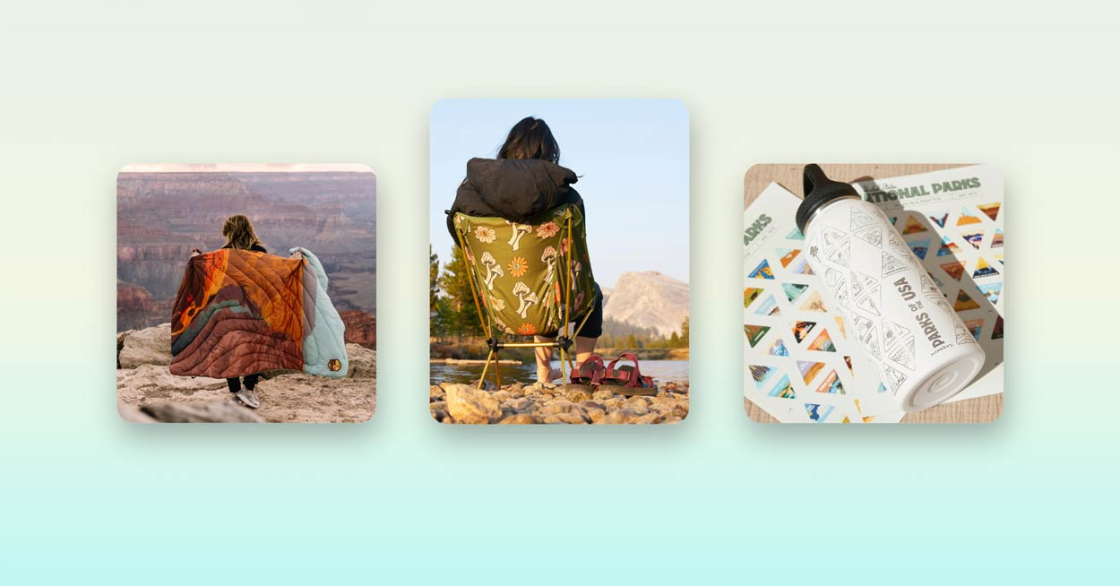
And explore more shopping guides from Good Good Good...
Discounts from ethical, sustainable, and do-good brands —
We went through all of the brands we recommended this year and picked out the best deals available. Remember: The most sustainable and ethical thing you can do is to only buy what you need. But, of course, if you need to buy something, you might as well get a great deal on it!
Some of the links here are affiliate links — which means Good Good Good may earn a commission when you make a purchase — at no cost to you. Thank you!
Toad&Co — Sustainable clothing & apparel
→ Up to 60% off and Surprise Daily Gifts through Monday
Bombas — Socks, underwear, and more
Pela — Compostable phone cases and tech accessories
Made Trade — Sustainable, artisan goods marketplace
→ 15% off sitewide and up to 60% off sale items
Earth Hero — Goods for your sustainability journey
→ 15% off sitewide and five trees planted for every order
Package Free Shop — Zero waste marketplace
Our Place — Sustainable kitchen essentials
Dropps — Eco-friendly laundry and cleaning products
Bright Cellars — Wine subscription boxes
→ $70 off ($50 off your first box, $20 off your second)
Gounds & Hounds — Coffee that gives back to shelter animals
→ 20% off sitewide and subscriptions
wearwell — Ethical and sustainable apparel and accessories
Conscious Step — Socks that give back to various charities
Girlfriend Collective — Ethically made underwear and activewear
→ 35% off sitewide and up to 70% off select styles
Pact — Sustainable apparel, bed, and bath basics
Klean Kanteen — Water bottles, thermoses, and more
Simply Straws — Reusable straws, utensils, and more
Parachute — Bed, bath, and home essentials
Tentree — Sustainable apparel for the whole family
→ Up to 50% off sitewide, 10% of all Giving Tuesday sales support the Monarch Joint Venture
Wild One — Dog walking sets, treats, toys, and more
→ 30% off sitewide (including walk kits!)
Libro.fm — Audiobooks that support your local bookstore
Unbound Merino — Eco-conscious wool apparel
Wolven — Sustainable activewear
Goodly — Curated gift boxes
→ 20% off full-priced items + free mystery sock on orders over $75
Fly By Jing — Spices, dumplings, and sauces
→ Up to 50% off sets, and up to 30% off all sauces
LILYSILK — Sustainable silk goods
→ $36 off every order over $300, up to 60% off, and free gifts
The Sill — Plants, plant care, and home decor
→ 40% off different items all Cyber Weekend
P.S. If you're shopping on Amazon this weekend, click on our Amazon affiliate link to support Good Good Good at no added cost to you. Thank you!
Beyond Black Friday —
Small Business Saturday is tomorrow!
We have a complete guide for how to celebrate Small Business Saturday this year.
Giving Tuesday is coming up on Tuesday!
We curated the best Giving Tuesday ideas — for making a difference in big and small ways.
You might also like —
- The best Amazon alternatives to shop this year
- Where to find audiobooks instead of Audible
- How to support Black-owned businesses
- Explore good news on the Good Good Good site (in case you need some positive conversation starters during family time)
One more thing —
One more time: Don’t forget to get the Goodnewspaper as a gift or for yourself
Your support means the world to our small team. Just use the code GIVEGOOD to save & unlock a donation to Native Land Conservancy
Every day the Good Good Good team collects the best good news in the world and shares it with our community. Here are the highlights for this week!
If you want to get good news in your inbox every day, join the Goodnewsletter — the free daily newsletter designed to leave you feeling hopeful.
The Best Positive News We're Celebrating This Week —
Farmers and agriculture experts founded an “open source” seed initiative to combat global seed monopolies and improve biodiversity
Most farmers don’t own the seeds they sow on their fields — they rent them. A few companies have a monopoly on the global seed trade, and breed “cash crops” like corn and soy — with profits as the priority, not biodiversity, world hunger, or small farmers.
To combat that destructive model, in 2012 a handful of agriculture experts founded the Open Source Seed Initiative (OSSI) as an alternative to the monopolies. The model is similar to open source software — someone develops the seeds, and offers the resource for everybody to share.
Ababout 50 seed breeders have already signed on with OSSI in the US to offer nearly 500 seed varieties, and other open source seed organizations are popping up in Europe, Argentina, India and more.
A bison herd reintroduced to a Canadian national park in 2017 is now thriving
In 2017, a herd of 16 bison was brought from Canada’s Elk Island National Park and reintroduced to Banff National Park. Their numbers have increased to 80 thriving animals in the last five years.
The bison have roamed free with supervision from Parks Canada along with the Stoney Nakoda Nationa, which calls the park area Mînî Rhpa Mâkoche. They watched how the animals adapted to the new environment, and how the larger ecosystem responded to their return.
Researchers project if their growth continues at the current pace, there will be more than 200 bison in the next eight years in the park. And that's in line with a similar trend happening with bison populations in the U.S. too.
Similar to how dangerous climate tipping points lead to catastrophe — triggering positive tipping points could lead to rapid progress
A recent study found that four dangerous planetary tipping points are likely if global warming reaches more than 1.5 degrees Celsius above preindustrial temperatures. Scientists have warned that limit could be passed within a decade.
Tipping points happen when a small change — such as an incremental increase in global temperature — sparks a rapid and often irreversible transformation.
But they may not all be bad. "Positive" tipping points for the climate are also possible, as solar and wind power grows cheaper than fossil fuels, electric vehicles take off, meat substitutes become tastier and social norms shift.
Studies show that practicing gratitude has both mental and physical health benefits
However you’re spending your holiday today, here’s a fun fact: Gratitude may be more beneficial than we commonly suppose. A recent study asked subjects to write a note of thanks to someone and then estimate how surprised and happy the recipient would feel. Participants consistently underestimated the impact of their note.
Another study assessed the health benefits of writing thank you notes. The researchers found that writing as few as three weekly thank you notes over the course of three weeks improved life satisfaction, increased happy feelings, and reduced symptoms of depression.
These are just a couple of examples of the mounting evidence that counting our blessings is one of the best habits we can develop to promote mental and physical health.
A potential alternative to fast fashion, more small and large brands are making compostable clothing
The fashion industry accounts for up to 8% of global carbon dioxide emissions, more than global shipping and air travel combined. Most of those clothes — about 84% — end up in landfills or incinerators.
In the United States alone, more than 11 million tons of textile waste ended up in landfills in 2018 — much of it caused by fast fashion, which is especially and notoriously wasteful and harmful to both the planet and people.
But a growing number of clothing brands are making and marketing biodegradable clothing that they say can be disposed of in a compost bin.
More good news of the week —
Thanks to vaccine development, experts say this could be the last bad RSV season. Every year, hundreds of children die of RSV, and tens of thousands more are hospitalized.
In a revolutionary clinical trial, lab-grown blood was given to people for the first time ever. The blood could revolutionize care for people who need regular blood transfusions.
Malawi scientists are working to eliminate one of the world’s biggest killers: tuberculosis. The disease kills more than a million people a year and in 2020, it took 1.5 million lives as the second deadliest infectious disease behind Covid-19.
The Biden administration is providing $13 billion in assistance to help cut energy costs this winter. Energy costs are projected to be the highest in over a decade this winter.
Colgate University is returning 1,500 artifacts to Oneida Indian Nation. The collection of culturally significant artifacts were buried with ancestral remains and include pendants, pots, and more dating back hundreds of years.
A recent poll found that Americans overwhelmingly support the protesters in Iran. Especially in times where it feels like we’re divided with our neighbors on most things, polls like this remind us we agree on more than we might think.
India saved $4.2 billion in fuel costs in just the first half of 2022 thanks to solar power. A new report also found solar power prevented the burning of 19.4 million tonnes of coal.
Best Buy started charging for plastic shopping bags — and customers stopped using them. In July, Best Buy implemented a 10-cent charge for plastic bags at all of its stores, and use dropped by 80% in September compared to last year.
Wales is building one of the largest electric vehicle charging stations in the U.K. It will be the largest charging station in Wales, offering drivers 36 charging ports.
A former powerlifting champion opened a free gym exclusively for people with dementia and disabilities. Javeno McLean is currently training 15 disabled children and more than 30 elderly people.
Neighbors are coming together to get cheaper rooftop solar by bundling customers. The nonprofit Solar United Neighbors is also helping demystify the solar panel buying process and becoming a force for solar advocacy.
Some parks in the U.S. are now offering all-terrain wheelchairs to improve accessibility. Parks in Georgia, South Dakota, Minnesota, and Michigan have free adaptive equipment for wheelchair users to explore off-road trails. National parks next, please!
The Federal Trade Commission recently announced plans to crack down on corporate price gouging and “predatory pricing.” The move is intended to help prioritize working families and small businesses.
REI made their Black Friday “Opt Outside” campaign permanent. Starting in 2015, the outdoor retailer closed all of its retail stores on Black Friday, gave employees a paid day off, and encouraged customers to spend time outside instead.
Literally putting planet over profit, Patagonia’s founder gave the company away to fight climate change and advance conservation. The groundbreaking arrangement by Yvon Chouinard is an inspiring, significant example of corporate social responsibility.
Kindness matters.
Every act of kindness you show can make a meaningful difference in the lives of others. Living out kindness on a daily basis takes practice, but leads to a lifestyle and mindset shift that implores us to meet the world — and each other — with greater empathy and justice.
Kindness asks us to extend our approach beyond niceties and good manners, and into transformative action, compassionate and intentional inclusion, and empowering solutions.
Kindness is a choice, a muscle we all flex, and could frankly use a little more of our attention.
To help us do so, we’ve collected the best quotes about kindness. We encourage you to share and use this list to help fill the world with more kindness.
You might also like:
- How to celebrate World Kindness Day
- How to celebrate Random Acts of Kindness Day
- The best ideas for random acts of kindness
The Best Kindness Quotes
Famous Kindness Quotes
“Be kind, for everyone you meet is fighting a hard battle.”
― Ian MacLaren
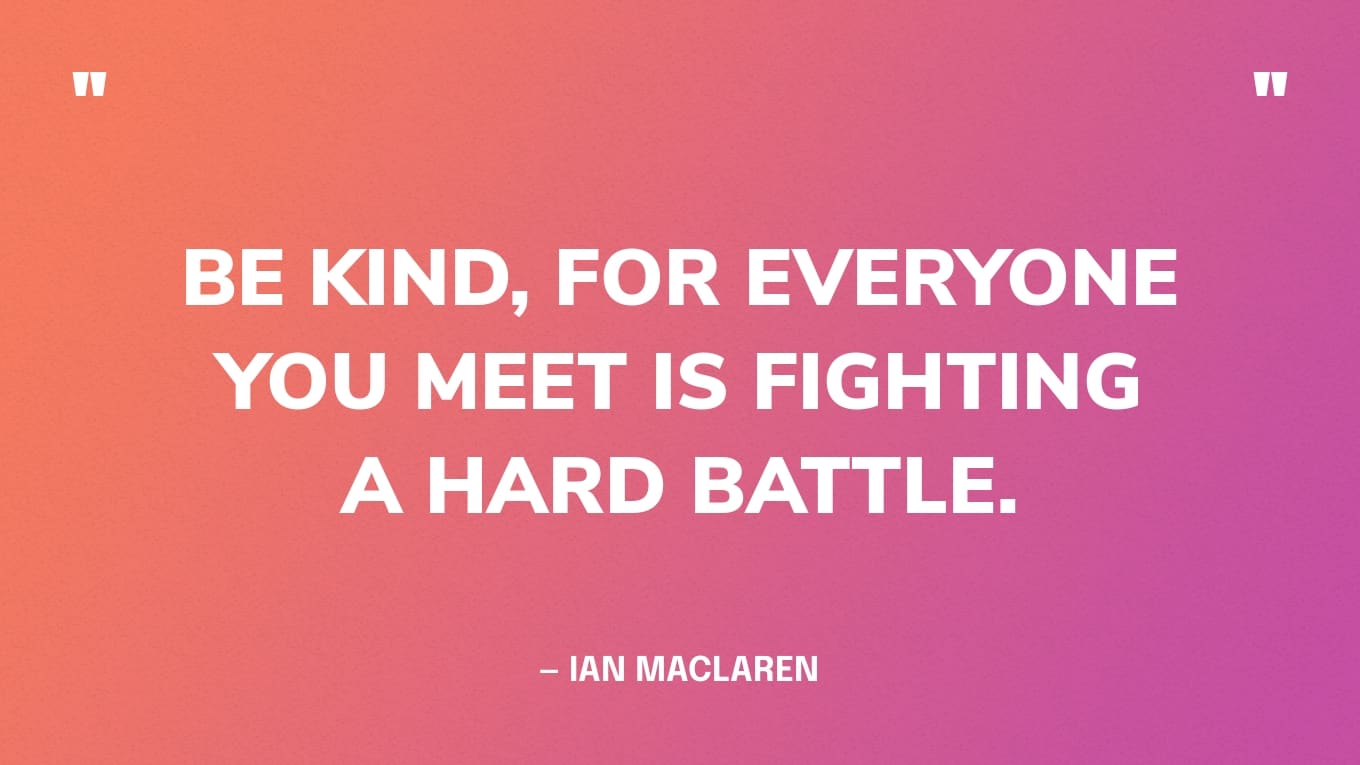
“No act of kindness, no matter how small, is ever wasted.”
― Aesop
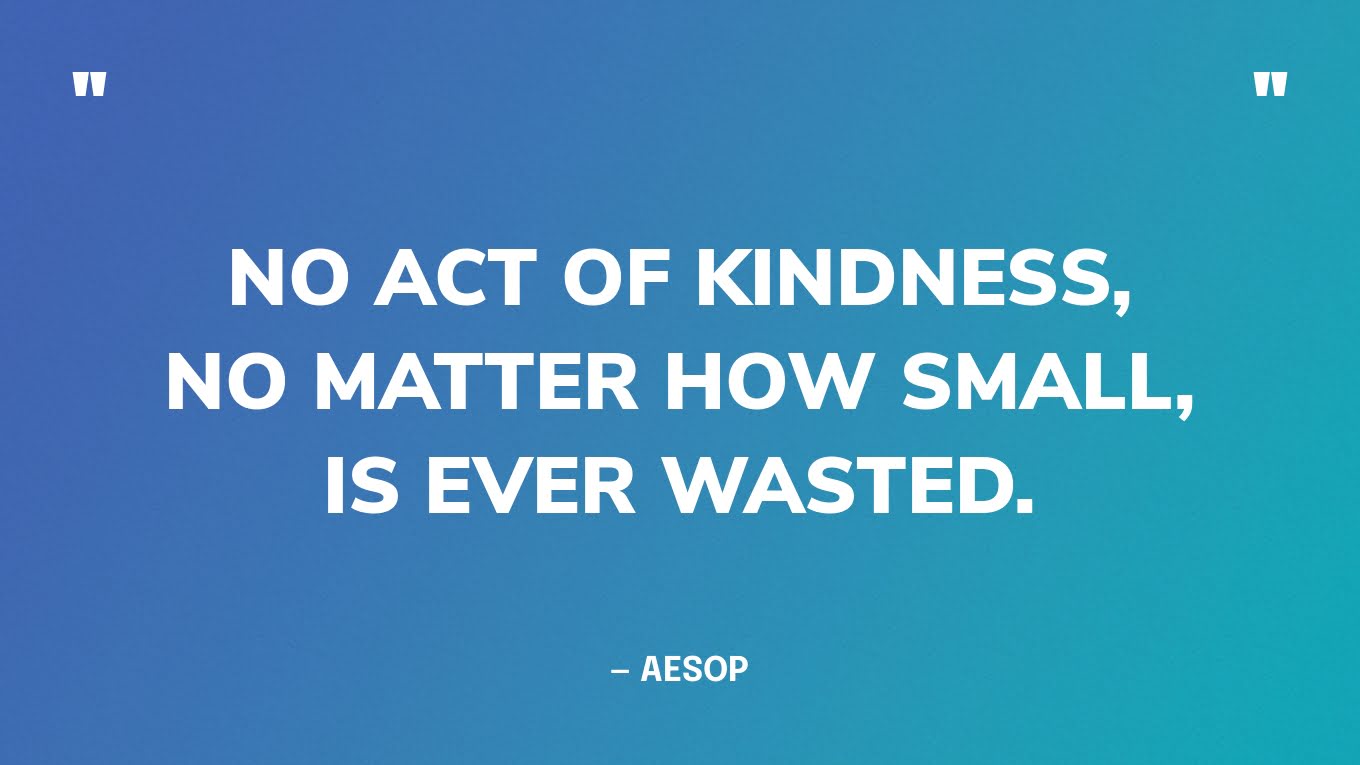
“Be kind whenever possible. It is always possible.”
— Dalai Lama
“Do your little bit of good where you are; it’s those little bits of good put together that overwhelm the world.”
― Archbishop Desmond Tutu
“The test of our progress is not whether we add more to the abundance of those who have much; it is whether we provide enough for those who have too little.”
― Franklin D. Roosevelt
“It takes courage to be kind.”
— Maya Angelou
“Wherever there is a human being, there is an opportunity for kindness.”
— Seneca
“If we are asking for the world to be kind, we must first ask what are we doing to add more kindness to the world. If we are asking for the world to be more loving, we must first ask what are we doing to add more love to the world. We are the vessels for the things we seek.”
— Joél Leon
“How do we change the world? One random act of kindness at a time.”
— Morgan Freeman
You might also like: Quotes about doing good | Quotes about making a difference | Quotes about activism | Quotes about giving back | Quotes about caring
Inspirational Quotes
“I have seen human beings do and become terrible things as they destroy the world. I have also learned that only those things made of kindness, justice, and hope can save the world.”
— Danté Stewart
“Quick reminder:
Kindness and justice are not synonymous.
Be kind.
And advocate and work for justice.
Lives depend on it.”
— Bernice King
“Kindness is giving hope to those who think they are all alone in this world.”
— RAKtivist
“Courage. Kindness. Friendship. Character. These are the qualities that define us as human beings, and propel us, on occasion, to greatness.”
― R.J. Palacio, Wonder
“Kindness can only be repaid with kindness. It can’t be repaid with expressions like ‘thank you’ and then forgotten.”
— Malala Yousafzai, I Am Malala
“When I was young, I admired clever people. Now that I am old, I admire kind people.”
— Abraham Joshua Heschel
“Constant kindness can accomplish much. As the sun makes ice melt, kindness causes misunderstanding, mistrust, and hostility to evaporate.”
— Albert Schweitzer
“Unless someone like you cares a whole awful lot, nothing is going to get better. It's not.”
— Dr. Seuss
“When you are kind to others, it not only changes you, it changes the world.”
— Harold Kushner
“What you do makes a difference, and you have to decide what kind of difference you want to make.”
— Jane Goodall
“Never doubt that a small group of thoughtful, committed citizens can change the world. Indeed, it is the only thing that ever has.”
— Margaret Mead
“The best life strategy? Be loving, be kind, be intentional, and be authentically you — not the shadow version of self masquerading and parading as you. The version with all the flaws, the baggage, and the love; that you that exists in spite of whatever the world may throw at you.”
— Joél Leon
“Be the change you wish to see in the world.”
— Mahatma Gandhi
“Attitude is a choice. Happiness is a choice. Optimism is a choice. Kindness is a choice. Giving is a choice. Respect is a choice. Whatever choice you make makes you. Choose wisely.”
― Roy T. Bennett
Related: Quotes About Hope
On Compassion
“Tenderness and kindness are not signs of weakness and despair, but manifestations of strength and resolution.”
― Kahlil Gibran
“With all of the bad things that are happening in the world right now, I think we need a message of togetherness and true unity. I believe that starts with personal reflection and then we can find kindness toward each other.”
― Marielle Heller
“I would rather make mistakes in kindness and compassion than work miracles in unkindness and hardness.”
― Mother Teresa, A Gift for God: Prayers and Meditations
“If you want others to be happy, practice compassion. If you want to be happy, practice compassion.”
― Dalai Lama
“When words are both true and kind, they can change the world.”
― Buddha
“If a person seems wicked, do not cast him away. Awaken him with your words, elevate him with your deeds, repay his injury with your kindness. Do not cast him away; cast away his wickedness.”
― Lao-Tzu
Related: Quotes About Humanity
On the Religion of Kindness
“My religion is very simple. My religion is kindness.”
― Dalai Lama
“The simplest acts of kindness are by far more powerful than a thousand heads bowing in prayer.”
― Mahatma Gandhi
“I honor the sanctity of all religions — I'm not here to put them down. But the only religion that I personally embrace is the religion of kindness.”
― Leslie Jordan
Related: Quotes About Making a Difference
On Empathy
“We must learn to regard people less in the light of what they do or omit to do, and more in the light of what they suffer.”
― Dietrich Bonhoeffer, Letters and Papers from Prison
“Everyone on Earth, they’d tell us, was carrying around an unseen history, and that alone deserved some tolerance.”
— Michelle Obama, Becoming
“Guard well within yourself that treasure, kindness. Know how to give without hesitation, how to lose without regret, how to acquire without meanness.”
— George Sand
“Love and kindness are never wasted. They always make a difference.”
— Helen James
“I think we all have empathy. We may not have enough courage to display it.”
— Maya Angelou
Related: Quotes About Caring
Short Quotes For Kids
“No one has ever become poor by giving.”
― Anne Frank
“Three things in human life are important: the first is to be kind; the second is to be kind; and the third is to be kind.”
― Henry James
“Be a little kinder than you have to.”
― E. Lockhart, We Were Liars
“Forget injuries; never forget kindness.”
― Confucius
“Always try to be a little kinder than is necessary.”
― J M Barrie
“If the world seems cold to you, kindle fires to warm it.”
― Lucy Larcom
“A warm smile is the universal language of kindness.”
― William Arthur Ward
“Kindness is always in stock” ― Katy Perry, in a tweet
“How beautiful a day can be, when kindness touches it!”
― George Elliston
“Try to be a rainbow in someone's cloud”
― Maya Angelou
“In the end only kindness matters”
― Jewel
“We rise by lifting others.”
― Robert Ingersoll
“In a gentle way, you can shake the world.”
― Mahatma Gandhi
“To kindness and love, the things we need most!”
― The Grinch
Related: Short Quotes
Showing Kindness To Others
“Kindness is a language which the deaf can hear and the blind can see.”
― Mark Twain
“The beauty of a woman is not in a facial mole, but true beauty in a Woman is reflected in her soul. It is the caring that she lovingly gives, the passion that she knows.”
― Audrey Hepburn
“Kindness in words creates confidence. Kindness in thinking creates profoundness. Kindness in giving creates love.”
― Lao-Tzu
“Being kind means responding to the needs of others — and people can be kind, no matter how old or young we are.”
― Fred Rogers
“Few will have the greatness to bend history itself, but each of us can work to change a small portion of events. It is from numberless diverse acts of courage and belief that human history is shaped. Each time a man stands up for an ideal, or acts to improve the lot of others, or strikes out against injustice, he sends forth a tiny ripple of hope, and crossing each other from a million different centers of energy and daring those ripples build a current which can sweep down the mightiest walls of oppression and resistance.”
― Robert F. Kennedy
“One who knows how to show and to accept kindness will be a friend better than any possession.”
― Sophocles
“True beauty is born through our actions and aspirations and in the kindness we offer to others.”
― Alek Wek
“It takes so much energy to be mean. It takes much less to be nice.”
— Leah Thomas
“I’ve learned that people will forget what you said, people will forget what you did, but people will never forget how you made them feel.”
― Maya Angelou
“Beginning today, treat everyone you meet as if they were going to be dead by midnight. Extend to them all the care, kindness and understanding you can muster, and do it with no thought of any reward. Your life will never be the same again.”
― Og Mandino
“The best index to a person's character is how he treats people who can't do him any good and how he treats people who can't fight back.”
― Abigail Van Buren
“Kindness can transform someone's dark moment with a blaze of light. you'll never know how much your caring matters. make a difference for another today.”
― Amy Leigh Mercree
Related: Quotes About Activism
Showing Kindness To Animals
“You can judge a man's true character by the way he treats his fellow animals.”
― Paul McCartney
“Compassion for animals is intimately associated with goodness of character, and it may be confidently asserted that he who is cruel to animals cannot be a good man.”
― Arthur Schopenhauer, The Basis Of Morality
“So often when you start talking about kindness to animals someone comments that starving and mistreated children should come first. The issue can’t be divided like that. It isn’t a choice between children and animals. It’s our duty to care for both. Kindness is the important thing. Kids and animals are our responsibility.”
— Minnie Pearl
“It takes nothing away from a human to be kind to an animal”
— Joaquin Phoenix
Showing Kindness To Yourself
“You is kind. You is smart. You is important,”
― Kathryn Stockett, The Help
“Be kind to yourself, to others and everything around you.”
— Alexandrto a Stoddard
“If your compassion does not include yourself, it is incomplete.”
— Jack Kornfield
“Be kind to yourself this evening. Buy something for yourself. Treat yourself to a meal. Look at the mirror and give a smile to yourself.”
— Yoko Ono, in a tweet
“You’ve been criticizing yourself for years and it hasn’t worked. Try approving of yourself and see what happens.”
— Louise L. Hay
“Being kind to others is a way of being good to yourself.”
— Harold S. Kushner
“Ask yourself: have you been kind today? Make kindness your modus operandi and change your world.”
— Annie Lennox
“Those who bring sunshine to the lives of others cannot keep it from themselves”
— James Matthew Barrie
Related: Quotes About Self Care
More Kindness Quotes
“Sometimes it takes only one act of kindness and caring to change a person’s life.”
— Jackie Chan
“To extend yourself in kindness to anybody is an extension in kindness in the world.”
— Oprah Winfrey
“Kindness isn’t a tactic. It’s a command… Civility and decency aren’t incompatible with ‘taking sides.’ It doesn’t require anyone to fold in the face of angry opposition. Kindness doesn’t conflict with conviction, and our commitments to kindness are biblically inseparable from our commitments to justice. We aren’t to choose between them, we’re to embrace them both.”
— David French, on faith
“The ideals which have lighted my way, and time after time have given me new courage to face life cheerfully, have been kindness, beauty, and truth”
— Albert Einstein
“Carry out a random act of kindness, with no expectation of reward, safe in the knowledge that one day someone might do the same for you.”
— Princess Diana
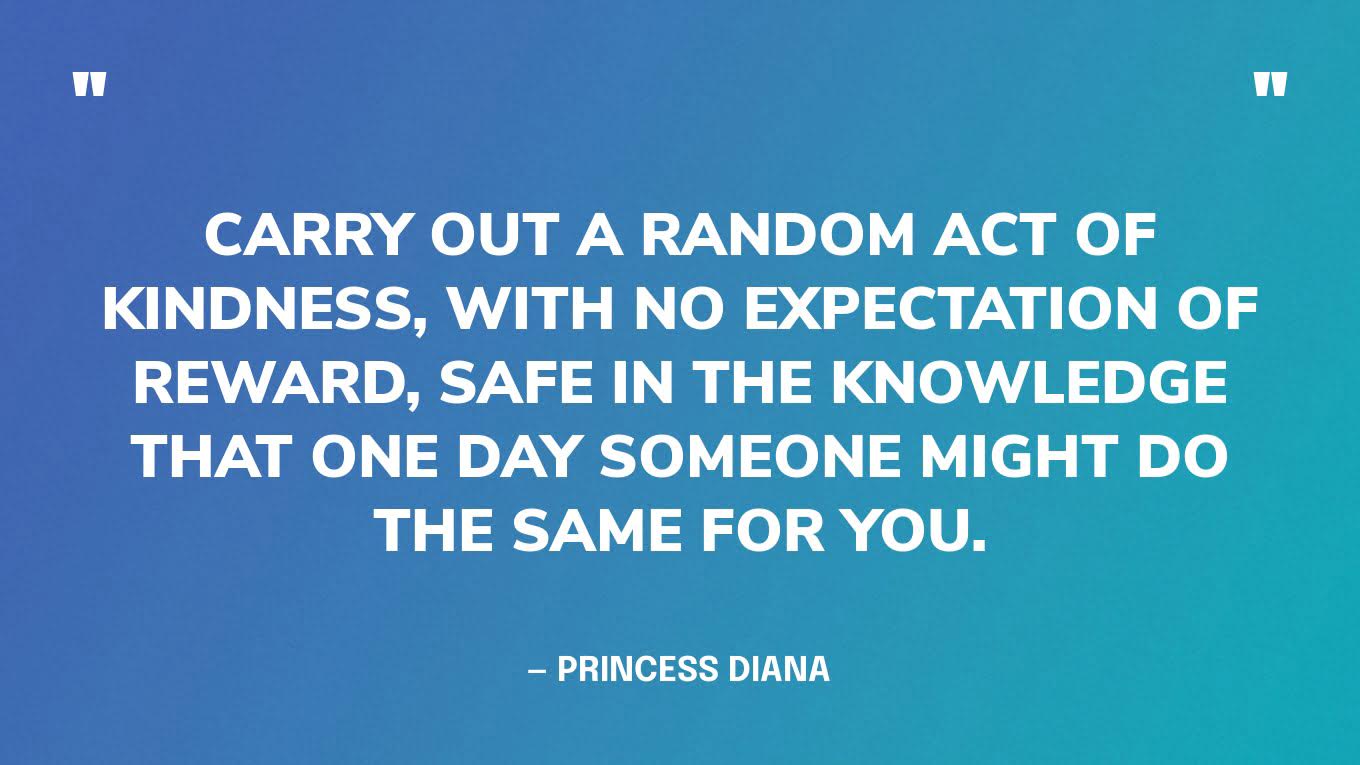
“The greatness of a community is most accurately measured by the compassionate actions of its members, a heart of grace, and a soul generated by love.”
— Coretta Scott King
“Never lose a chance of saying a kind word.”
— William Makepeace Thackeray
“What wisdom can you find that is greater than kindness?”
— Jean-Jacques Rousseau
“Human kindness has never weakened the stamina or softened the figure of a free people. a nation does not have to be cruel to be tough.”
— Franklin D. Roosevelt
“There are two ways of spreading light: to be the candle or the mirror that reflects it.”
— Edith Wharton
“Kind hearts are the gardens. Kind thoughts are the roots. Kind words are the blossoms. Kind deeds are the fruits.”
— Kirpal Singh
“We make a living by what we get. We make a life by what we give”
— Winston Churchill
“It doesn't cost me anything to be kind.”
— Paddington
This article is a part of an ongoing series on how to minimize or eliminate Amazon use from our lives. We’re highlighting the best Amazon alternatives for those with ethical, moral, or environmental qualms with the trillion-dollar company.
When Sony debuted the first mainstream handheld e-reader in 2004, it sparked debates about the best way to read a book. Print purists argued that needing to charge a battery to read a book would be annoying, reading from a screen wouldn’t have the same feel as a physical book, and not every book would be available in a digital format.
Of course, over the last two decades, e-reader technology has come a long way (batteries last for weeks now, for example) — and so has the cultural perception of reading a book on a digital device.
E-readers are great because:
- They make reading more accessible for people who need larger text size or prefer to use a dyslexia-friendly font
- You can carry more books with you everywhere you go
- You’ll likely save money in the long run because ebooks tend to be cheaper
- They help reduce distractions while reading
- They eliminate the need for all the shipping of physical books
- No trees are harmed in the making of ebooks — and you eliminate the impacts of the bookbinding process as well
- Small, independent, and underrepresented authors can reach more readers because they don’t have to compete for shelf space
E-readers don’t have to be the perfect choice for every book-lover — nor do you have to choose a digital book on every occasion. But, for those who see the benefits of owning an e-reader device, the next question becomes: Which e-reader is right for me?
First, why choose Kobo?
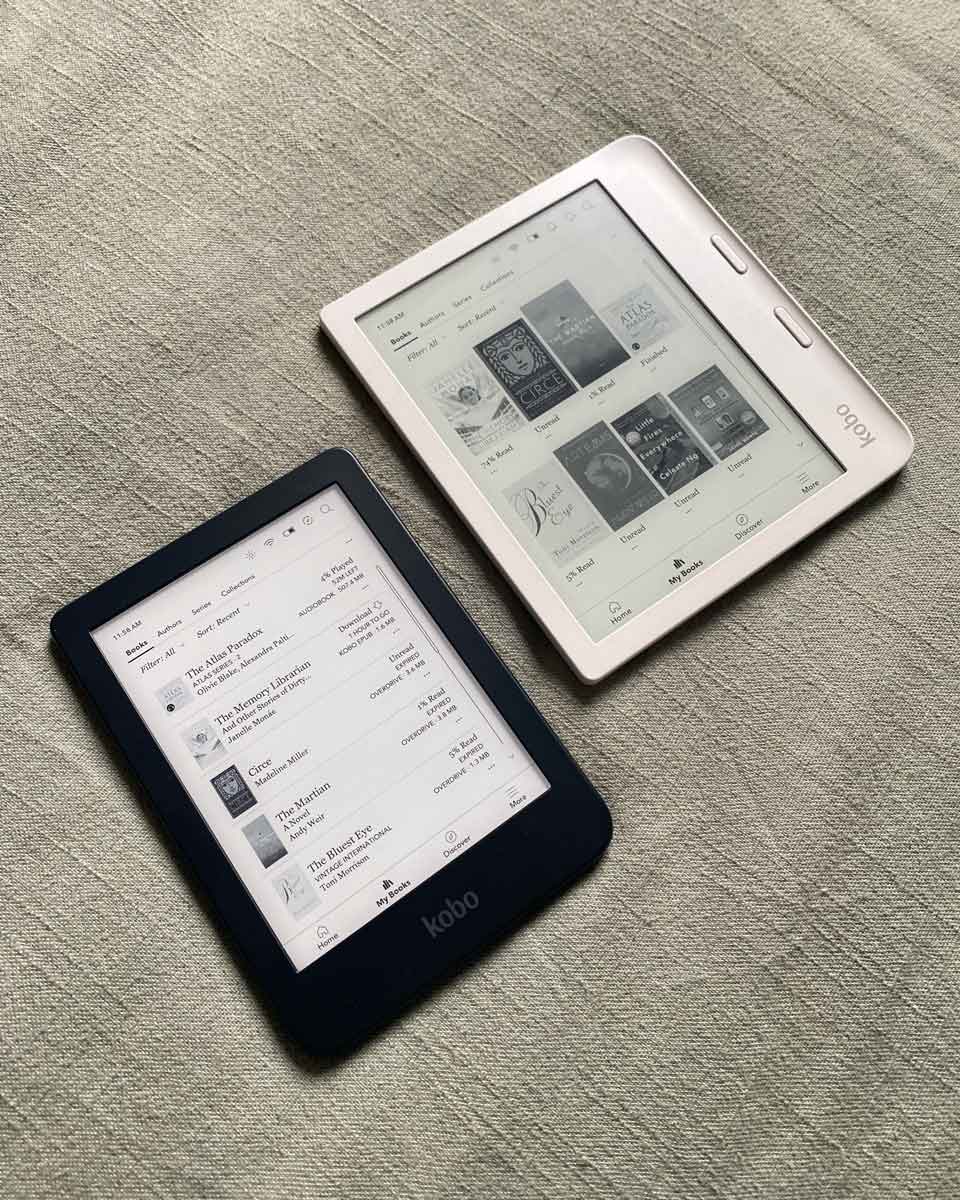
Most of us are very aware of the biggest player in the e-reader game: Amazon’s Kindle. The device launched in 2007 and has sold tens of millions of devices.
Amazon got out the gate earlier — but in the years since its launch, a number of companies have developed better e-readers with more features.
Now, with mounting criticisms against Amazon’s ethics and sustainability issues, many readers are seeking to switch to a new brand for their next (or first) e-reader.
Here’s why we like Kobo:
High Quality
Every Kobo device I’ve reviewed has felt sturdy, well-made, and… not cheap. Other e-reader devices can feel very “plastic-y”, but Kobo devices just feel high quality.
Offset Carbon Emissions
I recently found out that Kobo offsets 100% of the carbon emissions associated with shipping their e-readers. (They say this is the equivalent of powering 900+ homes with renewable energy per year.)
They currently do this in partnership with the Coastal First Nations-Great Bear Initiative on the Great Bear Forest Carbon Project. (I love that this initiative distributes carbon credit revenue across several First Nation communities.)
Simple Software

From the first unboxing, Kobo devices are easy to use and navigate. While Kobos actually have a lot of features that other e-readers don’t have (like OverDrive, Pocket, and dark mode), the extra tools never get in the way.
OverDrive Integration
One of my favorite things about Kobo devices is that they natively integrate with OverDrive (the parent company of Libby), allowing you to borrow books from your local library directly from your device — for free.
While this is possible on Kindles, you must check out books from your phone and then go through several steps to get them on your device. On Kobo, you can simply search for a book and it’ll show you the option to buy it from the Rakuten store or check it out from your library if it’s available.
I’ll admit that the process is imperfect (and I wish they partnered directly with Libby instead of OverDrive) — but I still like it more than the Kindle experience.
Pocket Integration

I’ve been an avid user of Pocket for years. The free app allows you to easily “bookmark” articles and blog posts you want to read later — and then provides a distraction-free page to dive into those articles later.
I use the app every day to save good news articles I’d like to discuss with the Good Good Good team and as a way to stay on top of updates from nonprofits I care about.
Now, instead of reading these articles on the iPhone app (where, admittedly, I often get distracted), I can leave my phone in the other room and dive into these articles on my Kobo device.
Natural Light

All of the Kobo devices I’ve reviewed so far offer a “natural light” feature, which simply allows you to change the temperature of the screen’s light (which is technically not a backlight, but a “frontlight”).
This gives you a bright, bold frontlight during the day and a warm, vibey frontlight when you’re winding down to sleep. (They describe the warmer temperature as “orange candlelight,” which I think is very cute.)
You can even turn on the Auto setting and watch it adjust throughout the day — or set a bedtime that’ll automatically switch to the warmest temperature setting.
Reading Stats
I’m a huge data nerd and find it really motivating to have information about my habits. As you read on your Kobo, the device will track how many hours you’ve spent reading, the average number of minutes per session, and the average pages per minute.
It will also give you Awards for hitting particular milestones, which is also helpful if you’re into that kind of thing. (I, a nerd, am very into that kind of thing.)
E-recycling Program
Hopefully you’ll be reading with your Kobo device for years, but when it’s time to say goodbye, it’s nice to know that Kobo offers a free mail-in recycling option. The brand will turn your device into something new and ensure as much is diverted from landfills as possible.
Good Good Good's Kobo Review
Review of Kobo Clara 2E
Here’s how Kobo describes the Kobo Clara 2E:
Meet Kobo Clara 2E, a more eco-conscious eReader with big upgrades in a small package. Kobo Clara 2E is our first eReader made with ocean-bound and recycled plastic. Get lost in your latest read on an upgraded 6” HD E Ink Carta 1200 touchscreen with Dark Mode and ComfortLight PRO. Read at night without affecting your sleep quality with blue light reduction. Kobo Clara 2E’s 16GB of storage holds your entire library of eBooks and Kobo Audiobooks, and Bluetooth® wireless technology lets you listen whenever you like. Kobo Clara 2E is waterproof and ready to read in the tub or for unexpected spills. Make the better choice with Kobo Clara 2E, a more eco-conscious eReader.
Tech specs:
- 6” HD E Ink Carta 1200 touchscreen
- 300 PPI, 1448 x 1072 resolution with Dark Mode
- 16GB storage
- 1 GHz CPU
- Battery will generally give you weeks of battery life
- Charges with USB-C
- 12 different fonts and over 50 font styles
Our thoughts:
Pros
Made from recycled plastic
My biggest concern with e-readers (and new tech devices in general) is their impact on the environment. Every device we buy has to put together hundreds of small parts from all over the world, create new plastic, and put it all together, and then ship it to you. Plus, at some point, most devices will become obsolete and will have to end up in a landfill (or, hopefully, recycled).
That’s why I was excited to see Kobo release a device made with 85% recycled plastic.
According to the brand’s website, the device is made with 10% ocean-bound plastic — and over the course of a year, Kobo plans to divert over 200,000 plastic bottles from oceans and over a million CDs and DVDs from landfills.
(As a nice bonus, the packaging it came in was made with FSC-certified recycled paper and printed with soy-based ink. The only plastic in the packaging was the satisfying film sheet I peeled off the screen and the small twist-tie that wrapped the power cord.)
It’s waterproof
While, for most people, the main benefit of this device being waterproof is likely that it’ll be perfect for reading in the bath or while sitting poolside.
But for me, I’ll embarrassingly admit, I’m excited because this means the device is accident-proof. I can’t tell you the number of times I’ve accidentally spilled water on my tray table, nearly flooding a piece of tech — or accidentally used an e-reader as a coaster without realizing it.
The waterproofing means that this device will last for years and you can use it in way more contexts than you otherwise would be able to.
Supports audiobooks
I’m a huge fan of audiobooks — and constantly have a narrator reading me a book as I do day-to-day tasks. There’s something really gratifying about having a device completely dedicated to reading (in all its forms) and using that instead of an audiobook app on my phone.
Connecting my AirPods to the device was easy — and so was switching from playing an audiobook on the Kobo device to playing the same audiobook on the iOS Kobo app.
Cons
Bluetooth range isn’t as long as I’d like
One day I was listening to an audiobook on my Kobo and got up from the couch to put away dishes in my kitchen. As I left the room, I found my bluetooth headphones began to cut out. (I’ve never had this problem when listening to something on my phone.)
It wasn’t a huge deal; I simply carried my Kobo from the couch to the kitchen counter — but it’s probably good to be aware that the Kobo is meant to be used in close proximity to your headphones.
(I did some testing and it seems that the general rule is that you need to have a clear line of sight between the device and your headphones. It doesn’t work through walls.)
I’ve had a few frustrating audiobook experiences
While most of my experiences listening to audiobooks on the Kobo Clara 2E have been positive, I’ve had a few occasions where my listening progress doesn’t seem to sync. I’ll return to listen to my audiobook, knowing I should be, for example, five minutes into chapter 12 — but Kobo will start playing from the beginning of the chapter… or worse: the beginning of the book.
While I’m hopeful this is a simple glitch that will be fixed in a future software update, it’s worth mentioning because it’s not a positive listening experience.
Review of Kobo Libra 2

Here’s how Kobo describes the Kobo Libra 2:
The next-generation Kobo Libra 2 is the embodiment of your reading style. With more storage, a faster E Ink screen, and Bluetooth® wireless technology so you can listen to Kobo Audiobooks*, Kobo Libra 2 is an integral part of your rich reading life. Packed with features and personality — and 32GB of storage for all of your eBooks—Kobo Libra 2 was made to do more. An ergonomic design keeps your reading life on hand—and page turn buttons keep the story going while you sip your coffee, stir your signature pasta sauce, or nurse your newborn — so you can read on and on, no matter what. Personalize your Kobo Libra 2 by choosing between black and white and eye-catching SleepCover colors. We made Kobo Libra 2 with your passion for reading, and your life, in mind. Your eReader, your story.
Tech specs:
- 7” HD E Ink Carta 1200 touchscreen
- 300 PPI, 1448 x 1072 resolution with Dark Mode
- 32GB storage
- 1 GHz CPU
- Battery will generally give you weeks of battery life
- Charges with USB-C
- 12 different fonts and over 50 font styles
- Available in white or black colors
Our thoughts:
Pros
The screen can rotate
Kobo describes the shape of the Libra 2 as “ergonomic” and I think that’s a good way of looking at it. Sometimes it’s just more comfortable to read in “landscape mode.”
Plus, the screen is a full 7 inches (compared to 6 inches on the Clara 2E) and it just feels nice to have more text on each page.
The buttons are actually really helpful
While the Libra 2 has a touch screen, I actually found it really helpful to be able to flip pages by pressing the page-turn buttons — especially while curled up in bed at night.
Tons of storage
The Libra 2 has 32GB of storage (compared to the Clara 2E’s 16GB). The storage size doesn’t really matter if you just read ebooks, but if you ever use PDFs (with images) or especially audiobooks — this really matters.
It’s waterproof
Same note as above — it’s really nice knowing the Libra 2 is waterproof.
Supports audiobooks
Same note as above — I love being able to listen to audiobooks on the Libra 2.
Cons
Too big for pockets
This is, obviously, the other side of the coin when it comes to screen size. I love reading with this device at home, but I found myself taking it to fewer places because it’s just a bit bulkier.
I know this probably isn’t recommended, but for years I’ve thrown my e-reader in the back pocket of my jeans when I was running out to a coffee shop or commuting on the bus. The Kobo Libra 2 is, unfortunately, too big to do that. Not a huge deal, but worth mentioning.
Bluetooth range isn’t as long as I’d like
Same note as above — it appears that both Kobo devices have roughly the same bluetooth range.
I’ve had a few frustrating audiobook experiences
Same note as above — it appears that both Kobo devices have a similar issue, which might actually be good news because it seems fixable with a future software update.
Conclusion: Kobo Libra 2 vs. Kobo Clara 2E

Ultimately, I don’t think you can go wrong with any Kobo e-reader. After extensively reading on several of these devices for weeks, I feel really good about recommending Kobo as a platform to friends (and now: you).
The software is simple and easy to use, accessing books from the ebook store and my library is super easy, and the adjustability of fonts, brightness, and light temperature make reading feel good.
If you’re already an e-reader user and you’re ready for a new device, Kobo is the way to go. Same goes for new folks about to buy their first e-reader.
For the question of which e-reader to go with, this is where things get trickier. Both devices I reviewed are fantastic — and ultimately, really similar.
I could really boil down the differences like this: The Kobo Libra 2 has a large rotating screen and buttons; the Kobo Clara 2E has a standard screen size, half the storage space, and is made with recycled plastic. The Kobo Libra 2 is roughly $30 more expensive.
In the end, unless you’re actively looking for a larger screen, I would choose the Kobo Clara 2E. It has all the same software, waterproofing, and battery life — but you save money and can feel better about the environmental impact of the device. You may need to delete audiobooks or large files from your device from time to time to make room for new downloads, but that’s not a huge deal.
I’ll also note that Kobo offers two other tablets that I didn’t review for this article: Kobo Sage and Kobo Elipsa. These devices are more expensive, but offer the ability to use a stylus to write on the screen and mark up ebooks. They also both have support for Dropbox — which is helpful if you want to easily transfer documents back and forth between your computer, phone, and e-reader. They would be a good fit if you’re looking to do more than just read ebooks and audiobooks.
Regardless of what you choose, you can feel good about reading on Kobo’s ecosystem.
A few other notable mentions:
- I definitely recommend checking out Kobo’s Certified Refurbished store. You can buy previously used (but fully refurbished) devices — saving you money and playing a role in creating a circular economy.
- If you pick up a Kobo Clara 2E, I highly recommend also picking up a SleepCover. They come in cute colors, turn into a little reading stand, and are made with 97% recycled plastic.
If you’re looking for positive words that start with the letter E, we’ve got you covered — or should we say… enveloped!
As experts in positive news — we publish good news online, in our free weekly newsletter, on our positive podcast, and our beautiful monthly Goodnewspaper — and so we’re always happy to assist with all things positivity.
In fact, we’re enthusiastic about every opportunity to be effective and educational.
Dive into these positive words that start with the letter E:
Plus, explore more positive words that start with…
A | B | C | D | E | F | G | H | I | J | K | L | M | N
O | P | Q | R | S | T | U | V | W | X | Y | Z
Nice, Kind, and Positive Words That Start with the Letter E —
| Enthusiasm | Empathy | Excitement |
| Enlightened | Enchanting | Educated |
| Eco-friendly | Eloquent | Easy |
| Eleven | Echo | Earth |
| Enough | Early | Easter |
| Ever | Enjoy | Ebullient |
| Eyes | Eager | Eight |
| Effervescent | Enduring | Exemplary |

- Each
- Eager
- Eagerly
- Eagerness
- Eagle
- Ear
- Early
- Earn
- Earnest
- Earnestly
- Earnestness
- Earth
- Earthlight
- Earthlike
- Earth Day
- Earth Month
- Ease
- Easement
- Eases
- Easily
- Easy
- Easygoing
- Eat
- Eating
- Ebb
- Ebony
- Ebullient
- Eccentric
- Eclectic
- Eco
- Eco-friendly
- Economical
- Ecosia
- Ecstasy
- Ecstatic
- Edible
- Educate
- Educated
- Education
- Effect
- Effective
- Effectively
- Effectiveness
- Effectual
- Effervescence
- Effervescent
- Efficacious
- Efficacy
- Efficiency
- Efficient
- Effort
- Effortless
- Effortlessly
- Effusing
- Effusion
- Elaborate
- Elaborately
- Elated
- Elation
- Elder

- Elected
- Elective
- Electric
- Electric Vehicle
- Electricity
- Electrify
- Electrifying
- Electronic
- Electrons
- Elegance
- Elegant
- Elemental
- Elementary
- Elephant
- Elevate
- Elevated
- Elevates
- Elevation
- Eleven
- Eligible
- Elk
- Elongate
- Eloquence
- Eloquent
- Eloquently
- Elusive
- Embassy
- Embellish
- Embellishment
- Embers
- Embodiment
- Embody
- Embolden
- Embrace
- Emerald
- Emerge
- Emerged
- Emergence
- Emerging
- Emeritus
- Emery
- Eminence
- Eminent
- Eminently
- Emollient
- Emotion
- Empathetic
- Empathize
- Empathy
- Emphasize
- Emphatic
- Employ
- Employable
- Empower
- Empowerment
- Empty
- Enable
- Enabled
- Enact
- Enamor
- Enamored
- Encamp
- Enchant
- Enchanted
- Enchanting
- Enchantress
- Encircle
- Enclosed
- Encompassing
- Encore
- Encores
- Encounter
- Encountered
- Encourage
- Encouragement
- Encourager
- Encouraging
- Endear
- Endearing
- Endearment
- Endeavor
- Endless
- Endlessly
- Endorse
- Endorsement
- Endow
- Endowment
- Endurance
- Endure
- Enduring
- Energetic
- Energized
- Energizer
- Energy
- Enfranchisement
- Engage

- Engaged
- Engagement
- Engaging
- Engine
- Engineer
- Engineering
- English
- Engrave
- Engross
- Enhance
- Enhanced
- Enhancement
- Enjoy
- Enjoyable
- Enjoyment
- Enlarging
- Enlighten
- Enlightened
- Enlightenment
- Enlist
- Enliven
- Ennoble
- Enormity
- Enormous
- Enormously
- Enough
- Enrich
- Enriched
- Enrichment
- Enroll
- Enrollment
- Ensure
- Enter
- Enterprise
- Enterprising
- Entertain
- Entertained
- Entertainer
- Entertaining
- Entertainment
- Enthrall
- Enthralled
- Enthralling
- Enthuse
- Enthusiasm
- Enthusiast
- Enthusiastic
- Entice
- Enticing
- Entire
- Entirely
- Entrance
- Entranced
- Entrepreneur
- Entrepreneurship
- Entrust
- Enveloped
- Enviable

- Environment
- Environmental
- Environmentalist
- Envoy
- Eon
- Ephemeral
- Epic
- Epicure
- Epigrammatic
- Equable
- Equal
- Equality
- Equalize
- Equally
- Equestrian
- Equip
- Equitable
- Equity
- Era
- Eradicate
- Eras
- Erase
- E-reader
- Error
- Erudition
- Escape
- Escort
- Especial
- Essayist
- Essays
- Essence
- Essential
- Establish
- Established
- Esteem
- Esteemed
- Esthetic
- Estimate
- Estimation
- Etching
- Eternal
- Eternally
- Eternities
- Eternity
- Ether
- Ethereal
- Ethic
- Ethical
- Ethics
- Etiquette
- Eulogy
- Euphonious
- Euphoria
- Euphoriant
- Euphoric
- Eureka
- Europe
- EV
- Eva
- Evade
- Eve
- Even
- Evenly
- Evenness
- Eventful
- Ever
- Evergreens
- Everlasting
- Evermore
- Every
- Everybody
- Everyday
- Evident
- Evidently
- Evocative
- Evoke
- Evoked
- Evoking
- Evolution
- Evolve
- Evolving
- Exact
- Exactly
- Exalt
- Exaltation
- Exalted
- Examine
- Example
- Exceed
- Exceedingly
- Excel
- Excellence
- Excellency
- Excellent
- Excellently
- Exceptional
- Exceptionally
- Excitable
- Excite
- Excited
- Excitedly
- Excitement
- Exciting
- Exclaim
- Exclamation
- Exclusive
- Exclusivity
- Excursions
- Excuse
- Executive
- Exemplar
- Exemplary
- Exercise
- Exhale
- Exhibit
- Exhibition
- Exhilarate
- Exhilarated
- Exhilarating
- Exhilaration
- Exist
- Exonerate
- Exotic
- Expanded
- Expansion
- Expansive
- Expectant
- Expected
- Expecting
- Expediency
- Expedient
- Expedite
- Expedition
- Expeditious
- Expense
- Experience
- Experienced
- Experimental
- Expert
- Expertise
- Expertly
- Explain
- Explaining
- Explicit
- Explicitly
- Explore
- Explored
- Explorer
- Exploring
- Exponential
- Exposure
- Express
- Expression
- Expressions
- Expressive
- Expressiveness
- Exquisite
- Exquisitely
- Extemporized
- Extend
- Extensive
- Extensively
- Extent
- Exterior
- Extinguisher
- Extol
- Extra
- Extract
- Extraordinaire
- Extraordinary
- Extras
- Extravagance
- Extravagances
- Extravagant
- Extravagantly
- Extravaganza
- Extreme
- Extroverted
- Exuberance
- Exuberant
- Exude
- Exult
- Exultant
- Exultation
- Eye
- Eyeball
- Eyeballs
- Eyebrow
- Eyebrows
- Eyed
- Eyedrop
- Eyeglass
- Eyeglasses
- Eyeing
- Eyelash
- Eyelashes
- Eyeless
- Eyelid
- Eyelids
- Eyes
- Eyesight
- Eyewitness
- Eying
Frequently Asked Questions
What’s a positive word that starts with E?
A few positive words that start with the letter E include: Equality, Excitement, Essential, Effective, Enthusiastic, Encouragement, Empathetic, Education, and Environmental.
What words start with the letter E to describe someone?
A few positive words that start with the letter that can be used to describe someone include: Enthusiastic, Empathetic, Excited, Enlightened, Enchanting, Educated, Eco-friendly, and Eloquent.
What are some words for children that start with the letter E?
Some words that start with the letter E for children include: Easy, Eleven, Echo, Eagle, Elf, Earring, Easter, Ever, Enjoy, Eel, Eyes, Eager, Eight, Exit, and Eel.
What are some fruits that start with the letter E?
Some fruits that start with the letter E include: Elderberry, Eggplant, Eastern Hawthorn, Egg Fruit, Elands Sour Fig, Elephant Apple, Emblica, Emu Apple, Emu Berry, Entawak, Etrog, European Pear, and Evergreen Huckleberry.
Plus, explore more positive words articles:
- Positive Words That Start with A
- Positive Words That Start with B
- Positive Words That Start with C
- Positive Words That Start with D
- Positive Words That Start with E
- Positive Words That Start with F
- Positive Words That Start with G
- Positive Words That Start with H
- Positive Words That Start with I
- Positive Words That Start with J
- Positive Words That Start with K
- Positive Words That Start with L
- Positive Words That Start with M
- Positive Words That Start with N
- Positive Words That Start with O
- Positive Words That Start with P
- Positive Words That Start with Q
- Positive Words That Start with R
- Positive Words That Start with S
- Positive Words That Start with T
- Positive Words That Start with U
- Positive Words That Start with V
- Positive Words That Start with W
- Positive Words That Start with X
- Positive Words That Start with Y
- Positive Words That Start with Z
- and…
- Word of the Year Ideas
- Positive Words To Describe Someone
- Positive Words From A-Z
You might also like:
There are a lot of awareness ribbons — trust us, we spent a lot of time putting together this list — and it can be challenging to know which colors are associated with which causes.
Fortunately, we’ve got your back. At Good Good Good we’re all about celebrating the good being done in the world — and helping people make a difference in the world.
And bringing awareness to important issues is a part of both of those.
We’ve compiled a list (the most complete list on the internet, we believe) of awareness ribbon colors and their meanings — and at the end of this article we’ve also included details on how to use awareness ribbons, a history of awareness ribbons, and details on if they’re an effective way to build awareness.
Awareness Ribbon Colors and Meanings —
Blue Ribbons
Blue

- Acute Respiratory Distress Syndrome
- ACLU
- Alopecia
- Anal Cancer
- Ankylosing Spondylitis
- Anti-Bullying
- Apraxia
- Arthritis
- Autism
- Brachial Plexus Injuries
- Children’s Healthy Weight
- Chronic Fatigue Syndrome
- Colitis
- Colon Cancer
- Colorectal Cancer
- Crime Victims’ Rights
- Crohn’s Disease
- Cru du Chat Syndrome
- Drowning Awareness
- Drunk Driving
- Dysautonomia
- Dystonia
- Education
- Epstein-Barr Virus
- Erb’s Palsy
- Familial Polyposis
- Foster Care Awareness
- Free Speech
- Guillain Barre Syndrome
- Histiocytosis
- Huntington’s Disease
- Hurricanes
- Hydrocephalus
- Ichthyosis
- Interstitial Cystitis
- Juvenile Arthritis
- Juvenile Dermatomyositis
- Krabbe Disease
- Langerhans Cell Histiocytosis
- Leukodystrophies
- ME/CFIDS
- Myositis
- Osteogenesis Imperfecta
- Pompe Disease
- Prevent School Violence
- Restless Legs Syndrome
- Save the Music
- Say No To Female Genital Mutilation
- Stevens-Johnson Syndrome
- Teens Against Smoking
- Transverse Myelitis
- Usher’s Syndrome
- Victim’s Rights
- Victims of Hurricane Katrina
- Water Accidents
- Water Quality
- Water Safety
- West Nile Virus
→ Explore more blue ribbon meanings in our complete guide
Light Blue
- Addison’s Disease
- DiGeorge Sequence
- Chronic Illness
- Hydrocephalus
- Klinefelter’s Syndrome
- Cushing Syndrome
- Trisomy 18
- Lymphedema
- Men’s Health
- Graves’ Disease
- Hyperaldosteronism
- Behcet’s Disease
- Prostate Cancer
- Pro Choice
- Shprintzen Syndrome
- Spay or Neuter Pets
- Scleroderma
- Thyroid Disease
- Velo-Cardio-Facial Syndrome
Dark Blue
- Arthritis
- Child Abuse Prevention
- Colon Cancer
- Colorectal Cancer
Navy Blue
- Alopecia
- ARDS
- Child Abuse
- Chronic Fatigue Syndrome
- Colitis
- Colon Cancer
- Colorectal Cancer
- Crime Victims’ Rights
- Crohn’s Disease
- Death of Police Officer on Duty
- Drowning
- Education
- Epstein-Barr Virus
- Erb’s Palsy
- Free Speech
- Guillain Barre Syndrome
- Huntington’s Disease
- Hurricane Katrina
- Mastocytosis
- Rectal Cancer
- Restless Legs Syndrome
- Teens Against Smoking
- Victims’ Rights
- Water Accidents
- Water Quality and Water Safety
Pale Blue
- Achalasia Disease
Denim
- Hereditary & Genetic Diseases
- Jeans for Genes
Periwinkle
- Acid Reflux
- Anorexia Nervosa
- Bulimia Nervosa
- Eating Disorders
- Eosinophilic Disorders
- Esophageal Cancer
- Gastric Cancer
- Gastroesophageal Reflux Disease (GERD)
- Irritable Bowel Syndrome (IBS)
- Pulmonary Hypertension
- Small Intestine Cancer
- Stomach Cancer
Robin’s Egg Blue
- Pierre Robin Syndrome
Royal Blue
- Child Abuse Awareness
- Syringomyelia
- Transverse Myelitis
Teal

- Agoraphobia
- Anxiety Disorder
- Batten Disease
- Cervical Cancer
- Chiari Malformation
- Compulsive Disorder
- Dissociative Identity Disorder
- Ectodermal Dysphasia
- Food Allergies
- Fragile X Syndrome
- Hoarding Disorder
- Marker X Syndrome
- Martin-Bell Syndrome
- Myasthenia Gravis
- Obsessive Compulsive Disorder
- Ovarian Cancer
- Panic Disorder
- Polycystic Kidney Disease
- Polycystic Ovarian Syndrome
- Post Traumatic Stress Disorder (PTSD)
- Progressive Supranuclear Palsy
- Rape Awareness
- Sexual Assault
- Substance Abuse
- Tourette’s Syndrome
- Trigeminal Neuralgia
- Tsunami Victims
- Uterine Cancer
- Vulvar Cancer
Turquoise
- Addiction Recovery
- Congenital Diaphragmatic Hernia
- Dysautonomia
- Interstitial Cystitis
- Native American
- Native American Reparations
- Renal Cell Carcinoma
→ Explore more blue ribbon meanings in our complete guide
Purple Ribbons
Purple ribbons’ meanings are often associated with pancreatic cancer, epilepsy and Alzheimer's disease. Though it’s also commonly associated with ADHD, domestic violence, epilepsy, lupus, sarcoidosis, testicular cancer, and Crohn’s disease.
Purple

- ADHD
- Alzheimer’s
- Animal Abuse
- Anti-Violence
- Arnold Chiari Malformation
- Chronic Pain
- Chronic Pancreatitis
- Colitis
- Crohn’s Disease
- Cystic Fibrosis
- Domestic Violence
- Epilepsy
- Fibromyalgia
- Fibromyalgia in Men
- Gastrointestinal Cancer
- Harmony
- Homelessness
- Leiomyosarcoma
- Lupus
- Macular Degeneration
- Mesh Survivor
- Mucolipidosis
- Neuropathy Awareness
- Pancreatic Cancer
- Religious Tolerance
- Rett Syndrome
- Sarcoidosis
- Sjogren’s Syndrome
- Thymoma Cancer
- Thyroid Cancer
- Unattended Kids in Cars
- 9/11 Victims
Lavender
- Cancer
- Caregiver Appreciation
- Epilepsy
- Foster Care
- Gynecological Cancer
- Hypokalemic Periodic Paralysis
- Infantile Spasms
- Rett Syndrome
Orchid
Violet
- Hodgkin’s Disease
- Testicular Cancer
Orange Ribbons
Orange ribbons’ meanings are often associated with gun violence prevention and suicide prevention — but are also worn to show support for individuals who have leukemia, multiple sclerosis, spinal cancer, or kidney cancers.
Orange

- Agent Orange
- Cultural Diversity
- Chronic Regional Pain Syndrome
- Gun Violence Prevention
- Hunger
- Kidney Cancer
- Leukemia
- Lupus
- Malnutrition
- Melanoma
- Motorcycle Safety
- Multiple Sclerosis
- National Suicide Prevention Month
- National Suicide Prevention Week
- Prader-Willi Syndrome
- Racial Tolerance
- Reflex Sympathetic Dystrophy Syndrome
- Self-Injury
- Sensory Processing Disorder
- Spinal Cancer
- Suicide Prevention
- Work Zone Safety
→ Explore more orange ribbon meanings in our complete guide
Red Ribbons
Red ribbons are most commonly used to raise awareness and show support for the fight against HIV/AIDS — though their meaning can also be associated with blood cancer awareness, drug-use prevention, and congenital heart disease awareness, and other causes.
Red
- Apert Syndrome
- Aplastic Anemia
- Blood Cancers and Disorders
- Bronchiolitis Obliterans
- Burn Victims
- Cardiovascular Disease
- Congenital Heart Defects
- Congenital Heart Disease
- Congestive Heart Failure
- Courage and Inspiration
- DARE
- Diamond Blackfan Anemia
- Driving under the Influence
- Dysautonomia
- Epidermolysis Bullosa
- Evans Syndrome
- Factor XI Deficiency
- Heart Disease
- Hemophilia
- High Blood Pressure
- HIV/AIDS
- Huffing
- Hypertension
- Inhalant Abuse
- Long Q-T Syndrome
- Love
- Lymphoma
- MADD
- Marfan Syndrome
- Poland Syndrome
- Project Red Flag
- Reflex Sympathetic Dystrophy
- Sniffing Abuse
- Stroke
- Substance Abuse
- Supraventricular Tachycardia
- Thrombotic Thrombocytopenic Purpura
- Tuberculosis
- Von Willebrand’s Disease
- Wegener’s Granulomatosis
- Wolf-Parkinson-White
Pink
- Birth Parents
- Breast Cancer
- Nursing Mothers
Cranberry
- Fibromyalgia
Maroon
- Multiple Myeloma
Peach
- Endometrial Cancer
- Uterine Cancer
- Vaginal Cancer
Burgundy
- Adhesions
- Antiphospholipid Antibody Syndrome
- Adults with Disabilities
- Brain Aneurysm
- Post-Polio Syndrome
- Cesarean Section
- AV Malformation
- Disabled Adults
- Lymphatic Malformation
- Factor V Leiden
- Headaches
- Hereditary Hemochromatosis
- Hemangioma and Vascular Malformation
- Hospice Care
- Meningitis
- Meningococcal Meningitis
- Migraine
- PHACES
- Cystic Hygroma
- Sickle Cell Anemia
- Hughes Syndrome
- Sturge-Weber Syndrome
- Thrombophilia and Williams Syndrome
Amber
- Appendix Cancer
- Pseudomyxoma Peritonei
→ Explore more red ribbon meanings in our complete guide
Green Ribbons
Green ribbons’ meaning is most commonly associated with leukemia, kidney disease, and Lyme disease — but are also worn or tattooed to show support for individuals struggling with mental health. It’s also commonly associated with environmental causes.
Green

- Adrenal Cancer
- Bipolar Disorder
- Bone Marrow Donation
- Bronchiolitis Obliterans
- Cerebral Palsy
- Childhood Depression
- Depression
- Dwarfism Awareness
- Environment
- Eye Injury Prevention
- Fanconi’s Syndrome
- Fibrodysplasia Ossificans Progressiva
- Fighting Climate Change
- Freedom
- Gastroparesis
- Glaucoma
- Growth and Rebuilding
- Kidney Cancer and Disease
- Kidney Donation
- Leukemia
- Literacy
- Living Organ Donation
- Manic Depression
- Mental Health
- Missing Children Mitochondrial Disease
- Nephrotic Syndrome
- Neural Tube Defects
- Neurofibromatosis
- Organ Donation
- Organ Transplant
- Pedestrian Safety
- Primary Sclerosing Cholangitis
- Prune Belly Syndrome
- Safe Driving
- Save Darfur
- Spinal Cord Injury and Research
- Stem Cell Donor and Research
- Tissue Donation
- Traumatic Brain Injury
- Von Hippel Lindau
- Worker Safety
Light Green
- Celiac Disease
- Chronic Pelvic Pain
- Human Papillomavirus
- Sexually Transmitted Diseases
Lime Green
- Duchenne Muscular Dystrophy
- Gastroschisis
- Lyme Disease
- Lymphoma
- Muscular Dystrophy
- Non-Hodgkin’s Lymphoma
- Sandhoff Disease
- Spinal Cord Injuries
Mint Green
- Autosomal Recessive Polycystic Kidney Disease
- Congenital Hepatic Fibrosis
- Genetic Disorders
- Ivemark Syndrome
Jade
- Hepatitis B
- Liver Cancer
→ Explore more green ribbon meanings in our complete guide
Yellow Ribbons
Yellow ribbons are most commonly used to show support for active duty U.S. military troops — though they’re also commonly used for suicide prevention, missing children awareness, and liver disease awareness, and other causes.
Yellow

- Adenosarcoma
- Adoptive Parents
- Alternative Medicine
- Bladder Cancer
- Canadian Cancer Society
- Canadian Military Support
- Carbon Monoxide Poisoning
- Endometriosis
- Equality
- Ewing’s Sarcoma
- Gulf War
- Hydrocephalus
- Liver Cancer
- Liver Disease
- Missing Children
- Myxoid Liposarcoma
- Obesity
- Osteosarcoma
- POW/MIA
- Sarcoma
- Sinking of South Korean ferry MV Sewol
- Spina Bifida
- Suicide Awareness
- U.S. Military Support
→ Explore more yellow ribbon meanings in our complete guide
Neutral Colored Ribbons
White
White awareness ribbons’ primary meaning is bone cancer awareness or peace — but it’s also commonly associated with Holocaust awareness, adoption, and victims of terrorism and other violence.
- Adoptee
- Adoption
- Anti-Child Pornography
- Anti-Pornography
- Anti-War
- Blindness
- Bone Cancer
- Bone Disease
- Child Exploitation
- Child Sexual Abuse/Assault
- Community Support
- Congenital Cataracts
- Elderly Affairs
- Hernia
- Holocaust Remembrance
- Hope and Support
- Innocence
- Molestation Survivor
- Multiple Hereditary Exostoses
- Online Sexual Predator Awareness and Internet Safety
- Osteoporosis
- Peace
- Postpartum Depression
- Retinoblastoma
- Safe Motherhood
- Salvation Army
- Scoliosis
- Stalking
- Student Sexual Abuse
- Teen Pregnancy Prevention
- Victims of Terrorism
- Victims of Violence
→ Explore more white ribbon meanings in our complete guide
Black
Black awareness ribbons’ primary meaning is melanoma awareness or mourning — but it’s also commonly associated with anti-terrorism, POW/MIA, and students for gun control.
- Accidents
- Amish Support
- Anti-Terrorism
- Gang Prevention
- Gun Control
- Melanoma
- Mourning
- Narcolepsy
- POW/MIA
- Primary Biliary Cirrhosis
- Sleep Apnea
- Sleep Disorders
- Students for Gun Control
- Trauma
→ Explore more black ribbon meanings in our complete guide
Grey
Grey awareness ribbons’ primary meaning is mental illness (specifically borderline personality disorder) — but it’s also commonly associated with allergies, asthma, diabetes, and brain cancer.

- Allergies
- Alpha-1 Antitrypsin Deficiency
- Aphasia
- Asthma
- Borderline Personality Disorder
- Brain Cancer
- Brain Tumors
- Diabetes
- Mental Illness
→ Explore more grey ribbon meanings in our complete guide
Cream
- Degenerative Disc Disease
- Paralysis
- Spinal Cord Injuries
- Spinal Disorders
- Spinal Muscular Atrophy
Gold
- Alveolar Rhabdomyosarcoma
- Childhood Cancer
- COPD
- Embryonal Rhabdomyosarcoma
- Neuroblastoma
- Osteosarcoma
Pearl
- Emphysema
- Lung Cancer
- Lung Disease
- Mesothelioma
- Multiple Sclerosis
- Waldenstrom’s Macroglobulinemia
Silver
- Brain Disabilities
- Campaign for the Brain
- Disabled Children
- Dyslexia
- Elder Abuse
- Encephalitis
- Niemann-Pick
- Parkinson’s Disease
- Schizophrenia
- Sciatic Pain
- VACTERL
- Young Onset Parkinson’s Association
Rainbow Ribbons
Rainbow
Rainbow awareness ribbons’ primary meaning is LGBTQ+ pride and marriage equality — but historically rainbow ribbons have also been used to rally support among faith communities for the fight against HIV/AIDS.
- LGBTQ+ Pride
- LGBTQ+ Rights
- Marriage Equality
- AIDS Faith Alliance / Christian Action on AIDS
Rainbow with Black & Brown
- LGBTQ+ Pride, Inclusive of Black and Brown Communities
Rainbow with Black, Brown, Pink, & Blue
- LGBTQ+ Pride, Inclusive of Black and Brown Communities and the Trans Community
Rainbow with Black, Brown, Pink, Blue, and Yellow
- LGBTQ+ Pride, Inclusive of Black and Brown Communities, the Trans Community, and the Intersex Community
Multicolored Ribbons with Two Colors
Pink & Blue
- Amniotic Fluid Embolism
- Baby Safe Haven
- Birth Defects
- Hyperammonemia
- Hyperemesis Gravidarum
- Infant Loss
- Infertility
- Male Breast Cancer
- Miscarriage
- Pregnancy Loss
- Premature Birth
- Pre-Natal Death
- Stillbirth
- Sudden Infant Death Syndrome (SIDS)
- Transgender Pride
- Turner Syndrome
- Twin-to-Twin Transfusion Syndrome
Blue & Red
- Congenital Heart Defects and Disease
- Hypoplastic Left Heart Syndrome
- Idiopathic Pulmonary Fibrosis
- Noonan’s Syndrome
- Osler Weber Rendu Syndrome (HHT)
- Pulmonary Fibrosis
- Rare Lung Diseases
- Seasonal Affective Disorder
- Sudden Arrhythmic Death Syndrome
Black & White
- Anti-Racism
- Carcinoid Cancer
- Diversity
- Ehlers-Danlos Syndromes
- Equity & Inclusion
- Neuroendocrine Tumors
- Racial Justice & Equality
- Rare Diseases
- Rare Disease Day
- Transitions
Red & White
- Aplastic Anemia
- DVT
- Head and Neck Cancer
- Hereditary Hemorrhagic Telangiectasia
- Oral Cancer
- Squamous Cell Carcinoma
Burgundy & Ivory
- Laryngeal Cancer
- Oral head and neck cancers
- Oral Squamous Cell Carcinoma
- Pharyngeal Cancer
- Throat Cancer
Gold & Silver
- Hearing Disorders
- Hearing Impairments
- Meniere’s Disease
- Tinnitus
Black & Blue
- Loss of a Brother
- Loss of a Male Child
- Mourning a Brother
- Mourning a Son
- Parkinson’s
Black & Pink
- Loss of a Female Child
- Loss of a Sister
- Mourning a Daughter
- Mourning a Sister
Blue & Green
- A.K.A. Intracranial Hypertension
- Anal Cancer
- Earth Day
- Pseudotumor Cerebri
Black & Red
- Firefighters
- Loss of a Firefighter on Duty
- Murder Victims
- Murdered Children
Red & Yellow
- Hepatitis C
- HIV/HCV Co-Infection
- Surviving Family Members of Someone Who Died By Suicide
Purple & Yellow
- Autoimmune Hepatitis
- Chemical Injury and Lupus
- Endometriosis
Blue & Yellow
- Designated Drivers
- Down Syndrome
- Spina Bifida and Hydrocephalus
- Thoracic Outlet Syndrome
- Ukraine
Blue & Purple
- Pediatric Stroke
- Rheumatoid Arthritis
Orange & White
- Bike Helmet Safety
- Bicycle Safety
Orchid & Orange
- Eczema
- Psoriasis
Purple & Green
- Schizencephaly
- Stickler Syndrome
Purple & Black
- Necrotizing Enterocolitis
- Tracheostomy
Teal & Purple
- Domestic Violence
- Sexual Assault
Orange & Pink
- Lesbian Pride
Purple & Gold
- Intersex Pride
Pink & Teal
Silver & Blue
- Corpus Callosum
Burgundy & Purple
- Arachnoiditis
Periwinkle & White
- Esophageal Atresia and Tracheoesophageal Fistula (EA/TEF)
Teal & White
- Cervical Cancer
Red & Gold
- Neonatal Alloimmune Thrombocytopenia
Red & Orange
- Adiposis Dolorosa (Dercum’s Disease)
- Chronic Regional Pain Syndrome / Reflex Sympathetic Dystrophy Syndrome
Red & Pearl
- Latex Allergy
Blue & Teal
- Suicide Awareness & Prevention
Multicolored Ribbons with Three Colors
Pink, Purple, & Blue
- Bisexual Pride
Pink, Yellow, & Blue
- Pansexual Pride
Pink, Green, & Blue
- Polysexual Pride
Dark Blue, Orange, & Orchid
- Psoriatic Arthritis
Light Green, Light Blue, & Pink
- Hypotonia
Marigold, Blue, & Purple
- Bladder Cancer
Pink, Purple, & Teal
- Thyroid Cancer
Red, Yellow, & Blue
- Trisomy
Red, White, & Black
- Pernicious Anaemia and B12 Deficiency
Red, White, & Blue

- United States of America
- Shooting at Millard South High School in Omaha, Nebraska
Purple, Teal, & Green
- Medullary Sponge Kidney (Cacchi-Ricci Disease)
Multicolored Ribbons with Four Colors
Black, Grey, White, & Purple
- Asexual Pride
- Demisexual Pride
Green, White, Grey, & Black
- Agender Pride
- Aromantic Pride
Pink, Purple, Black, & Blue
- Gender Fluidity Pride
Crayon Pins
- Child Care Crisis
- Crayons For Kids
Always make sure to double-check the ribbon color with specific nonprofits to ensure that the current ribbon color is up to date. Sometimes organizations and causes rebrand, pivot away from using ribbons, or introduce a new component to the ribbon.
How To Use Awareness Ribbons
1. Assess the recognition of your awareness ribbon.
Begin by assessing how well-known your awareness ribbon is. Some colored awareness ribbons are well known — like the red ribbon for HIV/AIDS awareness or the pink ribbon for breast cancer awareness.
On the other hand, if your ribbon is for a lesser-known cause (or if you’re creating a new awareness ribbon for your cause), it will take more time for people to associate the ribbon with your cause.
And, if your ribbon shares a color with a cause that’s more well-known, then you may need to do more than just display the ribbon to bring awareness to your cause.
By knowing and understanding this from the beginning, it will allow you to effectively use your ribbon.
2. Decide how you’d like to display your ribbon.
There are a number of ways to showcase an awareness ribbon. Historically, awareness ribbons have been, well… ribbons. They were pinned to a jacket or tied as bows around trees. Even today, these are highly effective ways to bring awareness to your cause.
But there are also more ways to display an awareness ribbon. Facebook has tools that allow you to change your profile picture to add a ribbon or other display banner. You can order custom phone cases, watch bands, car magnets, or even apparel that display awareness ribbons.
And of course, you can go beyond ribbons. You can wear a bracelet that uses the same color(s). You can display a flag or banner. You can get a tattoo. Or you can use other methods of activism or cause-marketing to raise awareness. All of these are equally valid.
3. Use the ribbon as a part of your awareness campaign — but not the entirety of it.
Now that you’ve assessed your awareness ribbon and picked out some ways to display it — it’s time to show it off!
Display it proudly and get as many people as possible to join you. Every time someone sees your ribbon, it’s an opportunity for them to learn more about your cause.
The most important thing is that you don’t share your ribbon in isolation. Because most ribbons don’t have words on them (and even if they do, it will be a small number of words), you’ll need to always associate your ribbon with more details.
You can use social media, public events, or traditional marketing to communicate more about your cause. Share what cause the colored ribbon is associated with. And share more details about why people should become more aware about this cause.
Lastly — and this is the most important part — share what kind of action you want people to take. Awareness is good, but action will always be better. Clearly communicate the best action step that your new supporters can take!
The History of Awareness Ribbons
We highly recommend this article on the history of awareness ribbons from Smithsonian Magazine. And if you’d like to learn more about one of the most iconic uses of awareness ribbons — red HIV/AIDS ribbons — you should listen to the Awareness episode of the podcast 99% Invisible.
Middle Ages: Ribbons are given to knights as a token of appreciation.
Late 1800’s / Early 1900’s: Yellow ribbons also became of significance when given to U.S. soldiers.
1917: George A. Norton copyrights the song “Round Her Neck She Wears a Yeller Ribbon.”
1980: In response to her husband being held hostage in Iran, Penny Laingen and her neighbors tie yellow ribbons around trees.
1981: People begin using green ribbons to raise awareness of murdered children in Atlanta, Georgia.
1986: Christian groups use rainbow ribbons to advocate for Christian churches getting involved in the AIDS crisis.
1991: Attendees wear red ribbons to the Tony Awards to encourage awareness of the AIDS epidemic.
1992: The Susan G. Komen Breast Cancer Foundation begins handing out pink ribbons to Race for the Cure participants.
1992: The New York Times declares 1992 “The year of the Ribbon.”
2014: The “Yellow Ribbon Campaign” is launched in South Korea after the death of 300 people on the MV Sewol ferry.
2014: The yellow “Reminder Ribbon” emoji is introduced. 🎗️
2015: Celebrities wear green ribbons to the Emmy Awards to demand climate change.
Are Awareness Ribbons Effective?

Awareness ribbons can be effective at raising awareness or reminding people of an important cause, but beyond that scope, they’re limited in their impact.
While raising awareness is important, raising awareness alone should not be the end goal.
Take, for example, breast cancer awareness.
The pink awareness ribbon has become absolutely iconic. When we see it, we immediately think “breast cancer awareness.” This is meaningful and important for anyone who has had breast cancer or anyone who has loved someone with breast cancer. The pink ribbon increased awareness around breast cancer, and in the process, helped reduce stigma, increase important conversations, and energize people around around the topic.
But the most powerful part of the pink ribbon is what happened after that awareness. Leaders, doctors, and individuals encouraged women to check their breasts for lumps and get regular mammograms. Advocacy groups rallied to support people going through treatment for breast cancer. And nonprofits raised billions of dollars for breast cancer research.
The pink ribbon was instrumental in this. The awareness was paramount. But it took so much more than just a ribbon and awareness.
As you go out and use an awareness ribbon, know that we’re cheering you on. We’re glad you’re bringing awareness to an issue that matters deeply to you. We encourage you to take things one step further: Ask yourself how you can go beyond awareness to take action.
You might just inspire others to take action as well.
More ways to bring awareness to important issues:
Conversations about the carceral state and policing have become increasingly common over the last few years with renewed interest in imagining an abolitionist future.
The carceral state, which includes prisons, detention centers, policing, and surveillance emerged from and continues to perpetuate settler colonialism, racial capitalism, white supremacy, and anti-Blackness. Currently, there are 2.2 million people incarcerated in the United States. In addition, Black Americans are incarcerated in state prisons at five times the rate of white Americans.
It’s critical to understand that racism is deeply baked into the prison industrial complex, and its impact on communities of color (in particular, Black communities) is not incidental, rather it is by design — the carceral state is a product of centuries of racial violence and white supremacy.
I find Mariama Kaba’s words on abolition especially relevant: “It’s not simply that we can’t imagine a world without police, but that we are disciplined into not having that imagination.”
As of 2022, there are 2,414 imprisoned individuals on death row in the United States, of which 41% are Black people. Many have critiqued the serious physical and psychological impact of long-term confinement and isolation that is generated by death row; however, the reality is that many of us know very little about the lived realities of those on death row.
I interviewed Billie Melissa, a fellow graduate student in the Media Studies program at The New School, who has been deeply involved in anti-death penalty work since 2019.
We talked about the possibilities that reside in film as a medium of social change and discussed her current project, a documentary about Billie Allen, who has been on federal death row for 25 years with a case of innocence.
This interview has been edited for length and clarity.
An interview with filmmaker Billie Melissa on reimagining justice through film

Varshini: Hi Billie! I’m very excited to chat with you about your involvement in anti-death penalty work and the documentary you and your team are making about Billie Allen.
To get us started, can you tell me about how you came to be involved in the fight against the death penalty and the carceral system? Was there a particular moment that propelled your interest?
Billie: For me, it was seeing “Just Mercy” in 2019. I knew nothing about the death penalty or the prison system before I saw that film.
I was working as press at the London Film Festival, so that means we see everything early and are encouraged to post our reactions on social media. So, I posted a reaction and then one of Bryan Stevenson’s clients (who is also in the film) reached out to me.
We had a conversation on Skype, and he was just telling me his story and telling me about how he thinks that film and media really changes hearts and minds and helps people understand the people that they otherwise wouldn’t come in contact with.
At the time, I had never known anyone who had been in prison, and now I know so many people who have been incarcerated.
When I graduated from film school, I feel like every graduate knows, regardless of whether it’s film or any other major, you come out of school and you’re like, ‘what do I do now?’ I didn’t know what to do with my life.
I was thinking about film as a medium and just hearing people’s stories and having people reach out to me and asking for small bits of help here and there with their media campaigns. It seemed like the right place for me. It feels like the most fulfilling thing to be doing with the medium.
Varshini: Thank you for sharing about how you came to do anti-death penalty work. Let’s talk a bit about the racial dynamics of abolition work.
I recognize that this is a complicated question to answer, but can you tell me a bit about how you, as a white woman from the UK, navigate the racial dynamics of doing abolition and anti-death penalty work?
Billie: I think all you can really do is just be aware of your privilege, specifically because I’m British as well. I’ve watched so many documentaries of British people going into American spaces and feeling like I’ve got all the answers because “I’m from the UK, and I can fix it.”
I think being a filmmaker and a documentarian, it’s important to realize you’re telling somebody else’s story. And I think the way that I combat that is, well, how do they want to tell the story? If they have access, if they have the camera, how would they shoot this?
Being aware of your privilege and of the fact that you don’t have the answers and all you can do is listen to the story and then tell it the way that they want to tell it.
I’ve had conversations with people at production companies, and they want a specific story. They want a sensational story, and I have to say that these types of stories are creating a culture of fear and tend to focus on dehumanizing people.
It’s also about not telling the traumatic story because that isn’t their story as a person. Everyone’s had the worst moment in their life but it’s not your story. Sure, it’s shaped who you came to be. That’s what we’re trying to do with the documentary with Billie Allen, we’re not telling the crime story. It’s not about his crime. It’s about him as a person and the story that he specifically wants to tell.
Varshini: I resonate a lot with your response, Billie, especially in the context of my own work about labor rights for migrant workers. Next, I’d like your thoughts on methods and modality.
What do you think are the possibilities of using film to communicate and address complex forms of oppression and social phenomena? Why film?
Billie: When I get asked a question like this, my immediate response is something that Barry Jenkins said about looking into the eyes of people that you’ve never seen before. For me, that is kind of what film does; it forces you to look.
Writing goes over a lot of people’s heads, and I love to write, but I hate to read. I love to watch and learn that way. And that’s because I can see a person and relate myself to it. I don’t know why I can’t do that on the page. And so for me, visuals have always been there and there’s aesthetics to it and it’s beautiful and it’s such a precious medium that is so accessible.
I just think it’s that tangible thing of being able to see somebody, being able to identify with their story, being able to then share it. It’s like a communal thing. I love the theater experience, you’re experiencing something with a bunch of people.
When I saw “Just Mercy,” I had seen it with a group of friends and we spoke about it after and had conversations that we hadn’t had before, and film really does open up conversations that you might otherwise not have had.
Varshini: I love that! I’ve been thinking a lot about public scholarship, accessibility, and the responsibility of amplifying stories about particular populations of people living in politically sensitive environments. I think your response speaks to the power and possibilities that reside in a deeply empathetic approach to storytelling.
Let’s talk about the documentary on Billie Allen that you and your team are working on. Who is Billie Allen?
Billie: I met Billie Allen in 2020 when the Trump federal execution spree was going on. His sister, Yvette Allen, reached out to me because she was putting together an event called Stomping Out Injustice, which was a digital art exhibition.
It had panels with different activists, and she needed help editing video, and she just saw online that I was a filmmaker. When I spoke with Yvette, I said that I’d like to speak with Billie. She put me in contact with him, and we’ve been speaking ever since.
Billie Allen has been on federal death row for 25 years with a case of innocence. He was convicted of a bank robbery in St. Louis in 1997. So basically, what happened was that the two men involved in the robbery had driven away in a van, and one of them was caught at the scene, and then the other one they had to look for through the night.
Billie was arrested at 2:00 a.m the next morning from his girlfriend’s house. He’s been on death row ever since, but always maintained his innocence.
He has DNA evidence, an alibi, eyewitness testimony, all of these things that no one has ever seen. They’ve not been seen in court. They weren’t seen at his initial trial. They were things that he discovered while he was on death row. He was finding out these bits of information while on death row.
But outside of that, he’s not his story. He’s an artist, he’s a writer. He’s the best brother in the world to his sisters. They’re mostly older than him. He has a young sister, and he’s loved by his mom.
Going to St. Louis and being with his family [for the documentary], I met his third grade art teacher, and he was so shocked and didn’t even know the details of the story, didn’t know about the innocence, didn’t know all of these things. And it just became really apparent to me that the truth was really there the whole time, and nobody looked for it and nobody cared about it.
He knows that he’s not perfect and that his story isn’t perfect and that he’s done things in his life that were not good, but he hasn’t committed this crime. I could go on for hours about how incredible of a person he is, but outside of this wrongful conviction, he really just has the most resilient, strong spirit that I’ve ever met.
And, I think it’s incredible for all that he’s been through, that he still is able to be the way that he is, and that’s testimony to the people that raised him because they’re also the most incredible people.
Varshini: Billie Allen sounds like a wonderful person! Are there certain political goals or objectives that you hope the documentary meets? What do you hope people take away from it?
Billie: I think specifically with the documentary, we want people to know Billie Allen. We want people to fall in love with him the way that everyone in his life has fallen in love with him.
It’s really difficult because so many people on death row have these media campaigns, and they have people out there campaigning for them to the point where it’s overwhelming, right? Who do you choose to support? It’s difficult to know where to place your time and energy. But that’s because people don’t ever tell the person’s story, they tell the case.
For us, what was really important was remembering that we’ve connected to him because of the person that he is and that’s what is going to connect with an audience is people saying, “Oh, he’s just like me, and this could have happened to me.”
There’s always something to find in his story. You can relate to your own life or just loving art or loving writing or wanting to pursue something, but something’s holding you back. And, his thing just happens to be the fact that he’s on death row.
Varshini: It sounds like you and your team hope to humanize Billie Allen through the documentary. Thank you so much for your time and thoughts, Billie. You know that I always enjoy chatting with you! Importantly, thank you and your team for your incredibly impactful work and for helping tell the profoundly moving story of Billie Allen.
To support Billie Allen, visit his campaign website. To learn more about his story, watch this short video by the Georgetown Prisons and Justice Initiative.
You might also like:
- Why and how to abolish the death penalty in the United States
- Who is Bryan Stevenson?
- The best quotes from Bryan Stevenson
- Activist Shane Claiborne’s case for abolishing the death penalty (Podcast)
- After leaving prison, Jason Wang is helping reduce recidivism
- How to prevent crime without relying on police
All aboard the Gravy Train.
Yung Gravy, a 26-year-old rapper known for his viral TikToks and satire-filled beats, is collecting the bras thrown on stage by his fans and transforming them into an act of good.
One of his TikToks has circulated widely, depicting a recent concert in Minneapolis, where Yung Gravy collected 159 bras. This rounds out his collection to 678 bras across the U.S.

At the end of his tour, he plans to donate them all to women’s shelters, and he’ll match the value of the donated bras with a donation to a breast cancer charity.
It’s all a part of Yung Gravy’s “Save The Nip” campaign. The video ends with a cheeky question: “So ladies, how much do you pay for a decent bra these days?”
Who is Yung Gravy?
Yung Gravy, whose real name is Matthew Raymond Hauri, rose to notoriety when he began sharing tunes on his SoundCloud account in 2017.
Now, the Midwestern rapper boasts three albums, seven EPs, and one mixtape, often rapping about moms, sampling from other pop culture staples, and crafting feel-good vibes.
He has often shared his love of older music, drawing inspiration from disco aesthetics and paying homage to iconic sounds from the ‘60s and ‘70s.
The history of throwing bras on stage
It’s only fitting that Yung Gravy finds inspiration in the artists of yesteryear, as his fans show support just like crowds did for Elvis.
Throwing bras on stage seems to date back to the fandom energy of Elvis Presley’s prime, when women would use tissues to mop up his sweat on stage, and leave him with souvenirs — like bras, hotel keys, or even underwear.
However, classic music aficionados point to pianist Franz Liszt as the “first rock star,” noting that even in the mid-19th century, women would tear off bits of his clothing, fight over broken piano strings, or throw their garments on stage, according to NPR. They called it “Lisztomania.”
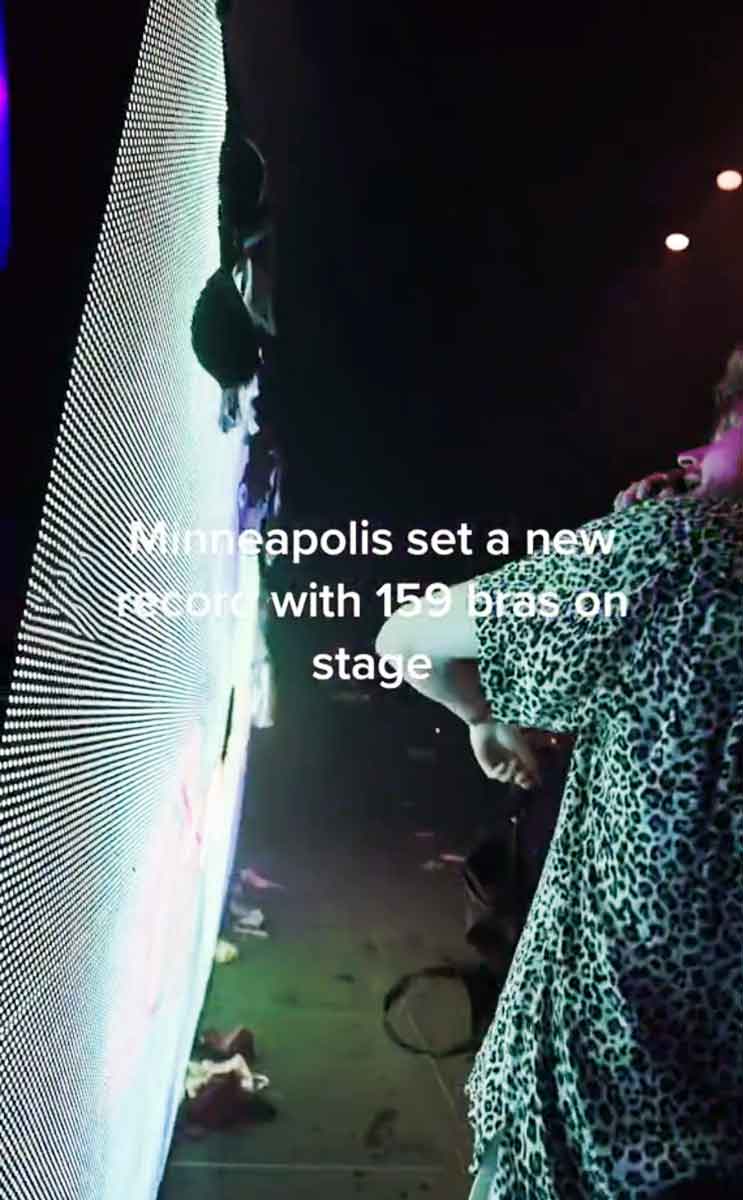
The tradition obviously continues today — whether it’s bras for Yung Gravy or chicken nuggets for Harry Styles (we’re still not sure what the deal is with that one) — as fans attempt to experience an individual moment of glory with their favorite heartthrobs.
Why is this good news?
Although this playful bra-throwing bit might start as bids for attention, Yung Gravy has given a new meaning to this fan interaction by pledging his support for women’s health and safety.
The rapper has previously shared his support of bodily autonomy, posting to his Instagram in January 2020, wearing a T-shirt that reads “Pro Roe.” His caption goes on to share: “the gravy train stands for abortion rights for all the lovely ladies out there.”
Yung Gravy has not yet shared which charities or shelters will benefit from the Save The Nip campaign, but regardless of where his support goes, there is certainly a need.
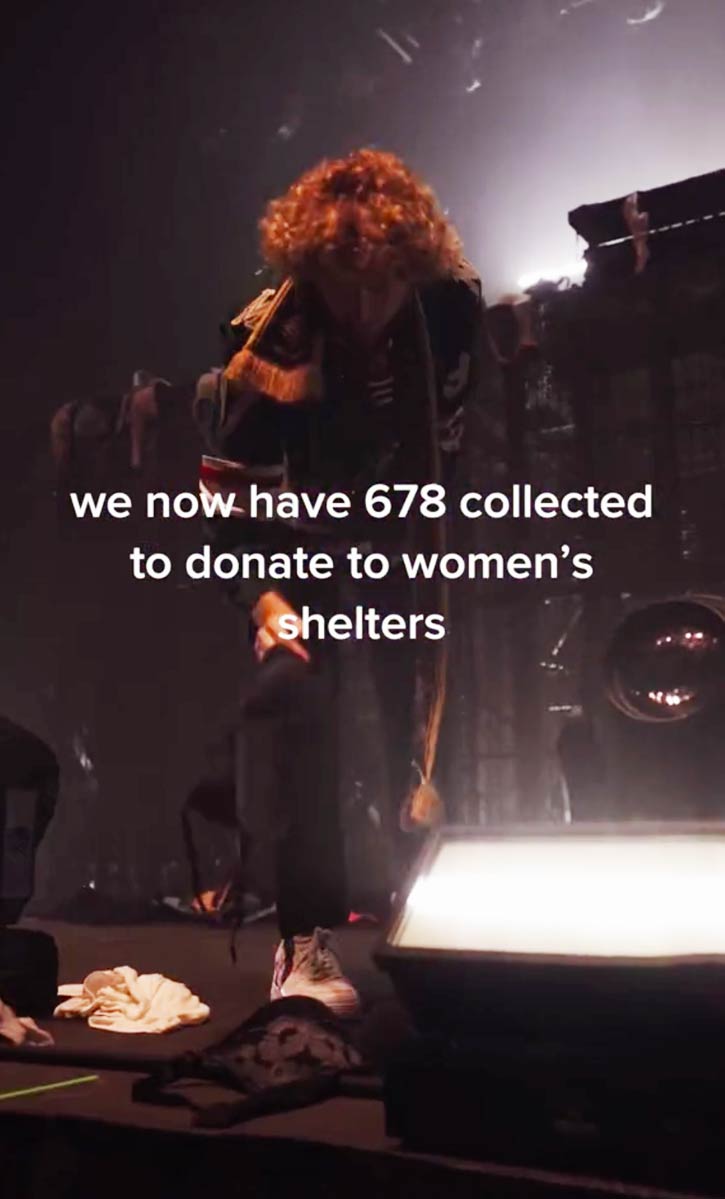
Bras are a heavily requested item in domestic violence and homeless shelters, as they are functional necessities that help keep people comfortable, especially if going a few days without bathing.
Bras are also a staple for self-esteem and dignity, as transgender women search for gender-affirming items, pregnant women seek comfort, and nursing mothers need flexible garments.
Since quality bras are often on the expensive side, shelters are almost always in need of more donations. It’s exciting to think about how 678 bras (and counting!) will support women in need.
How can you help women’s shelters (even without taking your bra off at a concert)?
If you didn’t score Yung Gravy tickets — or aren’t so sure about tossing your shapewear into stardom — you can still support women all the same!
Consider donating your gently used bras to a nearby shelter (though, it’s important to note that some shelters accept gently worn bras, while others only accept new garments).
You can also collect other high-demand items to donate, such as diapers, menstrual hygiene products, makeup, hair care products, linens, laundry detergent, socks, or kid’s toys and books.
If you can’t find a shelter near you, Third Love has also compiled a helpful guide about where you can donate your pre-loved bras to make sure they get in the right hands — or, uh, on the right shoulders — of those in need.
Of course, you can also always donate your money, time, or talents to organizations that help women safely leave violent environments or work through homelessness.