Homelessness is a complex and pressing issue that affects millions of people around the world. It is a condition that is often misunderstood and stigmatized, and is often seen as a personal failing rather than a systemic problem.
In this article, we will explore some of the most thought-provoking and insightful quotes about homelessness, and consider how these words can help us to better understand and address this crucial issue.
From the perspective of people who have experienced homelessness and their advocates, to the observations of social commentators and policymakers — these quotes offer a wide range of perspectives on the challenges and realities of homelessness — and offer inspiration and opportunity to make a difference.
You might also like: How to help the homeless | How to create a homeless care package that actually helps | The best term for ‘homeless’ | The best good news about homelessness
The Best Quotes About Homelessness
Famous Homelessness Quotes
“Fear is dangerous. It creates an environment in which it’s acceptable to treat those experiencing poverty and homelessness with anger and hate. The first step to stopping this is to realize that this fear is unfounded and dangerous.”
— Terence Lester, I See You: How Love Opens Our Eyes to Invisible People

“Before you ignore another homeless person on the street, just remember that that could be someone’s father or someone’s mother and they have a story.”
— Syesha Mercado
“To save a life is a real and beautiful thing. To make a home for the homeless, yes, it is a thing that must be good; whatever the world may say, it cannot be wrong.”
— Vincent Van Gogh
“Having an open mind means learning to add more to our already existing beliefs about affirming dignity of those who are impoverished.”
— Terence Lester, I See You

“Don’t try to drive the homeless into places we find suitable. Help them survive in places they find suitable.”
— Daniel Quinn

“The biggest misconception about the homeless is that they got themselves in the mess — let them get themselves out. Many people think they are simply lazy. I urge those to make a friend at a local mission and find out how wrong these assumptions are.”
— Ron Hall

“My piece of bread only belongs to me when I know that everyone else has a share, and that no one starves while I eat.”
— Leo Tolstoy
“Our prime purpose in this life is to help others and if you can’t help them, at least don’t hurt them.”
— Dalai Lama
Inspirational Quotes
“Love is not patronizing and charity isn’t about pity, it is about love. Charity and love are the same — with charity you give love, so don’t just give money but reach out your hand instead.”
— Mother Teresa

“If you know of someone who is homeless; or by chance you are homeless yourself; you are not alone.”
— Asa Don Brown
“If my fans want to do something for me when that time comes, I say, don’t waste your money on me. Help the homeless. Help the needy... people who don’t have no food... Instead of some big funeral, where they come from here and there and all over. Save it.”
— B. B. King
“If you’re not making someone else’s life better, then you’re wasting your time. Your life will become better by making other lives better.”
— Will Smith

“Gentle reminder: People experiencing homelessness deserve to experience the type of love that goes to battle alongside them, not against them.”
— Love Beyond Walls
“I have often spoken about the importance of intentionality in philanthropy: that it has to stir the soul. This is true whether you are feeding the homeless, mentoring a child, or working on climate change.”
— Charles Bronfman

→ Read more quotes about humanity
Short Quotes
“None of us are home until all of us are home.”
— Project HOME
“We have come dangerously close to accepting the homeless situation as a problem that we just can’t solve.”
— Linda Lingle
“A lot of communities pretend they don’t have homeless and just ignore them or try to make them go away.”
— Alexandra C. Pelosi
“Making it so you don’t have to look at homeless people isn’t a solution to homelessness.”
— Sara Luterman
“People who are homeless are not social inadequates. They are people without homes.”
— Sheila McKechnie
“Not all of us can do great things. But we can do small things with great love.”
— Mother Teresa
“Give, but give until it hurts.”
— Mother Teresa
→ Read more short quotes
On Poverty
“People can be so apathetic. They continue to ignore the real people trapped in poverty and homelessness. It’s almost maddening”
— Daphne Zuniga
“We have weapons of mass destruction we have to address here at home. Poverty is a weapon of mass destruction. Homelessness is a weapon of mass destruction. Unemployment is a weapon of mass destruction.”
— Dennis Kucinich
“Reminder:
Being hateful towards people going through homelessness and poverty doesn’t solve homelessness and poverty.”
— Terence Lester, in a tweet
“We live in a world where there is so much wealth. There shouldn’t be a homeless person. That’s crazy.”
— Raheem De Vaughn
→ Read more quotes about poverty
On Hunger
“If you can’t feed a hundred people, then feed just one.”
— Mother Teresa

“It is important for people to realize that we can make progress against world hunger, that world hunger is not hopeless. The worst enemy is apathy.”
— Reverend David Beckmann
“Why should there be hunger and deprivation in any land, in any city, at any table, when man has the resources and the scientific know-how to provide all mankind with the basic necessities of life? There is no deficit in human resources. The deficit is in human will.”
— Martin Luther King Jr.
“If you want to eliminate hunger, everybody has to be involved.”
— Bono

→ Read more quotes about hunger & feeding the poor
On Societal Failure
“These things become the norm: that some homeless people die of cold on the streets is not news. In contrast, a ten-point drop in the stock markets of some cities is a tragedy.”
— Pope Francis

“The test of a civilization is in the way that it cares for its helpless members.”
— Pearl S. Buck
“As an immigrant, I truly believed when I was coming to this country that people had the tools necessary to life to live a life that is prosperous, that is just and free. So, every single day, I am shocked with the hypocrisy of this country. That we are the wealthiest nation in the world. But we cannot figure out how to house our homeless people.”
— Ilhan Omar
“Freedom is meaningless if people cannot put food in their stomachs, if they can have no shelter, if illiteracy and disease continue to dog them.”
— Nelson Mandela
“‘Who is going to pay for that?’ is never asked when it comes to police & military budgets, yet it is the default response to policy agendas that dare to help folks experiencing homelessness, food insecurity, & mental health issues. We fund what we value, we police what we don’t.”
— Ahmed Ali
“Homelessness is the canary in the mine. It’s the prophetic call to all of us that there’s something radically wrong in our society if anybody is living on our streets.”
— Sister Mary Scullion, in an interview to Global Sisters Report
“Healthcare as a human right, it means that every child, no matter where you are born, should have access to a college or trade-school education if they so choose it, and I think no person should be homeless if we can have public structures and public policy to allow for people to have homes and food and lead a dignified life in the United States.”
— Alexandria Ocasio-Cortez
Homeless Youth
“Most homeless kids are on the streets because they have been forced by circumstances that cause them to think that they are safer there than in any home they once knew.”
— Jewel

“We can’t forget that there are so many young people who are homeless — and unbelievably vulnerable.”
— Stacey Dooley
“More than half of homeless youth became homeless for the first time because they were asked to leave home by a parent or caregiver.”
— Dr. Resa Matthew, director Division of Adolescent Development and Support, Family & Youth Services Bureau, HHS
“Support for shelters and transitional living and housing programs is necessary if we are going to change the landscape for homeless boys and girls in America.”
— Jewel
“It’s hard being homeless at any age, but at 16 years old? I can’t even imagine. When you’re a homeless twithen, how do you build a future or have any sort of life?”
— Stacey Dooley

Homeless Veterans
“There’s no reason someone who has fought for their country should be homeless or jobless.”
— Chris Kyle

“When passersby ignore homeless people, they don’t know if that was a man or woman in uniform previously. They should not be invisible. They cannot be ignored.”
— Max Martini
“A homeless veteran should not have to stand at a freeway exit with a cardboard sign. That’s not okay.”
— Joe Walsh
“Long before I achieved financial success and became the subject of a Hollywood film, I was a veteran, a single father, and a working person who was homeless.”
— Chris Gardner

On Addiction & Mental Health
“Not everyone who’s homeless is a drug-addict or in need of mental health care. Some are normal people who’ve been knocked down, and it can happen to you too. Not all of us made bad life choices.”
— Sherrilyn Kenyon

“Like you, I know people who drink, people who do drugs, and bosses who have tantrums and treat their subordinates like dirt. They all have good jobs. Were they to become homeless, some of them would surely also become ‘alcoholics,’ ‘addicts,’ or ‘mentally ill’.”
— Elliot Liebow
“Escaping poverty among the physical barriers is difficult, but with the added emotional toll, it’s almost impossible. It’s not as simple as we’d like to think.”
— Terence Lester

On Faith & Religion
“What we would like to do is change the world — make it a little simpler for people to feed, clothe, and shelter themselves as God intended for them to do.”
— Dorothy Day

“How can we worship a homeless man on Sunday and ignore one on Monday?”
— Shane Claiborne
“Government alone cannot solve the problems we deal with in our correctional facilities, treatment centers, homeless shelters and crisis centers — we need our faith-based and community partners.”
— Dirk Kempthorne
“I teach a Bible study for homeless guys in downtown Atlanta every week. Been doing it for years. That’s the guys I’d rather go talk to. I’d rather take my act outside the church.”
— Jeff Foxworthy
“Most people never really sat down and got to know a homeless person, but every homeless person is just a real person that was created by God and it is the same kind of different as us; they just have a different story.”
— Ron Hall

“I learned more about God from the tears of homeless mothers than any systematic theology ever taught me.”
— Shane Claiborne
“It is necessary to help others, not only in our prayers, but in our daily lives. If we find we cannot help others, the least we can do is to desist from harming them.”
— Dalai Lama
“Let no one ever come to you without leaving better and happier. Be the living expression of God’s kindness: kindness in your face, kindness in your eyes, kindness in your smile.”
— Mother Teresa
“Find out how much God has given you and from it take what you need; the remainder is needed by others.”
— Saint Augustine

On Making a Difference
“There is a lot that happens around the world we cannot control. We cannot stop earthquakes, we cannot prevent droughts, and we cannot prevent all conflict, but when we know where the hungry, the homeless and the sick exist, then we can help.”
— Jan Schakowsky
“Only a life lived for others is a life worthwhile.”
— Albert Einstein
“A fundamental concern for others in our individual and community lives would go a long way in making the world the better place we so passionately dreamt of.”
— Nelson Mandela
“If you walk down the street and see someone in a box, you have a choice. That person is either the other and you’re fearful of them, or that person is an extension of your family.”
— Susan Sarandon
“The best way to not feel hopeless is to get up and do something. Don’t wait for good things to happen to you. If you go out and make some good things happen, you will fill the world with hope, you will fill yourself with hope.”
— Barack Obama
“The best way to find yourself is to lose yourself in the service of others.”
— Mahatma Gandhi
“Helping others, serving others — this is the real meaning of life.”
— Dalai Lama
“Altogether, if we are committed to doing this heart and mind work, we may encounter new people or ideas.”
— Terence Lester, I See You
“What we have done for ourselves alone dies with us; what we have done for others and the world remains and is immortal.”
— Albert Pike
“When it comes to homelessness, you’ve got to ask yourself, ‘Does my behavior towards those without an address contribute to the invisibility that they face daily?’
If your answer is yes, it might be time to change how you see those without an address.”
— Terence Lester, in a tweet
“The way to feel good is to do good. Find your good — and do it.”
— Jon Bon Jovi, in an interview with CBS News
“Never worry about numbers. Help one person at a time and always start with the person nearest you.”
— Mother Teresa
→ Read more quotes about making a difference
→ Read more quotes about activism
On Charity
“There were two classes of charitable people: one, the people who did a little and made a great deal of noise; the other, the people who did a great deal and made no noise at all.”
— Charles Dickens

“My parents came from little, so they made a choice to give a lot: buying turkeys for homeless shelters at Thanksgiving, delivering meals to people in hospices, giving spare change to those asking for it.”
— Meghan Markle
“No one is useless in this world who lightens the burdens of another.”
— Charles Dickens
“Love is not patronizing and charity isn’t about pity, it is about love. Charity and love are the same — with charity you give love, so don’t just give money but reach out your hand instead.”
— Mother Teresa

Powerful Quotes
“From the comfort of our own homes it's hard to understand the complexities of something like poverty and homelessness.”
— Terence Lester, I See You
“You’ve got to put a roof over someone’s head and then you’ve got to give them the ability to provide so they can keep it over their head. You can’t just give the man a home and go, good luck. Because next month there’s a lighting bill coming.”
— Jon Bon Jovi, in an interview with Quota
“Always have a willing hand to help someone, you might be the only one that does.”
— Roy T. Bennett
More Meaningful Quotes
“What difference does it make to the dead, the orphans, and the homeless, whether the mad destruction is wrought under the name of totalitarianism or the holy name of liberty or democracy?”
— Mahatma Gandhi

“Home was never a dream for homeless people as they used to have their homes. Living in a home was their reality. Now we need to help them to find the lost reality — again.”
— Munia Khan
“Migrant workers have helped build our roads, homes and offices. We cannot stand and watch them be homeless.”
— Sonu Sood
“After all, a homeless man has reason to cry, everything in the world is pointed against him.”
— Jack Kerouac
“I just think if I can go from being a homeless kid with a dream of being in the biggest band in the world and making that happen, I can do a lot of other cool stuff, too.”
— Nikki Sixx
“There is much suffering in the world — physical, material, mental. The suffering of some can be blamed on the greed of others. The material and physical suffering is suffering from hunger, from homelessness, from all kinds of diseases. But the greatest suffering is being lonely, feeling unloved, having no one. I have come more and more to realize that it is being unwanted that is the worst disease that any human being can ever experience.”
— Mother Teresa
“The homeless often feel invisible, allowed to plummet through widening holes in the social safety net, then hidden in doorways from which people avert their eyes.”
— Dawn Foster
“When you look down on someone visibly suffering because they are experiencing poverty or homelessness, it does not prove how great you are; instead, it reveals how much inner suffering you are experiencing within.”
— Terence Lester, in a tweet
“Somewhere along the way, we must learn that there is nothing greater than to do something for others.”
— Martin Luther King Jr., The Three Dimensions Of A Complete Life
Every day the Good Good Good team collects the best good news in the world and shares it with our community. Here are the highlights for this week!
If you want to get good news in your inbox every day, join the Goodnewsletter — the free daily newsletter designed to leave you feeling hopeful.
The Best Positive News We're Celebrating This Week —
Researchers in Maine 3D-printed the first recyclable home made entirely of bio-based materials
With a historic housing shortage and affordability crisis happening all over the U.S., researchers are looking for new ways to construct and provide housing for more people.
Researchers at the University of Maryland used one of the world’s largest 3D printers to create the first home made entirely of sustainable wood fibers and bio-resins. The 600-square-foot prototype house is fully recyclable and can be constructed in days, rather than months.
In 2021, a record $2.7 billion was donated on Giving Tuesday
A 9% increase over 2020, last year donors around the U.S. donated a record $9.7 billion on Giving Tuesday — continuing an upward trend of generosity on the largest fundraising day of the year.
According to Giving Tuesday, 35 million people participated in the annual day of generosity in some way: through giving money, donating goods, volunteering, and more. Compared to the year before volunteering levels increased by 11%, and food and other goods donations increased by 8%.
Giving Tuesday launched in 2012 as a way to encourage generosity and giving back in the midst of the holiday shopping season — supporting organizations and people that do important work in our communities and around the world all year long.
We’re hopeful that this upward trend of generosity will only grow larger and stronger in 2022.
→ 25 meaningful ways to celebrate Giving Tuesday
With an “adopt-a-family” approach, Trans Santa safely and anonymously provides gifts for transgender youth in need
In 2022 alone, state legislatures across the U.S. have introduced over 130 anti-trans bills, and transgender youth are increasingly the target of these legislative attacks. This holiday season, the mutual aid social media campaign Trans Santa is helping give them the love they deserve.
Trans Santa takes the “adopt a family” approach and provides gifts to transgender youth in need — safely and anonymously.
The goal is to support trans and non-binary youth who are houseless, in foster care, or otherwise without vital support by giving them the gifts they want and the affirmation they need from anonymous and safe donors all over the world.
A network of wildlife crossings built on a Montana highway with Indigenous knowledge is dramatically reducing collisions
Collaborating with the Montana Department of Transportation, the Confederated Salish and Kootenai tribes recently designed and built one of the largest networks of wildlife highway crossings in the U.S.
Highway 93 in Montana had long been known as one of the state’s most dangerous roads. Now, it includes 42 wildlife crossings built based on Indigenous knowledge and values.
And they’re working: According to a 2015 study, animal collisions have declined by 71%. Now more than 22,000 animals use the crossings annually, protecting both drivers and wildlife to migrate safely.
On the final day of Native American Heritage Month, we’re celebrating with the state of Montana for rightfully leaning on Indigenous knowledge in creating these passageways.
Dressember has raised millions of dollars to fight human trafficking around the world
In 2005, Dressember founder Blythe Hill first learned about human trafficking, a multimillion dollar criminal industry generating about $150 billion yearly worldwide. More than 40 million people are affected, one in four of whom is a child.
What started out as a fun style challenge for the month of December, Dressember officially became an anti-trafficking fundraiser in 2013. That first year, 1,000 people participated and raised $167,000 — and it grew each year.
In the nonprofit’s first seven years, they raised more than $10 million benefiting anti-trafficking organizations. Now Dressember is an international community of anti-slavery advocates working to end human trafficking.
Rapper Yung Gravy is collecting the bras thrown on stage by fans and transforming them into an act of good
Yung Gravy, a 26-year-old rapper known for his viral TikToks and satire-filled beats, is taking a time-honored concert and fan tradition and using it for good.
At a recent concert in Minneapolis, Yung Gravy collected 159 bras that fans threw on stage — bringing his total number of bras collected to 678 across the U.S.
At the end of his tour, as a part of his “Save The Nip” campaign, he plans to donate them all to women’s shelters, and he’ll match the value of the donated bras with a donation to a breast cancer charity.
Through the power of storytelling, filmmaker Billie Melissa is working to abolish the death penalty
As of 2022, there are 2,414 imprisoned individuals on death row in the United States, of which 41% are Black people. Many have critiqued the serious physical and psychological impact of long-term confinement and isolation that is generated by death row, but many of us know very little about the lived realities of those on death row.
After seeing “Just Mercy” at a film festival in 2019 and posting her reaction online, filmmaker Billie Melissa connected with a real-life client of the film’s protagonist on the power of storytelling to change hearts and minds. That’s when her work connecting film and death penalty abolition began.
She helped with a variety of projects until she met Billie Allen, who has been on death row for 25 years with a case of innocence. Now, the two are working on a documentary about his life and story.
“For us, what was really important was remembering that we’ve connected to him because of the person that he is and that’s what is going to connect with an audience is people saying, ‘Oh, he’s just like me, and this could have happened to me,’” Melissa said.
→ Plus, read quotes about the death penalty
More good news of the week —
The “library of things" movement in the U.S. is reshaping public libraries and how they serve patrons in the digital age. More than half of America’s 9,000 public library districts now lend nontraditional objects and have revamped their event calendars.
South Korea recycles almost 100% of its food waste annually, sending none no a landfill. In response to a growing food waste crisis in the 1990s, the country’s government implemented a number of policy changes to get them to this point.
One hundred companies in the U.K. signed up for a permanent four-day work week with no loss in pay. One employer said it was “one of the most transformative initiatives we’ve seen in the history of the company.”
Lizzo sent her 2019 AMAs dress to an Atlanta-based writer who couldn’t find a red carpet-worthy plus-sized dress. Aurielle Marie was being honored by Out Magazine at its Out100 gala honoring 100 queer writers and publishing stars of the year.
Brazil, Indonesia, and the Democratic Republic of the Congo are working together to stop deforestation. The three countries are home to the largest area of rainforests in the world.
A Toronto-run long-term care home is piloting a project aimed at improving its operations and empowering residents. Lakeshore Lodge is shifting away from a traditional model of long-term care homes focused on task-based care and efficiency.
The U.S. Senate just passed a bill protecting same-sex and interracial marriage. Members of the LGBTQ+ community are celebrating the passage, while acknowledging the bill is an imperfect, but important step forward.
A new piece of technology could reduce shark bycatch in commercial fishing by 90%. The SharkGuard emits a pulse to repel sharks and stingrays from fishing gear and prevent them from being accidentally caught.
The European Space Agency just named the world’s first disabled astronaut. A major step towards including people with physical disabilities in working and living in space, John McFall is the first “parastronaut.”
A life-saving global AIDS relief initiative that began in 2003 was reauthorized and will continue through at least 2023. When the President’s Emergency Plan for AIDS Relief (PEPFAR) program first began only 50,000 people in Africa had access to antiretroviral therapy (ART) — it now supports up to 14 million people.
Chicago recently reported the lowest number of new HIV and AIDS cases since the 1980s. A total of 627 people were newly diagnosed with HIV in 2020 — the lowest number since 1987, and a 29% decrease compared to 2016.
Thanks to advocacy, better treatments, earlier diagnoses and more, HIV/AIDS deaths are decreasing worldwide. Deaths have declined by 60 percent since their peak in 2003.
For the first time in U.S. history, the top House leaders of one party will include no white men. House Democrats voted Hakeem Jeffries as House Democratic leader, Katherine Clark as whip, and Pete Aguilar as caucus chair.
A leading scientist says a universal flu vaccine may be available within two years. The vaccine is based off the same mRNA technology used to create the COVID-19 vaccines.
The U.S. is giving millions of dollars to three Indigenous tribes threatened by climate change. Two tribes in Alaska and one in Washington will each receive $25 million to retreat to higher ground.
Teen and young adult activists have been the backbone of many current social movements we see taking hold today — including movements around climate change, racial justice, gun violence, and LGBTQ+ rights.
According to the National Education Association, student activism is on the rise.
In fact, after the horrific mass shooting at Marjory Stoneman Douglas High School in Florida, millions of young people across the nation made history by catalyzing never-before-seen support and energy for gun reform. Students led classroom walk-outs, organized marches in their communities, and became leading voices on issues they were previously sidelined on.
Teen activism is by no means new or trendy, though.
Students from marginalized communities have been organizing and protesting as part of educational institutions throughout American history, and, notably, during the Civil Rights Movement throughout the mid to late 20th century.
More than a half-century later, youth activism has reemerged with a similar energy and power to create meaningful change for generations.
Whether it’s school walkouts, the development of on and off-campus organizations, petitions, or mobilizing marches, student activists are meeting “unprecedented” challenges with hope and resiliency.
We’re highlighting just a few of the many teen activists who have and are currently leading the charge on social change around the world.
Youth Activists Making A Difference
Greta Thunberg, environmental activist

Greta Thunberg — one of the most well-known activists today — was 15 years old when she protested outside the Swedish parliament in 2018. Thunberg hoped her efforts would pressure political leaders to meet carbon emissions targets.
According to BBC, this grassroots campaign inspired thousands of young students worldwide to organize similar strikes and by December 2018, more than 20,000 students — from the U.S. to Japan — had joined in.
She’s been considered a top contender to win the Nobel Peace Prize for her climate activism every year since 2019.
Desmond Naples, LGBTQ+ youth activist
Desmond Naples — also known as Desmond is Amazing — is a 15-year-old LGBTQ+ rights advocate and drag performer. They use their voice with the hopes that it creates increased visibility to break down barriers for LGBTQ+ people.
In 2017 Naples launched the Haus of Amazing, a safe space for children who do drag. Since then, they have published “Be Amazing: A History of Pride,” a vibrant and educational tool for children to learn more about the Pride movement and inclusive community.
In addition to speaking out for human rights, Naples runs a YouTube channel and works as an editorial and runway model.
Marley Dias, literary activist
Marley Dias is the teen founder of #1000BlackGirlBooks — a movement to collect and donate books with Black female protagonists.
Her campaign leveraged the power of social media to reach a larger audience and soon reached her initial goal of collecting 1,000 books featuring Black female protagonists.
Her success led her to be recognized by TIME as one of the 25 most influential teens in 2018. She continues to advocate for Black representation and self-empowerment and has since released her first book called “Marley Dias Gets It Done: And So Can You!”
Malala Yousafzai, girls’ education activist

In 2012, Malala Yousafzai became an instant international symbol of the fight for girls’ education after being shot in a school bus by members of the Taliban — which have strict restrictions on female education.
She survived, recovered, and used her experience as direct motivation to continue her fight. At 17, Yousafzai became the youngest Nobel Prize laureate for her humanitarian efforts — which included establishing the Malala Fund, an organization dedicated to giving girls an opportunity to learn and lead.
She later published her first book, “I Am Malala,” and graduated from Oxford University in 2020.
Naomi Wadler, gun reform activist

After the tragic 2018 mass shooting at Marjory Stoneman Douglas High School, Naomi Wadler and a friend organized a walkout — in which 200 of her classmates ended up participating.
The successful youth-led demonstration garnered national attention and led her to delivering a speech at the 2018 March for Our Lives rally in Washington, D.C — she was just 11 years old.
Today she balances school with her advocacy efforts, which primarily bring awareness to how Black girls and women are disproportionately affected by gun violence.
Autumn Peltier, Indigenous water-rights activist
Autumn Peltier is a 17-year-old Canadian Indigenous rights activist and chief water commissioner of the Anishinabek Nation whose empowering young people to protect the environment.
Peltier is known for publicly calling out Canadian Prime Minister Justin Trudeau about his failure to enact clean water policies — she was 12 years old.
Since then, she has spoken to world leaders at the UN General Assembly and the UN Secretary-General’s Climate Action Summit. She was also nominated for the International Children’s Peace Prize three times.
Mari Copeny, clean water activist

At eight years old, Mari Copeny made headlines after she wrote a letter to then-President Barack Obama urging him to do something about the long-overlooked Flint Water Crisis affecting her community. Her letter convinced the president to visit, immediately putting the crisis into public consciousness.
Her frustration and passion were channeled into action, helping her community gain essential access to safe, clean water.
Since then, Copeny, who became known as “Little Miss Flint,” has spent her teen years raising over $500,000 to support access to clean water in Flint and other resources to support health and well-being.
Xiuhtezcatl Martinez, Indigenous climate justice activist

Xiuhtezcatl (shoe-TEZ-caht) Martinez is a 19-year-old Indigenous climate activist, hip-hop artist, and influential voice of the global youth-led environmental movement.
Inspired by his mother’s own activism, Martinez has been a part of the climate justice movement since he was six years old.
Today he focuses on educating his generation about the current state of the planet and inspiring them to take action to create a better world.
Martinez is the youth director of Earth Guardians, a nonprofit that trains diverse youth to become leaders in the climate and social justice space by using art, music, storytelling, civic engagement, and legal action to advance solutions.
Olivia Julianna, political activist
Olivia Julianna is a 19-year-old political activist and strategist for the youth-led nonprofit Gen Z For Change, which uses social media to raise awareness, fundraise for causes — and take problematic politicians down a peg.
In the summer of 2022, Florida Rep. Matt Gaetz made fatphobic, misogynistic comments about Julianna in an attempt to degrade her and her ongoing advocacy for abortion rights.
Instead of letting it get to her, she used it as fuel to fundraise for abortion funds across the country via social media. Donations flooded in, reaching $2.2 million within a week.
Thandiwe Abdullah, Black Lives Matter activist
Thandiwe Abdullah started attending protests when they were just two years old. At 13, the student and Black Lives Matter activist co-founded BLM Youth Vanguard.
Thandiwe and the Youth Vanguard have worked to protect students in their community and have successfully removed random searches from the Los Angeles Unified School District.
Jack Petocz, LGBTQ+ activist
In February 2022, Florida’s House of Representatives passed House Bill 1557 — also known as the “Don’t Say Gay” bill. The legislation sought to prohibit “classroom discussion about sexual orientation or gender identity” in kindergarten through third grade.
Students in Florida, like 17-year-old Jack Petocz, worked to fight against that hatred and discrimination.
Petocz organized a school-wide walkout, inspiring other Florida students to follow suit. The LGBTQ+ activist is now the policy director at Gen-Z for Change, a nonprofit run by young people leveraging social media to educate and mobilize their peers. Petocz has also spoken out and demanded against book-banning practices.
Genesis Butler, animal rights and climate activist
Genesis Butler is a 15-year-old environmental and animal rights activist and one of the youngest people to give a TEDx talk (“A 10 Year Old’s Vision for Healing the Planet”). Butler is passionate about educating others on the negative impact of animal agriculture on the environment.
The young activist is currently leading the Youth Climate Save movement — the very first youth-led environmental organization that zeroes in on the correlation between climate change and animal consumption.
Melati and Isabel Wijsen, ocean protection and youth empowerment

Sisters Melati and Isabel Wijsen launched a single-use plastics ban campaign on their home island of Bali in 2013. Their efforts — petitions, beach cleanups, and even a hunger strike — eventually paid off when they convinced their governor to commit to a plastic bag-free Bali by 2018.
Since then, the pair have taken their mission to other students worldwide looking to accomplish similar goals.
They even launched Mountain Mamas, a social enterprise that trains local women in Bali to hand-make reusable bags from donated or recycled materials.
Sophia Kianni, environmental activist

Sophia Kianni is an 18-year-old Iranian-American environmentalist studying climate science and public policy at Stanford University.
She is the founder and executive director of Climate Cardinals, an organization working to make climate education more accessible by translating climate information into over 100 languages.
Kianni has since grown the organization to an international nonprofit with more than 9,000 volunteers in 40+ countries who have collectively translated 500,000 words of climate information, according to Forbes.
She represents the U.S. as the youngest member of the inaugural United Nations Youth Advisory Group on Climate Change.
Zyahna Bryant, racial justice activist
Zyahna Bryant is a student activist and community organizer who founded the Black Student Union at her high school and is a member of the Charlottesville Youth Council.
At the age of 12, she organized her first demonstration, a rally for Justice for Trayvon Martin and other victims of police gun violence.
In the Spring of 2016, Bryant wrote a petition to the Charlottesville City Council calling them to remove a Robert E. Lee statue — a Confederate-era symbol. A year later, the city council voted to remove the statue.
Today, the activist continues to work with local teens and fellow youth leaders to create change and address issues related to race and inequity.
Jamie Margolin, climate activist
Jamie Margolin is a Colombian-American organizer, activist, and public speaker living in Seattle, Washington. As a Latina Jewish lesbian, she’s made it her mission to fight for those who are oppressed and marginalized — protecting our people and planet.
At 17, she co-founded “Zero Hour,” a youth-led climate action group that seeks to highlight the urgency of the effects of climate change on communities (specifically marginalized groups) across the world.
March For Our Lives Organizers, gun control activists
Students affected by the 2018 mass shooting at Marjory Stoneman Douglas High School in Parkland, Florida, were quick to mobilize and demand action from elected officials, saying enough is enough.
They soon organized an official nonprofit: March For Our Lives. Founders include students like X González, Cameron Kasky, David Hogg, Jackie Corin, and now, hundreds of local March For Our Lives chapters have emerged, fighting to end the gun violence epidemic in America.
While many of these founders continue careers inside and out of politics and advocacy, their legacy remains a major turning point in the reckoning of the gun safety movement.
Jerome Foster and Elijah McKenzie-Jackson, climate and LGBTQ+ activists
In 2022, youth climate and LGBTQ+ activists Jerome Foster II and Elijah McKenzie-Jackson sent a letter to the United Nations Framework Convention on Climate Change — the organizers behind COP27 — asking them to reconsider hosting the climate conference in Egypt due to the country’s hostile laws toward the LGBTQ+ community.
Both teens (Foster from the U.S. and McKenzie-Jackson from the U.K.) are at the forefront of the youth climate movement and advocate for communities around the world that contributed the least to the climate crisis, yet are experiencing the most significant and most devastating impacts.
Together, they co-founded Waic Up, a youth-led climate communication organization.
Every month, there are hundreds of national and international celebrations dedicated to raising awareness and support for meaningful causes.
For those working to bring attention to important topics, it can be challenging to keep track of the next relevant awareness event. We’re here to help.
At Good Good Good, we aim to help people feel more hopeful and do more good. For years we’ve privately curated a comprehensive list of important cause-themed holidays that we’ve used for creating content on our good news Instagram, our Goodnewsletter, our Goodnewspaper, and on this very website.
We’ve organized this list of observances and events by month — and are making them public for the first time. Our hope is that this will help you or your organization bring attention to important issues.
Where applicable, we’ve included resources (usually good news around particular topics, action steps on how to make a difference, or relevant quotes) — and encourage you to share them if you find them helpful.
The main days and months you should know about for March are:
| Women’s History Month | March 1 |
| International Women's Day | March 8 |
| National Reading Month | March 1 |
| World Wildlife Day | March 3 |
| Global Recycling Day | March 18 |
| International Day of Forests | March 21 |
| World Water Day | March 22 |
March is the third month of the year in the Julian and Gregorian calendars. It has 31 days and marks the transition from winter to spring in the Northern Hemisphere and summer to autumn in the Southern Hemisphere. It is named after Mars, the Roman god of war.
Explore our comprehensive list of national and international months, weeks, days, and birthdays for the month of March:
March Celebrations:
Awareness Months
There are several awareness months celebrated in March — though the five that often get the most attention include Women’s History Month, National Reading Month, Disability Awareness Month, Multiple Sclerosis Awareness Month, and Kidney Month.
Women’s History Month
Explore the ultimate guide to how to celebrate Women’s History Month — and read and share Women’s History Month quotes
Social Work Month
National Reading Month
Explore our top Good Good Good-approved book recommendations and make sure to shop with independent (non-Amazon) bookstores
Disability Awareness Month
Explore our calendar of disability awareness days and weeks
Irish-American Heritage Month
Greek American Heritage Month
Cerebral Palsy Awareness Month
Color Therapy Month
Colorectal Cancer Awareness Month
Deep Vein Thrombosis (DVT) Prevention Awareness Month
Developmental Disabilities Awareness Month
Endometriosis Awareness Month
Essential Tremor Month
Kidney Month
Kidney Cancer Awareness Month
Myeloma Action Month
Multiple Sclerosis Awareness Month
Red Cross Month
Self-Injury Awareness Month
Brain Injury Awareness Month
National Trisomy Awareness Month
Adopt a Rescued Guinea Pig Month
Bisexual Health Awareness Month
Awareness Weeks
Professional Pet Sitters Week
1st week of March
World Glaucoma Week
2nd full week of March
National Animal Poison Prevention Week
3rd week of March
National LGBTQ+ Health Awareness Week
Last week of March
National Eating Disorders Awareness Week
Last week of February or 1st week of March
Creative Arts Therapies Week
Week-long event in March
Read this good news story about the art therapist using TikTok to help people
National Farmworker Awareness Week
Week-long event in March
Neurodiversity Celebration Week
Week-long event in March
Awareness Days
World Compliment Day - March 1
Learn about the power of compliments and explore the ultimate list of the best compliment ideas
Self-Harm Awareness Day - March 1
World Seagrass Day - March 1
Learn how the “Great Blue Wall” will help protect seagrass and the oceans
Disability Community Day of Mourning - March 1
Zero Discrimination Day - March 1
National Pig Day - March 1st
Meet Hamlet the Pig and a dozen other celebrity pet influencers
National Horse Protection Day - March 1
Meet the man who has built prosthetics for birds, horses, sheep, camels, gazelles, and even elephants.
International Rescue Cat Day - March 2
India Giving Day - March 2
World Teen Mental Health Day - March 2
World Hearing Day - March 3
World Wildlife Day - March 3
Read and share the ultimate guide on how to celebrate World Wildlife Day. Plus, read some animal-related good news!
Triple Negative Breast Cancer Day - March 3
Global Day of Unplugging - March 3
University Mental Health Day - 1st Thursday of March
International HPV Awareness Day - March 4
Read this good news story about women fighting for access to the HPV vaccine
Dissociative Disorder Awareness Day - March 5
Emetophobia Awareness Day - March 5
Insomnia Awareness Day - 1st Monday following the change to daylight saving time
International Women’s Day - March 8
Explore the ultimate guide on how to celebrate International Women’s Day
Breast Implant Illness Awareness Day - March 8
World Kidney Day - 2nd Thursday of March
National Women and Girls HIV/AIDS Awareness Day - March 10
Solar Appreciation Day - 2nd Friday of March
K9 Veterans Day - March 13
International Day of Action for Rivers - March 14
Meet the advocates working to give water legal rights
Save a Spider Day - March 14
World Consumer Rights Day - March 15
World Sleep Day - March 15
National Panda Day - March 16
Global Recycling Day - March 18
National Trisomy 18 Awareness Day - March 18
Taxonomist Appreciation Day - March 19
Won’t You Be My Neighbor Day - March 20
Celebrate Fred Rogers’ birthday by reading and sharing his best quotes
International Day of Happiness - March 20
World Sparrow Day - March 20
World Frog Day - March 20
World Rewilding Day - March 20
Read the good news about rewilding projects multiplying across the UK with the goal of boosting biodiversity
World Down Syndrome Day - March 21
International Day of Forests - March 21
Read the good news about a California redwood forest being returned to Indigenous guardianship
World Planting Day - March 21
Learn how to plant trees for free by reading our review of Ecosia — an alternative to Google’s search engine. Plus: Read about the tree-planting initiative in Chicago supporting intersectional environmentalism
World Wood Day - March 21
International Day for the Elimination of Racial Discrimination - March 21
Two-Spirit and Indigenous LGBTQ+ Awareness & Celebration Day - March 21
Anal Cancer Awareness Day - March 21
World Water Day - March 22
Check out this collection of the best positive news stories about water. Plus: Read about the kids raising money for charity: water & listen to our interview with the organization’s founder, Scott Harrison
International Seal Day - March 22
World Meteorology Day - March 23
Listen to a podcast episode featuring Eric Holthaus, a meteorologist working to fight climate change
World Puppy Day - March 23rd
World Tuberculosis Day - March 24
U.S. National Cerebral Palsy Awareness Day - March 25
Purple Day for Epilepsy - March 26
Learn about lots of different awareness colors for causes
Earth Hour - Last Saturday of March
Amniotic Fluid Embolism (AFE) Awareness Day - March 27
TWLOHA Day - March 29
World Bipolar Day - March 30
National Doctors Day - March 30
Farmworkers Day (Formerly Caesar Chavez Day) - March 31
International Transgender Day of Visibility - March 31
Read and share the ultimate guide on how to celebrate Trans Day of Visibility
Notable Birthdays
Birthdays of leading activists, nonprofit leaders, and other world-changers born in March:
Lupita Nyong’o’s Birthday - March 1
Jon Bon Jovi’s Birthday - March 2
Read Jon Bon Jovi’s quotes about homelessness (and more quotes)
Janet Mock’s Birthday - March 10
Ralph Abernathy’s Birthday - March 11
Albert Einstein’s Birthday - March 14
Read and share Albert Einstein’s most famous quotes
Ruth Bader Ginsburg’s Birthday - March 15
Read and share Ruth Bader Ginsburg’s best quotes
Bayard Rustin’s Birthday - March 17
John Boyega’s Birthday - March 17
Fred Rogers’ Birthday - March 20
Read and share the ultimate list of the best quotes from Mister Rogers
Aretha Franklin’s Birthday - March 25
Gloria Steinem’s Birthday - March 25
Read and share the ultimate list of Gloria Steinem quotes
Elton John’s Birthday - March 25
Sandra Day O’Connor’s Birthday - March 26
Lady Gaga’s Birthday - March 28
Bernice King’s Birthday - March 28
Read the best quotes by Bernice King, MLK’s daughter
Al Gore’s Birthday - March 31
Explore the best climate good news according to Al Gore
Cesar Chavez’s Birthday (Now celebrated as Farmworkers Day) - March 31
You might also like: The Best March Quotes
Explore More Events:
Main Awareness Calendars: All Awareness Holidays | Heritage Months | International Days
More Awareness Calendars: Animals | Pets | Environment & Sustainability | LGBTQ+ | Black & African American | Mental Health | Disability | Cancer | HIV/AIDS
Awareness Days & Months: January | February | March | April | May | June | July | August | September | October | November | December
Is this list missing a holiday or awareness week/month? Let us know. We want to ensure this list is comprehensive and inclusive.
This article was originally published in March 2022 and has been continually updated ever since.
Though the protests in the streets have diminished and the posters in storefront windows have begun to fade, the fight for racial justice and equality in the United States continues.
In 2020, people around the U.S. asked themselves what they could do to support the Black Lives Matter movement. We educated ourselves, voted, marched through our cities, educated our families, and demanded systemic change. There’s no doubt that there’s still a significant amount of work to be done — on personal levels and on a societal level. The work will never end.
While simple displays of allyship like displaying a yard sign, poster, or flag can’t create change on their own — they have a role to play. They can inspire others, show that your home or business is a safe place, and most importantly, serve as a personal reminder to be actively anti-racist every day.
In the summer of 2020, a slew of artists generously made their racial justice poster designs available for free — and countless people downloaded, printed, and displayed this artwork. Many of them did so through Outlet, a Portland, Oregon-based creative art studio and risograph press known for their zines and workshops.
We’ve collected some of our favorite free Black Lives Matter posters to make it easy for you to find, print, and show off. Please show respect to these artists by only using their art in appropriate contexts — and try to offer credit when you have the opportunity.
You might also like:
- Free Abortion Posters To Print and Display
- The Best Quotes About Justice
- The Best Quotes About Social Justice
- The Best Quotes About Hope
Free Black Lives Matter Posters To Download, Print, and Hang Up —
No Justice No Peace | Stand Up, Speak Truth To Power

Artist: Adam Garcia | Provider: Outlet
Demand Police Reform Now

Artist: Brett Stenson | Provider: Outlet
Not To Be Political Or Anything...

Artist: Adam J. Kurtz | Provider: Outlet
Black Lives Matter

Artist: Quentin Monge | Provider: Outlet
No Justice, No Peace!

Artist: Lily Lin | Provider: Outlet
It Is Always Right To Do Right — MLK

Artist: Jackie Brown | Provider: Outlet
Black Lives Matter

Artist: Josh Kenyon | Provider: Outlet
Black Lives Rule

Artist: Anis Mojgani | Provider: Outlet
End Racism At Home

Artist: Always With Honor | Provider: Outlet
Black Lives Matter | Defund the Police | Fuck Racism

Artist: Always With Honor | Provider: Outlet
Black Trans Lives Matter

Artist: Sarah Martin | Provider: Outlet
Black Lives Matter

Artist: Carrie Pinkstaff | Provider: Outlet
Black Lives Do Matter

Artist: Bagger | Provider: Outlet
“Heroes” Shouldn’t Be Evil

Artist: David DaCosta | Provider: Outlet
Black Lives Matter

Artist: Quentin Monge | Provider: Outlet
Caring is an essential aspect of human nature that allows us to show empathy and compassion for others.
When we show that we care about others, it can help to build trust and strengthen personal relationships. By expressing empathy and understanding, we can create a sense of belonging and connection with those around us. This can lead to deeper, more meaningful relationships and a greater sense of fulfillment for both the person receiving care and the person doing the caring. By caring for others, we can find a sense of purpose and fulfillment that goes beyond our own personal interests.
Caring also has a positive impact on the wider world. When we show empathy and compassion for those who are less fortunate, it can inspire us to take action to make the world a better place. This can lead to a more just and equitable society, benefiting not only the person on the receiving end of the care, but others facing the same challenges.
We’ve curated the best quotes about caring:
The Best Caring Quotes
Famous Quotes
“Never believe that a few caring people can’t change the world. For, indeed, that’s all who ever have.”
— Margaret Mead
“Never be so busy as not to think of others.”
— Mother Teresa
“Sometimes it takes only one act of kindness and caring to change a person’s life.”
— Jackie Chan
“As human beings, we each have a responsibility to care for humanity. Expressing concern for others brings inner strength and deep satisfaction. As social animals, human beings need friendship, but friendship doesn’t come from wealth and power, but from showing compassion and concern for others.”
— Dalai Lama
“Beginning today, treat everyone you meet as if they were going to be dead by midnight. Extend to them all the care, kindness and understanding you can muster, and do it with no thought of any reward. Your life will never be the same again.”
— Og Mandino
“Nobody cares how much you know, until they know how much you care. ”
— Theodore Roosevelt
“A candle loses nothing by lighting another candle.”
— James Keller
Beautiful Caring Quotes
“To be successful is to be helpful, caring, and constructive, to make everything and everyone you touch a little bit better.”
— Norman Vincent Peale
“The closest thing to being cared for is to care for someone else.”
— Carson McCullers
“The simple act of caring is heroic.”
— Edward Albert
“You really can change the world if you care enough.”
— Marian Wright Edelman
You might also like: Quotes about doing good | Quotes about making a difference | Quotes about activism | Quotes about kindness | Quotes about giving back
Caring for Others
“One person caring about another represents life’s greatest value.”
— Jim Rohn
“Caring about others, running the risk of feeling, and leaving an impact on people, brings happiness.”
— Harold Kushner
“As you grow older, you will discover that you have two hands, one for helping yourself, the other for helping others.”
— Maya Angelou
“It is an absolute human certainty that no one can know his own beauty or perceive a sense of his own worth until it has been reflected back to him in the mirror of another loving, caring human being.”
— John Joseph Powell
“When people cared about each other, they always found a way to make it work.”
— Nicholas Sparks
“One of the things I’ve never been accused of is not caring about people.”
— Joe Biden
“Too often we underestimate the power of a touch, a smile, a kind word, a listening ear, an honest compliment, or the smallest act of caring, all of which have the potential to turn a life around.”
— Leo Buscaglia
“Politeness and caring for each other cannot be a thing of the past.”
— Peter Frampton
“Be nice to each other. You can make a whole day a different day for everybody.”
— Richard Dawson
“Nothing can wear you out like caring about people.”
— S.E. Hinton, That Was Then, This Is Now
“Self-care is giving the world the best of you, instead of what’s left of you.”
— Katie Reed
“Every one of us needs to show how much we care for each other and, in the process, care for ourselves.”
— Princess Diana
“Three keys to more abundant living: caring about others, daring for others, sharing with others.”
— William Arthur Ward
→ Read more kindness quotes
Caring for Someone You Love
“Remember that children, marriages, and flower gardens reflect the kind of care they get.”
— H. Jackson Brown, Jr.
“The right mixture of caring and not caring — I suppose that’s what love is.”
— James Hilton
“Caregivers attract caregivers and live in a community of love. They are energized by their caring, fulfilled, and they love life. Caretakers attract caretakers and live in the company of resentful victims who see themselves as misused and are fatigued from constant giving with no return.”
— Gary Zukav
“If we give our children sound self-love, they will be able to deal with whatever life puts before them.”
— bell hooks
“Life has taught me that respect, caring and love must be shared, for it’s only through sharing that friendships are born.”
— Donna A. Favors
“Taking care is one way to show your love. Another way is letting people take good care of you when you need it.”
— Fred Rogers
“Some people care too much. I think it’s called love.”
— Winnie the Pooh
→ Read more quotes about making a difference
Caring for the Elderly
“Caring for our seniors is perhaps the greatest responsibility we have. Those who walked before us have given so much and made possible the life we all enjoy.”
— John Hoeven
“Love, care and treasure the elderly people in the society.”
— Lailah Gifty Akita
“A universal basic income would be the best way to give everyone the opportunity to do more unpaid but incredibly important work, such as caring for children and the elderly.”
— Rutger Bregman
“To care for those who once cared for us is one of the highest honors.”
— Tia Walker, The Inspired Caregiver: Finding Joy While Caring for Those You Love
Caring for Yourself
“When people care for you and cry for you, they can straighten out your soul.”
— Langston Hughes
“If your compassion does not include yourself, it is incomplete.”
— Jack Kornfield
“Surround yourself with people who make you happy. People who make you laugh, who help you when you’re in need. People who genuinely care. They are the ones worth keeping in your life. Everyone else is just passing through.”
— Karl Marx
“I have come to believe that caring for myself is not self-indulgent. Caring for myself is an act of survival.”
— Audre Lorde
“Caring for your inner child has a powerful and surprisingly quick result: Do it and the child heals.”
— Martha Beck
“You have to create little pockets of joy in your life to take care of yourself.”
— Jonathan Van Ness
“When you love and accept yourself, when you know who really cares about you, and when you learn from your mistakes, then you stop caring about what people who don’t know you think.”
— Beyoncé
“Self-care is one of the active ways that I love myself. When you can and as you can, in ways that feel loving, make time and space for yourself.”
— Tracee Ellis Ross
“If you don’t love yourself, how the hell you gon’ love somebody else?”
— RuPaul
“Take care of your body. It’s the only place you have to live.”
— Jim Rohn
“Caring for your body, mind, and spirit is your greatest and grandest responsibility. It’s about listening to the needs of your soul and then honoring them.”
— Kristi Ling
→ Read more self-care quotes
Short Quotes
“From caring comes courage.”
— Lao Tzu
“My guiding principles in life are to be honest, genuine, thoughtful and caring.”
— Prince William
“Only a life lived for others is a life worthwhile.”
— Albert Einstein
“People who care about each other enjoy doing things for one another.”
— Ann Landers
“Live so that when your children think of fairness, caring, and integrity, they think of you.”
— H. Jackson Brown, Jr.
“Caring — about people, about things, about life — is an act of maturity.”
— Tracy McMillan
“The more you care, the stronger you can be.”
— Jim Rohn
→ Read more short quotes
→ Read more positive quotes
More Care-Related Quotes
“Nurturing is not complex. It’s simply being tuned in to the thing or person before you and offering small gestures toward what it needs at that time.”
— Mary Anne Radmacher
“So when you are listening to somebody, completely, attentively, then you are listening not only to the words but also to the feeling of what is being conveyed, to the whole of it, not part of it.”
— Jiddu Krishnamurti
“Friendly people are caring people, eager to provide encouragement and support when needed most.”
— Rosabeth Moss Kanter
“I feel the capacity to care is the thing which gives life its deepest significance.”
— Pablo Casals
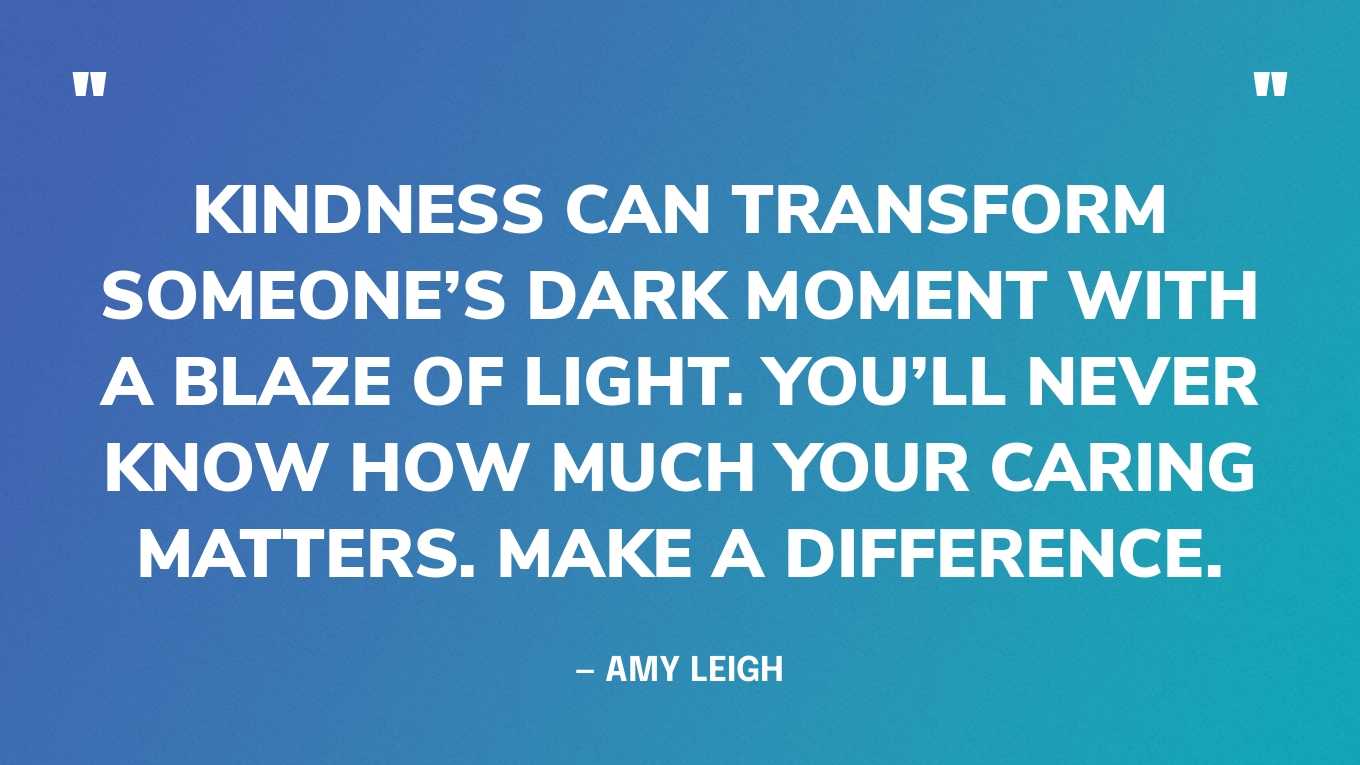
“Kindness can transform someone’s dark moment with a blaze of light. You’ll never know how much your caring matters. Make a difference.”
— Amy Leigh
“Why should I care when no one else does? For the simple reason that the most critical time to care is when no one else does.”
— Craig D. Lounsbrough
“A smile is a light in your window that tells others that there is a caring, sharing person inside.”
— Denis Waitley
“People who care about each other enjoy doing things for one another. They don’t consider it servitude.”
— Ann Landers
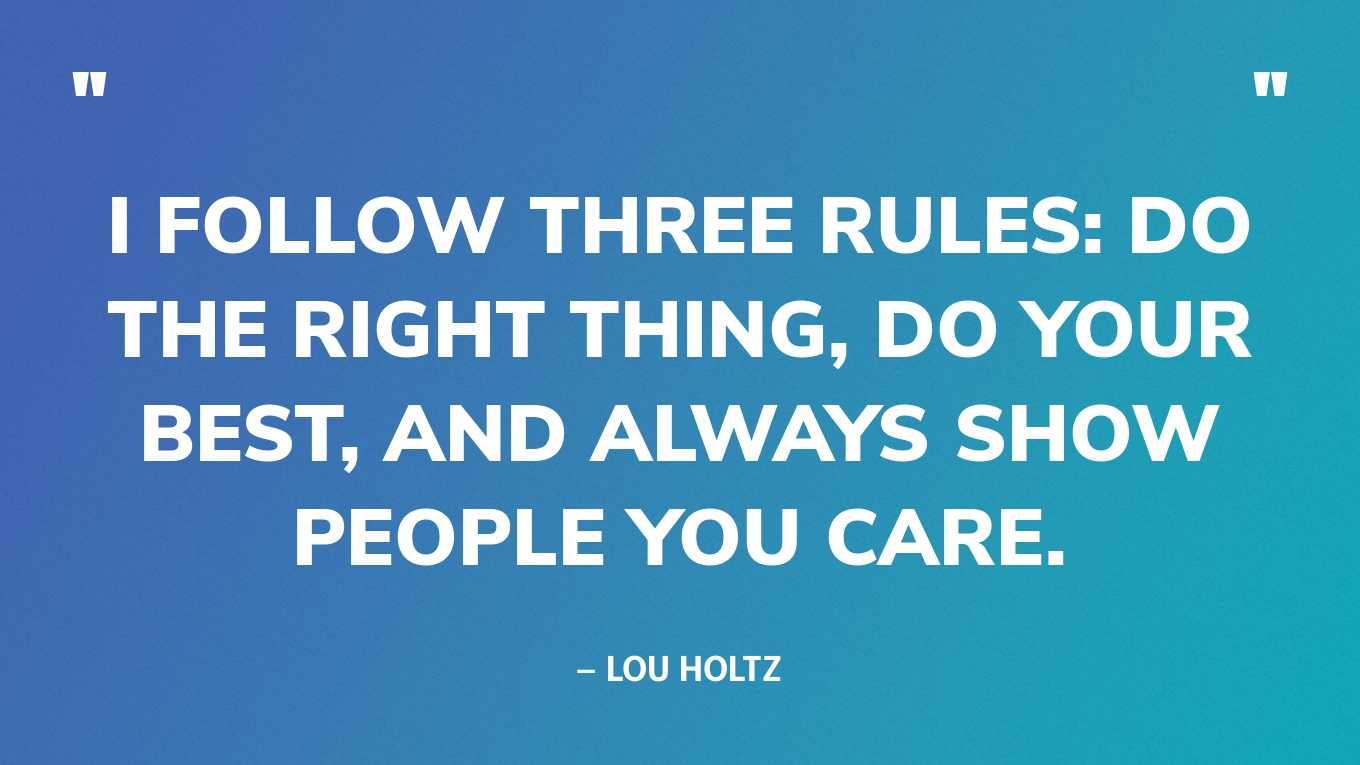
“I follow three rules: do the right thing, do your best, and always show people you care.”
— Lou Holtz
Odilia Romero was ten years old when she left her home.
She left the foggy highlands of Oaxaca, Mexico and was brought to California. Finding a sense of belonging was a difficult feat, as Odilia navigated a new culture and lack of resources in her native language.
Today, Odilia is a fierce Indigenous Zapotec leader advocating for Indigenous migrants through the non-profit, Comunidades Indigenas en Liderazgo (“Indigenous Communities in Leadership”).
She is the Co-founder of CIELO, alongside her daughter, Janet Martinez, whom she actively involved in activism at a young age. Odilia is also a trilingual interpreter of Zapotec, Spanish, and English.
Her personal experience as an Indigenous migrant has shaped her steadfast commitment to serving others who similarly struggle to find their place.
CIELO, which translates to “Heaven,” is an LA-based organization providing holistic support to over 30 Indigenous groups in the area.
Founded in 2016, the organization is at the forefront of creating tangible solutions to the challenges that Indigenous communities confront daily. Not only do they provide translation services, connecting migrants to translators for border documentation, but they address social, economic, and cultural needs.
CIELO has quickly become the main organization that many depend on to direct them to valuable resources. Running the organization has pushed Odilia to master her understanding of the advocacy sector, the mechanics behind a non-profit, and securing funding opportunities.
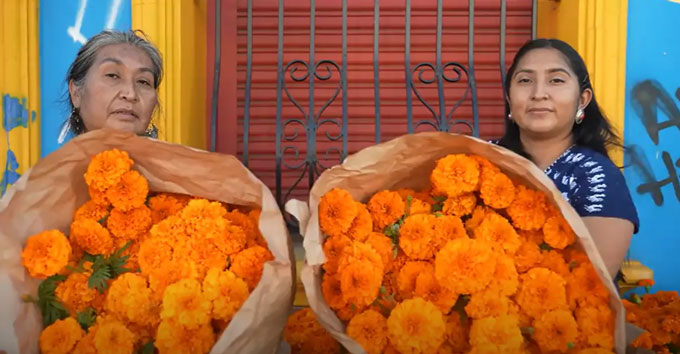
“I have learned most about the processes and how to navigate the system and the rules of an ONG (Non-governmental organization). There’s constant pressure to do every effort possible to get the funds that we need to pay the staff and keep serving Indigenous communities.”
The staff at CIELO is equally as passionate about the work they do, and for many, the cause is close to home. Some of the workers at CIELO have used its services in the past.
One example of someone providing their expertise is Anna (not her real name) who fled the violence in her hometown.
“She ran away because her life was threatened by the gangs from her hometown. She was detained and spent time in a detention center. Today, [she] is one of the few Indigenous interpreters that speak K’iche, and she provides help to people that are going through the same perils and struggles as she did,” shares Odilia.
CIELO is unique in that it is an Indigenous led organization, and it continues to expand the roster of languages in which it provides translation services.
As an Indigenous woman with a migrant story, Anna understands the anxiety of not being heard or understood in the K’iche language.
Understanding is especially important in asylum cases, in which a migrant seeks protection from the US instead of being deported to the country in which they are fleeing from violence.
With the linguistic diversity existing within Latin America, interpreters serving Indigenous communities play an important role. In Mexico alone, there are 68 different Indigenous languages. In Guatemala, there are 23. Furthermore, within each of these languages exist dozens of dialects.
Indigenous migrants often navigate schools, hospitals, legal systems, or detention centers in fear that they will be left voiceless due to the lack of interpretation in their native language.
It is often assumed that migrants from Latin America will speak Spanish, and this can lead to a community locked out from important resources.
CIELO also intervenes in family-separation cases, often impacted by language. These cases are extremely emotional. Odilia has helped several families re-unite and she recalls serving one specific family whose native language was Zapotec.
“We helped to bring home a couple of children that social services took from an Indigenous family because of the language barrier. We talked to judges and lawyers and reunited the family one day at 5 PM.”
After navigating the legal system and dealing with the logistics of the case, Odilia had a word with the father of the children.
“What the father of the children told me really moved me: he thanked me and said that when social services came to take their children nobody said anything to him and that they grab them like little animals. Then he told me that when the family was reunited, his wife cried as much as the summer rain (because in Oaxaca it rains a lot during August), that he tried to be strong like the mountains but when they arrived at the bus stop to see his children the tears came out as hail. He told me this in Zapotec, and I will never forget that moment. Everybody was crying.”
CIELO works to be a liaison between migrants and legal structures. This story offers a glimpse into how she must act quickly to serve the uniqueness of each case as well as the families that she supports. It is one of Odilia’s most cherished memories. It also demonstrates the centrality of language in immigration cases.
Making COVID-19 Information Accessible To Indigenous Communities
When the COVID-19 pandemic hit, Odilia immediately acknowledged that Indigenous communities would be extremely vulnerable, largely due to the lack of information distributed in Indigenous languages.
Knowledge on the unraveling of COVID-19 would need to be made accessible, and CIELO spearheaded these efforts.
Firstly, the organization raised over $4 million in funds as well as food cards for the community. These funds were a crucial safety net to support Indigenous families who lost their jobs during the pandemic and were struggling to protect their families.
Over 30 different unique Indigenous communities from Mexico and Central America were represented in those that applied for support during this time.
Additionally, CIELO distributed educational videos in over 30 Indigenous languages that discussed the pandemic, COVID-19 symptoms, and preventive measures.
This information was distributed through all CIELO social media channels including Facebook, WhatsApp, Twitter, and Instagram and was a successful effort in distributing significant information to keep the community safe.
Odilia expresses caring deeply for the community she serves. In reuniting families and initiating funding efforts through a pandemic, she fills the gaps in the system to serve Indigenous peoples. She also attends social gatherings within the community, and it’s one of her favorite aspects of working at CIELO.
“I like to be close with the community, to be at their events and parties,” says Odilia.
CIELO itself creates spaces of community and connects Indigenous communities to the relationship to music, culture and food that are integral to developing a sense of belonging in the US.
These events celebrate Indigenous culture, educate non-Indigenous people on Indigenous culture, and revitalize Indigenous language. CIELO hosts the Annual Indigenous Literature Conference, a conference for people of color to showcase their literature.
Additionally, CIELO hosts concerts with artists that integrate Indigenous language into their music. These events are spaces to strengthen the community and allow for CIELO staff to engage with the community it serves.
Being the first organization of its kind, CIELO’s work has received increased support. Recently, Odilia was approached by Lightbeam, a streaming company dedicated to content that inspires, who hoped to create a portrait of Odilia as an activist and leader, bringing her story onto the platform. Lightbeam sought to celebrate Indigenous culture as well as raise awareness about the challenges that migrant communities face.
Lightbeam produced Cielo, a short film that centers on the organization through Odilia’s eyes. Odilia’s story was distributed to over 200K viewers and a reach of 1.5 million.
Odilia also attended the screen launch of the film at a restaurant in Los Angeles, an event that received a large showing from the Indigenous community and participated in a panel facilitated by Women Under the Influence, where she shared more about her work and back story.
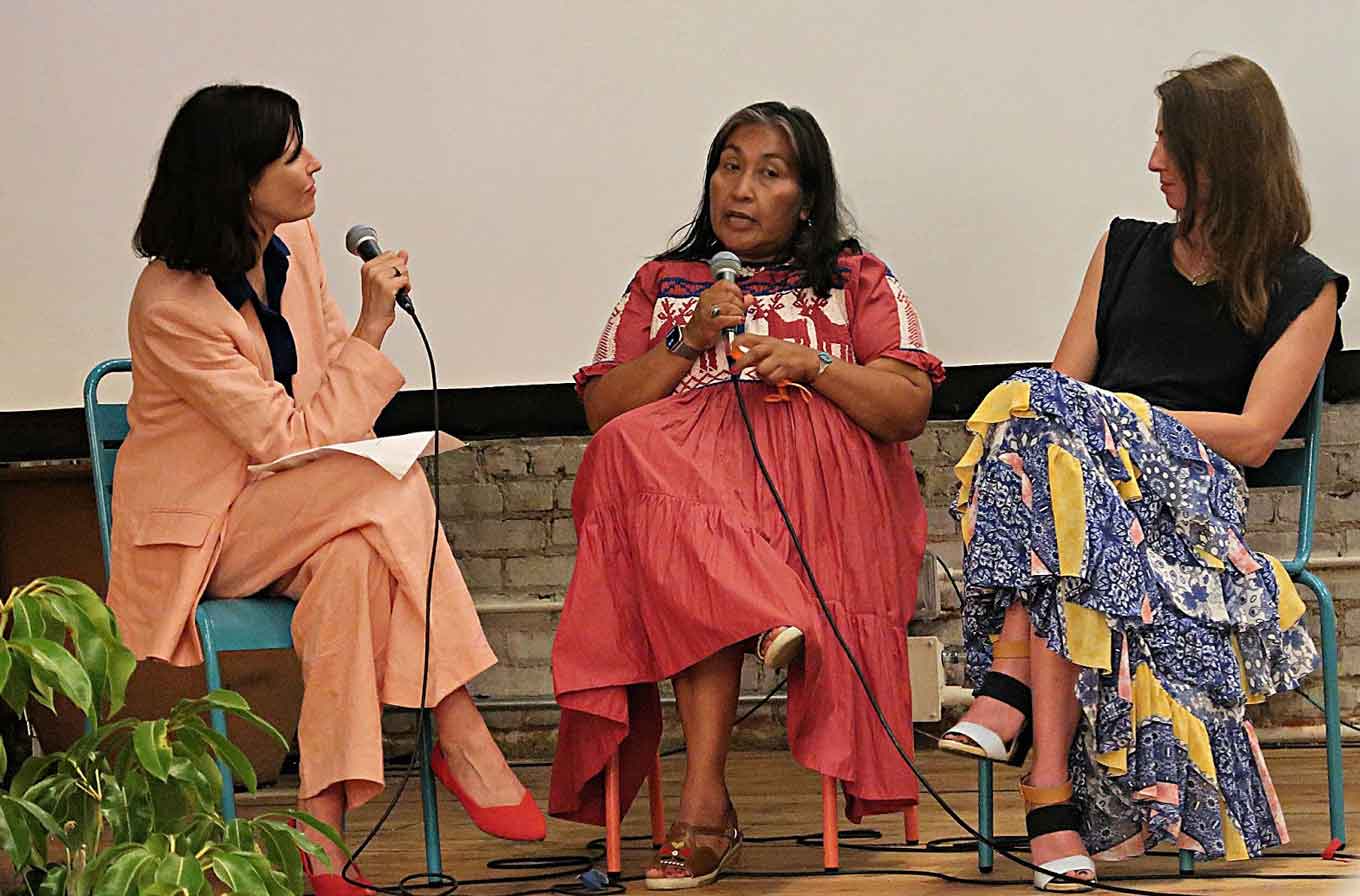
“This documentary has helped to bring resources because what we do in CIELO is now visible to an audience that we normally wouldn’t have access to” says Odilia.
“It has been very helpful in bringing awareness and visibility to CIELO’s work and to the existence of the Indigenous communities in the US.”
Odilia’s message will continue reaching more people. She is an eloquent speaker that disentangles the many reasons Indigenous peoples migrate to the U.S., reminding us that the communities are not monolithic.
Her vision for CIELO has not changed. Creating substantive solutions to the social, economic, and cultural challenges the Indigenous community faces as an Indigenous women-led organization is the focus.
“I’m proud that CIELO can exist because it is not common to see an Indigenous female-led organization. And I’m also proud that I could do this with my daughter as the cofounder,” says Odilia.
Working alongside her daughter, Odilia is a pillar of strength for the Indigenous community. She’s created the very organization she needed at ten years old, and is a voice for the community.
“I like to have the chance to speak and say that the Indigenous communities are very much alive.”
This article is a part of an ongoing series on how to minimize or eliminate Amazon use from our lives. We’re highlighting the best Amazon alternatives for those with ethical, moral, or environmental qualms with the trillion-dollar company.
Goodreads is fine. It’s a simple tool that allows you to keep track of how many books you read from year to year, connect with other readers, and discover more books to add to your queue...
The only problem is that, since 2015, it’s been owned by Amazon — the multinational megacorporation with a number of environmental and ethical concerns.
This is a problem for anyone concerned about handing over their data to Amazon — or for anyone working to completely divest from Amazon tools.
(For those who fall into that camp, we’ve already written guides on alternatives to: Prime Video, Audible, Amazon books, Amazon Kindle, and Amazon shopping.)
While there’s nothing inherently wrong with using Goodreads — I have 93 books logged on Goodreads this year alone — it’s natural to be curious about non-Amazon alternatives.
In my own quest to divest from Amazon wherever I can, I’ve put together a comprehensive list of all of the platforms I’ve tried and recommend — with everything from direct competitors to social networks, plus some out-of-the-box options, too.
First, a few reasons why you might consider switching away from Goodreads:
- Amazon profits off of data — and everything you do on Goodreads gives them more data to work with.
- Many authors report experiencing bullying and extortion on the platform. (If you’re a book lover, we’d really encourage you to be a human-who-writes-those-books lover, too.)
- Goodreads subtly encourages you to buy books from Amazon and Audible… but you could be checking out books from your local library or supporting an independent bookstore.
- Goodreads has lots of ads and all of that ad money goes back to Amazon.
- Ever since Goodreads was acquired by Amazon, users have reported that it’s been largely neglected and, at this point, lacks features that are now standard from competitors.
The Ultimate Guide To Goodreads Alternatives —
The StoryGraph

The StoryGraph is a website and app that allows users to discover and share books. Users can create a virtual bookshelf, rate and review books, and participate in online book clubs and discussions. The StoryGraph is a new platform that aims to be a more inclusive and community-focused alternative to Goodreads.
True to its name, The StoryGraph is known for its compelling graphs, turning your book data into helpful visuals. If you’re a data nerd like me, this is an especially enticing feature.
One thing that I found really helpful is that the platform makes it easy to import your entire Goodreads history to The StoryGraph — ensuring you don’t have to manually re-create years of book progress.
Most notably: The StoryGraph focuses on providing personalized recommendations based on a user’s preferences and interests. (Goodreads’ approach to book discovery is much more general and less personalized.)
→ Check out The StoryGraph
Booksloth
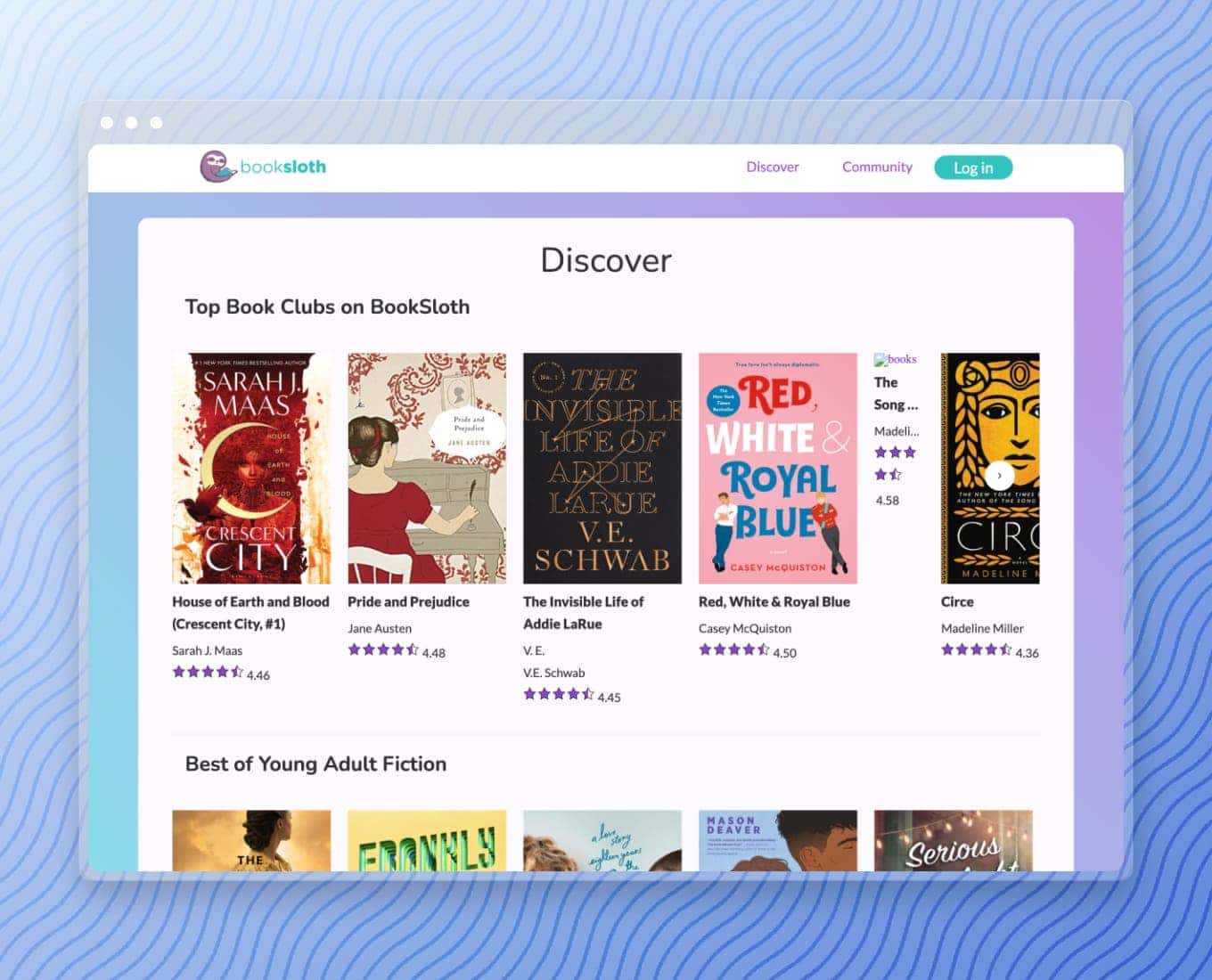
Booksloth is a mobile and web app that makes it easy to log the books you read and discover new books based on personalized recommendations.
As you log books, you can go beyond the traditional star-rating by rating books based on, for example, characters or worldbuilding.
It’s clear the platform has invested in its community-focused features; creating discussion boards to chat about books and allow you to connect with other readers (in a text message-type format).
You can create a profile that looks a lot like Instagram for books. And you can also create and share book lists, which is a very helpful feature for anyone who has friends asking them what they should read next.
→ Check out Booksloth
Basmo
Basmo’s primary goal is to help users “create a reading habit in no time.”
The app includes features that feel like writing in the margins of your book or highlighting your favorite quotes — all without actually pulling out a pen or highlighter. You can log your emotions as you read to help you reflect on how a book is impacting you. Digital annotaters, unite!
Like Goodreads, Basmo makes it easy to keep track of the books you’re reading, you’ve completed, and want to read — all on a digital bookshelf.
Basmo also features annual challenges — which makes achieving New Year’s resolutions easy! You can focus on how much time you want to read — or how many books you’d like to complete.
I actually originally found the platform on TikTok and was amazed at how many positive comments people had left about the app. I tried it out and it hooked me. Absolutely worth a download.
→ Check out Basmo
Libib
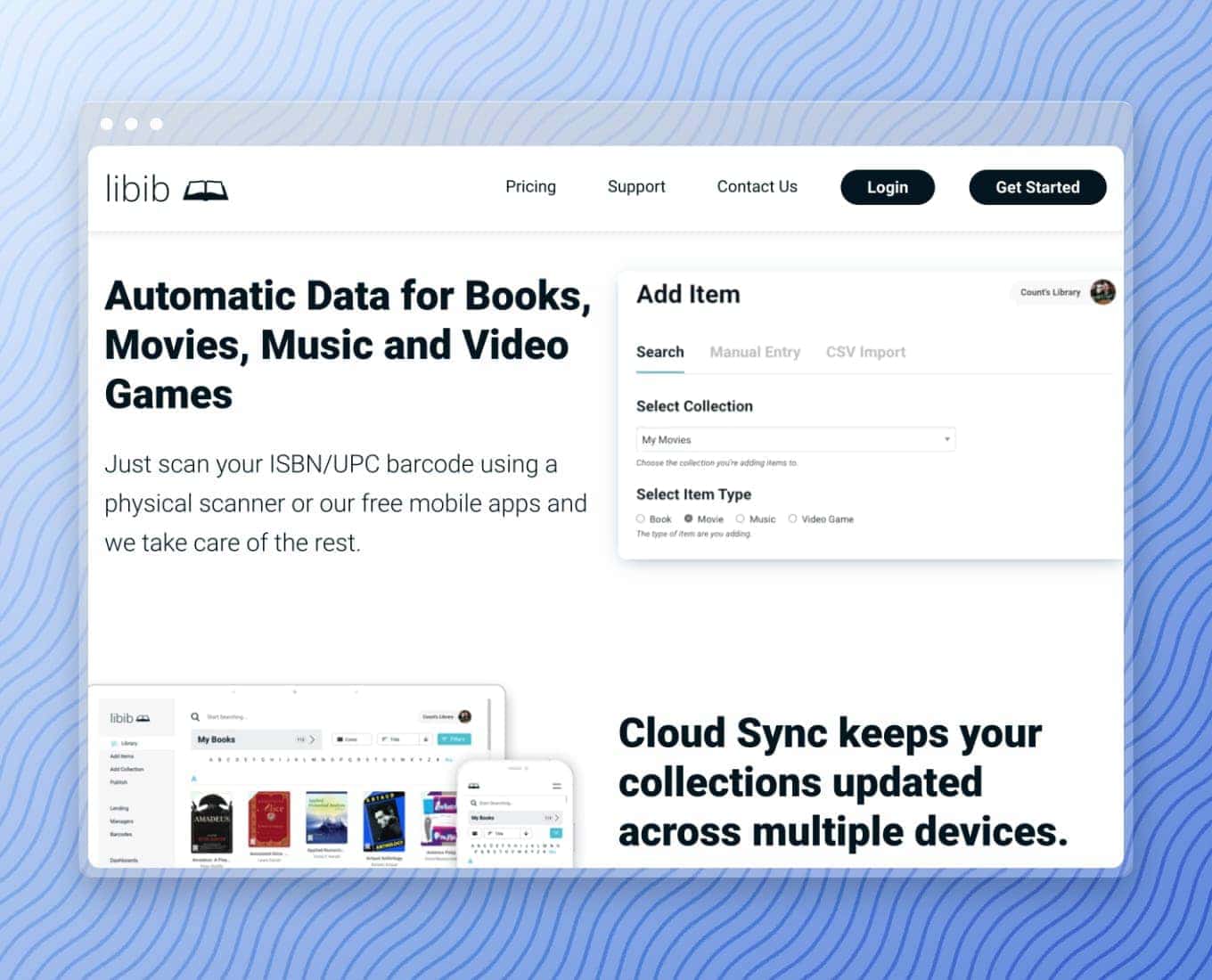
While Libib is a cataloging tool meant to be used by libraries, schools, and organizations — it’s a really incredible tool for anyone with a big collection of books.
You can keep track of the books you own, the books you read, and even the books you loan out to friends — all in a comprehensive library management system. You can even take it further by tracking your DVD, vinyl, and board game collections.
If you want to get really nerdy about it, check out this TikTok about how one book lover uses a barcode scanner to add all of her books to Libib just like a library or bookstore.
→ Check out Libib
Bookly
Bookly is all about tracking reading sessions — not just books. Every time you read, open up the Bookly app to start your reading timer. This will help you keep track of your reading speed — which will tell you how much time it will take you to finish your book and other valuable data.
I also like that the timer feature keeps me motivated to stay focused on actually reading (instead of accidentally checking my notifications).
Bookly offers personalized reports with all of your reading stats — and helps motivate you to treat reading like a workout. As you read, you can save thoughts and quotes — and see how you’re measuring up against your goals.
→ Check out Bookly
Likewise
Likewise is the perfect app for anyone looking to track and discover all kinds of media in one place. The app can help you manage books, movies, TV shows, podcasts, and more.
As you add more media that you’ve read, watched, or listened to, Likewise learns what you like and offers better and better personalized recommendations. The app also makes it easy to connect with community and find content about media.
→ Check out Likewise
#Bookstagram & #BookTok
This one is a bit more out-of-the-box:
Bookstagram and BookTok are terms used to describe the community of book lovers and readers who share their passion for books on Instagram and TikTok, respectively.
Bookstagrammers and BookTokkers, as they are often called, typically post pictures and videos of books, book-related items, and their own reading experiences on their accounts, and often use hashtags to connect with other book lovers.
Bookstagram and BookTok are known for their vibrant and creative communities, and are seen as a way for readers to discover new books, share their love of reading, and connect with others who share their interests. At this point, it’s not uncommon to walk into a bookstore and see a shelf with a sign that says, “As seen on TikTok.”
Many people have begun using Instagram and TikTok as the primary place they track the books they’ve read. By posting a photo, video, screenshot, or review of every book you read on your dedicated book-related account, you can effectively create a complete database of the books you read and love.
Even if you don’t want to step in front of the camera, following other creators is a fantastic way to find new book recommendations. You can even create folders on your respective apps to save posts and curate your own TBR list, with the help of a diverse reading community.
(And who knows — if your account picks up enough steam, you’ll likely get publishers DMing you to send you free books to review!)
Notion, Airtable, or Google Sheets
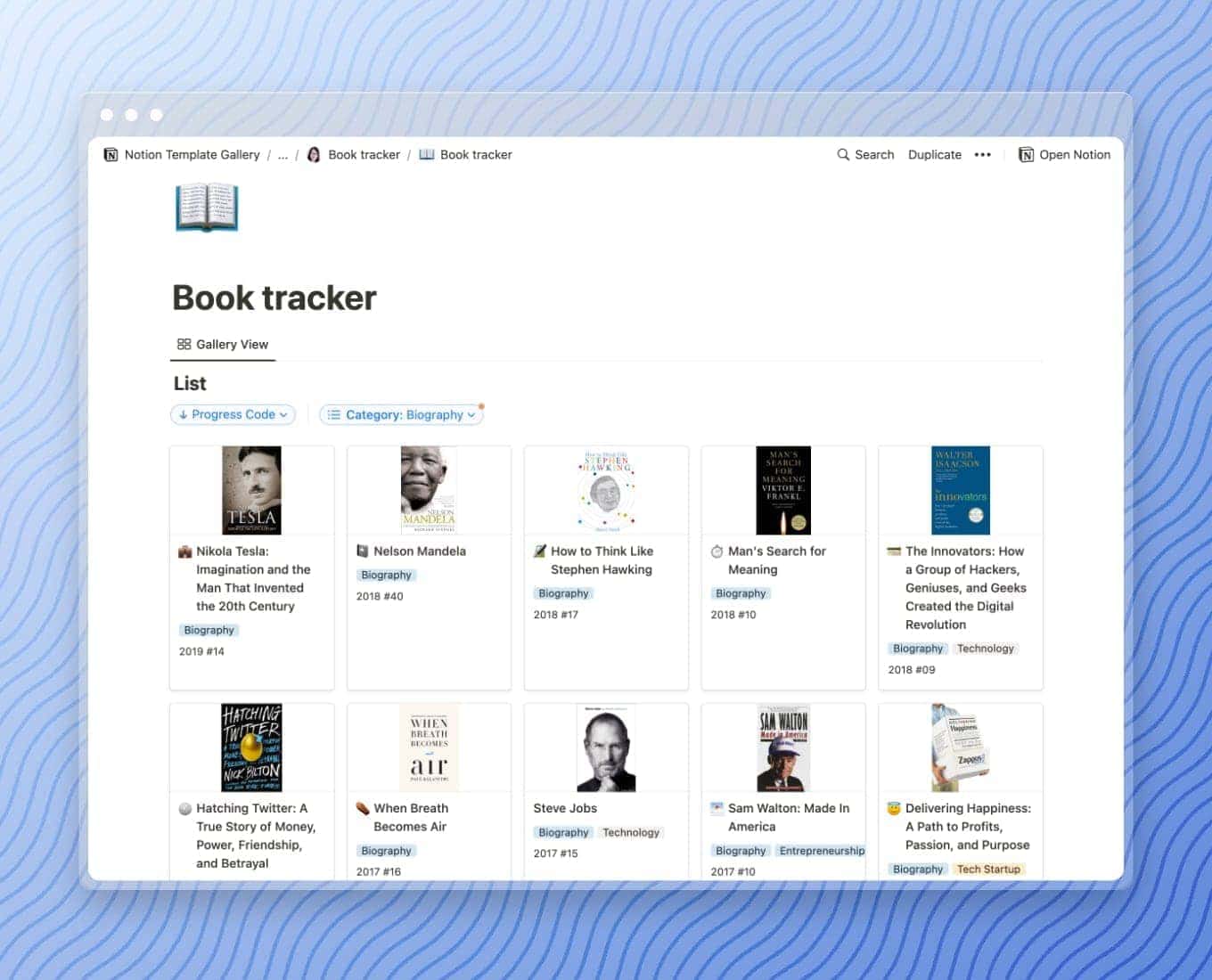
Sometimes you just want to take things back to basics. Rather than using a high-powered app to track your reading, you can simply put together a database or spreadsheet to keep track of the books you read.
This is especially beneficial if you want to track custom metrics, like how many of your books were written by women authors or Indigenous authors. You can even use tags to organize books into curated lists.
It definitely takes a lot more manual action — but if you already love nerding out about databases and spreadsheets, you know this has the potential to be worth the effort.
→ Check out the Notion book tracker template
LibraryThing
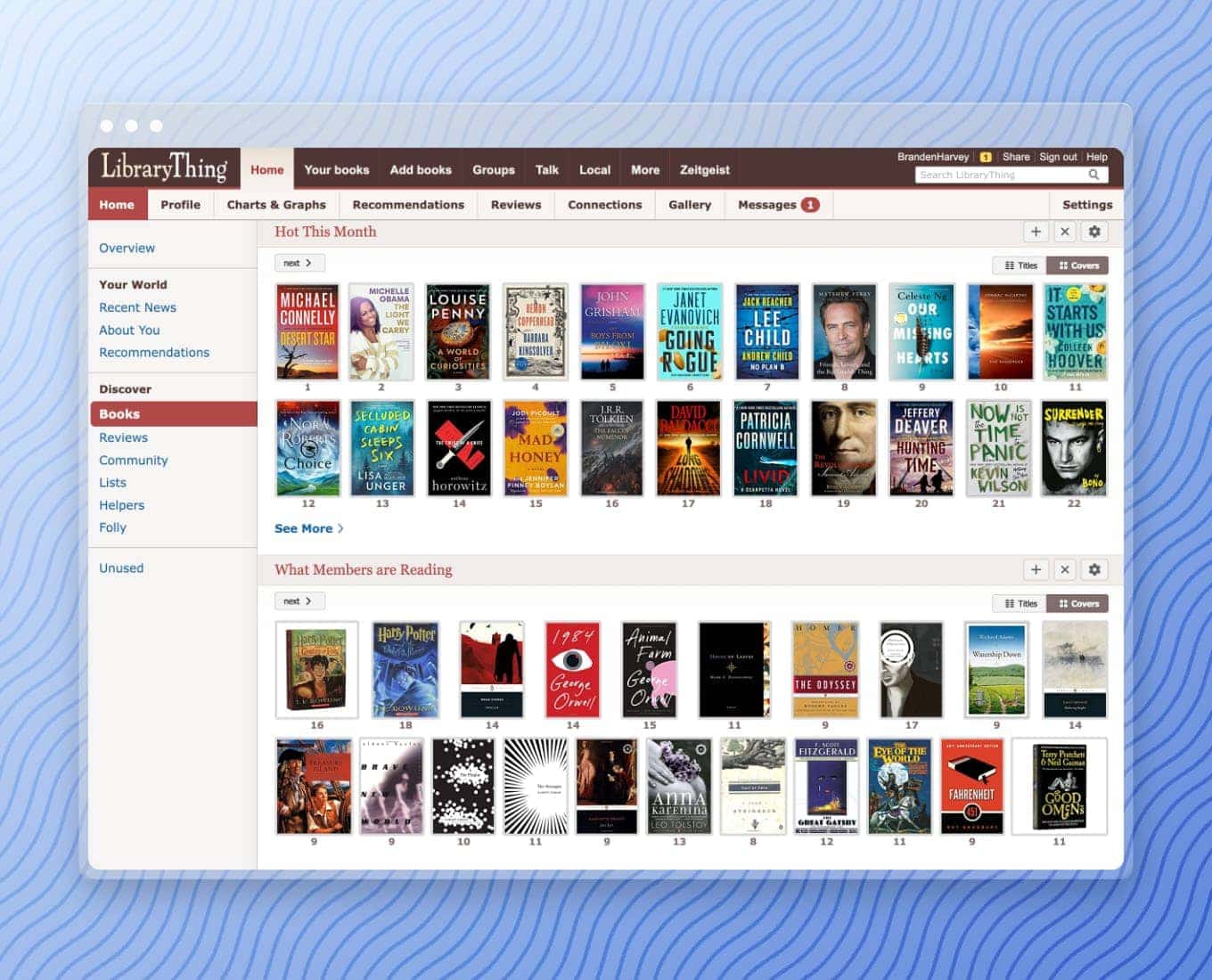
LibraryThing boasts its ability to help you “create and track a library-quality catalog” of all of your books (and other media). You can track the books you’ve read — or just manage your home library.
The platform’s database pulls from the Library of Congress (and hundreds more places) and pulls in a ton of data for each listing.
You can also connect with a community of book lovers through groups and message boards — which seem to stay pretty active.
→ Check out LibraryThing
BookTrib
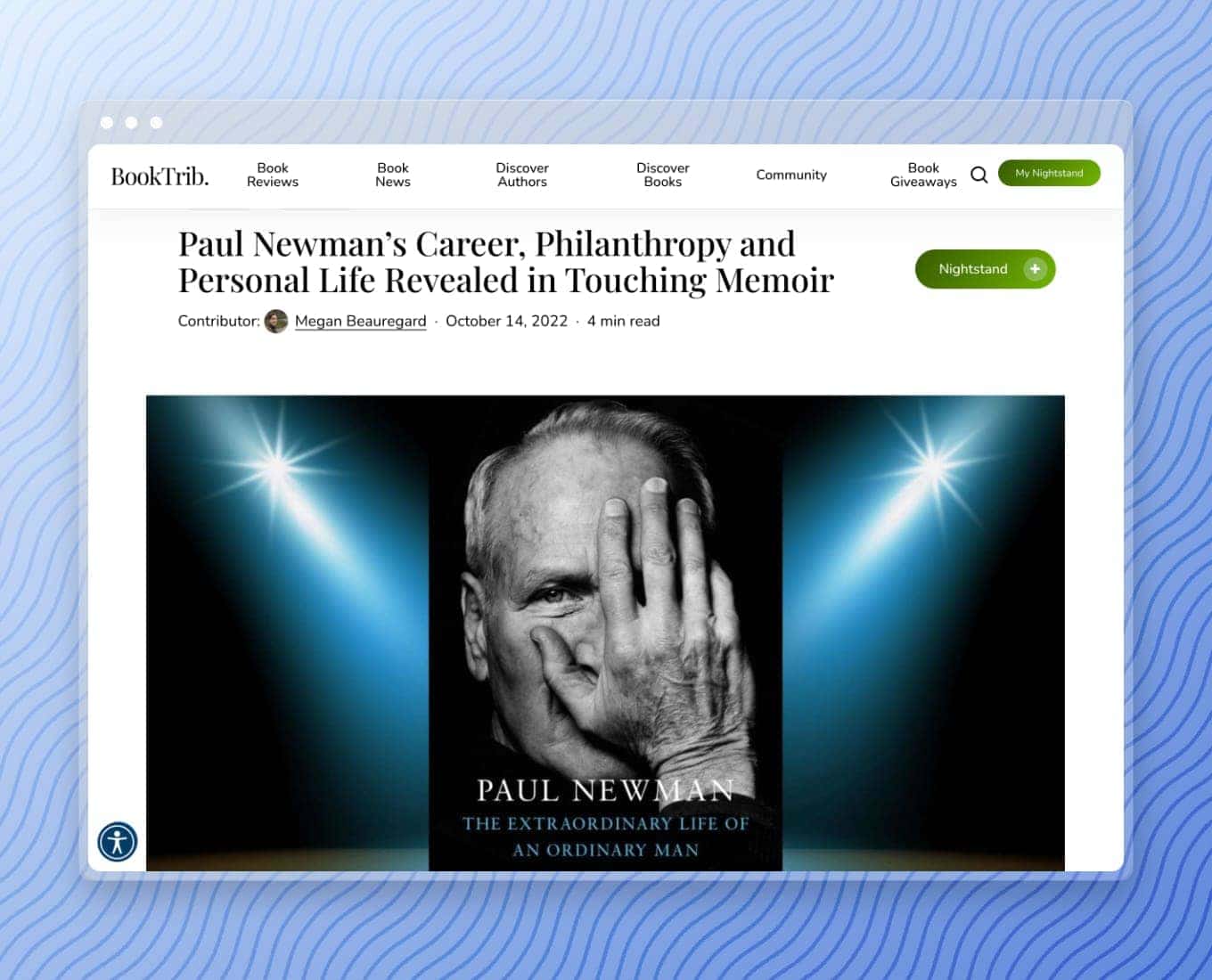
While BookTrip is primarily an online magazine for book news and reviews, the website has one fantastic feature we can’t help but recommend: My Nightstand.
As you read articles and reviews on BookTrib, you’ll see a small green button that simply says “Nightstand.” Tap that, and BookTrib will automatically add whatever book you’re reading about to… your nightstand — a list of books you’d like to read.
Within a week of reading BookTrib stories, I’d already discovered a dozen books that piqued my interest — and added them to My Nightstand. This feature is perfect for book discovery and simple tracking.
→ Check out BookTrib
Google (which is, of course, another multinational corporation with its own concerns) has, under-the-radar, created its own simple way to help you keep track of the content you consume. (As long as you’re on your phone, that is.)
From the mobile version of Google.com or the Google app, you can simply search for an author or book (or even an entire genre). Then, you should be able to tap to add the book to your reading list or mark it as already read.
You can also search (again, only on mobile) for “what to read” to find and update your reading lists. This also works for movies and TV shows. Over time, it’ll show recommendations too. (More details on the Google Help page.)
To be honest, I haven’t been able to make this work with every book, as the option to add it to my list doesn’t always show up. Google has a history of launching apps or tools only to discontinue them later — so I’m not ready to go all-in on this yet.
But, if this does end up working out in the long run, it could be a really simple way to log your reading history and — especially — easily add new discoveries to your to-read list.
Your Library
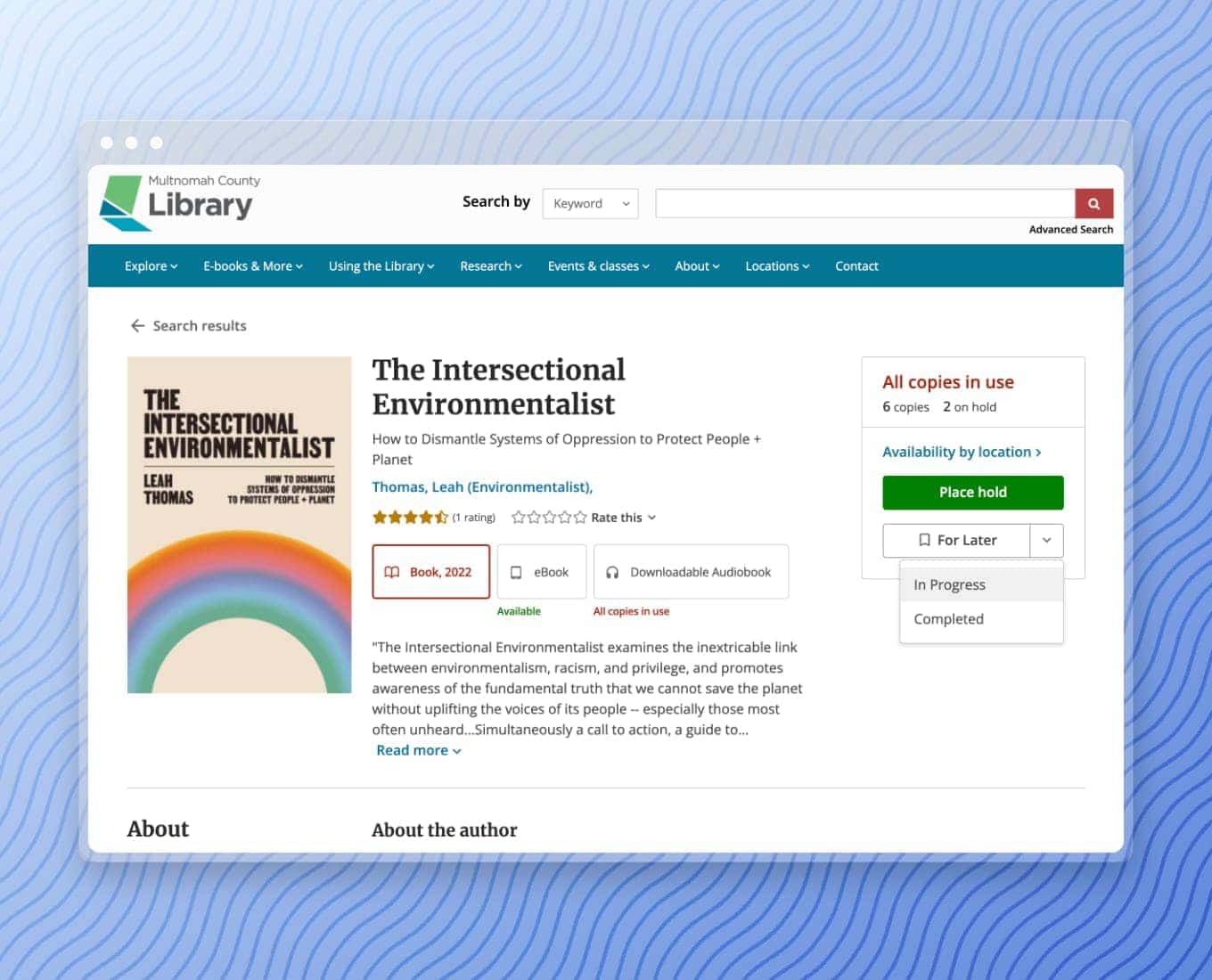
An underrated way to keep track of your reading history is through your library’s website! Most libraries use a software (for mine, it’s BiblioCommons) that allows you to log into your account and add books to your reading history and other lists — whether or not you checked them out from the library.
It may not be the most comprehensive tool out there, but there’s something special about logging into your library to log the newest book you’ve read.
Notes App
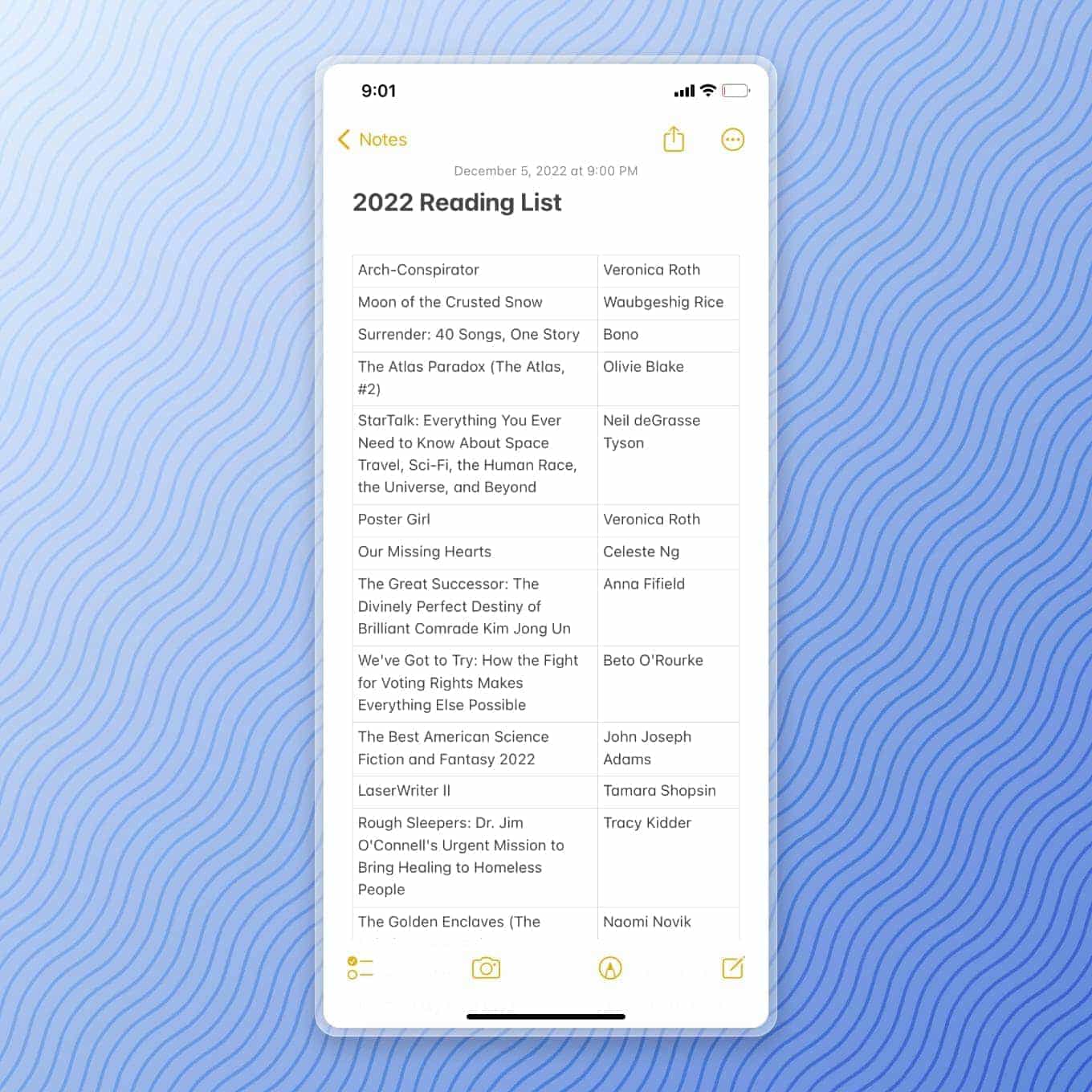
Last but not least, if you just want to log books as you read them, there’s nothing more simple than an ongoing note in your Notes app. Just type out the name of the book you just read and move on with your day. Add a few star emojis at the end if you want to get fancy.
You can even take a screenshot and post to Instagram at the end of the year. Easy.
Final Thoughts —
Based on my experience using Goodreads alternatives, I have a few final thoughts and recommendations:
- The StoryGraph is the platform most poised to be a Goodreads-killer. It has all of the same benefits and features of Goodreads — just better. I especially think it’s better at providing data and insight about my reading habits — and recommending books I wouldn’t otherwise find.
- The only thing that Goodreads still wins on is community. More of my friends use Goodreads than any other platform combined. I really value seeing what my friends are reading (and love when they comment on what I’ve read) and for that reason, I’m going to have a hard time fully quitting Goodreads anytime soon. (But definitely feel free to send your bibliophile friends this article, so they can jump on a new platform, too!)
- If I had to pick a runner-up to The StoryGraph, I’d ultimately find a deadlocked tie between Basmo, Booksloth, and Bookly (wow, that’s a lot of b-words). They’re all great for different reasons, and have great design and simple apps.
- If you want to track more than just books (like movies and shows), I think Likewise is the way to go.
- And lastly, I really can’t speak highly enough of just picking a place to keep track of your books and sticking with it. No platform is perfect, but you’ll find the most success with just staying with a routine. For two years I posted an Instagram Story for every book I finished, and saved it to a Highlight. For a period of time I logged the books I read in my Notes app. You can even simply text the same friend every time you finish a new book. There’s no wrong way to do it.
More Alternatives —
I’ll also note that, during the course of writing this article I stumbled across a number of other platforms that I haven’t yet been able to formally review yet.
I’ll include them here and continue to update this article over time:
- Lit Hit. — A young app that allows you to swipe left and right on books
- Anobii — Intentionally positions itself as an independent alternative to Goodreads
- BookBrowse — Seemingly comprehensive tool, but its design aesthetic feels older than Goodread’s already-old vibe
- BookLikes — While other blogs recommend BookLikes, it doesn’t appear to be very active or up-to-date
- TBR (Tailored Book Recommendations) — Pay them money to have a literary expert mail you three books they think you’ll love
- Oku — A gorgeous, minimalist design and lots of features! I’ll definitely try this platform next.
- BookWyrm — This proudly anti-corporate and decentralized platform can connect with other decentralized platforms like Mastodon
- Hardcover — Another beautifully-designed platform with plenty of features (and Goodreads import capabilities)! I’ll be trying this one soon, as well.
Every day the Good Good Good team collects the best good news in the world and shares it with our community. Here are the highlights for this week!
If you want to get good news in your inbox every day, join the Goodnewsletter — the free daily newsletter designed to leave you feeling hopeful.
The Best Positive News We're Celebrating This Week —
After he was harassed for having a Black Santa on his lawn, an Arkansas man became a professional Santa Claus
Two years ago, Chris Kennedy received a racist note from a neighbor asking him to remove the inflatable Black Santa in his front yard. Instead of removing it, Kennedy added another one — and so did a bunch of his other neighbors.
Inspired by the show of support, Kennedy wanted to do even more to help improve representation around the holidays. First, he started by dressing up as Santa for his own 4-year-old daughter — and it started catching on with more family and friends.
Hearing his story, “Santa Camp” organizers from the New England Santa Society reached out to Kennedy to participate in their Santa Claus training. Kennedy said they’d been receiving a growing number of requests for Black Santas, and “really wanted to push things forward and be more inclusive.”
Kennedy is also the first known professional Black Santa in Arkansas, and part of a growing movement of inclusivity in the Santa Claus ranks.
Taiwan is turning underground, unused metro stations into organic vertical farms
Vertical farms are popping up in more and more locations around the world, and the latest may come as a surprise. Taiwan is installing them in unused Metro stations.
These vertical hydroponic farms are highly efficient, and grow lettuce under LED lighting to eliminate the use of herbicides and pesticides. And the 40-square-meter one located at Nanjing-Fushing Station in Taipei has a full market where passersby on an upper level can shop for fresh produce and other items.
Taiwan is also using the farms as a way to bring more young people, who are reluctant to go into the traditional farming industry, into the field
A milestone in the transition away from fossil fuels, the world’s first hydrogen-powered jet engine test was a success
Britain’s Rolls-Royce ran the world’s first test of a jet engine powered by hydrogen — and it was a success. It’s a significant milestone toward proving the gas has the ability to decarbonize air travel.
The company said the hydrogen was created by wind and tidal power, and is partnering with easyJet to prove the gas is a viable alternative to traditional jet fuel.
We will always celebrate good progress in fighting the climate crisis — and air travel is a major contributor that needs swift action. Though it can seem like action isn’t happening fast enough, we’re constantly reminded of all the ways good, meaningful progress is being made.
From wind and solar power installations outpacing fossil fuels, triggering positive climate “tipping points,” new recycling technologies for those clean energy sources, electrifying motorbikes, promoting alternate forms of transportation, and more.
A long-distance partnership with the Philippines is helping bring composting to Detroit
For decades, Detroit was home to one of the country’s largest waste incinerators. Its existence also discouraged investment in alternative waste management systems. In 2014, Detroit became the last major U.S. city to implement citywide curbside recycling.
Local organizers banded together and successfully shut down the incinerator in 2019 and are now working with the city to develop a composting system. The only problem: they don’t have much experience with community-wide composting.
In developing the program, they turned to an organization more than 8,000 miles away: Mother Earth Foundation in The Philippines, which has spent the last 20 years training low-income communities, government agencies, civic organizations, and businesses in zero-waste practices.
A number of innovative housing projects are helping increase affordability in communities around the world
Globally, 1.6 billion people live in inadequate housing conditions, and at last count, more than 100 million people have no housing at all. Housing affordability is a major problem that we’re witnessing right now in the U.S. — and it impacts communities all over the world.
The Institute of Global Homelessness (IGH) is one of the first international organizations to focus its efforts on homelessness as a global phenomenon. It utilizes an innovative mix of programs, local systems, and policies that can be scaled, connected, and accelerated internationally to reduce and end homelessness on the world stage.
Singapore, for example, is known as one of the world’s best when it comes to social housing. Over 80% of the population currently lives in publicly governed and developed housing.
The International Energy Agency announced global renewable energy capacity will double by 2027
In its latest annual report on renewable energy capacity, the International Energy Agency (IEA) found that renewables are on track to double by 2027 — 30 percent higher than the growth forecasted one year ago. The growth will be driven primarily by solar energy.
Renewables are expected to account for 90% of global electricity expansion and overtake coal as the largest supplier of energy even sooner — by 2025.
It’s yet another reminder of the real, meaningful, rapid change being implemented to save humanity from some of the worst impacts of climate change. Positive climate tipping points, like the affordability and growth of renewable energy sources, are within our reach.
A U.K.-based travel editor gave up flying for the climate and rediscovered the world
Amidst growing conversations and attention around the climate crisis — from Greta Thunberg’s school strikes, David Attenborough’s less-than-soothing threats, and the flygskam (“flight-shame”) movement in Sweden — travel editor Helen Coffey felt inspired to take action herself.
And she did. In 2019, Coffey took a flight-free travel pledge. In addition to discovering and dispelling some myths around alternatives to flying — they’re not more expensive than cheap flights, and individual actions really do matter in this regard — she found one mainly “selfish reason” for continuing the pledge still today: “slow travel is just plain wonderful.”
“Every trip I’ve taken since swapping planes for trains, ships, buses, bikes, and legs has been gilded with a giddy sense of adventure, bringing with it a real connection to place as I’ve passed through landscapes, not over them. Going flight-free has introduced me to the appreciation that comes with arriving into a destination, buoyed up by a childlike sense of wonder, after a proper journey by land and sea,” Coffey writes.
More good news of the week —
A new Washington D.C. city council proposal would provide free Metrobus service in the city and expand major routes. If the measure passes, it would become the largest city in the country to offer free transit.
K-pop fans around the world are working together to demand climate action. Korean pop fans have a strong history of using their voice for good, from standing up to authoritarian regimes, to demanding social and racial justice.
An aquarium in Boston is treating “cold-stunned” sea turtles found stranded on U.S. beaches. The New England Aquarium saved and is treating 150 turtles suffering from dehydration and pneumonia, which are symptoms of cold-stunning.
Germany is turning 62 former Cold War military bases into wildlife sanctuaries. An area equivalent to 4,000 soccer fields will soon be a protected home for rare wildlife like eagles, woodpeckers, bats, insects, and more.
The FDA is planning to open blood donation to more gay and bisexual men. The current policy hasn’t changed since the 1980s, and public health experts and advocates said the changes will both help battle stigma and address future blood shortages.
Lower-income families in Tennessee just received an additional $500 to help them this holiday season. The money will support around 24,000 children in families enrolled in the state’s Families First/TANF program.
The Los Angeles City Council voted unanimously to ban new oil and gas drilling. It also voted to phase out all of its more than 5,000 existing wells which disproportionately impact communities of color.
911 operators in Montreal are being trained to detect racial bias in callers. The training will help them prevent racial bias and stereotypes from filtering into police responses.
A new Washington state law requires employers to post job salary ranges. The state joins a growing movement of salary transparency, which experts say makes job-hunting easier and helps reduce gender and racial pay inequities.
Ukrainian President Volodymyr Zelensky was named Time Magazine’s 2022 Person of the Year. Zelensky was honored for his courage that came to define all Ukrainians, as were TIME’s 2022 Heroes of the Year, Women of Iran.
Reddit users are turning Kanye West’s page into a Holocaust awareness forum in response to his ongoing antisemitism. r/Kanye has 700,000 members and has been flooded with posts about the persecution of Jews during the Holocaust and denouncing antisemitism.
In a breakthrough, scientists created a way to turn unrecyclable PVC into usable products. Polyvinyl chloride is among the most common types of plastics, and none of it is currently recycled.
New data shows the updated bivalent COVID-19 booster provides even better protection from current strains of the virus. The new booster replenishes waning levels of antibodies from any previous vaccination and provides better protection than the original vaccines.
WNBA player Brittney Griner was released from Russian prison in a prisoner exchange. Griner had been sentenced to nine years in prison in August after authorities found less than one gram of cannabis oil in her luggage.
Congress passed the Respect for Marriage Act, protecting same-sex marriage at the federal level. President Biden is expected to sign it into law, and advocates say it’s an unprecedented show of bipartisan support for queer rights.
People experiencing homelessness are often marginalized and stigmatized in our society — but they are human beings, just like anyone else. They have hopes and dreams, fears and challenges, and they are worthy of dignity, respect, and basic necessities.
Oftentimes access to resources is inaccessible — and providing essential care kits is a way to help provide immediate assistance to strangers you encounter in your day-to-day life.
Care kits provide essential items for people experiencing homelessness. Things like toiletries, nutritious food, hand warmers, first aid supplies, and clean socks and clothing can help to improve their quality of life and make their daily struggles a little easier.
In addition to the immediate benefit of providing essential items, care kits can also help to foster a sense of community and connection. By creating and gifting these kits, individuals and organizations can show that they care about the well-being of their neighbors and fellow community members experiencing homelessness — and are willing to take action to help them.
This can help to reduce feelings of isolation and loneliness among individuals experiencing homelessness, reduce stigmas around homelessness, and help to build bridges between different members of the community. Plus, they can often create opportunities for deeper connection and conversation.
We spoke with Dr. Robin Dickinson, MD — a family physician who founded the first and only free clinic in Englewood, Colorado, which primarily serves people who are experiencing homelessness or housing insecurity. (She prefers to go by Dr. Robin.) Dr. Robin also runs Dr. Robin’s School, an online human biology program for kids, and works as a parent coach, helping families raise children who care.
We’ve compiled a list of items worth including in a homeless care kit — and included direct links to product recommendations.
The process of creating these kits can be fun and rewarding — and can be done as an activity with friends or family. And once completed, these kits are perfect for keeping in your car or backpack so they’re easily accessible when the opportunity to gift them arises.
Some of the links in this article are affiliate links, which means we may receive a commission if you make a purchase. This allows us to continue providing resources like this for free. Thank you!
Packing List: What to put in a care package for people experiencing homelessness
Here’s a quick high-level overview of items to include in your kit.
We’ve linked to Amazon for convenience, but you can pick these items up wherever is convenient for you (perhaps at a local business or convenience store!).
Must Haves:
- High-quality waterproof bag
- Food
- Personal hygiene products
- Medical supplies
- Socks
- Menstrual hygiene products
Nice To Haves:
- Pet food
- Note
- List of resources
- Hand warmers
- Money (more on this below)
Alright, now here’s a breakdown of each item:
Waterproof Bag

For the sake of convenience, you’ll want to put all of your resources into a singular container — and the most helpful and practical container is a waterproof bag.
This will ensure the contents of the bag stay air-tight and dry — and that the bag itself can be repurposed as something helpful as well.
A small-to-medium-sized waterproof backpack can be an awesome asset — but for most kits, a gallon-sized Ziplock bag will serve the primary purpose and be most cost-effective.
“We pack in gallon Ziplock bags — the real, name brand ones — because they are waterproof for storing the items, fit easily in a backpack, and will be useful even once the items in them are used up,” says Dr. Robin.
We recommend:
Food

Whether your recipient eats the food you give them right away or in the future — you can feel good about helping ensure someone no longer has to feel hungry.
If you live in a warm climate, be mindful of food that might easily melt in the sun. Also, be considerate of people with allergies. You may consider including multiple different types of food so that someone who is vegetarian, has a gluten allergy, or has a nut allergy will have something they can eat.
It’s also worth noting: Many people experiencing homelessness don't have easy access to dental care — so consider not including any overly hard or chewy foods.
We recommend:
- High-protein, low-sugar protein bar
- High-calorie MRE
- Single-serve peanut butter in squeeze packs or to-go cups
Personal Hygiene Products

It’s easy to take everyday essentials like soap, toothpaste, or hand sanitizer for granted — but they can be a game-changer for someone without easy access to them.
These products, in particular, are really easy to buy in bulk — as they’re already sold in bulk for hotels, Airbnbs, and nonprofits.
We recommend:
- Travel-size shampoo (we recommend including multiple — as these are small)
- Soap sheets
- Soap bar
- Toothpaste
- Hand sanitizer
Medical Supplies

It’s not easy to access medical attention when you don’t have money (or if you have to spend your time trying to get work so you can make money). While access to medical and health care should be made more accessible, ensuring that more people have access to basic first-aid supplies can make a huge difference.
These products can help solve existing health concerns or prevent future potential problems.
Dr. Robin says “Ointments, in particular, are stupidly expensive [at regular stores] but can be purchased for a dollar at the dollar store.”
We recommend:
- N95 masks
- Sunscreen
- Wound cleaning wipes
- Antibiotic ointment
- Hydrocortisone cream
- Antifungal cream
- Adhesive bandages
Socks

As you’ve no-doubt heard from a million Bombas ads, new socks are the number one most requested item at homeless shelters.
You can imagine how helpful it can be to have a new, clean, dry pair of socks to swap out with potentially wet, hole-y, and dirty socks. New socks can be pretty affordable and make a huge difference.
In fact, even if you can’t put together an entire care kit, keeping extra pairs of socks in your car or backpack to gift people can be a great idea.
(We’ve also created a guide to the best socks that give back!)
We recommend:
Menstrual Products

Period products aren’t accessible to everybody — but they should be. (Learn more about “period poverty” and some of the solutions being implemented to combat it.)
“For women of all ages, we add feminine hygiene supplies. They can use the pads for incontinence as well as periods and if they don’t need them, they doubtless know someone who does,” says Dr. Robin.
There’s no reason not to include them in all of your kits, regardless of gender. Because trans men may use them — and whether or not someone needs them personally, they may be supporting someone who does.
We recommend:
Pet Food

You can also help provide for your recipient’s pet companion by keeping bags of pet food in your car — so you can easily add them to your care package when you see someone with a dog or cat.
Dr. Robin says that she uses dry cat food for people with dogs and cats, because cat food is safe for dogs, but not vice versa.
We recommend:
- Small packets of cat food
- Large bag of dog food (separate into small Ziploc bags and label with nutrition facts)
Note & Resource List
You can go beyond providing for someone’s material needs by leaving a kind note for them, with a reminder that they are important. This is also a great activity to do with kids.
Dr. Robin says, “The note from my kids I leave entirely to them but they usually draw a picture and write something like ‘I care about you.’ or ‘You matter to me.’ That’s something we all need to hear.”
Similarly, you can also provide a sheet of paper with a list of resources available in the community. This could be a list of shelters, social services from libraries and community centers, church resources, or food pantries. Last year during heat waves in my city, I printed out a list of nearby cooling shelters.
Money

While it’s common to hear people say, “Don’t give money to homeless people. They’re just going to spend it on drugs!” — the reality is actually the opposite. A recent study found that people who received direct cash assistance experienced higher rates of food security, were able to access stable housing faster, and actually saw a 39% decrease in spending on alcohol, cigarettes, and drugs.
“People who are homeless have a budget too and they are adults who can choose how they can best use the money. I use some of my money on chocolate bars I keep hidden in my desk. Maybe you use some of yours on alcohol. Who are we to police what someone else buys?” says Dr. Robin.
“Cash is useful because people can often use it to gain access to a garage to stay for the night, necessary toiletries that aren’t covered by SNAP, etc.”
Another common misconception is that people can rake in significant amounts of money by panhandling — but another study published in the Canadian Medical Association Journal found that this is almost never the case.
If you still aren’t comfortable giving someone cash, you can always include a gift card to a fast food restaurant or local grocery store. Just try to be mindful of how accessible the nearest restaurant or grocery store is for someone without a car (especially if they may have mobility issues).
We recommend:
- A $10 or $20 bill
- Fast food gift card
- Printable grocery store gift certificate
- Pick up physical grocery store gift cards on your next grocery run
Extra things to keep around:
Toys or Books for Kids
If you have a kid, you might have some old toys or books lying around your house. Consider keeping a few small toys or books in your car in case the opportunity to gift one arises.
We recommend:
- Secondhand toys
- Old toys you (or someone you know with kids) already own
Bottles of Water
Just be mindful of the fact that many plastic water bottles shouldn’t roll around in your trunk for a long period of time — especially during hot weather — because some chemicals can leach into the water.
We recommend:
Hand Warmers
There’s no worse feeling than being so cold you can’t feel your hands anymore. Hand warmers are a small, inexpensive gift that can quickly turn a bad day around. Buy a box in bulk and include a few packets in your care kits during fall and winter months.
We recommend:
Pre-packaged homeless care kits:
You are under no obligation to spend hours organizing and building your own care packages. As long as people are getting access to helpful resources, it doesn’t matter if it was hand-packed or purchased in pre-made bundles.) If you want to get started helping people right away, the good news is that you can buy pre-packaged care packages that are ready to give.
To be honest, none of the options we’ve found so far are perfect — but perfection is the enemy of progress. You can buy any of these pre-packaged kits — and if you find that it’s missing something important or needs a high-quality swap, you can simply add in some extra items you purchased separately.
We recommend:
- Kit with toiletries
- Kit with toiletries + socks + food
- Kit with toiletries + backpack + winter supplies
- Kit with toiletries + backpack + winter supplies + more
You might also like these articles:
How To Help Homeless | Correct Term for Homeless
You might also like these positive quotes:
Quotes about homelessness | Quotes about poverty | Quotes about hunger | Quotes about making a difference
Wholesome memes are a type of internet meme that are designed to make people feel good. Unlike traditional memes, which often rely on sarcasm, irony, and dark humor to make a point, wholesome memes are positive, heartwarming, and often feature uplifting messages or images.
They are often used to spread positivity and good vibes online, and are a welcome break from the sometimes cynical or dark tone of many traditional memes. Wholesome memes often feature cute animals, inspiring quotes, or happy moments, and are designed to make people feel happy and warm inside.
We've compiled our favorite wholesome memes from one of our favorite accounts on the internet: @WholesomeMeme on Twitter
This iconic Twitter account is known for curating and creating the most wholesome memes on the world wide web — and also sells shirts to raise money for nonprofits.
We've highlighted the best of the best for you to enjoy:
Check out these incredibly wholesome memes:
It is self love o'clock
Me bonding with the one internet friend that i never met but they totally understand me
BFF Goals: Women move into the same retirement home after being friends for 80 years
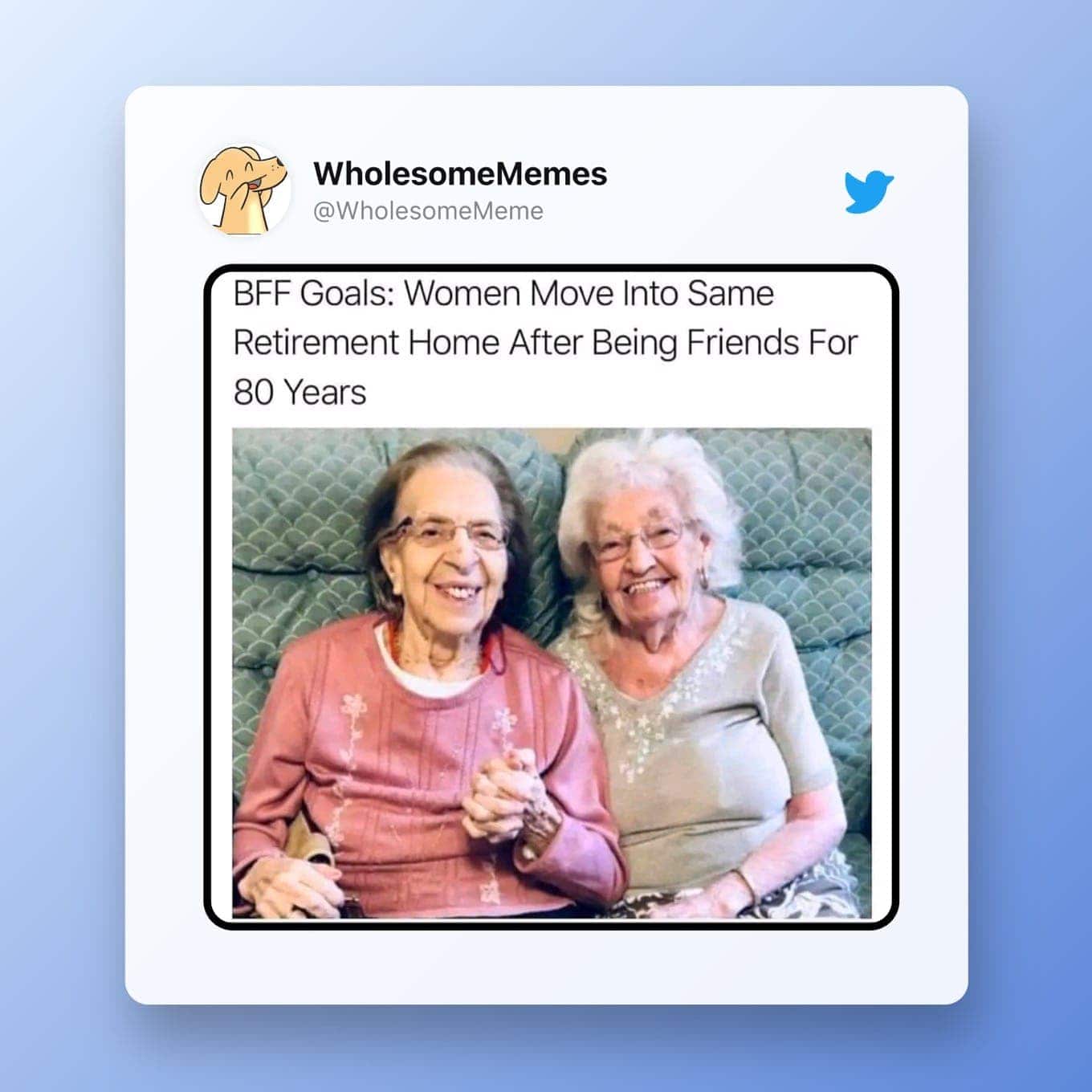
When someone remembers a small detail about you
I hope all my friends know they're 10s
When you're anxious but trying to act cool
This dad sends memories to his son as a gift
7 year old me waiting for my dad to finish his call from work to tell him that I love him
Stop cringing at yourself and your passions
My mom always wanted to be an astronaut
When you're different from all your friends but they still vibe with you
If you've done that before, you can do it again
Learn more about the status of John Krasinski's Some Good News project
Parents support their children no matter what
It was nice remembering you
Tall person at a concert
Wolves become dogs
Read more good news stories about dogs
I hope the rest your week feels like this!!!
"Thank you for sharing. This is beautiful solidarity"
This is a safe space
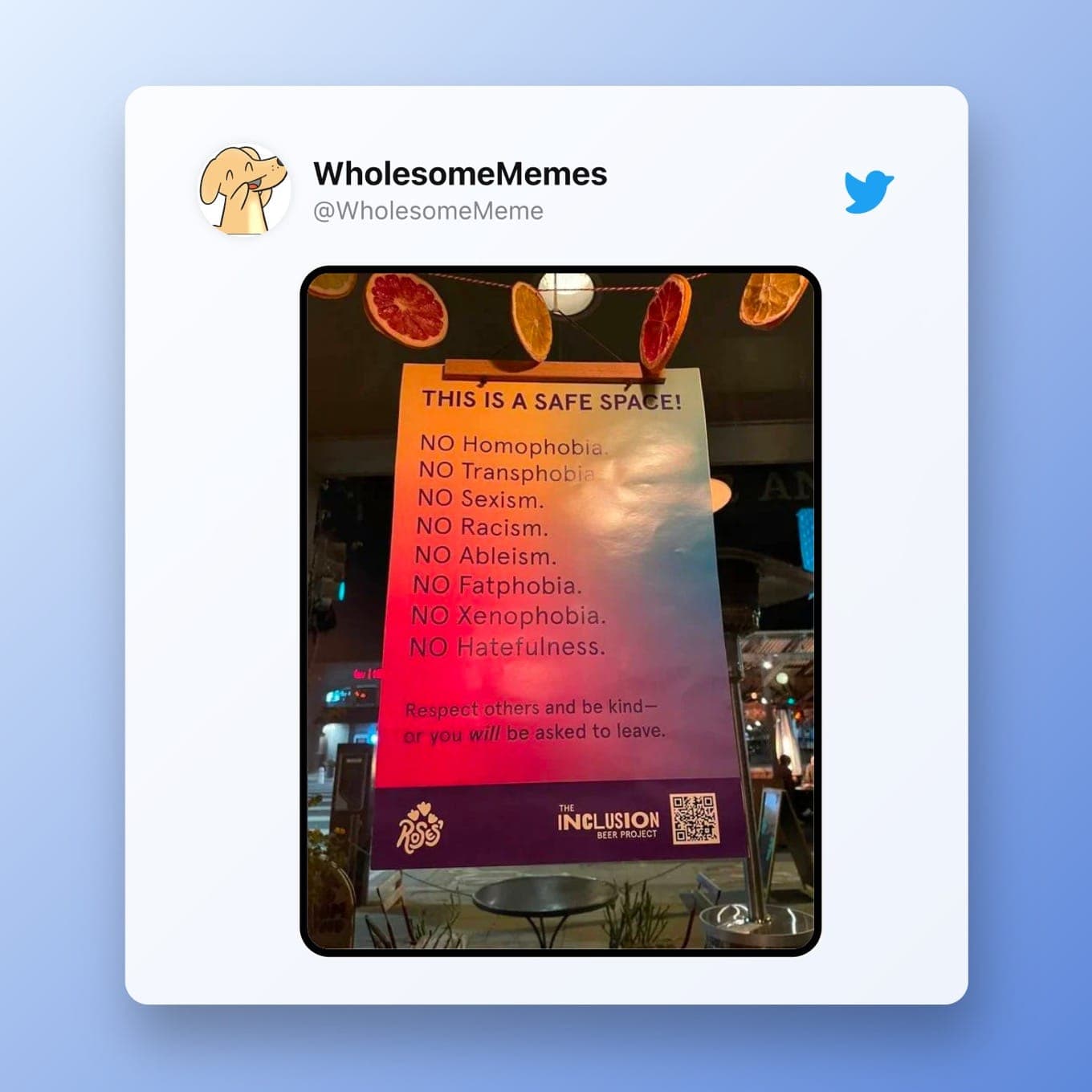
This isn't my [garbage]. But this is my planet.
Read more good news about the environment
A Tibetan monk blesses the deer that gather around him
Be the light
Read more quotes about light
Just three breathtaking people looking at each other
OP loves their girlfriend
Best new artist — at 95
Thank you for bringing back my wheelbarrow
When ur hella excited about making a new friend
Why has no one ever shown me the 2nd part of this meme
My brain when I read the word hippocampus
When you accidentally overdress for a party...
My dog is 16, so I figured it's time for some driving lessons
I always tell people that my cat doesn't really like people...
I wonder what my dog named me
You might also like:
On December 26, millions throughout the world’s African community will start weeklong celebrations of Kwanzaa. There will be daily ceremonies with food, decorations and other cultural objects, such as the kinara, which holds seven candles. At many Kwanzaa ceremonies, there is also African drumming and dancing.
It is a time of communal self-affirmation – when famous Black heroes and heroines, as well as late family members – are celebrated.
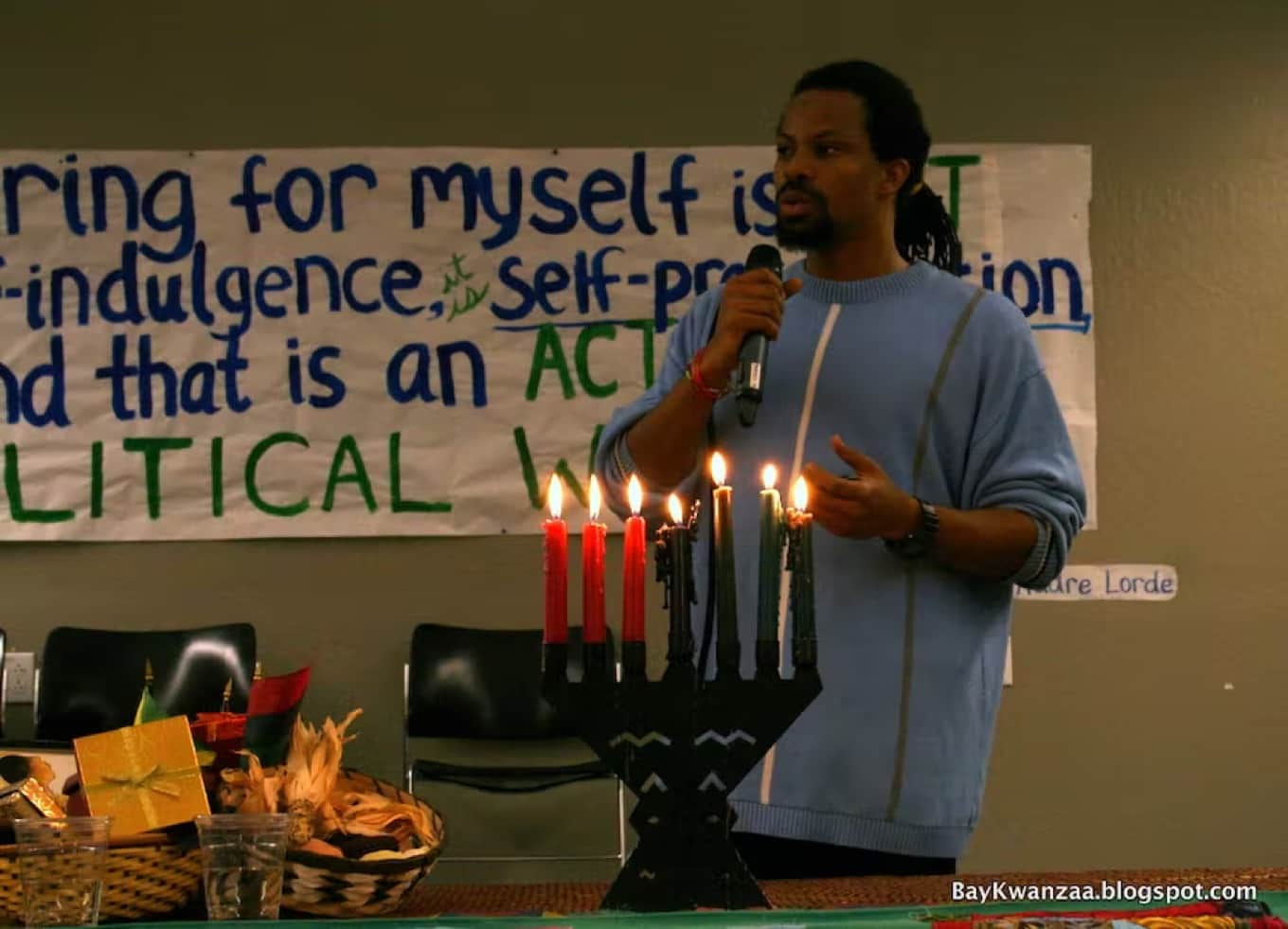
As a scholar who has written about racially motivated violence against Blacks, directed Black cultural centers on college campuses and sponsored numerous Kwanzaa celebrations, I understand the importance of this holiday.
For the African-American community, Kwanzaa is not just any “Black holiday.” It is a recognition that knowledge of Black history is worthwhile.
History of Kwanzaa
Maulana Karenga, a noted Black American scholar and activist created Kwanzaa in 1966. Its name is derived from the phrase “matunda ya kwanza” which means “first fruits” in Swahili, the most widely spoken African language. However, Kwanzaa, the holiday, did not exist in Africa.
Each day of Kwanzaa is devoted to celebrating the seven basic values of African culture or the “Nguzo Saba” which in Swahili means the seven principles. Translated these are: unity, self-determination, collective work and responsibility, cooperative economics (building Black businesses), purpose, creativity and faith. A candle is lit on each day to celebrate each one of these principles. On the last day, a black candle is lit and gifts are shared.
Today, Kwanzaa is quite popular. It is celebrated widely on college campuses, the U.S. Postal Service issues Kwanzaa stamps, there is at least one municipal park named for it, and there are special Kwanzaa greeting cards.
Kwanzaa’s meaning for black community
Kwanzaa was created by Karenga out of the turbulent times of the 1960’s in Los Angeles, following the 1965 Watts riots, when a young African-American was pulled over on suspicions of drunk driving, resulting in an outbreak of violence.
Subsequently, Karenga founded an organization called Us – meaning, black people – which promoted black culture. The purpose of the organization was to provide a platform, which would help to rebuild the Watts neighborhood through a strong organization rooted in African culture.
Karenga called its creation an act of cultural discovery, which simply meant that he wished to point African-Americans to greater knowledge of their African heritage and past.
Rooted in the struggles and the gains of the civil rights and black power movements of the 1950s and 1960s, it was a way of defining a unique black American identity. As Keith A. Mayes, a scholar of African-American history, notes in his book,
“For Black power activists, Kwanzaa was just as important as the Civil Rights Act of 1964. Kwanzaa was their answer to what they understood as the ubiquity of white cultural practices that oppressed them as thoroughly as had Jim Crow laws.”
Overturning white definitions
Today, the holiday has come to occupy a central role, not only in the U.S. but also in the global African diaspora.
A 2008 documentary, “The Black Candle” that filmed Kwanzaa observances in the United States and Europe, shows children not only in the United States, but as far away as France, reciting the principles of the Nguzo Saba.
It brings together the Black community not on the basis of their religious faith, but a shared cultural heritage. Explaining the importance of the holiday for African-Americans today, writer Amiri Baraka, says during an interview in the documentary,
“We looked at Kwanzaa as part of the struggle to overturn white definitions for our lives.”
Indeed, since the early years of the holiday, until today, Kwanzaa has provided many black families with tools for instructing their children about their African heritage.
Current activism and Kwanzaa
This spirit of activism and pride in the African heritage is evident on college campus Kwanzaa celebrations – one of which I recently attended. (It was done a few days early so that students going on break could participate.)
The speaker, a veteran of the Nashville civil rights movement, spoke about Kwanzaa as a time of memory and celebration. Wearing an African dashiki, he led those in attendance – blacks and whites and those of other ethnicities – in Kwanzaa songs and recitations.
On a table decorated in kente cloth, a traditional African fabric, was a kinara, which contains seven holes, to correspond to the Seven Principles of Kwanzaa. There were three red candles on the left side of the kinara, and three green candles on the right side of the kinara. The center candle was black. The colors of the candles represent the red, black and green of the African Liberation flag.
The auditorium was packed. Those in attendance, young and old, black and white, held hands and chanted slogans celebrating black heroes and heroines, as diverse as the civil rights icons, Rosa Parks and Rev. Martin Luther King, Jr., and the Jamaican musician Bob Marley.
It was a cultural observance that acknowledged solidarity with the struggles of the past and with one another. Like the black power movements, such as today’s Black Lives Matter movement, it is an affirmation of “Black folks’ humanity,” their “contributions to this society” and “resilience in the face of deadly oppression.”
Karenga wanted to “reaffirm the bonds between us” (Black people) and to counter the damage done by the “holocaust of slavery.” Kwanzaa celebrations are a moment of this awareness and reflection.
Folks have been fighting for bodily autonomy and reproductive justice for generations. Long before the June 2022 Supreme Court ruling that would overturn the decision of Roe v. Wade, activists have been on the front lines fighting for reproductive rights.
And still, the battle for basic bodily autonomy continues.
Being a part of that fight might include donating to your local abortion fund, becoming an abortion clinic escort to protect your community members seeking care, marching in a protest, or even displaying a sign of support in the window of your home or business.
That said, we wanted to make it a little easier to take even the smallest step of action. We’ve collected some of our favorite free pro-choice and pro-abortion posters to make it easy for you to find, print, and show off.
Please show respect to these artists by only using their art in appropriate contexts — and try to offer credit when you have the opportunity.
You might also like:
- How To Protect Abortion Rights & Reproductive Freedom
- How to Safely Reduce Abortions Without Removing Access
- Free Black Lives Matter Posters to Display Proudly
Free Pro-Choice Posters To Download, Print, and Display —
Reasons People Have Abortions (None Of Your Business)
Artist: Kelly Purkey | Provider: Outlet

Abortion Is Normal
Artist: Rebecca Pauline Jampol, Chantal Fischzang, Jasmine Wahi, Rebecca Pauline Jampol, Marilyn Minter, Laurie Simmons, Gina Nanni, and Sandy Tait | Provider: Project for Empty Space
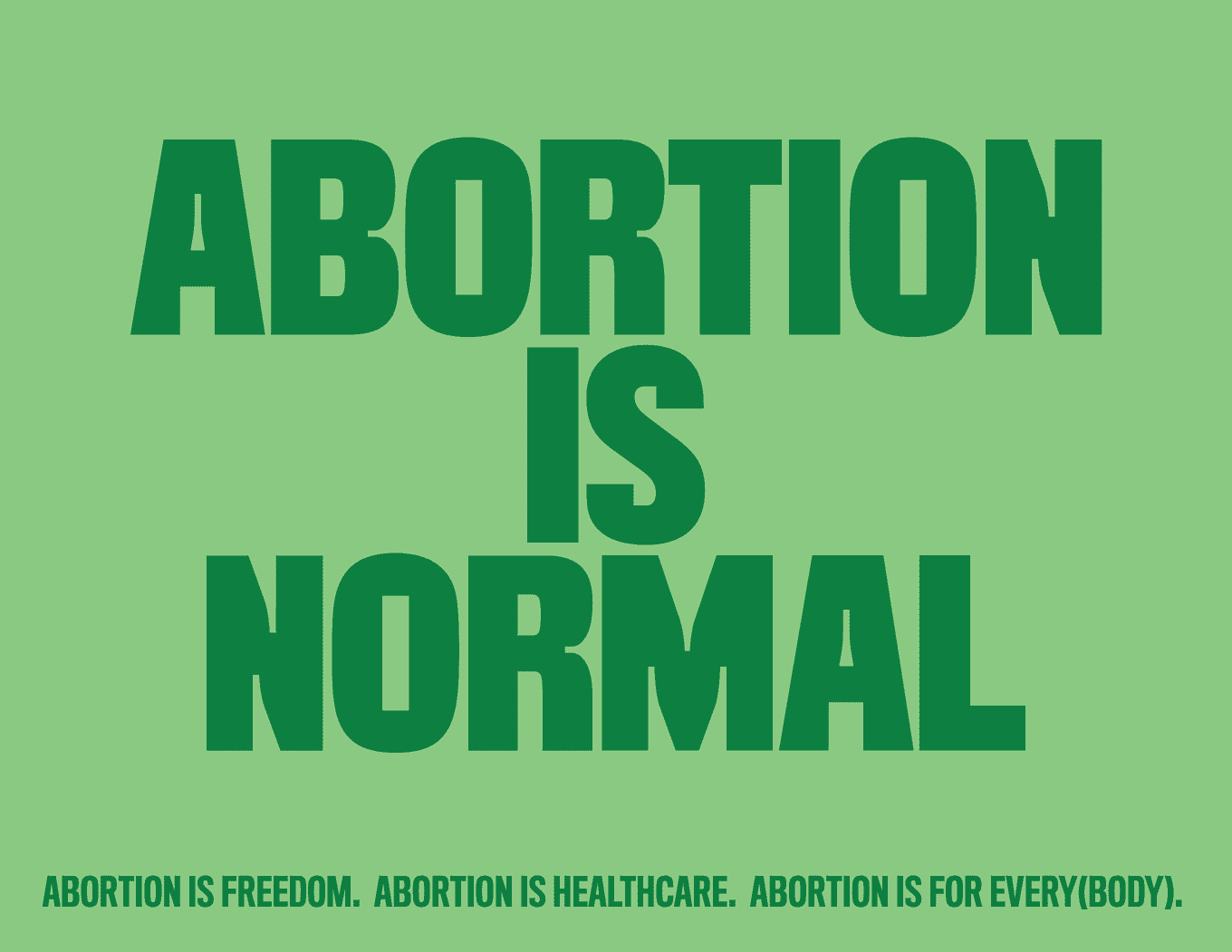
No War On Our Bodies
Artist: Nathan McKee | Provider: Outlet

We Demand Abortion Within Reach
Artist: Abortion Within Reach | Provider: Outlet
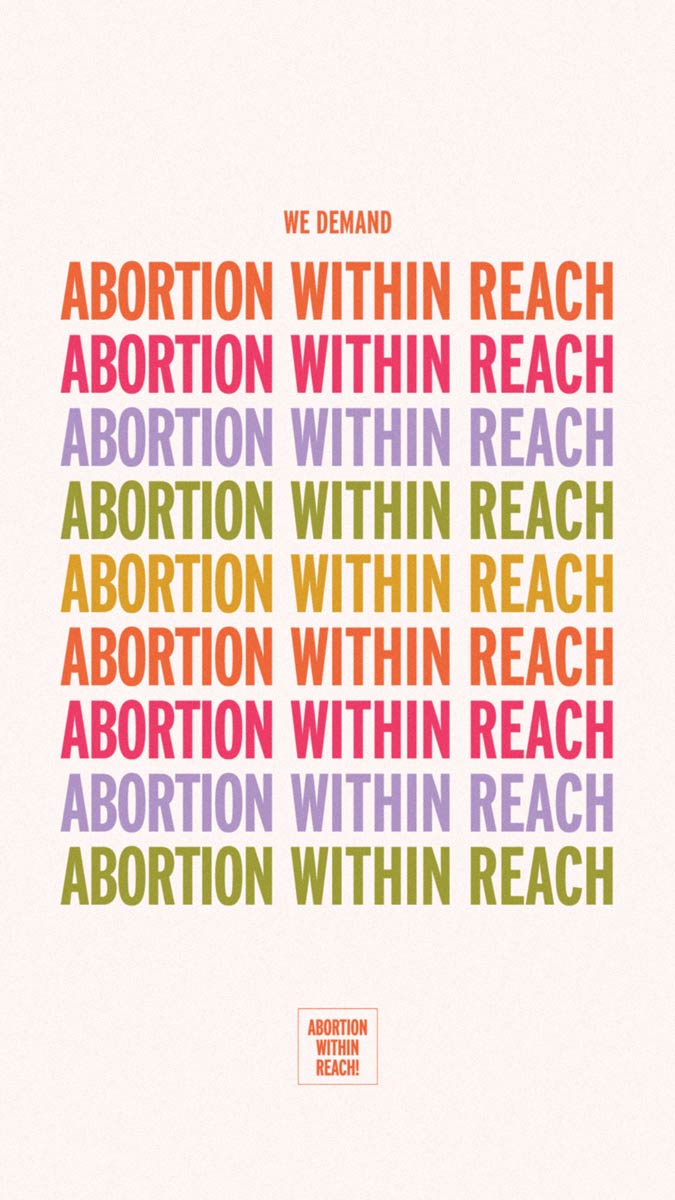
(If you’d like, you can also donate to support Abortion Within Reach, too.)
I Love My Local Abortion Provider
Artist: Abortion Within Reach | Provider: Outlet
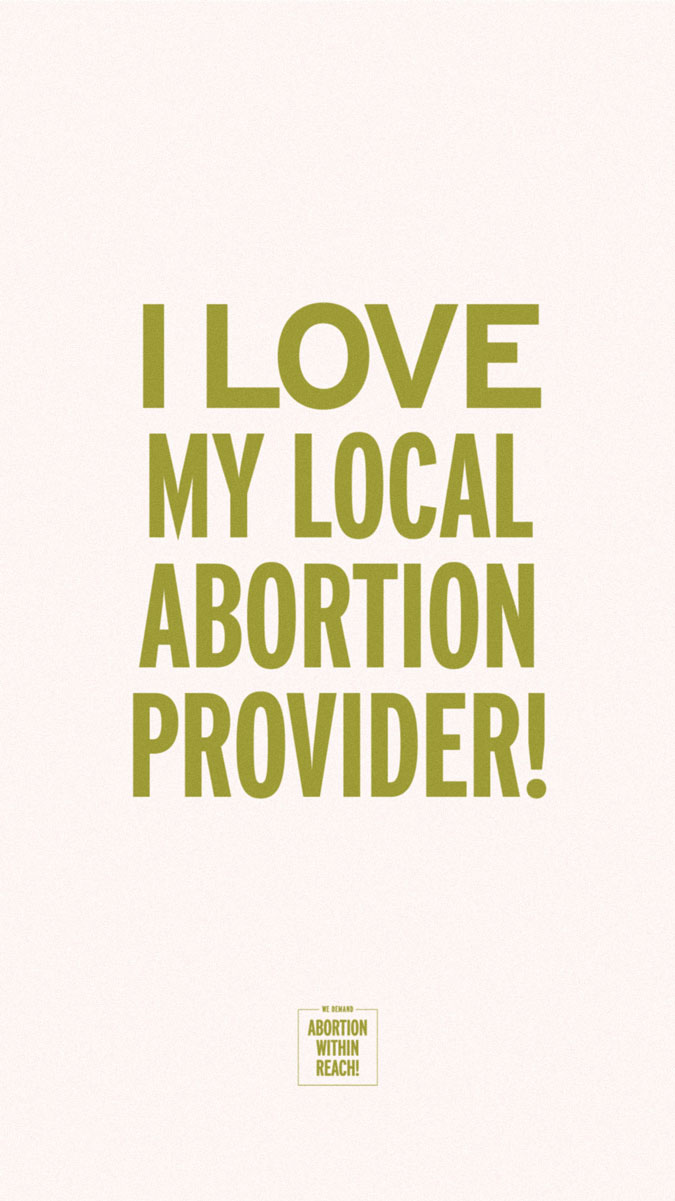
Stop Criminalizing Bodily Autonomy
Artist: Abortion Within Reach | Provider: Outlet
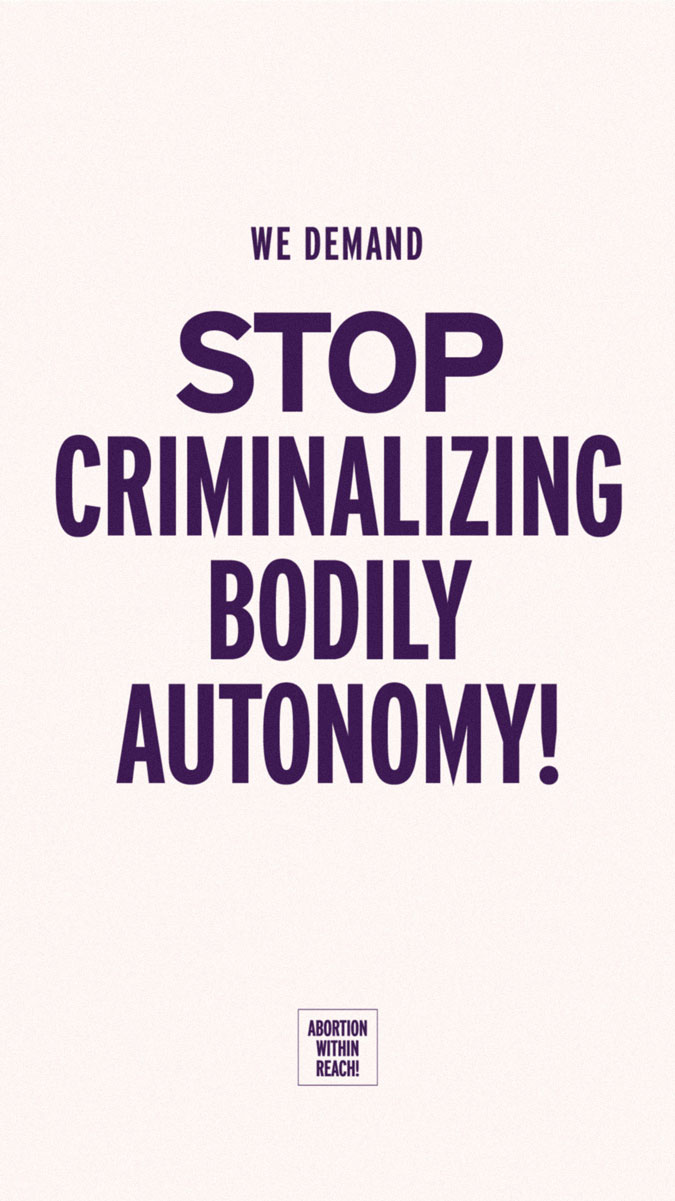
I Support Abortion In My Community
Artist: Abortion Within Reach | Provider: Outlet
Our Bodies, Our Choice
Artist: Natalia Cardona Puerta | Provider: Outlet

Safe Abortion Access For All
Artist: Shannon Kidd | Provider: Outlet
Abortions Are Healthcare

Artist: Shannon Kidd | Provider: Outlet
Reproductive Agency Now
Artist: Elizabeth Haidle | Provider: Outlet

I Will Aid And Abet Abortion
Artist: Jen Milius | Provider: Outlet

Uterus Has A Posse
Artist: Lambtown | Provider: Outlet

Abortion Access Is A Community Responsibility
Artist: Shout Your Abortion | Provider: Outlet

(If you’d like, you can also donate to support Shout Your Abortion, too.)
We Won’t Stop
Artist: Shout Your Abortion | Provider: Outlet

Abortion Is Healthcare
Artist & Provider: International Planned Parenthood Federation
It was the iconic Fred Rogers that told us, “Look for the helpers. You will always find people who are helping.”
At Good Good Good, we’ve made that the foundation of our work — to know that even in times of extreme hardship, there are always people looking to do good in the world, people ready to receive the good, and most of us at the intersection of taking action.
This past year has been another “unprecedented” year (ugh), full of overwhelming challenges and large-scale catastrophes. But what keeps us moving forward, what keeps us afloat amidst so many unknowns, is the potential to respond, problem-solve, and care for one another.
2022 ushered in violence and fear — threats to healthcare (the Supreme Court struck down Roe v. Wade), ongoing climate change (climate disasters rocked areas across the globe), political unrest (Russia invaded Ukraine and continues to inflict unrivaled human rights violations) — and so much more.
But in these heartbreaking moments, we cling to hope. We must.
From entertainers using their platforms to help others, and protesters and activists fundraising and speaking out to change the future, to community members providing necessities to their neighbors at war, or leaders fighting to end gun violence — this issue celebrates just a tiny amount of the work at the center of it all.
What we love most about sharing and celebrating good news is that it’s messy and real; it’s full of hope, failure, triumph, and resilience. It helps us step into a new day with the unwavering belief that things do get better.
And it’s helpers like these that solidify this hope. As we step into another year navigating these unparalleled trials — and the enduring humanity that accompanies them — we look to them.
Every year we highlight helpers in a number of categories — and this year we’ve chosen these categories:
- Education Helpers
- LGBTQ+ Helpers
- Art & Media Helpers
- Healthcare Helpers
- Ukraine Helpers
- Gun Safety Helpers
- Climate Helpers
- Equality and Justice Helpers
- Community Helpers
In this post, we’re highlighting Education Helpers and simple ways to make a difference:
Education Helpers To Know —
Quinta Brunson
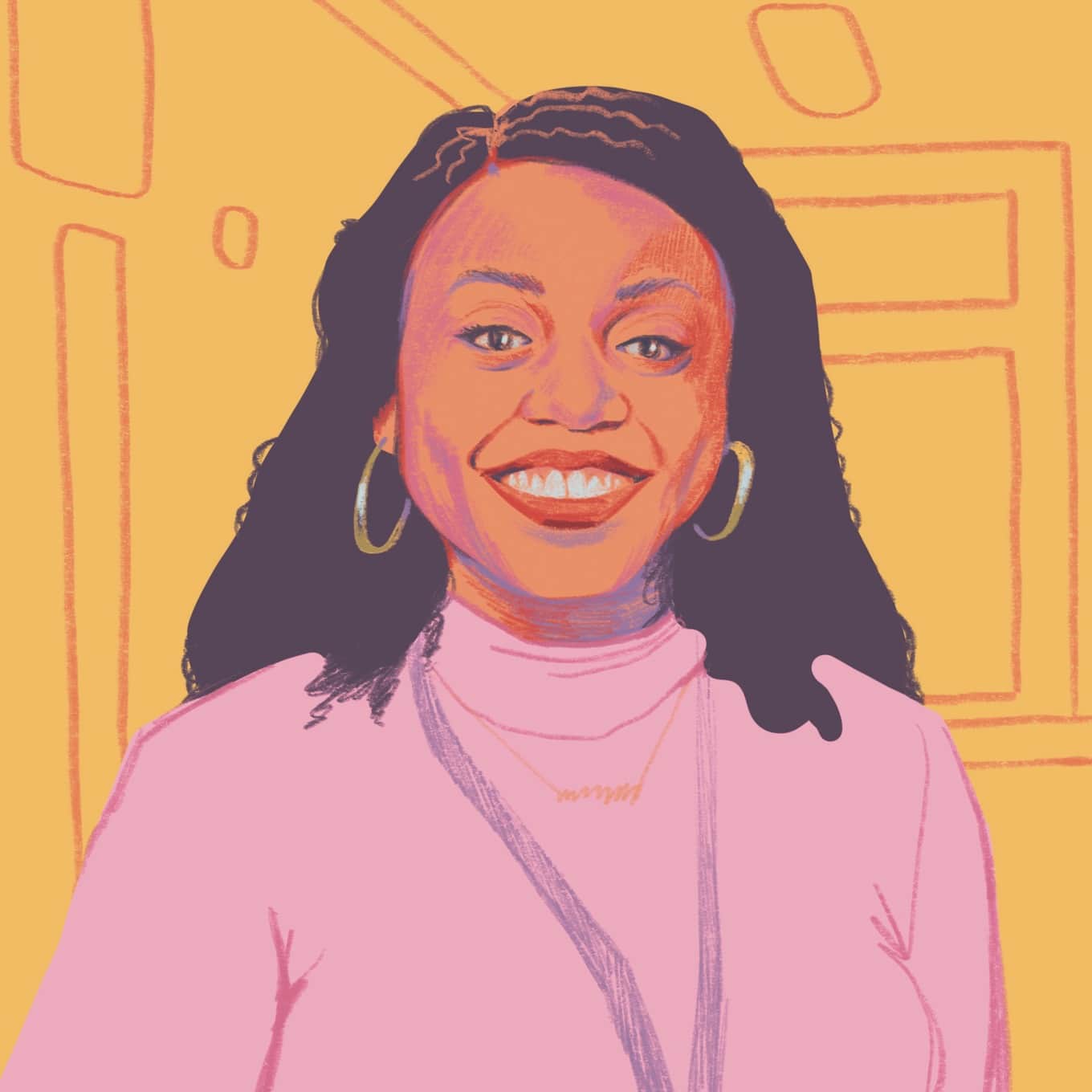
Quinta Brunson is a writer, producer, actress, and comedian. You might recognize her from the breakout ABC comedy “Abbott Elementary,” in which she’s the creator, executive producer, writer, and star.
The series — inspired by her mother’s teaching career at an under-resourced elementary school — earned three Emmy nominations making her: the first Black woman in TV history nominated in three comedy categories in the same year, the youngest Black woman ever nominated in the comedy acting category, and the second Black woman to win the Outstanding Writing for a Comedy Series category.
Brunson most recently used her platform at the annual TIME 100 Most Influential People of 2022 gala to call out politicians and advocate for higher teacher salaries.
“I play a teacher on TV, but every day I wonder if I’d be strong enough to be the one in real life,” Brunson said in her toast.
She’s since dedicated a portion of the show's marketing budget to helping underfunded teachers.
Carey Arensberg
Carey Arensberg (@mrsarensberg4th on TikTok) is a fifth-grade teacher from Mobile, Alabama.
She’s known around her community and online for her “Care Closet,” a resource available to students who are in need of essential items like dinner boxes, hygienic products, and extra uniforms — even if it’s for another sibling or family member.
“It has helped build such a strong sense of trust and community,” Arensberg shared on TikTok. “Students are able to have their physiological needs met, which allows them to relax and focus on their schoolwork instead of what they may be lacking.”
Her sweet, compassionate videos have inspired so many others to start and maintain their own classroom Care Closets. Arensberg — a certified trauma and resilience practitioner — also focuses on providing her over 400,000 followers with social-emotional learning and trauma-informed practices.
Explore more of our favorite teacher TikTok-ers
Sharon McMahon
Sharon McMahon (also known as @sharonsaysso), is a former high school government and law teacher who rose to prominence in 2020. Her community, the “Governerds,” has raised funds for teachers, neighbors, and organizations, as well as built a coalition of individuals who value McMahon’s dedication to sharing non-partisan facts about the U.S. government and democracy.
While McMahon had previously created a successful teacher grant program that raised more than $560,000 — she later set a more ambitious goal for her July 2022 campaign: $1 million.
Within just one weekend, the Governerd community raised $1.1 million — and continued to raise more funds over the next week.
The funds went directly to teachers from every corner of the U.S. in the form of over 2,000 grants, each worth $500, with no stipulations on how the funds were used.
McMahon and her community teach us that we have more in common than we think — that generosity, kindness, compassion, and optimism can be the way forward.
4 Ways To Support Your Local Schools:
- Learn more about childhood hunger in America. Listen to “Rethinking Hunger,” a podcast from the New Mexico Out of School Time Network, which provides thoughtful insights and discussions in the fight for a better food system. nmost.org/podcast
- Donate school supplies. Whether in-person or through an online Amazon Wishlist, donating school supplies is a great way to help our educators and students thrive in and out of the classroom.
- So many benefits are tied to mentorship — for both the mentee and the mentor. Visit the National Mentoring Resource Center for mentoring tools, programs, and training materials to help get you started. nationalmentoringresourcecenter.org
- Celebrate Teacher Appreciation Week every year — whether you have school-aged children or not. Check out our entire guide on ideas for celebrating Teacher Appreciation Week.
It was the iconic Fred Rogers that told us, “Look for the helpers. You will always find people who are helping.”
At Good Good Good, we’ve made that the foundation of our work — to know that even in times of extreme hardship, there are always people looking to do good in the world, people ready to receive the good, and most of us at the intersection of taking action.
This past year has been another “unprecedented” year (ugh), full of overwhelming challenges and large-scale catastrophes. But what keeps us moving forward, what keeps us afloat amidst so many unknowns, is the potential to respond, problem-solve, and care for one another.
2022 ushered in violence and fear — threats to healthcare (the Supreme Court struck down Roe v. Wade), ongoing climate change (climate disasters rocked areas across the globe), political unrest (Russia invaded Ukraine and continues to inflict unrivaled human rights violations) — and so much more.
But in these heartbreaking moments, we cling to hope. We must.
From entertainers using their platforms to help others, and protesters and activists fundraising and speaking out to change the future, to community members providing necessities to their neighbors at war, or leaders fighting to end gun violence — this issue celebrates just a tiny amount of the work at the center of it all.
What we love most about sharing and celebrating good news is that it’s messy and real; it’s full of hope, failure, triumph, and resilience. It helps us step into a new day with the unwavering belief that things do get better.
And it’s helpers like these that solidify this hope. As we step into another year navigating these unparalleled trials — and the enduring humanity that accompanies them — we look to them.
Every year we highlight helpers in a number of categories — and this year we’ve chosen these categories:
- Education Helpers
- LGBTQ+ Helpers
- Art & Media Helpers
- Healthcare Helpers
- Ukraine Helpers
- Gun Safety Helpers
- Climate Helpers
- Equality and Justice Helpers
- Community Helpers
In this post, we’re highlighting LGBTQ+ Helpers and simple ways to make a difference:
LGBTQ+ Helpers To Know —
Dylan Mulvaney

Dylan Mulvaney is a trans actress, comedian, and content creator who is best known for her TikTok series “Days of Girlhood,” where she highlights her transgender journey every day.
Throughout 2022, Mulvaney has delighted her over 8 million followers (including Lady Gaga) with queer joy and exciting milestones: From fun makeup routines, surgery consultations, and adding tampons to her purse to give to other women in the bathroom — to modeling in New York Fashion Week and attending the Forbes Power Women Summit.
Most importantly, she’s made the Internet — and the world — feel like a safer place for other trans people.
“For the first time in a long time, I didn’t feel alone,” Dylan said in a TikTok after her digital community defended her online.
“I knew that I had people that loved me, and I felt really protected. I wish we could love and protect every trans person like y’all do for me.”
Read Dylan Mulvaney’s beautiful essay about her first Pride as a trans woman
Mpox Vaccine Mobilizers
A September 2022 tweet from user @husbandkiller reads: “the decline of monkeypox cases proves that if COVID had hit the gays first, we would have beat that shit.” Now, we’re not saying husband killers are always right, but this one might be onto something.
While the monkeypox virus — now called mpox (but we’ll call it MPV for short) — remains a global concern, cases are steadily declining.
This trend has been fueled by the LGBTQ+ community — from protestors in New York demanding access to vaccines, human rights organizations investing in vaccine education campaigns, and gay men — who have long been at the hands of HIV stigmas — receiving their shots in droves.
According to the Pew Research Center, 66% of gay or bisexual men said they definitely or probably will get an MPV vaccine to prevent the disease, including one-in-ten who say they have already done so.
While MPV is not a sexually transmitted infection, it has largely impacted queer communities — who rapidly mobilized to shut down disinformation that might keep them from health resources or cause further stigma.
While the fight for vaccine access continues, LGBTQ+ folks champion public health and community care.
Kai Shappley
Kai Shappley is an 11-year-old transgender activist in Texas, a trailblazer at the heart of one of the most anti-LGBTQ+ states in America.
In April 2021, she testified before the state legislature, speaking against a bill that would have banned gender-affirming medical care for minors.
Alongside legacy activists, she helped defeat that bill — and 50 other anti-trans pieces of legislation that year. And in 2022, when Texas Governor Greg Abbott directed state officials to investigate any reported instances of parents providing gender-affirming medical care to minors, her fight continued.
Barely a teenager, she’s exhausted. But she’s also full of hope.
“I want to be president,” Kai told NBC News. “I want to be a mother of 103 cats and live on a big beach — free cat litter. I want to be an astrophysicist. I want to be a scientist. I want to be a ballerina. I want to be an activist. I want to be an actress. I want to be everything.”
Read about more kids making a difference and inspiring teen activists
3 Ways To Be a Better Ally To the LGBTQ+ Community:
- Learn from queer folks on their terms. Your LGBTQ+ friends aren’t a walking Gay Culture Encyclopedia. But you can follow amazing people, like @dylanmulvaney, @alokvmenon, or @blairimani, who love to educate folks online!
- Share your money and resources with trusted LGBTQ+ organizations. Consider donating to a community member’s gender-affirming surgery fund, volunteering with The Trevor Project, or setting up a recurring donation with the Human Rights Campaign.
- Show up and take action. Visit ggg.news/articles/how-to-celebrate-pride-month for ways to take action to support the LGBTQ+ community during Pride and beyond.
It was the iconic Fred Rogers that told us, “Look for the helpers. You will always find people who are helping.”
At Good Good Good, we’ve made that the foundation of our work — to know that even in times of extreme hardship, there are always people looking to do good in the world, people ready to receive the good, and most of us at the intersection of taking action.
This past year has been another “unprecedented” year (ugh), full of overwhelming challenges and large-scale catastrophes. But what keeps us moving forward, what keeps us afloat amidst so many unknowns, is the potential to respond, problem-solve, and care for one another.
2022 ushered in violence and fear — threats to healthcare (the Supreme Court struck down Roe v. Wade), ongoing climate change (climate disasters rocked areas across the globe), political unrest (Russia invaded Ukraine and continues to inflict unrivaled human rights violations) — and so much more.
But in these heartbreaking moments, we cling to hope. We must.
From entertainers using their platforms to help others, and protesters and activists fundraising and speaking out to change the future, to community members providing necessities to their neighbors at war, or leaders fighting to end gun violence — this issue celebrates just a tiny amount of the work at the center of it all.
What we love most about sharing and celebrating good news is that it’s messy and real; it’s full of hope, failure, triumph, and resilience. It helps us step into a new day with the unwavering belief that things do get better.
And it’s helpers like these that solidify this hope. As we step into another year navigating these unparalleled trials — and the enduring humanity that accompanies them — we look to them.
Every year we highlight helpers in a number of categories — and this year we’ve chosen these categories:
- Education Helpers
- LGBTQ+ Helpers
- Art & Media Helpers
- Healthcare Helpers
- Ukraine Helpers
- Gun Safety Helpers
- Climate Helpers
- Equality and Justice Helpers
- Community Helpers
In this post, we’re highlighting Helpers in Art & Media — and simple ways to make a difference:
Art & Media Helpers To Know —
Lizzo
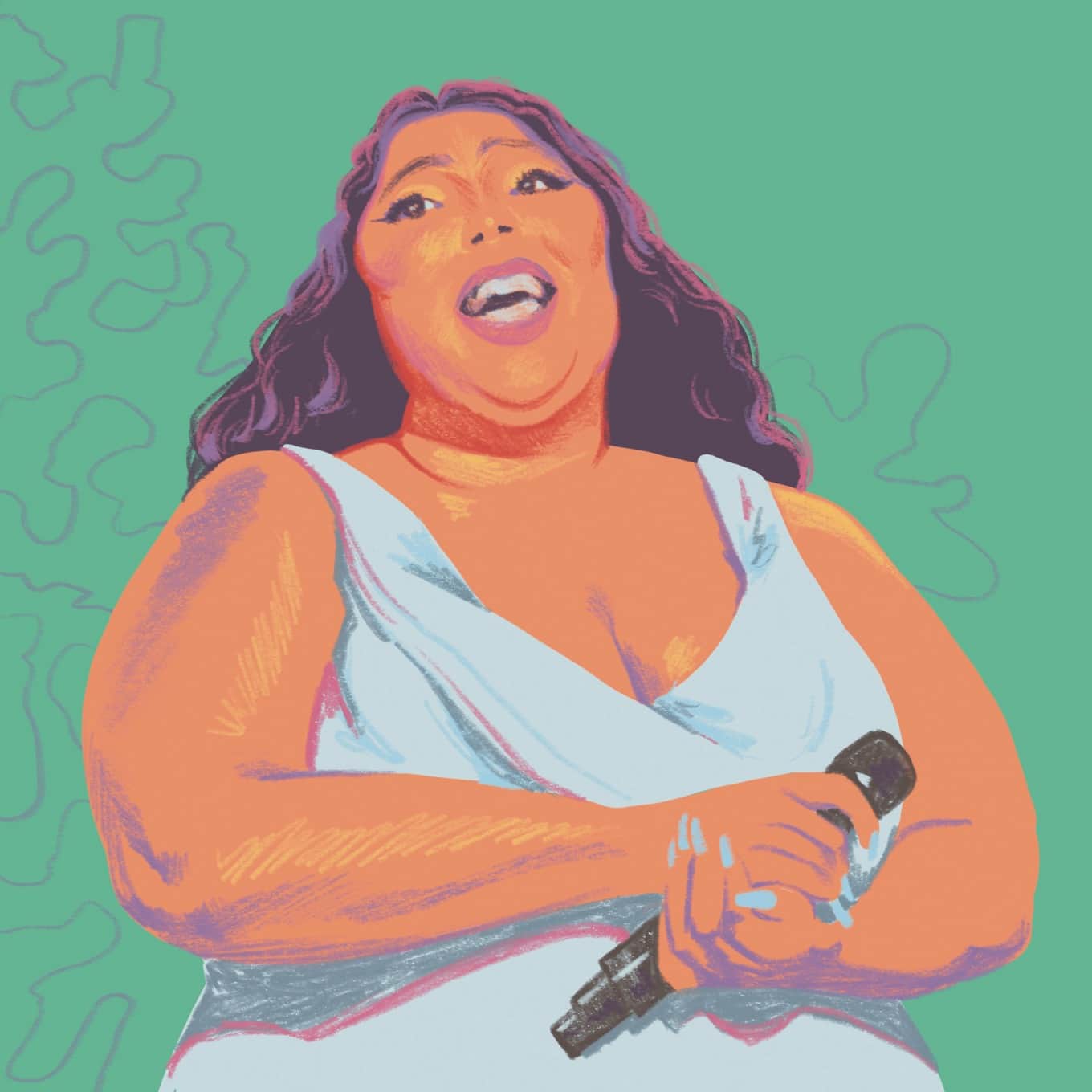
Between launching a size-inclusive shapewear line, winning an Emmy for her dance competition show “Watch Out for The Big Grrrls,” playing James Madison's crystal flute in Washington DC, and dropping her fourth studio album “Special,” Lizzo still made time in 2022 to bless us with her TikTok thirst traps, vegan recipes, and rom-com reviews.
The hip-hop artist's candid spirit, openness to feedback (she quickly corrected a song lyric this year that initially included ableist language), and vibrant inclusivity remind fans and critics alike that she is a force to be reckoned with. Her impact on the entertainment industry is historic.
“When I was a little girl, all I wanted to see was me in the media, someone fat like me, someone Black like me, beautiful like me,” Lizzo said in her Emmy’s acceptance speech in September 2022.
“If I could go back and tell little Lizzo something, I’d be like ‘You’re going to see that person, but bitch, it’s going to have to be you.’”
John & Hank Green
John Green and Hank Green have long been the guidance counselors of the Internet. Between the emergence of their YouTube channel (vlogbrothers) in 2007 and their illustrious careers (both are writers, educators, and entrepreneurs), they have championed caring and sincerity in the digital world.
Their charity projects include the Awesome Coffee Club, Awesome Socks Club, and Pizzamas — which are building a maternal hospital in Sierra Leone, and their annual fundraiser: The Project for Awesome, which pours millions into various nonprofits.
Recently, they started making TikTok videos.
Hank became a beacon of knowledge on the app, explaining phenomenons like circles and electrolytes, and creating how-to videos to help people vote in every U.S. state.
John creates his own poetic clips, both brothers maintaining their statuses as silly and smart online guideposts.
“I like being earnest,” John says in a TikTok. “Vulnerability is not weakness; it’s awareness. I don’t want to be cool if coolness means being cold to the reality of experience. I want to feel what there is to feel while I’m here.”
Olivia Juliana

Olivia Julianna is a 19-year-old Houston advocate who is a political strategist for youth-led nonprofit Gen Z For Change, which uses social media to raise awareness, fundraise for causes — and take problematic politicians down a peg.
And she’s good at her job.
In the summer of 2022, Florida Rep. Matt Gaetz made fatphobic, misogynistic comments about Olivia in an attempt to degrade her and her ongoing advocacy for abortion rights.
Instead of letting it get to her, she used it as fuel to fundraise for abortion funds across the country via social media.
Donations came flooding in, starting with $50,000 in the first 12 hours of the initiative. The number hit $2.2 million within a week.
“The last thing I’m going to do is let someone like Matt Gaetz, of all people, make me feel bad about myself,” Olivia told Teen Vogue.
“My confidence has not faltered one bit since this entire thing has happened. Because I know I’m doing the right thing.”
3 Ways To Use Art & Media To Do Good:
- Read “The Art of Activism” by Steve Duncombe and Steve Lambert to learn more about “making activism more creative with art and art more effective with activism.” artofactivismbook.com
- We see online fundraisers dot our social media feeds every day. Make it a habit to share, donate, and uplift these grassroots efforts in your own networks. You can even set aside a small part of your monthly budget for mutual aid initiatives online!
- If you’re able, use what you’ve learned online and in popular media and take action IRL! Speak at rallies, help folks with voter registration, or volunteer at a community center where you can be a positive representation for youth in your area.
It was the iconic Fred Rogers that told us, “Look for the helpers. You will always find people who are helping.”
At Good Good Good, we’ve made that the foundation of our work — to know that even in times of extreme hardship, there are always people looking to do good in the world, people ready to receive the good, and most of us at the intersection of taking action.
This past year has been another “unprecedented” year (ugh), full of overwhelming challenges and large-scale catastrophes. But what keeps us moving forward, what keeps us afloat amidst so many unknowns, is the potential to respond, problem-solve, and care for one another.
2022 ushered in violence and fear — threats to healthcare (the Supreme Court struck down Roe v. Wade), ongoing climate change (climate disasters rocked areas across the globe), political unrest (Russia invaded Ukraine and continues to inflict unrivaled human rights violations) — and so much more.
But in these heartbreaking moments, we cling to hope. We must.
From entertainers using their platforms to help others, and protesters and activists fundraising and speaking out to change the future, to community members providing necessities to their neighbors at war, or leaders fighting to end gun violence — this issue celebrates just a tiny amount of the work at the center of it all.
What we love most about sharing and celebrating good news is that it’s messy and real; it’s full of hope, failure, triumph, and resilience. It helps us step into a new day with the unwavering belief that things do get better.
And it’s helpers like these that solidify this hope. As we step into another year navigating these unparalleled trials — and the enduring humanity that accompanies them — we look to them.
Every year we highlight helpers in a number of categories — and this year we’ve chosen these categories:
- Education Helpers
- LGBTQ+ Helpers
- Art & Media Helpers
- Healthcare Helpers
- Ukraine Helpers
- Gun Safety Helpers
- Climate Helpers
- Equality and Justice Helpers
- Community Helpers
In this post, we’re highlighting Healthcare Helpers and simple ways to make a difference:
Healthcare Helpers To Know —
Dr. Jennifer Lincoln
Dr. Jennifer Lincoln is “not your average OBGYN.” A doctor, mom, and author of the book “Let’s Talk About Down There,” she works to demystify sex ed so people can understand their bodies and feel empowered to advocate for themselves.
Lincoln’s popular social media platforms include educational resources and document her work in the abortion advocacy space. After the Supreme Court decision overturning Roe v. Wade, Lincoln sprang into action.
She quickly launched the website threeforfreedom.com to help people access contraceptive and abortion pills in all 50 states, as well as co-founding the advocacy group Obstetricians for Reproductive Justice, alongside two other OBGYNs (Dr. Jenn Conti and Dr. Heather Irobunda).
“We see what happens,” Lincoln said at a rally in June. “These politicians who make these laws aren’t there at 2 a.m. with the person who is dying. So they can sleep at night, but we can’t. We have to fight back, because we are actually the experts in this, and they are not.”
Dr. Paul Farmer
Dr. Paul Farmer was a world-renowned infectious disease expert, humanitarian, and equitable global health advocate who passed away in February of 2022.
His life of service started in 1982 when he started his first clinic in Haiti, which grew into a hospital serving over 150,000 people.
Inviting a social justice approach to global health, his writings on human rights and the connection between inequality and infectious diseases have transformed healthcare.
Farmer co-founded the health and justice organization, Partners in Health, which works in 12 countries, focusing on equitable care for maternal health, tuberculosis, HIV, Ebola, and some of the world’s most infectious diseases.
Though Farmer is no longer with us, his influence on healthcare has indelibly shaped the future of care.
“If you’re asking my opinion, I would argue that a social justice approach should be central to medicine and utilized to be central to public health,” Farmer once said.
“This could be very simple: the well should take care of the sick.”
Read some of Paul Farmer’s most iconic and important quotes
Scientists Finding Cures for HIV
In 2022, two more people were cured of HIV (out of five total in history). While a universal cure is yet to be discovered, scientists have found success in specific cases.
Marshall Glesby, infectious disease specialist and coauthor of a recent HIV cure study told PBS: “There is incremental progress being made in terms of our understanding of where the virus hides within the body and potential ways to purge it from those sites.”
Here are a few highlights on HIV cures from 2022:
- Tel Aviv University scientists created an injection using genetically engineered white blood cells that secrete neutralizing antibodies that destroy HIV. It has thus far only been through animal trials.
- Three new mRNA HIV vaccines are undergoing clinical trials.
- A third known person (and the first woman) has been cured of HIV after receiving a stem cell transplant from the blood of an umbilical cord of a baby with a rare genetic mutation.
- Scientists reported that another man with HIV was possibly cured through a stem cell transplant to treat his blood cancer.
Read more good news and resources about HIV/AIDS
3 Ways To Broaden Access To Healthcare:
- Learn more about barriers to healthcare. We recommend streaming “Bending the Arc” on Netflix, the documentary about Partners in Health. Also consider listening to “Abortion, with love” and “HIV Hour” wherever you get your podcasts.
- To support healthcare helpers and those seeking treatment, donate to the National Network of Abortion Funds (abortionfunds.org), Partners in Health (pih.org), and (RED) (red.org).
- Be a healthcare helper in your own community! Become an an escort for your local abortion clinic, donate blood, sign up to be an organ donor, or even volunteer at a hospital or vaccination clinic near you.
It was the iconic Fred Rogers that told us, “Look for the helpers. You will always find people who are helping.”
At Good Good Good, we’ve made that the foundation of our work — to know that even in times of extreme hardship, there are always people looking to do good in the world, people ready to receive the good, and most of us at the intersection of taking action.
This past year has been another “unprecedented” year (ugh), full of overwhelming challenges and large-scale catastrophes. But what keeps us moving forward, what keeps us afloat amidst so many unknowns, is the potential to respond, problem-solve, and care for one another.
2022 ushered in violence and fear — threats to healthcare (the Supreme Court struck down Roe v. Wade), ongoing climate change (climate disasters rocked areas across the globe), political unrest (Russia invaded Ukraine and continues to inflict unrivaled human rights violations) — and so much more.
But in these heartbreaking moments, we cling to hope. We must.
From entertainers using their platforms to help others, and protesters and activists fundraising and speaking out to change the future, to community members providing necessities to their neighbors at war, or leaders fighting to end gun violence — this issue celebrates just a tiny amount of the work at the center of it all.
What we love most about sharing and celebrating good news is that it’s messy and real; it’s full of hope, failure, triumph, and resilience. It helps us step into a new day with the unwavering belief that things do get better.
And it’s helpers like these that solidify this hope. As we step into another year navigating these unparalleled trials — and the enduring humanity that accompanies them — we look to them.
Every year we highlight helpers in a number of categories — and this year we’ve chosen these categories:
- Education Helpers
- LGBTQ+ Helpers
- Art & Media Helpers
- Healthcare Helpers
- Ukraine Helpers
- Gun Safety Helpers
- Climate Helpers
- Equality and Justice Helpers
- Community Helpers
In this post, we’re highlighting Ukraine Helpers and simple ways to make a difference:
Ukraine Helpers To Know —
The People of Ukraine
When Russia invaded Ukraine on February 24, 2022, Ukrainians mobilized in droves to help one another.
While there is no possible way to recount every small action of community care within and beyond Ukraine’s borders, one thing is certain: Ukrainians continue to balance the responsibility of helping others and the need to be helped.
Whether it’s the thousands of Ukrainian Etsy sellers fundraising through their art, housing nonprofits creating scrappy solutions for displaced citizens, teachers taking up arms, independent journalists reporting at war, civilians telling their stories on TikTok, or even local animal shelters caring for pets that have been left behind — the simultaneous grit and compassion of Ukrainians is to be applauded and uplifted for years to come.
Olga Boichak, a digital war scholar in Australia told the Washington Post: “In a way, militaries have lost that dominance in framing the war, and right now the civilians are largely determining how these events will go down in history.”
Chef José Andrés
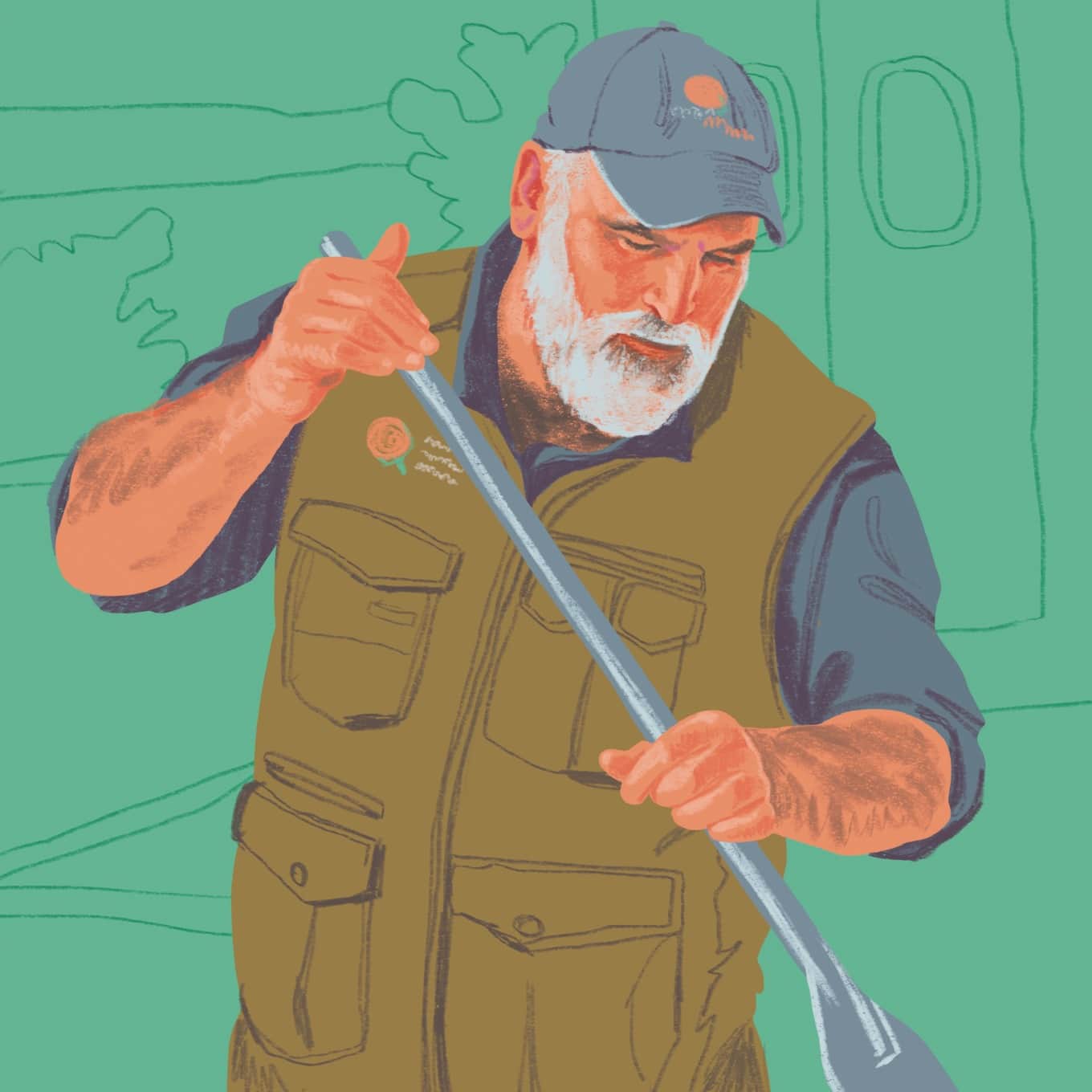
Chef José Andrés is no stranger to using food for good. The Spanish chef’s nonprofit World Central Kitchen (WCK) has mobilized as immediately as any other first responder to crises from Australian wildfires, to COVID-19.
This past year, Andrés and the WCK team had pots and pans on the ground in Ukraine, serving free hot meals to refugees within 24 hours of the Russian invasion in February, at first along the Ukraine-Poland border.
Since then, WCK has served over 150 million meals all over the country to anyone in need. Even with the threat of violence overhead, WCK — and Andrés — refuse to get out of the kitchen.
“We have 550 restaurants and thousands of chefs here in Ukraine, and we’ve served over 600,000 [daily] meals,” Andrés told Food & Wine Magazine.
“Sometimes life requires these moments where I’m using food in another way. This opportunity helped me realize I can engage restaurants and chefs and food in another role and fulfill my maximum possibility.”
Read some of José Andrés’ most inspiring quotes
President Volodymyr Zelenskyy
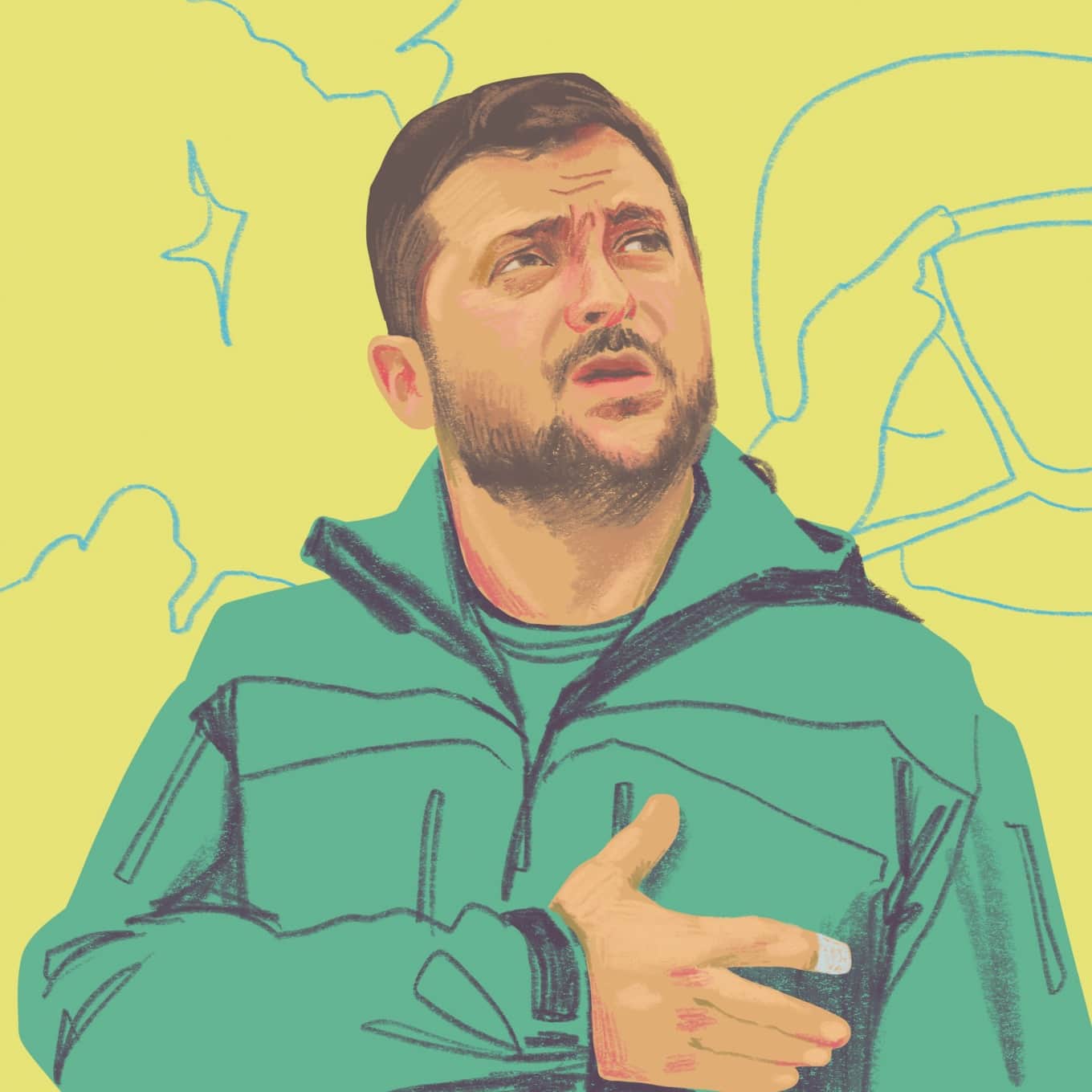
In a time of dire crisis, Ukraine President Volodymyr Zelenskyy has been a beacon of inspiring leadership.
When Russia invaded the 44-year-old head of state’s country, his unfailing allegiance to his people made headlines.
He swapped a suit and tie for T-shirts and slacks, turned down President Biden’s offer to evacuate (he said “I need ammunition, not a ride”), and has presented emotion, candor, or passion in his remarks — a stark contrast to most historical figures desperate to maintain decorum at times like these.
While it is certainly not easy to be a country’s leader during war, and Zelenskyy has and will make mistakes, his character and determination have a ripple effect on all Ukrainians, as civilians stay and fight and volunteers travel to Ukraine to lend a hand with wartime aid.
“I am here. We are not putting down arms,” he said in a video at the start of Russia's invasion. “That is it. That’s all I wanted to tell you. Glory to Ukraine.”
3 Ways To Help Ukrainians During Wartime:
- Stay up-to-date on what’s happening in Ukraine. There are countless issues to follow in the news, but it is vital that we do not turn away from this war. Check out kyivindependent.com for news directly from Ukrainian journalists.
- Donate to nonprofits supporting Ukrainians! While massive global organizations are doing important work, we urge you to support local grassroots initiatives in Ukraine that need urgent donations. Start with moveukraine.org or vostok-sos.org.
- Continue to be vocal about the war and share new, trusted information in your networks. Join a peace protest. Encourage your employer to match donations. Take action.
It was the iconic Fred Rogers that told us, “Look for the helpers. You will always find people who are helping.”
At Good Good Good, we’ve made that the foundation of our work — to know that even in times of extreme hardship, there are always people looking to do good in the world, people ready to receive the good, and most of us at the intersection of taking action.
This past year has been another “unprecedented” year (ugh), full of overwhelming challenges and large-scale catastrophes. But what keeps us moving forward, what keeps us afloat amidst so many unknowns, is the potential to respond, problem-solve, and care for one another.
2022 ushered in violence and fear — threats to healthcare (the Supreme Court struck down Roe v. Wade), ongoing climate change (climate disasters rocked areas across the globe), political unrest (Russia invaded Ukraine and continues to inflict unrivaled human rights violations) — and so much more.
But in these heartbreaking moments, we cling to hope. We must.
From entertainers using their platforms to help others, and protesters and activists fundraising and speaking out to change the future, to community members providing necessities to their neighbors at war, or leaders fighting to end gun violence — this issue celebrates just a tiny amount of the work at the center of it all.
What we love most about sharing and celebrating good news is that it’s messy and real; it’s full of hope, failure, triumph, and resilience. It helps us step into a new day with the unwavering belief that things do get better.
And it’s helpers like these that solidify this hope. As we step into another year navigating these unparalleled trials — and the enduring humanity that accompanies them — we look to them.
Every year we highlight helpers in a number of categories — and this year we’ve chosen these categories:
- Education Helpers
- LGBTQ+ Helpers
- Art & Media Helpers
- Healthcare Helpers
- Ukraine Helpers
- Gun Safety Helpers
- Climate Helpers
- Equality and Justice Helpers
- Community Helpers
In this post, we’re highlighting Gun Control Helpers and simple ways to make a difference:
Gun Safety Helpers To Know —
Manuel and Patricia Oliver

In 2018, Manuel and Patricia Oliver lost their son, Joaquin, in the mass shooting at Marjory Stoneman Douglas High School in Parkland, Florida.
In their healing process, the couple started a nonprofit called Change the Ref (CTR), with the mission of increasing awareness of mass shootings and reducing the public influence of America’s largest gun lobby group, the National Rifle Association (NRA).
Over the years, CTR has worked to empower young leaders by using urban art and nonviolent creative confrontation to expose the effects of mass shootings in America, and demand stricter gun laws.
The latest initiative from CTR is The Yellow Bus Project — a mobile museum made of 52 empty school buses honoring the 4,368 children whose lives have been lost to gun violence since 2020.
While it’s heartbreaking that any demonstrations like this must occur, what the Oliver family is doing is a courageous and creative act of resistance that should be celebrated — literally demonstrating that folks are willing to mobilize towards change.
Read about how to stop school shootings
Fatima Morrell, Ph.D.
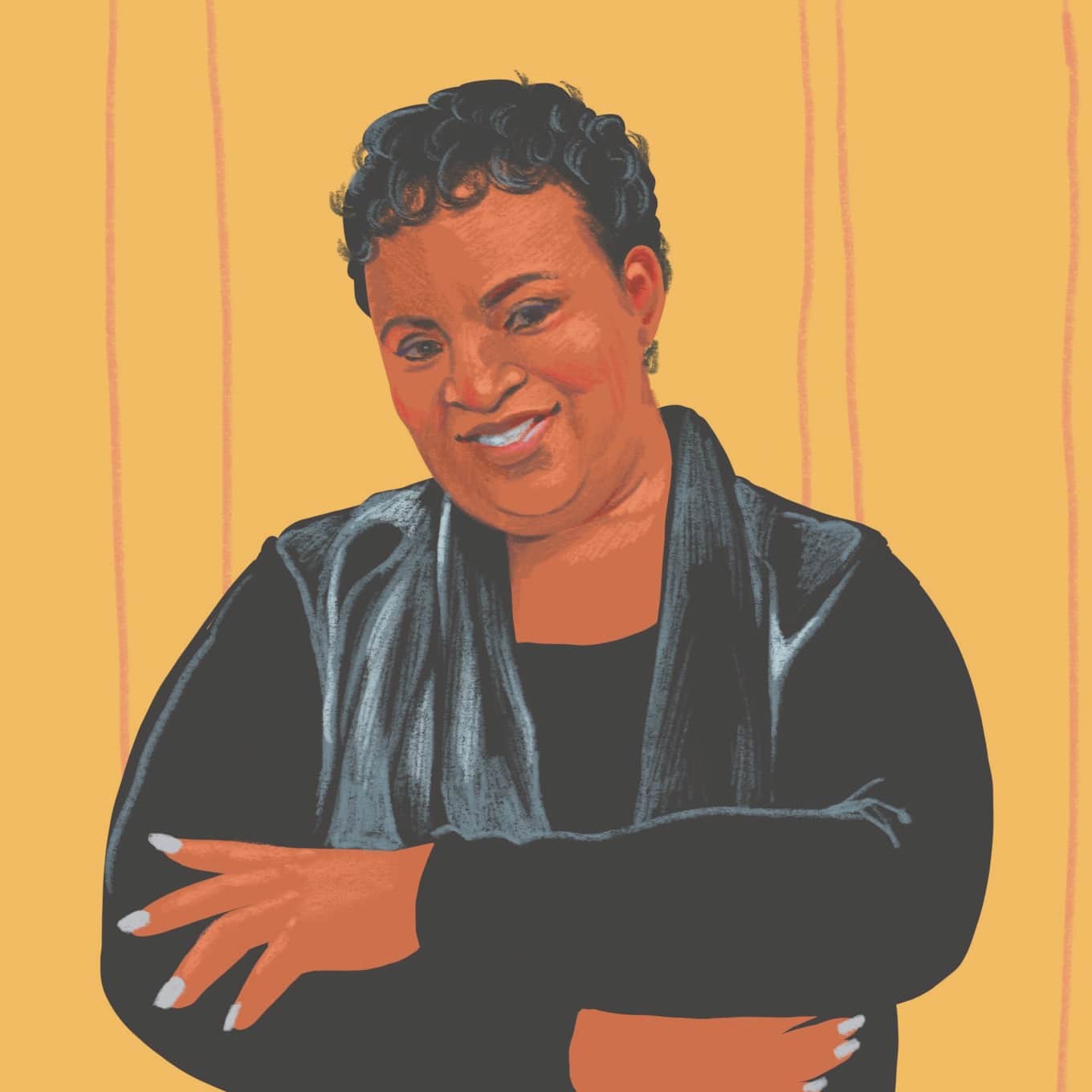
After 10 people were killed in a mass shooting at a Buffalo, NYN.Y., supermarket by a white supremacist gunman, Buffalo public school associate superintendent Fatima Morrell, Ph.D. helped her students process by expanding the curriculum around racism.
This included principles such as empathy, diversity, and restorative justice.
“For all our children, we have to unpack white supremacy, as hard as that is to talk about,” Morrell shared with TIME.
“It is important that every single child receives an anti-racist curriculum in the Buffalo public schools, and I’m going to continue to push that.”
Her goal is to engage and empower students by providing lessons about the historical contributions of Black, Latino, and Indigenous communities.
Morrellbegan implementing anti-racism education during the aftermath of the George Floyd murder. She led the charge in training parents, community members, and more than 3,500 teachers on the goals, strategies, and best practices for teaching and supporting students from diverse backgrounds.
She is nationally recognized for her antiracism work.
Angeli Rose Gomez
When word spread throughout the small Uvalde, Texas community that an active shooter was at Robb Elementary School, Angeli Rose Gomez was one of many concerned parents who rushed to the scene.
The mother of two said that while she could hear gunshots, she witnessed minimal law enforcement effort to serve and protect their children.
Her overwhelming frustration briefly landed her in handcuffs. When she was released, Gomez managed to hop over a nearby fence and into the school.
Within minutes, she was able to usher her oldest son and his classmates over to safety, running back inside a second time to do the same for her youngest son and classmates.
While the lack of swift, coordinated communication (not to mention the lack of sensible gun laws in Texas) led to the horrific tragedy that resulted in the loss of 19 elementary students and two teachers there was one determined mother who put her life at risk — twice — to make sure her kids, and their classmates quickly made it to safety.
3 Ways To Fight Gun Violence:
- Learn about the wide-ranging issues surrounding gun violence, particularly how a lack of accountability allows the gun industry to avoid responsibility for its role in gun violence. everytown.org
- Text the word READY to 64433 to get involved with gun reform work where you live, visit Moms Demand Action’s national or state-specific Facebook pages, or follow them on Twitter and Instagram (@momsdemand).
- Take action. Call your senators and members of congress. We’ve got a simple, straightforward script (along with 18 other ways to help you fight gun violence), visit ggg.news/articles/how-to-stop-gun-violence for more!
It was the iconic Fred Rogers that told us, “Look for the helpers. You will always find people who are helping.”
At Good Good Good, we’ve made that the foundation of our work — to know that even in times of extreme hardship, there are always people looking to do good in the world, people ready to receive the good, and most of us at the intersection of taking action.
This past year has been another “unprecedented” year (ugh), full of overwhelming challenges and large-scale catastrophes. But what keeps us moving forward, what keeps us afloat amidst so many unknowns, is the potential to respond, problem-solve, and care for one another.
2022 ushered in violence and fear — threats to healthcare (the Supreme Court struck down Roe v. Wade), ongoing climate change (climate disasters rocked areas across the globe), political unrest (Russia invaded Ukraine and continues to inflict unrivaled human rights violations) — and so much more.
But in these heartbreaking moments, we cling to hope. We must.
From entertainers using their platforms to help others, and protesters and activists fundraising and speaking out to change the future, to community members providing necessities to their neighbors at war, or leaders fighting to end gun violence — this issue celebrates just a tiny amount of the work at the center of it all.
What we love most about sharing and celebrating good news is that it’s messy and real; it’s full of hope, failure, triumph, and resilience. It helps us step into a new day with the unwavering belief that things do get better.
And it’s helpers like these that solidify this hope. As we step into another year navigating these unparalleled trials — and the enduring humanity that accompanies them — we look to them.
Every year we highlight helpers in a number of categories — and this year we’ve chosen these categories:
- Education Helpers
- LGBTQ+ Helpers
- Art & Media Helpers
- Healthcare Helpers
- Ukraine Helpers
- Gun Safety Helpers
- Climate Helpers
- Equality and Justice Helpers
- Community Helpers
In this post, we’re highlighting Climate Helpers and simple ways to make a difference:
Climate Helpers To Know —
The Global Alliance of Territorial Communities
Indigenous communities have always been at the forefront of tackling the climate crisis, but their warnings have too often been met with empty promises. So, they organized.
The Global Alliance of Territorial Communities (GATC) is a political platform of Indigenous and local communities representing 35 million people from 24 countries in Asia, Africa, and Latin America — defending over 958 million hectares of land spanning most of the world’s endangered tropical forests.
In September, members of the alliance and their allies rallied in New York to meet with policymakers and donors during Climate Week, which brought together the most influential global leaders in climate action.
Speaking as one united voice, GATC drew attention to previous promises made by international bodies that failed to materialize and demanded immediate action, such as direct financing, land rights, protection of the lives of community leaders, and more.
Though this resilient community has been able to adapt continuously to climate change, this combined global effort is saying enough is enough.
Learn about the leading Indigenous activists you should know
Changemakers Behind the Inflation Reduction Act
In August 2022, President Biden signed the Inflation Reduction Act — a bill containing important tax and health care changes, as well as the largest-ever investment in fighting climate change in the U.S. (around $370 billion in total) — thanks to the diligent efforts of young congressional staffers, organizations like Sunrise Movement, Senate lawmakers, and frontline communities who all kept the bill alive.
This bill is set to incentivize folks who choose clean energy options, help to fight climate injustice, and reduce carbon emissions by 40% by 2030. While the bill contains disappointing compromises for fossil fuel companies, it truly is better than the alternative — no action.
“A lot of people think activism does nothing, that it’s like screaming into the void,” Aria Kovalovich, a staff member for the House Oversight Committee, told Teen Vogue.
“But working for politicians, I know they pay attention when people are sitting in their offices or rallying just outside them.”
Yvon Chouinard
Yvon Chouinard is an American mountain climber, environmentalist, and founder of the outdoor brand Patagonia.
From promoting adventure for all, to urging businesses to take responsibility for their environmental impact, Chouinard has gradually cleared a path for a new economic approach.
Rather than selling the company or taking it public, Chouinard announced that he and his family were transferring ownership of Patagonia, valued at about $3 billion, to a specially designed trust and a nonprofit.
Both were created to preserve the company’s independence and ensure that all of its profits — some $100 million a year — are used to combat climate change and protect undeveloped land around the globe.
“Hopefully, this will influence a new form of capitalism that doesn’t end up with a few rich people and a bunch of poor people,” Chouinard told The New York Times.
“We are going to give away the maximum amount of money to people who are actively working on saving this planet.”
3 Ways To Advocate For Climate Action in Your Community:
- Listen to the “How to Save a Planet” podcast, a show about climate change and the energizing solutions, or checkout the book “The Intersectional Environmentalist” by Leah Thomas from your local library.
- Sign climate petitions and vote in every local, state, and national election. The climate crisis will not be solved by individual action alone. Electing leaders who will put laws in place that will hold corporations accountable is key to furthering climate action.
- Organize your own climate movement within your community, workplace, and school. Visit globalclimatestrike.net/organise for ideas, resources, and next steps to take action now.