Most of the countryside around the Holnicote estate in Somerset has been dry and dusty for most of the summer. But one corner remains conspicuously green.
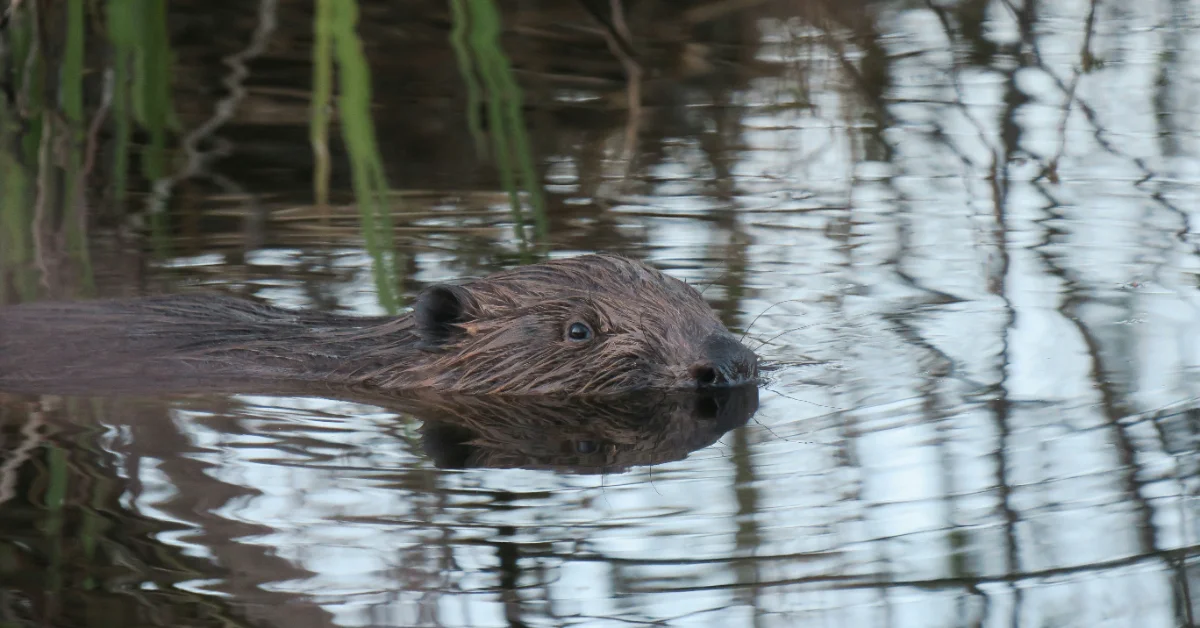
Here in southwest England, an animal that was made extinct in Britain in the 16th century, mostly because of hunting, is making a comeback. Reintroduced just six years ago, beavers have helped turn a small watercourse on the estate into a wet meadow — a true oasis amid the parched landscape.
It is an Instagram-worthy example of why reintroducing beavers to more of Britain could help us prepare for the next drought. It shows how they reshape rivers and the surrounding land to hold water in the landscape for longer, rather than allowing it to drain away rapidly.
Beavers are often called ecosystem engineers. They fell small trees, build dams, and dig channels. Water backs up behind their dams, spills across the valley bottom, and soaks into the surrounding soil. Sediment and woody debris accumulate, while wetland plants establish themselves.
The result can be a mosaic of ponds, channels, marshes, and wet woodland. During dry weather, this stored water can keep soil and vegetation wetter for longer.
This effect was highlighted in a 2008 Canadian study that examined aerial photographs of Elk Island National Park in Alberta over 54 years. Beavers had disappeared from that landscape in the 19th century, but returned in 1954.
The number of active beaver lodges, where beavers live and raise their young, was found to explain more than 80% of the variation in the area of open water. During 2002, the driest year studied, wetlands with beavers on them contained nine times more open water than those without them.
This does not mean releasing beavers in Britain will reproduce the Canadian numbers. It is a different beaver species in a different landscape, and the effects of any beaver colony depend on the shape, soils, and land use of its catchment. But British research points in the same direction.
Researchers studying a beaver enclosure on an intensively managed grassland in Devon in 2011 found that 13 dams stored around 1 million liters of additional water, or about 264,000 gallons. The dam structures built by the beavers held back the stream to create a series of ponds. Because such dams are leaky, this water was released gradually, slowing storm flows while maintaining water downstream during dry periods.
More recent work across four wild beaver territories in Devon estimated that their wetlands held more than 24 million liters of water, or over 6 million gallons.
Why we need wet land
Holding more water in a landscape has another increasingly important benefit: it helps vegetation stay green. Healthy, damp vegetation is harder to burn, so beaver wetlands may provide refuges for wildlife and help interrupt a fire’s progress.
A 2020 study of five wildfires in the western United States found that stream-side vegetation in beaver-dammed areas was three times less affected than comparable areas without beavers.
Again, this does not prove that beavers will always stop British wildfires. Our landscapes, vegetation, and fires differ from those of the western U.S. A wet strip beside a stream is no substitute for proper wildfire prevention and response. But creating wetter, greener corridors through a drying landscape is a useful extra layer of protection.
Beavers are not suitable for every watercourse. Their engineering can flood farmland, block culverts, and damage trees. So, reintroductions need proper assessment, long-term management, and support for affected landowners. England now requires a license and a management plan for any beaver releases into the wild.
A ‘welly belt’ of wetlands?
We also shouldn’t expect beavers to repair the whole landscape. There’s other work to do, including restoring peatlands, ponds, and marshes, reconnecting rivers with their floodplains, and re-establishing vegetated buffer strips along watercourses.
The UK could establish a “welly belt:” a connected network of wetland areas where needing waterproof boots is recognized as a useful feature, rather than an engineering fault to be drained away. Beaver-made wetlands could form an important part of that network, if managed correctly.
The need for careful management has recently been highlighted in Norfolk, where two wild beavers that mysteriously appeared on the River Wensum have produced the county’s first kits for more than 500 years.
Some suspect an illegal release, sometimes called “beaver bombing.” But tempting as it may sound to revive the U.S.’s wonderfully eccentric 1948 experiment, which used surplus wartime parachutes to relocate troublesome beavers into remote parts of Idaho, Britain needs planned releases — not airborne rodents.
We do need far more beavers, though, in the right places. They will not end drought or wildfires. But they can help put water back into a landscape we have spent centuries draining — and keep it there until we need it.
This article was written by Christian Dunn from Bangor University and was originally published on The Conversation.

Featured Image: Katarīna Šterna/Unsplash