Labrador retrievers have seemingly endless energy, a massive capacity for obedience and training, and noses that can find just about any morsel of food in their vicinity.
But what if a dog used those inherent traits to make the world a better place? Conservation detection dogs like Uisge are up for the job.
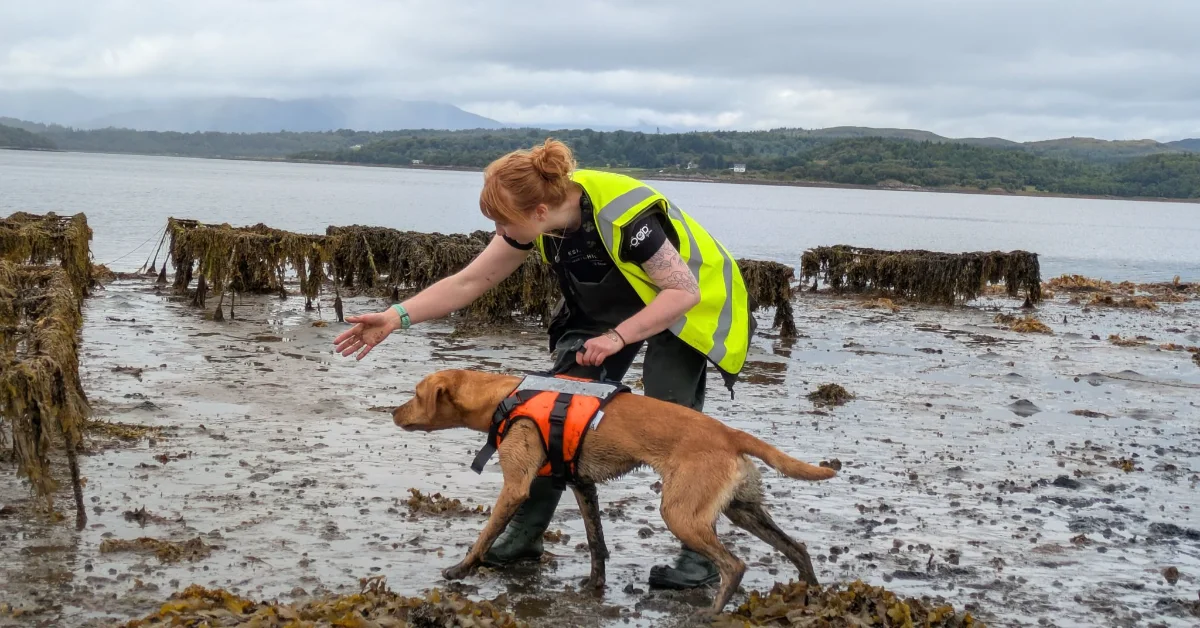
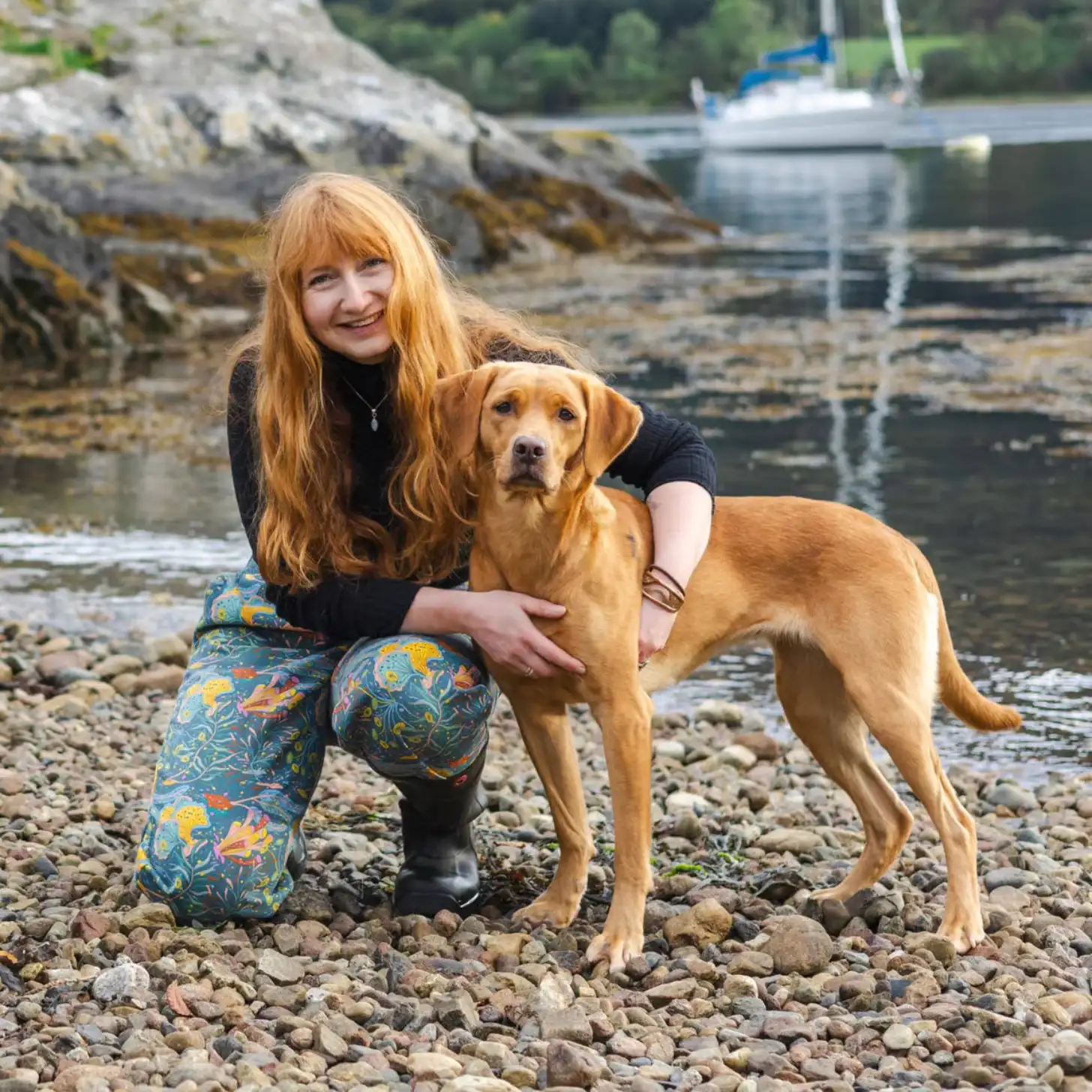
Uisge (pronounced ‘oosh-ka’ and named after the Gaelic word for water) is a detection dog in Scotland that has been trained to sniff out a very specific invasive species.
Her area of expertise is a species of sea squirt called Didemnum vexillum — more colloquially called “sea vomit.” These aquatic invertebrates are “filter feeders” — and they are not meant to be in Scotland’s waters.
According to Fauna & Flora, the sea vomit species is originally native to Japan but has colonized coastlines across the United Kingdom, often transported on the hulls of ships.
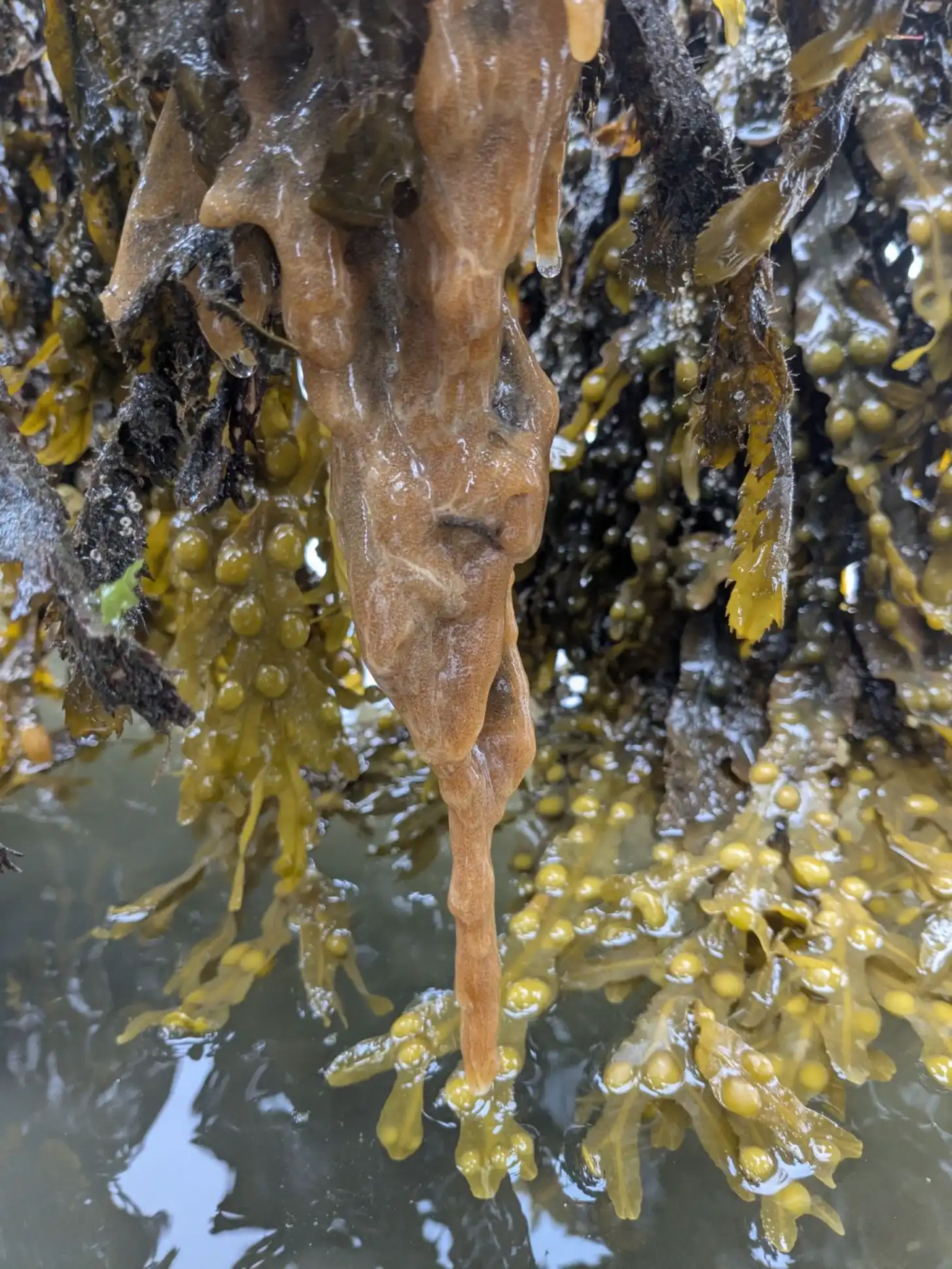
They form large patches and are able to spread rapidly, literally able to clone themselves and blanket entire areas of a coastline. This causes harm to vulnerable native species, like mussels and oysters. In addition to threatening marine biodiversity, this also impacts the local fishing industry.
So, Dr. Texa Sim — Uisge’s handler — has come to the rescue. A marine biologist who worked with the Community Association of Lochs and Sounds on Scotland’s Morvern peninsula, she has worked to restore native European oyster populations and regenerate local marine habitats.
Sim started Conservation Detection Dogs Scotland as a trained dog handler, where she partners with Uisge and her other dog, Sgiath, to help support this coastal restoration work.
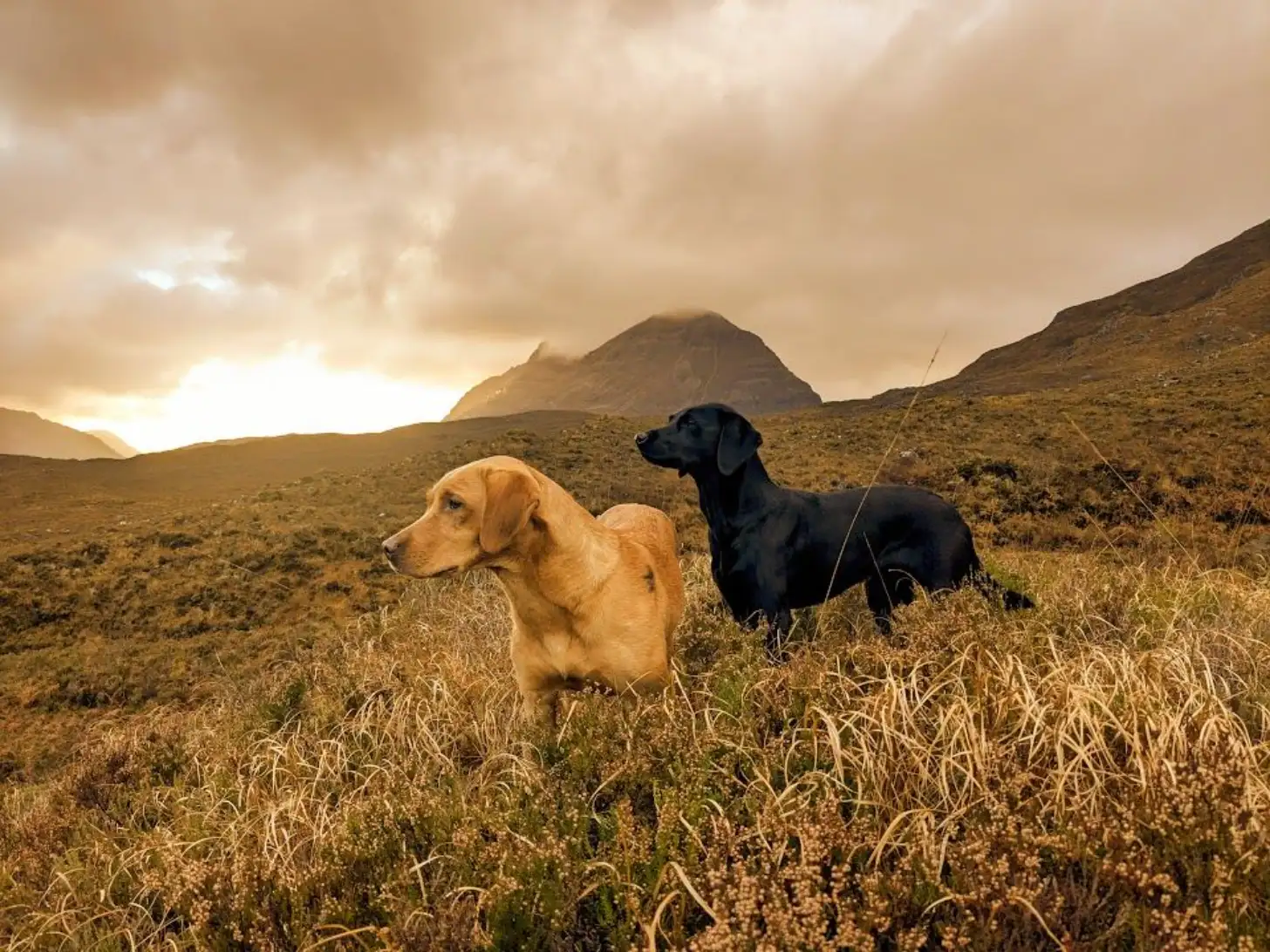
“She has extensive experience in training and handling dogs to undertake detection work in high-pressure and time-critical situations,” CDDC’s website describes Sim. “Holding a Doctorate in Marine Ecology, Texa brings the scientific process to dog training and handling, ensuring a thorough approach and requiring high standards from both herself and her dogs.”
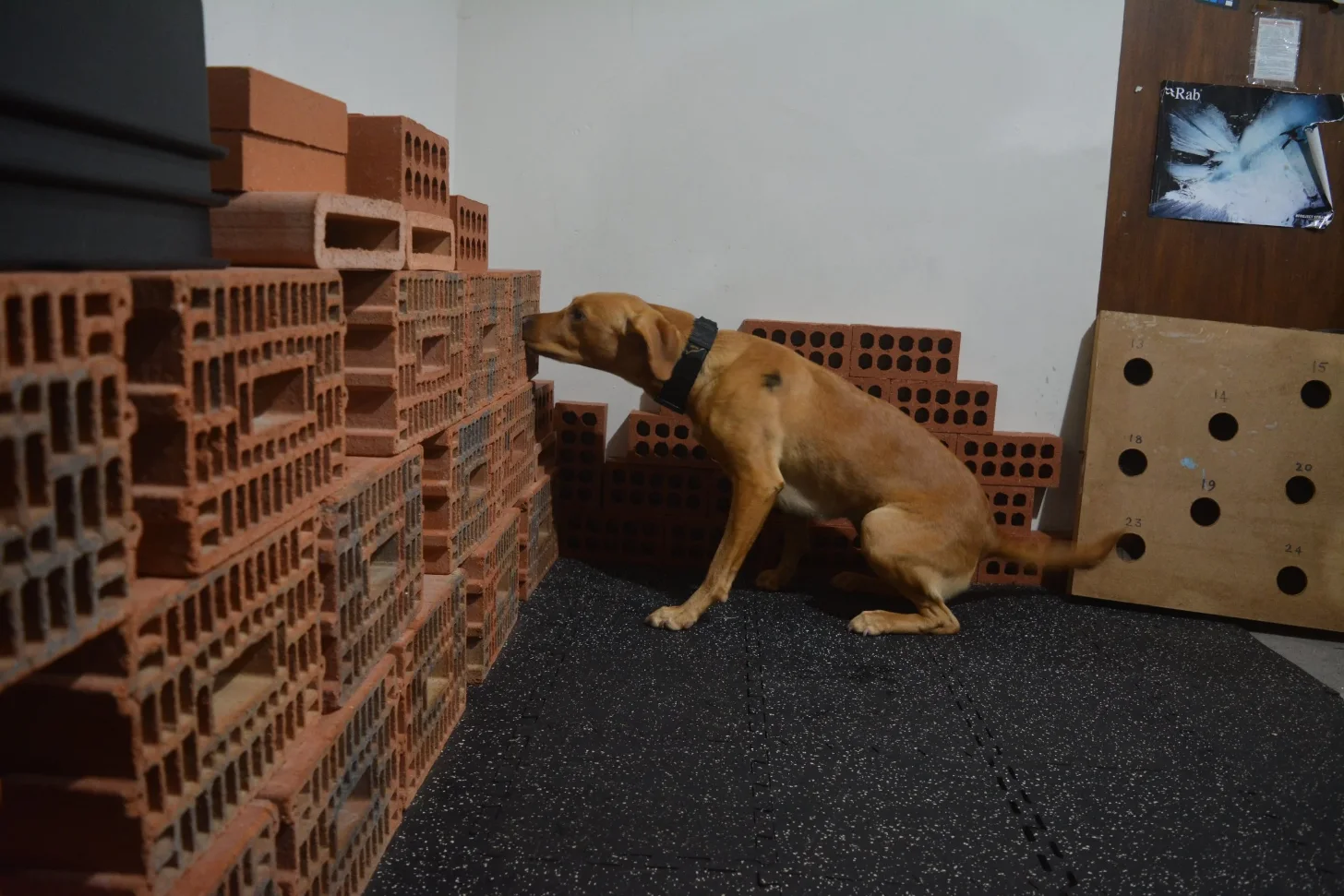
Sim converted her home garage into a canine training campus, where she has installed a wall of specialized scent bricks for the dogs to practice.
Inside the bricks, she hides samples of the target invasive species for her dogs to detect. Then, they are rewarded when they find the right smell.
“With their incredible noses, dogs are able to pinpoint targets much more effectively than humans, making them powerful allies in efforts to support species and conserve ecosystems,” Sim writes on an Instagram page for the dogs.
“We have some exciting projects in the works, with some novel target species that are pushing the boundaries of dogs’ scenting abilities,” she continued. “We are developing the world’s first American slipper limpet and carpet sea-squirt detection dogs, showing that dogs can be vital even in the marine environment.”
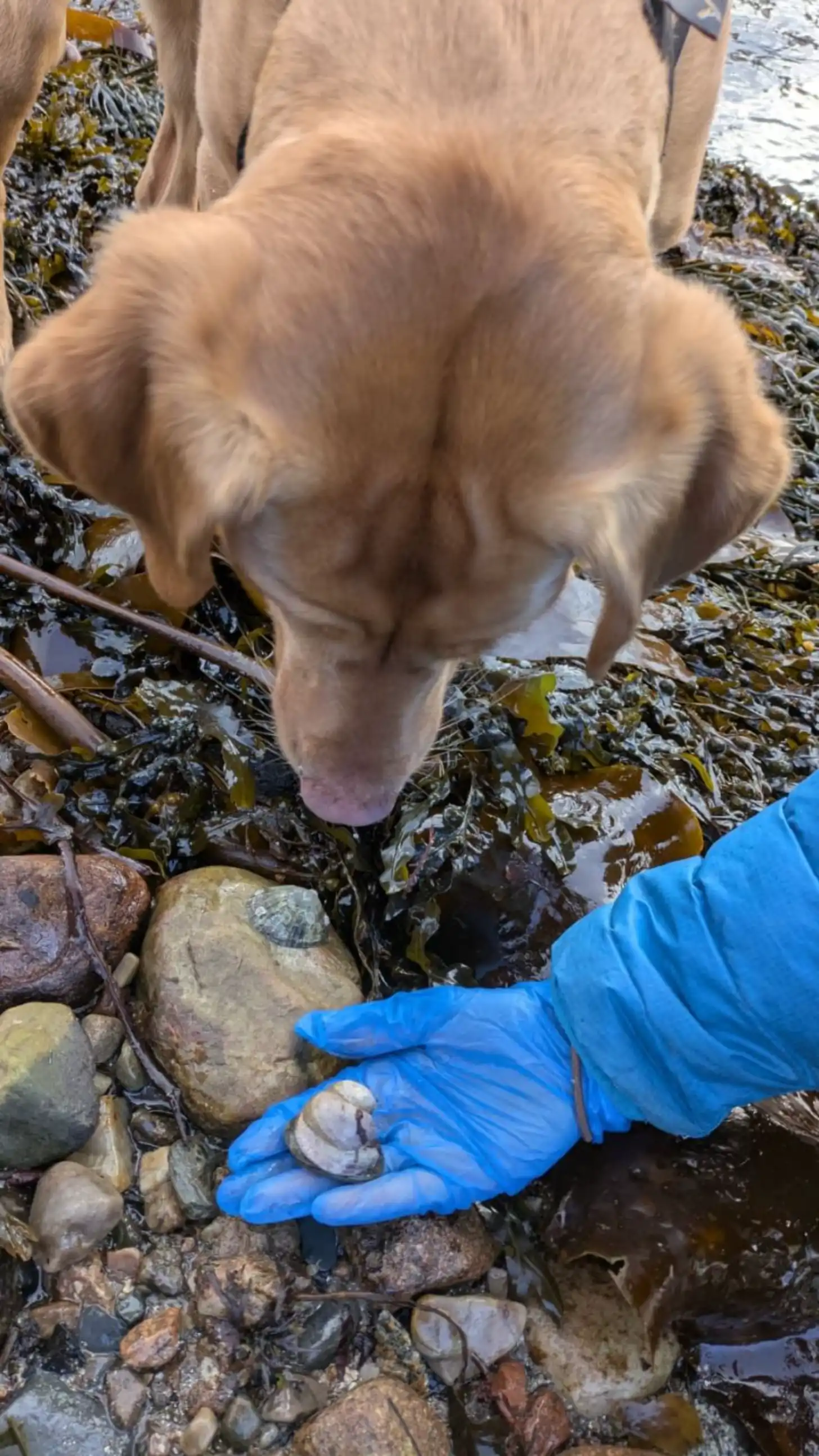
In addition to sniffing out sea vomit, Uisge is also training to detect slipper limpet, another invasive marine species. She is also learning how to detect dead bats, which may be getting killed in collisions with wind farms.
And when she’s not out in the field, Uisge is still a force to be reckoned with.
“This dog... full labrador but with the brain of a spaniel and the drive of a Malinois,” Sim describes Uisge in a LinkedIn post. “She is the best of both worlds; sweet-natured but with enough drive for three dogs, which makes her excellent to both work and live with.”
You may also like: 'Dog-sniffing dog' helps volunteers rescue lost pets: 'A game-changer'
Featured Image: Conservation Detection Dogs Scotland/LinkedIn