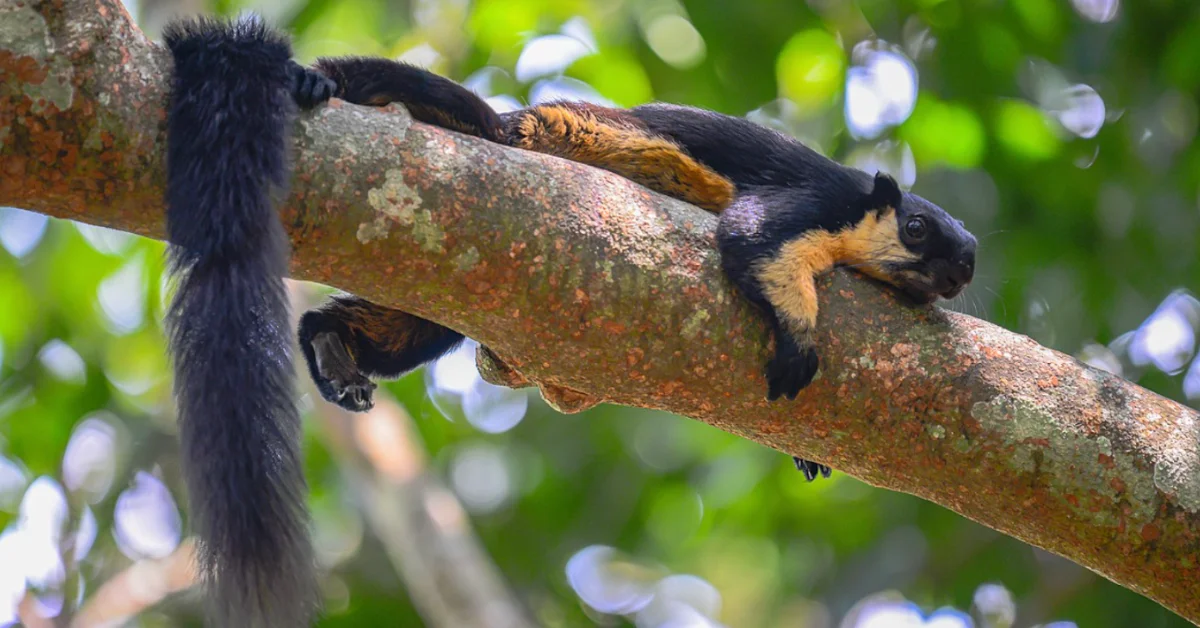
In Southeast Asia, the average squirrel looks a lot different from its brown and gray relatives in North America.
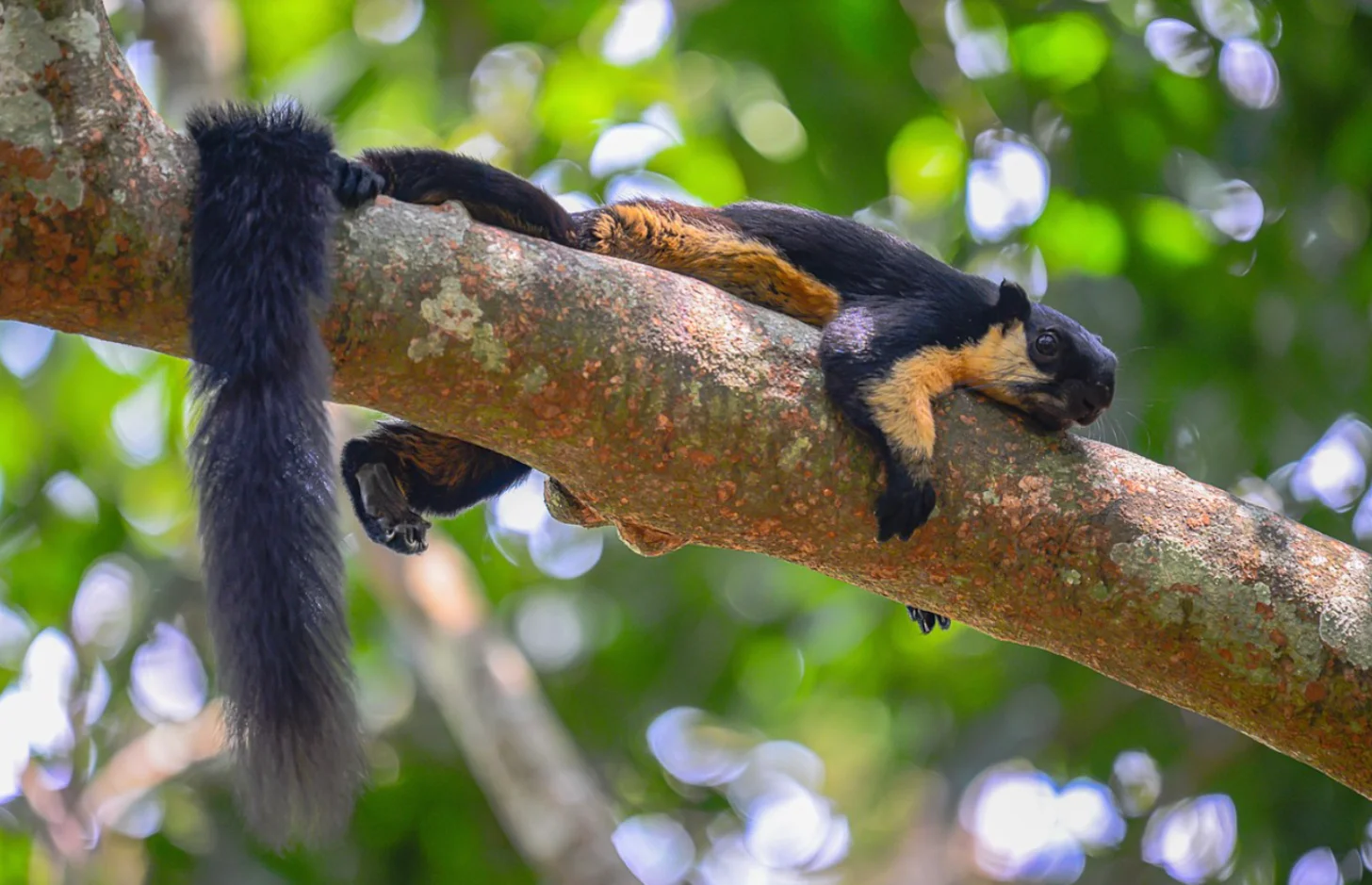
In forests across Cambodia, Vietnam, and Myanmar, black giant squirrels leap from branch to branch, their distinct black-and-tan color pattern blending into the shadows of the dense tree canopy.
The black giant squirrel is also remarkably long, with an average length of about 32 inches from head to tail — which is roughly the same size as a standard baseball bat.
Although the black giant squirrel holds the record for the biggest squirrel in Nepal, it is not the biggest one in the world. That title belongs to the Indian Giant Squirrel, or rainbow squirrel, which can grow up to three feet in length and bears a multi-colored coat of maroon, purple, brown, and cream.
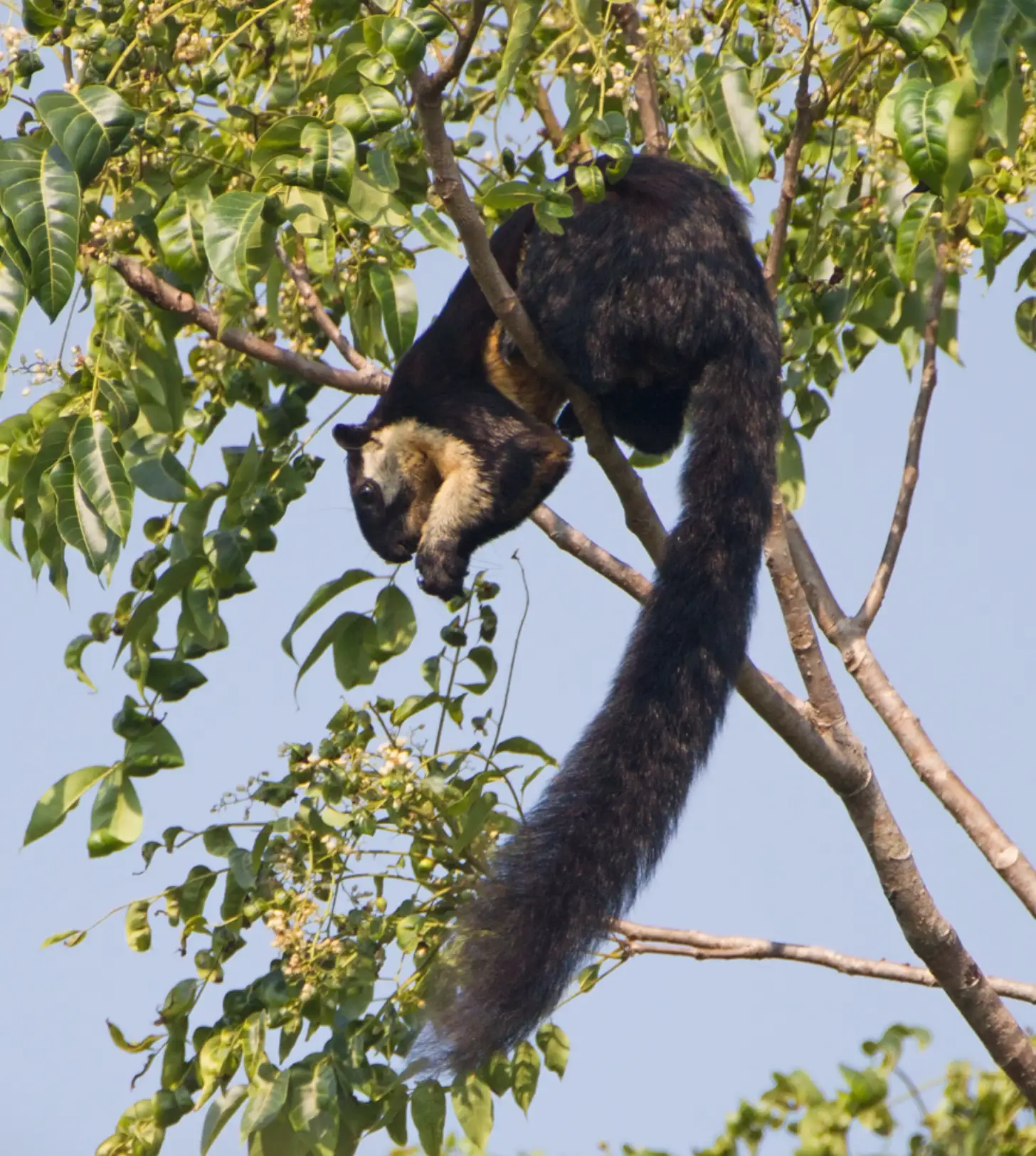
Globally, the black giant squirrel is categorized as near threatened on the International Union for Conservation of Nature’s Red List.
Fortunately, Flora & Fauna, a conservation organization backed by Sir David Attenborough — who has been with the nonprofit for over six decades — has been hard at work to keep them from tilting into “endangered” status.
“These lovable squirrels have a strong preference for life in undisturbed forest, and are known to avoid human settlements and crop plantations,” Flora & Fauna stated on its website. “This means that the more of the forest is destroyed, the more of the continent becomes unlivable for them.”
“By living in the upper forest canopy, these squirrels can evade ground predators — and poachers — but this becomes harder to do as more of their habitat is destroyed by humans.”
Flora & Fauna’s conservation approach largely involves equipping local forest rangers with the resources they need to monitor black giant squirrel populations and protect them from harm.
“By supporting our teams on the ground, you can help ensure that rangers are fed, equipped and ready to patrol — preventing illegal loggers from destroying the squirrels’ homes, and stopping poachers from killing them for their meat,” the nonprofit explained.
According to The Nepal Times, black giant squirrels are also frequently targeted by Nepalese farmers due to their at-a-glance resemblance to the Asian palm civet. The civet’s penchant for raiding fruit trees and berry farms has led to infamy as a local pest, despite its protected status.
In addition to direct intervention to stop human-wildlife conflict, Flora & Fauna also has long-term goals in place to reduce destructive logging practices.
“By setting local communities up with environmentally friendly ways of making a living — such as harvesting non-timber products from the forest, and locally-led tourism initiatives — we can support them in living comfortable lives while preserving their native wildlife,” the nonprofit said.
“We’re lucky to live in a world that’s filled with such wonders,” Flora & Fauna stated. “And when they come under threat, it’s up to us all to protect them.”
You may also like: This rare 'bearcat' looks like he wants to ask you three riddles. Conservationists are racing to save his species
Featured Image: Rushen/Wikimedia Commons (CC BY-SA 2.0)