Every year, the National Oceanic and Atmospheric Administration tracks green sea turtle migration.
During nesting season, these turtles swim up to 1,200 miles to find a place to lay their eggs, often ending up on the French Frigate Shoals, an atoll in the Papahānaumokuākea Marine National Monument in the Northwestern Hawaiian Islands.
Nesting season is particularly important for these endangered sea creatures, as it could support species recovery and conservation — but only if they are protected and safe to reproduce.
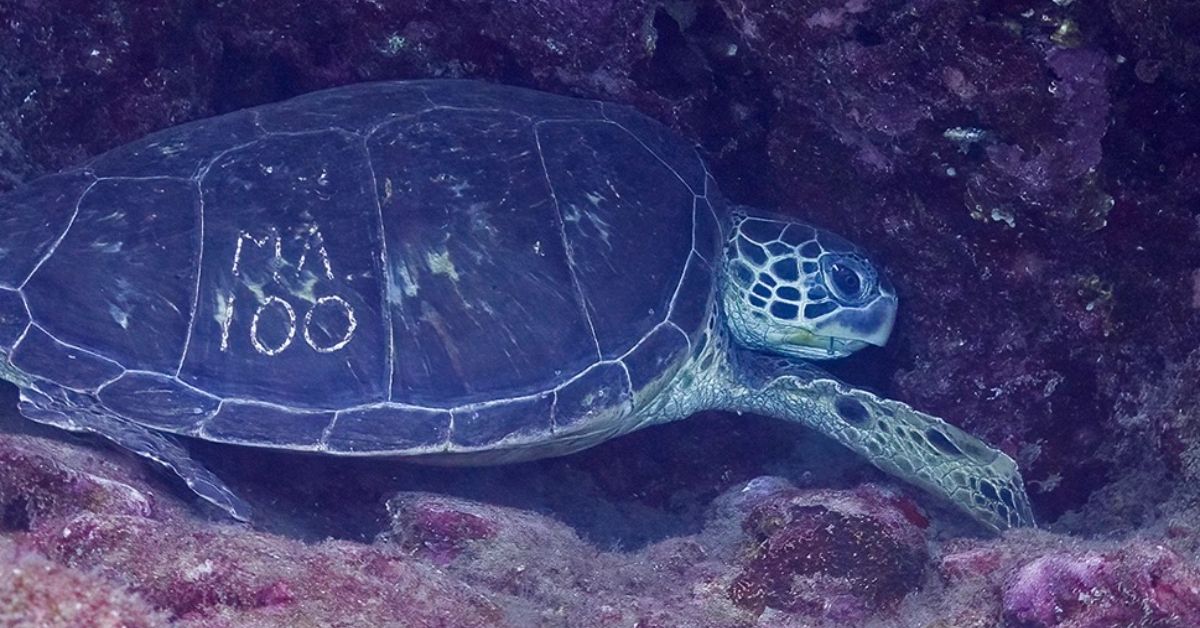
So, NOAA biologists conduct field research and surveys in these areas to track turtle populations year over year. To do this, they carefully etch letters and numbers into the shells of these turtles using a dremel tool “similar to those used by nail technicians,” NOAA explains.
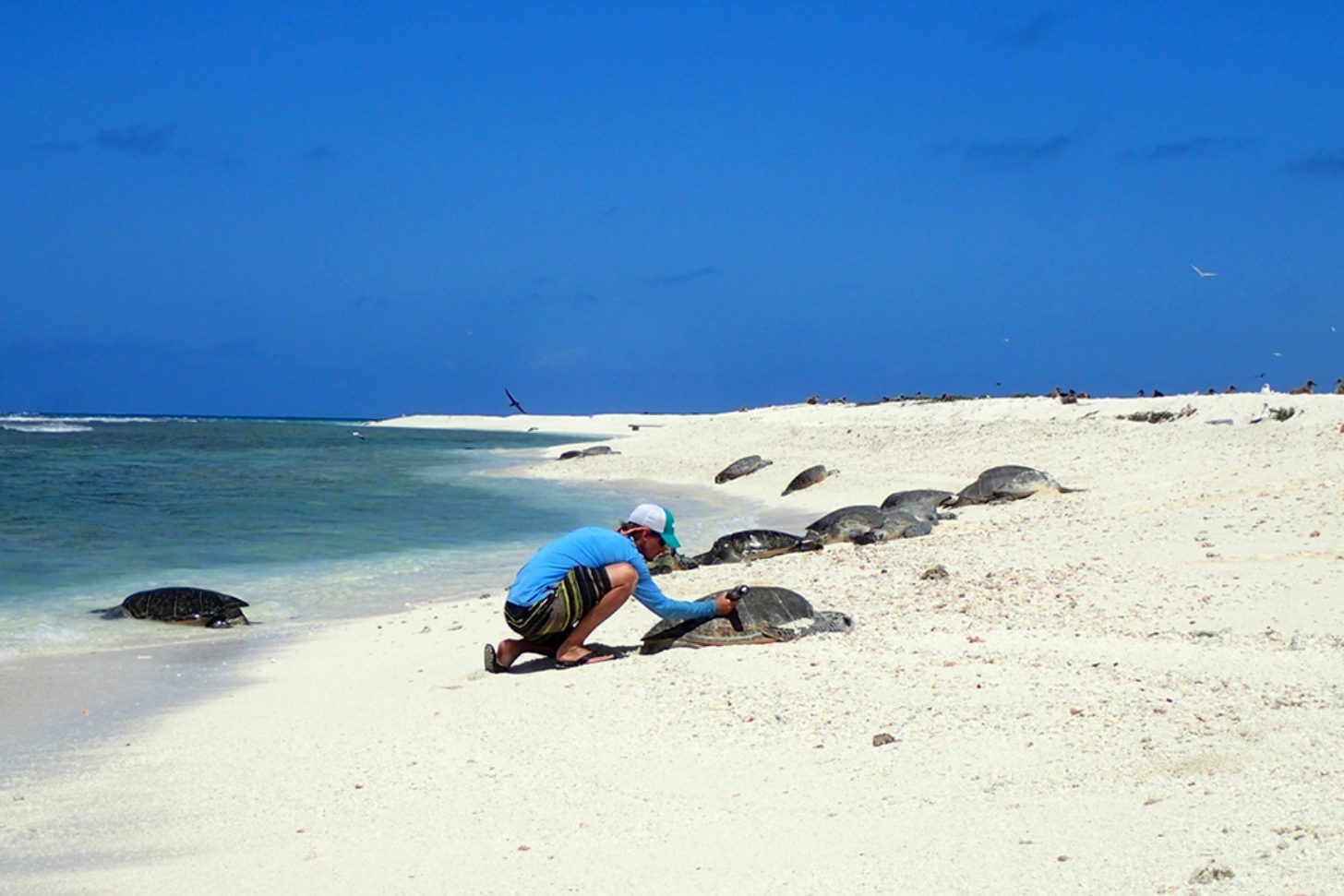
“Using the clean, dremeled area as a guide, they apply non-toxic paint to the turtles’ shells to make it visible from afar,” an explainer from the agency continues. “The etch indicates where the turtle was found. This is a painless process, and many turtles actually sleep through it!”
Though this process has been in place for decades, in 2017, some concerned citizens assumed these markings to be graffiti tags drawn onto the sea turtles. They began to report the etchings, and it ultimately inspired NOAA to start the Honu Count.
The Honu Count (named after the Hawaiian word for green sea turtles), encourages locals to document any sightings of turtles with white alpha-numeric etching on the right side of their shells. This helps biologists understand the foraging habitats, migration, distribution, and survival status of these turtles.
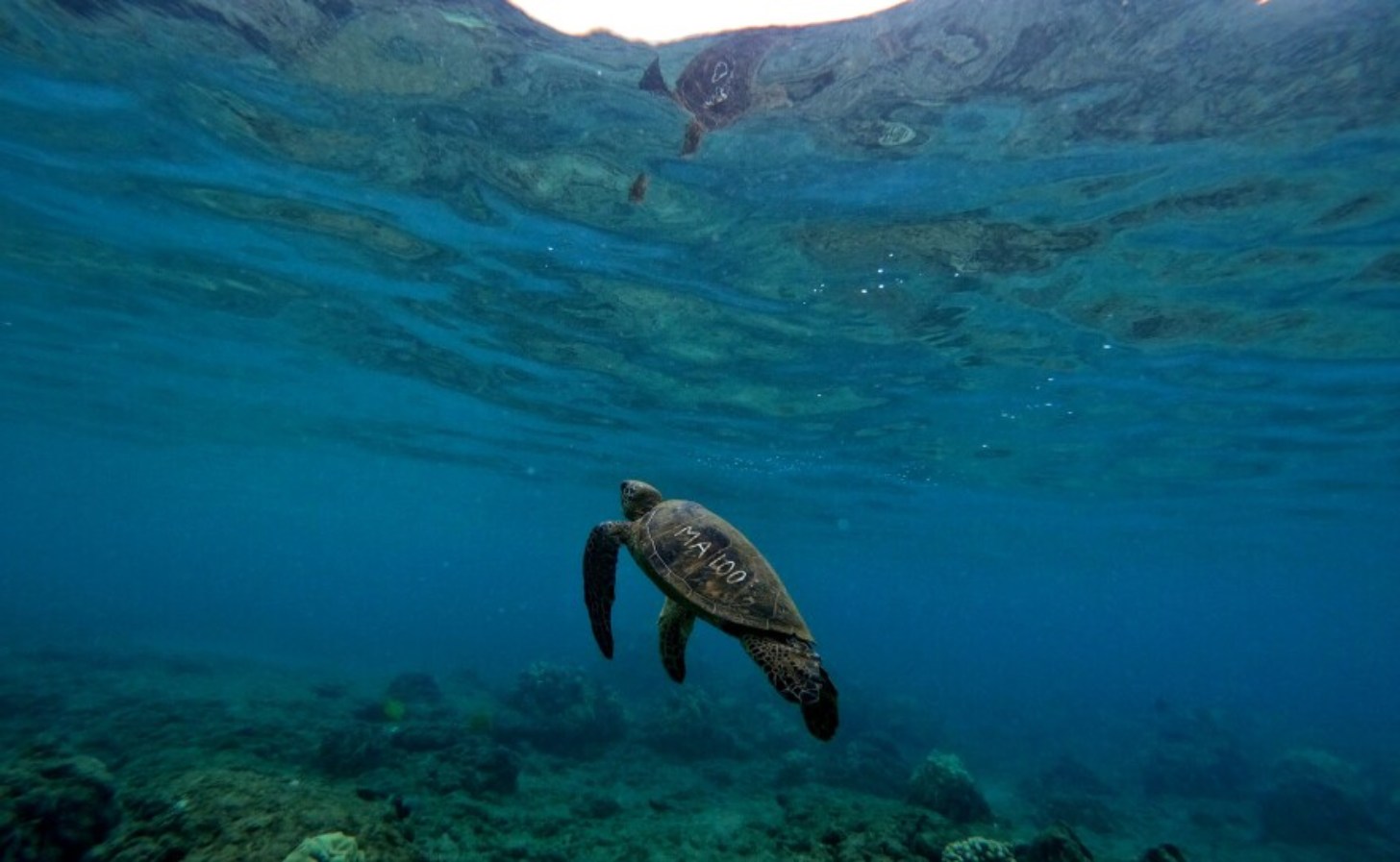
To participate, locals simply look for the turtles with etchings, keep a respectful distance while taking a photo on land or in water, record the date, time, and location of the sighting, and upload the information to the Honu Count Sighting Survey.
Since the beginning of the Honu Count in 2017, nearly 600 people have reported 688 sightings of 253 individual turtles, according to NOAA.
And it’s made a real difference.
Brittany Clemans, a wildlife biologist who spent six months tracking these turtles in the Northwest Hawaiian Islands, has published a new study using the crowdsourced data of the Honu Count to inform the boundaries of protected habitat for the species.
“The data that was submitted by the community of our honu helped us essentially determine these important foraging sites, so we were able to really get the density of certain places that the majority of honu were frequenting,” Clemans told Hawai’i Public Radio.

Her research helps determine where critical habitats are for the honu, making it that much easier for NOAA and other environmental officials to determine what areas are most in need of support to ensure the turtles’ survival.
Plus, it builds trust between the science community and the general public.
“It's important for the community to know that they are having a really positive impact on increasing this data set, which helps us understand this species more,” Clemans told Hawai’i Public Radio.
“This species is part of Hawaiʻi and part of the ocean as a whole, and I think it's also very important for people to just be excited and ask questions.”
You may also like: This sea turtle nest would have washed away without intervention. Thanks to a conservation team, hundreds of sea turtle hatchlings were saved
Header image by Honu Count sighting survey participant D. McLeish