The organizers of Save a Life Day — an annual naloxone distribution planned for Thursday — aim to keep promoting harm reduction, even after the Trump administration shifted federal funding away from some supplies that make drug use safer.
Volunteers representing health departments, healthcare providers, community organizations and more will distribute naloxone — a drug that reverses an opioid overdose — at more than 1,000 sites in all 50 states this year. The theme of this year’s Save a Life Day is “elevate harm reduction.”
Many distribution sites will not offer drug testing strips, after the Substance Abuse and Mental Health Services Administration said earlier this year that federal funds cannot be used to purchase the supplies.
Organizers say the testing strips, which detect deadly contaminants like fentanyl or xylazine – are an important safety tool for people who use drugs.
“They’re an important part of harm reduction overall,” said Caroline Wilson, national coordinator for Save a Life Day. “I think one thing that people forget is that overdose not only affects daily opioid users, but also people who are using drugs recreationally, because fentanyl is mixed in with a lot of other drugs.”
People can use the strips to use drugs to determine if fentanyl is in it and then decide whether to take it or use in a safer way, she said.
“I think (testing strips) are very important for a lot of people that are using recreational drugs,” Wilson said. “I think we forget how many people are really out here using drugs.”
An executive order last year said that substance abuse agency’s funding could no longer be used for “so-called ‘harm reduction’ or ‘safe consumption’” efforts. The government has previously restricted funds from being used to purchase clean syringes for distribution.
In a “Dear colleague” letter dated April 24, the agency outlined that grant funding can also not be used for certain other harm reduction supplies, including drug testing strips. It said funding could still support naloxone and infectious disease prevention services.
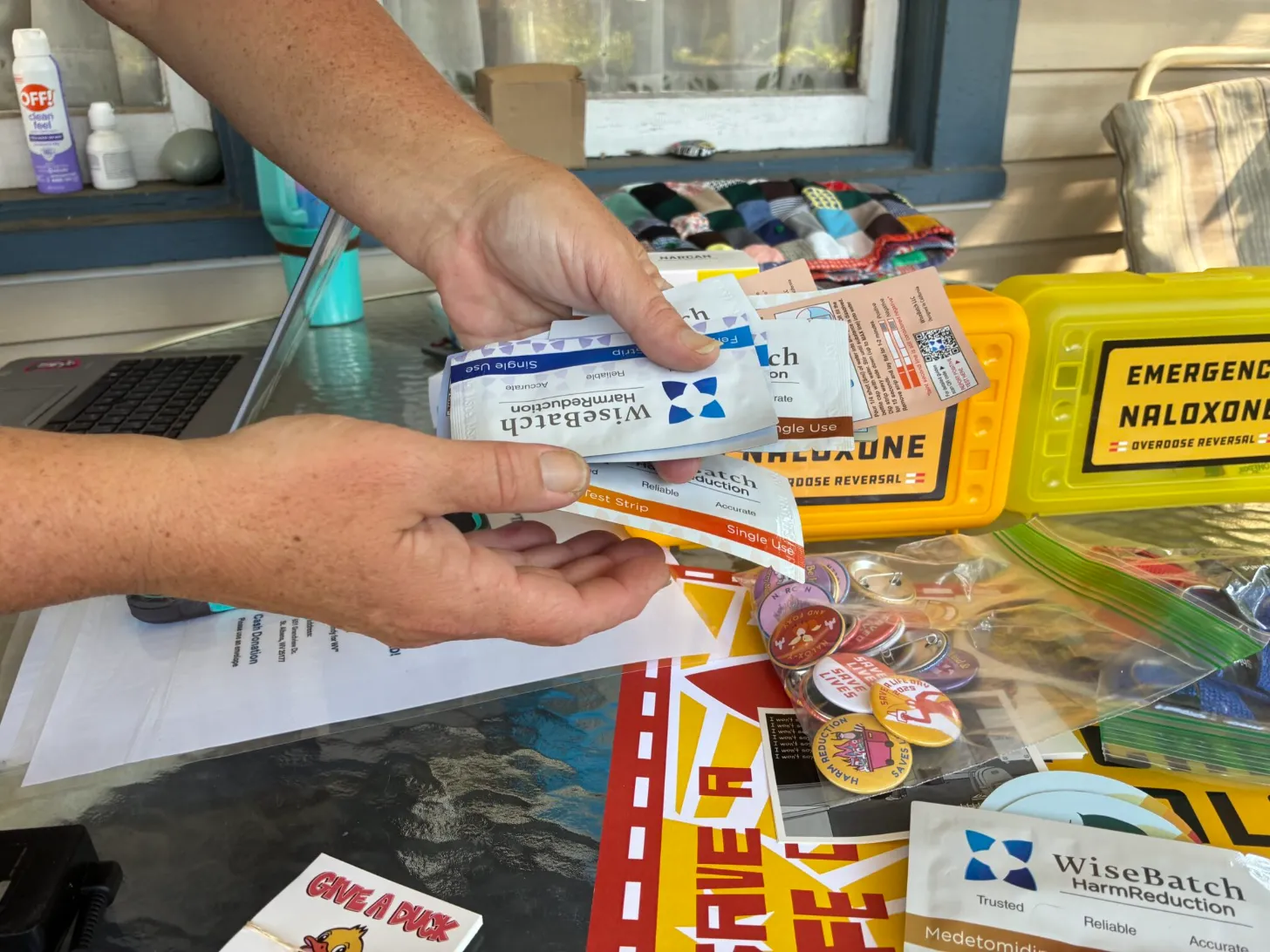
Wilson said Safe a Life Day volunteers in different states are interpreting the federal guidance differently — some plan to offer test strips if the supplies are paid for with another funding source. Some won’t distribute them at all because they’re using time paid for with a federal grant, she said.
Other participating organizations — including Charleston-based overdose prevention organization SOAR — do not get federal funding at all, and will continue to distribute drug testing supplies.
Sarah Stone, a co-director for SOAR and a founder of Save a Life Day, said she’s leaving it up to volunteers working at sites throughout Kanawha County whether or not they’ll distribute testing strips.
Stone worries the new federal restrictions will reverse the progress being made to combat the substance abuse crisis. Drug overdose death rates dropped in almost every state last year, according to the U.S. Centers for Disease Control and Prevention.
“Things have taken a turn,” Stone said. “We talk a lot about not celebrating until we get to overdose zero because every single overdose is somebody, but we were making some real progress. That’s just gonna reverse all of that, all of these extra rules on providers, and more stringent policies and more punitive laws on drug use and selling drugs. All of that stuff is going to drive that number of fatal overdoses (up) tremendously.”
Wilson said some organizations have changed their names to eliminate the reference to harm reduction because of last year’s executive order.
“I’ve had a few organizers let me know that they’ve had to change the names of their programs and instead of calling it a harm reduction program, they now (call it) something like an overdose prevention program,” she said.
In a statement to West Virginia Watch, a spokesman for the U.S. Department of Health and Human Services said that the “National Drug Control Strategy calls for improved drug testing in clinical and workplace settings as well as assessing the value of community-based drug checking programs using more sophisticated technologies such as mass spectrometry testing to inform public health, law enforcement and others in the community about emerging substances in the community illicit drug supply.”
They said that Substance Abuse and Mental Health Services Administration’s role is to make sure government funds are used for “effective, common-sense solutions that have been proven to save lives and keep people out of an endless cycle of addiction and moves them into a life of recovery.” The new requirements do not prohibit states and communities from using other grants to purchase drug testing strips, the spokesman said.
Save a Life Day was founded in 2020 in two West Virginia counties: Kanawha and Putnam. The state has historically had some of the highest drug overdose death rates in the country. Last year, 133,000 doses of naloxone were distributed during Save a Life Day 2025.
The event aims to lessen the stigma around naloxone and to get it into the hands of as many people as possible, Wilson said. Volunteers will also train people on how to administer the drug. It only takes a few minutes to come get a naloxone kit and get trained, Wilson said.
“This is one of the easiest ways and one of the easiest solutions to the overdose crisis,” she said. “We have seen a huge drop in overdoses in West Virginia, and that is because of a lot of different things that have been done between prevention, treatment, recovery, harm reduction, etc.
“Naloxone is a piece of that as well,” she said. “And it’s something anybody can do. It’s really easy.”
For more information or to find a naloxone distribution site near you on Thursday, see https://savealife.day
This article was originally published by West Virginia Watch.
You may also like: 'Hostile architecture' makes it impossible for homeless people to rest in public. One city just voted to eliminate it
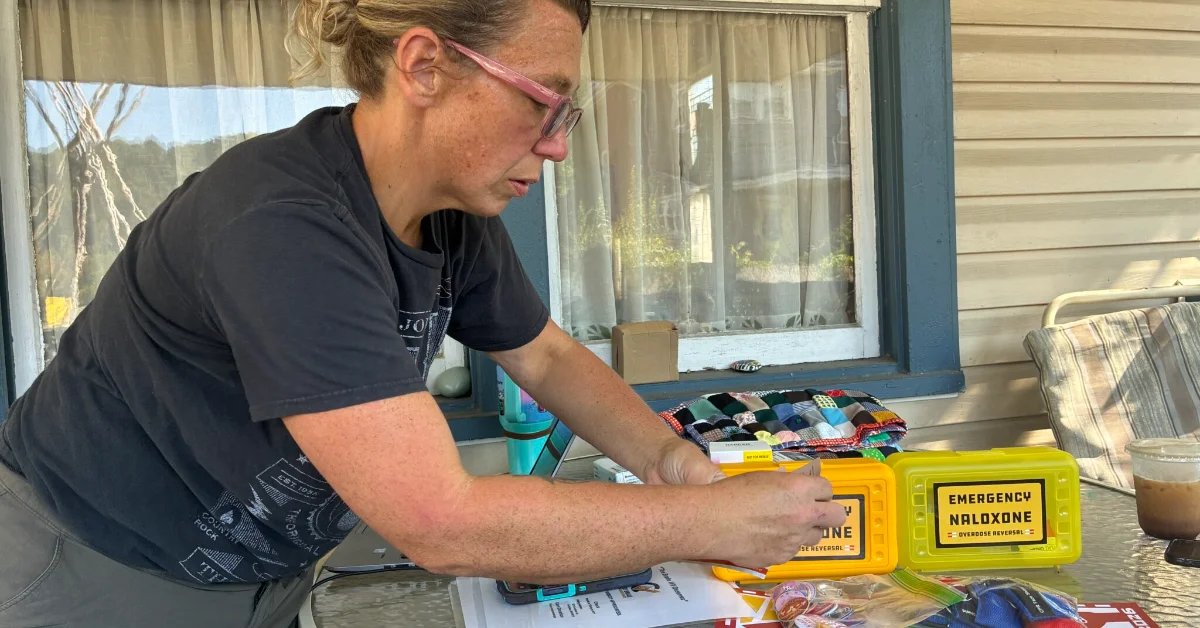
Featured Image: Sarah Stone, a cofounder of SOAR and a Kanawha County organizer for Save a Life Day, looks over supplies for this year’s Save a Life Day event, planned for Thursday, Sept. 24. Lori Kersey/West Virginia Watch