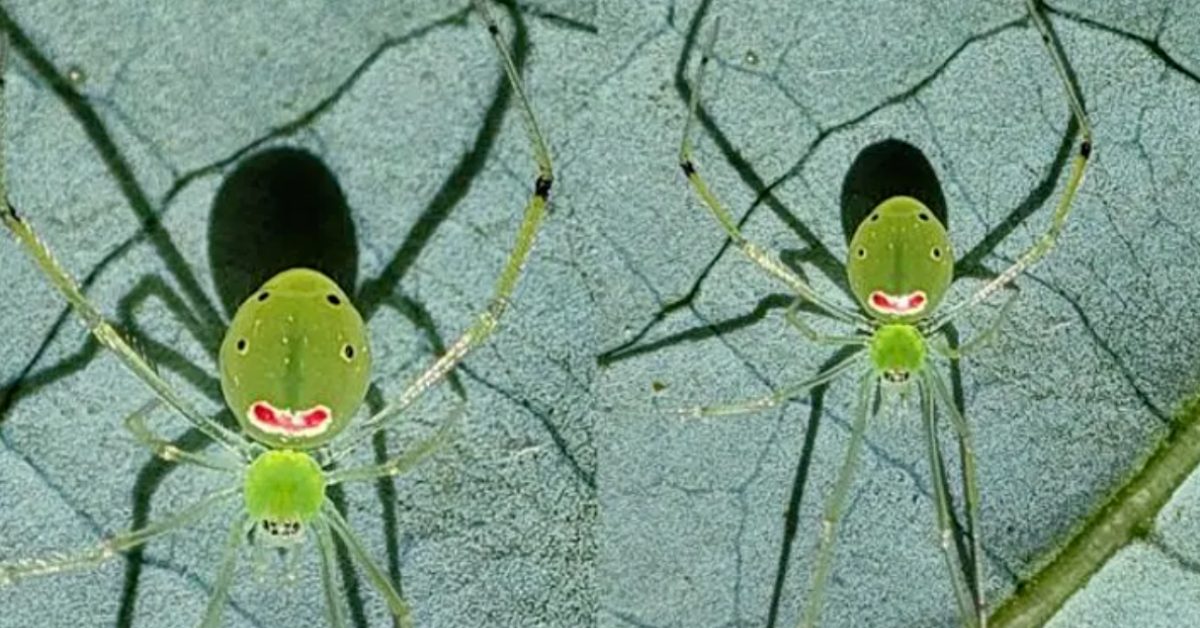
In 2023, two scientists from the Forest Research Institute and the Regional Museum of Natural History set out to study Himalayan forest ants in the mountains of Uttarakhand, India.
Instead, they stumbled across an entirely new species — a spider with marks on its abdomen that resembled a cheerful grin.
Strangely enough, the scientists felt like they had seen it before. It bore an uncanny resemblance to another species over 7,000 miles away: The Hawaiian happy-face spider, a “biological curiosity” that exists only in the Hawaiian Islands.
“The discovery was accidental because our survey was on ants,” co-author of the study Devi Priyadarshini said in a press release.
“But my co-author [Ashirwad Tripathy] kept sending me spiders from high altitude regions for identification,” she continued. “So, one fine day, when he shared this image from the underside of a Daphniphyllum leaf, I froze in shock because I had seen the Hawaiian spider during my master's program itself, and I knew instantly we had a jackpot because of its striking resemblance.”
Their study immediately pivoted away from Himalayan forest ants into an entirely new taxonomic record.
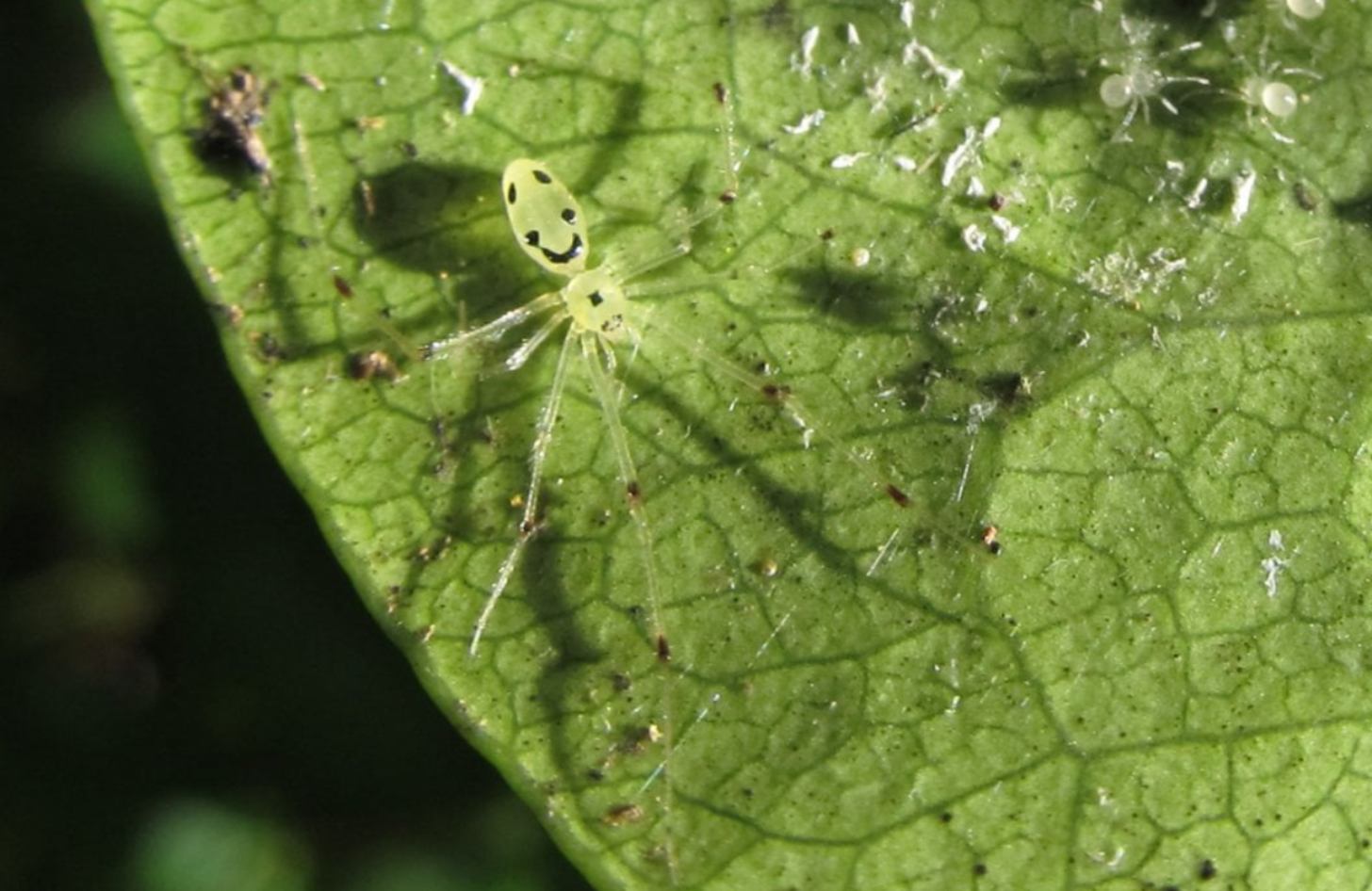
“I asked him to send all morphs that he found, and that led to the discovery in the next few months, from October 2023 onwards,” Priyadarshini said. “This almost came across as a gateway to look at other polymorphic species from this region.”
On April 24, “after months of fieldwork in the misty forests of Uttarakhand,” Priyadarshini and Tripathy finally published their study on the Theridion himalayana, the Himalayan Happy-Face Spider.
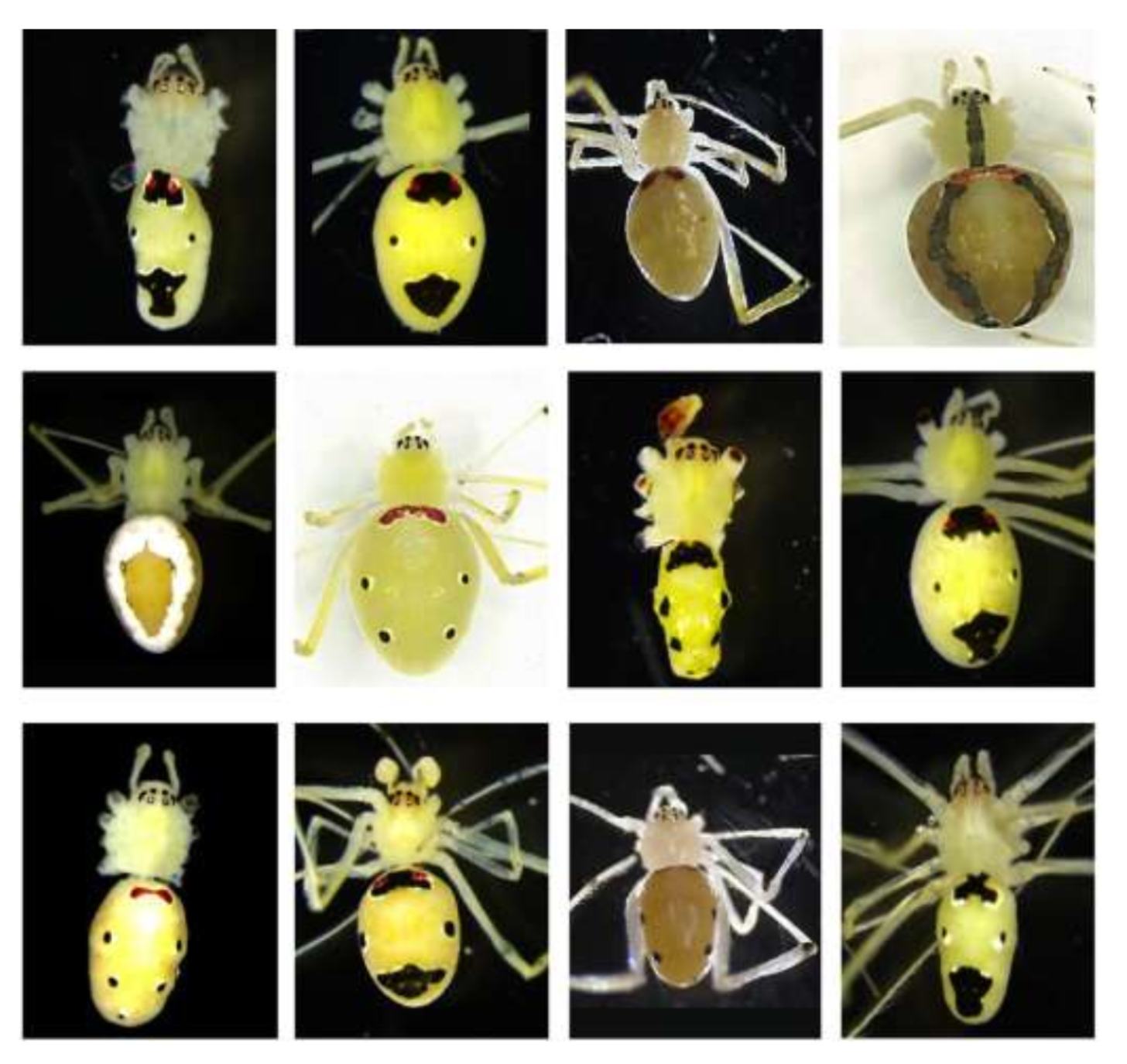
“This tiny beauty shows an incredible 32 different colour morphs with smiling faces in vibrant red, black & white — just like its famous Hawaiian cousin (Theridion grallator),” Tripathy shared in an Instagram post. “But here’s the twist: it evolved this striking polymorphism completely independently in Asia!”
“Even more fascinating — the patterns are strongly sex-linked (males & females look very different), and it spends its life hanging upside down on the underside of [ginger] leaves in the same niche as the Hawaiian species.”
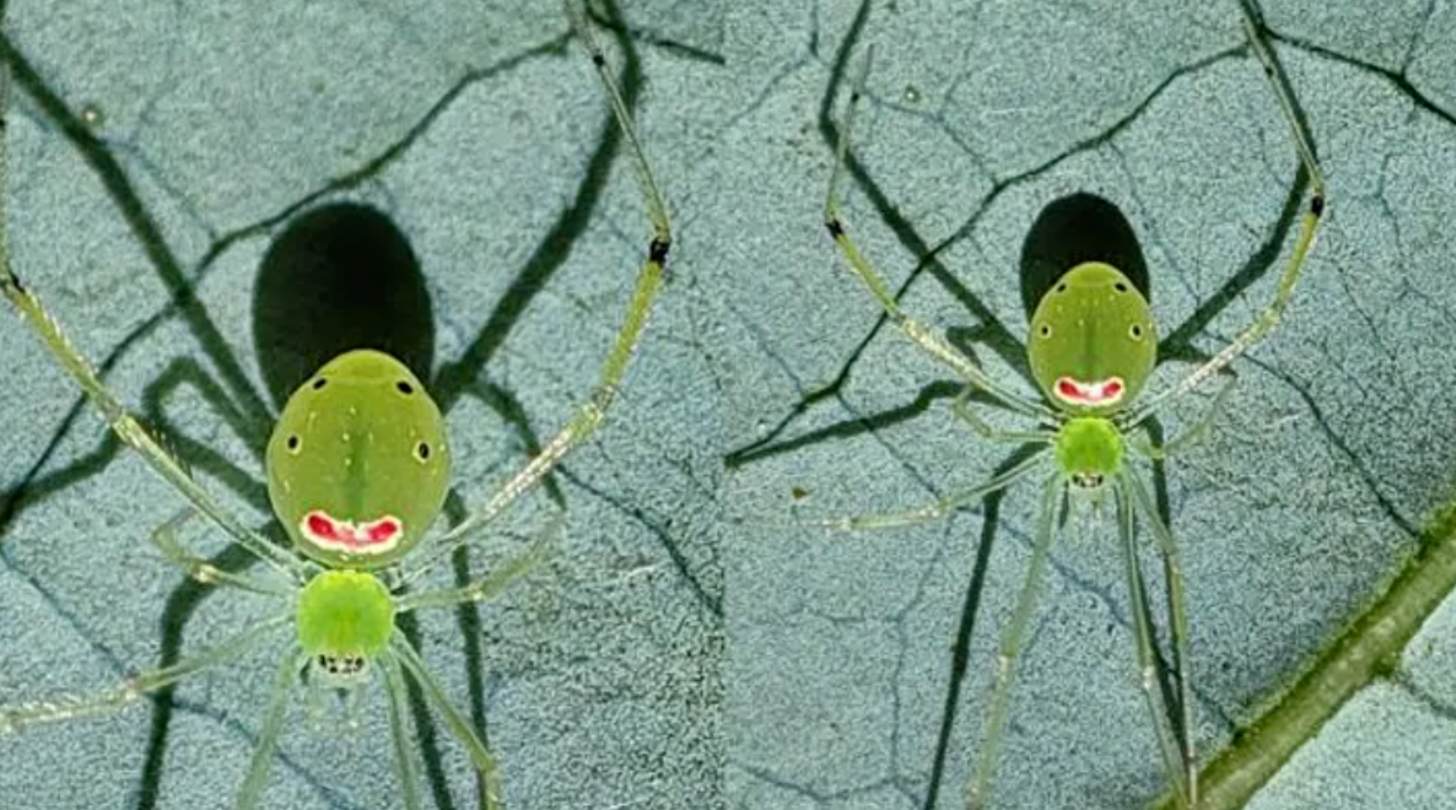
What puzzled the scientists was the fact that the ginger plant was not native to Hawaii.
“How did the spiders choose an invasive species and ginger exactly?” Priyadarshini posed. “If T. himalayana is an elder cousin of T. grallator, although discovered 125 years later! Although this sounds like a tall claim now, it will be our further scope of work to establish any missing links, if at all, through [that plant family].”
Tripathy and Priyadarshini saw many more “critters” in the same environment as the Himalayan Happy-Face Spider that shared similar colour patterns on their bodies. Tripathy said that could be evidence of either “coevolution or evolutionary adaptations.”
One thing was for sure: They uncovered a treasure trove of new scientific mysteries when they set out into the Western Himalayas in 2023.
“I am deeply grateful to my co-author, Dr. Devi Priyadarshini, for her constant guidance and support throughout this work,” Tripathy wrote in their Instagram post. “This discovery not only documents a new species but also provides a unique system to explore the evolution and maintenance of colour polymorphism, with future research aimed at uncovering its genetic basis and ecological drivers.”
He added: “Nature keeps surprising us with parallel evolution!”
You may also like: Scientists fell in love with this underwater 'Snuffleupagus' 23 years ago. It's finally being recognized as a new species
Header image via Devi Priyadarshini and Ashirwad Tripathy/CC BY