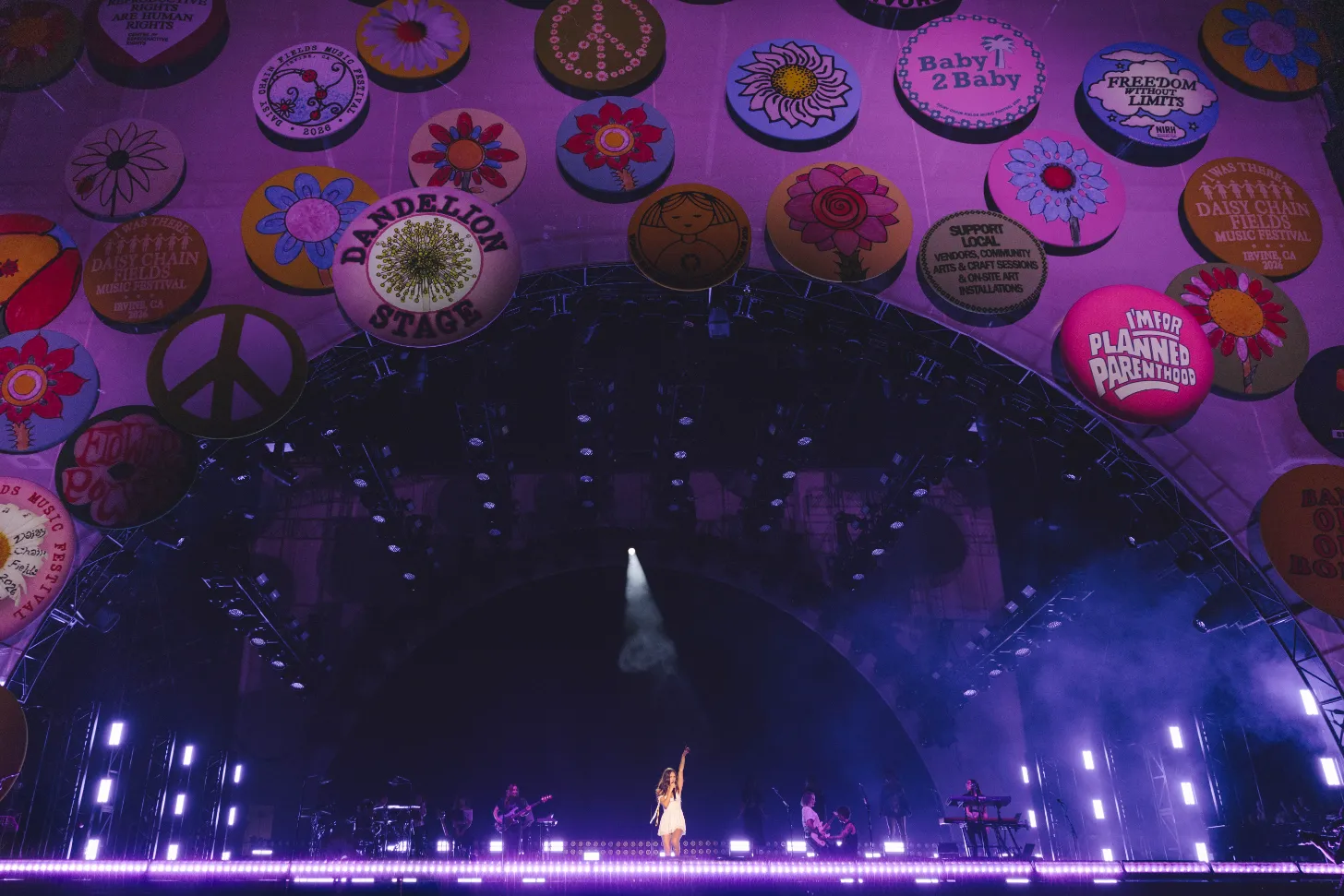
Anyone who is anyone was at Daisy Chain Fields — the Olivia Rodrigo-hosted all-women benefit music festival — in Irvine, California on Saturday, August 29.
And anyone who wasn’t there was watching on their phones — as umpteen angles of Rodrigo and Stevie Nicks singing “Landslide,” captioned “peak girlhood,” flowed one after another.
The performances were hardly the headline-makers at Daisy Chain, however, where a lineup exclusively of women artists like Chappell Roan and Doechii played without pay in service of a greater mission.
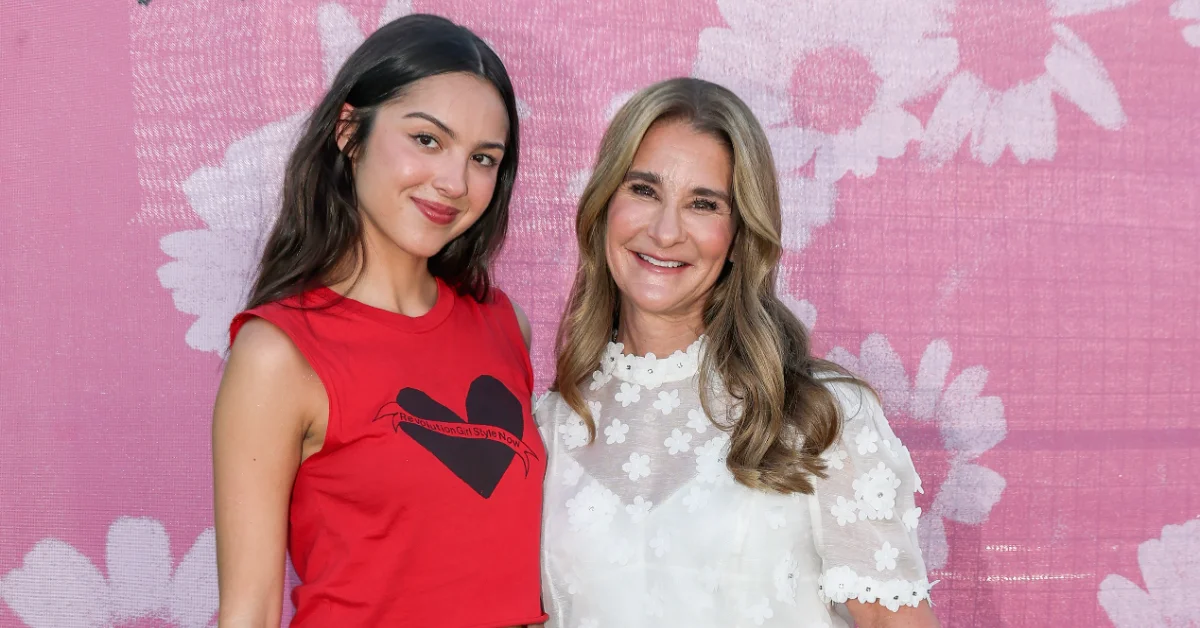
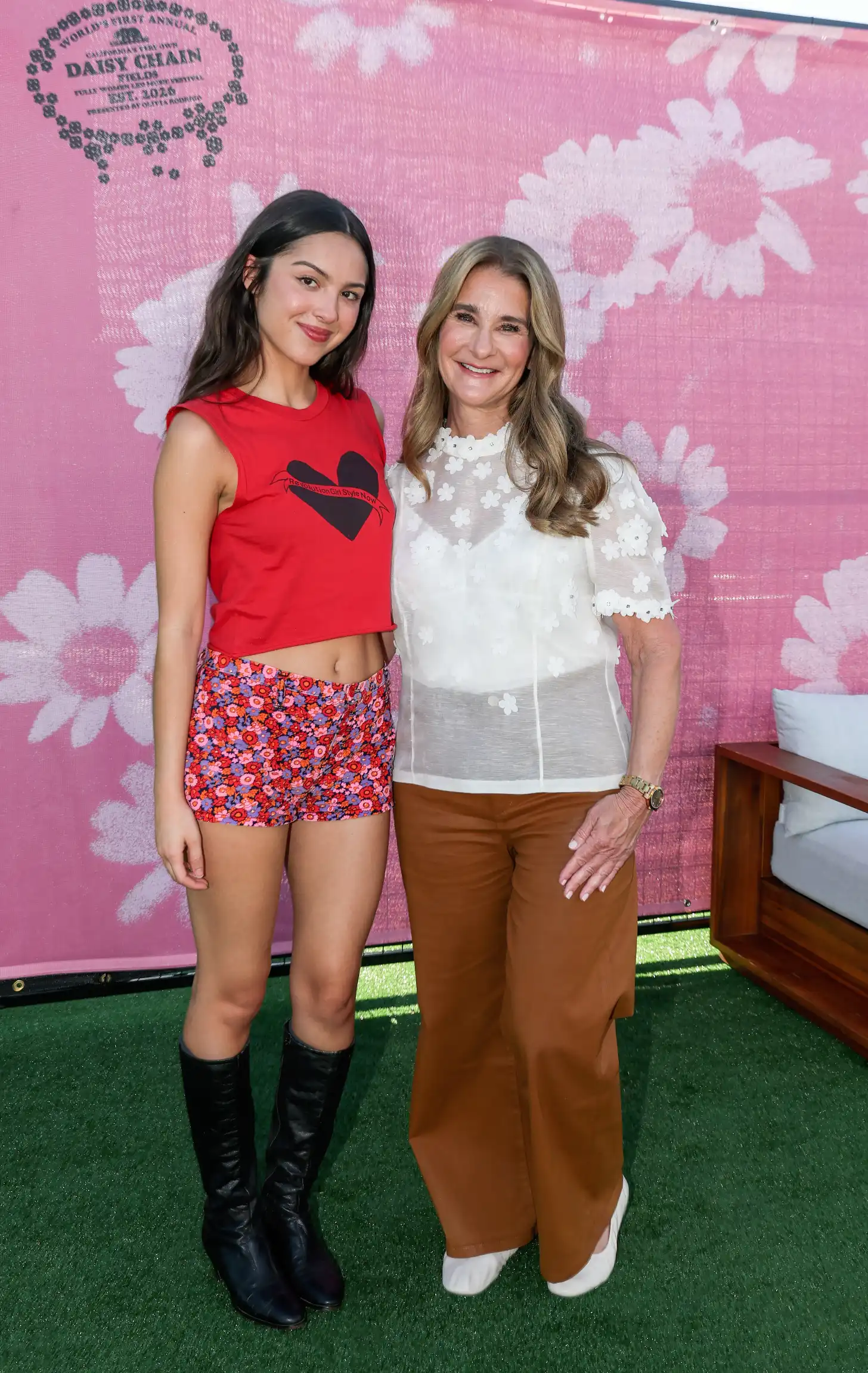
The main sound bite of the weekend came when Rodrigo first announced that $10 million would be donated among 10 nonprofits uplifting women and girls on Friday — and by Saturday night, that number was doubled with the help of Melinda French Gates.
“She’s pledged to double every dollar that we made here today, bringing the grand total of funds being donated to $20 million,” Rodrigo announced gleefully on stage, to raucous applause.
Daisy Chain nonprofits share how they will use inaugural funding
Those ten nonprofits include Baby2Baby, Jhpiego, National Institute for Reproductive Health, Black Mamas Matter Alliance, Johns Hopkins Center for Indigenous Health, National Women’s Law Center, Center for Reproductive Rights, National Domestic Workers Alliance, Planned Parenthood, and FreeFrom.
They all uplift women and girls in one way or another: By advancing women’s health among marginalized communities, protecting access to reproductive care, uplifting survivors of gender-based violence, organizing domestic workers, and more.
What Rodrigo — and French Gates — have given them is a life raft. Many of the nonprofits honored, especially those focused on reproductive justice and women’s health as a whole, have faced major losses in federal funding.
In addition to research grants being cut through the now-defunct Department of Government Efficiency, Title X funds have been frozen by the Department of Health and Human Services, and the “One Big Beautiful Bill Act” championed by the Trump administration has significantly scaled back federal Medicaid allocations.
“Philanthropy and private donations have quickly become a major funding lifeline for the work of our Center. Our team has experienced cuts to major federal grant programming and uncertainty about funding options moving forward,” Melissa Walls, co-director of the Johns Hopkins Center for Indigenous Health, told Good Good Good.
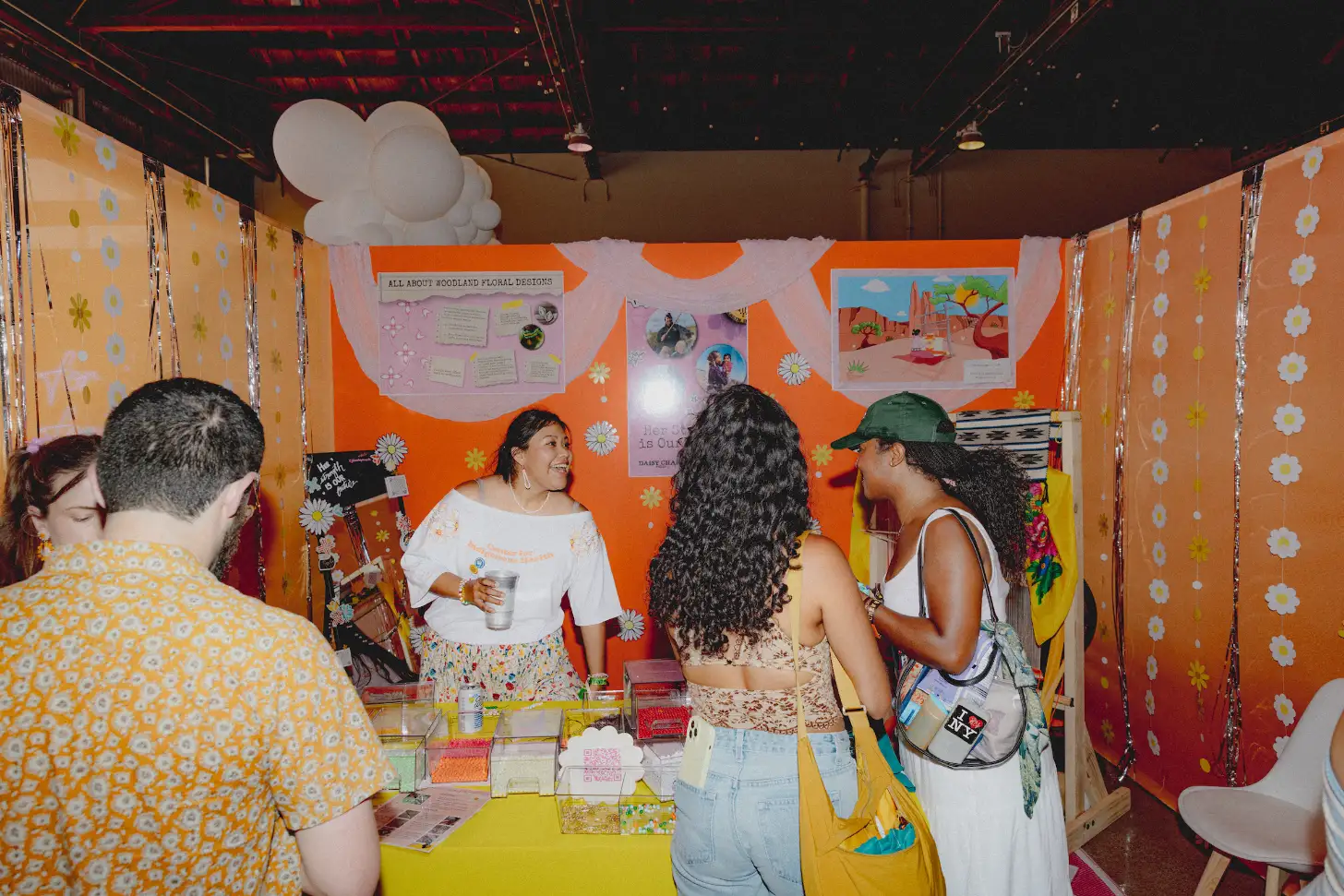
The Center, founded in 1991, provides public health programs, research, and advocacy for Indigenous communities across the country.
“Simply put, we would be unable to do our place-based work led by and with Indigenous Peoples without private funding,” Walls said. “Olivia’s support is a massive contribution to our Center’s teams, programs, and initiatives, and we could not be more thrilled for her support.”
Walls said the festival’s donation will allow the organization to “sustain and fill several critical programs,” including family visiting efforts and cultural revitalization programming.
“We also hope to sow new seeds to promote the well-being of Indigenous women and girls with pilot funding made possible by Daisy Chain Fields proceeds.”
All of the nonprofits included in the festival also tabled at a “philanthropy village,” where attendees — many of whom were young women — were invited to collect pin badges for a themed tote bag after visiting with each organization.
Walls said The Center’s goals were to “create new relationships with younger generations,” and that her team was inspired by the warmth and genuine interest shown by festival attendees.
“Our social media platforms have blossomed over the past few days, and they are one space where we hope to keep DCF fans engaged and motivated to support our vision for thriving Indigenous communities,” she added.
For the National Institute for Reproductive Health, which works to protect access to abortion and advance reproductive justice nationwide, the philanthropy village offered a way to make political engagement fun and accessible.
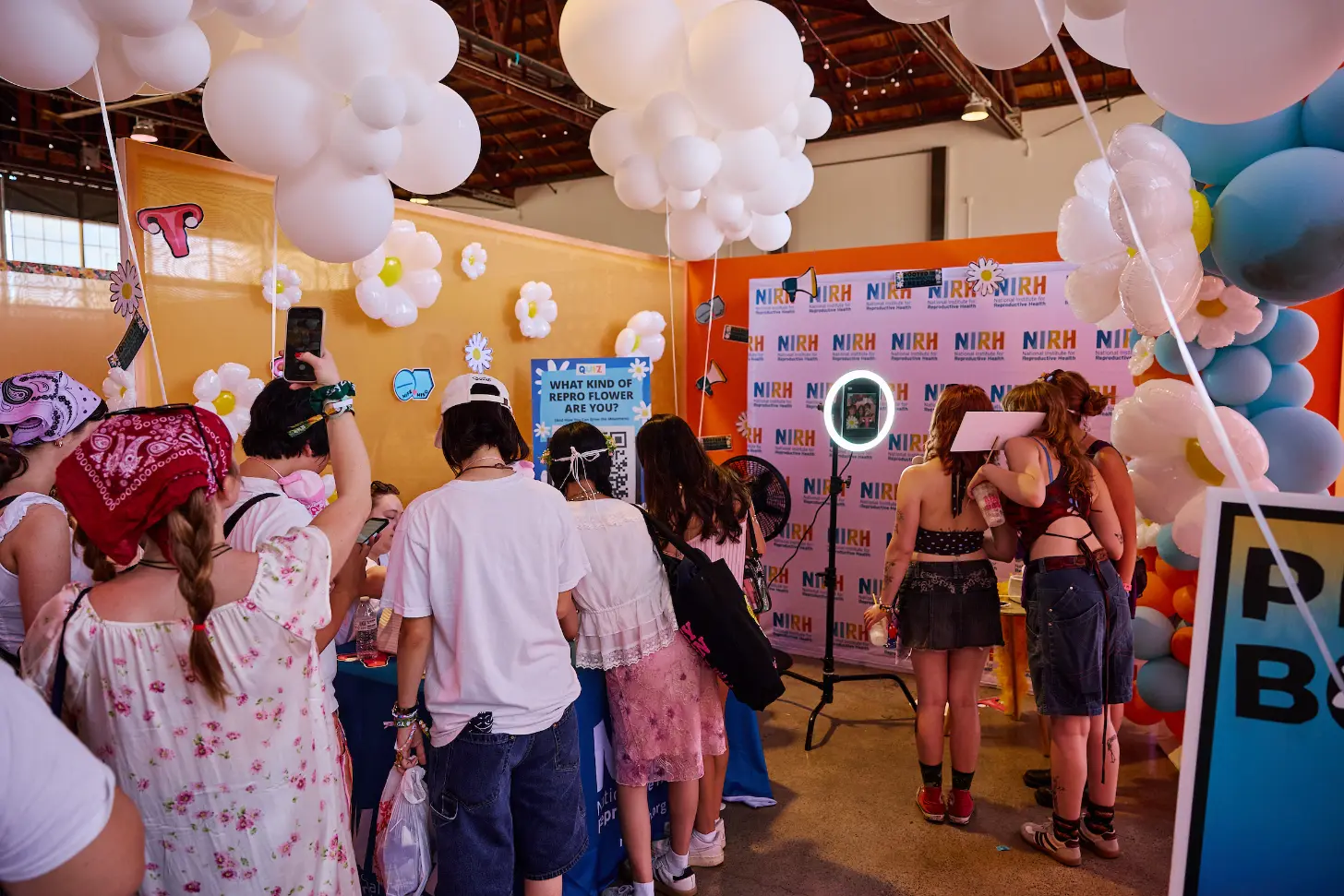
“On-site, we ran a quiz called “What Kind of Repro Flower Are You?” Attendees took the quiz to learn how they are best positioned to join the movement to advance bodily autonomy in their own community, whether that’s showing up at a city council meeting, organizing friends, or backing a local group already doing the work,” NIRH president Christian LoBue told Good Good Good.
“We also had a fun photo booth where people could capture memories from the day, friendship bracelets, and plenty of swag to help people remember the day. We want people to leave with great memories and with a deeper understanding of how they can take action.”
The idea is to create an experience so fun that attendees stay connected to the organization and continue to learn how to engage with local advocacy efforts in their respective communities.
“The attacks on reproductive freedom may be relentless, but they only grow the public’s commitment to bodily autonomy. We’ve seen that people continue to support access to reproductive health care and want to be part of creating change in their communities,” LoBoue said.
“And that is exactly why partnerships like Daisy Chain are so critical: people are hungry to support reproductive freedom. This festival provides not only financial support, but opportunities for attendees to channel their energy into meaningful action — and lasting change.”
NIRH will also use its newfound funding to directly support its ongoing campaigns and programming.
“We work with state and local organizations to make abortion care affordable and within reach, to make sure Black and Indigenous families have midwives and doulas and can give birth safely, and to keep people’s reproductive health data out of the hands of anyone who would use it against them,” LaBoue said.
“This funding lets us invest in our partners, build and sustain the infrastructure that policy wins require, and give the movement resources that outlast any single campaign or news cycle.”
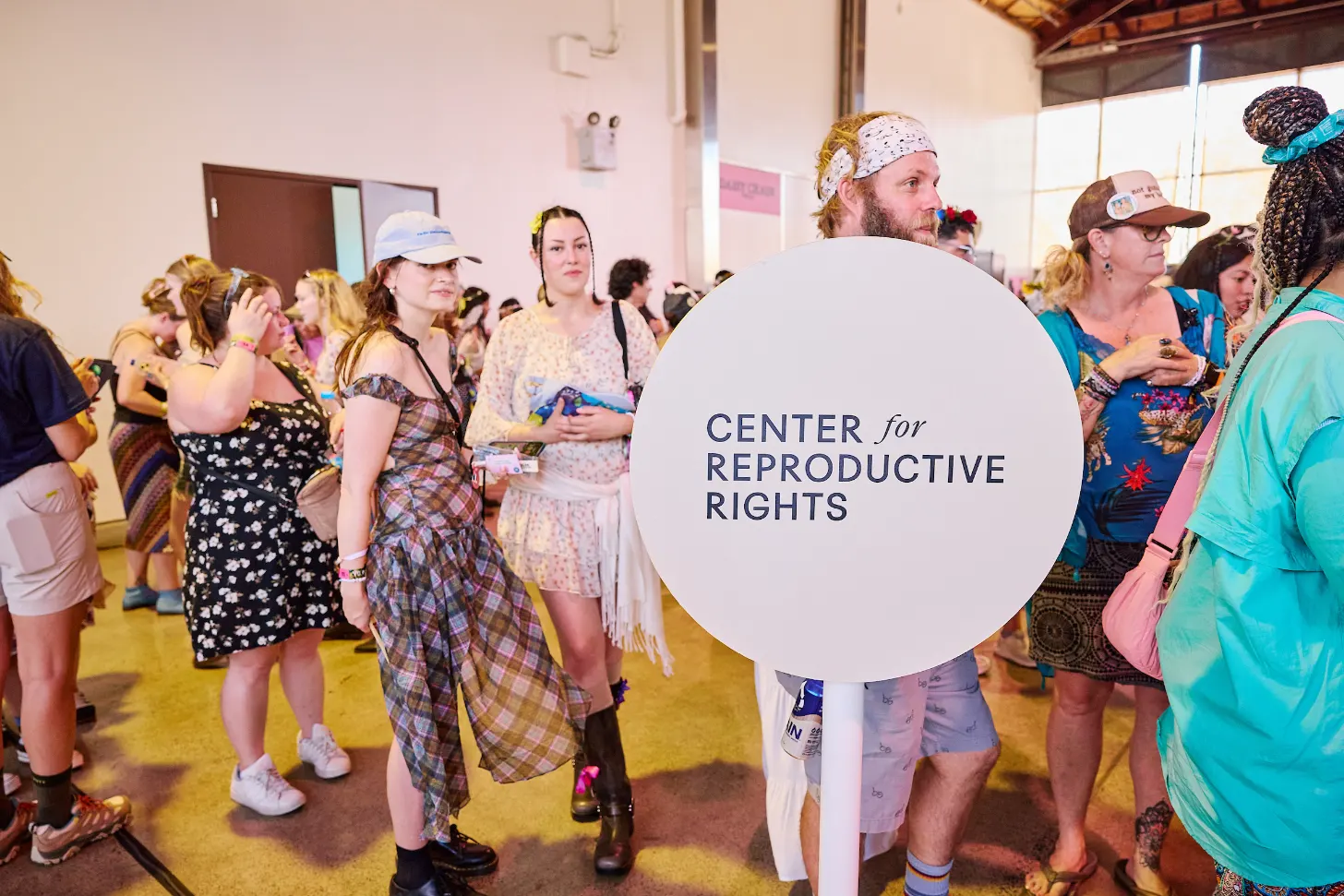
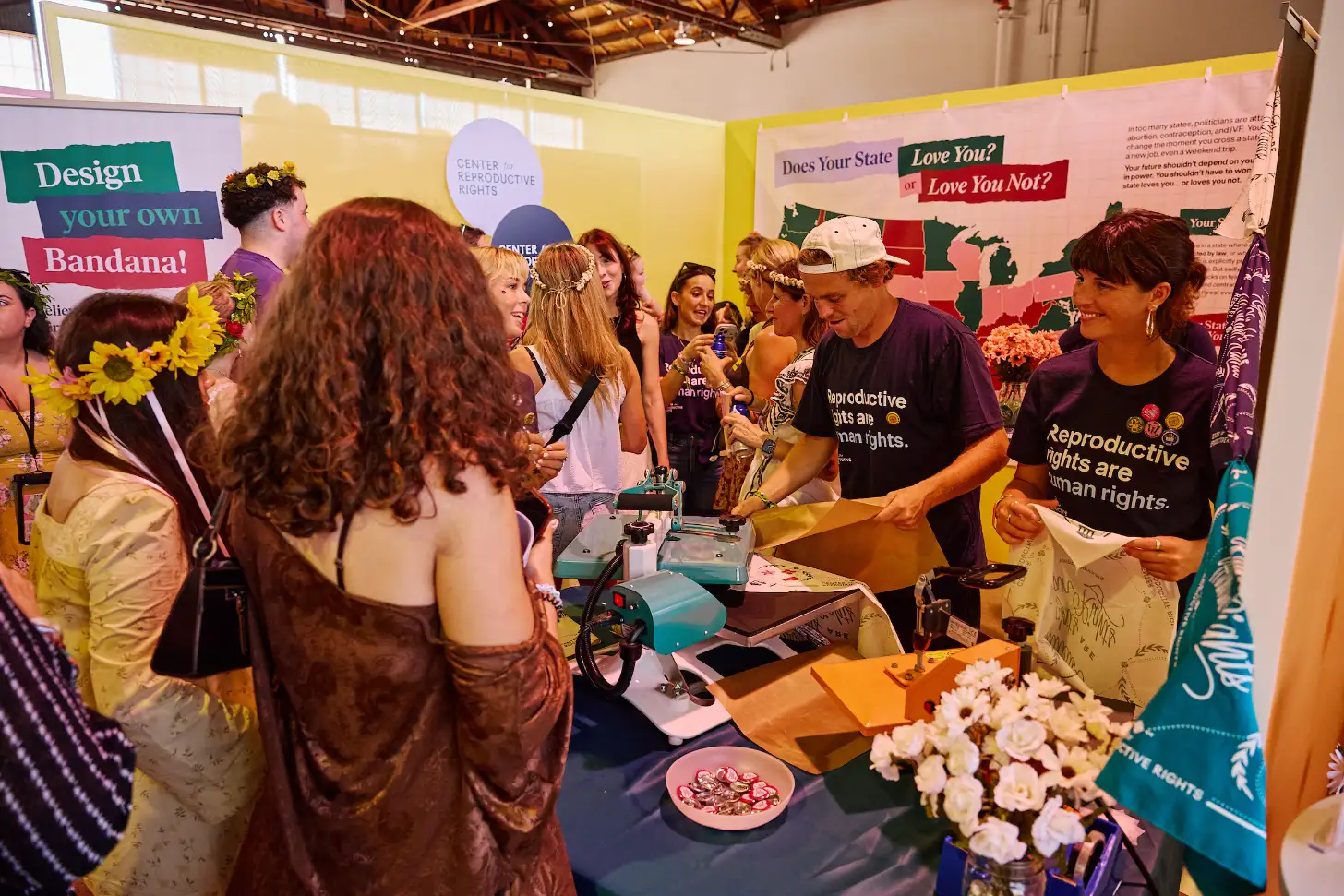
The Center for Reproductive Rights had similar goals in mind while on-site at the festival, with a booth for attendees to learn about the abortion laws in their home state and how they can defend access to abortion care where they live — with a digital version for anyone to engage with, whether or not they were at the festival.
“We want everyone at the festival and beyond to learn their rights, use the Center as a resource to navigate this complex landscape of reproductive rights access and share what they learn with their communities,” Catherine Mevs, deputy chief communications and marketing officer at the Center for Reproductive Rights, told Good Good Good.
The Center for Reproductive Rights will use its share of the funding to continue filing lawsuits against restrictions on abortion care and advocating for laws that expand those rights globally.
“One of our top priorities right now is protecting access to abortion pills, which have become the number one target of the anti-abortion movement,” Mevs said. “Medication abortion accounts for more than 60% of abortions in the U.S. today. These pills are a lifeline for women in post-Roe America, especially in places where lawmakers have banned abortions.”
Mevs emphasized that abortion pills are “incredibly safe, effective, and well-researched,” and that 7.5 million Americans have used mifepristone safely since it was FDA-approved in 2000.
“We recently won a case challenging the FDA’s existing restrictions on the abortion pill mifepristone as unjustified,” Mevs said. “The Center is doing everything we can to protect nationwide access to medication abortion.”
The larger Daisy Chain movement
These are just three examples of what kind of work Rodrigo’s efforts will support. Daisy Chain Fields also did the work of creating a culture of advocacy among young women through art, community, and, as Rodrigo said, joy.
“Seeing Daisy Chain come to fruition yesterday was the greatest joy of my career,” Rodrigo wrote in a recap post on Instagram Sunday.
“I am still in a bit of disbelief that it happened and I still feel incapable of properly expressing the gratitude that I feel for every person who believed in this vision and fought so hard to make it a reality.”
She said after the festival grounds cleared out, she and her friends walked around Great Park, “trying to process all that we had just witnessed.”
They ended their night, she recalled, reading submissions to an interactive “Wish Tree” installation, an ongoing participatory art project by Yoko Ono, which invites people to write their wishes on a piece of paper and tie them to a tree.
“We read so many of them,” Rodrigo said. “Some were silly like, ‘I hope my dog lives forever,’ or ‘I hope my hair grows longer’ … But by and large, almost every tag said the same thing. Everyone hoped for the world to be more peaceful, they all hoped that the people they loved were happy, they all hoped to make a difference.”
She said it was this realization that Daisy Chain represented a “collective hope that things can get better,” and a reminder “of how much we really care about people.”
“Thank you to everyone who came yesterday who showed me that joy is a part of the solution,” Rodrigo concluded in her post, and promised to see fans next year — at the second-annual festival.
This concept of joy fueling political advocacy is not a new concept. Black writer and activist Toni Cade Bambara long encouraged others to “make the revolution irresistible,” and writer adrienne maree brown also carries this flame in her book, “Pleasure Activism,” in which she argues that joy is vital to creating long-lasting and sustainable social justice movements.
It’s the kind of sustenance nonprofits facing federal attacks need to keep the lights on — literally and spiritually.
“Our team left the festival with inspiration and deep hope for the future,” Walls, from the Center for Indigenous Health, said. “We felt the love, joy, and safety created by a women-led and female-focused movement, and we will continue to carry this energy into the work we do.”
Mevs, at the Center for Reproductive Rights, said events like Daisy Chain Fields are a reminder of what can be accomplished together, even when the political climate makes individuals feel powerless or overwhelmed.
“That shared energy is what gives us hope and keeps us moving,” Mevs said. “An equitable future for women and girls is possible. The excitement around this festival, from artists and fans of all ages, reminds us that the future we're fighting for is already taking shape.”
And while NIRH hopes to create a “tidal wave” of support among young attendees to advance reproductive freedom, LaBoue emphasized that the work is not only in responding to losses, but holding on to a vision of a brighter future.
“Our movement is about not just responding to attacks, but building a future where everyone has the freedom and resources they need to make decisions about their own lives,” LaBoue said.
“At NIRH, we get to see the joy in this movement all the time, whether it’s because we’ve launched a new partnership, achieved a hard-fought policy win, or heard from a local advocate about the impact of our support. Daisy Chain is proof that joy is what sustains our work.”
You may also like: 16 Free Pro-Abortion Posters to Print & Display
Featured Image: Kevin Mazur/Getty Images for Daisy Chain Fields