


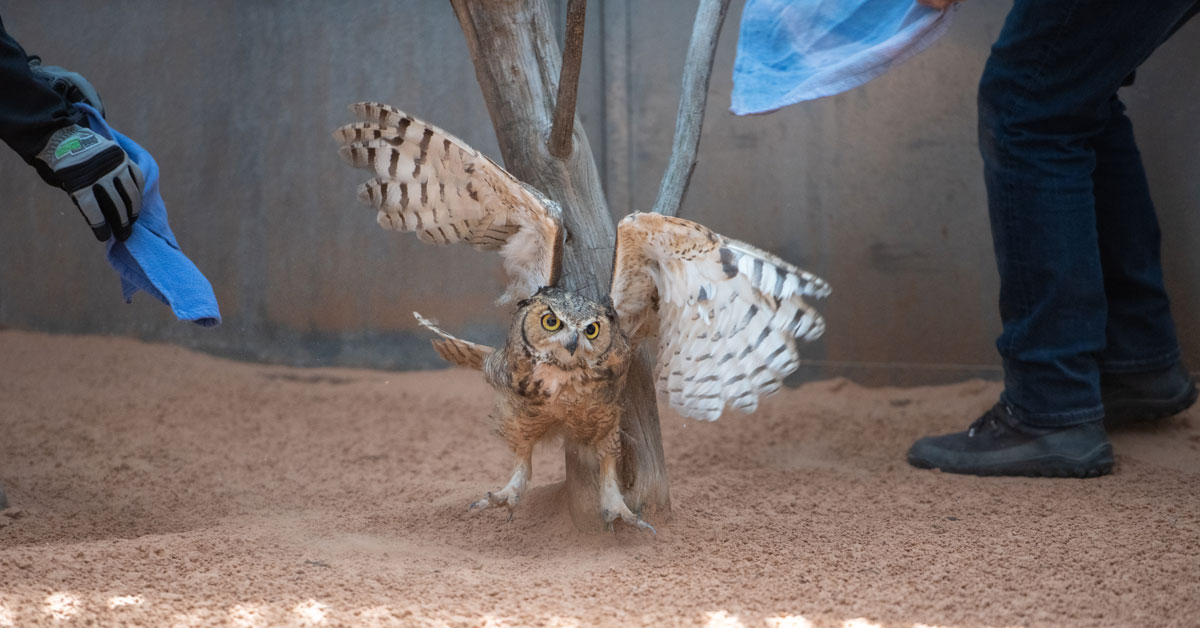
Last fall, a good Samaritan found a young great horned owl stuck in the drum of a concrete mixer in St. George, Utah.
He was found with a quarter of his body encased in dried concrete, unable to fly. To remove all of the concrete, the bird required daily 20-minute baths under anesthesia.
The owl was taken to Utah’s Wild Friends sanctuary, a wildlife rehabilitation center based at Best Friends Animal Sanctuary. Once he was in stable conditions, rescuers waited for him to molt, which would have replaced the damaged feathers naturally.
But his spring molt was not going as predicted.
“It was the first time Best Friends' staff had seen a case like this in its 40-year history," Bart Richwalski, the supervisor of Wild Friends, told People. “We reached out to other wildlife rehabilitators, and they had never heard of an owl falling into concrete before, either."
So, the Wild Friends team got creative and learned about a procedure they had never done before: Imping, or using donor feathers and adhesive to replace the feathers on the rescue owl.

In other words: This little friend was getting a feather transplant.
A wildlife rescue in Northern Utah gave Wild Friends feathers from a great horned owl of a similar size who had died. From there, the Wild Friends veterinarians kept track of their rescue owl’s feather patterns to ensure they were familiar with his unique anatomy.
“We looked at his feathers every few weeks so we knew which ones would have to be done, snipping damaged shafts in advance,” Richwalski said in a statement.

Finally, it was time. On May 1, the owl was placed under anesthesia for a 90-minute imping procedure.
The three experts were precise and methodical, laying out the donor feathers to replicate each wing, so they could be lined up with the replacement feather and cut to the necessary length before lining up and adhering to the owl.
“The first few feathers were extremely nerve-wracking,” Richwalski said, “but as we got into the groove, the imping became more comfortable, and everything went smoothly.”

In total, 10 primary and one second feather were replaced in the owl’s right wing, while the left didn’t require any replacements.
The Wild Friends team had learned that the best practice after this procedure is to release the bird into the wild as soon as possible once silent flight has been achieved. Silent flight is a skill owls have evolved to have, using their specialized feathers to disrupt air turbulence and absorb sound so they can fly silently without being detected by prey.
The owl was placed in the sanctuary’s largest aviary to recover from the surgery and prepare for takeoff.

While in the aviary, the owl was soon seen flying to the highest perch, so Richwalski approached him to measure the sound of his wingbeat, determining that his flight was quiet enough for safe release.
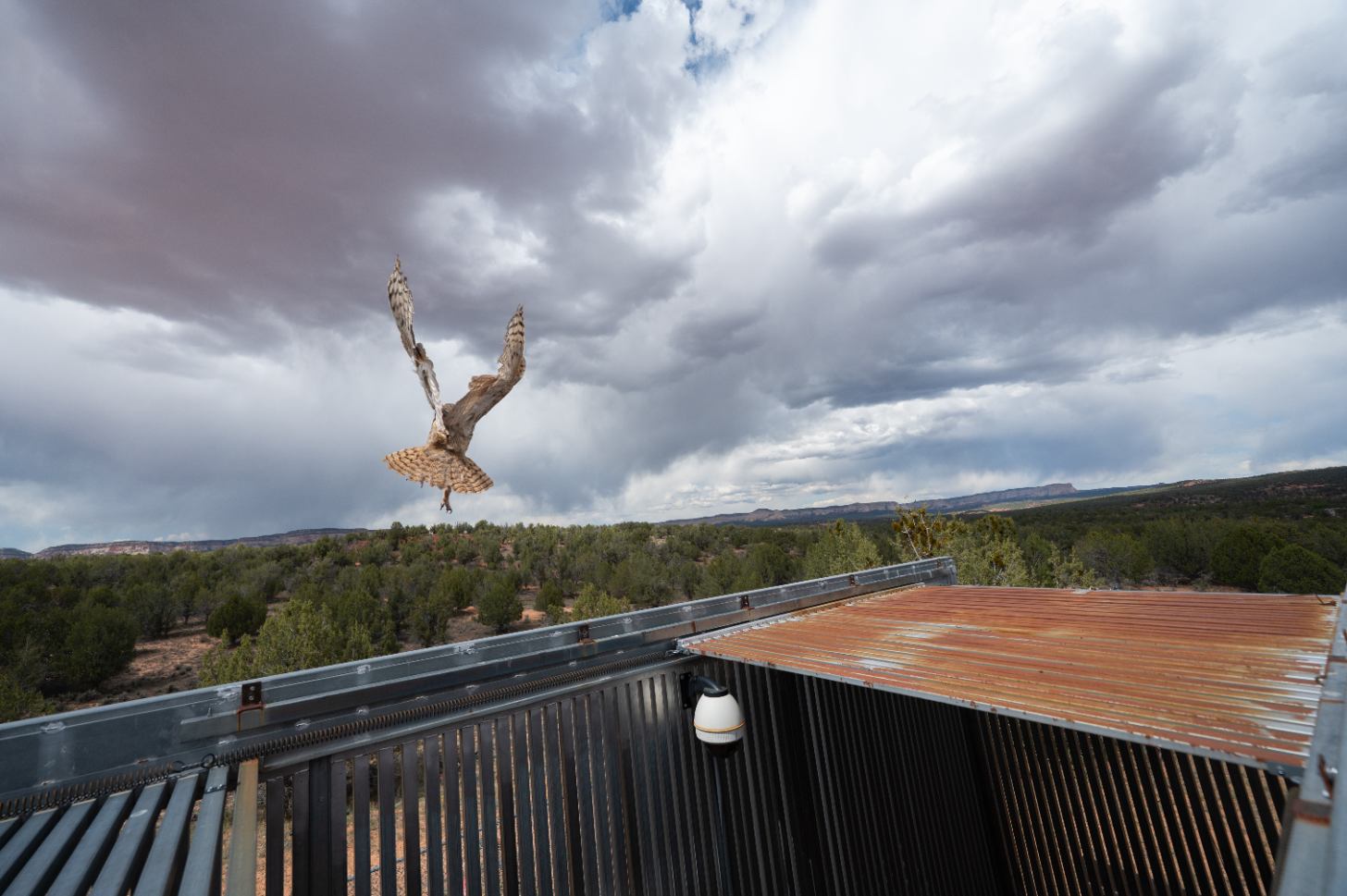
The aviary roof was slowly opened, and the owl hovered tepidly before gaining speed, but then he was off into the sky.
“I don’t know that my heart was beating until I saw him leave,” Richwalski said, reflecting on the 7-month journey from the owl’s rescue to his release.
“I was beside myself, knowing that after all this time, he was healthy and back in the wild. It was such a good feeling.”
You may also like: After a fisherman accidentally hooked one of the world's most endangered sea turtles, these rescuers stepped in to save it
Header image by Molly Wald/Best Friends Animal Society


