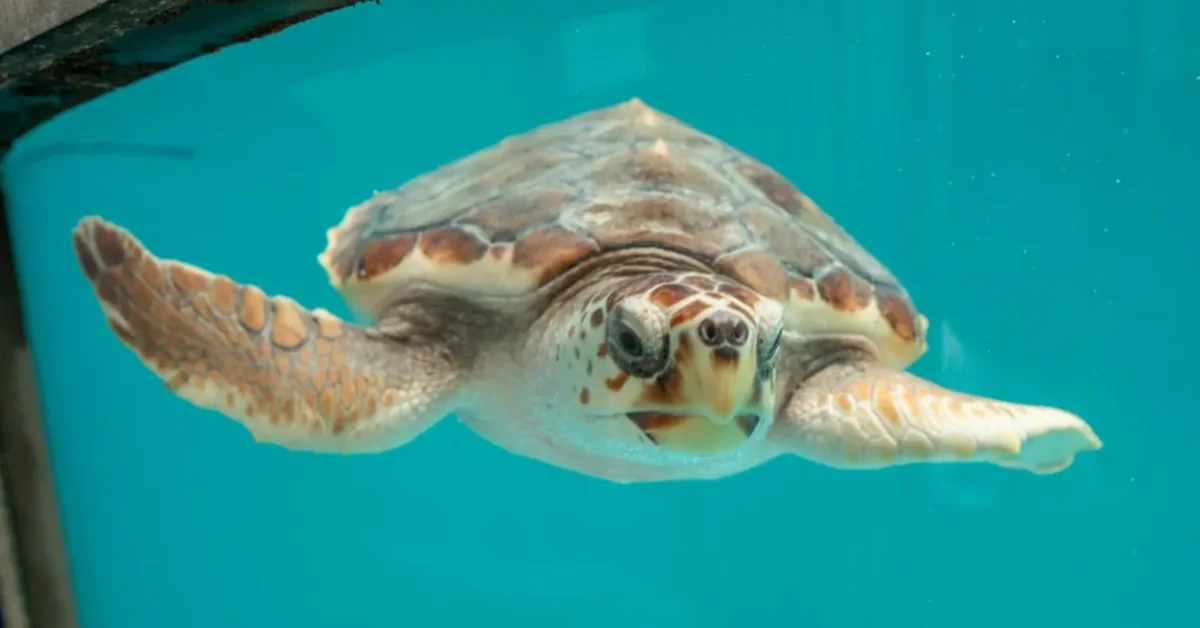
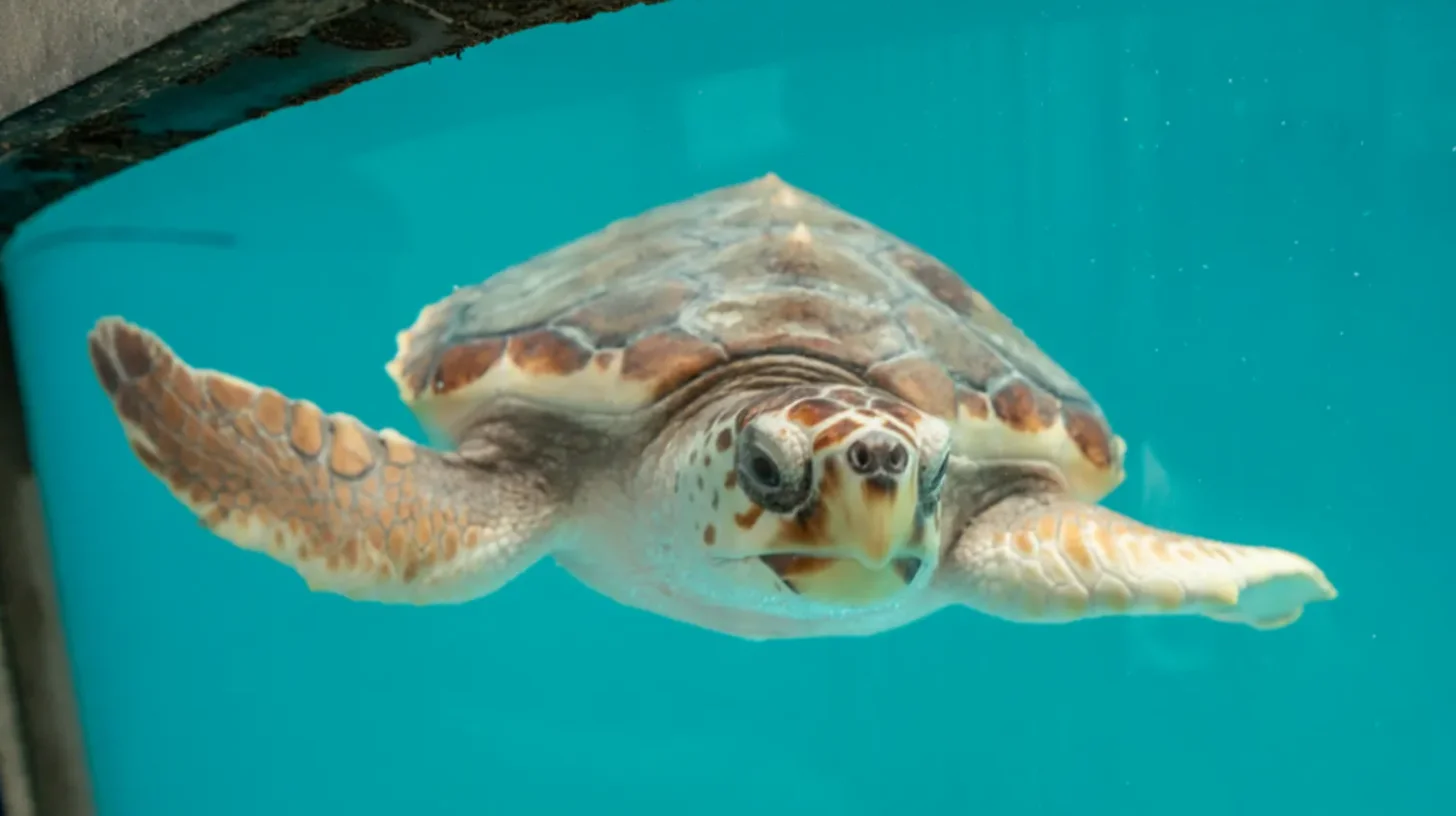
In January, a dog-walker found a loggerhead sea turtle “lifeless” on a beach in Jersey, about 85 miles south of England, after an extratropical cyclone swept across Western Europe and washed her ashore.
The sea turtle was malnourished and cold-stunned — a hypothermia-like condition that can cause an animal’s body to shut down. Initially, she was treated at New Era Veterinary Hospital in Jersey and even spent two weeks recovering at the home of clinic director Peter Hawarth, but it soon became clear that she needed more specialized care. That’s when Hawarth flew the turtle to Southampton.
There, the care team named her Crush, after the good-natured sea turtle in “Finding Nemo.”
Although the researchers can’t say with certainty that Crush is female, they have been referring to the sea turtle as a “she” due to her longer tail — a characteristic typically associated with female turtles.
But Crush’s journey was far from over. In February, she was flown to the Sea Life Weymouth center, an aquarium and conservation hub in the United Kingdom, where she was cared for alongside other rescued sea turtles.
In Weymouth, she underwent six months of rehabilitation with caretakers who fell in love with their new flippered friend. Then, more than 200 days after her initial rescue, Crush was finally given the green light to return home.
The turtles were flown 1,500 miles in special boxes and underwent a short quarantine period on Faial Island’s Aquario do Porto Pim.
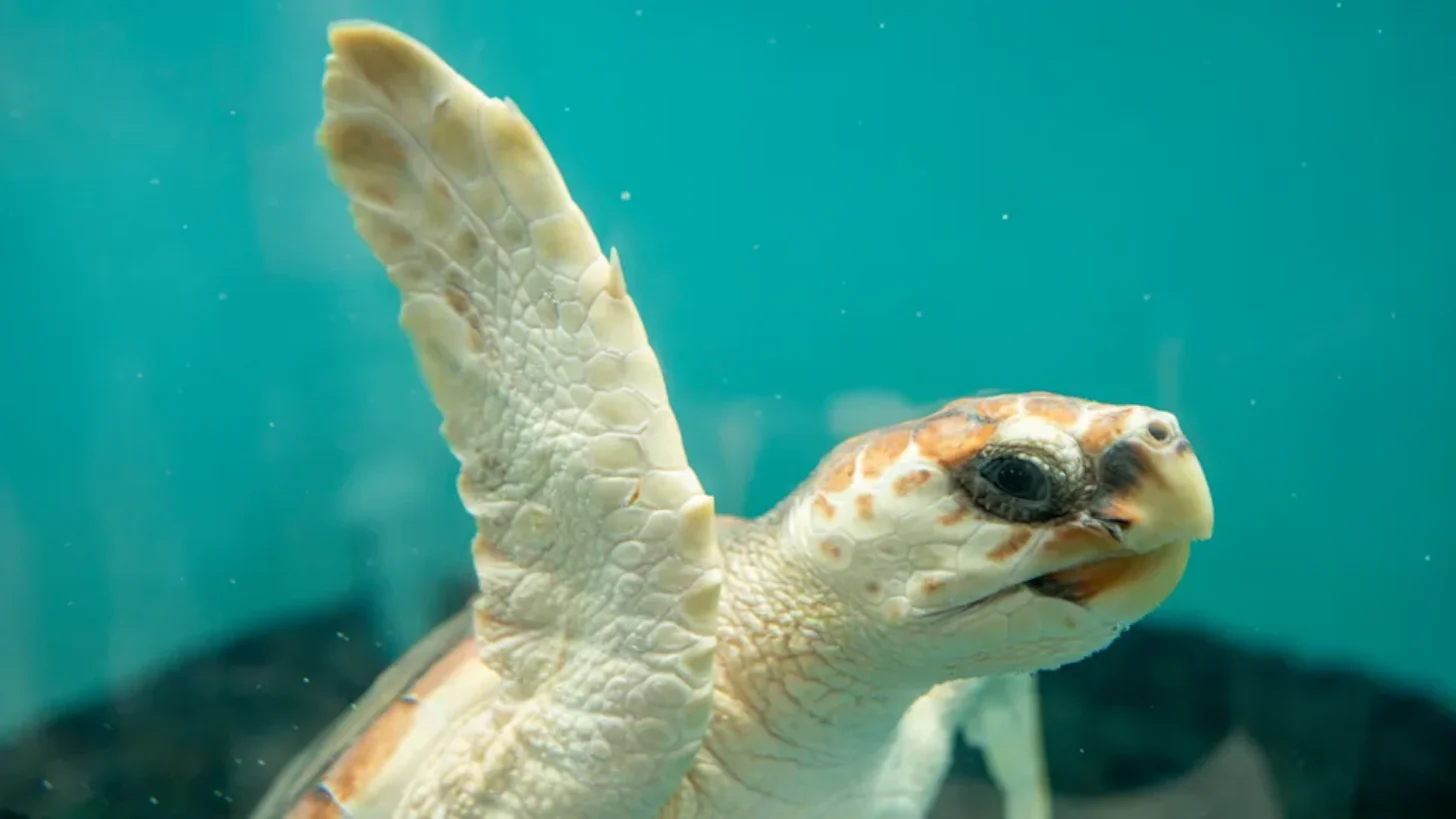
On September 1, Crush was released into warmer waters off the coast of the Azores — a group of islands near Portugal — alongside two other loggerheads, Eden and Tiree, who were rescued on the west coast of Scotland in 2025.
Sea Life Brighton’s curator, Joe Williams, said that, despite “a lot of anxious moments and a lot of adrenaline,” the release went “as well as we could have ever dreamed of.”
“All three of them have gone back out into the blue,” Williams said.
Crush’s primary carer, Victoria Goodier, told BBC Radio that the release couldn’t have gone better.
“Crush and her friends all swam beautifully off into the ocean,” the aquarist said. “She’s got a satellite tag on, so hopefully we will be able to track her for the next few months to see her journey.”
But researchers know that Crush’s tracker will eventually disappear.
“As long as that tag stays on, we will be monitoring where she is, but once the tag comes off or stops sending us information, that will be it — we won’t ever see her again,” Goodier said.
Deva Edge of Sea Life Brighton told BBC 5 Live it was “one of the best moments” of her life.
“We were all bawling on the boat afterwards. It’s very bittersweet,” she said. “You definitely form very strong attachments, but it’s the best goodbye possible.”
You may also like: Manatee with collapsed lung gets airlifted back into the sea after months of specialized care
Featured Image: SEA LIFE / Brave New Beast