A heroic deed is making headlines again nearly a decade after it first occurred.
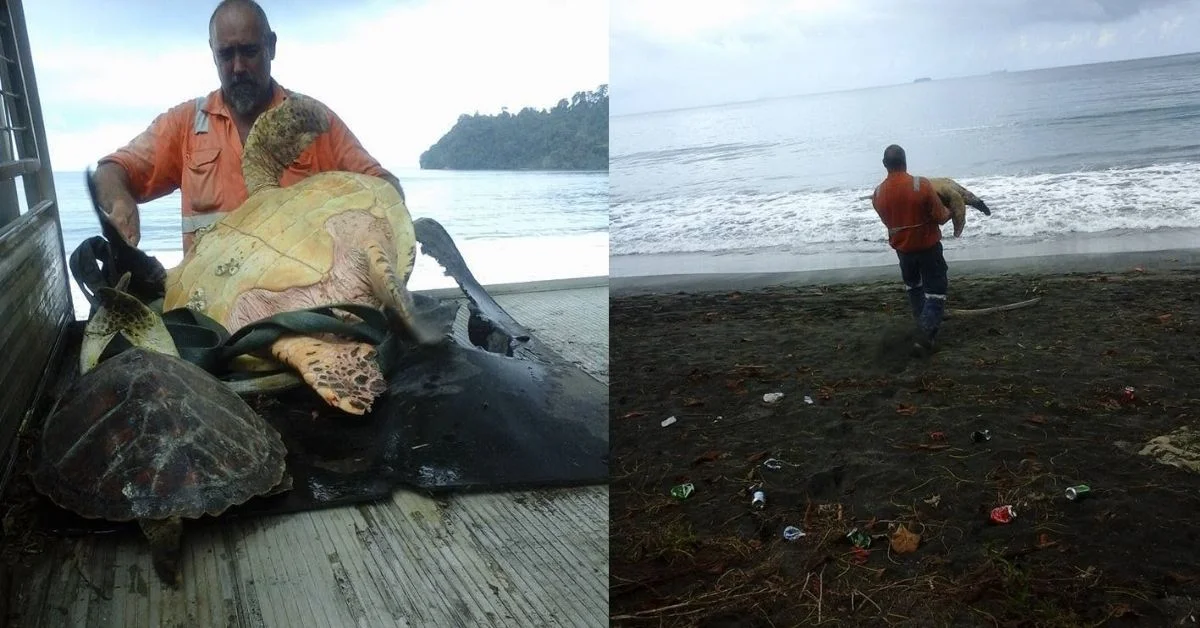
On December 4, 2015, two construction workers — New Zealander Arron Culling and Queenslander Mark Machen — were visiting Papua New Guinea for a work contract. When the men saw two green sea turtles being sold for meat at a local seafood market, they bought them for $50 a piece to guarantee their freedom.
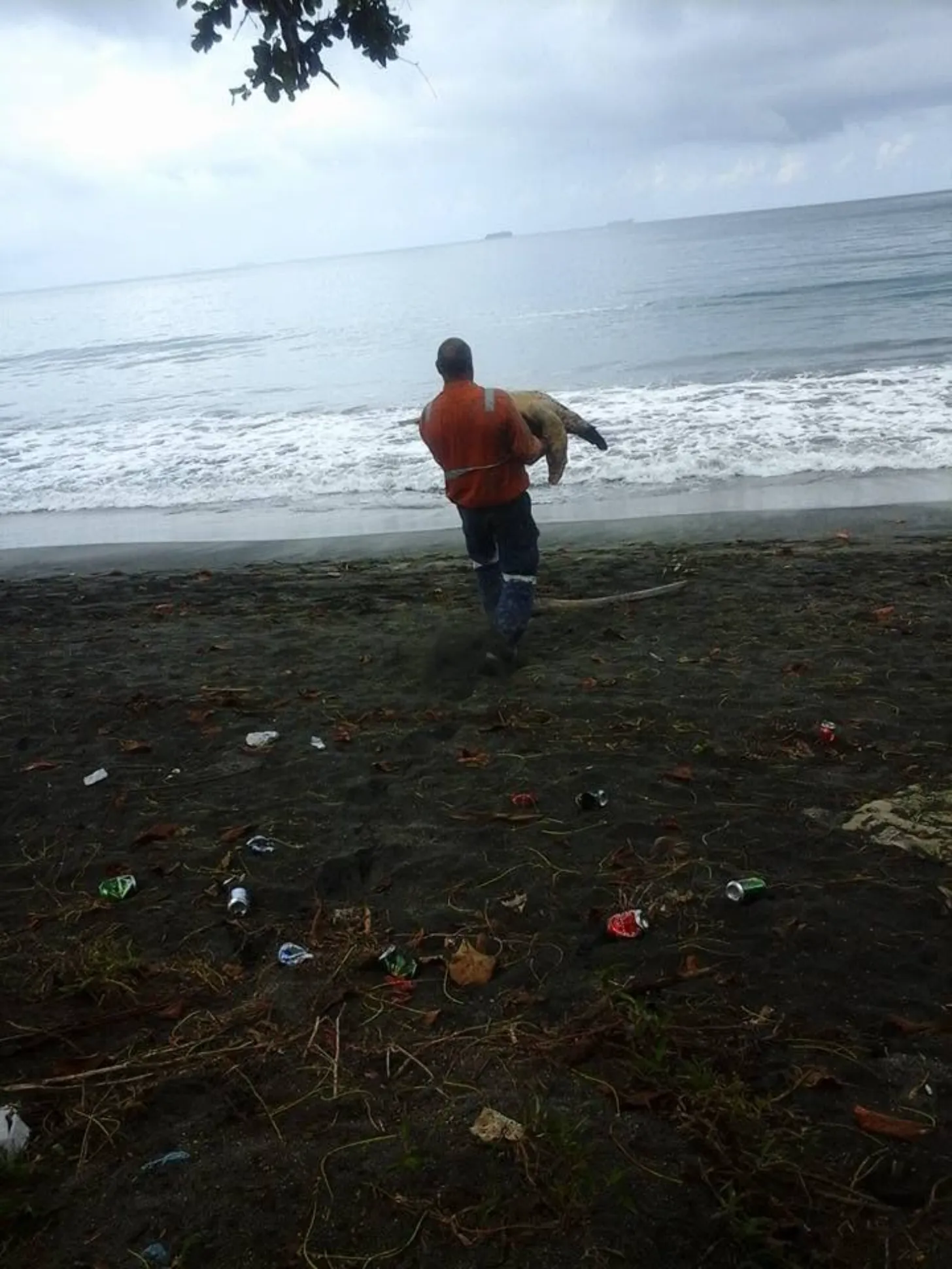
That same day, Culling took to Facebook to share photos of Machen releasing the turtles on a local beach, unaware that their story would go viral overnight.
“It’s out of control. The next morning I had 200 friend requests, and my phone was going nuts with all the alerts and messages. It’s quite amazing the power of social media,” Culling said in a 2015 interview with The Press, a local newspaper in New Zealand.
At the time, Culling said he and his friend had rescued 11 sea turtles in total.
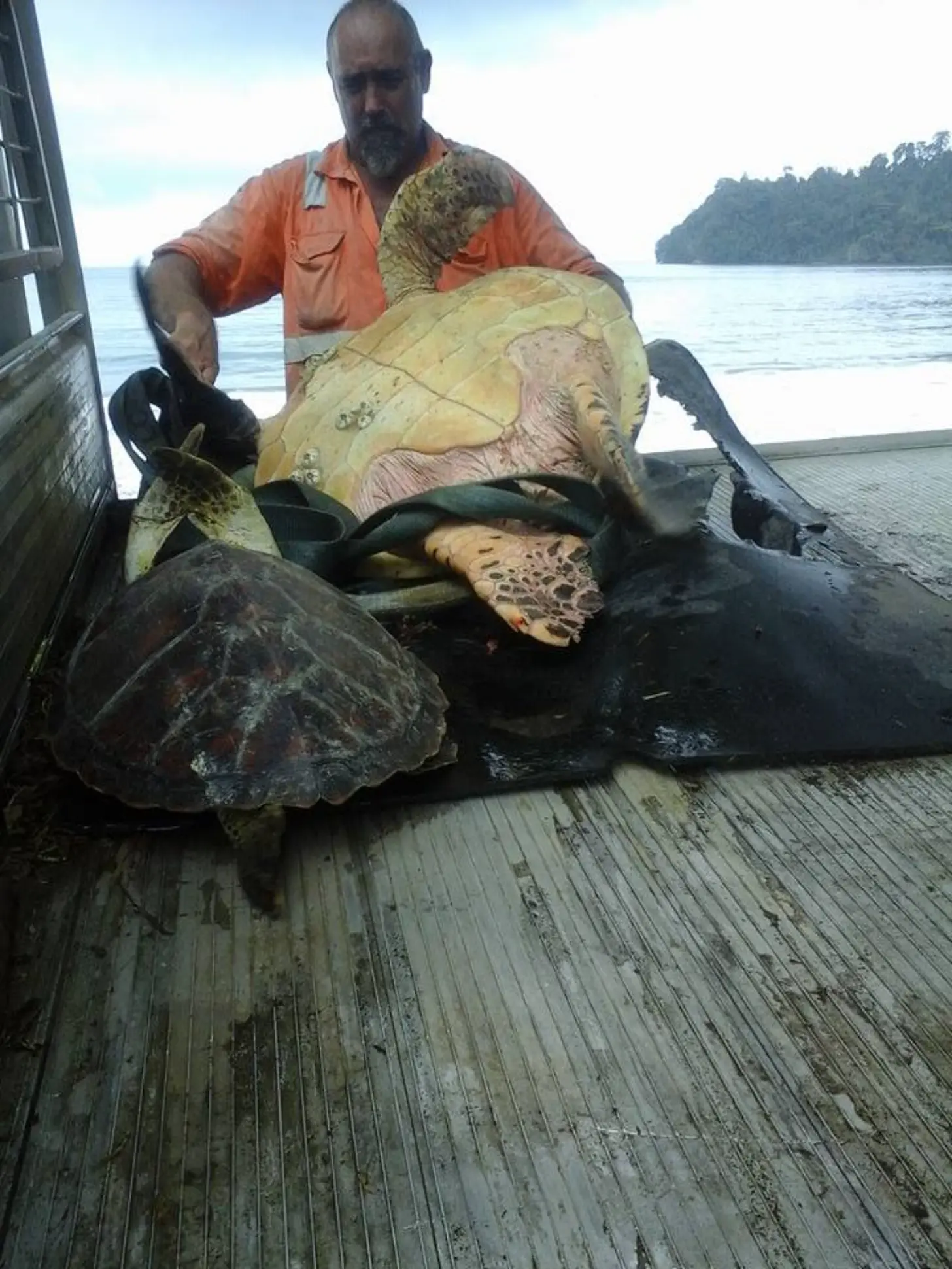
“There is a local market a couple of [miles] from where we are staying, and we drive past there coming home from work every day,” Culling said. “In the late afternoon, about 4 p.m., the fishermen come to the market to sell what they’ve caught that day, and every now and then we see a turtle.”
On the day that Culling shared the now viral photos, the miner-turned-construction-worker said they saved three turtles in one go.
“Mark went up to the sellers and got the price down. We took them to the beach and set them free. It’s better than leaving them there to get eaten,” Culling explained.
“It’s a customary food … if they’re not sold, they just go back to a village and get eaten anyway,” he added.
Coastal communities in Papua New Guinea and across the Pacific have long depended on the ocean for their survival. Marine resources provide food, medicine, cultural and spiritual value, and income that helps families participate in the modern economy.
In the past, marine life was abundant because communities harvested only what they needed for daily living. Traditional fishing methods, such as fish traps and fishing lines, placed little pressure on the marine environment.
Today, however, growing populations and increased demand for income have led to overharvesting, causing marine resources to decline faster than they can recover, and putting particular pressure on imperiled species like sea turtles.
Fortunately, conservation groups like the Mas Kagin Tapani Association — a nonprofit backed by the United Nations — are working with poachers and harvesters village by village to create alternative livelihoods and job opportunities.
For Culling, the daily sea turtle detour at local markets was a worthwhile endeavor. He recalled the release of two in particular, one of whom needed a little extra encouragement.
“They were quite relieved to get back in the water,” he said. “The little one took off, but the big [one] was disoriented and kept coming back up the beach, so Mark waded in with it and off it went.”
You may also like: Fisherman's quick thinking saves critically endangered sea turtle in the Philippines
Featured Image: Arron Culling/Facebook