In 2024, Houston debuted a new program in partnership with the Black United Fund of Texas and the Green Thumb Academy to train Black, low-income, and formerly incarcerated residents for jobs in clean energy.
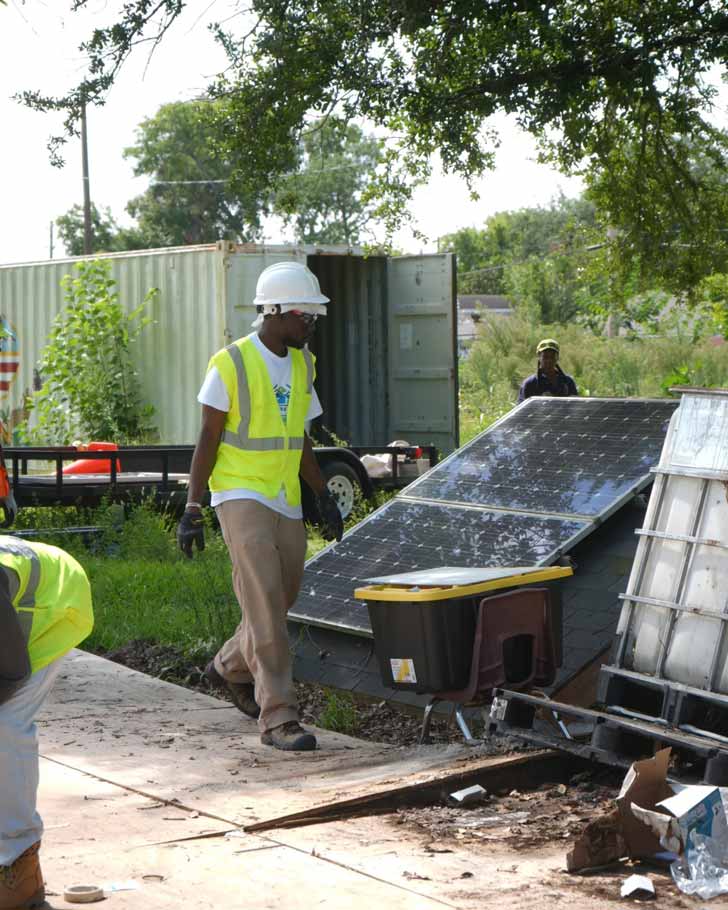
In the inaugural 22-week training, called “Vulnerable to Vibrant,” 50 participants left with an $18/hour paycheck and a certification in solar installation. And for some, it also provided a sense of purpose.
“Being a part of [the program] felt like creating history,” Leon Dillard, a 37-year-old who was incarcerated for two years prior to being in the program, told Capital B News.
“Learning the trade with people from similar backgrounds [not only] gave us something to offer back to society, but also ourselves.”
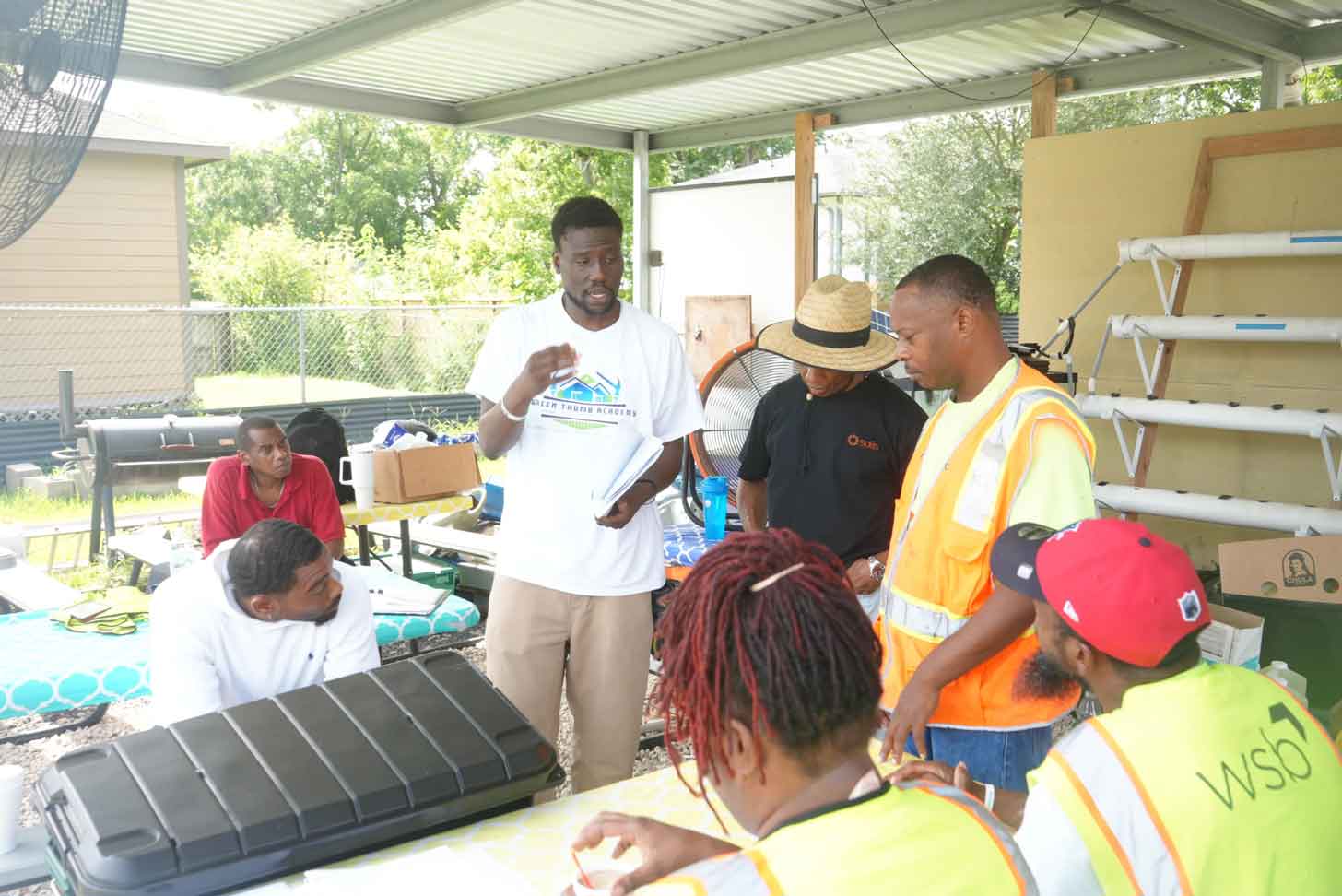
In addition to being a source of opportunity for the trainees, it’s also a way to confront environmental disparities that plague marginalized communities.
“For decades, these … communities have faced disproportionate challenges, from contamination to extreme heat and flooding,” Black United Fund of Texas writes on its website.
“The Vulnerable to Vibrant program directly addresses these inequities by bringing sustainable solutions, workforce development, and improved quality of life directly to the heart of these neighborhoods.”
Unfortunately, nearly as quickly as the program began, its funding was put in jeopardy. After being created under the Biden administration's Inflation Reduction Act, federal dollars were withdrawn by the Trump administration.
But the organizers rallied.
Velika Thomas of the Black United Fund said, “We’ve worked before without literal dollars,” and still kept the initiative alive on a razor-thin budget. Combining funds and grants, they were able to maintain the wages for the trainees.
“As a Black person, I have not felt that America has ever put us at the forefront,” Thomas said. “We are not a waste; the community is not a waste.”
And the impact of the solar job training program is proof of that sentiment.
Those, like Dillard, who completed the program, left with certifications, a pathway to a union apprenticeship, and a newfound knowledge no one could take from him.
“Learning this trade … it’s something you can do as a career and retire from,” Dillard said.
“Solar is the way the world is going,” Marissa King, another student, told Houston Landing. “I want to be a part of that.”
A version of this article was originally published in The 2026 Environment Edition of the Goodnewspaper.
You may also like: Germany's plug-in solar panels are finally coming to America
Header image by Los Muertos Crew via Pexels