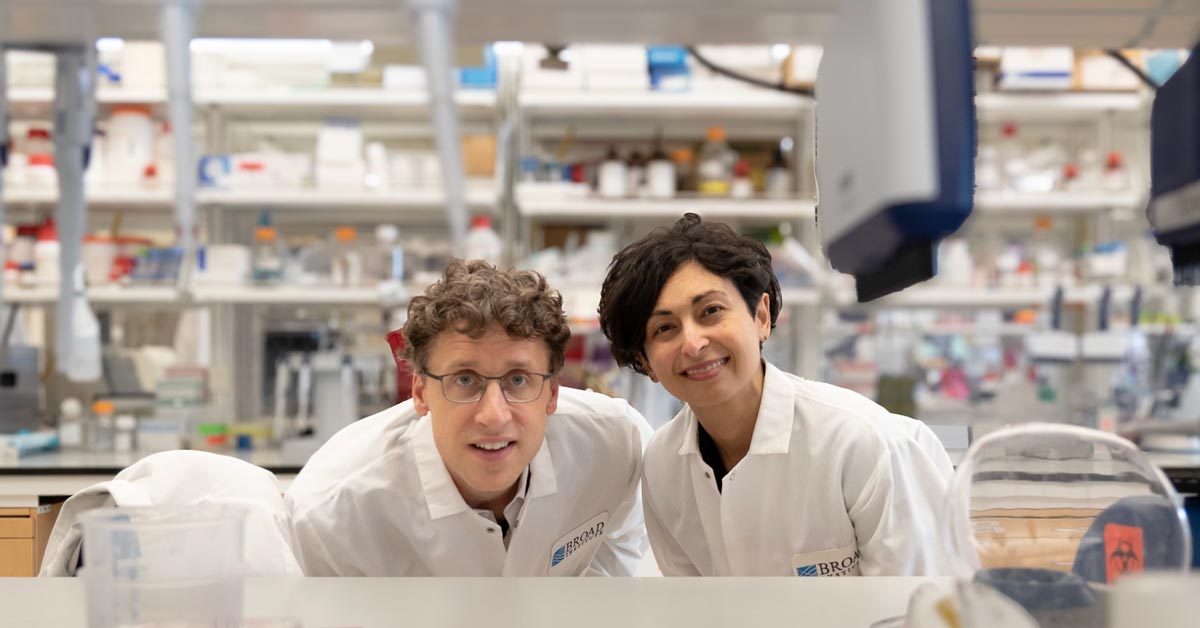
When Sonia Vallabh’s mother died as a result of prion disease in 2010, she quickly found out that she, too, had inherited a genetic mutation for the same disease that had claimed her mother’s life.
Prions are abnormally folded proteins that form toxic clumps in the brain and cause rapid neurodegeneration. There is no treatment or cure, and those with the genetic mutation have no idea when the disease might come for them.
About 1 in 50,000 people have the same high-risk genetic marker as Vallabh.
After learning about the mutation, her mortality was quickly brought into question, and Vallabh experienced the same fear and grief any of us would in that situation. But then, this devastating discovery activated her for good.
Though she had already obtained her law degree from Harvard, Vallabh decided to retrain in biomedical engineering and now also holds a Ph.D. from Harvard in biomedical sciences. Her husband, Eric Minikel, a former transportation engineer, did the same.
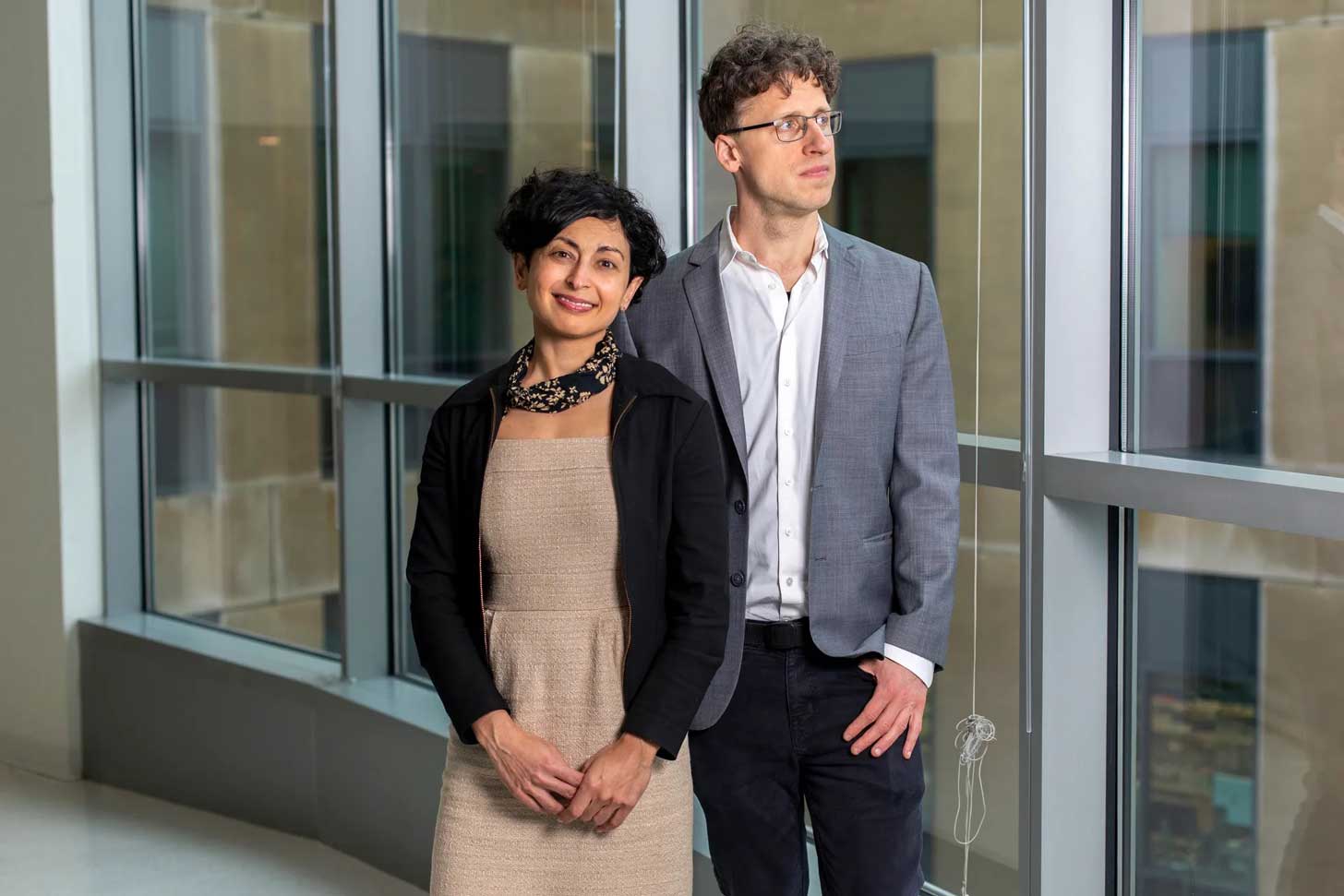
Together, they are now scientists at the Broad Institute in Cambridge, Massachusetts, leading a lab of 12 people, trying to outrun prion disease.
Prion disease is not like a virus or bacterium, but rather appears in a protein called PrP that humans normally have in our bodies. When it “goes rogue,” as Vallabh says in her 2024 TED Talk, it “spreads through your brain and kills your neurons.”
So, Vallabh and her team have focused on developing preventative drugs and gene-editing technology for prion disease. Lowering PrP proteins before the disease process has begun is the ultimate goal — and Vallabh’s lab is onto something.
In 2024, they announced the use of CHARM (Coupled Histone tail Autoinhibition Release of Methyltransferase), a gene-editing technique that could save Vallabh’s life — as well as the lives of those with Parkinson’s, ALS, or even Alzheimer’s.
The technique is different from gene editing processes like CRISPR, which has been compared to an eraser that removes unwanted genetic information.
Instead, scientists describe CHARM more like a volume control, which would allow them to “tune” a gene up or down.
Ideally, they could turn the prion disease gene all the way down — or silence it.
CHARM is also a much smaller technology, making it easier to deliver in small, complicated spaces like the brain. So far, the tech has only been proven in mice. But in those samples, CHARM ‘silenced’ the genetic information up to 90%, seemingly without making unwanted changes.
In 2025, a new paper from the team found that altering the gene that produces the PrP proteins can ultimately reduce the amount of those proteins in lab mice. It extended their lifespans by 52%.
“I think it’s a milestone for sure,” David Liu, senior author of the paper, told the Harvard Gazette. “One has to be careful to recognize that the path to an actual clinical trial has many such milestones that have to be traversed.”
A scientist to her core, Vallabh also isn’t getting ahead of herself. But this breakthrough could be life-saving for her — and millions of other people with fatal genetic conditions.
"The data are good as far as they go," Vallabh told USA Today about the new approach. “There's always, always reason for caution. Sadly, everything is always more likely to fail than succeed. But there is justifiable reason for optimism.”
So, in the meantime, Vallabh, Minikel, Lui, and their scientist cohort, continue the work.
“It’s an incredible privilege to be able to work with them,” Liu continued to the Gazette.
“Their personal connection to the disease provides extraordinary motivation for everybody to try to make as much progress as we can — carefully, but as efficiently as possible.”
You may also like: AI is helping doctors repurpose old drugs for new cures: 'The solution is in your neighborhood pharmacy'
A version of this article was originally published in The 2024 Science Edition of the Goodnewspaper.
Header image courtesy of Cure FFI