Graffiti tags have long been a way for people to claim a space, to say “I was here.”
Now, that tradition is being turned on its head for a new campaign across London.
St. Mungo’s, a charity that has been on the front lines of homelessness in London for 55 years, has debuted an interactive mural campaign called “We Are Here,” highlighting the stories of people who have successfully transitioned out of homelessness.
In three spots in Bristol, London, and Reading, passersby will see street art pieces created by artist Luke Embden, known for his large-scale graffiti-like typography work.
The murals are black, white, and orange, in St. Mungo’s brand colors, with bold lettering and doodles. They read: “Lee was here,” “Ray was here,” and “Tamika was here,” respectively.
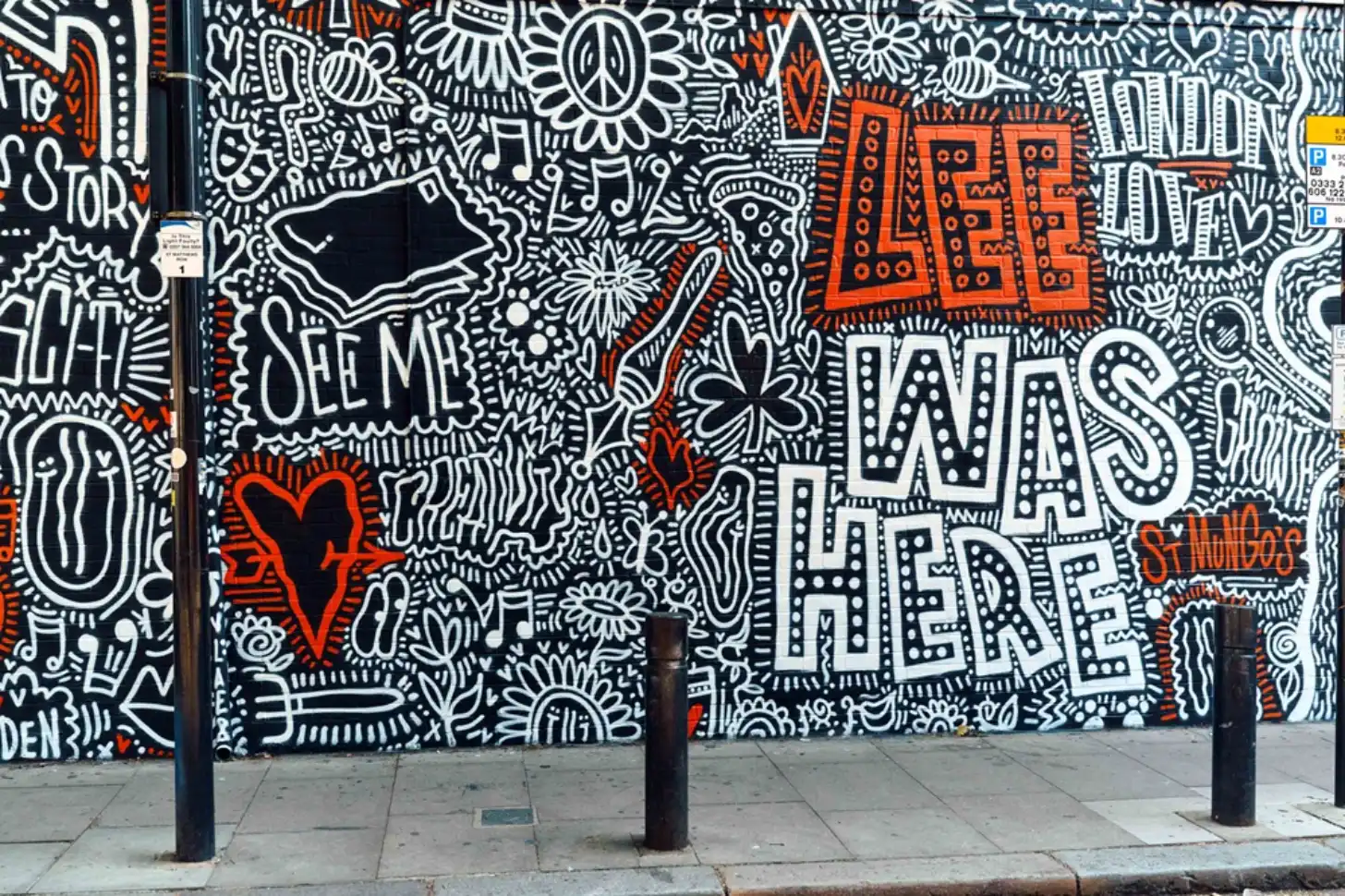
Those names are the real identities of three people who, with the help of St. Mungo’s, have found hope beyond homelessness. On each mural, there is a QR code that people can scan to hear the stories of each of these people.
Lee, for instance, is a 54-year-old man who had years of experience rough-sleeping in both North America and the United Kingdom. The first night he prepared to sleep on the streets in London, however, a St. Mungo’s outreach worker got him the help he needed.
“It’s the invisibility,” Lee said in a video for the organization about being homeless. “You don’t mean anything anymore. You just kind of float around.”
Now, Lee teaches creative writing classes for the nonprofit, and his mural reflects these passions, with musical notes, shamrocks, keys, and words like “creativity” and “see me,” displayed beside his tag: “Lee was here.”
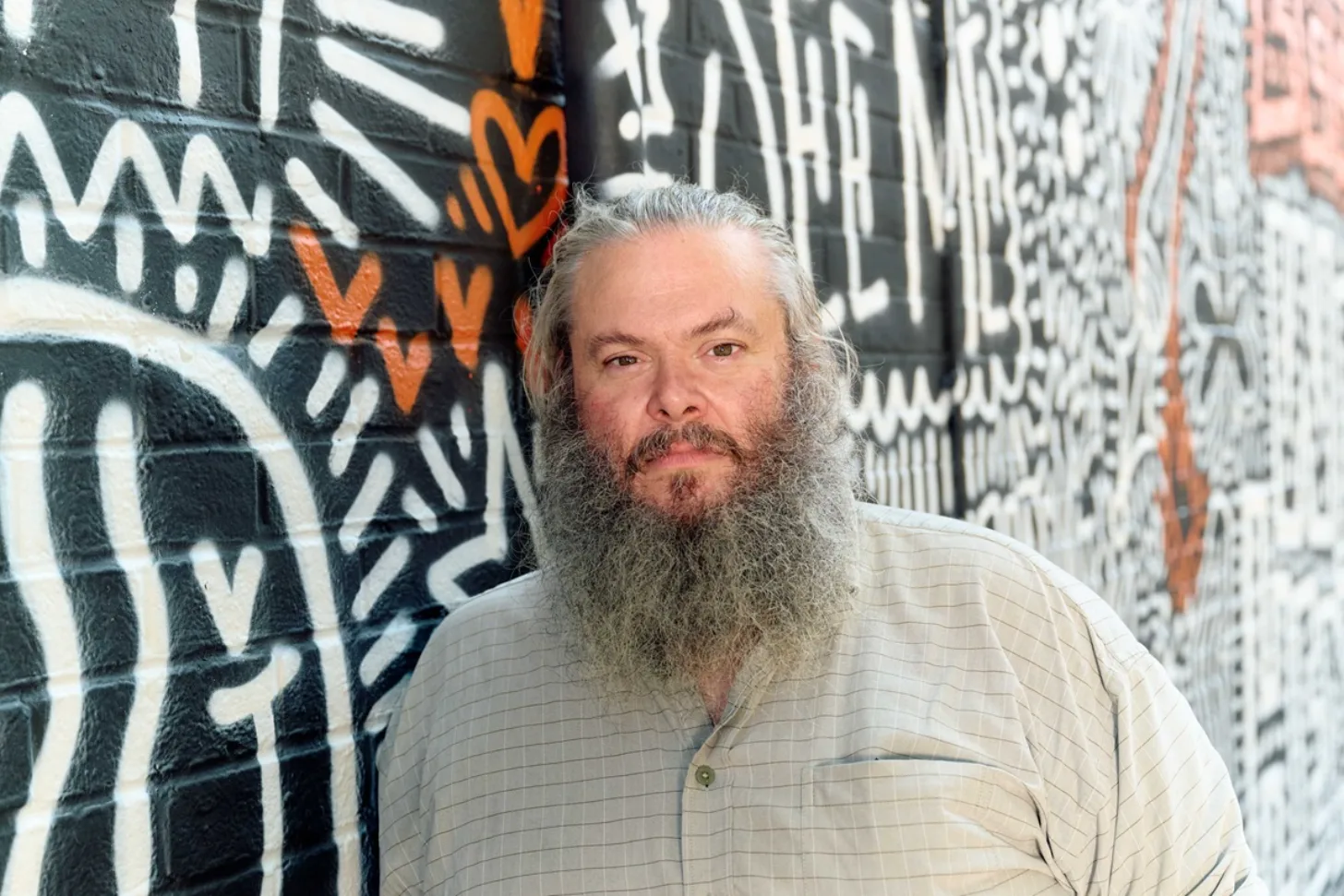
The QR code on his mural leads viewers to a 3-minute audio clip, where Lee narrates his story.
“The [St. Mungo’s] team helped me arrange universal credit, register with a GP, and open a bank account,” he recounted. “Those things might seem ordinary, but when you’ve been homeless, they’re the building blocks that help you start again.”
Lee also shared that in addition to his creative writing classes, he is working on a one-act play inspired by his experiences. This new mural is simply another extension of his story.
“I wanted to give these case studies a voice,” the mural artist, Embden, told The Guardian. “A lot of people don’t know where to turn, and this is a really beautiful way to get the message out there.”

“[The murals] are asking people to stop and look and listen,” Emma Haddad, the chief executive of St. Mungo’s, added. “Recovery is possible, hope is possible, and support plays a fundamental role in that.”
The whole campaign helps illustrate the difference the right support can make in the lives of people experiencing homelessness, St. Mungo’s shares on its website. It also highlights the unique offerings the charity provides, like pet-friendly accommodations, and specific support for women and migrant populations.
According to SW Londoner, St. Mungo’s supported more than 22,000 people at risk of or experiencing homelessness in London last year. The organization also reports that 77% of people it helped off the streets last year did not return to rough sleeping after moving into accommodation.

The mural campaign only highlights three of those stories — and the team behind them hopes they are just the beginning for the countless people who will see them.
“The ‘I Was Here’ campaign shows that everybody has a unique story,” Elle Slater, the service development manager for St. Mungo’s, said in an Instagram video.
“In street art culture, a tag is a mark of where someone was,” the video describes. “St. Mungo’s ‘I Was Here’ murals celebrate where they are now.”
While the murals themselves won’t fix the housing crisis, Lee is hopeful that they will change minds and inspire people to shift their perspective of homelessness.
“Completely eliminating rough sleeping seems like a massive and impossible task but, as people, we should set ourselves these kinds of goals,” he told The Guardian.
“Impossible things are possible. How we treat the weakest, the most vulnerable members of our society, people who are literally overlooked, does demonstrate who we are at our heart as a people.”
You may also like: To end LGBTQ+ youth homelessness, Wisconsin is planting flowers in sidewalk cracks
Featured Image: Courtesy of St. Mungo’s