Scientists have invented a pollen-based sunscreen, which their results suggest is as effective in blocking harmful ultraviolet rays as sunscreens containing chemicals that contribute to coral bleaching and pollution in oceans.
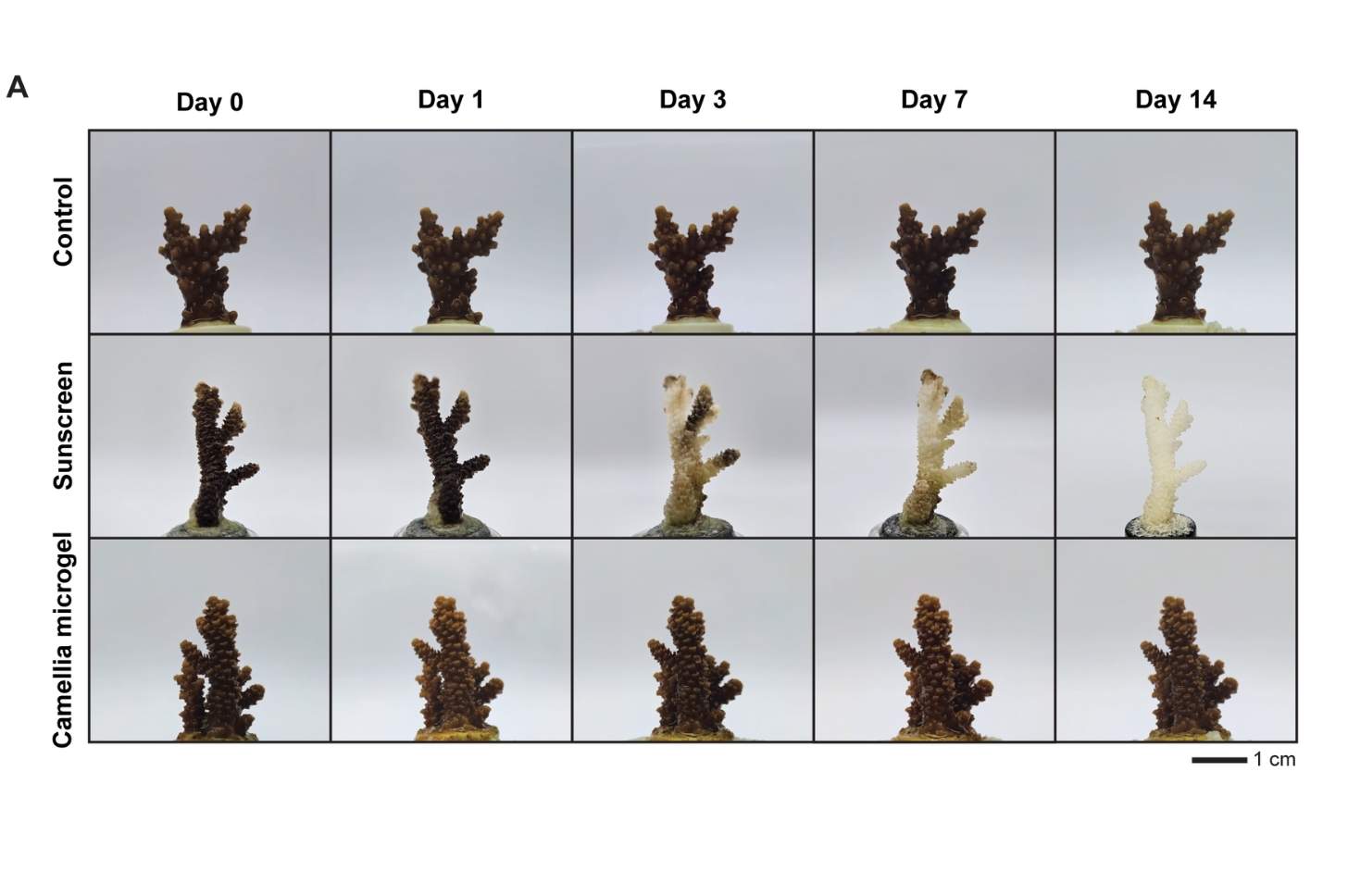
In a recently published study, the researchers also showed their pollen sunscreen doesn’t harm corals. They added 1 milliliter (0.034 ounces) of both their pollen-based and a commercial sunscreen to separate 10-liter (2.6-gallon) seawater tanks with healthy coral for 60 days.
The commercial sunscreen caused coral bleaching in two days and coral death in six days, but the pollen sunscreen gel had no impact on corals, which remained healthy for the duration of the experiment.
“We wanted to develop an affordable and effective natural sunscreen that is non-allergenic to humans and eco-friendly to the environment,” Nam-Joon Cho, the study’s lead author and a materials science and engineering professor at Nanyang Technological University, Singapore, said in a statement.
The team tested sunscreens with pollen derived from both sunflowers and camellias. However, only the camellia pollen sunscreen reached a high sun protection factor (SPF) of about 27.3, meaning it blocks around 97% of the sun’s ultraviolet rays that can cause skin damage and cancer.
Camellia pollen also generally doesn’t cause allergies. By comparison, sunflower pollen-derived sunscreen reached an SPF of less than 5, and the flower’s pollen can be allergenic.
“We know that pollen is naturally UV-resistant, as its shell needs to protect its inner contents from harsh environmental conditions, including sunlight,” Cho said. “Our research aimed to develop a way to process pollen grains into a gel-like form, so that they can be easily applied to human skin.”
An estimated 6,000-14,000 metric tons of UV filtering chemicals from commercial sunscreens, such as zinc oxide and titanium oxide, are released into coral-rich coastal regions every year, contributing to the widespread decline of reef health.
One study found that some sunscreen chemicals also disrupt seagrass and other marine life on a molecular level, while another found the chemicals in species like rainbow trout, dolphins, and threatened loggerhead turtles.
Previous research also suggests that sunscreens labeled as “coral-safe” are only slightly less toxic than ones not making the claims.
Several scientists are advocating for an “urgent investigation” of sunscreens, including the health impacts of humans consuming sunscreen-contaminated seafood.
“This is the type of research we want to see in the development of sunscreen alternatives that are more sustainable,” David Andrews, acting chief science officer at the research and advocacy nonprofit Environmental Working Group, who wasn’t involved in the study, told Mongabay by phone. “It is important initial work.”
“This study is highlighting one of the deficiencies in sunscreen regulation with respect to fully considering the impact that these products could be having on coral or marine environments,” Andrews added. “The bigger picture here is that our chemical regulations and the regulation of sunscreen products are not encompassing enough.”
This article was originally published on Mongabay.
Header Image courtesy of NTU Singapore