In the Indigenous Miskitu community of Mavita in eastern Honduras, locals have been losing their cassava fields in droves to hungry animals. For years, farmers have blamed the decimation of their crops on three species: Paca rodents, armadillos, and the Baird’s tapir.
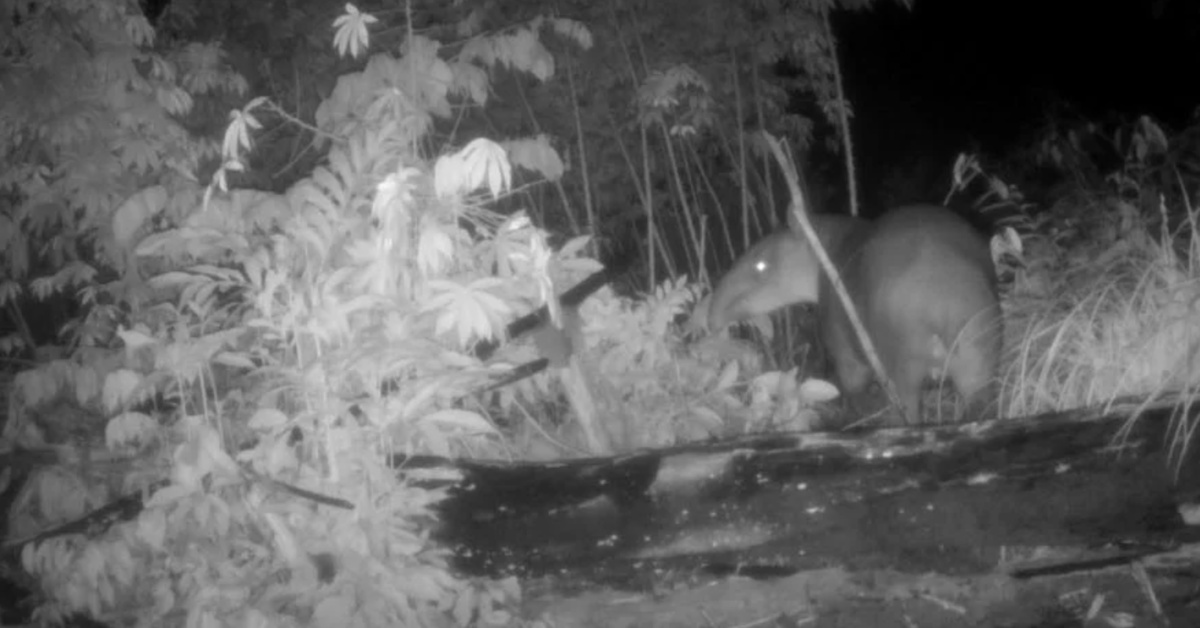
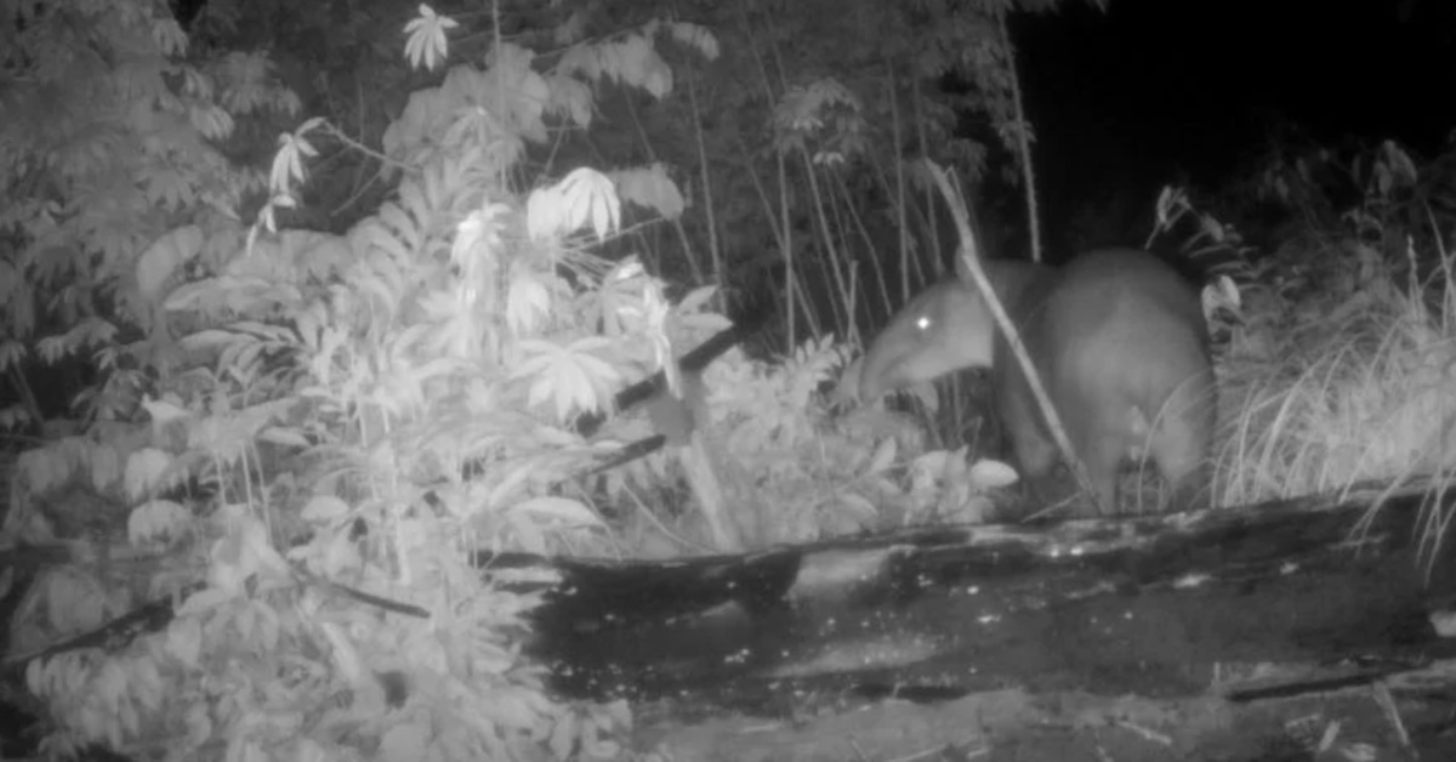
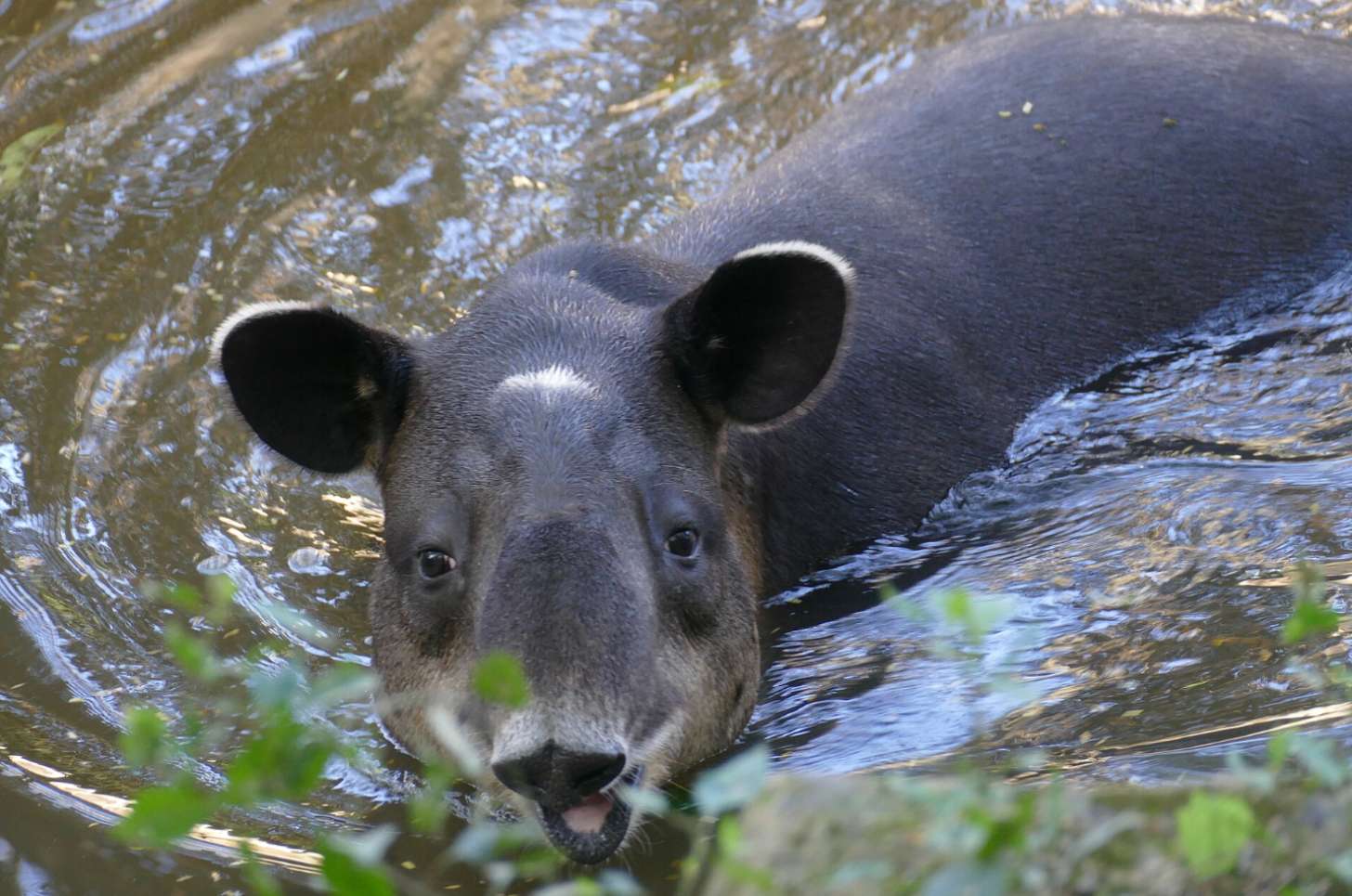
Baird’s tapirs, known locally as “tilvas,” are the largest terrestrial mammal in Central America. Weighing up to 660 pounds — the size of a small donkey — tapirs have long, protruding noses, pig-like bodies, and hooved feet.
They are also incredibly endangered.
Today, the Baird’s tapir roams from northern Colombia through Panama, Costa Rica, Nicaragua, Honduras, Guatemala, Belize, and southeastern Mexico. They once thrived in El Salvador and Ecuador as well, but due to habitat degradation and overhunting, the species hasn’t been spotted in either country for decades.
In 1996, the Baird’s tapir was listed as vulnerable by the International Union for the Conservation of Nature, and upgraded to endangered in 2002 after research revealed that the mammal had experienced a 50% population decline in just 30 years.
When researchers from the Wildlife Conservation Society learned of the Miskitu farmers’ rising tensions with Baird’s tapirs, they stepped in to help.
“In Central America, human-wildlife conflicts are mainly expressed as crop damage, livestock predation, or, to a lesser extent, attacks on people,” the researchers explained in their study, which was published in the Neotropical Biology and Conservation on May 22. “In most cases, affected communities respond to these losses with retaliatory actions that threaten wildlife survival.”
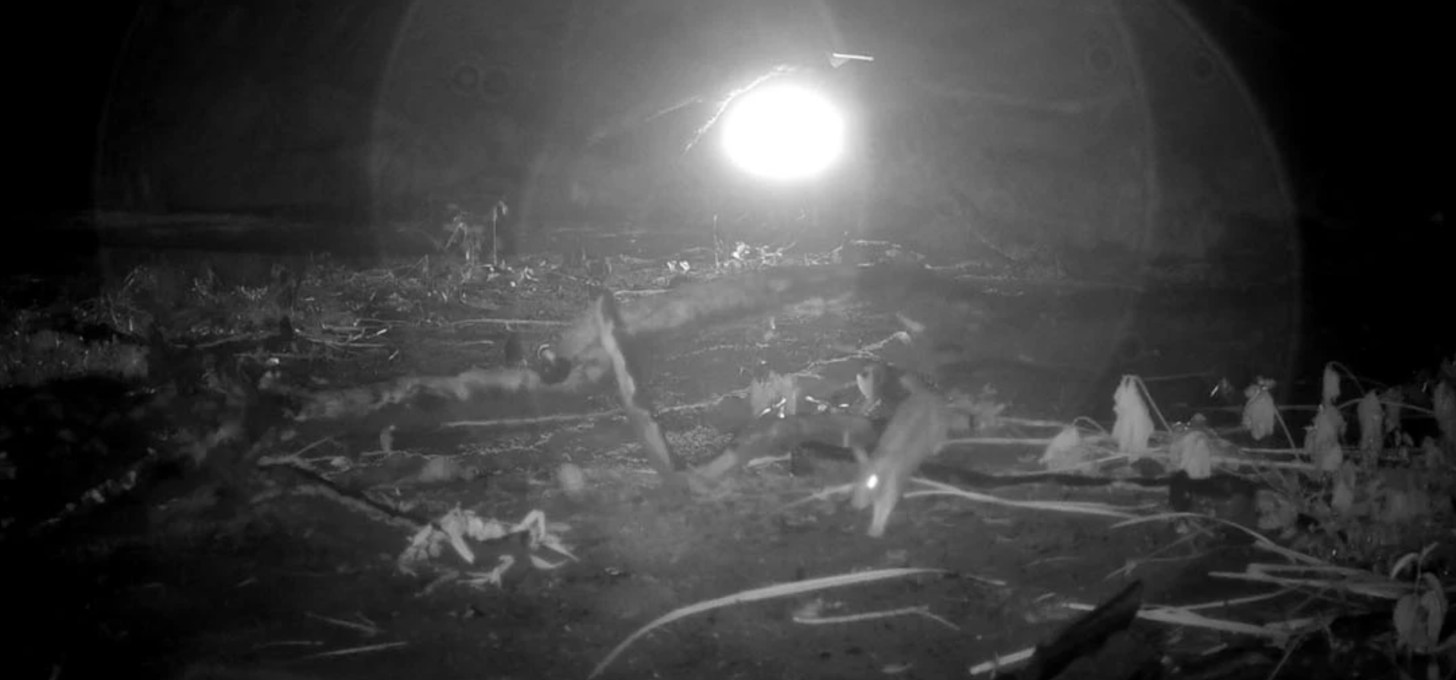
To investigate the crop theft, WCS scientists set up camera traps equipped with solar-powered motion-activated LED lights in a 24-acre cassava field.
As expected, many animals emerged from the surrounding environment, which was a blend of Caribbean pine forest and tropical rainforest of the Honduran Mosquitia.
“What surprised me most was discovering that the species most frequently blamed by local people was not the one causing most of the crop interactions,” lead author Manfredo Turcios-Casco said in a press release.
Despite local rumors, the species most frequently recorded amongst the cassava crops was not the tapir, but the Honduran cottontail rabbit.
The rabbit — which is strikingly similar to the Eastern cottontail rabbit of North America — is widely distributed throughout Guatemala to Honduras.
“Contrary to local expectations, rabbits emerged as the primary crop raiders, while tapirs were present but not the sole culprits,” the researchers concluded.
In addition to the tapirs’ lower-than-expected presence, the researchers found no evidence that armadillos or pacas were feeding on the cassava.
“Many conservation conflicts begin with assumptions,” said Turcios-Casco. “Without evidence, it is easy to blame large and conspicuous animals.”
Because of the community’s assumptions, Baird’s tapirs had been facing retaliatory hunting in the area for years — but they play a vital role in the ecosystem.
The gentle herbivores are commonly known as “gardeners of the forest,” consuming and spreading 200 species of plants, fruits, and seeds as they move through the rainforests and Caribbean pines of Honduras.
“Camera traps allowed us to identify which species were truly interacting with the crops and helped us separate perception from reality,” Turcios-Casco said.
In their study, Turcios-Casco and his colleagues recommended further use of light traps and camera traps to garner accurate data on human-wildlife conflicts.
“These findings highlight the importance of accurately identifying the species involved to guide appropriate management actions and avoid negative impacts on species of conservation concern,” they said.
You may also like: Wisconsin has conserved 750,000 acres since 1989. These trail cam photos show why it matters
Header image via Turcios-Casco et al.