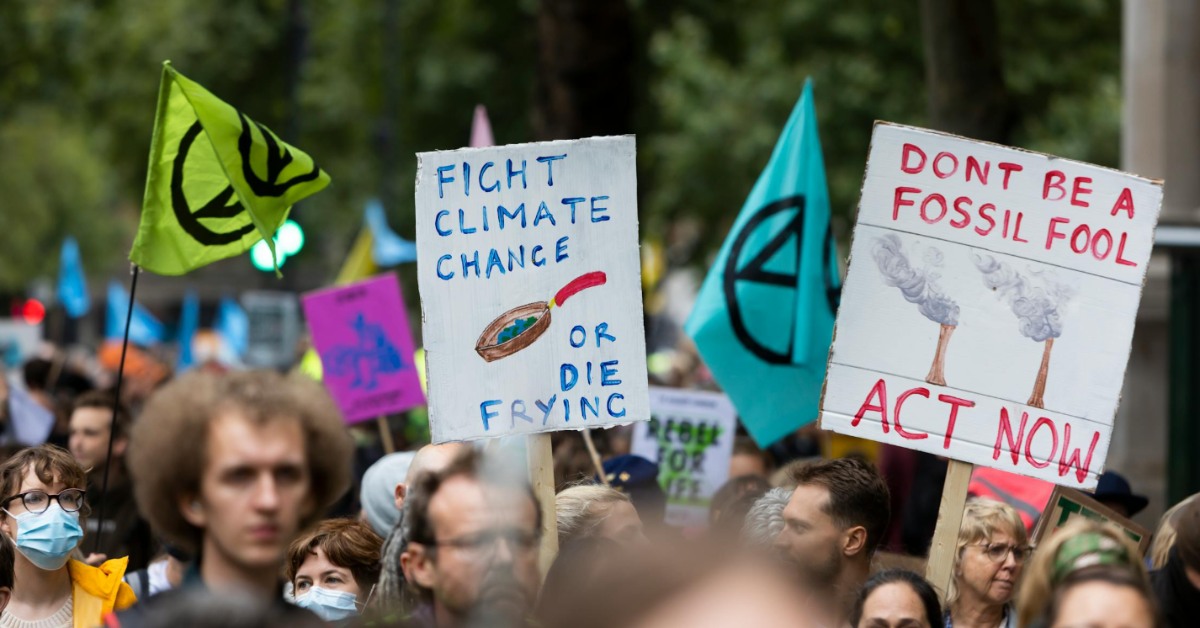
Since President Donald Trump has been sworn in for the second time, one of his consistent talking points is that climate change is “a con job.”
It’s a belief that has led to some of the largest deregulatory actions in the nation’s history, from the repeal of the endangerment finding — which required the Environmental Protection Agency to protect people from climate pollution — to large cuts to the Federal Emergency Management Agency.
And yet, progress continues in the larger fight against the climate crisis. In September, world leaders at the United Nations unveiled new targets to reduce greenhouse-gas emissions, despite Trump’s attacks. China reached its 2030 climate goals five years early. Uruguay built a power grid that is 99% renewables. In South Africa, courts blocked Shell’s oil exploration efforts due to inadequate community consultation.
And even in the United States, there have been a number of environmental wins in the past year, too. Researchers in Hawaii identified a native fungi that can break down microplastics, hypoxia levels dipped down to their lowest levels in the Long Island Sounds in 40 years, and New Mexico invested $50 million in wildlife corridors. A lot of this progress happened at the state level — a reminder of the power of local elections.
Beyond individual milestones, long-term progress continues, too.
Most of the world — yes, even the U.S. — has long agreed to phase down powerful greenhouse gases known as hydrofluorocarbons under the Kigali Amendment to the Montreal Protocol, an international agreement that was ratified in 2022.
HFCs are potent pollutants used in refrigerators and air conditioners that trap hundreds to thousands of times more heat in the atmosphere per pound than carbon dioxide. As of 2026, over 171 countries have pledged to cut down on HFC consumption, or freeze it entirely by using alternative coolants.
Even in the U.S., the amendment was met with bipartisan support, both then and now.
In fact, some environmental regulations haven’t just withstood the test of time — they’ve been strengthened by recent administrative challenges.
In 2025, the Trump administration attempted to eliminate the federal Energy Star program, a government-backed symbol that helps consumers identify energy-efficient products for their homes.
Not only was the program saved, but efforts were redoubled to keep it going, reversing a decade-long trend of budget reductions. The support came from both sides of the aisle, after more than 1,000 manufacturers, builders, and advocacy groups signed a joint statement in support of the program.
"What it shows very clearly is that Congress, both Republicans and Democrats, strongly support Energy Star and want to see it continued," said Ben Evans, the federal legislative director for the U.S. Green Building Council and an Energy Star advocate.
It wasn’t the first time that the administration’s attempts to block funding backfired. In the fall, as the Trump administration paused a $5 billion bipartisan effort to install electric car chargers from coast to coast, more than 40 U.S. states took action to build more EV charging stations through the National Electric Vehicle Infrastructure program.
“If you look at the states that are putting their [charging] plans and their money back into play the soonest, it’s really states that recognize their EV adoption rate is going to continue to climb,” said Joshua Rodriguez, program director for environment at the nonpartisan American Association of State Highway and Transportation Officials. “Red or blue or purple, it doesn’t really matter.”
But even as lawmakers from both sides of the aisle work to protect the planet, the administration has muzzled environmental advocates primarily by censoring information. In the first year of Trump’s second administration, thousands of federal government data sets have been altered or removed, including tools used to track climate risks and environmental hazards.
Eric Nost was prepared for this. As a geographer at the University of Guelph and member of the Environmental Data and Governance Initiative, Nost and his team began identifying and archiving dozens of high-risk public data sets as early as 2024.
That archive includes the Climate and Economic Justice Screening Tool, a website that helped identify disadvantaged communities that would benefit from Biden’s Justice40 initiative, which allocated 40% of climate investments to “disadvantaged communities.”
“EJScreen was the EPA’s tool for similarly trying to understand communities that are on the front lines of toxic pollutants,” Nost told Yale Environment 360. “There are a lot of problems with EJScreen, certainly there’s a lot of limitations. But that tool was well used by community organizations, by state and local governments, for grant-writing or communications or advocacy.”
So, within days of the Trump administration taking it down, Nost and his peers “made it pretty much fully functional again.”
“The U.S. government is the world’s biggest publisher. People from around the world turn to it as a source of information,” he emphasized. “So when you start taking down this information, changing how issues are described, and doing so in misleading ways, really, what it is, is censorship and propaganda.”
Fortunately, whenever Trump topples environmental datasets, people like Nost are there to put them right back up again.
On their website, EDGI states: “All people, especially minoritized communities who experience disproportionate harms, should have equitable access to comprehensive and legible environmental information in order to seek redress for harms and build relations of responsibility and accountability.”
Whether restoring vital environmental information, making sure consumers can get energy-efficient appliances and charge their EVs, or eliminating harmful greenhouse gas emissions, climate progress is happening — despite the administration’s efforts to derail it.
A version of this article originally appeared in the 2026 Environment Edition of the Goodnewspaper
You may also like: He grew up poaching animals and cutting down trees. Now he protects the same land he used to plunder
Header image via Centre for Ageing Better