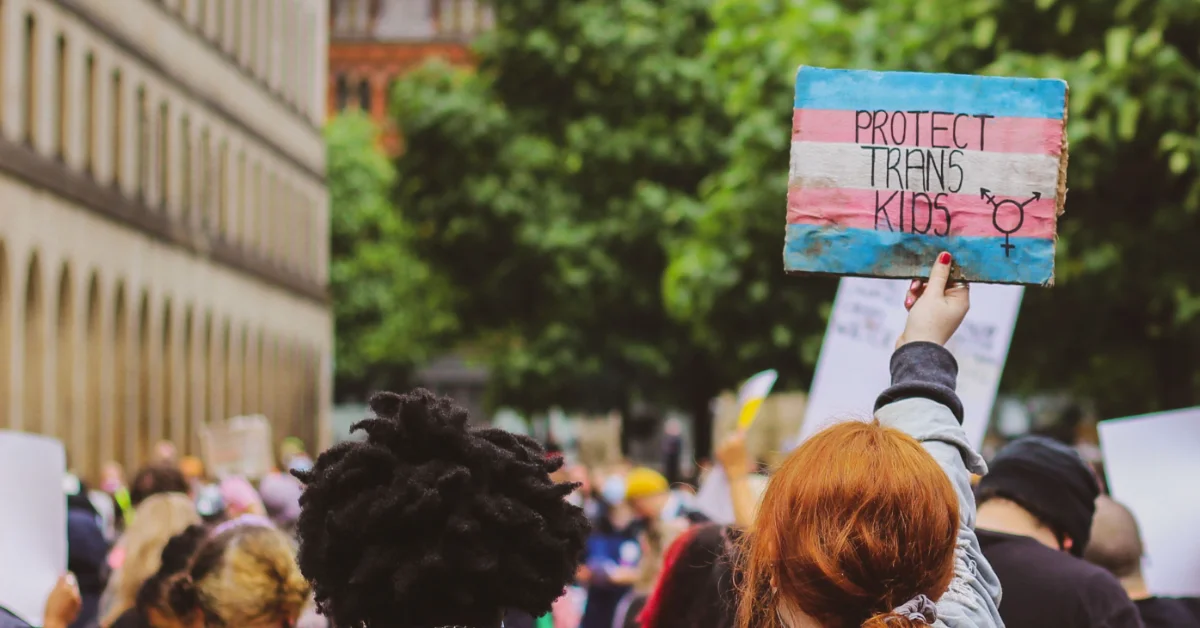
In 2017, political activist Alicia Roth Weigel was waging an exhaustive war against the Texas “bathroom bill” — which would force people to use the public bathrooms that aligned with their sex at birth. At the sixth-month point, Weigel knew it was time for bold action; she was going to come out as intersex.
“At this point I hadn’t told my brother and my best friends, that have known me my whole life, that I’m intersex,” Wiegel said in the 2023 documentary “Every Body.”
Although often overlooked in society, intersex people are as statistically common as redheads, making up 2% of the world’s population.
“We are present in society but hidden in plain sight,” Wiegel wrote in an essay for Politico. “We’re not exotic, but we are exhausted — constantly struggling for recognition or mere acknowledgment of our existence.”
Due to androgen insensitivity, Wiegel was born phenotypically female with internal testes, which were removed in an invasive surgery while she was still an infant.
Her parents never spoke about the circumstances of her birth and her surgeries, so Wiegel followed suit. But at 27, Wiegel was tired of living in shame. She felt that the bathroom bill was written with blatant disregard of people who don’t fit neatly into the gender binary.

“I am a woman. And regardless of my gender, a bathroom is a bathroom,” Wiegel told the senators. “I urge you to reconsider your feelings on what I feel is an extremely harmful piece of legislation.”
After deliberation, the bathroom bill failed to pass. In her 2023 memoir “Inverse Cowgirl,” Weigel continued to call for intersectionality, visibility, and empathy in human rights advocacy.
“Empathy is a choice, not a circumstance one is born into; we should recognize how powerful that is,” Weigel wrote.
A version of this article originally appeared in the 2024 Gender Edition of the Goodnewspaper
You may also like: No, everyone is not trans all of a sudden: Debunking 5 harmful myths about LGTBQ+ people
Header image via Tim Mossholder