


Researchers connected to the Search For Lost Birds project are on a global mission to find and document birds that haven’t been seen for years or decades.
Their goal is to better understand species distribution, population, and natural history to better conserve the world’s birds.
The project — founded in 2021 by the American Bird Conservancy, Re:wild, and BirdLife International — defines a lost species as one that has not been confirmed alive by photographic, audio, or genetic information for over 10 years in the wild.
To find these species, experts go on research trips in all corners of the world. One trip to Papua New Guinea, back in 2022, was co-led by Jordan Boersma, a research associate at Cornell University’s Ornithology Lab.
It was here that, with the help of local communities and some strategically-placed trail cameras, they spotted the elusive black-naped pheasant-pigeon, a large pigeon that only lives on Fergusson Island, off the eastern coast of Papua New Guinea.
Locals call it Auwo, and while the bird has been observed several times by local hunters, it had not been documented by scientists since it was first discovered in 1882.
After a month-long research trip, the crew’s remote camera traps picked up some footage of the bird.
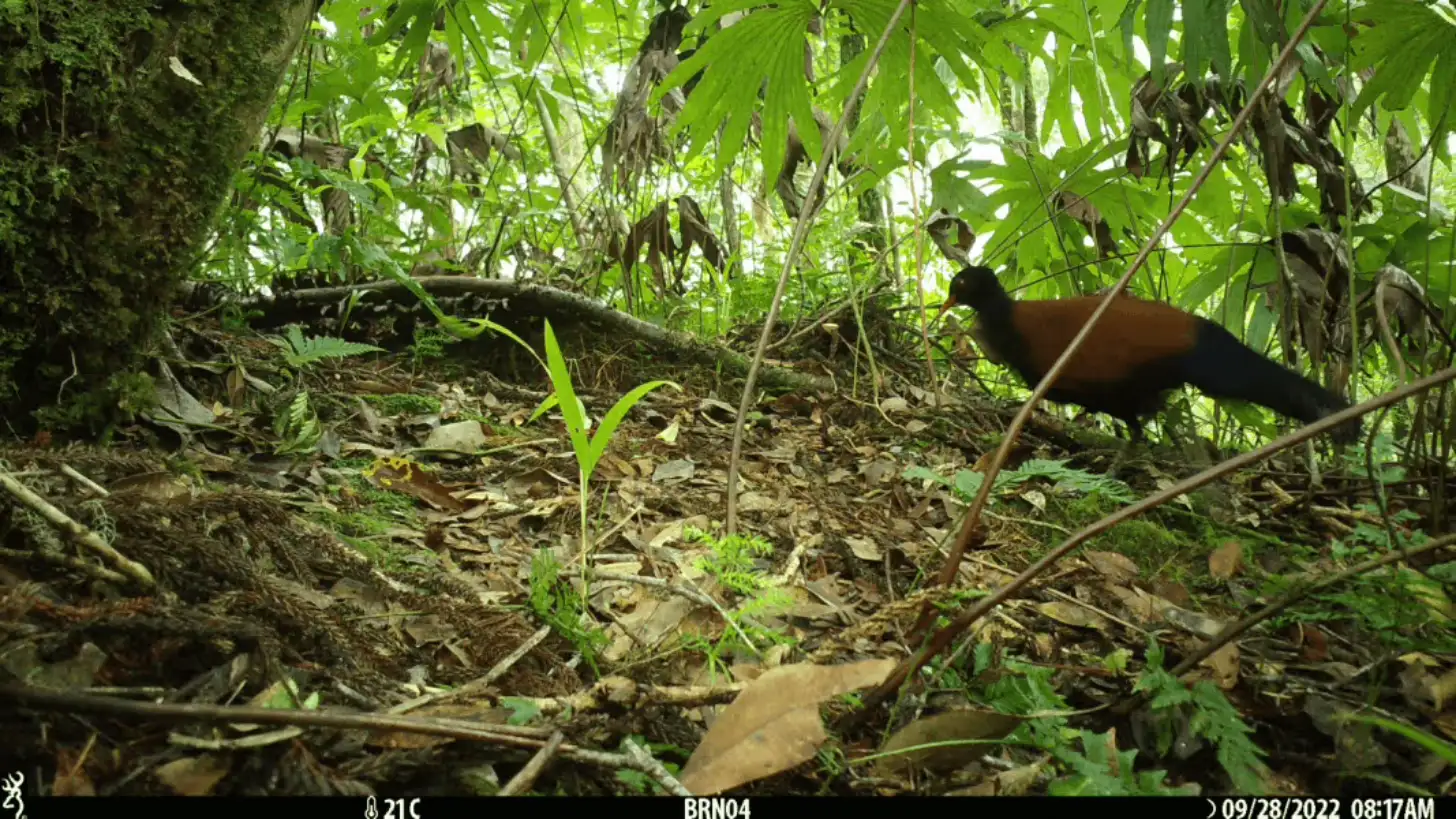
“When we collected the camera traps, I figured there was less than a one-percent chance of getting a photo of the black-naped pheasant-pigeon,” Boersma recounted.
“Then as I was scrolling through the photos, I was stunned by this photo of this bird walking right past our camera.”
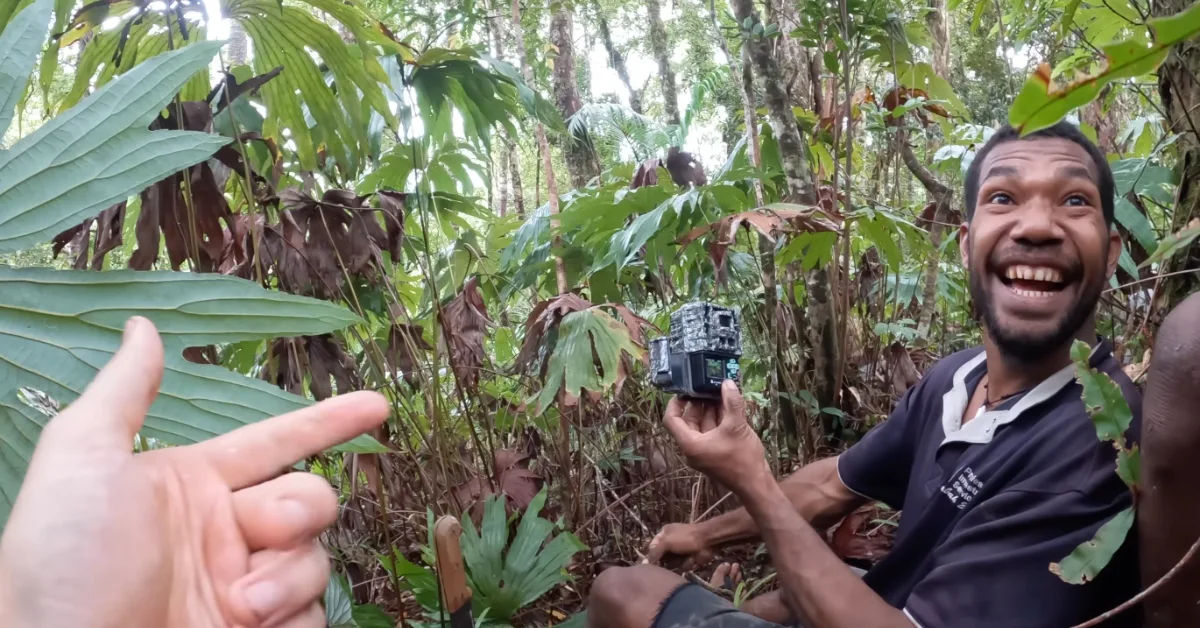
In a video documenting the rare find, local biologist Doka Nason is seen completely flabbergasted when looking at the photos on the camera.
Nason and Boersma tremble with disbelief, shouting expletives.
“What is this?” Nason asks, dumbfounded.
“It’s it,” Boersma says. “It’s Auwo.”
Nason jumps for joy. “We got it!”
And then the two researchers clasp hands, completely delighted.
During their expedition, researchers spoke with locals to figure out where to place their cameras in hopes of finding Auwo. They ended up placing 12 camera traps on the slopes of Mount Kilkerran, the highest mountain on Fergusson Island. They also deployed eight additional cameras in locations that local hunters recalled seeing the pheasant-pigeon in the past.
Nason was the one who set up the camera that eventually caught the elusive bird.
“When we finally found the black-naped pheasant-pigeon, it was during the final hours of the expedition,” Nason said in a statement. “When I saw the photos, I was incredibly excited.”
Based on their research, the team believes the bird to be extremely rare, concluding that the rugged forest environment could be the last remaining stronghold for the species on the island.
“The fact that many of the people we interviewed had never seen or heard of the pheasant-pigeon really highlights how elusive this bird is and suggests that it could be extremely sensitive to human disturbance,” Cosmo Le Breton, a researcher who supported the team in the field as a research assistant from Oxford University, said.
Locals were also excited to see the survey results, team members said, and were enthusiastic about helping to protect the species.
“This rediscovery is an incredible beacon of hope for other birds that have been lost for a half century or more,” Christina Biggs, manager for the search for lost species at Re:wild, said in a statement.
“The terrain the team searched was incredibly difficult, but their determination never wavered, even though so few people could remember seeing the pheasant-pigeon in recent decades.”
“As well as giving hope for searches for other lost species, the detailed information collected by the team has provided a basis for conservation of this extremely rare bird,” Roger Safford, senior program Manager for preventing extinctions at BirdLife International, added.
You may also like: Trail cameras capture rare footage of the world's most elusive big cat, dubbed 'the ghost of the mountains'
Featured Image: Jordan Boersma/YouTube


