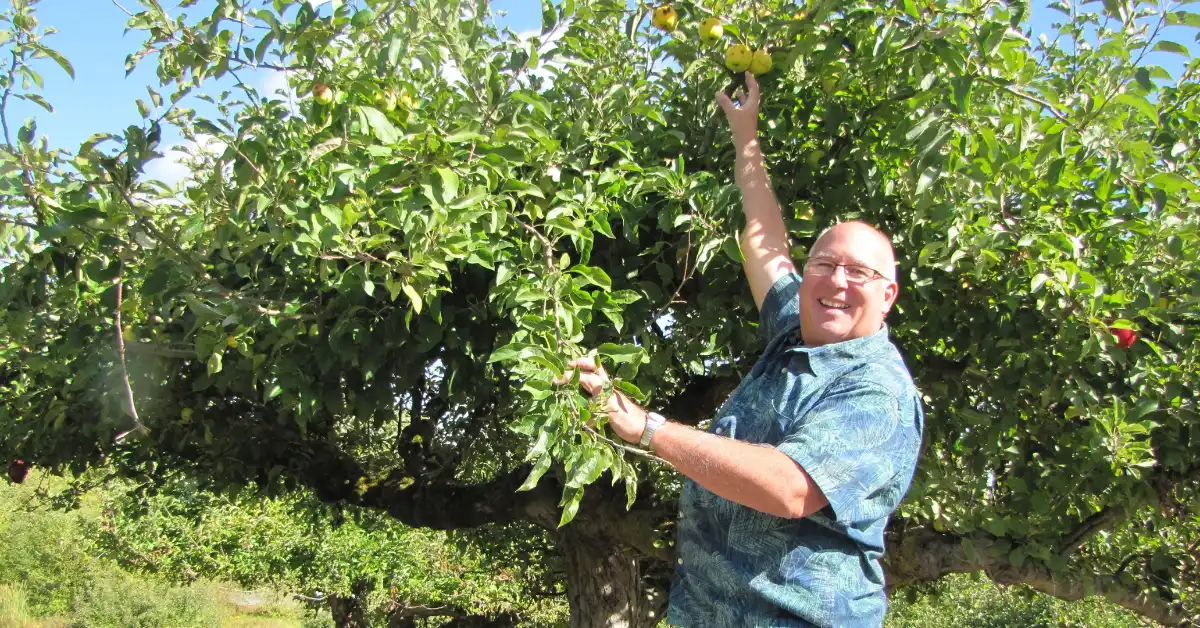
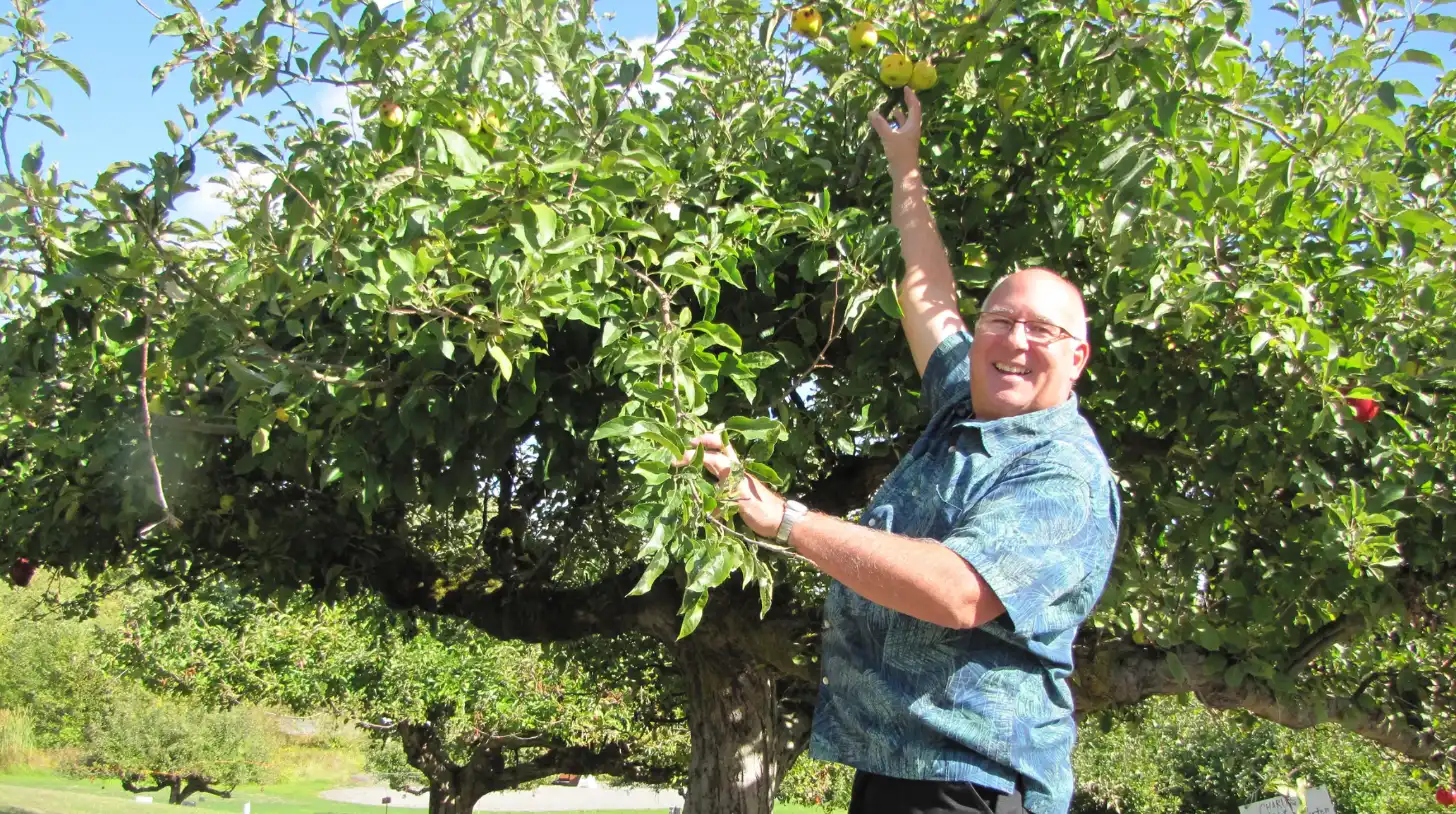
In 2012, Washington native Dave Benscoter was finding ways to fill his hours after retiring from the FBI.
One day, he was doing yard work for a fellow parishioner from his church. As he pruned her apple trees, he realized they looked completely different than any kind he had seen before.
“So I gave her a call, and I said, ‘Do you know what kind of apple trees are in your orchard?’” Benscoter recalled on the Evergreen Thumb podcast last November.
“And she said, ‘Well, I know the very top ones were named Yellow Transparent. They’re the very first apple that ripens in the year, in July.”
The next row was an older breed called Wealthy, notable as the first apple ever bred in the United States.
“But she didn’t know the rest of the apples,” Benscoter said. “So I jumped online, and I just basically started going down rabbit holes.”
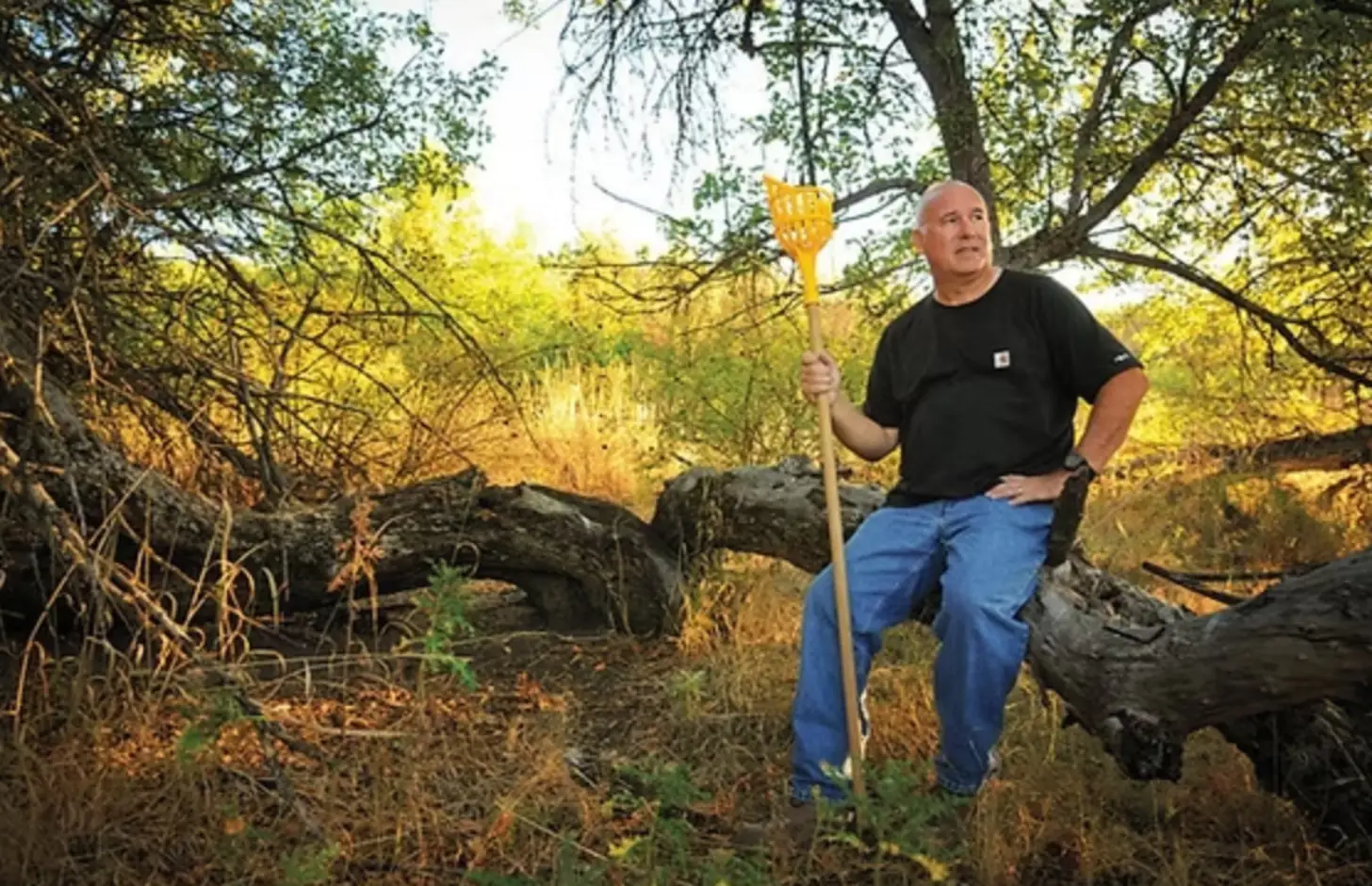
That day, Benscoter became obsessed with apple trees on the verge of extinction in the Pacific Northwest. He scoured nature studies, family recipes, and county fair newspapers to track down “lost apples.”
Then, he teamed up with Joanie Cooper and Sean Shepherd of the Temperate Orchard Conservancy in Oregon — two old friends with unique careers as “apple identification experts,” so that they could analyze their DNA.
“The first year we found one — it was the Fall Jenneting,” Benscoter said. “Now we have found 30 once-lost varieties.”
Together with his friend, E.J. Brandt, Benscoter created the Lost Apple Project. Since 2012, the two have spent their would-be retirements locating historic, pre-1920 apple trees in eastern Washington, western Idaho, and northern Oregon.
Through their nonprofit, Brandt and Benscoter hunt down rare apple varieties, collect apple specimens in the fall for identification, and then return to the same orchards in the winter to graft branches and grow “heritage” varieties.
Over the years, they’ve come across curiously named apples like the Streaked Pippin, the Sary Sinap, and the Nero. Benscoter recalled one farmer in Arkansas who long wished to pluck a Kittageskee apple — but they had vanished from his state years prior.
“10 years ago, he was going to be retiring soon, and his one regret was that he had spent his whole life hoping to come across the Kittageskee [apple] that was grown in Arkansas, and unfortunately, he’d never found it.”
Roughly two years later, Benscoter and his team found the Kittageskee in southern Idaho.
“The Lost Apple Project has members down in the Boise area, and somebody picked those apples and sent them in. I know it made him incredibly happy,” Benscoter said. “It was an apple that he thought he’d never be able to taste, and so that kind of stands out for me.”
You may also like: Thousands of books were destined for the landfill. These Turkish garbage collectors rescued them and built a public library instead
Featured Image: Courtesy of Dave Benscoter