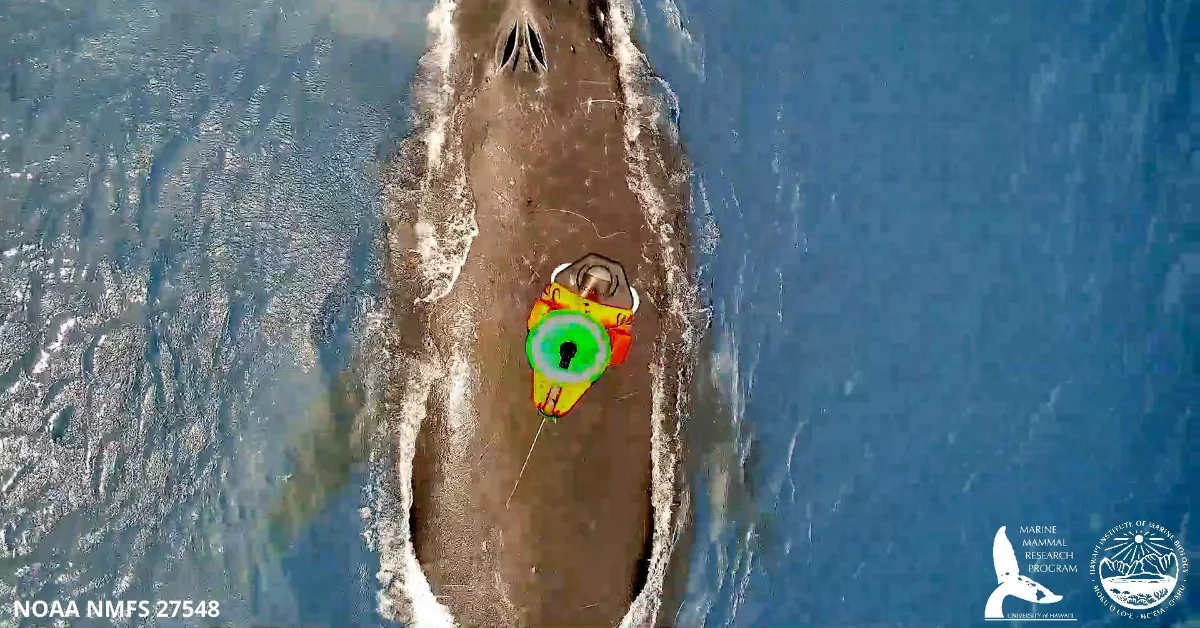
Marine mammal researchers at the Hawai’i Institute of Marine Biology have achieved “new heights” with the invention of a new non-invasive way to tag humpback whales in the wild.
In the past, researchers from the university’s Marine Mammal Research Program approached the giant creatures using boats, deploying tags with a long carbon-fiber pole.
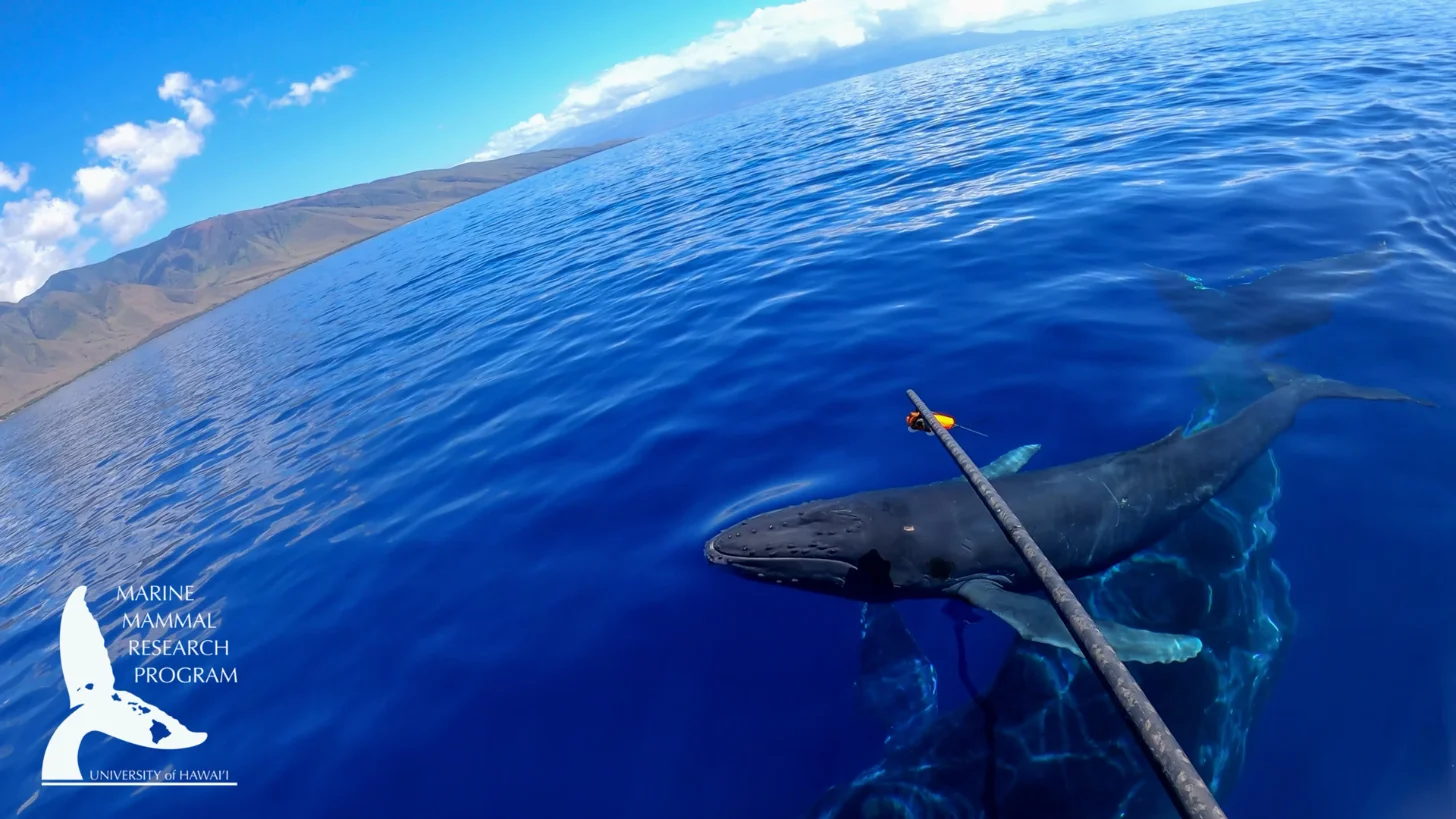
Attached with suction cups, the tags are connected to a CATS cam, which has a built-in camera, pressure sensors, and accelerometers for researchers to gather data right from the whales’ backs.
But recently, they have begun deploying the suction cup tags from the sky using drones. The new approach has many benefits.
“We do not need to get close to the whales to tag them, so we don’t disturb them,” Lars Bejder, an MMRP researcher, said in a statement.
“Additionally, we are able to tag whales that we previously were not able to approach and get close to.”
In addition to gathering more insights on Hawaii's humpback whale population, the researchers say it also “opens up opportunities for low-impact research on other whales and dolphins, ultimately informing their conservation and management.”

The crew first deployed this tagging method during a February 2026 field excursion and was amazed by how they could reduce human intrusion on the whales.
They were even successful in drone-tagging a skittish, singing male humpback during its final surfacing bout, something that would have been impossible with traditional pole-tagging methods.
Overall, during the 2026 season, they successfully deployed 22 tags: seven on lactating females, one on a calf, and 14 on adult males.
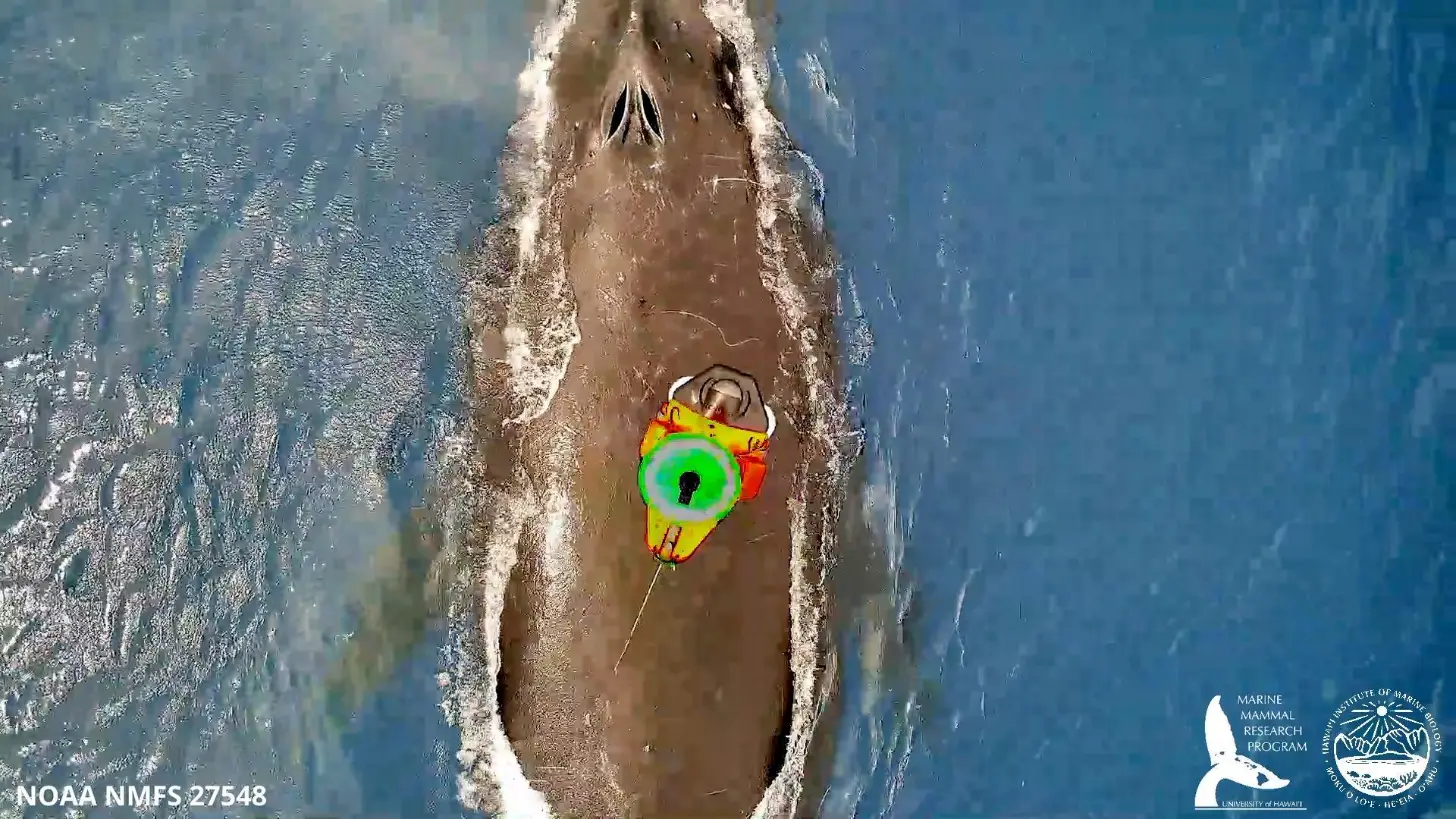
“The system also allowed us to deploy and test a heart rate sensor via the CATS tags,” the MMRP researchers shared in a blog post.
“A total of seven heart rate tags were deployed across age and sex classes. These heart rate sensors provide valuable information on the dive physiology and stress levels of free-ranging animals that can be used to more directly measure the physiological costs of disturbance.”
The data collected from these tags is “critical for wildlife management,” the university reported.
Using high-resolution footage and monitors like the heart rate sensors, researchers can better understand the impact of climate events, boat and vessel traffic, or even military activities on whales.
From there, the researchers can help establish the most evidence-based strategies to mitigate harm and protect marine life.
“From an applied perspective, these tools allow managers to move beyond coarse proxies of exposure toward quantifying the actual biological consequences of disturbance,” the researchers write.
“These individual-level impacts can be propagated through bioenergetic and demographic models to forecast effects on survival, reproductive success, and ultimately, population trajectories.”
You may also like: 1.7M Americans have a chance to catch invasive fish and win cash in this 'minnow madness derby'
Featured Image: Courtesy of University of Hawaii Manoa Marine Mammal Research Program