In a landmark, first-of-its-kind study from Queen Mary University of London and published in The Lancet medical journal, researchers found that children vaccinated at age 12 to 13 against human papillomavirus, or HPV, now have close to zero risk of dying from cervical cancer before age 30.
The study, which analyzed national mortality and vaccination records in England, showed that deaths have dramatically declined since school-age girls started being offered the vaccine in 2008, and it’s saved around 200 lives in England so far.
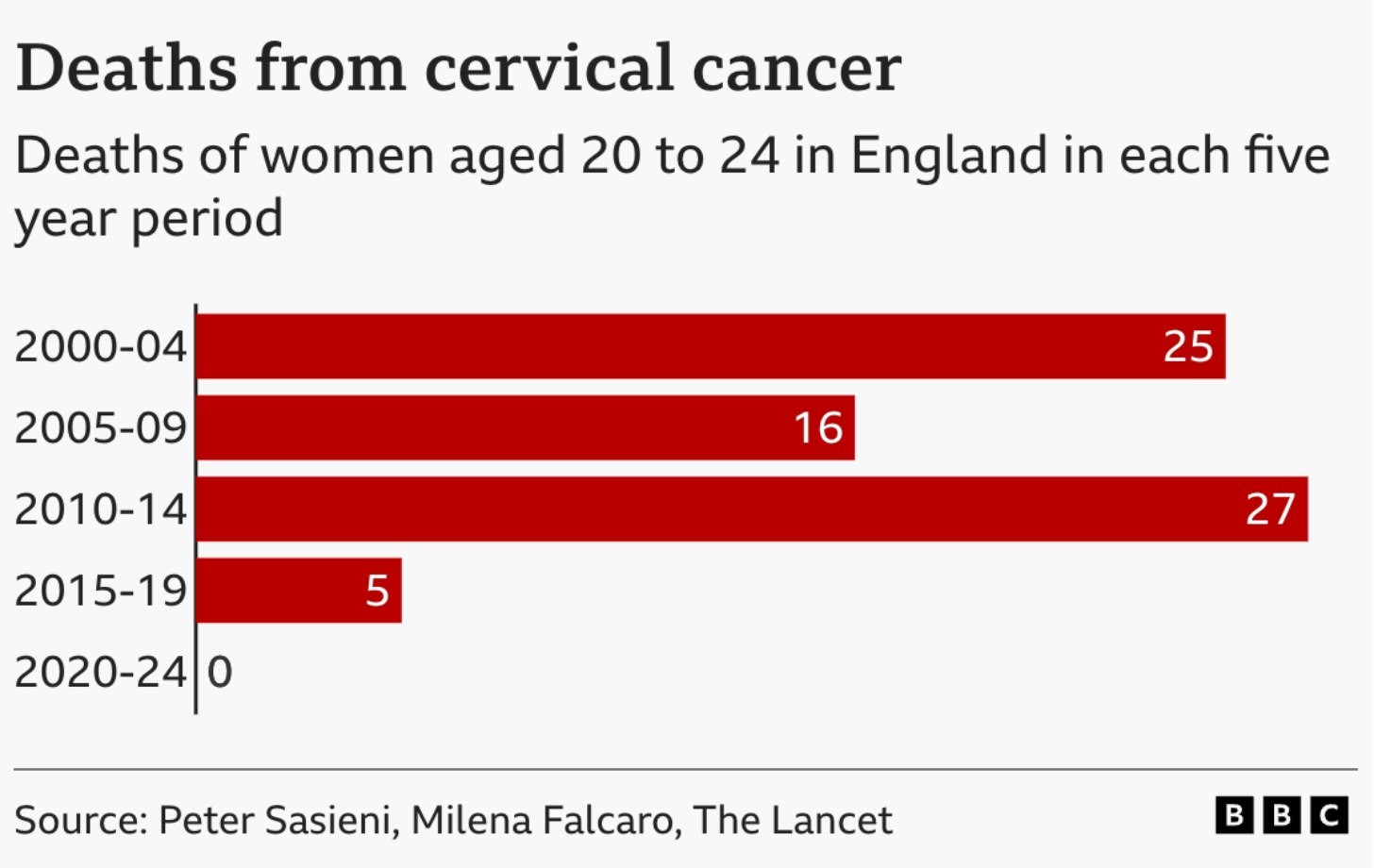
Between 2000 and 2024, for the first time ever over a five-year period, there were no recorded cervical cancer deaths among women between the ages of 20 and 24.
Without vaccination, around 23 deaths would have been expected.

Why is this good news?
In the United States, approximately 1 in 3 people will be diagnosed with cancer in their lifetime. People around the world long for a good news headline announcing a “cure for cancer.”
While the HPV vaccine is not a “cure for cancer,” it is exceptionally effective at preventing cervical cancer and other cancers from developing.
When the vaccine was first introduced in the United States in 2006, it was effective against four strains of the virus. In 2014, it was expanded to nine strains of the virus, which account for approximately 90% of HPV-causing cancers worldwide.
On the 20th anniversary of the vaccine’s FDA approval, medical professionals around the United States have been celebrating the vaccine for its historic success in women’s and public health.
“The HPV vaccine was a groundbreaking discovery and invention — having a vaccine that prevents cancer is truly life-altering,” said Dr. Megan Yanny, a pediatrician at University of Wisconsin Health Kids and an assistant professor of pediatrics at the University of Wisconsin School of Medicine and Public Health.
“Nationally, the incidence of HPV lesions, including precancerous cervical lesions detected through screening in young women, has decreased by nearly 80% since 2008, and mortality from HPV-related cancers has also dropped significantly.”
What’s the nuance?
In January 2025, during the confirmation hearing to become Secretary of the Department of Health and Human Services, Robert F. Kennedy Jr. refused to say that the HPV vaccine is safe. He had previously claimed that the HPV vaccine is “dangerous and defective.”
Kennedy’s statements run counter to the U.S. government’s own goal of getting 80 percent of adolescents vaccinated against HPV by 2030, though he leads the department responsible for achieving the goal.
Outside the U.S., Australia and the U.K. have found dramatic success with the HPV vaccine.
What can I do?
An article in the Journal of Cancer Education says “ineffective messages and misinformation about the vaccine have negatively impacted its uptake in the U.S.” A study found that messaging around the HPV should include focusing on cancer prevention rather than sexual transmission, routinizing the vaccine, and highlighting risks/costs of HPV.
When talking about the HPV vaccine with friends and family, talk about the vaccine’s proven effectiveness in preventing cancer. Americans can also call their elected officials and ask them to use their power to ensure the United States meets its HPV vaccination goals.