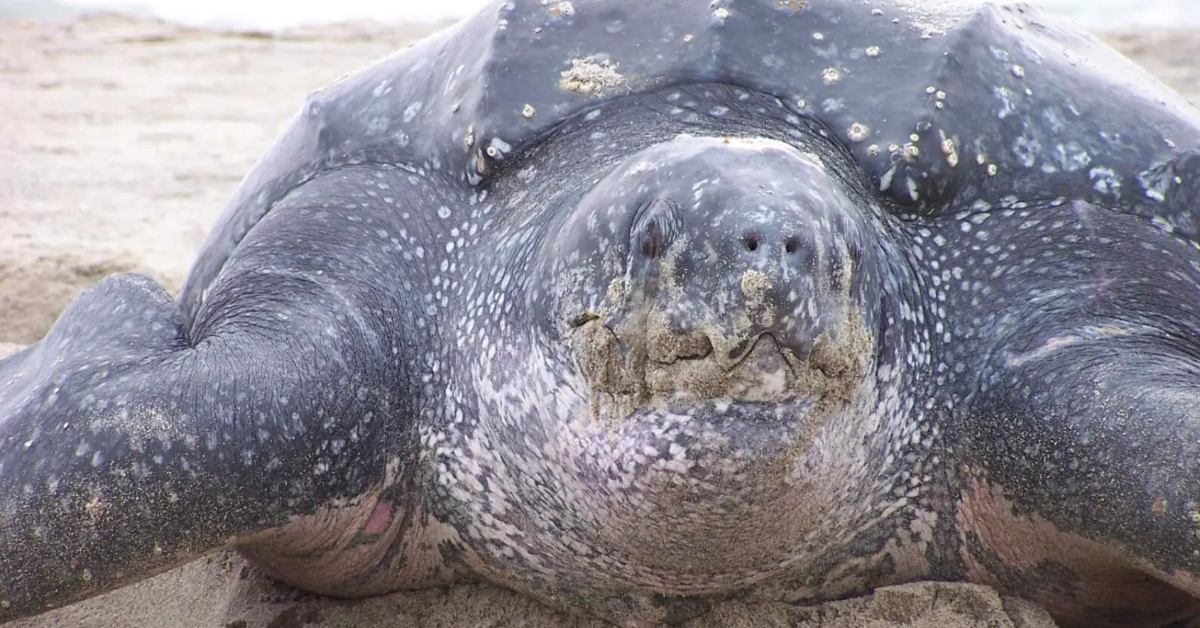
According to the National Oceanic and Atmospheric Administration, leatherback sea turtles live an estimated 50 years in the wild. And one leatherback has spent half of her life returning to the sandy shores of Juno Beach, Florida.
Her name, fittingly enough, is Juno.
“A local legend returned to our beaches this season,” the Loggerhead Marinelife Center shared in an Instagram post on June 3. “Juno … returned to nest 25 years since she was first encountered.”
“This 1,200-pound leatherback was first documented as nesting on our beaches in 2001 and has returned to Loggerhead Marinelife Center’s monitored beaches nearly 30 times since,” the sea turtle research center continued.
“Over the years, our research team has watched her journey unfold, documenting her nesting activity, tracking her life history, and witnessing her incredible resilience.”
The leatherback sea turtle is the largest turtle in the world. Their evolutionary lineage can be traced back by more than 100 million years to the Cretaceous period, where they existed side by side with dinosaurs.
Their appearance has changed little over the last 100 million years, retaining the tough, rubbery skin of their namesake.
Today, leatherbacks are endangered. Sea turtles like Juno have traded neighbors like the tyrannosaurus rex, velociraptor, and triceratops for modern fish, beachside tourists, and a seemingly endless parade of boats.
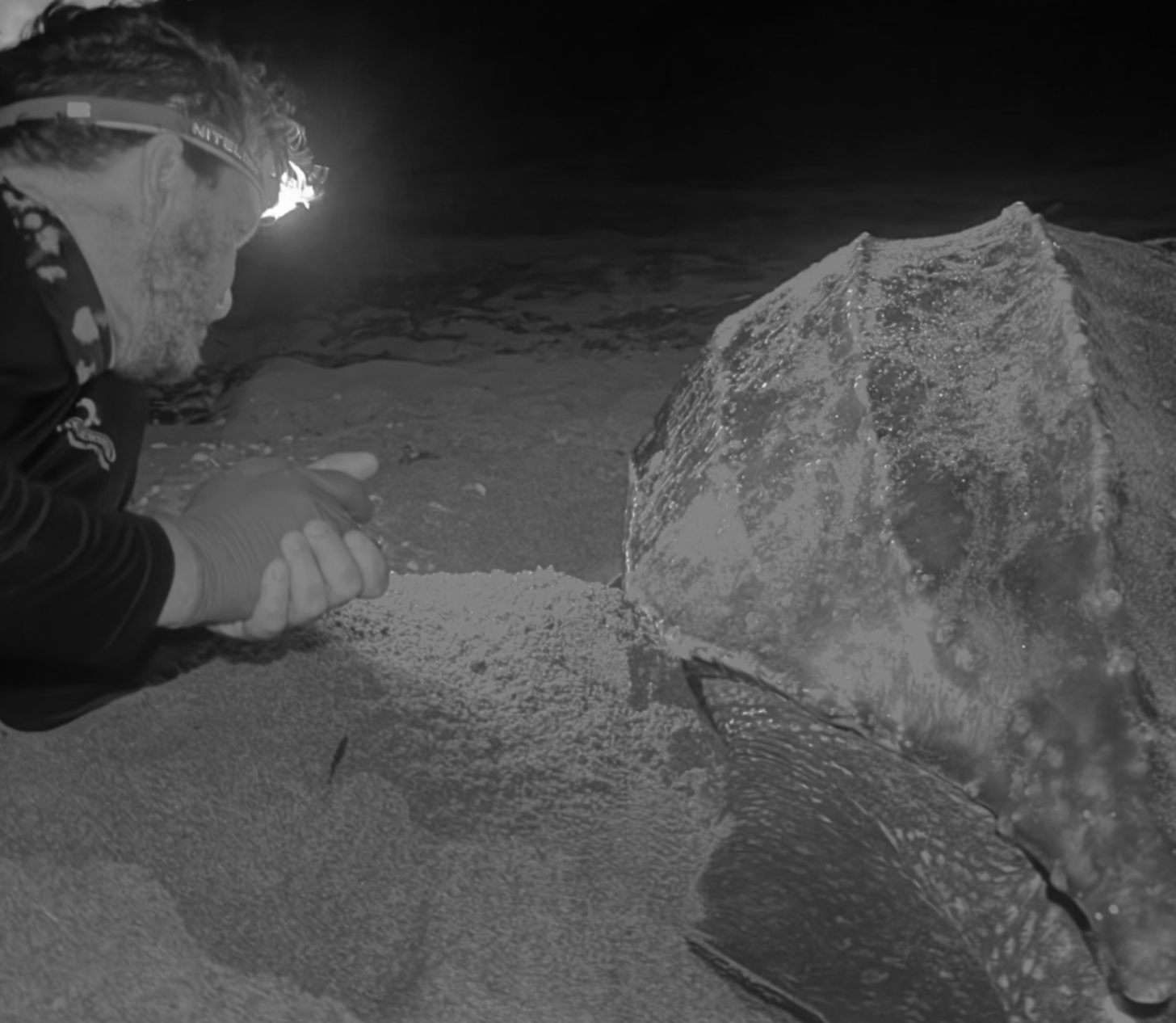
“Juno tells the story of a life spent navigating an increasingly busy ocean,” the Loggerhead Marinelife Center wrote. “She bears the scars of past interactions with boats and fishing gear, including a large, healed boat strike across her carapace and a scar on her left shoulder from a fisheries interaction.”
“Yet, despite these challenges,” they said, “she continues to return to our shores to nest.”
Loggerhead Marinelife Center’s vice president of research, Dr. Justin Perrault, celebrated Juno’s return by saying that every time she returns sheds light on a “new chapter in her journey.”
“Her story is a powerful reminder of both the fragility and tenacity of these animals and the chance to see an old friend again,” Perrault said in a statement.
This year has been a banner year for leatherback sea turtle nests. On June 22, the Loggerhead Marinelife Center’s research team documented the 300th leatherback nest of the season.
“This is only the second time in the history of our monitoring program that this milestone has been reached,” they shared on their Facebook page. “In 2009, 331 leatherback nests were laid along Juno, Jupiter, and Tequesta Beaches.”
And the turtle behind the historic milestone was none other than Juno.
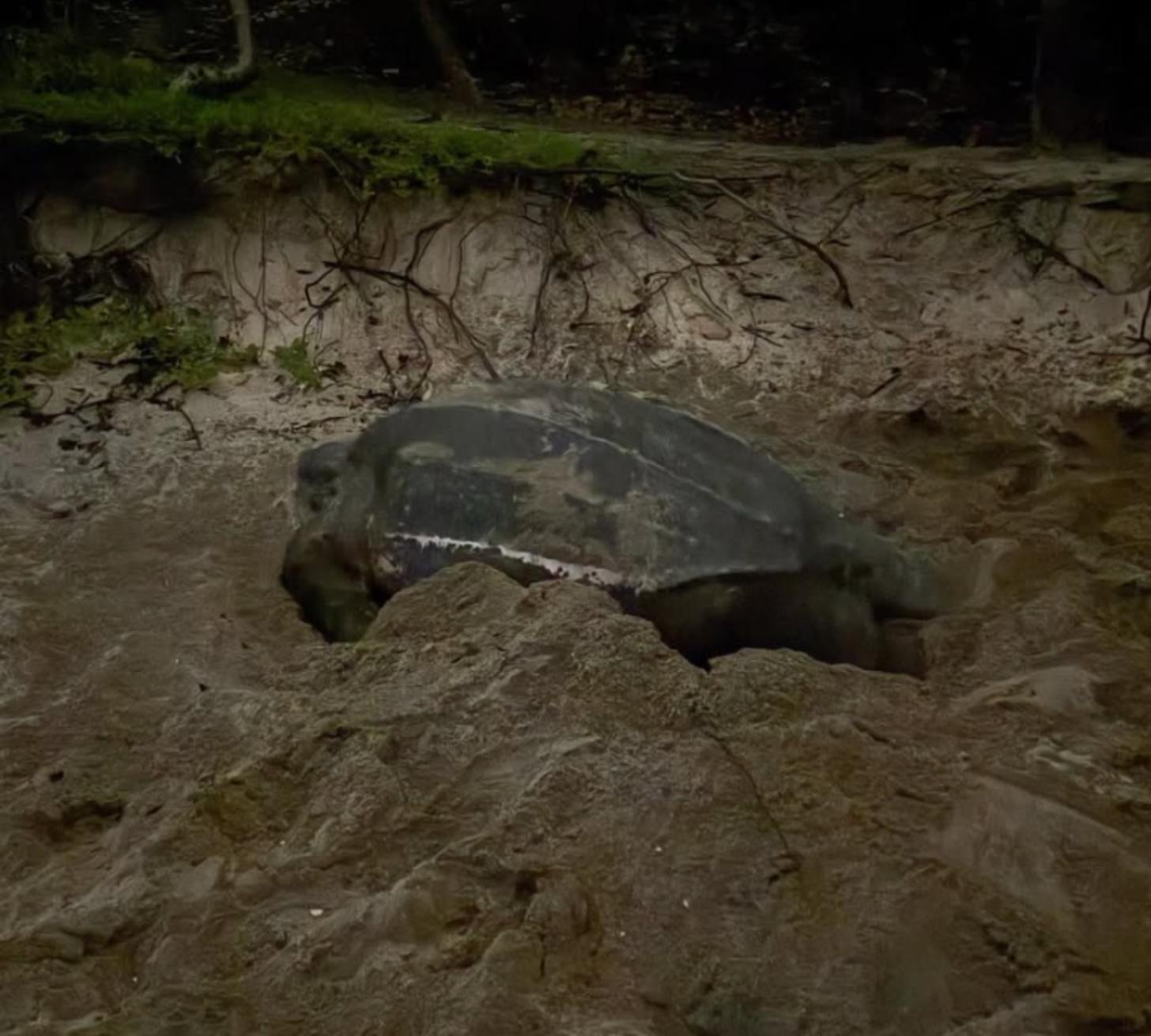
“Reaching 300 leatherback nests reflects decades of dedicated conservation work, and having Juno be the turtle to get us there makes it all the more meaningful,” the researchers wrote.
“Thank you, Juno, for continuing to inspire us and for helping make this nesting season one for the history books.”
The Loggerhead Marinelife Center also shared a reminder to tourists and locals alike to “Go Slow For Those Below.”
“As sea turtle nesting season continues, please remember to slow down and stay alert while boating in coastal waters,” they stressed. “The choices we make on the water can help ensure turtles like Juno continue returning to our beaches for generations to come.”
You may also like: Experts delighted: Olive ridley sea turtle seen nesting in Florida for the first time ever
Header image via Rabon David U.S. Fish and Wildlife Service