The Pacific Island country of Nauru first gained independence from Australian colonization in 1968 — but it took another 58 years for the nation to free itself from a pronunciation and spelling that directly conflicted with its language.
For nearly six decades, the country catered to foreigners on the global stage by accepting the title of Nauru, pronounced as “Now-roo,” instead of its true native name: Naoero, pronounced “Now-ero.”
On July 29, the government’s parliament officially declared that the country would be henceforth called The Republic of Naoero, or simply Naoero.
“Naoero is not a new name seeking acceptance by the people,” the Naoero government posted to its official Facebook page on July 29. “It is already the identity of the people, is on the national coat of arms, and spoken in the community; and importantly is allowed by the Constitution.”
According to the Associated Press, Naoero is the world’s third-smallest country after Tuvalu and Vatican City, with a population of roughly 12,000 people.
In the mid-2000s, Naoero lost about 12% of its population to mass emigration after phosphate minerals were depleted and nearly 1,500 people were laid off from their mining jobs.
The country, which lies roughly 2,000 miles northeast of Australia, is heavily influenced by its Oceania neighbors: Australia and New Zealand.
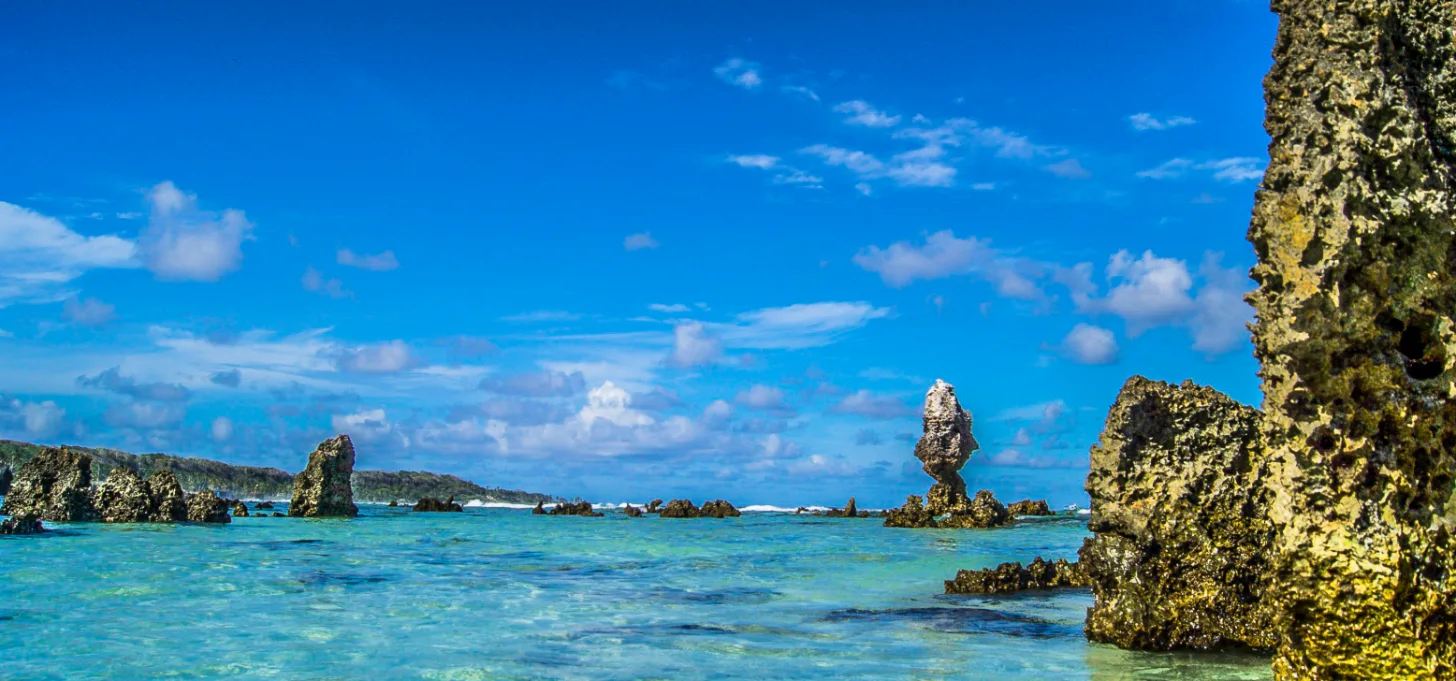
Its state-owned television station broadcasts programs from New Zealand and Australia, and the island’s main radio station primarily broadcasts English-language programs from Radio Australia and the BBC.
Furthermore, Naoero’s national team sport is Australian rules football, a sport it dominates globally, consistently ranking among the top eight teams in the world.
Although English is widely taught and used as a second language, 96% of ethnic islanders speak Nauruan at home. Settled by Micronesians circa 1000 BC, the island’s language, culture and heritage blossomed in isolation before it was occupied by Germany, Australia, and Japan in quick succession in the 19th and 20th centuries.
Despite decades of subjugation and cultural erasure, some forms of traditional folk music, arts and crafts, and fishing are still practiced today.
The country’s decision to rename itself was unanimously approved by its parliament.
“Nauru emerged because Naoero could not be properly pronounced by foreign tongues, and was changed not by our choice, but for convenience,” The Government of the Republic of Naoero shared on Facebook back on February 11, when the amendment was first tabled.
The post referenced other countries that had recently changed their names to “better reflect and honour their cultures and languages,” pointing to Eswatini (formerly Swaziland), Türkiye (formerly Turkey), and the Micronesian state of Chuuk (formerly Truk).
“Today, we have the opportunity to bring our name home,” David Ranibok Waiau Adeang, President of Naoero, said in a statement.
You may also like: Small island nations celebrate historic climate ruling against big polluters in international maritime court
Featured Image: U.S. Department of Energy's Atmospheric Radiation Measurement Program